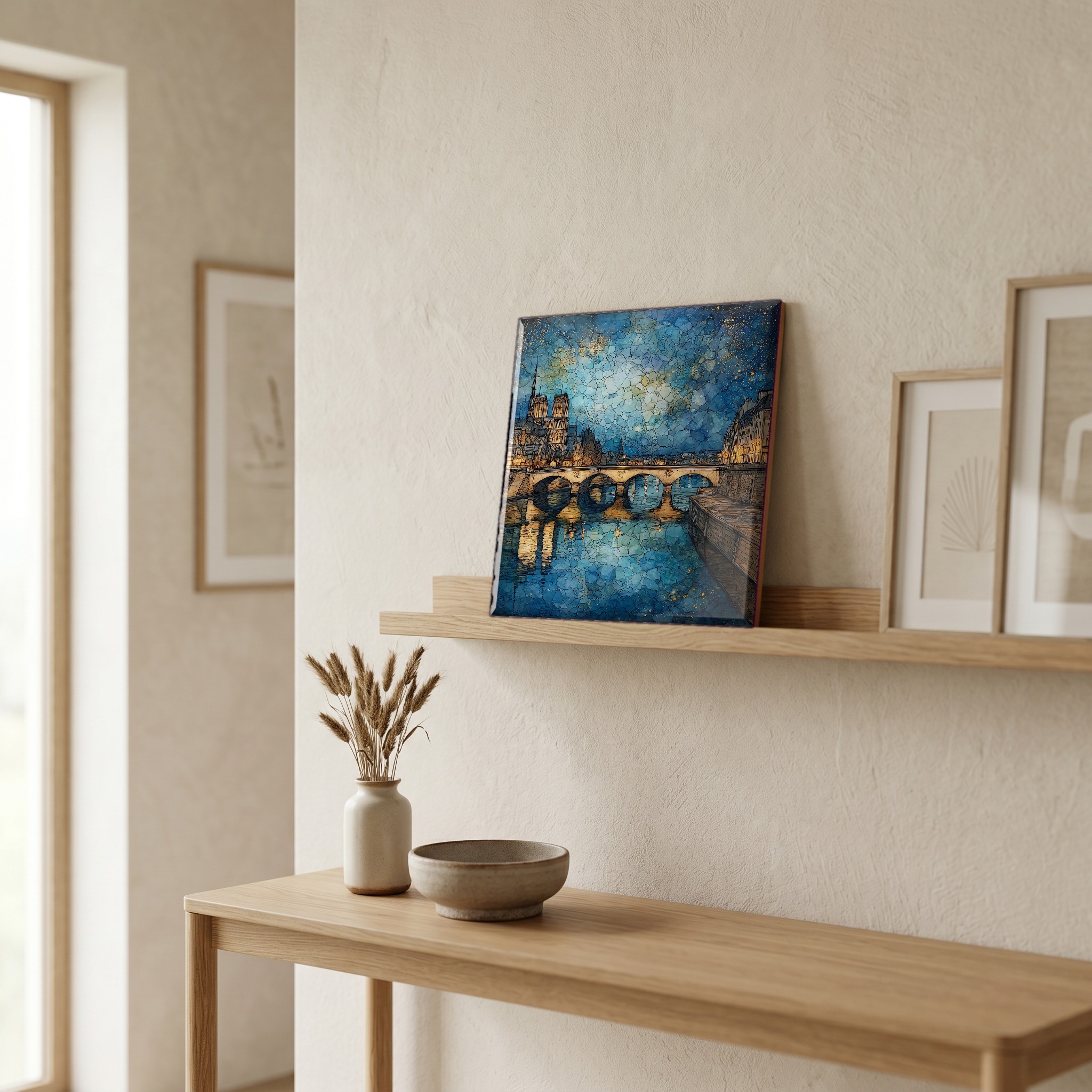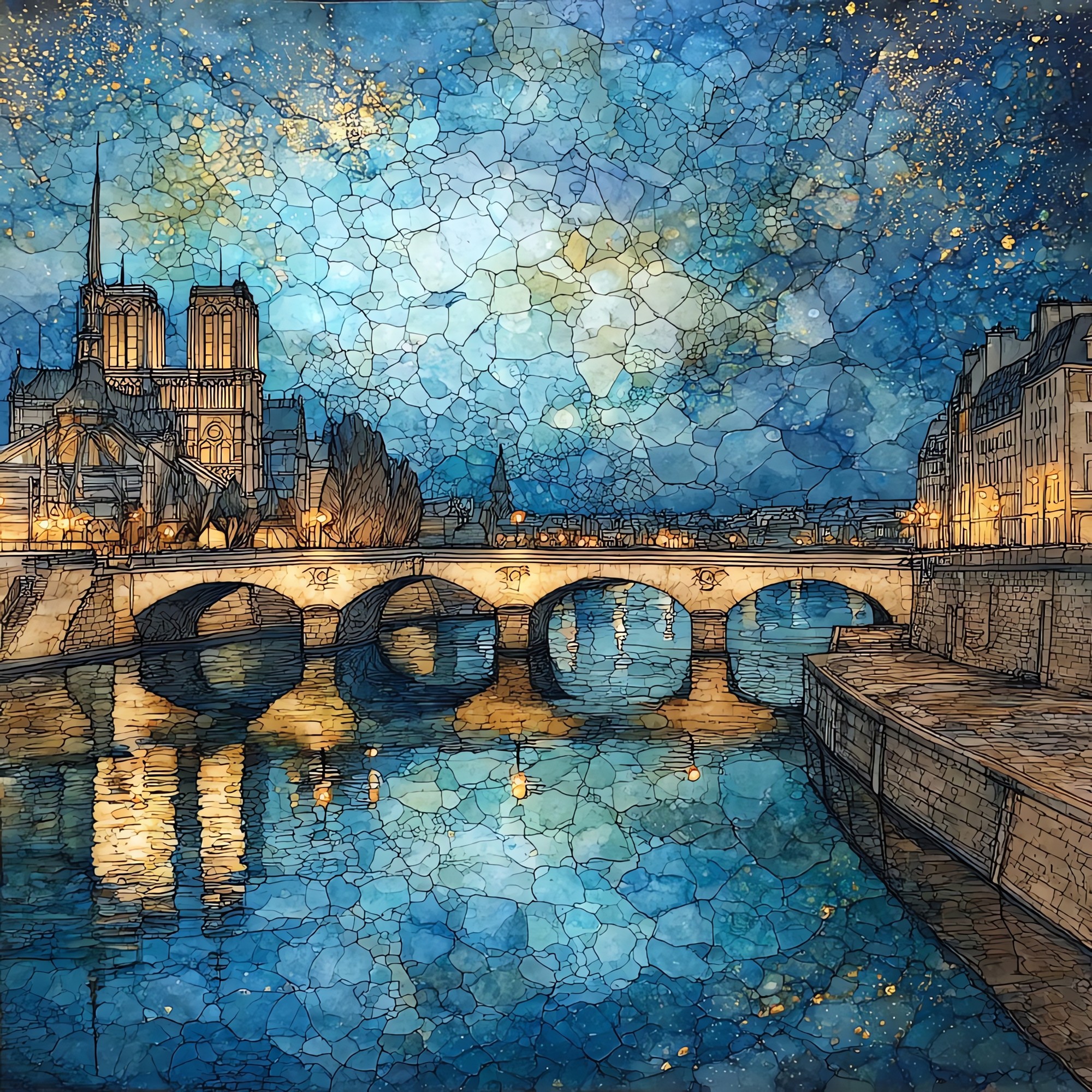
Wender·Vista
Île de la Cité
shown on ceramic, 12-inch tileFrance
in the Seine, between the Left and Right Banks of Paris

Île de la Cité

— the island the bells came back to.

Where it lives

Not only on a wall.

A small tile on the nightstand catching the morning. A larger one above the fire. Yours, wherever you spend the slow hours.
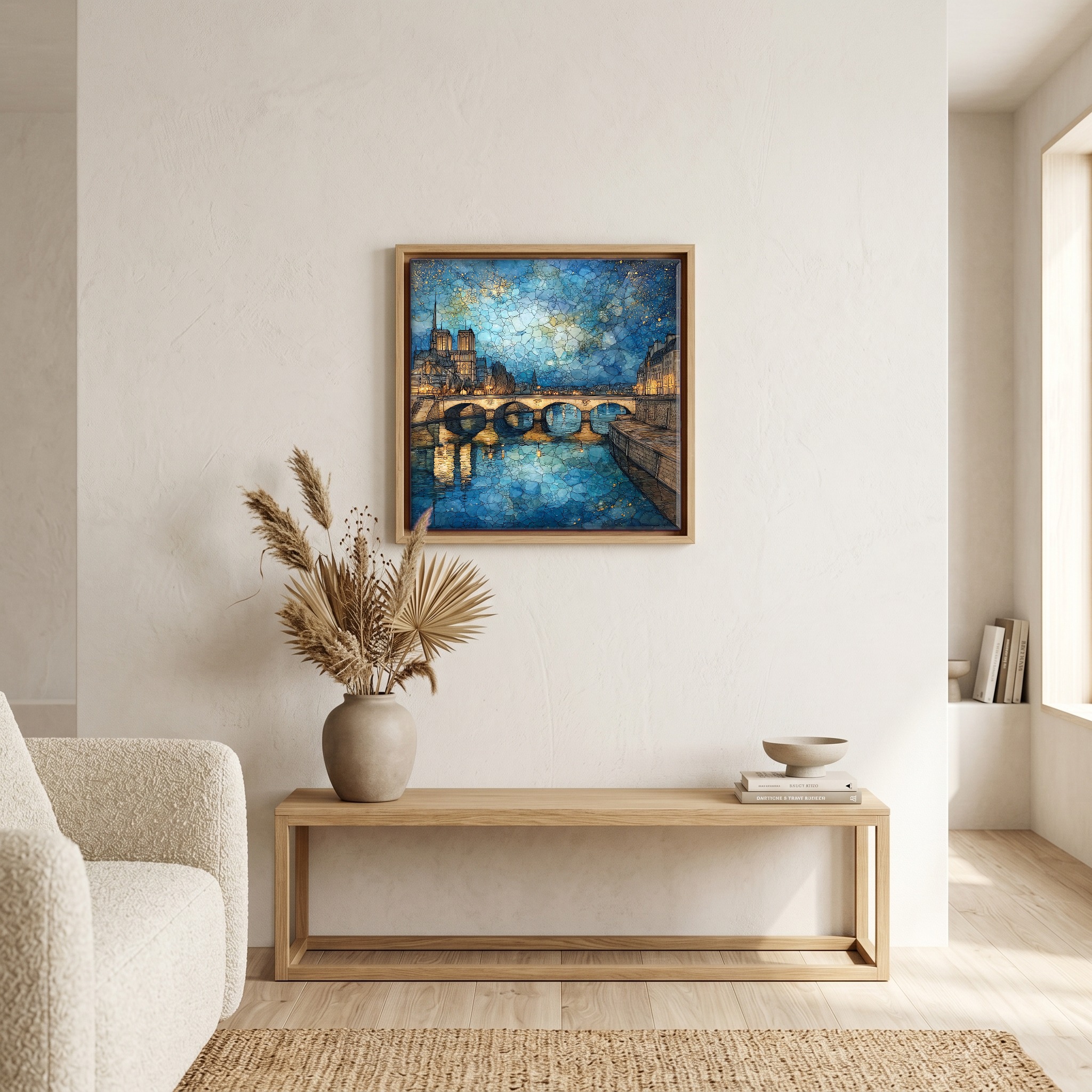
Above the bench, in a warm oak surround.
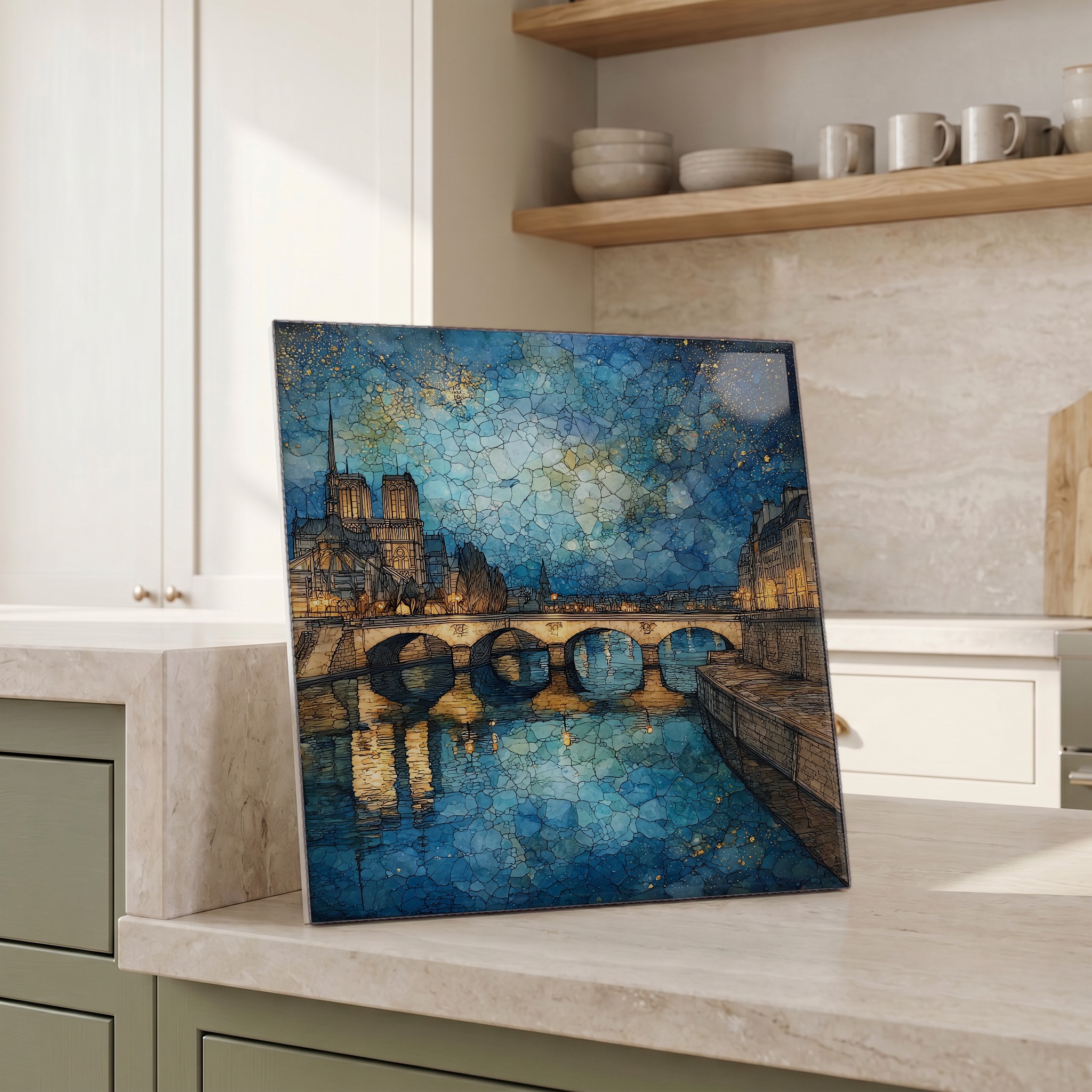
Beside the kettle, propped on the counter.
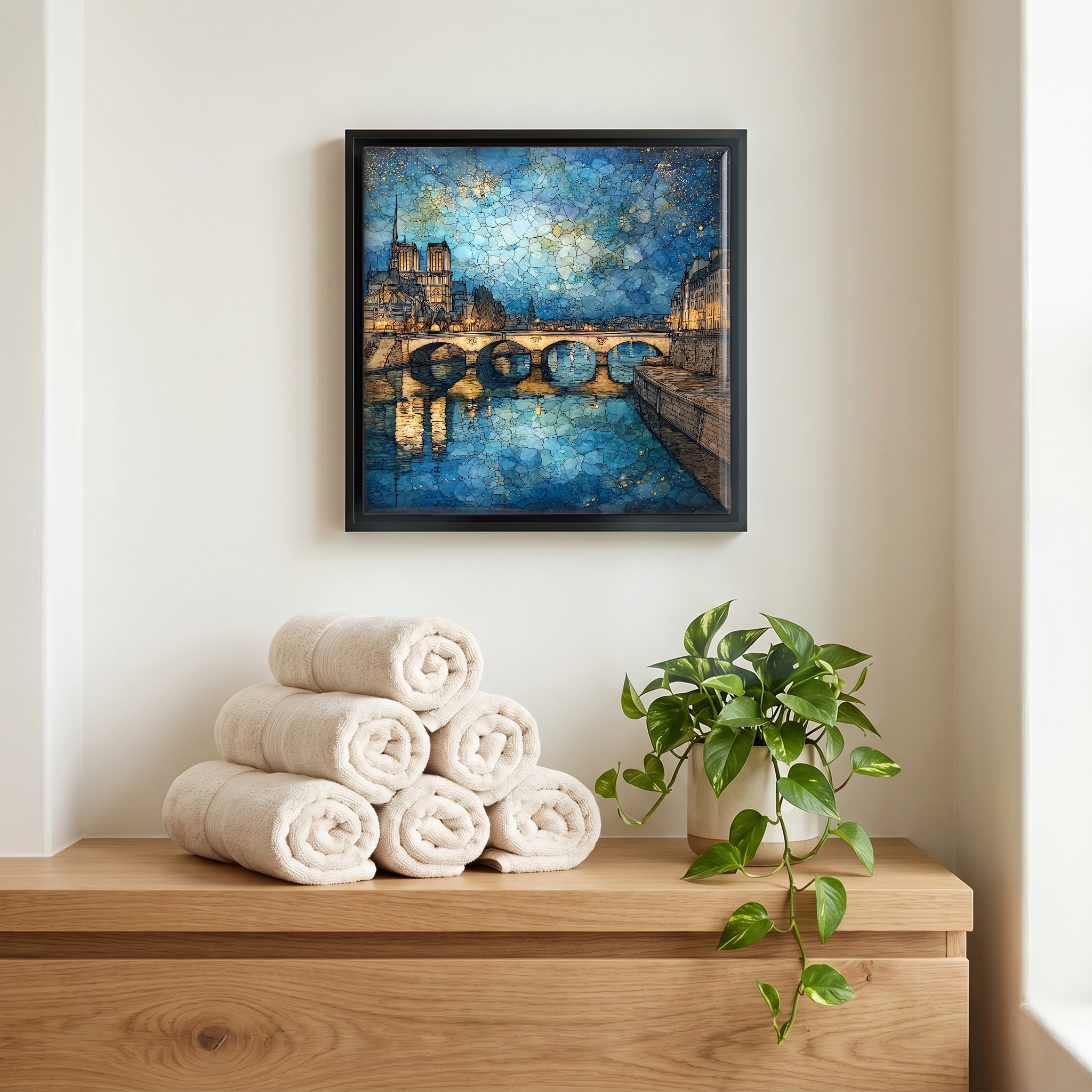
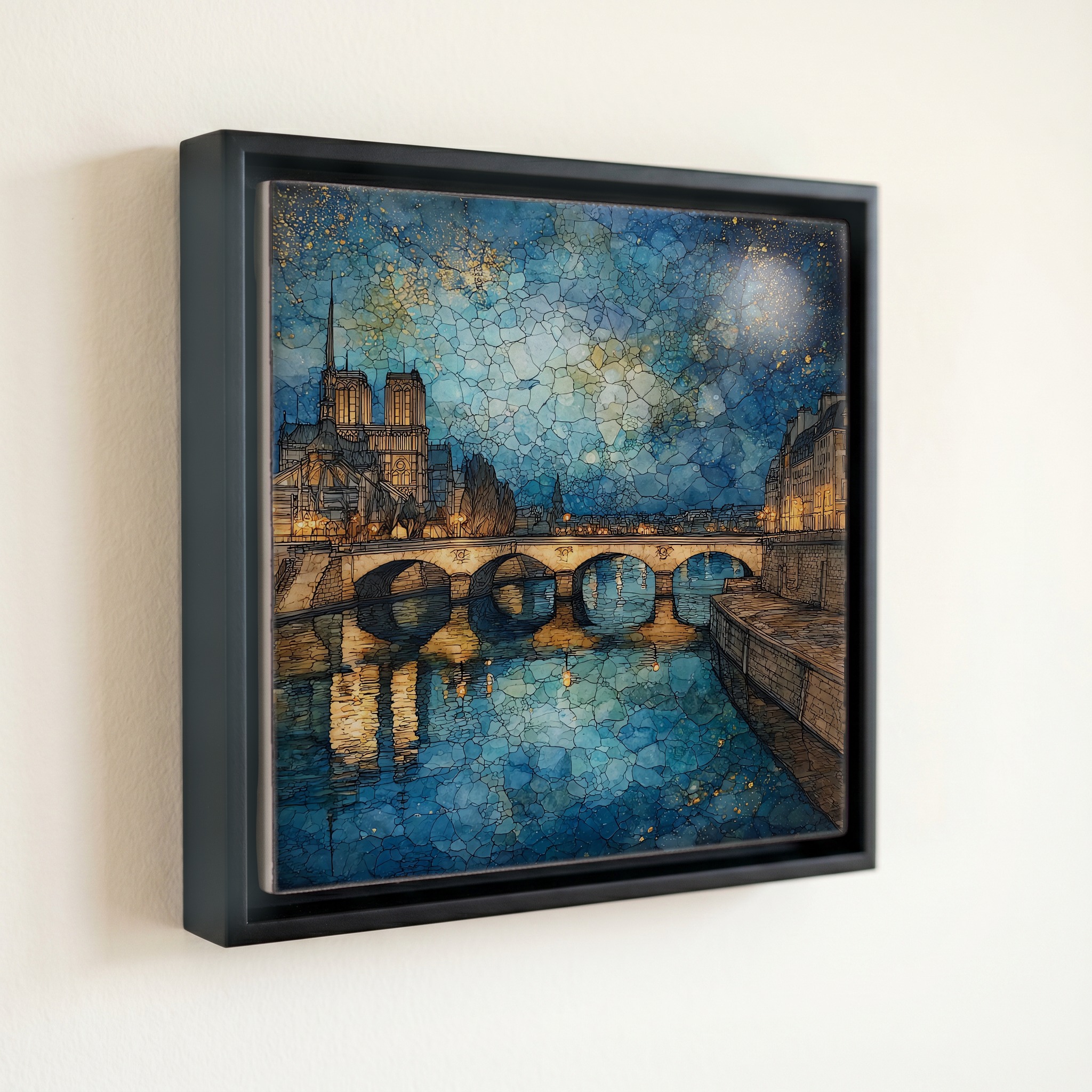
Above the linens, in a slim black surround.
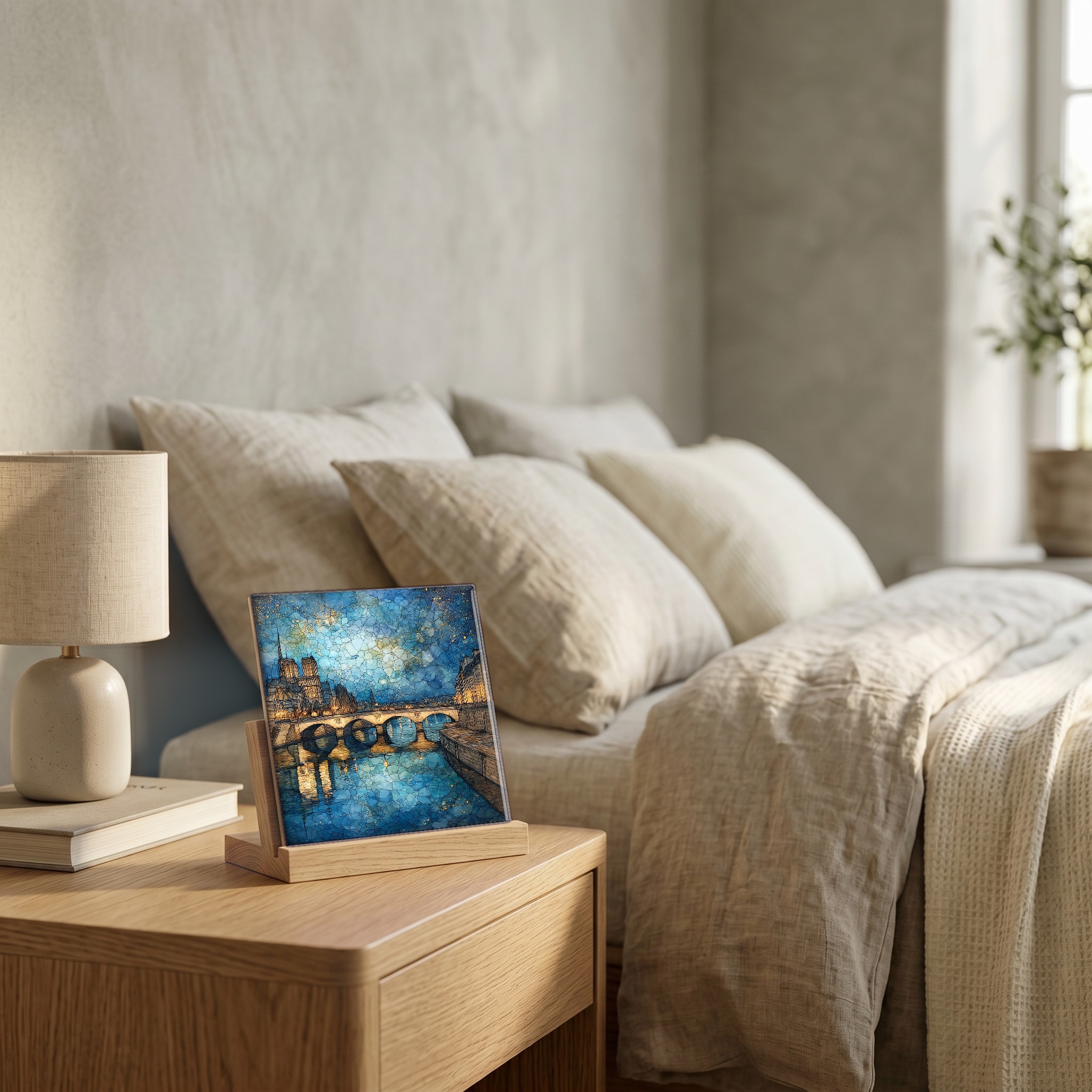
On the nightstand, on a light oak stand.
On a picture ledge, where the light comes in.
a note from the studio

An island in the Seine, set between the Left and Right Banks. The Parisii lived here three centuries before Rome arrived, and the city kept building outward from this point. Notre-Dame at the eastern end, Sainte-Chapelle and the Conciergerie at the western. The Marché aux Fleurs still opens at Place Louis-Lépine through the week. The bells of Notre-Dame rang again in December of 2024, after five years of scaffolding and saws and the quiet of a closed nave. From the Pont Neuf, the prow of the island looks out at both banks at once.
from the studio
shown in a slim black floating frame · 6 × 6 in
— bring it home

Île de la Cité, on ceramic.

Each tile is finished by hand in our Knoxville studio. Artwork is slowly infused into the ceramic surface under high heat and pressure, and rests beneath a thin glossy finish. The colour lives in the surface, not on top of it.

What kind of piece?
One tile — square or rectangle.
How big?
the popular one — counter, shelf, nightstand
6 × 6 in · 15 cm · 1.6 lb
Surface finish
A clear glossy finish — the artwork reads as if under resin. Ideal for show-pieces and framed wall art.
How it sits
A hidden cleat — sits ¼″ proud of the wall.
$58
Hand-finished and shipped from our studio at the foot of the Smokies. On your wall in about ten days.
size
6 × 6 in
15 cm
weighs
1.6 lb
solid in the hand
surface
ceramic, hand-finished
art rests beneath a thin glossy finish
from
Knoxville, TN
our family studio, at the foot of the Smokies
— start a Coaster Set

Pick any four 4-inch tiles — National Parks you've been to, a Smokies set, the four seasons of one place. $ for a set of , cork-backed, ready to live on the table.
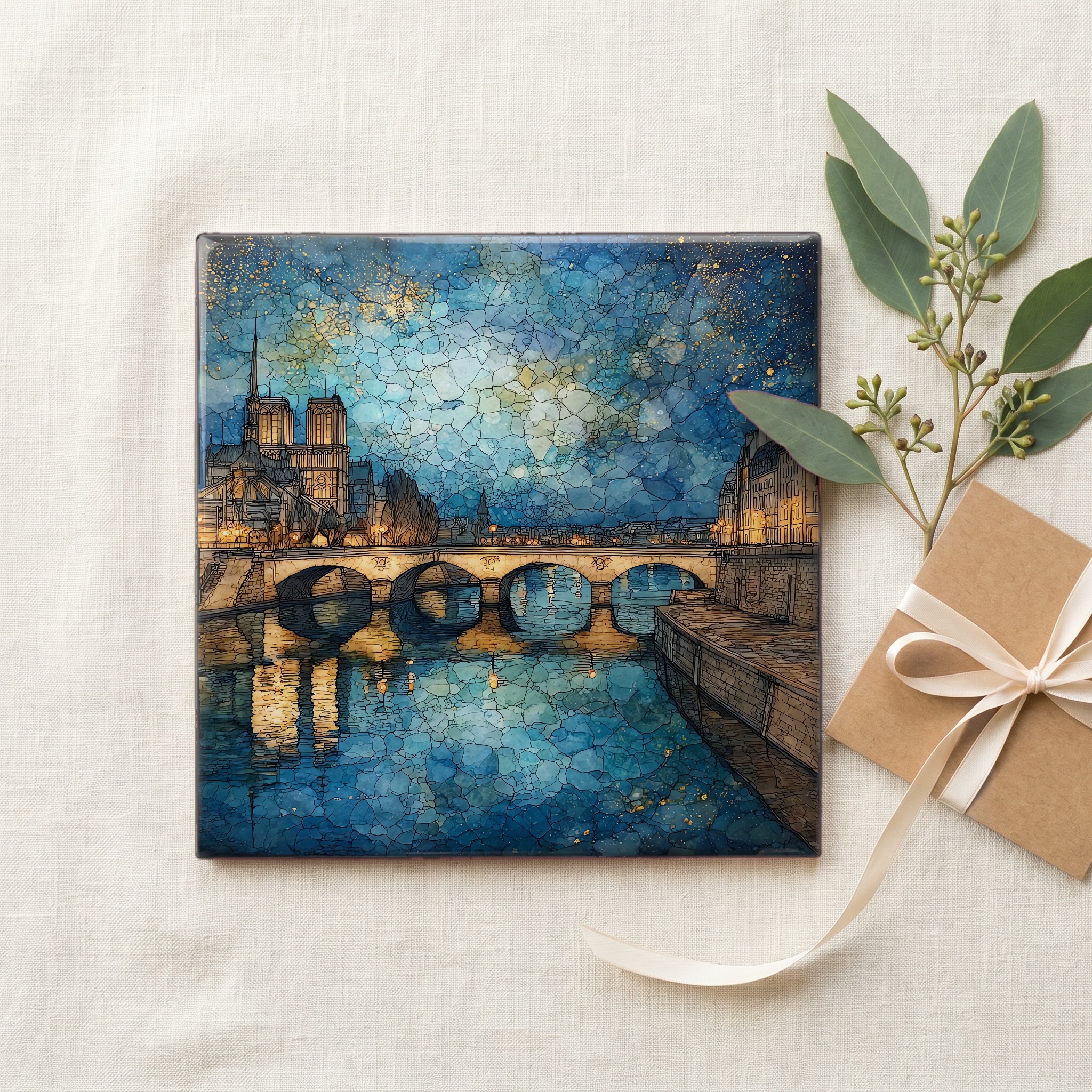
comes gift-ready
comes gift-ready

Each tile ships in a kraft box, tied with cream ribbon, with a handwritten note from the studio if you'd like to add one.
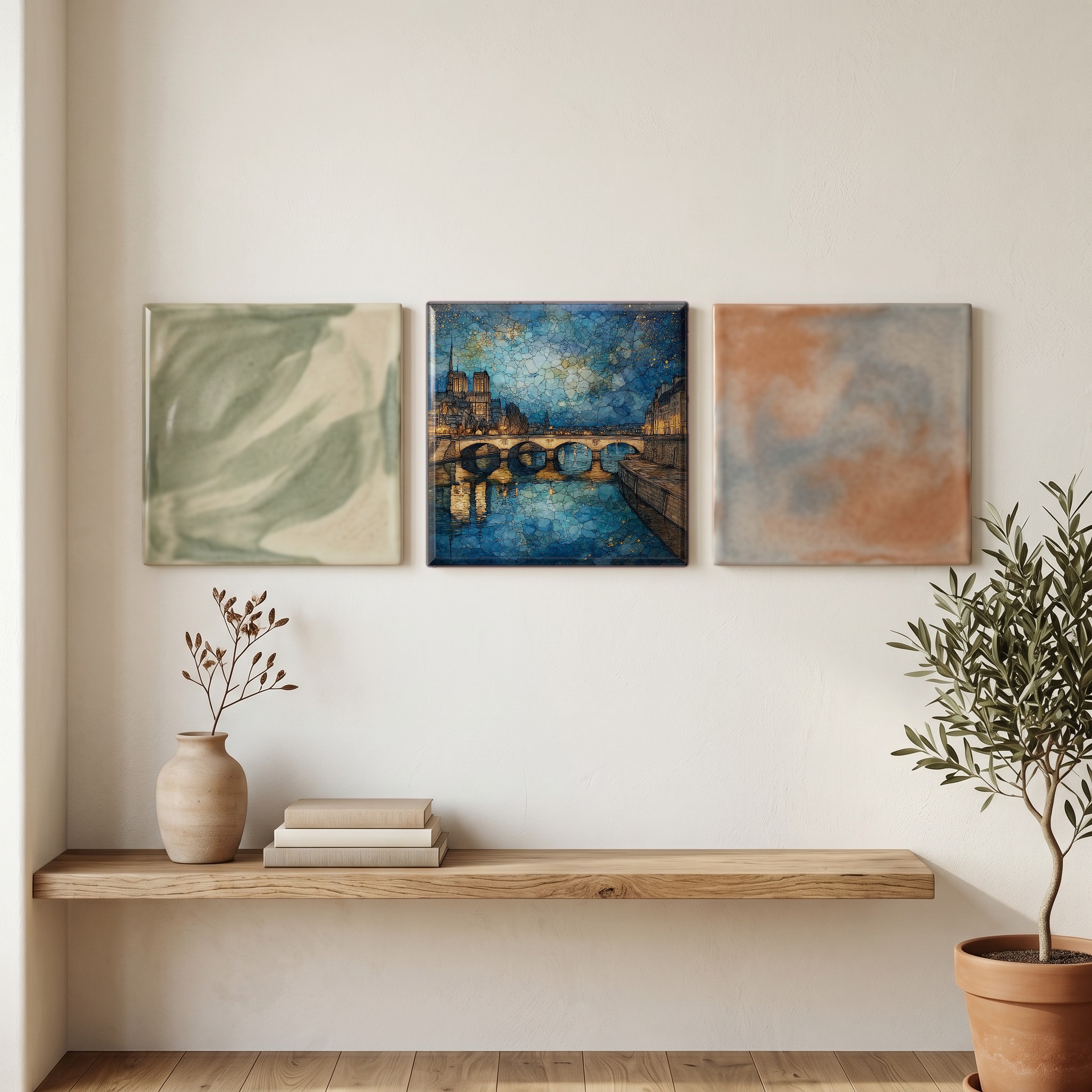
or build a grouping
or build a grouping

Three or five different vistas, hung together — a chapter of places you've been, or want to go.

about Île de la Cité

The place, in three passes.

A little of what's known, in case you fall down the rabbit hole — or want to go see it yourself.
the place

Île de la Cité is one of two natural islands in the Seine within central Paris, joined to the Right and Left Banks by nine bridges. The island sits in the 1st and 4th arrondissements. It is where the city itself began: the Parisii, a Celtic tribe, settled here in the 3rd century BC, and the Romans turned the encampment into Lutetia after 52 BC. Notre-Dame de Paris occupies the eastern third, the Sainte-Chapelle and the Conciergerie sit at the western, and the Pont Neuf, the city's oldest standing bridge, completed in 1607, anchors the prow.

the stone

The island carries three landmark stones, each from a different century. Sainte-Chapelle, finished in 1248 for Louis IX, holds about 1,113 individual scenes across fifteen stained-glass windows. It is the largest medieval glass programme to survive. Notre-Dame de Paris, begun in 1163 under Bishop Maurice de Sully, took roughly two centuries to complete, and its limestone vaults rose roughly 33 metres above the nave. The Conciergerie, the surviving medieval wing of the Palais de la Cité, held more than 2,700 prisoners during the Revolution, Marie Antoinette among them. The architects Jean-Baptiste Lassus and Eugène Viollet-le-Duc led the 19th-century restoration that gave Notre-Dame its silhouette as the modern city knows it.

the visit

Three of the island's landmarks operate on separate ticket schedules. Sainte-Chapelle and the Conciergerie are run by the Centre des monuments nationaux, with a joint ticket available at a reduced rate. Notre-Dame de Paris reopened on 7 December 2024 after the April 2019 fire and five years of restoration; entry to the cathedral is free, with timed-entry reservations recommended at peak hours. The Marché aux Fleurs Reine Elizabeth II at Place Louis-Lépine is one of the oldest flower markets in Paris, open most days of the week. The closest Métro stops are Cité (Line 4) in the middle of the island and Saint-Michel-Notre-Dame (Line 4 with RER B and C) just across the Petit Pont.

where
France · Paris, Île-de-France
position
48.8552° N · 2.3470° E
the neighborhood

What's nearby.

A handful of named places within an hour's walk or short drive. Some we've already painted; some we will.
0.3 km E
Île Saint-Louis
river island
0.5 km N
Hôtel de Ville
city hall
0.5 km S
Latin Quarter
historic neighborhood
1 km W
Pont des Arts
pedestrian bridge
1 km W
Louvre
museum and palace
1.5 km NE
Place des Vosges
square in the Marais
N
Île de la Cité
Île Saint-Louis
Hôtel de Ville
Latin Quarter
Pont des Arts
Louvre
Place des Vosges
common questions

What people ask.

A few questions we get about Île de la Cité — and about bringing the piece home.
about the place

Île de la Cité is a natural island in the Seine in central Paris, sitting between the Left and Right Banks. It lies within the 1st and 4th arrondissements and is joined to both banks by nine bridges, including the Pont Neuf at its western tip.

The island holds three of Paris's most visited monuments: Notre-Dame de Paris, the Sainte-Chapelle, and the Conciergerie. It also contains the Place Dauphine, the Marché aux Fleurs flower market at Place Louis-Lépine, and the small Square du Vert-Galant at the island's western tip.

Notre-Dame de Paris reopened on 7 December 2024, five years and eight months after the 15 April 2019 fire that destroyed its spire and most of its medieval roof. The cathedral is free to enter, and timed-entry reservations are recommended for the busiest hours.

Île de la Cité is where the city was founded. The Parisii, a Celtic tribe, settled the island in the 3rd century BC, and the Romans built the fortified town of Lutetia here after 52 BC. Point Zéro, the marker from which road distances to Paris are measured, sits in the square in front of Notre-Dame.

The Métro station Cité on Line 4 sits in the middle of the island. Saint-Michel-Notre-Dame, a short walk south across the Petit Pont, serves Line 4 along with RER lines B and C. The island is also reachable on foot from the Louvre, the Marais, and the Latin Quarter in under fifteen minutes.

Early morning, before about 9 a.m., is the quietest hour at Notre-Dame and along the quays. Sainte-Chapelle is best seen on a sunny afternoon, when the western windows light the upper chapel in red, blue, and violet. The Square du Vert-Galant holds the long evening light at the island's western prow.

No. Île de la Cité and Île Saint-Louis are two separate natural islands in the Seine, joined to each other by the Pont Saint-Louis. Île de la Cité is the larger and older of the two, with the monuments; Île Saint-Louis is the smaller residential island just to the east, known for its quiet quays and ice-cream shops.

about the piece in your home

It's a meaningful gift for many people with a connection to the city. Île de la Cité is the part of Paris that almost every visitor sees and that almost every Parisian crosses. A Small or Medium with a handwritten note from the studio carries well; a Coaster Set holds the island for a kitchen or desk.

The jewel-toned blues, golds, and stone-greys in the piece sit well in classic Parisian, French Romantic, and Old World styles. These colour notes also work in Jewel-tone Maximalist rooms and beside warm wood in a more restrained Continental modern.

The European Romantic and Grand Tour aesthetics have been steady throughout the 2020s, and Parisian and Old World cues like gilded mirrors, library walls, and stained-glass colour have grown in shelter publications since 2024. A framed Île de la Cité piece reads as a souvenir of a real place, which suits both the trend and rooms built outside of it.

A single Large reads well above a console or a narrow sofa; for a full living-room wall, a four-tile Mural carries the scale, and a nine-tile Mural is the right anchor for a wide statement wall above a deep sofa. The studio can help match a size to your wall dimensions.

Yes. For a bathroom, kitchen backsplash, or shower wall, choose the Dura Satin or Matte finish; both are scratch-resistant, and the colour lives in the ceramic surface, not in a coating that could lift over time. The Glossy finish is for framed wall pieces and dry display areas.

A soft microfibre cloth and warm water is enough. For a backsplash with cooking residue, a small amount of mild dish soap on the cloth, then a wipe with plain water. Avoid abrasive scrubbers and household chemicals like bleach; they are unnecessary because the colour is sealed inside the surface.

Yes. The Île de la Cité piece was made by Reid Wender, the curator of WenderVista. The visual language of stained glass, alcohol ink, and oil painting is the studio's own. The work is not licensed from any third party, and each tile is hand-finished in our studio in Knoxville, Tennessee.

if this one stayed with you

A few you might also love.

Hand-picked by the eye that found Sorapis. Same air, same kind of quiet.