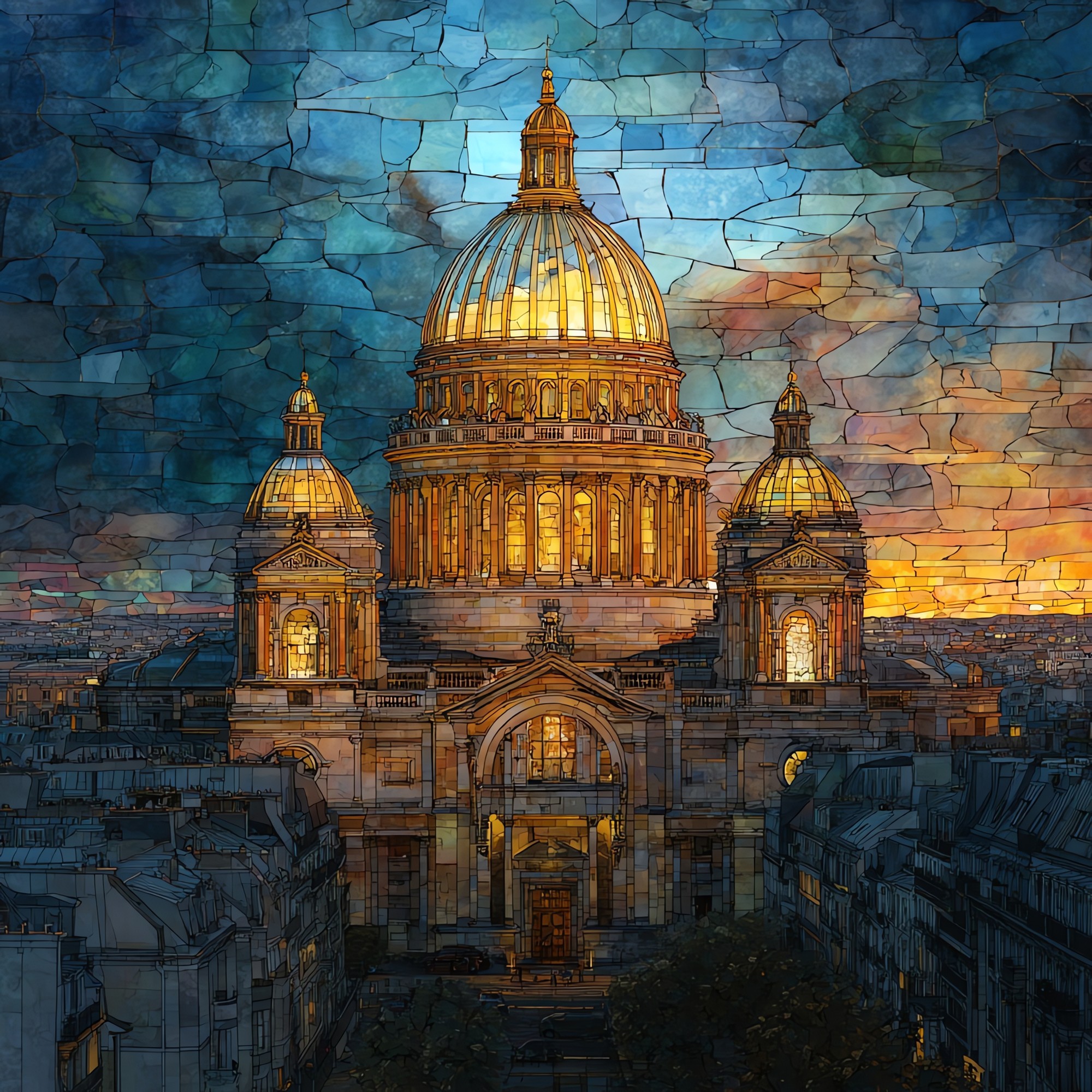
Hotel des Invalides
— the gold the dusk leaves on Paris.
Not only on a wall.
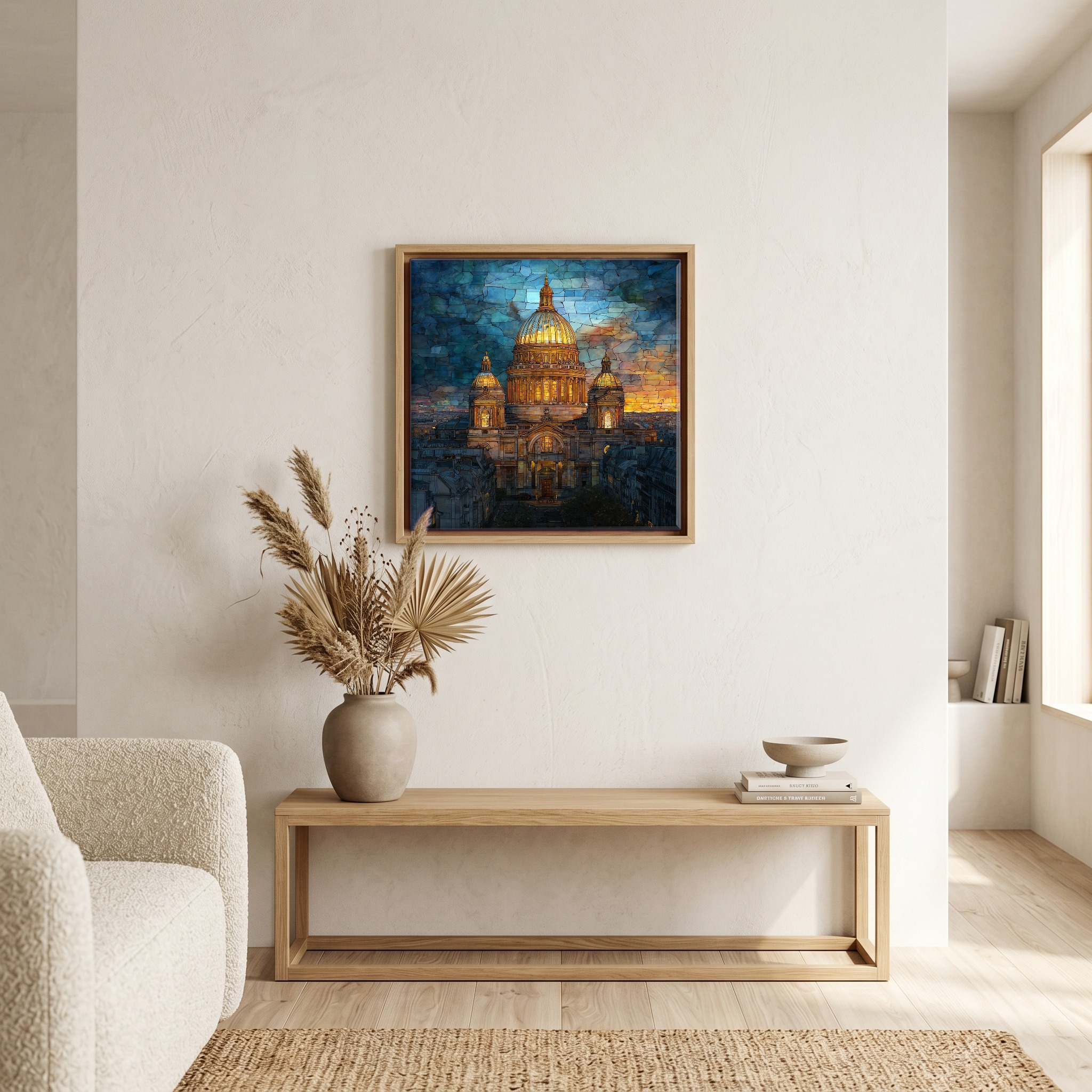
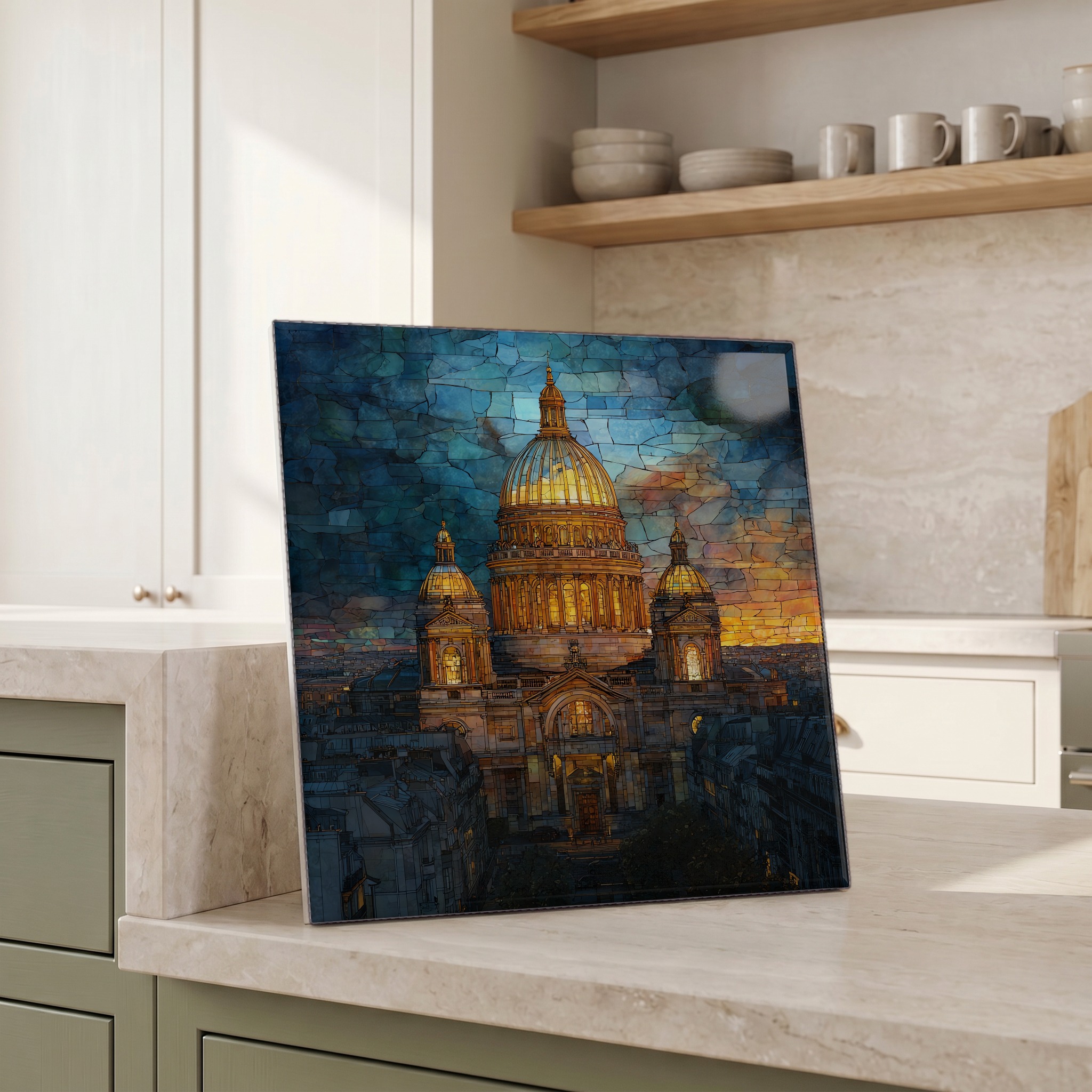
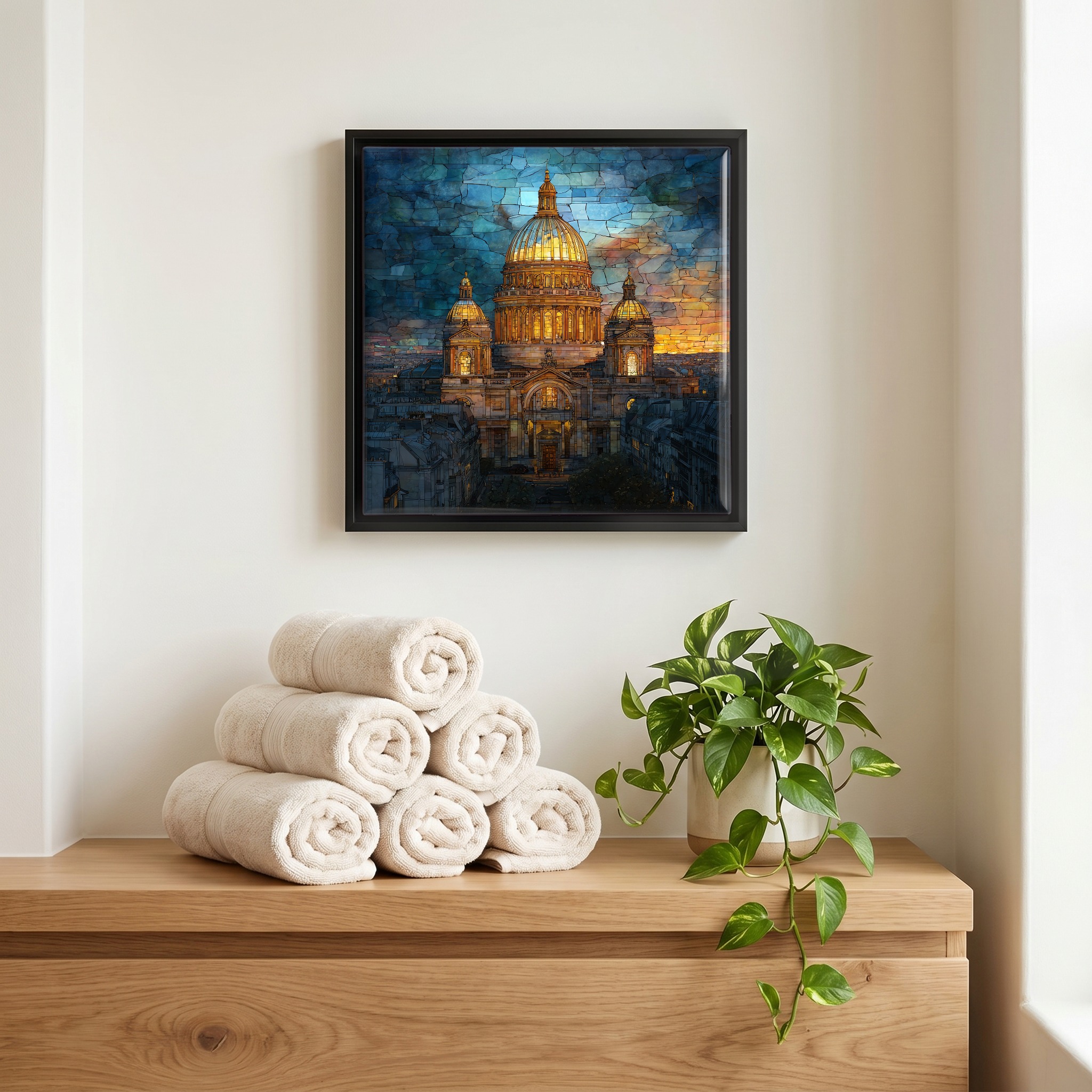
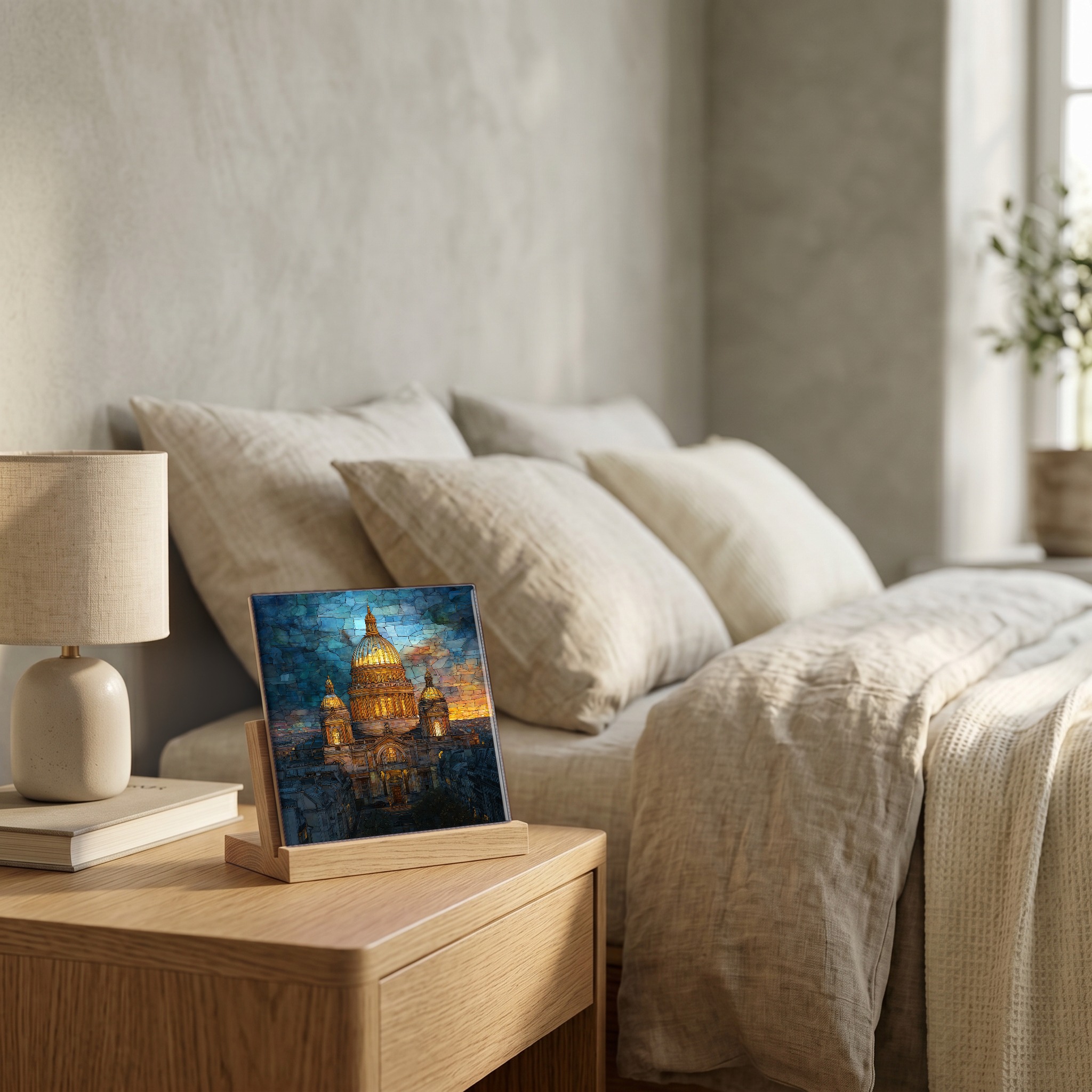
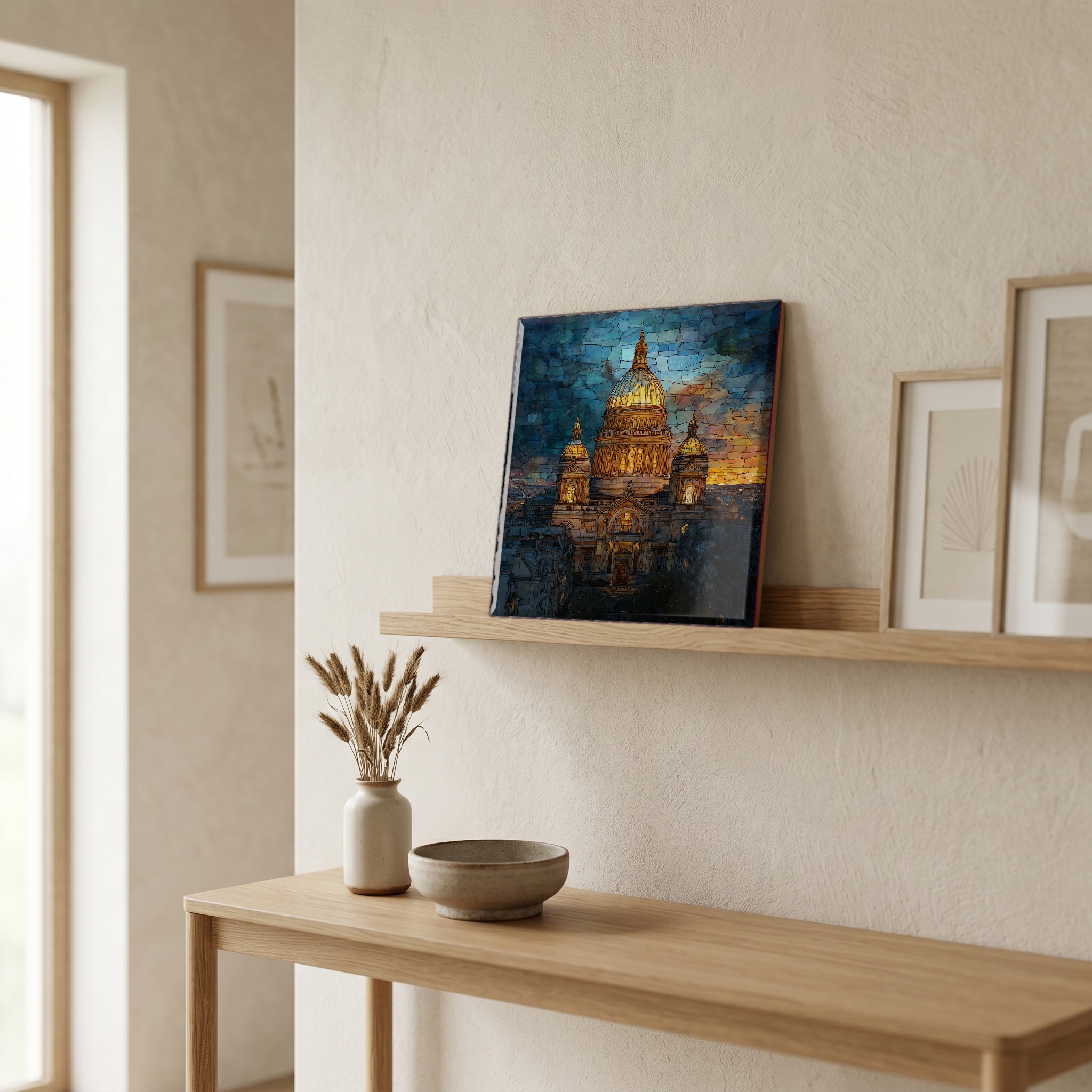
“The dome carries the most public gold in Paris, last gilded in 1989 with about twelve kilograms of leaf for the bicentennial of the Revolution. Below it sits the hospital Louis XIV opened in 1670 for soldiers who could no longer fight, and the red quartzite sarcophagus completed for Napoleon's tomb in 1861. The esplanade out front runs north to the Pont Alexandre III. A small number of pensioned veterans still live in one wing, three centuries on. The dome reads best from the bridge at the hour the light goes amber.
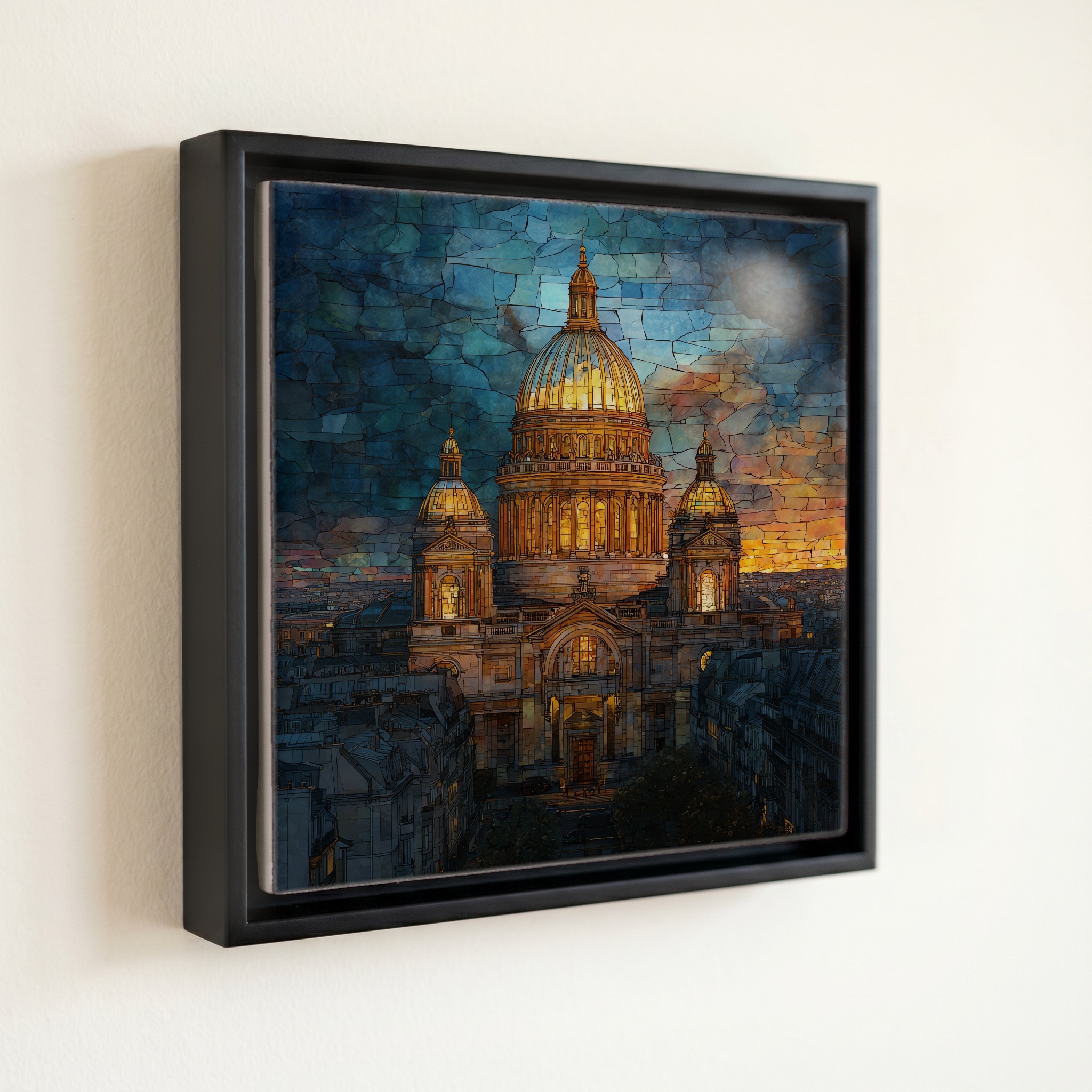
Hotel des Invalides, on ceramic.
Each tile is finished by hand in our Knoxville studio. Artwork is slowly infused into the ceramic surface under high heat and pressure, and rests beneath a thin glossy finish. The colour lives in the surface, not on top of it.
Pick any four 4-inch tiles — National Parks you've been to, a Smokies set, the four seasons of one place. $ for a set of , cork-backed, ready to live on the table.
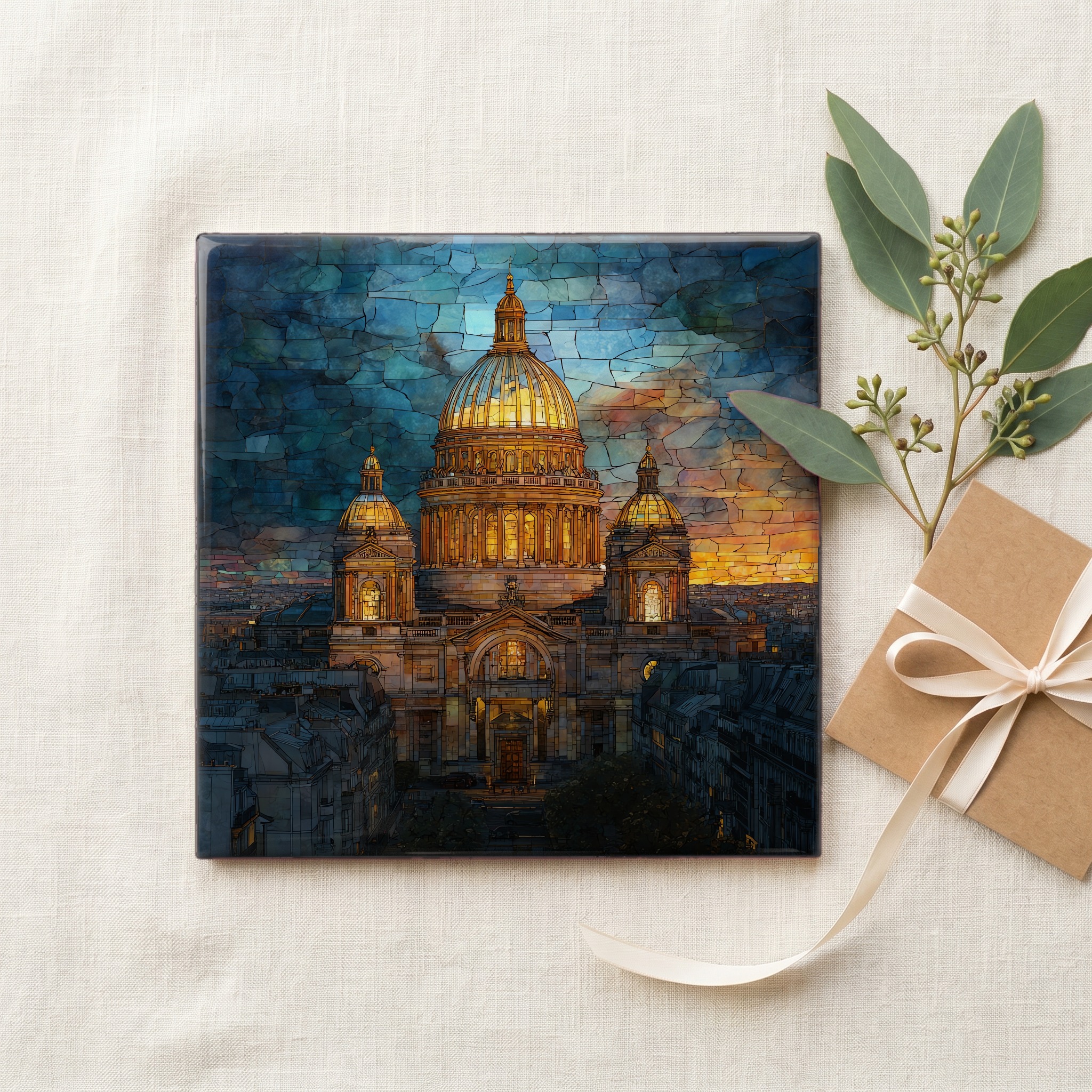
Each tile ships in a kraft box, tied with cream ribbon, with a handwritten note from the studio if you'd like to add one.
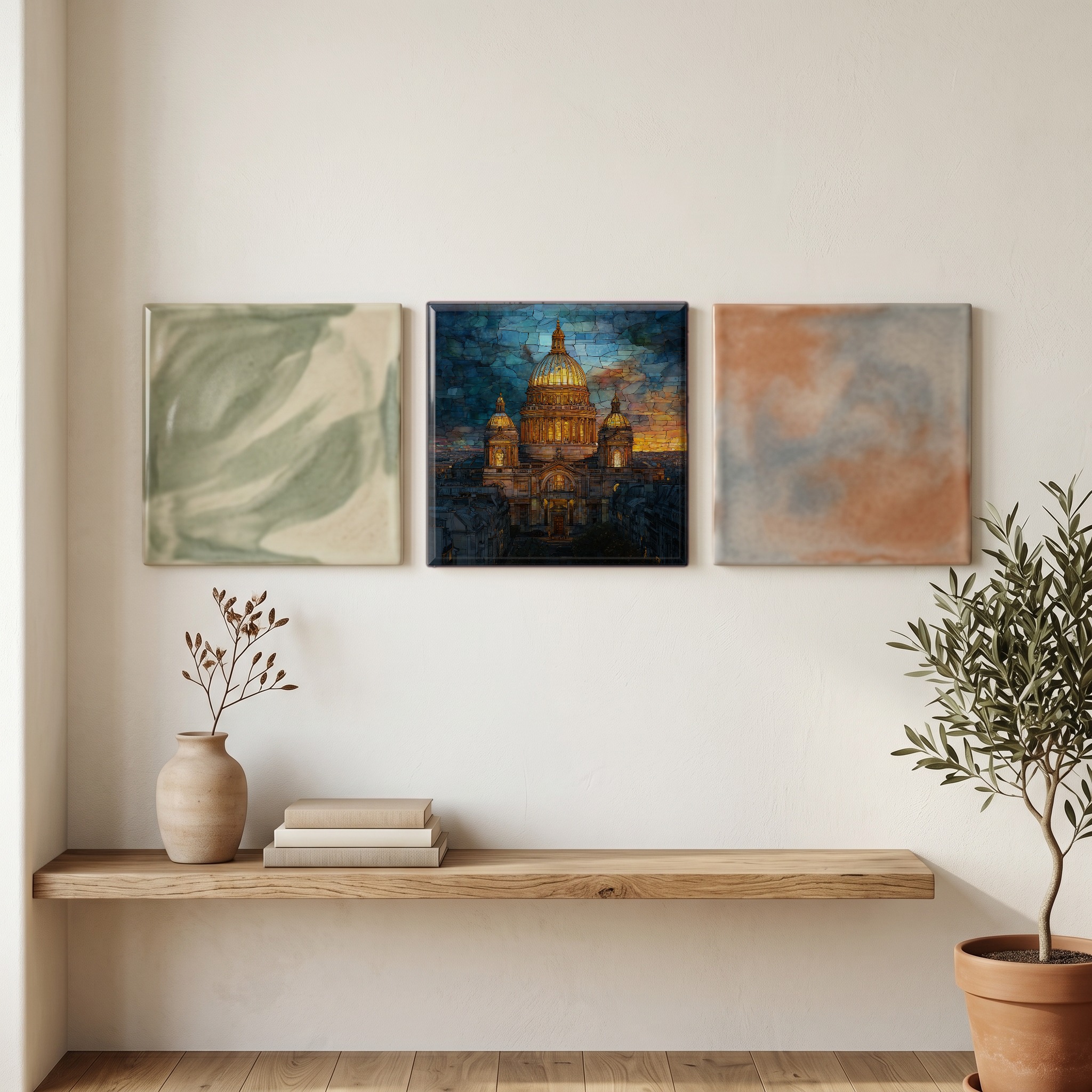
Three or five different vistas, hung together — a chapter of places you've been, or want to go.
The place, in three passes.
The Hôtel National des Invalides stands in the 7th arrondissement of Paris, on the Left Bank of the Seine, with an esplanade nearly half a kilometre long running north to the river and the Pont Alexandre III. Louis XIV commissioned the complex in 1670 as a hospital and home for veterans of his armies; the architect Libéral Bruant completed the main barracks by 1676. It now houses the Musée de l'Armée, the Musée des Plans-Reliefs, and the Institution Nationale des Invalides, a working military hospital. The Métro stops Invalides and La Tour-Maubourg sit at either end of the building.
Jules Hardouin-Mansart designed the domed chapel, the Église du Dôme, that crowns the complex; its lantern rises 107 metres above the courtyard, the tallest church in Paris until the twentieth century. Mansart drew on the central-plan churches of Rome and finished the dome in 1706. The gold leaf on the exterior was renewed in 1989, the bicentennial year of the French Revolution, with about twelve kilograms of leaf laid across the ribs and lantern. Below the dome, in a circular crypt sunk into the floor, sits Napoleon's red quartzite sarcophagus, completed in 1861. The sarcophagus rests on a green granite base from the Vosges.
The complex is open daily except a handful of national holidays, with tickets from the Musée de l'Armée covering the church, the dome crypt, and the museum's permanent collection. Napoleon's tomb sits at the centre of the Église du Dôme; visitors look down into the crypt from a stone balustrade on the upper level. The Musée de l'Armée holds more than 500,000 objects from the Bronze Age through the twentieth century, including the personal effects of Napoleon, Charles de Gaulle, and Ferdinand Foch. The Cour d'honneur, the central parade court, is the easiest entry from the south side; the dome is reached through a separate door facing the esplanade.