Wender·Vista
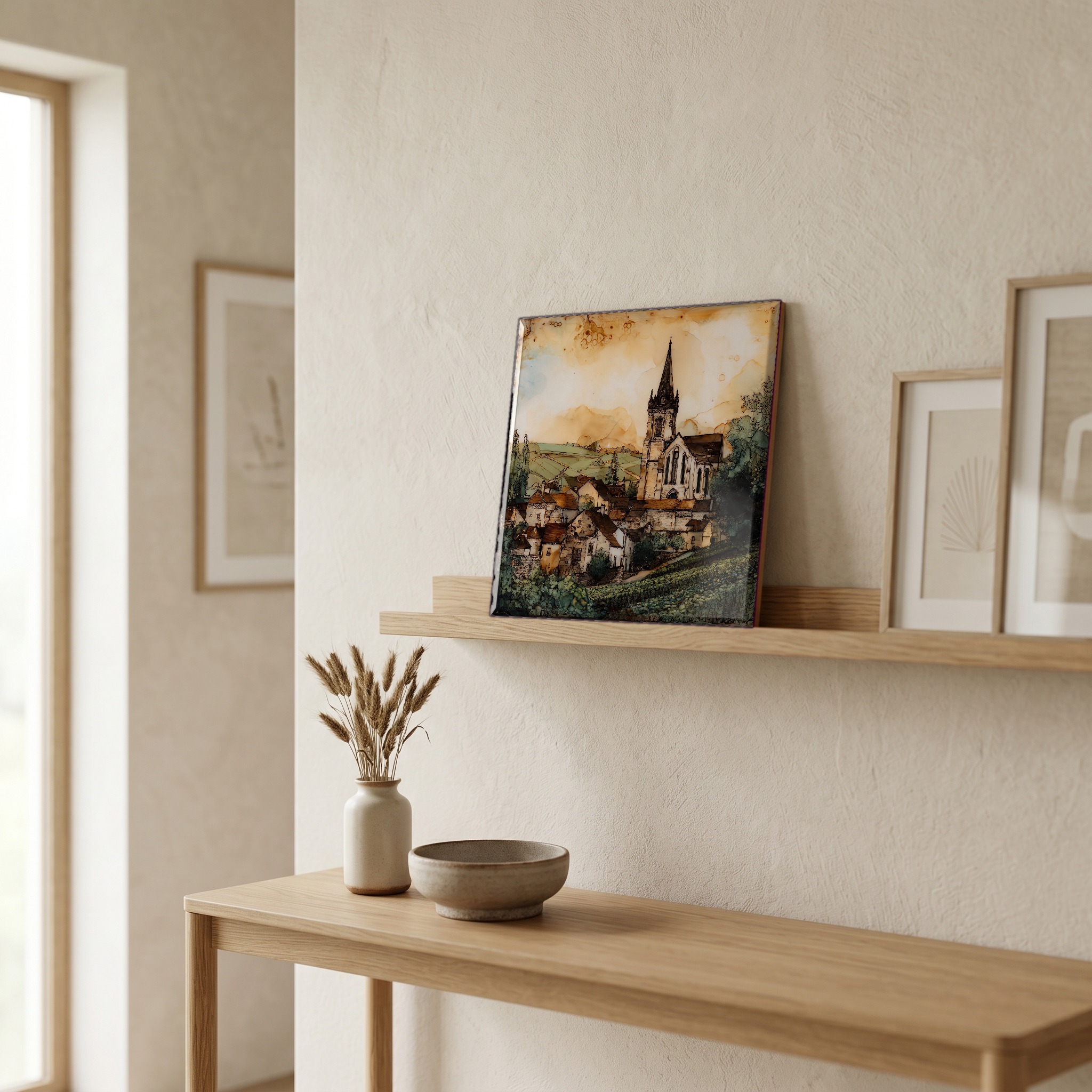
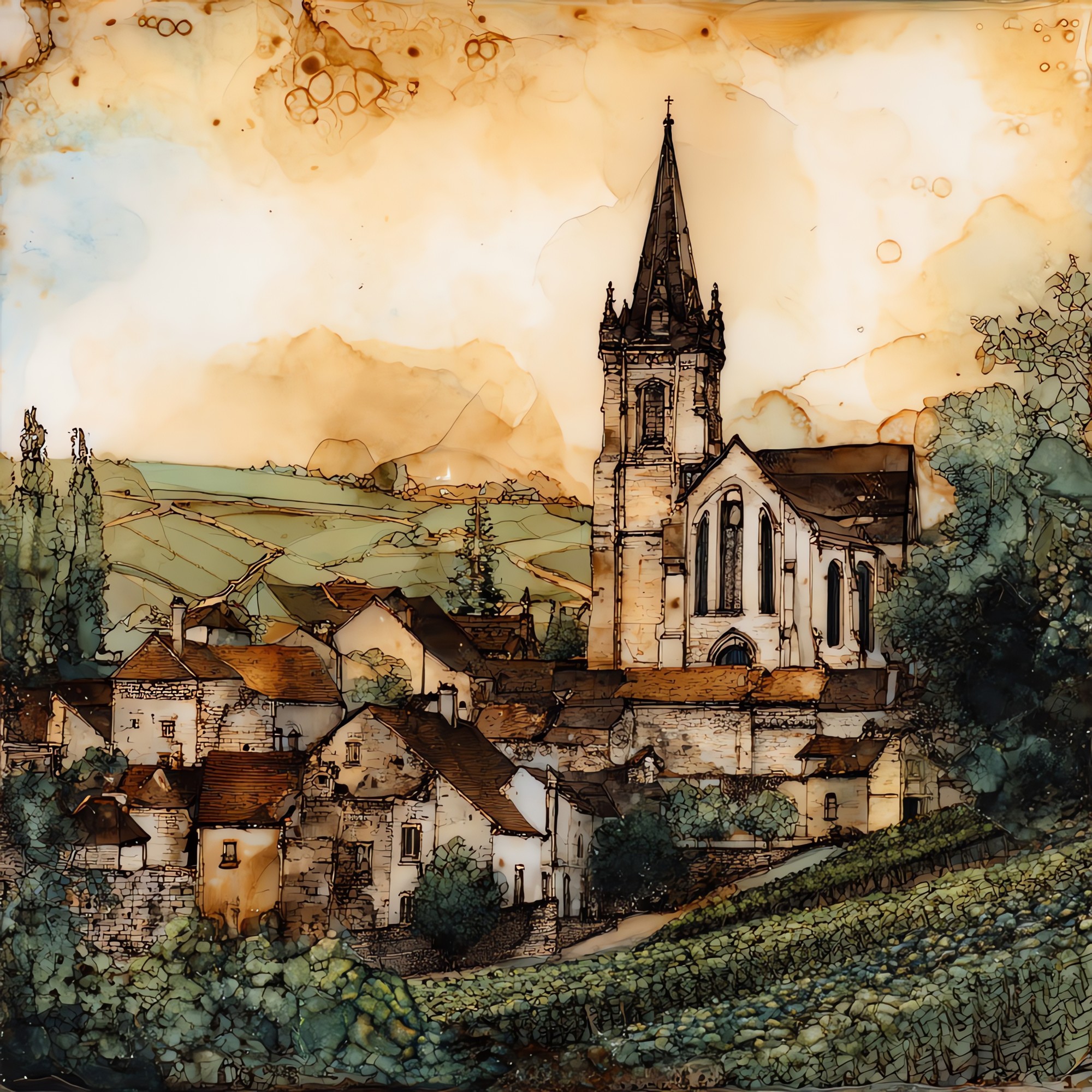
Hautvillers Abbey
shown on ceramic, 12-inch tileFrance
on a chalk hillside above the Marne, north of Épernay

Hautvillers Abbey

— vines below, the small church above.

Where it lives

Not only on a wall.

A small tile on the nightstand catching the morning. A larger one above the fire. Yours, wherever you spend the slow hours.
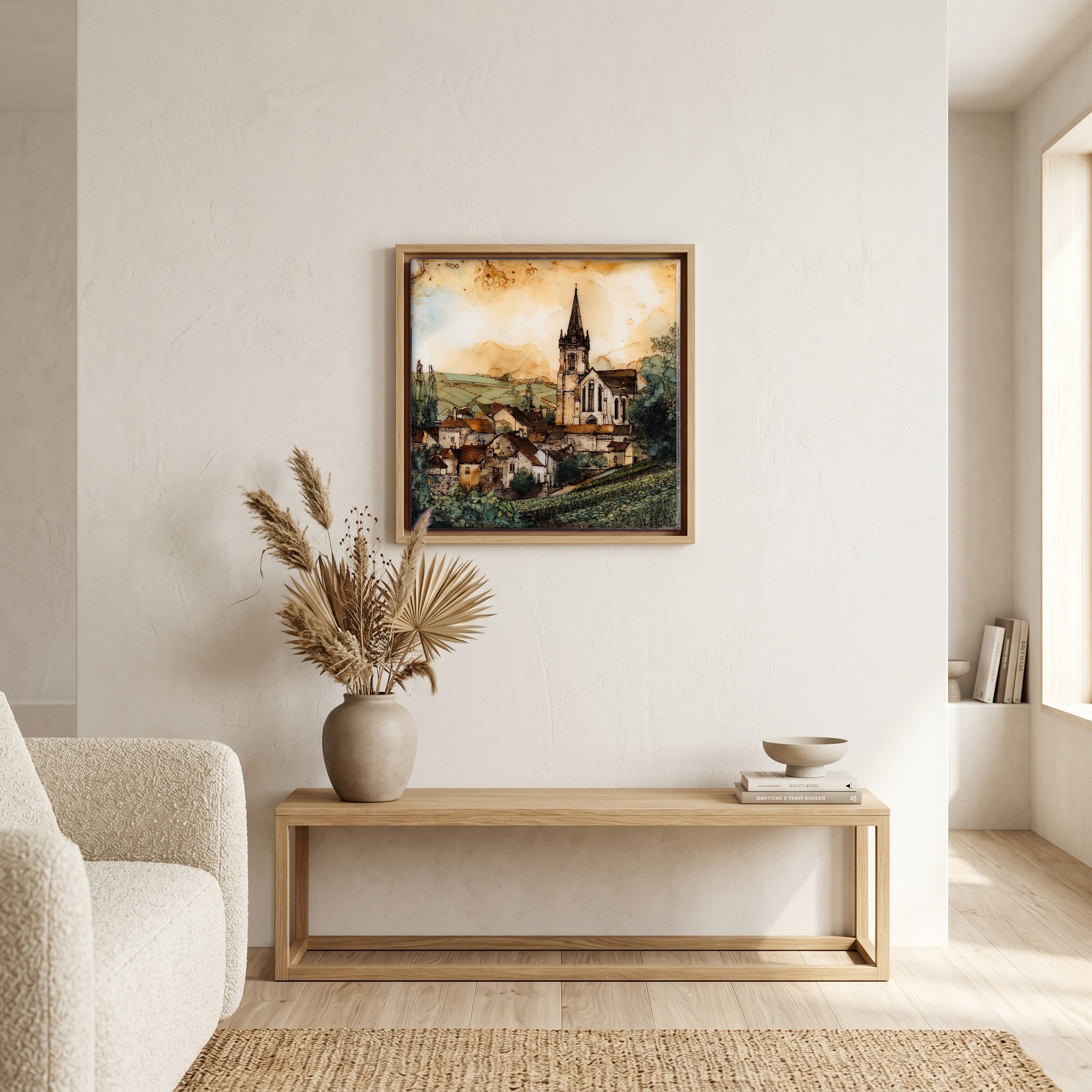
Above the bench, in a warm oak surround.
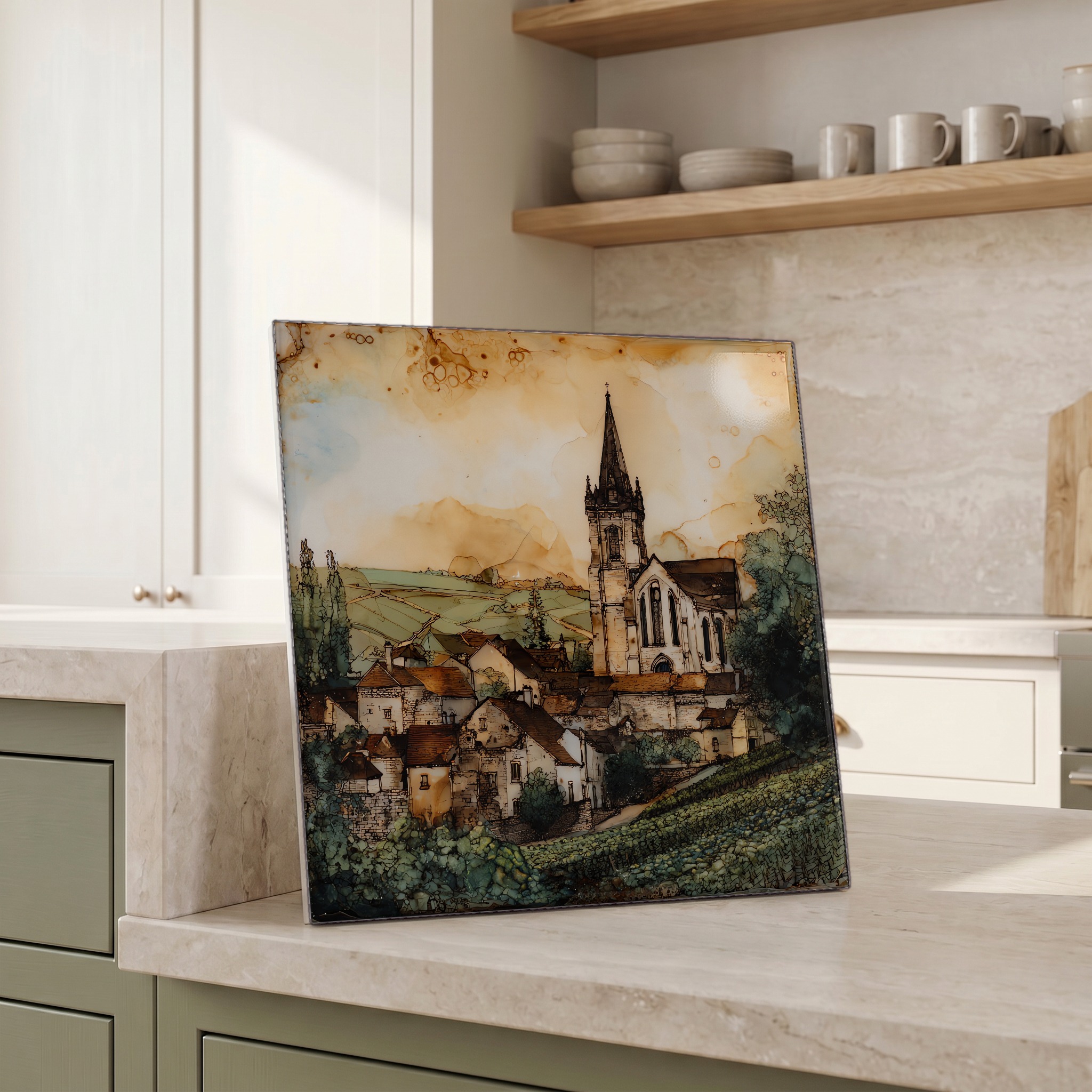
Beside the kettle, propped on the counter.
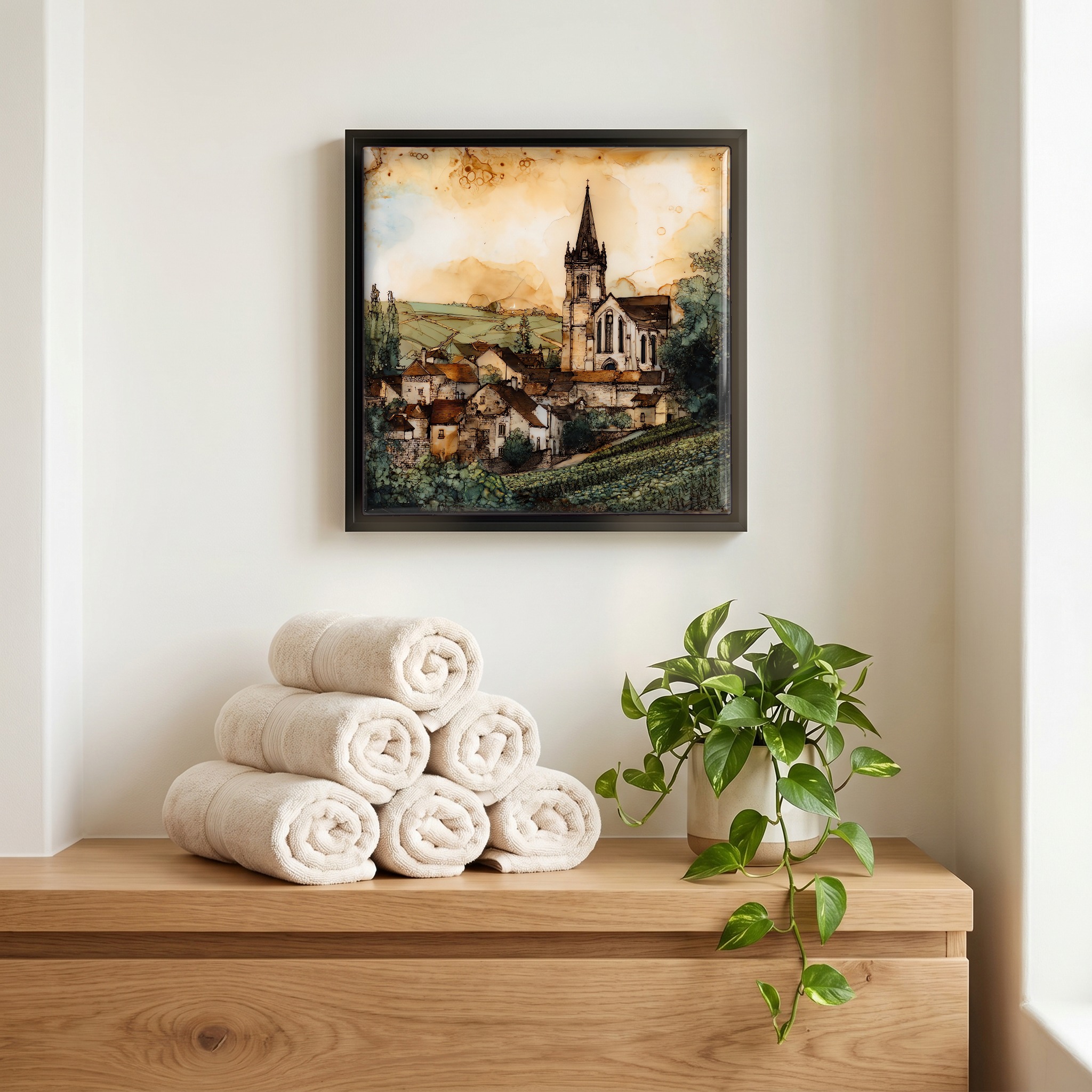
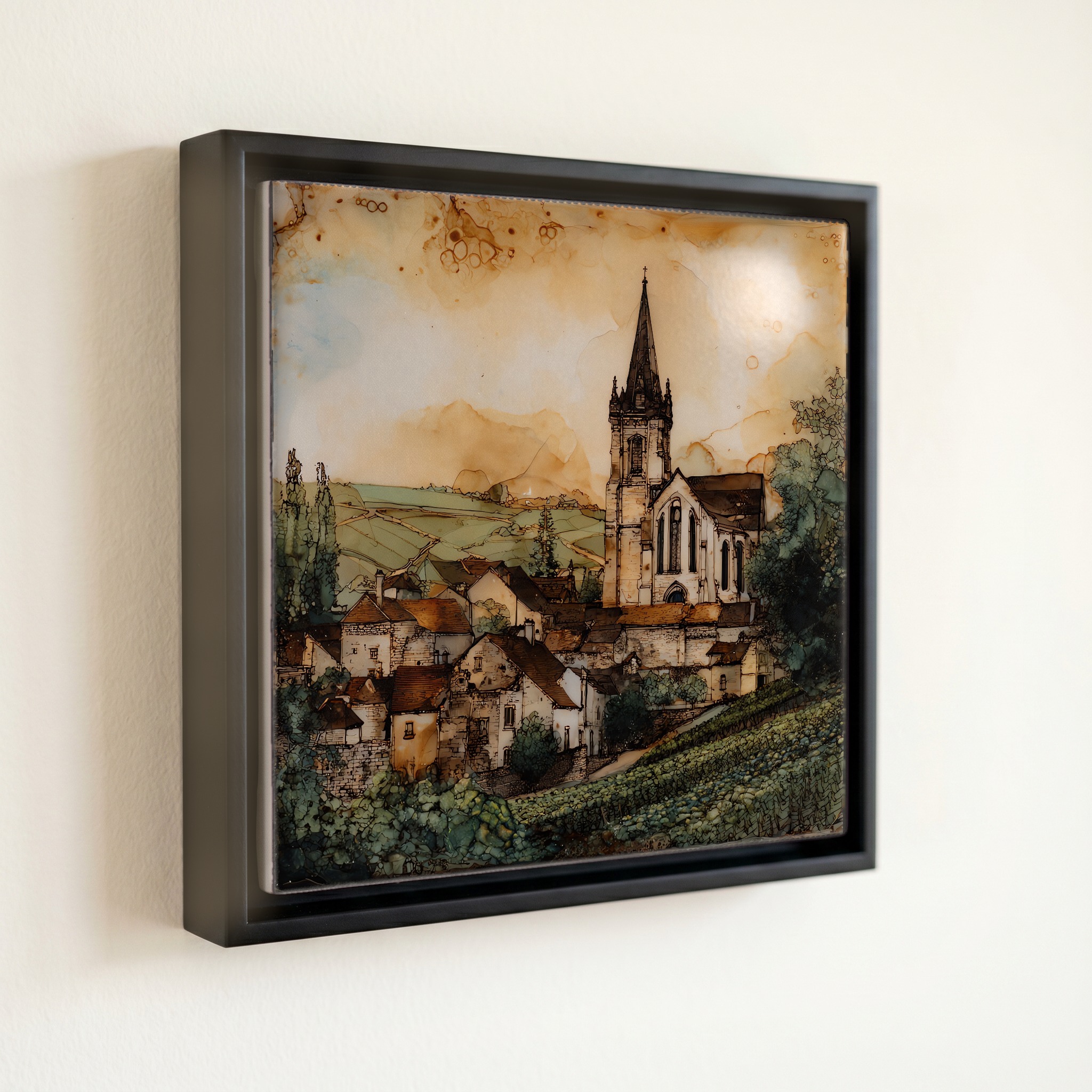
Above the linens, in a slim black surround.
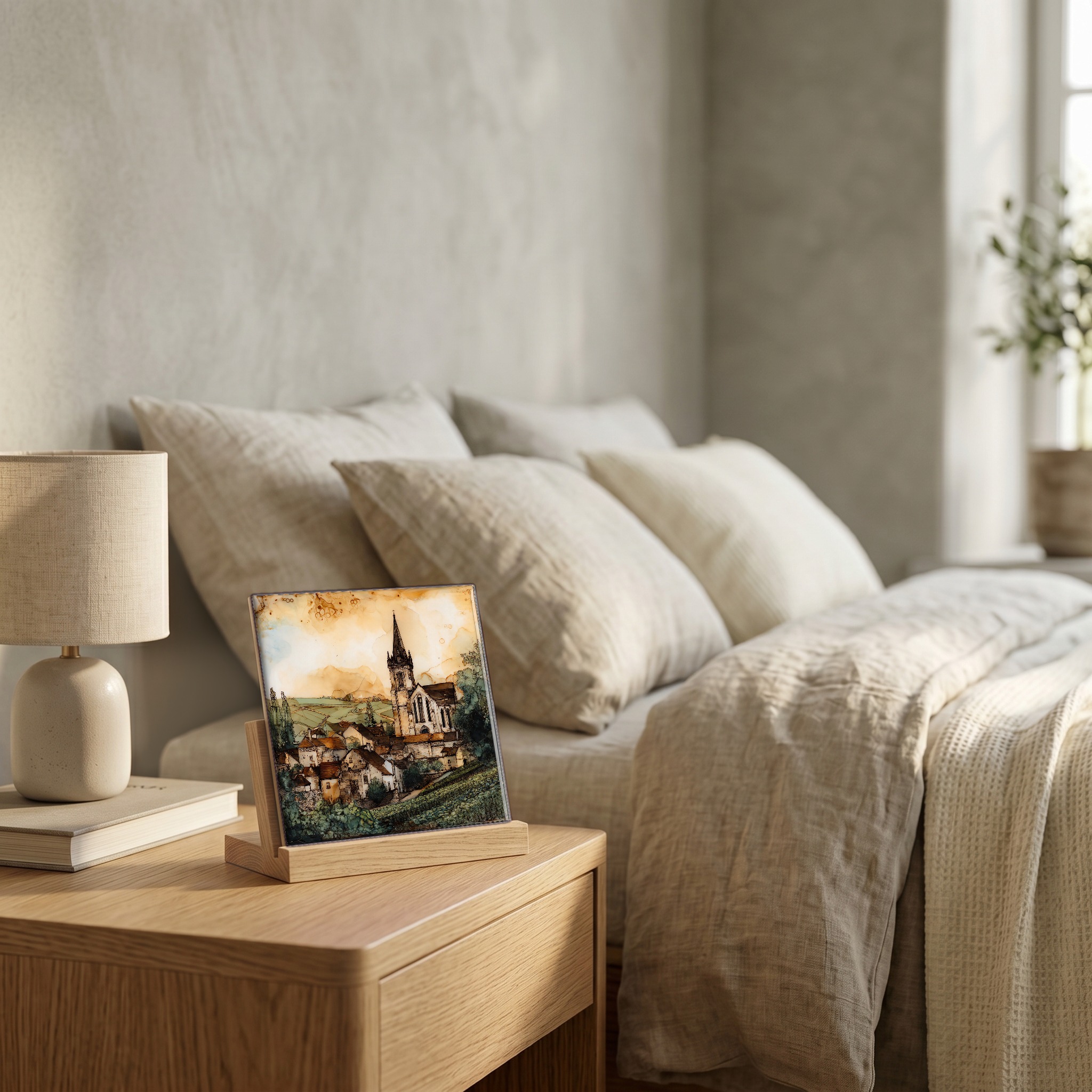
On the nightstand, on a light oak stand.
On a picture ledge, where the light comes in.
a note from the studio

A small village on a chalk slope above the Marne, north of Épernay. Vines below the houses, a single church at the top of the village. Dom Pérignon kept the cellar here for forty-seven years and is buried behind the altar, in a plain stone slab set into the floor. The newer abbey buildings belong to Moët & Chandon now and are not open to visitors, but the church is, and the wrought-iron signs above almost every door in the village name what each family makes.
from the studio
shown in a slim black floating frame · 6 × 6 in
— bring it home

Hautvillers Abbey, on ceramic.

Each tile is finished by hand in our Knoxville studio. Artwork is slowly infused into the ceramic surface under high heat and pressure, and rests beneath a thin glossy finish. The colour lives in the surface, not on top of it.

What kind of piece?
One tile — square or rectangle.
How big?
the popular one — counter, shelf, nightstand
6 × 6 in · 15 cm · 1.6 lb
Surface finish
A clear glossy finish — the artwork reads as if under resin. Ideal for show-pieces and framed wall art.
How it sits
A hidden cleat — sits ¼″ proud of the wall.
$58
Hand-finished and shipped from our studio at the foot of the Smokies. On your wall in about ten days.
size
6 × 6 in
15 cm
weighs
1.6 lb
solid in the hand
surface
ceramic, hand-finished
art rests beneath a thin glossy finish
from
Knoxville, TN
our family studio, at the foot of the Smokies
— start a Coaster Set

Pick any four 4-inch tiles — National Parks you've been to, a Smokies set, the four seasons of one place. $ for a set of , cork-backed, ready to live on the table.
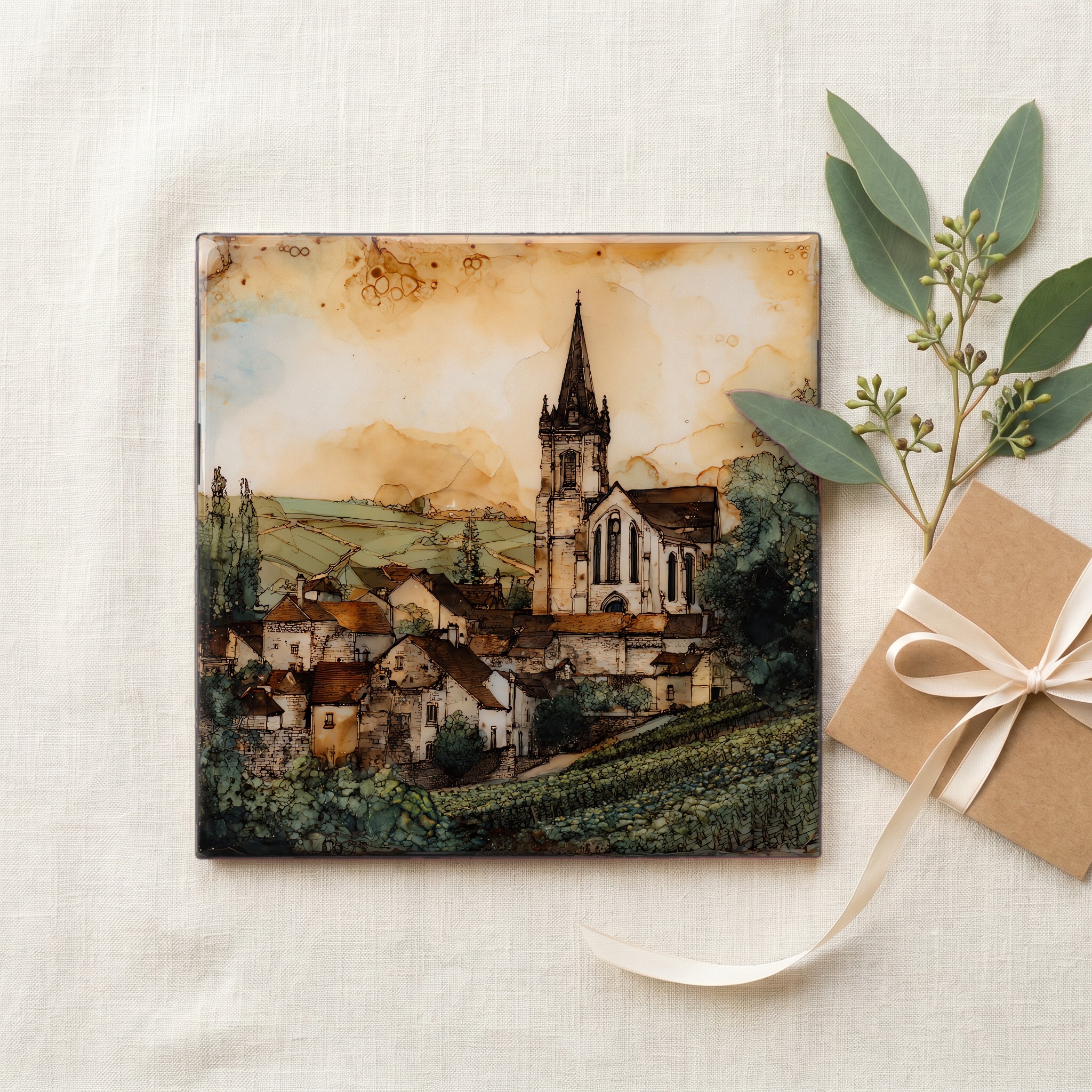
comes gift-ready
comes gift-ready

Each tile ships in a kraft box, tied with cream ribbon, with a handwritten note from the studio if you'd like to add one.
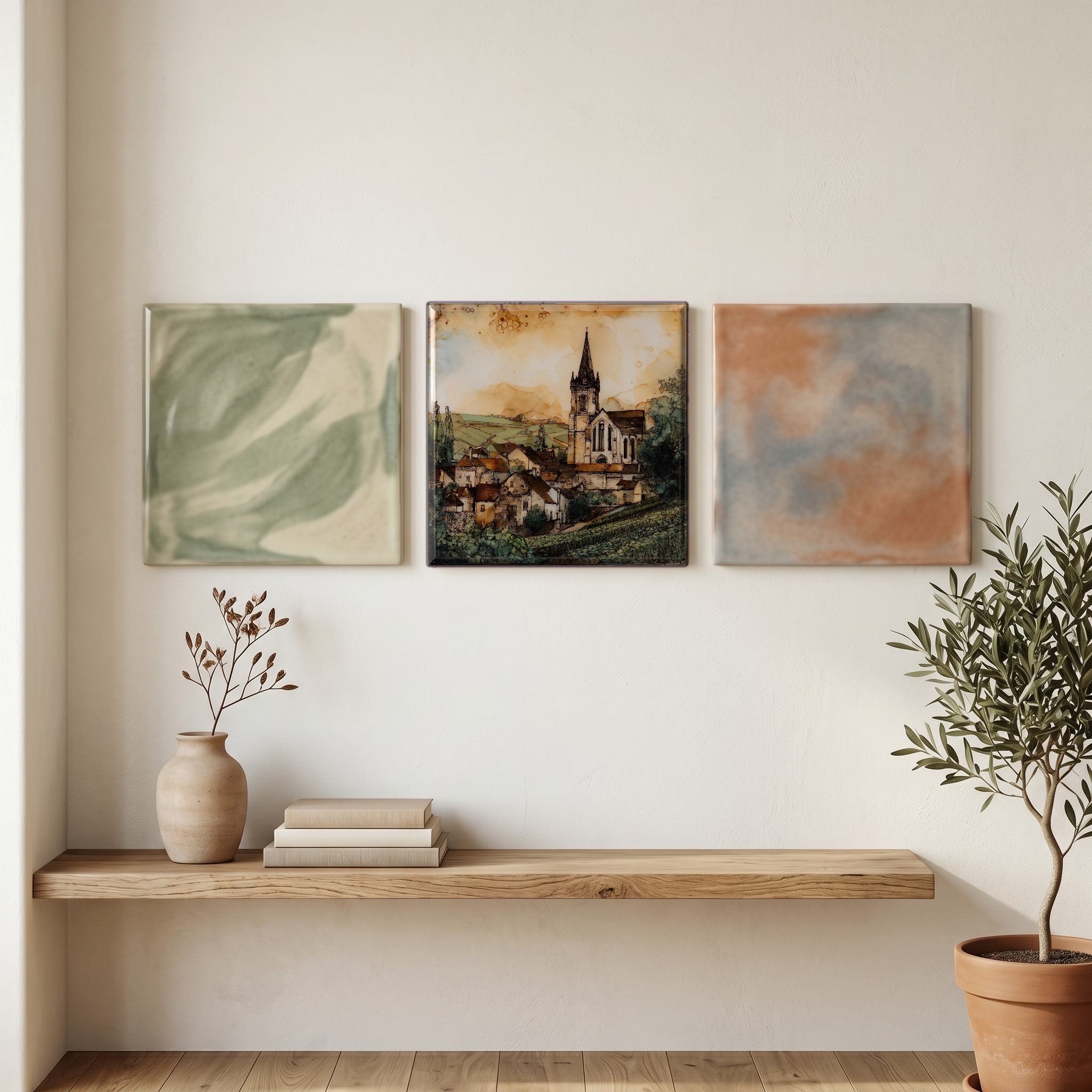
or build a grouping
or build a grouping

Three or five different vistas, hung together — a chapter of places you've been, or want to go.

about Hautvillers Abbey

The place, in three passes.

A little of what's known, in case you fall down the rabbit hole — or want to go see it yourself.
the place

Hautvillers sits on a chalk hillside above the right bank of the Marne, about 6 kilometres north of Épernay, in the Marne department. The abbey was founded in 650 by Saint Nivard, then archbishop of Reims, as a Benedictine monastery. It became one of the great scriptoria of the Carolingian period; the Ebbo Gospels were illuminated here in the early ninth century. The monastery was suppressed during the French Revolution. Moët & Chandon bought the surviving abbey complex in 1823 and owns it still. The village sits within the Champagne Hillsides, Houses and Cellars UNESCO World Heritage listing, inscribed in 2015.

the stone

The surviving abbey church, now the parish church of Saint Sindulphe, stands at the top of the village. Dom Pérignon, cellarer at Hautvillers from 1668 until his death in 1715, is buried behind the high altar in a plain stone slab set into the floor of the chancel. When the abbey was suppressed during the Revolution, the church was kept as the parish church and the cloister buildings sold. Inside, a single nave and a small bell tower sit within what remains of the older monastic complex. The chalk subsoil beneath the village belongs to the same Cretaceous shelf that gives the wider Champagne region its long, slow-ageing wines.

the visit

The Saint-Sindulphe church is open to visitors most days and admission is free. Dom Pérignon's tomb is the dark stone slab set into the floor immediately behind the altar. The Moët & Chandon abbey buildings next door are a working winemaking office and are not open to the public, though Moët offers tours of its main Épernay cellars by booking. The village of Hautvillers itself is known for its painted wrought-iron signs above many of the doorways, each naming the trade or vintage of the family inside. Most visitors arrive by car from Épernay, six kilometres to the south.

where
France · Marne, Grand Est
position
49.0833° N · 3.9500° E
the neighborhood

What's nearby.

A handful of named places within an hour's walk or short drive. Some we've already painted; some we will.
6 km S
Épernay
Champagne town
3 km S
Cumières
Wine village on the Marne
7 km W
Damery
Wine village on the Marne
22 km N
Reims Cathedral
Gothic cathedral
N
Hautvillers Abbey
Épernay
Cumières
Damery
Reims Cathedral
common questions

What people ask.

A few questions we get about Hautvillers Abbey — and about bringing the piece home.
about the place

Hautvillers Abbey sits on a chalk hillside in the village of Hautvillers, about 6 kilometres north of Épernay in the Marne department of north-eastern France. It is on the right bank of the Marne, inside the Champagne Hillsides UNESCO World Heritage area inscribed in 2015.

Pierre Pérignon was a Benedictine monk who served as cellarer at Hautvillers Abbey from 1668 until his death in 1715. He refined the blending of still wines from different villages and is credited with major improvements to the bottling and quality of what later became champagne, though he did not invent sparkling wine.

Yes. He is buried in the chancel of the Saint-Sindulphe parish church at the top of Hautvillers, immediately behind the altar. The slab is plain dark stone set into the floor. The church is generally open to visitors and admission is free.

Moët & Chandon, the Épernay-based champagne house owned by LVMH, bought the surviving abbey complex in 1823 and still owns it. The monastic buildings serve as company offices and are not open to the public. The parish church next door is independent and remains open.

The abbey was founded in 650 by Saint Nivard, then archbishop of Reims, as a Benedictine monastery. It became one of the great scriptoria of the Carolingian period; the Ebbo Gospels were illuminated here in the early ninth century. The monastery was suppressed during the French Revolution.

By car or taxi. Hautvillers is about 6 kilometres north of Épernay on a short signed route up onto the hillside, with no train station in the village. Several Épernay champagne tour operators include Hautvillers on a half-day route. Parking on the narrow main street is limited.

about the piece in your home

It has been a meaningful gift for many of our customers with ties to Champagne. Hautvillers is the symbolic birthplace of the wine; the church holds Dom Pérignon's tomb and the surrounding hills carry the UNESCO heritage listing. A Coaster Set or a Small with a handwritten note from the studio carries well.

The deep ink-and-stained-glass palette reads as Old-World European: French-country, wine-country, library-warm. It suits a French-country dining room, a wine-cellar wall, or a quiet study lined with bookshelves. The Glossy finish brings a subtle jewel-tone glow under warm light.

Yes. French-country and modern bistro categories are both holding steady, and pieces tied to specific named places (Burgundy, Provence, Champagne) carry well on the wall and in conversation. The Hautvillers tile pairs naturally with a wine rack, a small home bar, or a kitchen banquette.

Above a standard three-seat sofa, a single Large reads as a centred statement. Above a long console or sideboard, a 4-tile Mural works well, and a 9-tile Mural fills a full feature wall. A Coaster Set sits naturally on a small bar cart.

Yes. Order the Dura Satin or Matte finish for bathrooms, showers, and kitchen backsplashes. Both are scratch-resistant and hold up under steam and steady wiping. The Glossy finish suits dry display walls and framed pieces rather than wet zones.

A microfibre cloth and warm water is enough for routine cleaning. The colour is slowly infused into the ceramic surface under high heat and pressure and sits beneath a thin glossy finish, so the surface will not lift or fade with normal household care. Avoid abrasive scouring pads.

Yes. Every WenderVista tile is hand-finished by our small studio in Knoxville, Tennessee. The artwork is original to Wender Studios and not licensed from any third party. Reid Wender chose Hautvillers personally and the painting was developed for the catalog.

if this one stayed with you

A few you might also love.

Hand-picked by the eye that found Sorapis. Same air, same kind of quiet.