Wender·Vista
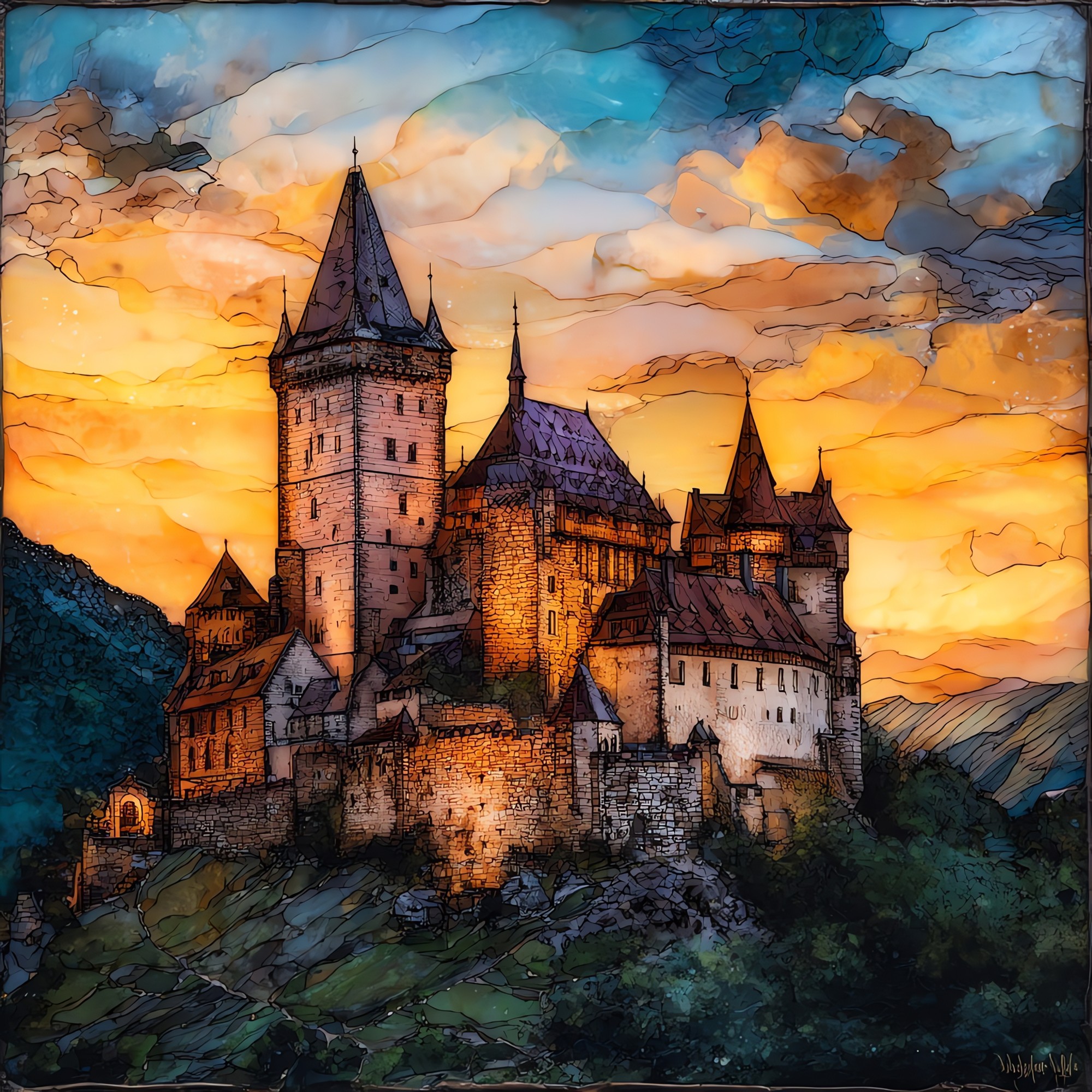
Haut-Koenigsbourg Castle
shown on ceramic, 12-inch tileFrance
above the Alsace plain, in the Vosges

Haut-Koenigsbourg Castle

— pink sandstone, holding the long horizon.

Where it lives

Not only on a wall.

A small tile on the nightstand catching the morning. A larger one above the fire. Yours, wherever you spend the slow hours.
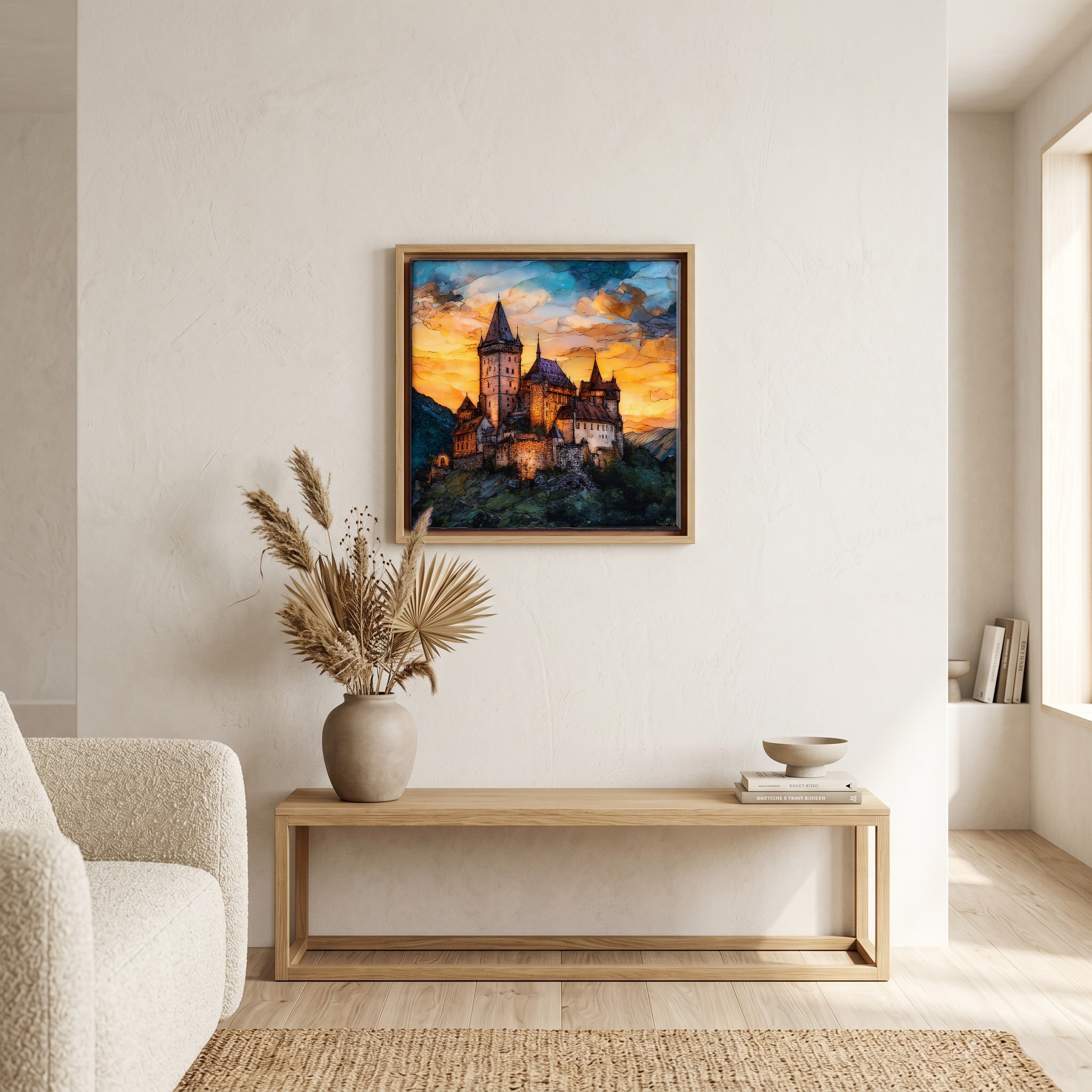
Above the bench, in a warm oak surround.
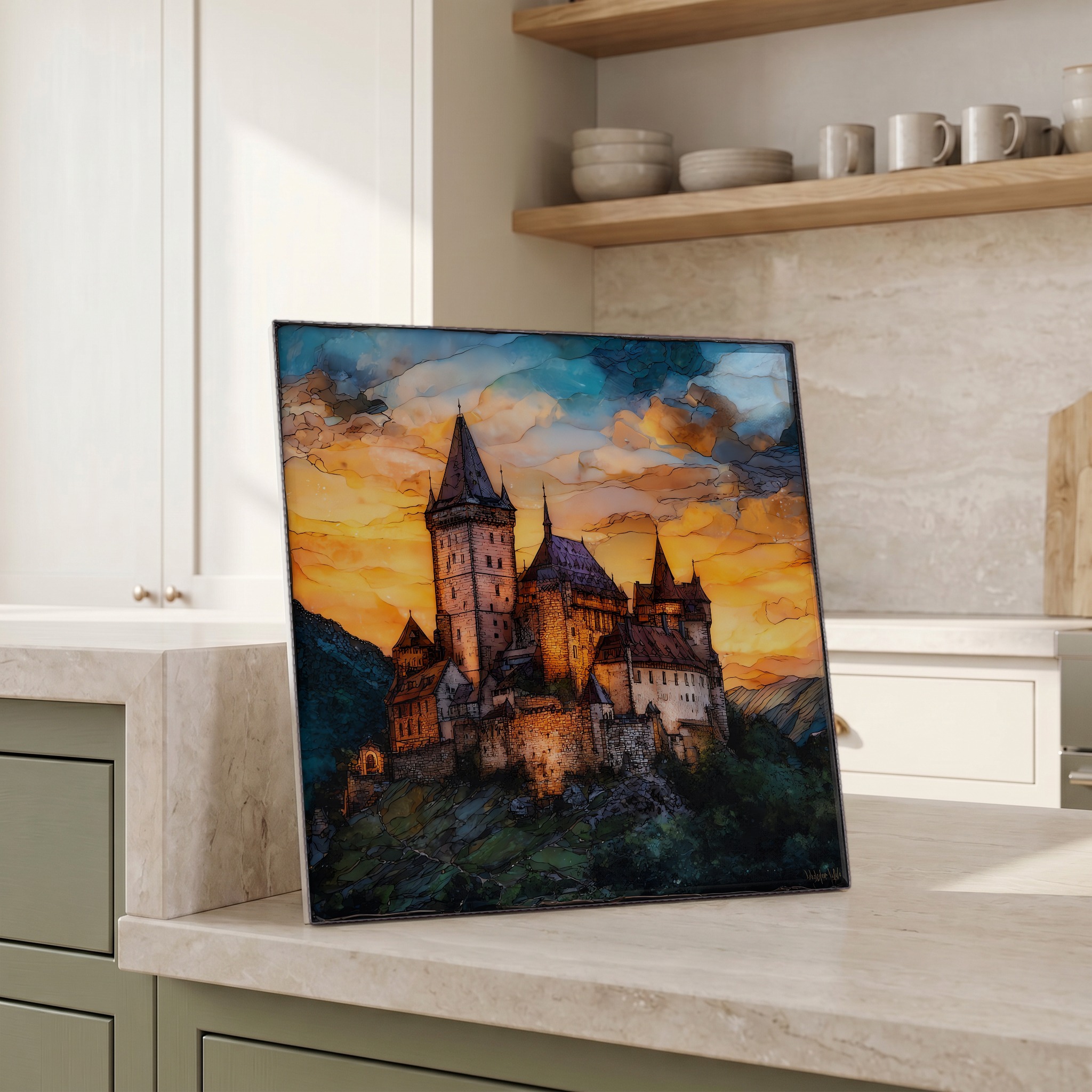
Beside the kettle, propped on the counter.
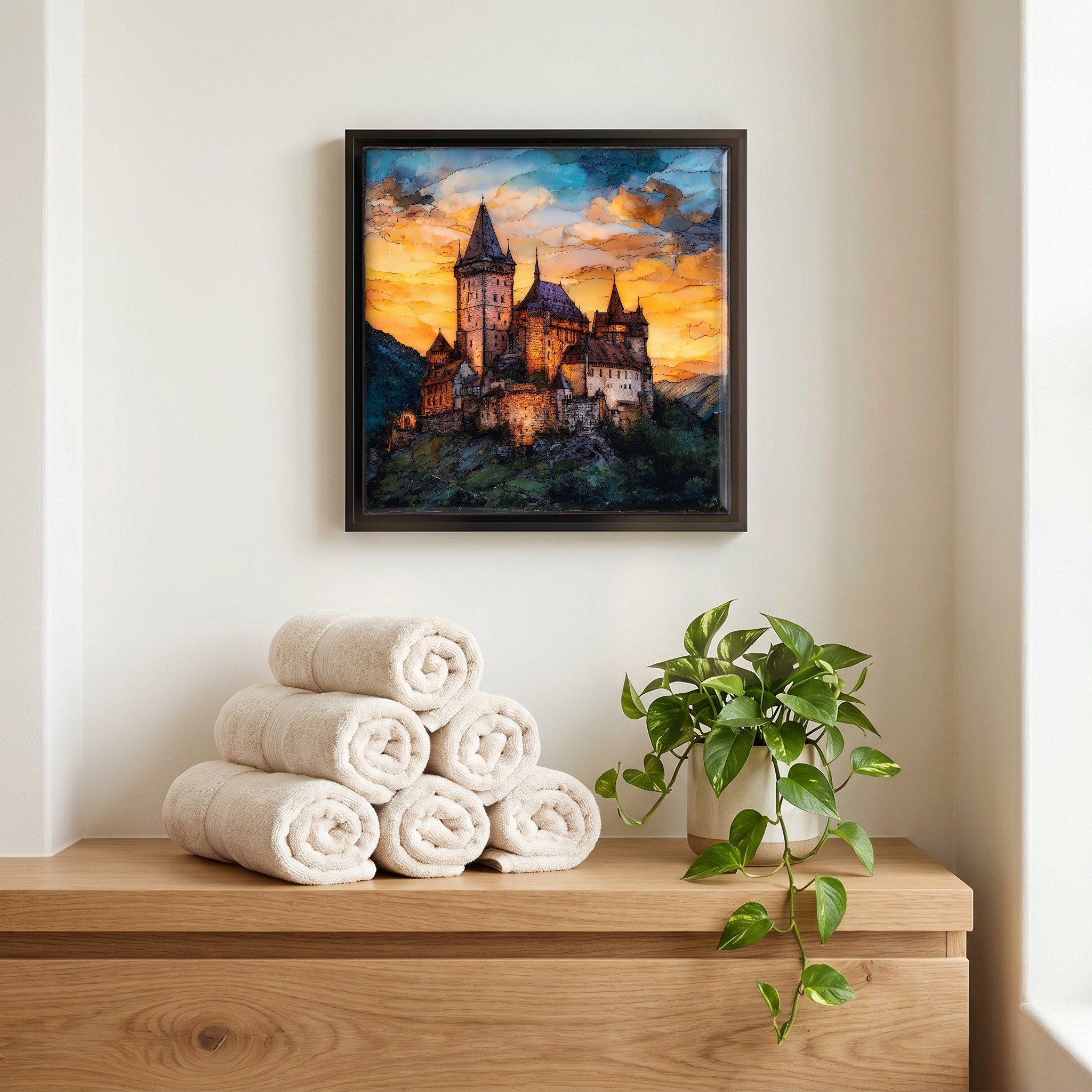
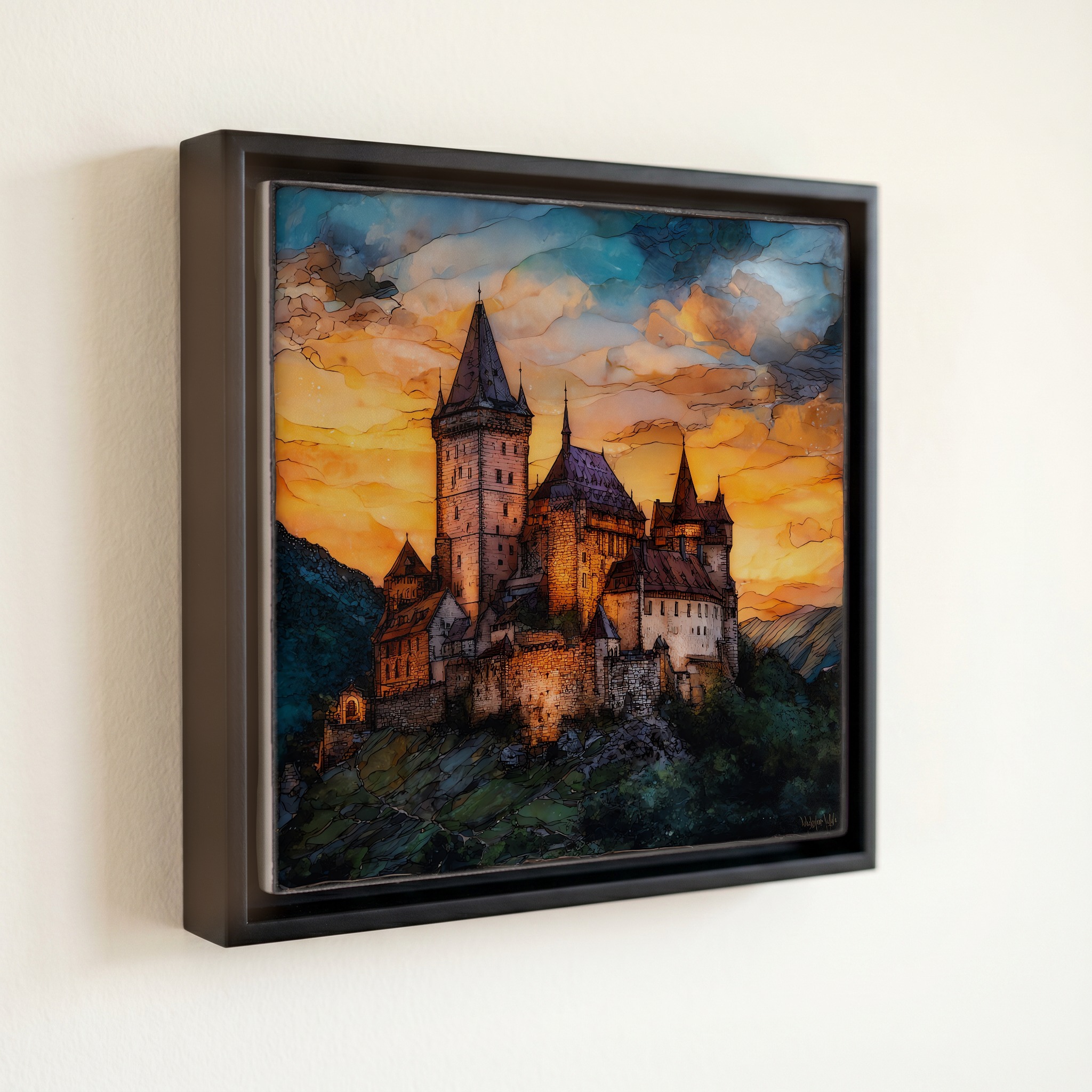
Above the linens, in a slim black surround.
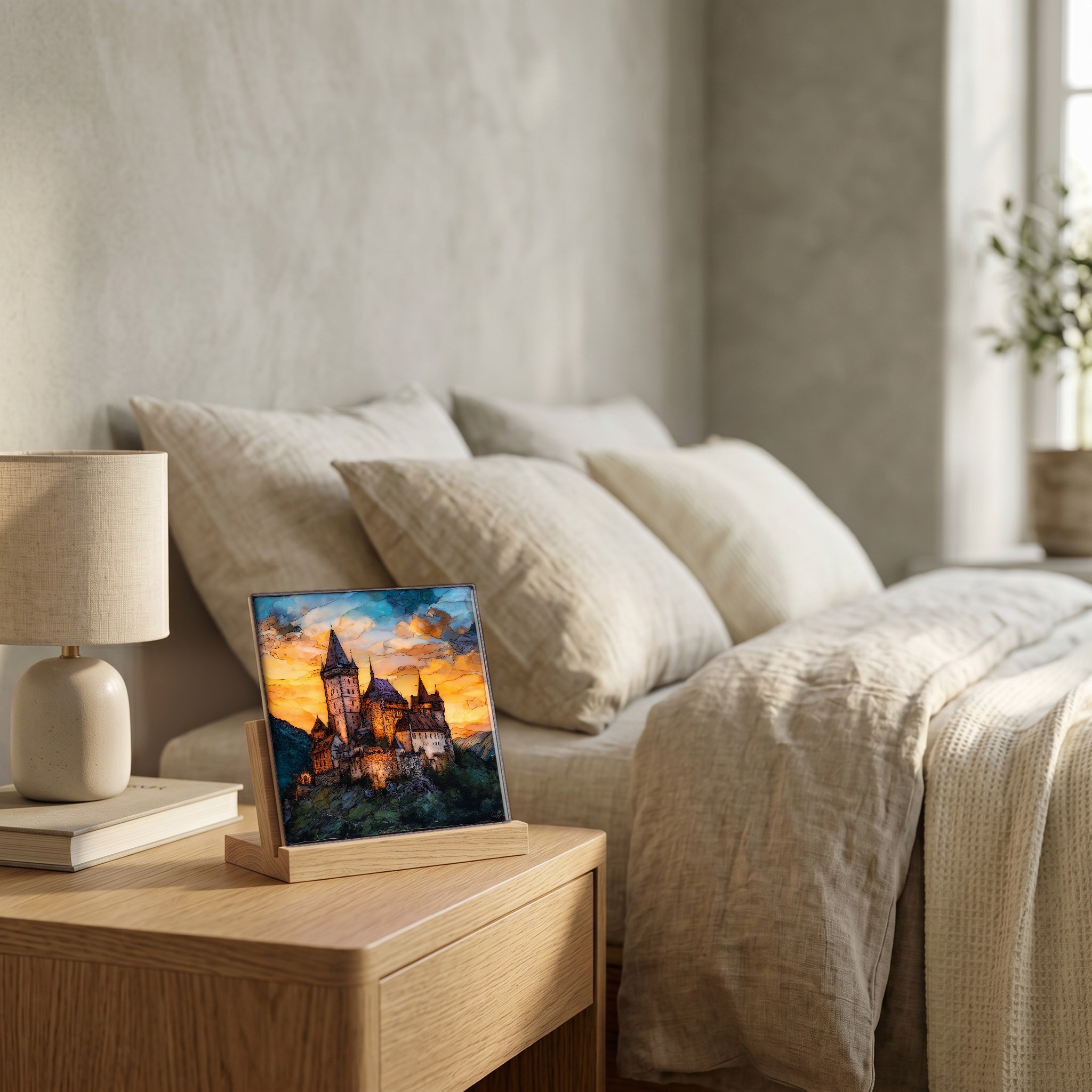
On the nightstand, on a light oak stand.
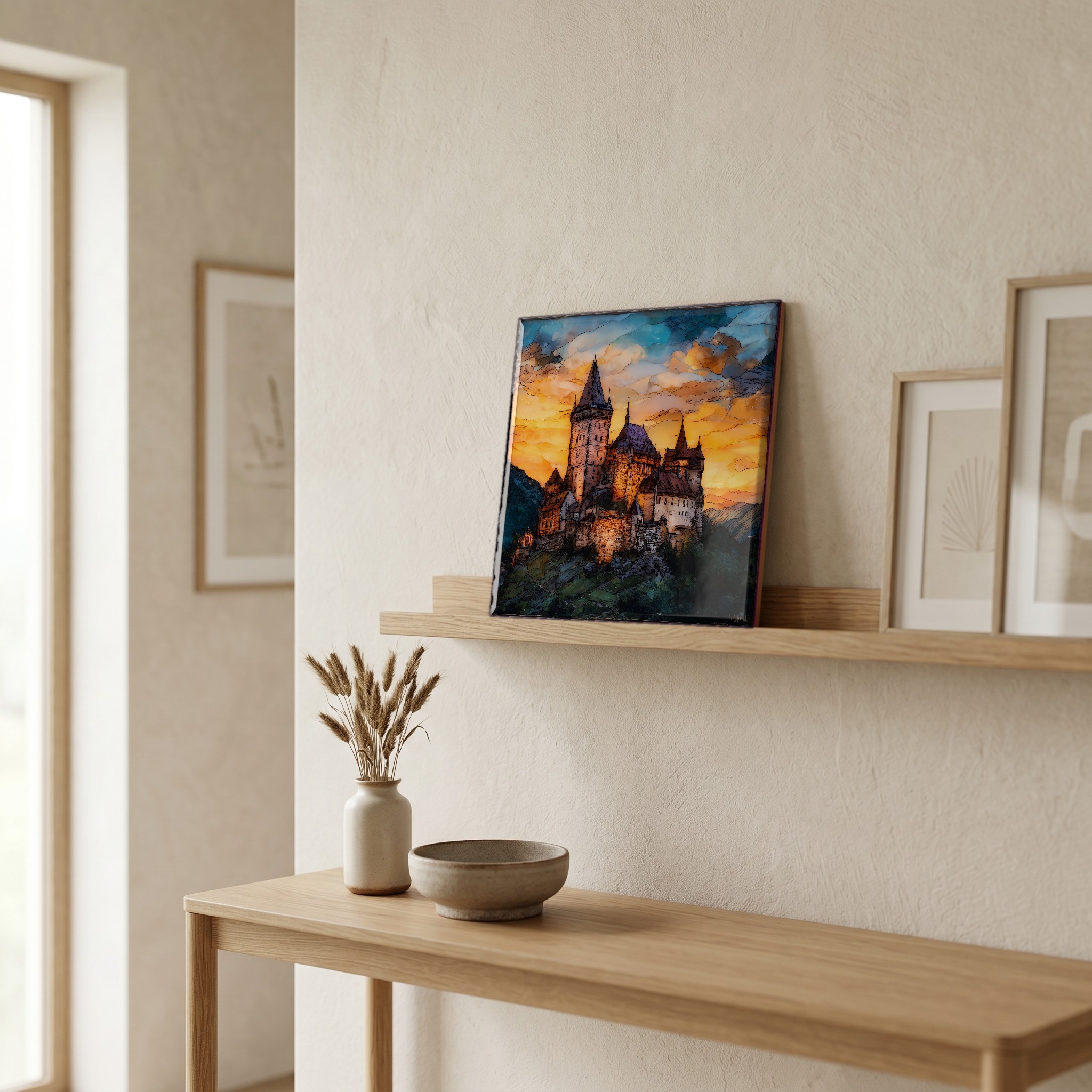
On a picture ledge, where the light comes in.
a note from the studio

The high pink sandstone fortress on a spur above the Alsace plain. The Hohenstaufens raised the first walls here in the twelfth century. The Swedes burned it in 1633, and it sat as a ruin for two hundred and sixty-seven years. Then Kaiser Wilhelm II had it rebuilt, between 1900 and 1908, by the architect Bodo Ebhardt. The roof is tiled in patterns. The hall is hung with halberds. On a clear day the keep looks east to the Black Forest. On the cleanest days of winter, south to the Alps. The pink stone holds the light differently than the limestone castles further west.
from the studio
shown in a slim black floating frame · 6 × 6 in
— bring it home

Haut-Koenigsbourg Castle, on ceramic.

Each tile is finished by hand in our Knoxville studio. Artwork is slowly infused into the ceramic surface under high heat and pressure, and rests beneath a thin glossy finish. The colour lives in the surface, not on top of it.

What kind of piece?
One tile — square or rectangle.
How big?
the popular one — counter, shelf, nightstand
6 × 6 in · 15 cm · 1.6 lb
Surface finish
A clear glossy finish — the artwork reads as if under resin. Ideal for show-pieces and framed wall art.
How it sits
A hidden cleat — sits ¼″ proud of the wall.
$58
Hand-finished and shipped from our studio at the foot of the Smokies. On your wall in about ten days.
size
6 × 6 in
15 cm
weighs
1.6 lb
solid in the hand
surface
ceramic, hand-finished
art rests beneath a thin glossy finish
from
Knoxville, TN
our family studio, at the foot of the Smokies
— start a Coaster Set

Pick any four 4-inch tiles — National Parks you've been to, a Smokies set, the four seasons of one place. $ for a set of , cork-backed, ready to live on the table.
comes gift-ready
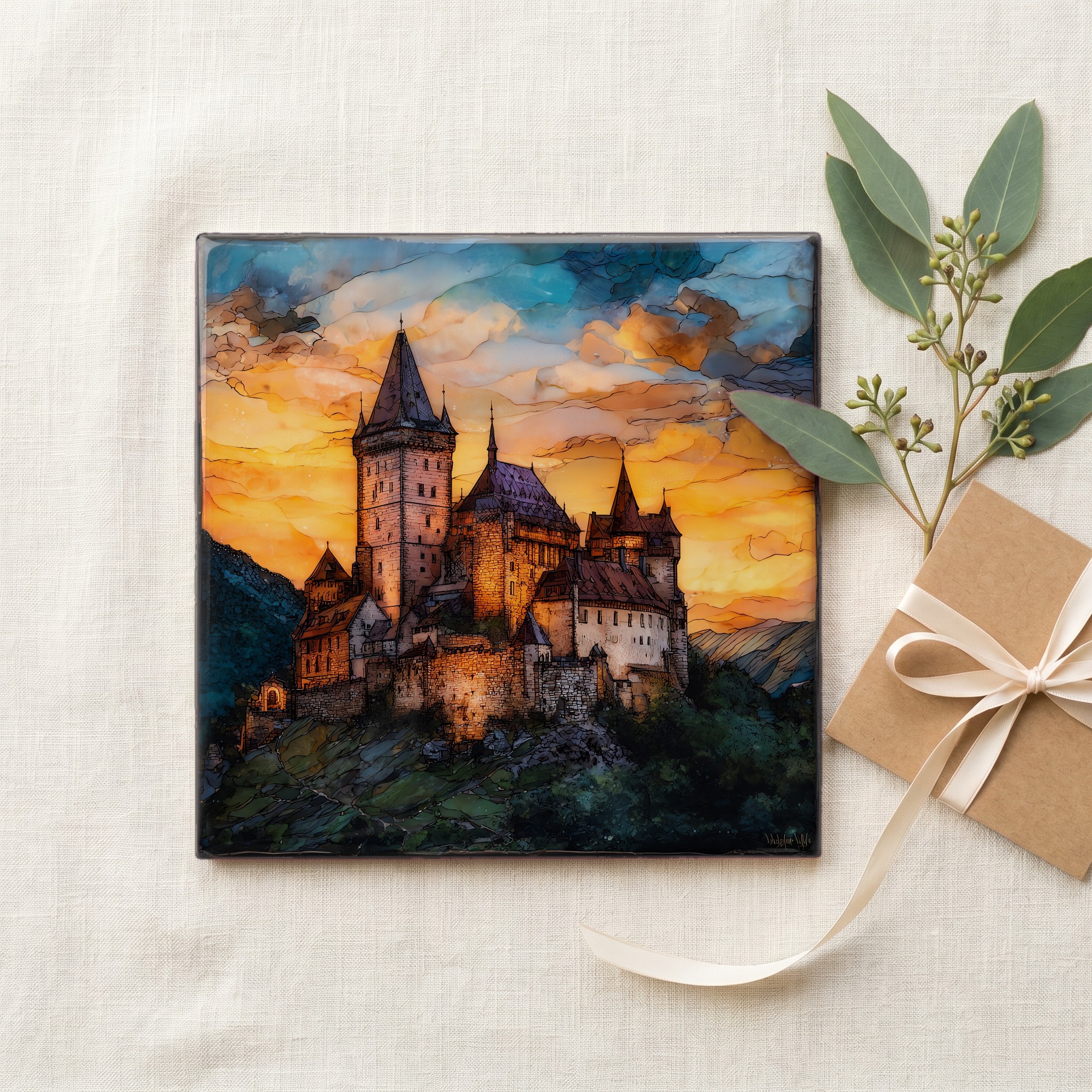
comes gift-ready

Each tile ships in a kraft box, tied with cream ribbon, with a handwritten note from the studio if you'd like to add one.
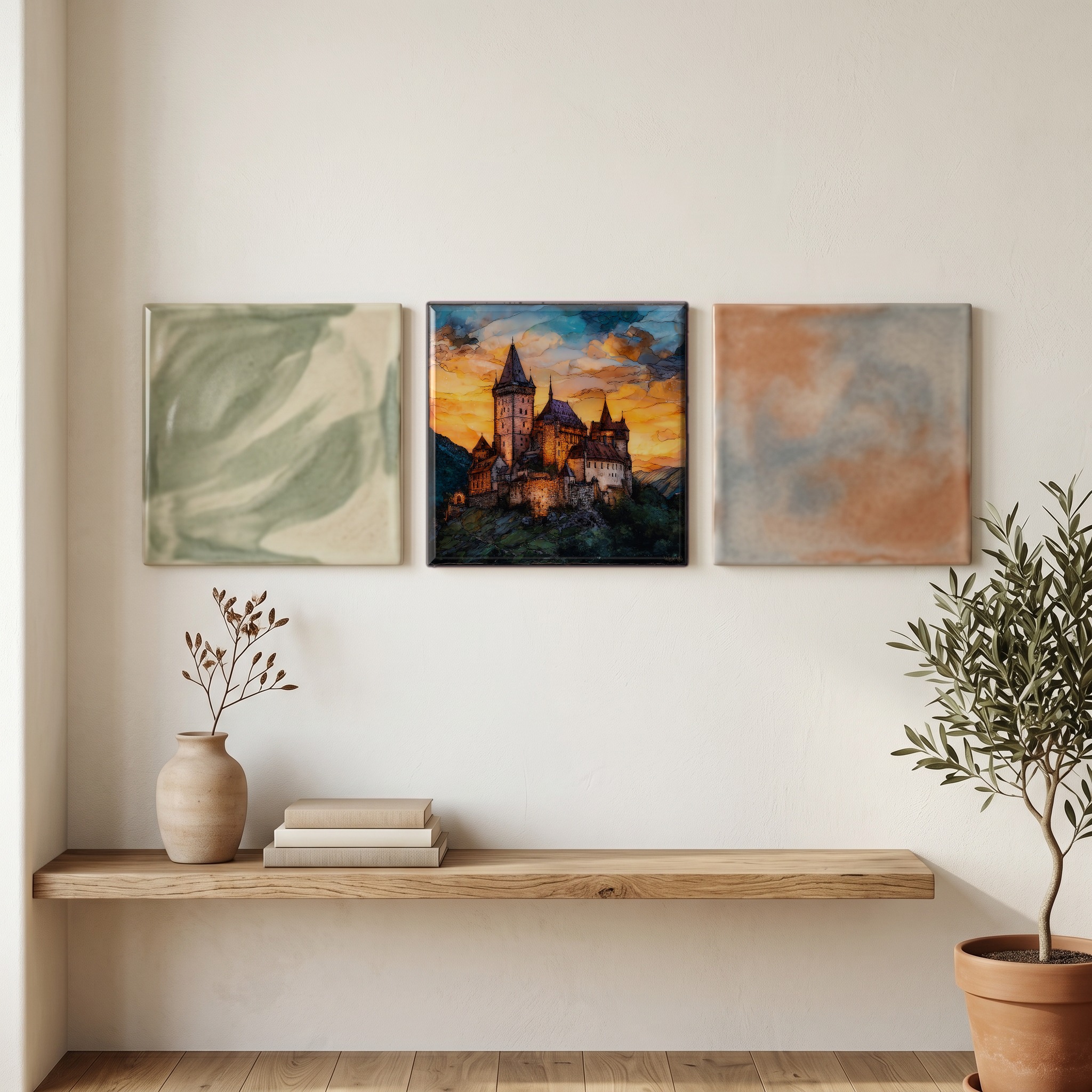
or build a grouping
or build a grouping

Three or five different vistas, hung together — a chapter of places you've been, or want to go.

about Haut-Koenigsbourg Castle

The place, in three passes.

A little of what's known, in case you fall down the rabbit hole — or want to go see it yourself.
the place

Haut-Koenigsbourg sits at 757 metres on a rocky spur of the Vosges, in the commune of Orschwiller, twelve kilometres west of Sélestat in France's Grand Est region. The site has been fortified since at least 1147, when the first castle was raised by the Hohenstaufen dynasty. Burned by Swedish troops in 1633 during the Thirty Years' War, it stood ruined for nearly three centuries. The town of Sélestat presented the ruin to Kaiser Wilhelm II in 1899 (Alsace was then part of the German Empire), and the emperor commissioned the architect Bodo Ebhardt to rebuild it. Construction ran from 1900 to 1908. Ownership returned to France under the Treaty of Versailles in 1919, and the castle is today classified a Monument historique.

the stone

The castle is built from the local pink sandstone of the Vosges, the same warm rose-grey stone that gives Strasbourg Cathedral its colour. The plan is long and narrow, roughly 270 metres along its main axis, wrapped around a great keep and a long bastion. Bodo Ebhardt's 1900-1908 reconstruction worked from the surviving walls and from late-medieval architectural treatises, with the keep raised to its likely fifteenth-century height. The polychrome roof tiles, the gabled keep, and the weapons hall (the Salle des Armes, hung with armour and halberds) are part of his synthesis. Critics have argued the result reveals as much about 1900 as it does about 1450.

the visit

Haut-Koenigsbourg is one of the most visited castles in France, drawing more than 500,000 visitors a year. The site opens every day except January 1 and December 25, with hours that shift by season, short in winter and long through the summer. From the upper terrace the view runs east across the Alsace plain to the Black Forest in Germany, north along the Vosges crest, and on the clearest winter days south to the Alps. The drive up from the wine villages of the Route des Vins takes about twenty minutes from Sélestat. A shuttle bus from Sélestat railway station runs in season.

where
France · Orschwiller, Bas-Rhin
elevation
757 m · 2,484 ft
position
48.2495° N · 7.3441° E
the neighborhood

What's nearby.

A handful of named places within an hour's walk or short drive. Some we've already painted; some we will.
12 km E
Sélestat
Alsatian town
4 km E
Kintzheim
village at the foot of the spur
10 km S
Ribeauvillé
wine village on the Route des Vins
14 km S
Riquewihr
walled wine village
25 km S
Colmar
Alsatian city
N
Haut-Koenigsbourg Castle
Sélestat
Kintzheim
Ribeauvillé
Riquewihr
Colmar
common questions

What people ask.

A few questions we get about Haut-Koenigsbourg Castle — and about bringing the piece home.
about the place

The castle sits on a 757-metre rocky spur of the Vosges Mountains in Alsace, in the commune of Orschwiller. It is about 12 kilometres west of Sélestat, in France's Grand Est region, overlooking the Alsace plain and the wine villages of the Route des Vins.

The site has been fortified since at least 1147, when the Hohenstaufen dynasty raised the first castle. The medieval castle was burned by Swedish troops in 1633 and stood as a ruin for almost three centuries before Kaiser Wilhelm II had it rebuilt between 1900 and 1908.

The name means 'high castle of the king'. The German is Hochkönigsburg; the French spelling Haut-Koenigsbourg replaces the umlaut with 'oe' and gives 'burg' its French ending. Alsace shifted between French and Germanic rule for centuries, and the place names carry both.

The German architect Bodo Ebhardt led the reconstruction between 1900 and 1908. Alsace was part of the German Empire at the time, and the town of Sélestat had given the ruin to Kaiser Wilhelm II in 1899. Ebhardt worked from the surviving walls and from late-medieval architectural treatises.

From the upper terrace the view runs east across the Alsace plain to the Black Forest in Germany, north along the Vosges crest, and on the clearest winter days south to the Alps. The plain below holds the vineyards of the Route des Vins d'Alsace.

Yes. Haut-Koenigsbourg is open every day except January 1 and December 25. Winter hours are shorter, with the castle closing by late afternoon in December and January, and the road up from Saint-Hippolyte can be slick after snow.

The castle is about 12 kilometres west of Sélestat in Bas-Rhin. By car, the drive from Sélestat or Saint-Hippolyte takes about twenty minutes. In season, a shuttle bus runs from Sélestat railway station to the castle car park, with a short walk uphill to the entrance.

about the piece in your home

It is a meaningful gift for someone with Alsatian roots or a love of the region. Haut-Koenigsbourg is one of Alsace's most recognised places, on every regional tourism poster and inside every postcard rack from Strasbourg to Colmar. A Small or a Medium with a handwritten note from the studio carries well.

The pink-stone palette and the medieval lines suit European-traditional rooms, French country interiors, and warm-toned eclectic studies. The artwork reads well in a study or library, against deeper walls in burgundy, forest green, or warm oat. It is not a fit for cool minimalist palettes.

Yes. The European-traditional revival favours warm stone, heraldic motifs, and rooms anchored by one strong artwork rather than many small pieces. A single Large or a 4-tile Mural of Haut-Koenigsbourg works in that vocabulary, especially above a console or a sideboard.

Above a sofa, a single Large covers a standard three-seater, and a 4-tile Mural reads as a centred feature. A 9-tile Mural fills a wide wall above an oversized sofa or a long sideboard. Above a console, a Medium is the most common pick.

Yes. The Dura Satin and Matte finishes are scratch-resistant and shrug off humidity, so a Haut-Koenigsbourg tile lives comfortably as a kitchen backsplash centre, on a vanity wall, or behind a vessel sink. Order the Glossy only for framed wall art and dry rooms.

A soft microfibre cloth and warm water. For kitchen splatter, a drop of mild dish soap is fine. Do not use abrasive sponges, ammonia, or bleach. The colour is slowly infused into the ceramic surface under high heat and pressure, so it will not fade or rub off.

Yes. Every WenderVista piece is original to the studio, designed by Reid Wender, the curator. The artwork is not licensed and is not sold anywhere else. Each tile is hand-finished in Knoxville, Tennessee, and ships from the studio.

if this one stayed with you

A few you might also love.

Hand-picked by the eye that found Sorapis. Same air, same kind of quiet.