Wender·Vista
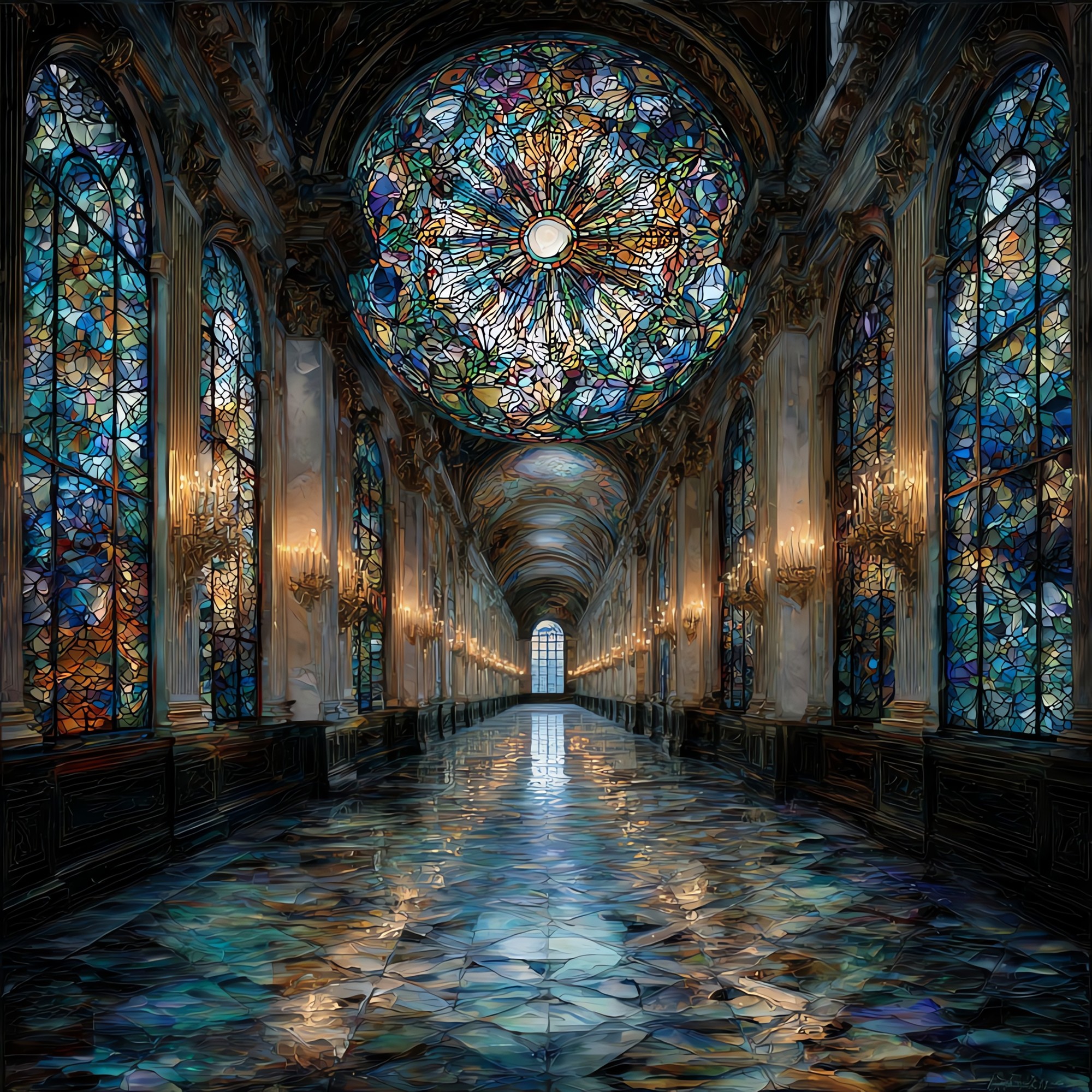
Hall of Mirrors Versailles
shown on ceramic, 12-inch tileFrance
in the king's palace, west of Paris

Hall of Mirrors Versailles

— the afternoon sun, returned seventeen times by glass.

Where it lives

Not only on a wall.

A small tile on the nightstand catching the morning. A larger one above the fire. Yours, wherever you spend the slow hours.
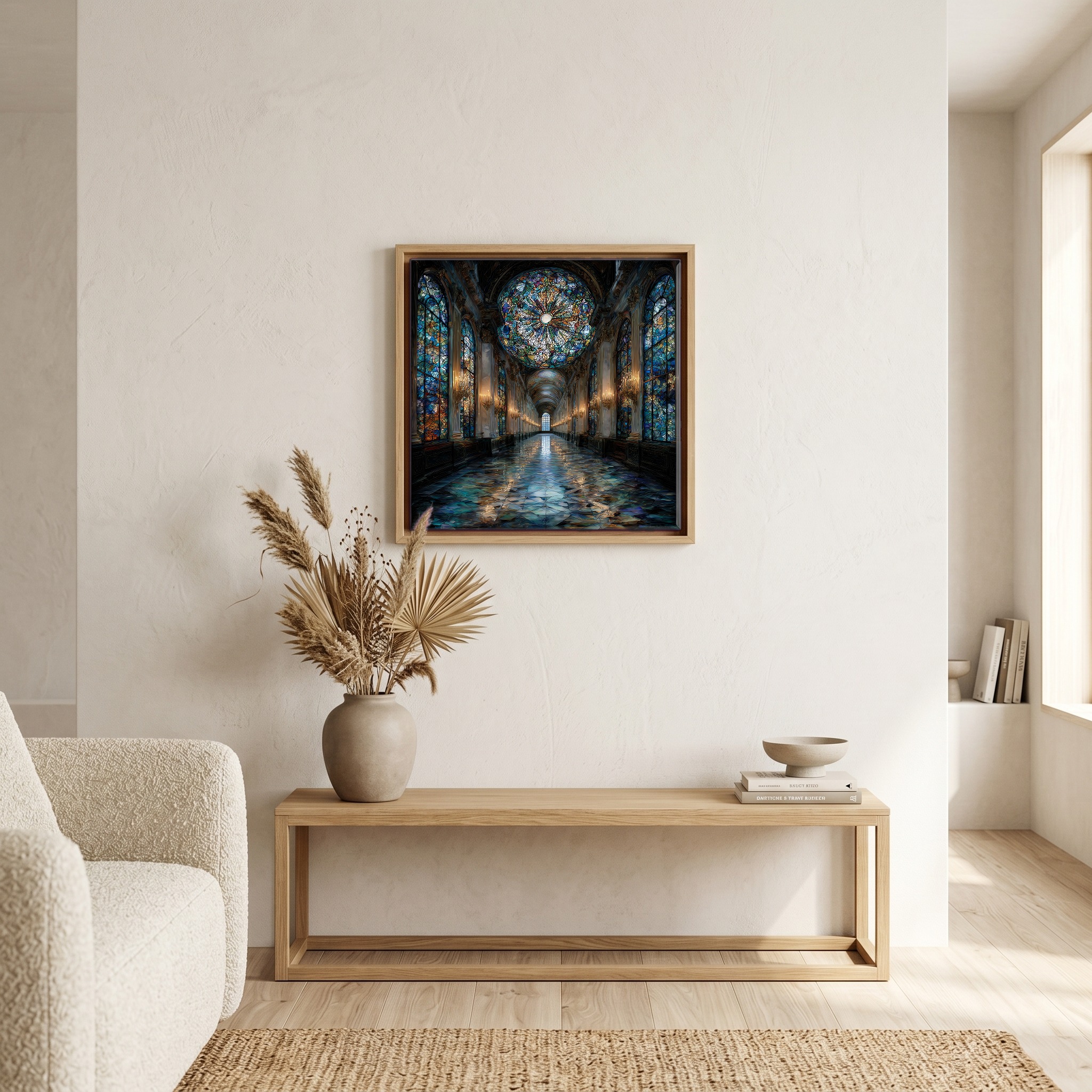
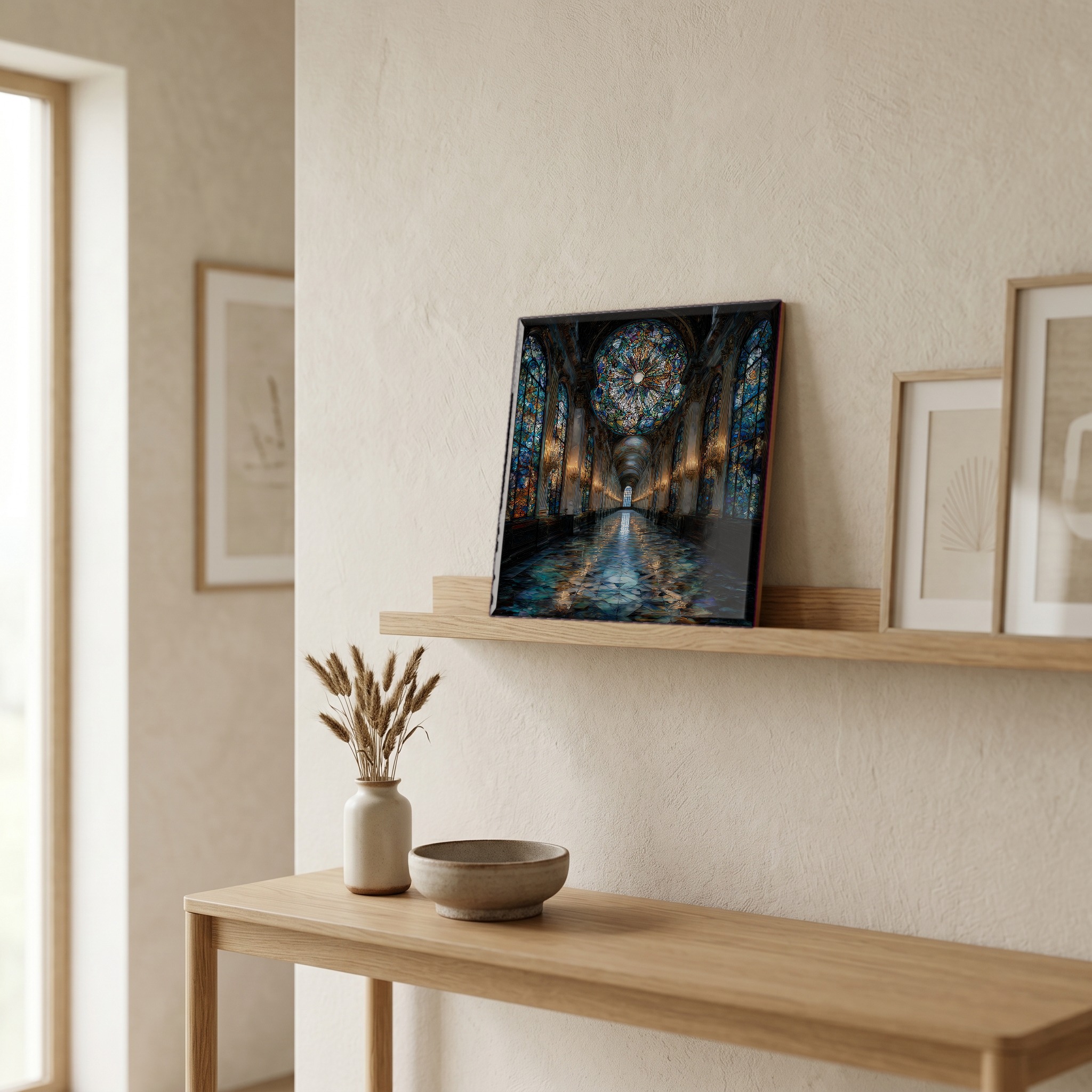
Above the bench, in a warm oak surround.
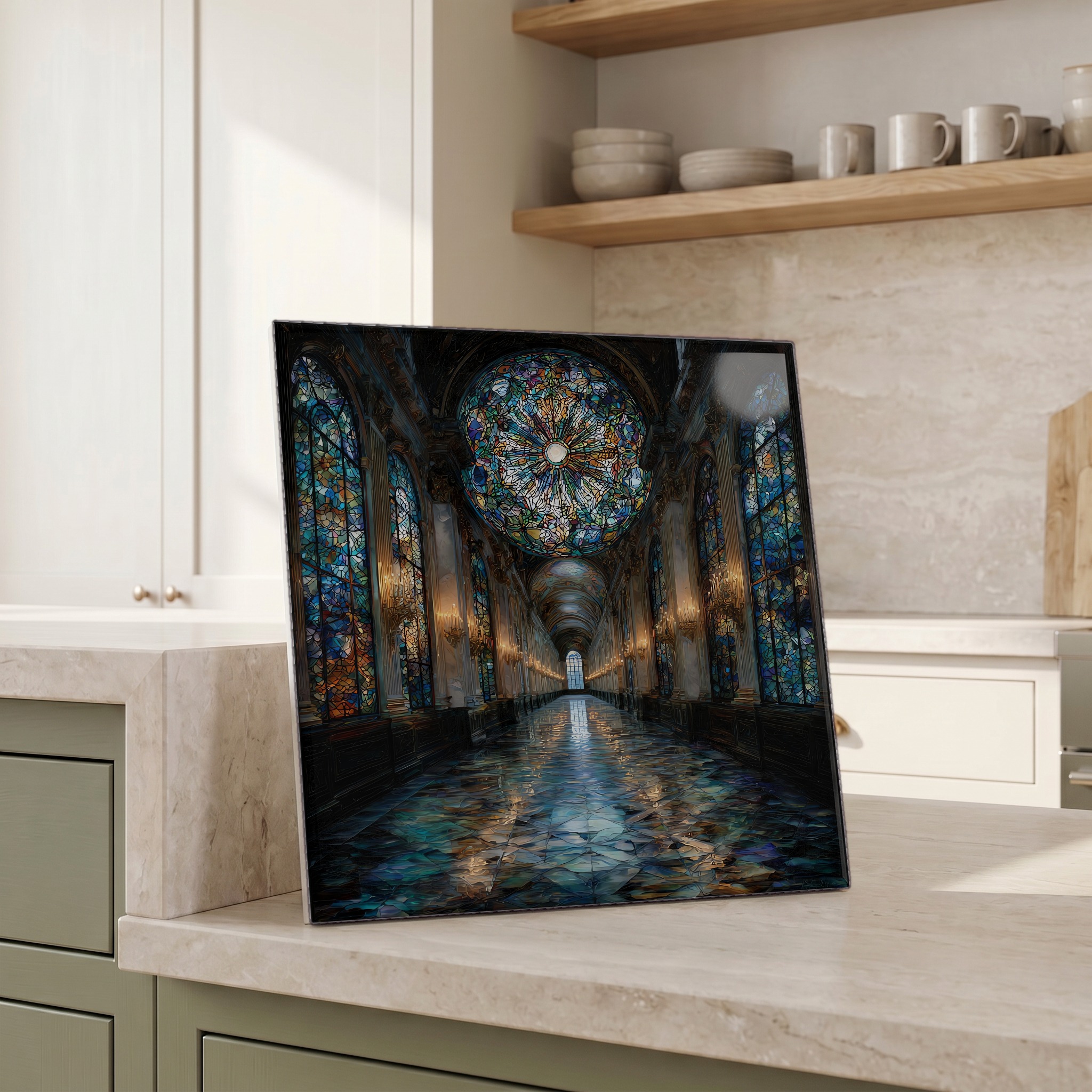
Beside the kettle, propped on the counter.
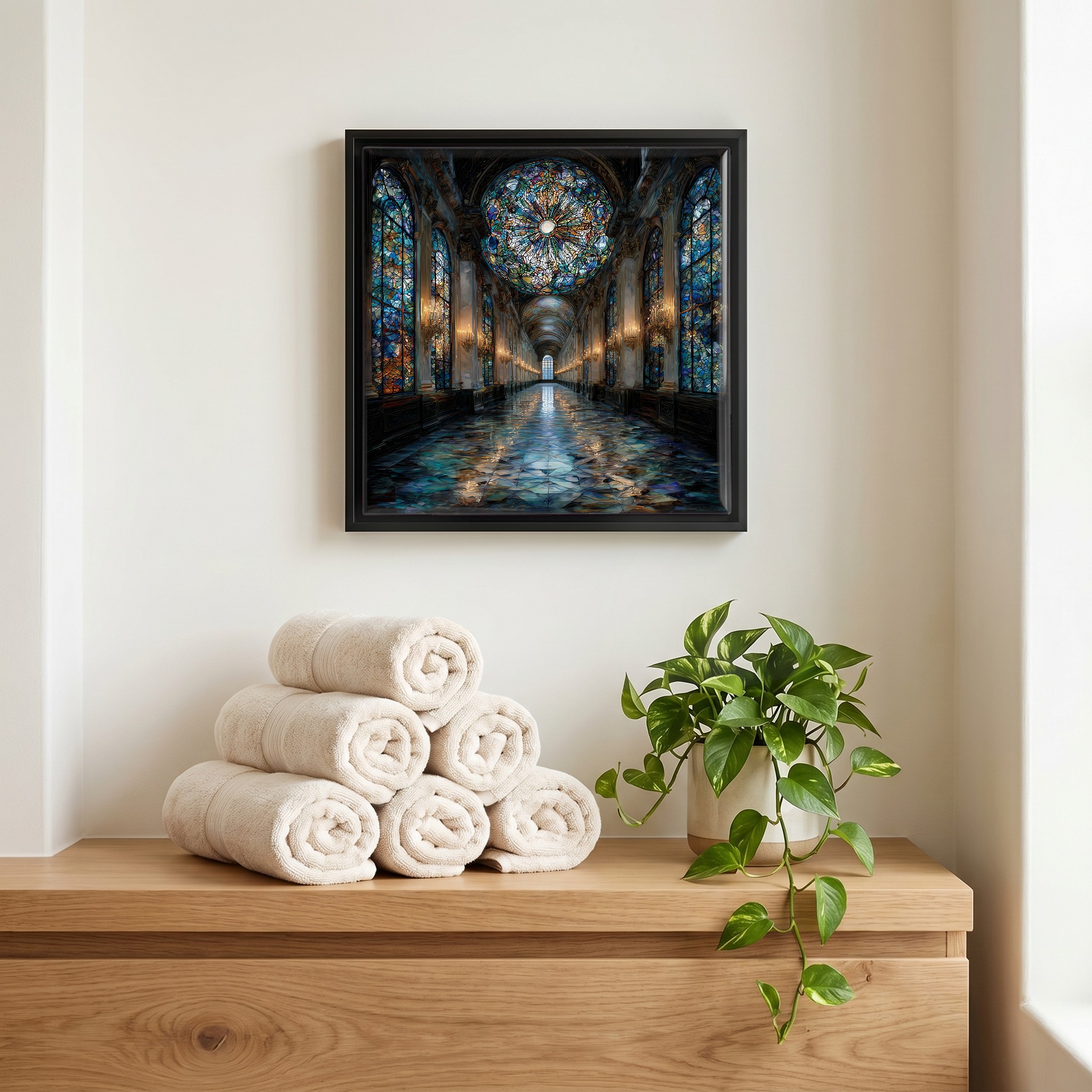
Above the linens, in a slim black surround.
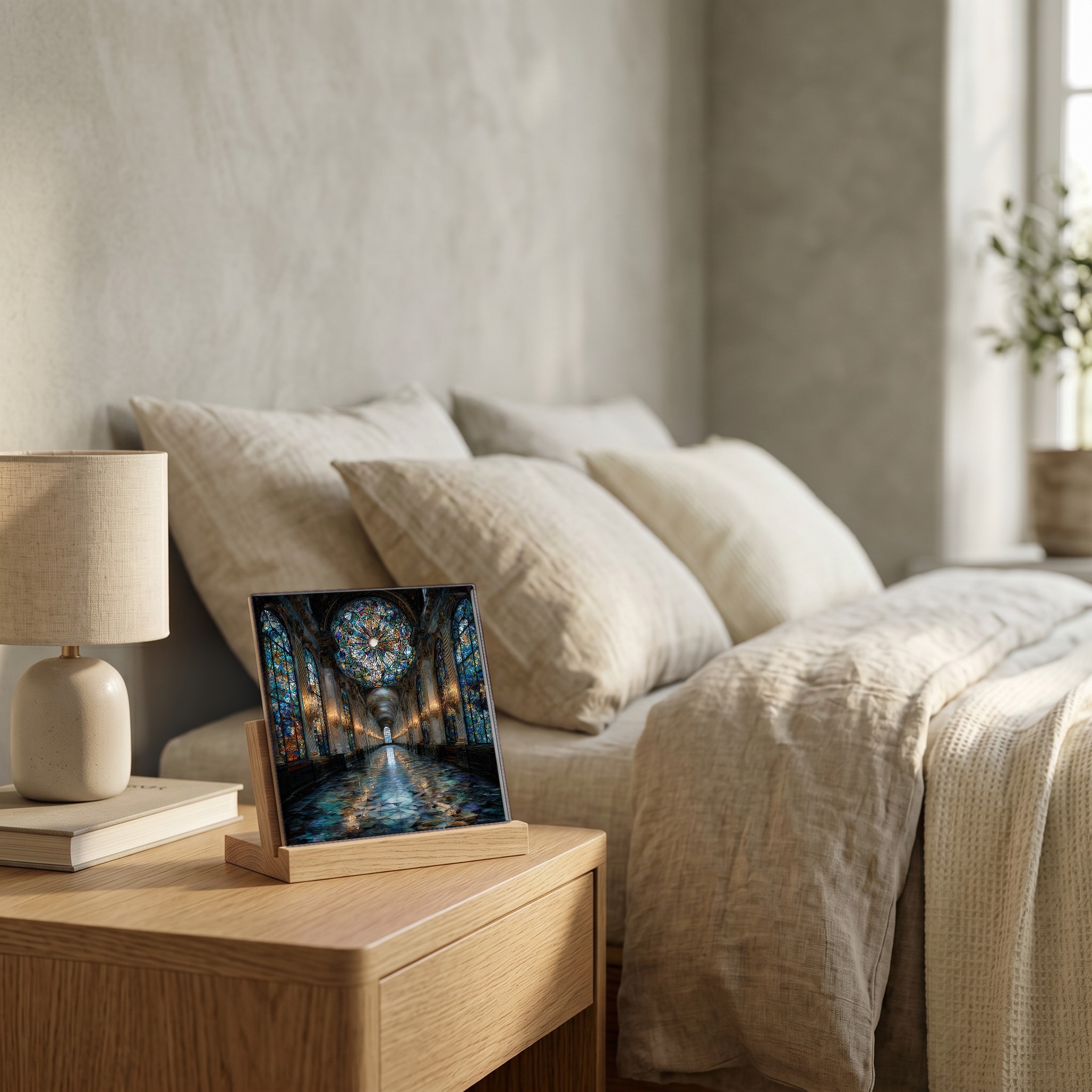
On the nightstand, on a light oak stand.
On a picture ledge, where the light comes in.
a note from the studio

The Hall of Mirrors: a 73-metre gallery on the first floor of the Château de Versailles. Seventeen tall windows face the gardens to the west; seventeen mirrored arches answer them across the room. Late afternoon is when the gallery does its trick. The low sun reaches in across the parterre and the gilding catches twice. Charles Le Brun painted the ceiling between 1681 and 1684; the names of Louis XIV's campaigns are written across it in Latin. Two pieces of paper that reshaped Europe were signed in this room: the proclamation of the German Empire in 1871, and the Treaty that closed the First World War in 1919. The tour comes through quickly. Some people slow down here.
from the studio
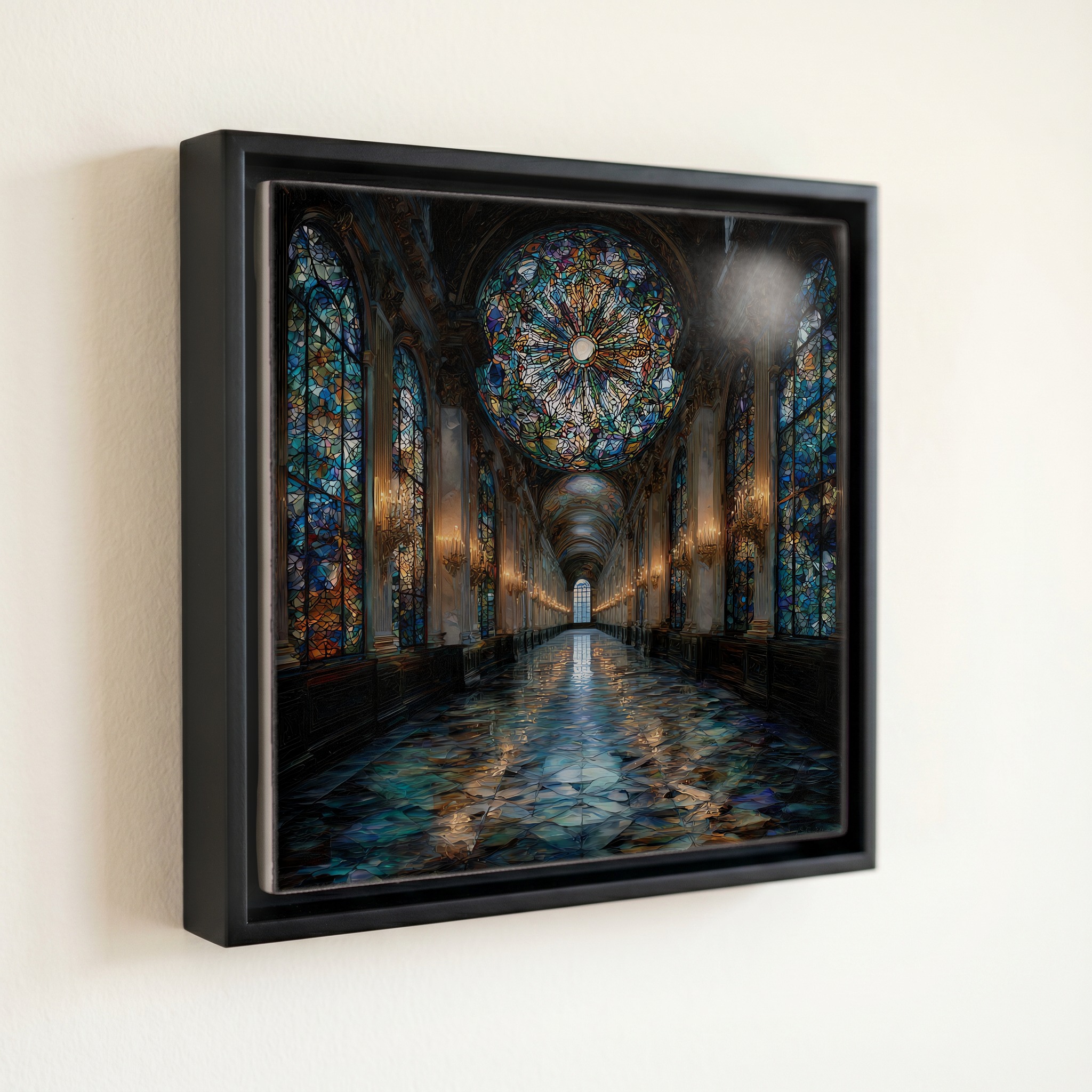
shown in a slim black floating frame · 6 × 6 in
— bring it home

Hall of Mirrors Versailles, on ceramic.

Each tile is finished by hand in our Knoxville studio. Artwork is slowly infused into the ceramic surface under high heat and pressure, and rests beneath a thin glossy finish. The colour lives in the surface, not on top of it.

What kind of piece?
One tile — square or rectangle.
How big?
the popular one — counter, shelf, nightstand
6 × 6 in · 15 cm · 1.6 lb
Surface finish
A clear glossy finish — the artwork reads as if under resin. Ideal for show-pieces and framed wall art.
How it sits
A hidden cleat — sits ¼″ proud of the wall.
$58
Hand-finished and shipped from our studio at the foot of the Smokies. On your wall in about ten days.
size
6 × 6 in
15 cm
weighs
1.6 lb
solid in the hand
surface
ceramic, hand-finished
art rests beneath a thin glossy finish
from
Knoxville, TN
our family studio, at the foot of the Smokies
— start a Coaster Set

Pick any four 4-inch tiles — National Parks you've been to, a Smokies set, the four seasons of one place. $ for a set of , cork-backed, ready to live on the table.
comes gift-ready
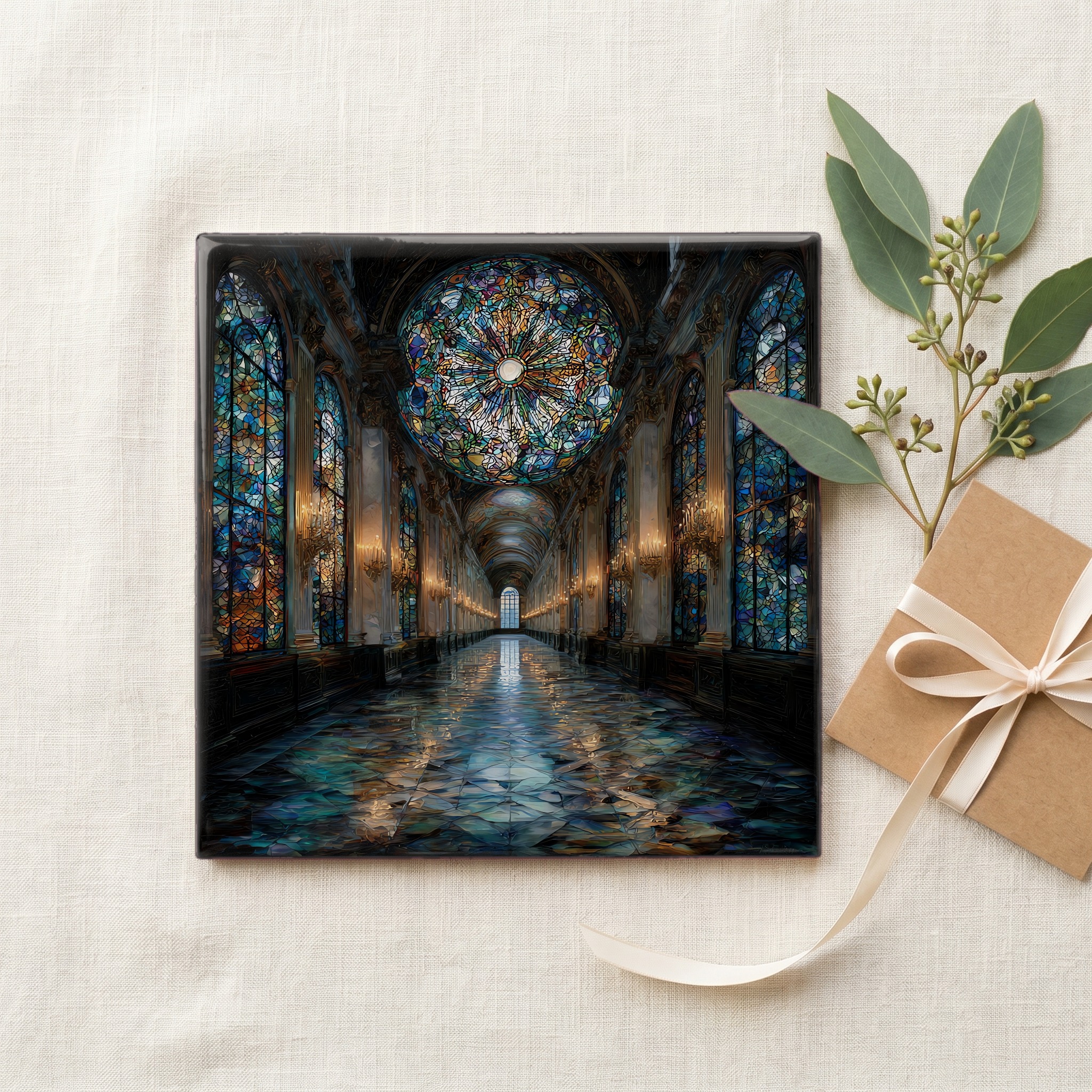
comes gift-ready

Each tile ships in a kraft box, tied with cream ribbon, with a handwritten note from the studio if you'd like to add one.
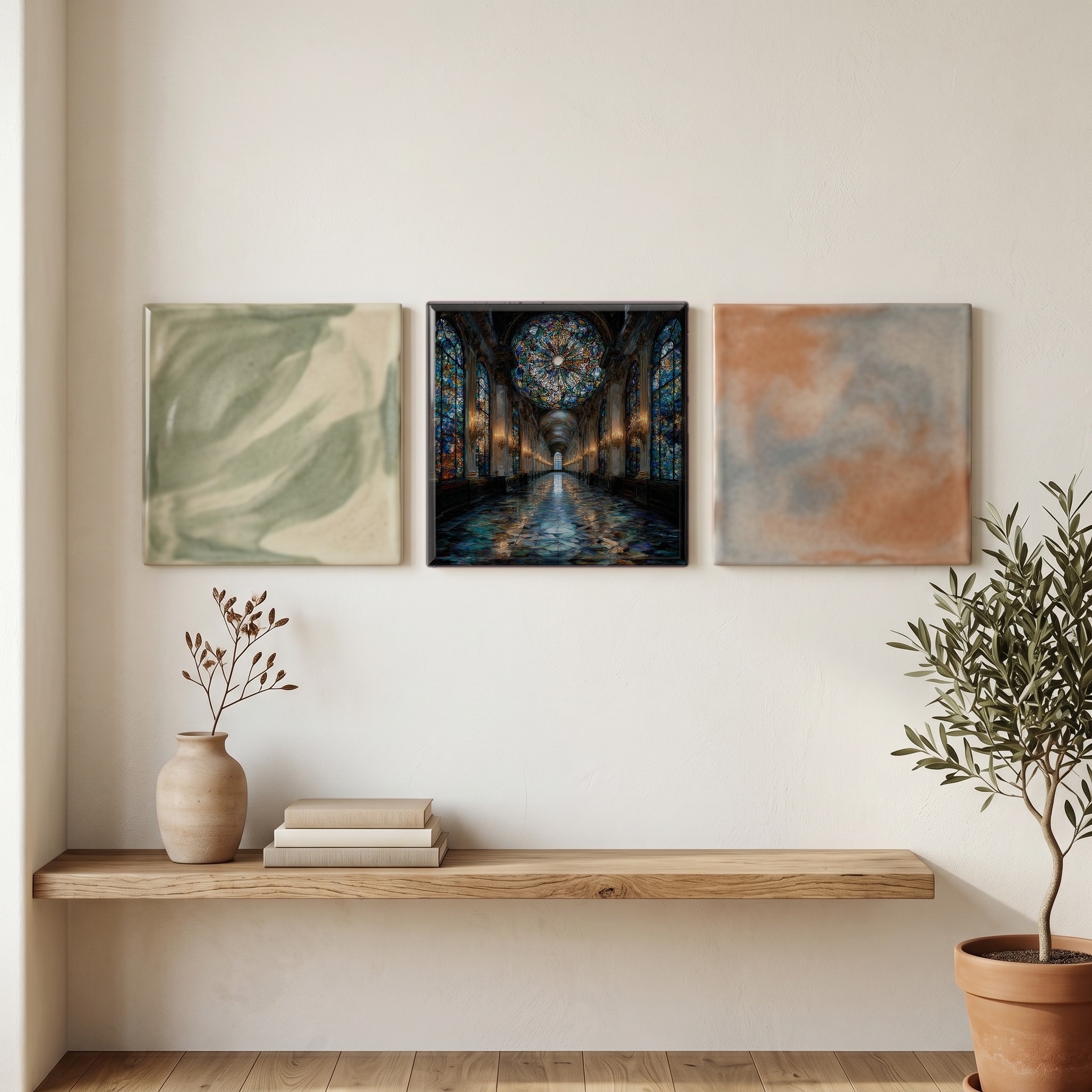
or build a grouping
or build a grouping

Three or five different vistas, hung together — a chapter of places you've been, or want to go.

about Hall of Mirrors Versailles

The place, in three passes.

A little of what's known, in case you fall down the rabbit hole — or want to go see it yourself.
the place

The Hall of Mirrors (Galerie des Glaces) runs the length of the central block of the Château de Versailles, about 20 kilometres southwest of Paris in the town of Versailles, Île-de-France. The gallery was built between 1678 and 1684 by the architect Jules Hardouin-Mansart, replacing an older terrace that faced the gardens designed by André Le Nôtre. It is 73 metres long, 10.5 metres wide, and 12.3 metres high. Seventeen mirror-clad arches face seventeen arched windows that look west across the Parterre d'Eau. The Château de Versailles and its grounds have been a UNESCO World Heritage Site since 1979.

the light

The room was designed for one thing: to catch and return the afternoon sun. The seventeen arcaded windows face roughly west, so the low light of late day reaches in across the Parterre d'Eau and the gardens, then meets the seventeen mirrored arches on the opposite wall. Each arch holds twenty-one mirror panels, 357 in all, the largest concentration of mirror glass anywhere in seventeenth-century Europe. The Manufacture royale des glaces de miroirs, founded by Jean-Baptiste Colbert under Louis XIV in 1665, was created specifically to break the Venetian monopoly on plate glass. The ceiling, painted by Charles Le Brun between 1681 and 1684, carries thirty allegorical scenes of Louis XIV's reign; the gilded bronze sconces along the piers throw a second, warmer light after dusk.

the visit

The Palace of Versailles is open Tuesday through Sunday and closed on Monday. The Hall of Mirrors sits on the State Apartments route on the first floor; the standard Palace ticket includes it. The quietest hour is the first one after opening, when day-trip coaches from Paris are still on the road; by midday the gallery is moving steadily with groups. The RER C train from central Paris reaches the Versailles Château-Rive Gauche station in about 40 minutes, a 10-minute walk from the gates. Photography is permitted without flash. The gallery hosts state functions occasionally and may close at short notice; the Château website posts the schedule. The garden side is best in mid-afternoon, when the sun begins its run across the room.

where
France · Versailles, Yvelines
position
48.8049° N · 2.1204° E
the neighborhood

What's nearby.

A handful of named places within an hour's walk or short drive. Some we've already painted; some we will.
2 km NW
Petit Trianon
neoclassical château
2 km NW
Grand Trianon
pink-marble pavilion
2 km NW
Hameau de la Reine
Marie-Antoinette's hamlet
1 km W
Bassin d'Apollon
fountain on the central axis
N
Hall of Mirrors Versailles
Petit Trianon
Grand Trianon
Hameau de la Reine
Bassin d'Apollon
common questions

What people ask.

A few questions we get about Hall of Mirrors Versailles — and about bringing the piece home.
about the place

The room holds 357 mirror panels set into seventeen arches along the inner wall, facing seventeen tall arched windows over the gardens. When it opened in 1684 it was the largest concentration of mirror glass in Europe. France had founded its own royal mirror manufactory in 1665 to make them.

Construction ran from 1678 to 1684 under the architect Jules Hardouin-Mansart. The ceiling paintings by Charles Le Brun and his workshop were completed in 1684. The gallery replaced an open terrace that had previously connected the king's and queen's apartments.

The gallery is 73 metres long, 10.5 metres wide, and 12.3 metres high. It runs along the western front of the central block of the Château de Versailles, overlooking the Parterre d'Eau and the formal gardens laid out by André Le Nôtre.

Two events of European consequence happened in the room. The German Empire was proclaimed there in January 1871 after the Franco-Prussian War. In June 1919 the Treaty of Versailles, formally ending the First World War, was signed in the same gallery.

Charles Le Brun, the king's first painter, designed and led the ceiling between 1681 and 1684. The thirty panels depict the political and military achievements of Louis XIV's first eighteen years of rule, with Latin inscriptions naming each event.

Mid- to late-afternoon, when the sun is far enough west to reach across the gardens and into the mirrored arches. The first hour after opening is the quietest. The gallery is closed Mondays and may close at short notice during state functions.

The Palace of Versailles and its park were inscribed on the UNESCO World Heritage List in 1979 for outstanding universal cultural value. The listing covers the château, the Grand and Petit Trianon, and the formal gardens designed by André Le Nôtre.

about the piece in your home

It carries well. The Hall of Mirrors is one of the most recognised rooms in European history and a fixture of any serious Paris itinerary. A Small or Medium with a handwritten card from the studio lands gently; the Coaster makes a small, repeatable daily marker.

The gilding and amber-into-mirror palette sits naturally with Maximalist, French-Traditional, and Jewel-tone interiors. It also reads well in a Modern-Classical room where one or two ornate pieces are doing the warming work. Less at home in pure Minimalist or Scandinavian rooms.

Yes. The grand-millennial and new-traditional movements have pulled gilding, ornament, and historic architecture back into the shelter-magazine rotation since the early 2020s. A Medium sits well above a console; a 4-tile Mural carries a powder room hung salon-style.

Above a standard sofa, a single Large reads from across the room; a 4-tile Mural carries a longer sofa wall, and a 9-tile Mural becomes the room. Above a 48 to 60 inch console, a single Medium or two Smalls hung as a pair tend to balance the surface.

Yes. The Dura Satin and Matte finishes are scratch-resistant and built for splash zones: backsplashes, shower walls, powder-room walls. The Glossy finish stays in dry rooms and is the right choice for framed wall pieces behind glass.

A soft microfibre cloth and water. Nothing abrasive, no solvents. The colour is slowly infused into the ceramic surface under high heat and pressure and sits beneath a thin clear finish, so daily wiping does not lift it.

Yes. Every WenderVista piece is painted in the studio's own visual language and finished in-house in Knoxville, Tennessee. We do not license third-party art and we do not resell other studios' work.

if this one stayed with you

A few you might also love.

Hand-picked by the eye that found Sorapis. Same air, same kind of quiet.