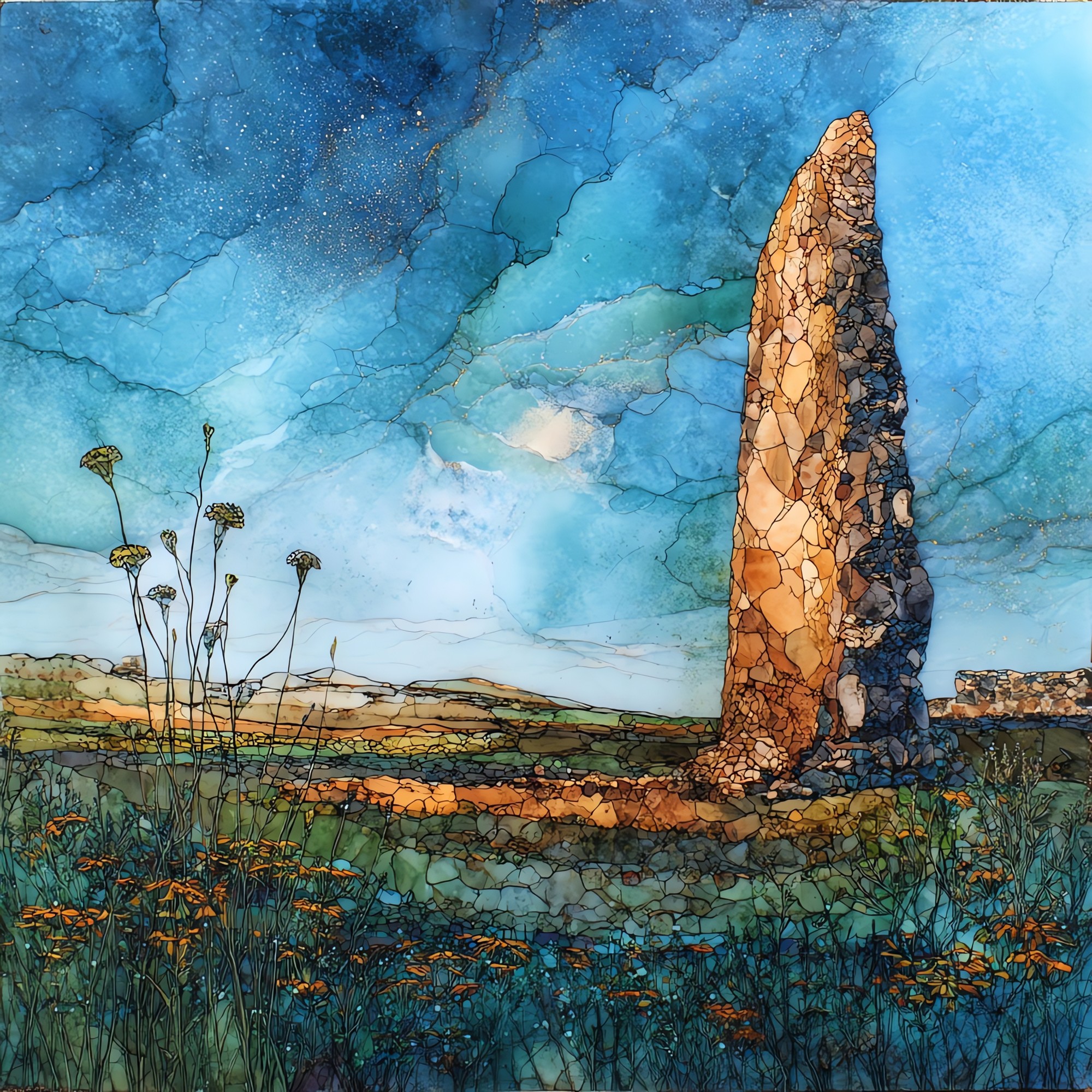
Grand Menhir Brise
— — granite split four ways, lying still.
Not only on a wall.
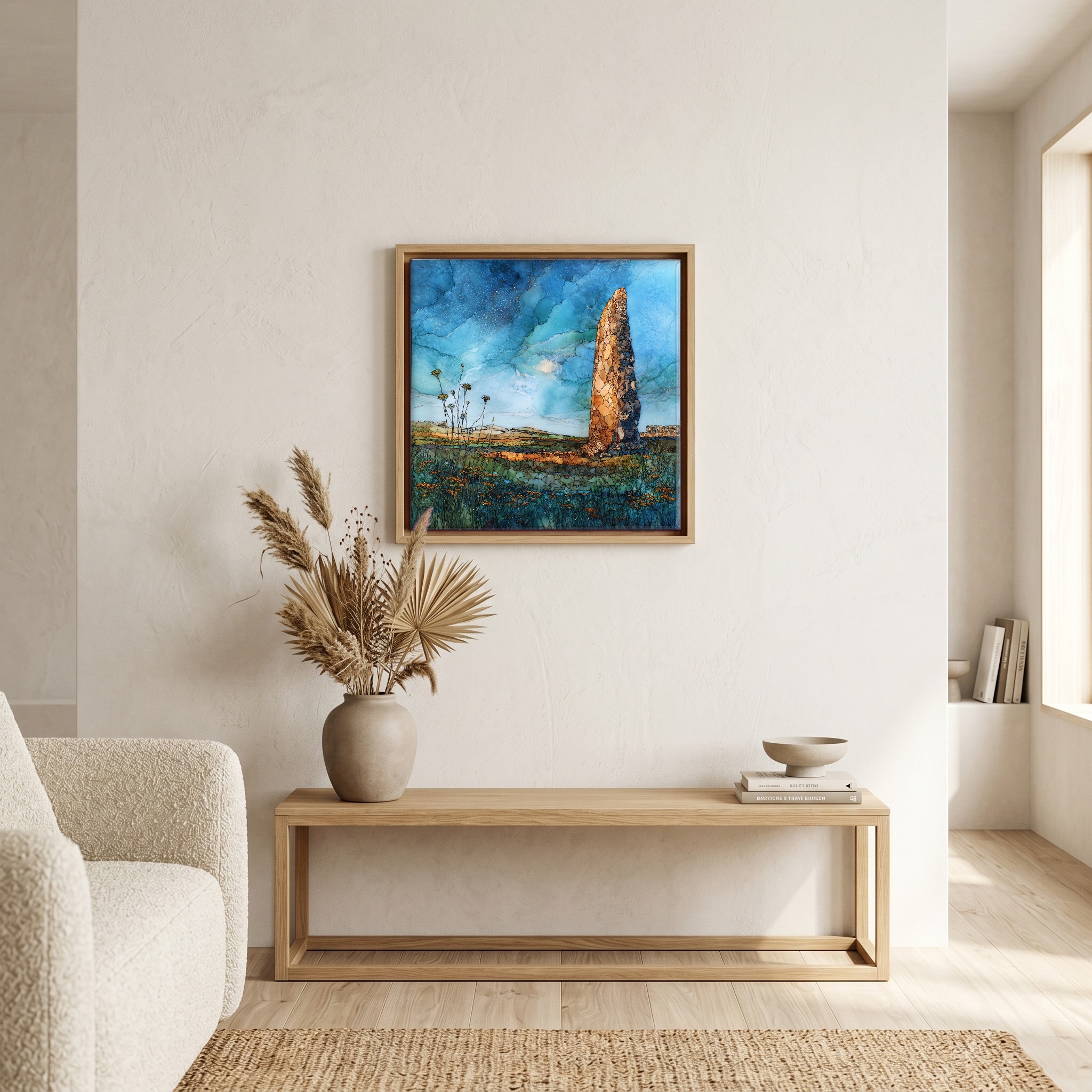
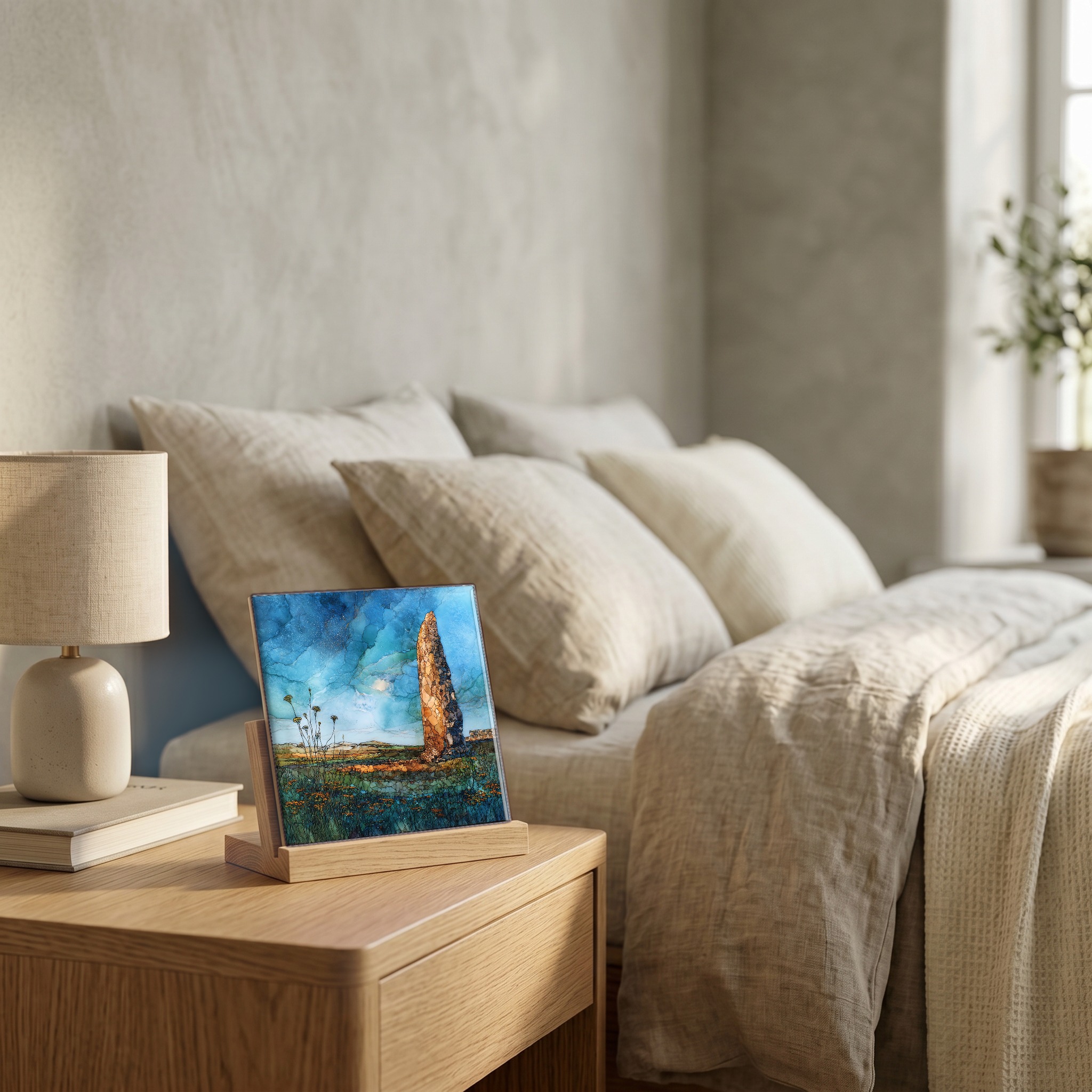
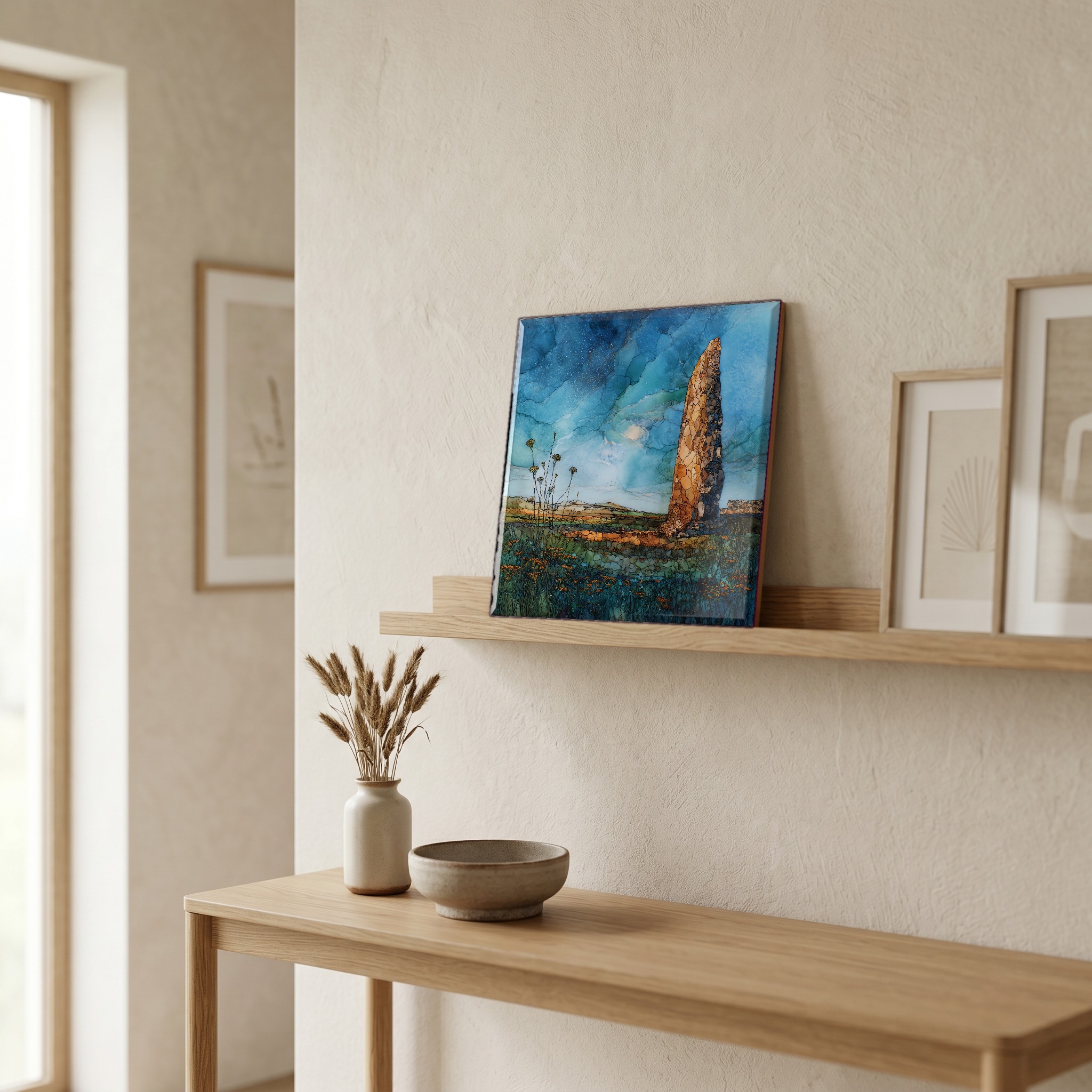
“The broken great menhir, in a low coastal field at the mouth of the Gulf of Morbihan. Once nearly twenty-one metres of standing stone, the tallest single stone the Neolithic ever raised. It lies now in four pieces, beside the Table des Marchands and the Er-Grah tumulus. Whether it fell during erection, was felled by an earthquake around 4000 BCE, or was brought down under deliberate hands is still argued. The granite came from somewhere else; the stone walked here on rollers and rope, six thousand years ago. The wind off the gulf is salt-edged. Visitors walk a short loop past it without much talking.
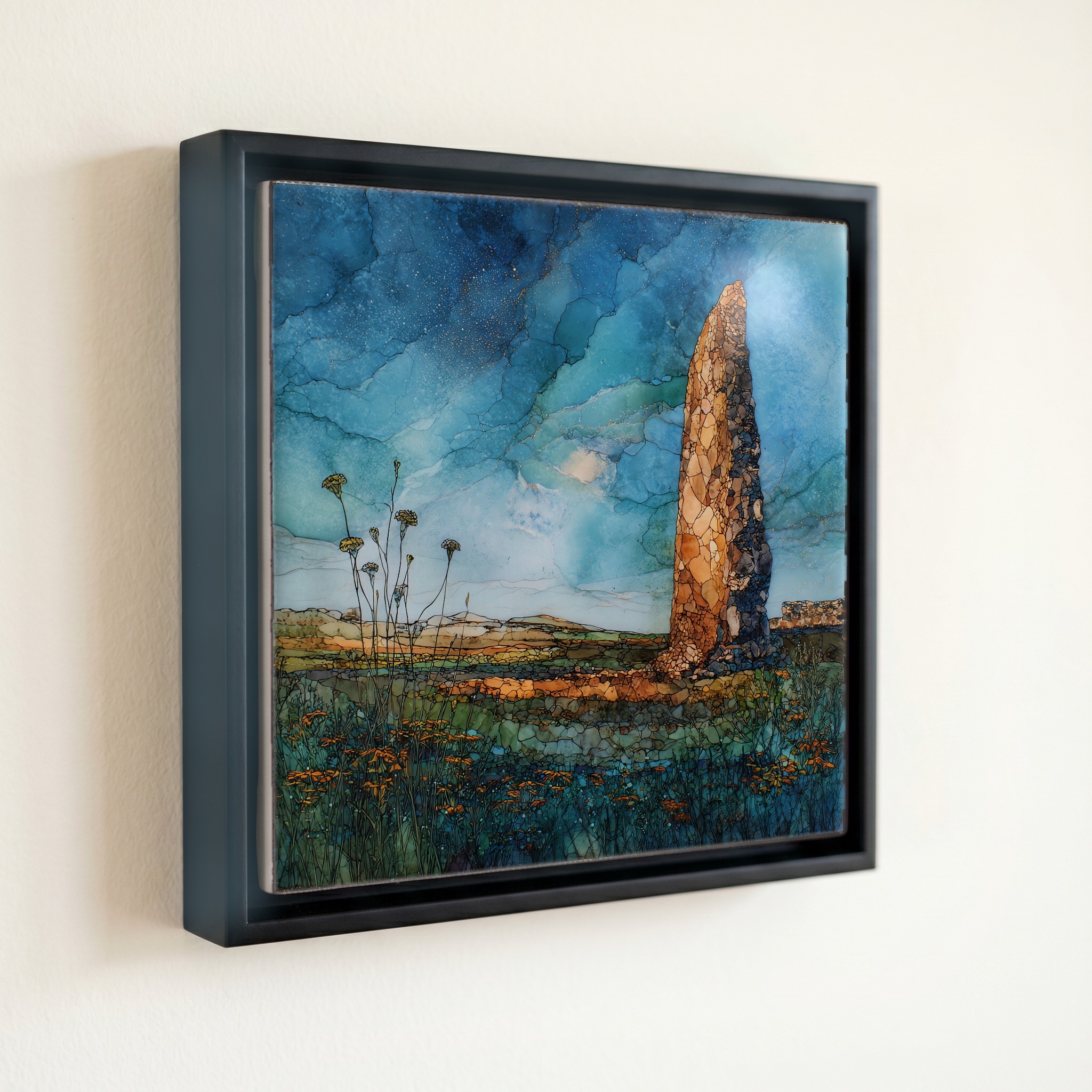
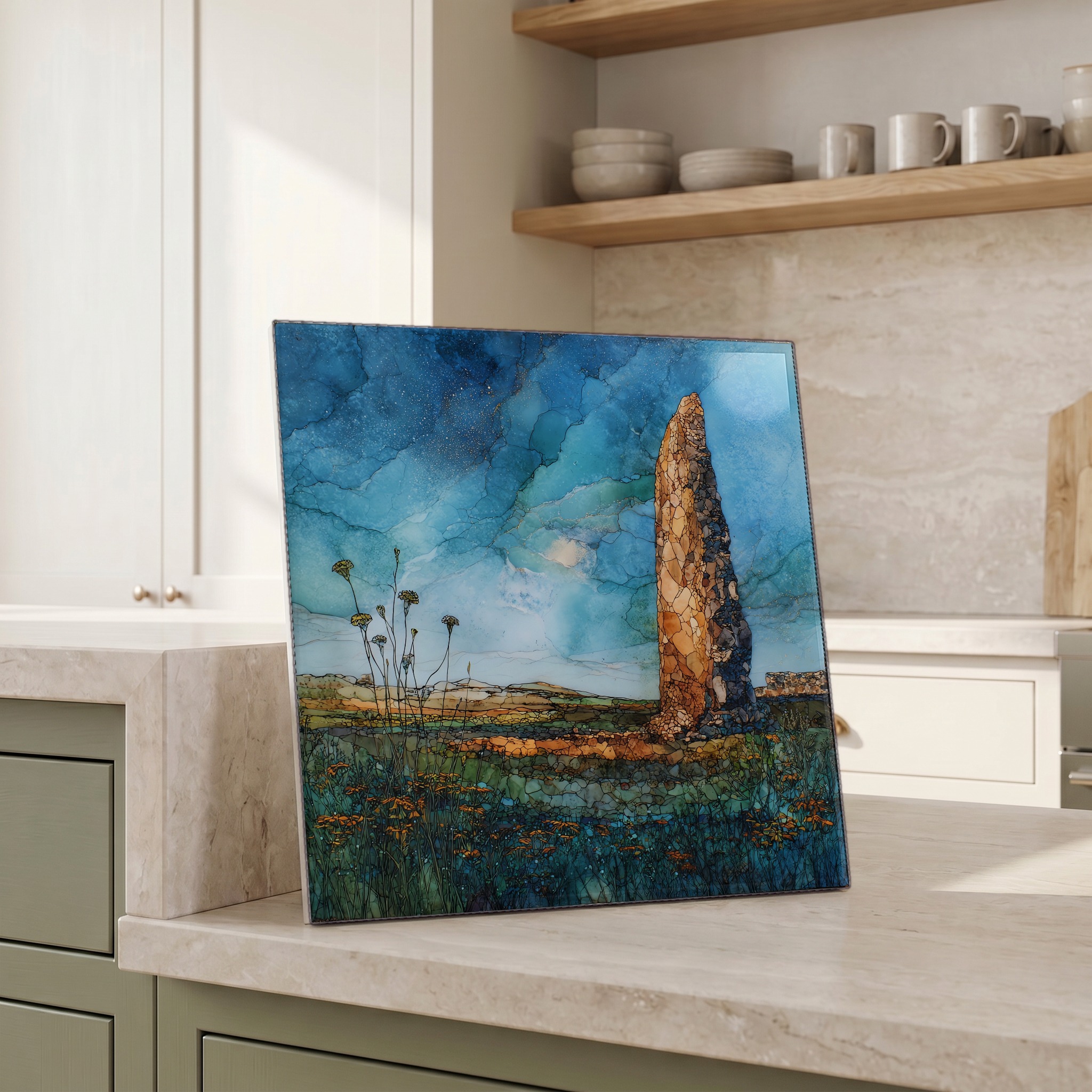
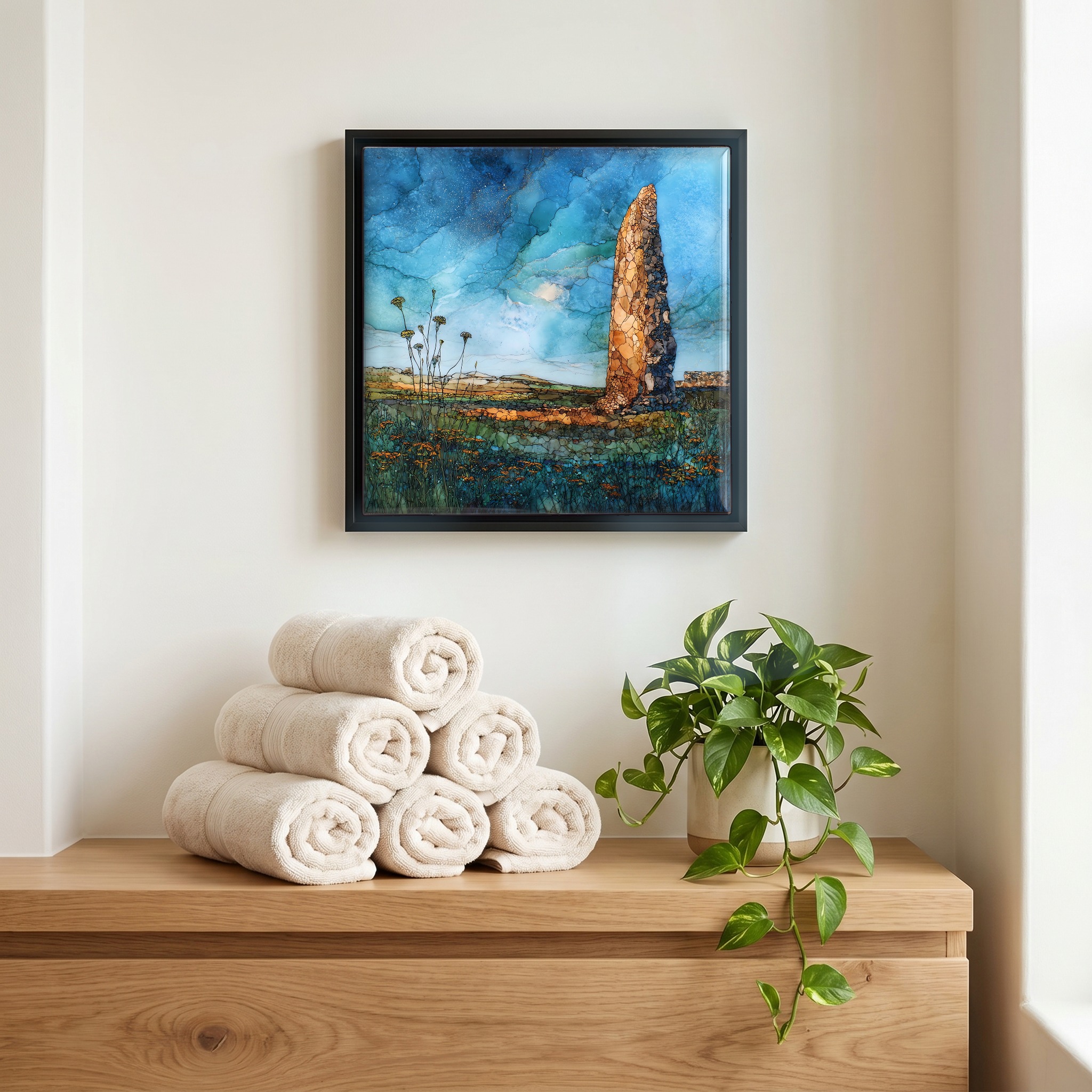
Grand Menhir Brise, on ceramic.
Each tile is finished by hand in our Knoxville studio. Artwork is slowly infused into the ceramic surface under high heat and pressure, and rests beneath a thin glossy finish. The colour lives in the surface, not on top of it.
Pick any four 4-inch tiles — National Parks you've been to, a Smokies set, the four seasons of one place. $ for a set of , cork-backed, ready to live on the table.
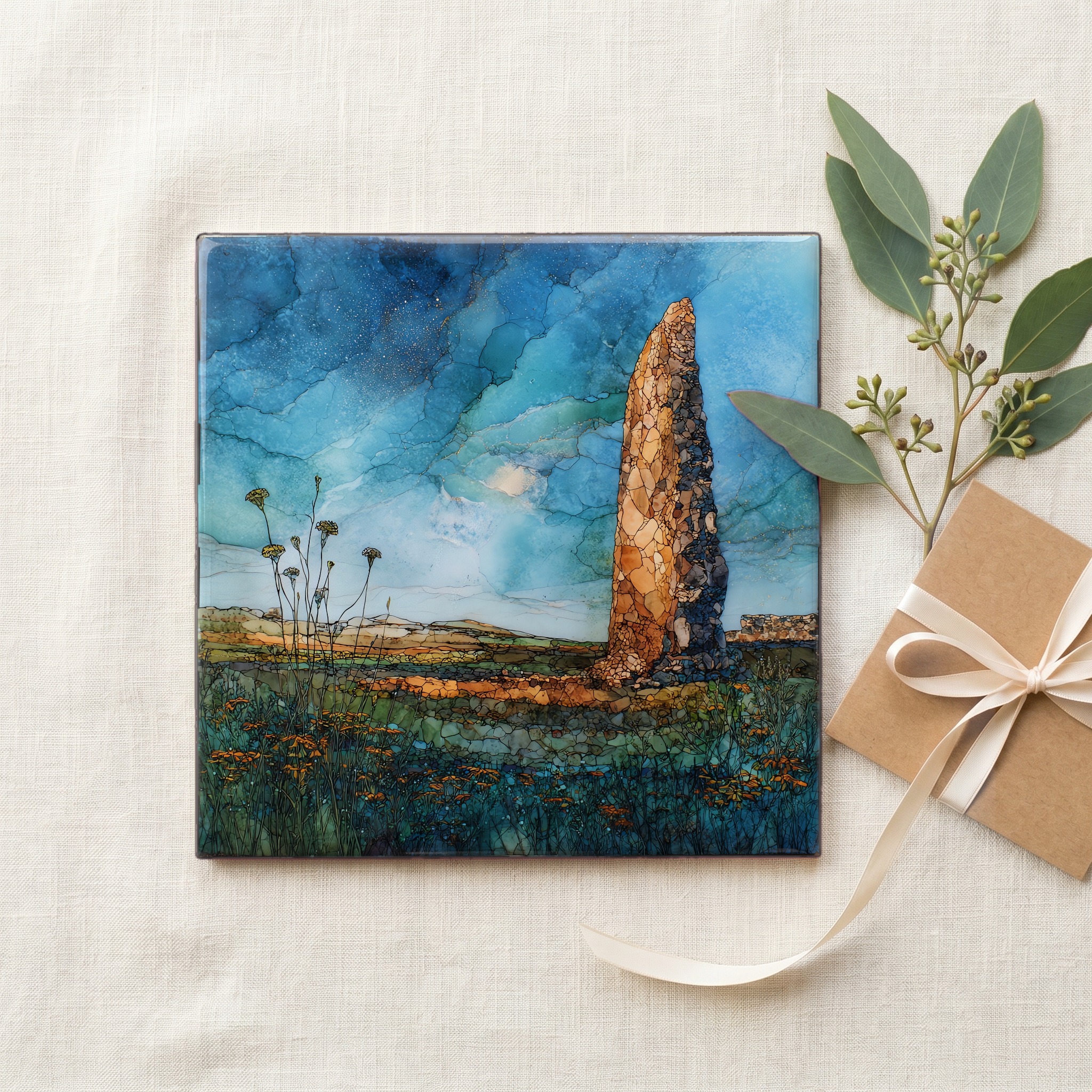
Each tile ships in a kraft box, tied with cream ribbon, with a handwritten note from the studio if you'd like to add one.

Three or five different vistas, hung together — a chapter of places you've been, or want to go.
The place, in three passes.
The Grand Menhir Brisé sits in a low field at the western edge of the village of Locmariaquer, on a granite peninsula at the southern entrance to the Gulf of Morbihan in Brittany, France. It is part of the Locmariaquer megalithic site, managed by the Centre des monuments nationaux and open to the public. The site also includes the Er-Grah tumulus and the Table des Marchands passage grave, all within about a hundred metres of each other. Locmariaquer is about 30 kilometres southwest of Vannes and 13 kilometres south of the Carnac alignments. The nearest train station is Auray, on the Paris to Quimper line; from there a local road runs south down the peninsula to the coast.
Originally a single block of orthogneiss, a banded granite-like metamorphic rock, the Grand Menhir Brisé stood roughly 20.6 metres tall and weighed an estimated 280 tonnes. That makes it the tallest standing stone known from Neolithic Europe. Geologists believe the block was quarried at least four kilometres away and dragged to its present site around 4500 BCE, almost certainly on log rollers and hide ropes. It now lies in four broken pieces head to foot across the meadow. Whether the stone fell during erection, was felled by an earthquake around 4000 BCE (a long-standing hypothesis), or was deliberately broken in antiquity is still debated by researchers at the CNRS and the Université de Rennes.
The Locmariaquer site is open most of the year under the Centre des monuments nationaux, with reduced hours in winter and a small number of annual closures. Adult admission has run around six euros in recent years; entry is free for visitors under 18 with EU residency. Guided tours run several times daily in French, and seasonally in English. The path past the Grand Menhir Brisé, the Er-Grah tumulus, and the Table des Marchands takes about forty minutes to walk slowly. A small visitor centre at the gate carries a scale model of the original site. July and August bring coach traffic from Carnac; Sunday mornings out of season are quiet. Locmariaquer is a fishing village known for the oysters of the Gulf of Morbihan.