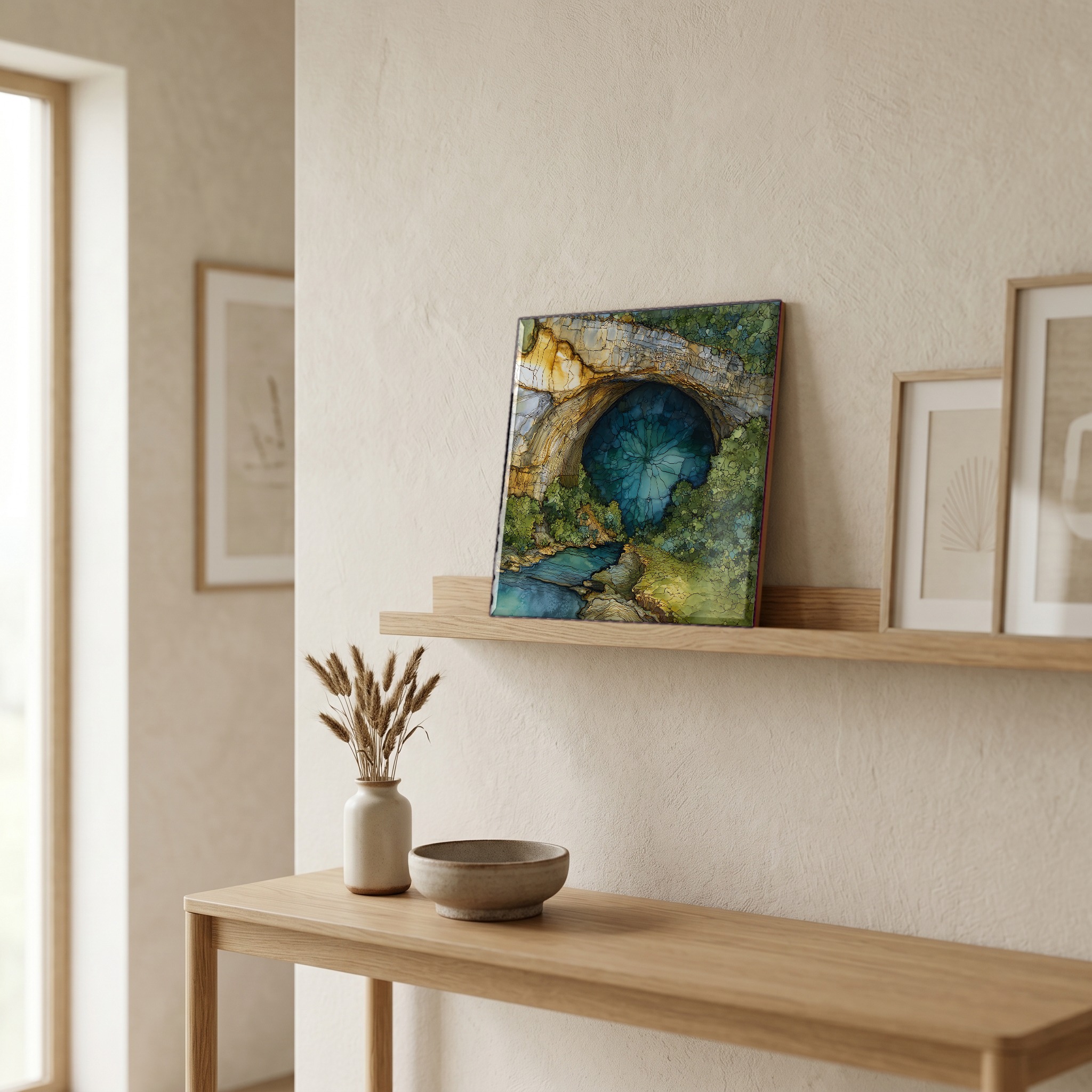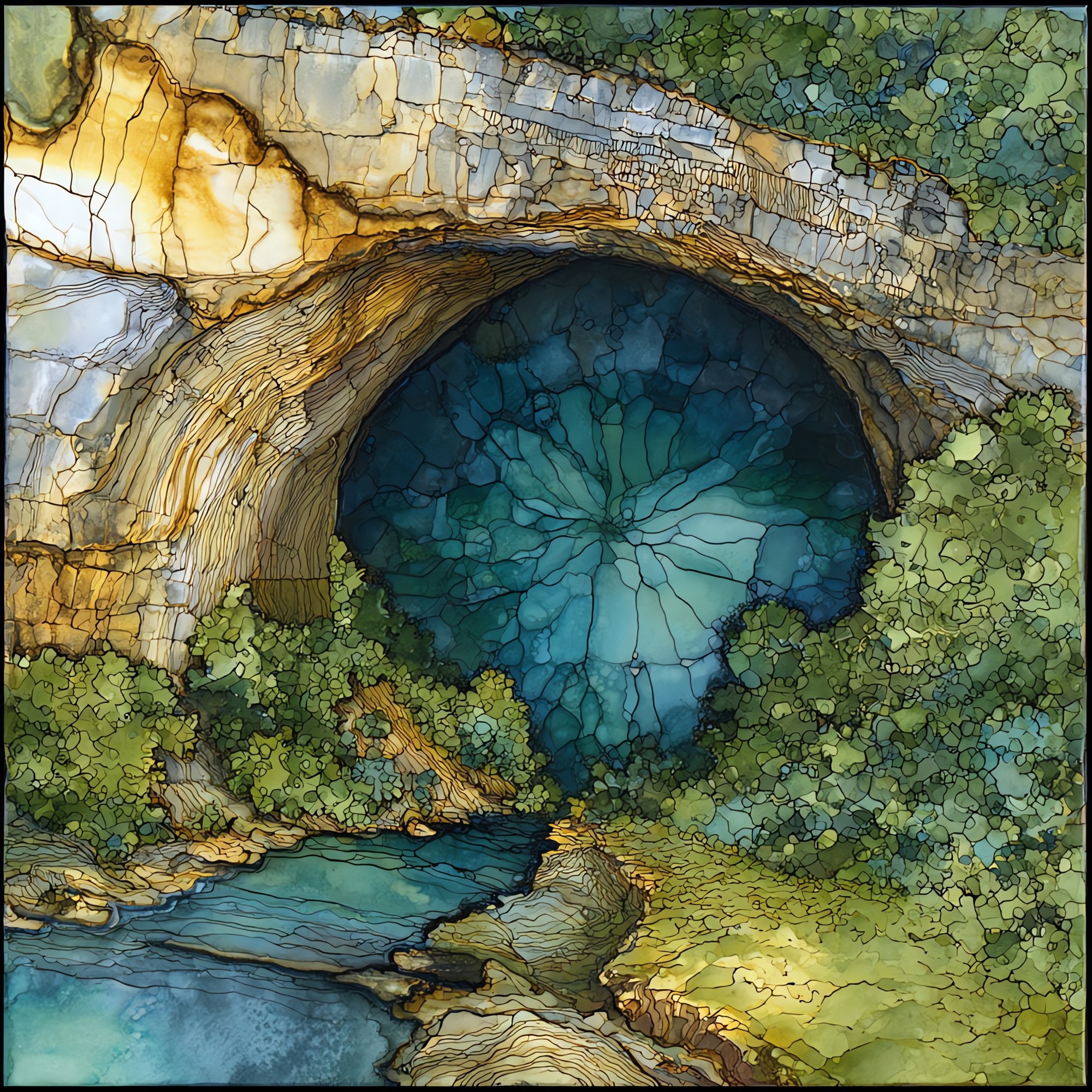
Wender·Vista
Gouffre de Padirac
shown on ceramic, 12-inch tileFrance
in the Causses of Quercy, above the Dordogne valley

Gouffre de Padirac

— the circle of green sky, seen from far below.

Where it lives

Not only on a wall.

A small tile on the nightstand catching the morning. A larger one above the fire. Yours, wherever you spend the slow hours.
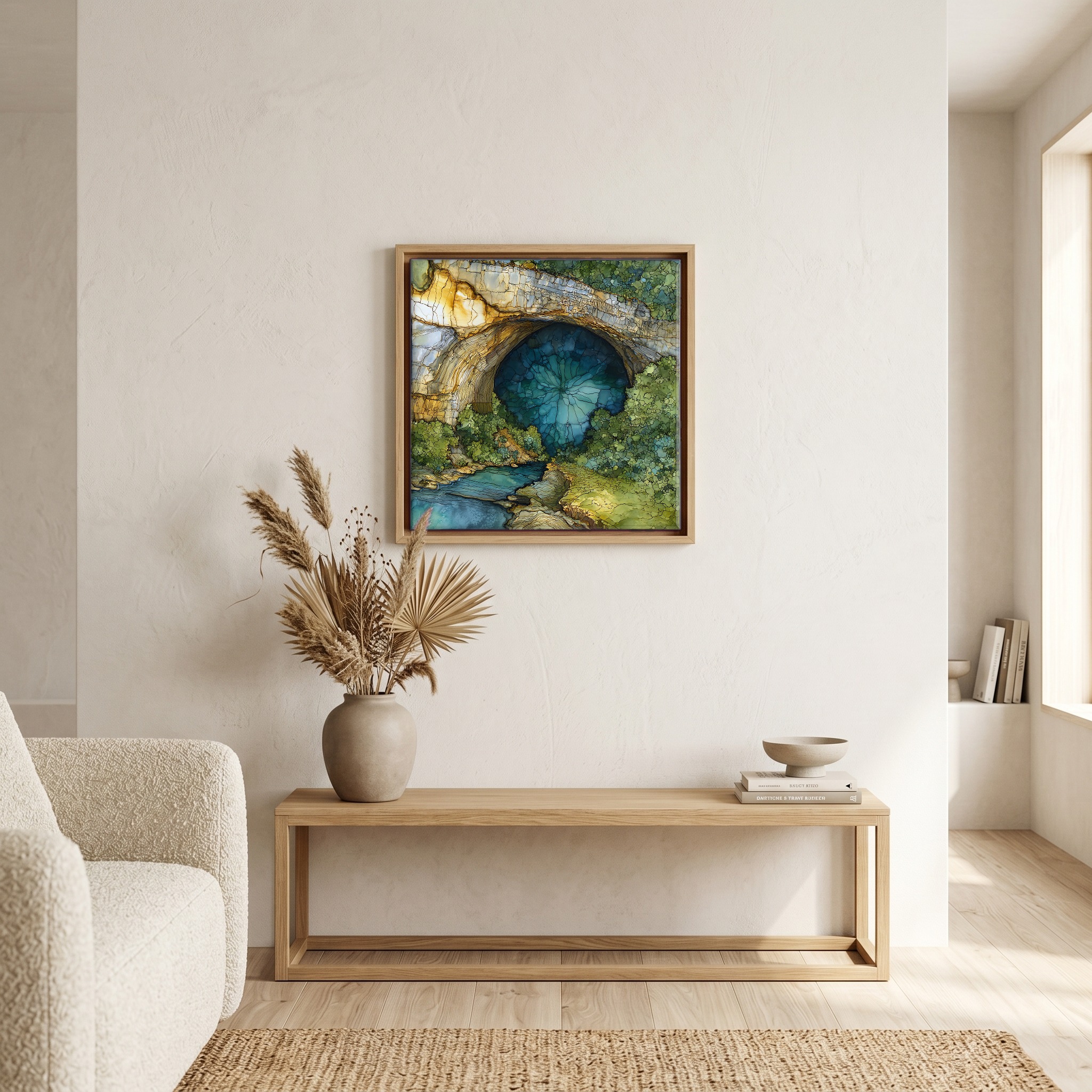
Above the bench, in a warm oak surround.
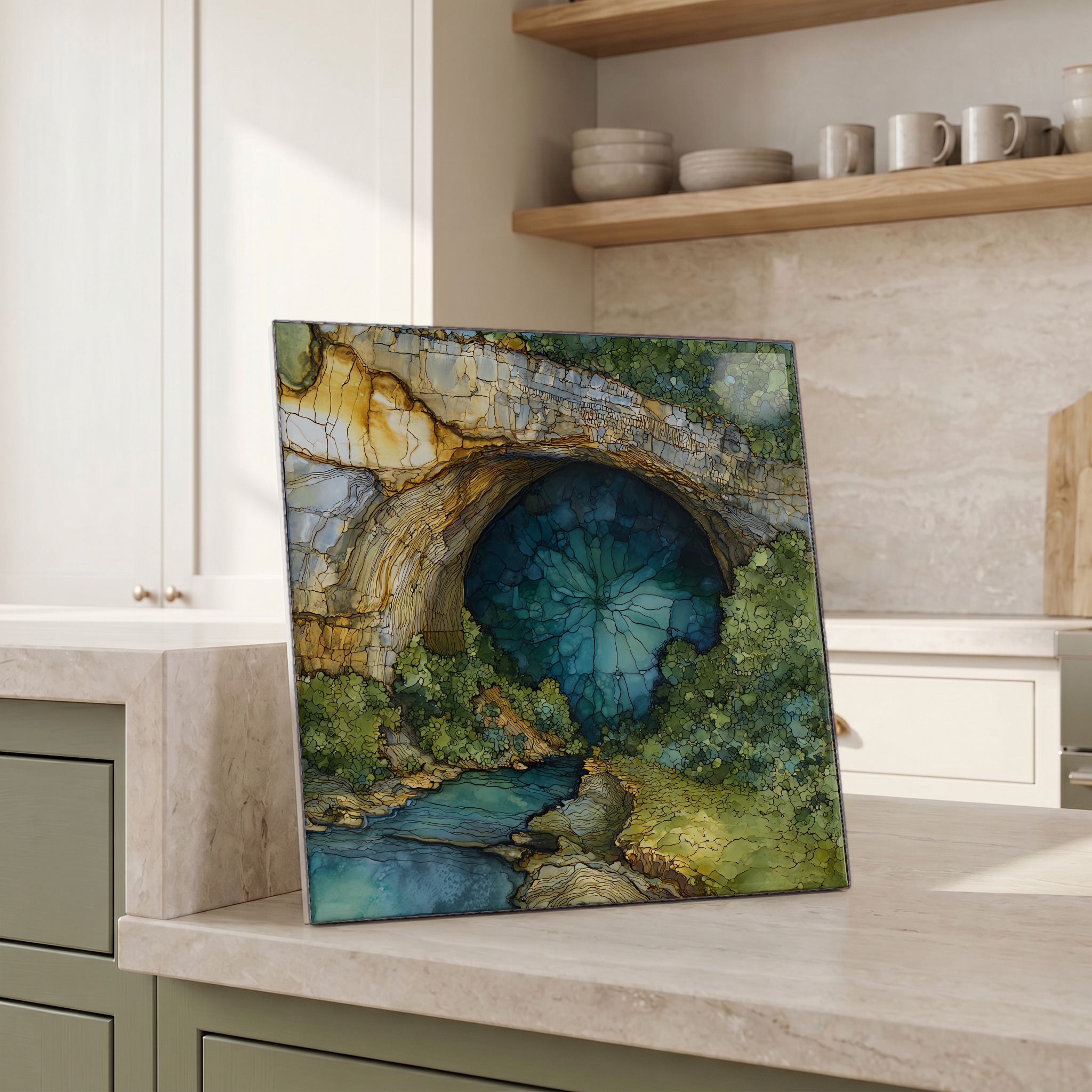
Beside the kettle, propped on the counter.
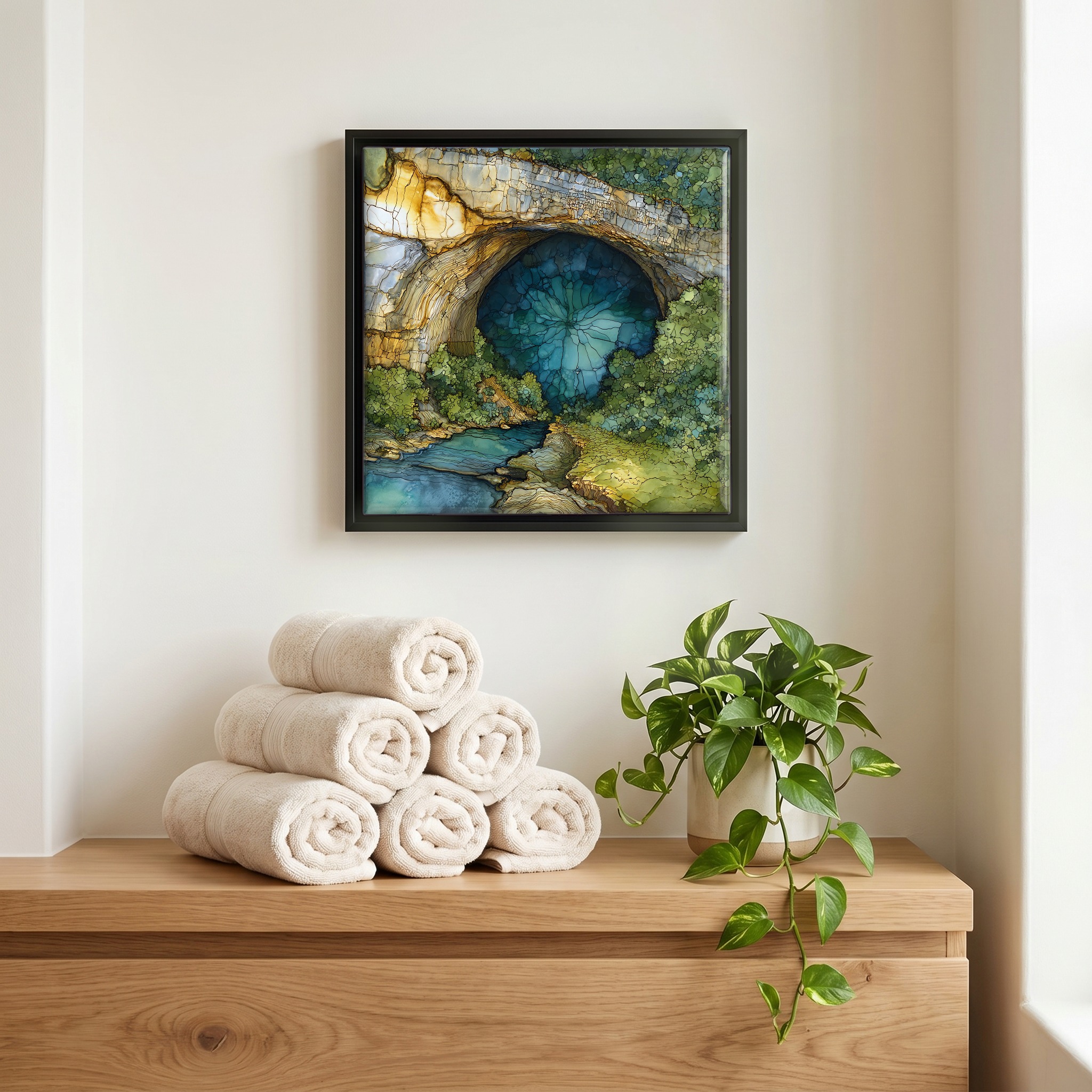
Above the linens, in a slim black surround.
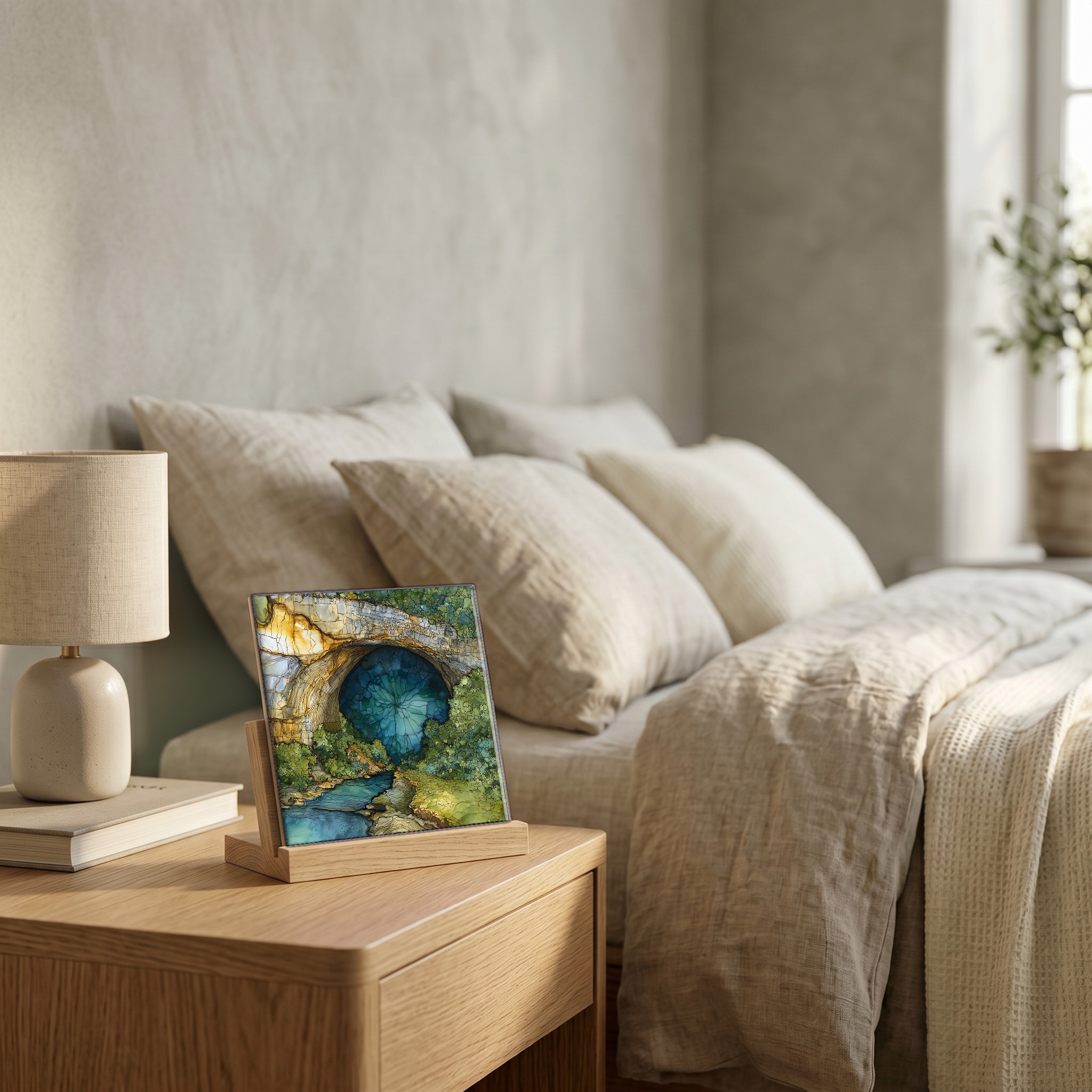
On the nightstand, on a light oak stand.
On a picture ledge, where the light comes in.
a note from the studio

A chasm in the Quercy plateau, north of Cahors, where the limestone opens on ferns and cold air. The descent runs seventy-five metres from the rim to the underground river, by stairs or by lift. From there a flat-bottomed boat moves along the slow Plain River, past the Great Stalactite, into a domed chamber that rises ninety-four metres above the water. The water is clear and cold. Above it the rock holds a kind of cathedral hush. Tickets are timed; the season closes in November and reopens with the spring.
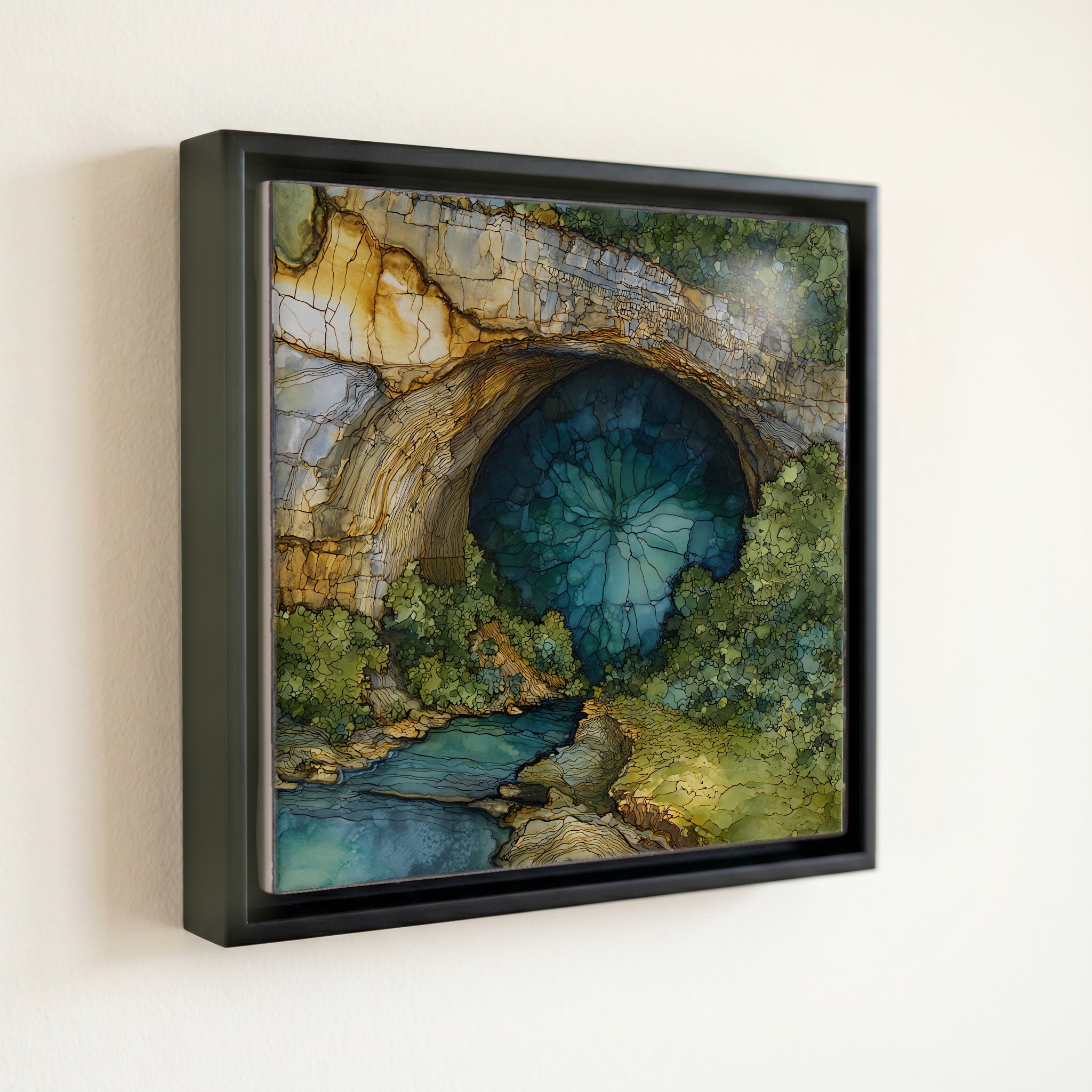
from the studio
shown in a slim black floating frame · 6 × 6 in
— bring it home

Gouffre de Padirac, on ceramic.

Each tile is finished by hand in our Knoxville studio. Artwork is slowly infused into the ceramic surface under high heat and pressure, and rests beneath a thin glossy finish. The colour lives in the surface, not on top of it.

What kind of piece?
One tile — square or rectangle.
How big?
the popular one — counter, shelf, nightstand
6 × 6 in · 15 cm · 1.6 lb
Surface finish
A clear glossy finish — the artwork reads as if under resin. Ideal for show-pieces and framed wall art.
How it sits
A hidden cleat — sits ¼″ proud of the wall.
$58
Hand-finished and shipped from our studio at the foot of the Smokies. On your wall in about ten days.
size
6 × 6 in
15 cm
weighs
1.6 lb
solid in the hand
surface
ceramic, hand-finished
art rests beneath a thin glossy finish
from
Knoxville, TN
our family studio, at the foot of the Smokies
— start a Coaster Set

Pick any four 4-inch tiles — National Parks you've been to, a Smokies set, the four seasons of one place. $ for a set of , cork-backed, ready to live on the table.
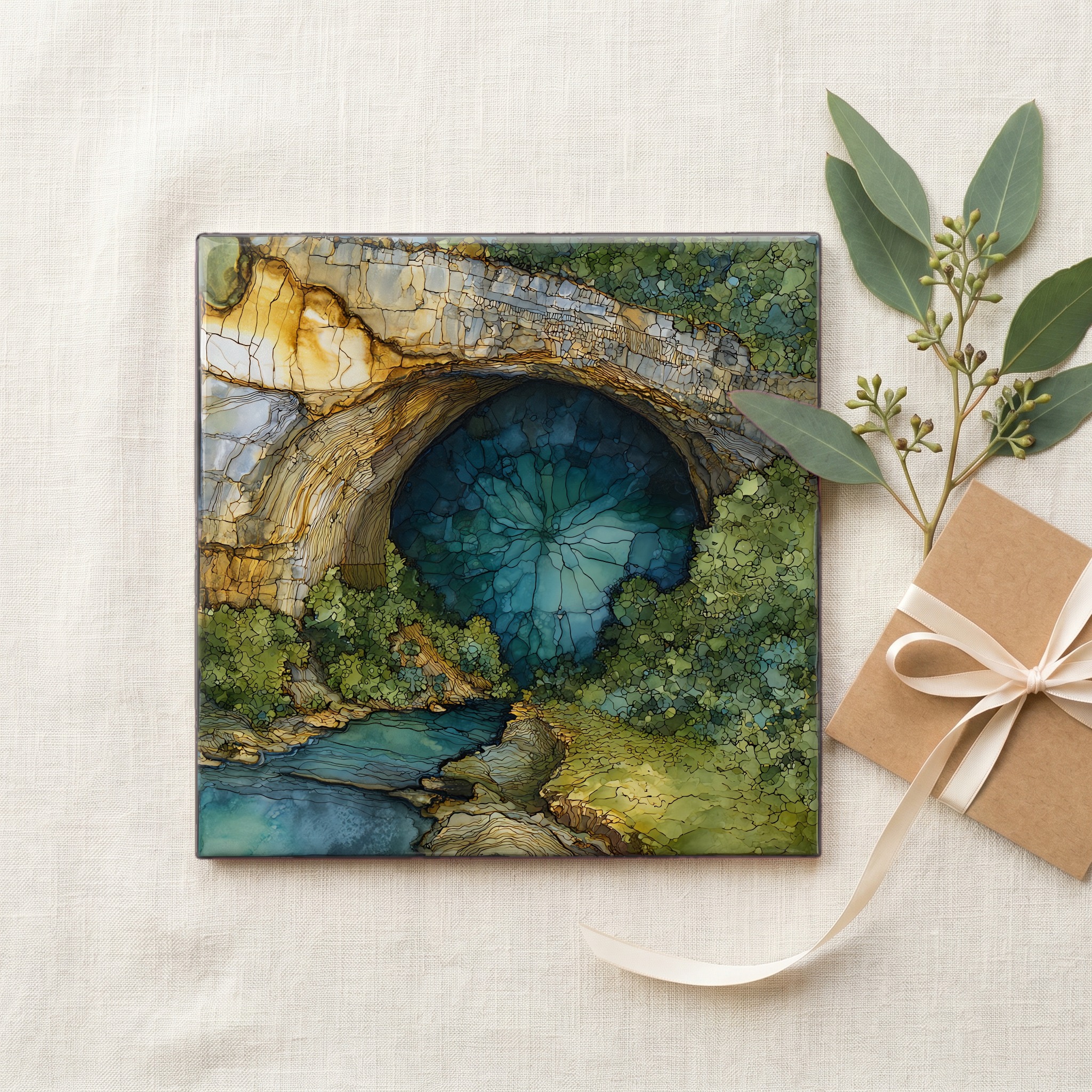
comes gift-ready
comes gift-ready

Each tile ships in a kraft box, tied with cream ribbon, with a handwritten note from the studio if you'd like to add one.
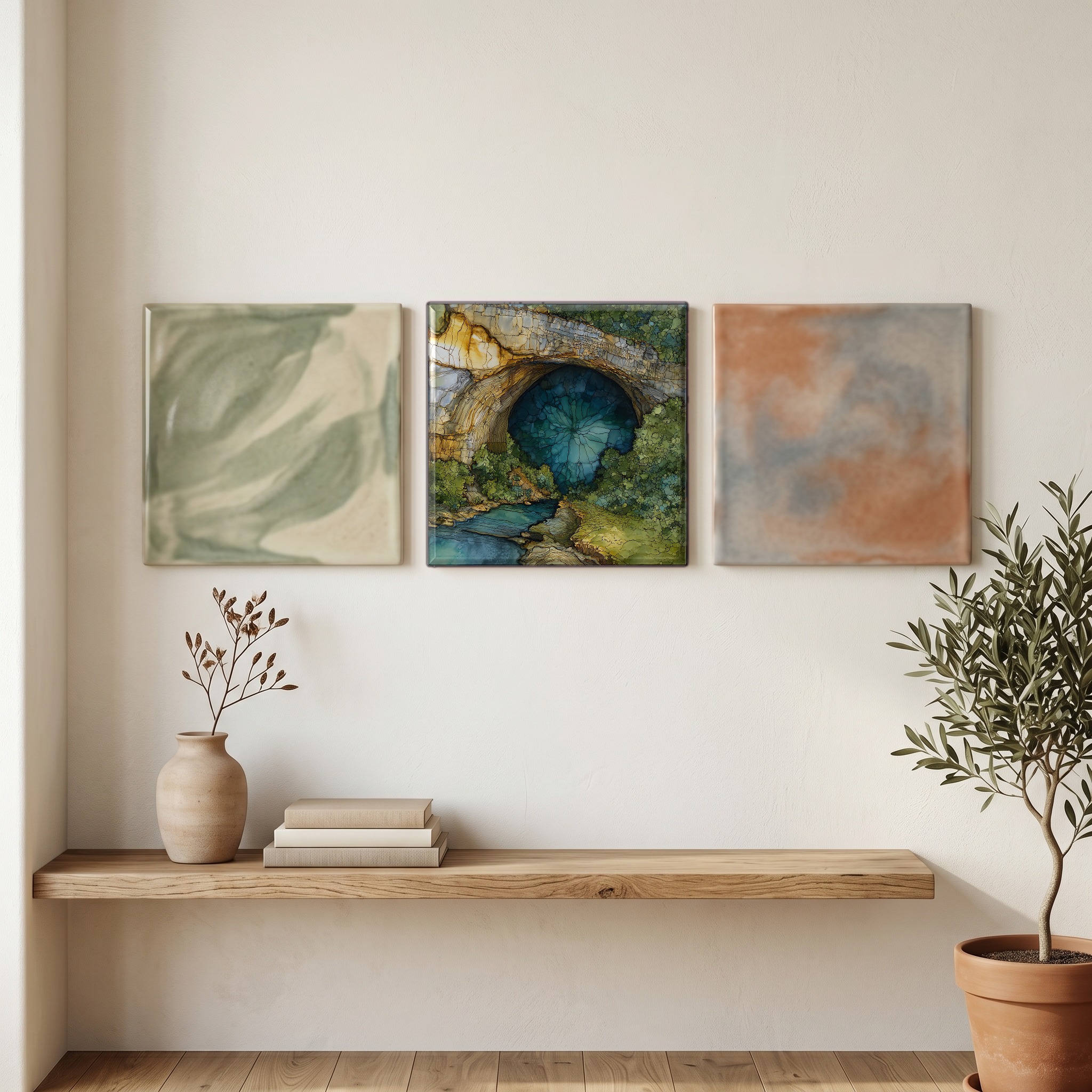
or build a grouping
or build a grouping

Three or five different vistas, hung together — a chapter of places you've been, or want to go.

about Gouffre de Padirac

The place, in three passes.

A little of what's known, in case you fall down the rabbit hole — or want to go see it yourself.
the place

The Gouffre de Padirac is a karst chasm in the commune of Padirac, in the Lot département of southwest France. It opens on the Causse de Gramat, a high limestone plateau that runs north of Cahors and south of the Dordogne valley, about thirteen kilometres from the medieval pilgrimage town of Rocamadour. The chasm itself is roughly thirty-five metres across at the rim and descends seventy-five metres to the underground river that gives the site its character. Access is by way of the village of Padirac, off the D673; a regional shuttle runs from Rocamadour in summer. The plateau is part of the Parc naturel régional des Causses du Quercy, designated in 1999.

the water

At the foot of the descent runs the Plain River, an underground tributary of the Dordogne basin fed by rainwater filtering through the limestone of the Causse de Gramat. The water moves slowly, clear and cold. Visitors travel by flat-bottomed boat for about a kilometre to the head of navigation, then continue on foot through chambers carved out over millions of years of dissolution. The river surfaces again at the Saint-Sauveur and Lombard springs, near the village of Montvalent on the Dordogne, more than ten kilometres away. Édouard-Alfred Martel, the French speleologist often called the father of cave science, descended the chasm in 1889 and traced the river's underground course.

the visit

The site has been open to the public since 1899, ten years after Martel's first descent. The visit season runs from late March to early November; access is closed in winter when groundwater rises and the river is unsafe for boats. Tickets are timed, and reservation is recommended in July and August. Visitors descend by lift or by stairs to the river platform, more than seventy metres below the rim, then continue on foot. The full circuit takes around ninety minutes. Photography is permitted but tripods and drones are not. The river itself is off-limits for swimming.

— informed by Official site
where
France · Padirac, Lot
within
Parc naturel régional des Causses du Quercy
position
44.8570° N · 1.7460° E
the neighborhood

What's nearby.

A handful of named places within an hour's walk or short drive. Some we've already painted; some we will.
13 km W
Rocamadour
cliffside pilgrimage village
12 km N
Château de Castelnau-Bretenoux
medieval fortress
10 km N
Loubressac
perched village
10 km NW
Autoire
village in a limestone cirque
15 km N
Carennac
riverside village on the Dordogne
10 km NE
Saint-Céré
market town
N
Gouffre de Padirac
Rocamadour
Château de Castelnau-Bretenoux
Loubressac
Autoire
Carennac
Saint-Céré
common questions

What people ask.

A few questions we get about Gouffre de Padirac — and about bringing the piece home.
about the place

The chasm is in the commune of Padirac, in the Lot département of southwest France, about thirteen kilometres from Rocamadour and roughly fifty kilometres north of Cahors. It opens on the Causse de Gramat, a limestone plateau between the Dordogne valley and the Lot.

The vertical drop from the rim to the underground river is about seventy-five metres. The Salle du Grand Dôme, a chamber further along the visit, rises ninety-four metres above the water and is among the tallest underground domes in Europe open to the public.

Édouard-Alfred Martel, the French speleologist regarded as the founder of modern cave science, made the first recorded descent on 9 July 1889. He returned several times to trace the underground river system and helped open the site to visitors a decade later.

The site is open seasonally, generally from late March or early April through early November. It closes in winter because of rising groundwater. Reservations are recommended in July and August, when capacity fills well ahead of arrival.

The Plain River flows underground for roughly eleven kilometres before resurging at the Saint-Sauveur and Lombard springs, near the village of Montvalent on the Dordogne. The Dordogne itself runs a short distance from those springs.

A guided visit covers about a kilometre by flat-bottomed boat on the underground river, then a further stretch on foot through chambers including the Great Stalactite, the Lake of Rain, and the Salle du Grand Dôme. The whole circuit takes around ninety minutes.

about the piece in your home

It has been a meaningful gift for our customers with ties to southwest France. The Gouffre is one of the signature places of the Quercy plateau, paired in many travellers' memories with Rocamadour and the Dordogne valley villages. A Small or Coaster with a handwritten note from the studio carries well.

The colour comes from limestone, ferns at the rim, and the cool light of underground water. It sits comfortably in earthy-modern, organic-modernist, and biophilic interiors, and pairs with stained wood, blackened steel, and natural linen. Less aligned with high-gloss coastal or bright primary palettes.

Biophilic design leans on greens, stone, and the feel of water. The Padirac piece offers all three through its limestone-and-fern palette and the watercourse at its centre. Designers working in alpine-modern and mountain-modern directions have used similar palettes for libraries and entryways.

For a standard sofa, the Large tile reads as a single anchored piece. For a wider wall or a console run, a four-tile Mural opens out to roughly twice the visual weight, and a nine-tile Mural carries an entrance or stairwell wall.

Yes, on the Dura Satin or Matte finish. Both are scratch-resistant and handle steam, splash, and daily cleaning. The Glossy finish is reserved for framed wall pieces away from regular splash zones.

A soft microfibre cloth and water. The colour is slowly infused into the ceramic surface under high heat and pressure, so it does not lift with handling. Avoid abrasive pads and household solvents, which can dull the finish over time.

Yes. The Padirac piece was made in our Knoxville, Tennessee studio, in the same stained-glass and alcohol-ink visual language that defines the WenderVista atlas. There is no licensing and no third-party catalogue; every place in the line is rendered in-house.

if this one stayed with you

A few you might also love.

Hand-picked by the eye that found Sorapis. Same air, same kind of quiet.