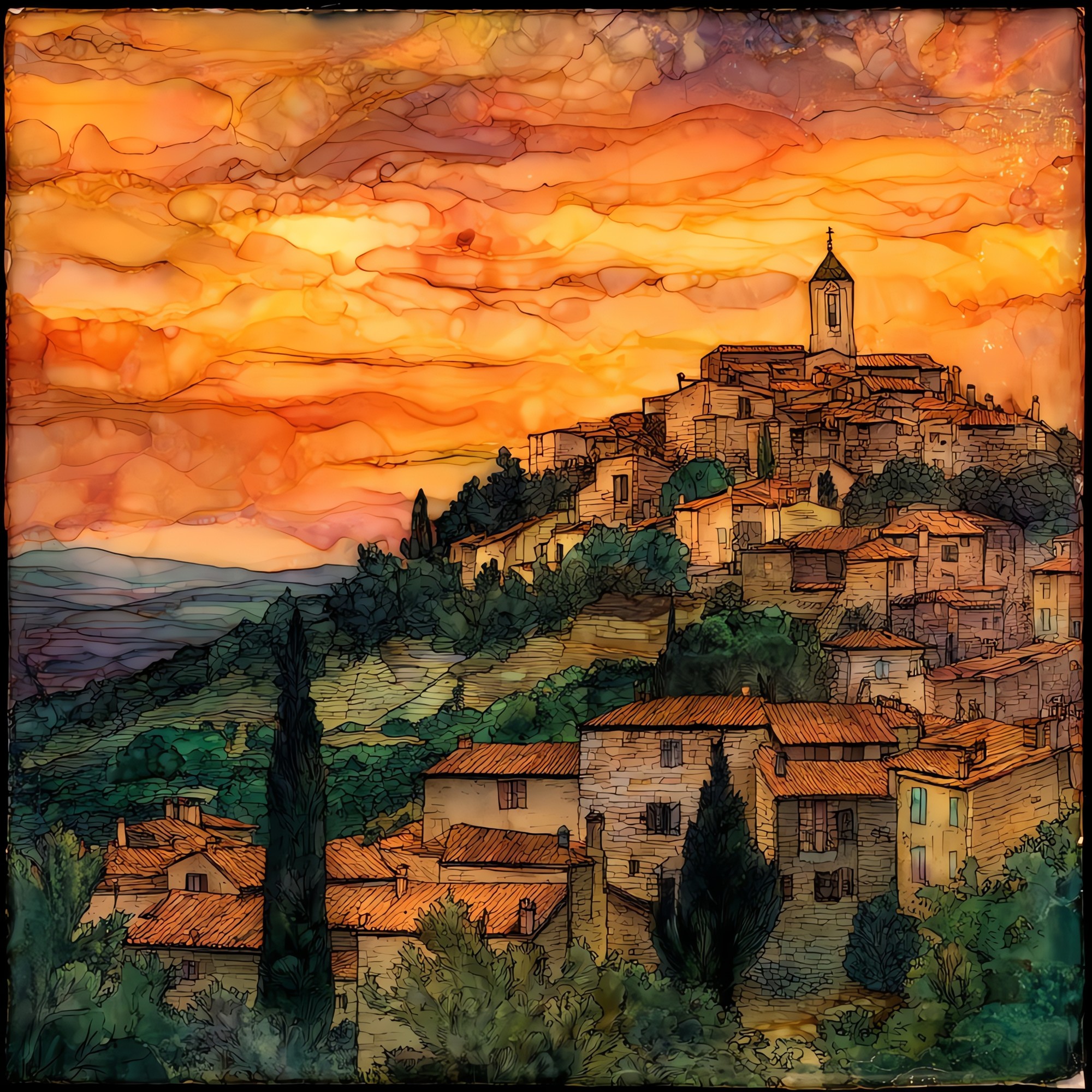
Gordes Hilltop Village
— — honey stone, stacked into the cliff.
Not only on a wall.
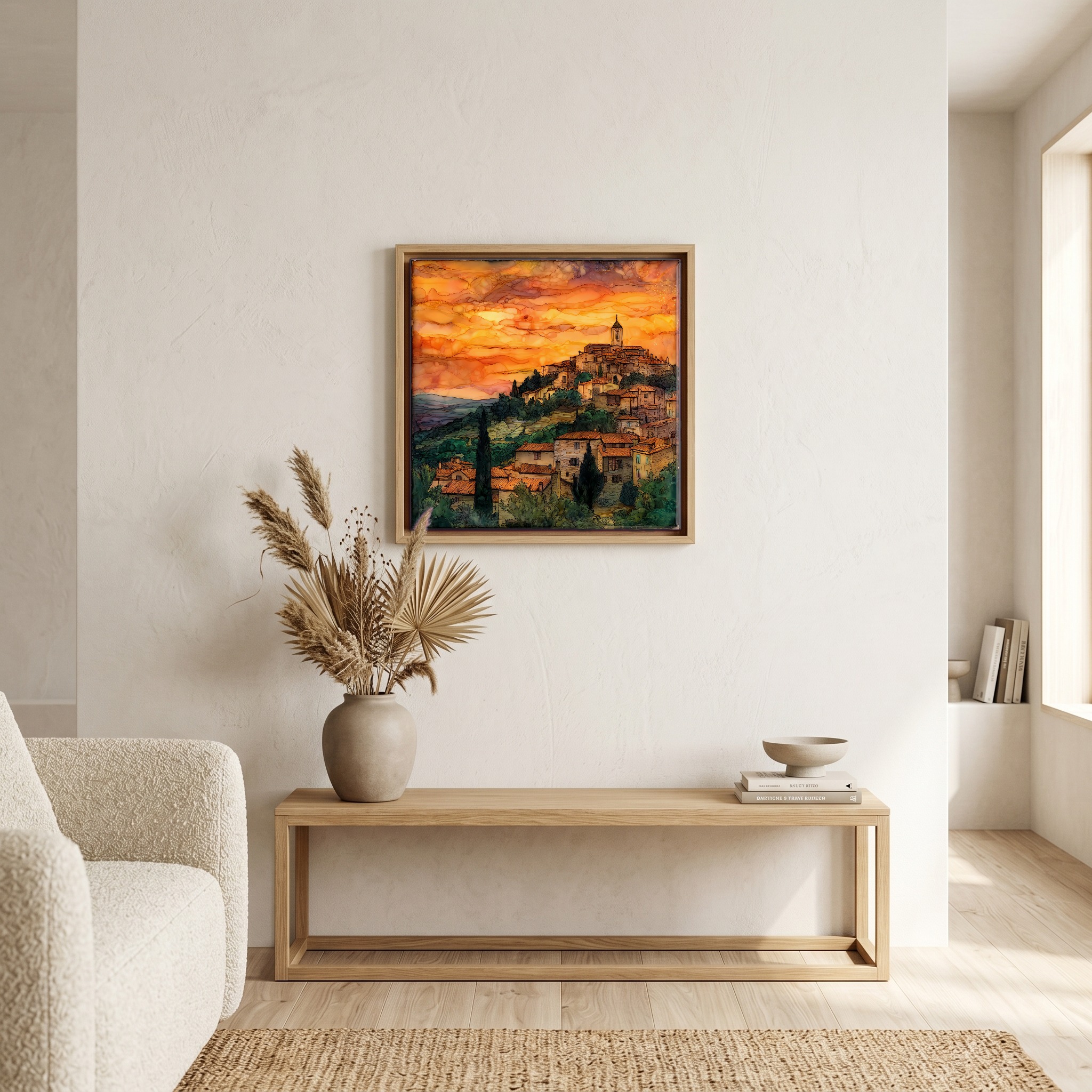
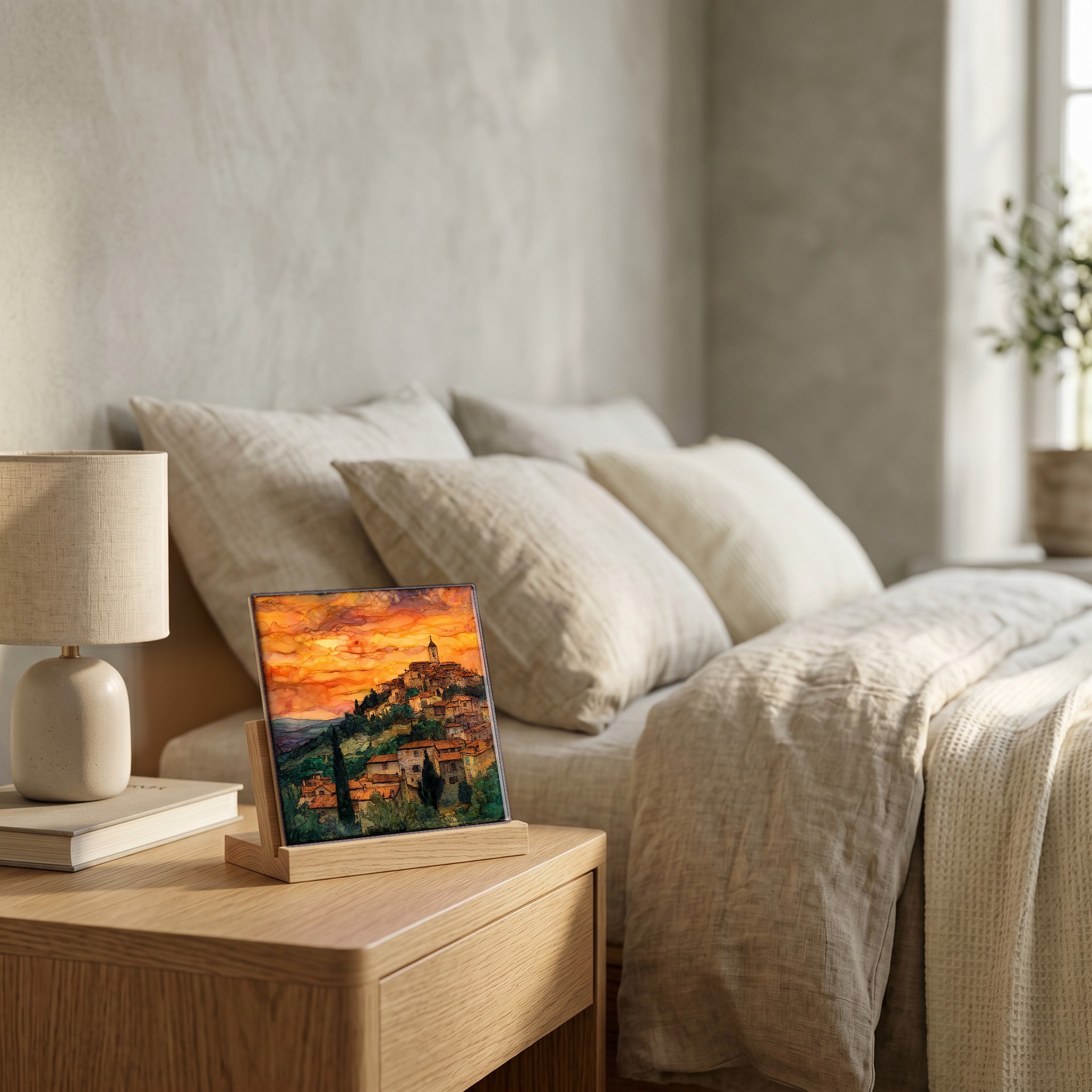
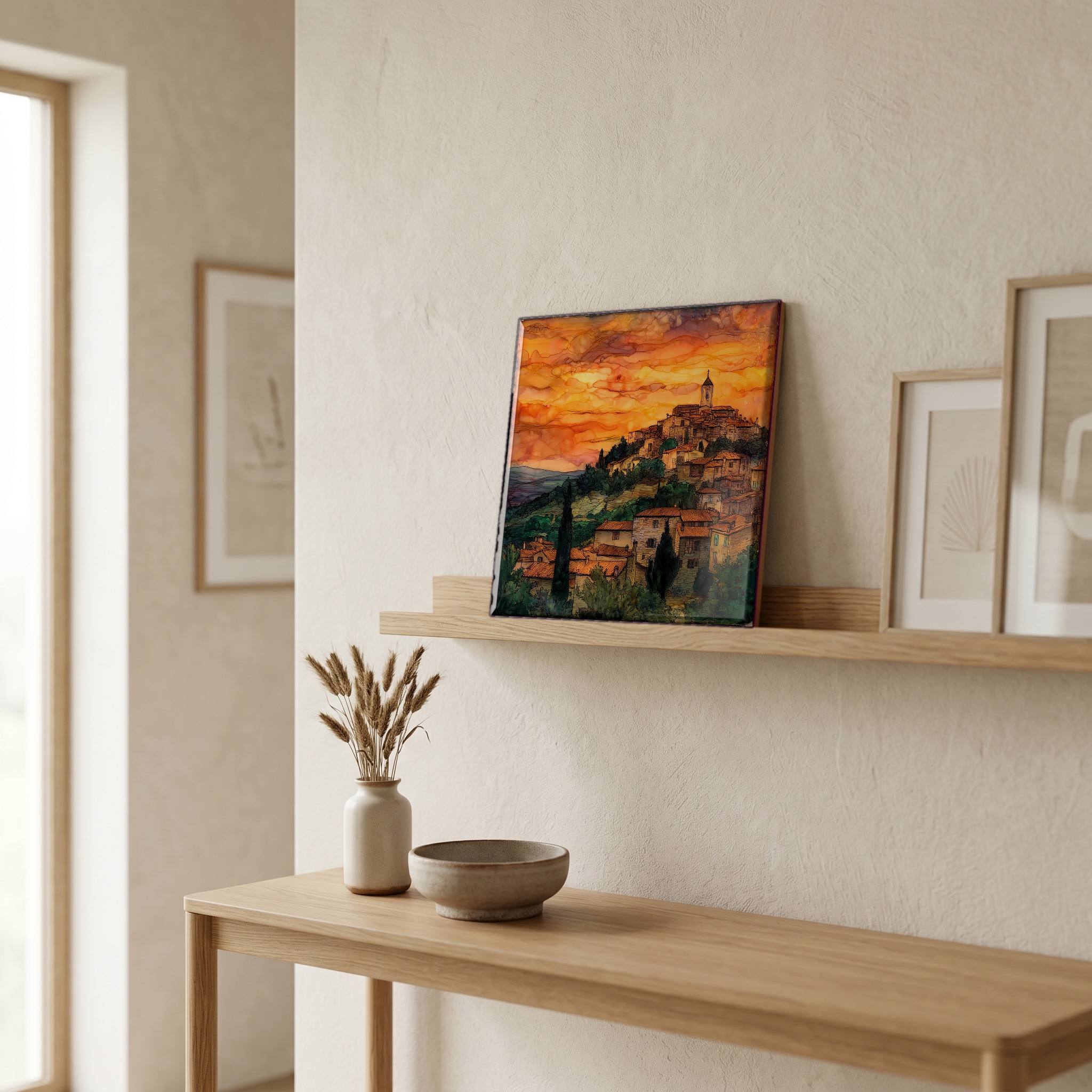
“A hilltop village in the Vaucluse, the houses cascading down a limestone shelf in tiers of honey-coloured stone. The same calcaire used since Roman times, dry-stacked and pointed with mortar only where it has to be. The Sénanque Abbey sits four kilometres north in a fold of valley, lavender rows in front, twelfth-century walls behind, the photograph everyone knows. The viewpoint south of town on the D15 is where the village turns into a single sculpted object against the sky, especially the hour before the sun goes down.
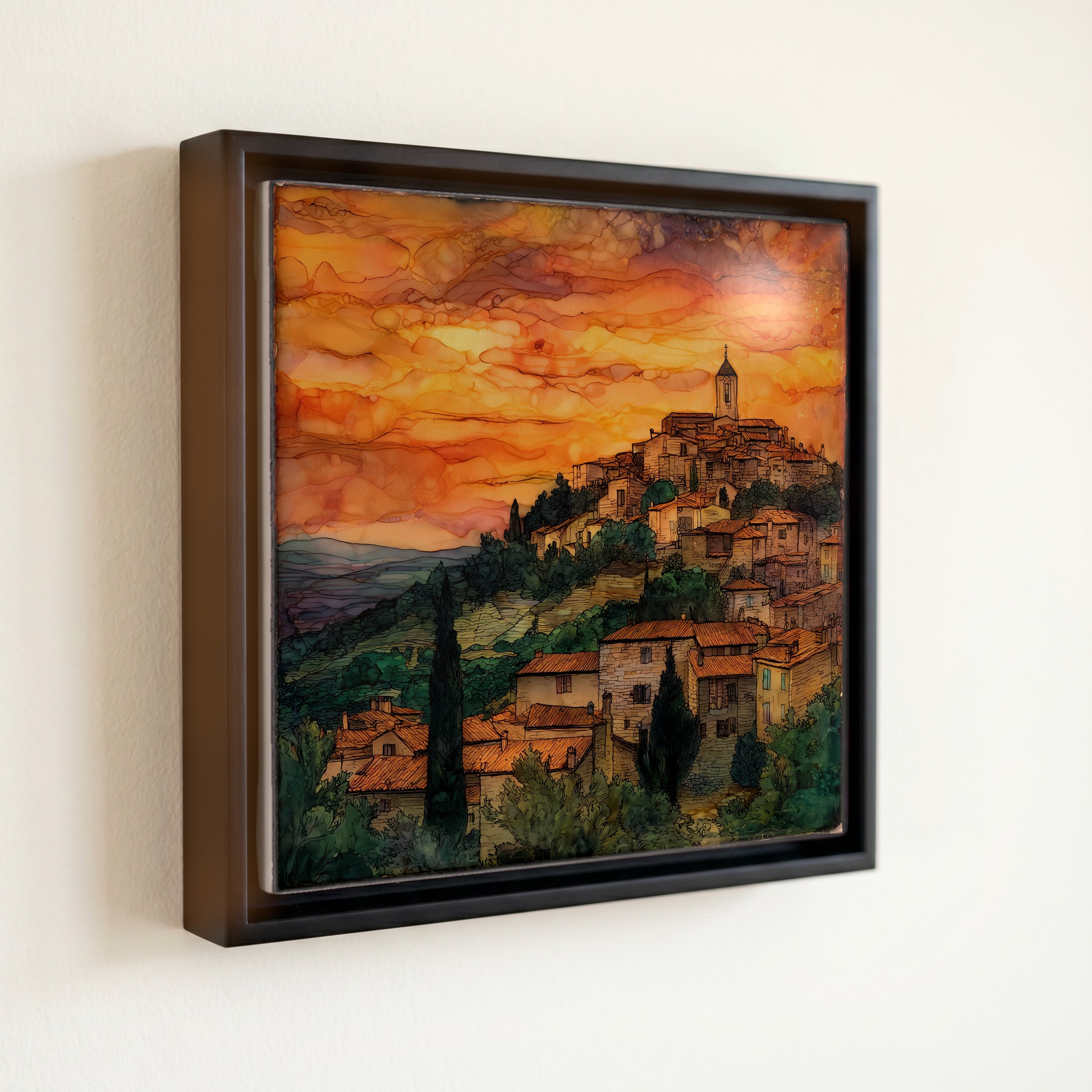
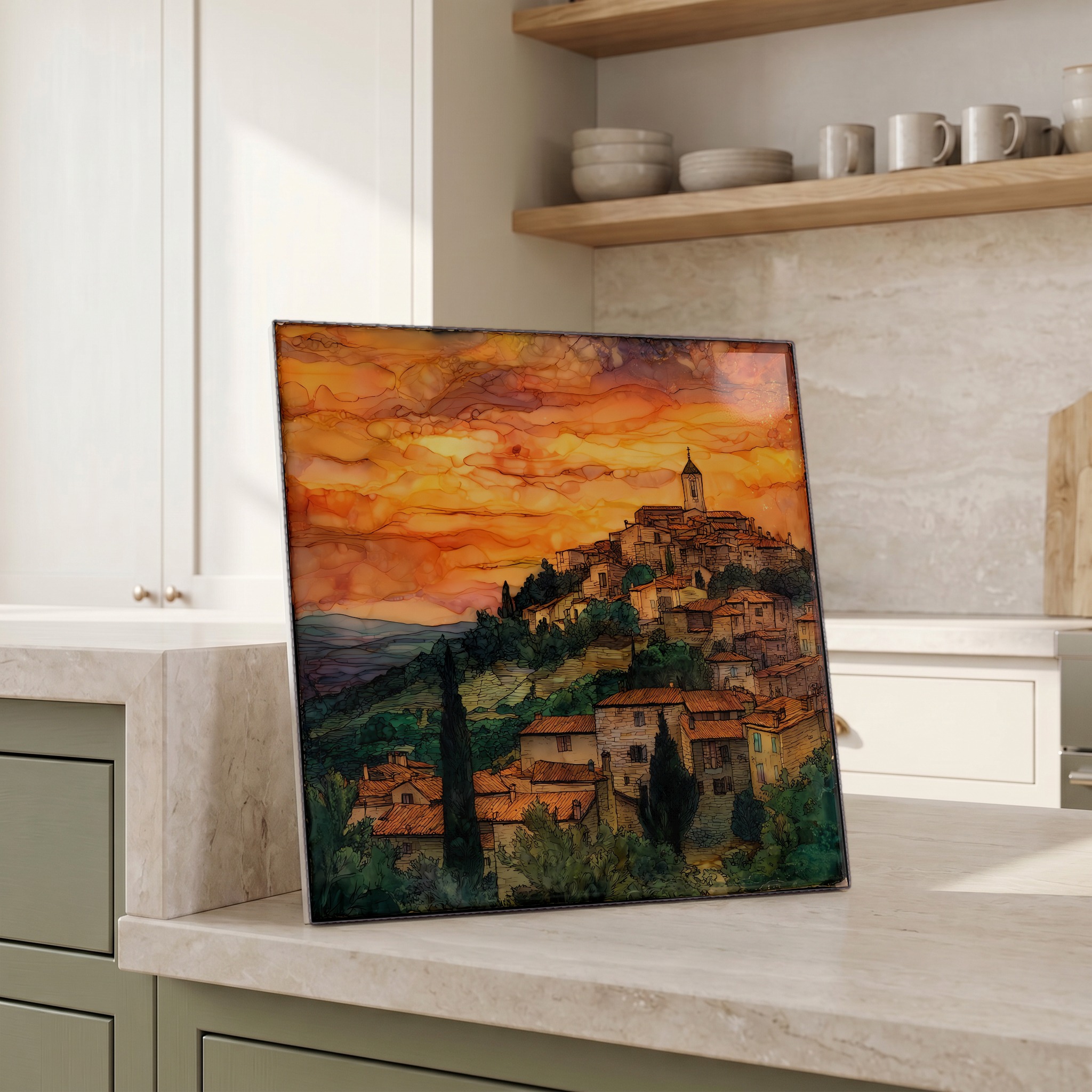
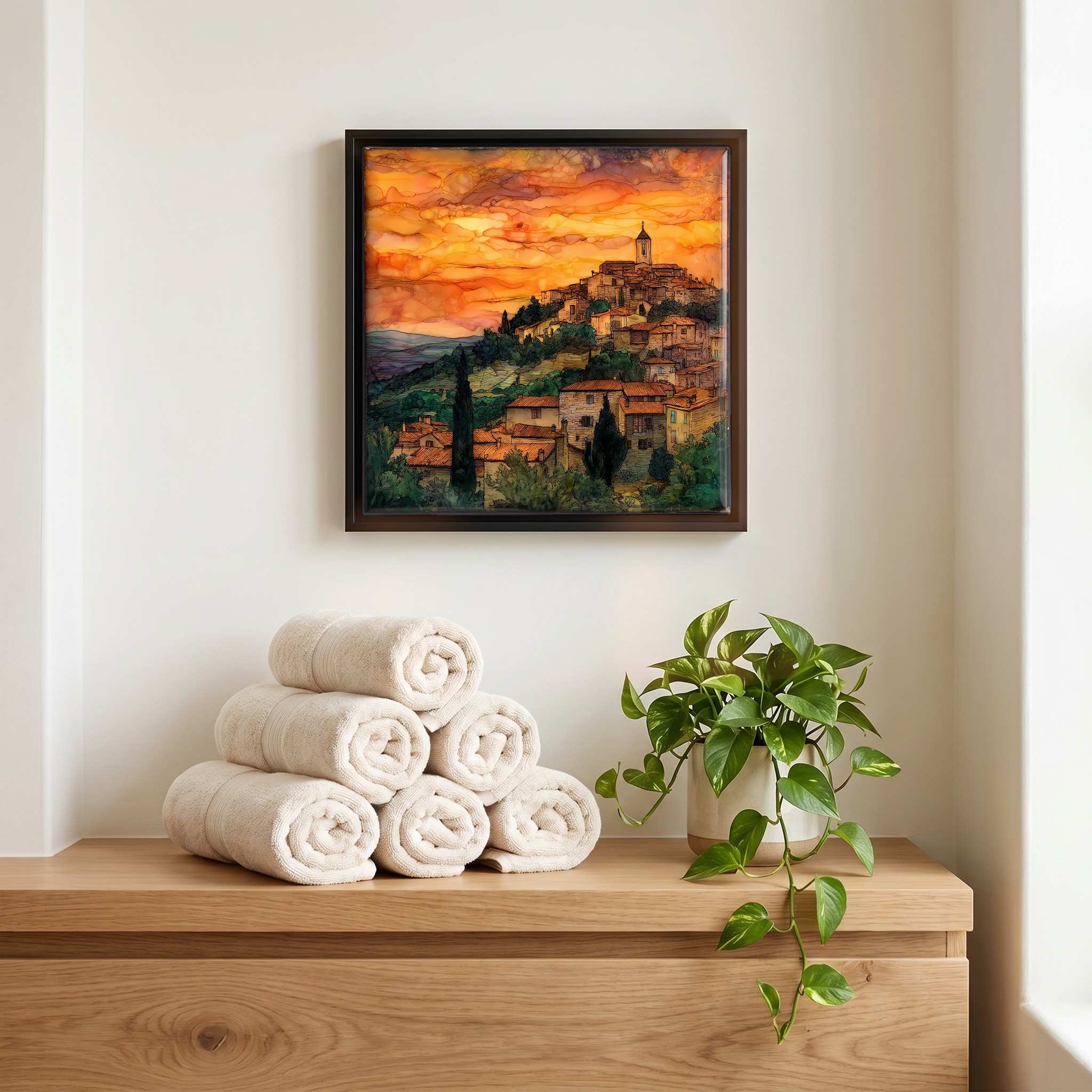
Gordes Hilltop Village, on ceramic.
Each tile is finished by hand in our Knoxville studio. Artwork is slowly infused into the ceramic surface under high heat and pressure, and rests beneath a thin glossy finish. The colour lives in the surface, not on top of it.
Pick any four 4-inch tiles — National Parks you've been to, a Smokies set, the four seasons of one place. $ for a set of , cork-backed, ready to live on the table.
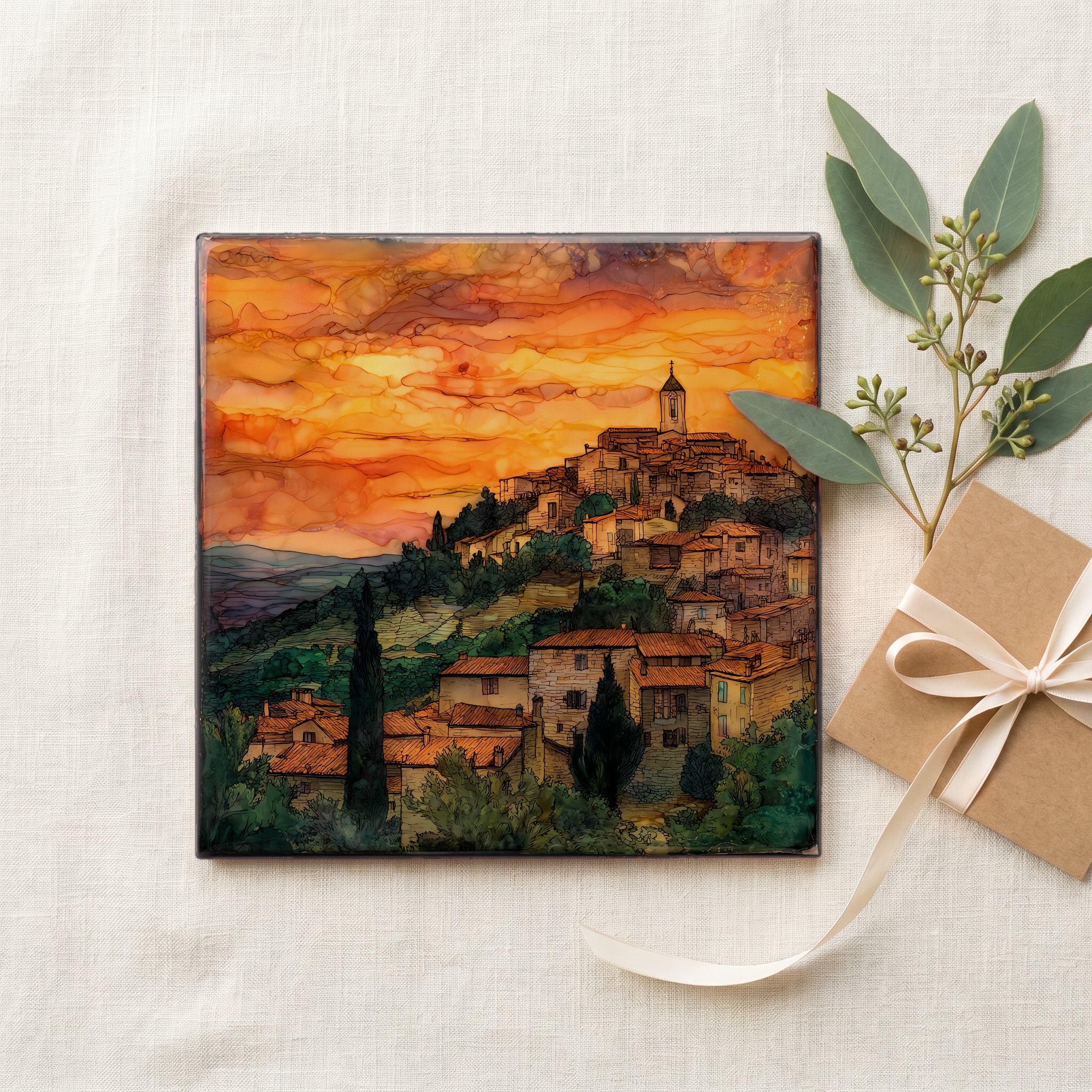
Each tile ships in a kraft box, tied with cream ribbon, with a handwritten note from the studio if you'd like to add one.
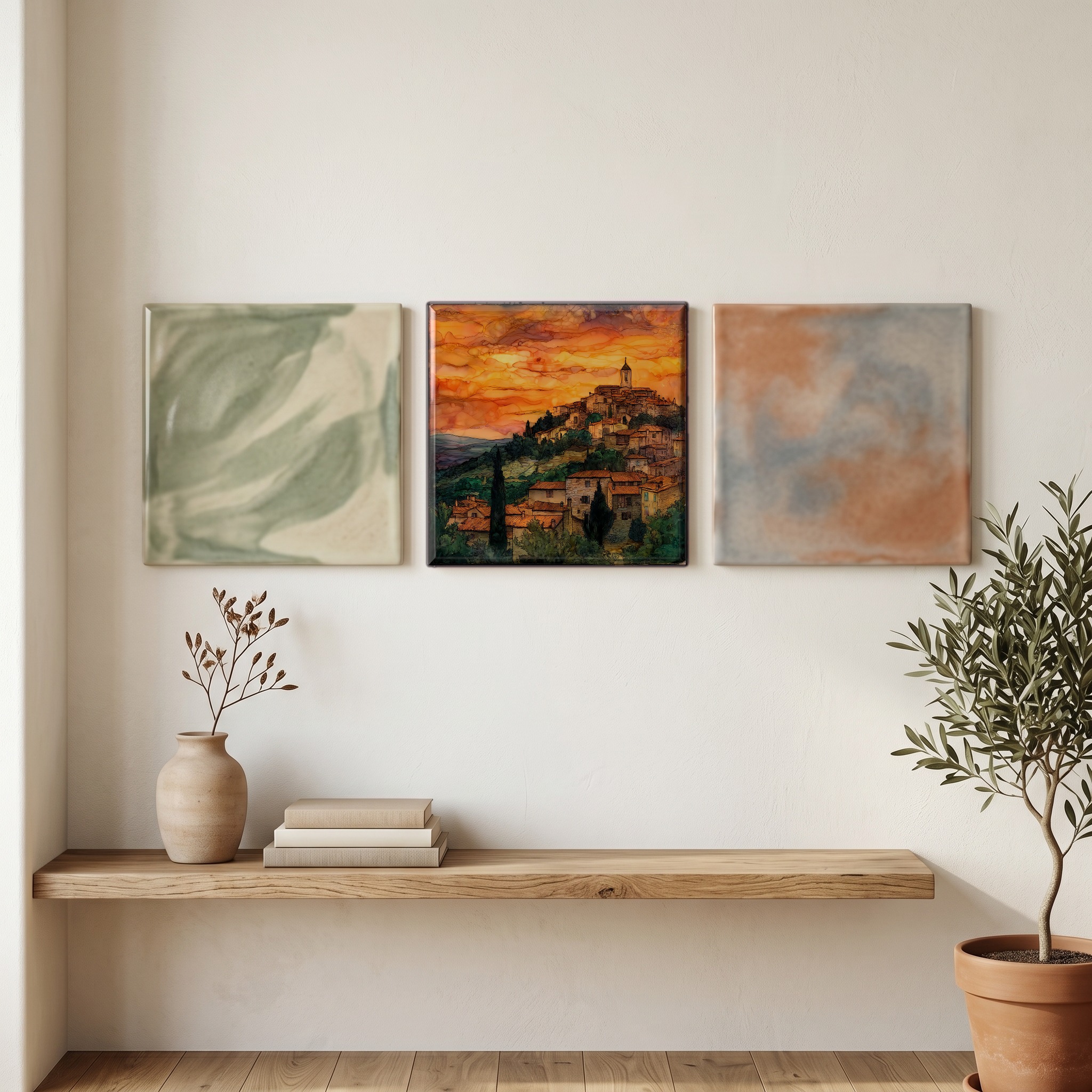
Three or five different vistas, hung together — a chapter of places you've been, or want to go.
The place, in three passes.
Gordes is a commune in the Vaucluse department of Provence-Alpes-Côte d'Azur, on the southern slope of the Monts de Vaucluse above the Luberon valley. The village sits on a limestone shelf with the houses tiered down the south face of the cliff in concentric terraces, the Château de Gordes anchoring the highest point. The château was rebuilt around an earlier twelfth-century keep by Bertrand de Simiane in 1525. The commune was awarded the Croix de Guerre in 1948 for its role as a Resistance stronghold during the German occupation. Gordes is among the formally classified members of Les Plus Beaux Villages de France, the national association founded in 1982.
The buildings are local calcaire, the white-to-honey limestone of the Vaucluse, quarried from the surrounding ridges and dry-stacked since at least the Roman period. The same stone makes the bories, the conical drystone shepherd huts that cluster two kilometres southwest at the Village des Bories, in continuous use until the nineteenth century. Around the village the stone is laid as restanques, the long stepped agricultural walls that hold the topsoil onto a vertical hillside. The Renaissance château at the summit, rebuilt in 1525 around a twelfth-century keep, uses the same material, dressed and squared for a noble building rather than tumbled for a field wall.
The village stays open through every season; the famous view of the cascading houses is from the lay-by on the D15 just south of town, best in the hour before sunset when the limestone holds the warm light. The Abbaye Notre-Dame de Sénanque, four kilometres north along the D177, is the second pilgrimage: a Cistercian monastery founded in 1148, its lavender field flowered and harvested between late June and early August. Guided interior tours of the abbey are by reservation; the lavender approach is open to visitors during daylight. The Friday morning market in Place du Château runs through the warm months.