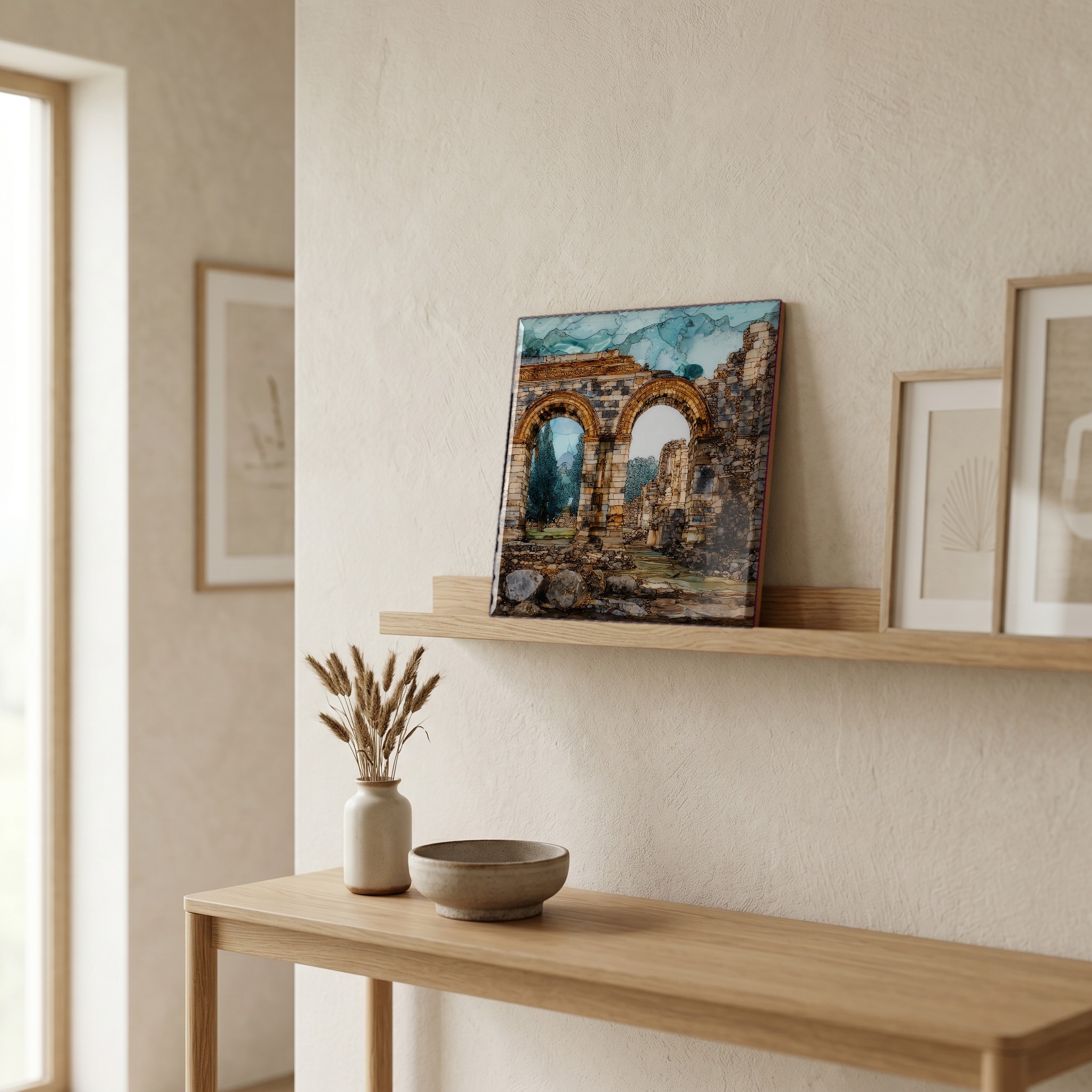
Wender·Vista
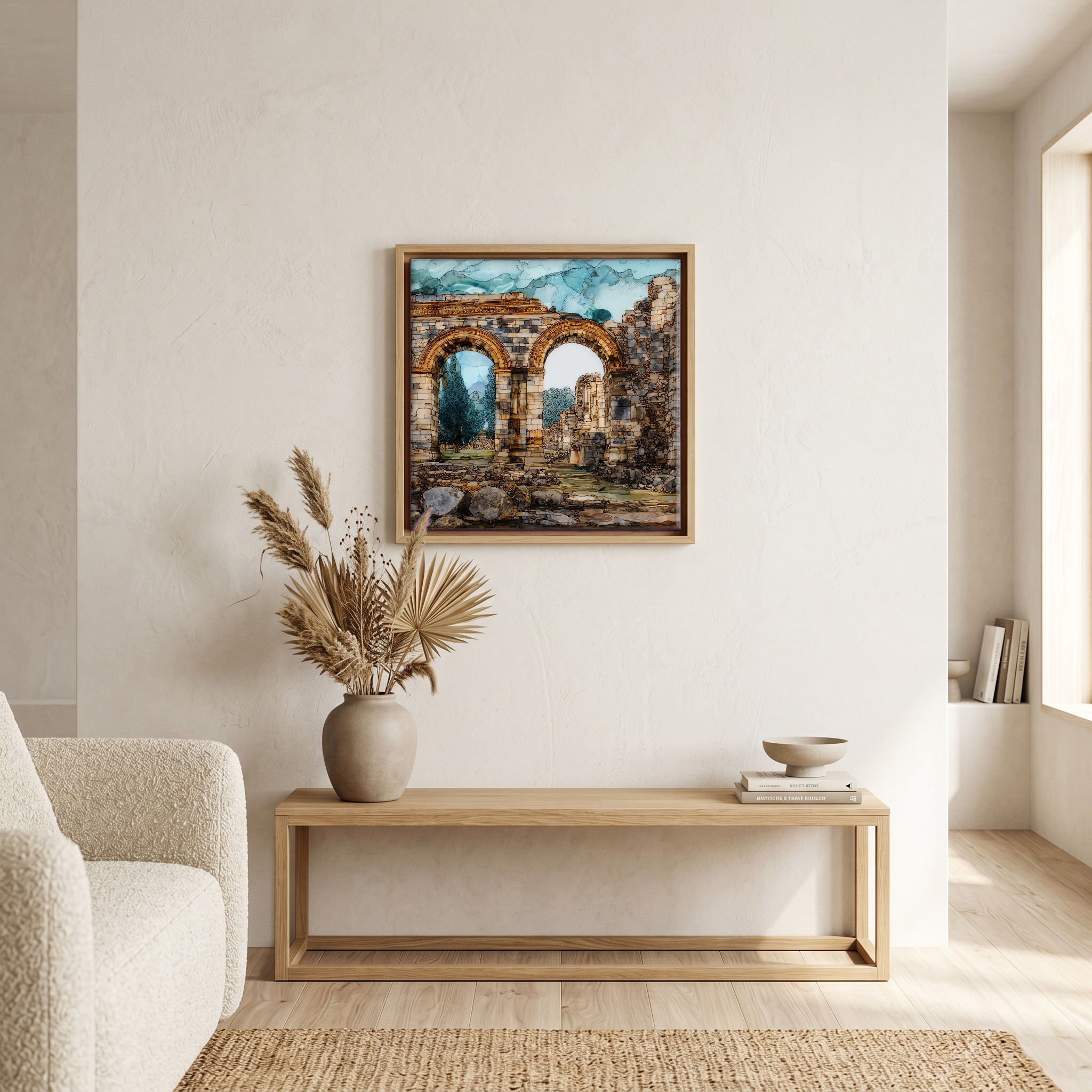
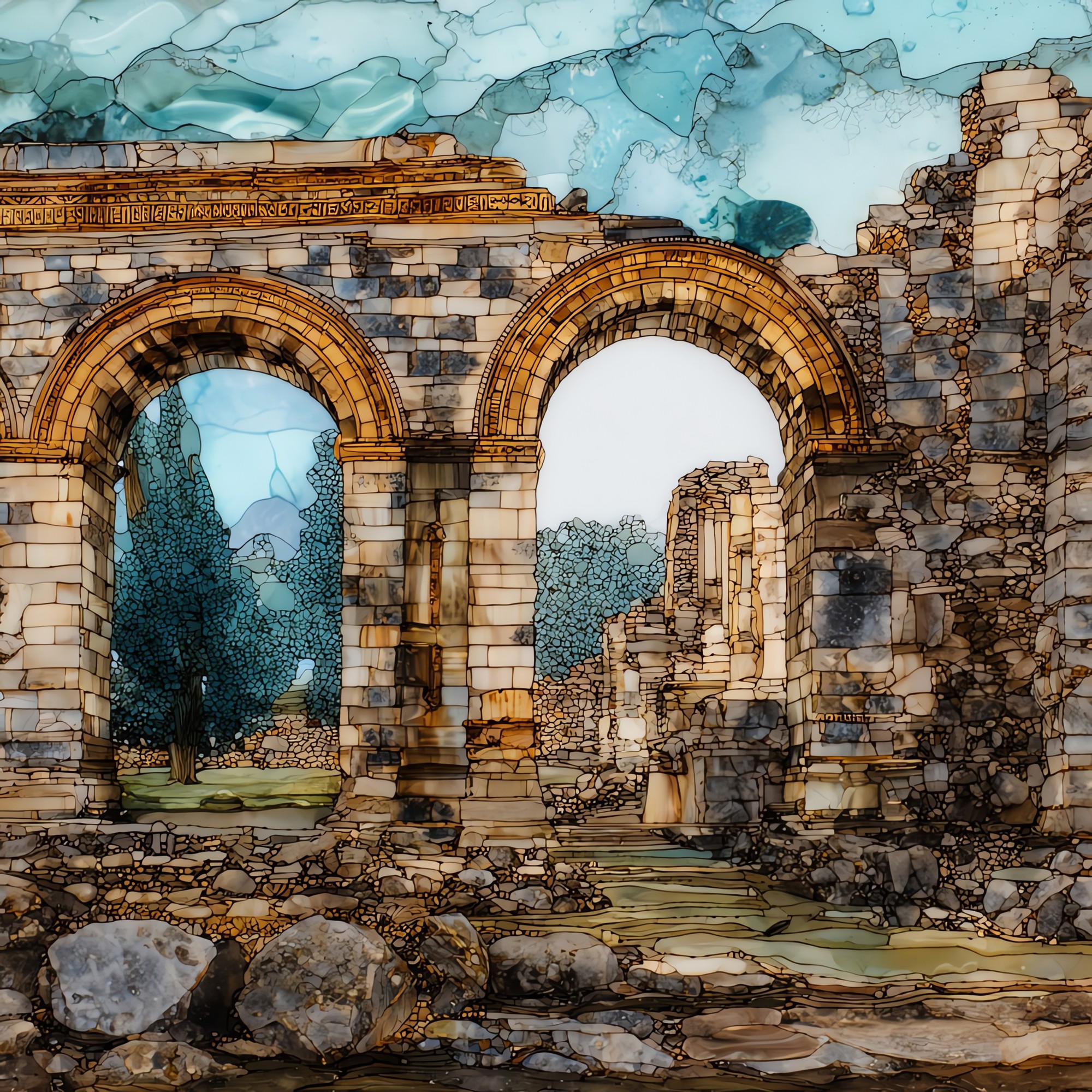
Glanum Roman Ruins
shown on ceramic, 12-inch tileFrance
at the foot of the Alpilles, just south of Saint-Rémy

Glanum Roman Ruins

what the centuries did not bury.

Where it lives

Not only on a wall.

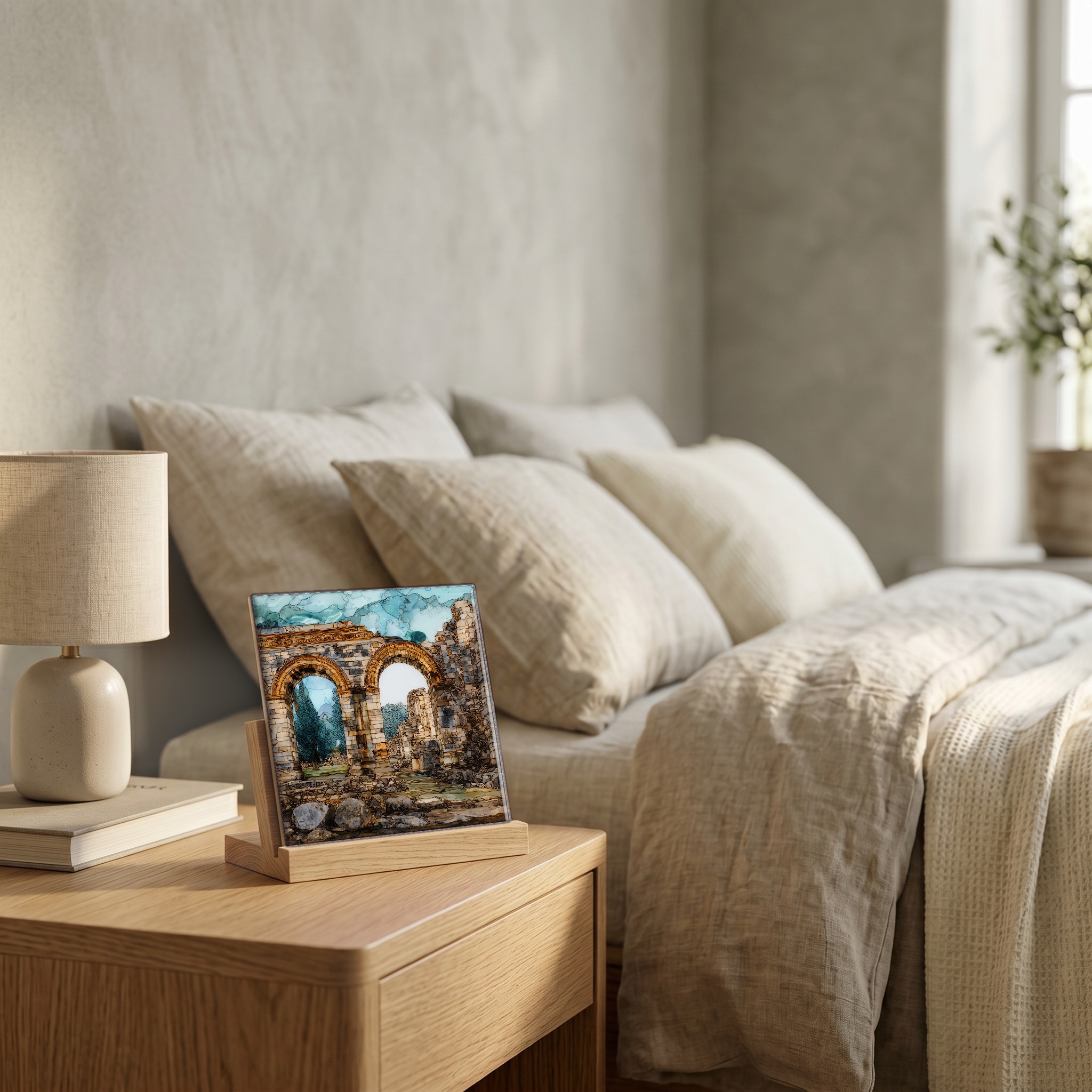
A small tile on the nightstand catching the morning. A larger one above the fire. Yours, wherever you spend the slow hours.
Above the bench, in a warm oak surround.
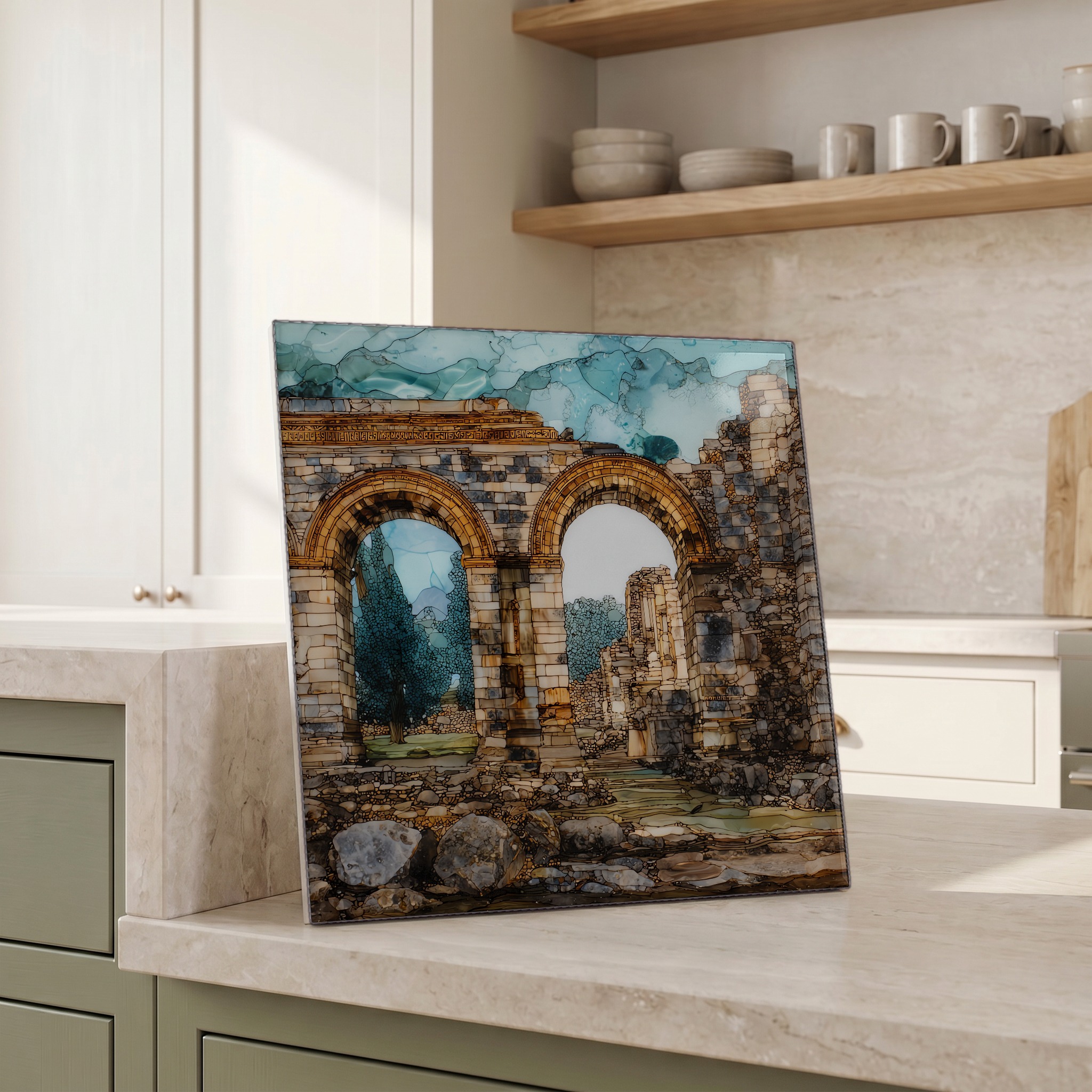
Beside the kettle, propped on the counter.
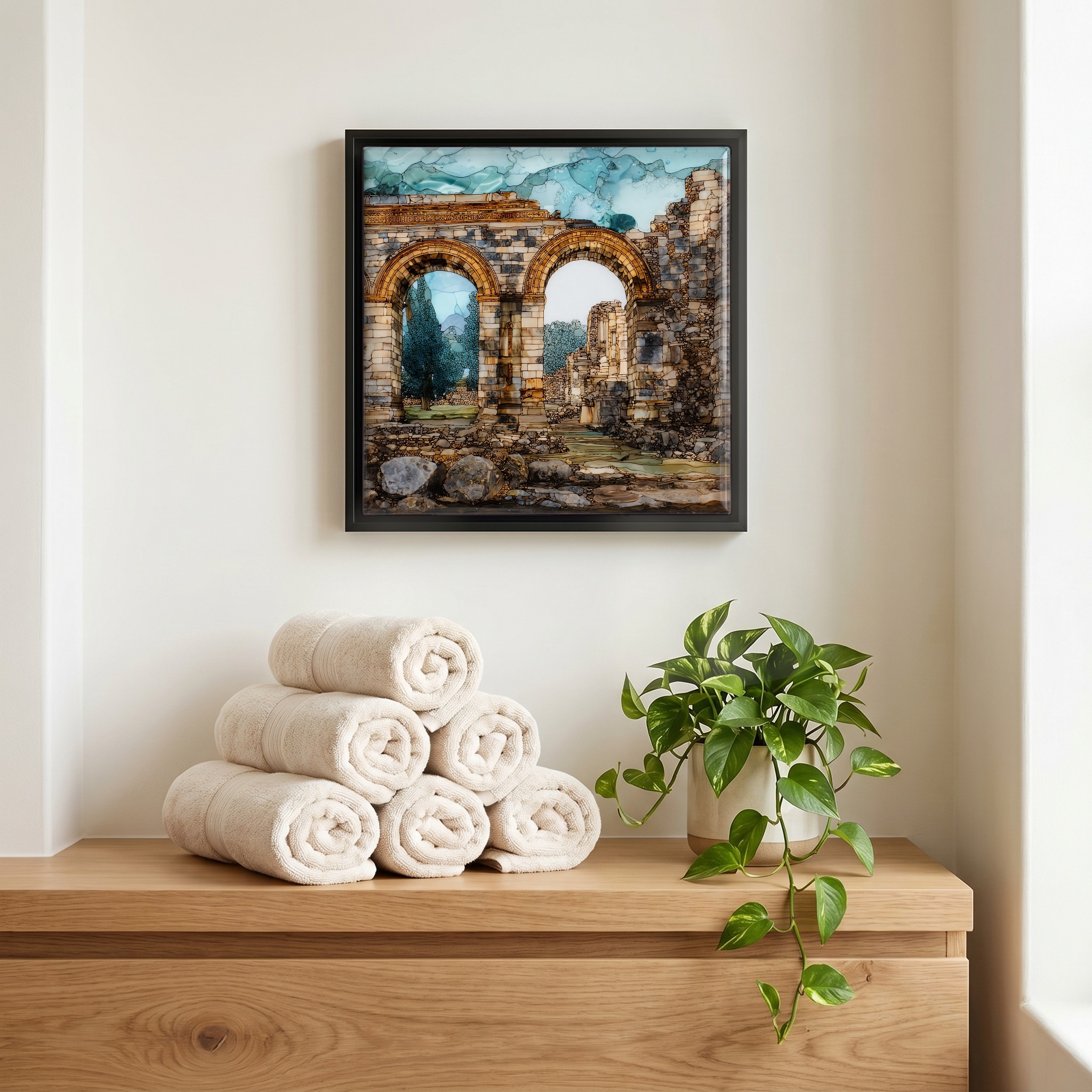
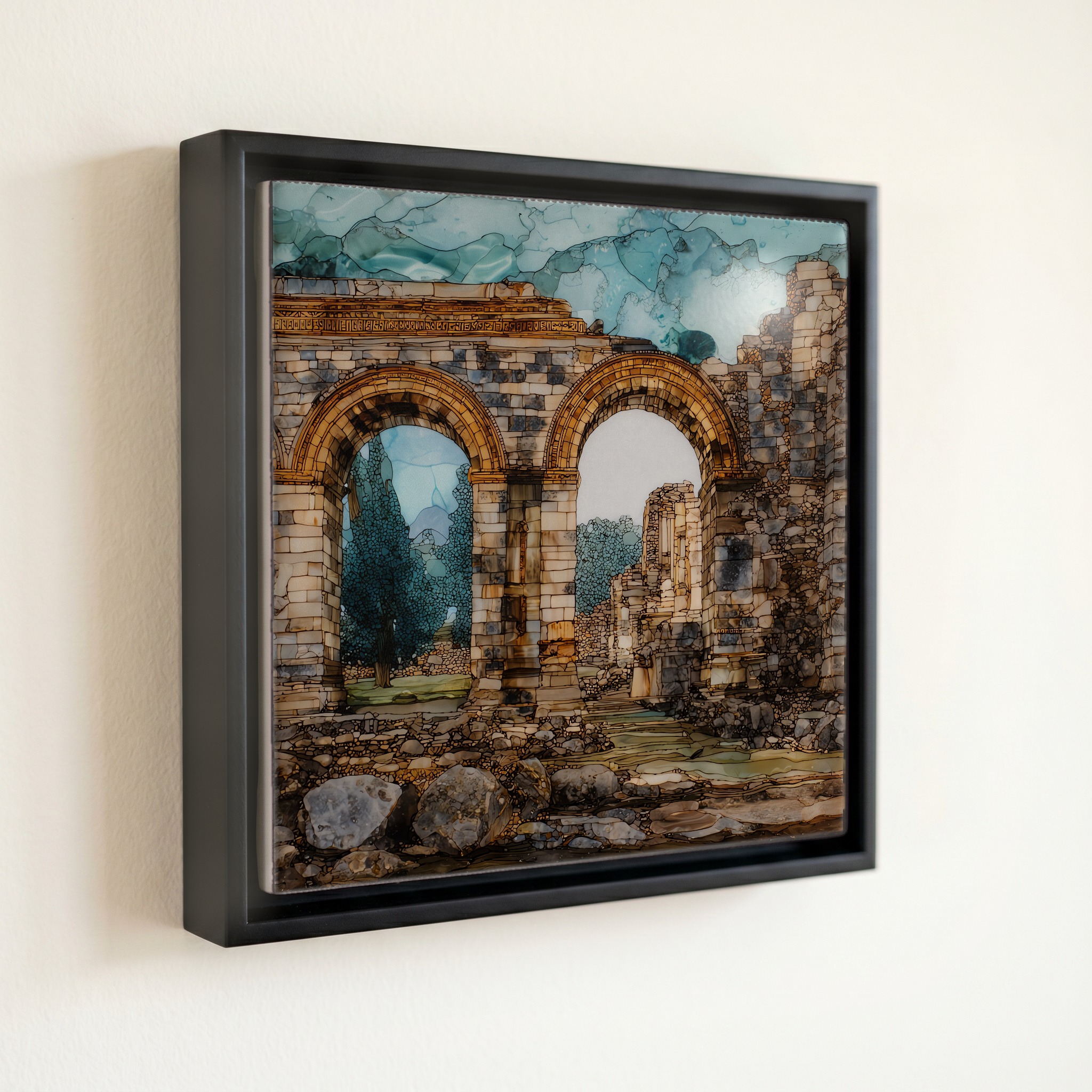
Above the linens, in a slim black surround.
On the nightstand, on a light oak stand.
On a picture ledge, where the light comes in.
a note from the studio

The Salyes built a sanctuary at the spring first, the Greeks of Massalia visited and traded, and then the Romans built a town over the top of it all. Two monuments stood above ground for two millennia at the southern entrance, the Mausoleum of the Julii and a triumphal arch, while the rest of Glanum slowly went under. Excavation began in 1921. The houses and the forum are out again now, and the paved street the Romans walked is open underfoot. The Alpilles hold the heat. The cicadas don't stop. Van Gogh painted on the asylum grounds across the road, the year before he died.
from the studio
shown in a slim black floating frame · 6 × 6 in
— bring it home

Glanum Roman Ruins, on ceramic.

Each tile is finished by hand in our Knoxville studio. Artwork is slowly infused into the ceramic surface under high heat and pressure, and rests beneath a thin glossy finish. The colour lives in the surface, not on top of it.

What kind of piece?
One tile — square or rectangle.
How big?
the popular one — counter, shelf, nightstand
6 × 6 in · 15 cm · 1.6 lb
Surface finish
A clear glossy finish — the artwork reads as if under resin. Ideal for show-pieces and framed wall art.
How it sits
A hidden cleat — sits ¼″ proud of the wall.
$58
Hand-finished and shipped from our studio at the foot of the Smokies. On your wall in about ten days.
size
6 × 6 in
15 cm
weighs
1.6 lb
solid in the hand
surface
ceramic, hand-finished
art rests beneath a thin glossy finish
from
Knoxville, TN
our family studio, at the foot of the Smokies
— start a Coaster Set

Pick any four 4-inch tiles — National Parks you've been to, a Smokies set, the four seasons of one place. $ for a set of , cork-backed, ready to live on the table.
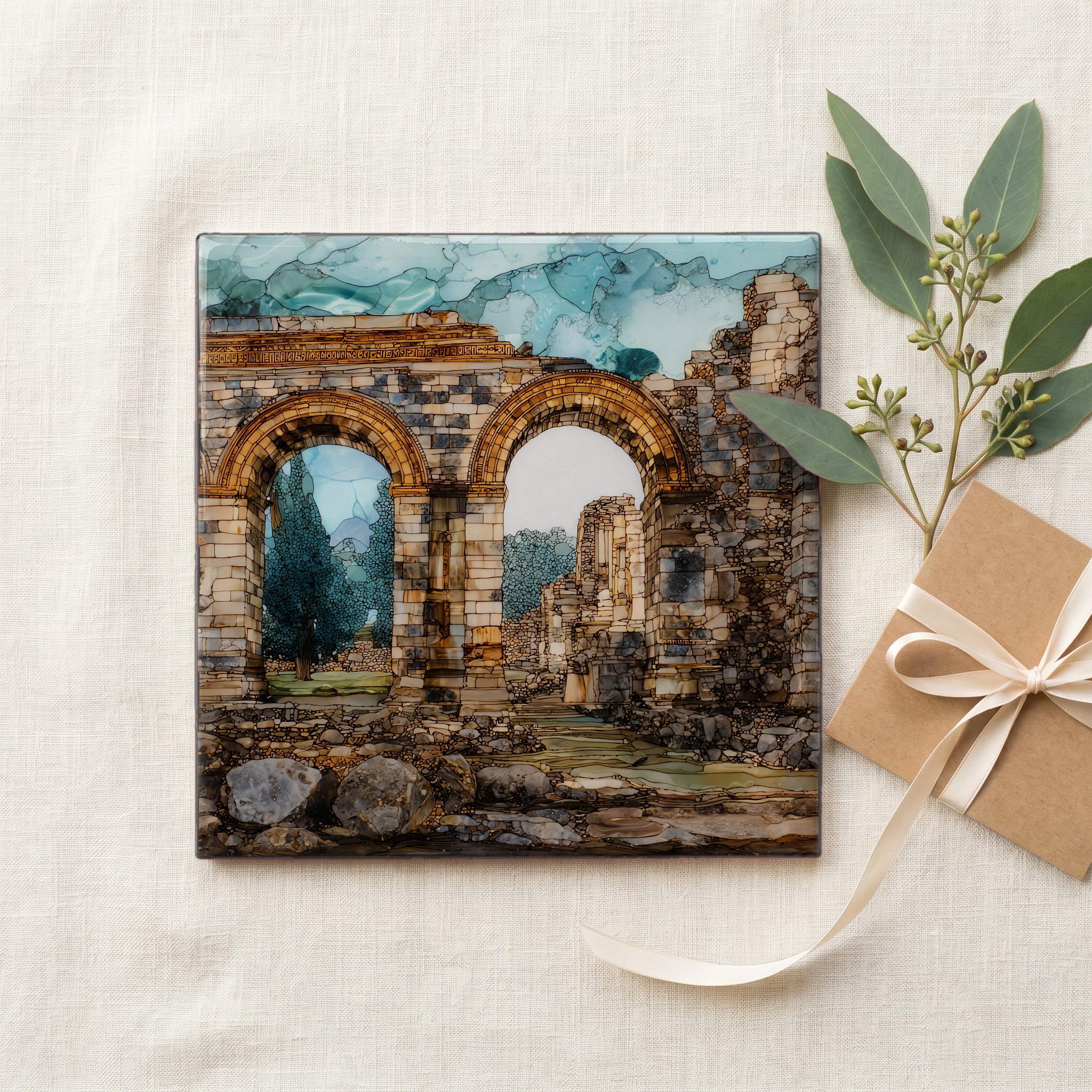
comes gift-ready
comes gift-ready

Each tile ships in a kraft box, tied with cream ribbon, with a handwritten note from the studio if you'd like to add one.
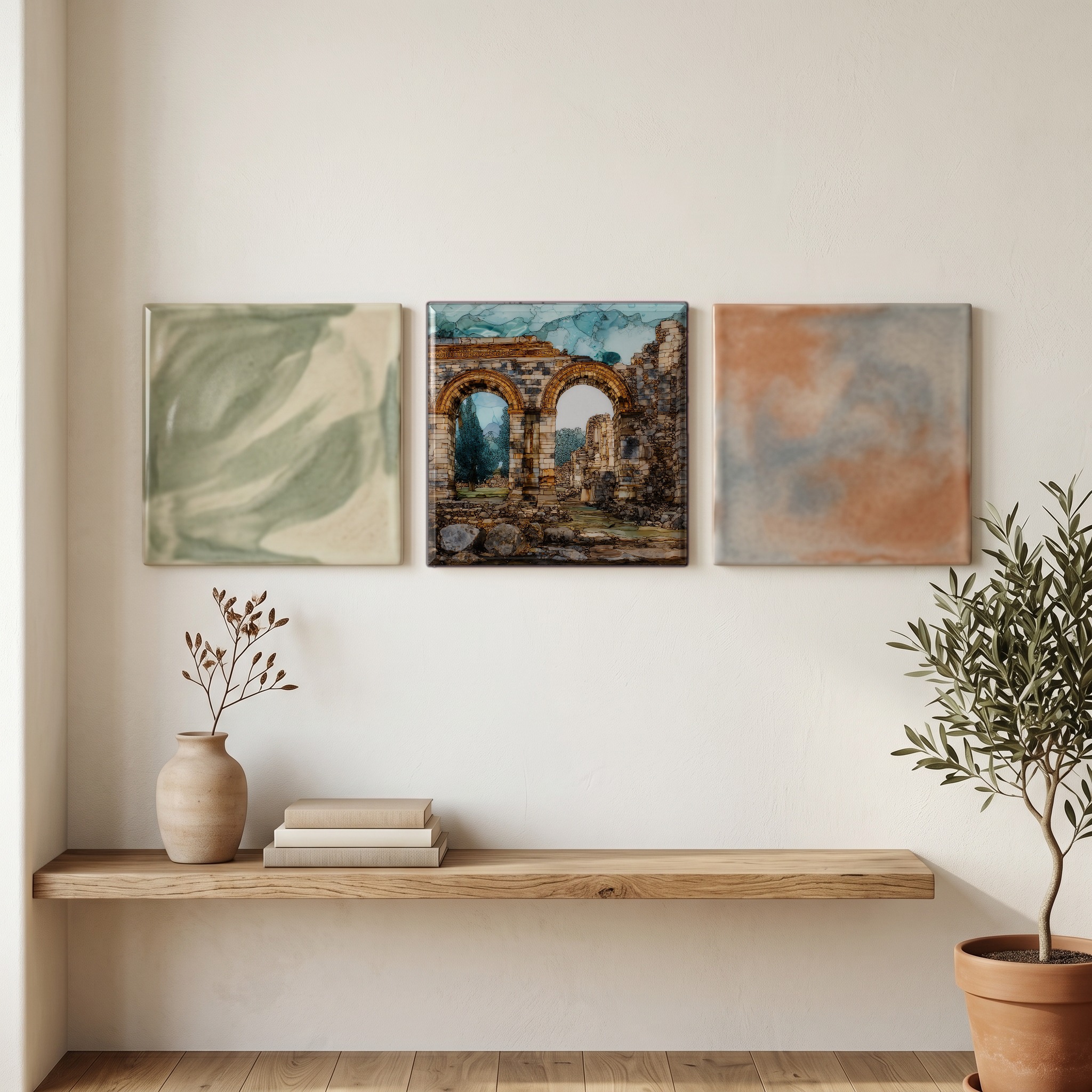
or build a grouping
or build a grouping

Three or five different vistas, hung together — a chapter of places you've been, or want to go.

about Glanum Roman Ruins

The place, in three passes.

A little of what's known, in case you fall down the rabbit hole — or want to go see it yourself.
the place

Glanum lies one kilometre south of Saint-Rémy-de-Provence in the Bouches-du-Rhône department, at the northern foot of the Alpilles massif. The site occupies a narrow valley opening onto the Provençal plain, with the limestone cliffs of the Alpilles rising directly behind it. Founded as a sanctuary of the Celto-Ligurian Salyes around the 6th century BC and developed under successive Greek and Roman influence, the town grew around a sacred spring dedicated to the healing god Glanis, from whom it took its name. It was destroyed during the Alemanni incursions of 260 AD, never rebuilt, and the ruins were slowly buried. Systematic excavation began in 1921 under the architect Jules Formigé and continues today under the Centre des monuments nationaux.

— informed by Wikipedia — Glanum
the stone

Two monuments stood continuously above ground while the rest of Glanum disappeared: the Mausoleum of the Julii, raised around 40-30 BC, and the Triumphal Arch from the early first century AD, known together as Les Antiques. The mausoleum stands roughly eighteen metres tall and carries some of the finest sculpted relief in southern Gaul, with battle and hunting scenes wrapping its base. The arch is among the oldest surviving in Roman Gaul and shows chained captives beneath garland-draped panels. The town behind them is built of pale local limestone, the same stone you see in the cliff villages of Les Baux. The Hellenistic-style houses near the spring are unusual this far west, suggesting Greek-trained masons were at work in the late second century BC.

the visit

The site is managed by the Centre des monuments nationaux and opens daily except for January 1, May 1, and December 25. The standard route enters from the south past Les Antiques, then follows the paved decumanus through the residential quarter, the forum, the baths, and the sacred spring at the head of the valley. Two hours is enough for an unhurried walk. The monastery of Saint-Paul-de-Mausole, where Vincent van Gogh was a voluntary patient from May 1889 to May 1890, sits directly across the road from the entrance and can be combined into one afternoon. Saint-Rémy-de-Provence is one kilometre north. The mistral can scour the valley in winter; spring and early autumn are kinder for slow wandering.

where
France · Saint-Rémy-de-Provence, Bouches-du-Rhône
position
43.7747° N · 4.8329° E
the neighborhood

What's nearby.

A handful of named places within an hour's walk or short drive. Some we've already painted; some we will.
at the lake
Saint-Paul-de-Mausole
Augustinian monastery and former asylum
1 km N
Saint-Rémy-de-Provence
Provençal market town
10 km W
Les Baux-de-Provence
Hilltop village in the Alpilles
25 km NW
Avignon
Medieval papal city
25 km SW
Arles
Roman city on the Rhône
N
Glanum Roman Ruins
Saint-Paul-de-Mausole
Saint-Rémy-de-Provence
Les Baux-de-Provence
Avignon
Arles
common questions

What people ask.

A few questions we get about Glanum Roman Ruins — and about bringing the piece home.
about the place

Glanum sits one kilometre south of Saint-Rémy-de-Provence in the Bouches-du-Rhône department, at the northern foot of the Alpilles massif. It is roughly twenty-five kilometres south of Avignon and the same distance northeast of Arles.

Glanum was a Celto-Ligurian sanctuary that grew into a Greek-influenced trading town and then a Roman colony. Founded around the 6th century BC near a spring sacred to the healing god Glanis, it was destroyed during the Alemanni invasions of 260 AD and never rebuilt.

Les Antiques are two Roman monuments at the southern entrance to Glanum that remained above ground after the rest of the town was buried: the Mausoleum of the Julii, raised around 40-30 BC, and the Triumphal Arch from the early first century AD, both built of local limestone.

The two monuments of Les Antiques were never lost from view, but systematic excavation of the buried town began in 1921 under the architect Jules Formigé. Work has continued in phases ever since, and the site is now managed by the Centre des monuments nationaux.

Yes. The monastery of Saint-Paul-de-Mausole, where Vincent van Gogh was a voluntary patient from May 1889 to May 1890, sits directly across the road from the entrance to Glanum. He painted The Starry Night and roughly 150 other works during that year.

Spring and early autumn are kindest, when the mistral is calmer and the limestone is not yet at high-summer temperatures. The site is open daily except January 1, May 1, and December 25. Mornings are quieter than afternoons.

Glanum is a one-kilometre walk south from the centre of Saint-Rémy-de-Provence, along the D5 road past Les Antiques. The closest train stations are Avignon TGV and Marseille Saint-Charles, with regional bus and taxi service from Saint-Rémy onward.

about the piece in your home

It has been a meaningful gift for many of our customers with ties to the region. Glanum carries the cultural weight of the Alpilles, the Romans, and the road to Van Gogh's asylum in one image. The Small or Medium with a handwritten note from the studio travels well.

The warm limestone palette suits Mediterranean-modern, Old-World European, and earthy Mid-Century rooms. It pairs naturally with terracotta, oak, and faded indigo. In a more minimal interior, the Medium in a Glossy finish reads as a single warm focal piece against neutral plaster or limewash.

The current pull toward warm mineral palettes (raw plaster, travertine, unglazed terracotta) lands directly on the Glanum colour story. The tile works in both the heritage-Provençal direction and the cleaner Mediterranean-modern one moving through European interiors over the past few seasons.

For a console, a single Large reads cleanly. Above a sofa, step up to a 4-tile Mural or, for a long wall, a 9-tile Mural. The Mural arrangements give the ruins room to breathe and let the limestone tones carry across the wall.

Yes. The Dura Satin and Matte finishes are made for bathrooms, showers, and kitchen backsplashes. The Glossy finish is best kept to dry walls. The colour lives in the surface itself, so warm steam and splash do not affect it.

A soft microfibre cloth and clean water are enough. For kitchen installations with cooking residue, a few drops of dish soap in warm water. No abrasive pads, no bleach. The thin glossy finish keeps the surface easy to wipe.

Yes. Every WenderVista image is original to the studio and is not licensed from any third party. The Glanum piece was made by Reid Wender, hand-finished in Knoxville, Tennessee, and produced in small batches per surface.

if this one stayed with you

A few you might also love.

Hand-picked by the eye that found Sorapis. Same air, same kind of quiet.