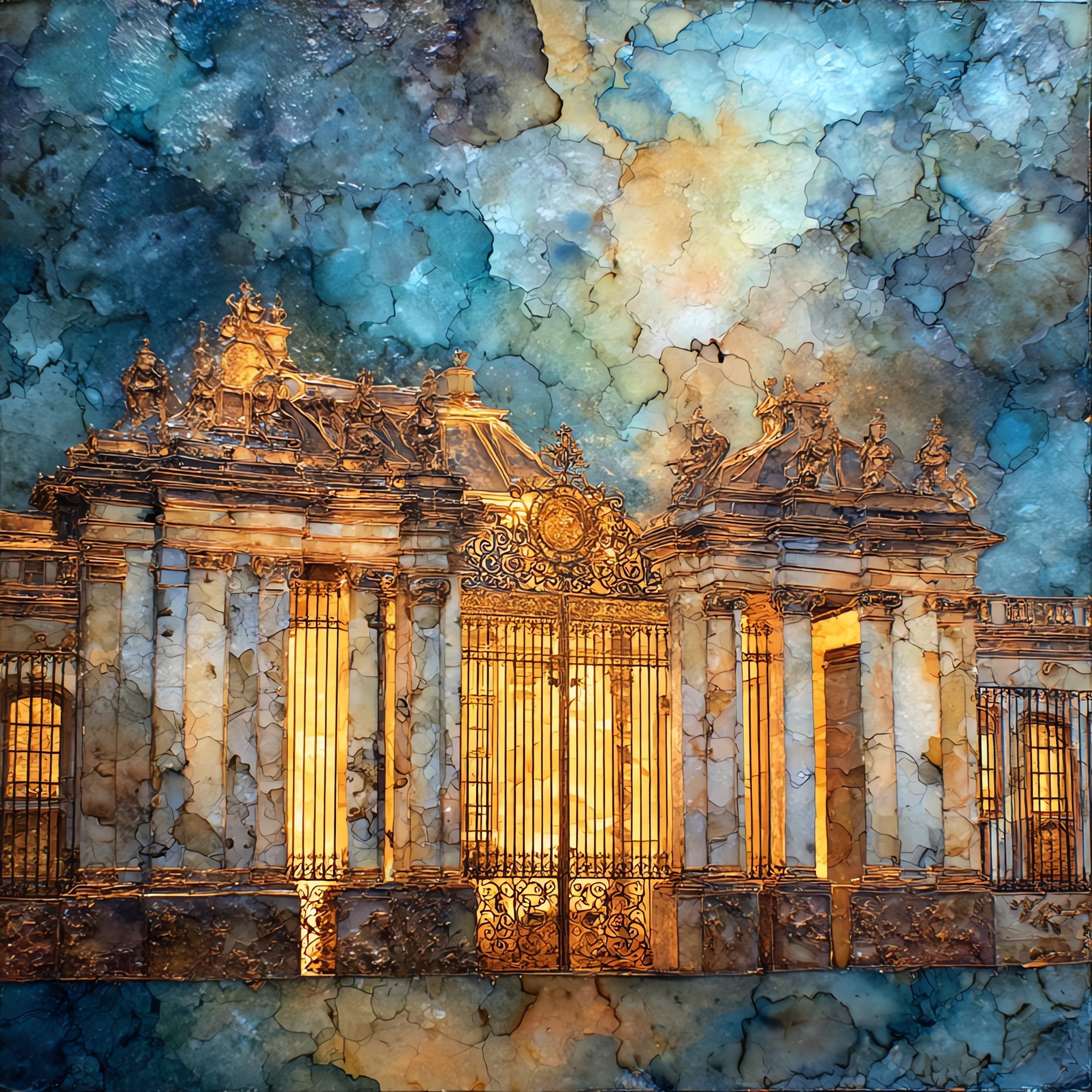
Gilded Gate of Versailles
— the gold the morning finds first.
Not only on a wall.
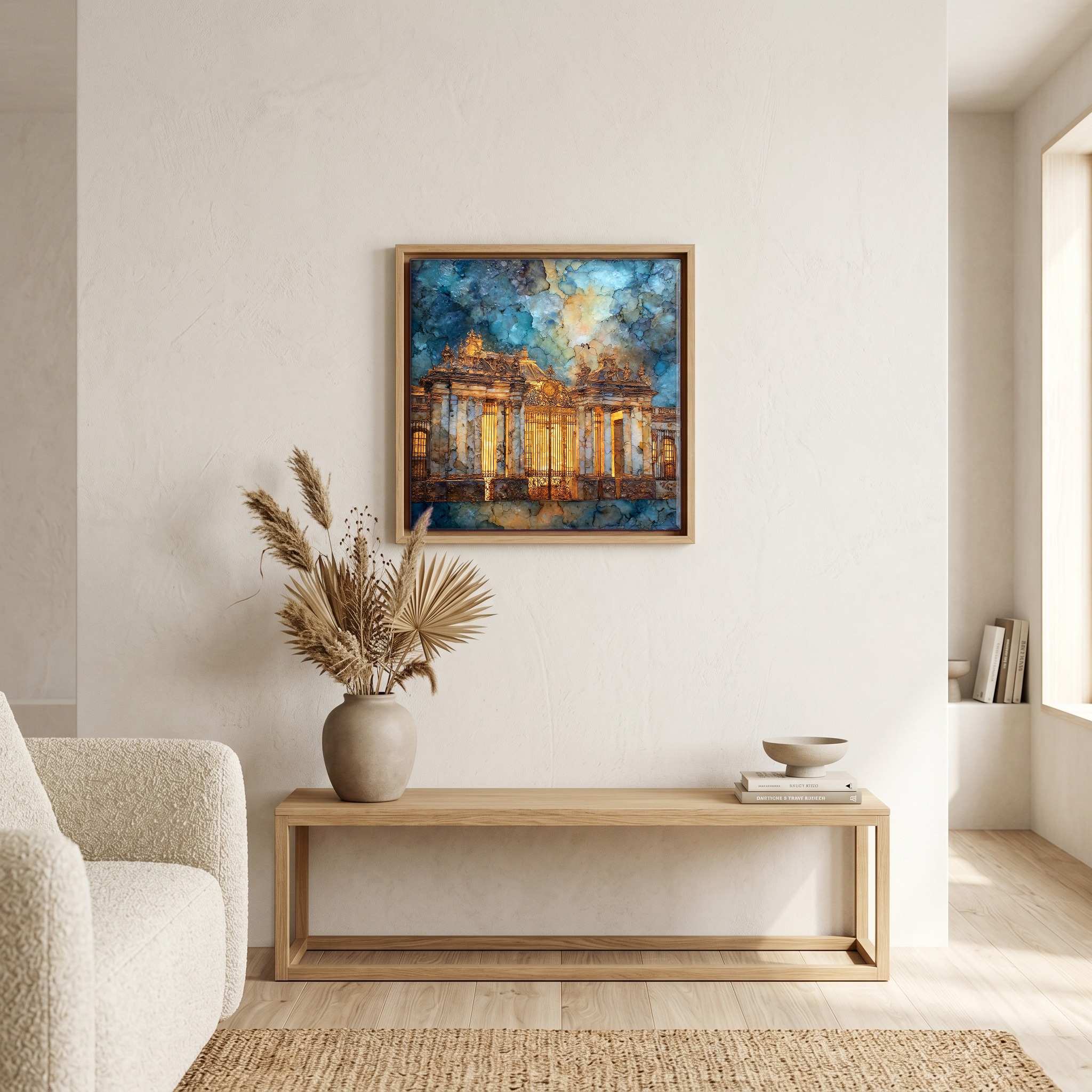
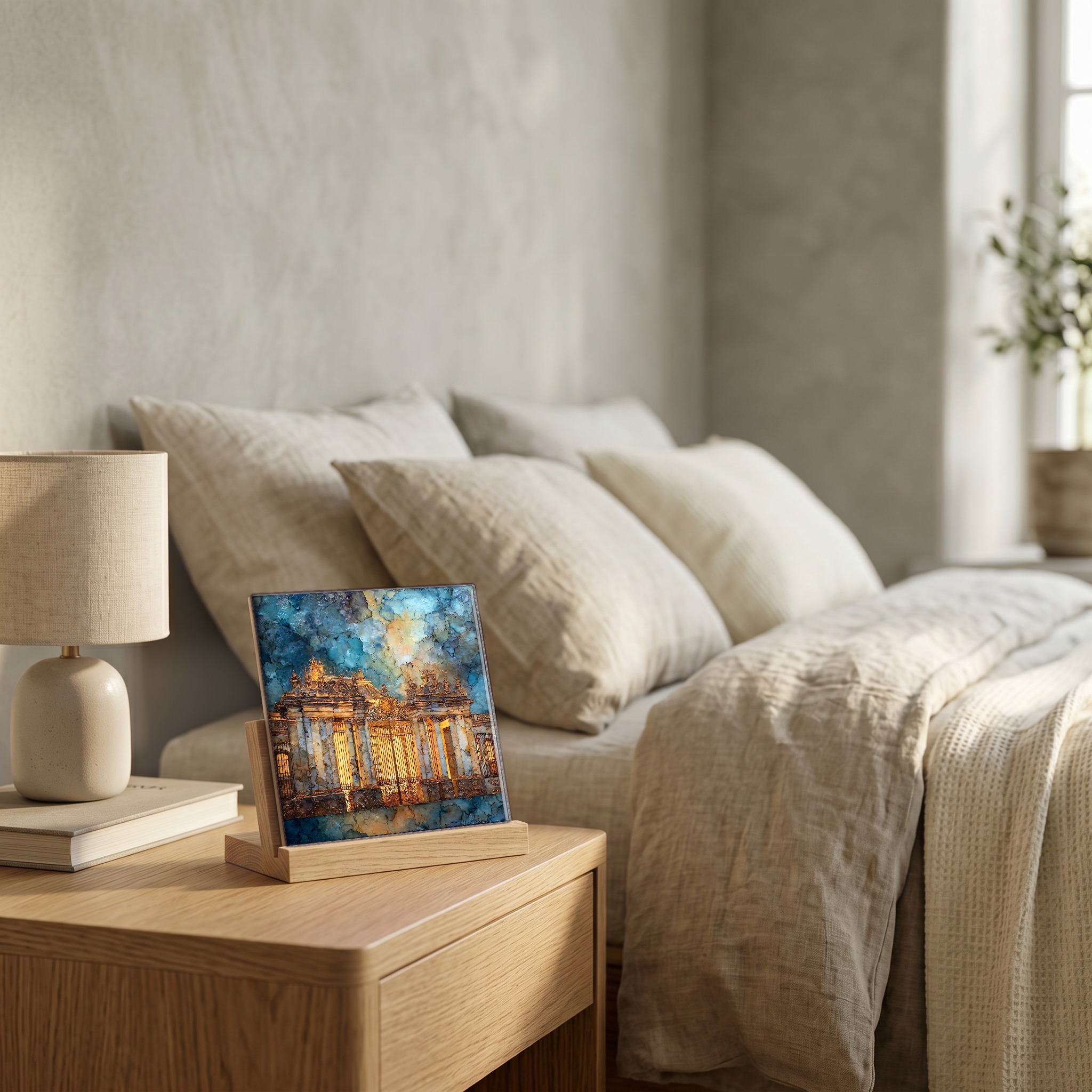
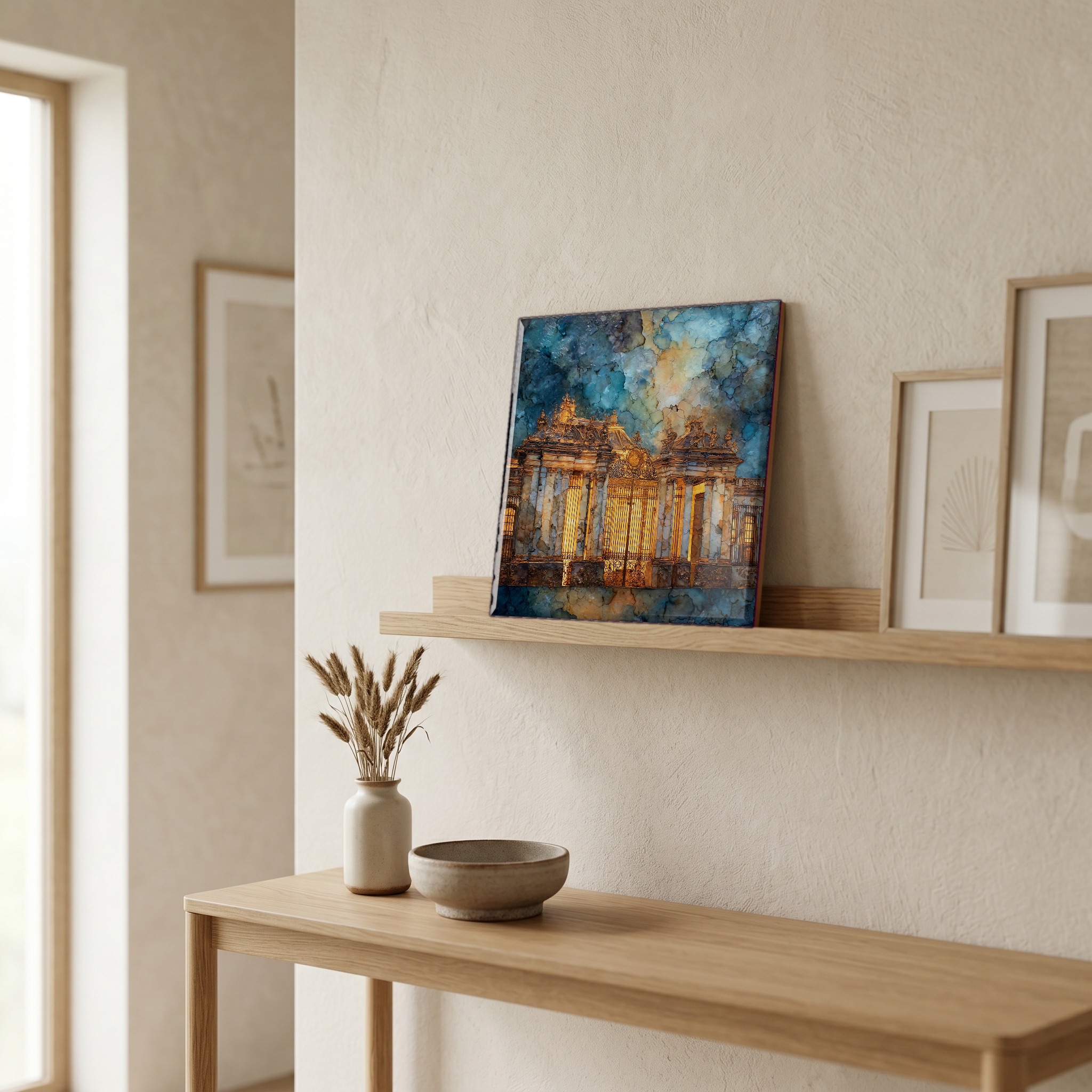
“The Royal Gate at the eastern approach to the Palace of Versailles. Reconstructed in 2008 from period drawings, after the original was pulled down during the Revolution. About eighty metres of black wrought iron crowned in gold leaf, roughly a hundred thousand sheets of it. Buses arrive before the palace opens, and the gate is the first thing you see, set against the long courtyards. The colour holds in winter light, holds harder in summer.
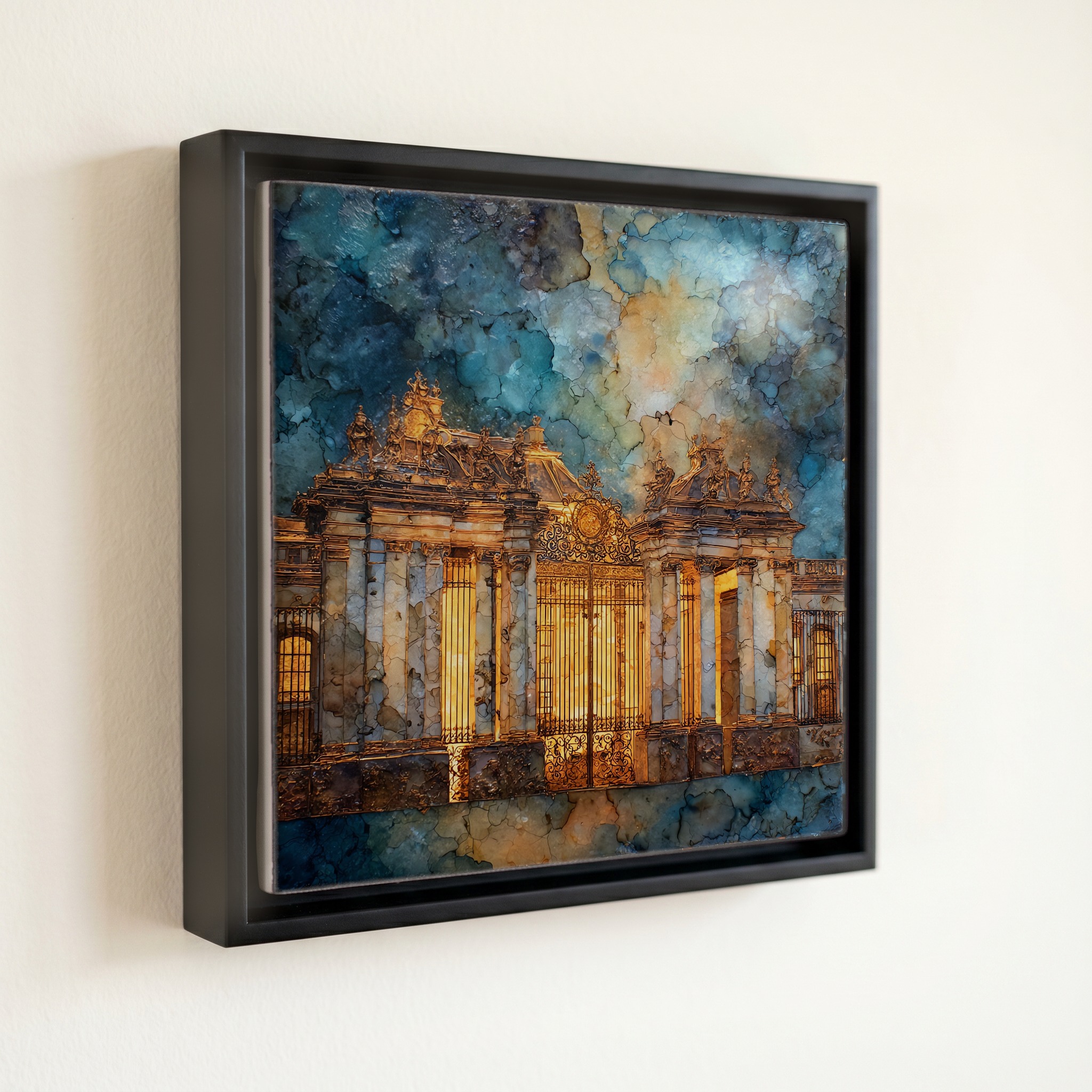
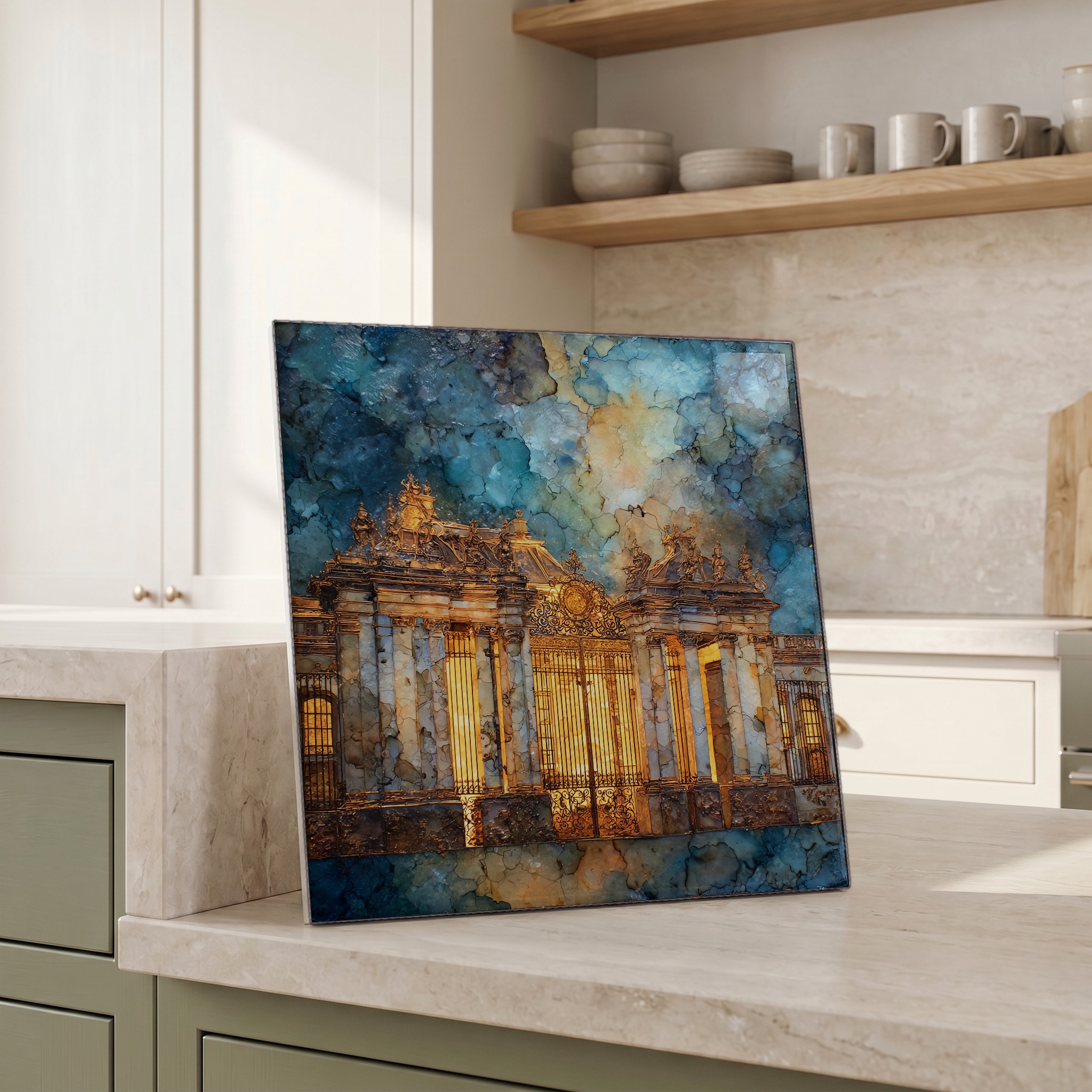
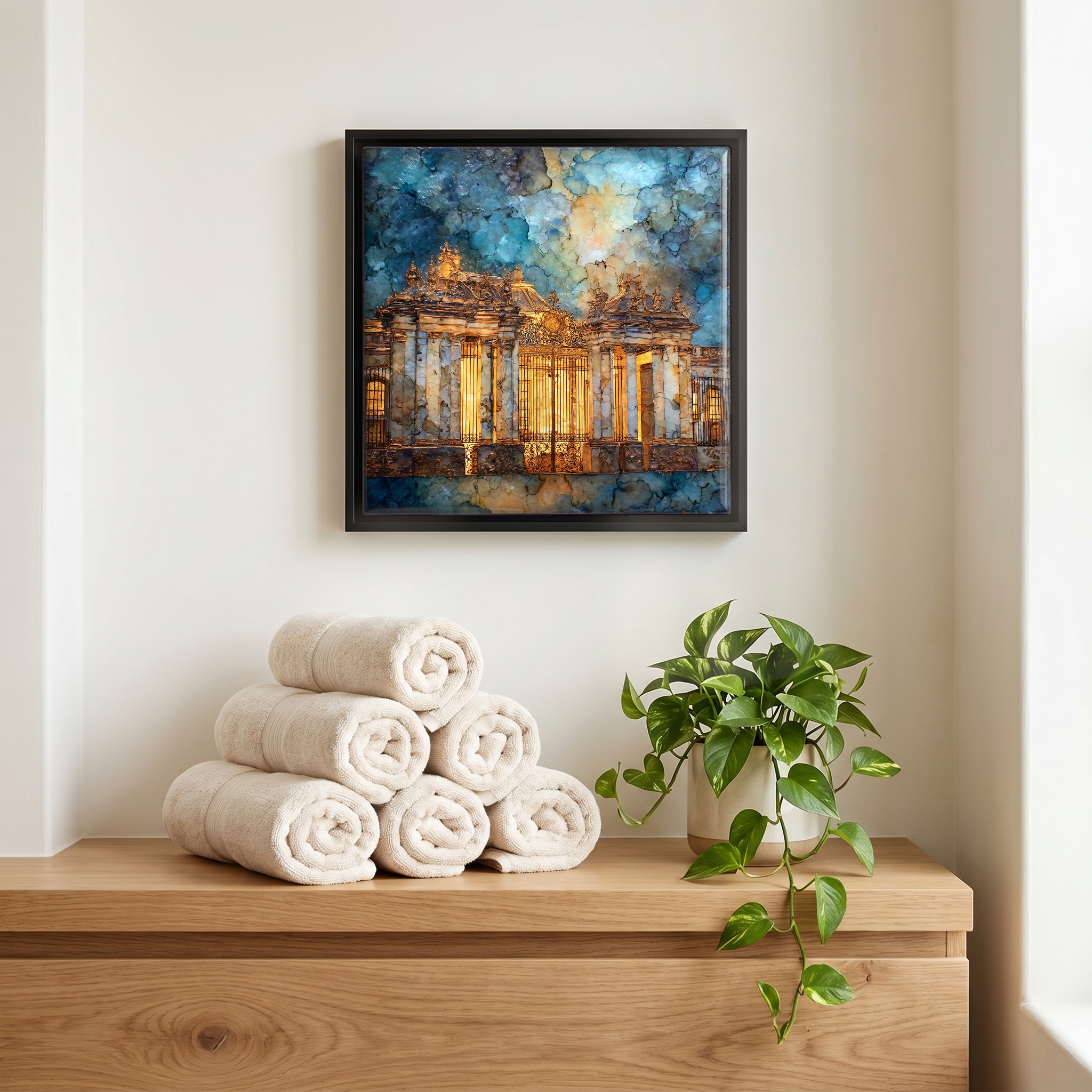
Gilded Gate of Versailles, on ceramic.
Each tile is finished by hand in our Knoxville studio. Artwork is slowly infused into the ceramic surface under high heat and pressure, and rests beneath a thin glossy finish. The colour lives in the surface, not on top of it.
Pick any four 4-inch tiles — National Parks you've been to, a Smokies set, the four seasons of one place. $ for a set of , cork-backed, ready to live on the table.
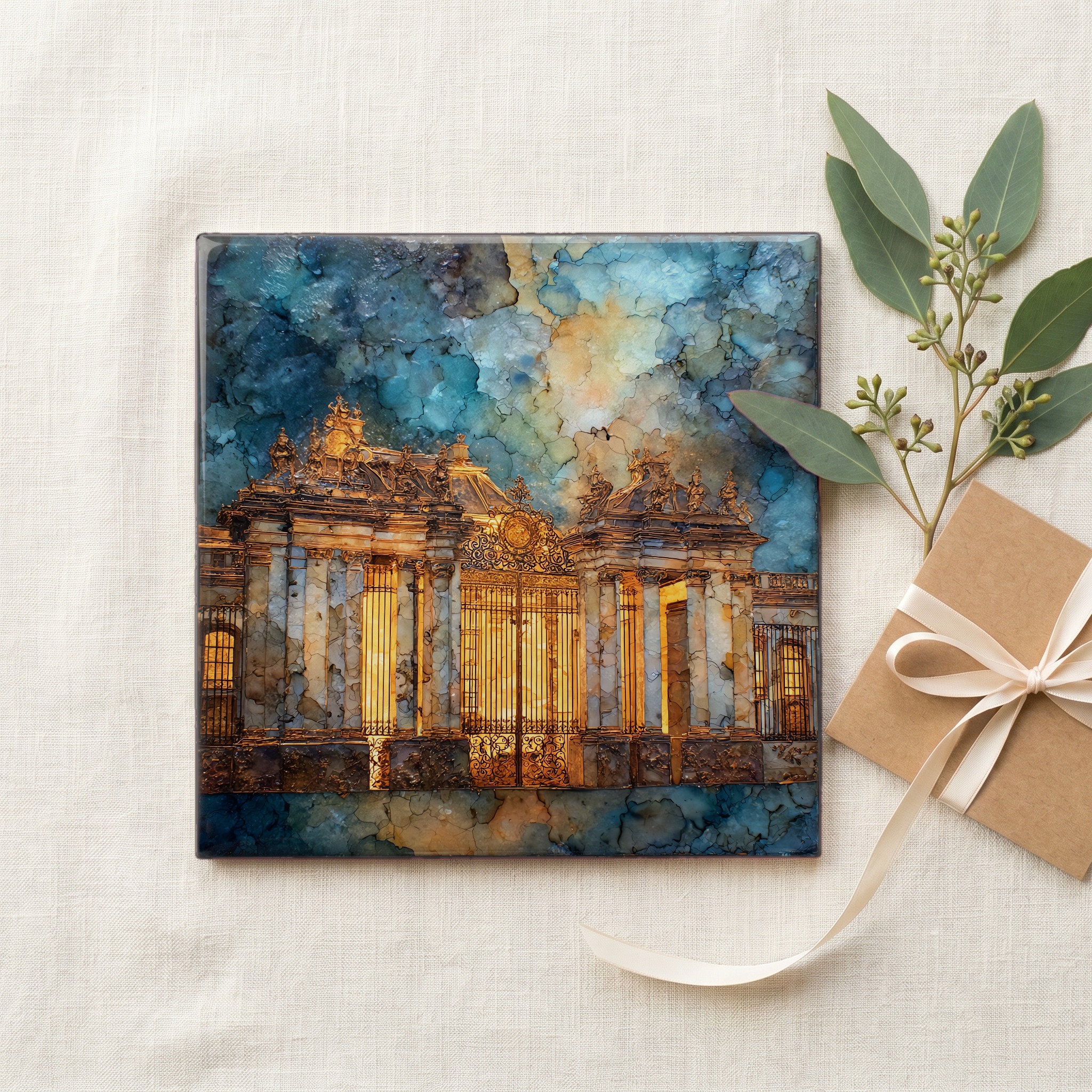
Each tile ships in a kraft box, tied with cream ribbon, with a handwritten note from the studio if you'd like to add one.
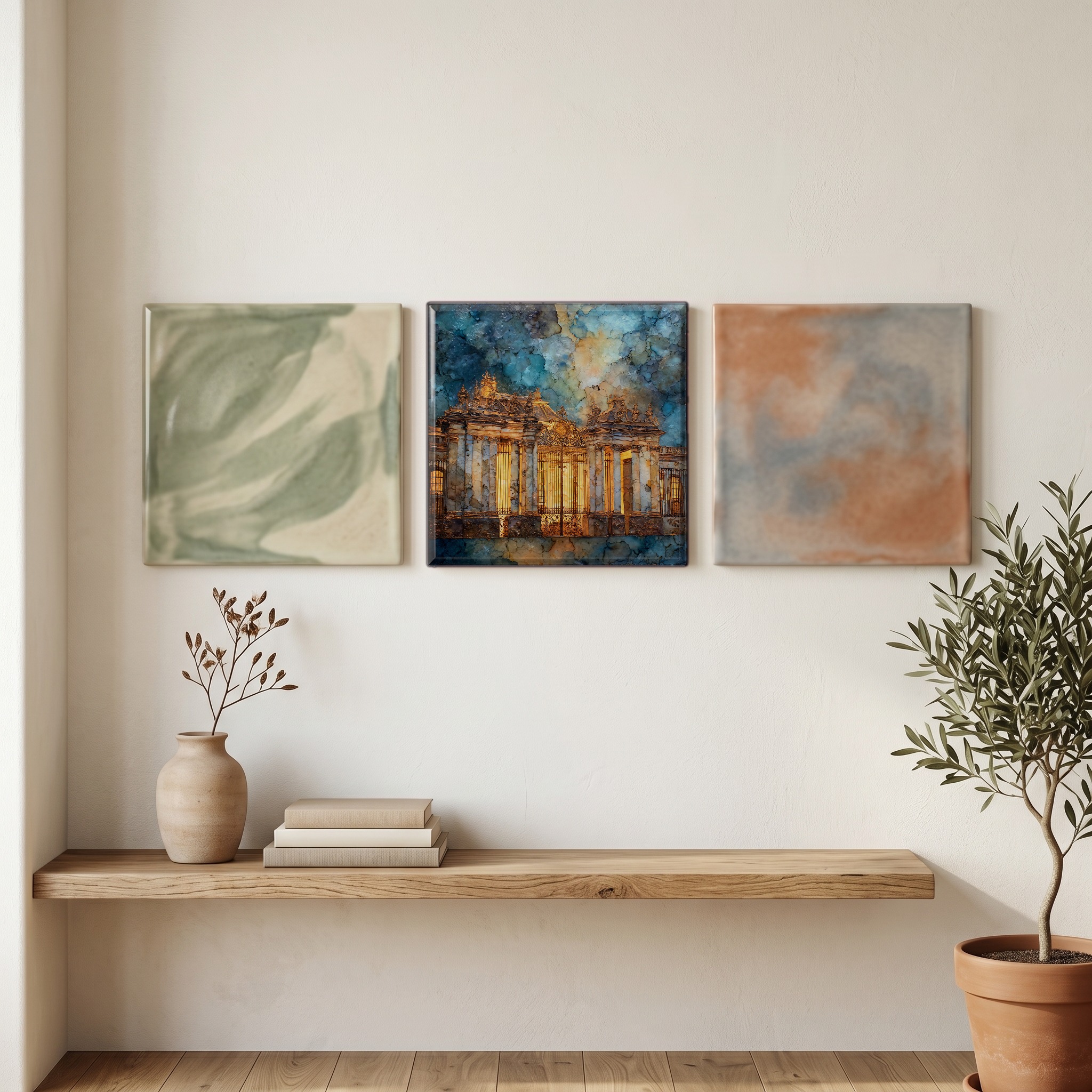
Three or five different vistas, hung together — a chapter of places you've been, or want to go.
The place, in three passes.
The Gilded Gate stands at the eastern entrance to the Château de Versailles, in the Yvelines department of the Île-de-France region, about twenty kilometres southwest of central Paris. The gate divides the Cour d'Honneur from the Cour Royale, the inner courtyard once reserved for the king's carriage. The palace itself grew out of Louis XIV's expansion of his father's hunting lodge, was declared the seat of court in 1682, and was inscribed on the UNESCO World Heritage list in 1979. Trains from Paris reach Versailles-Château-Rive-Gauche in roughly forty minutes; the gate is a five-minute walk from the station.
The gate runs about eighty metres across the eastern face of the palace, set between two pavilions and topped by a crowned cartouche bearing the royal coat of arms with its fleurs-de-lis. The original ironwork was installed in the late 17th century and torn down during the French Revolution, when palace metalwork was melted down for cannon. The reconstruction, completed in 2008, was modelled from surviving engravings and period drawings, used roughly a hundred thousand sheets of gold leaf laid over black wrought iron, and was funded largely by private sponsorship coordinated alongside the Établissement public du château.
The palace opens Tuesday through Sunday and closes on Mondays, on 1 January, 1 May, and 25 December. The grounds open earlier than the state apartments, and the Gilded Gate is visible from the Place d'Armes without buying a ticket. The most-photographed angle is from the eastern end of the place, looking west along the cobbles toward the Marble Court. Crowds thin in the first hour after opening and again after four in the afternoon. The RER C train from central Paris reaches Versailles-Château-Rive-Gauche in about forty minutes; the gate stands at the end of the avenue, five minutes on foot.