Wender·Vista
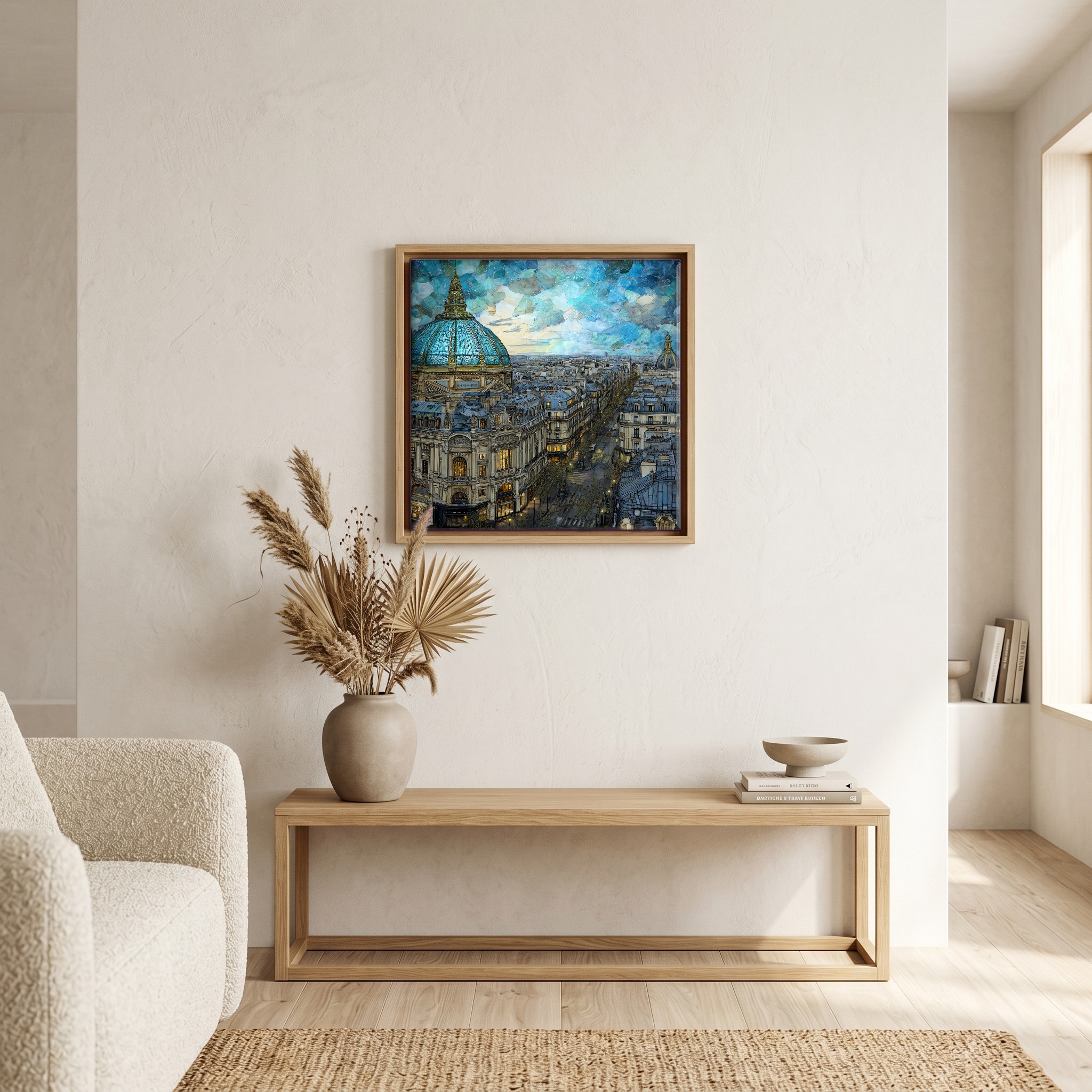
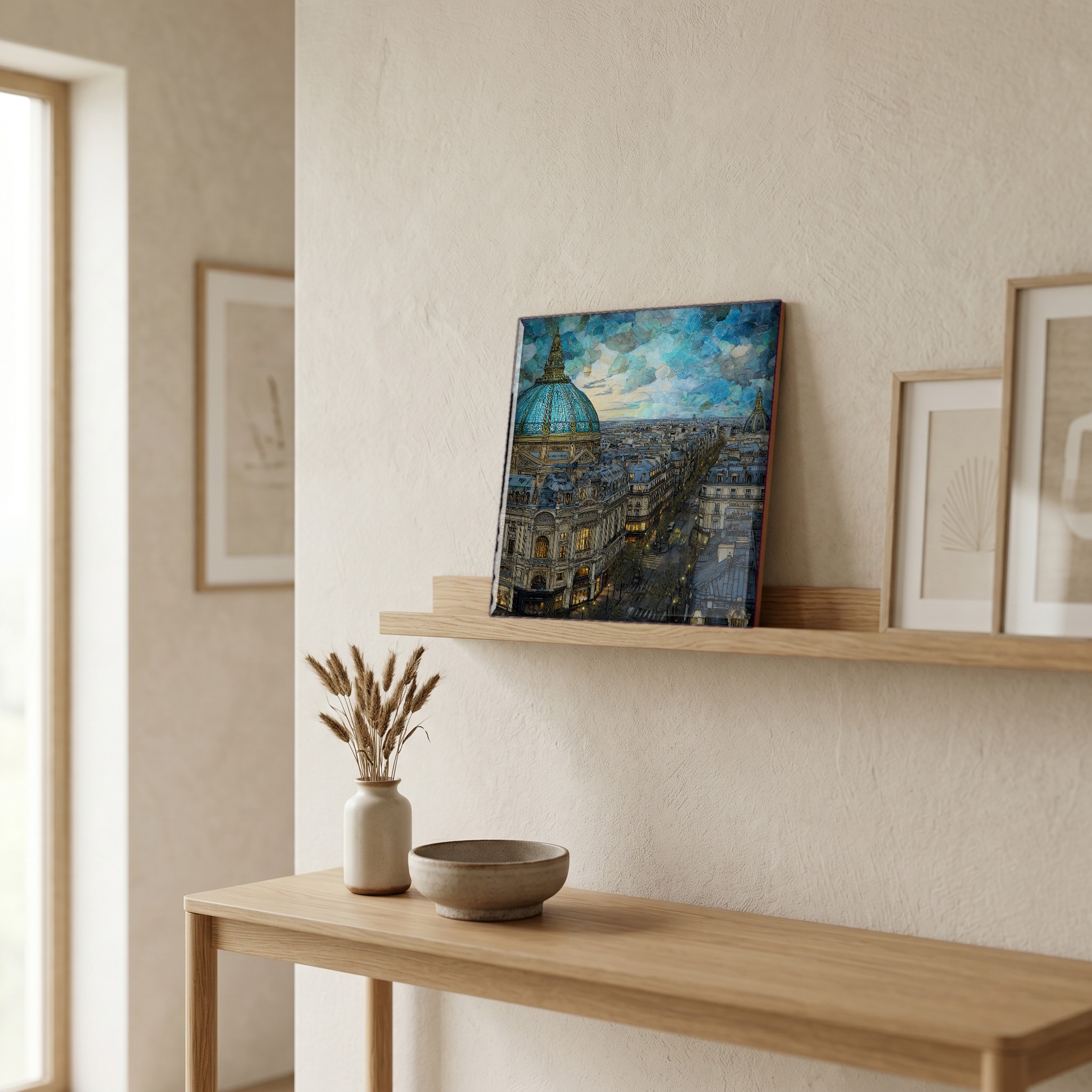
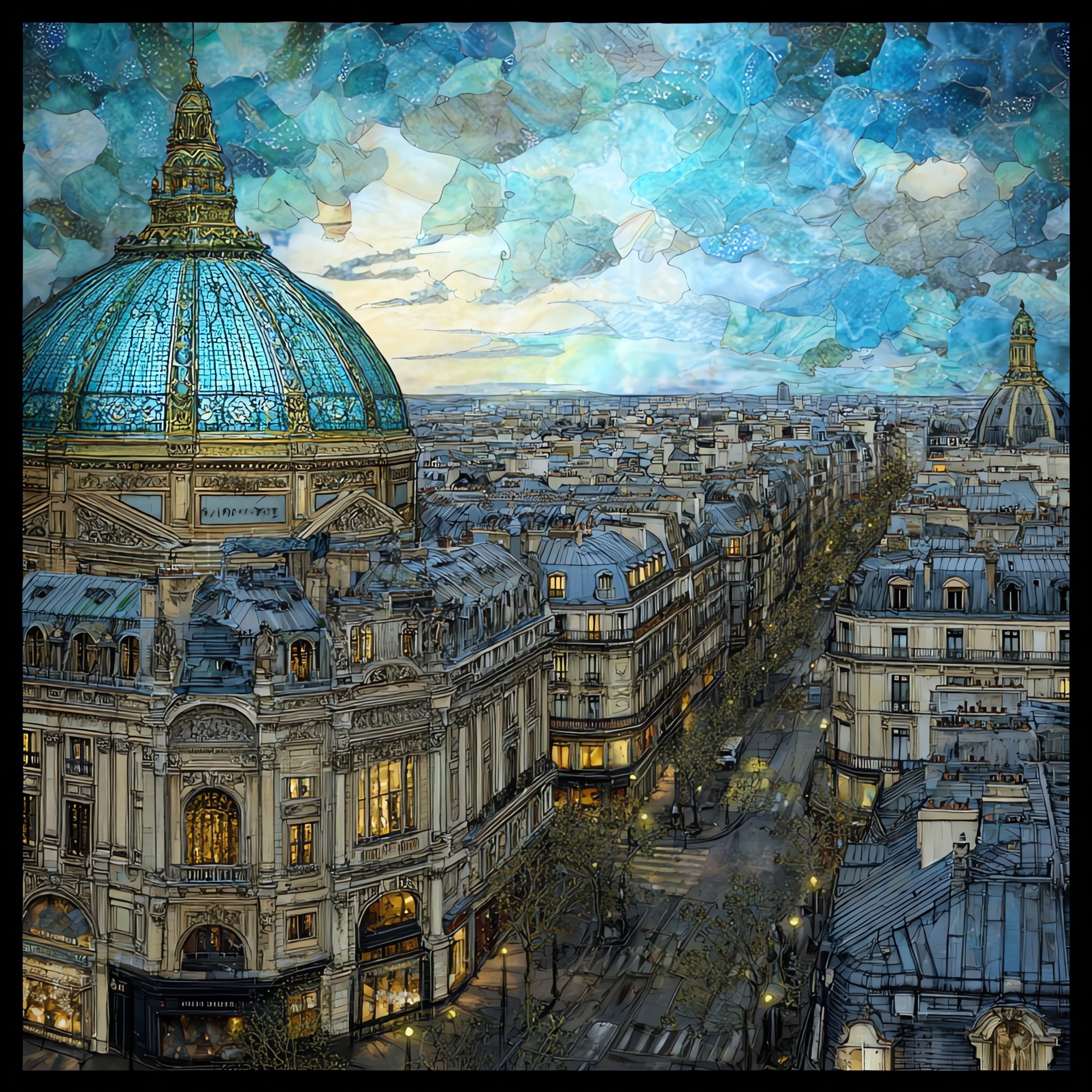
Galeries Lafayette Glass Dome
shown on ceramic, 12-inch tileFrance
in Paris, just north of the Palais Garnier

Galeries Lafayette Glass Dome

a sky built in coloured glass.

Where it lives

Not only on a wall.

A small tile on the nightstand catching the morning. A larger one above the fire. Yours, wherever you spend the slow hours.
Above the bench, in a warm oak surround.
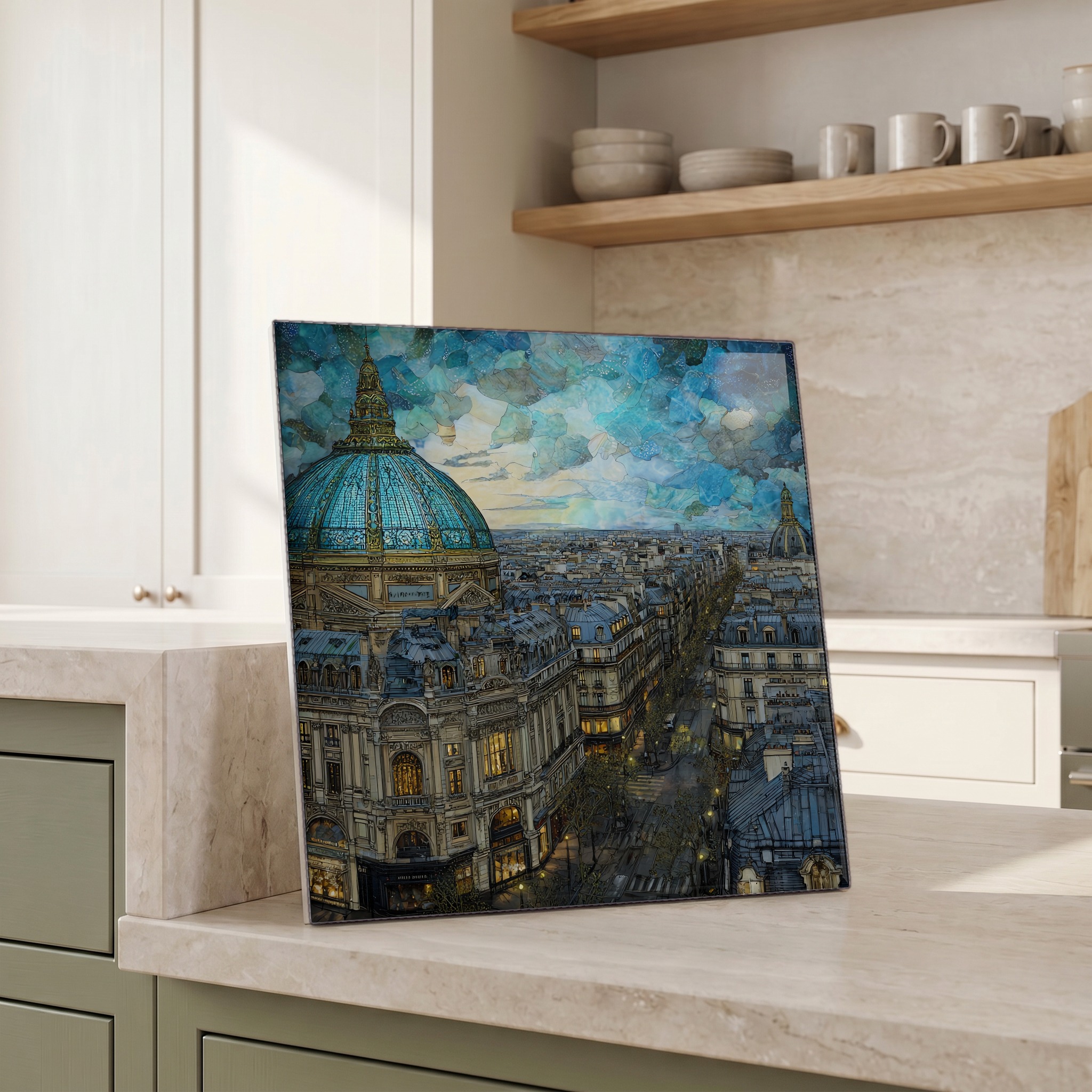
Beside the kettle, propped on the counter.
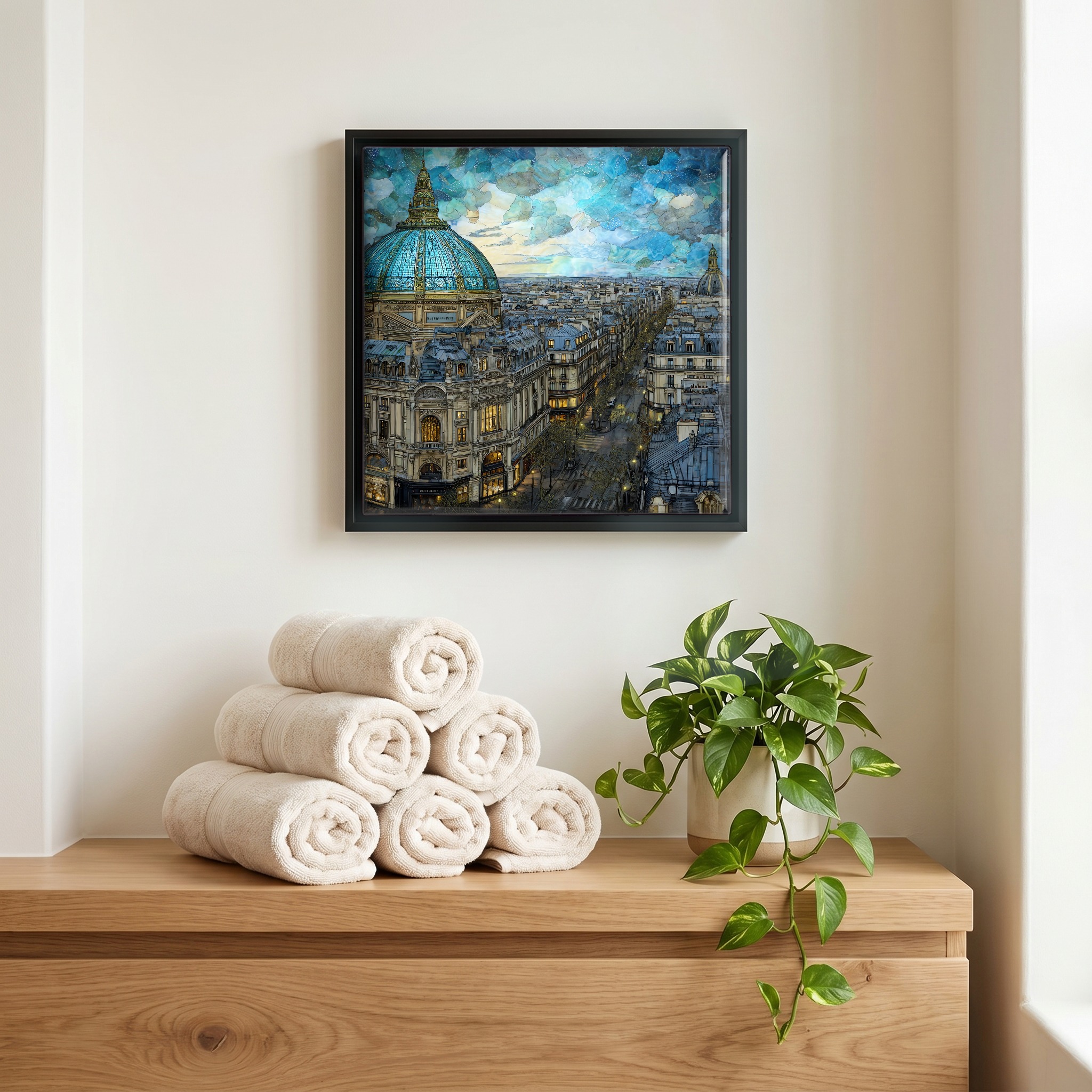
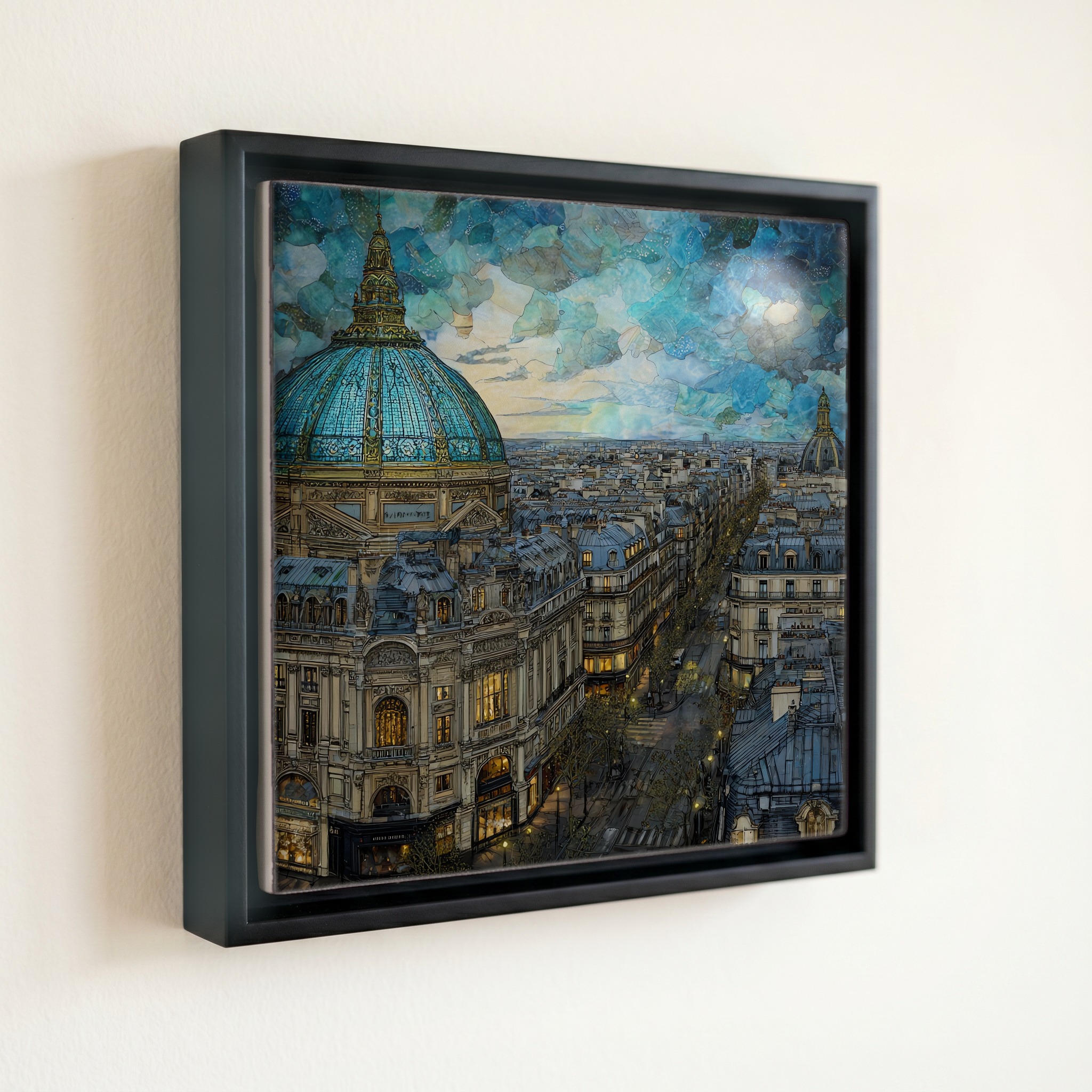
Above the linens, in a slim black surround.
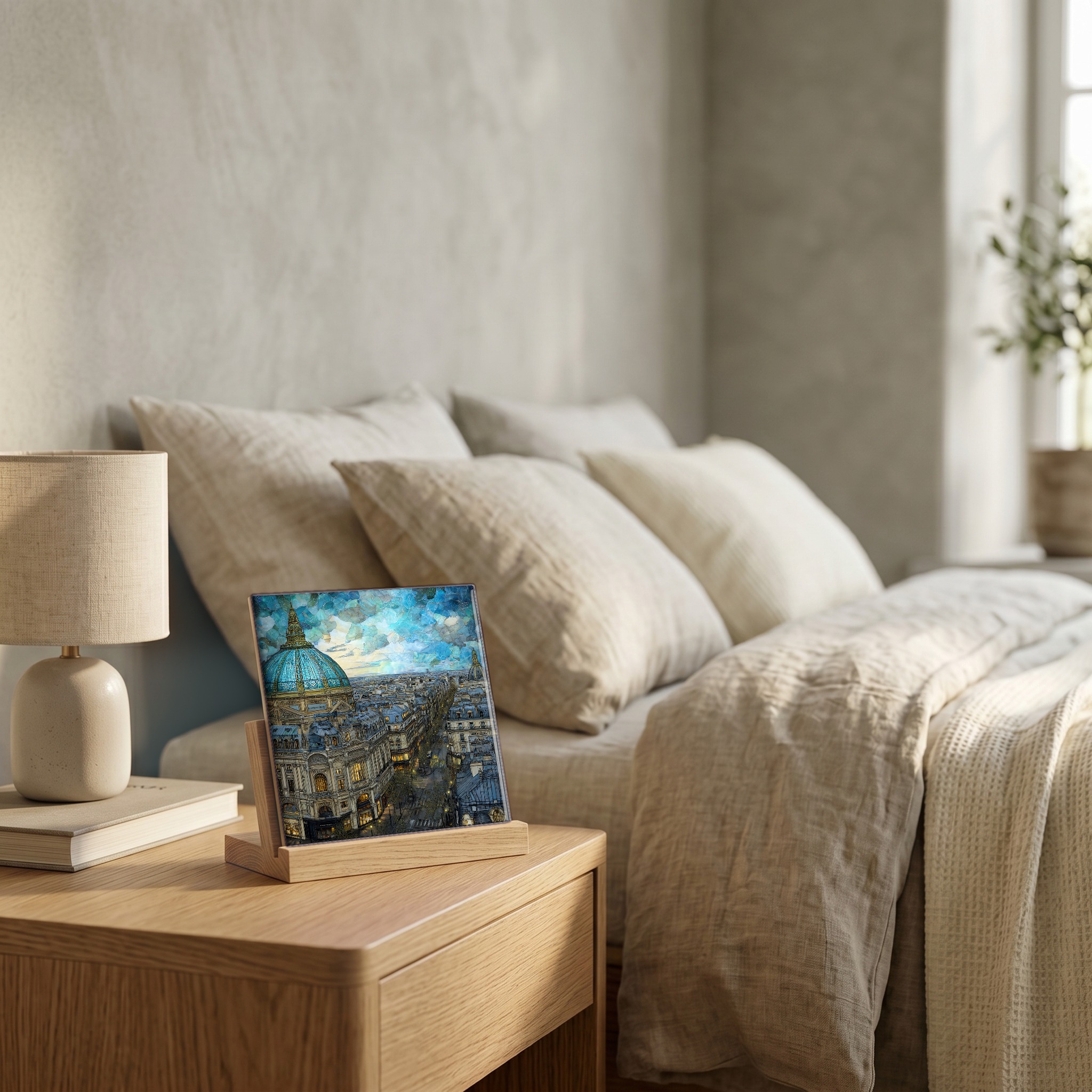
On the nightstand, on a light oak stand.
On a picture ledge, where the light comes in.
a note from the studio

A stained-glass coupole above the atrium of Galeries Lafayette on Boulevard Haussmann. Designed by Ferdinand Chanut and completed in 1912, with the leaded glass by Jacques Gruber of the Nancy School and the wrought iron by Louis Majorelle. The dome rises forty-three metres over the perfume counters; the easiest view is from the third-floor balcony, looking up while a hundred years of light comes down through coloured glass. People go to Paris for the museums and the river and forget to go in. Admission is free.
from the studio
shown in a slim black floating frame · 6 × 6 in
— bring it home

Galeries Lafayette Glass Dome, on ceramic.

Each tile is finished by hand in our Knoxville studio. Artwork is slowly infused into the ceramic surface under high heat and pressure, and rests beneath a thin glossy finish. The colour lives in the surface, not on top of it.

What kind of piece?
One tile — square or rectangle.
How big?
the popular one — counter, shelf, nightstand
6 × 6 in · 15 cm · 1.6 lb
Surface finish
A clear glossy finish — the artwork reads as if under resin. Ideal for show-pieces and framed wall art.
How it sits
A hidden cleat — sits ¼″ proud of the wall.
$58
Hand-finished and shipped from our studio at the foot of the Smokies. On your wall in about ten days.
size
6 × 6 in
15 cm
weighs
1.6 lb
solid in the hand
surface
ceramic, hand-finished
art rests beneath a thin glossy finish
from
Knoxville, TN
our family studio, at the foot of the Smokies
— start a Coaster Set

Pick any four 4-inch tiles — National Parks you've been to, a Smokies set, the four seasons of one place. $ for a set of , cork-backed, ready to live on the table.
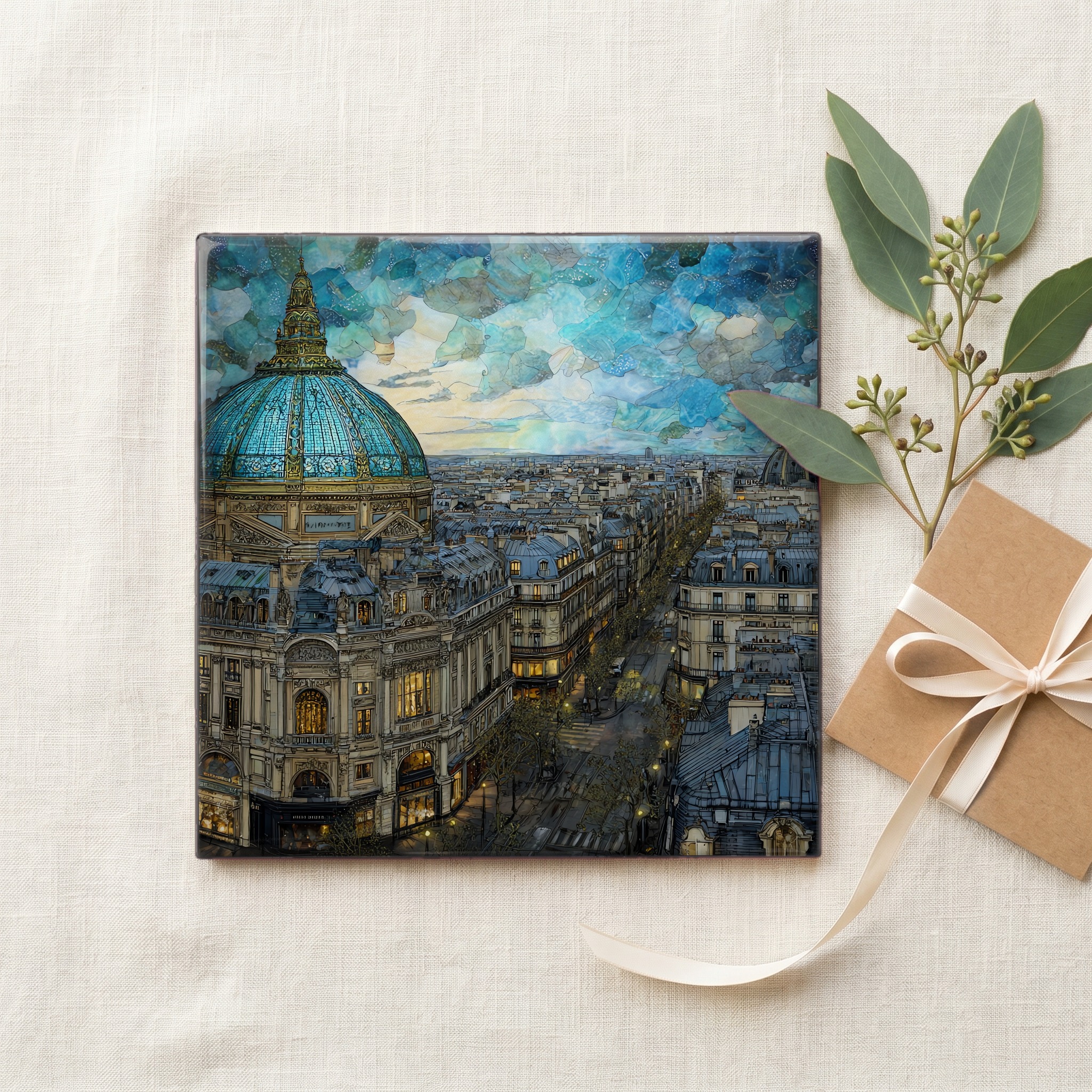
comes gift-ready
comes gift-ready

Each tile ships in a kraft box, tied with cream ribbon, with a handwritten note from the studio if you'd like to add one.
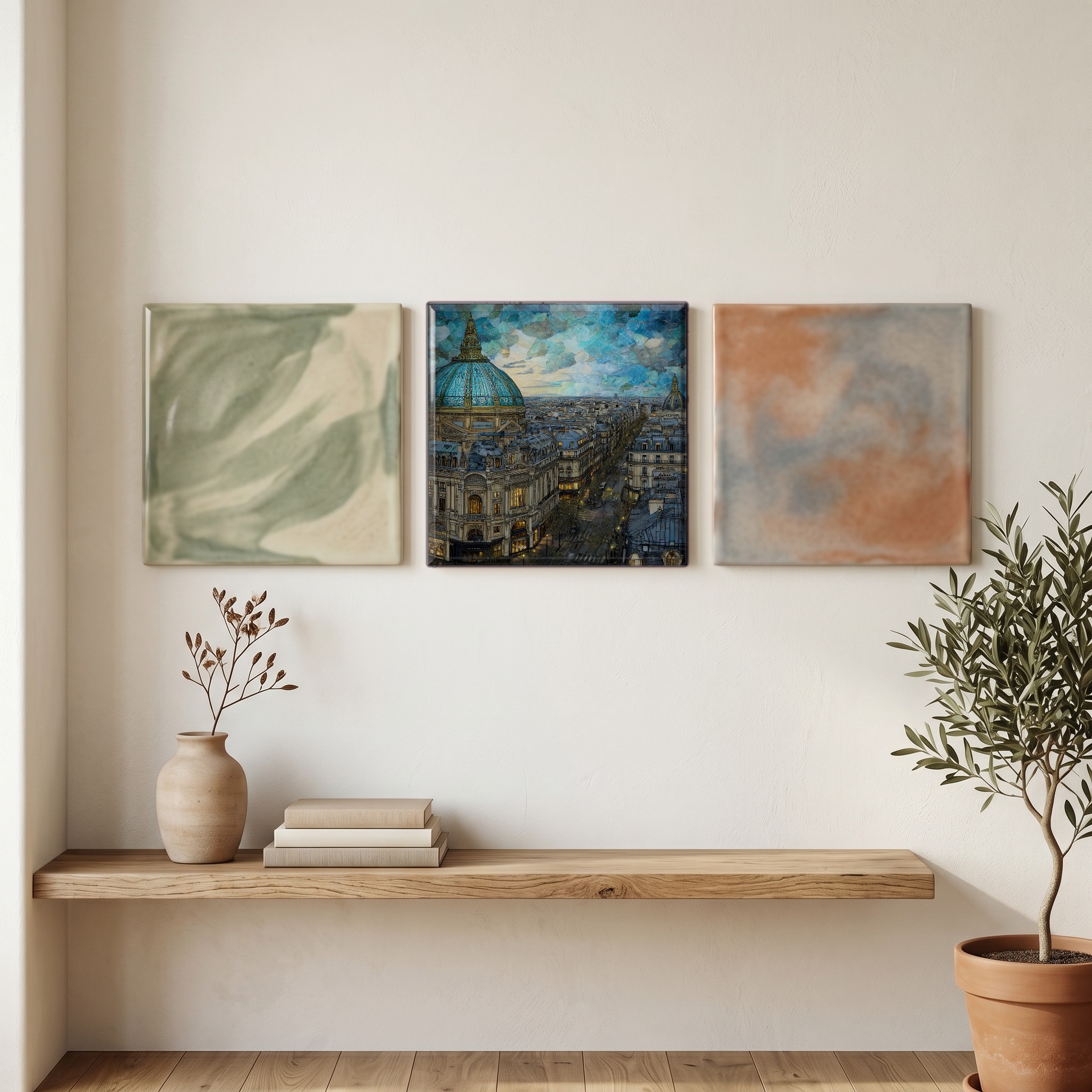
or build a grouping
or build a grouping

Three or five different vistas, hung together — a chapter of places you've been, or want to go.

about Galeries Lafayette Glass Dome

The place, in three passes.

A little of what's known, in case you fall down the rabbit hole — or want to go see it yourself.
the place

Galeries Lafayette Haussmann sits at 40 Boulevard Haussmann in the 9th arrondissement of Paris, two blocks north of the Palais Garnier opera house. The flagship store opened in 1912 in a building begun by Georges Chédanne. Its central atrium is crowned by a stained-glass coupole forty-three metres above the ground floor, a polychrome dome in neo-Byzantine form with Art Nouveau detailing. The architect of the coupole was Ferdinand Chanut, the leaded glass was the work of Jacques Gruber of the École de Nancy, and the wrought-iron balconies were by Louis Majorelle. The store remains in operation; the dome is visible free of charge from the central well of the perfume hall and the surrounding upper-floor galleries.

the light

The coupole reads as a colour wheel because Gruber loaded the leading with a deep amber and lapis palette inflected by emerald and rose, and the daylight comes through obliquely off the central oculus. The polychrome character sits closer to Sainte-Chapelle on the Île de la Cité than to the pale modernist domes that followed in the 1920s. Photographers gather on the third-floor balcony where the lens line stays clear of the chandeliers and the dome reads as a single composition; later in the afternoon the colour pools on the marble floor below. Direct sunlight changes the painting hour by hour and the dome looks different in November than it does in June.

the visit

The store is open Monday through Saturday from 10am to 8:30pm and Sunday from 11am to 8pm; the coupole is visible whenever the store is open and there is no ticket. The main entrance is on Boulevard Haussmann. The nearest Métro stations are Chaussée d'Antin – La Fayette and Havre – Caumartin, both within two minutes' walk. The best vantages are the third- and fourth-floor balconies that ring the central well; the ground-floor view directly under the dome is worth a minute as the colour pools on the marble. Crowds peak on Saturday afternoons and across the December window-display season; weekday mornings are quiet.

where
France · Paris, Île-de-France
position
48.8737° N · 2.3324° E
the neighborhood

What's nearby.

A handful of named places within an hour's walk or short drive. Some we've already painted; some we will.
0.3 km S
Palais Garnier
opera house
0.7 km SW
La Madeleine
church
0.7 km S
Place Vendôme
square
1.5 km S
Louvre
museum
N
Galeries Lafayette Glass Dome
Palais Garnier
La Madeleine
Place Vendôme
Louvre
common questions

What people ask.

A few questions we get about Galeries Lafayette Glass Dome — and about bringing the piece home.
about the place

At 40 Boulevard Haussmann in the 9th arrondissement of Paris, two blocks north of the Palais Garnier opera house. The dome sits above the central atrium of the flagship Galeries Lafayette Haussmann department store. The nearest Métro stations are Chaussée d'Antin – La Fayette and Havre – Caumartin.

The architect was Ferdinand Chanut. The leaded stained glass was the work of Jacques Gruber, a master of the École de Nancy school of Art Nouveau, and the wrought-iron balconies were designed by Louis Majorelle. The building itself was begun by Georges Chédanne.

The coupole was completed in 1912, the same year the flagship Galeries Lafayette Haussmann store opened on Boulevard Haussmann. The Galeries Lafayette company itself had been founded in 1893 in a smaller haberdashery on Rue La Fayette by Théophile Bader and Alphonse Kahn.

The dome rises forty-three metres above the ground floor of the central atrium. It is visible from the perfume hall directly below and from the surrounding balconies on each of the upper floors. The third- and fourth-floor balconies offer the cleanest sightlines for photography.

No. The dome is inside an open department store; admission is free and no ticket is required. Galeries Lafayette Haussmann is open Monday through Saturday from 10am to 8:30pm and Sunday from 11am to 8pm. The coupole is visible whenever the store is open.

Neo-Byzantine in form, with Art Nouveau detailing in the leaded glass and the wrought iron. The colour palette and structural rhythm sit closer to Sainte-Chapelle than to the modernist glass domes that followed. The École de Nancy influence on Gruber's glass shows in the floral motifs of the lower bands.

The third- and fourth-floor balconies that ring the central well. From either level the lens line stays clear of the chandeliers and the dome reads as a single composition. The ground-floor view from beneath the coupole is also worth a minute as the colour pools on the marble.

about the piece in your home

It has been a meaningful gift for many of our customers with ties to the city. The Galeries Lafayette dome is one of the most recognised interiors in Paris; anyone who has spent time near the Opéra knows it. A Coaster or a Small with a handwritten note from the studio carries well in a card.

The piece sits well in Parisian-modern, Maximalist, and Jewel-tone interiors, anywhere a saturated polychrome reads as the focal point. The amber, lapis, emerald, and rose palette ties to deep velvets and old brass hardware. Less natural fit for strictly minimalist or coastal-modern rooms.

The Parisian-modern aesthetic returning through 2025 and into 2026 leans on Art Nouveau detailing, deep colour, and old brass. The dome speaks directly to that vocabulary. It also reads well in the broader Maximalist and Dark-Academia interiors gaining ground in the same window.

A single Large tile works above a console up to about five feet wide. Above a standard three-seat sofa we recommend a 4-tile Mural; above a longer sofa or a wide credenza, a 9-tile Mural. A Triptych works above a fireplace mantel.

Yes. For wet rooms or high-traffic kitchen walls we recommend the Dura Satin or Matte finish rather than the Glossy; both are scratch-resistant and hold up to steam. The colour is slowly infused into the ceramic surface under high heat and pressure, so it does not lift or fade with cleaning.

A microfibre cloth and water. The colour is held in the ceramic surface beneath a thin protective finish, so household cleaners and abrasive pads are not needed. For deeper marks a small amount of mild soap is fine. Avoid bleach and solvents.

Yes. Every WenderVista piece is original to a single studio in Knoxville, Tennessee, curated by Reid Wender. The Galeries Lafayette dome was painted in the studio's stained-glass visual language and hand-finished on ceramic in-house. Nothing is licensed in or printed by a third party.

if this one stayed with you

A few you might also love.

Hand-picked by the eye that found Sorapis. Same air, same kind of quiet.