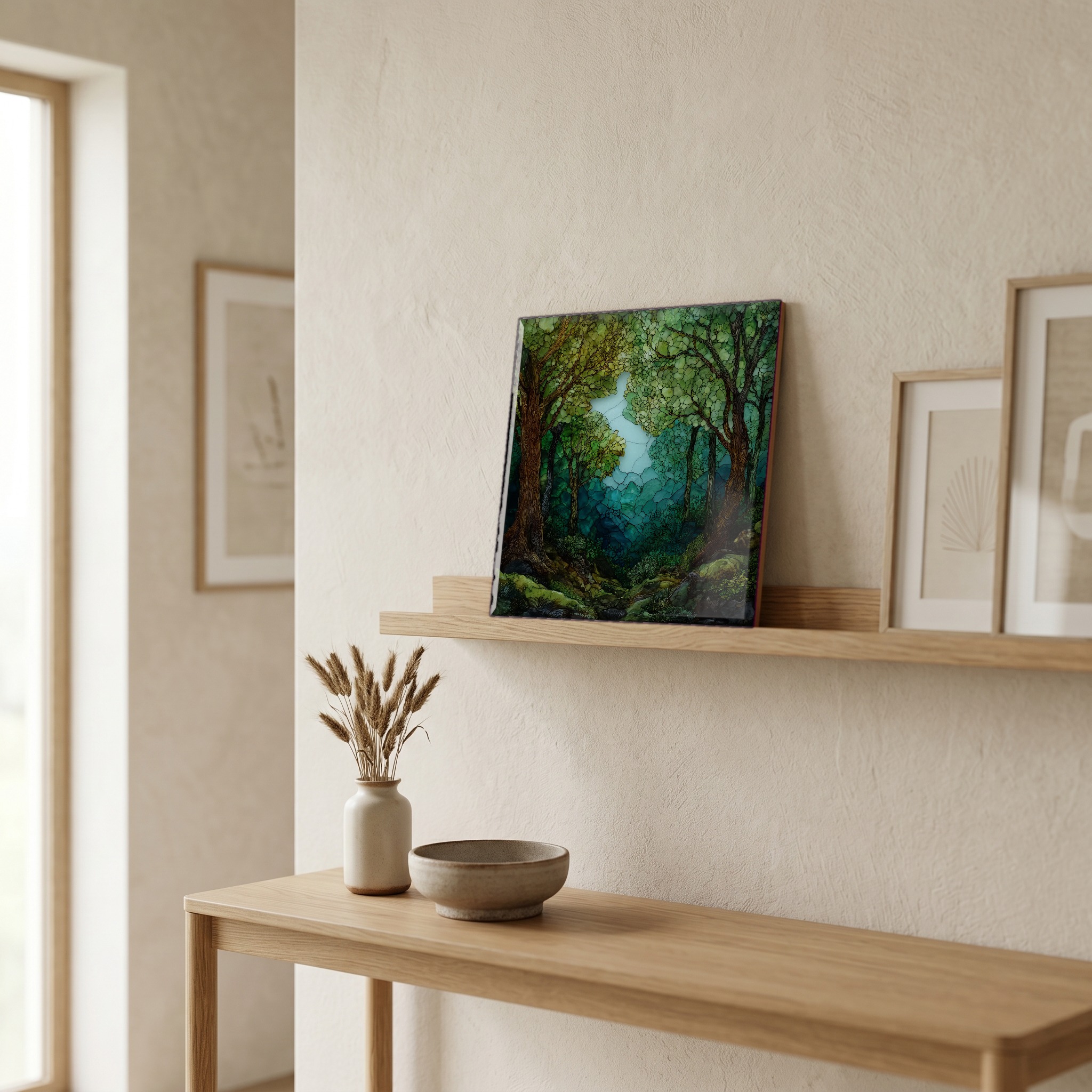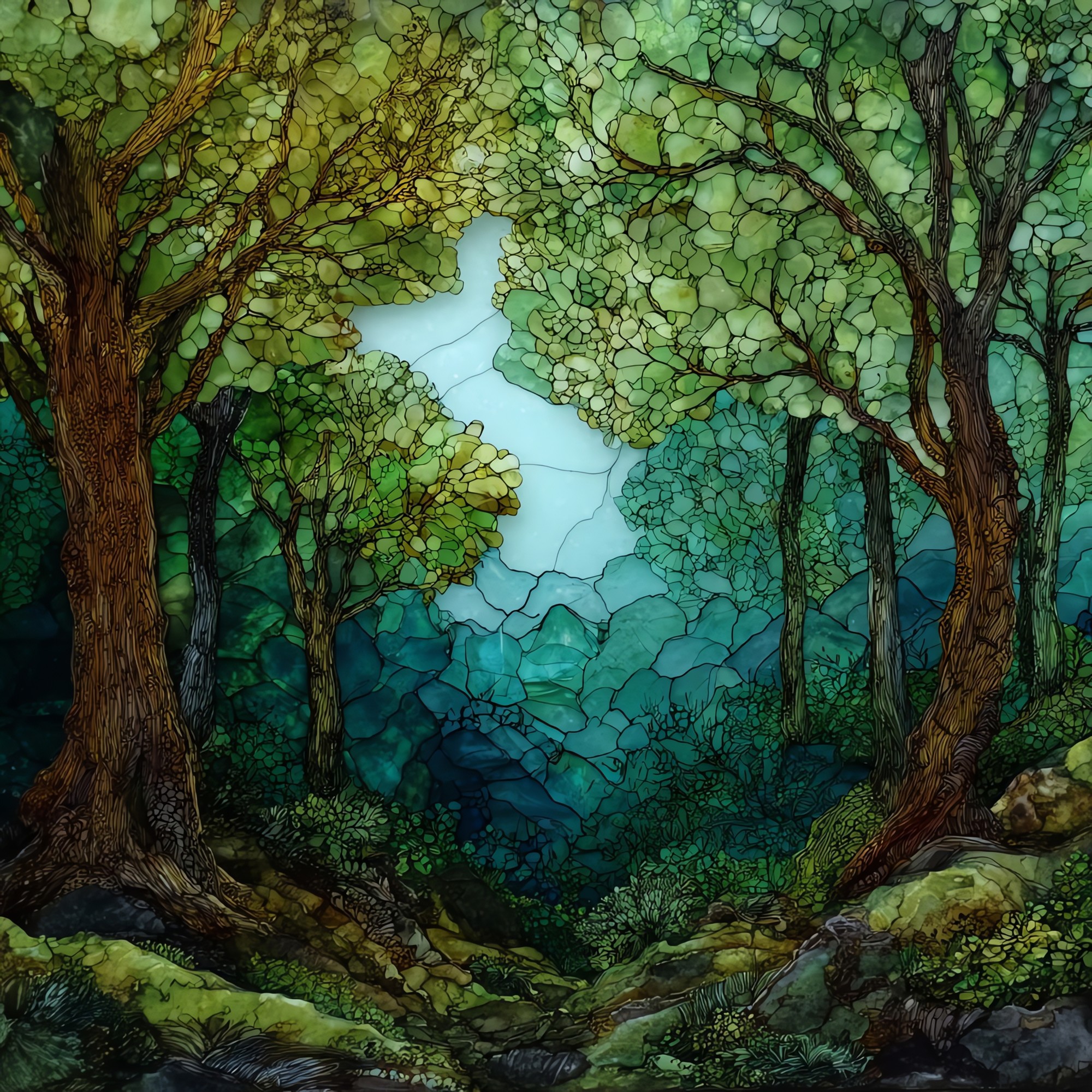
Wender·Vista
Foret de Broceliande
shown on ceramic, 12-inch tileFrance
in Brittany, west of Rennes

Foret de Broceliande

the wood the stories kept coming back to.

Where it lives

Not only on a wall.

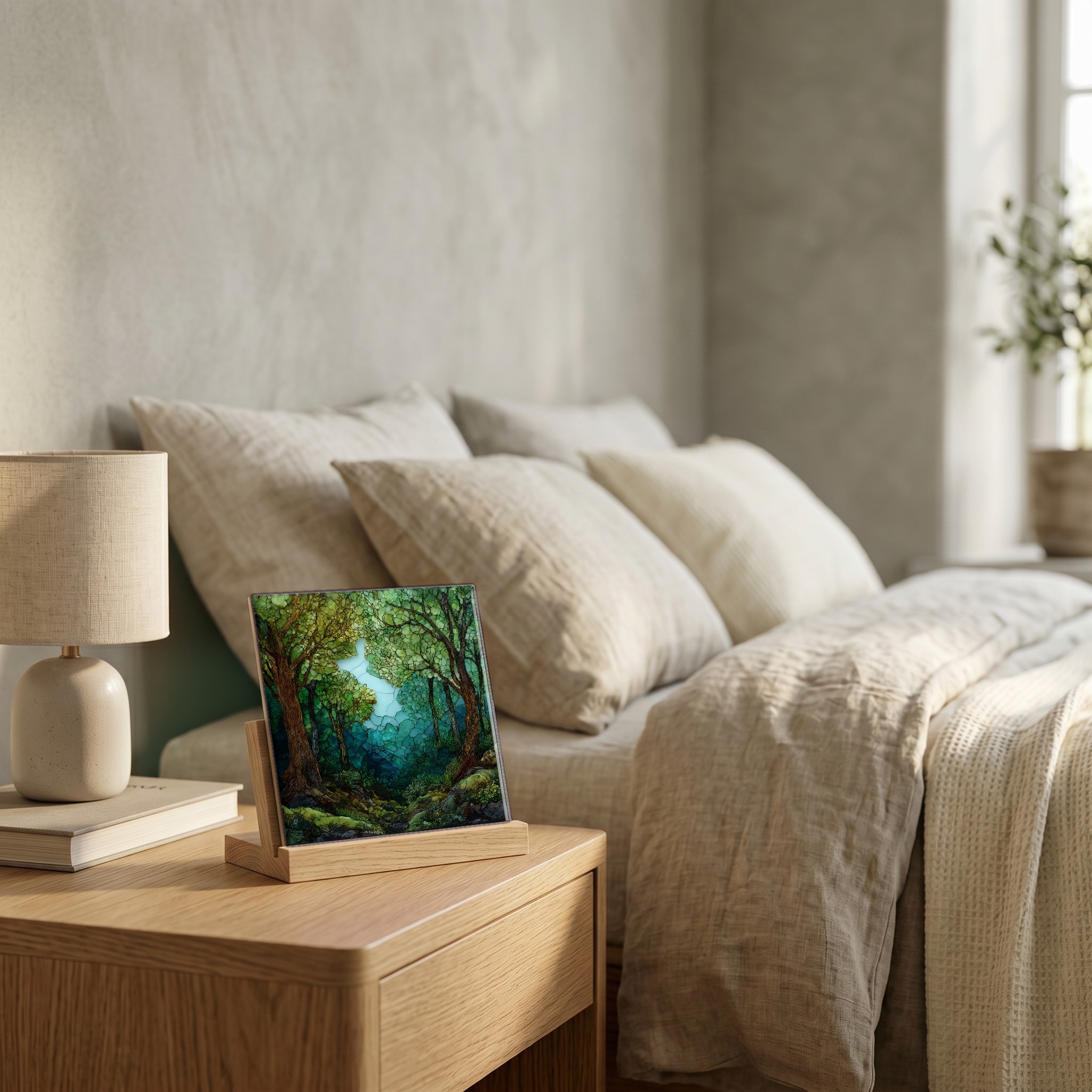
A small tile on the nightstand catching the morning. A larger one above the fire. Yours, wherever you spend the slow hours.
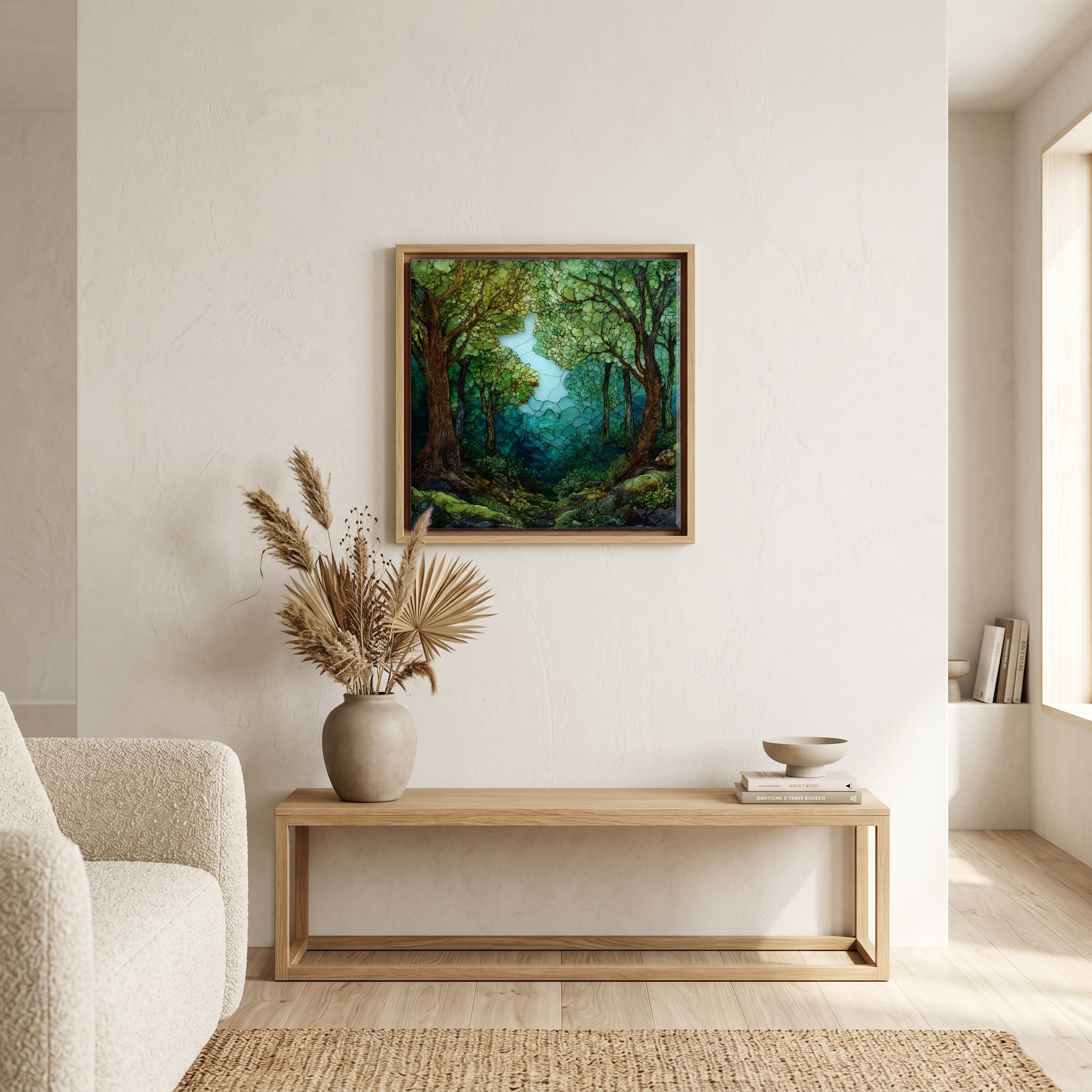
Above the bench, in a warm oak surround.
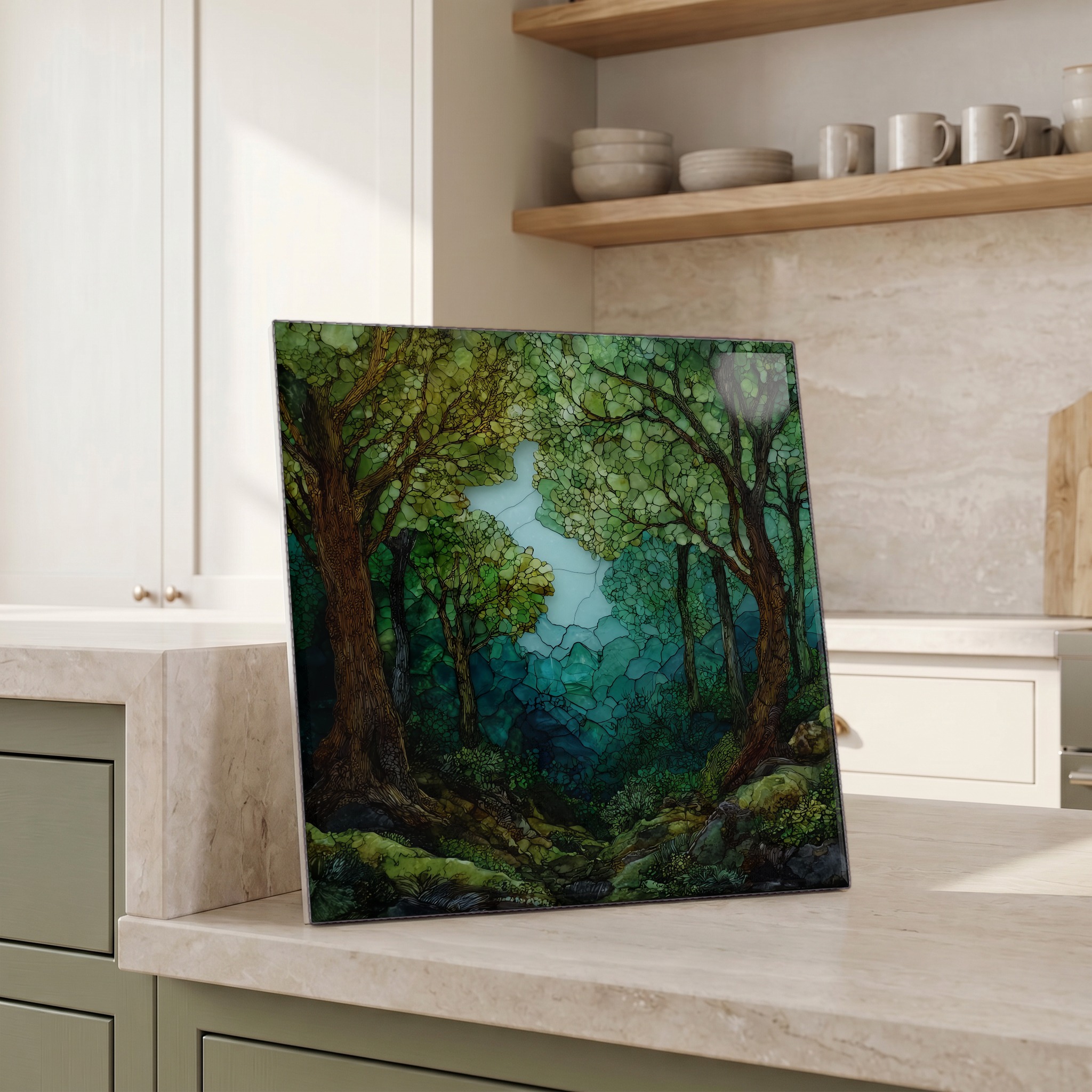
Beside the kettle, propped on the counter.
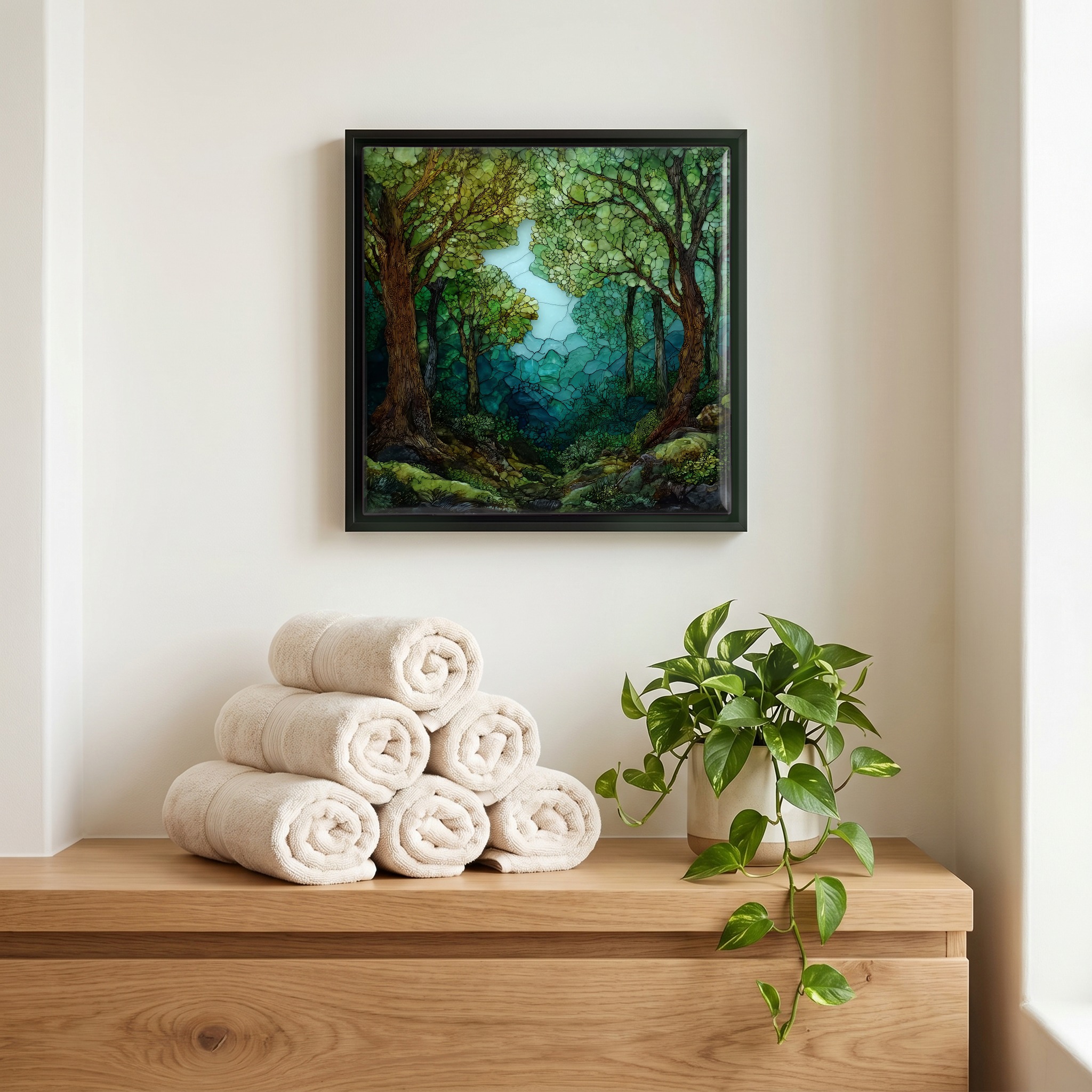
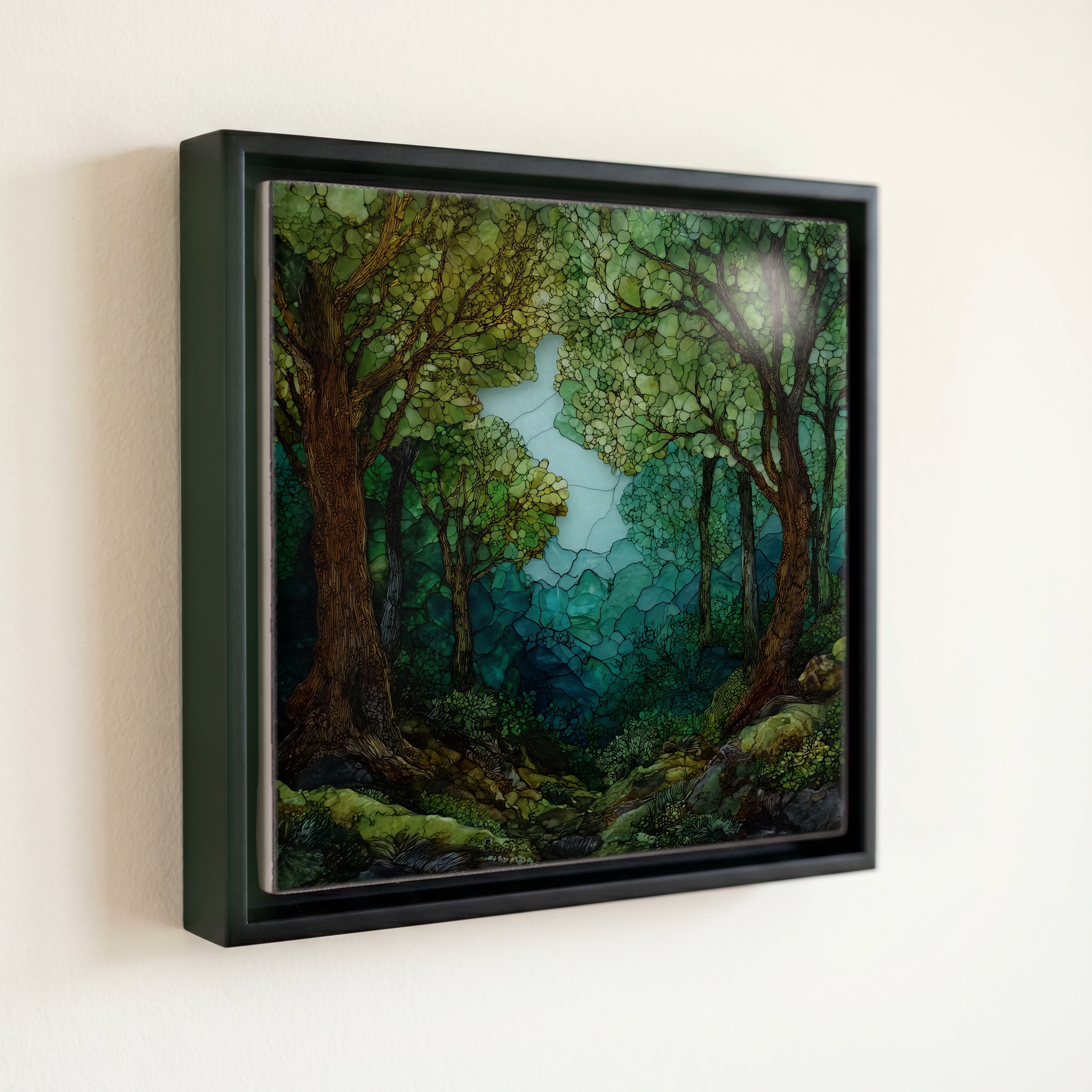
Above the linens, in a slim black surround.
On the nightstand, on a light oak stand.
On a picture ledge, where the light comes in.
a note from the studio

A forest in Brittany, about an hour west of Rennes, that medieval poets named Brocéliande before the road maps did. Some 9,000 hectares of oak and beech around the village of Paimpont and its 13th-century abbey. Inside it: a megalithic tomb the locals have called Merlin's for centuries, a spring at Barenton where a stone step was said to summon storms, and a valley where Morgan le Fay was said to hold faithless knights. The Arthurian centre at Comper still publishes the legends in French and Breton. People walk in for the stories and stay for the moss.
from the studio
shown in a slim black floating frame · 6 × 6 in
— bring it home

Foret de Broceliande, on ceramic.

Each tile is finished by hand in our Knoxville studio. Artwork is slowly infused into the ceramic surface under high heat and pressure, and rests beneath a thin glossy finish. The colour lives in the surface, not on top of it.

What kind of piece?
One tile — square or rectangle.
How big?
the popular one — counter, shelf, nightstand
6 × 6 in · 15 cm · 1.6 lb
Surface finish
A clear glossy finish — the artwork reads as if under resin. Ideal for show-pieces and framed wall art.
How it sits
A hidden cleat — sits ¼″ proud of the wall.
$58
Hand-finished and shipped from our studio at the foot of the Smokies. On your wall in about ten days.
size
6 × 6 in
15 cm
weighs
1.6 lb
solid in the hand
surface
ceramic, hand-finished
art rests beneath a thin glossy finish
from
Knoxville, TN
our family studio, at the foot of the Smokies
— start a Coaster Set

Pick any four 4-inch tiles — National Parks you've been to, a Smokies set, the four seasons of one place. $ for a set of , cork-backed, ready to live on the table.
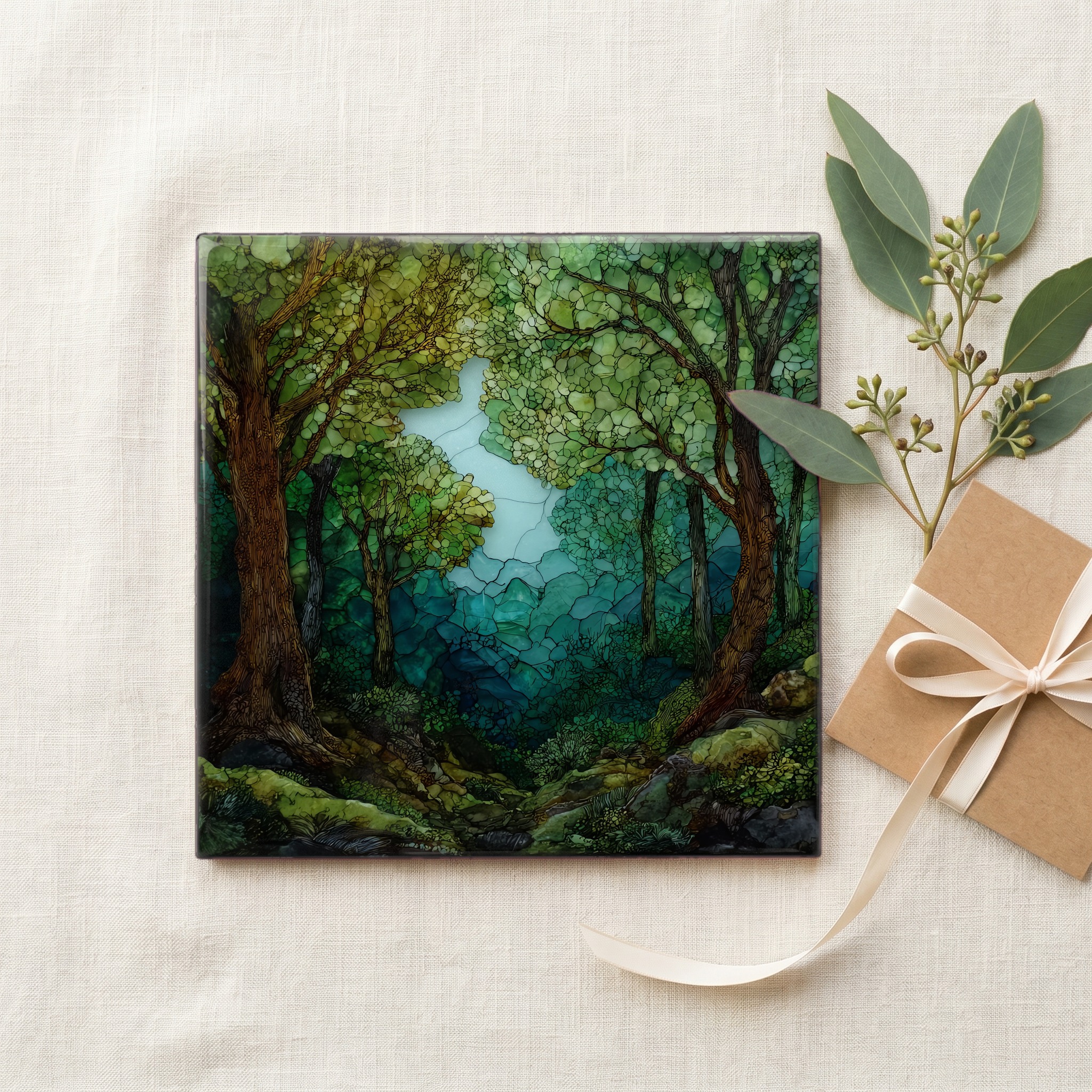
comes gift-ready
comes gift-ready

Each tile ships in a kraft box, tied with cream ribbon, with a handwritten note from the studio if you'd like to add one.
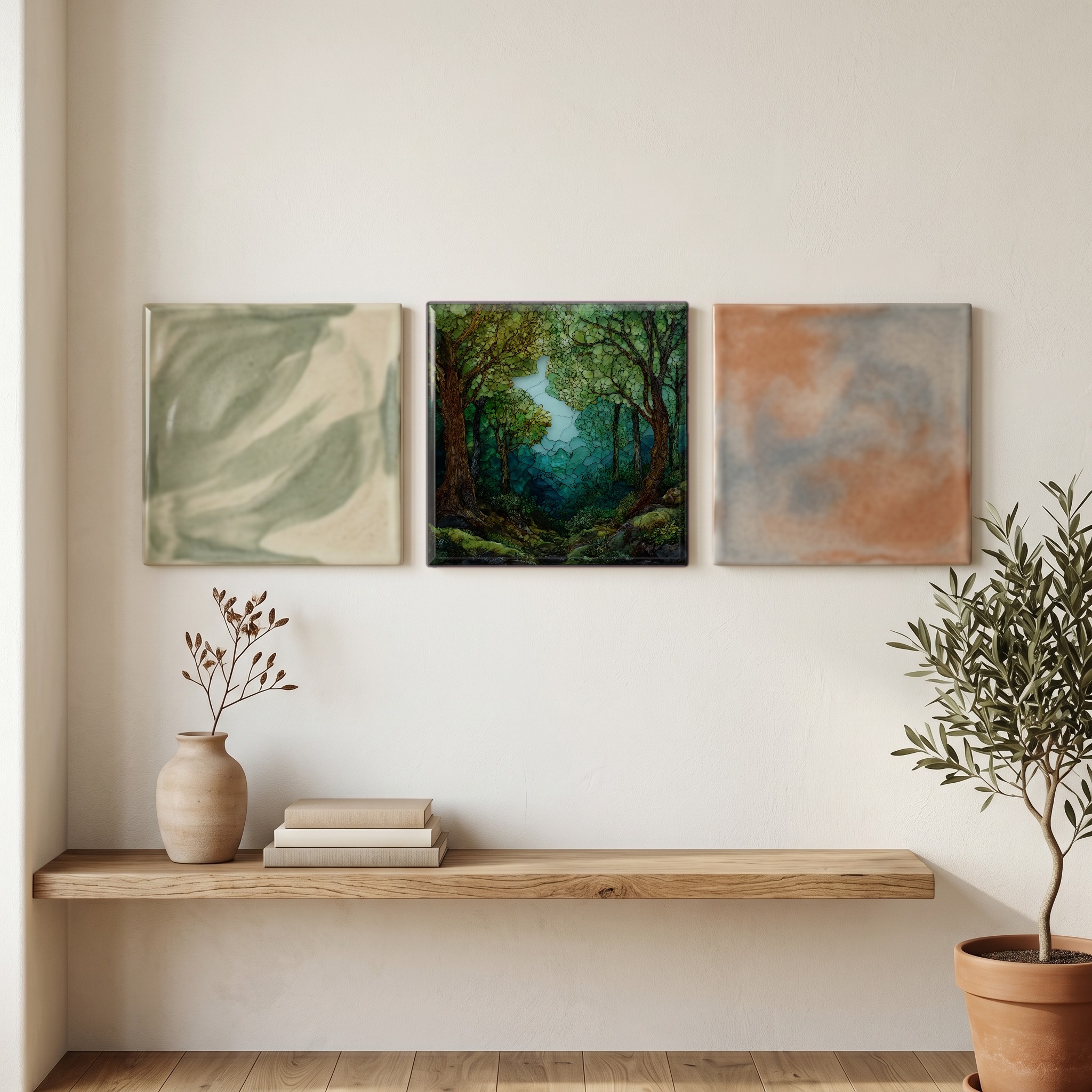
or build a grouping
or build a grouping

Three or five different vistas, hung together — a chapter of places you've been, or want to go.

about Foret de Broceliande

The place, in three passes.

A little of what's known, in case you fall down the rabbit hole — or want to go see it yourself.
the place

Forêt de Brocéliande is the literary name for the Forêt de Paimpont, a 9,000-hectare wooded massif in the Ille-et-Vilaine department of Brittany, about 30 kilometres west of Rennes. The village of Paimpont sits at its eastern edge, on the lake that fronts a 13th-century Benedictine abbey founded by Saint Judicaël in the 7th century. Much of the forest is privately held but walkable on marked paths, including a section of the GR-37 long-distance trail. Visitors generally enter at Paimpont itself or at the Château de Comper to the north, which houses the Centre de l'imaginaire arthurien.

the legends

The forest enters European literature in the 12th century. The Norman poet Wace recorded the name 'Brécheliant' in his Roman de Rou around 1160, telling readers he had walked there hoping to find marvels and found none. Chrétien de Troyes set Yvain, the Knight of the Lion (c. 1177) at its Fontaine de Barenton, where pouring water on a stone step would call up a storm. The 13th-century Vulgate Cycle placed Merlin's enchantment by Viviane here, and the Val sans Retour where Morgan le Fay was said to imprison faithless knights. The Tombeau de Merlin and the Hotié de Viviane are Neolithic megalithic remnants the romances renamed centuries later.

— informed by Wikipedia: Brocéliande
the visit

Four named legendary sites lie within walkable distance of Paimpont village. The Tombeau de Merlin, a fragmentary Neolithic alignment about 3 kilometres from the village, is reached from a small parking area on the D773. The Fontaine de Barenton lies west of there, off a forest path from the hamlet of Folle-Pensée. The Val sans Retour sits on the southern flank near Tréhorenteuc, where François Davin's gilded-bronze Arbre d'Or has stood since 1991, installed after the great forest fire of 1990. The Château de Comper, 16 kilometres north of Paimpont, hosts the Centre de l'imaginaire arthurien with seasonal exhibitions and storyteller events, typically open late March to early November.

where
France · Paimpont, Ille-et-Vilaine, Brittany
position
48.0200° N · 2.1700° W
the neighborhood

What's nearby.

A handful of named places within an hour's walk or short drive. Some we've already painted; some we will.
1 km E
Paimpont Abbey
13th-century Benedictine abbey
5 km NW
Tombeau de Merlin
Neolithic megalith
7 km W
Fontaine de Barenton
legendary spring
10 km SW
Val sans Retour
valley
16 km N
Château de Comper
Arthurian centre
N
Foret de Broceliande
Paimpont Abbey
Tombeau de Merlin
Fontaine de Barenton
Val sans Retour
Château de Comper
common questions

What people ask.

A few questions we get about Foret de Broceliande — and about bringing the piece home.
about the place

It is in Brittany, France, about 30 kilometres west of Rennes, in the Ille-et-Vilaine department. The official forest is the Forêt de Paimpont; Brocéliande is the literary name from medieval Arthurian romance. The village of Paimpont, on its eastern edge, is the main access point.

The Norman poet Wace wrote the name 'Brécheliant' in his Roman de Rou around 1160, after walking the Paimpont woods looking for marvels. Chrétien de Troyes adopted the name in Yvain (c. 1177), and the spelling settled as Brocéliande in the later Vulgate Cycle. The local name remained Paimpont.

The site called the Tombeau de Merlin is a Neolithic megalithic alignment that predates the legend by some 4,000 years. The medieval romances placed Merlin's burial in Brocéliande, and the local stones were renamed accordingly. The structure today is fragmentary, with only two stones remaining of the original alignment.

A natural spring at the western edge of the forest, near the hamlet of Folle-Pensée. In Chrétien de Troyes' Yvain (c. 1177), water poured from the spring onto an adjacent stone, called Le Perron de Merlin, would summon a violent storm. The spring is reachable on foot, signposted from the village.

Late spring (April-May) brings new leaf and bluebells on the forest floor; October turns the beech and oak gold. Paths stay walkable through winter, though days are short and often wet in Brittany. The Centre de l'imaginaire arthurien at Château de Comper typically opens late March and closes in early November.

By car, Brocéliande sits about 45 minutes west of Rennes via the N24, with parking at Paimpont, Tréhorenteuc and Comper. By public transport, take a regional train to Rennes and a Breizhgo coach to Paimpont. Several walking trails, including a stage of the GR-37, cross the forest.

No. Most of the forest is privately held, with public footpaths maintained by the surrounding communes, and it carries no national-park designation. Local tourism offices coordinate visits, and the Centre de l'imaginaire arthurien helps protect the main legendary sites.

about the piece in your home

It has been a meaningful gift for our customers with ties to Arthurian story, medieval studies, or Breton heritage. The artwork carries the forest's literary weight rather than its tourist face. A Small or Medium with a handwritten studio note travels well by post, and a Keepsake pairs nicely with a bookshelf.

The forest palette of deep greens, oxidised gold and stained-glass cobalt sits comfortably in three styles: Library-Romantic with leather and oak, Cottagecore with linen and floral textiles, and Gothic-Modern with matte-black trim and warm brass. It reads quieter in a hallway than over a fireplace.

Yes. Folk-revival, witchcore and modern-folkloric interiors have foregrounded forest-and-legend imagery for several seasons running. The Voynich-inflected palette reads as illuminated manuscript rather than mass-market fantasy, which dates more slowly. The Large sits well alongside vintage botanicals or astrological prints.

Above a standard three-seat sofa, the Large reads as a focal piece on its own, and a four-tile Mural fills a wall with margin to spare. A nine-tile Mural is for a tall feature wall or a stair landing. Over a console table, the Medium or a pair of Smalls is usually the right scale.

Yes. Choose the Dura Satin finish for showers, splash zones and humid bathrooms; the Matte finish for backsplashes and softer-light kitchens. Both are scratch-resistant and tolerate heat and steam. The Glossy finish is intended for framed wall installations rather than working surfaces.

A soft microfibre cloth and warm water handle everyday dust. For kitchen and bathroom installations, mild dish soap with water is fine; avoid abrasive pads, bleach and ammonia-based glass cleaners. The colour is slowly infused into the ceramic surface under high heat and pressure, so it will not lift with normal cleaning.

Yes. The Brocéliande tile is part of WenderVista, the Wender Studios atlas of places. Reid Wender is the curator behind every WenderVista piece. The artwork is made in-house and not licensed from a stock library or sold by other shops.

if this one stayed with you

A few you might also love.

Hand-picked by the eye that found Sorapis. Same air, same kind of quiet.