Wender·Vista
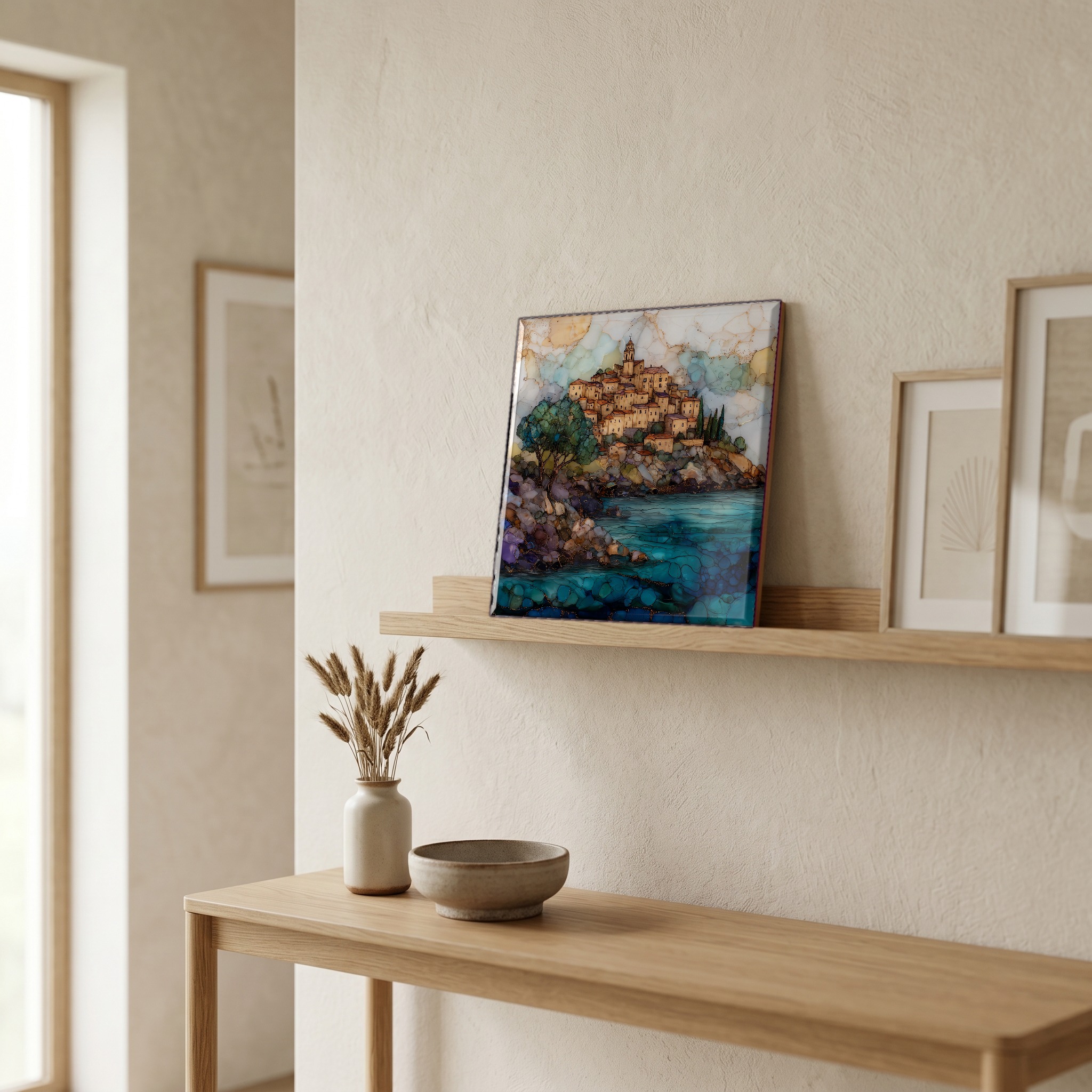
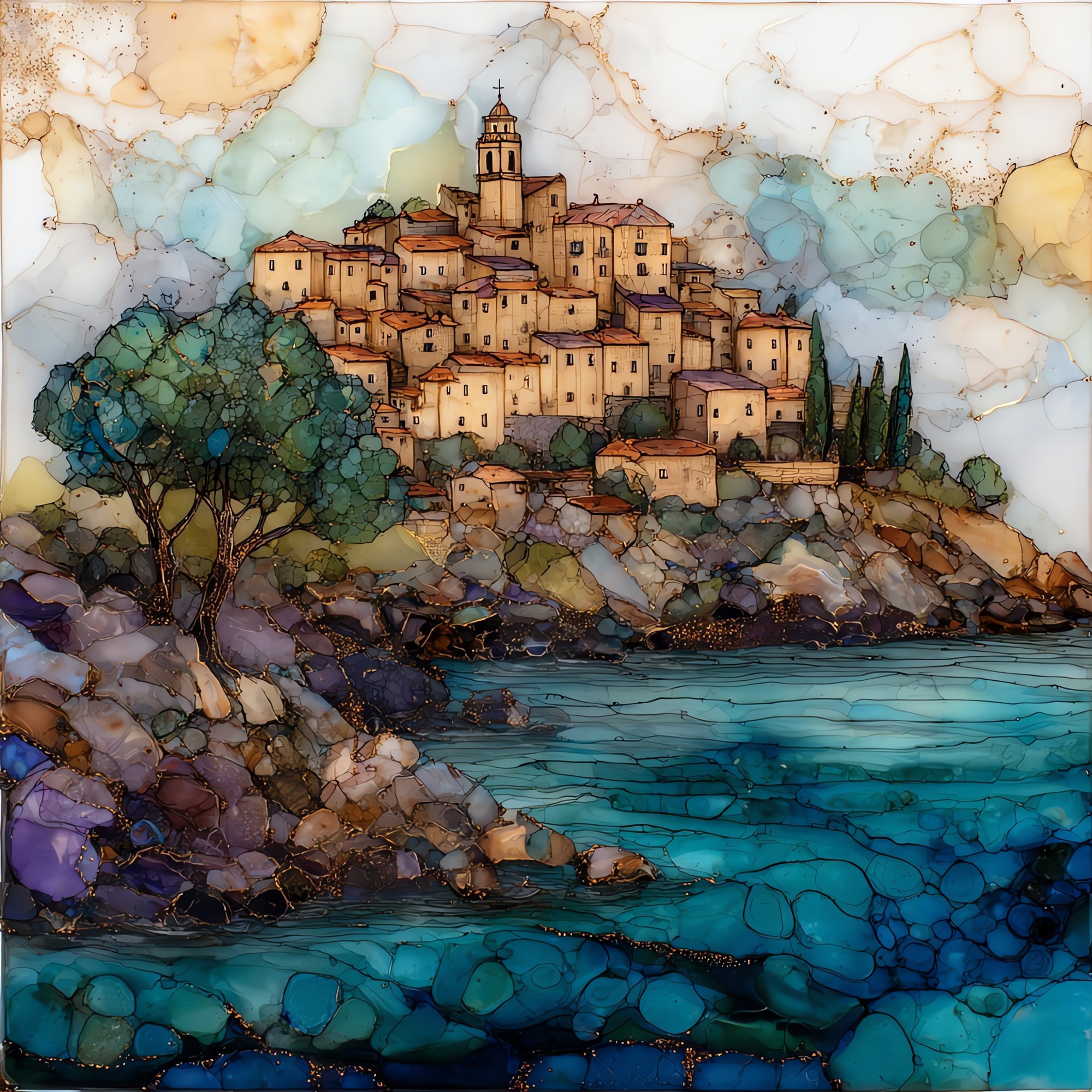
Eze Perched Village
shown on ceramic, 12-inch tileFrance
above the Côte d'Azur, between Nice and Monaco

Eze Perched Village

— the colour the Mediterranean leaves on stone.

Where it lives

Not only on a wall.

A small tile on the nightstand catching the morning. A larger one above the fire. Yours, wherever you spend the slow hours.
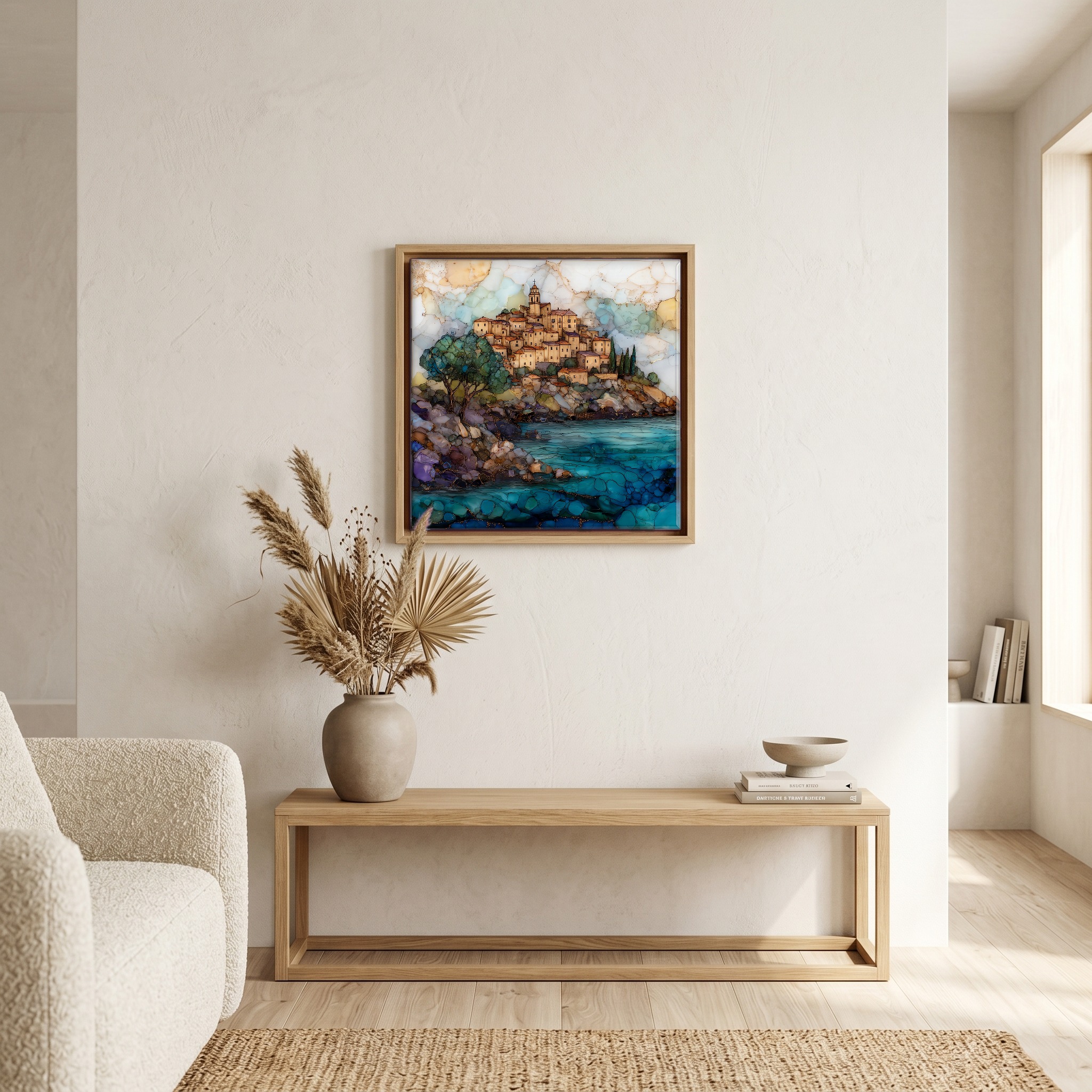
Above the bench, in a warm oak surround.
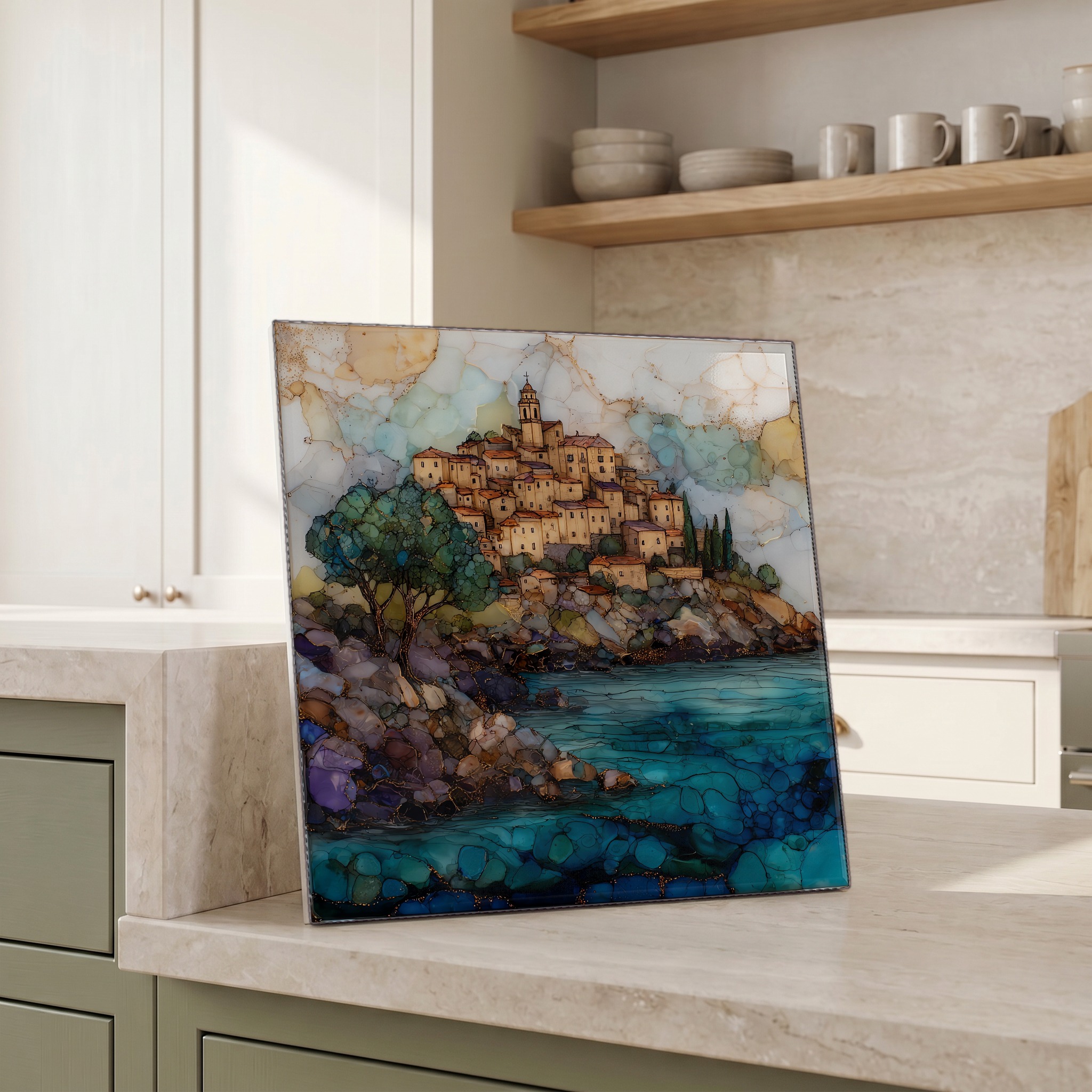
Beside the kettle, propped on the counter.
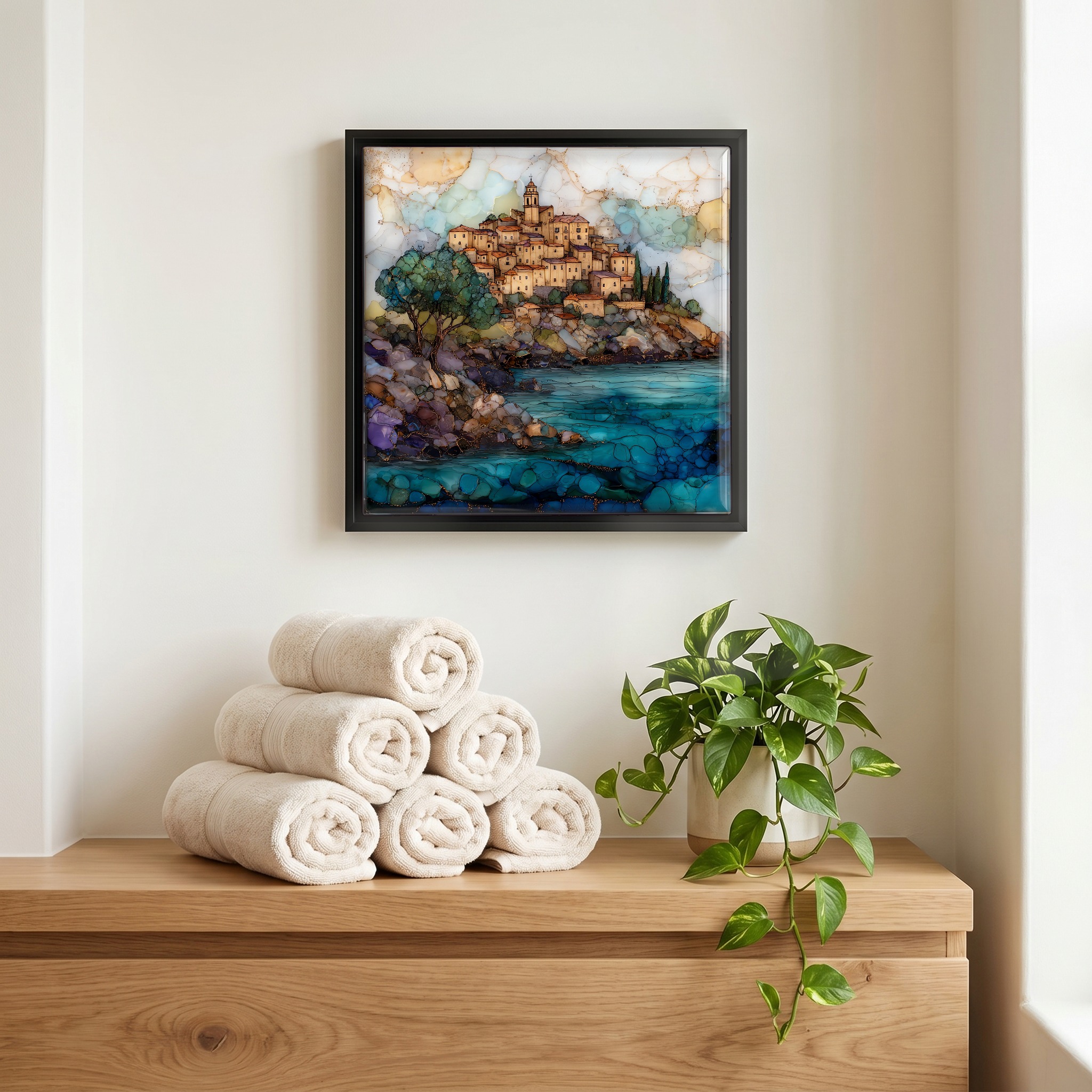
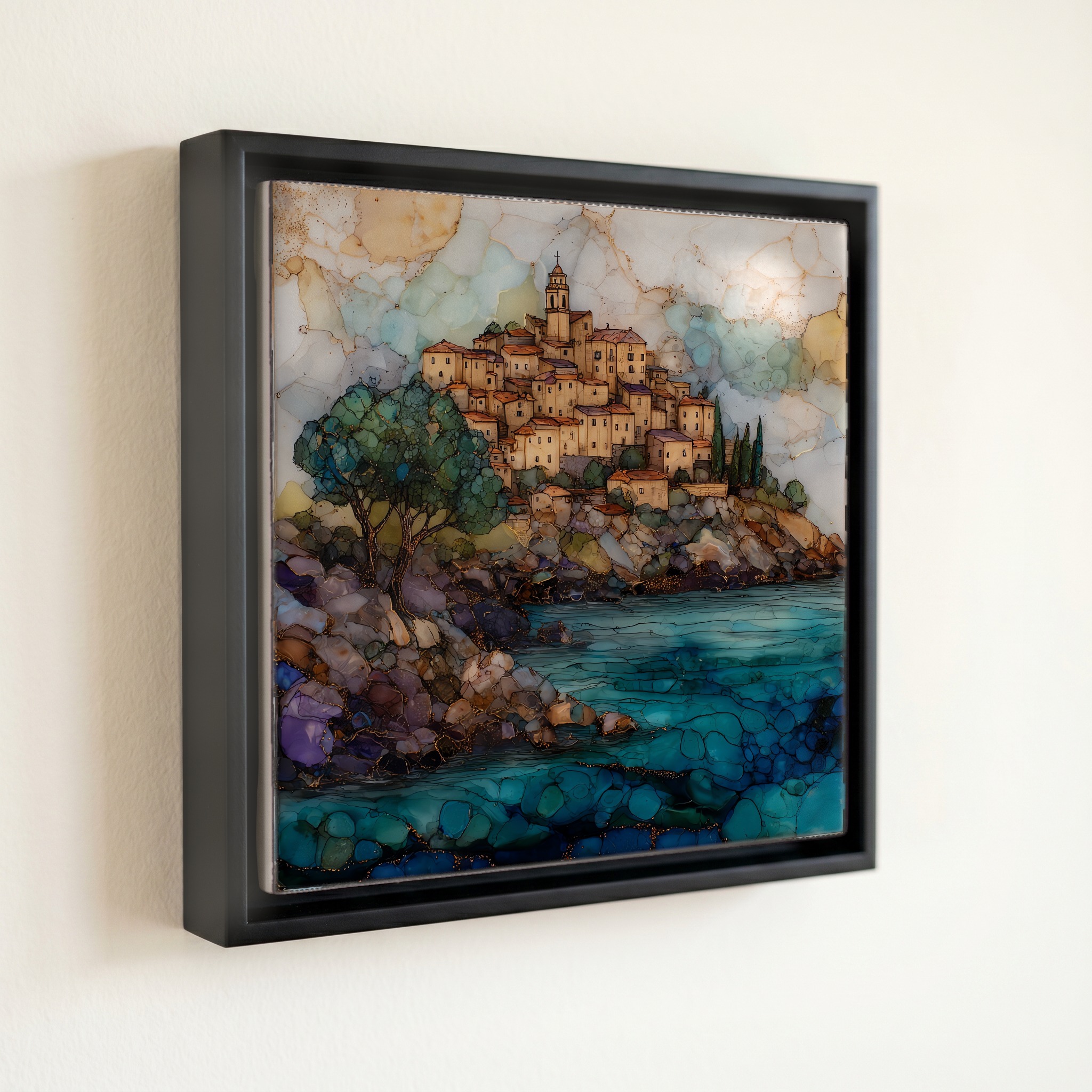
Above the linens, in a slim black surround.
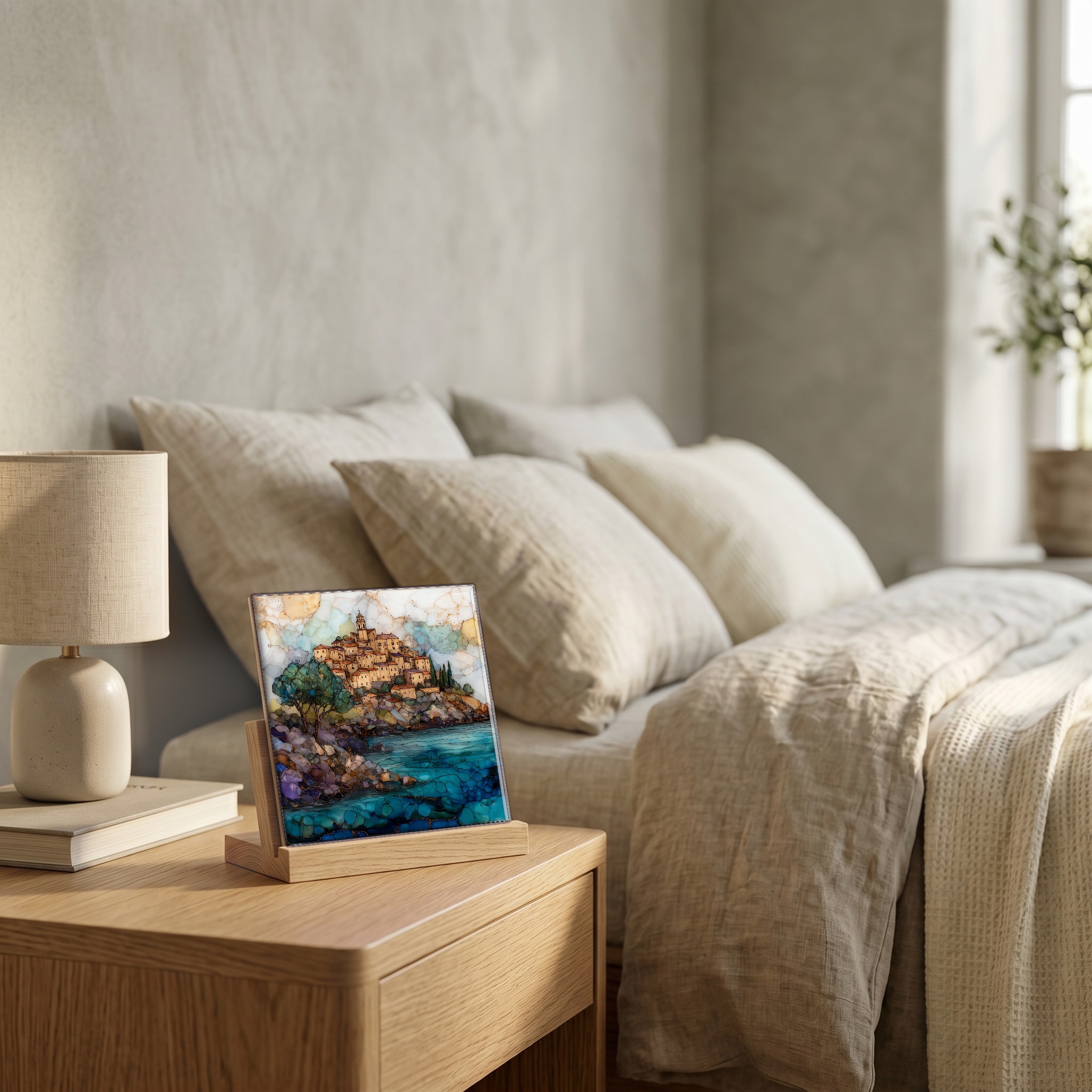
On the nightstand, on a light oak stand.
On a picture ledge, where the light comes in.
a note from the studio

A medieval village built into the rock above the Côte d'Azur, between Nice and Monaco. The houses go up the cliff in stages, the lanes are narrow enough that two people pass sideways, and the old castle at the top is now a cactus garden. The summit looks out across the Mediterranean toward Cap Ferrat, and on a clear day the long blue runs unbroken. Nietzsche walked the path up from the coast and finished part of a book at the top. People still walk it.
from the studio
shown in a slim black floating frame · 6 × 6 in
— bring it home

Eze Perched Village, on ceramic.

Each tile is finished by hand in our Knoxville studio. Artwork is slowly infused into the ceramic surface under high heat and pressure, and rests beneath a thin glossy finish. The colour lives in the surface, not on top of it.

What kind of piece?
One tile — square or rectangle.
How big?
the popular one — counter, shelf, nightstand
6 × 6 in · 15 cm · 1.6 lb
Surface finish
A clear glossy finish — the artwork reads as if under resin. Ideal for show-pieces and framed wall art.
How it sits
A hidden cleat — sits ¼″ proud of the wall.
$58
Hand-finished and shipped from our studio at the foot of the Smokies. On your wall in about ten days.
size
6 × 6 in
15 cm
weighs
1.6 lb
solid in the hand
surface
ceramic, hand-finished
art rests beneath a thin glossy finish
from
Knoxville, TN
our family studio, at the foot of the Smokies
— start a Coaster Set

Pick any four 4-inch tiles — National Parks you've been to, a Smokies set, the four seasons of one place. $ for a set of , cork-backed, ready to live on the table.
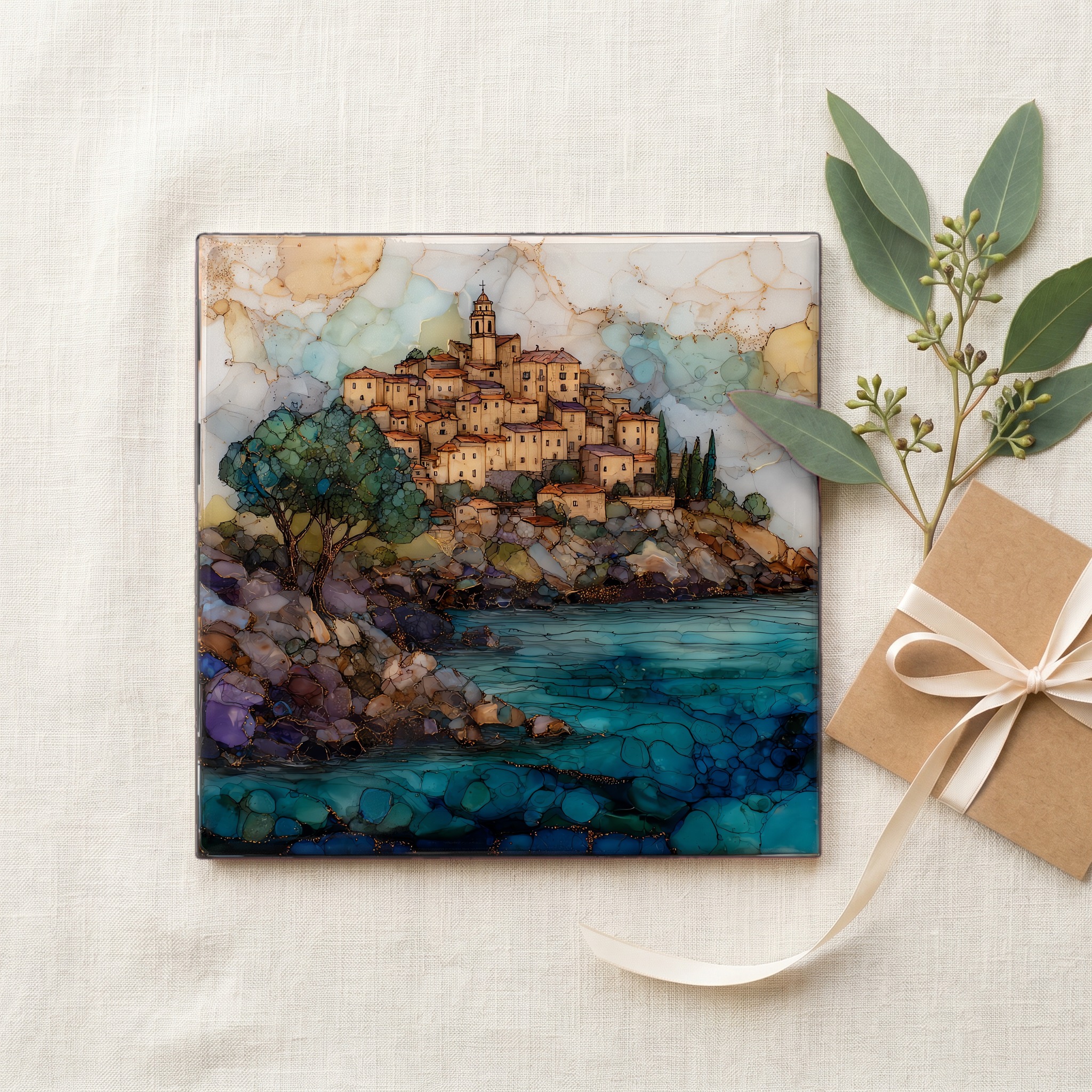
comes gift-ready
comes gift-ready

Each tile ships in a kraft box, tied with cream ribbon, with a handwritten note from the studio if you'd like to add one.
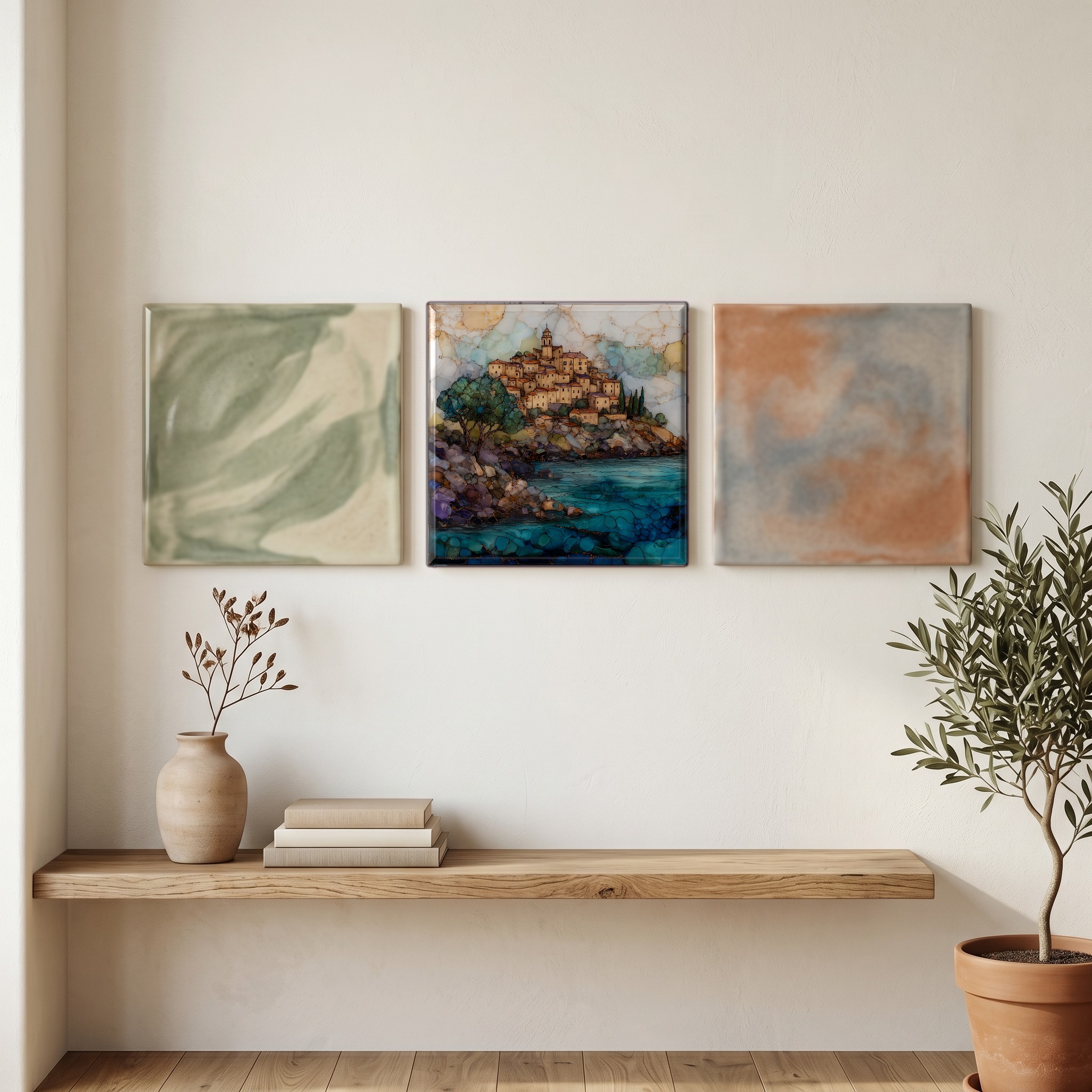
or build a grouping
or build a grouping

Three or five different vistas, hung together — a chapter of places you've been, or want to go.

about Eze Perched Village

The place, in three passes.

A little of what's known, in case you fall down the rabbit hole — or want to go see it yourself.
the place

Èze is a commune in the Alpes-Maritimes department of the Provence-Alpes-Côte d'Azur region, on the French Riviera between Nice and Monaco. The village proper, Èze-Village, sits on a limestone outcrop roughly 427 metres above the Mediterranean, with the coastal hamlet of Èze-sur-Mer at its base. The commune has about 2,500 residents. From Nice the village is about 12 kilometres east along the Moyenne Corniche (the D6007); from Monaco it is roughly 8 kilometres west. Buses run from both cities, and the rail station at Èze-sur-Mer connects to the regional TER line along the coast.

— informed by Wikipedia, Èze Tourism
the stone

The village is built into a limestone peak, with houses, lanes, and arches added in layers from roughly the 11th century onward. A castle stood at the summit until 1706, when its walls were demolished on the orders of Louis XIV during the War of the Spanish Succession; the foundations and a section of curtain wall remain. The cleared summit was replanted in 1949 as the Jardin Exotique d'Èze, a public garden of succulents and cacti laid through the ruins. Within the village, the Église Notre-Dame de l'Assomption was built between 1764 and 1778, a single-nave church in a late-Baroque idiom. The lanes between are narrow enough that two people pass sideways.

the visit

Èze-Village is reached by car along the Moyenne Corniche, by bus from Nice or Monaco, or on foot up the Chemin de Nietzsche from Èze-sur-Mer, the trail the philosopher walked while composing part of Thus Spoke Zarathustra in the winter of 1883. The path climbs about 400 metres over roughly 90 minutes; sturdy shoes and water are needed. The village itself is pedestrian-only and free to enter; the Jardin Exotique at the summit charges a small admission and is open through the year, with shorter hours in winter. Two perfumeries, Fragonard and Galimard, run free factory-style tours in the lower village. The view from the summit takes in Cap Ferrat, the Baie des Anges, and on clear days the silhouette of Corsica.

— informed by Èze Tourism
where
France · Alpes-Maritimes, Provence-Alpes-Côte d'Azur
elevation
427 m · 1,401 ft
position
43.7278° N · 7.3614° E
the neighborhood

What's nearby.

A handful of named places within an hour's walk or short drive. Some we've already painted; some we will.
12 km W
Nice
Côte d'Azur city
8 km E
Monaco
principality
7 km W
Villefranche-sur-Mer
harbour town
3 km N
La Turbie
Roman trophy site
6 km SW
Saint-Jean-Cap-Ferrat
peninsula village
5 km W
Beaulieu-sur-Mer
coastal town
N
Eze Perched Village
Nice
Monaco
Villefranche-sur-Mer
La Turbie
Saint-Jean-Cap-Ferrat
Beaulieu-sur-Mer
common questions

What people ask.

A few questions we get about Eze Perched Village — and about bringing the piece home.
about the place

Èze is a medieval village in the Alpes-Maritimes department of southern France, on the Côte d'Azur between Nice and Monaco. The village sits on a limestone outcrop about 427 metres above the Mediterranean. The coastal hamlet of Èze-sur-Mer lies at its base, served by the regional TER railway.

The village proper, Èze-Village, sits on a steep limestone peak above the sea, with houses, lanes, and ramparts built in layered terraces up the rock from roughly the 11th century onward. The French term is village perché, a hillside village fortified by its own height.

The medieval castle was demolished in 1706 on the orders of Louis XIV, during the War of the Spanish Succession. The cleared summit was replanted as the Jardin Exotique d'Èze in 1949, a public garden of succulents and cacti laid through the surviving ruins.

Le Chemin de Nietzsche is the trail that climbs from Èze-sur-Mer on the coast to Èze-Village at the summit. Friedrich Nietzsche walked it during the winter of 1883 while composing the third part of Thus Spoke Zarathustra. The ascent is roughly 400 metres over about 90 minutes.

From Nice, Èze-Village is about 12 kilometres east along the Moyenne Corniche (the D6007); from Monaco, about 8 kilometres west. Regional buses connect both cities to the village, and the TER railway stops at Èze-sur-Mer on the coast.

Spring and early autumn (April to June and September to October) bring mild weather, fewer crowds, and the clearest light off the Mediterranean. Summer is hot and busy; winter is mild but the Jardin Exotique keeps shorter hours. The village itself is open at all hours.

The village itself is free to walk; access is pedestrian-only inside the medieval gates. The Jardin Exotique at the summit charges a small admission, with discounts for residents of the commune. The two perfumeries in the lower village, Fragonard and Galimard, offer free factory-style tours.

about the piece in your home

It's been a meaningful gift for many of our customers with ties to the French Riviera. Èze sits between Nice and Monaco, and people who have driven the Moyenne Corniche tend to remember the village by its silhouette against the sea. A Small or Medium with a handwritten note from the studio carries well.

The blue-and-stone palette suits coastal-modern interiors, Mediterranean-traditional rooms, and warm minimalist spaces with a single saturated colour anchor. The piece reads as a sea view rather than a postcard, so it sits well alongside linen, oak, and unglazed pottery.

The piece reads as a single deep-blue anchor against limestone and sky, which is the central move in coastal-modern and warm-minimalist rooms. The hand-finished ceramic surface adds tactile depth that flat prints don't, which is what most warm-minimalist boards are reaching for.

For a standard sofa or a long console, a single Large reads cleanly at distance. For a wider wall, a 4-tile Mural opens the image up; for a feature wall, a 9-tile Mural lets the village climb the cliff the way it does in person.

Yes. Order it in the Dura Satin or Matte finish for any installation near moisture. Both finishes are scratch-resistant and washable; the Glossy is for framed wall-art settings where moisture and traffic aren't a concern.

A soft microfibre cloth and a little plain water lift the dust and any kitchen mist. Avoid abrasive pads and household solvents. The colour lives inside the ceramic surface, so the finish does not need polishing or sealing over time.

Yes. Every WenderVista piece is original to our family studio in Knoxville, Tennessee. We do not license artwork in or out. Reid Wender is the curator and the eye. The work is hand-finished here under high heat and pressure beneath a thin glossy finish.

if this one stayed with you

A few you might also love.

Hand-picked by the eye that found Sorapis. Same air, same kind of quiet.