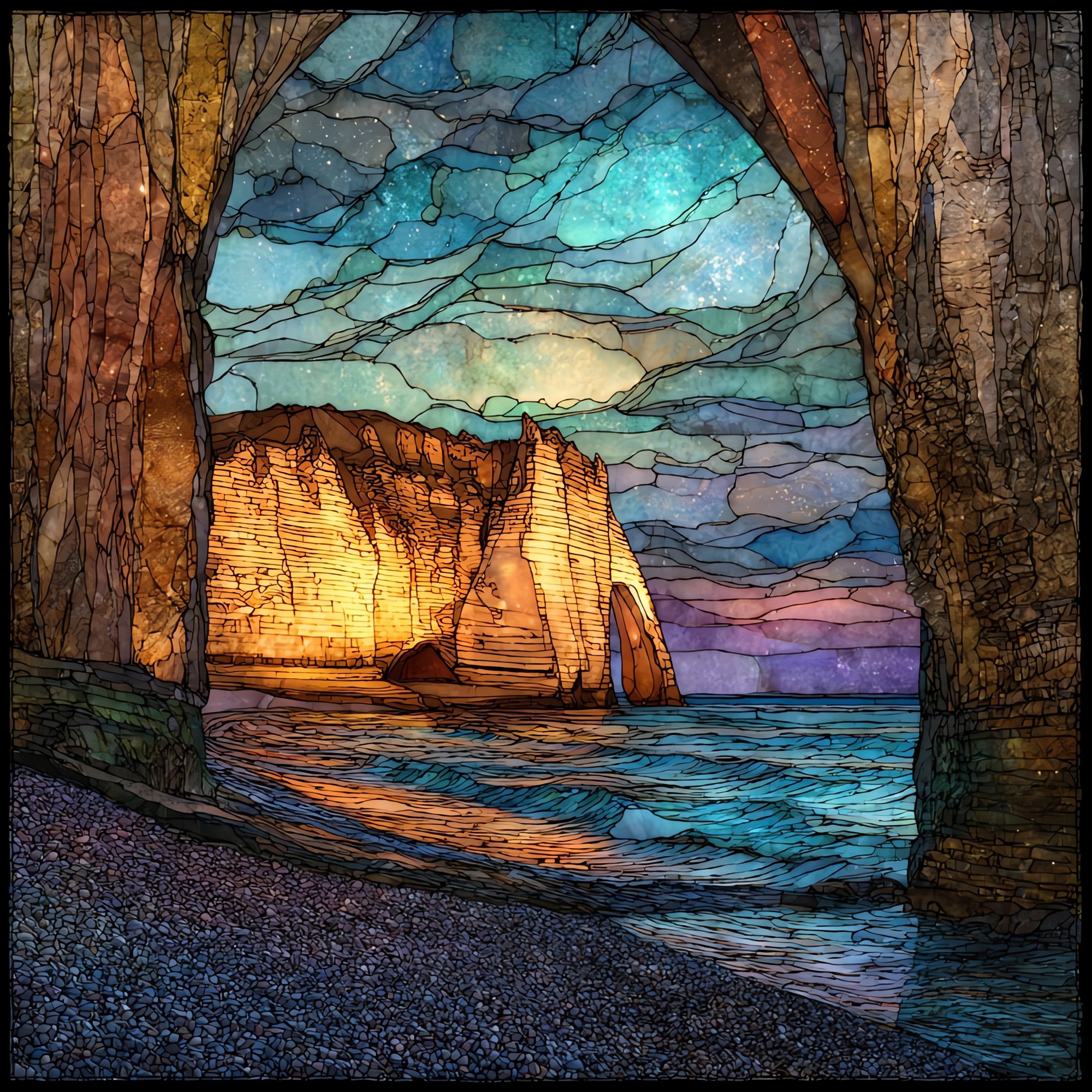
Etretat Porte d'Amont
— — the chapel above, the arch below, the sea through it.
Not only on a wall.
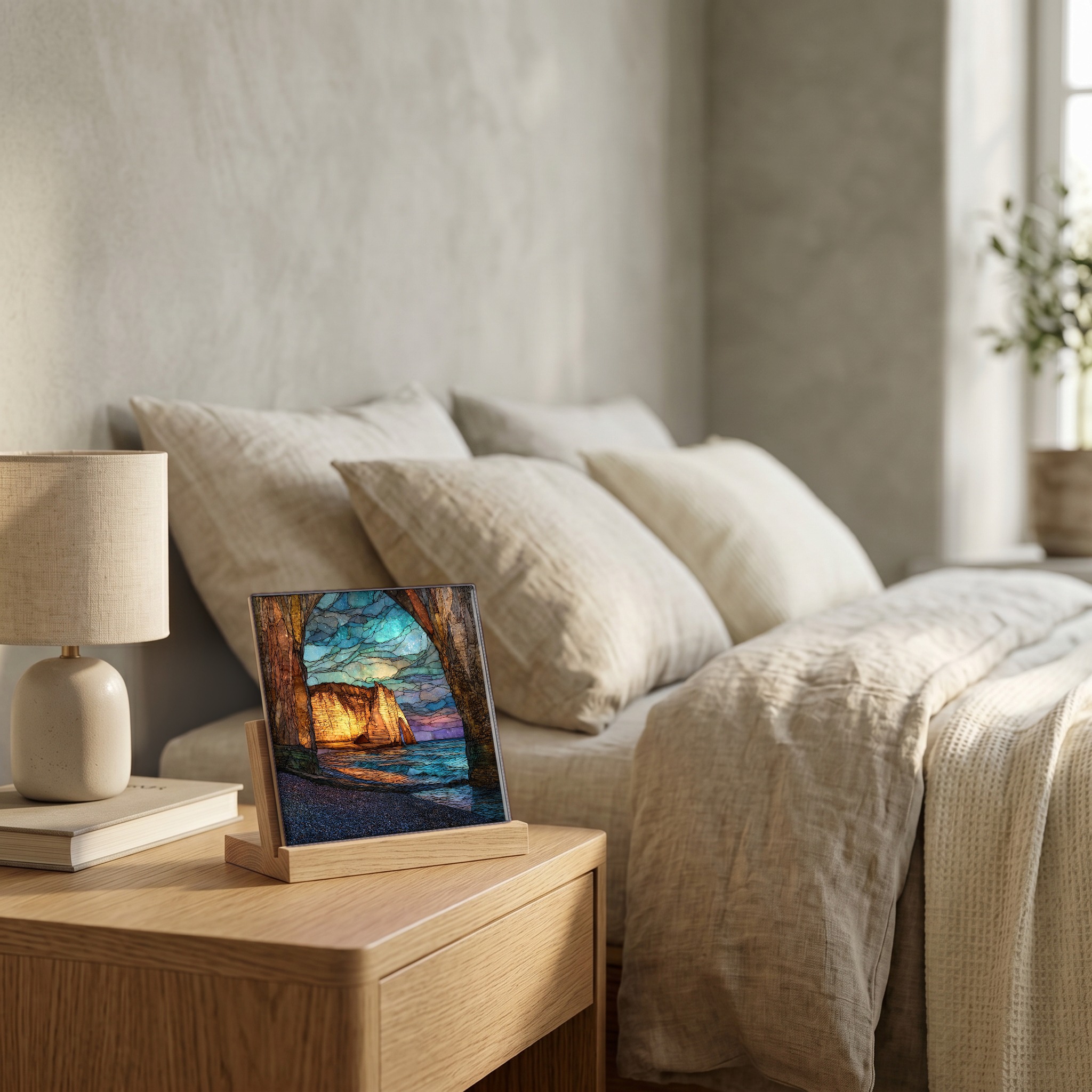
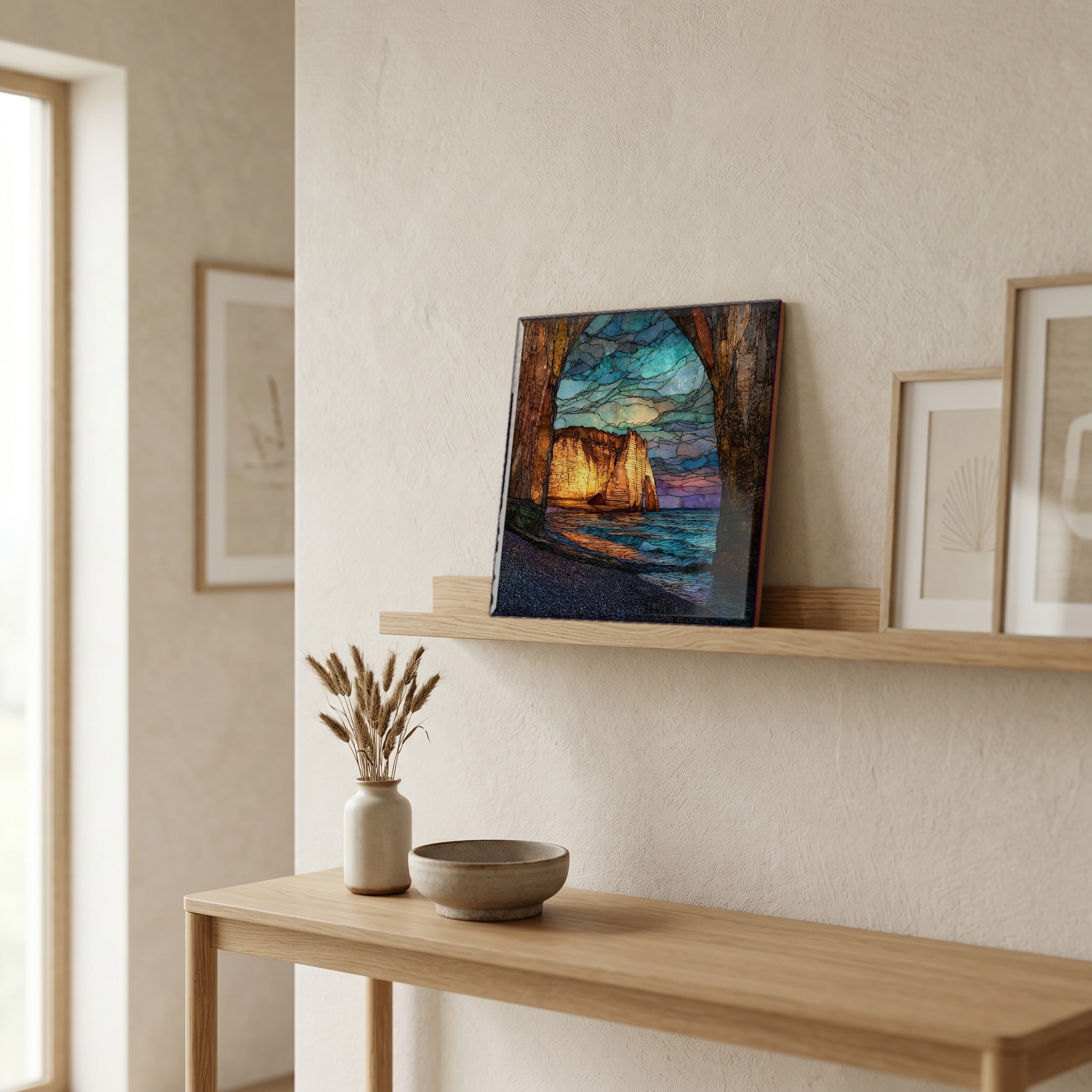
“The eastern of the three chalk arches at Étretat, smaller than its siblings to the west, but the one a walker meets first when coming down the cliffs from Fécamp. Above it stands the small chapel of Notre-Dame de la Garde, rebuilt after the war, white against the grey-green chalk. Monet painted this view many times, looking west across the bay toward the Porte d'Aval and the Aiguille standing in the water. The opening frames a small piece of the English Channel, the colour depending on the tide and the cloud. The climb up from the beach is steep. The wind at the top is always there. — from the studio
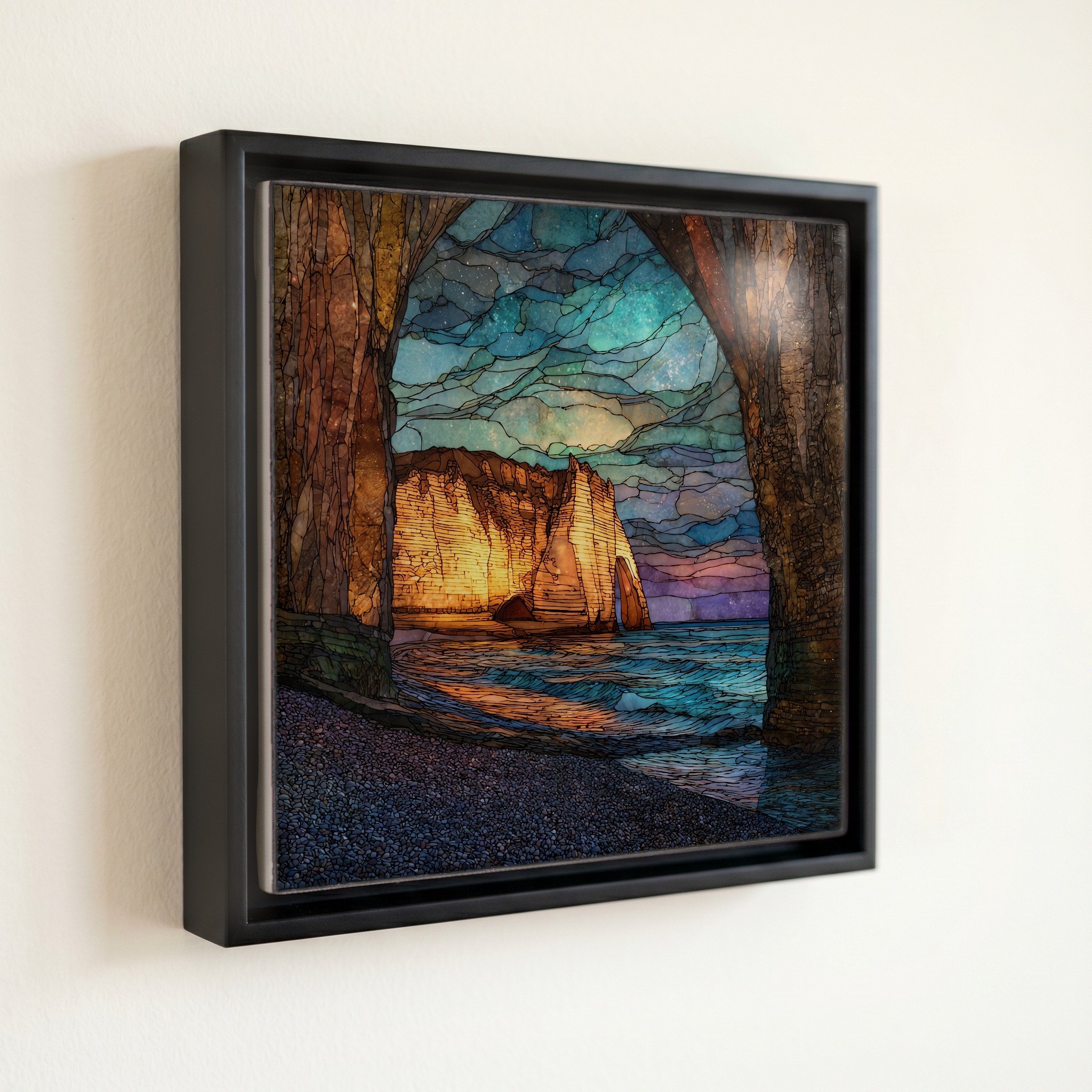
Etretat Porte d'Amont, on ceramic.
Each tile is finished by hand in our Knoxville studio. Artwork is slowly infused into the ceramic surface under high heat and pressure, and rests beneath a thin glossy finish. The colour lives in the surface, not on top of it.
Pick any four 4-inch tiles — National Parks you've been to, a Smokies set, the four seasons of one place. $ for a set of , cork-backed, ready to live on the table.
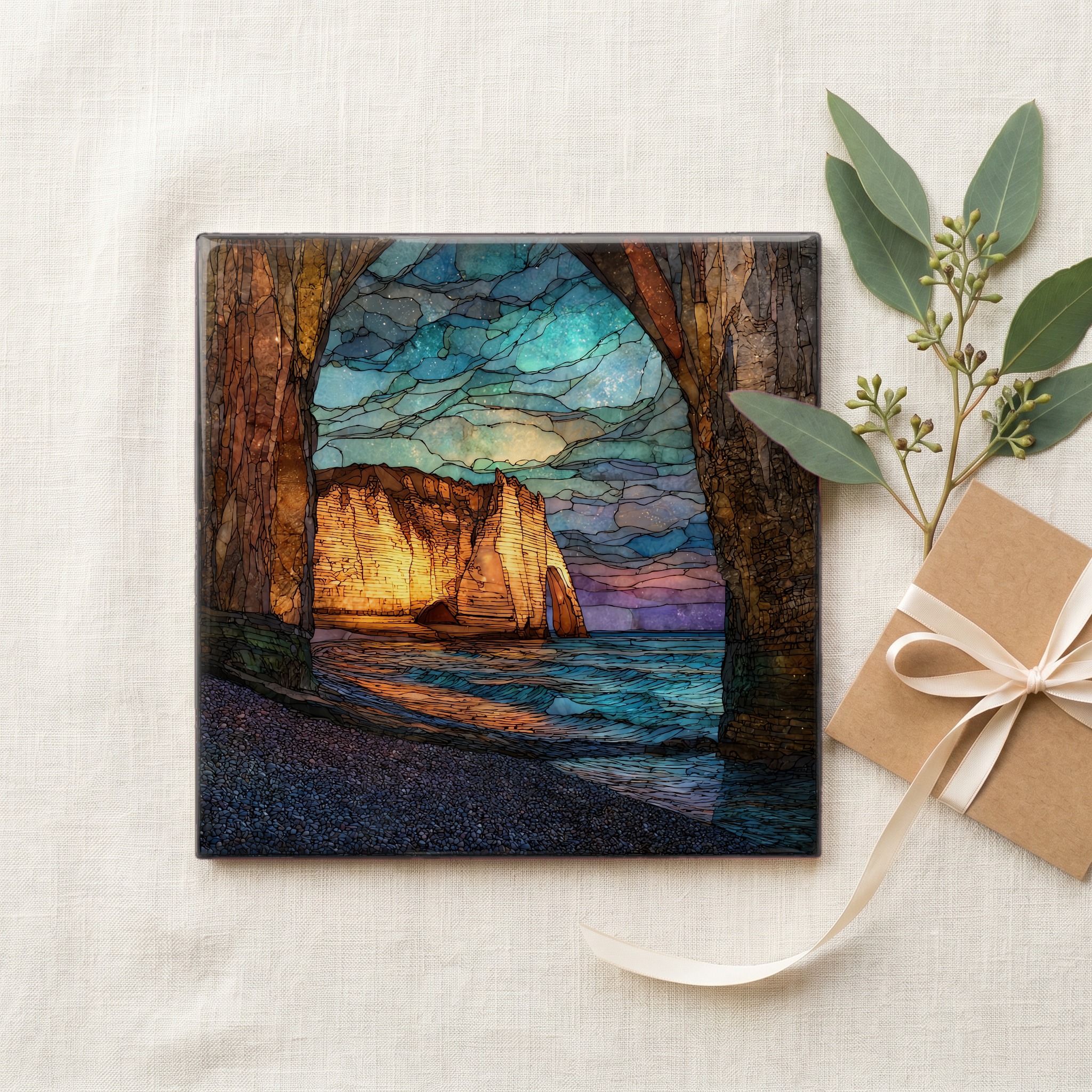
Each tile ships in a kraft box, tied with cream ribbon, with a handwritten note from the studio if you'd like to add one.
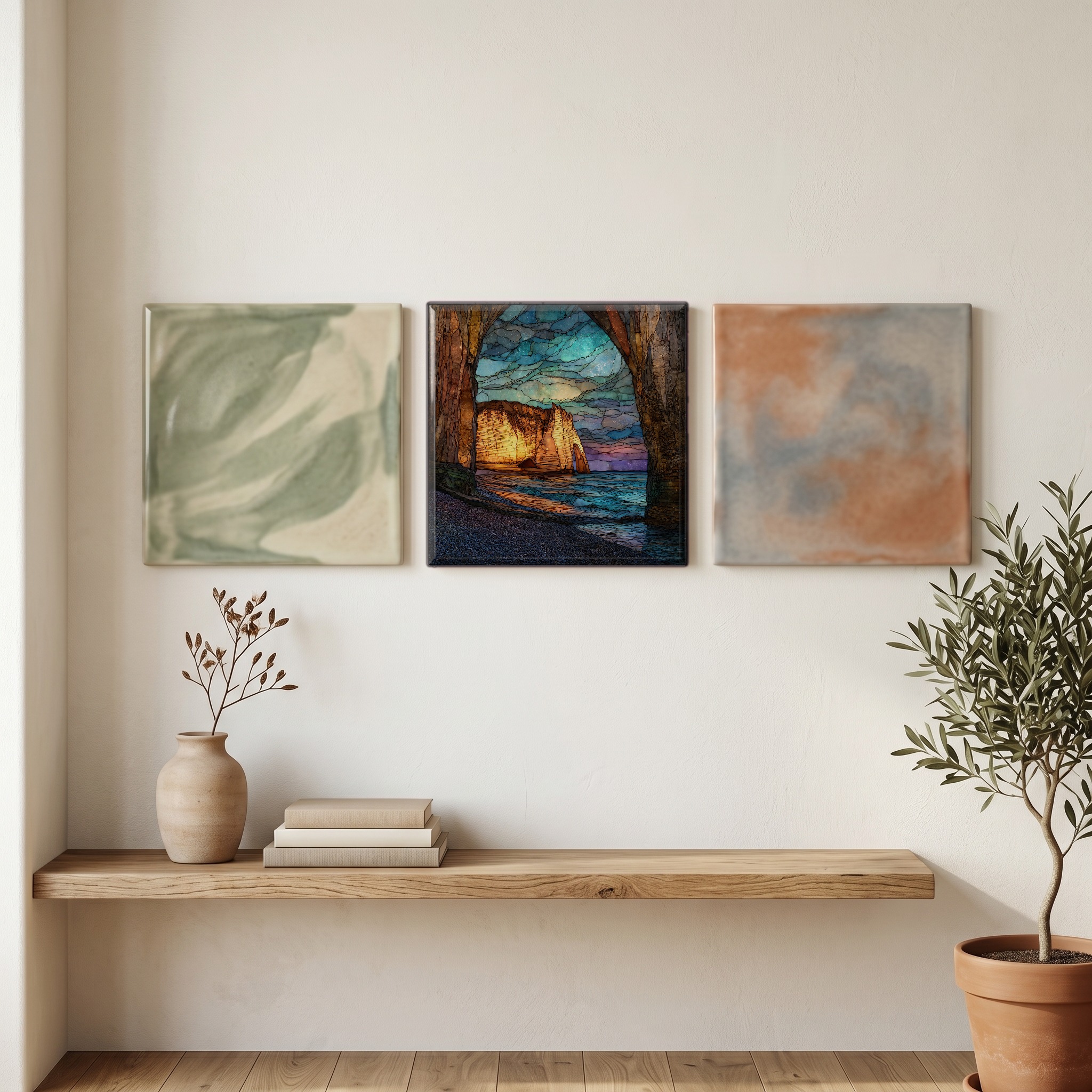
Three or five different vistas, hung together — a chapter of places you've been, or want to go.
The place, in three passes.
The Porte d'Amont is the eastern of the three chalk arches at Étretat, a small commune on the Côte d'Albâtre in Seine-Maritime, Normandy, about 30 kilometres north of Le Havre and 200 kilometres northwest of Paris. *Amont* is French for upstream, a reference to the prevailing west-flowing tidal current along this stretch of coast. The arch sits at the foot of the eastern cliff that frames Étretat's pebble beach; on the headland directly above it stands the small chapel of Notre-Dame de la Garde, first built by sailors' families in 1854 and rebuilt after the Second World War. The wider plateau is the Pays de Caux, traced along the cliff edge by the GR21 long-distance footpath.
The cliffs at Étretat are Upper Cretaceous chalk, the same formation that surfaces again across the Channel at the white cliffs of Dover. The chalk is roughly 90 million years old and layered with horizontal bands of dark flint, visible as ribbons across the cliff face at any distance. The pebble beach below is made of flint nodules washed out of the chalk as it weathers. Étretat's three arches were cut by a slow combination of wave action, freeze-thaw cycles, and the collapse of softer chalk between the harder flint layers. The Porte d'Amont is the smallest of the three, its base worn round at the waterline; the Porte d'Aval (with the Aiguille beside it) and the Manneporte further west are larger and stand higher above the sea.
Claude Monet painted the Étretat cliffs repeatedly through the 1880s, producing more than fifty canvases of the arches in different weather and at different hours. Gustave Courbet had worked the same coast a generation earlier, after his stay at Étretat in 1869, and Eugène Boudin painted the cliffs through the same decades. The light at Étretat is the light of the English Channel: pale, mineral, often filtered through marine haze. The chalk reflects it back as a soft grey-white, while the sea below shifts from slate to milky green depending on the tide and the cloud. The Porte d'Amont, on the eastern side of the bay, catches the morning light first; the western pair holds the late sun.