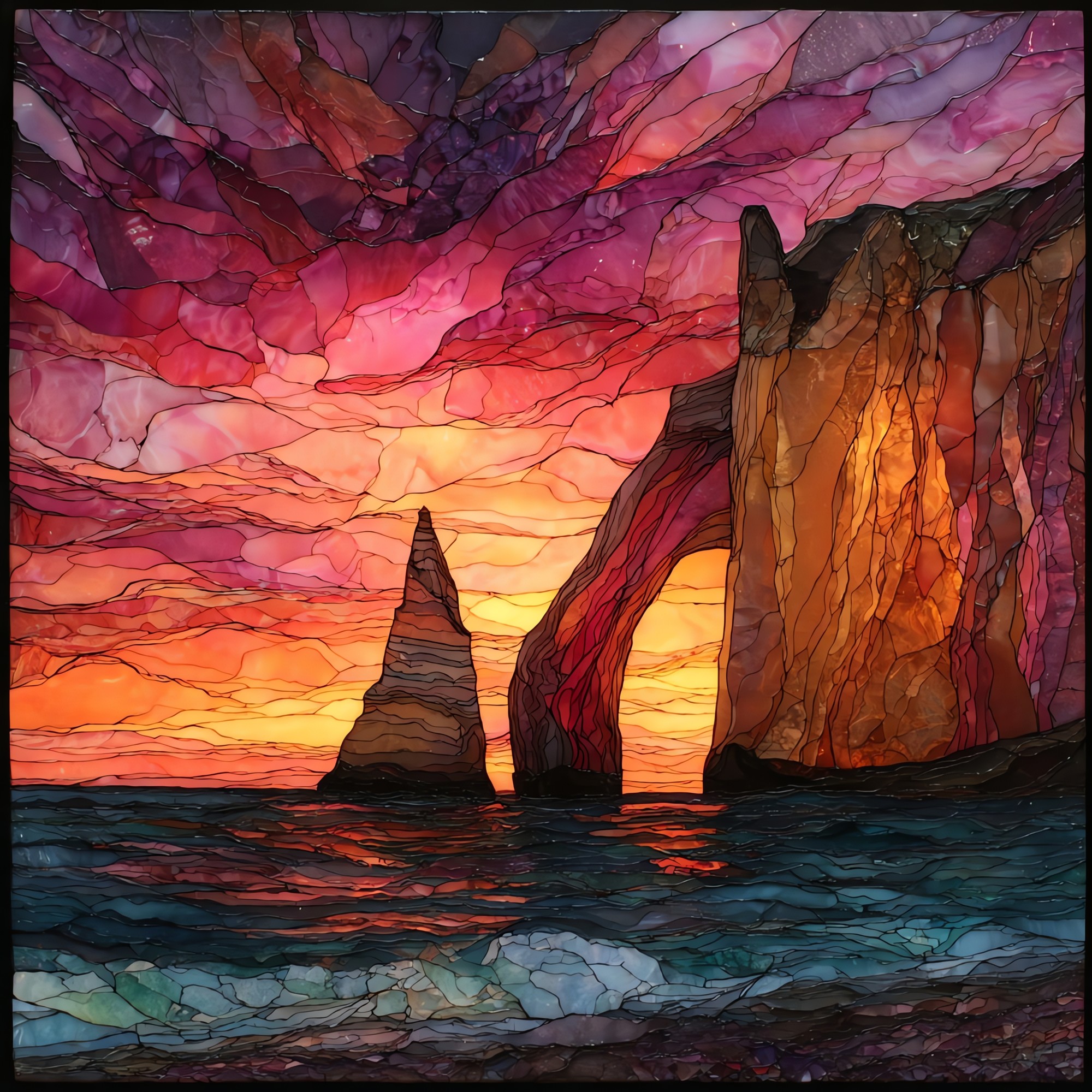
Aiguille d'Etretat
— the chalk the Channel left standing.
Not only on a wall.
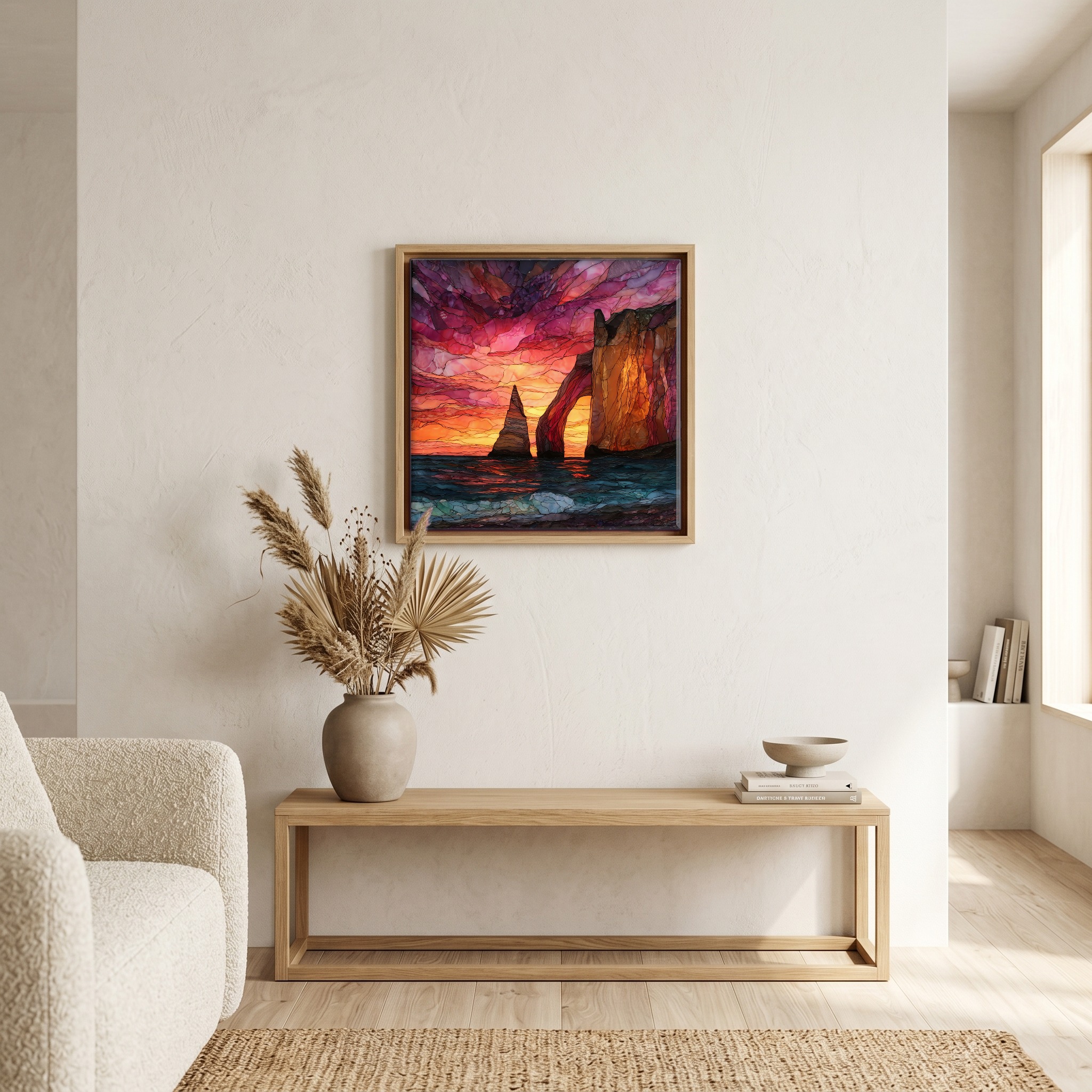
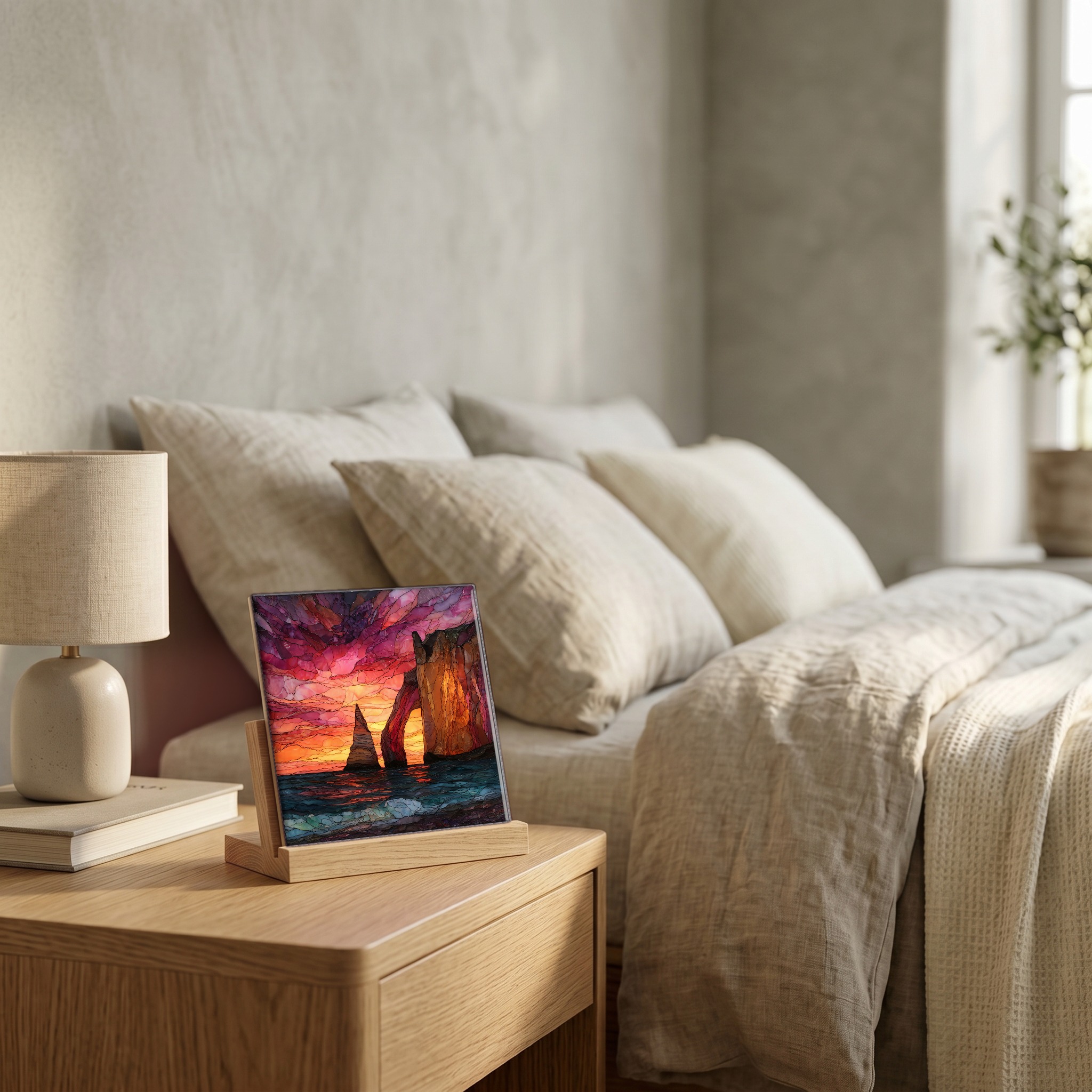
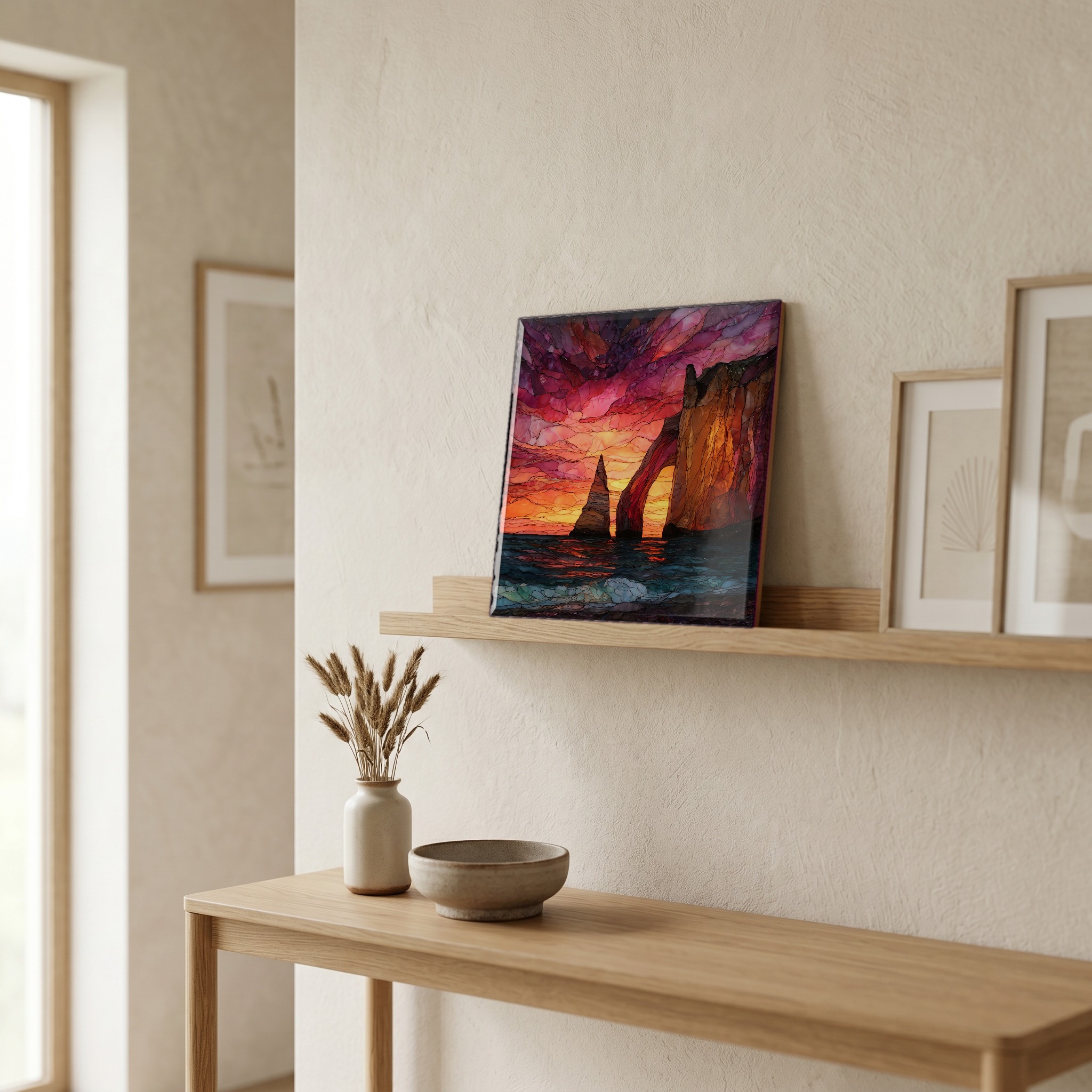
“A chalk needle standing alone in the Channel, just off the foot of the Porte d'Aval arch on the Normandy coast. Monet painted it more than a dozen times from the cliffs above, in fog, in late sun, in winter green. The needle is about seventy metres tall and the sea between it and the cliff is the milk-green of suspended chalk. Locals walk the cliff top at low tide, when you can read the line of the arch from above, and the needle looks as if it has just stepped away from the wall.
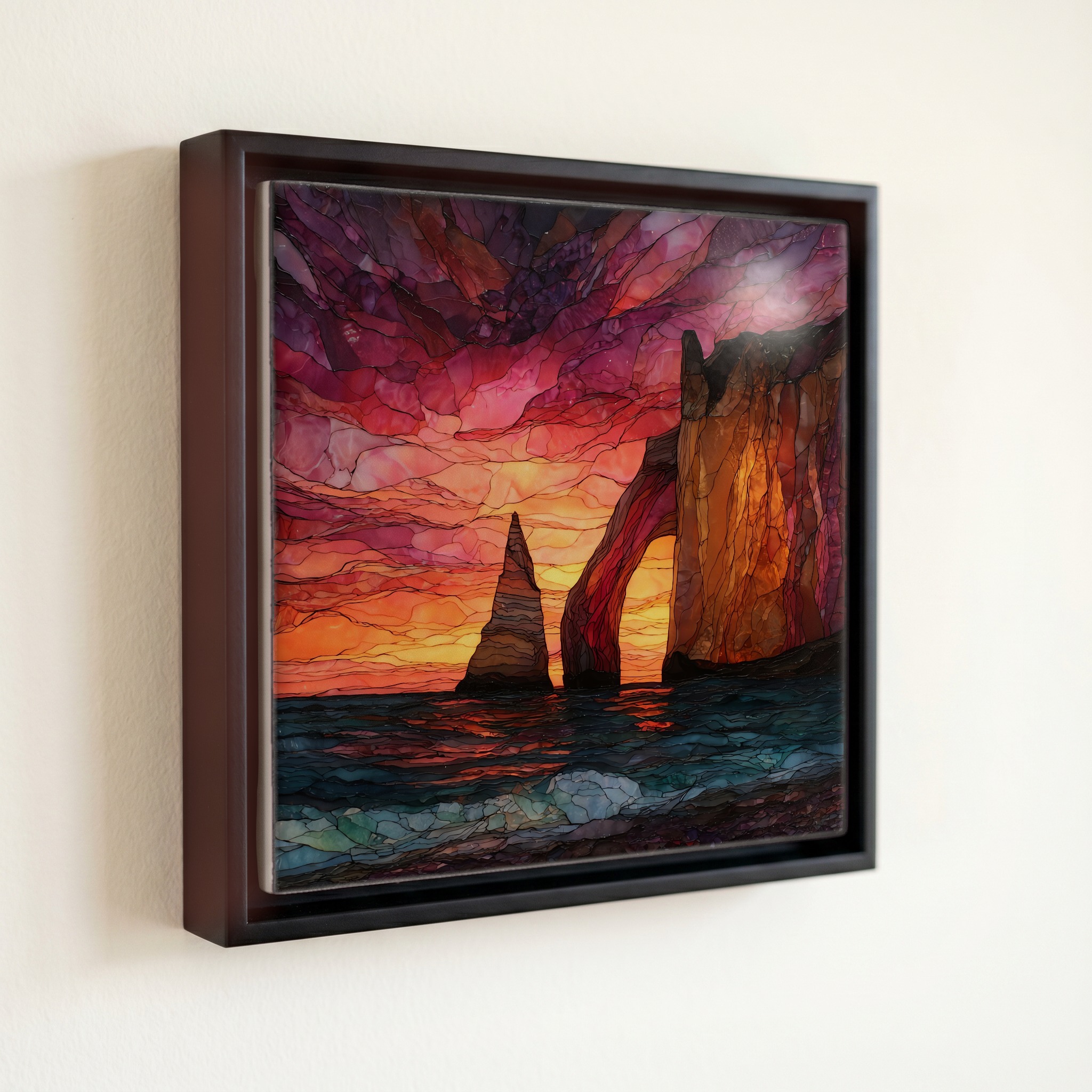
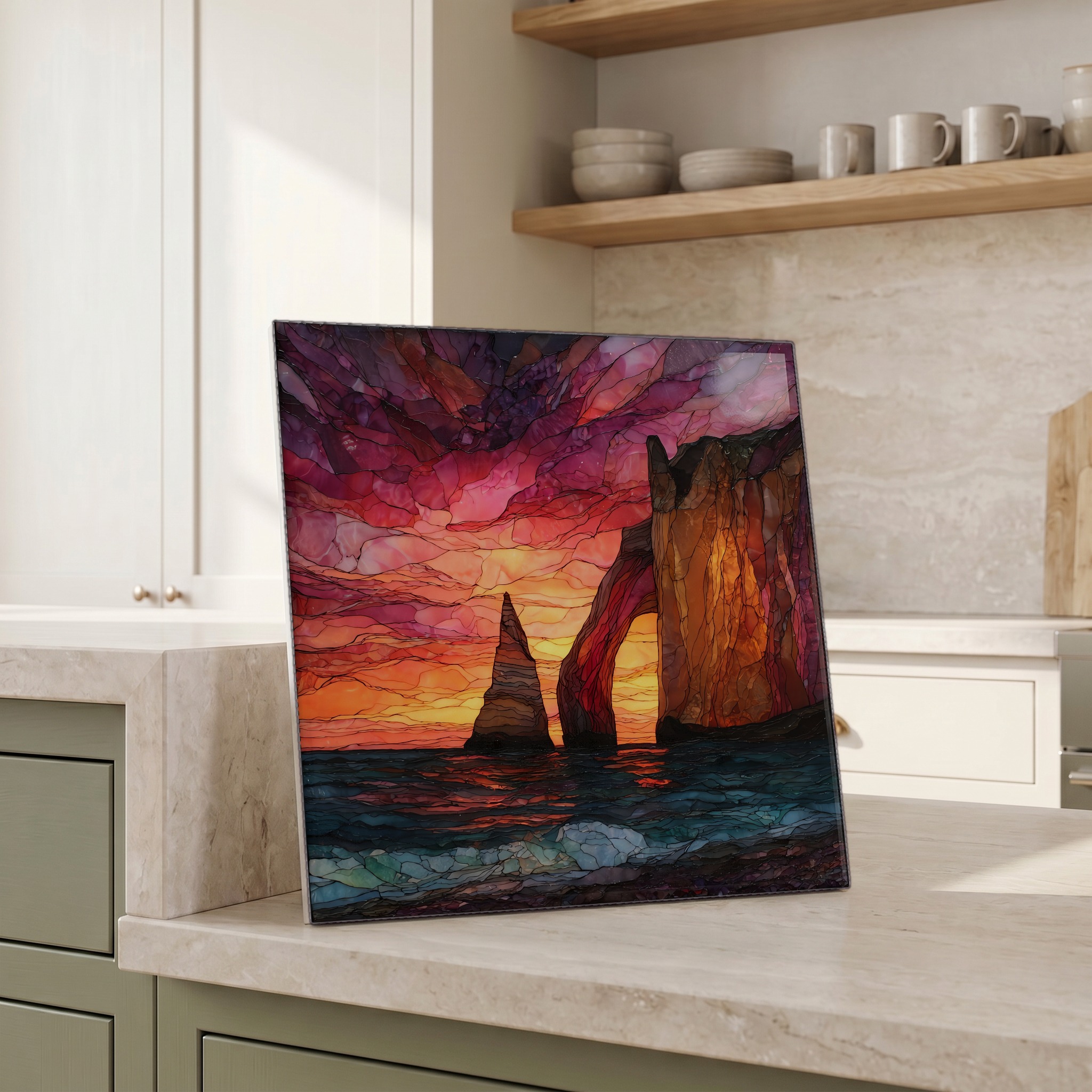
Aiguille d'Etretat, on ceramic.
Each tile is finished by hand in our Knoxville studio. Artwork is slowly infused into the ceramic surface under high heat and pressure, and rests beneath a thin glossy finish. The colour lives in the surface, not on top of it.
Pick any four 4-inch tiles — National Parks you've been to, a Smokies set, the four seasons of one place. $ for a set of , cork-backed, ready to live on the table.
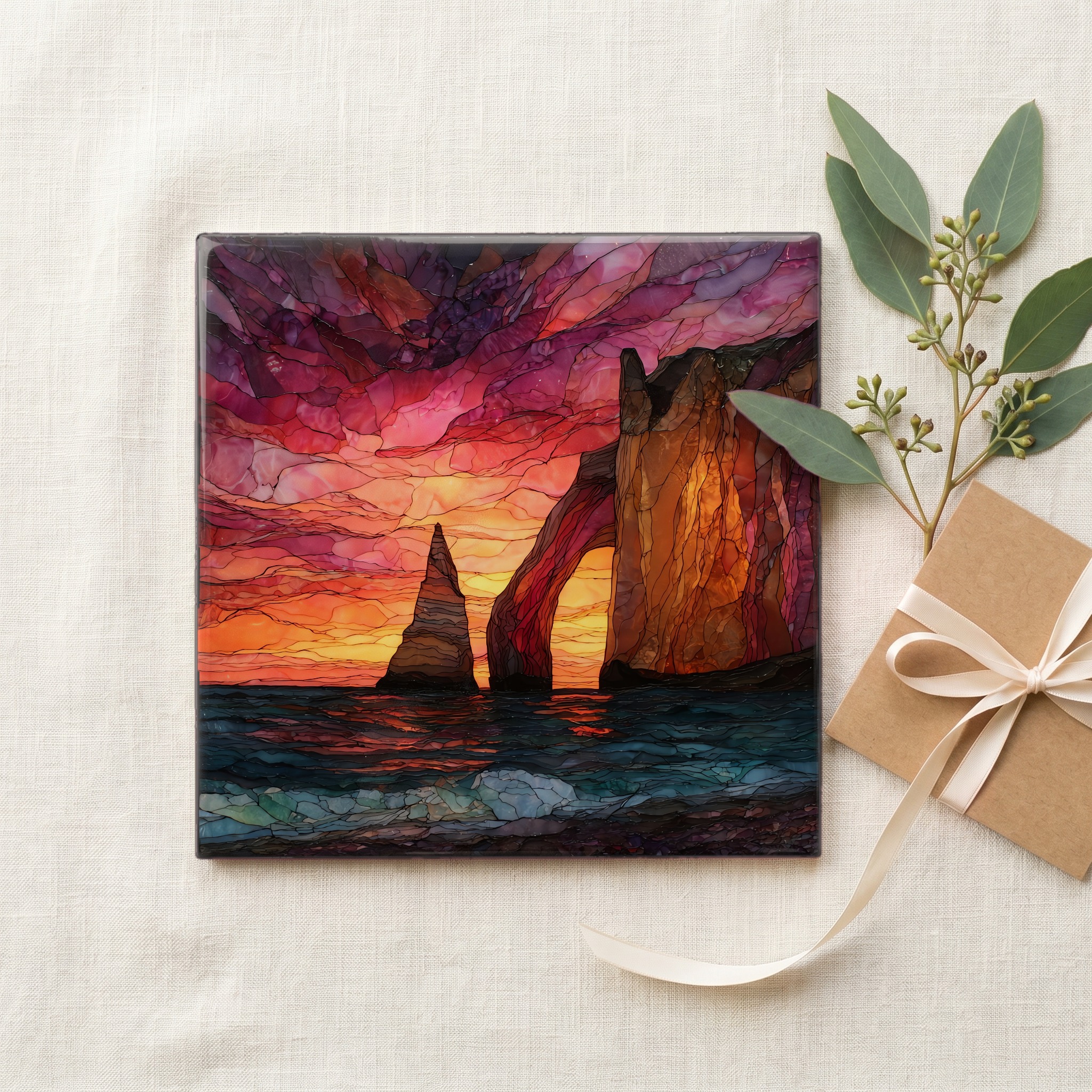
Each tile ships in a kraft box, tied with cream ribbon, with a handwritten note from the studio if you'd like to add one.
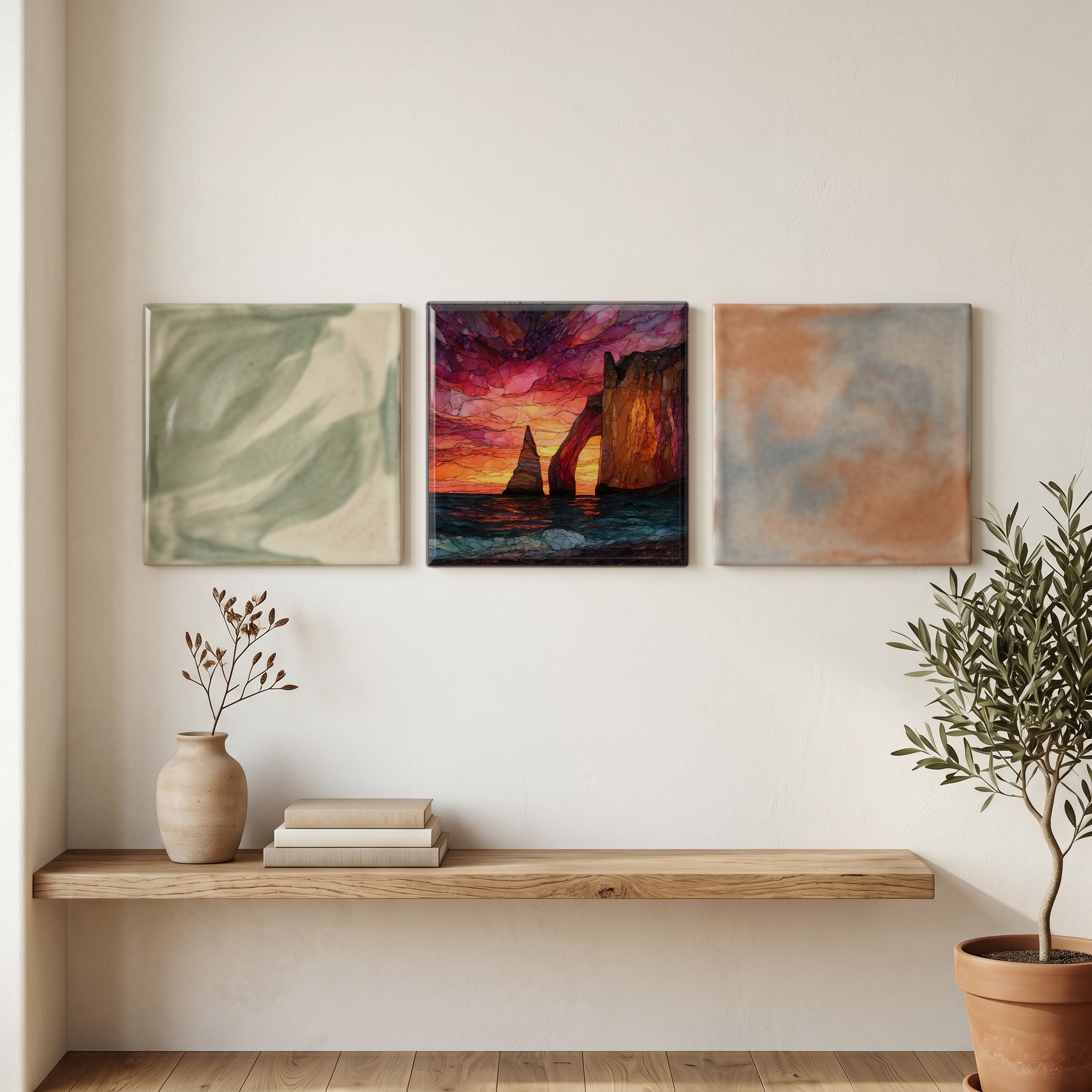
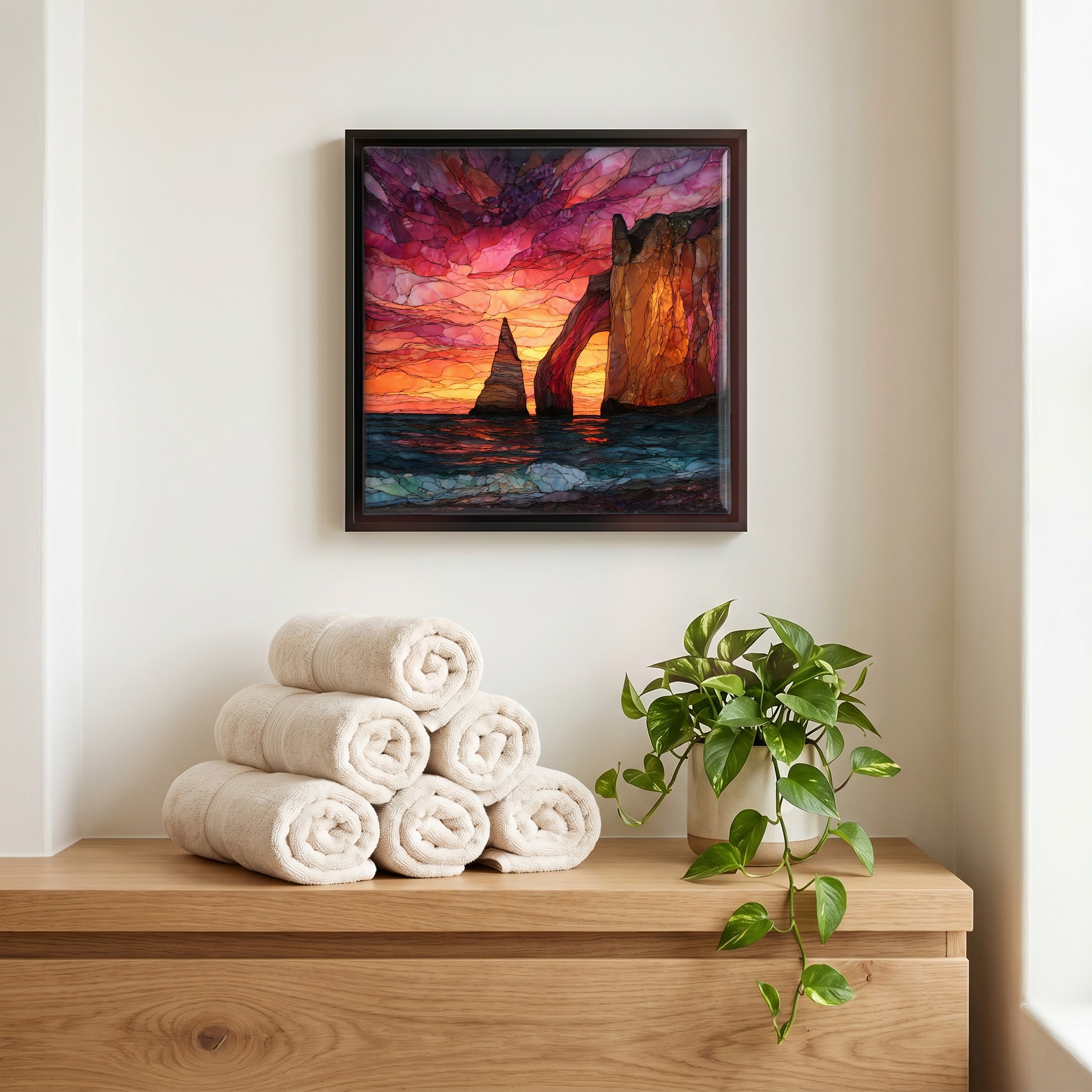
Three or five different vistas, hung together — a chapter of places you've been, or want to go.
The place, in three passes.
The Aiguille d'Étretat stands offshore from the village of Étretat on the Côte d'Albâtre in Seine-Maritime, Normandy, about 30 kilometres north of Le Havre and 200 kilometres northwest of Paris. The needle is a freestanding chalk pinnacle roughly 70 metres tall, set just beyond the Porte d'Aval, one of three natural arches that shape the cliffs at Étretat. The others are the Manneporte, the largest, and the Porte d'Amont at the eastern end of the beach. The coast belongs to the wider Pays de Caux plateau and is traced by the GR21 long-distance footpath. From the village, the cliff path to the south climbs to the viewpoints above the needle in about twenty minutes.
The cliffs at Étretat are Upper Cretaceous chalk, the same formation that surfaces again across the Channel at the white cliffs of Dover. The chalk is roughly 90 million years old and layered with thin horizontal bands of dark flint, visible as dark lines across the cliff face at any distance. The sea has been working this coast since the last ice age; the Porte d'Aval and the Manneporte were carved out of the wall by steady erosion of the soft chalk between the harder flint bands. The Aiguille is what the sea left when the cliff behind it collapsed — a single column of chalk and flint about 70 metres above the waterline, that the waves are still slowly working at.
Étretat became a painters' coast in the second half of the nineteenth century. Eugène Boudin, Gustave Courbet, and most famously Claude Monet worked the cliffs and the needle through the 1880s; Monet returned several times and painted the Porte d'Aval and the Aiguille more than two dozen times from the cliff path and the beach below. The water reads pale milky green because chalk in suspension scatters the shorter wavelengths of sunlight, the same physics that colours the alpine lakes. The cliffs change colour through the day: cold blue-white in morning light, warm cream at low sun, bone-pale under a flat overcast. Monet's Étretat canvases sit today in the Musée d'Orsay in Paris and the Metropolitan Museum of Art in New York.