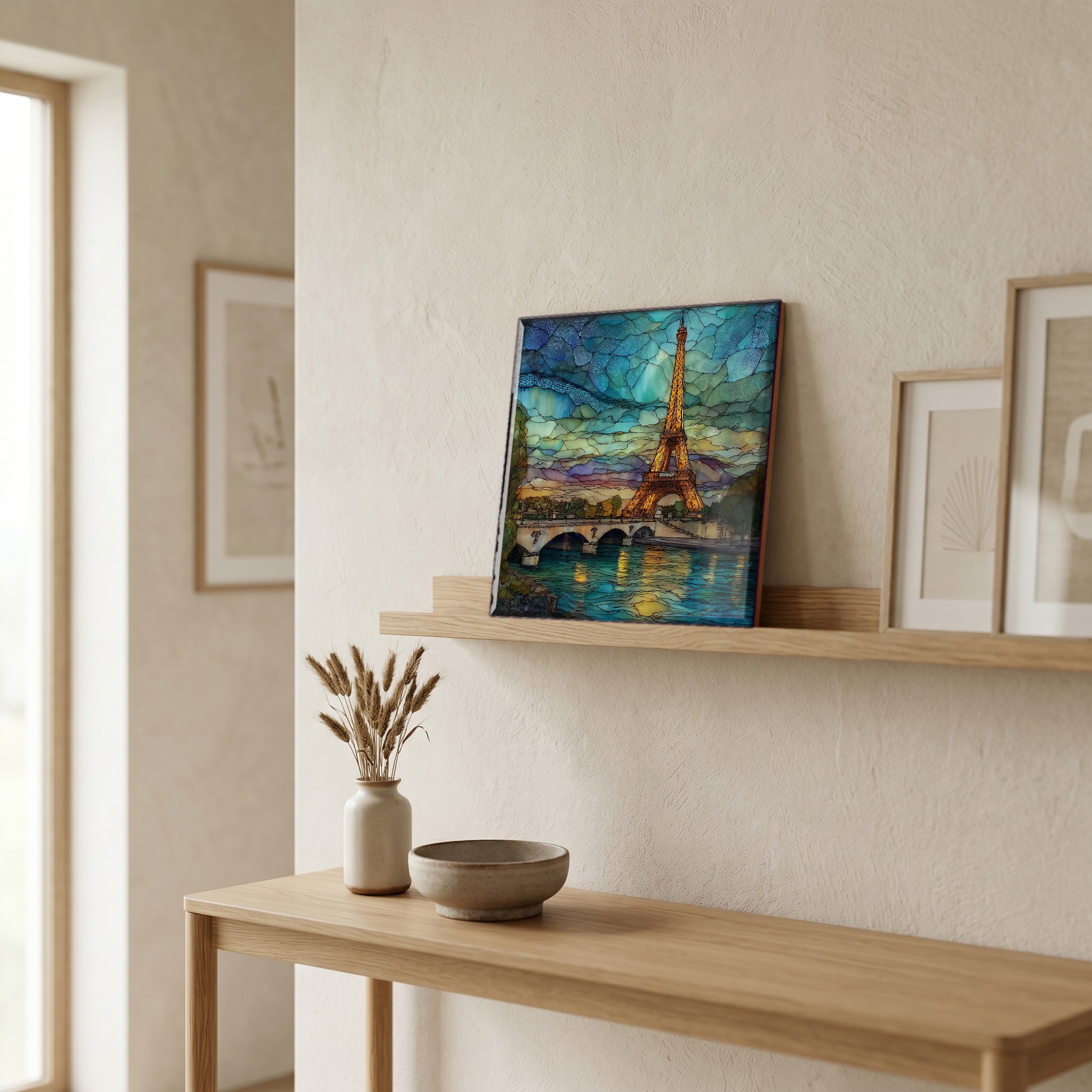
Wender·Vista
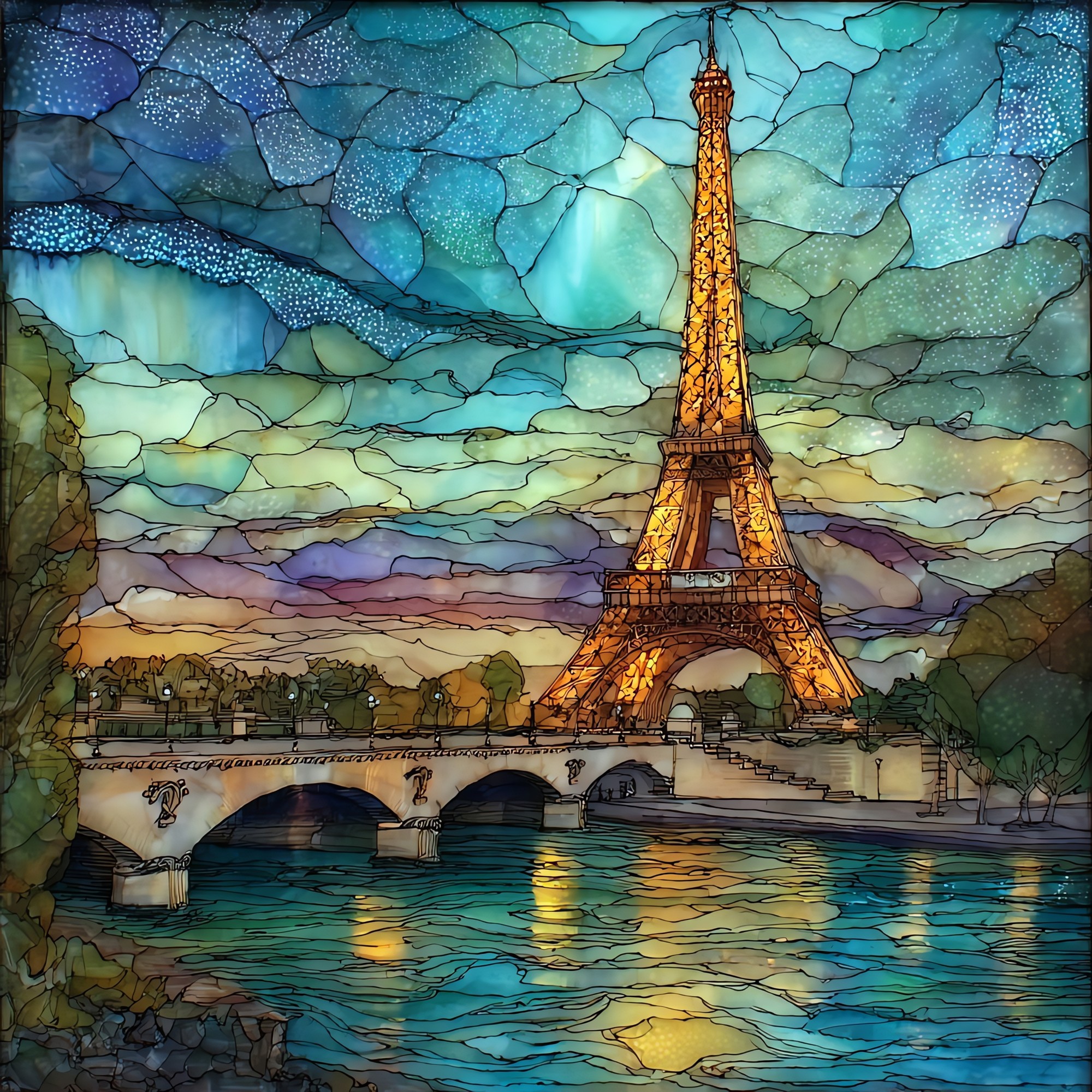
Eiffel Tower
shown on ceramic, 12-inch tileFrance
above the Champ-de-Mars, on the Left Bank

Eiffel Tower

the lattice the sky shows through.

Where it lives

Not only on a wall.

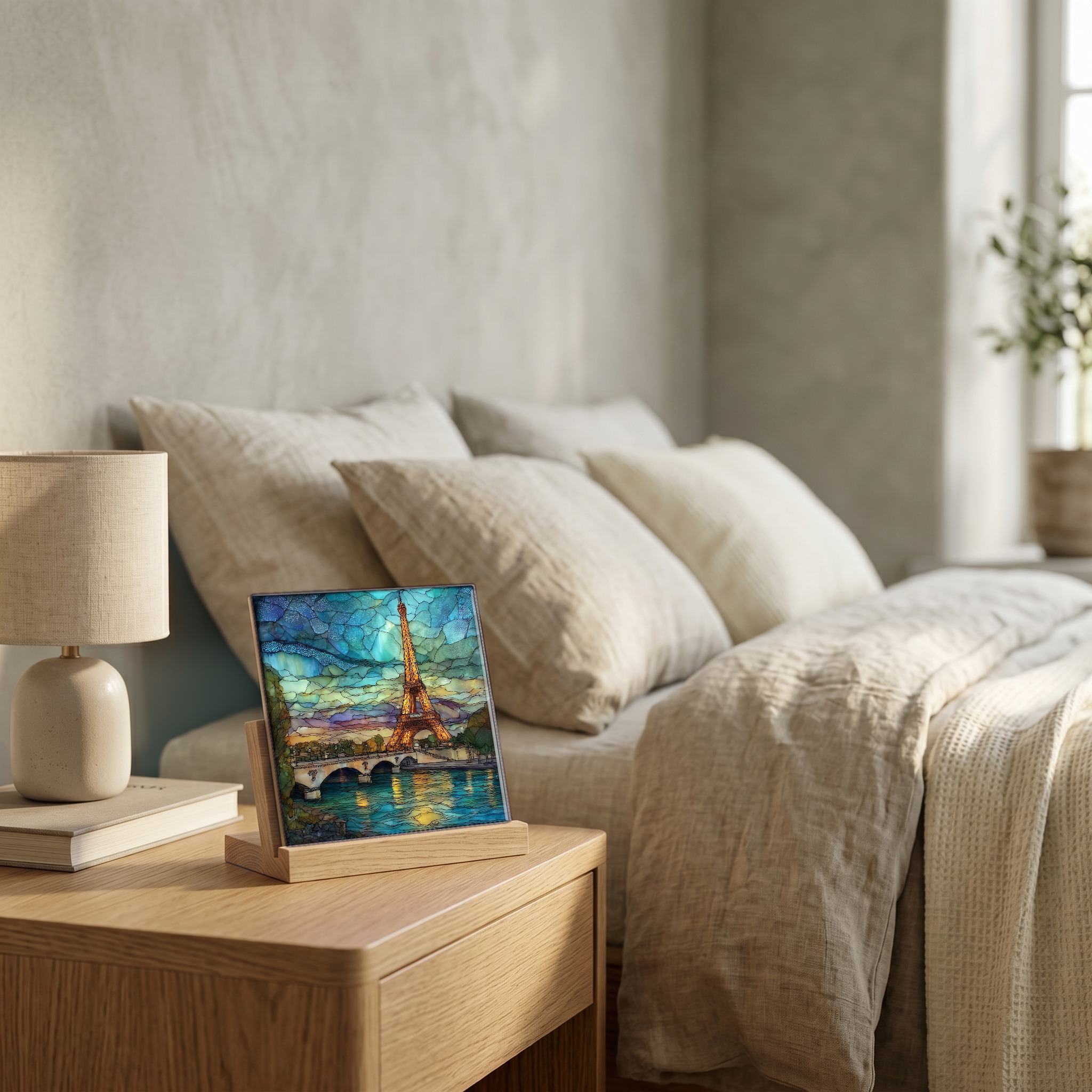
A small tile on the nightstand catching the morning. A larger one above the fire. Yours, wherever you spend the slow hours.
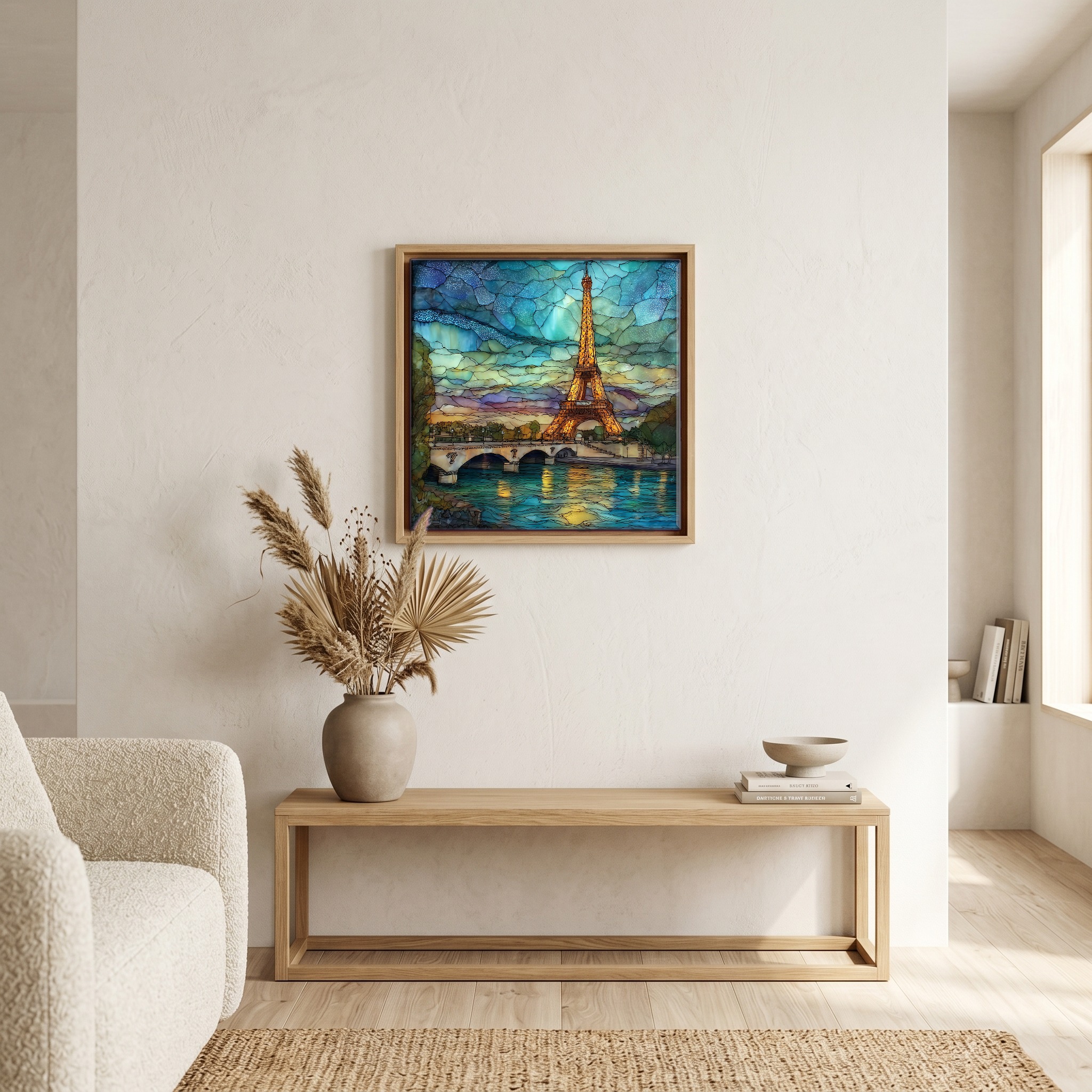
Above the bench, in a warm oak surround.
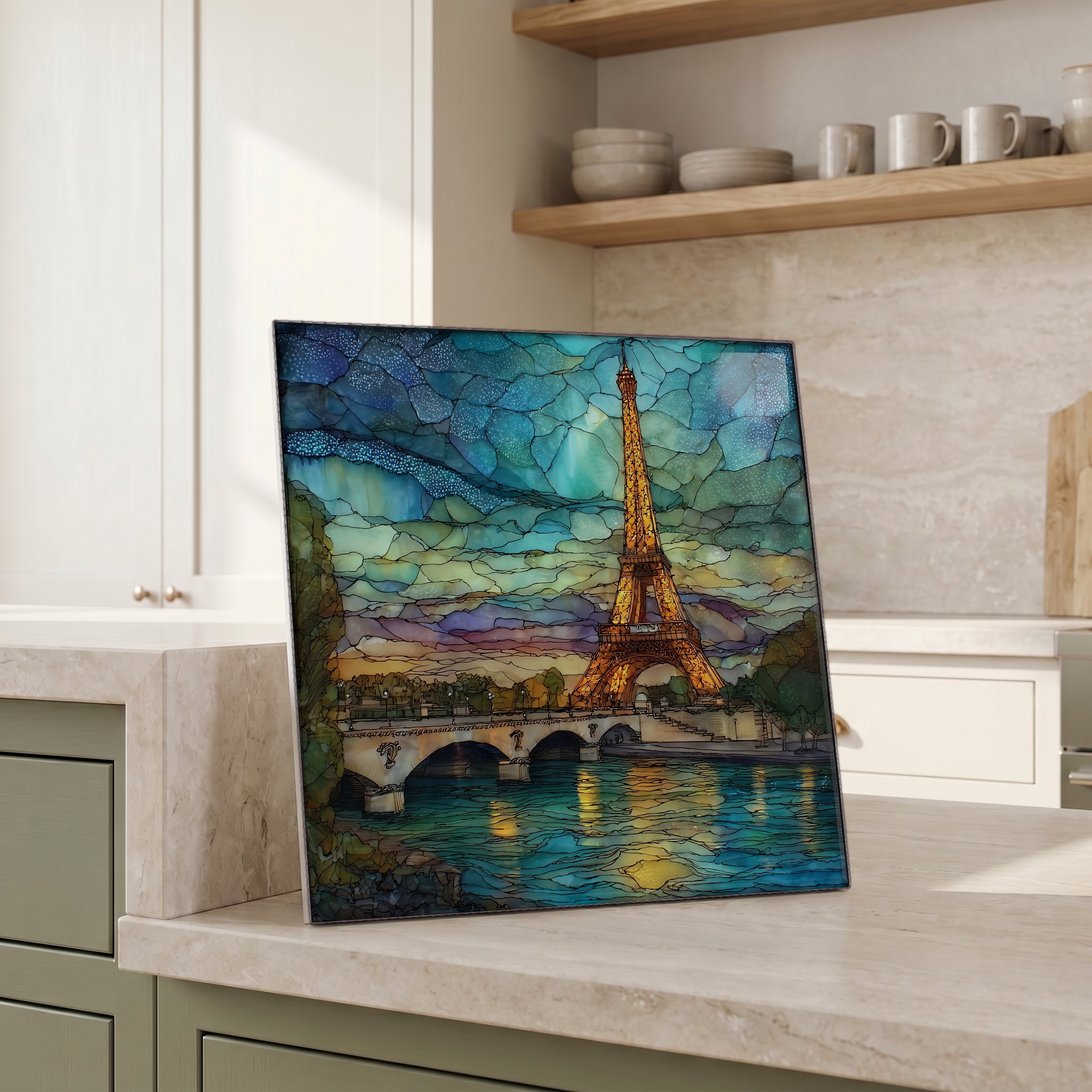
Beside the kettle, propped on the counter.
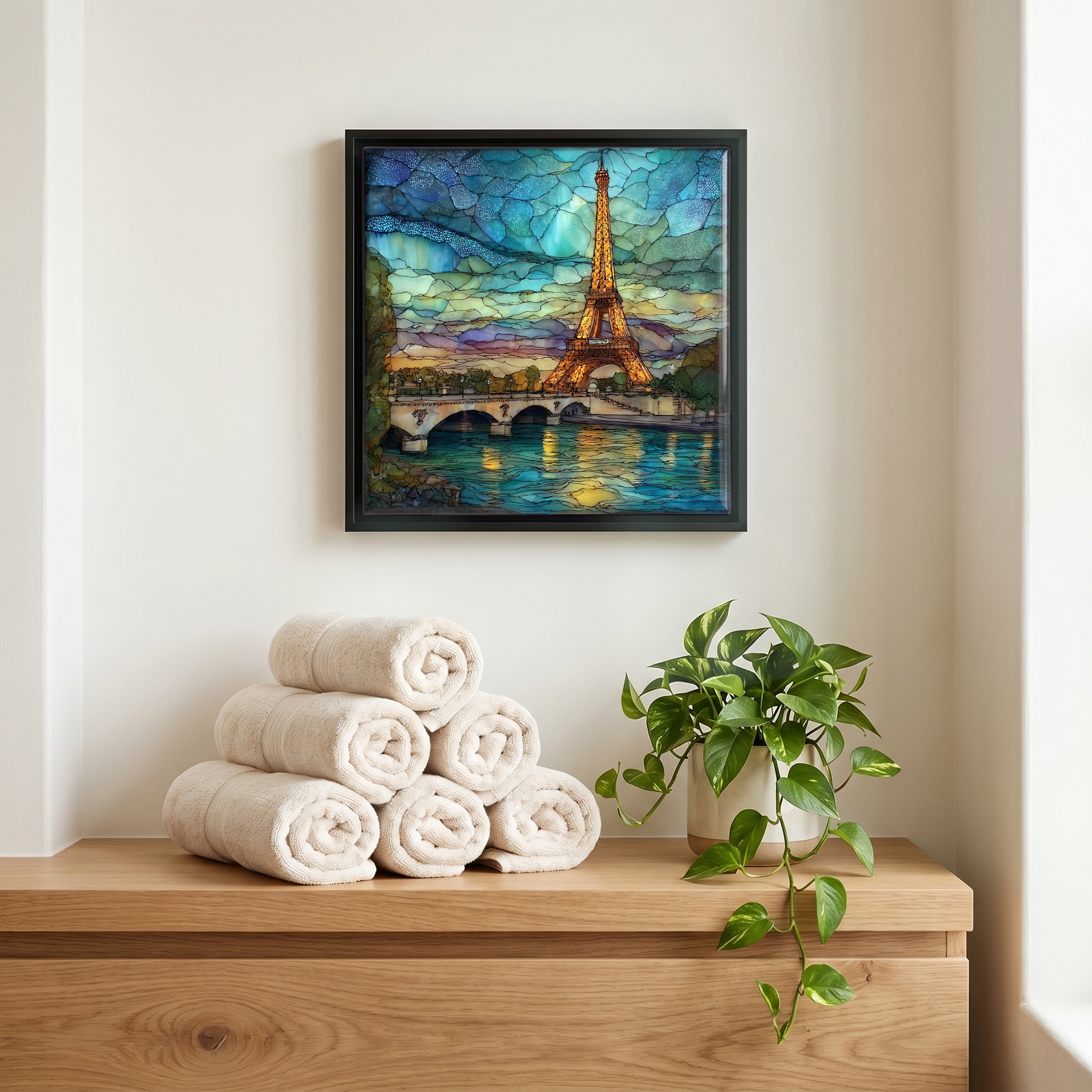
Above the linens, in a slim black surround.
On the nightstand, on a light oak stand.
On a picture ledge, where the light comes in.
a note from the studio

Three hundred and thirty metres of wrought iron above the Champ-de-Mars. The thing nobody tells you about the lattice: close up it is mostly sky, painted over by ironwork only where the structure asks for it. From the Trocadéro it reads as a single shape; from the lawn beneath the legs it reads as a cathedral of light. On the hour after sunset, for five minutes, twenty thousand bulbs flicker across the frame. The crowd does not say much during those five minutes.
from the studio
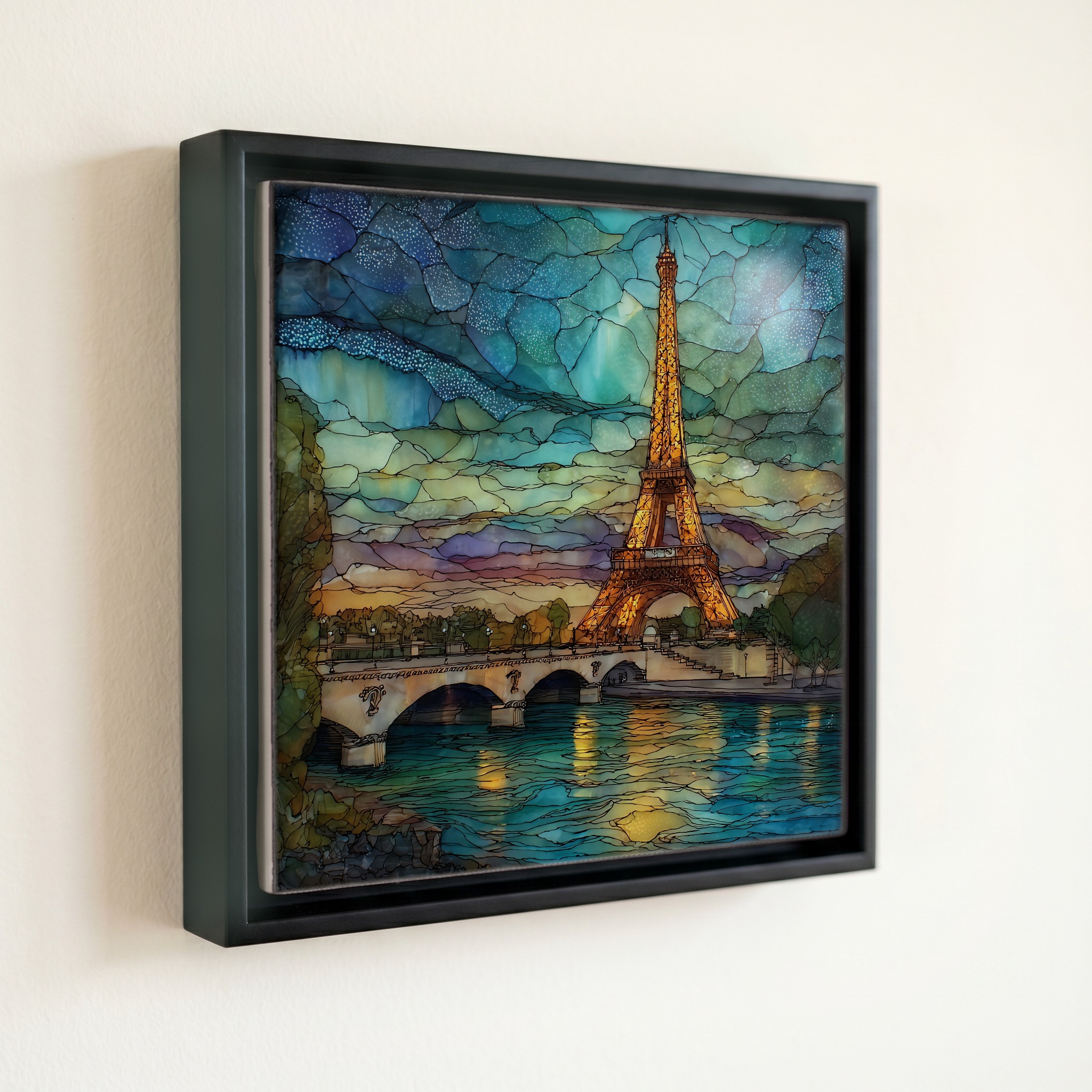
shown in a slim black floating frame · 6 × 6 in
— bring it home

Eiffel Tower, on ceramic.

Each tile is finished by hand in our Knoxville studio. Artwork is slowly infused into the ceramic surface under high heat and pressure, and rests beneath a thin glossy finish. The colour lives in the surface, not on top of it.

What kind of piece?
One tile — square or rectangle.
How big?
the popular one — counter, shelf, nightstand
6 × 6 in · 15 cm · 1.6 lb
Surface finish
A clear glossy finish — the artwork reads as if under resin. Ideal for show-pieces and framed wall art.
How it sits
A hidden cleat — sits ¼″ proud of the wall.
$58
Hand-finished and shipped from our studio at the foot of the Smokies. On your wall in about ten days.
size
6 × 6 in
15 cm
weighs
1.6 lb
solid in the hand
surface
ceramic, hand-finished
art rests beneath a thin glossy finish
from
Knoxville, TN
our family studio, at the foot of the Smokies
— start a Coaster Set

Pick any four 4-inch tiles — National Parks you've been to, a Smokies set, the four seasons of one place. $ for a set of , cork-backed, ready to live on the table.
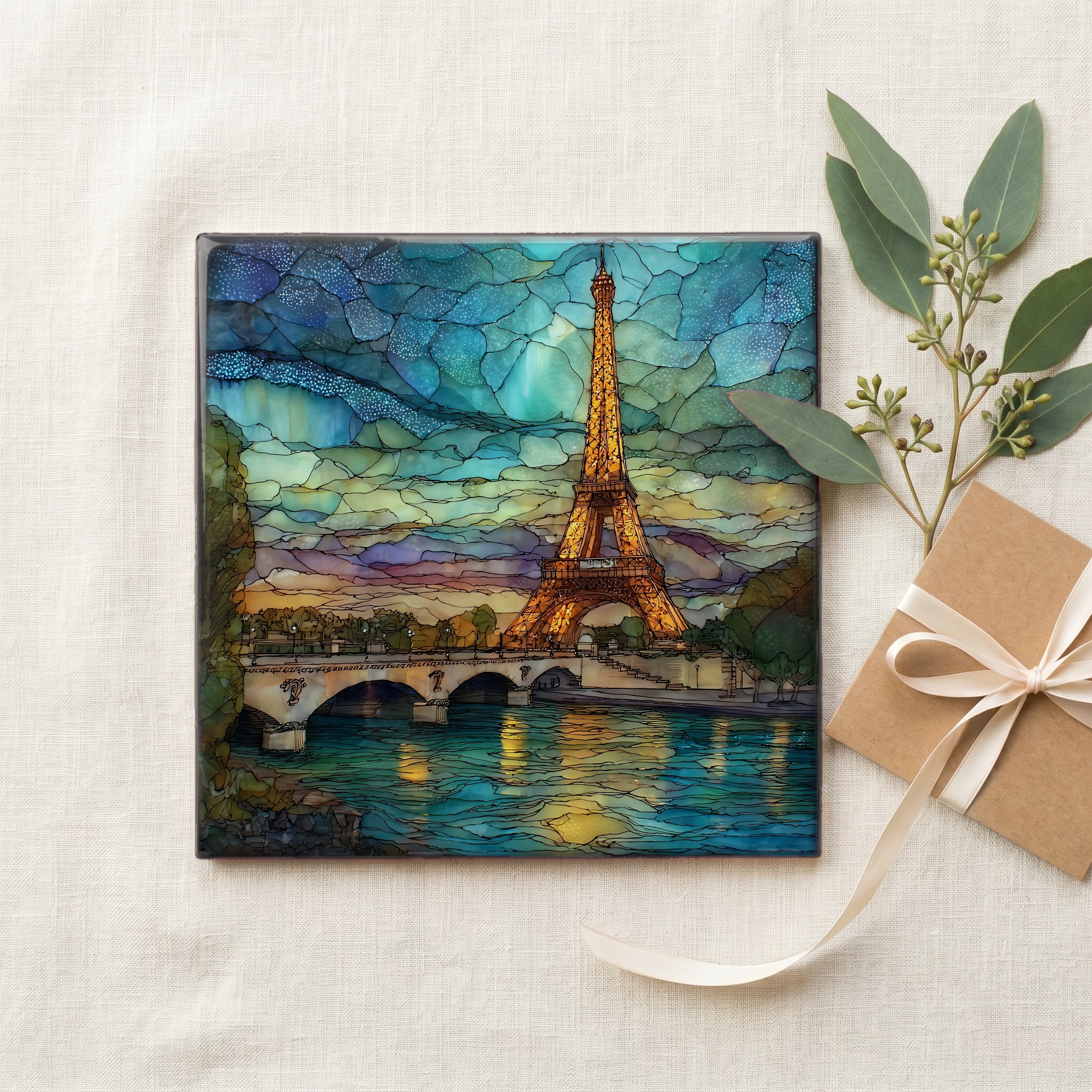
comes gift-ready
comes gift-ready

Each tile ships in a kraft box, tied with cream ribbon, with a handwritten note from the studio if you'd like to add one.
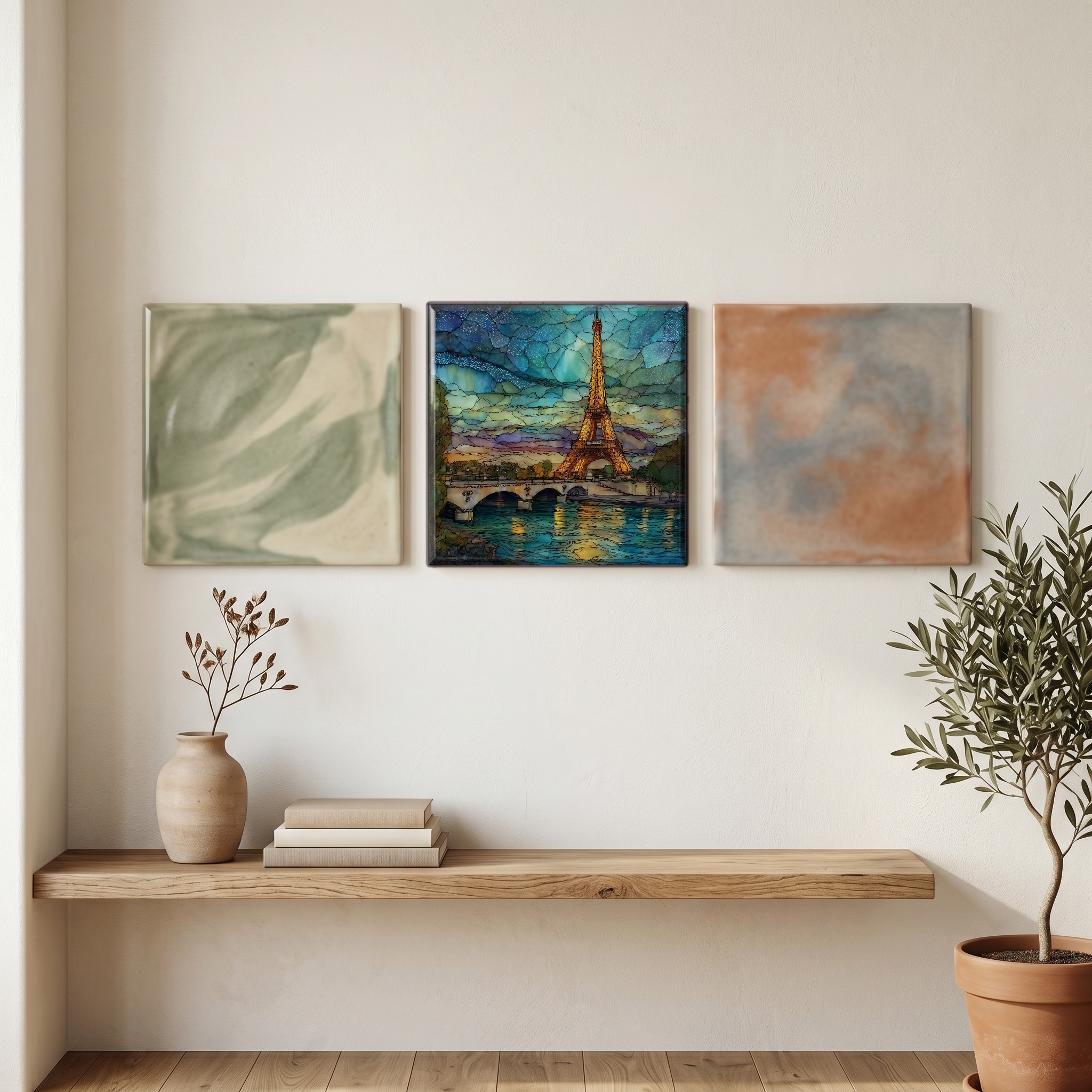
or build a grouping
or build a grouping

Three or five different vistas, hung together — a chapter of places you've been, or want to go.

about Eiffel Tower

The place, in three passes.

A little of what's known, in case you fall down the rabbit hole — or want to go see it yourself.
the place

The Eiffel Tower stands on the Champ-de-Mars, on the Left Bank of the Seine in Paris's 7th arrondissement. Gustave Eiffel's engineering firm designed it as the entrance arch for the 1889 Exposition Universelle, marking the centenary of the French Revolution. Originally 300 metres tall, antenna additions over the next century brought it to its current 330 metres. The structure carries about 10,100 tonnes of puddle iron across 18,038 individual pieces, held by roughly two and a half million rivets. Three lifts climb the legs to the first and second floors; a separate double-decker lift runs from the second to the top. The Société d'Exploitation de la Tour Eiffel has operated it under city concession since 1980.

the light

The tower has two different evening signatures. Through the day the brown paint (officially called 'Eiffel Tower brown' and reapplied every seven years) reads against whatever sky Paris is having. At dusk the structure switches on to a sodium-amber glow that holds through the night. On the hour, for five minutes, twenty thousand strobe bulbs sparkle across the lattice. The sparkle was installed for the 2000 millennium and made permanent in 2003. From the Trocadéro across the Seine, it reads as a single field; from underneath the legs it shatters into individual flashes.

the visit

The tower is open every day of the year. Lifts run from about 9:30 in the morning until late evening for the top, with a stair option to the second floor for visitors who want the slower way up. The first floor sits at 57 metres, the second at 116, and the summit at 276 metres. An adult lift ticket to the top runs about €29; the stair ticket is roughly half that. The Société d'Exploitation de la Tour Eiffel handles ticketing through toureiffel.paris; security screening at the perimeter fence adds about fifteen minutes most days, more on summer afternoons. The Champ-de-Mars beneath the tower is always free, and most photographers prefer it to the platforms.

where
France · 7th arrondissement, Paris
within
Champ-de-Mars
position
48.8584° N · 2.2945° E
the neighborhood

What's nearby.

A handful of named places within an hour's walk or short drive. Some we've already painted; some we will.
1 km NW
Trocadéro Gardens
esplanade and gardens
1 km SW
Pont de Bir-Hakeim
double-deck bridge
2 km E
Les Invalides
military complex and tomb of Napoleon
2 km NE
Pont Alexandre III
Beaux-Arts bridge
2 km NE
Arc de Triomphe
neoclassical triumphal arch
3 km E
Musée d'Orsay
art museum in a former rail terminus
N
Eiffel Tower
Trocadéro Gardens
Pont de Bir-Hakeim
Les Invalides
Pont Alexandre III
Arc de Triomphe
Musée d'Orsay
common questions

What people ask.

A few questions we get about Eiffel Tower — and about bringing the piece home.
about the place

Twenty thousand strobe bulbs were installed across the lattice for the Paris 2000 millennium celebration and made a permanent fixture in 2003. They flash for five minutes at the top of each hour, from dusk until the regular illumination shuts off, in addition to the steady amber lighting.

The tower stands 330 metres tall including its broadcast antenna, making it the tallest structure in Paris. It was 300 metres at completion in 1889; antenna additions across the twentieth and early twenty-first century brought it to today's 330.

Gustave Eiffel's engineering firm designed and constructed it for the 1889 Exposition Universelle, marking the centenary of the French Revolution. The detailed design work was led by Maurice Koechlin and Émile Nouguier; the architect Stephen Sauvestre added the decorative arches at the base.

The tower wears a custom shade called 'Eiffel Tower brown', a three-tone gradient that runs darker at the bottom and lighter at the top to read as a single colour against the Paris sky. It is repainted every seven years and uses about sixty tonnes of paint each cycle.

Stairs reach the first and second floors only. The climb is 674 steps from the esplanade to the second floor at 116 metres. The summit at 276 metres is reachable only by the dedicated lift that runs from the second level.

About seven million people visit annually, making it one of the most-visited paid monuments in the world. Roughly three quarters of visitors are international, and tickets are released online up to sixty days in advance through the official site.

The Trocadéro esplanade across the Seine is the classical view and gives the tower its full silhouette. For close-up frames, the Pont de Bir-Hakeim and the Rue de l'Université both line up the legs against the lattice with foreground architecture.

about the piece in your home

The Eiffel Tower is the city's universal shorthand; almost anyone with ties to Paris carries some version of it in their head. A Keepsake or Small with a handwritten note from the studio travels well as a host gift or a remembrance. The Medium reads strongly on a mantel or bookshelf.

The Voynich stained-glass and alcohol-ink language reads strongly in Parisian-classic interiors with a maximalist edge, in jewel-tone modern rooms, and against the warm neutrals of a French-country palette. It pairs well with brass, dark wood, and natural linen.

Yes. Parisian-Maximalist and the broader Dark Academia look both lean on landmark art as a focal piece, and a richly coloured Eiffel Tower fits both. It also works as the single graphic note in an otherwise minimalist Scandinavian room.

A single Large sits well above a console or a smaller sofa. Above a full-length sofa or a king bed, a four-tile Mural carries the wall better; for a feature wall in a foyer or stairwell, the nine-tile Mural is the studio's recommended scale.

Yes, in the Dura Satin or Matte finish. Both are scratch-resistant and suited to humid environments, and they can be installed directly on a backsplash or a shower wall. The Glossy finish is for framed wall art only.

A microfibre cloth with water is enough for everyday dust. For installed wall tiles in a kitchen or bathroom, a mild dish soap diluted in water lifts grease without affecting the surface. Avoid abrasive sponges and ammonia-based cleaners.

Yes. Every piece in the WenderVista atlas is curated and finished by Wender Studios in Knoxville, Tennessee. The Eiffel Tower in the Voynich stained-glass language is exclusive to this catalogue and is not licensed from any third party.

if this one stayed with you

A few you might also love.

Hand-picked by the eye that found Sorapis. Same air, same kind of quiet.