Wender·Vista
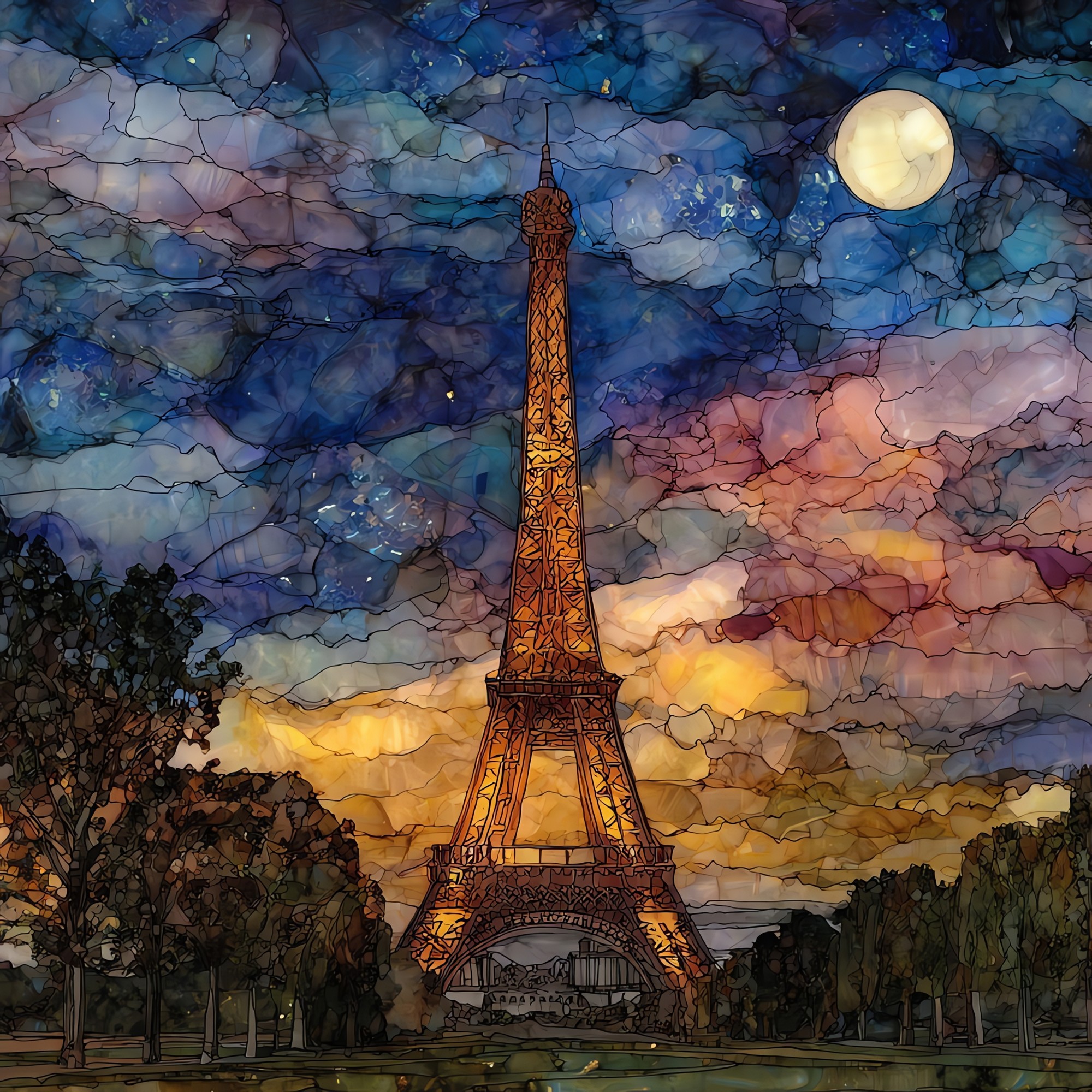
Eiffel Tower
shown on ceramic, 12-inch tileFrance
on the Champ de Mars, on the left bank of the Seine

Eiffel Tower

iron the evening turns to gold.

Where it lives

Not only on a wall.

A small tile on the nightstand catching the morning. A larger one above the fire. Yours, wherever you spend the slow hours.
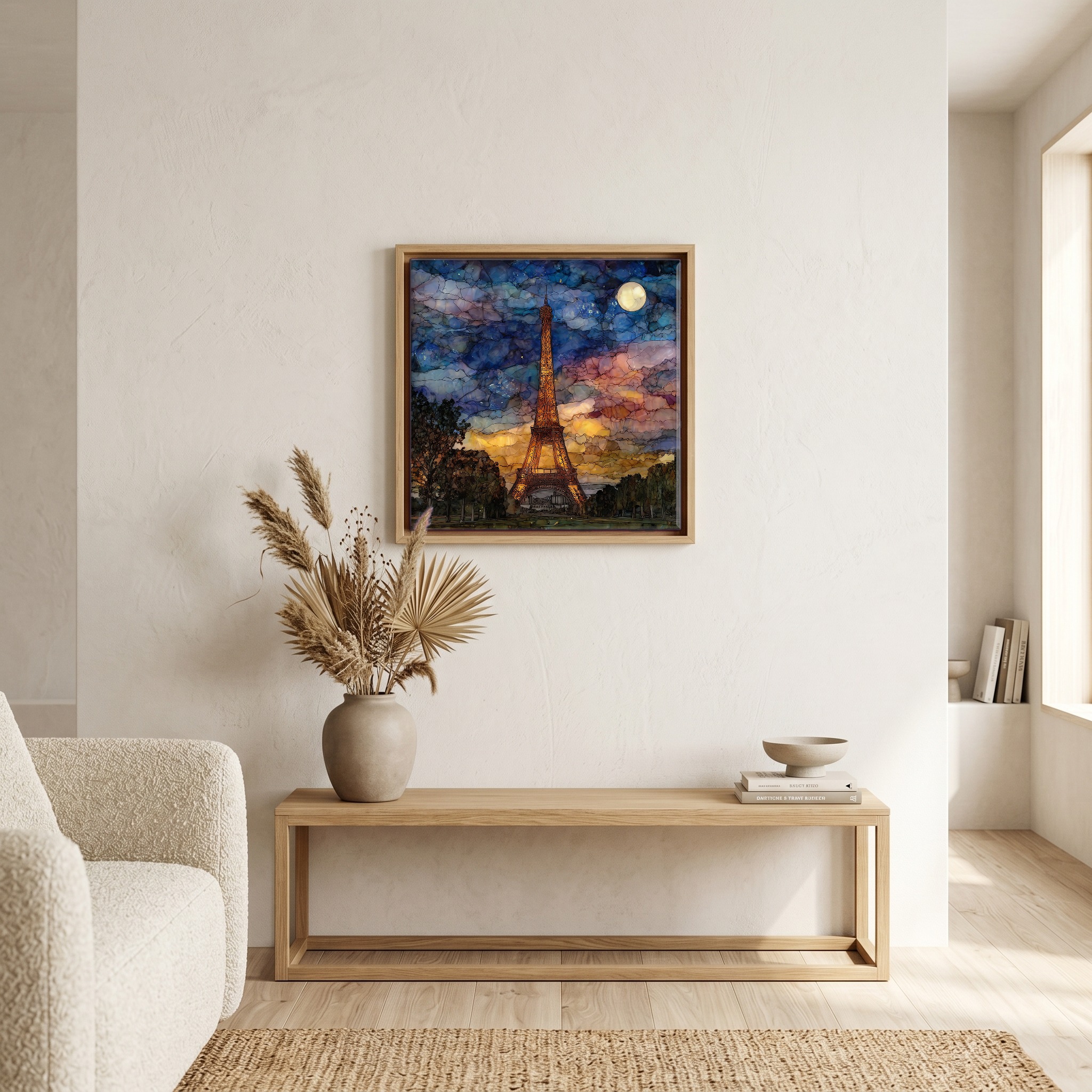
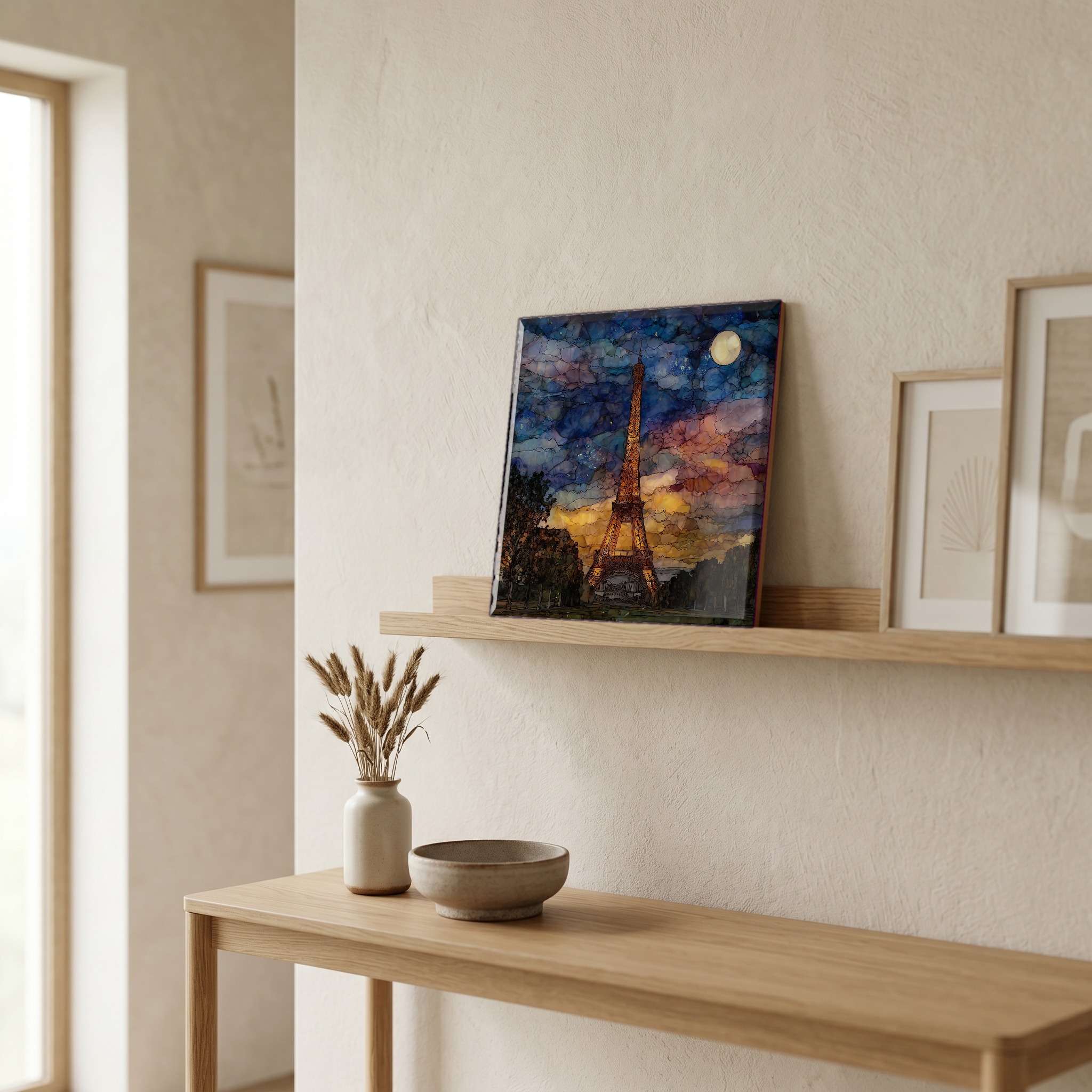
Above the bench, in a warm oak surround.
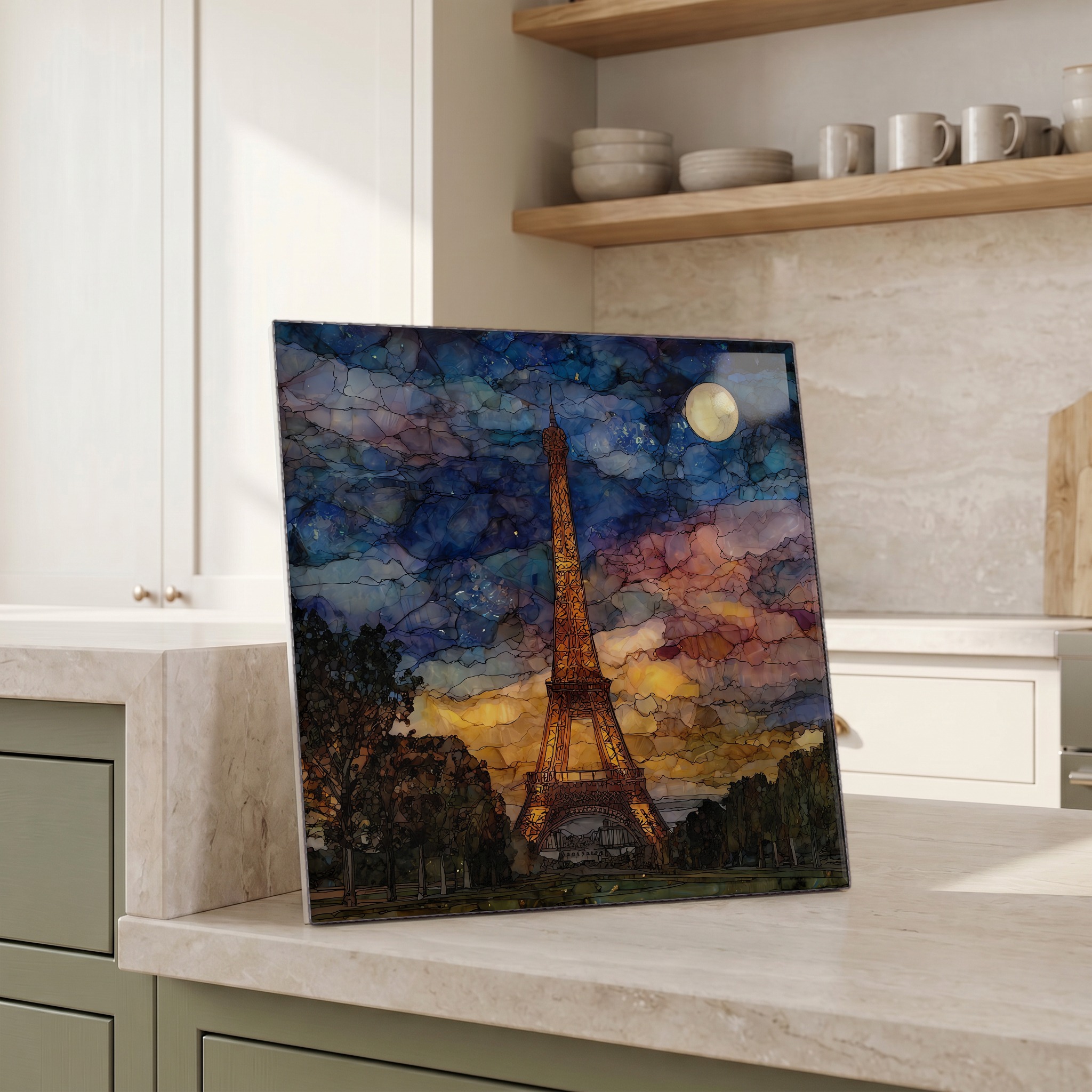
Beside the kettle, propped on the counter.
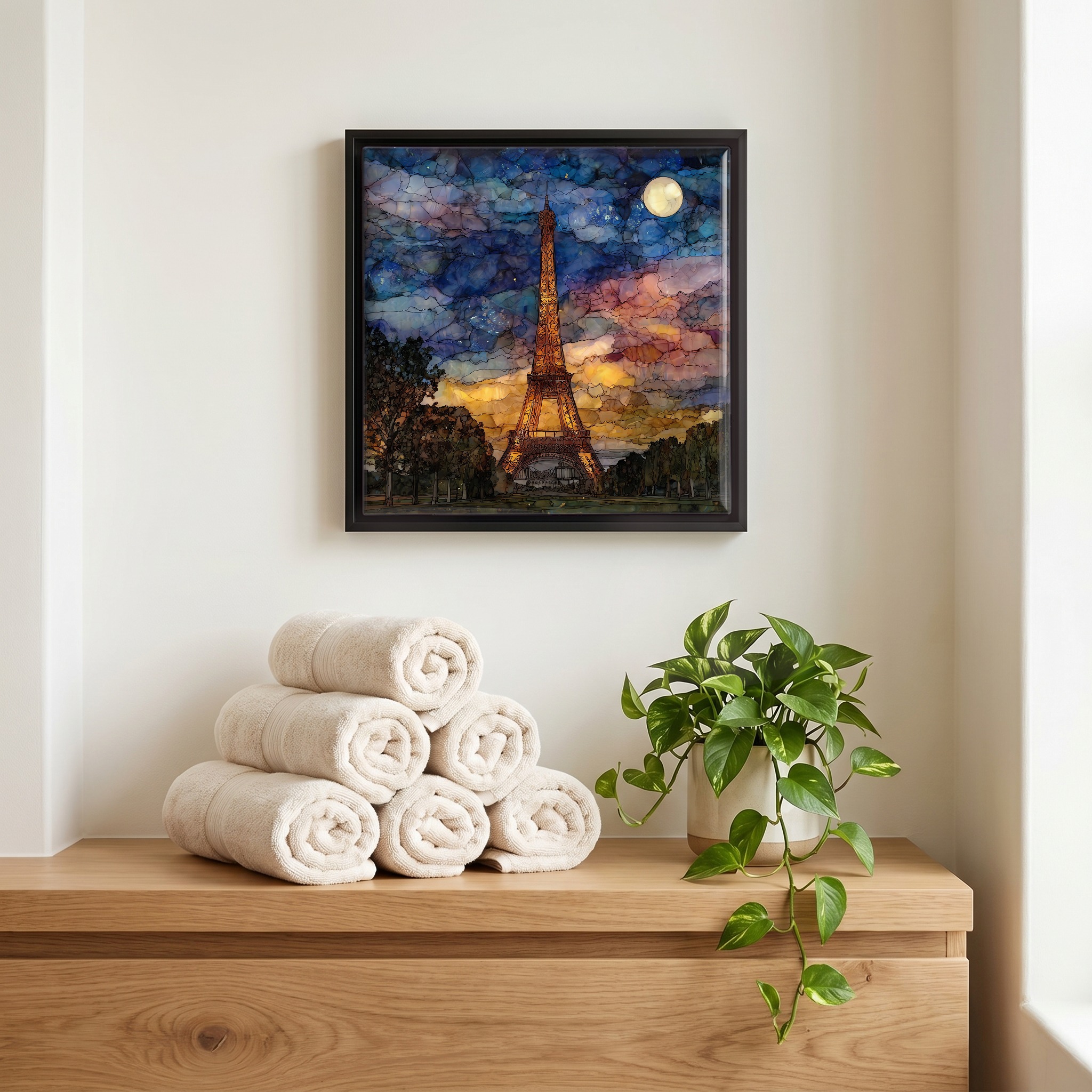
Above the linens, in a slim black surround.
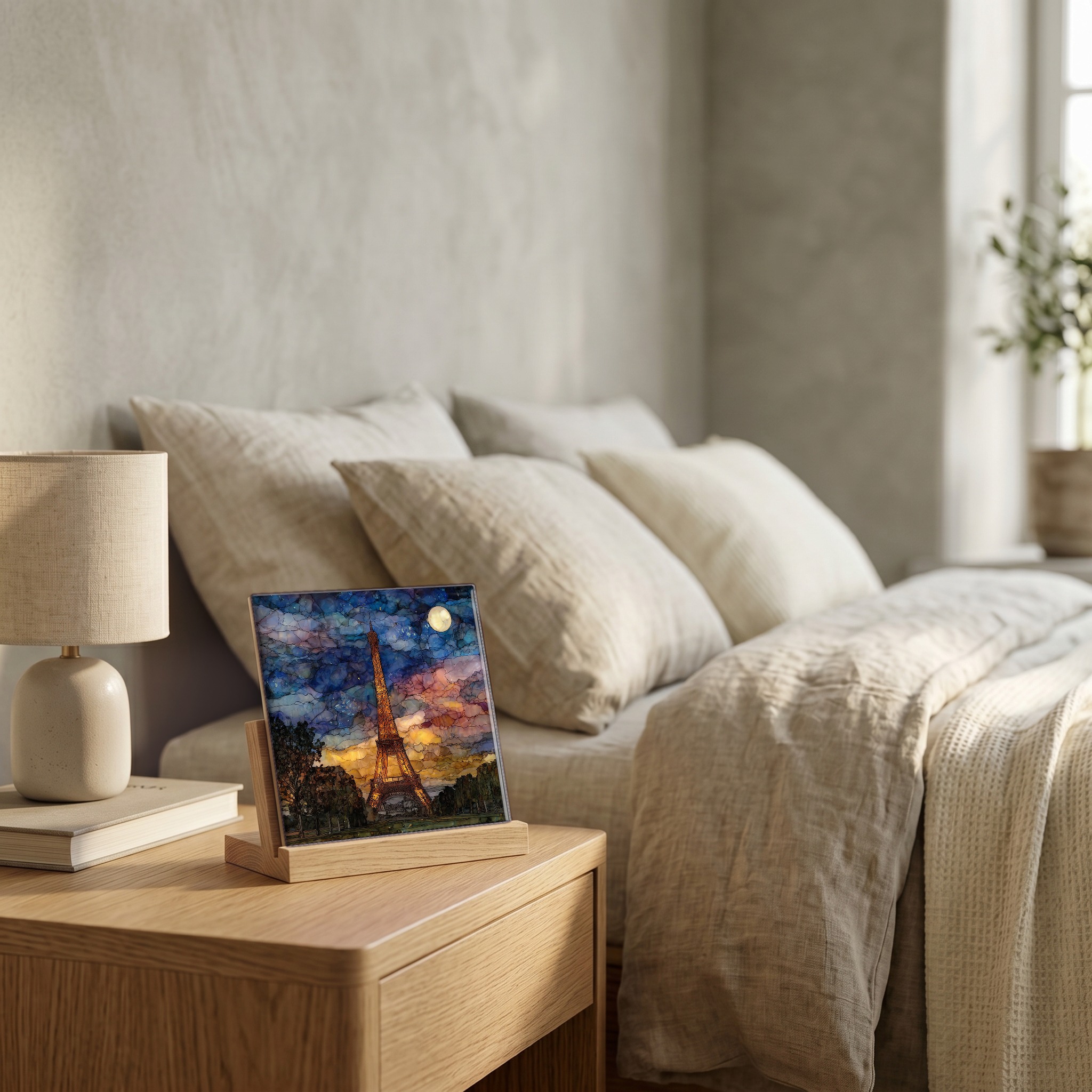
On the nightstand, on a light oak stand.
On a picture ledge, where the light comes in.
a note from the studio

Three hundred metres of iron lattice on the Champ de Mars, in the 7th, on the left bank of the Seine. Built for the 1889 World's Fair, meant to come down twenty years later; the radio antennas at the top earned it a reprieve. From a Métro window at dusk it appears for a second between buildings, then is gone. From the Trocadéro at the top of the hour after dark, twenty thousand bulbs sparkle for five minutes. There is no good angle on it that doesn't include other people taking the same photograph. That is part of seeing it.
from the studio
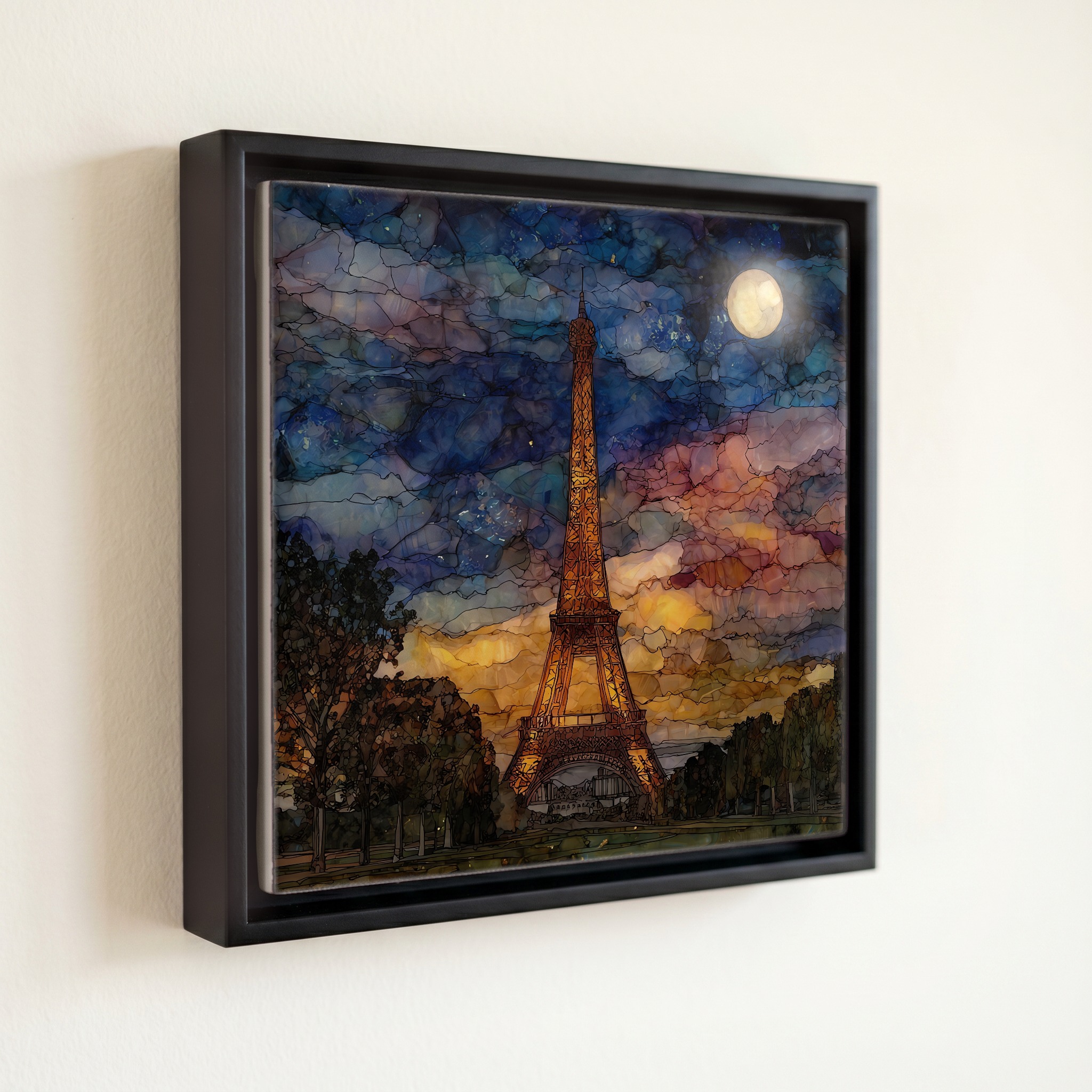
shown in a slim black floating frame · 6 × 6 in
— bring it home

Eiffel Tower, on ceramic.

Each tile is finished by hand in our Knoxville studio. Artwork is slowly infused into the ceramic surface under high heat and pressure, and rests beneath a thin glossy finish. The colour lives in the surface, not on top of it.

What kind of piece?
One tile — square or rectangle.
How big?
the popular one — counter, shelf, nightstand
6 × 6 in · 15 cm · 1.6 lb
Surface finish
A clear glossy finish — the artwork reads as if under resin. Ideal for show-pieces and framed wall art.
How it sits
A hidden cleat — sits ¼″ proud of the wall.
$58
Hand-finished and shipped from our studio at the foot of the Smokies. On your wall in about ten days.
size
6 × 6 in
15 cm
weighs
1.6 lb
solid in the hand
surface
ceramic, hand-finished
art rests beneath a thin glossy finish
from
Knoxville, TN
our family studio, at the foot of the Smokies
— start a Coaster Set

Pick any four 4-inch tiles — National Parks you've been to, a Smokies set, the four seasons of one place. $ for a set of , cork-backed, ready to live on the table.
comes gift-ready
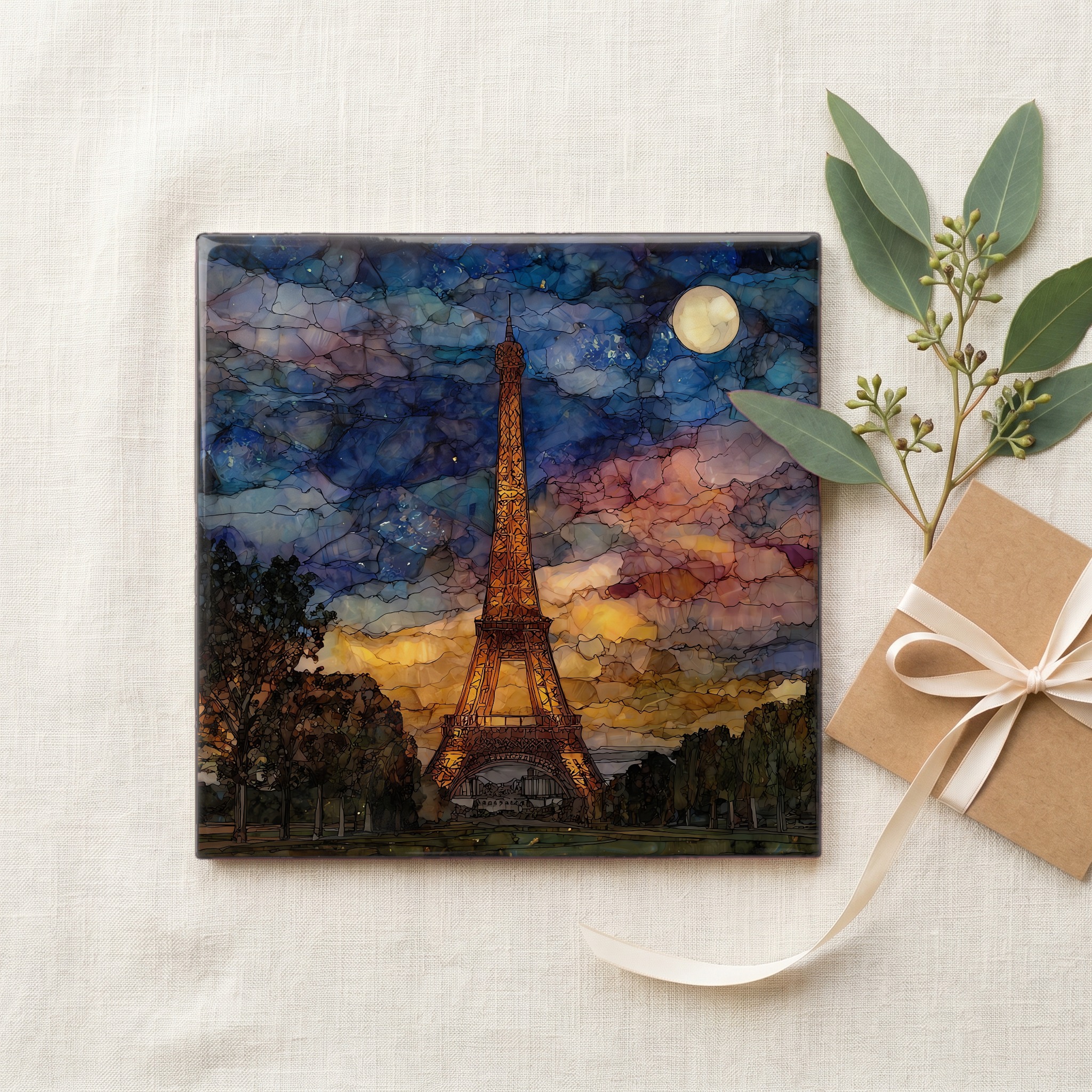
comes gift-ready

Each tile ships in a kraft box, tied with cream ribbon, with a handwritten note from the studio if you'd like to add one.
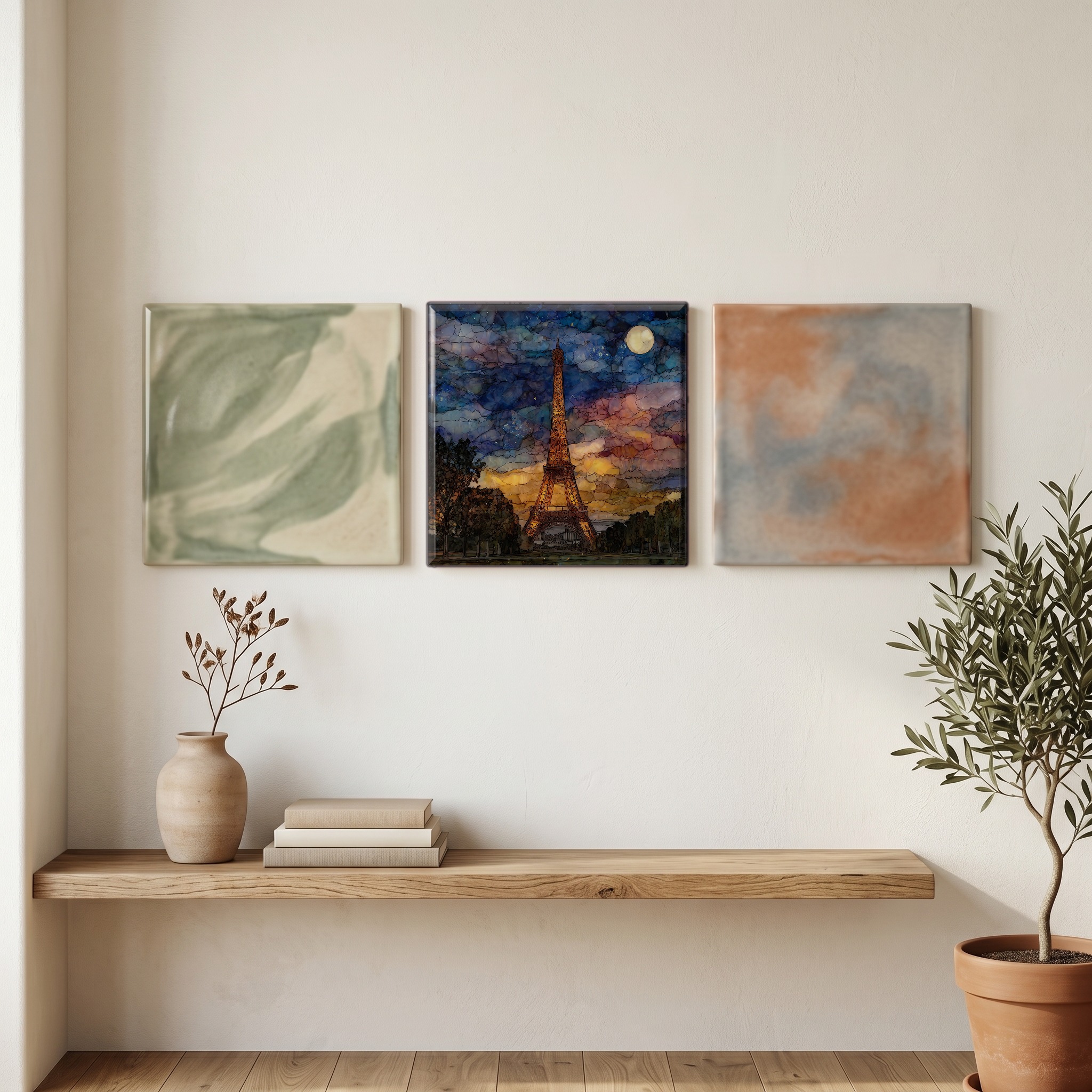
or build a grouping
or build a grouping

Three or five different vistas, hung together — a chapter of places you've been, or want to go.

about Eiffel Tower

The place, in three passes.

A little of what's known, in case you fall down the rabbit hole — or want to go see it yourself.
the place

The Eiffel Tower stands on the Champ de Mars in the 7th arrondissement of Paris, on the left bank of the Seine, opposite the Palais de Chaillot across the Pont d'Iéna. It was built between 1887 and 1889 as the entrance arch to the Exposition Universelle, the world's fair marking the centenary of the French Revolution. The wrought-iron lattice was designed by engineers Maurice Koechlin and Émile Nouguier at Gustave Eiffel's company, with architectural detail by Stephen Sauvestre. At 330 metres including its antennas, it was the tallest structure in the world for forty-one years, until the Chrysler Building in New York went up in 1930. It still rises higher than anything else in Paris.

the light

About twenty thousand small light bulbs were installed across the iron in time for the millennium and the tower has sparkled for five minutes on the hour, every hour after dark, ever since. The bronze-gold floodlight wash that lights the body of the structure is separate and steady; the sparkle is the bulbs flickering across the lattice. At sunset the iron itself goes briefly amber before the floodlights take over. The Trocadéro terrace across the Seine, set about three hundred metres back at slightly higher elevation, is the standard distance view; the close view from the Champ de Mars is what the tower is for.

the visit

Three levels are open to visitors. The first floor sits at 57 metres, the second at 116 metres, and the top deck at 276 metres — the highest publicly accessible viewpoint in the European Union. The stairs run only to the second floor, 674 steps from the ground; the top is lift-only. The tower has been open continuously since 1889 apart from a closure during the German occupation in the Second World War. Roughly seven million people visit each year, making it the most-visited paid monument in the world. Lines for same-day tickets at the south pillar can run two hours in summer; a timed-entry ticket booked online is the only way past the queue.

where
France · Paris, Île-de-France
position
48.8584° N · 2.2945° E
the neighborhood

What's nearby.

A handful of named places within an hour's walk or short drive. Some we've already painted; some we will.
at the lake
Champ de Mars
public park
1 km N
Trocadéro
viewing terrace
at the lake
Pont d'Iéna
bridge over the Seine
2 km E
Les Invalides
domed military complex
2 km NE
Arc de Triomphe
monumental arch
3 km E
Musée d'Orsay
art museum
3 km E
Louvre
palace museum
N
Eiffel Tower
Champ de Mars
Trocadéro
Pont d'Iéna
Les Invalides
Arc de Triomphe
Musée d'Orsay
Louvre
common questions

What people ask.

A few questions we get about Eiffel Tower — and about bringing the piece home.
about the place

It rises 330 metres including its antennas, or about 1,083 feet. The top observation deck sits at 276 metres, the highest publicly accessible point in the European Union. The tower was the tallest structure in the world for forty-one years, until the Chrysler Building went up in New York in 1930.

It was built between 1887 and 1889 as the entrance arch to the Exposition Universelle, the world's fair held in Paris to mark the centenary of the French Revolution. It was meant to be a temporary structure and to come down after twenty years; the radio antennas mounted at the top earned it a permanent reprieve.

The engineering was by Maurice Koechlin and Émile Nouguier at the company of Gustave Eiffel; the architectural detail, including the great lattice arches at the base, is by Stephen Sauvestre. Eiffel himself supervised construction and took the public credit. The structure is held together by roughly 2.5 million rivets.

About twenty thousand small bulbs are mounted across the iron lattice and flicker for five minutes on the hour, every hour after dark, until 1 AM. The installation went up for the millennium celebration on the last night of 1999 and has run nightly since. The steady bronze-gold light on the body of the tower is a separate set of floodlights.

Roughly seven million people visit each year, making it the most-visited paid monument in the world. Lines at the south pillar in summer can run two hours; a timed-entry ticket booked online avoids the queue. The tower has been open continuously since 1889, apart from a closure during the German occupation in the Second World War.

The current colour is a yellow-brown known officially as Eiffel Tower brown, applied in three subtly graduated shades from base to top so the structure reads as evenly toned against the Paris sky. It is repainted by hand every seven years. A return to the original 1907 reddish-brown is in progress.

The Trocadéro terrace across the Seine sits about three hundred metres north at slightly higher elevation and gives the standard postcard view. The Champ de Mars to the south, directly below the tower, is where people picnic. Distant glimpses appear from the upper floors of Montparnasse and along the Pont Alexandre III.

about the piece in your home

It's been a meaningful gift for many of our customers with ties to the city. The Eiffel Tower carries Paris for almost everyone — for some it's a year abroad, for others a honeymoon, for others a parent who lived there. A Coaster or a Small with a handwritten note from the studio carries well.

The piece holds its own in Parisian Modern, French Eclectic, and Jewel-tone Maximalist interiors. The dark iron register of the lattice reads well against cream and stone walls, against velvet upholstery in deep tones, and on a moody feature wall. It is not a coastal piece and it is not a minimalist piece.

Travel-themed wall art with European subjects has held steady in design publications for several years, with Parisian and Italian scenes most cited. A single Medium above a console, or a Triptych across a wider wall, puts the room in that conversation without leaning on a poster-shop aesthetic.

Above a standard three-seat sofa, a single Large works as the focal point; a four-tile Mural fills the wall edge to edge. Above a narrow console, a Medium or a Triptych is the cleaner answer. A nine-tile Mural is the right choice for a stairwell or a tall entryway.

Yes. The Dura Satin and Matte finishes are scratch-resistant and rated for vertical installation in wet rooms — backsplashes, shower walls, powder rooms. The Glossy finish is for framed wall art and dry settings. Choose the finish first; the artwork itself is the same in every option.

A microfibre cloth and water is enough. The colour is slowly infused into the ceramic surface under high heat and pressure and lives beneath a thin glossy finish, so it does not chalk, fade in sunlight, or rub off with handling. Skip household cleaners and abrasive pads.

Yes. Every WenderVista piece is made in our Knoxville, Tennessee studio under Reid Wender's direction. We don't license the work and we don't reproduce other artists' images. The studio is a single eye and a single set of hands.

if this one stayed with you

A few you might also love.

Hand-picked by the eye that found Sorapis. Same air, same kind of quiet.