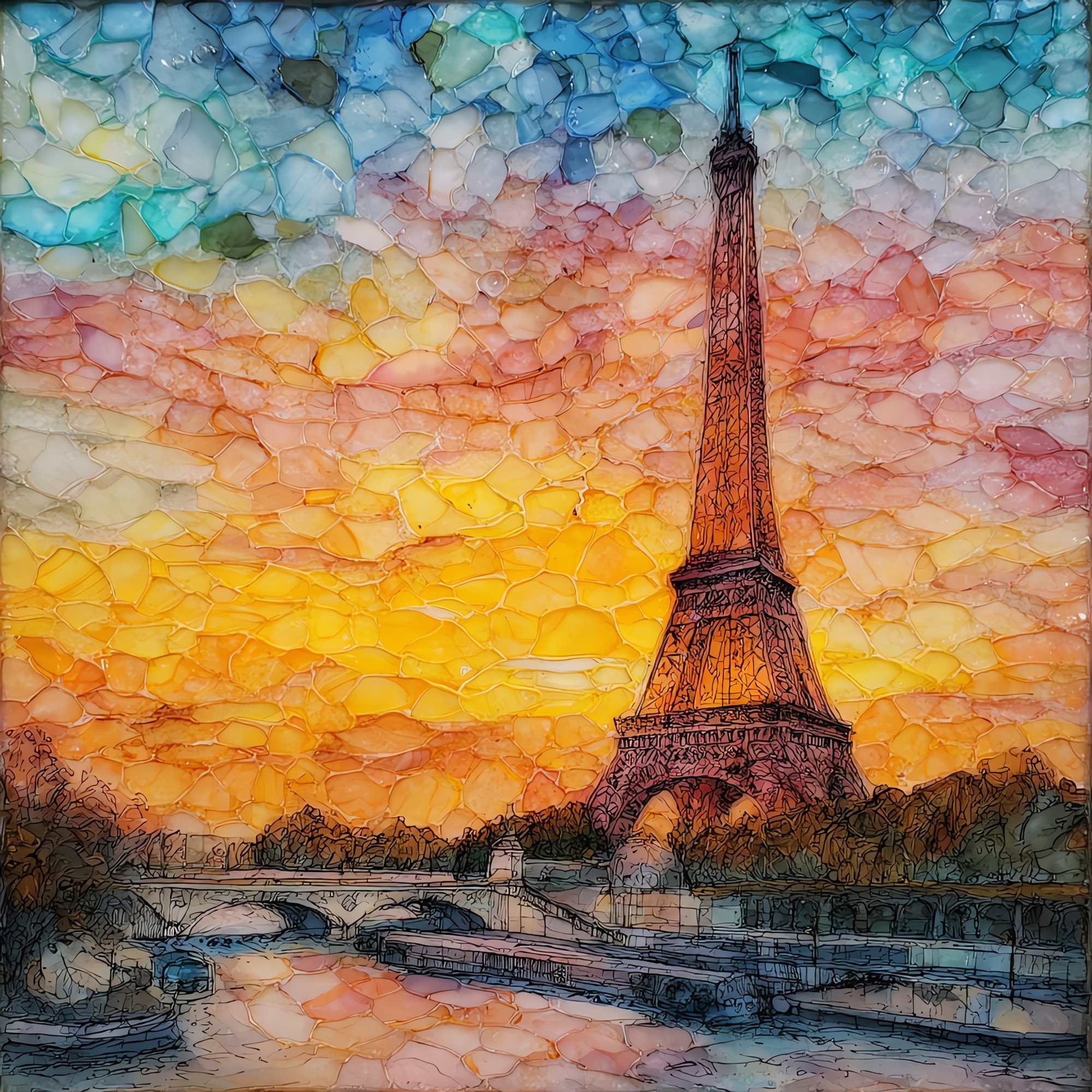
Eiffel Tower
— the lattice the evening hangs from.
Not only on a wall.
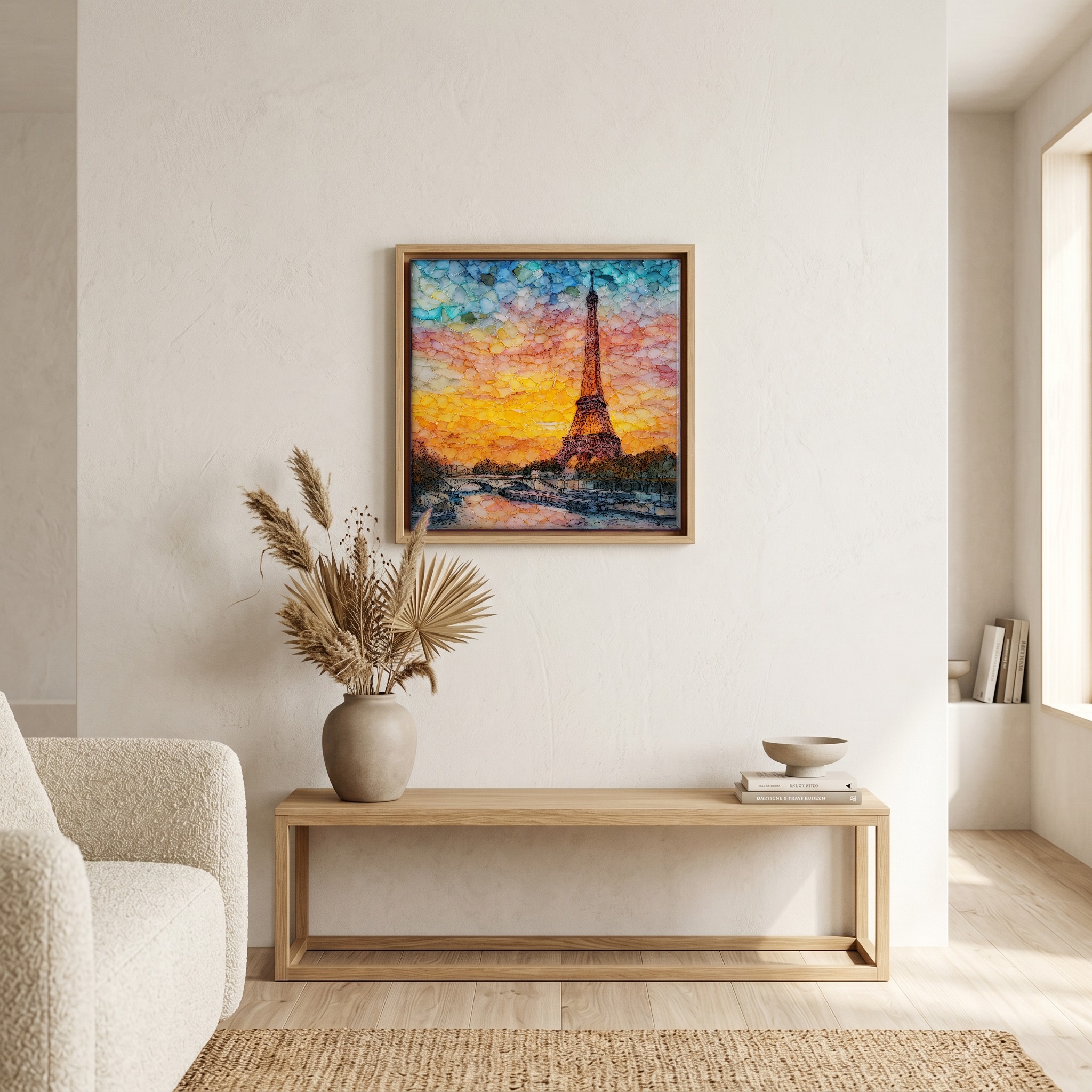
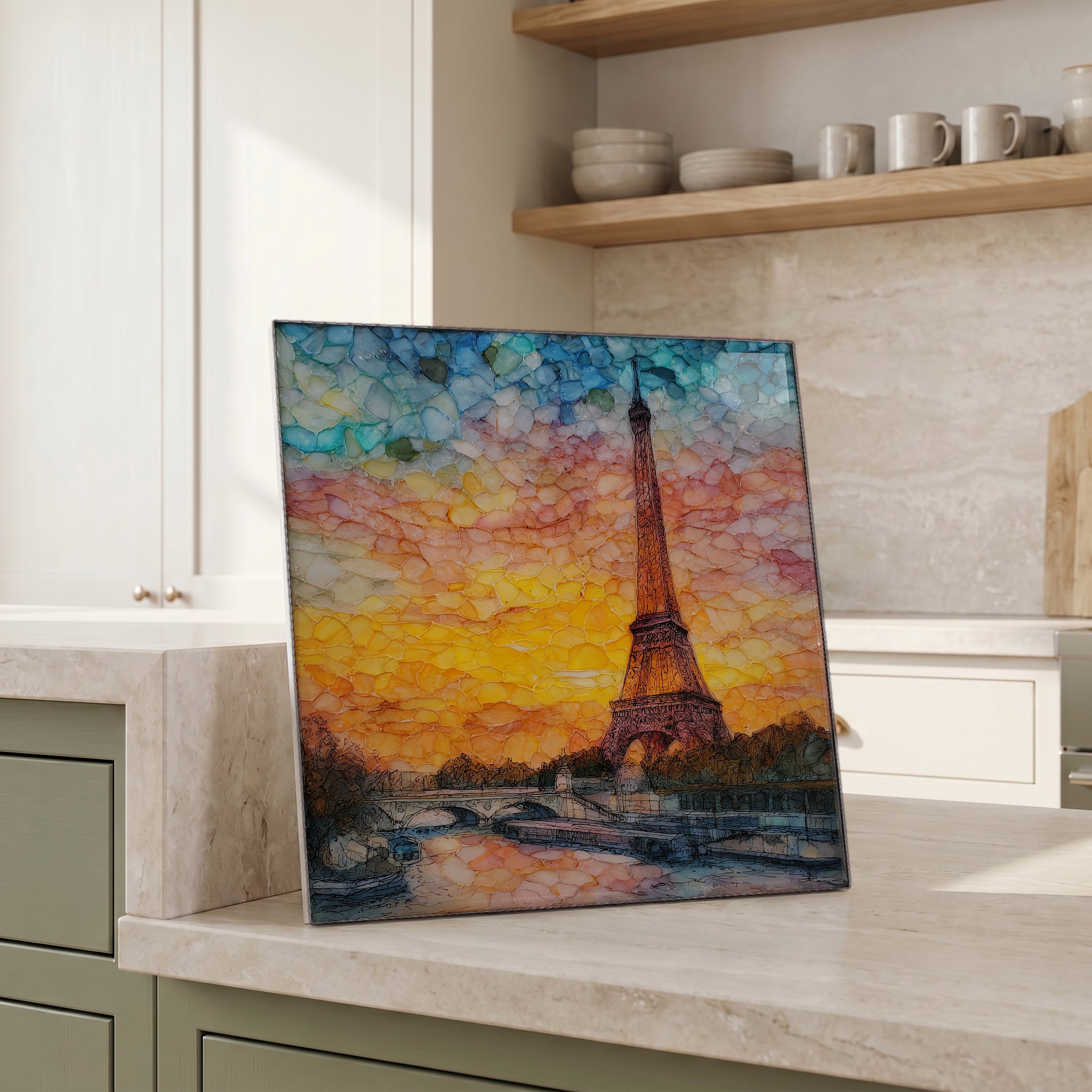
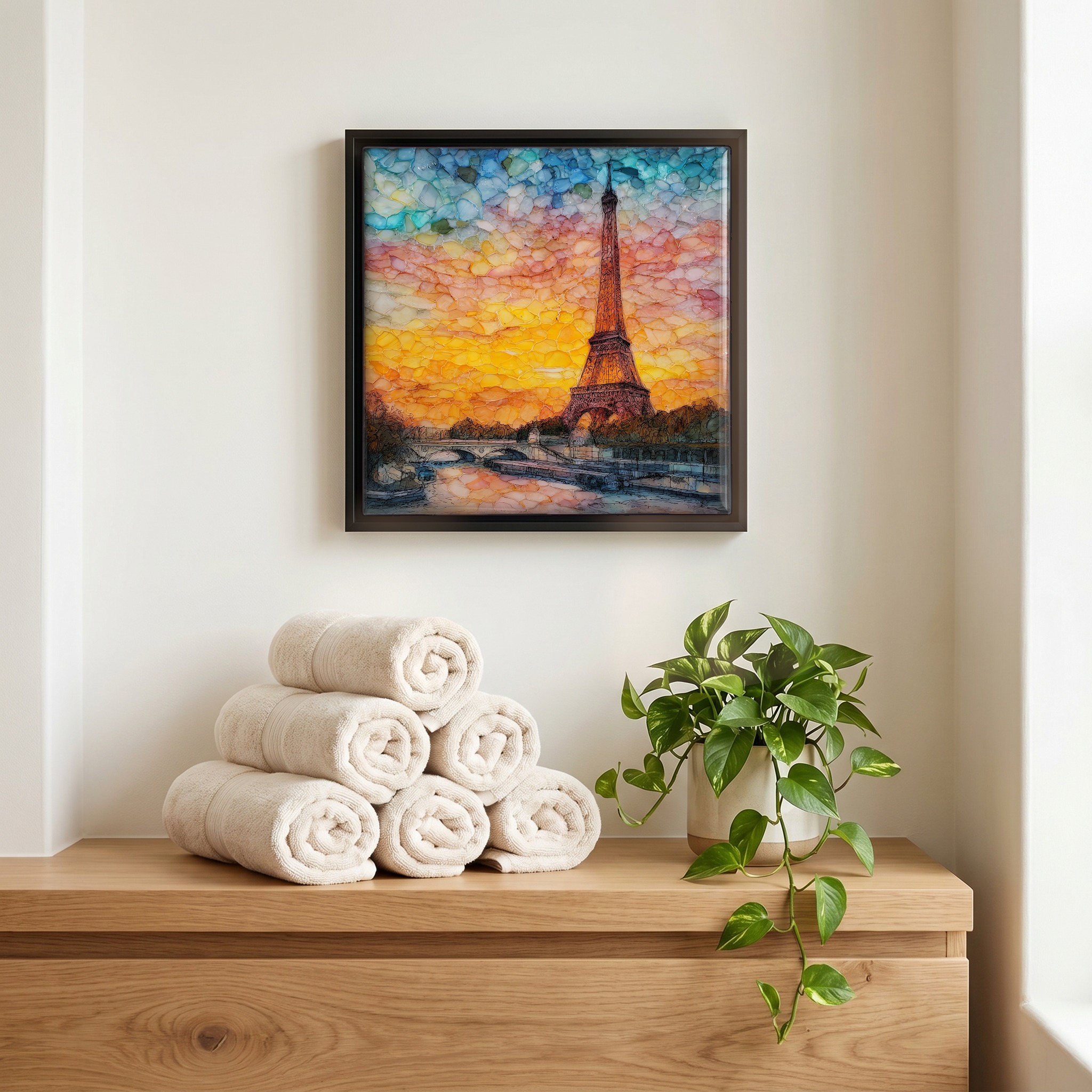
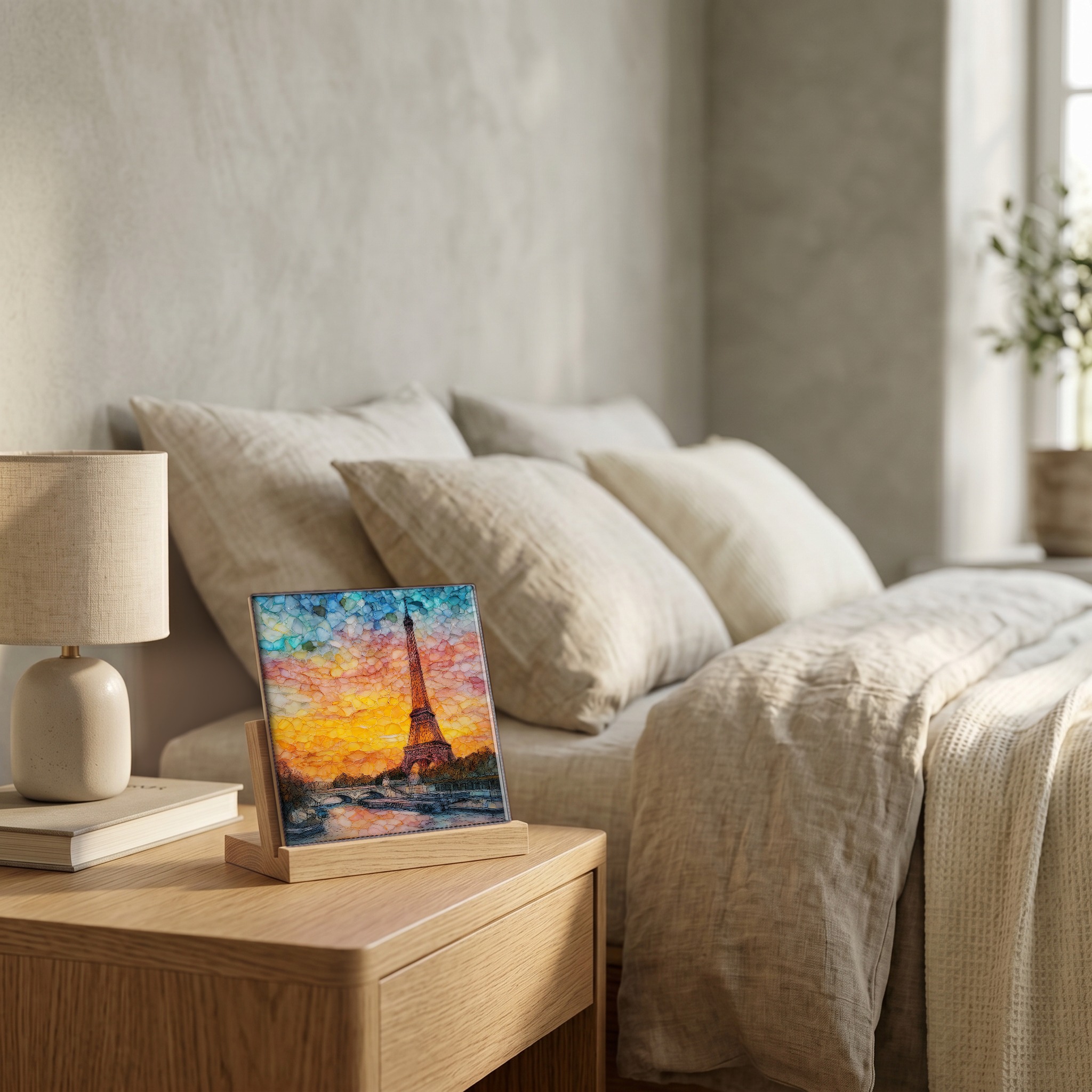
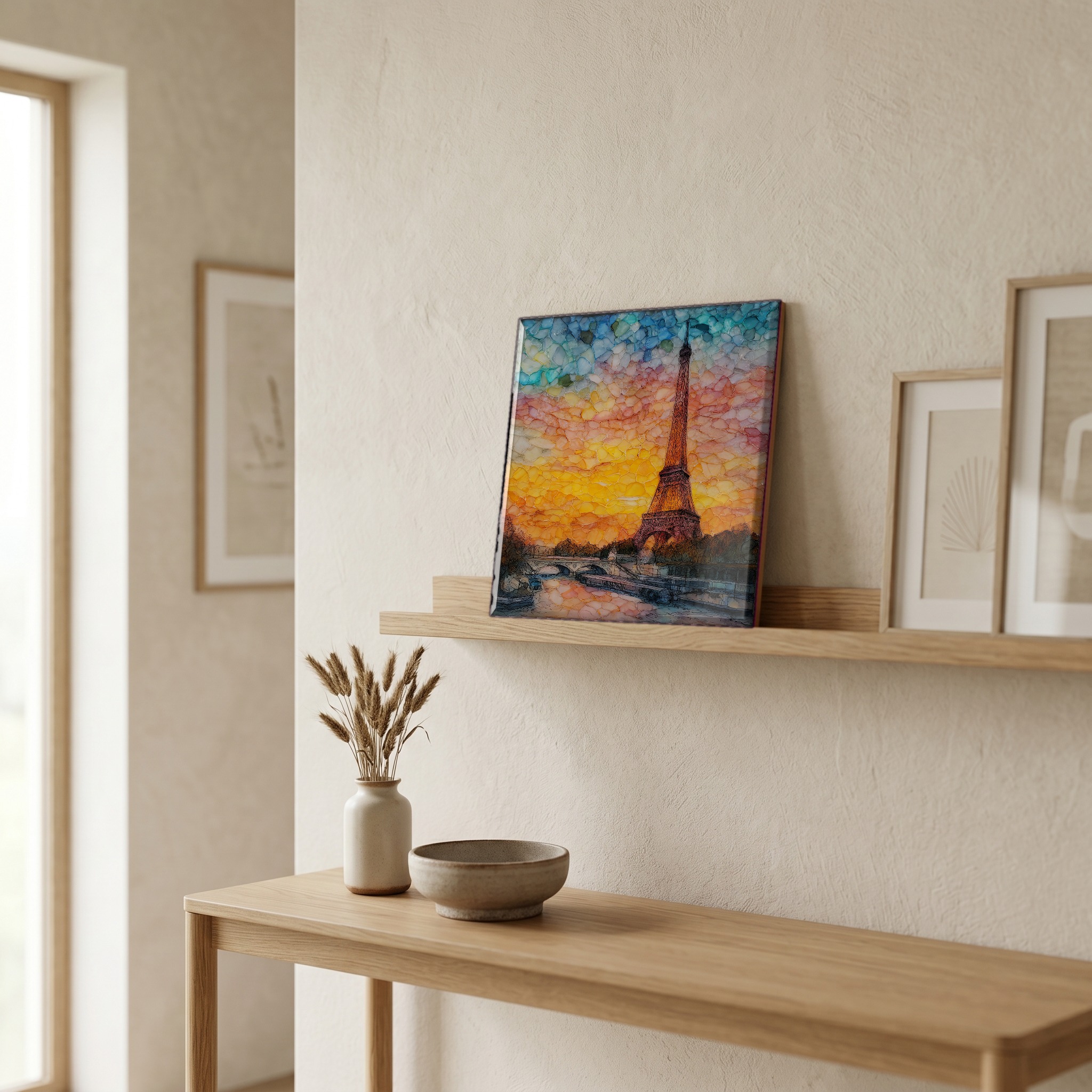
“Three hundred metres of wrought iron above the Champ de Mars. Built for the 1889 World's Fair and meant to come down after twenty years; it stayed because the engineers found a way to make it useful as a radio tower. The current paint is a custom three-tone brown, darker at the base and lighter at the top so the upper levels read against the sky. After sundown the gold lighting comes on and stays on, and for five minutes at the top of every hour, until one in the morning, the whole lattice sparkles. The closer you walk to it, the less of it you can see in a single frame.
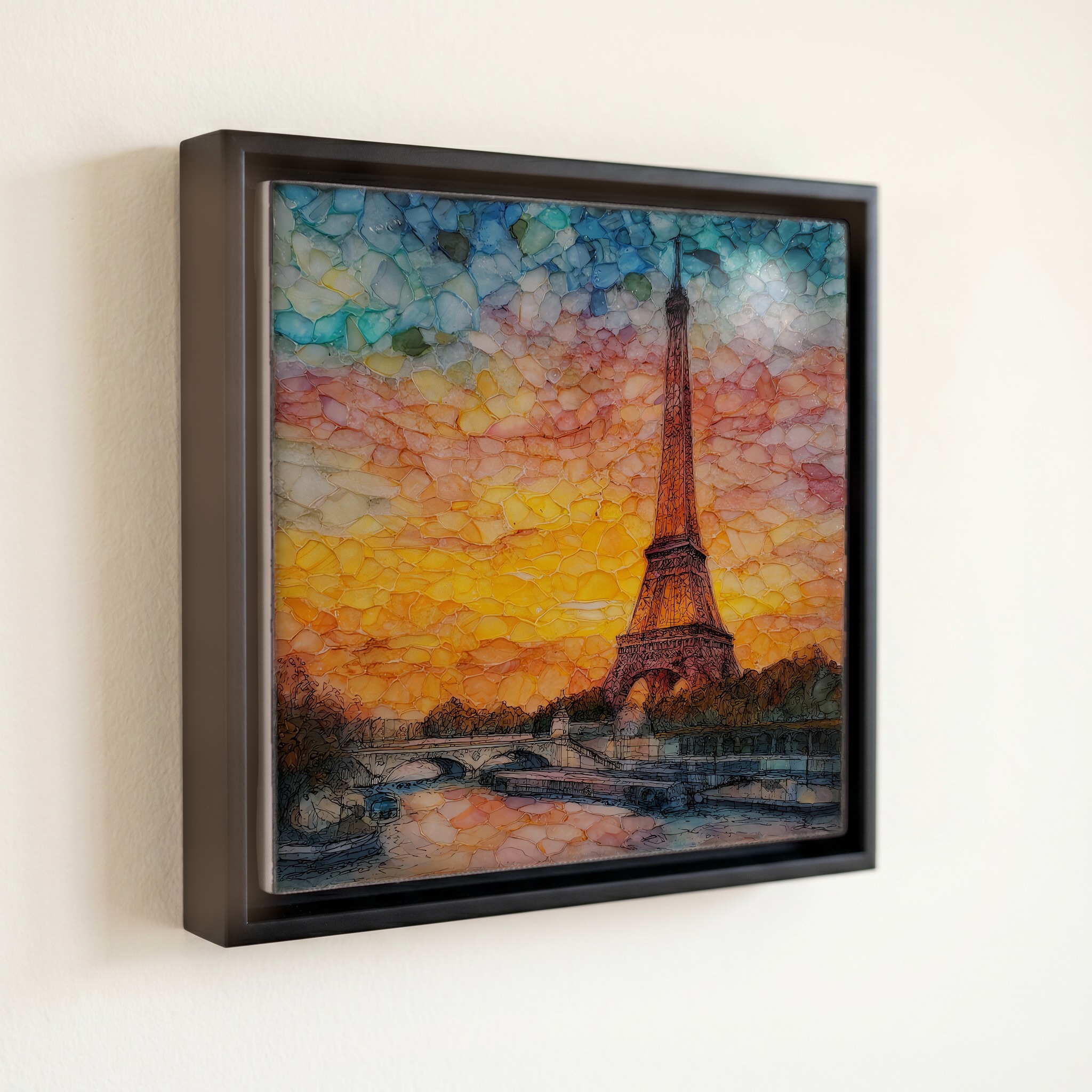
Eiffel Tower, on ceramic.
Each tile is finished by hand in our Knoxville studio. Artwork is slowly infused into the ceramic surface under high heat and pressure, and rests beneath a thin glossy finish. The colour lives in the surface, not on top of it.
Pick any four 4-inch tiles — National Parks you've been to, a Smokies set, the four seasons of one place. $ for a set of , cork-backed, ready to live on the table.
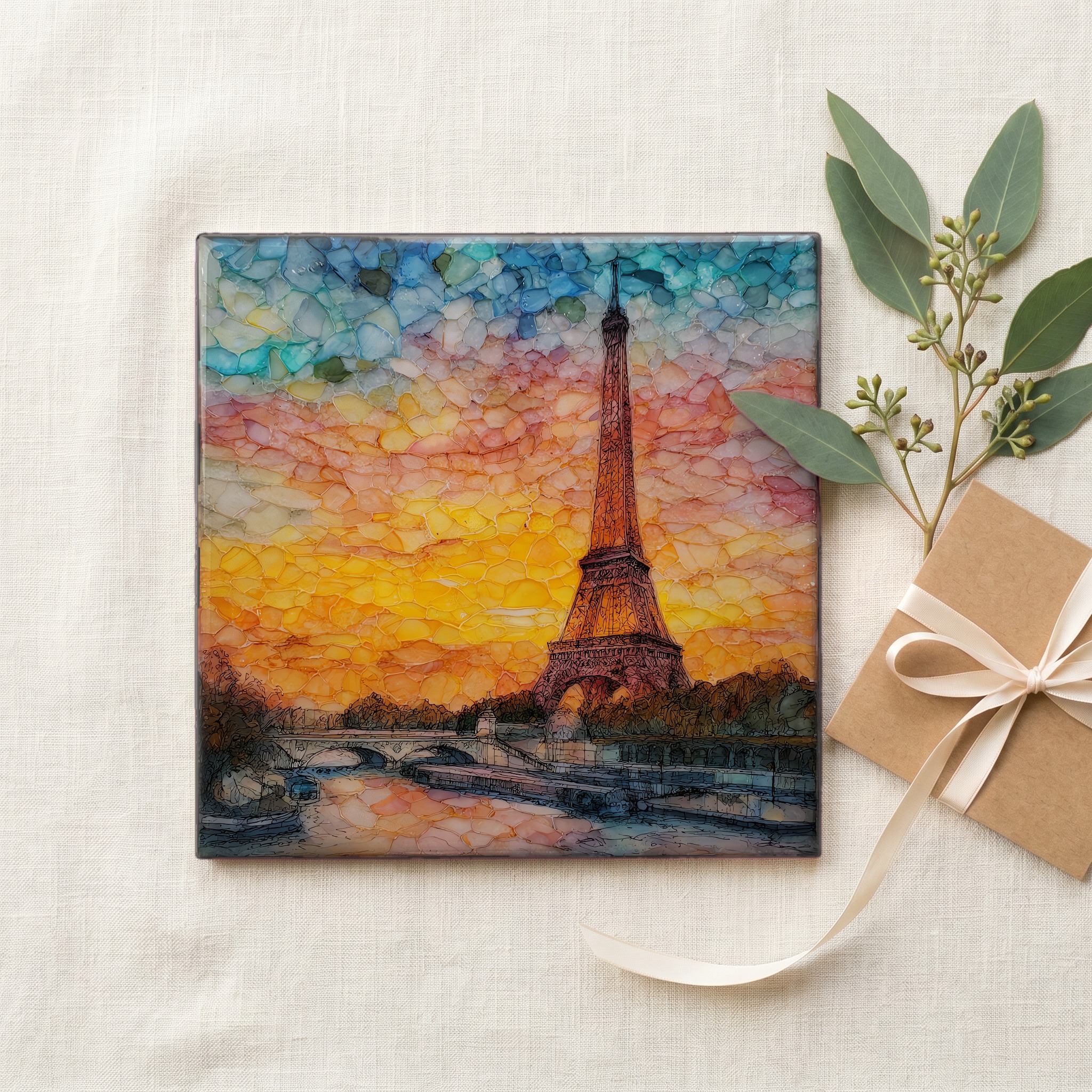
Each tile ships in a kraft box, tied with cream ribbon, with a handwritten note from the studio if you'd like to add one.
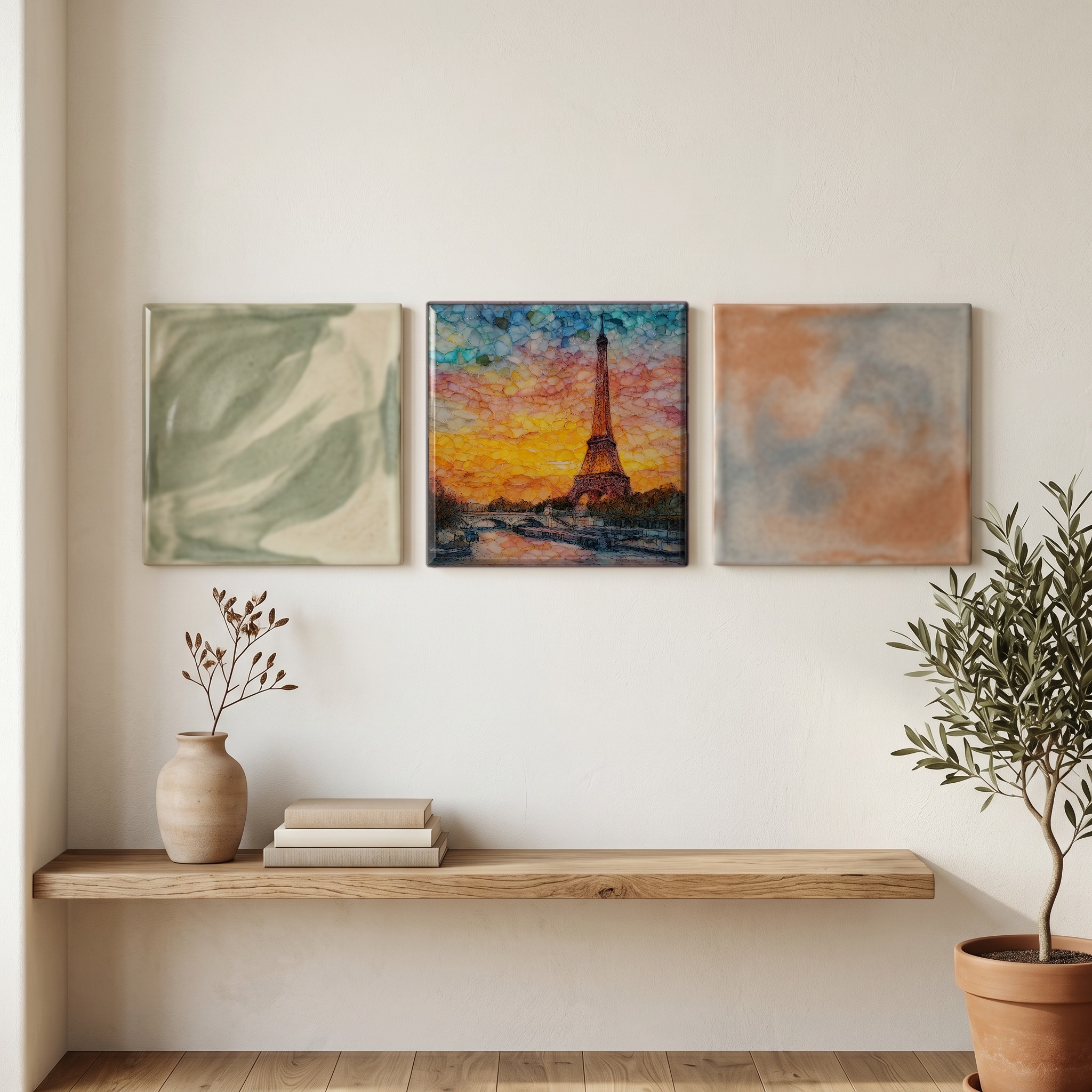
Three or five different vistas, hung together — a chapter of places you've been, or want to go.
The place, in three passes.
The Eiffel Tower stands on the Champ de Mars, in the seventh arrondissement of Paris, on the Seine's left bank. Designed by engineers Maurice Koechlin and Émile Nouguier and the architect Stephen Sauvestre, working in the office of Gustave Eiffel, it was built between 1887 and 1889 as the entrance arch to the Exposition Universelle marking the centenary of the French Revolution. Three hundred metres of wrought-iron lattice, originally the tallest structure in the world for forty-one years until the Chrysler Building in New York went up in 1930, and the tallest in France until the Millau Viaduct opened in 2004. The base is reached on foot from the Pont d'Iéna; the Trocadéro métro is the most-used arrival from across the Seine.
The tower's night-time profile is its second life. The standard golden illumination, installed for the 1985 redesign by Pierre Bideau using 336 sodium projectors mounted on the structure itself, switches on at sunset and stays on. For five minutes at the top of every hour, until one in the morning, twenty thousand small white lights flash across the lattice; the sequence was added for the millennium and made permanent in 2003. The bronze-brown paint absorbs the warm cast, so the tower reads gold rather than amber from a distance. The Trocadéro esplanade and the Pont de Bir-Hakeim are the two viewpoints most photographers favour for the full sparkle, especially the longer two-am cut-off in summer.
Tickets are sold through toureiffel.paris and at the kiosks at the base; advance booking is strongly recommended in summer and during school holidays, when the queue at the South pillar can exceed two hours. There are three visitable levels: first at 57 metres, second at 116 metres, and the summit at 276 metres. The first two levels are reachable by lift or by 674 steps from the East pillar; the summit is by lift only, and the lift between levels two and three runs only when wind conditions allow. Standard daily hours run 9:30 am to 11:45 pm, extended in summer through early September. Adult summit access by lift was about 35 euros as of early 2025.