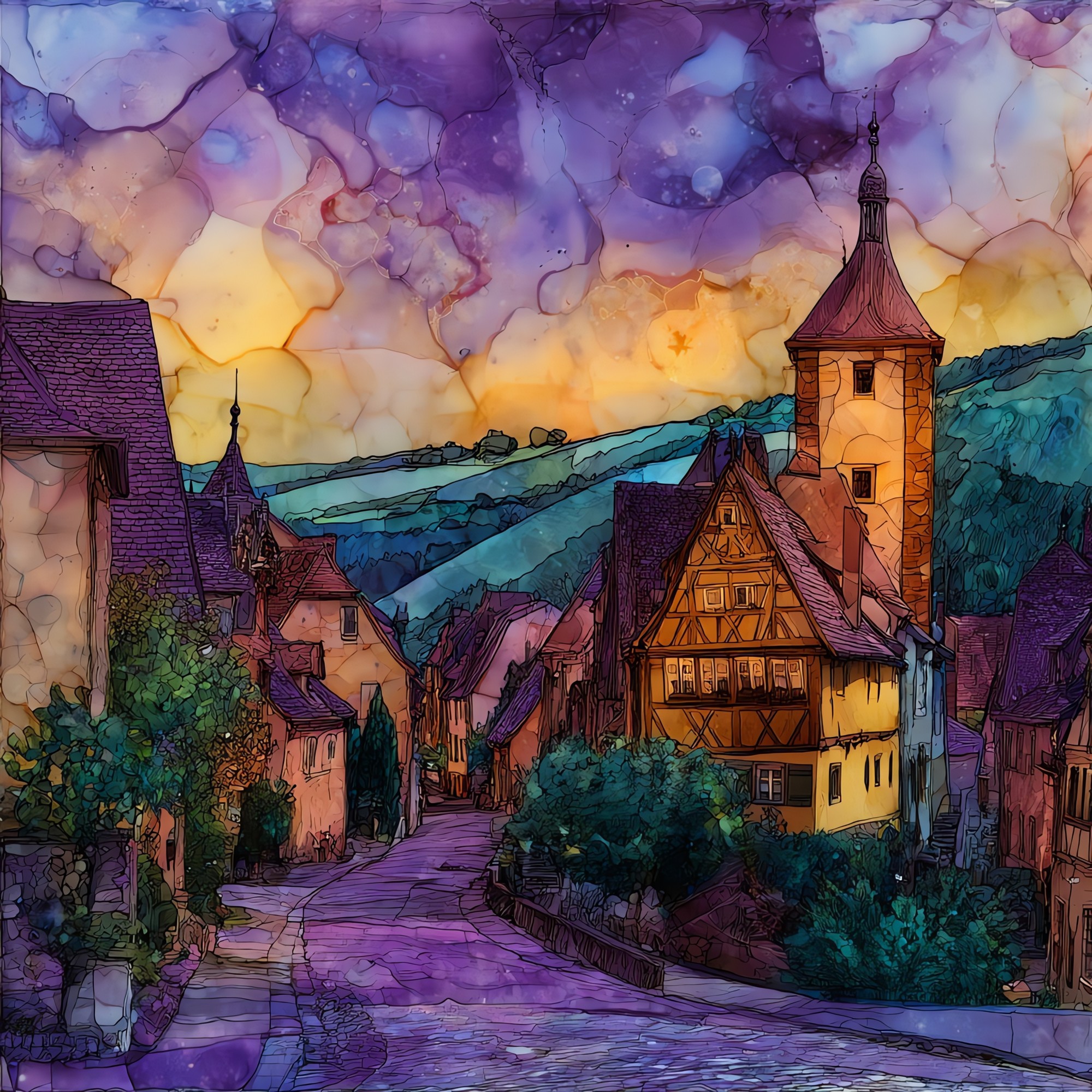
Eguisheim Concentric Village
— — streets that curl back to where they began.
Not only on a wall.
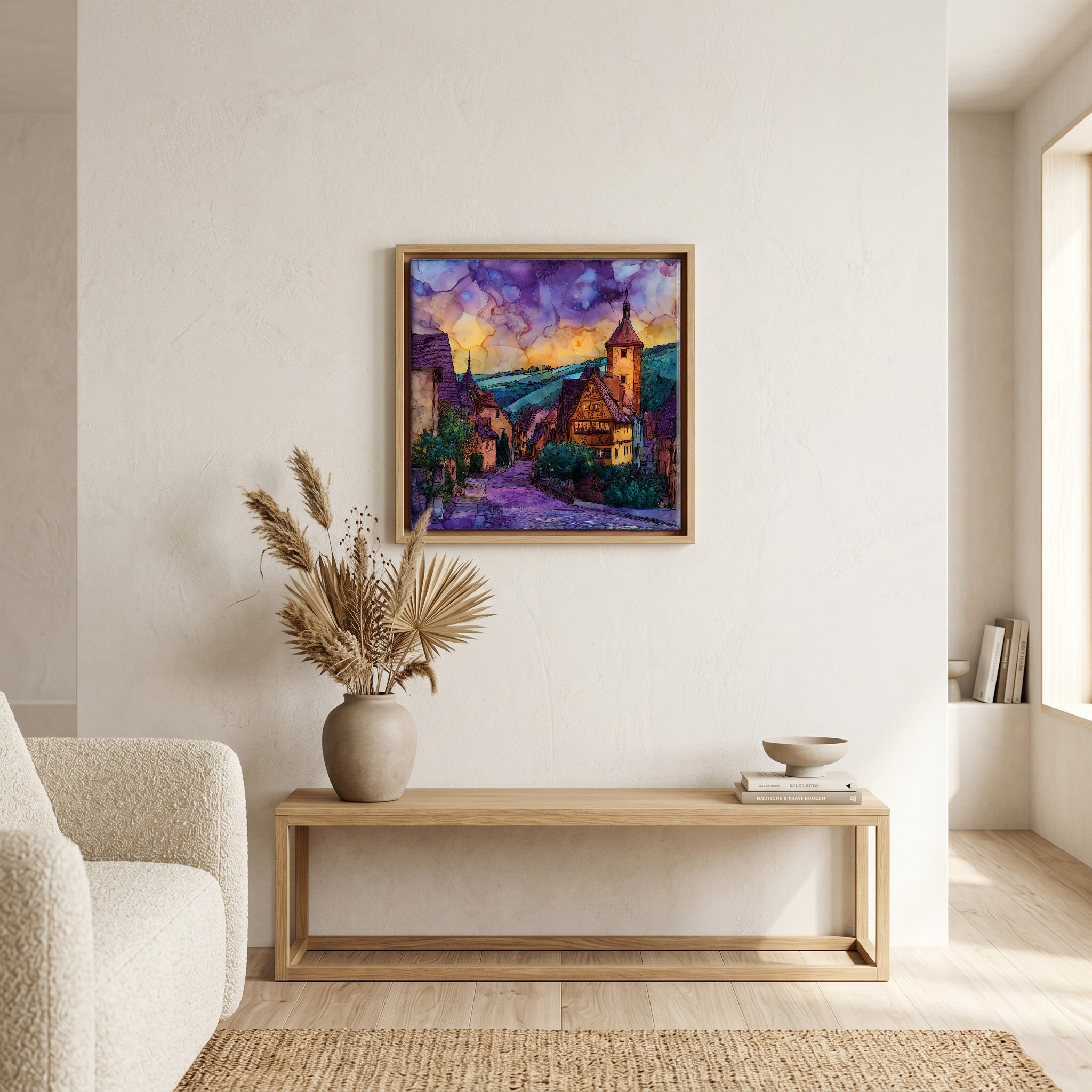
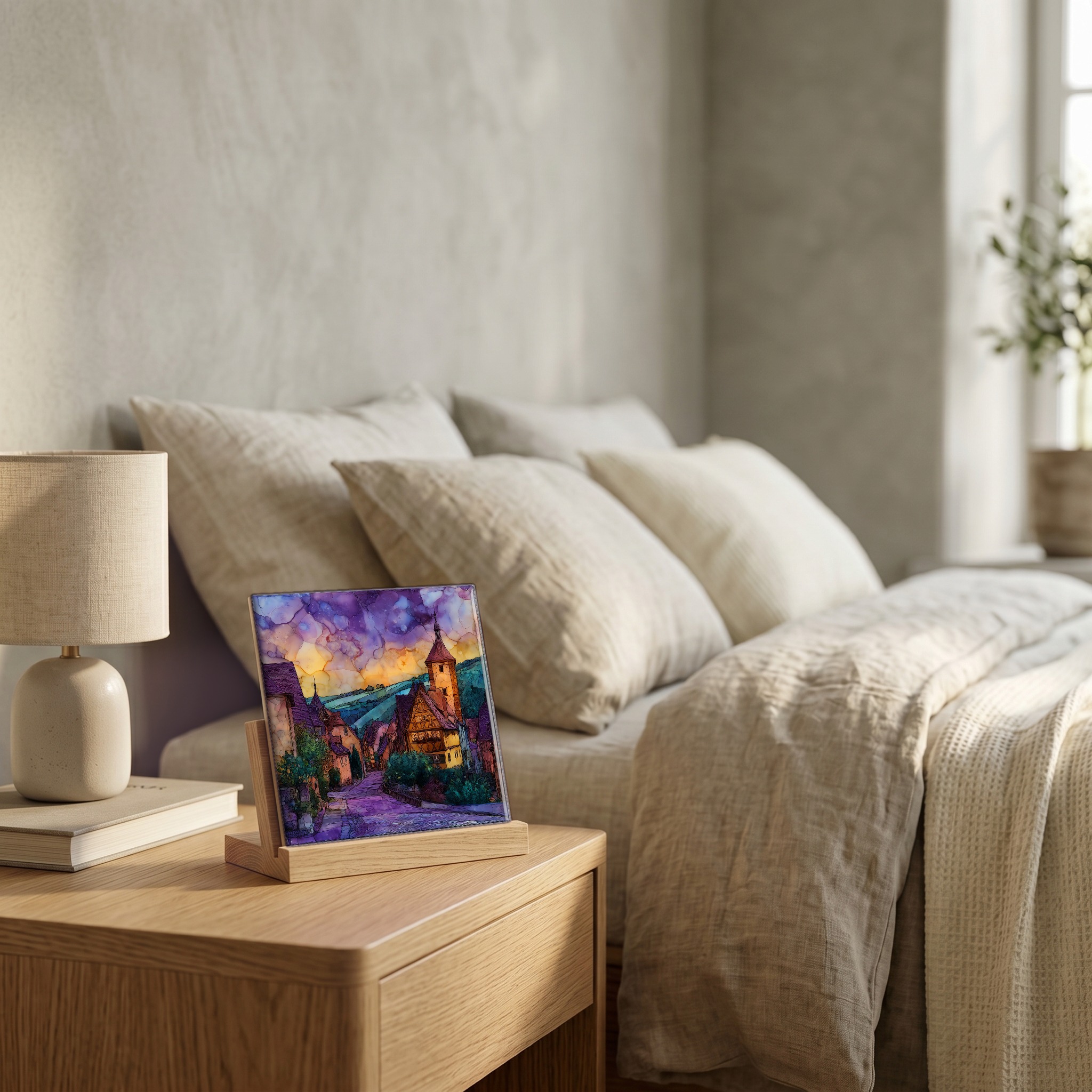
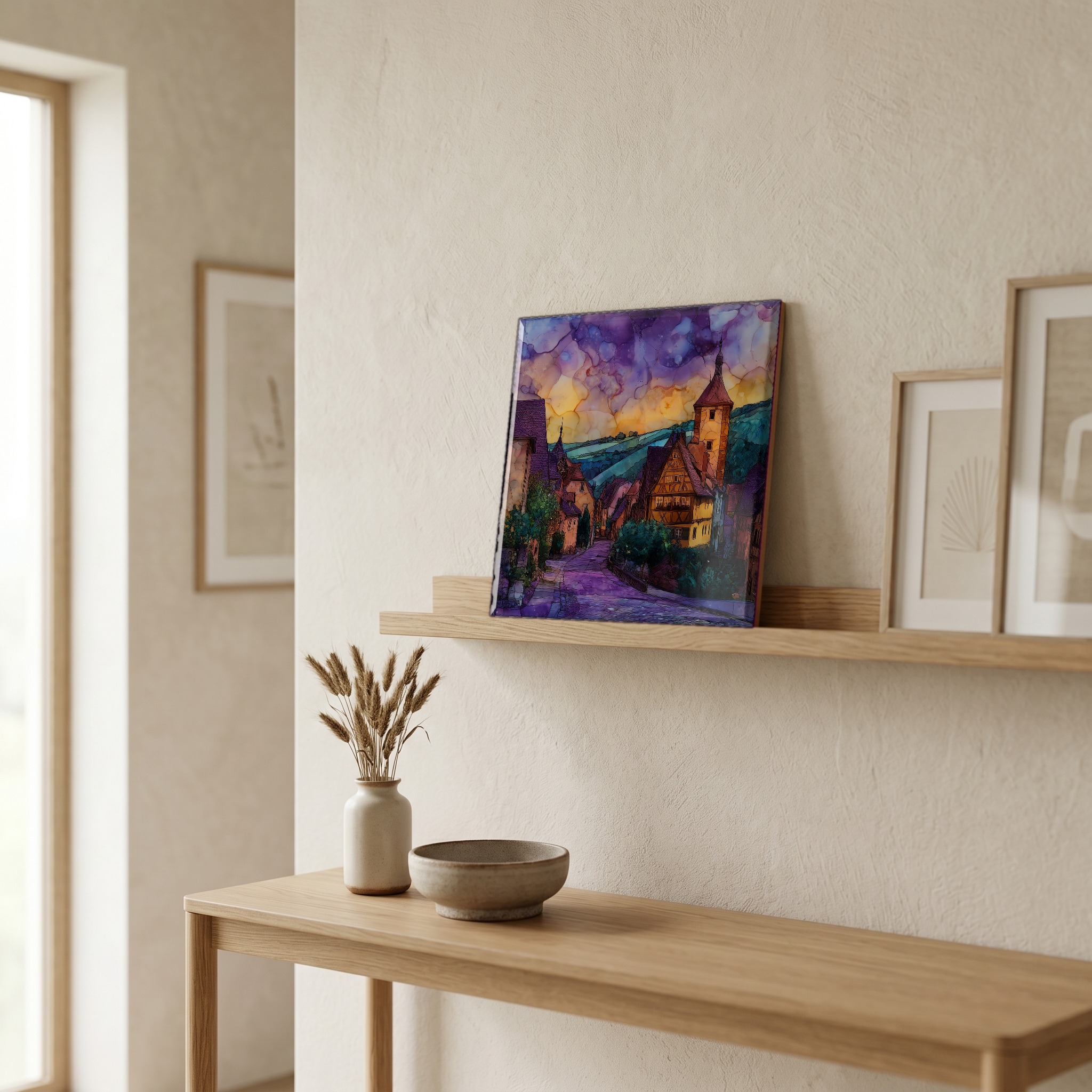
“A village in Alsace south of Colmar, built as three concentric rings around an octagonal château. The streets do not run straight; they loop, each one inside the next, until they bring you back where you started. The houses are half-timbered, painted in faded ochres and dusty pinks and old greens, with geraniums on the windowsills in summer and stork nests on the rooftops. The Vosges sit just behind the village, and the Alsace Wine Route runs through its centre. Wine has been grown on these slopes since the eighth century, and the grand cru above the village is called Eichberg. The central square holds a fountain and a statue of Pope Leo IX, who was born here in 1002.
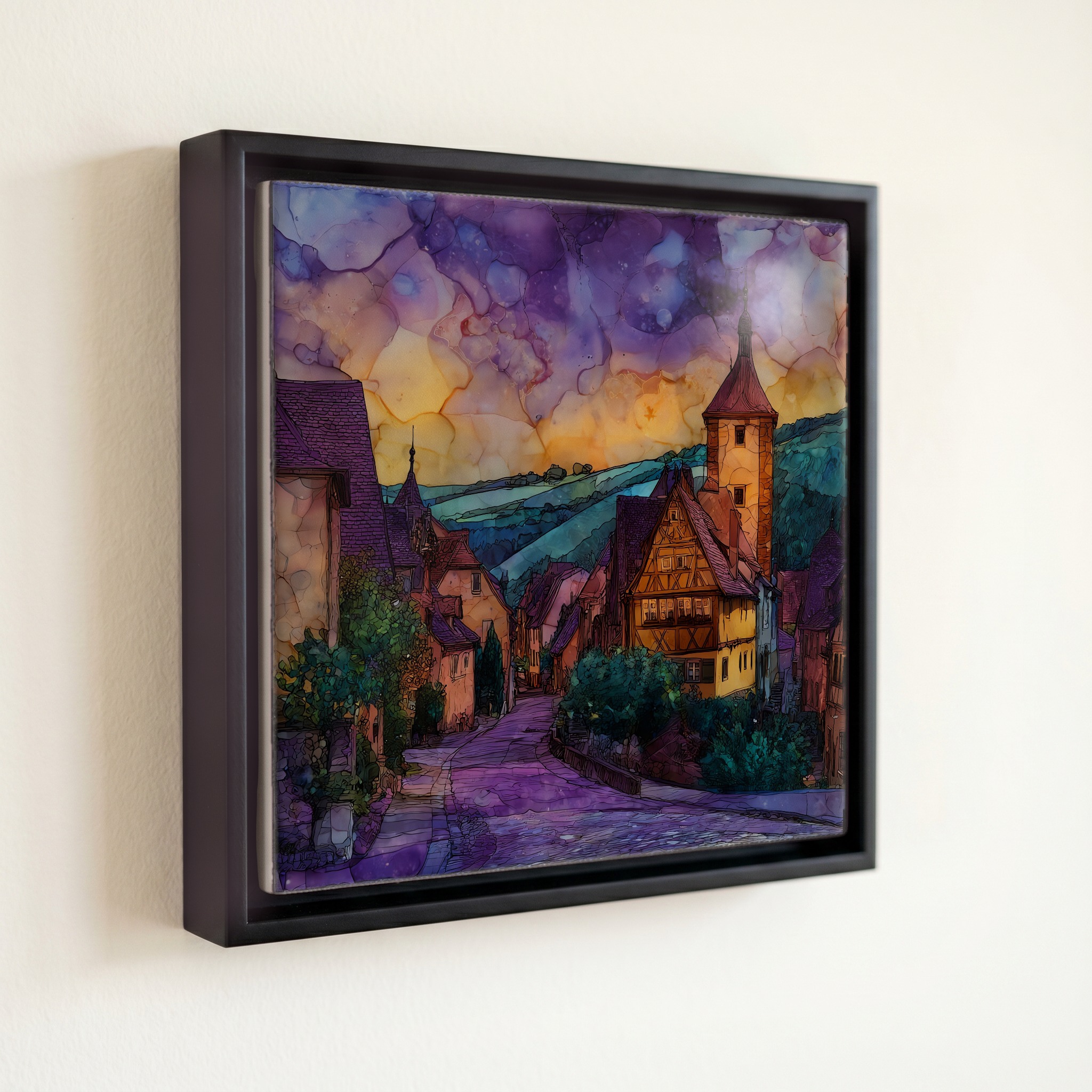
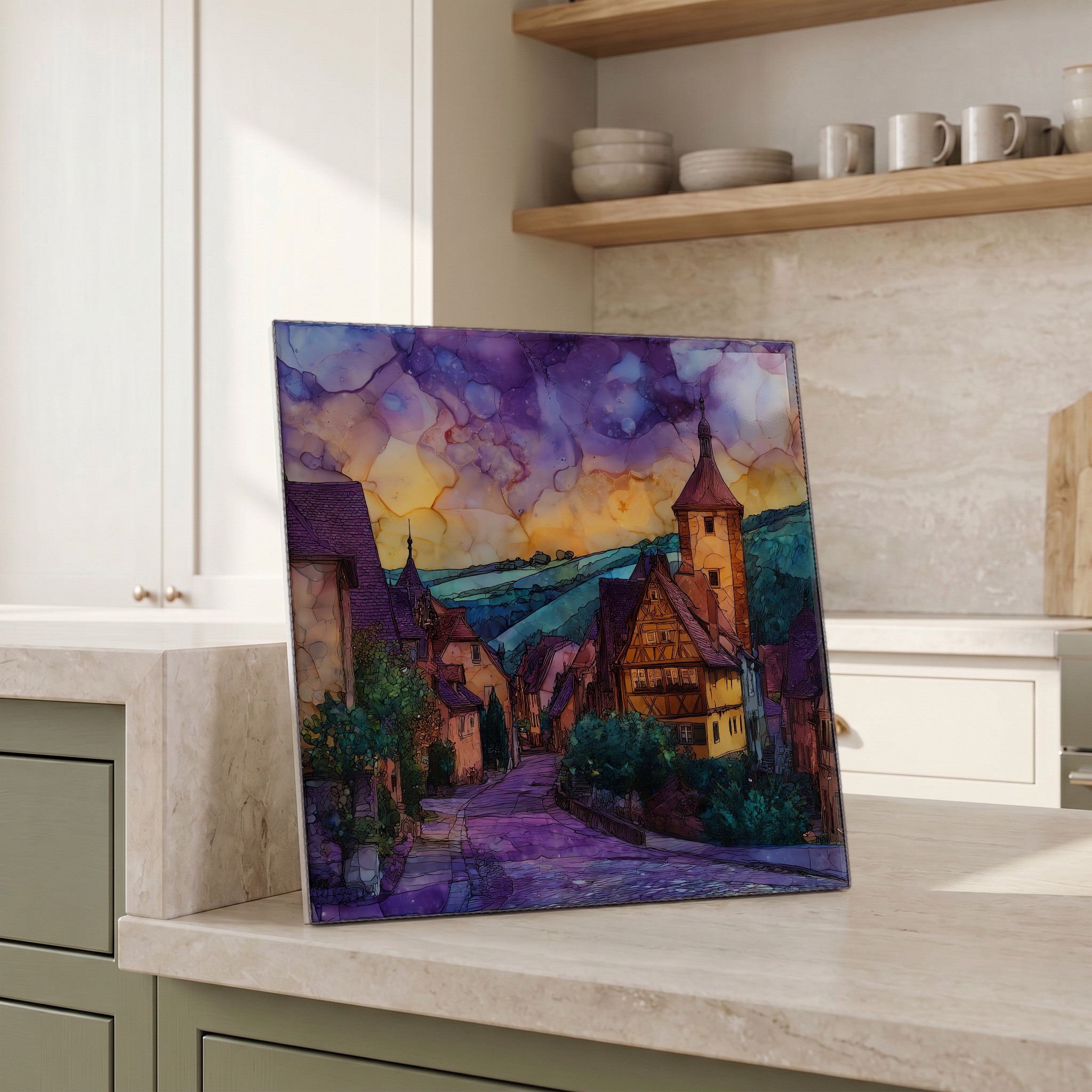
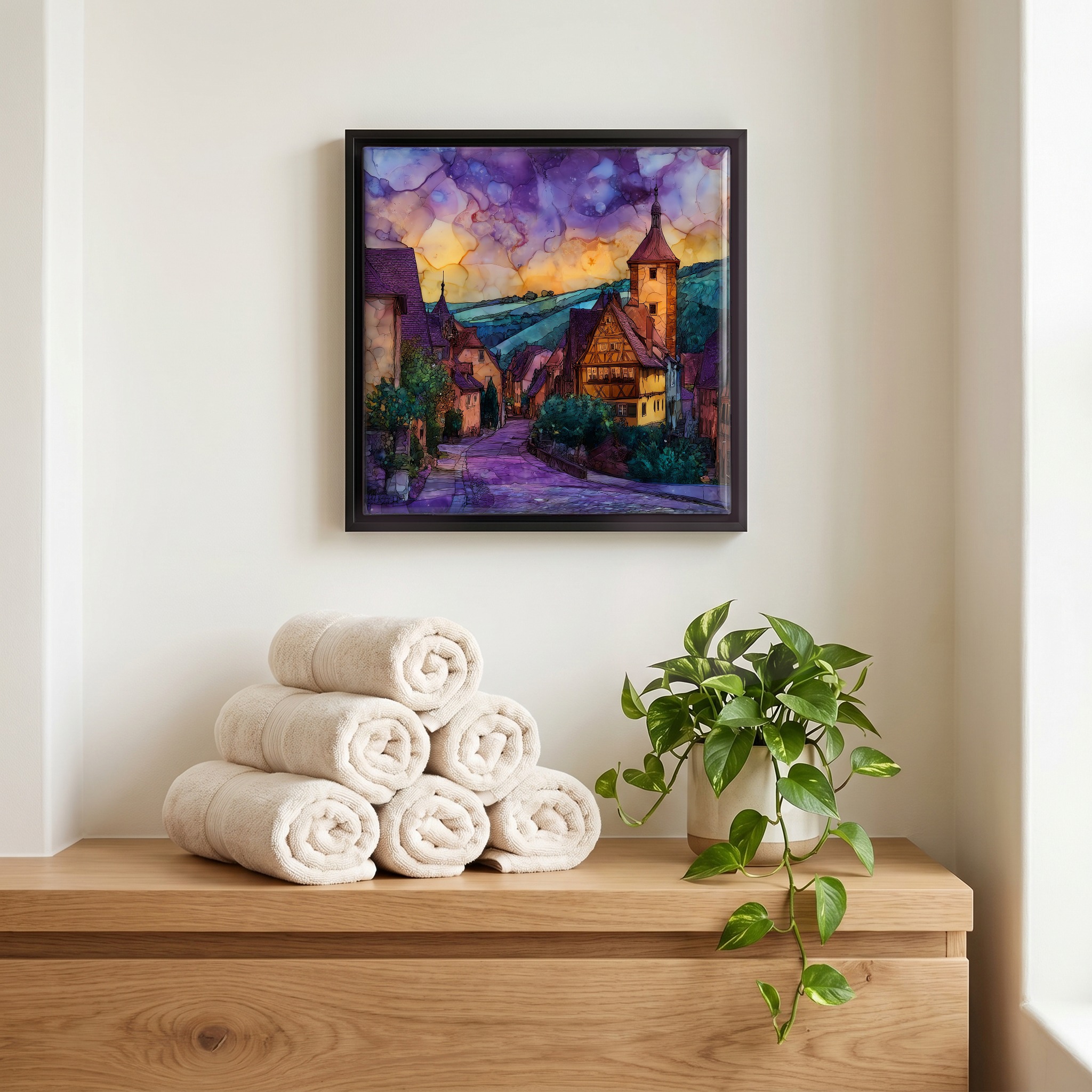
Eguisheim Concentric Village, on ceramic.
Each tile is finished by hand in our Knoxville studio. Artwork is slowly infused into the ceramic surface under high heat and pressure, and rests beneath a thin glossy finish. The colour lives in the surface, not on top of it.
Pick any four 4-inch tiles — National Parks you've been to, a Smokies set, the four seasons of one place. $ for a set of , cork-backed, ready to live on the table.
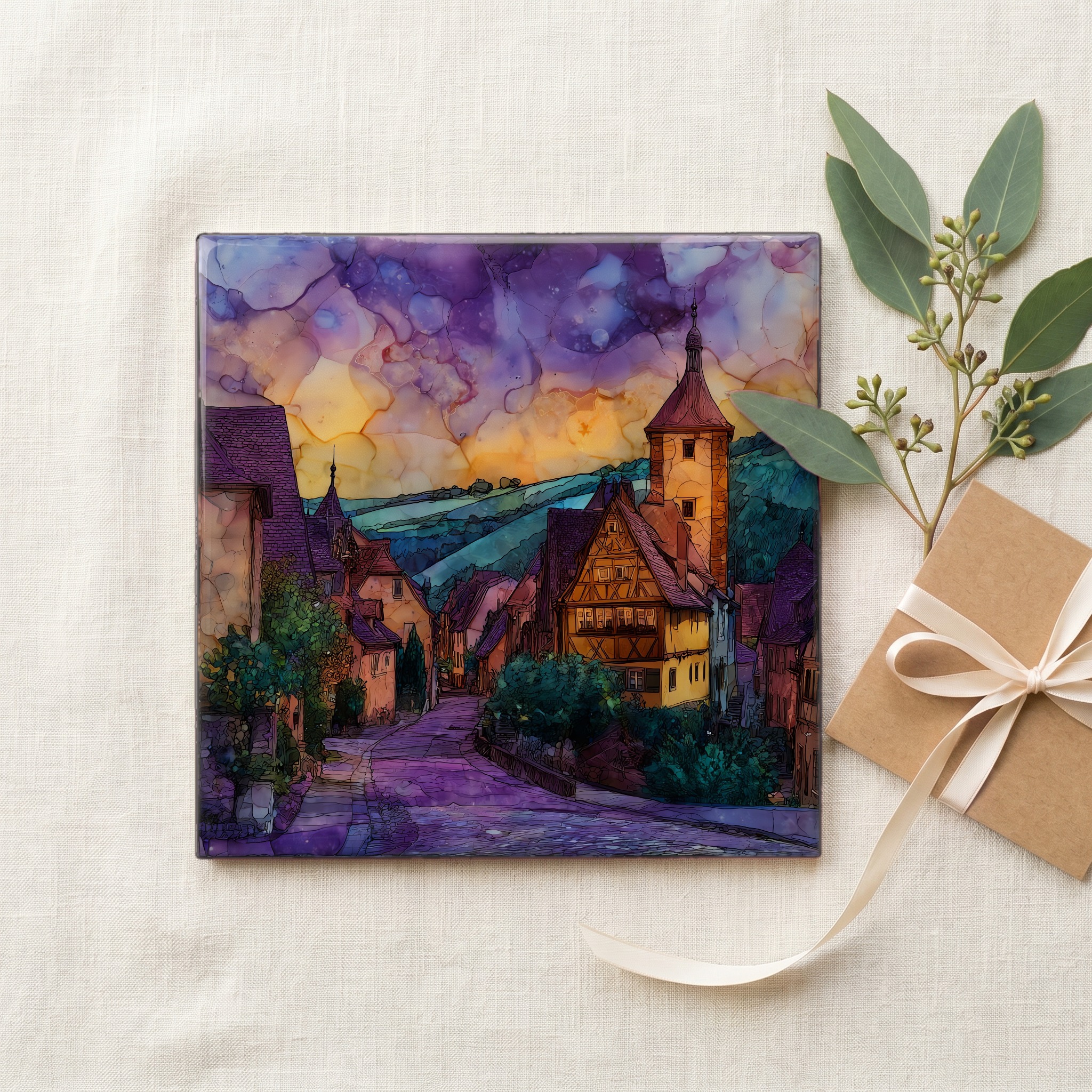
Each tile ships in a kraft box, tied with cream ribbon, with a handwritten note from the studio if you'd like to add one.
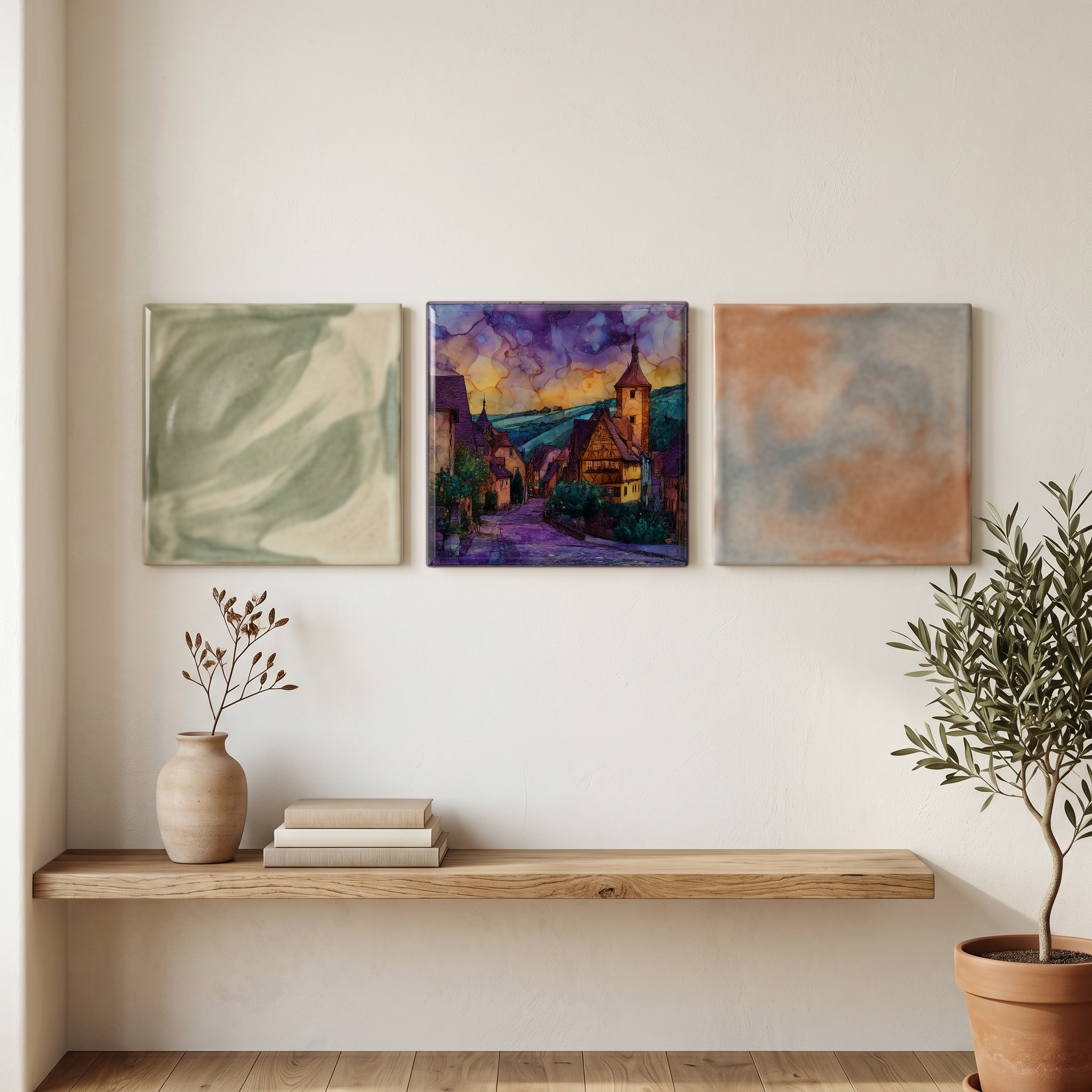
Three or five different vistas, hung together — a chapter of places you've been, or want to go.
The place, in three passes.
Eguisheim sits in the Haut-Rhin department of Alsace, about seven kilometres south of Colmar at the foot of the Vosges. The village is laid out in three concentric rings around an octagonal château, a plan begun in the eighth century by the Counts of Eguisheim and largely settled by the thirteenth. The current population is roughly 1,700. Above the village, on a forested ridge to the west, stand the three ruined castles of Eguisheim, known as Dagsbourg, Wahlenbourg, and Weckmund. The village has been a member of Les Plus Beaux Villages de France since 2003, and was voted Village préféré des Français in 2013. It is the birthplace of Bruno of Eguisheim-Dagsburg, who became Pope Leo IX in 1049.
The concentric plan of Eguisheim is the rarest thing about it. In the eighth century, the Counts of Eguisheim raised an octagonal château on a low rise; over the following four centuries, three rings of houses grew outward around the keep, each ring tracing the line of the one before it. The inner ring of half-timbered burgher houses survives largely intact, painted in faded pinks and ochres and blues, with geraniums on the balconies in summer. The Saint-Pierre-et-Saint-Paul parish church, rebuilt in the nineteenth century around an older Romanesque tympanum, sits in the central square next to the Saint-Léon Fountain. The whole village is a protected historical site under the French Monuments historiques register.
The Alsace Wine Route runs through Eguisheim, and the village sits at the foot of two grand cru vineyards, Eichberg and Pfersigberg, known for Pinot Gris, Riesling, and Gewurztraminer. Wine has been grown on these slopes since the eighth century. The harvest runs from late August through October, and the village holds an annual wine fair on the fourth weekend of August. White storks return from West Africa to nest on the church tower and on the tallest gables in March, and stay until late summer; the local Alsace stork population, almost lost in the 1970s, has been restored through a regional reintroduction programme centred on Hunawihr. The Christmas market opens in late November and runs through the end of December.