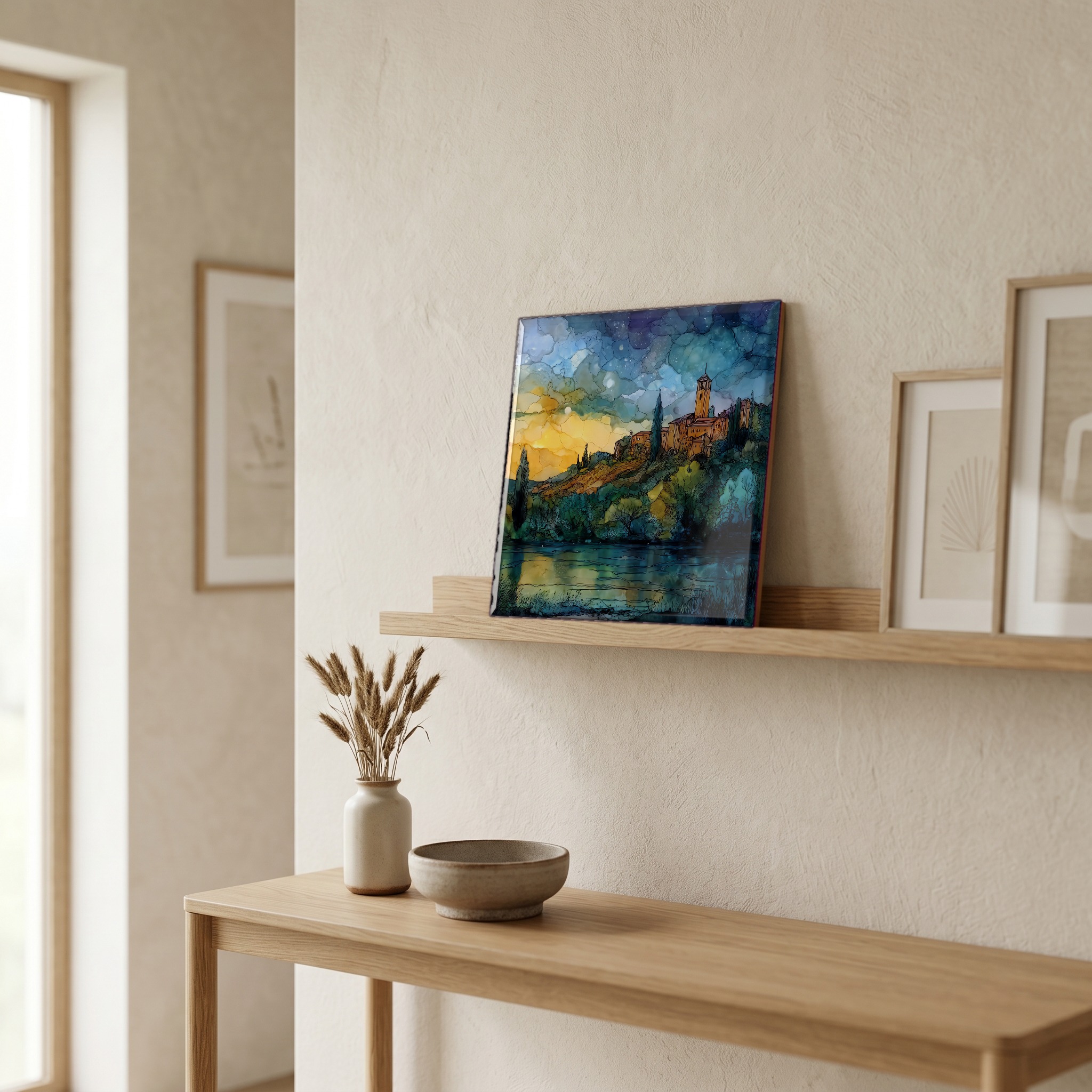
Wender·Vista
Domme Bastide
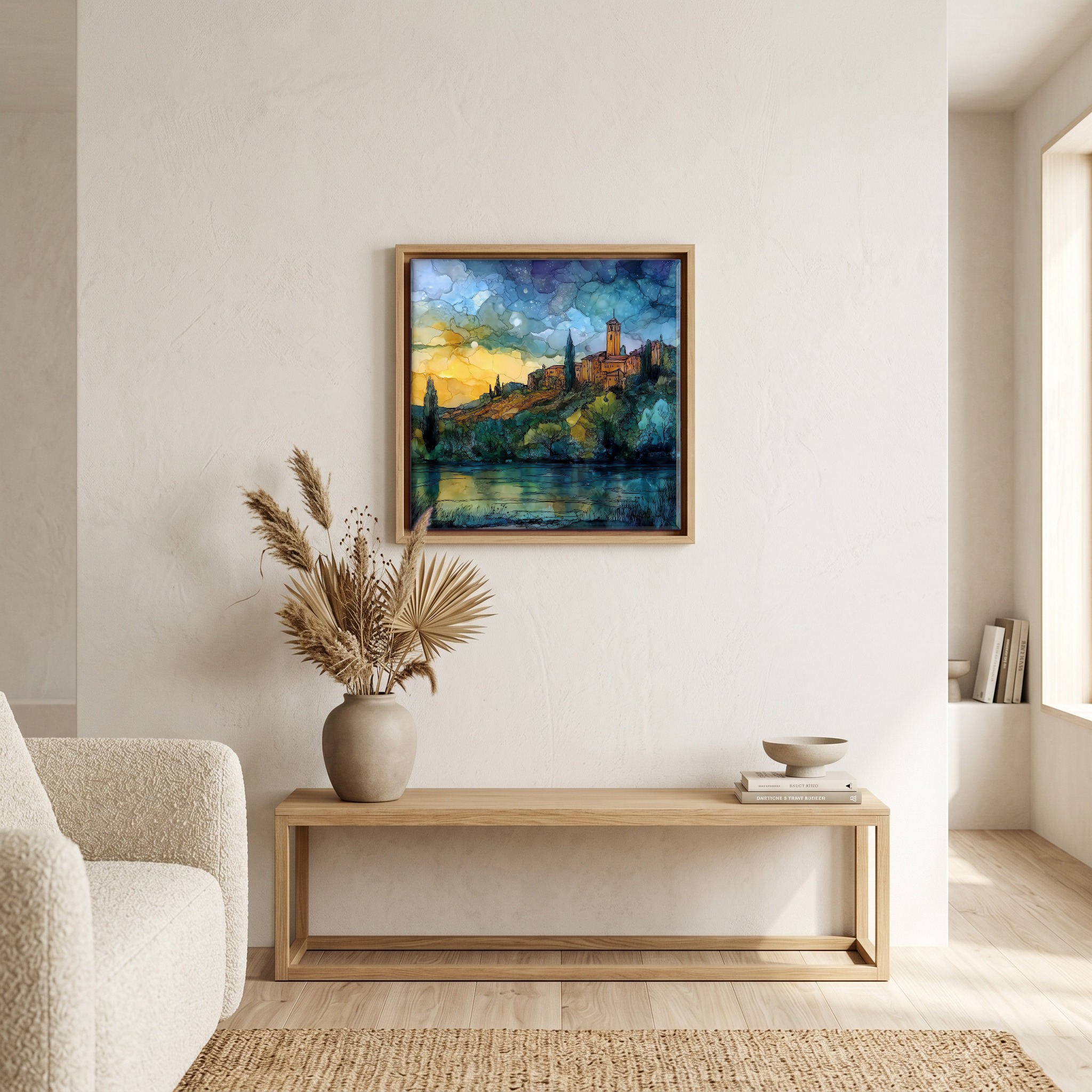
shown on ceramic, 12-inch tileFrance
high above the Dordogne, in the Périgord Noir

Domme Bastide

— the long curve of the river below.

Where it lives

Not only on a wall.

A small tile on the nightstand catching the morning. A larger one above the fire. Yours, wherever you spend the slow hours.
Above the bench, in a warm oak surround.
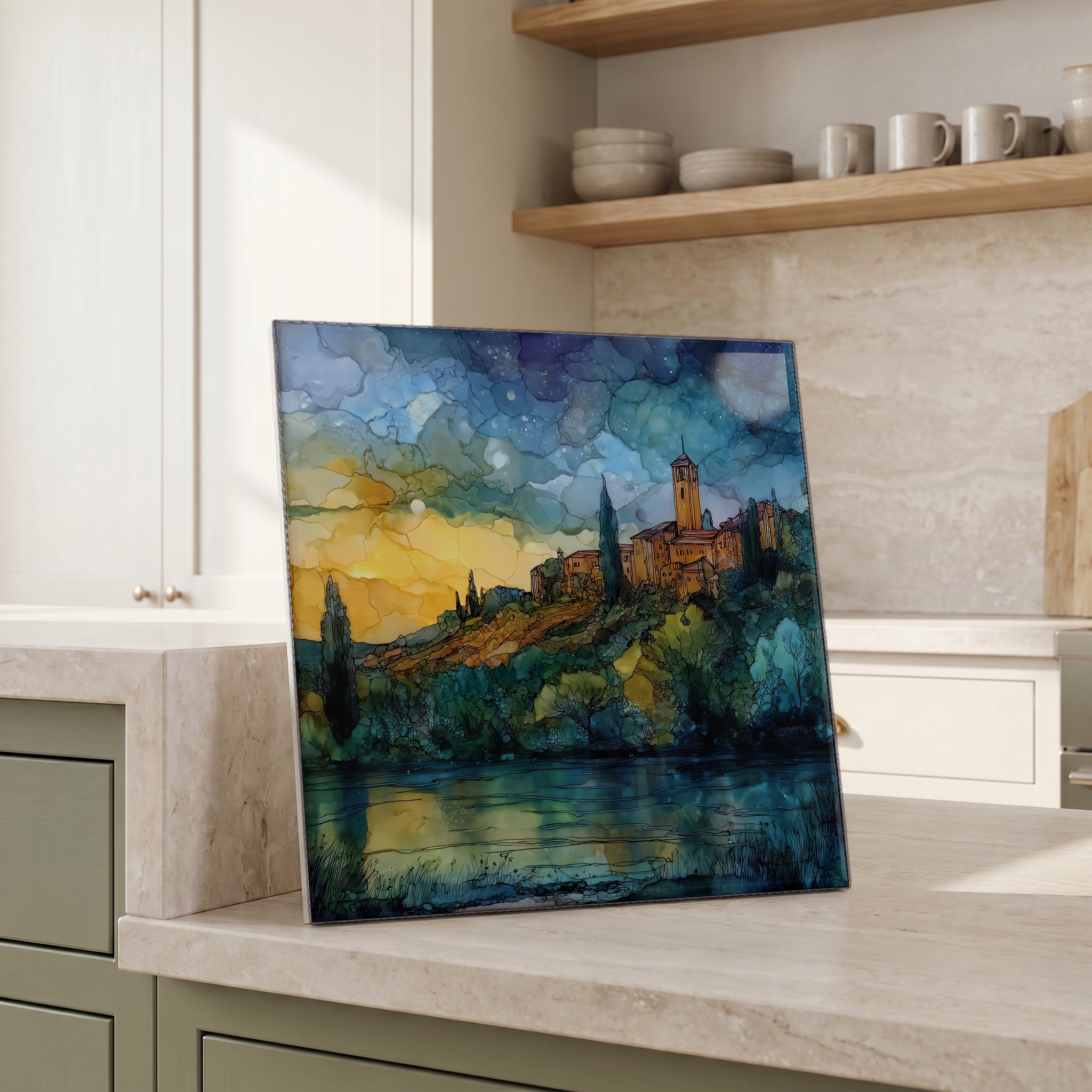
Beside the kettle, propped on the counter.
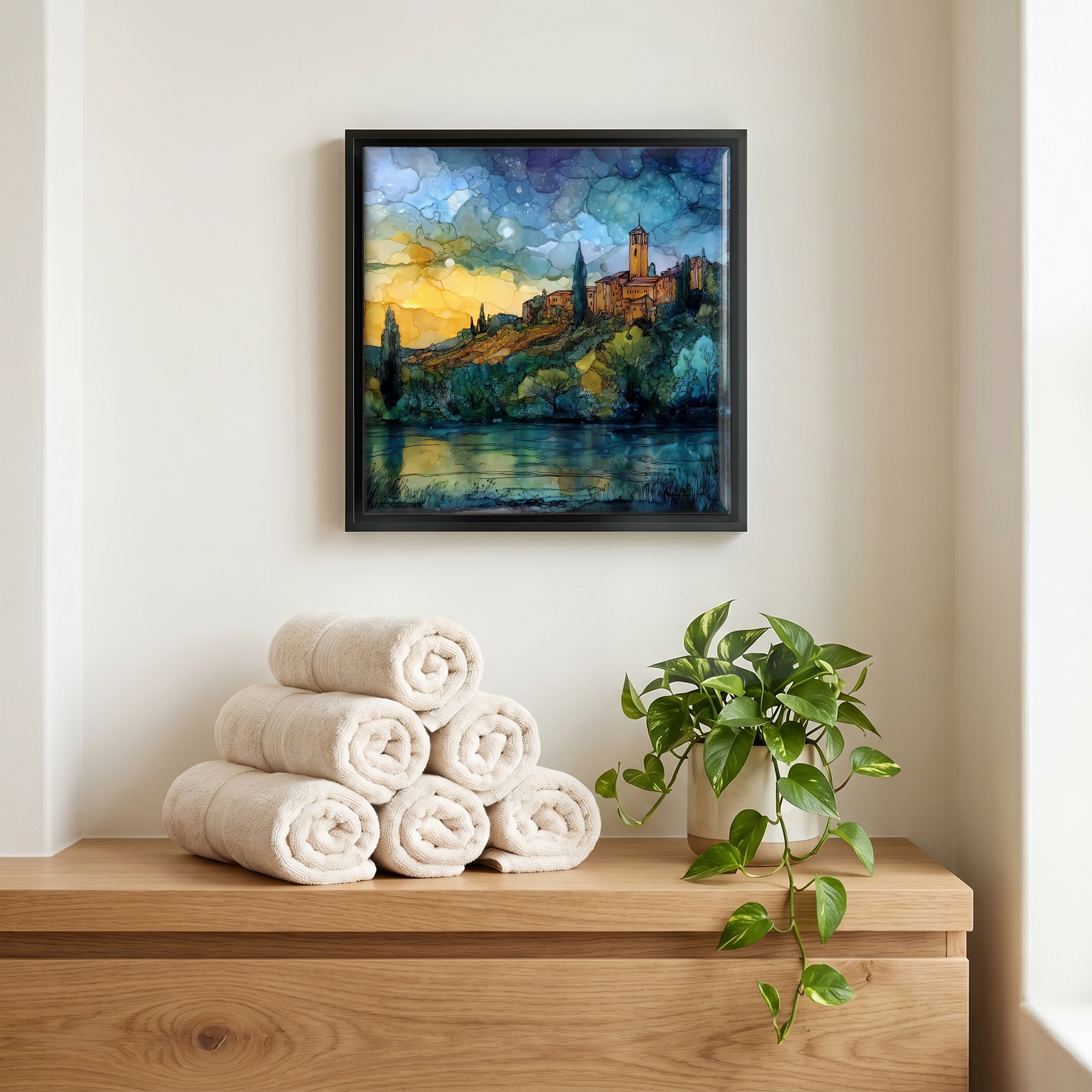
Above the linens, in a slim black surround.
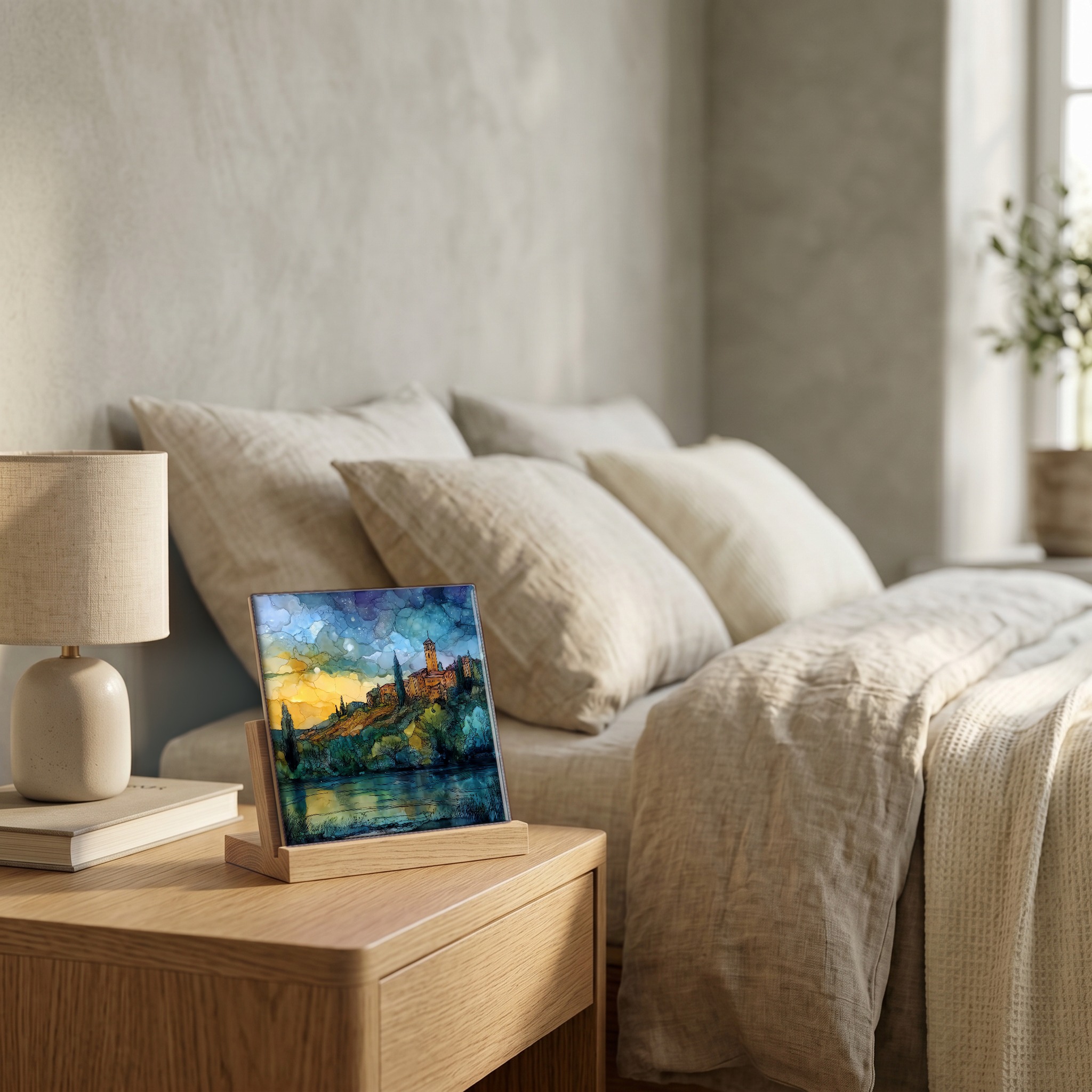
On the nightstand, on a light oak stand.
On a picture ledge, where the light comes in.
a note from the studio

A 13th-century bastide on a limestone cliff 150 metres above the Dordogne. Founded in 1281 by Philip the Bold, planned on a grid, walled. From the Belvédère de la Barre the panorama follows the river from the Montfort meander to the east, past Cénac on the floodplain, west past the cliffs of La Roque-Gageac, until the valley turns out of sight. Inside the ramparts the streets keep the original grid. The Porte des Tours still carries the graffiti the Templars cut into the stone after their imprisonment in 1307. From the overlook the view does not change much, and that is the point.
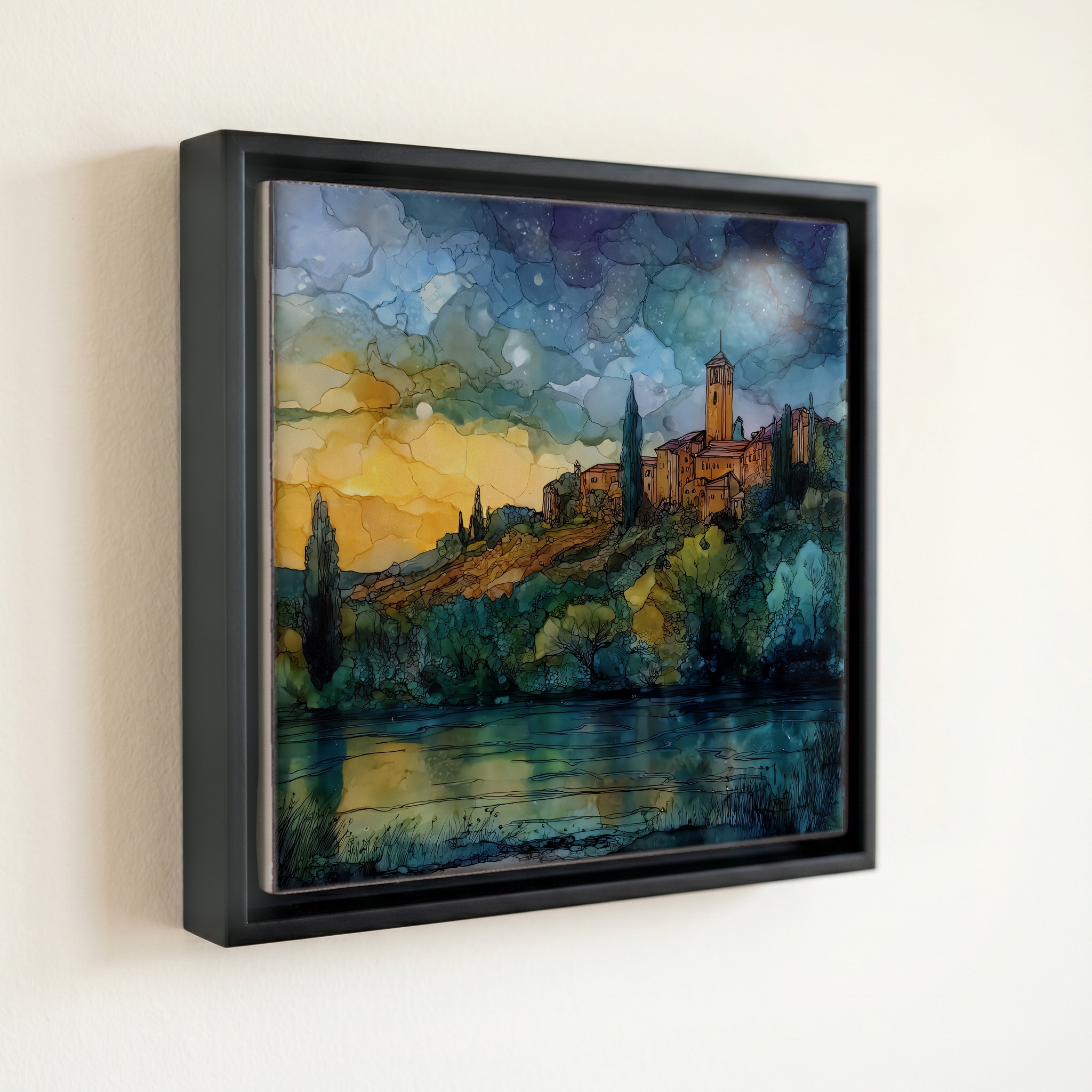
from the studio
shown in a slim black floating frame · 6 × 6 in
— bring it home

Domme Bastide, on ceramic.

Each tile is finished by hand in our Knoxville studio. Artwork is slowly infused into the ceramic surface under high heat and pressure, and rests beneath a thin glossy finish. The colour lives in the surface, not on top of it.

What kind of piece?
One tile — square or rectangle.
How big?
the popular one — counter, shelf, nightstand
6 × 6 in · 15 cm · 1.6 lb
Surface finish
A clear glossy finish — the artwork reads as if under resin. Ideal for show-pieces and framed wall art.
How it sits
A hidden cleat — sits ¼″ proud of the wall.
$58
Hand-finished and shipped from our studio at the foot of the Smokies. On your wall in about ten days.
size
6 × 6 in
15 cm
weighs
1.6 lb
solid in the hand
surface
ceramic, hand-finished
art rests beneath a thin glossy finish
from
Knoxville, TN
our family studio, at the foot of the Smokies
— start a Coaster Set

Pick any four 4-inch tiles — National Parks you've been to, a Smokies set, the four seasons of one place. $ for a set of , cork-backed, ready to live on the table.

comes gift-ready
comes gift-ready

Each tile ships in a kraft box, tied with cream ribbon, with a handwritten note from the studio if you'd like to add one.
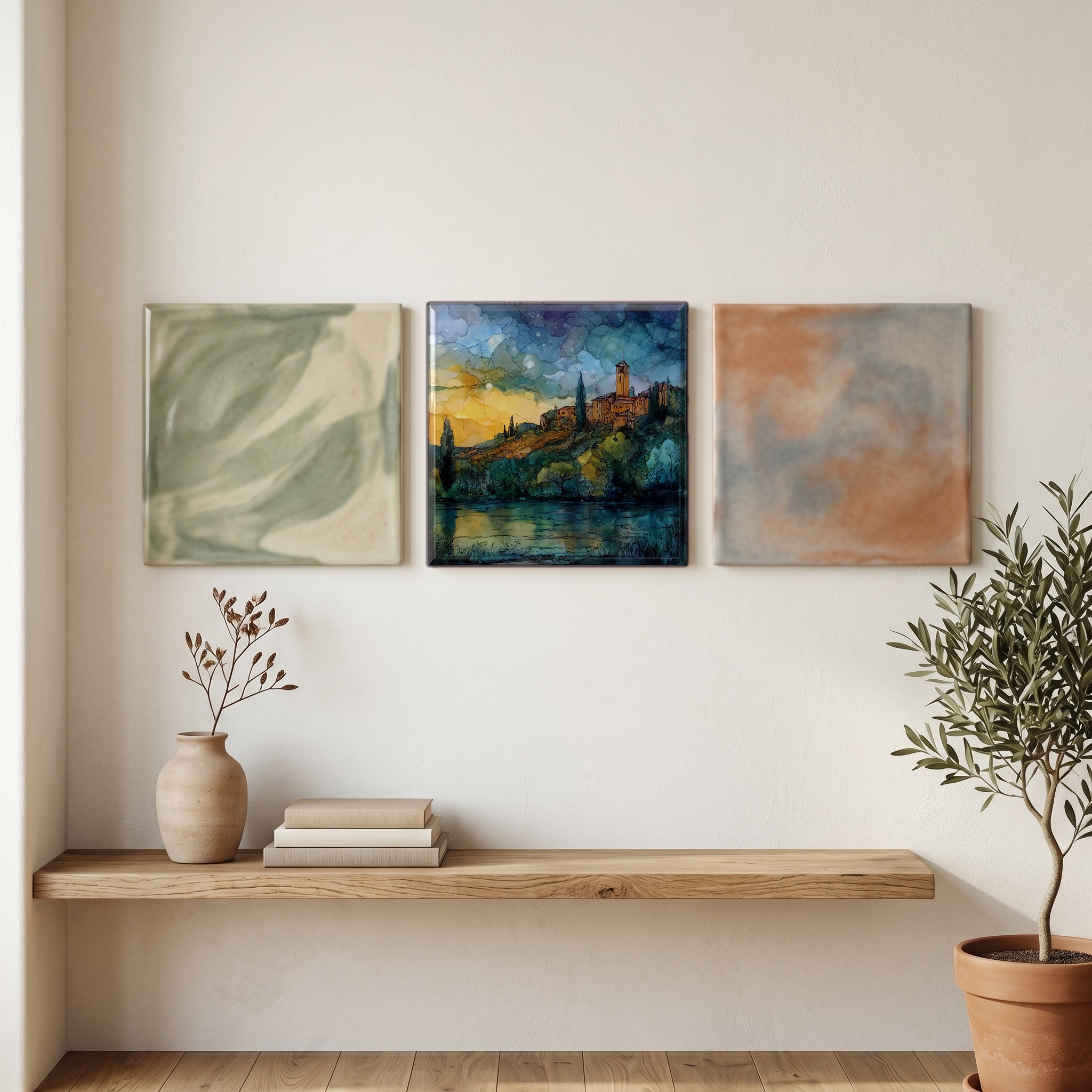
or build a grouping
or build a grouping

Three or five different vistas, hung together — a chapter of places you've been, or want to go.

about Domme Bastide

The place, in three passes.

A little of what's known, in case you fall down the rabbit hole — or want to go see it yourself.
the place

Domme is a fortified bastide in the Dordogne department of Nouvelle-Aquitaine, southwestern France, and one of Les Plus Beaux Villages de France. The town stands on a limestone promontory roughly 150 metres above the Dordogne River, at 250 metres above sea level, with a clifftop esplanade running along the southern edge. King Philip III of France founded the bastide in 1281 as part of the royal bastide programme, the planned grid-towns built across Périgord and Gascony in the late 13th century. The walls and gates were completed by 1310. Three medieval gates still anchor the ramparts: the Porte des Tours, the Porte del Bos, and the Porte de la Combe. Sarlat-la-Canéda, the larger Périgord market town, sits about 12 kilometres north.

the stone

The bastide layout was a 13th-century French royal answer to the Aquitaine frontier: a planned grid of streets, a central market square, and a continuous wall pierced by gated towers. Domme keeps almost all of it. The Porte des Tours, two cylindrical towers built into the southeastern wall, served as a Templar prison after Philip IV's mass arrests of the order in October 1307. Roughly seventy Knights Templar were held in the eastern tower between 1307 and 1318. The graffiti they cut into the limestone, including crosses, a crucifixion scene, and a coded geometry of squares and octagons, remains visible on the interior walls. The yellow Périgord stone the town is built from comes from the same Jurassic limestone bed that forms the cliff itself.

the air

The Belvédère de la Barre is the public esplanade along the southern rim of the cliff, with an open panorama over the Dordogne valley. The view follows the river from the Cingle de Montfort upstream to the east, around the floodplain at Cénac, and west past the cliffs of La Roque-Gageac about five kilometres downstream. The Dordogne itself runs 483 kilometres from the Massif Central to the Gironde estuary. Hot-air balloons lift from the valley at first light through the spring and summer season. Photographers favour the hour before sunset, when the limestone of the cliff itself turns warm in the light, and the river below lies in deeper shadow.

where
France · Dordogne, Nouvelle-Aquitaine
elevation
250 m · 820 ft
position
44.8022° N · 1.2144° E
the neighborhood

What's nearby.

A handful of named places within an hour's walk or short drive. Some we've already painted; some we will.
12 km N
Sarlat-la-Canéda
medieval market town
5 km W
La Roque-Gageac
cliffside village on the Dordogne
10 km NW
Beynac-et-Cazenac
medieval château and village
7 km W
Castelnaud-la-Chapelle
medieval château
8 km W
Marqueyssac
clipped boxwood gardens
2 km N
Cénac-et-Saint-Julien
river-floodplain village
N
Domme Bastide
Sarlat-la-Canéda
La Roque-Gageac
Beynac-et-Cazenac
Castelnaud-la-Chapelle
Marqueyssac
Cénac-et-Saint-Julien
common questions

What people ask.

A few questions we get about Domme Bastide — and about bringing the piece home.
about the place

Domme sits on a limestone clifftop in the Dordogne department of Nouvelle-Aquitaine, in the Périgord Noir region of southwestern France. The bastide town is about 12 kilometres south of Sarlat-la-Canéda and roughly 150 metres above the Dordogne River.

A bastide is a medieval planned town of southwestern France, built between roughly 1220 and 1370 on a grid plan with a central market square and a perimeter wall. Most were founded by either the French or English crown during the Hundred Years' War period. About 300 bastides survive across Gascony, Périgord, and the Agenais.

King Philip IV ordered the mass arrest of the Knights Templar in October 1307. Roughly seventy Templars were held in the eastern tower of the Porte des Tours at Domme between 1307 and 1318. They carved crosses, figures, and a coded geometry of squares and octagons into the limestone walls. The marks remain visible today.

The Belvédère de la Barre is the public esplanade along the southern edge of Domme's clifftop, with an open panorama over the Dordogne valley. From the rail the view follows the river from the Montfort meander upstream to the cliffs of La Roque-Gageac about five kilometres downstream.

The bastide was founded in 1281 by King Philip III of France as part of the royal bastide programme, the network of planned fortified towns built across Périgord and Gascony in the late 13th century to anchor the Aquitaine frontier. The walls and gates were completed by 1310.

Yes. The Grottes de Domme run for roughly 450 metres beneath the bastide and are open by guided tour. The entrance is under the 17th-century covered market on the Place de la Halle; the exit returns visitors to the clifftop by a glass lift. Townspeople sheltered in the caves during the Wars of Religion.

Domme is reached by road from Sarlat-la-Canéda, about 12 kilometres north. The nearest railway station is at Sarlat; the closest airports are Bergerac, about 75 kilometres west, and Bordeaux, roughly 200 kilometres west. Most visitors arrive by car.

about the piece in your home

It has been a meaningful gift for our customers with ties to Périgord, people who lived a summer there, who fly-fish the Dordogne, who were married in Sarlat. The tile reads as a quiet recognition of the place rather than a souvenir. A Small or Medium in the Glossy finish carries well with a handwritten note from the studio.

The palette of the artwork, ochre Périgord limestone, river greens, the warm interior light of the bastide, sits well in three rooms in particular: French country, European cottagecore, and warm-minimal interiors with oak and limewash. The colour family pairs with old oak, terracotta floors, linen, and brass.

Yes. Real-place artwork, paintings of one specific town rendered in a painterly hand, sits at the centre of the current European-cottagecore and slow-living interior turn. The ochre and river-green palette of Domme falls close to the Provençal and Italian-villa colour families that lead the trend.

Above a standard three-seat sofa or a long console, the single Large or a four-tile Mural both hold the wall. Over a longer console or for a major focal wall, a nine-tile Mural arranged three-by-three carries the full panorama and reads from across the room.

Yes, in the Dura Satin or Matte finish. Both are scratch-resistant and tolerate the heat and humidity of a bathroom or kitchen backsplash. The Glossy finish is reserved for framed wall display in dry rooms.

A microfibre cloth and a small amount of water. The colour is slowly infused into the ceramic surface under high heat and pressure and lives beneath a thin glossy finish, so it does not lift or fade with cleaning. No chemicals, no abrasive pads.

Yes. Every tile is painted by Reid Wender, the curator of WenderVista, in the studio's stained-glass and oil visual language. The work is not licensed from other artists and is made in our Knoxville, Tennessee studio.

if this one stayed with you

A few you might also love.

Hand-picked by the eye that found Sorapis. Same air, same kind of quiet.