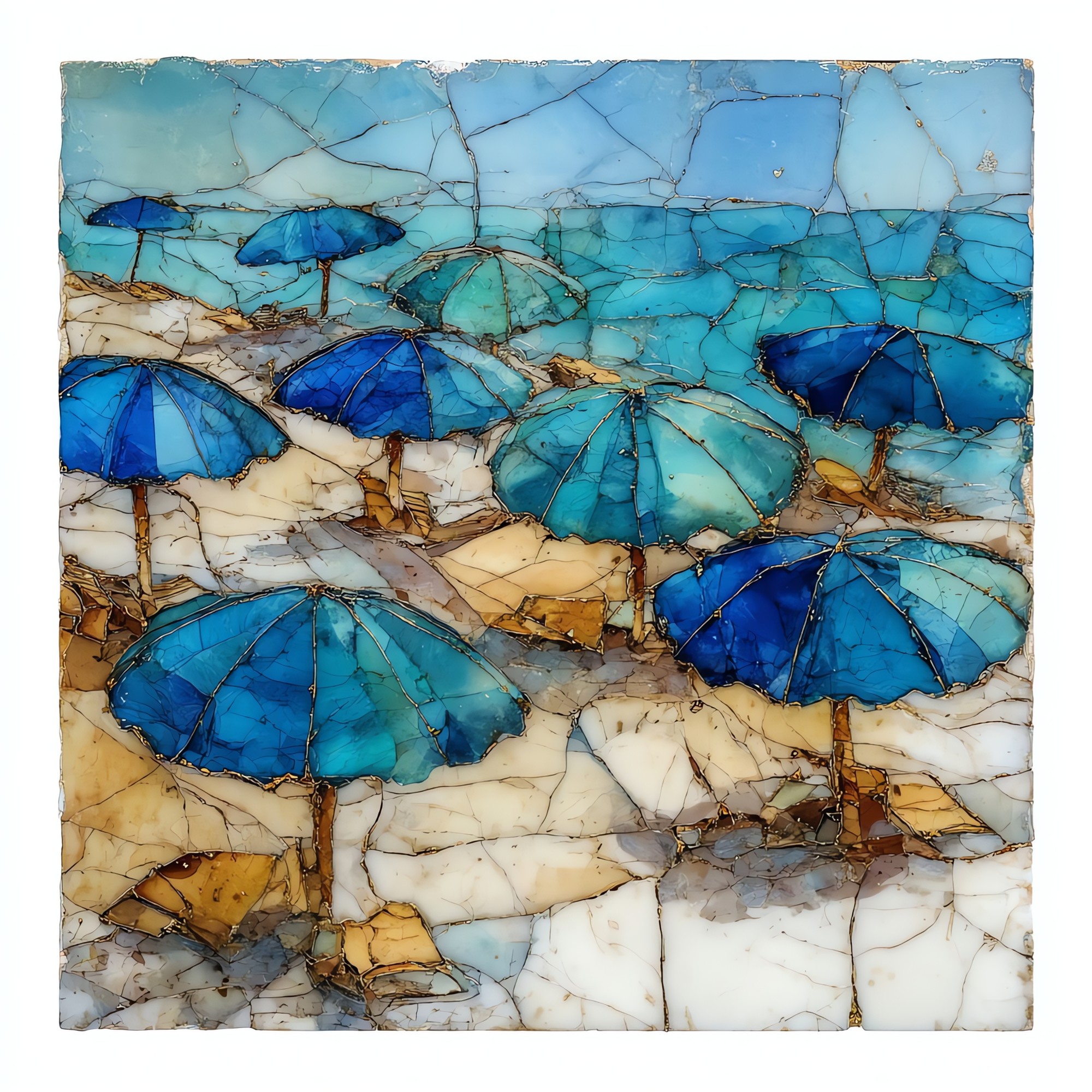
Deauville Beach Umbrellas
— the colour the channel doesn't have.
Not only on a wall.
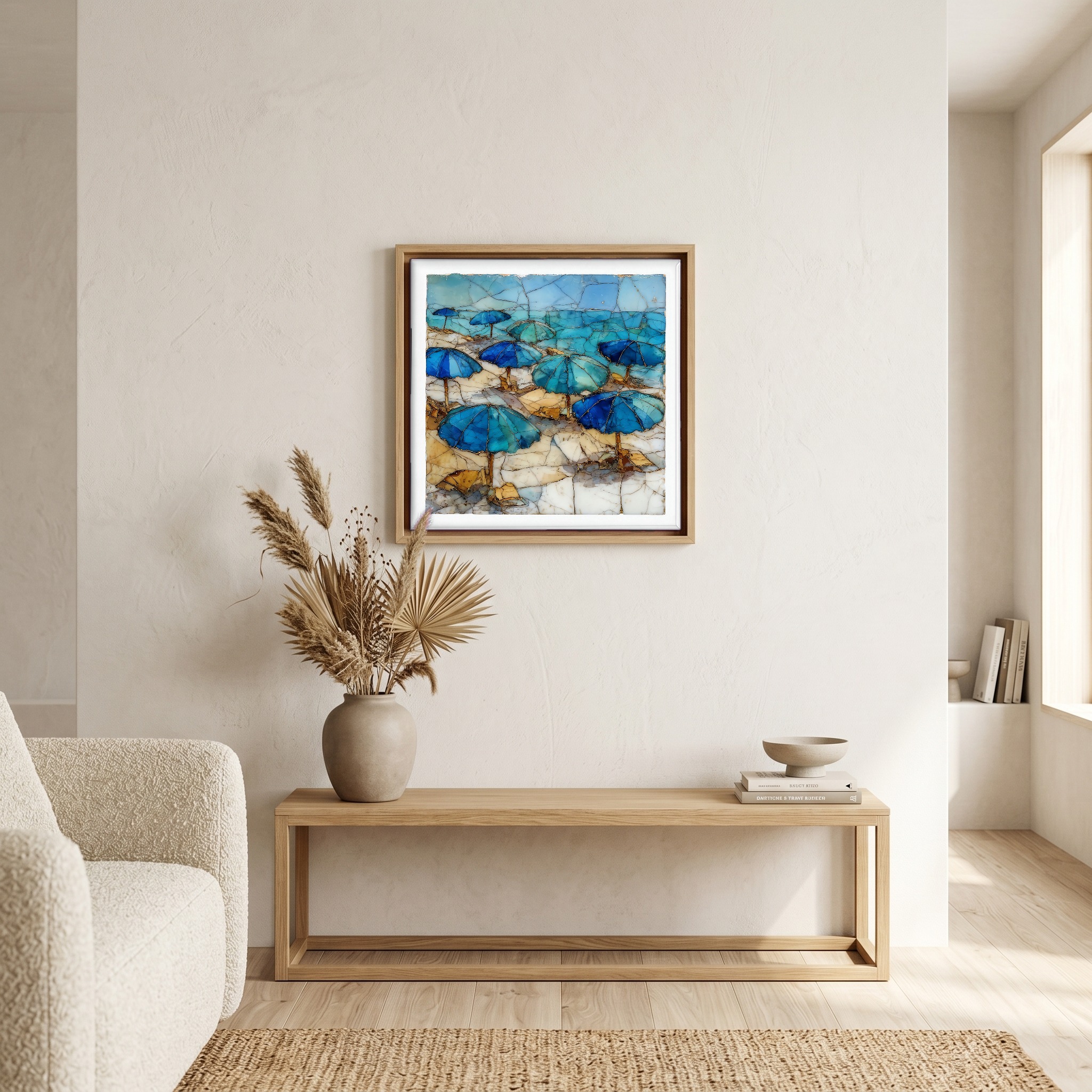
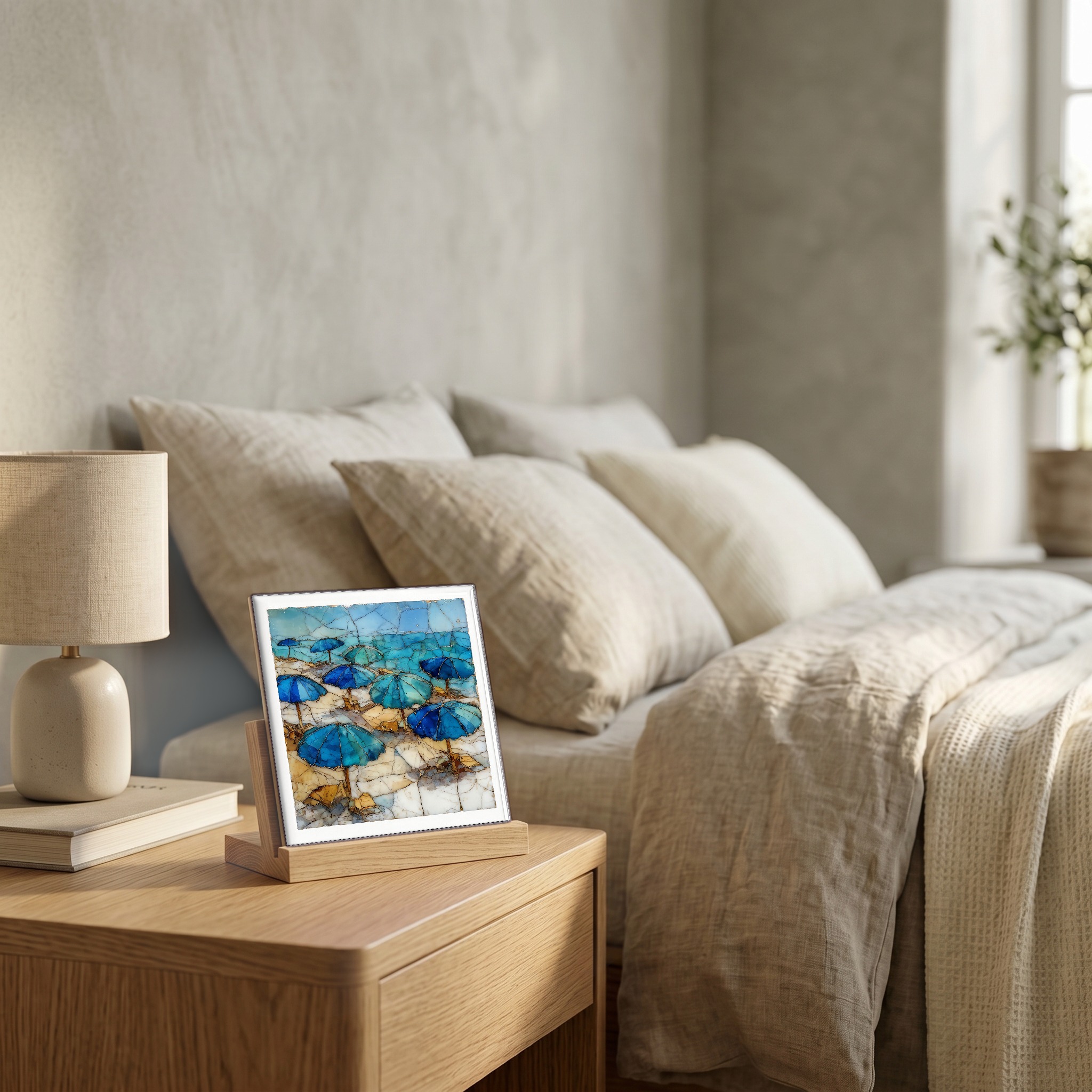
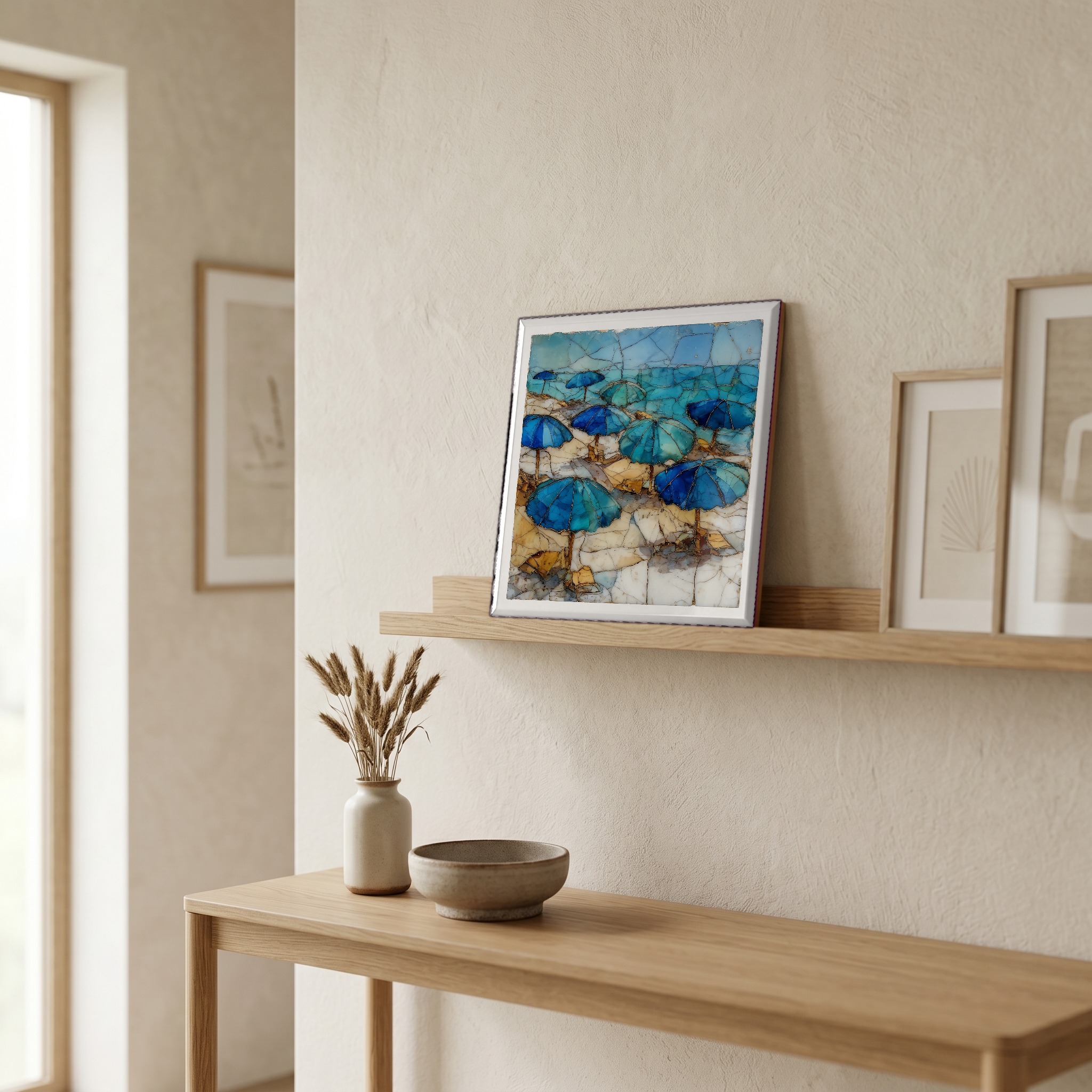
“The beach at Deauville. West of the Seine estuary, two hours from Paris by train. Each summer the parasols come out in rows along Les Planches, the wooden boardwalk that has run the length of the beach since 1923. Striped canvas in red, blue, yellow, green, set out in tight grids that read from the boardwalk like a textile. Behind them the white cabines de bain carry the names of American actors who came for the film festival every September. Most days the channel is grey. The umbrellas are not.
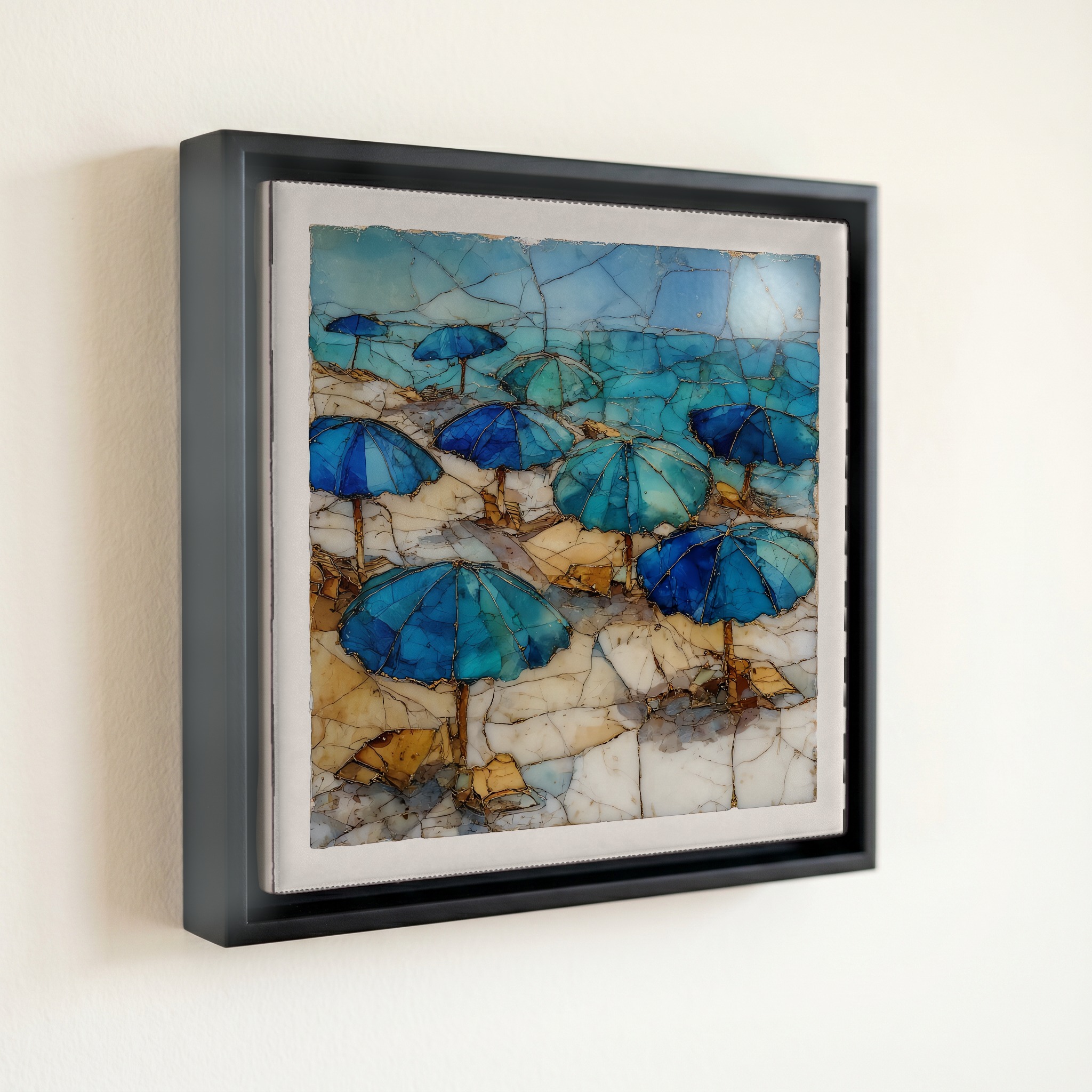
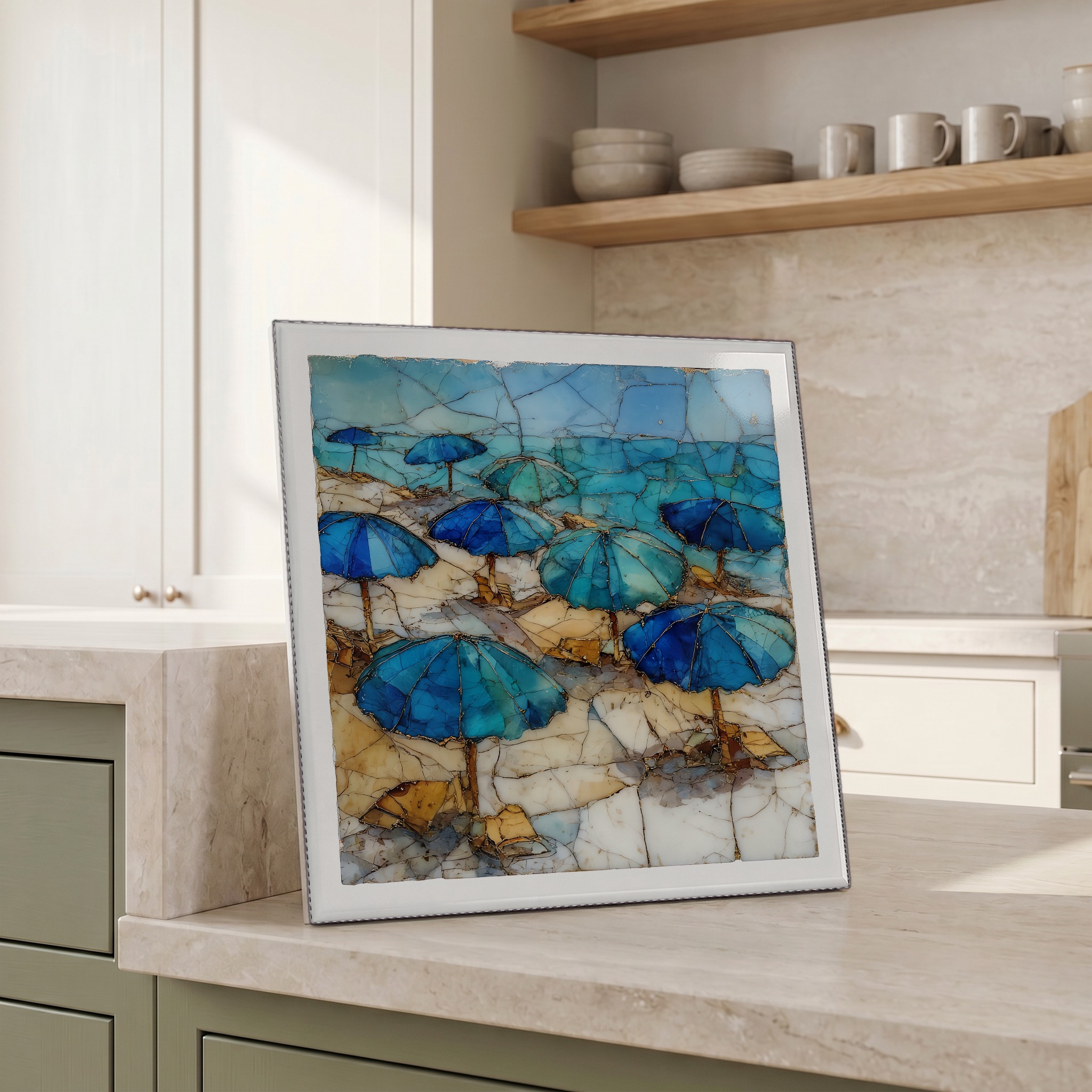
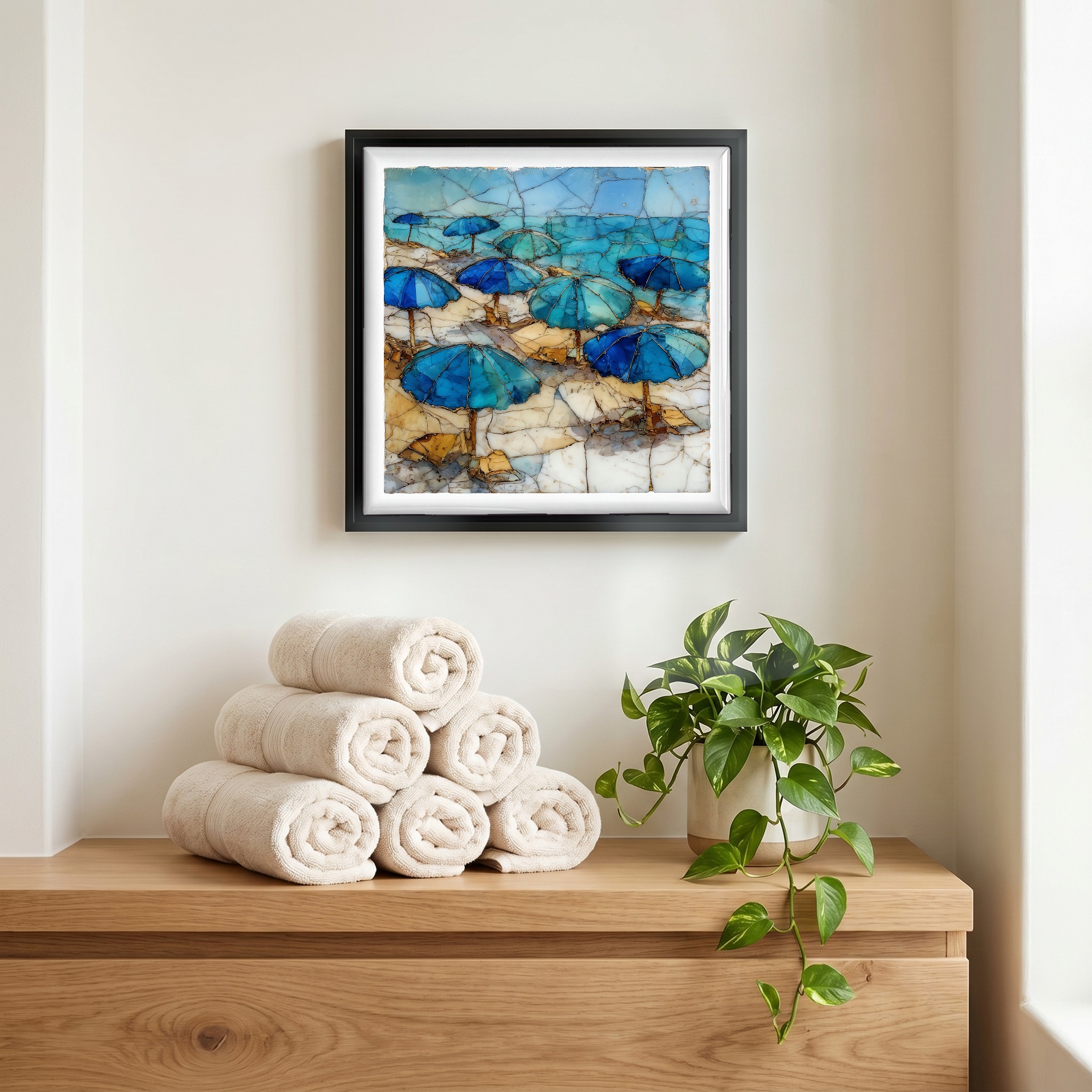
Deauville Beach Umbrellas, on ceramic.
Each tile is finished by hand in our Knoxville studio. Artwork is slowly infused into the ceramic surface under high heat and pressure, and rests beneath a thin glossy finish. The colour lives in the surface, not on top of it.
Pick any four 4-inch tiles — National Parks you've been to, a Smokies set, the four seasons of one place. $ for a set of , cork-backed, ready to live on the table.
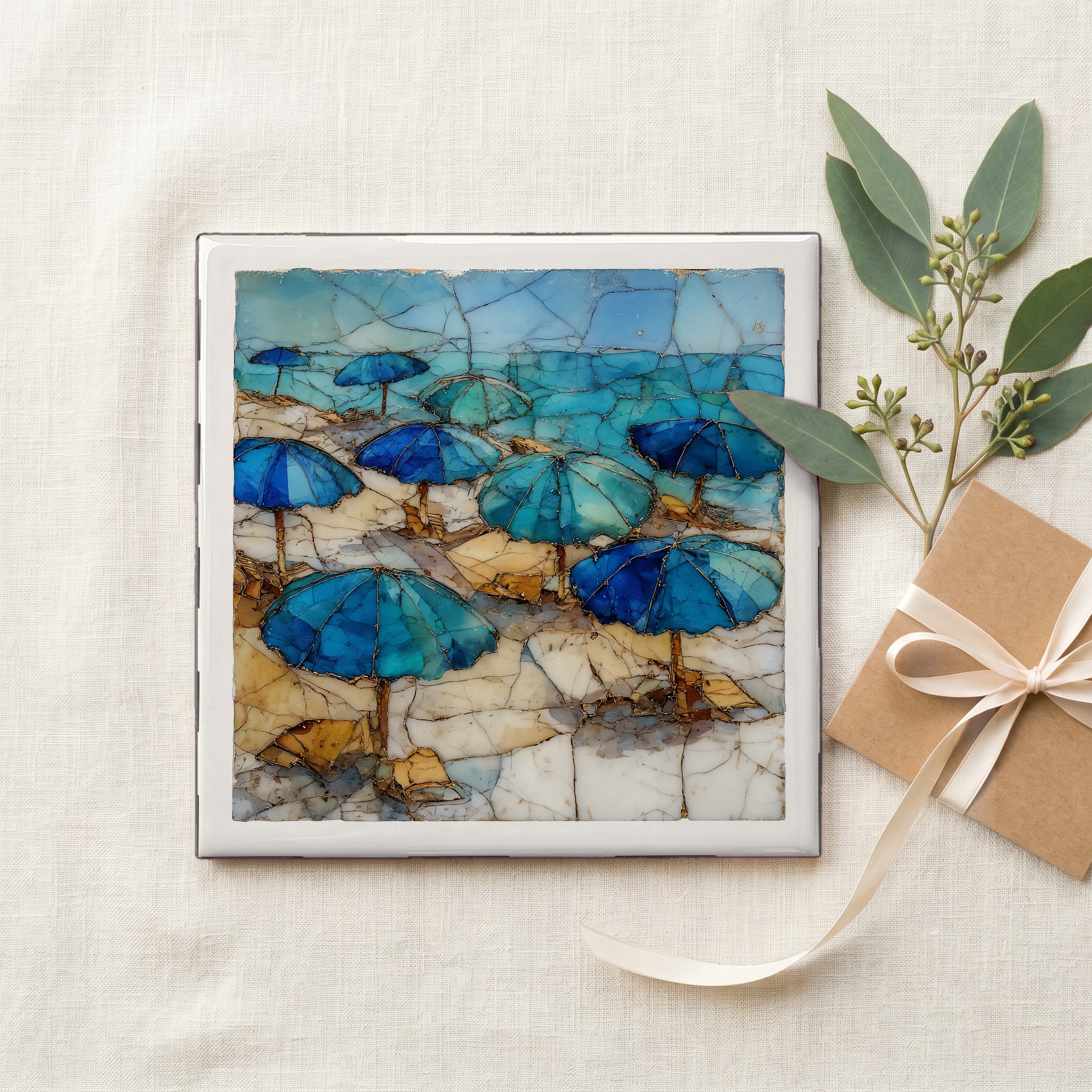
Each tile ships in a kraft box, tied with cream ribbon, with a handwritten note from the studio if you'd like to add one.
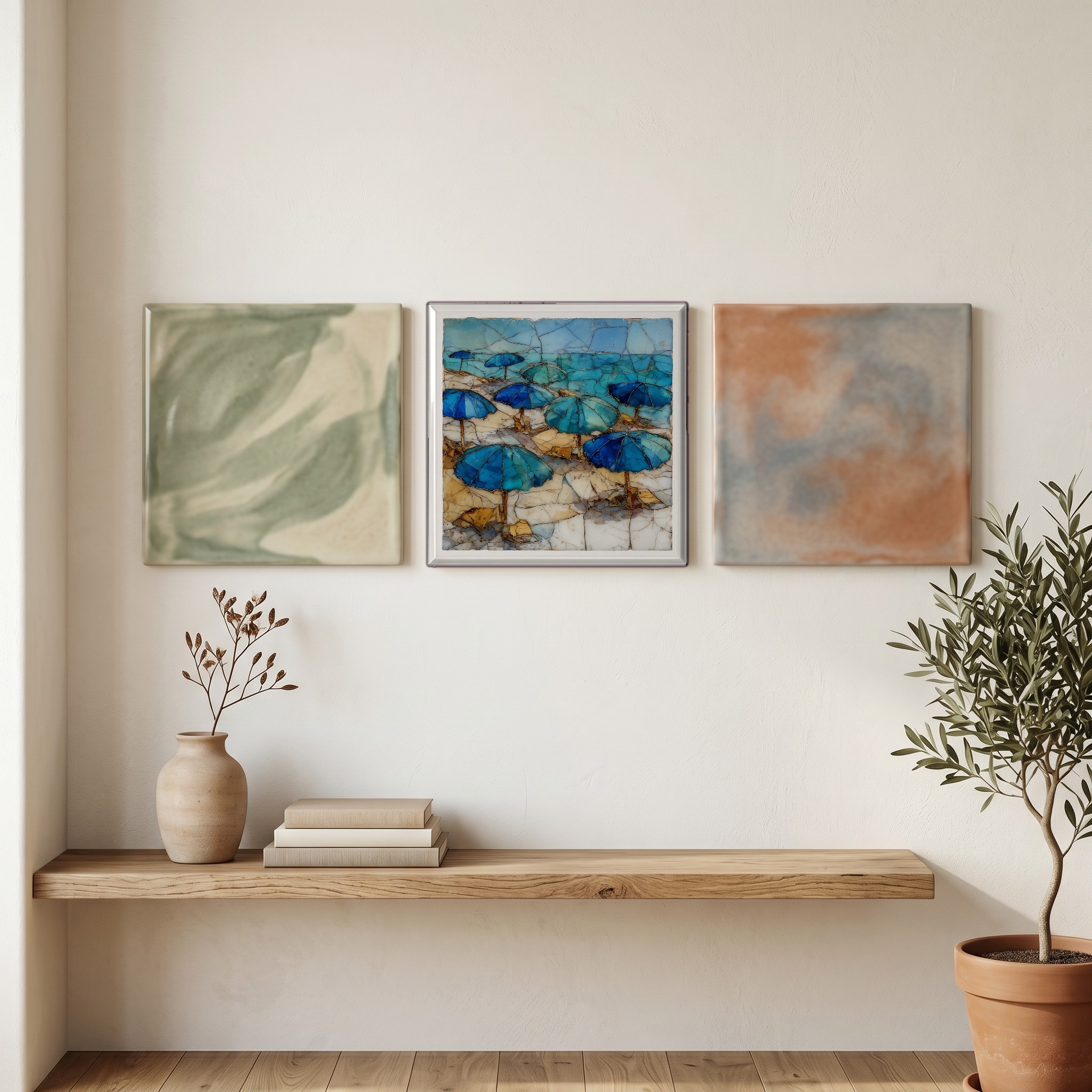
Three or five different vistas, hung together — a chapter of places you've been, or want to go.
The place, in three passes.
Deauville sits on the Côte Fleurie, the stretch of Norman coast running west from the mouth of the Seine, in the Calvados department. The town was founded in 1860 by Charles de Morny, half-brother of Napoleon III, who saw the potential of the flat sandy shore at the mouth of the river Touques. From central Paris the journey is roughly 200 kilometres; the direct train from Gare Saint-Lazare runs in about two hours. The beach itself is two kilometres of fine pale sand, edged by Les Planches, the wooden promenade laid down in 1923, and by the white art-deco cabines de bain that carry the names of American film stars.
The parasols themselves are the rented beach umbrellas, set out each morning along two kilometres of fine sand in tight, repeating bays. Most are striped canvas in blocks of red, blue, yellow and green; others are a single cream that reads almost white from a distance. The grid is regimented and identical each summer, run by the municipal beach concession, and recognisable in postcards going back to the years between the wars. Photographed from the wooden boardwalk that runs above the sand, or from the heights across the river Touques at Trouville, the rows read as colour-blocked textile against the grey water of the English Channel. The arrangement is what makes the picture; without it the sand is the sand.
The beach service runs the parasols from late May through the first half of September, matching the warm-weather window on the Norman coast. Average July highs in Deauville sit around 21°C; the Channel water rarely climbs above 18°C, cold enough that most of the beach traffic stays on the sand. The most photographed week of the year is the first week of September, when the Deauville American Film Festival has run since 1975 and the parasols are still up. By the end of the month the umbrellas are pulled in and the beach reverts to its winter face: empty sand, wind, oyster boats working out of nearby Trouville-sur-Mer.