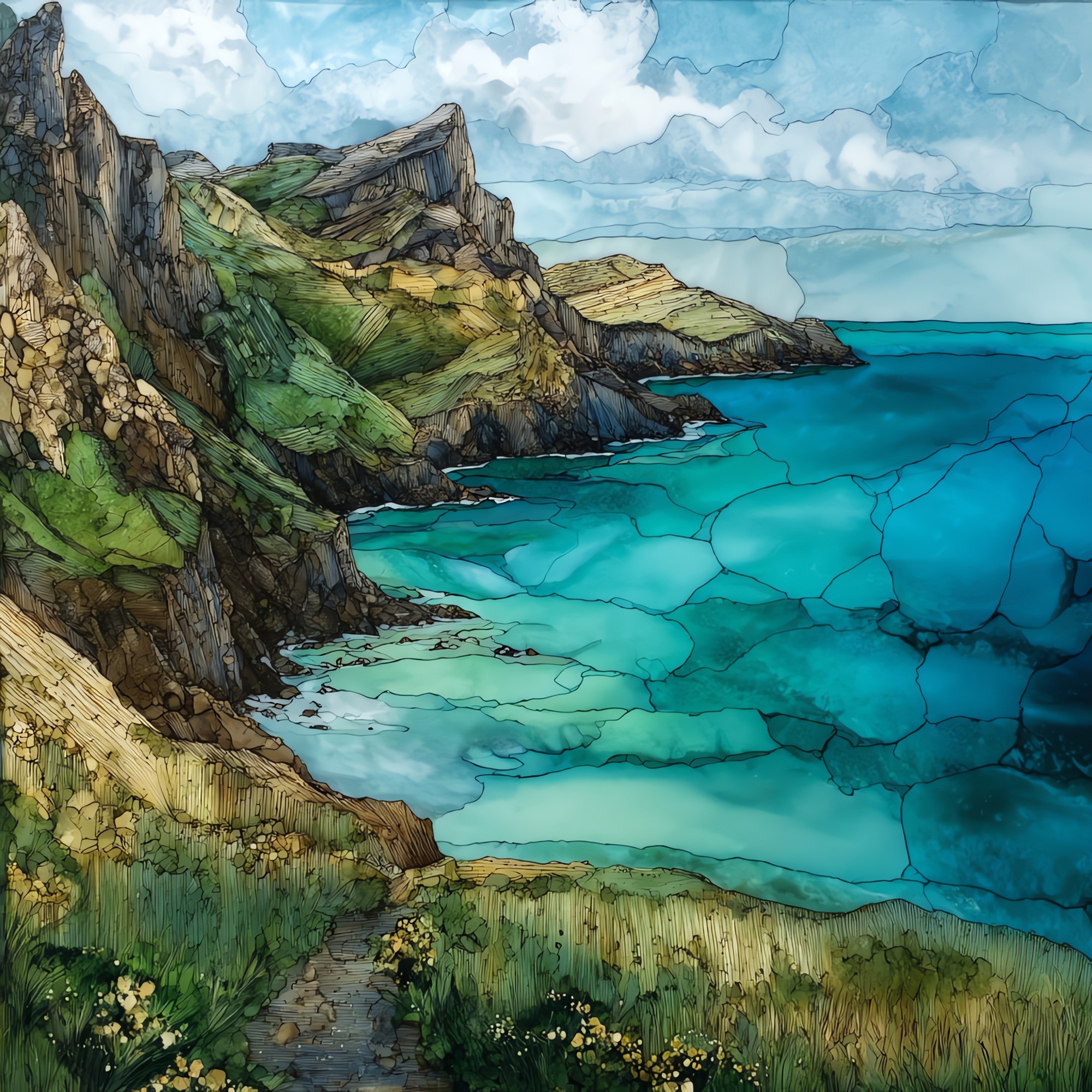
Cap de la Chèvre
— the heather lying down before the Atlantic.
Not only on a wall.
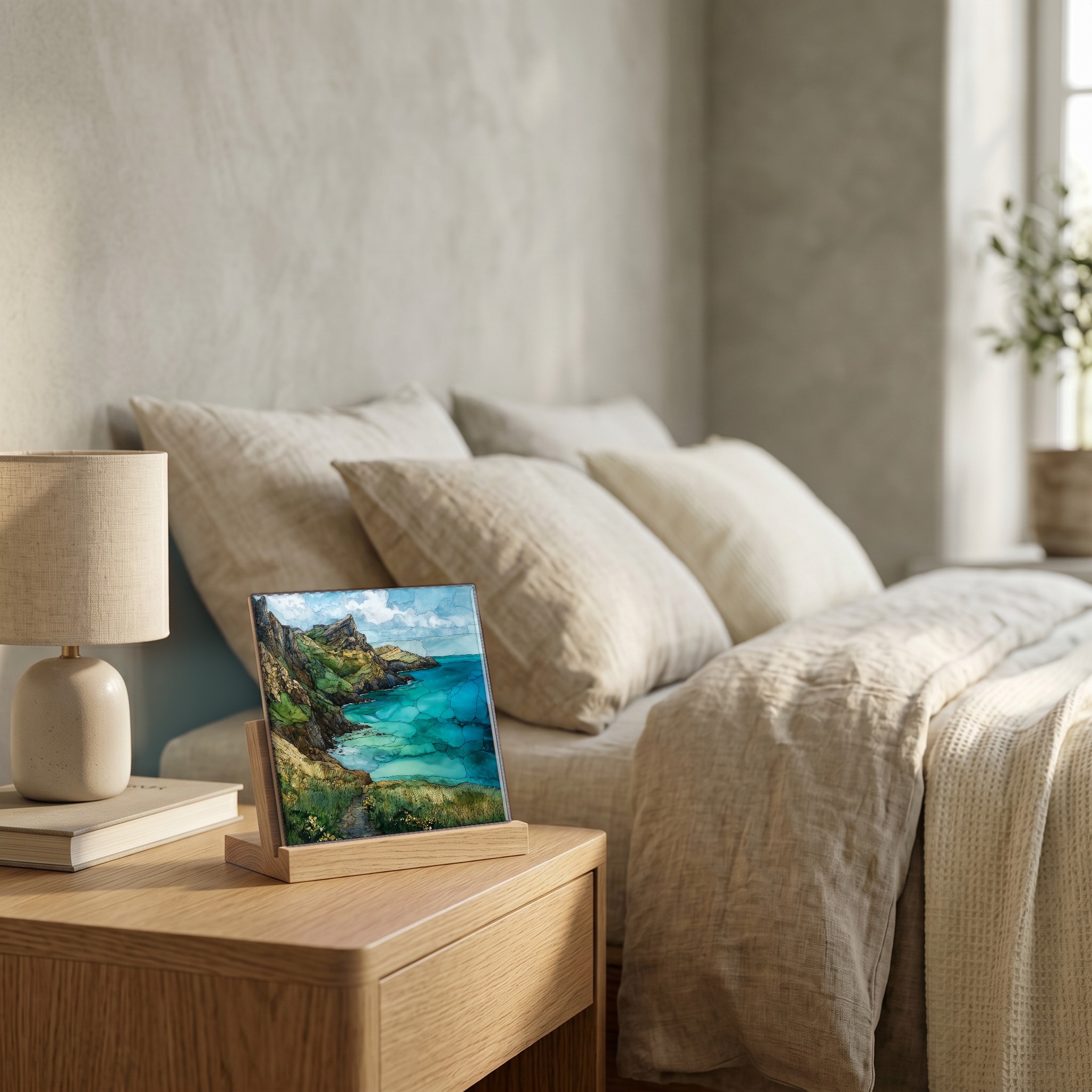
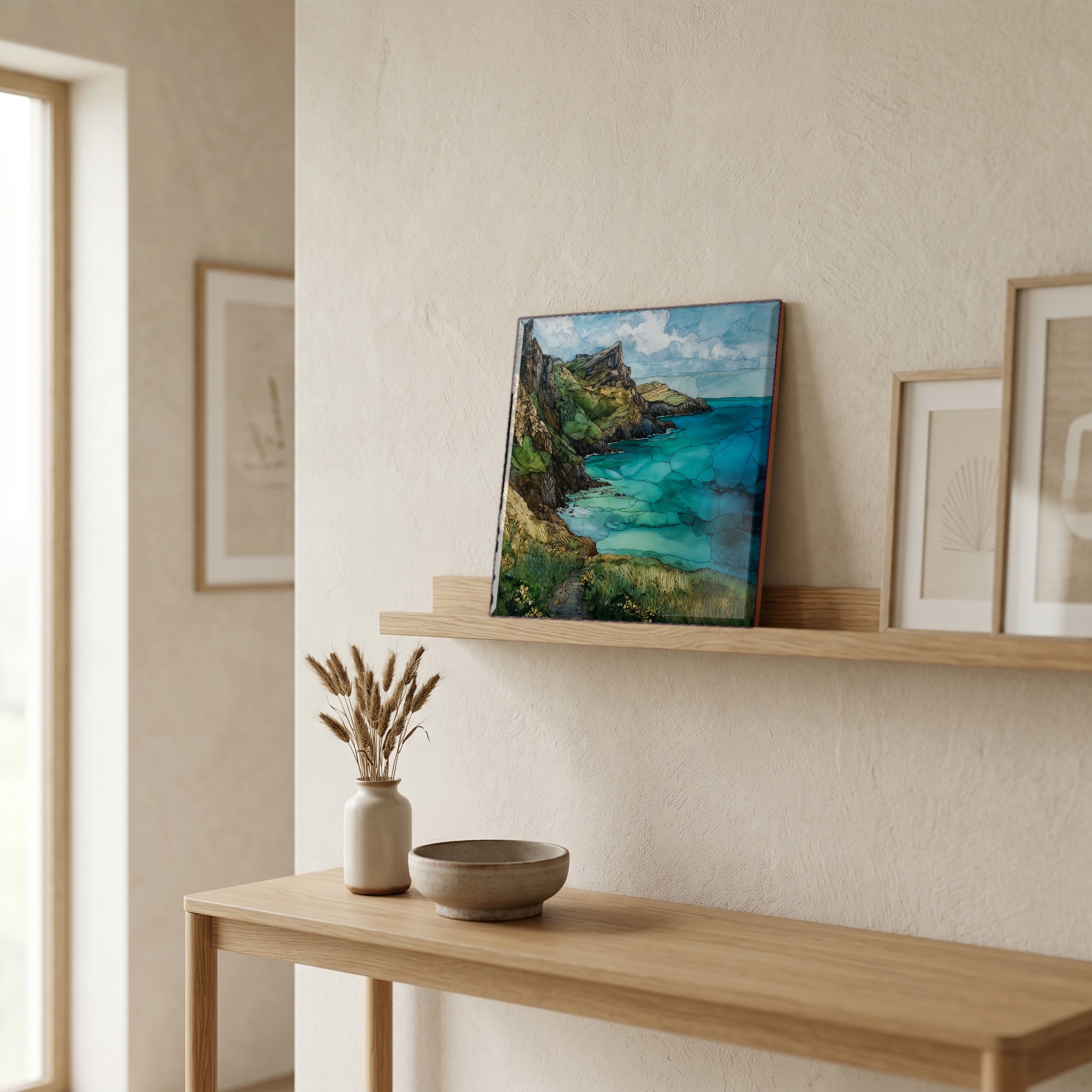
“The south end of the Crozon peninsula, where the Bay of Douarnenez closes against the Iroise Sea. Heather and maritime pine, then sandstone cliffs that drop nearly ninety metres to the water. On a clear day Cap Sizun lifts across the bay and the Île de Sein hangs at the far edge of sight. The wind here is the wind off the open Atlantic; it bends every plant on the headland the same way. Sheep used to graze the moor. A semaphore still keeps watch.
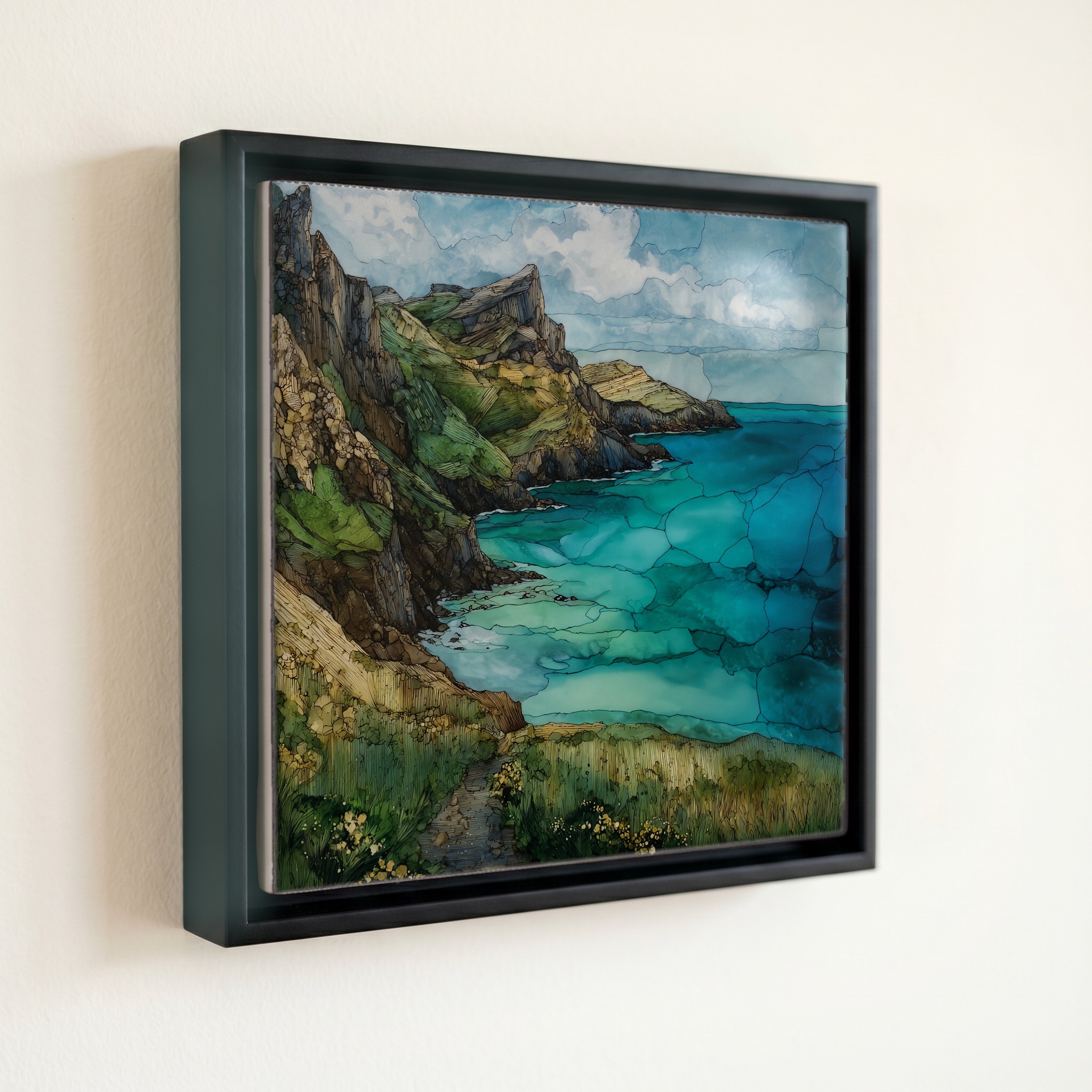
Cap de la Chèvre, on ceramic.
Each tile is finished by hand in our Knoxville studio. Artwork is slowly infused into the ceramic surface under high heat and pressure, and rests beneath a thin glossy finish. The colour lives in the surface, not on top of it.
Pick any four 4-inch tiles — National Parks you've been to, a Smokies set, the four seasons of one place. $ for a set of , cork-backed, ready to live on the table.
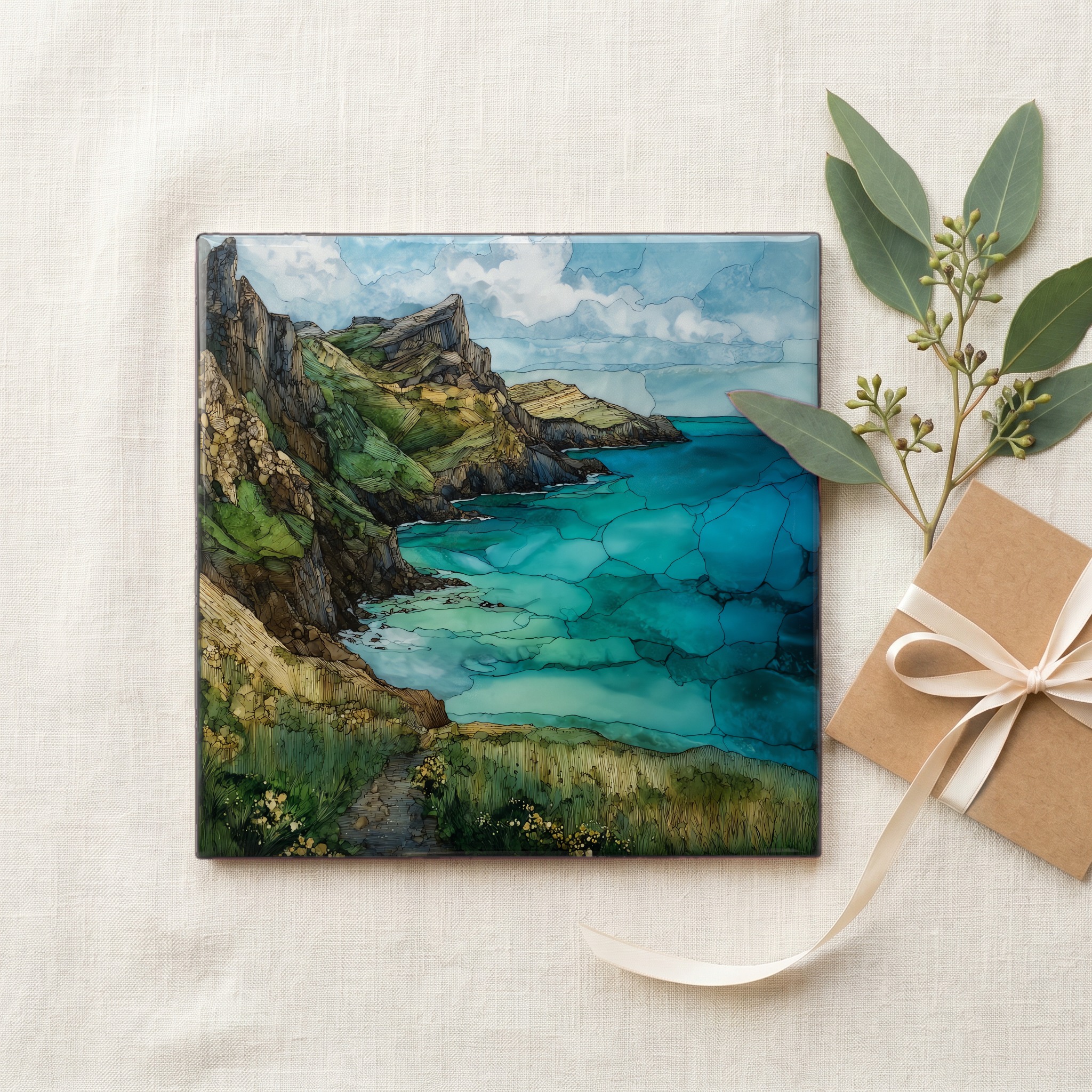
Each tile ships in a kraft box, tied with cream ribbon, with a handwritten note from the studio if you'd like to add one.
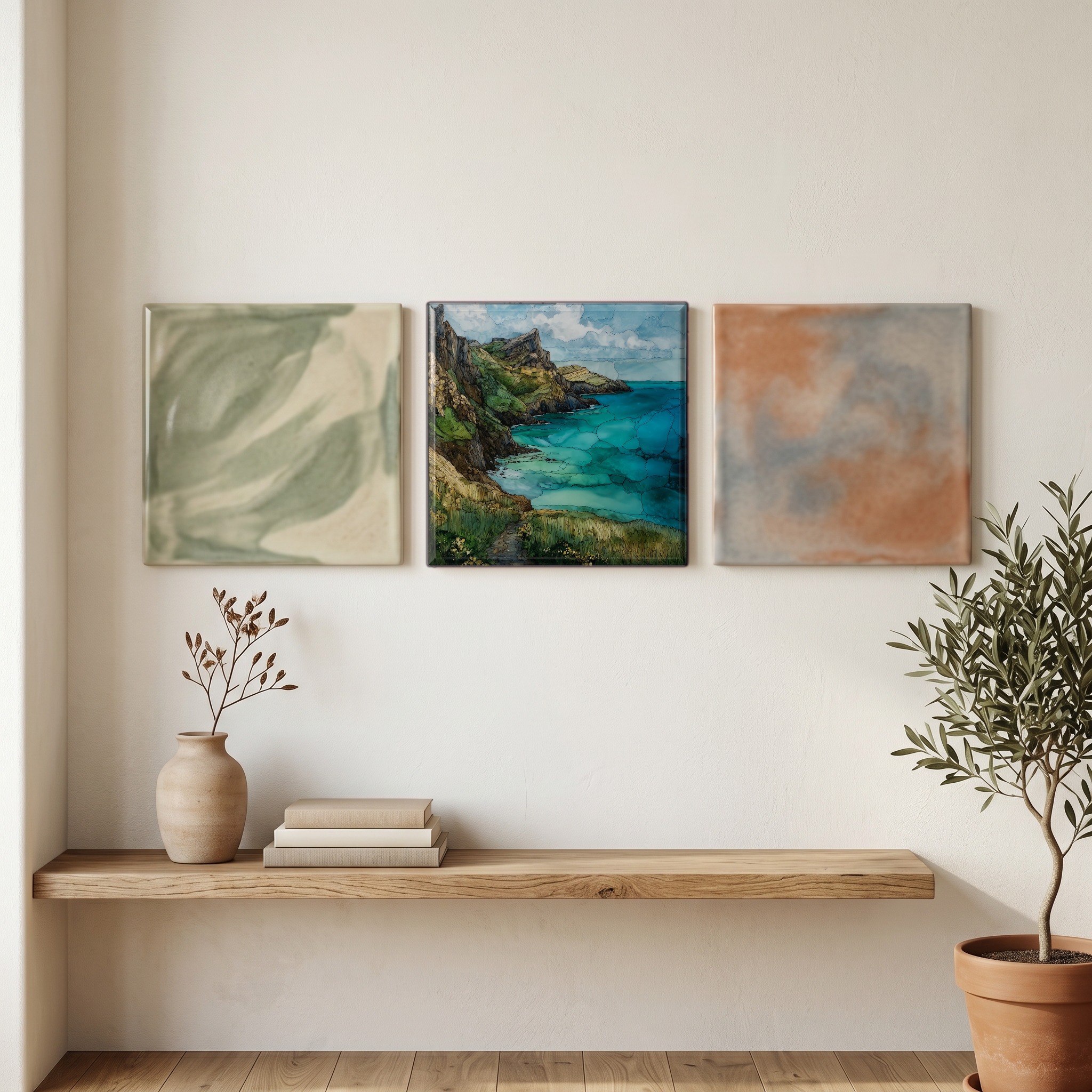
Three or five different vistas, hung together — a chapter of places you've been, or want to go.
The place, in three passes.
Cap de la Chèvre is the southernmost point of the Crozon peninsula in Finistère, the westernmost department of France's Brittany region. The headland sits in the commune of Crozon, closing the northern arm of the Bay of Douarnenez and facing Cap Sizun across the open water. Armorican sandstone cliffs reach roughly ninety metres above the Iroise Sea, the highest on the peninsula, and form part of the Armorique Regional Natural Park and the Armorique UNESCO Global Geopark. The Conservatoire du Littoral manages the land. Access is by the D255 from Morgat, about eight kilometres north, and on foot along the GR34, the long-distance coastal trail that traces the whole of Brittany's shore.
The cliffs are made of Armorican sandstone (grès armoricain), a hard, pale, quartz-rich rock laid down in the early Ordovician, roughly 480 million years ago. The same formation outcrops along the Pointe de Pen-Hir and the Tas de Pois to the north, and at the Pointe de Dinan. At Cap de la Chèvre the rock holds up the tallest cliffs of the Crozon peninsula, close to ninety metres above the Iroise Sea, and the Atlantic has cut sea caves and arches into the base. The site is a recognised point of interest in the Armorique UNESCO Global Geopark.
The cap is reached from Morgat, eight kilometres north on the D255, which ends at a small car park beside the Sémaphore de la Marine Nationale (installed in 1971). From there the headland is walking-only: the GR34 coastal path loops the point and continues east toward Saint-Hernot and the Maison des Minéraux. A short walk from the car park is the Mémorial de l'Aéronautique Navale, installed in 1988 in a former coastal battery to honour French naval aviators lost in the North Atlantic since 1910. Afternoons in spring and early autumn give the gentlest wind and the longest light.