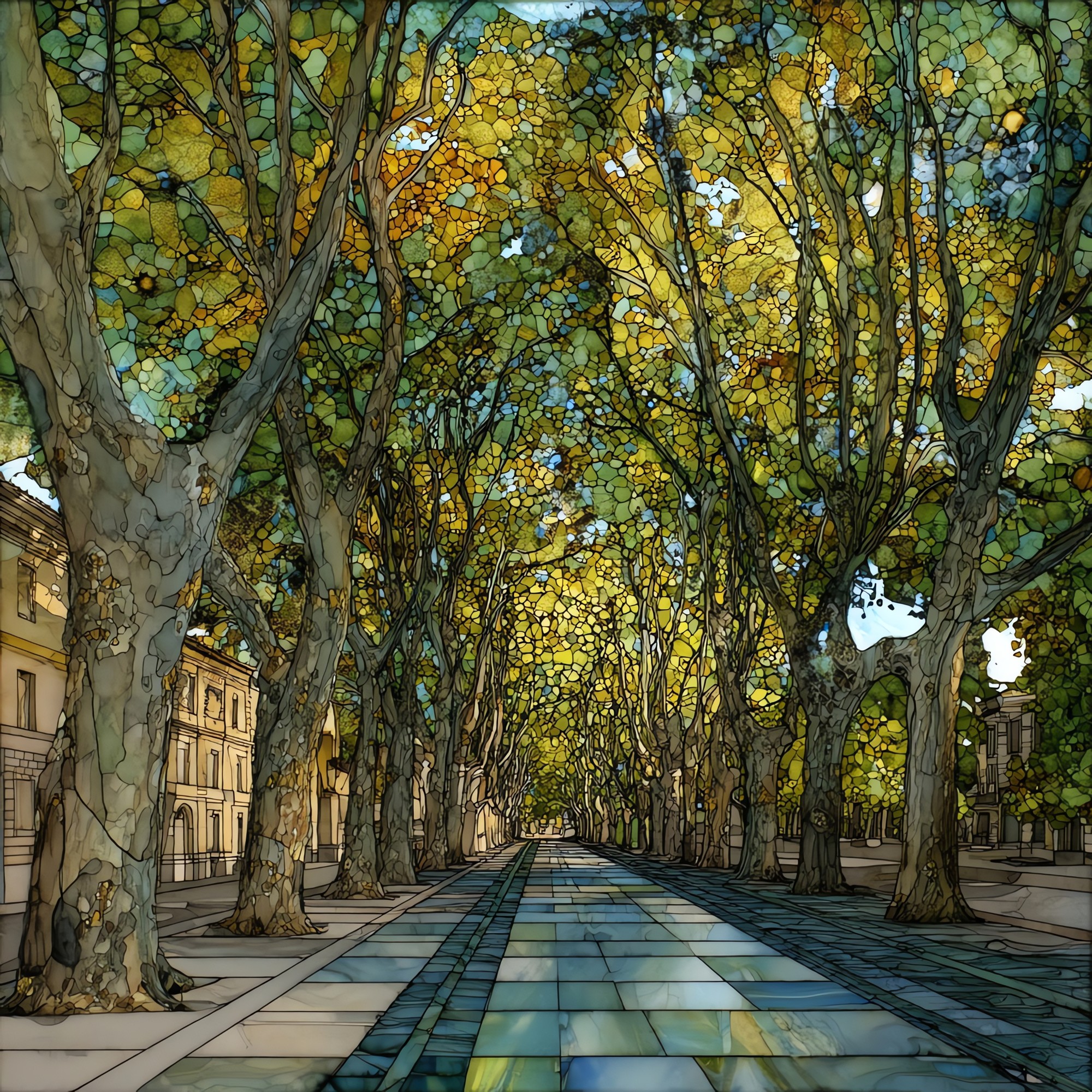
Cours Mirabeau
— the long shade between four fountains.
Not only on a wall.
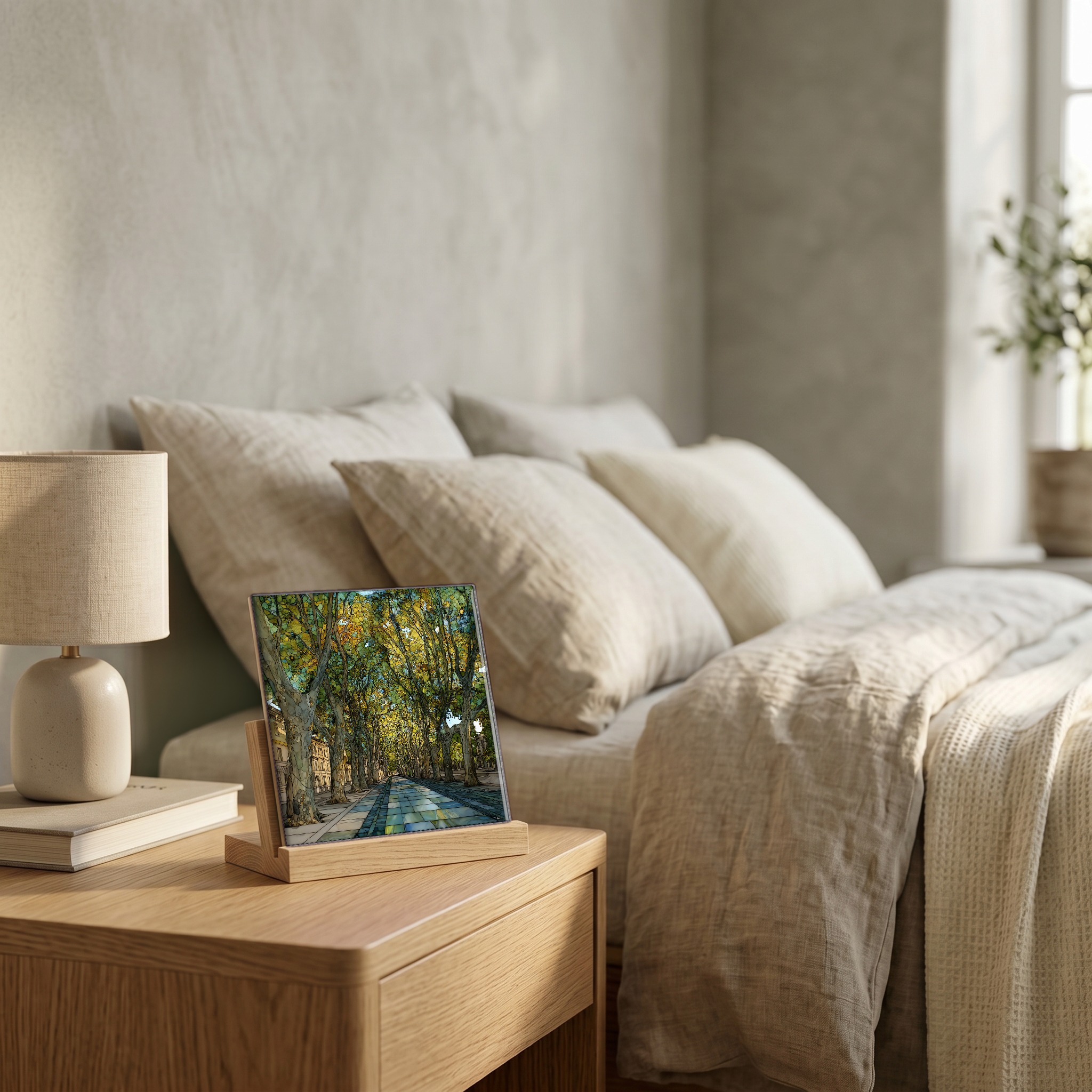
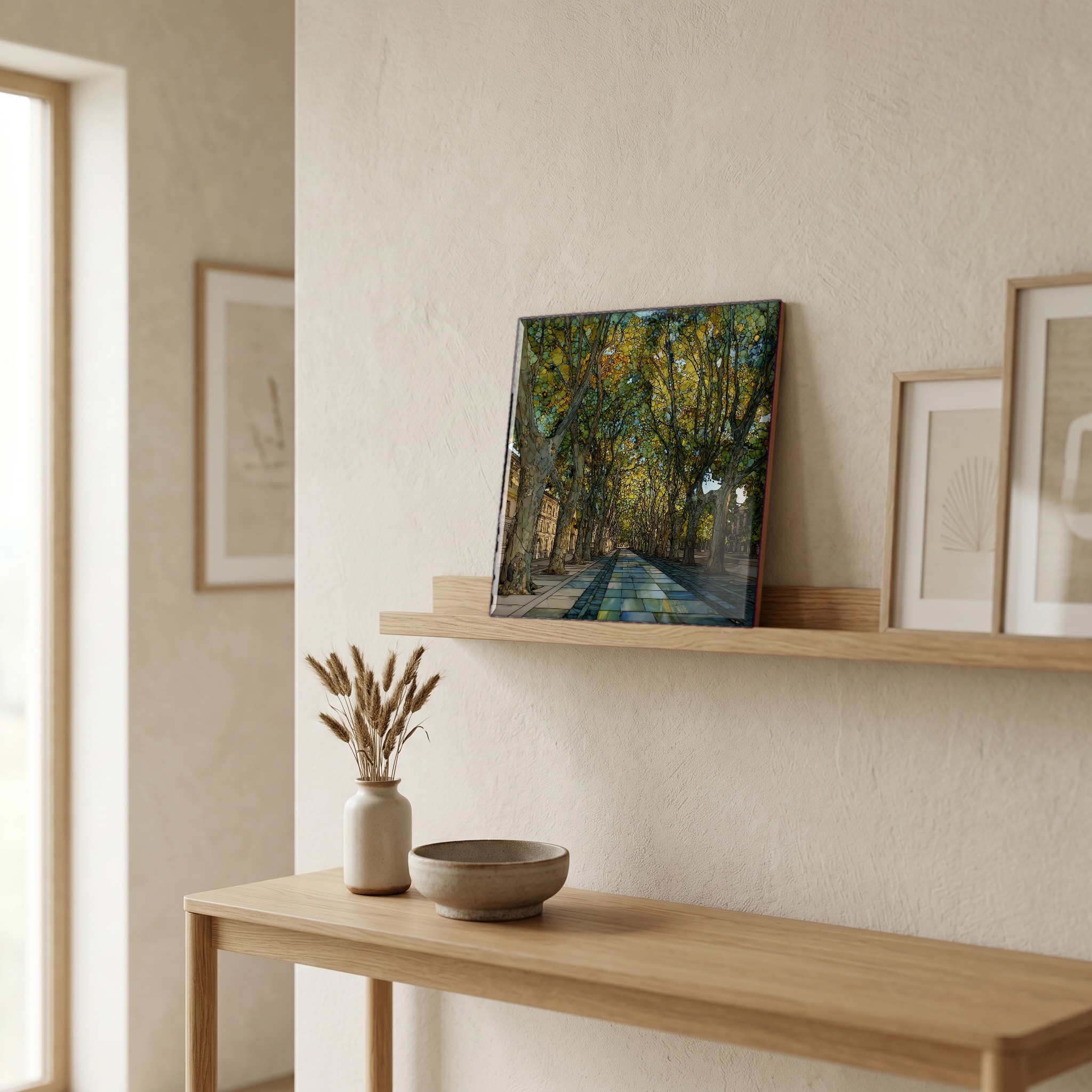
“A long, shaded avenue laid out in the 1650s on the site of the old ramparts. Four fountains run down the middle. Plane trees meet overhead. The north side keeps the sun; that's where the cafés are. Les Deux Garçons is on this side. Cézanne sat there, Zola sat there, the same terrace, the same shade. The south side is shadier and holds the eighteenth-century townhouses. The Fontaine Moussue, midway along, is warm to the touch, fed by the same thermal spring the Romans tapped when they founded the city. A walk end to end takes about ten minutes if you don't stop, an afternoon if you do.
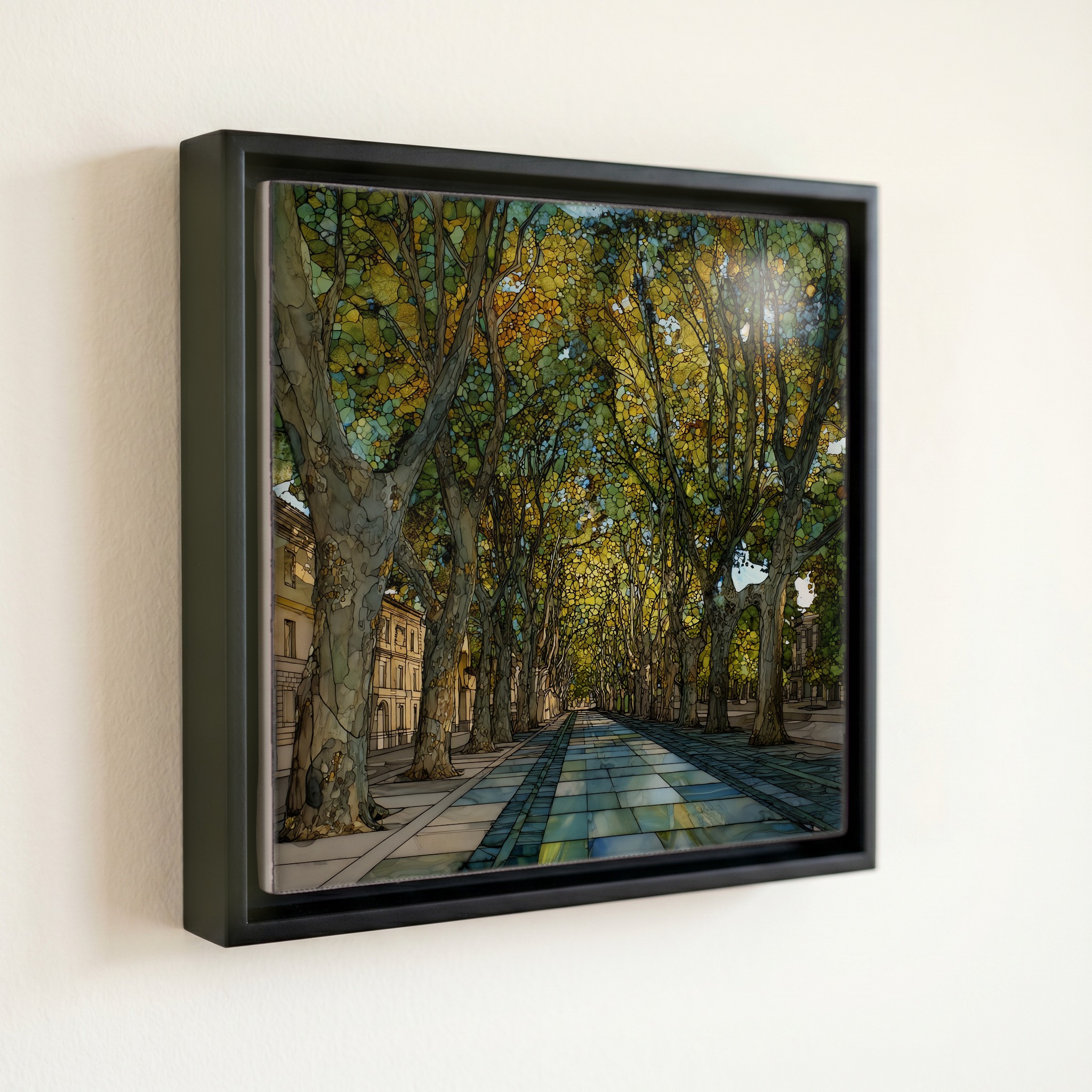
Cours Mirabeau, on ceramic.
Each tile is finished by hand in our Knoxville studio. Artwork is slowly infused into the ceramic surface under high heat and pressure, and rests beneath a thin glossy finish. The colour lives in the surface, not on top of it.
Pick any four 4-inch tiles — National Parks you've been to, a Smokies set, the four seasons of one place. $ for a set of , cork-backed, ready to live on the table.
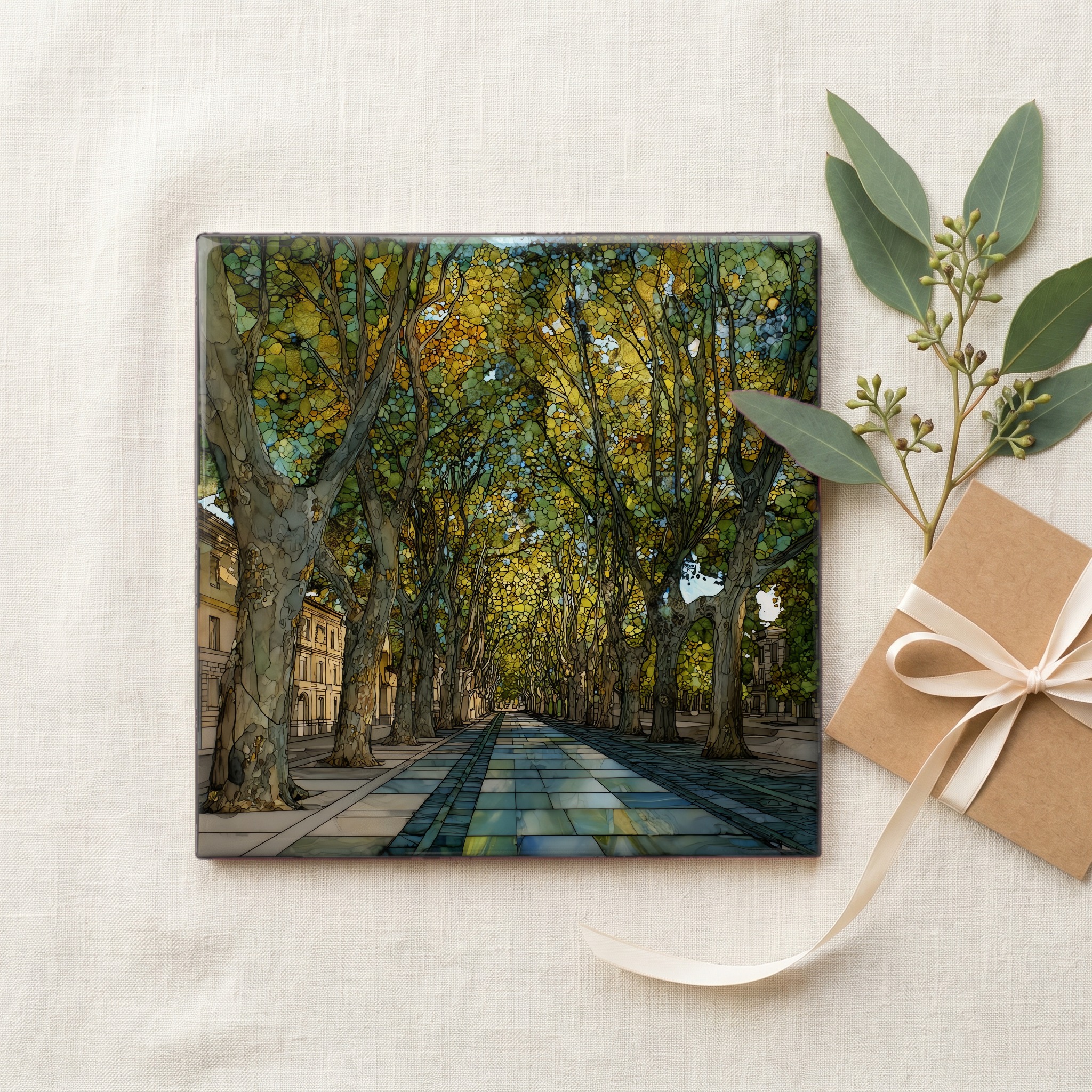
Each tile ships in a kraft box, tied with cream ribbon, with a handwritten note from the studio if you'd like to add one.
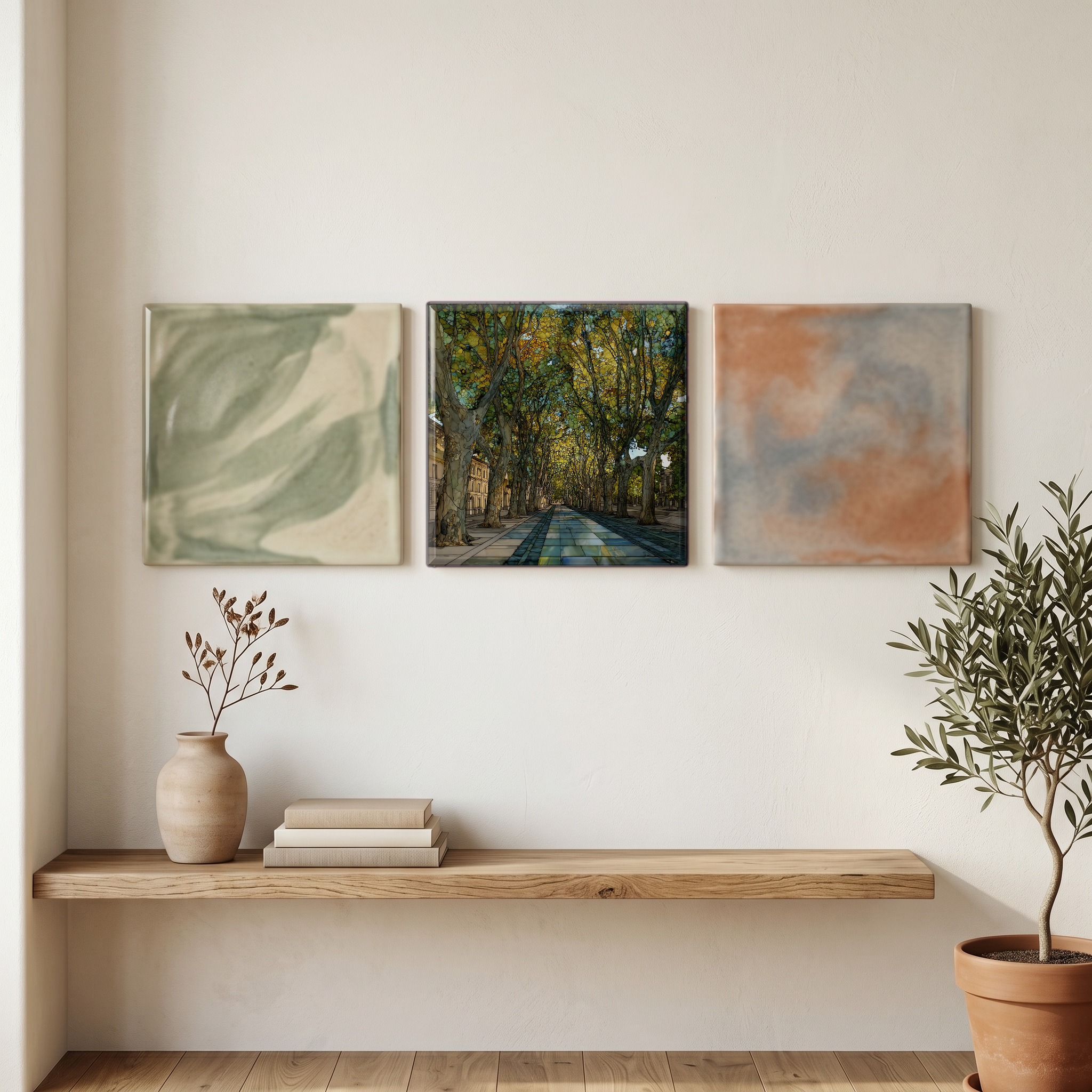
Three or five different vistas, hung together — a chapter of places you've been, or want to go.
The place, in three passes.
Cours Mirabeau is the main avenue of Aix-en-Provence, in the Bouches-du-Rhône département of Provence-Alpes-Côte d'Azur, about 30 km north of Marseille. It runs roughly 440 metres east to west, 42 metres wide, between the Fontaine de la Rotonde and place Forbin. The avenue was laid out beginning in 1649 on the site of the old city ramparts, commissioned by Michel Mazarin, then archbishop of Aix and brother to Cardinal Jules Mazarin. It took its present name in 1876, after Honoré-Gabriel de Riqueti, comte de Mirabeau, the revolutionary orator who represented the third estate of Aix in the Estates-General of 1789. Today it divides the medieval old town to the north from the eighteenth-century quartier Mazarin to the south.
The defining feature is the canopy. Two rows of plane trees (Platanus × acerifolia) line each side of the avenue, planted in the late nineteenth century after the original elms gave out. Their branches meet some 15 metres overhead and form a continuous ceiling from May to October. The leaves are large, hand-shaped, slightly hairy; they filter the Provençal sun into soft dapples on the pavement below. The north pavement holds the cafés because the canopy keeps it cool enough to sit through August; the south pavement holds the old hôtels particuliers because their stone keeps it shaded through the winter when the trees are bare. The light shifts with the mistral, the dry wind that runs down the Rhône valley and reaches Aix from the north.
Four fountains run the centre line, spaced at near-regular intervals. The westernmost is the Fontaine de la Rotonde, completed in 1860, twelve metres tall, with three statues representing Justice, Agriculture, and Fine Arts. Halfway along is the Fontaine des Neuf Canons (1691), low and unassuming, set at the height of the flocks that once crossed Aix on the transhumance. Then the Fontaine d'Eau Thermale, called the Fontaine Moussue for the moss that grows over its hot-spring water, fed by the same spring the Romans tapped when they founded Aquae Sextiae in 122 BC. At the eastern end stands the Fontaine du Roi René, an 1819 statue of the last count of Provence holding a bunch of muscat grapes he is said to have introduced to the region.