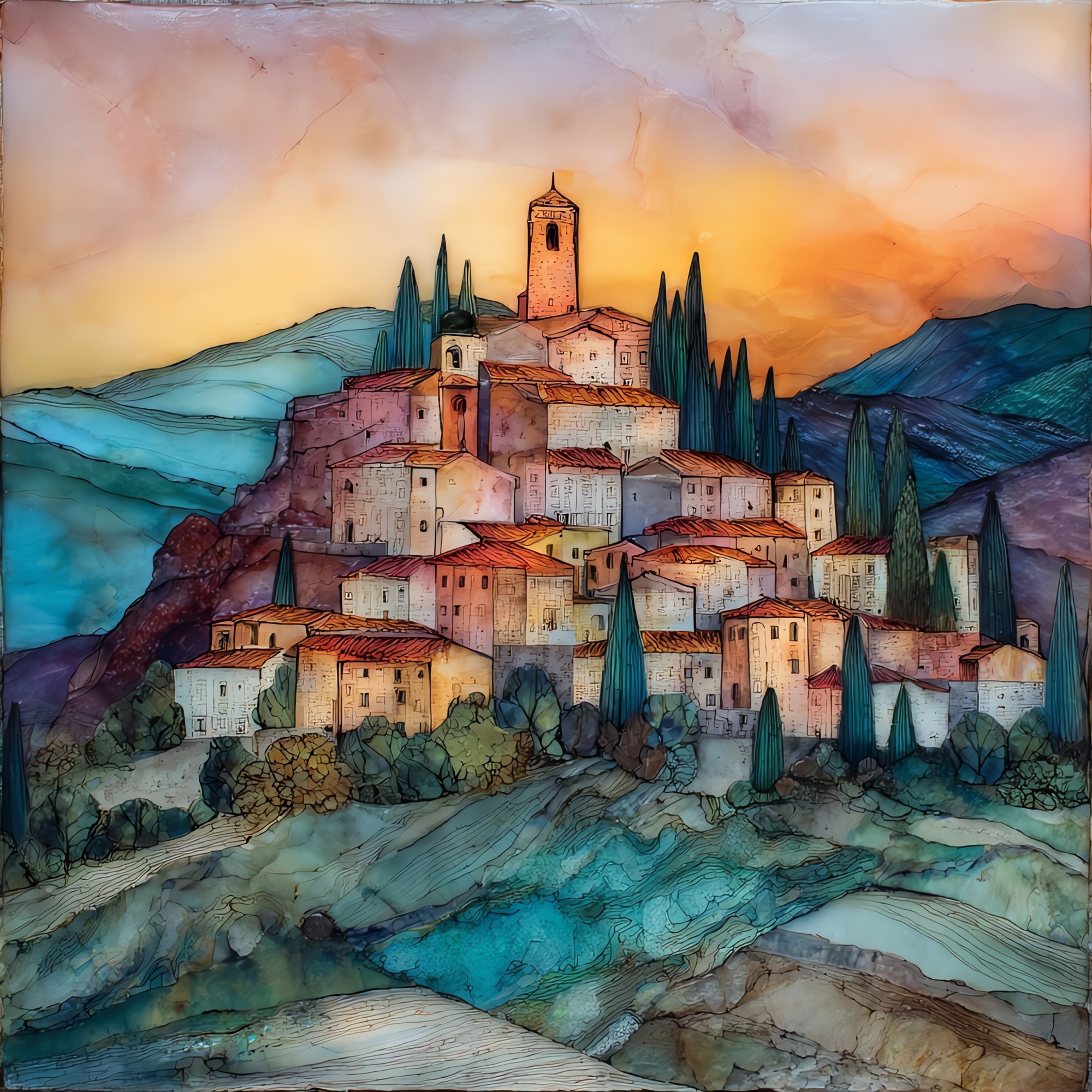
Cordes-sur-Ciel
— a ridge the morning fog rises to meet.
Not only on a wall.
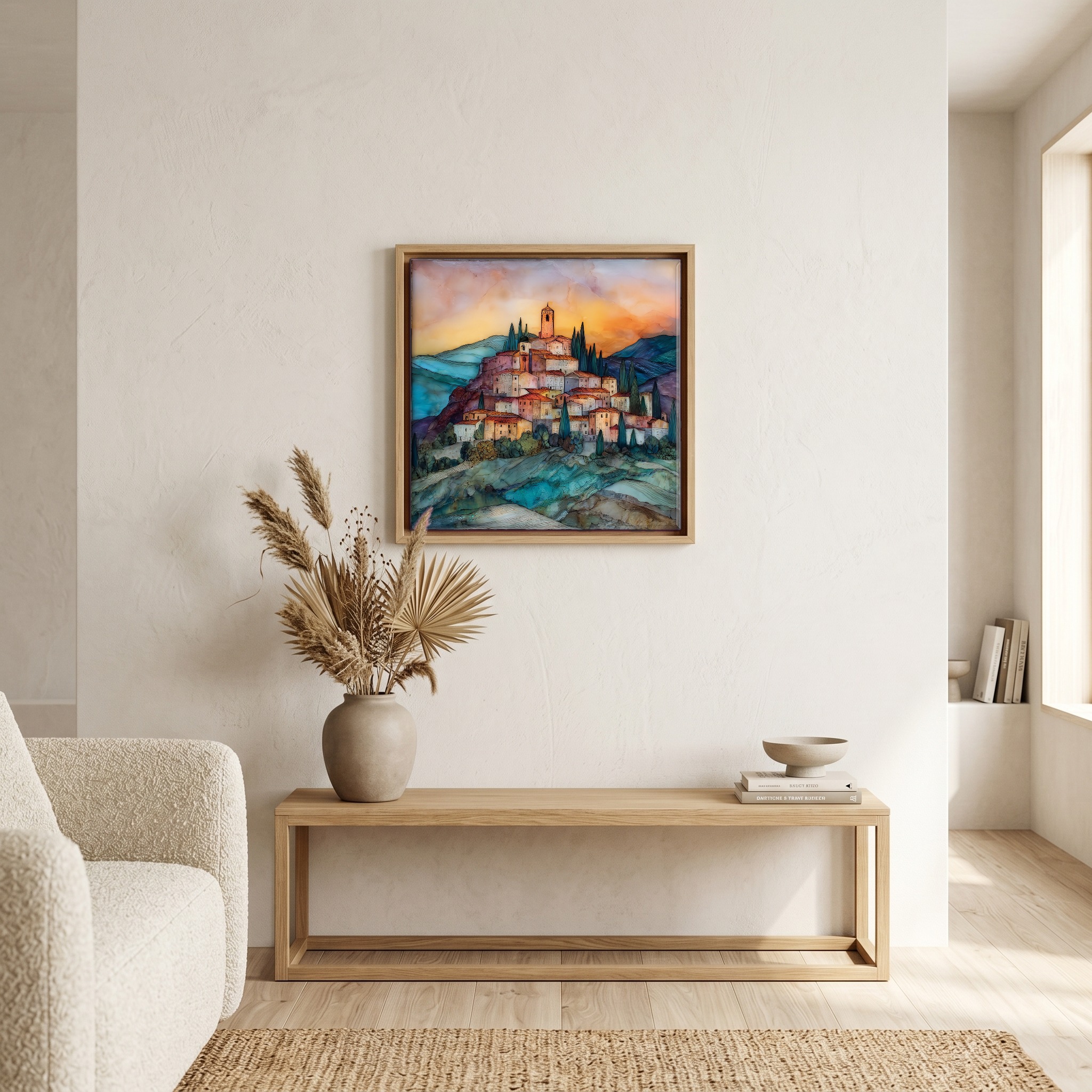
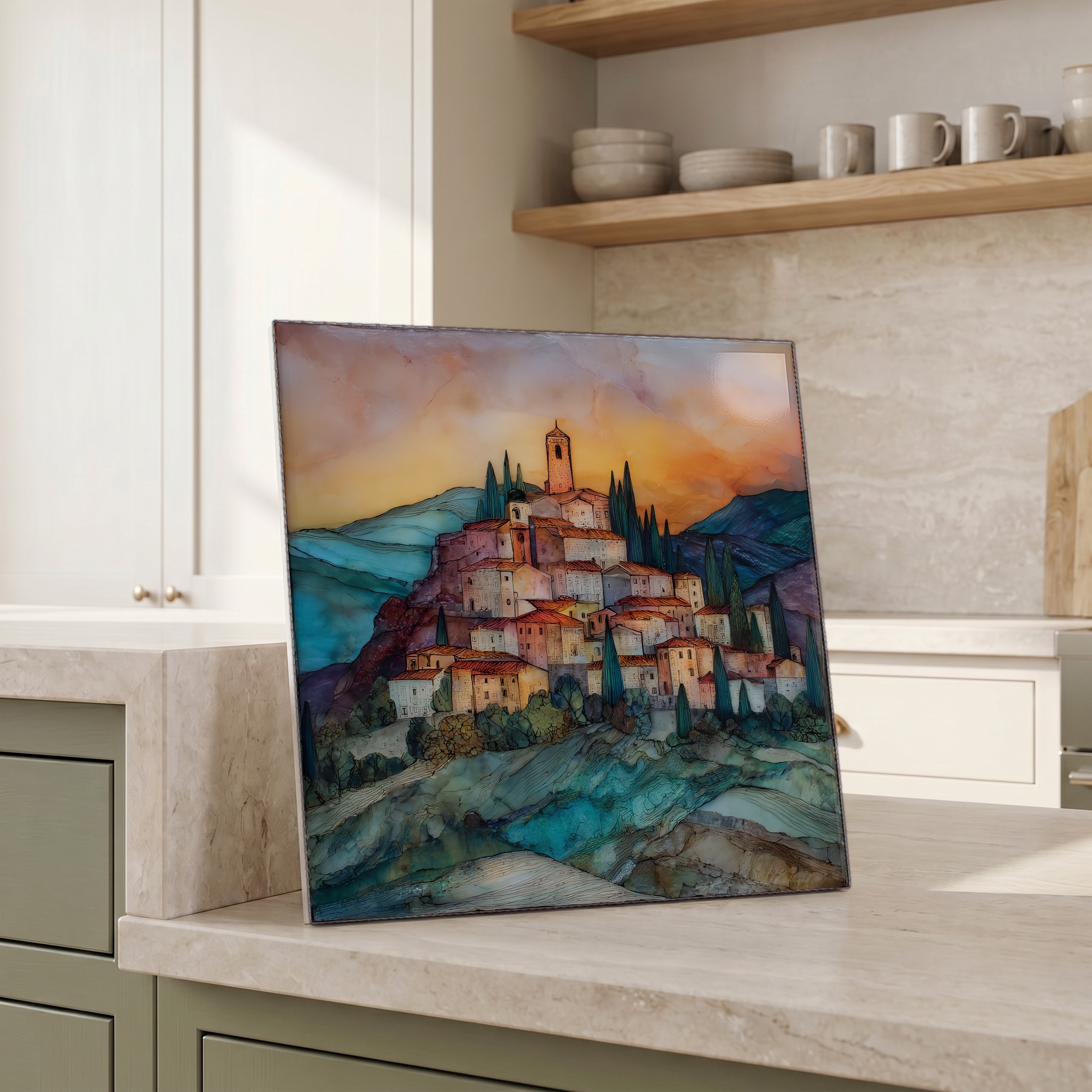
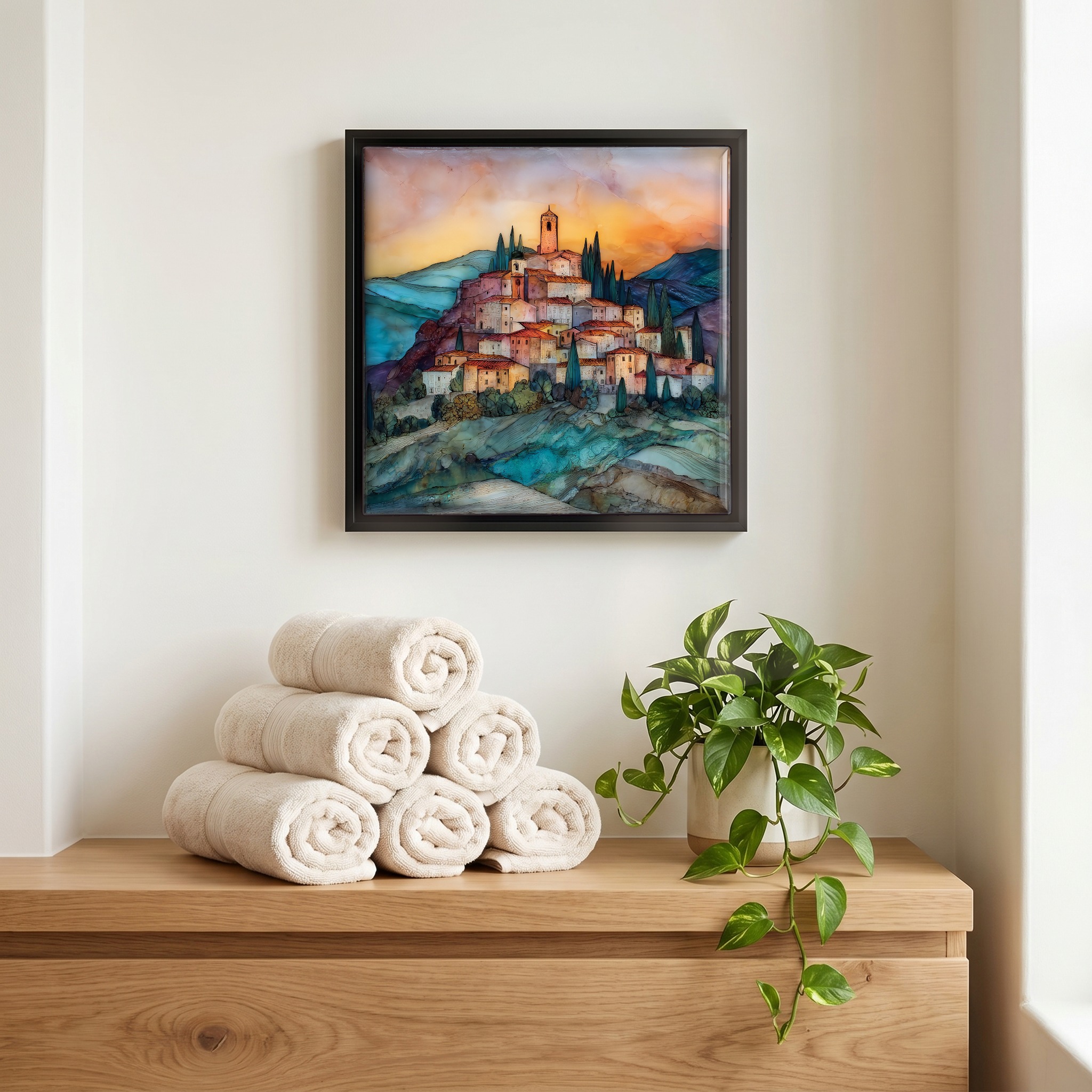
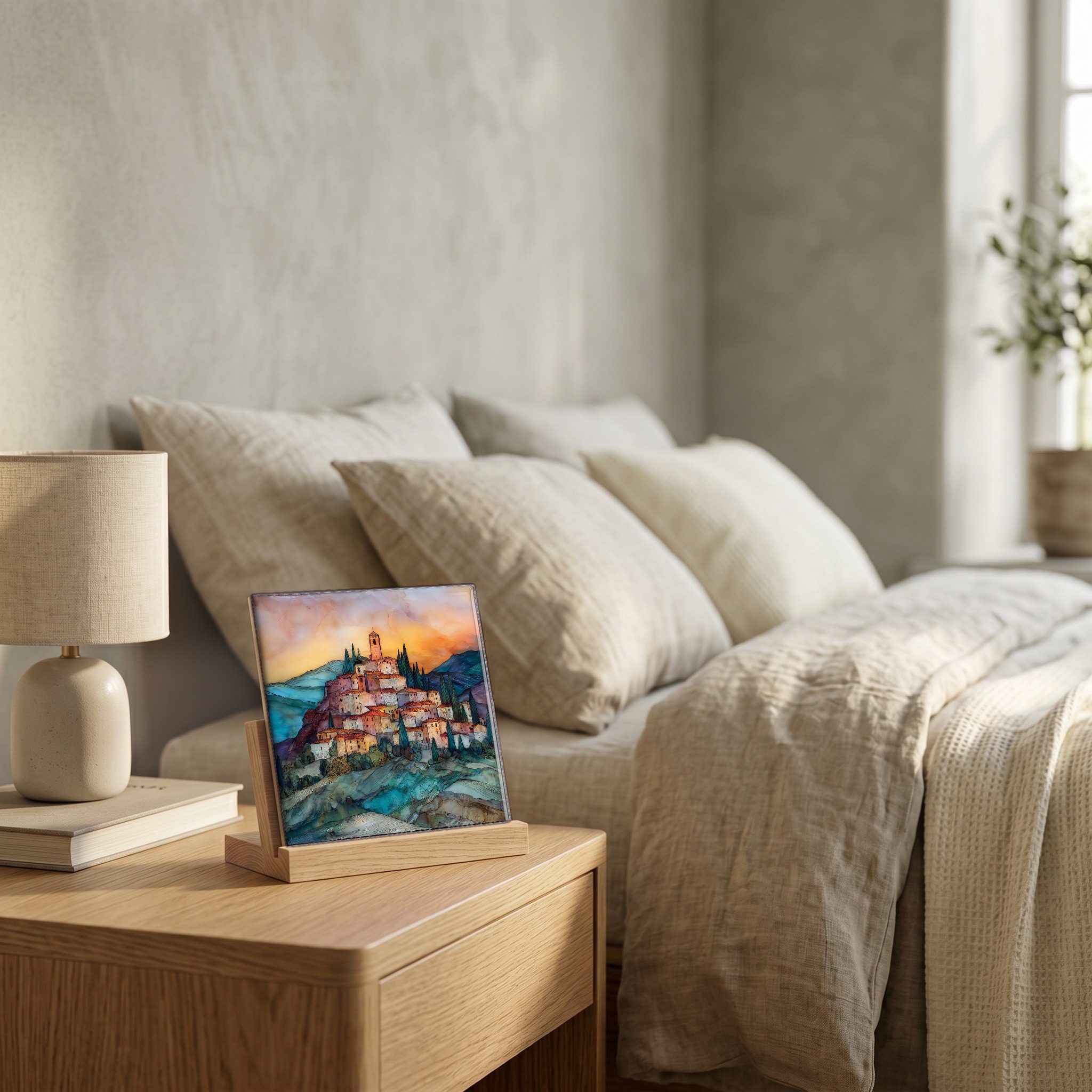
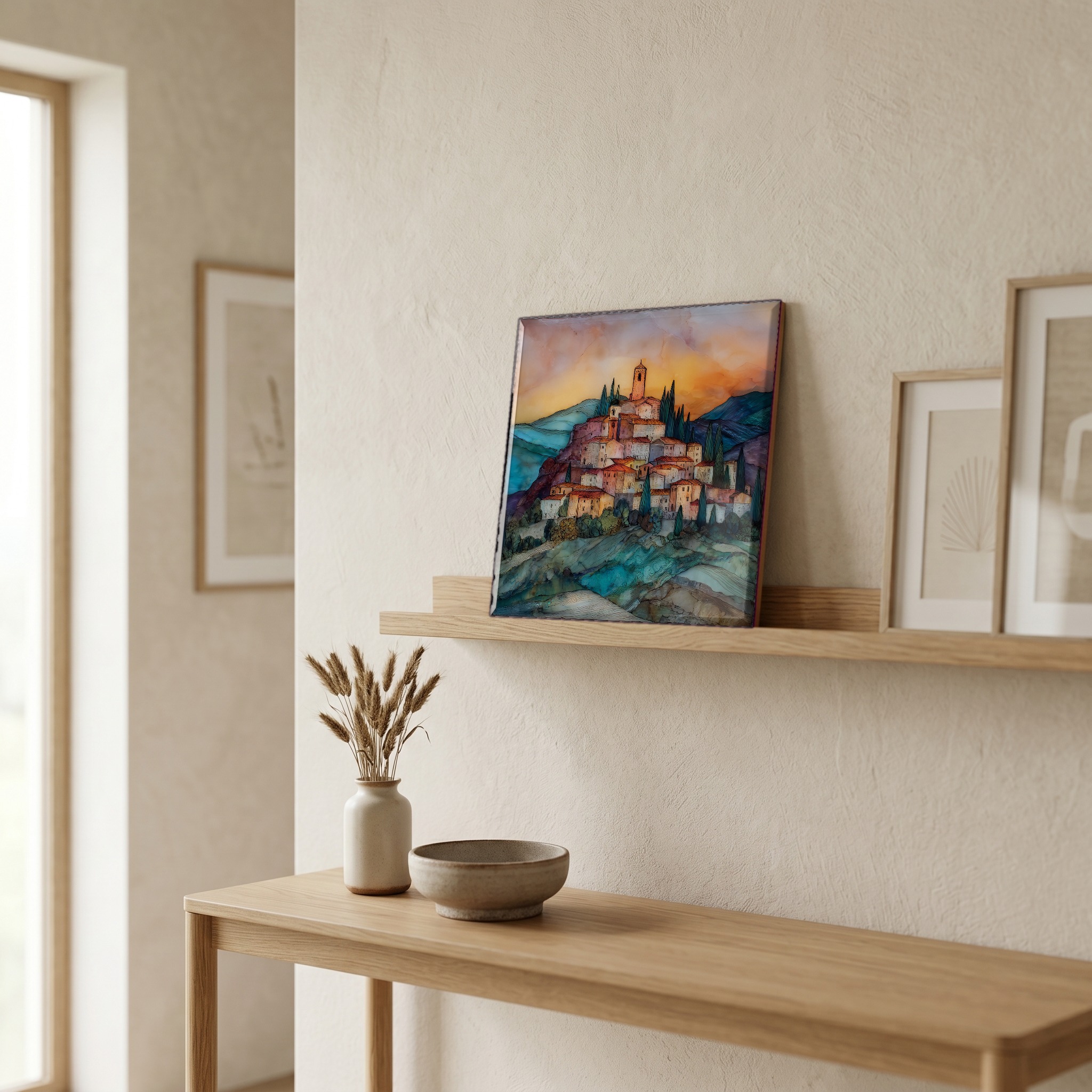
“A medieval bastide on a sandstone ridge, named for the mornings when the Cérou valley fills with cloud and the town stands above it. Founded in 1222, after the burning of the village below. The Grand Rue still carries fourteenth-century Gothic houses, falcons on one facade and a hunting frieze on another, and the church of Saint-Michel sits at the top of the climb. The town added sur-Ciel to its name in 1993, after the thing the valley has been doing for eight centuries.
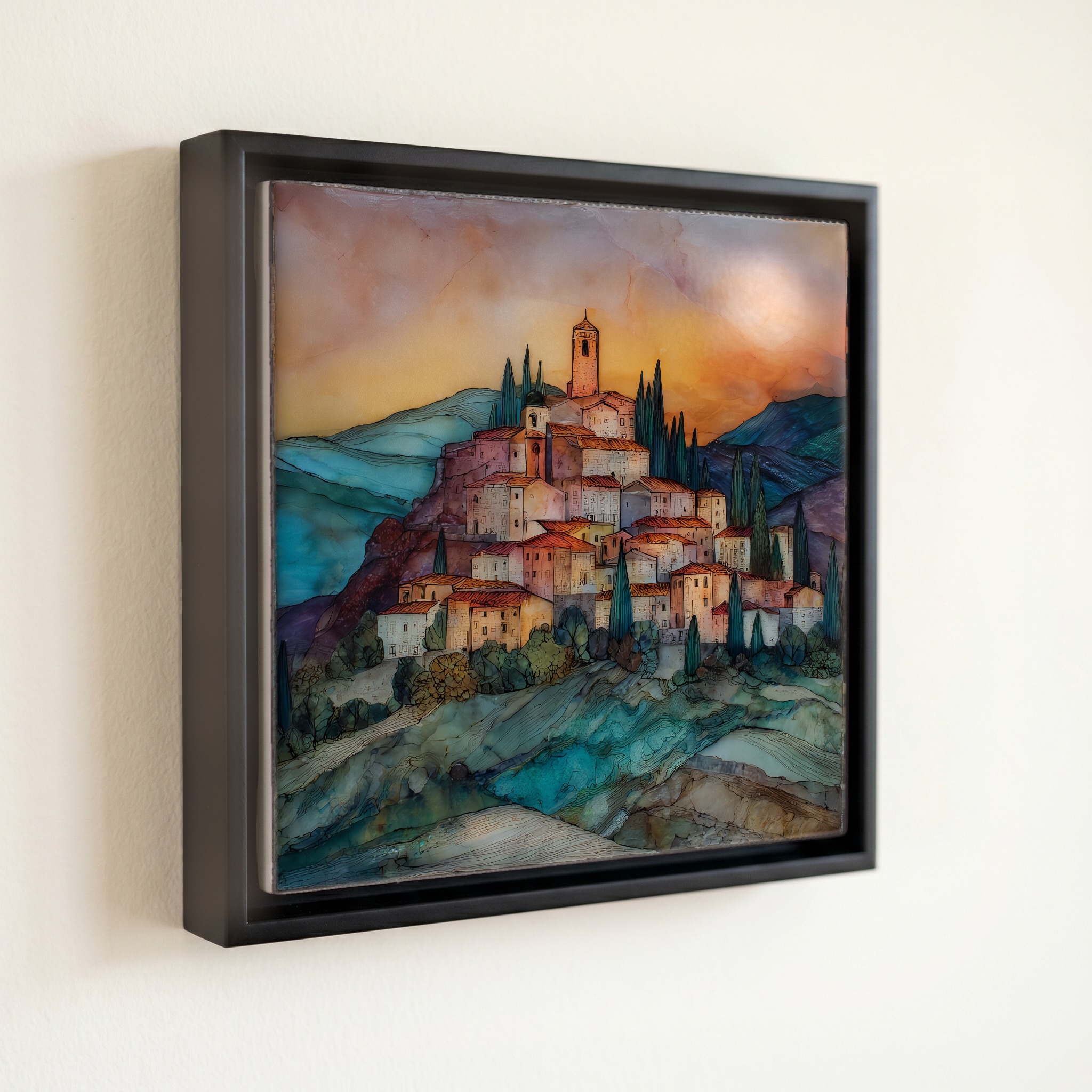
Cordes-sur-Ciel, on ceramic.
Each tile is finished by hand in our Knoxville studio. Artwork is slowly infused into the ceramic surface under high heat and pressure, and rests beneath a thin glossy finish. The colour lives in the surface, not on top of it.
Pick any four 4-inch tiles — National Parks you've been to, a Smokies set, the four seasons of one place. $ for a set of , cork-backed, ready to live on the table.
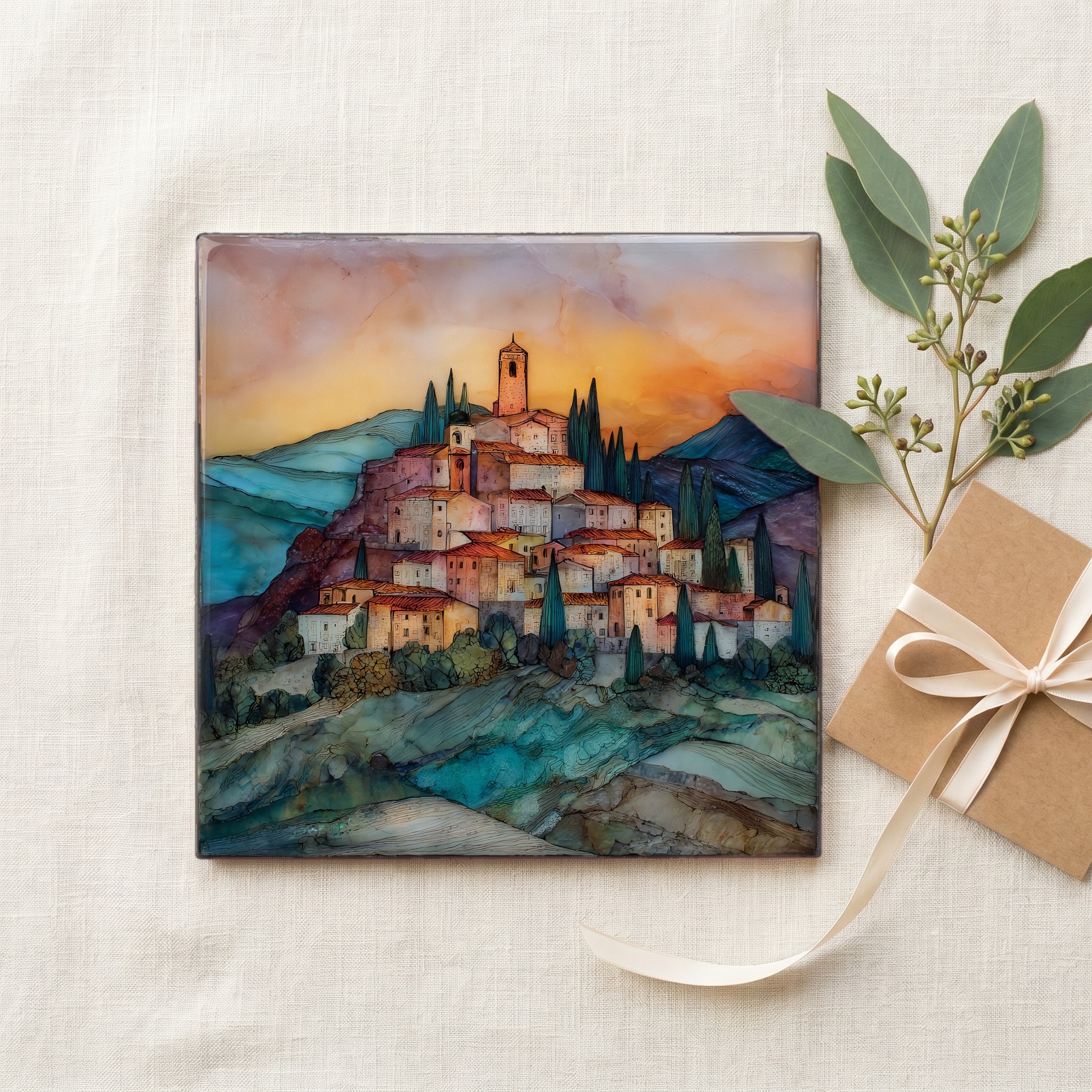
Each tile ships in a kraft box, tied with cream ribbon, with a handwritten note from the studio if you'd like to add one.
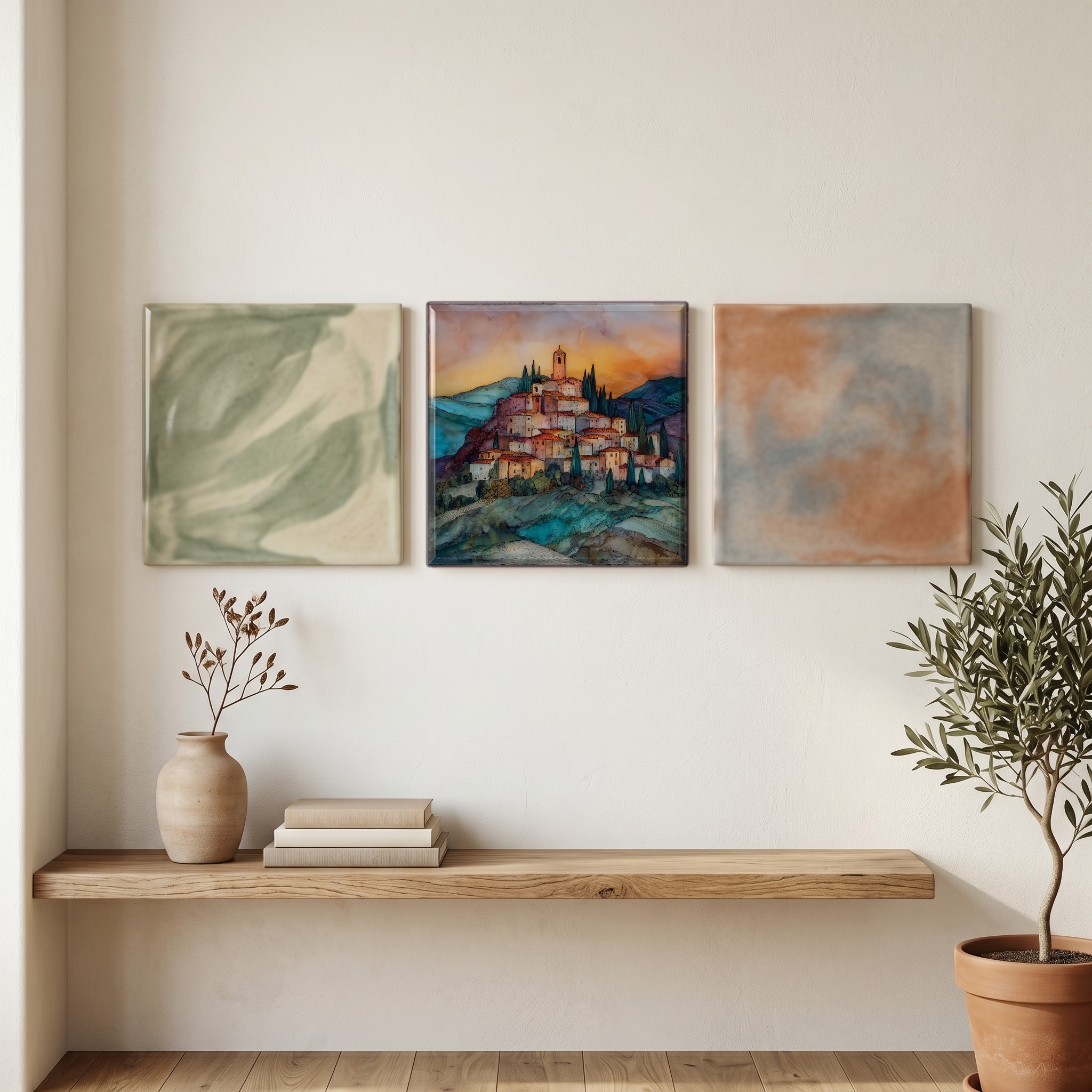
Three or five different vistas, hung together — a chapter of places you've been, or want to go.
The place, in three passes.
Cordes-sur-Ciel is a fortified hilltop bastide in the Tarn department of Occitanie, about 25 kilometres northwest of Albi and 85 kilometres northeast of Toulouse. The town sits on a sandstone ridge above the left bank of the Cérou river, with its streets climbing from a valley floor near 160 metres to the old citadel at roughly 320 metres. Raymond VII, Count of Toulouse, chartered it in 1222 as the first of the Southwest's bastides, planned new towns meant to resettle people displaced by the Albigensian Crusade. The commune holds about 880 residents and is a member of Les Plus Beaux Villages de France.
The Grand Rue runs along the spine of the ridge, lined with civil Gothic houses from the prosperous first half of the fourteenth century. Two of them are listed historic monuments. The Maison du Grand Fauconnier, classified since 1875 and named for the falcons carved on its facade, now holds the town's Museum of Modern and Contemporary Art with works by Picasso, Miró, and Léger. The Maison du Grand Veneur, four stories instead of the usual three, carries a hunting frieze across its second floor. Local guides call Cordes the city of a hundred ogives, after the count of pointed arches still standing along this one street.
The name Cordes-sur-Ciel dates only from 1993, but the thing it describes is older than the town. Cool autumn and spring nights pool air in the Cérou valley below, and when the morning sun warms the upper slopes, the trapped moisture rises as a flat sheet of fog. From the hilltop the village appears to ride above the cloud, its sandstone walls and tiled roofs catching first light while the valley floor is still hidden. The phenomenon is most reliable from late September through early November, when the temperature gap between night and dawn is widest.