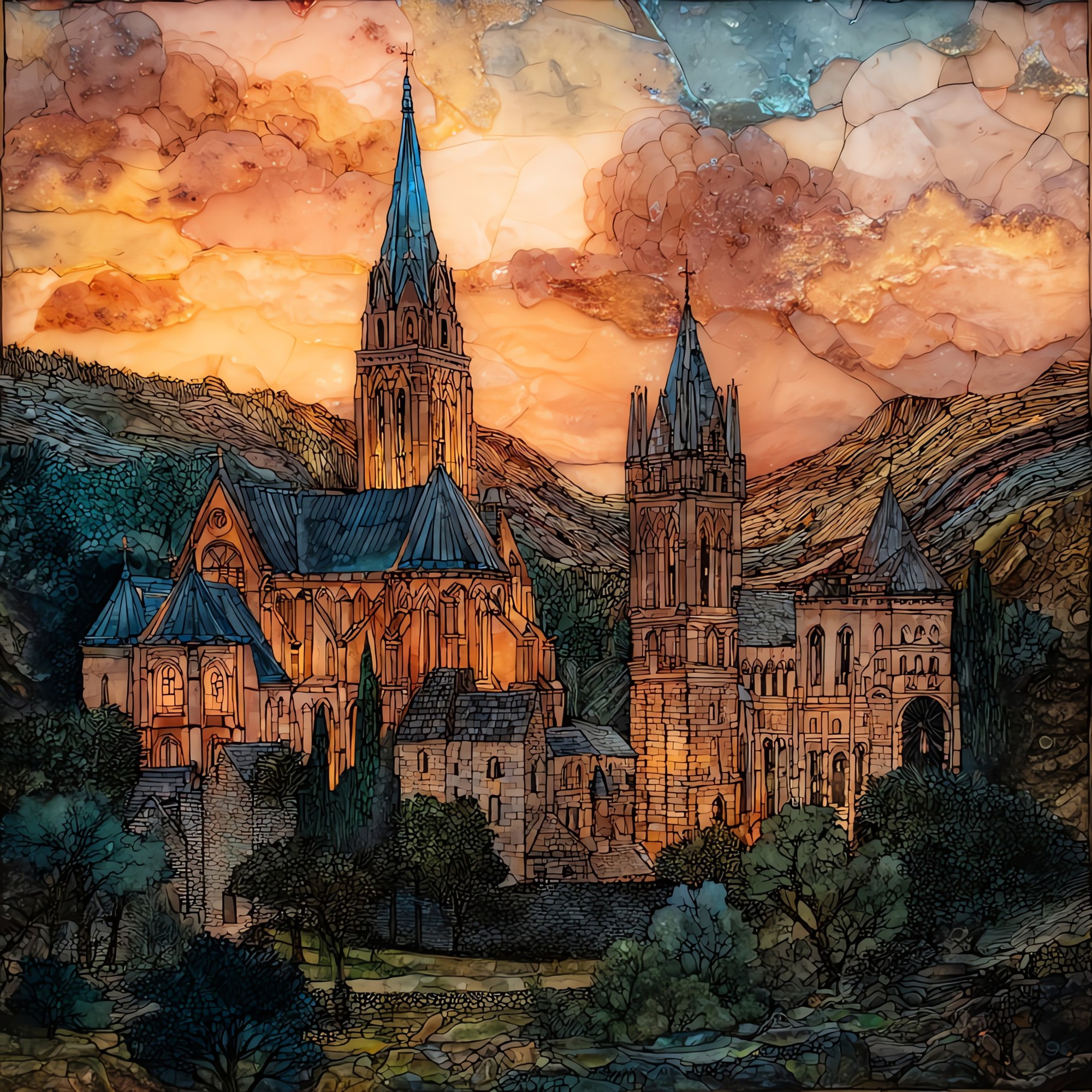
Conques Sainte-Foy Pilgrim Abbey
— — the light walked toward for a thousand years.
Not only on a wall.
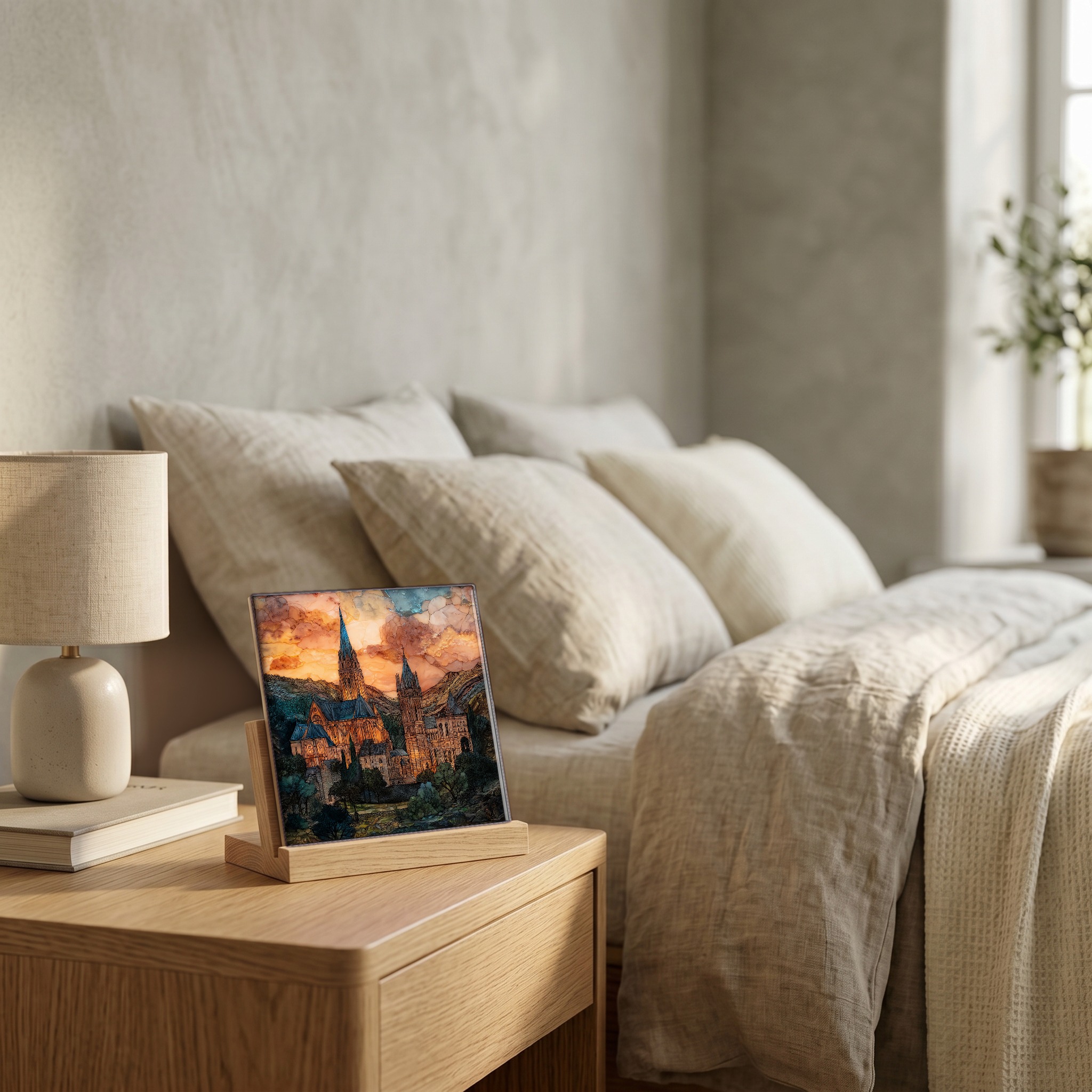
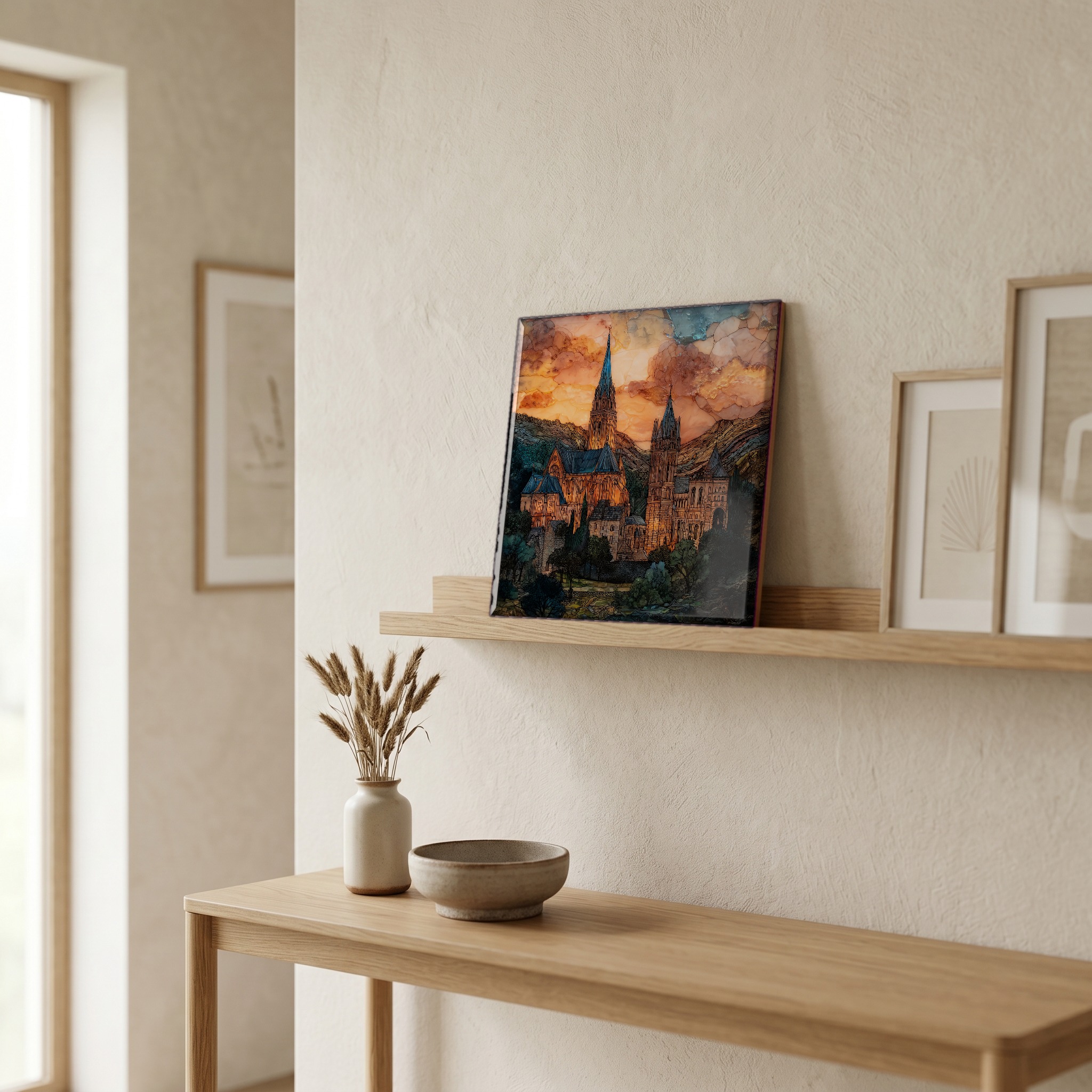
“The village folds into a steep valley above the Dourdou river. A medieval pilgrim town of stone houses under lauze schist roofs. The Romanesque abbey church holds a tympanum of the Last Judgment carved around 1107, still bearing traces of its original paint. Pierre Soulages, born in nearby Rodez, designed the 104 windows that replaced the wartime ones, clear panes of his own glass formula that take in every shaft of southern light. The pilgrims arrive in the late afternoon, dust on their boots, and the village quiets around them.
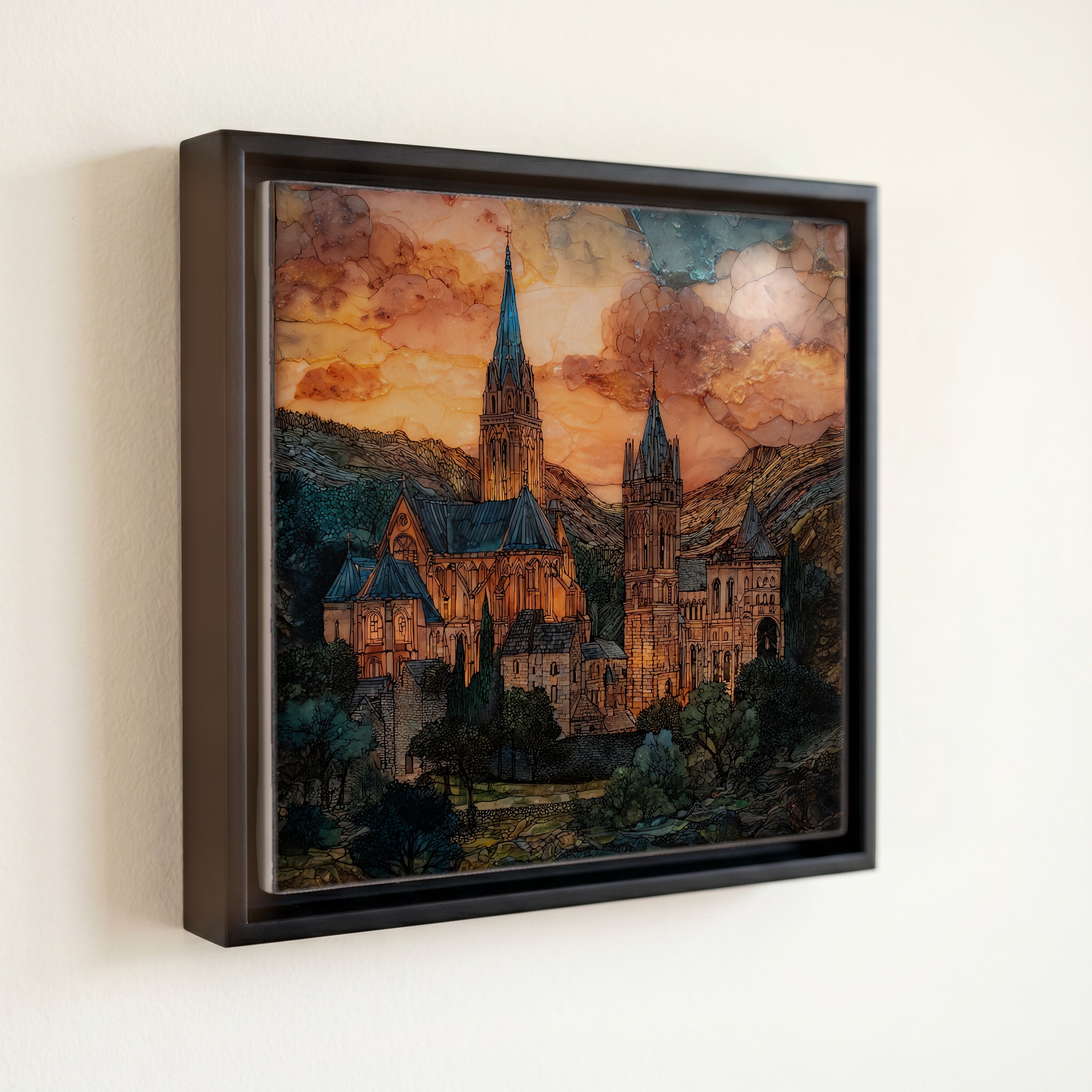
Conques Sainte-Foy Pilgrim Abbey, on ceramic.
Each tile is finished by hand in our Knoxville studio. Artwork is slowly infused into the ceramic surface under high heat and pressure, and rests beneath a thin glossy finish. The colour lives in the surface, not on top of it.
Pick any four 4-inch tiles — National Parks you've been to, a Smokies set, the four seasons of one place. $ for a set of , cork-backed, ready to live on the table.
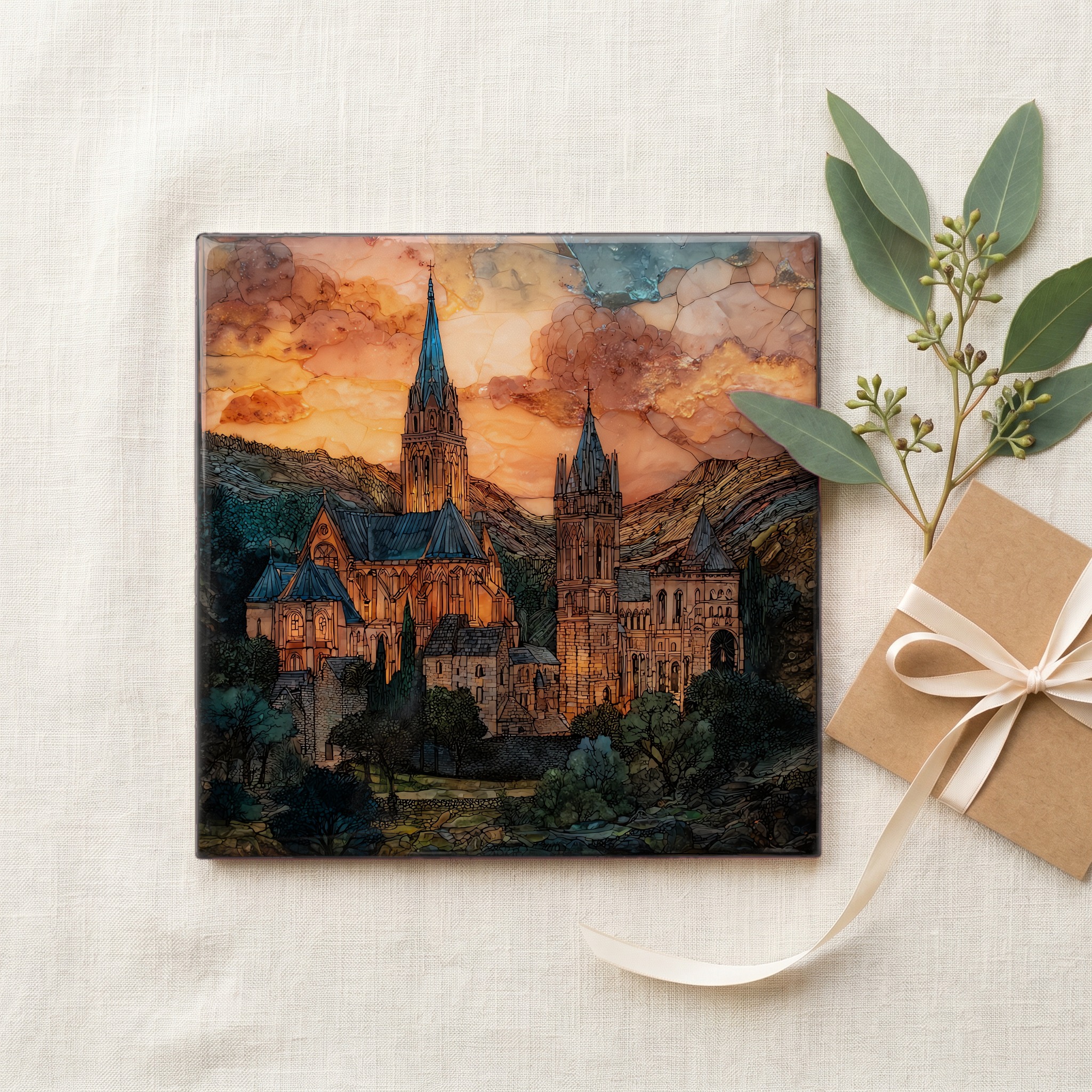
Each tile ships in a kraft box, tied with cream ribbon, with a handwritten note from the studio if you'd like to add one.
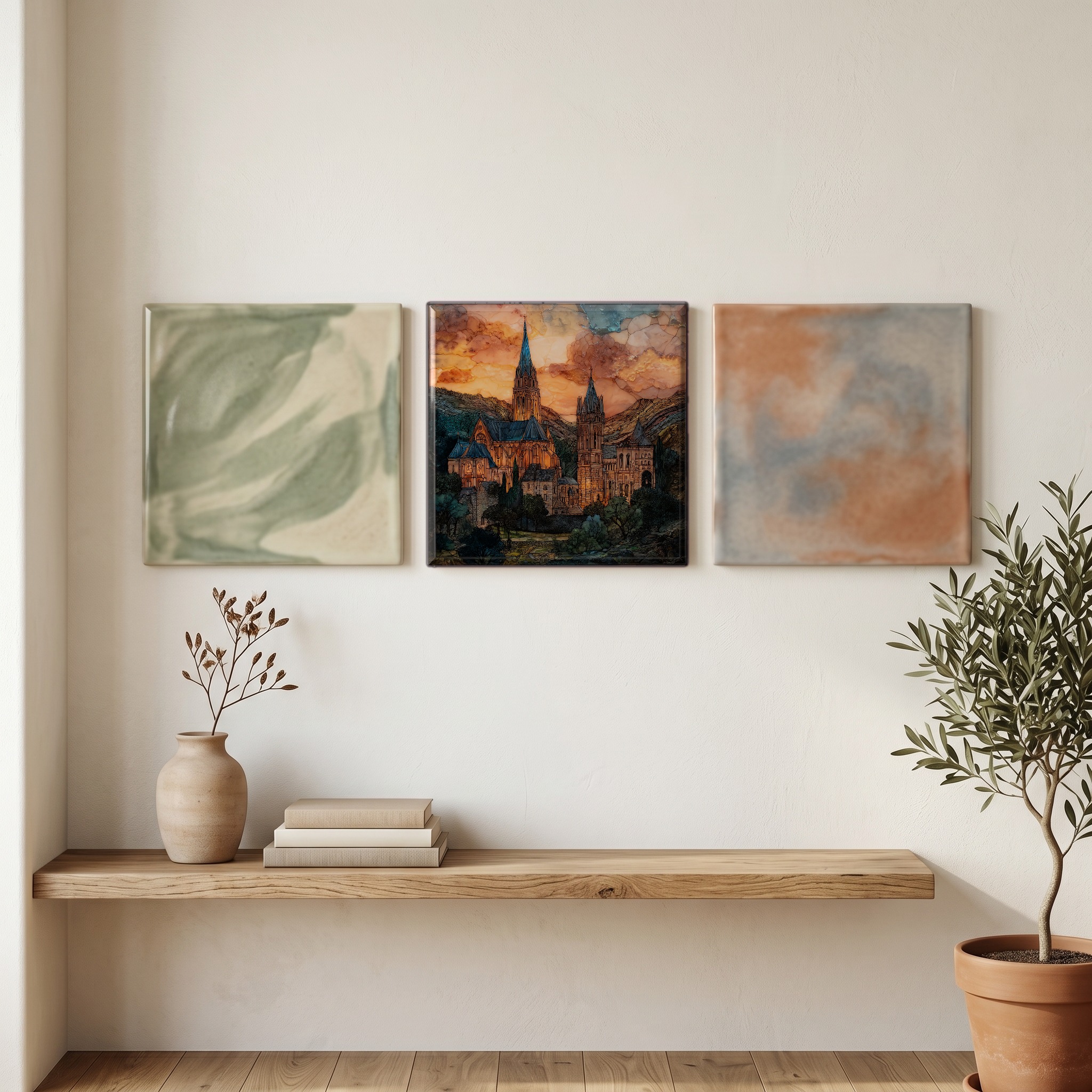
Three or five different vistas, hung together — a chapter of places you've been, or want to go.
The place, in three passes.
Conques is a small village in the Aveyron department of Occitanie, set in the gorge of the Dourdou de Conques where the river bends past the Ouche. The site has been a stop on the Via Podiensis, the Le Puy route of the Way of St. James, since the early Middle Ages, when monks translated the relics of Sainte Foy here from Agen in 866 AD. The Abbey Church of Sainte-Foy was built mainly between 1050 and 1130. Conques sits at roughly 280 meters above sea level, is classified as one of Les Plus Beaux Villages de France, and was inscribed on the UNESCO World Heritage list in 1998 as part of the Routes of Santiago de Compostela in France.
The abbey church is one of the most complete examples of pilgrimage Romanesque architecture in France, built largely between 1050 and 1130 under abbots Odolric and Bégon III. The tympanum above the west door, carved around 1107, shows the Last Judgment in roughly 124 figures arranged in three registers and is one of the few in France that still preserves traces of its original polychromy. The interior carries a tall barrel vault over the nave and a lantern tower at the crossing, the plan shared with the other great churches on the road south. The reliquary statue of Sainte Foy, kept in the treasury, is the only surviving figural reliquary in gold from the late Carolingian period, set with antique gems and a Roman parade mask used as the saint's face.
The 104 windows of the abbey were designed by Pierre Soulages, the abstract painter from nearby Rodez associated with outrenoir, the black that gives back light. Installed between 1987 and 1994 to replace the wartime glass, they carry no figurative imagery. Soulages developed a translucent glass with crystalline inclusions that scatter the light, set into a quiet lead network that follows the rhythm of the Romanesque openings. The effect changes through the day: silver and faintly grey at noon, warmer and amber in the late afternoon, dim and slow at vespers. The result is the rare case of a contemporary intervention that the medieval building seems to absorb rather than resist.