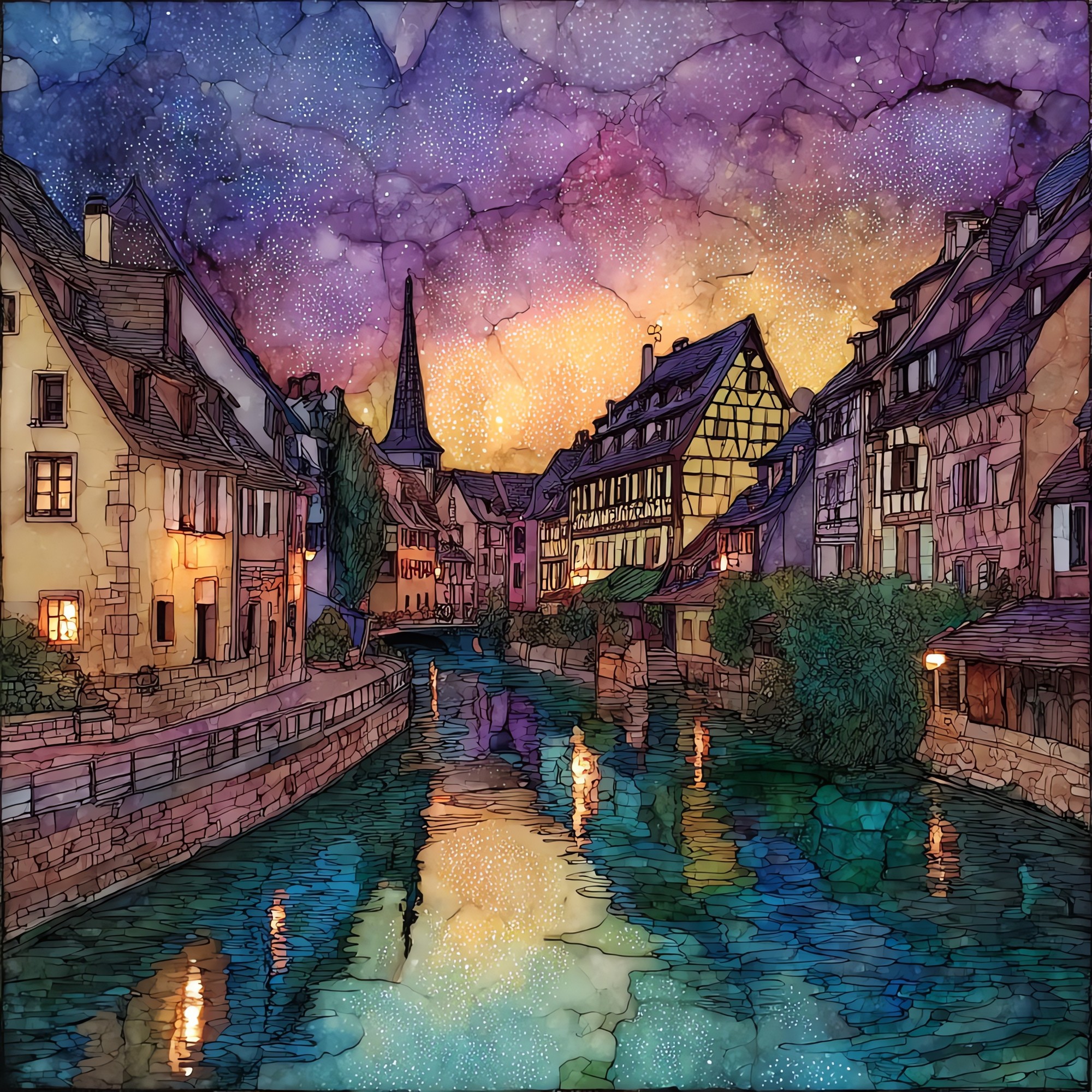
Colmar Little Venice
— houses leaning over water that holds them twice.
Not only on a wall.
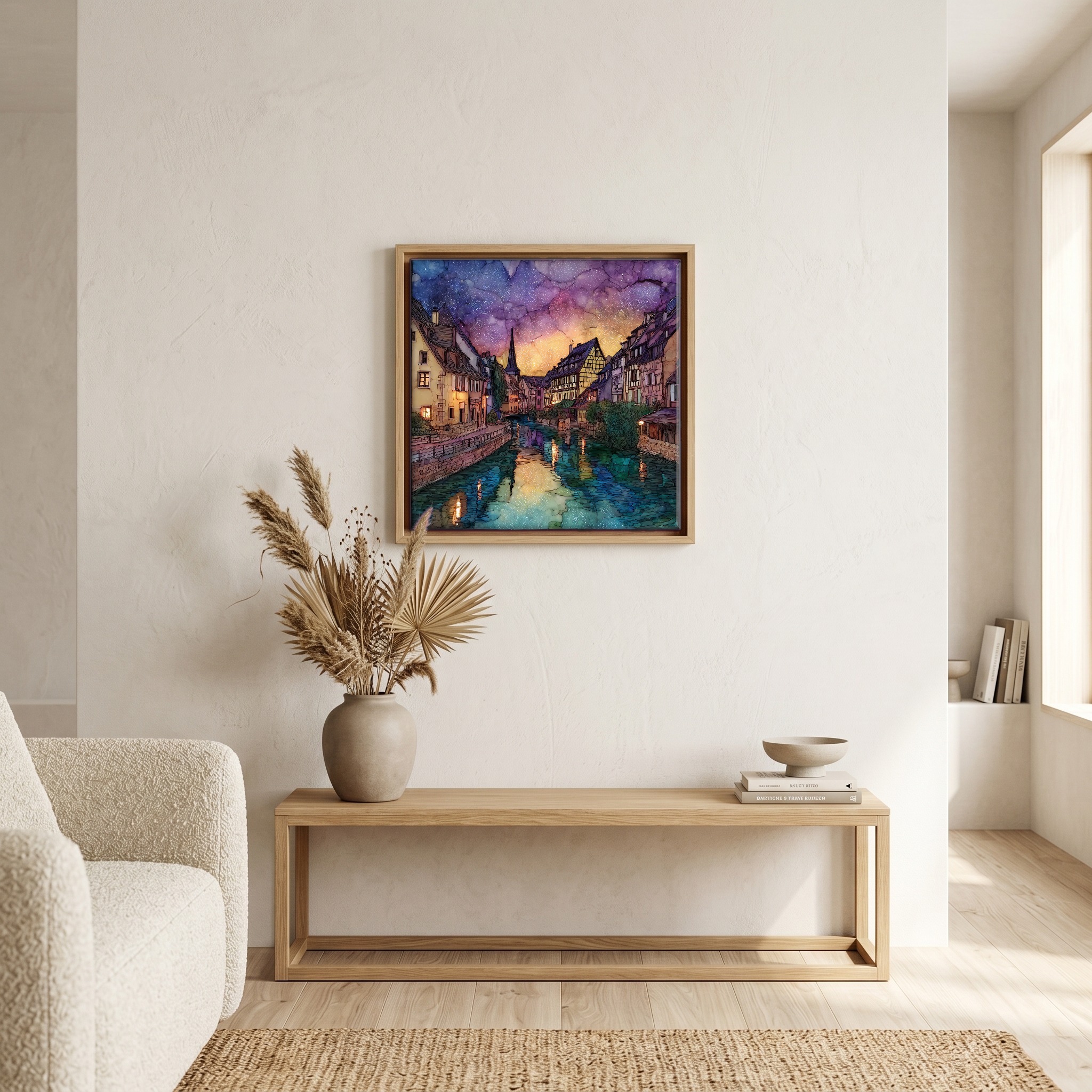
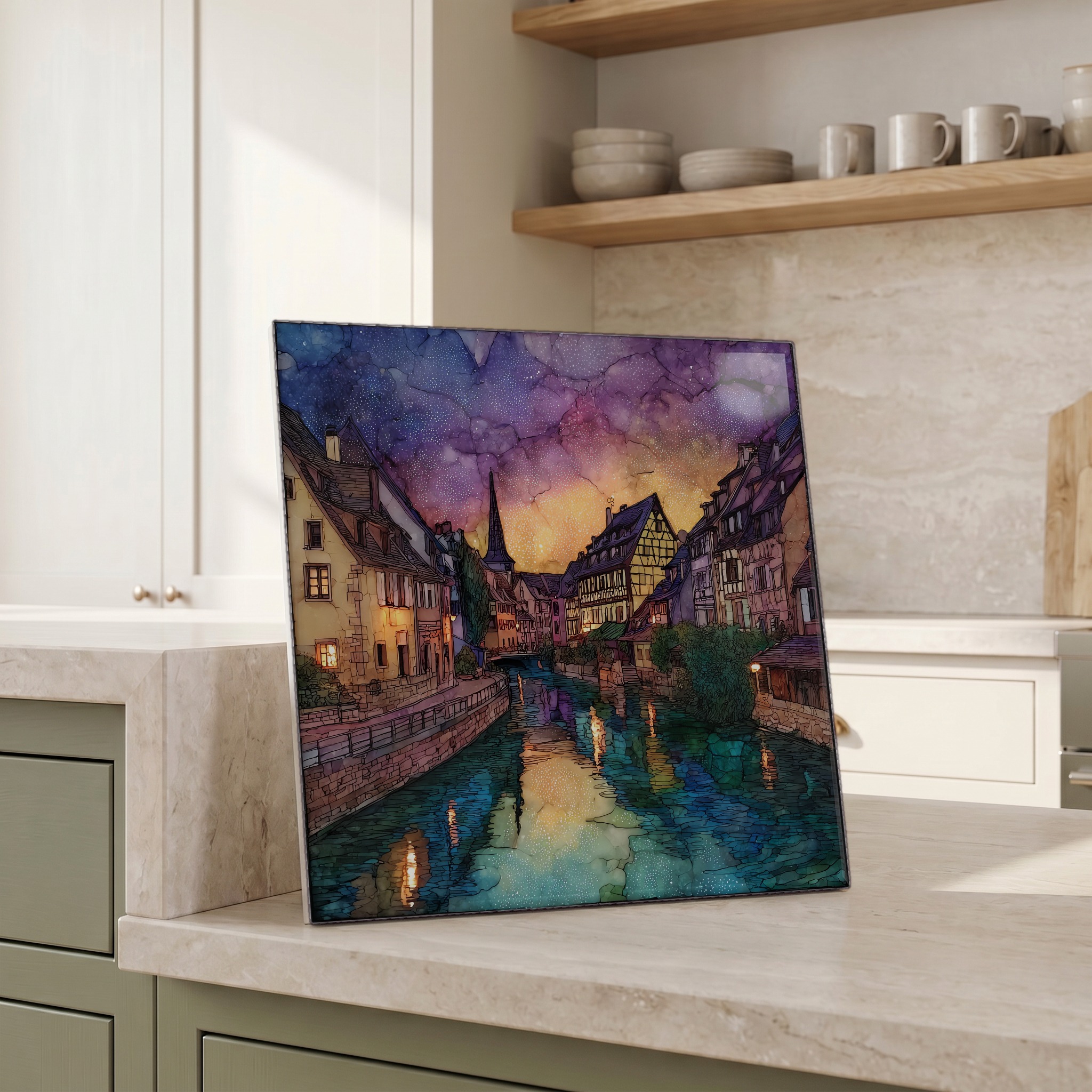
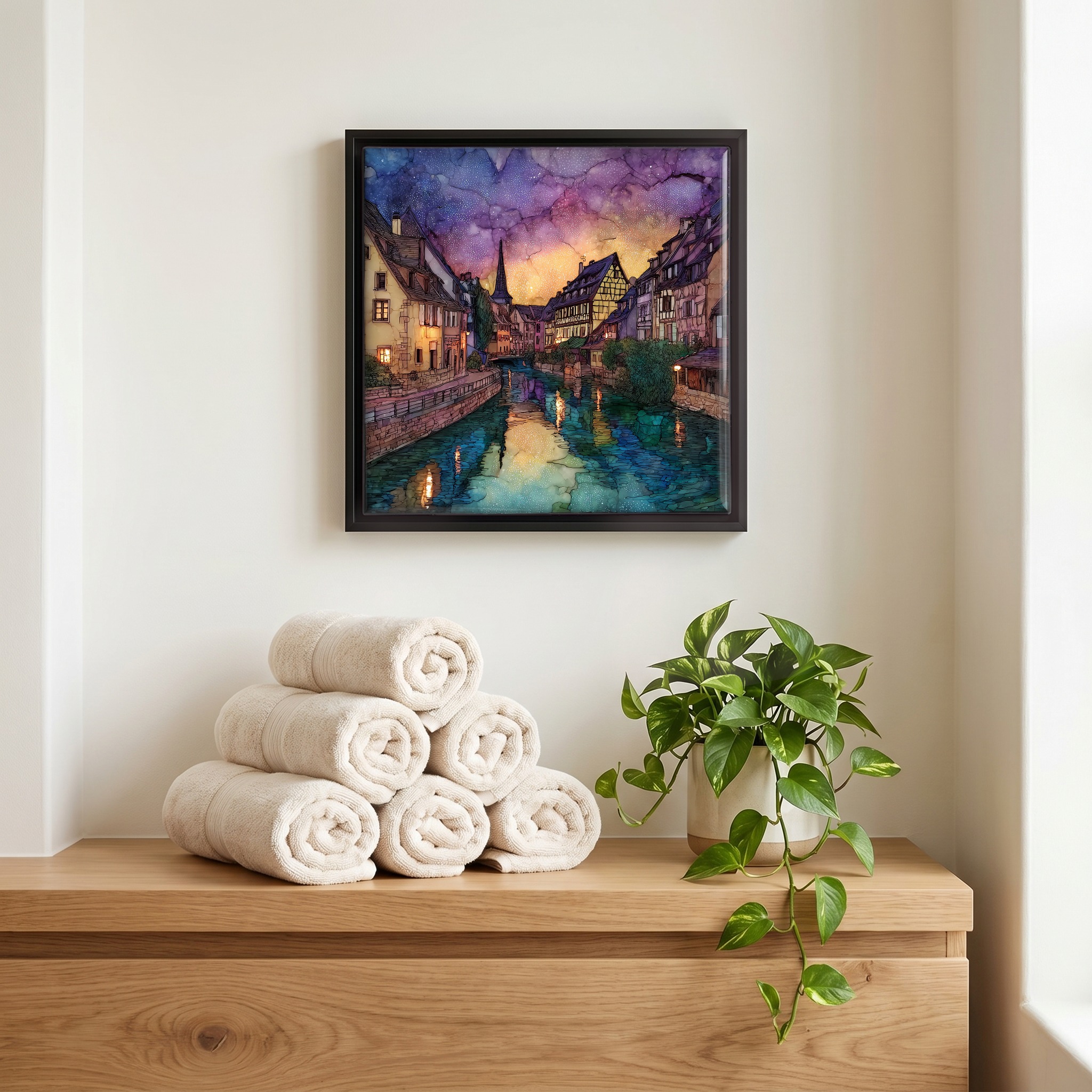
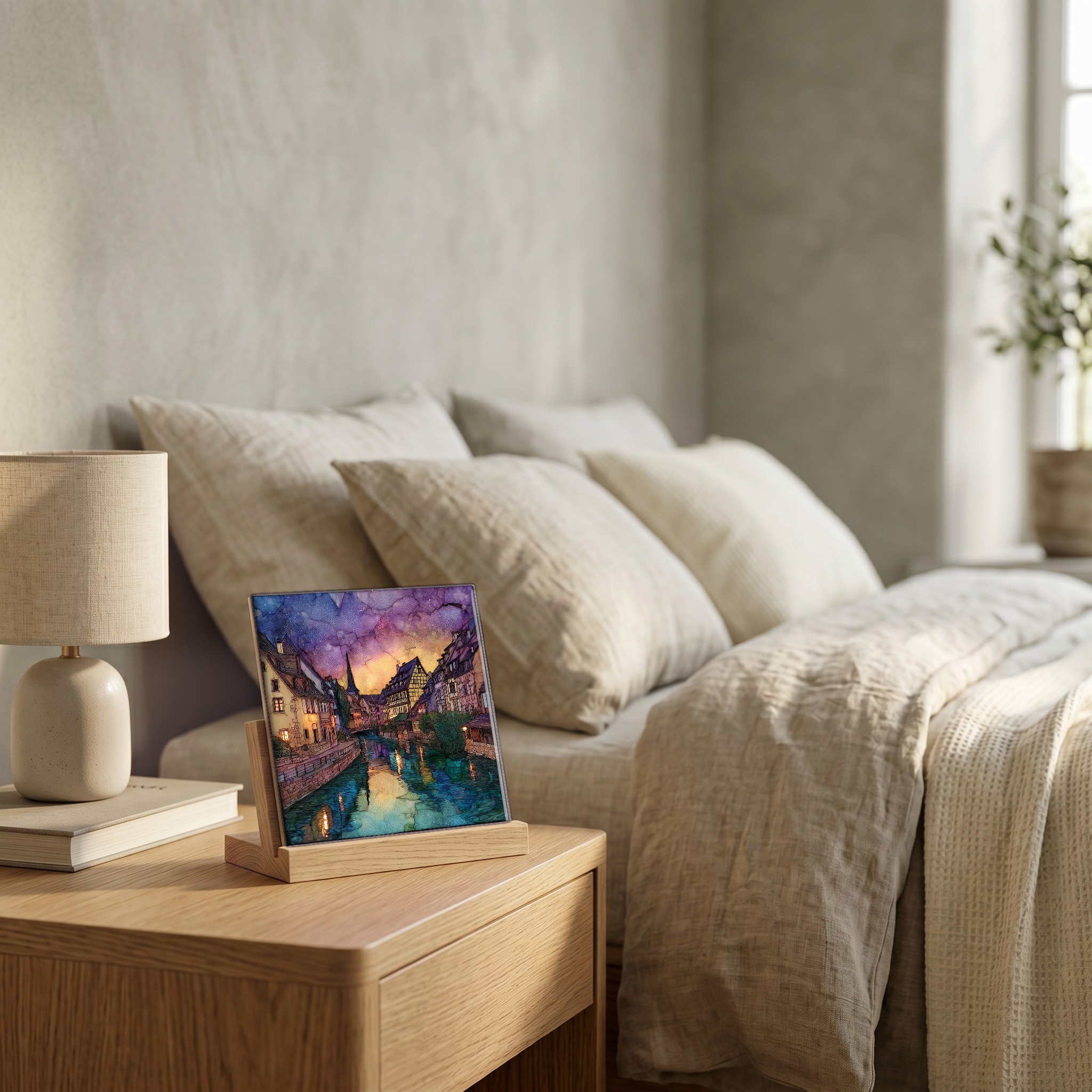
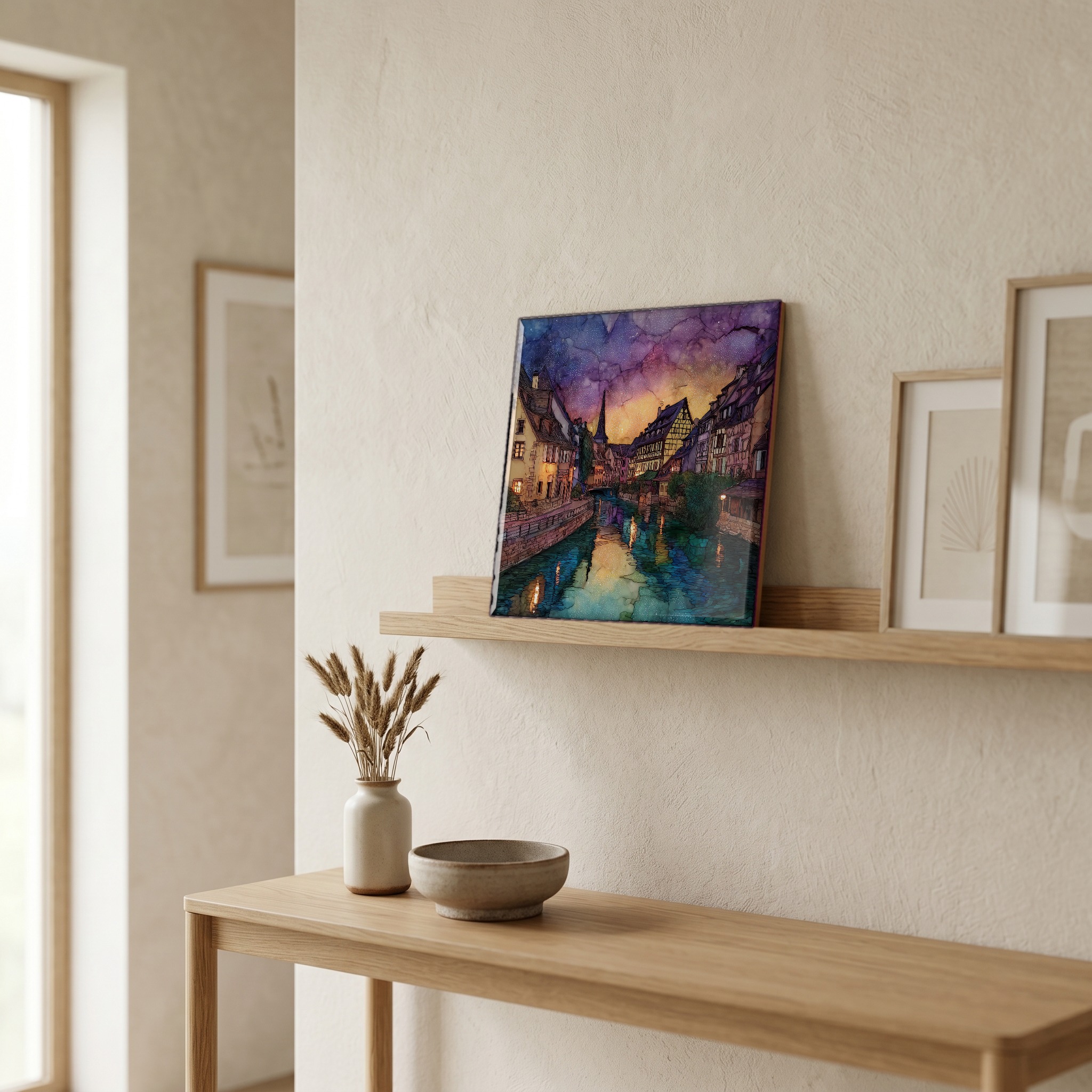
“A small quarter of Colmar where the Lauch slows almost to a stop and the half-timbered houses lean over the water in yellow, ochre, and faded rose. The colour was a working signal once. Fishermen, tanners, gardeners marked their trades by their paint, and the trades are long gone but the colour stayed. Flat-bottomed boats run from the bridge on Rue Turenne. In December the whole quarter goes glass-and-cinnamon for the Christmas market. The rest of the year the Saint-Pierre Bridge holds the picture by itself.
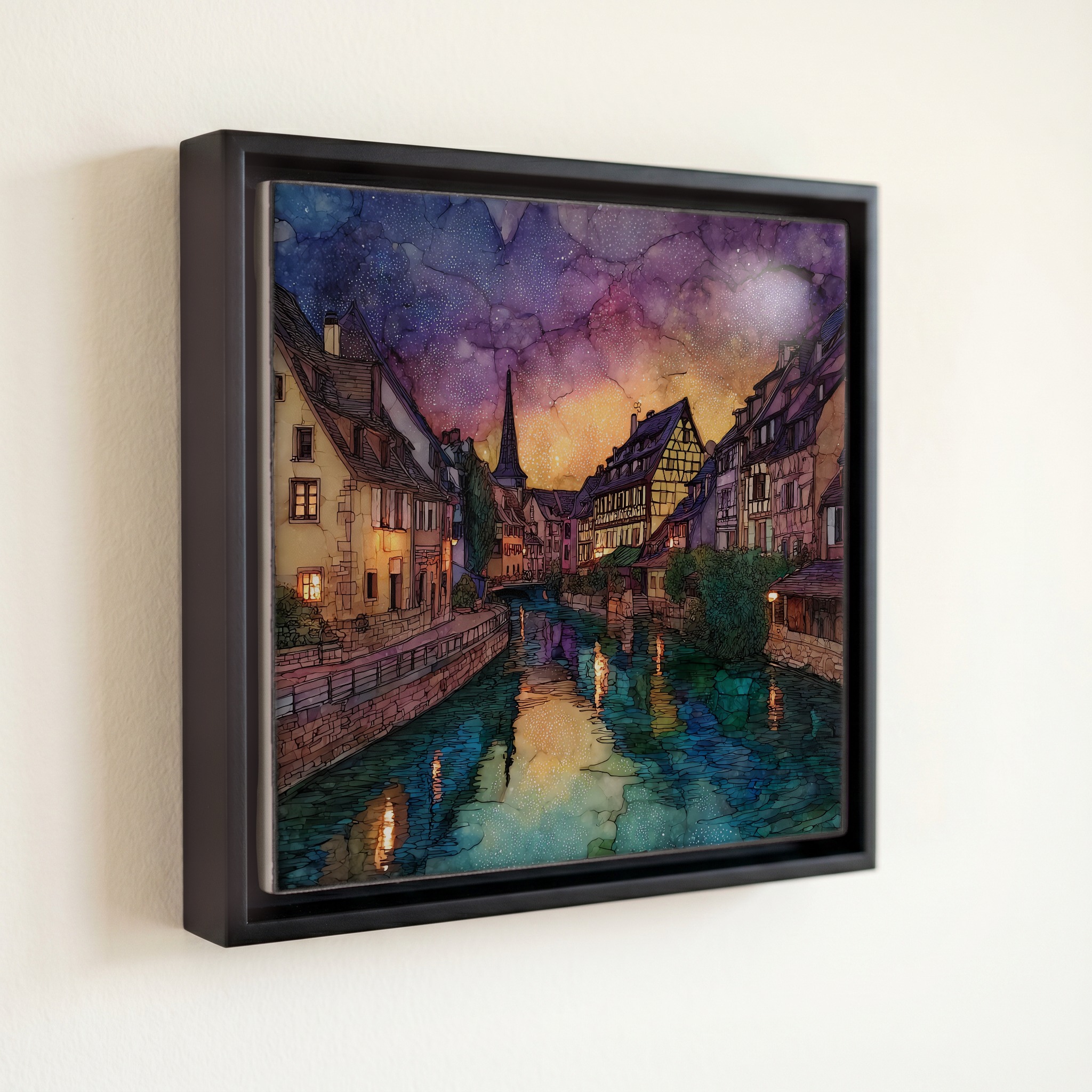
Colmar Little Venice, on ceramic.
Each tile is finished by hand in our Knoxville studio. Artwork is slowly infused into the ceramic surface under high heat and pressure, and rests beneath a thin glossy finish. The colour lives in the surface, not on top of it.
Pick any four 4-inch tiles — National Parks you've been to, a Smokies set, the four seasons of one place. $ for a set of , cork-backed, ready to live on the table.
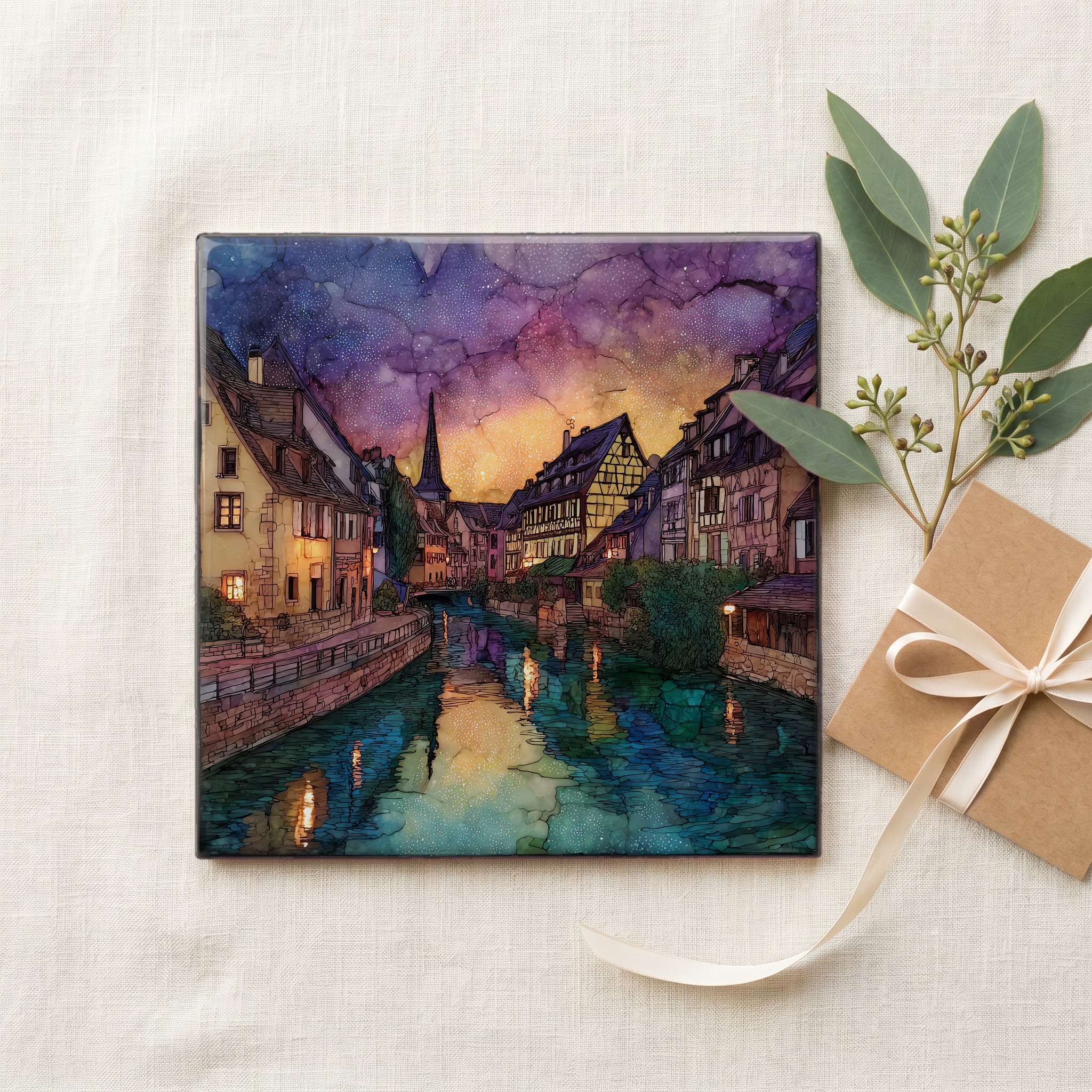
Each tile ships in a kraft box, tied with cream ribbon, with a handwritten note from the studio if you'd like to add one.
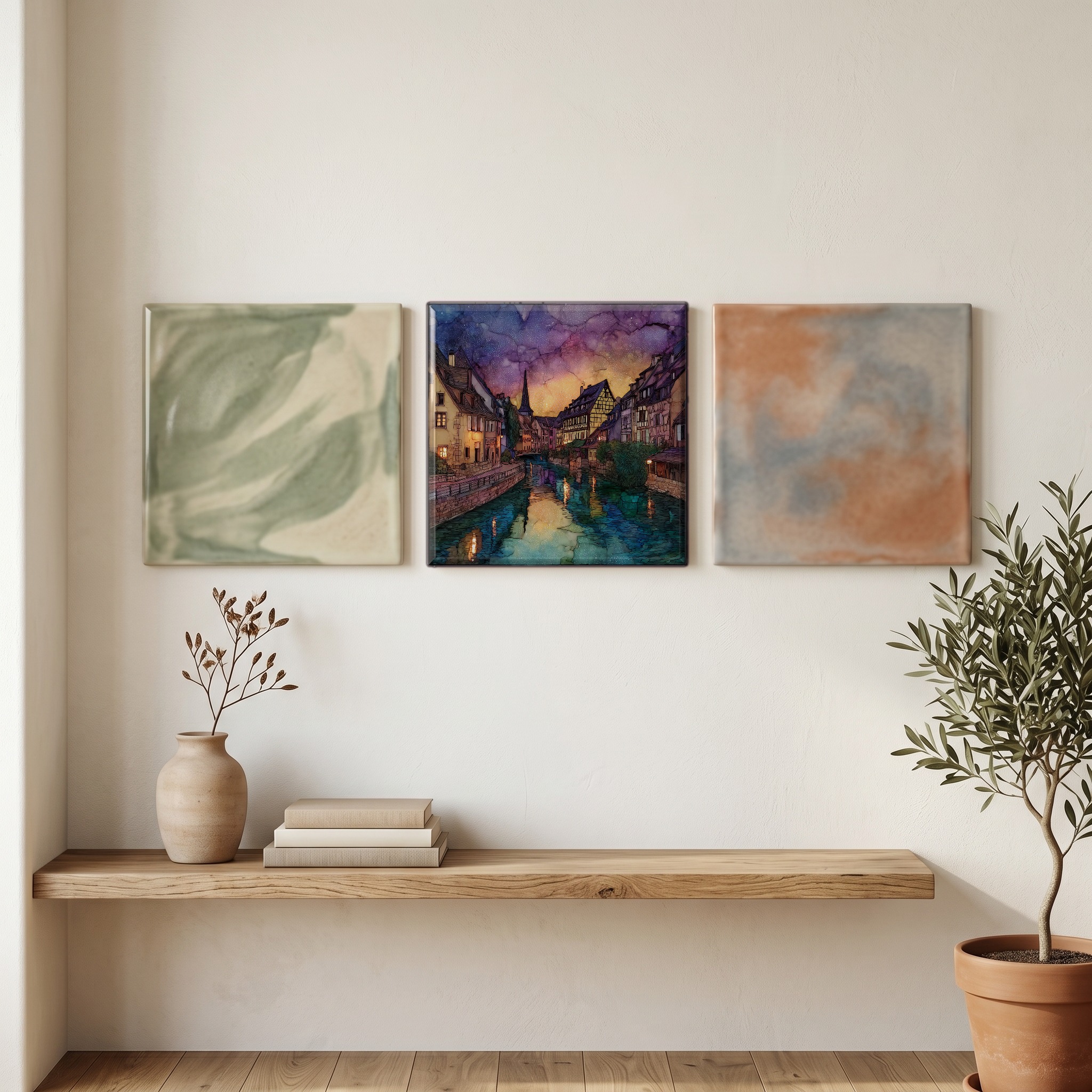
Three or five different vistas, hung together — a chapter of places you've been, or want to go.
The place, in three passes.
Colmar sits in Alsace, in the Haut-Rhin department of north-eastern France, about 70 kilometres south of Strasbourg and a similar distance north of Basel. The quarter known as La Petite Venise is the southernmost part of the old town, where the Lauch River, a tributary of the Ill, slows enough to be navigated by flat-bottomed boats. The neighbourhood grew from a medieval cluster of fishermen, tanners, and market gardeners who lived along the water and traded directly off it. Modern Colmar is the third-largest commune in Alsace, with roughly 70,000 residents, and sits at the foot of the Vosges Mountains on the Alsace Wine Route.
The painted half-timber of the quarter is older than the postcard it became. Local tradition holds that the colours along the Lauch were once trade signals: ochre for bakers, blue for fishermen, red for tanners, green for market gardeners. Whether the code was ever that consistent is harder to settle, but successive owners over four hundred years have repainted in inherited palettes rather than original ones, and what survives is a layered consensus rather than a single document. The half-timber itself is mostly sixteenth- and seventeenth-century, raised on stone ground floors that once opened directly onto the water as workshops or market stalls.
The Lauch is the tributary that makes Little Venice possible. It gathers in the Vosges Mountains west of Colmar and joins the Ill just north of the city, eventually draining into the Rhine. The channel through the old town has been canalised and quieted since the medieval period, widened in some stretches for boats and narrowed in others to slip beneath low stone bridges. The quarter sits along the section historically called the Quartier des Maraîchers, the market gardeners' district, in a town chartered as a free imperial city in 1226. Flat-bottomed barques put in from the landing near the Saint-Pierre Bridge, the pilot standing astern and working a single pole. The water is shallow and slow, largely without current, which is why the half-timber reflections hold long enough to be the photograph.