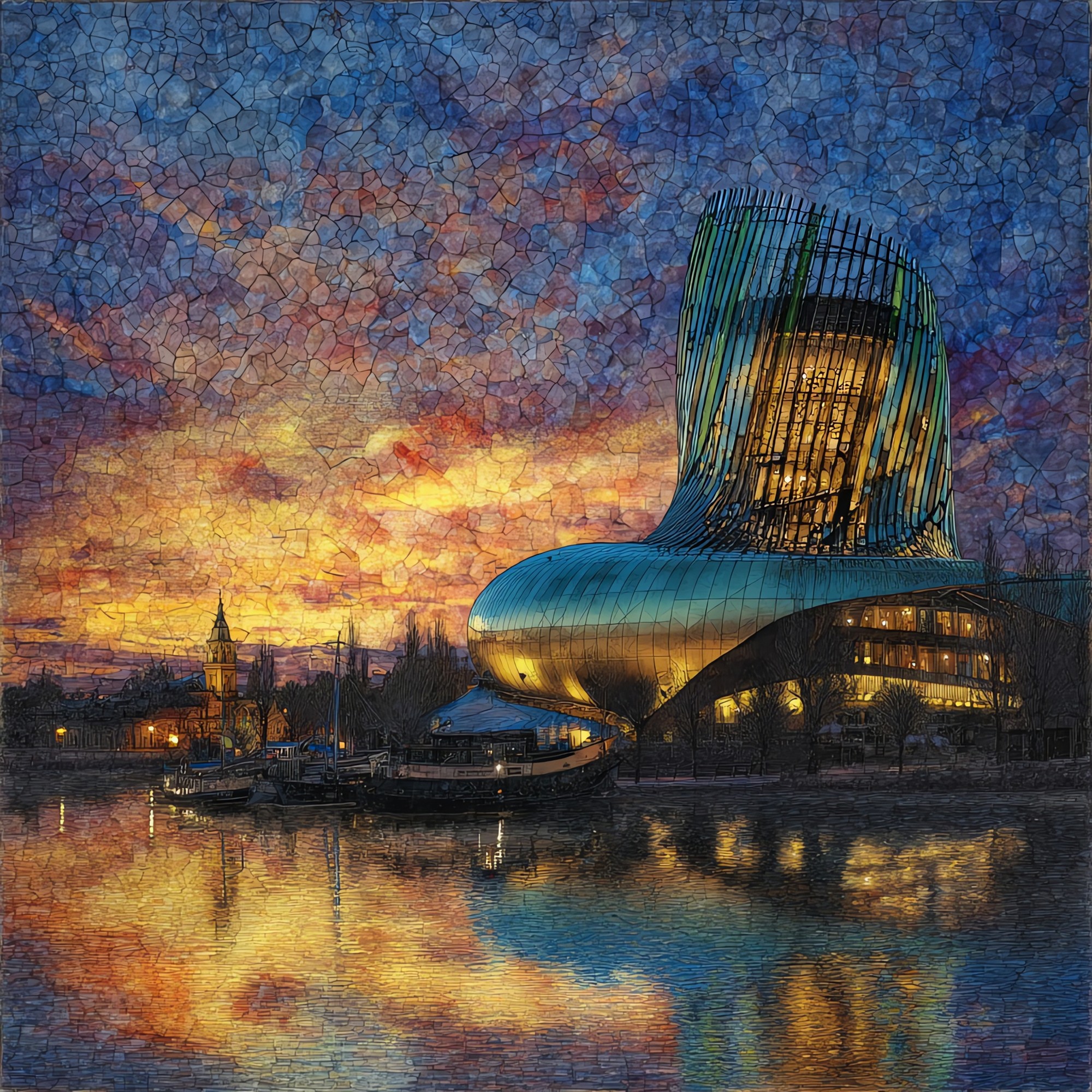
Cite du Vin
— — the curve a glass remembers.
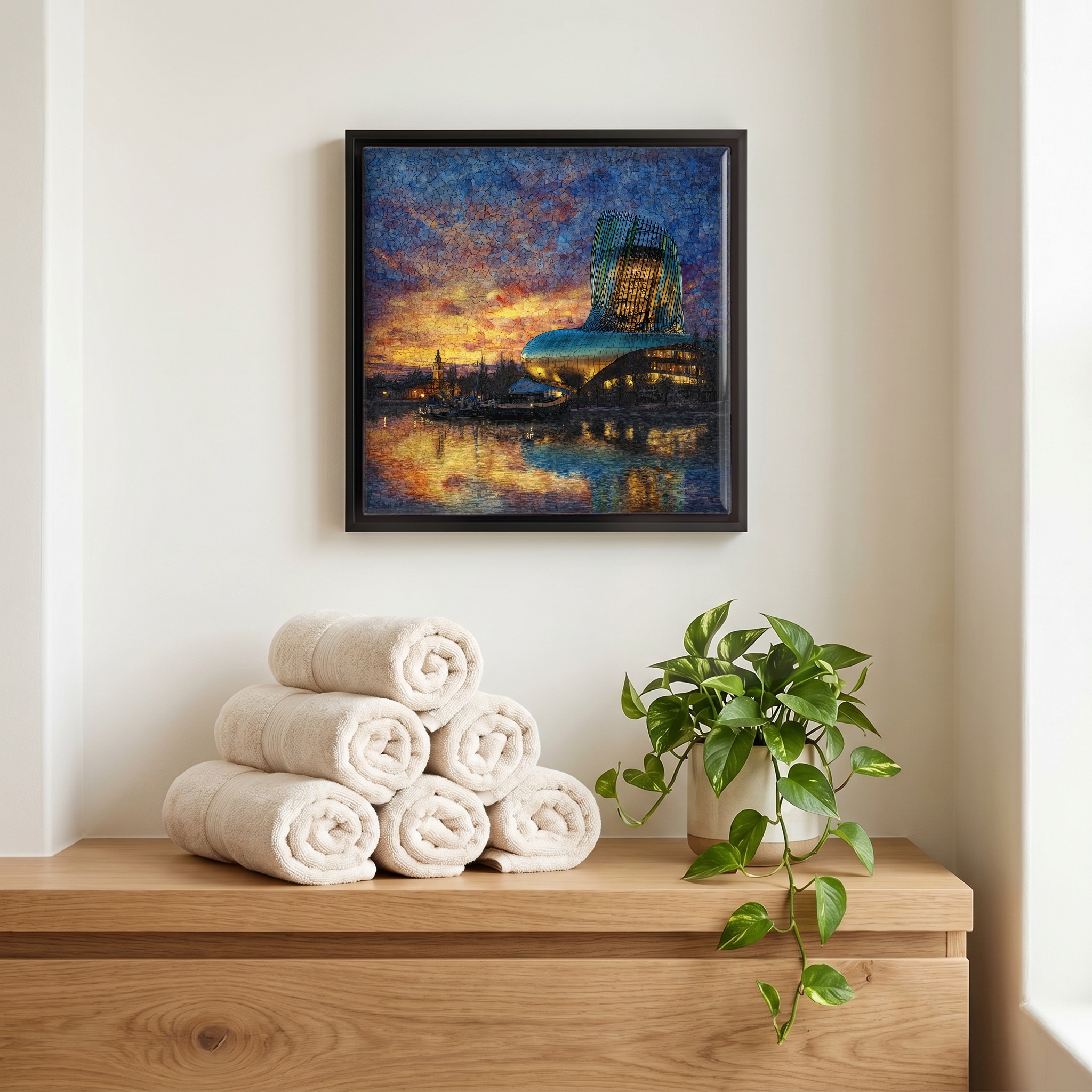
Not only on a wall.
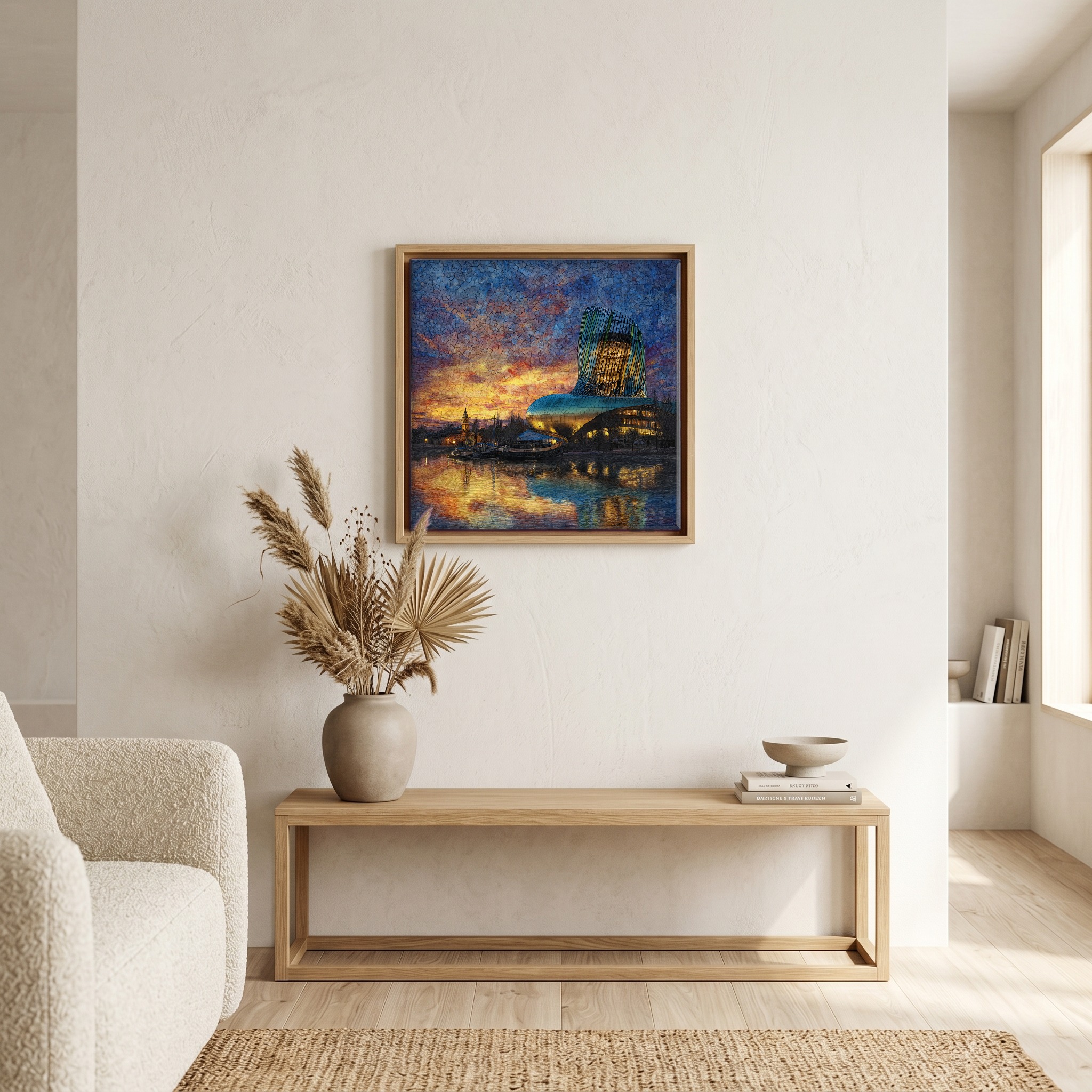
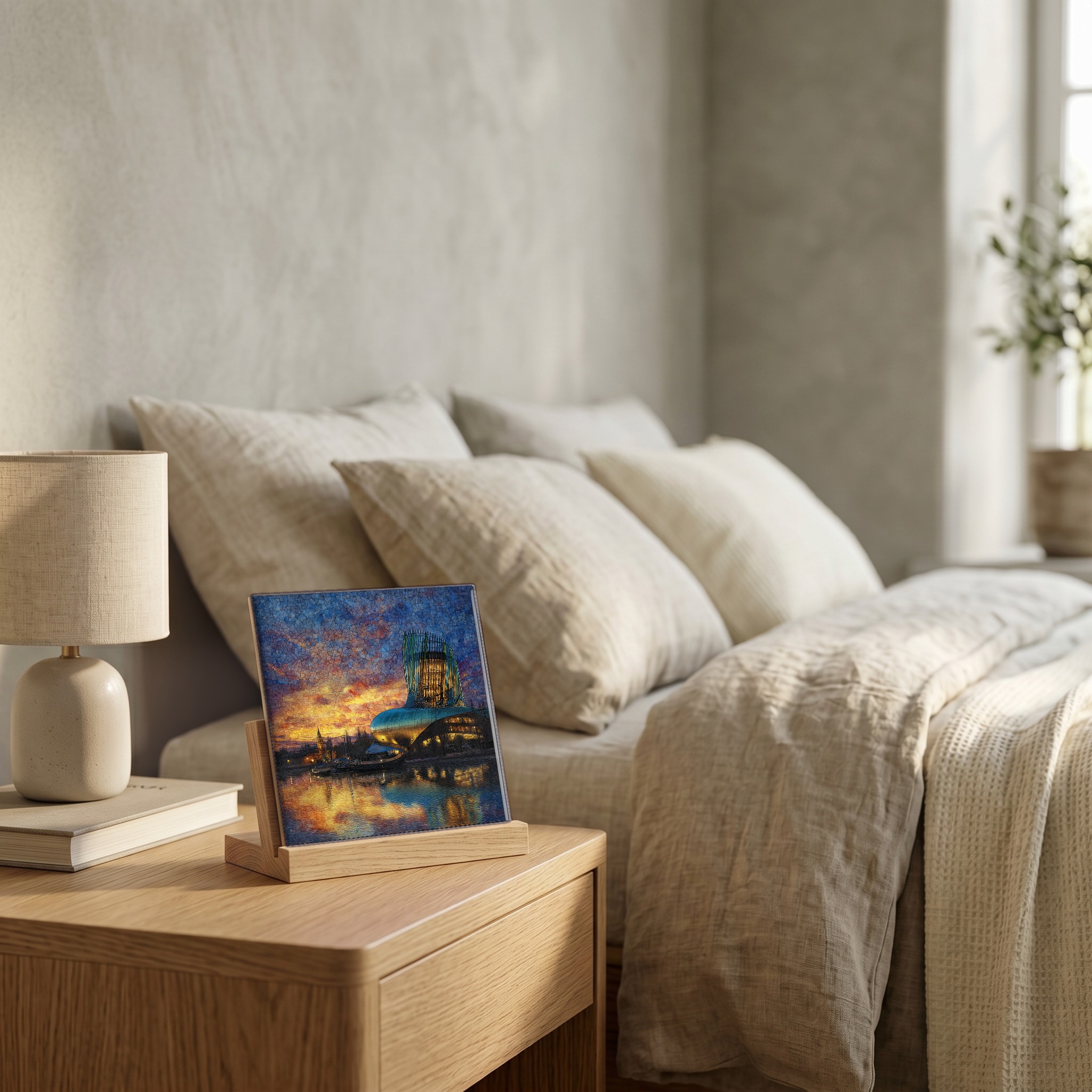
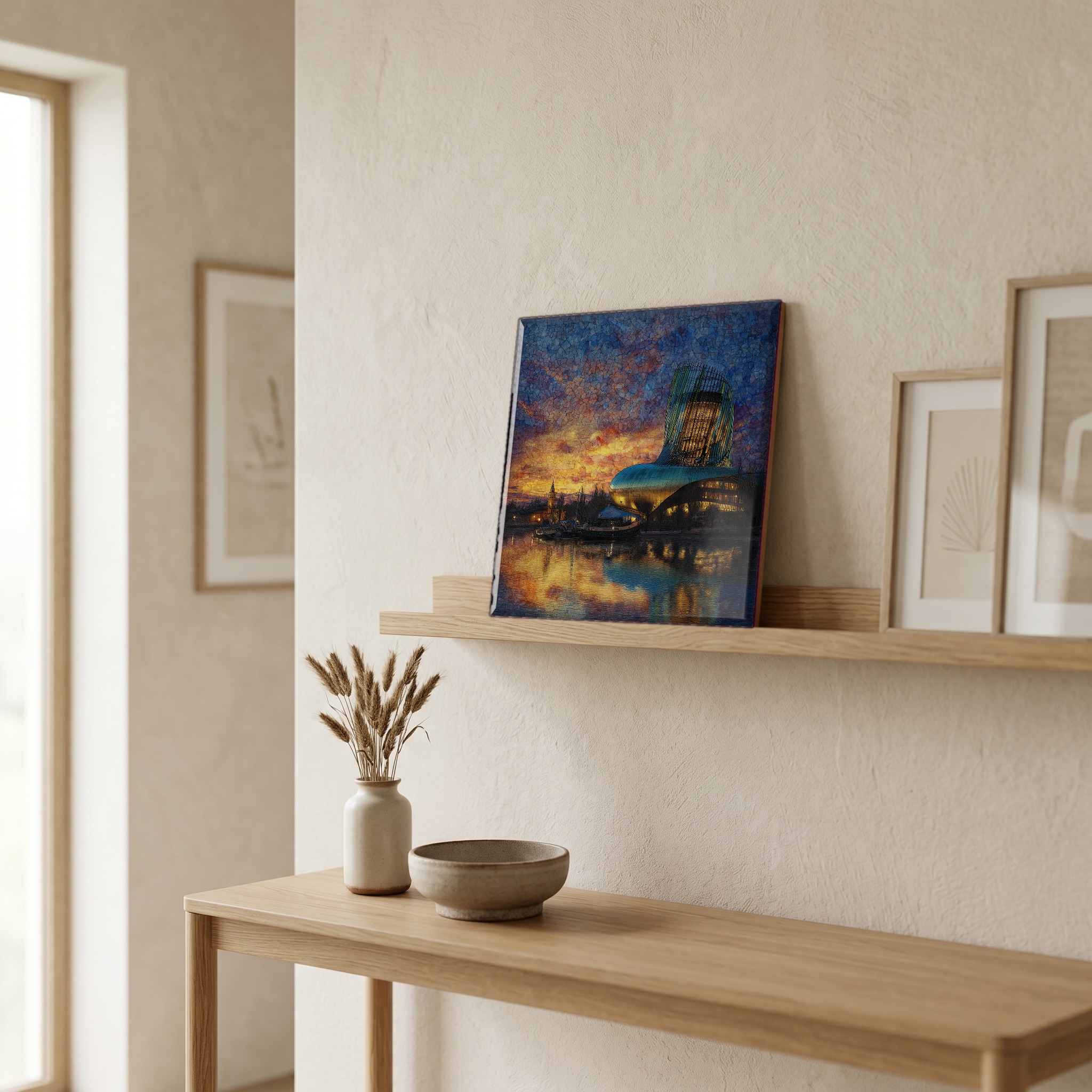
“The wine building above the Bassins à Flot, where Bordeaux's old shipping docks meet the Garonne. The curved facade was designed to read as wine moving in a glass, and depending on the hour it goes from honey to brass to oxidised copper. Tram B terminates at the door. Nine floors of exhibit wind toward the belvedere, where the standard ticket includes a pour and the view turns south across the city. The building was finished in 2016 by XTU Architects out of Paris, and the neighbourhood it anchors was a working port through most of the last century.
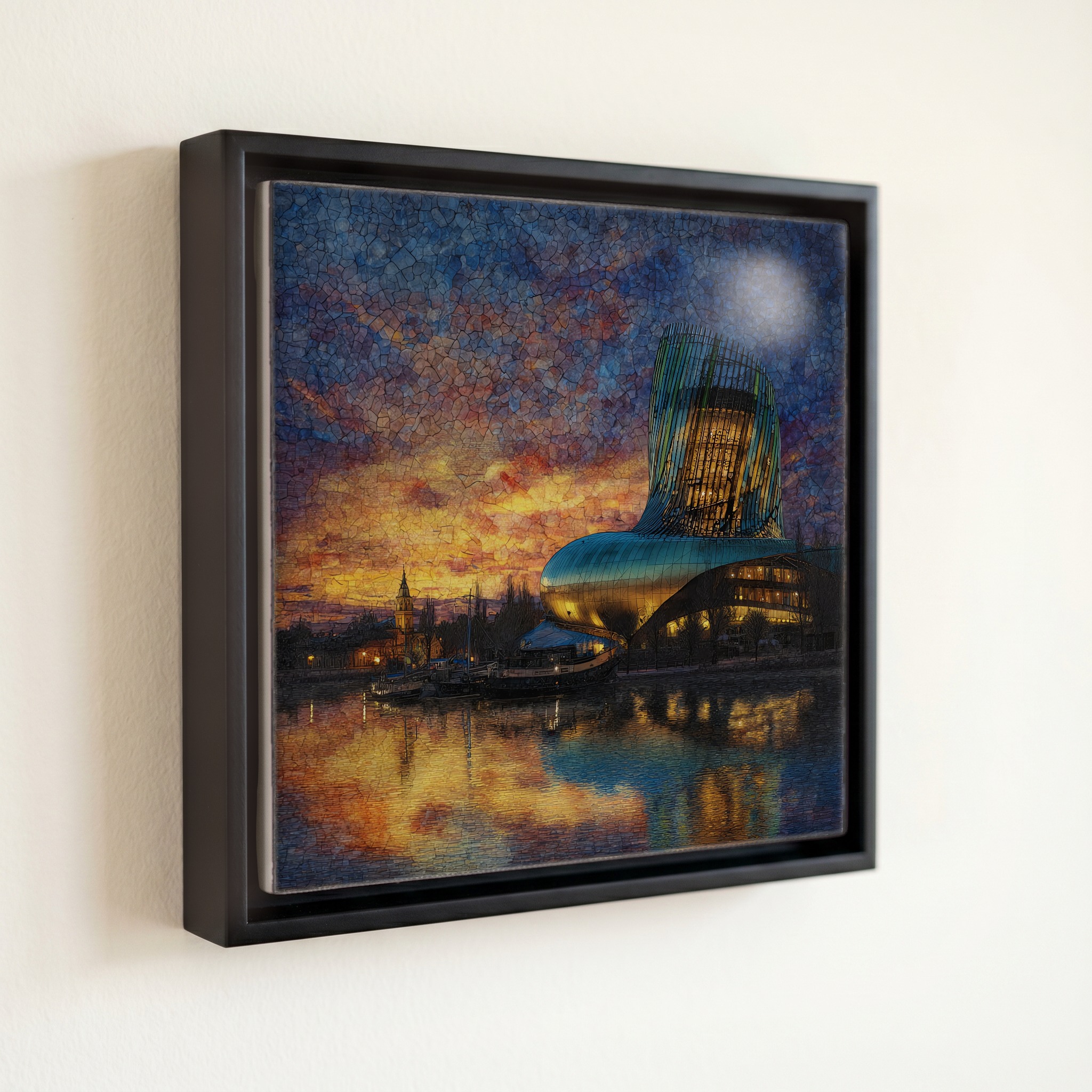
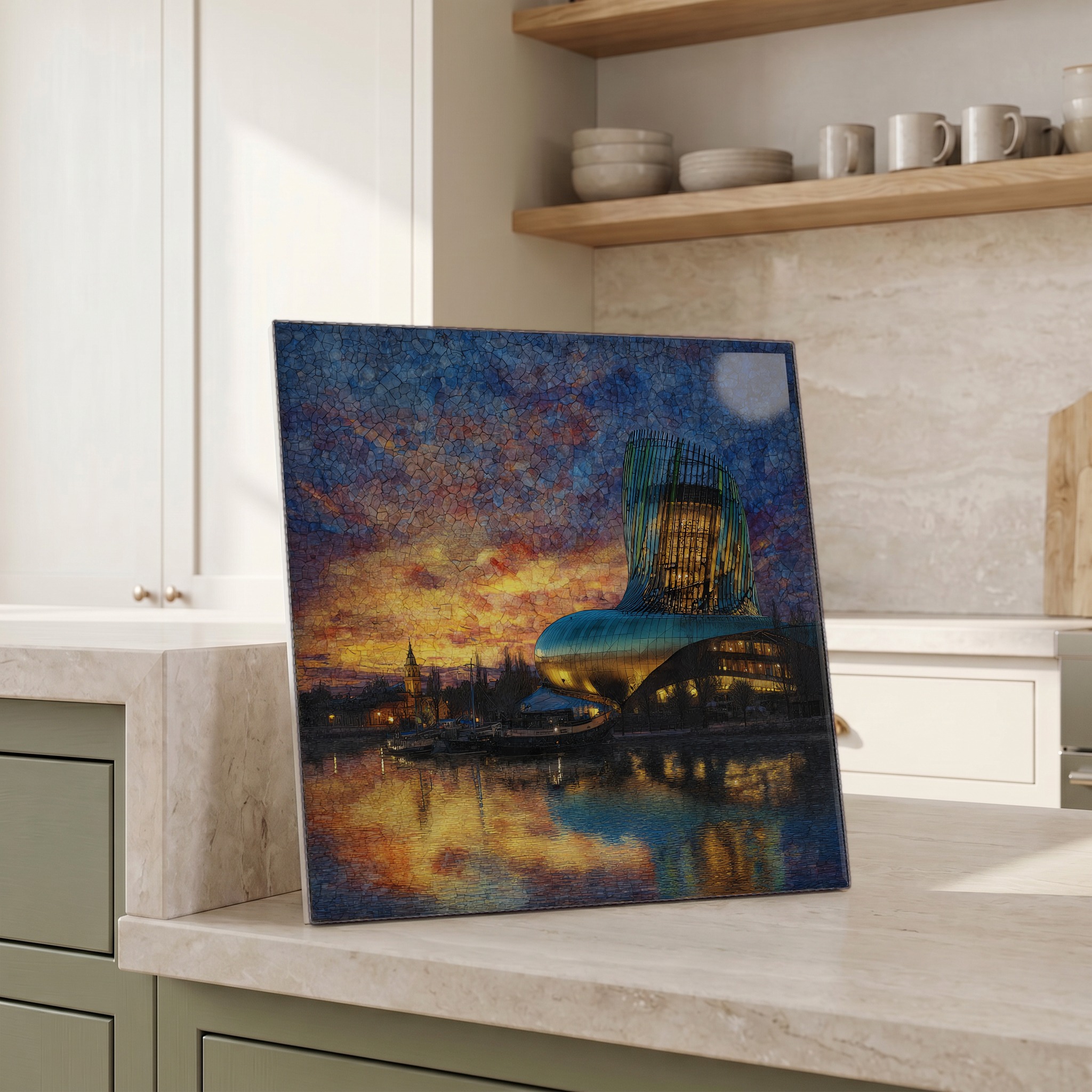
Cite du Vin, on ceramic.
Each tile is finished by hand in our Knoxville studio. Artwork is slowly infused into the ceramic surface under high heat and pressure, and rests beneath a thin glossy finish. The colour lives in the surface, not on top of it.
Pick any four 4-inch tiles — National Parks you've been to, a Smokies set, the four seasons of one place. $ for a set of , cork-backed, ready to live on the table.
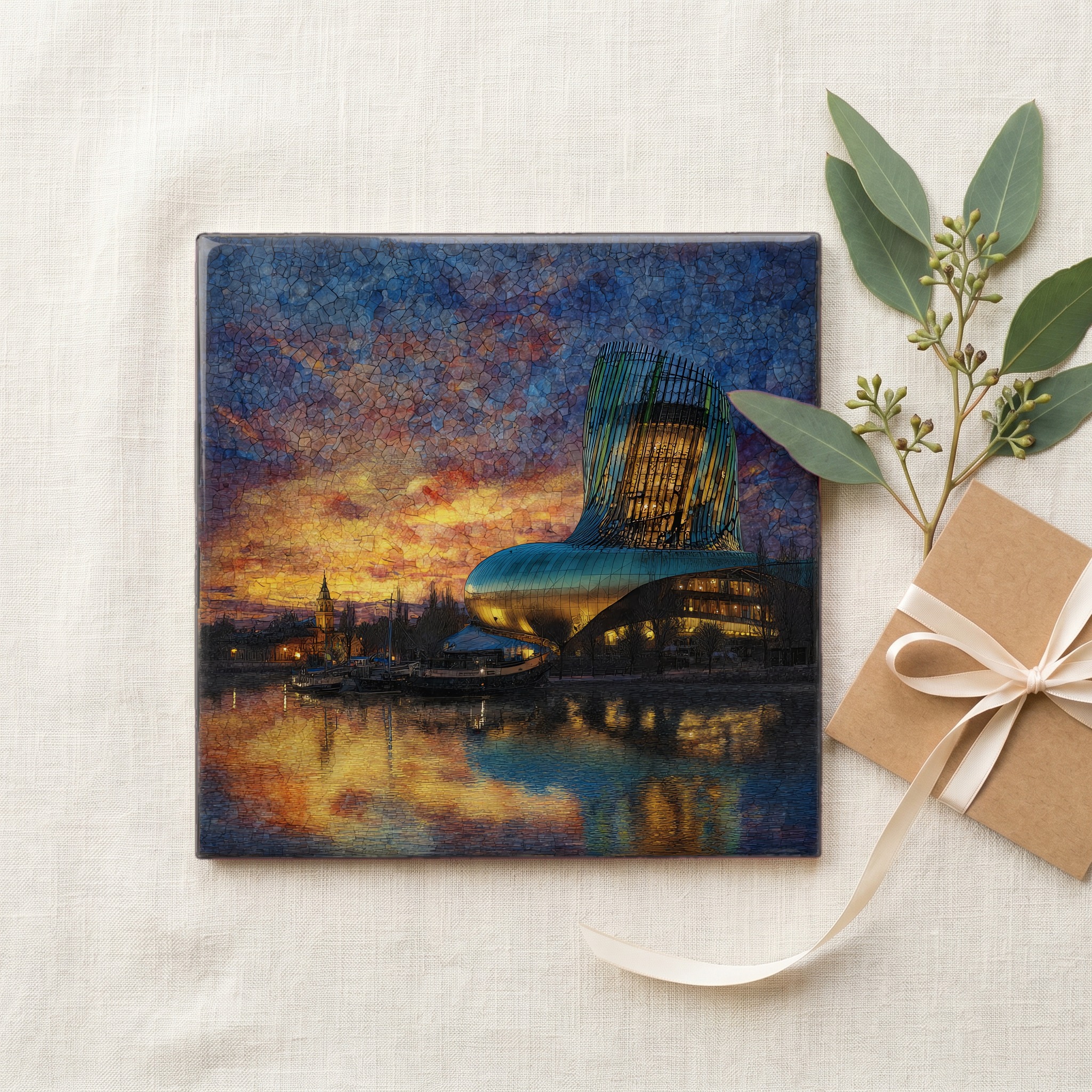
Each tile ships in a kraft box, tied with cream ribbon, with a handwritten note from the studio if you'd like to add one.
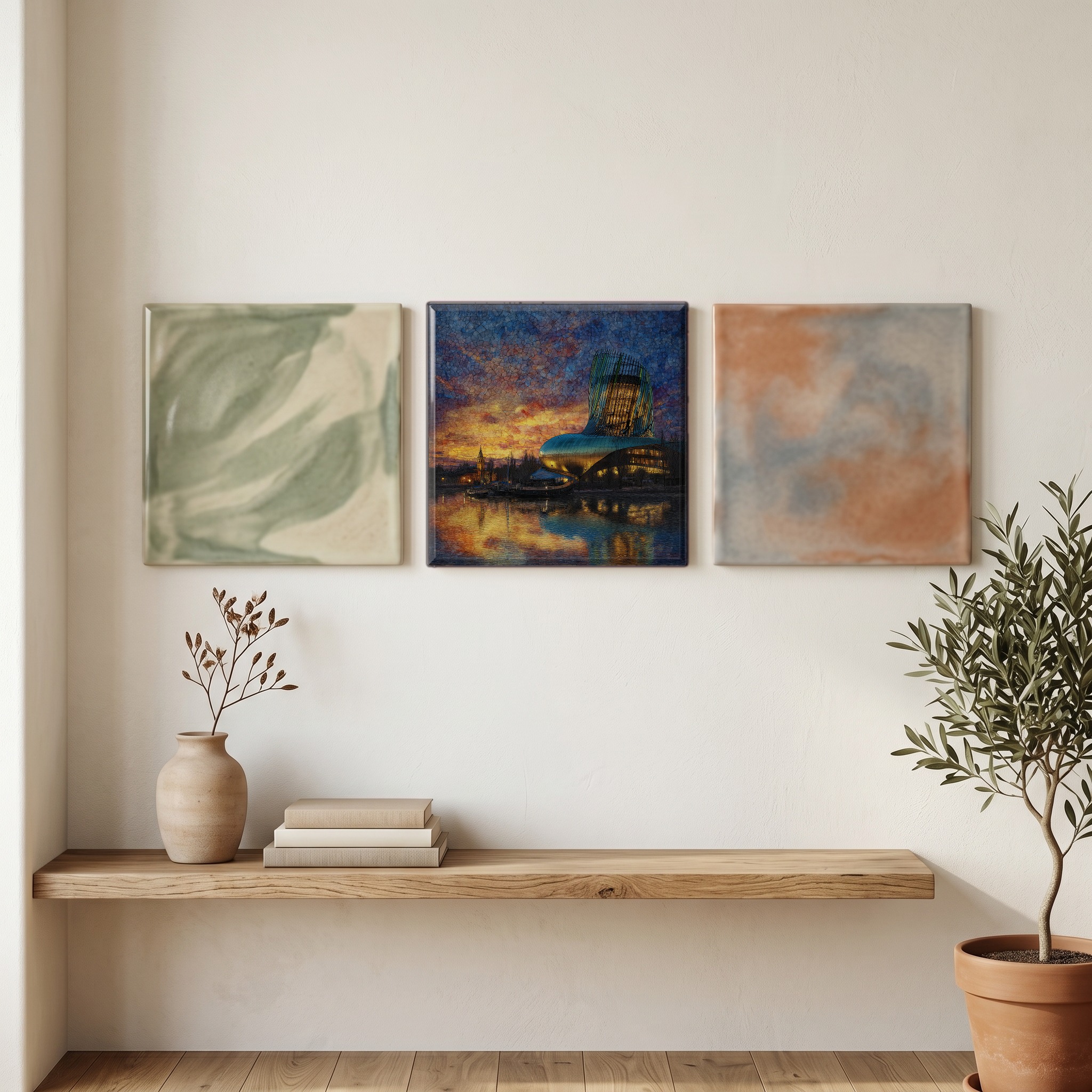
Three or five different vistas, hung together — a chapter of places you've been, or want to go.
The place, in three passes.
La Cité du Vin sits at 134 Quai de Bacalan in Bordeaux's Bassins à Flot district, the old port basin on the right bank of the Garonne where shipping fitted out through most of the twentieth century. The building opened on 1 June 2016 and covers about 13,350 square metres across ten levels, rising to roughly 55 metres above the quay. Tram line B from Place des Quinconces and the Saint-Jean station terminates at the door; on foot it is about three kilometres north of Place de la Bourse and the Miroir d'eau. Bordeaux Métropole and the Fondation pour la culture et les civilisations du vin fund and operate the building together. The vineyards of the Médoc begin roughly thirty kilometres further upriver.
The shell is the work of XTU Architects, the Paris studio led by Anouk Legendre and Nicolas Desmazières, with interior scenography by London's Casson Mann. The curve was modelled to read as wine swirled in a glass, or as a decanter mid-pour; the exterior is clad in roughly 2,500 aluminium and lacquered-glass panels in a pale gold finish that reads differently in morning haze, midday light, and the long Atlantic dusk. Total construction ran to about €81 million. The form has no front or back: it is meant to be circled, and from the river it joins a horizon of quayside warehouses that were still working depots within recent memory.
The building is open daily through most of the year, with seasonal hours that run from morning to early evening and last admission about an hour before close. A standard adult ticket includes one wine pour at the belvedere on the eighth floor, which sits about 35 metres above the quay and looks south down the Garonne toward central Bordeaux. The permanent exhibition is built for self-guided pacing across nineteen themed sections and runs roughly two to three hours, with audio guides in about twenty languages. Tram B from Quinconces drops at the door. The bookshop, cellar, and brasserie at the base are accessible without a ticket.