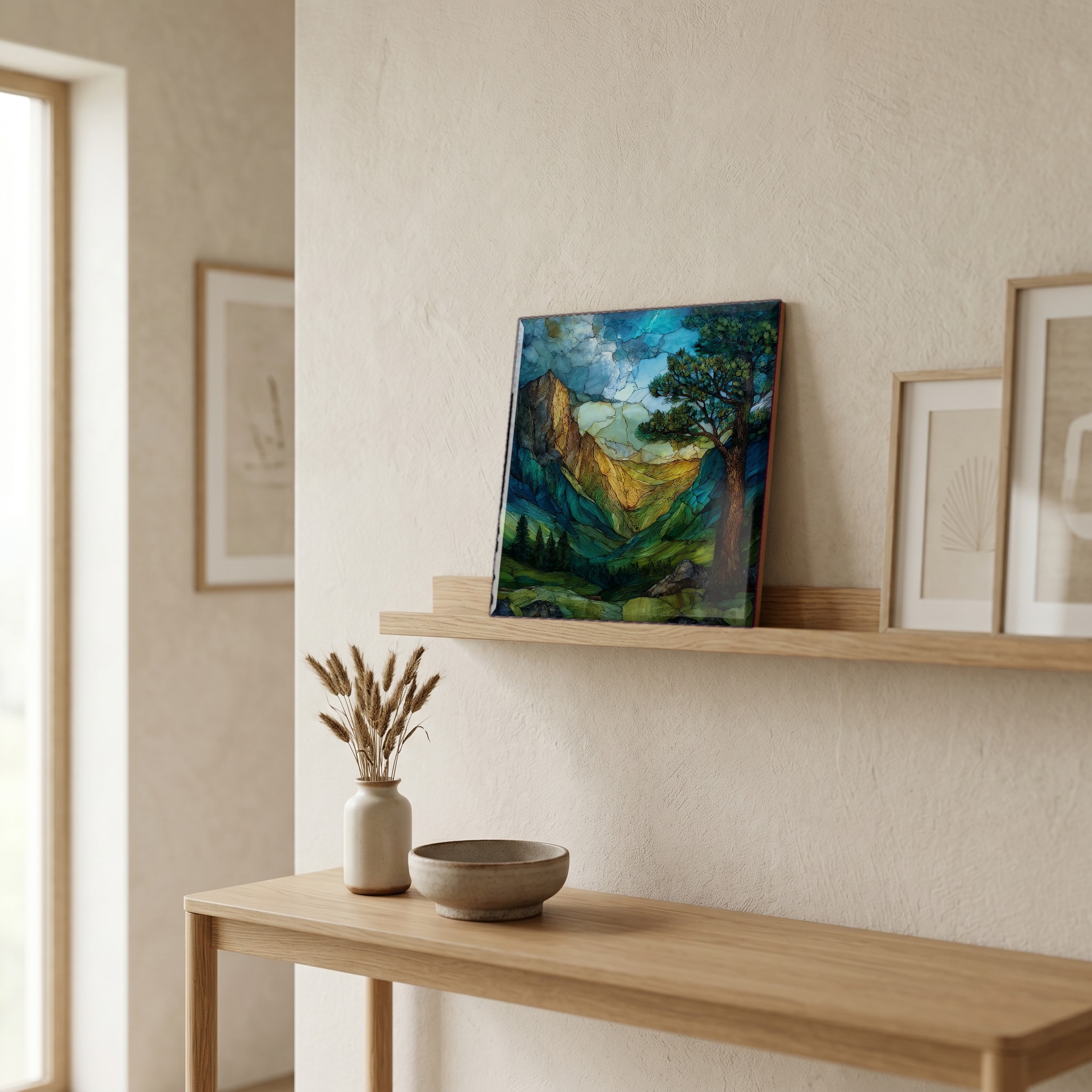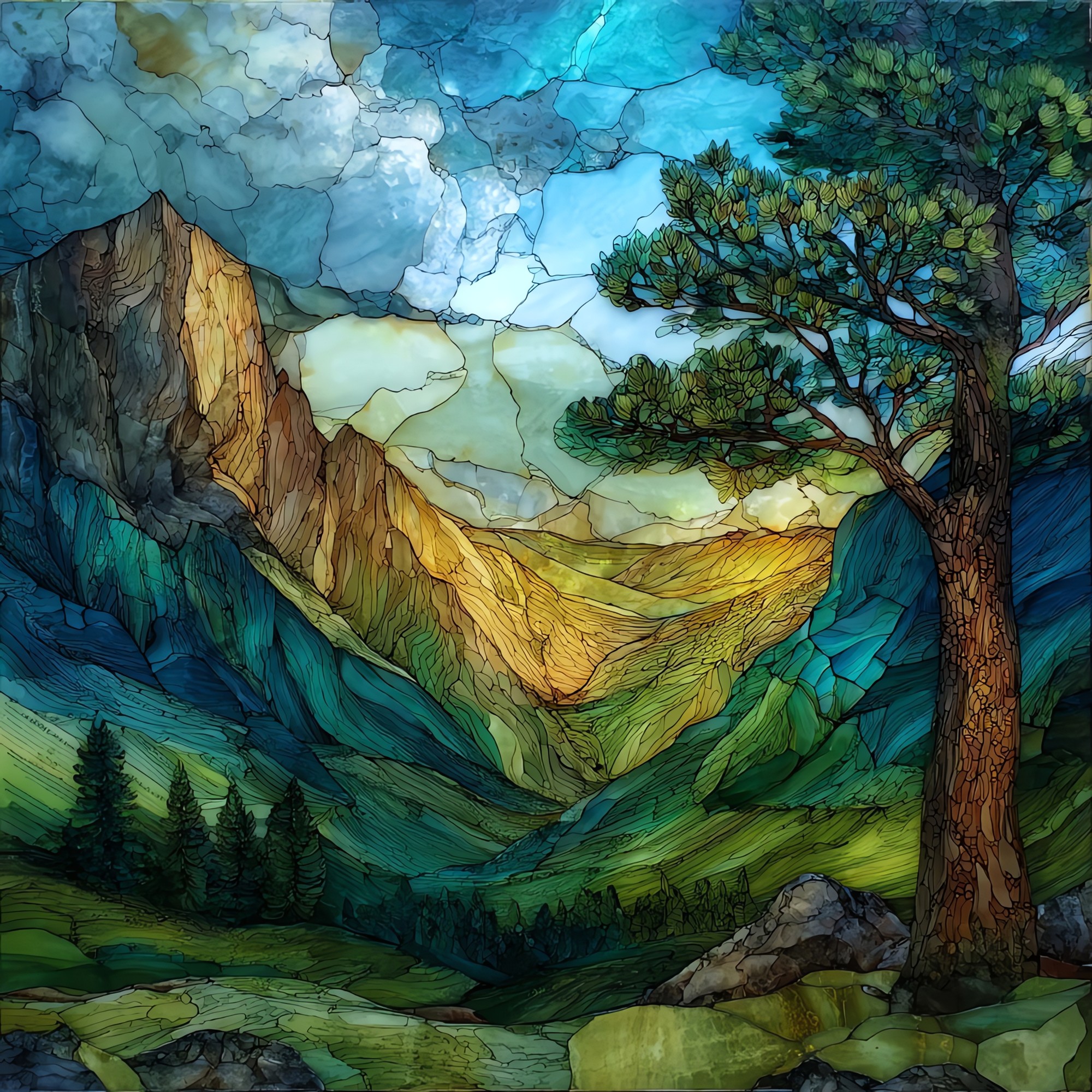
Wender·Vista
Cirque de Troumouse
shown on ceramic, 12-inch tileFrance
high in the French Pyrenees, above Gavarnie

Cirque de Troumouse

the meadow the mountains lean over.

Where it lives

Not only on a wall.

A small tile on the nightstand catching the morning. A larger one above the fire. Yours, wherever you spend the slow hours.
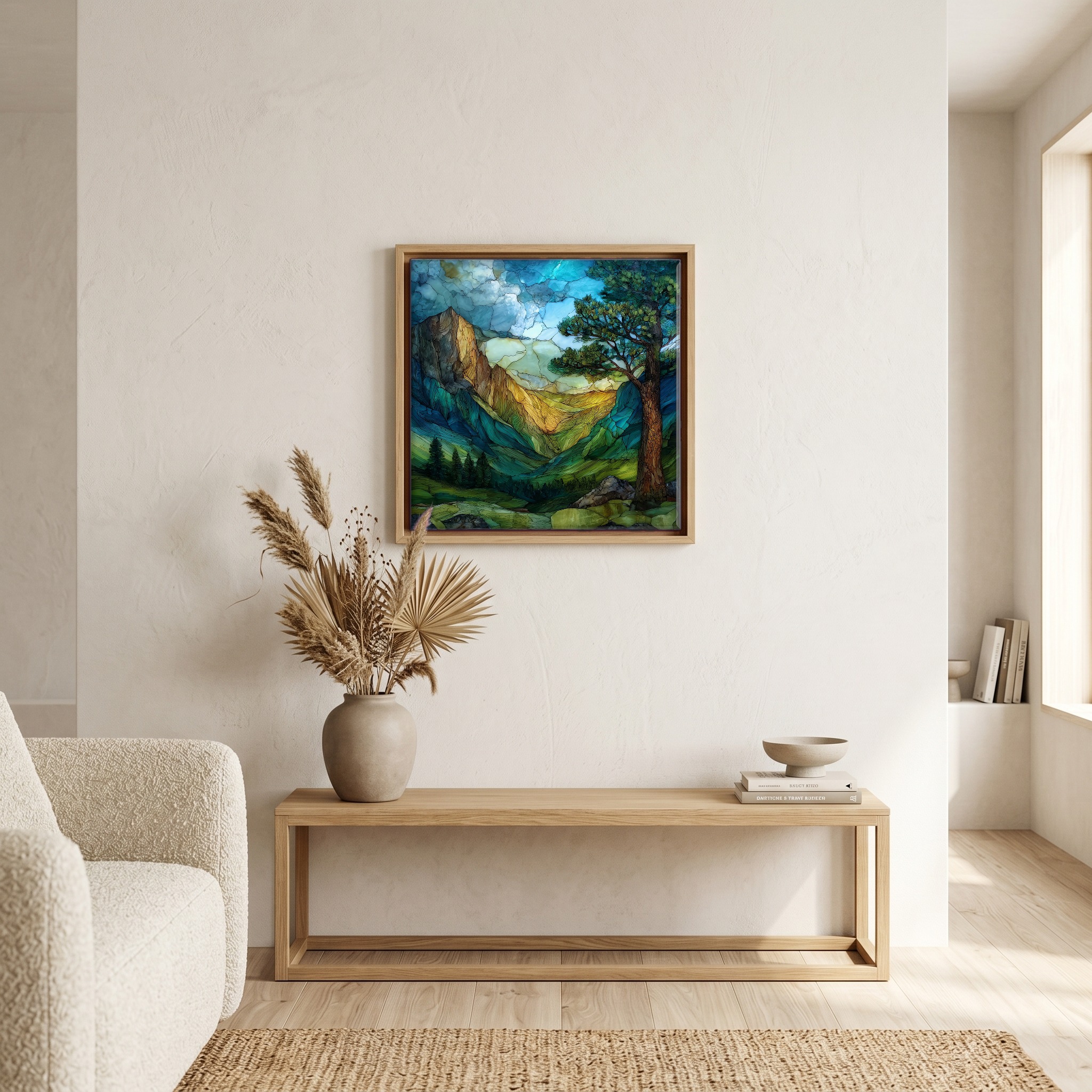
Above the bench, in a warm oak surround.
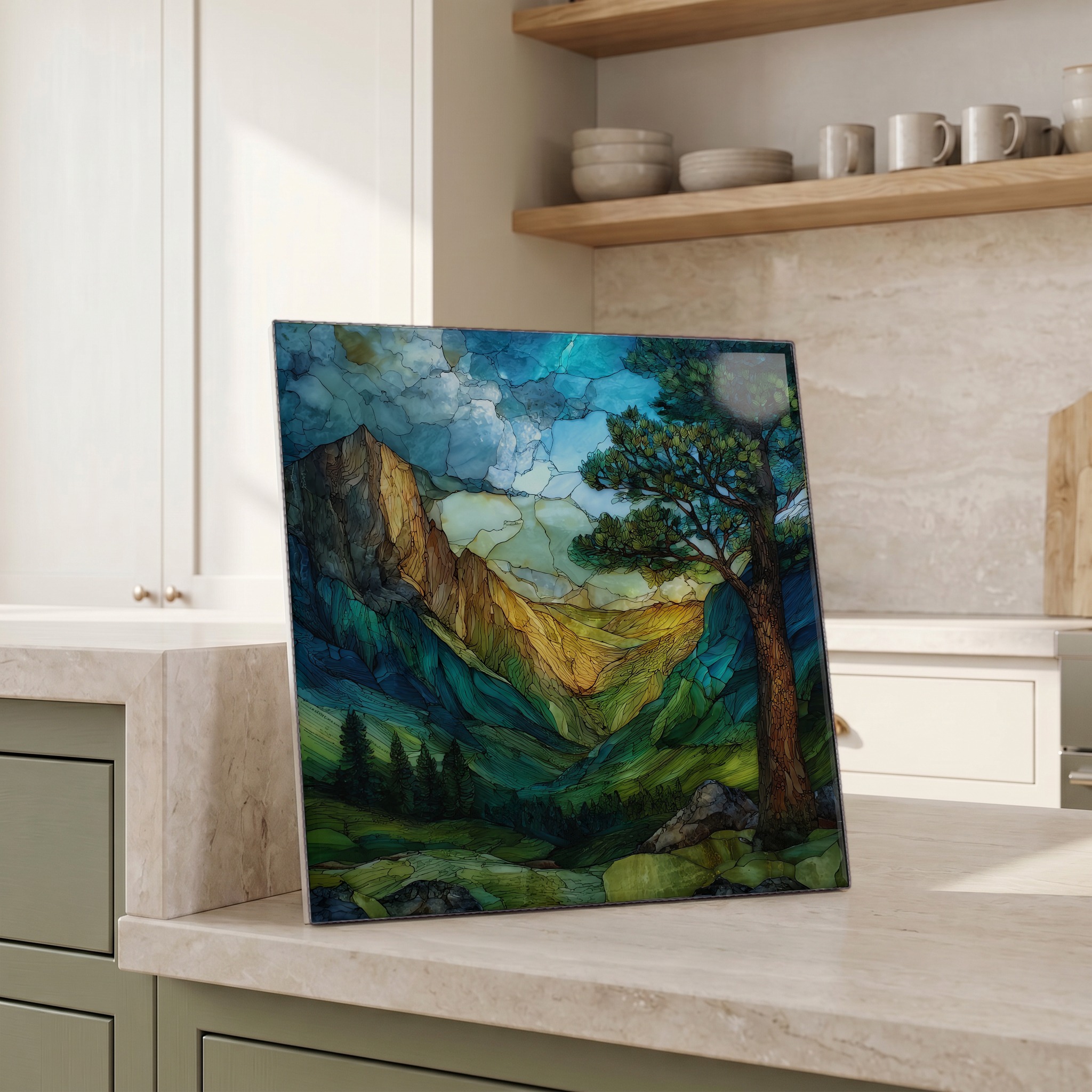
Beside the kettle, propped on the counter.
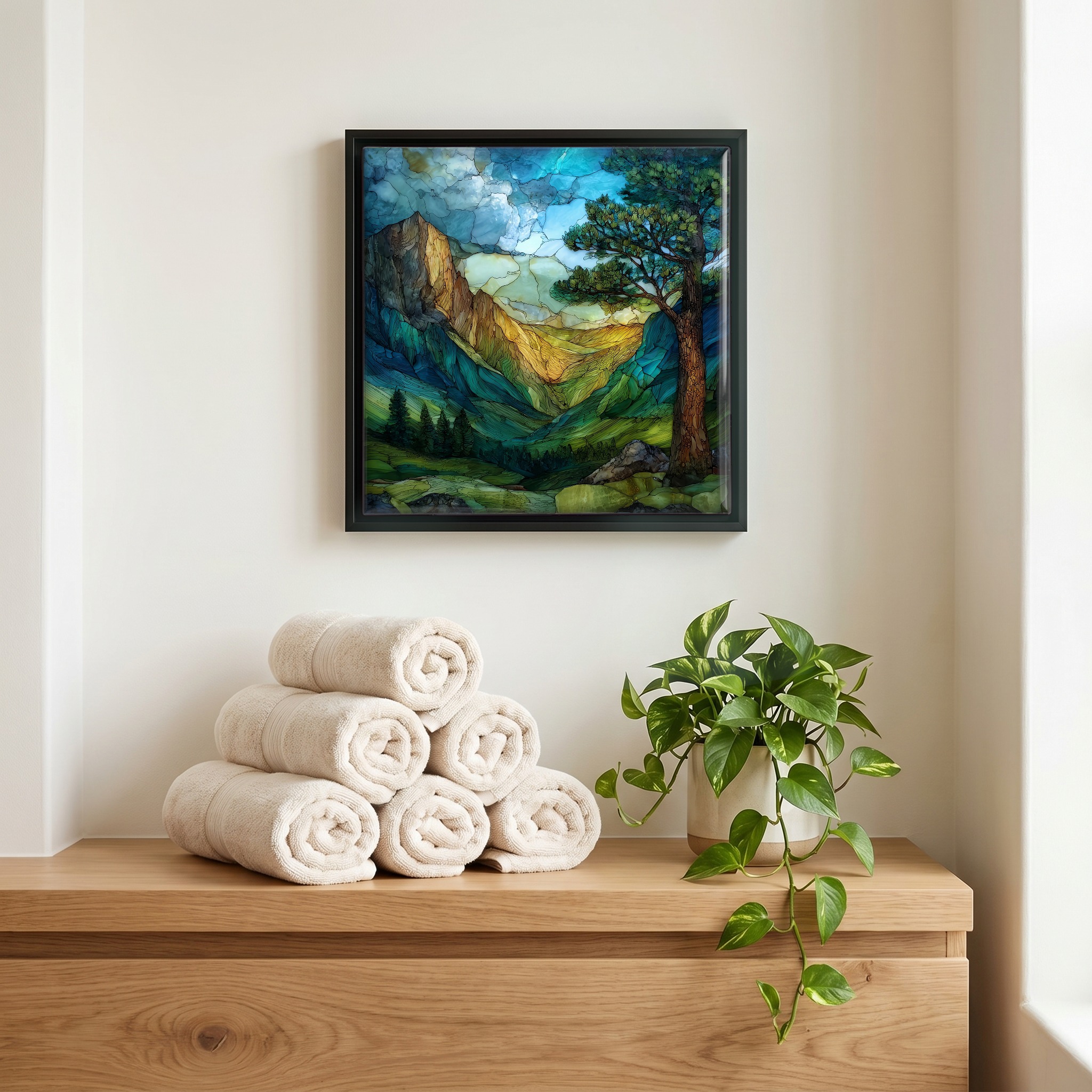
Above the linens, in a slim black surround.
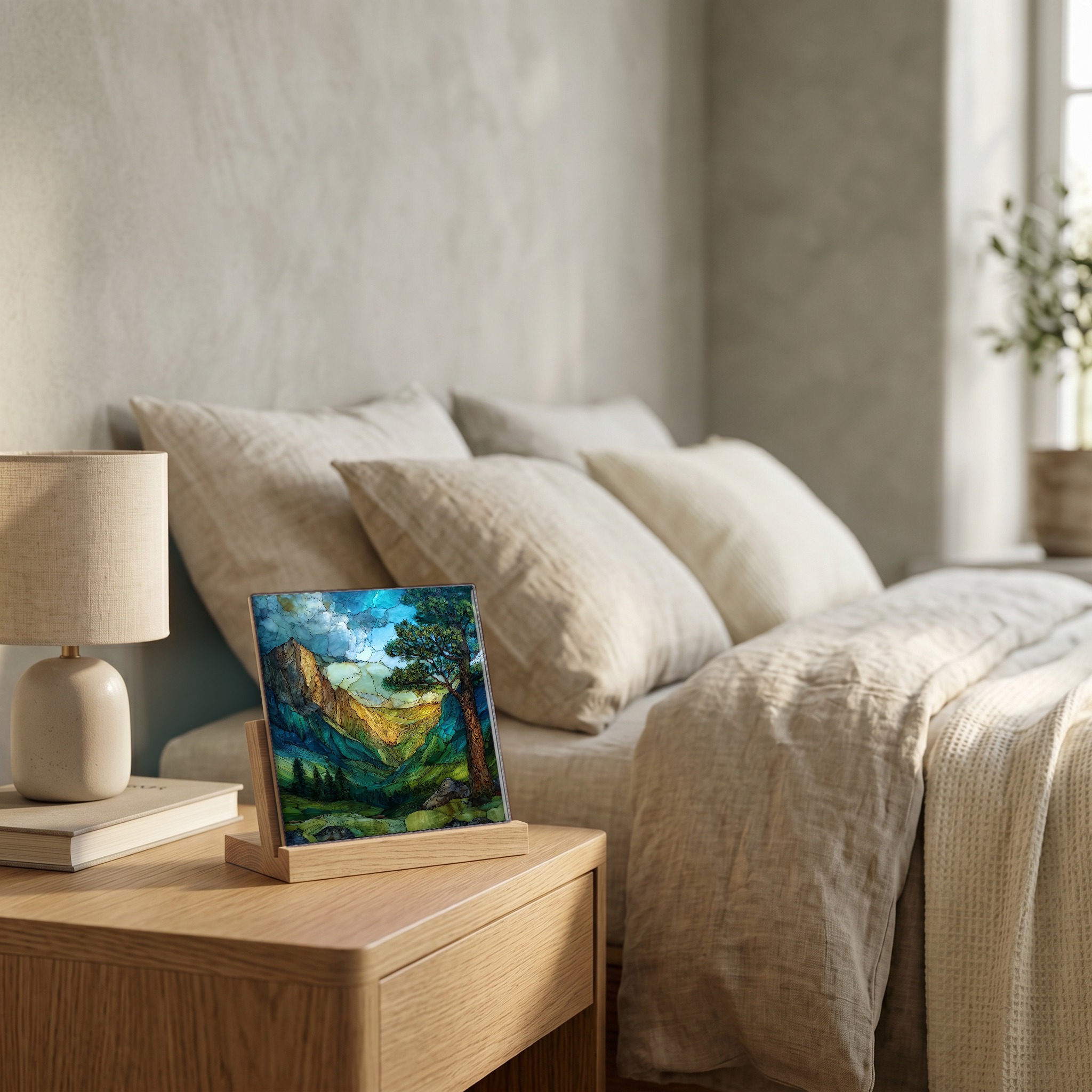
On the nightstand, on a light oak stand.
On a picture ledge, where the light comes in.
a note from the studio

The widest of the three great cirques above Gavarnie. The grass floor sits near 2,200 metres; the wall climbs another nine hundred to Pic de la Munia. A toll road runs from Héas up to the Auberge du Maillet and from there the path goes on by foot. A small white Virgin stands on a rock near the high point of the hike, placed there in 1889 and somehow still there after the 1915 avalanche that took the chapel down at Héas. In summer the marmots have run of the place and the meadow goes to lily. By October the snow has it back.
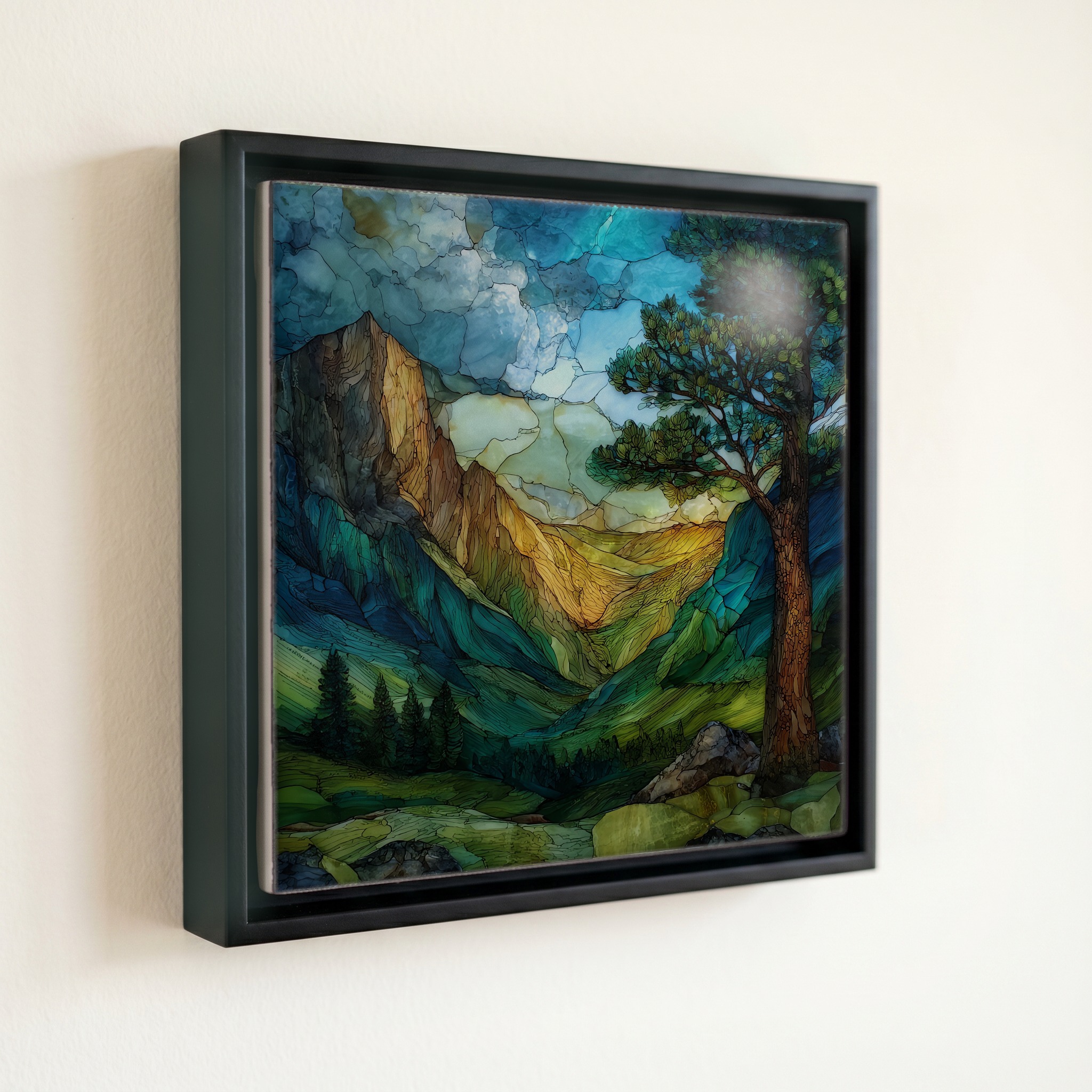
from the studio
shown in a slim black floating frame · 6 × 6 in
— bring it home

Cirque de Troumouse, on ceramic.

Each tile is finished by hand in our Knoxville studio. Artwork is slowly infused into the ceramic surface under high heat and pressure, and rests beneath a thin glossy finish. The colour lives in the surface, not on top of it.

What kind of piece?
One tile — square or rectangle.
How big?
the popular one — counter, shelf, nightstand
6 × 6 in · 15 cm · 1.6 lb
Surface finish
A clear glossy finish — the artwork reads as if under resin. Ideal for show-pieces and framed wall art.
How it sits
A hidden cleat — sits ¼″ proud of the wall.
$58
Hand-finished and shipped from our studio at the foot of the Smokies. On your wall in about ten days.
size
6 × 6 in
15 cm
weighs
1.6 lb
solid in the hand
surface
ceramic, hand-finished
art rests beneath a thin glossy finish
from
Knoxville, TN
our family studio, at the foot of the Smokies
— start a Coaster Set

Pick any four 4-inch tiles — National Parks you've been to, a Smokies set, the four seasons of one place. $ for a set of , cork-backed, ready to live on the table.
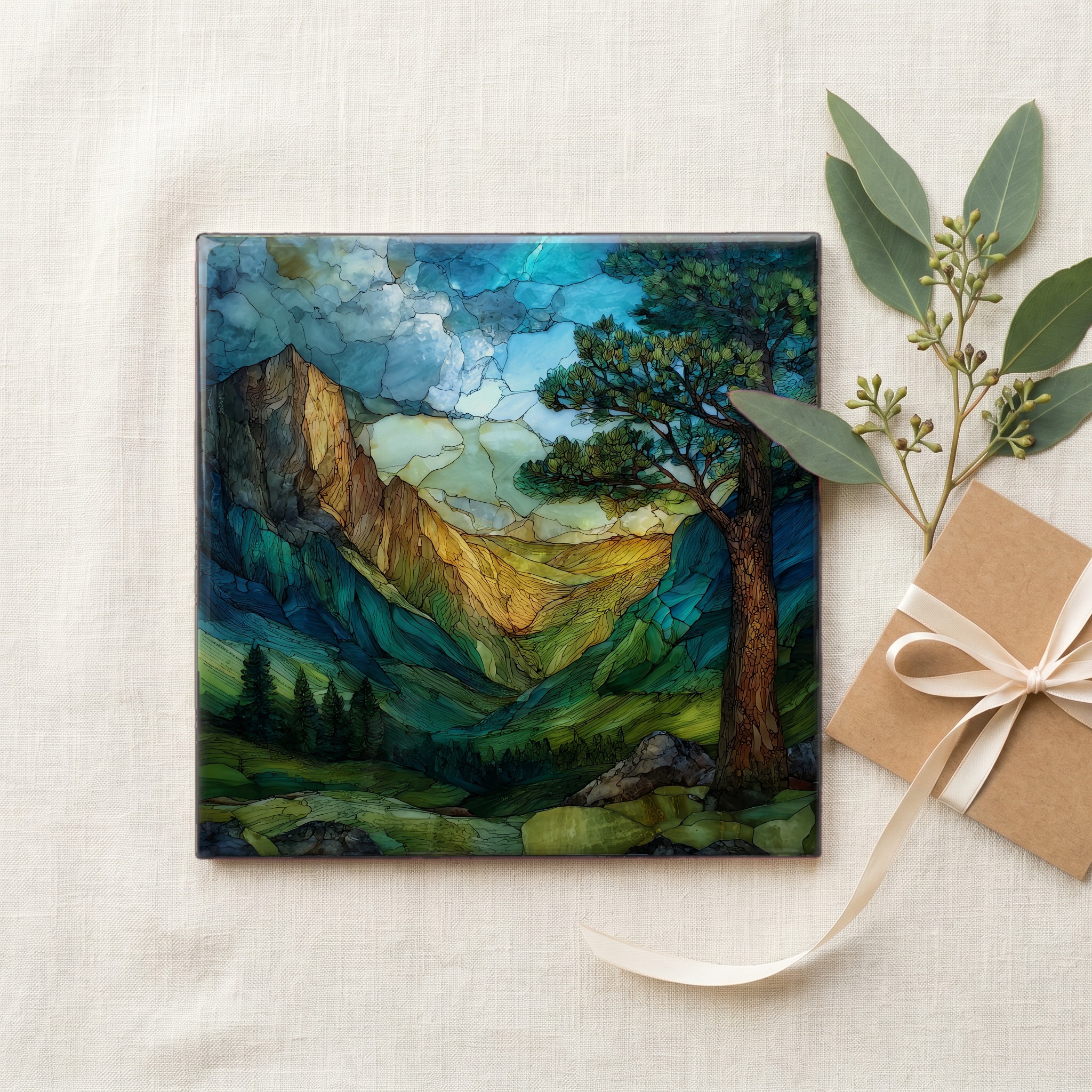
comes gift-ready
comes gift-ready

Each tile ships in a kraft box, tied with cream ribbon, with a handwritten note from the studio if you'd like to add one.
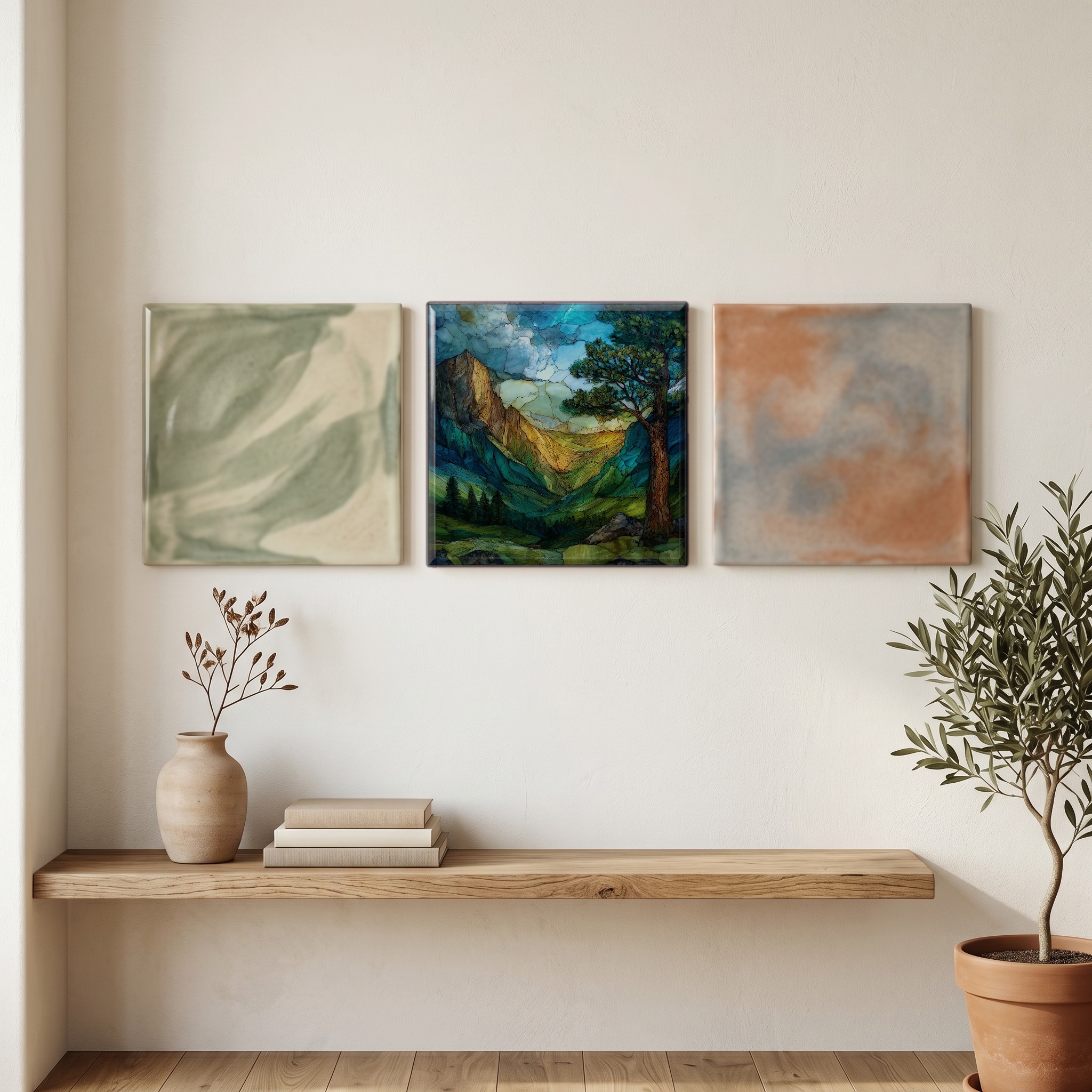
or build a grouping
or build a grouping

Three or five different vistas, hung together — a chapter of places you've been, or want to go.

about Cirque de Troumouse

The place, in three passes.

A little of what's known, in case you fall down the rabbit hole — or want to go see it yourself.
the place

Cirque de Troumouse sits in the Hautes-Pyrénées department of southern France's Occitanie region, the central of three glacial cirques that mark the French side of the Mont Perdu massif. The floor opens at roughly 2,200 metres above sea level and runs about four kilometres rim to rim, the widest of the three; Cirque de Gavarnie and Cirque d'Estaubé are its neighbours to the west. The rim is held by Pic de la Munia at 3,133 metres and a chain of three-thousand-metre summits that form the Franco-Spanish border. The site lies inside the Parc national des Pyrénées and is part of the UNESCO World Heritage property Pyrénées – Mont Perdu, inscribed in 1997 and extended in 1999.

the stone

On a rocky outcrop near the high point of the hike, at about 2,115 metres, stands a small white statue of the Virgin, placed there in 1889. An avalanche in 1915 destroyed the chapel down at Héas; the statue, by local account, was recovered from the snow intact. The bowl itself was scooped by ice during the Quaternary glaciations, and the bedrock that holds it together is the same Cretaceous limestone that carries Mont Perdu's three sister summits across the border. Three small tarns known as the Lacs des Aires lie on the floor; in dry late-summer years they almost vanish into the grass.

the season

The mountain road from Héas up to the Auberge du Maillet opens in late spring; from the auberge the cirque can be reached on foot in about an hour, or in season by a small tractor-drawn train that runs across the plateau. The summer floor belongs to grazing herds and to marmots, with Pyrenean lilies coming through the grass in July. By October the meadows yellow and the first snow returns to the upper rim. The road closes for the winter and the cirque is left to ski-tourers and isards. June through early September is the typical window for a weekday visit.

where
France · Gavarnie-Gèdre, Hautes-Pyrénées, Occitanie
within
Parc national des Pyrénées
elevation
2,200 m · 7,218 ft
the neighborhood

What's nearby.

A handful of named places within an hour's walk or short drive. Some we've already painted; some we will.
10 km W
Cirque de Gavarnie
glacial cirque
5 km W
Cirque d'Estaubé
glacial cirque
5 km N
Héas Chapel
mountain chapel
2 km N
Auberge du Maillet
mountain auberge
6 km S
Mont Perdu
limestone massif
N
Cirque de Troumouse
Cirque de Gavarnie
Cirque d'Estaubé
Héas Chapel
Auberge du Maillet
Mont Perdu
common questions

What people ask.

A few questions we get about Cirque de Troumouse — and about bringing the piece home.
about the place

The cirque sits in the Hautes-Pyrénées department of southern France's Occitanie region, inside the Parc national des Pyrénées. The nearest hamlet is Héas, reached from the village of Gèdre by a mountain road that climbs into the Gavarnie-Gèdre commune. Cirque de Gavarnie lies a short distance to the west.

The cirque measures roughly four kilometres rim to rim, making it the widest of the three great glacial cirques on the French side of the Mont Perdu massif. Its grass floor sits near 2,200 metres above sea level, framed by a rim of three-thousand-metre peaks.

Pic de la Munia, at 3,133 metres, is the highest summit on the rim and marks the border with Spain. The same chain includes Petite Munia at 3,096 metres, Pic de Serre Mourène at 3,090 metres, and Pic Heid at 3,022 metres.

Yes. It is part of the transboundary property Pyrénées – Mont Perdu, inscribed by UNESCO in 1997 and extended in 1999. The site is shared with the Spanish side of the massif and recognised for both its glacial scenery and its pastoral traditions.

It is the Vierge de Troumouse, a small statue of the Virgin placed in 1889 on the Rocher de l'Arailhé at about 2,115 metres. The 1915 avalanche destroyed the chapel at Héas below; the statue itself, by local account, was recovered from the snow intact.

The road from Héas up to the Auberge du Maillet is open roughly from late spring through autumn; winter snow closes it. June through early September is the typical window for hiking the floor of the cirque and seeing the summer flora.

Alpine marmots are the most-seen residents and easy to hear through the meadow in summer. Isards, the Pyrenean chamois, range the higher slopes, and griffon vultures circle the rim. Grazing herds of sheep and a few horses use the floor in season.

about the piece in your home

It has been a meaningful gift for many of our customers with ties to the French Pyrenees. Troumouse is well known to walkers who have done the three-cirque circuit above Gavarnie, and to climbers who have stood on the border ridge at Pic de la Munia. A Small or a Medium with a handwritten note from the studio carries well.

The deep stained-glass blues and stone-grey rim of the Voynich palette read well in Mountain-modern, Alpine-modern, and Jewel-tone Maximalist rooms. It also sits cleanly in a pared-back Minimalist study where the colour story is the loud thing on the wall.

It fits. Biophilic design favours natural forms, depth of field, and a single sustained colour story. A landscape this strong meets all three. The Medium hung over a reading chair, or a 4-tile Mural above a sideboard, gives the room a long horizon to rest on.

Above a console or narrow wall, the Large at 16 inches reads at focal scale. Above a standard sofa, a 4-tile Mural carries the wall without crowding. Above a long sideboard or a dining-room wall, a 9-tile Mural takes the full architectural sweep of the rim.

Yes. For a bathroom, a kitchen splashback, or any vertical wet surface, choose the Dura Satin or Matte finish. Both are scratch-resistant and rated for those installations. The Glossy finish is intended for framed wall pieces in dry rooms.

A soft microfibre cloth with plain water handles dust and most marks. For a kitchen splashback, a mild dish-soap solution wiped with microfibre is enough. Avoid abrasive pads and scouring powders. The colour lives in the ceramic surface, so it does not lift.

Yes. Every WenderVista piece is by Reid Wender, the studio's curator. There is no licensing, no third-party art, and no reproduction of an existing photograph or painting. The Cirque de Troumouse piece is in the studio's distinct visual language and exists nowhere else.

if this one stayed with you

A few you might also love.

Hand-picked by the eye that found Sorapis. Same air, same kind of quiet.