Wender·Vista
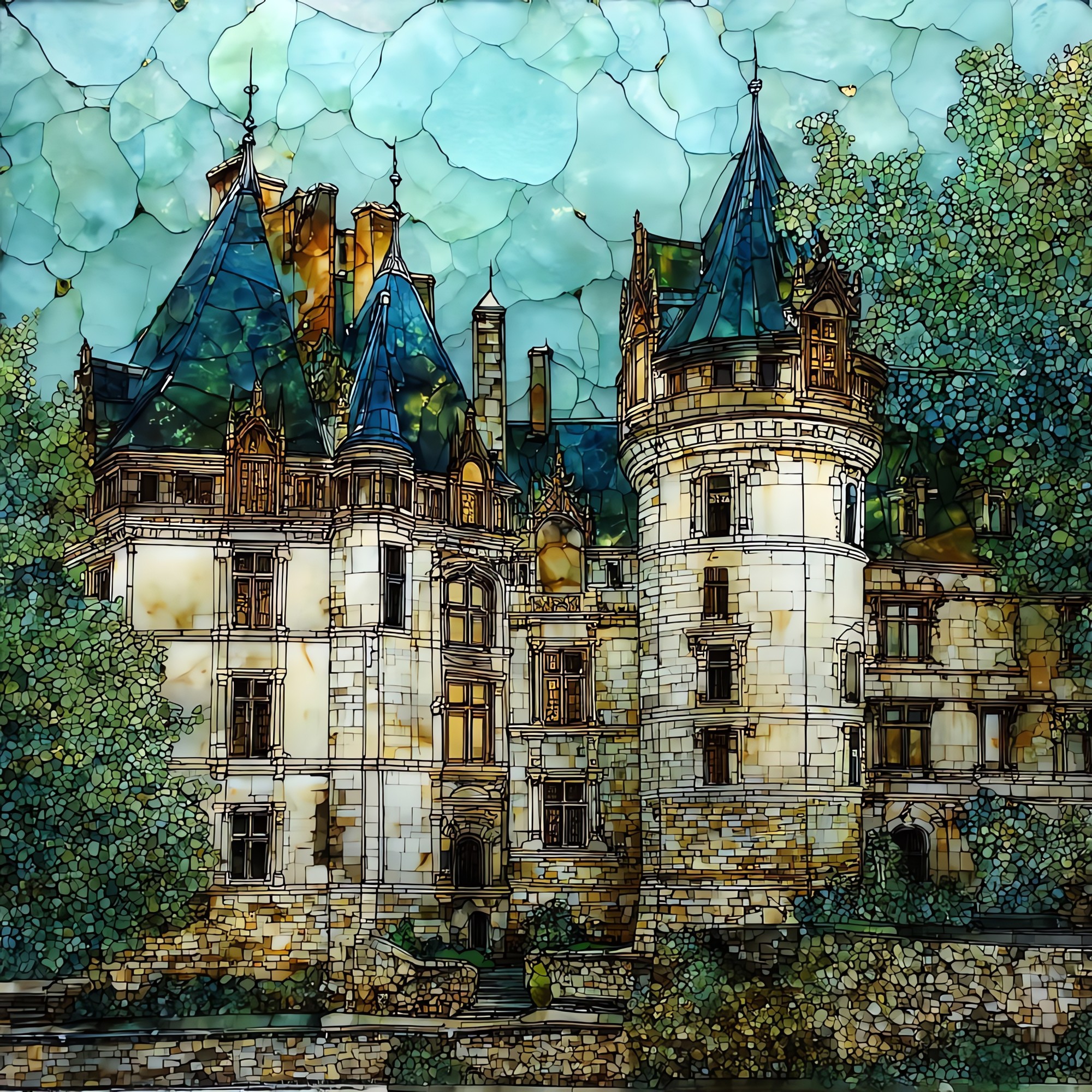
Chateau du Clos Luce
shown on ceramic, 12-inch tileFrance
in Amboise, on the Loire

Chateau du Clos Luce

— the last room the Mona Lisa knew.

Where it lives

Not only on a wall.

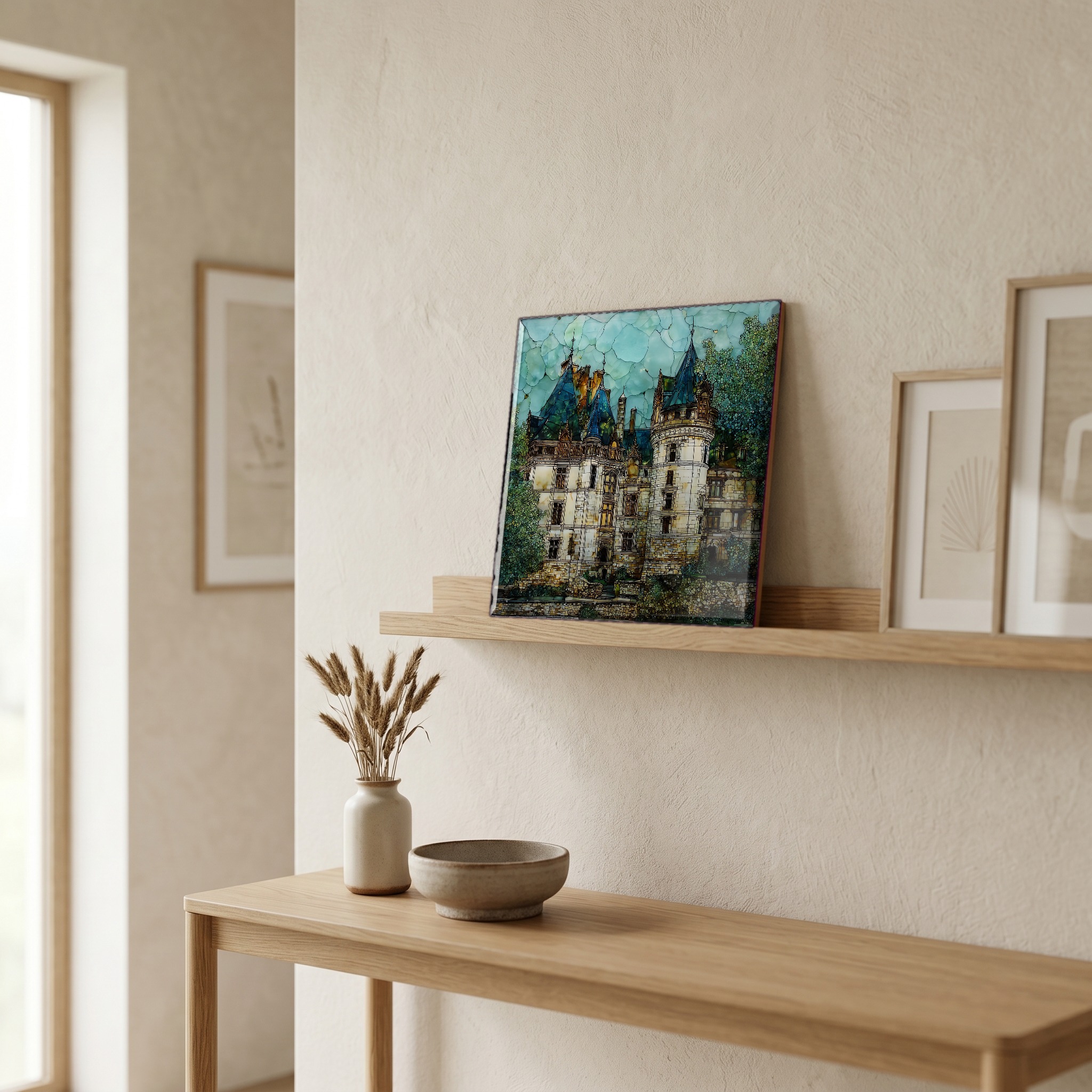
A small tile on the nightstand catching the morning. A larger one above the fire. Yours, wherever you spend the slow hours.
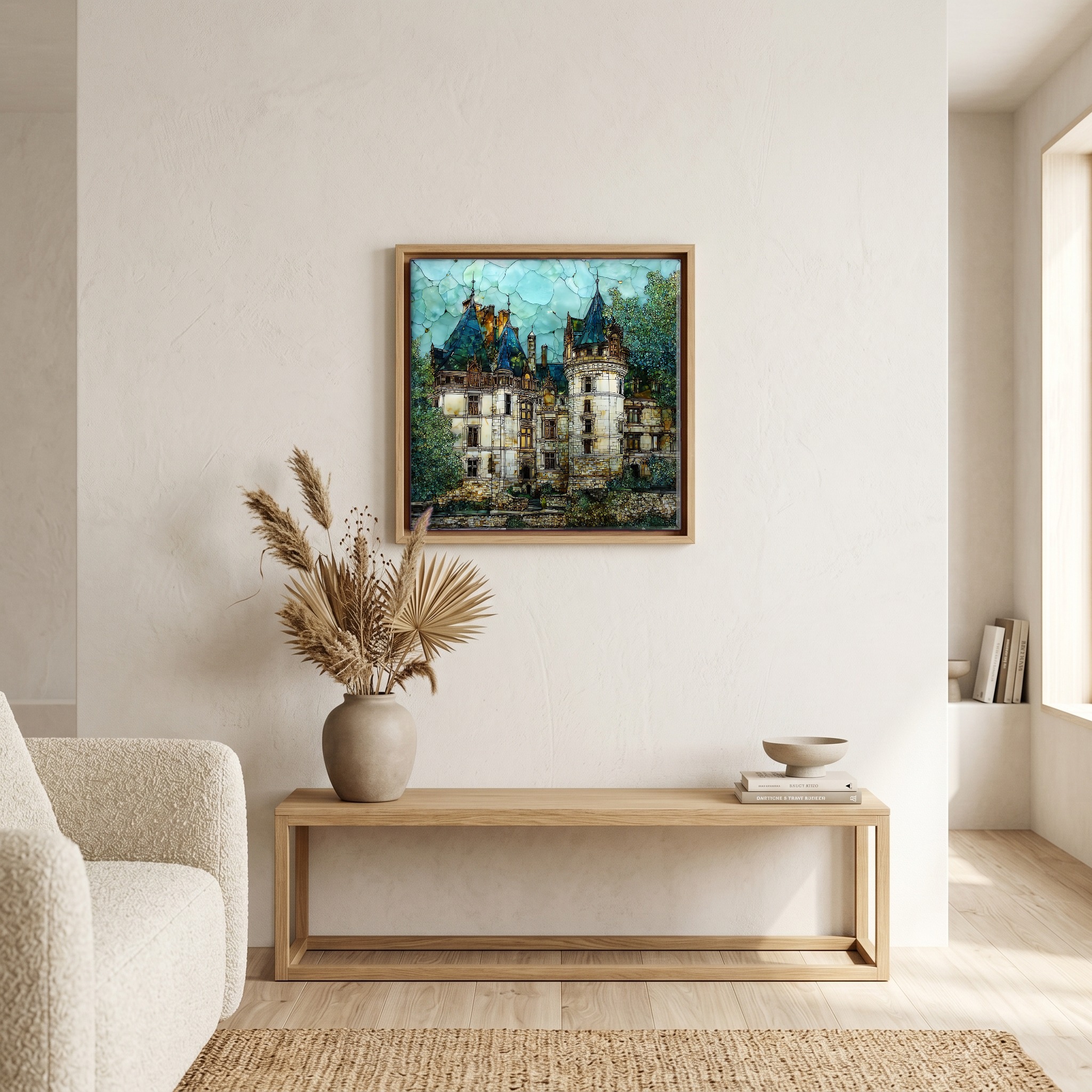
Above the bench, in a warm oak surround.
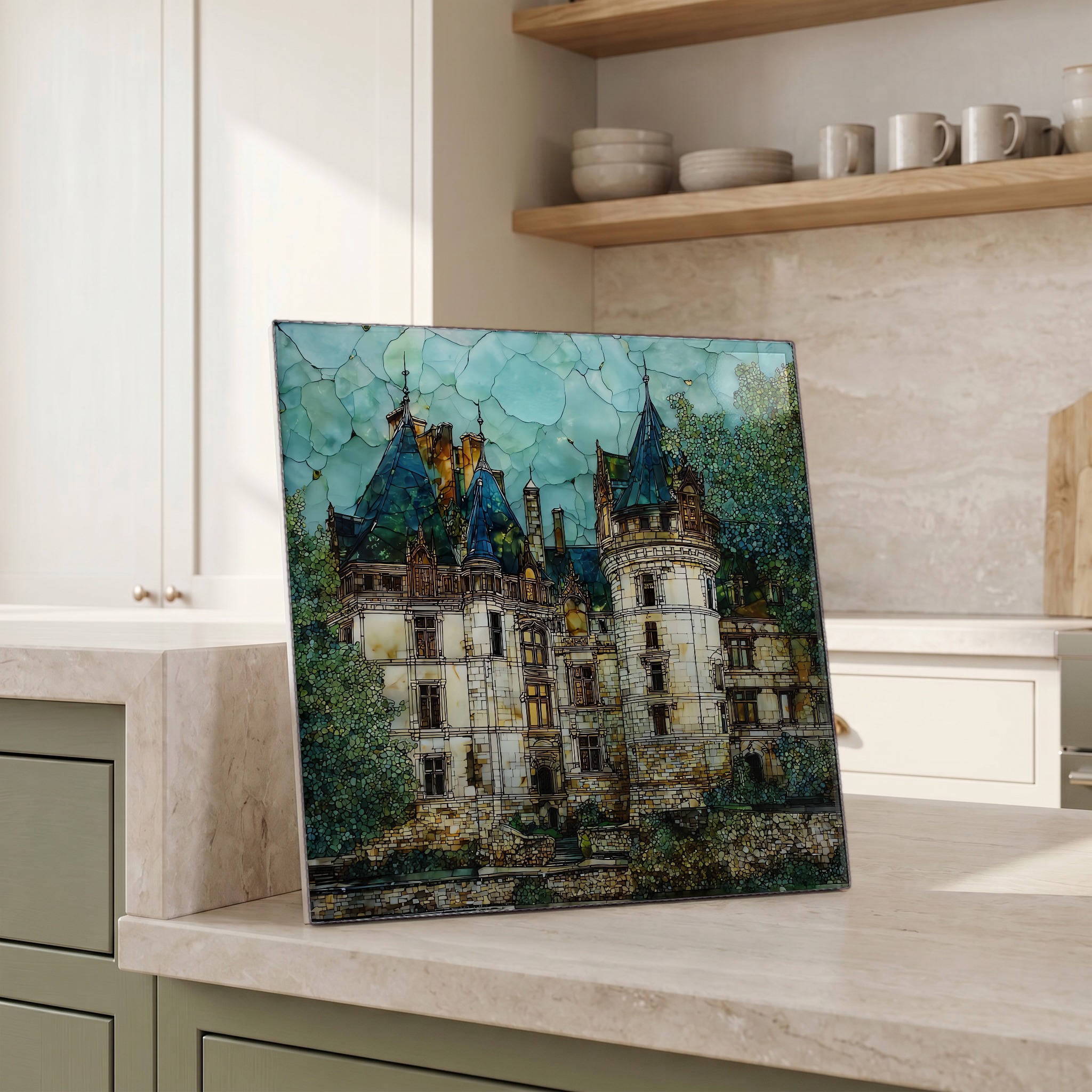
Beside the kettle, propped on the counter.
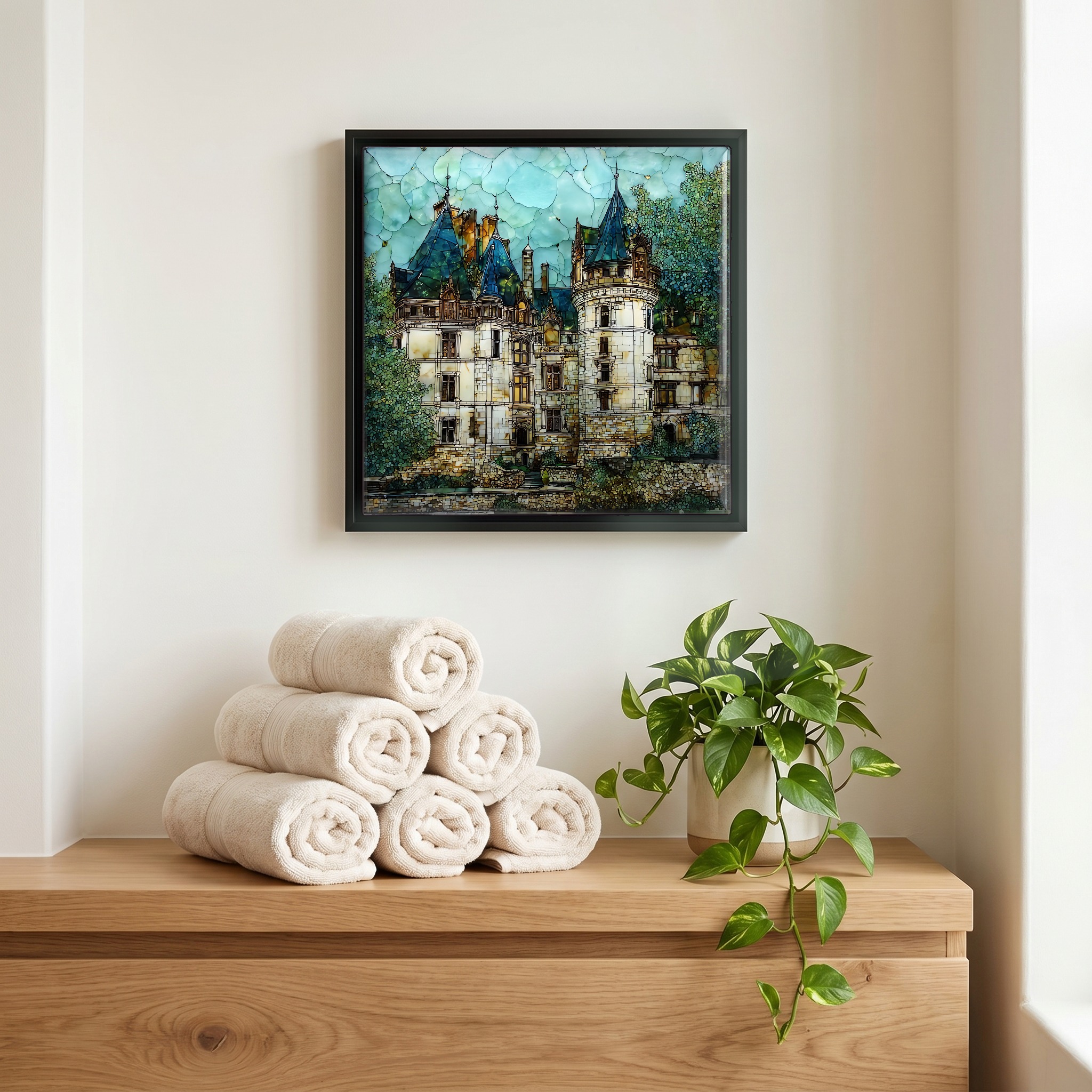
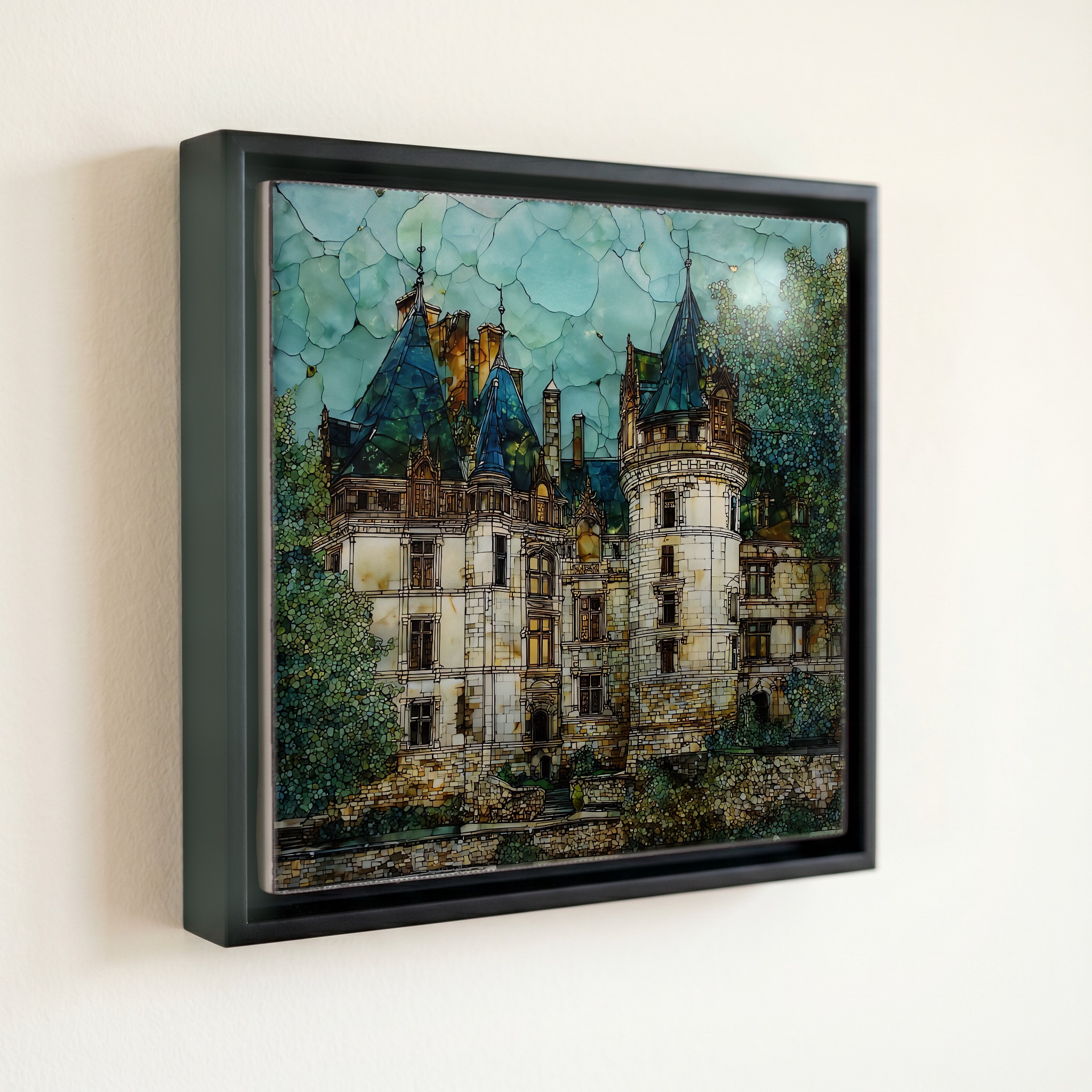
Above the linens, in a slim black surround.
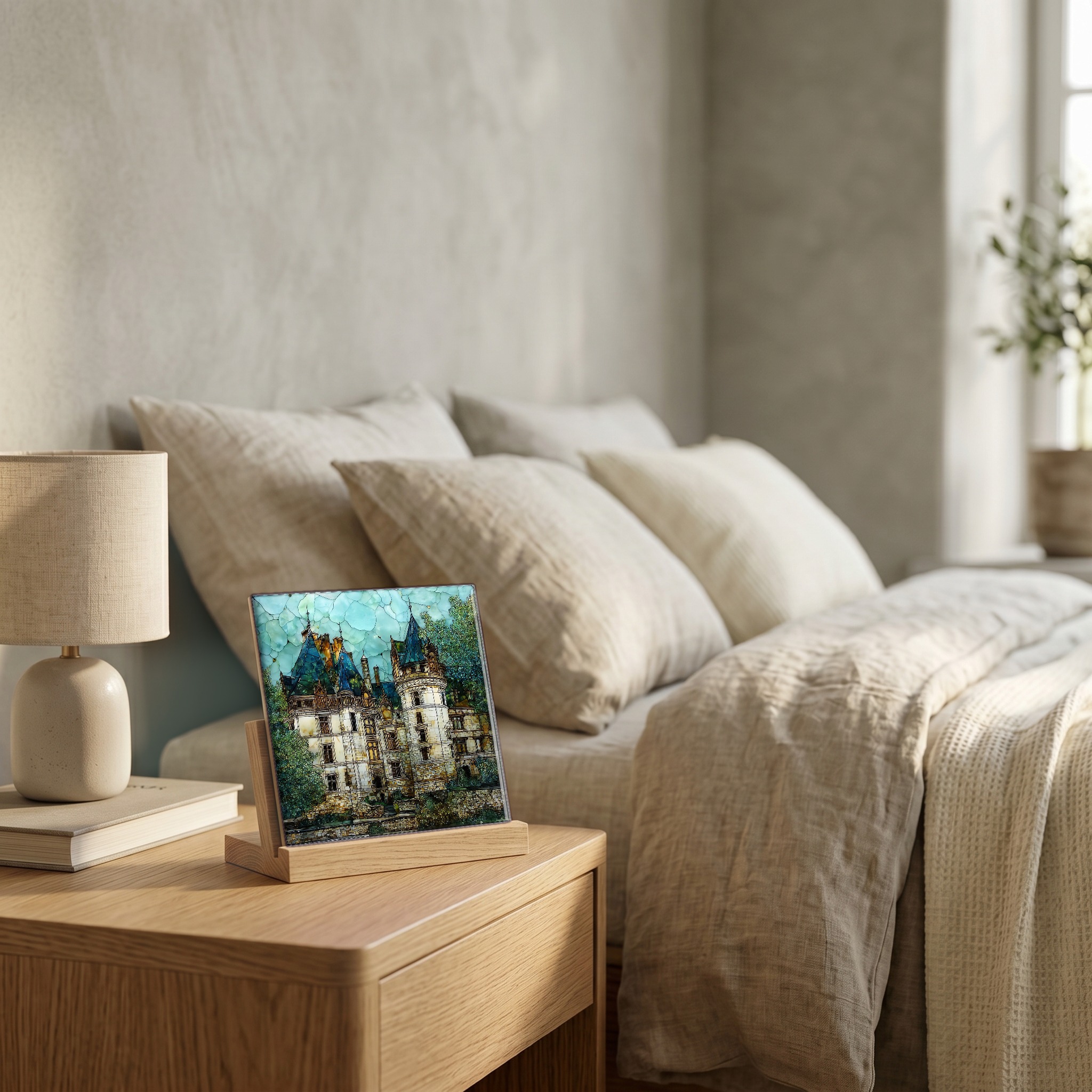
On the nightstand, on a light oak stand.
On a picture ledge, where the light comes in.
a note from the studio

A pink-brick manor on a low hill in Amboise, five hundred metres from the royal château along a path through the gardens. Leonardo da Vinci spent his last three years here, brought from Italy in 1516 by François I, with the Mona Lisa, the Saint John the Baptist, and the Virgin and Child with Saint Anne wrapped in his trunk. He died in the upper bedroom in May 1519. The rooms are kept as they were, more or less: a workshop, a chapel, the bed against the wall. The Loire light comes through the same windows. Tour groups come and go. The room stays quiet between them.
from the studio
shown in a slim black floating frame · 6 × 6 in
— bring it home

Chateau du Clos Luce, on ceramic.

Each tile is finished by hand in our Knoxville studio. Artwork is slowly infused into the ceramic surface under high heat and pressure, and rests beneath a thin glossy finish. The colour lives in the surface, not on top of it.

What kind of piece?
One tile — square or rectangle.
How big?
the popular one — counter, shelf, nightstand
6 × 6 in · 15 cm · 1.6 lb
Surface finish
A clear glossy finish — the artwork reads as if under resin. Ideal for show-pieces and framed wall art.
How it sits
A hidden cleat — sits ¼″ proud of the wall.
$58
Hand-finished and shipped from our studio at the foot of the Smokies. On your wall in about ten days.
size
6 × 6 in
15 cm
weighs
1.6 lb
solid in the hand
surface
ceramic, hand-finished
art rests beneath a thin glossy finish
from
Knoxville, TN
our family studio, at the foot of the Smokies
— start a Coaster Set

Pick any four 4-inch tiles — National Parks you've been to, a Smokies set, the four seasons of one place. $ for a set of , cork-backed, ready to live on the table.
comes gift-ready
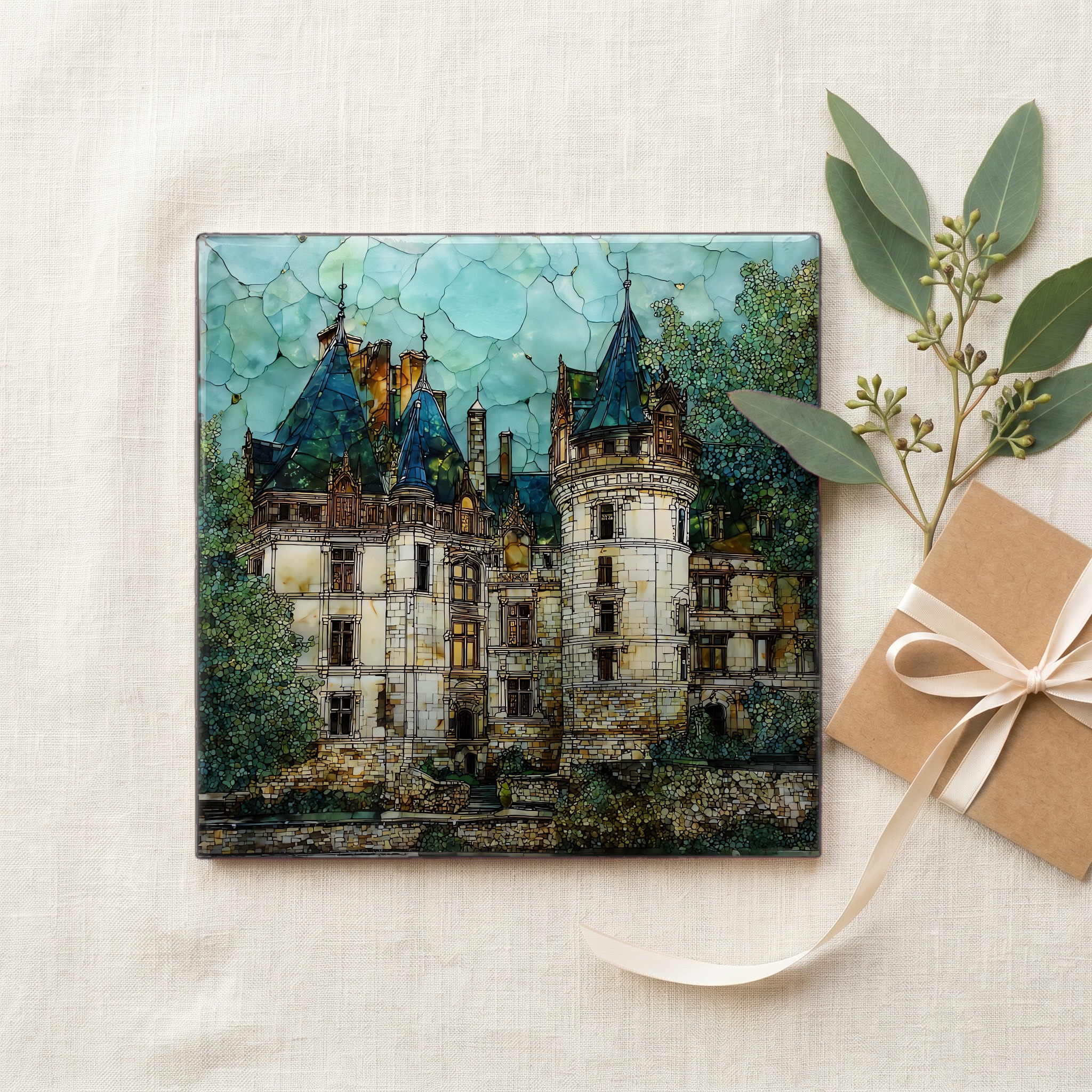
comes gift-ready

Each tile ships in a kraft box, tied with cream ribbon, with a handwritten note from the studio if you'd like to add one.
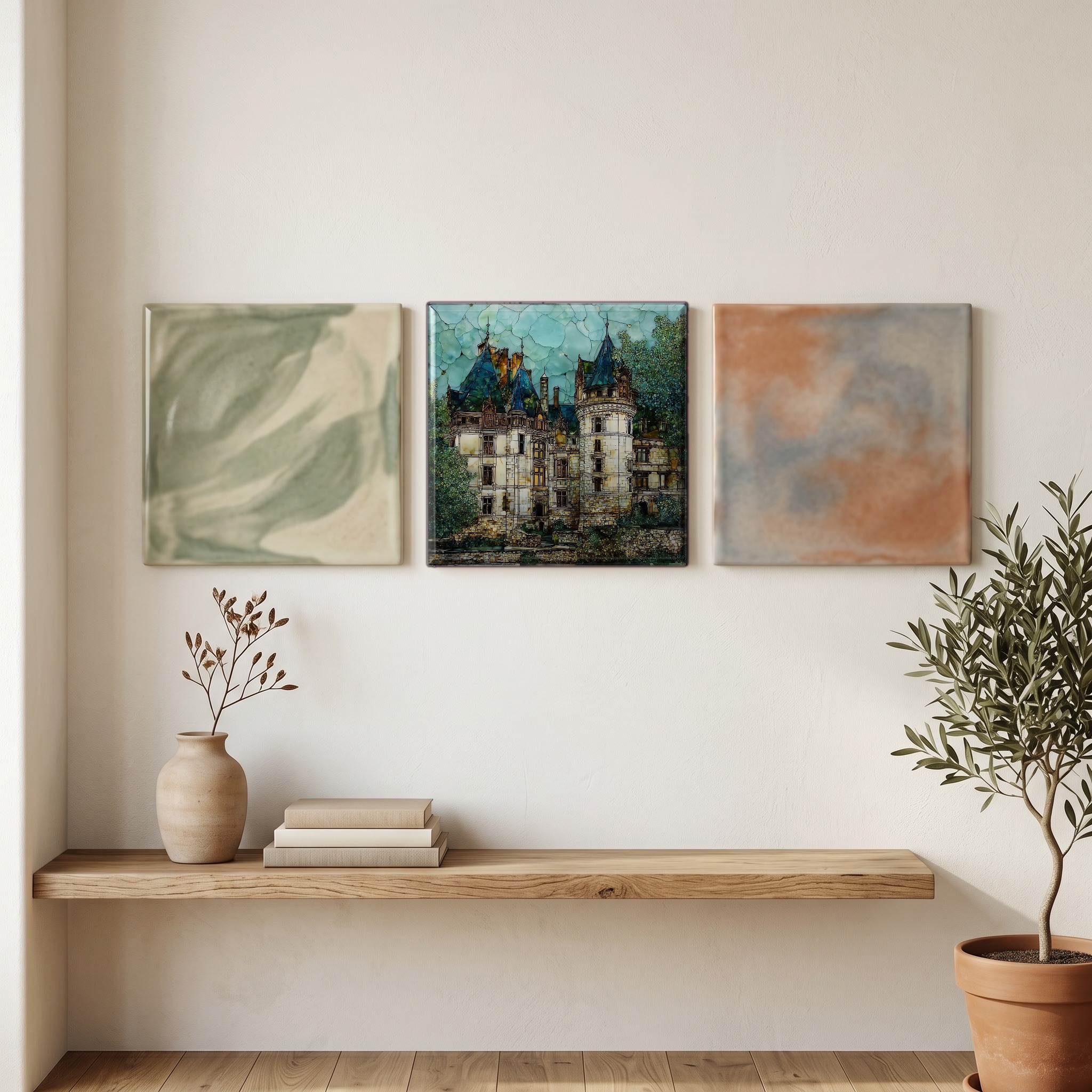
or build a grouping
or build a grouping

Three or five different vistas, hung together — a chapter of places you've been, or want to go.

about Chateau du Clos Luce

The place, in three passes.

A little of what's known, in case you fall down the rabbit hole — or want to go see it yourself.
the place

The Château du Clos Lucé stands on the Right Bank of the Loire in the town of Amboise, in the Indre-et-Loire department of the Centre-Val de Loire region of France. The manor sits 500 metres from the Royal Château d'Amboise, the two connected (by legend) through an underground passage used by King François I to visit Leonardo da Vinci. Built in 1471 of pink brick and pale tufa, the local Loire Valley stone, the manor was purchased by King Charles VIII in 1490 as a summer retreat for the royal family. The town of Amboise lies about 200 kilometres southwest of Paris, on the Loire River.

— informed by Wikipedia, Official site
the year

Leonardo da Vinci arrived at Clos Lucé in the autumn of 1516, having travelled from Italy at the invitation of King François I, who had named him 'Premier Painter, Architect and Engineer to the King.' He was 64. He brought three paintings with him in his trunks: the Mona Lisa, the Saint John the Baptist, and the Virgin and Child with Saint Anne. He spent his last three years in the manor's rooms, sketching, designing fêtes for the court, and continuing the notebooks. He died at Clos Lucé on 2 May 1519, in a bedroom on the upper floor. He was buried at the nearby Collégiale Saint-Florentin within the royal château grounds.

the visit

Clos Lucé is open every day of the year except 1 January and 25 December. Opening time is 9 AM in summer and 10 AM in winter; closing is between 6 PM and 8 PM depending on the season. The visit moves through the kitchen, the chapel, the bedroom where Leonardo died, and the study, then opens to the four-hectare park where forty large models of his inventions are arrayed: the parachute, the helical-air-screw, the armoured car, the swing bridge. The address is 2 Rue du Clos Lucé, 37400 Amboise, about a 400-metre walk uphill from the Royal Château d'Amboise. Tickets are timed and best booked through the official site.

— informed by Official site
where
France · Amboise, Indre-et-Loire
position
47.4096° N · 0.9921° E
the neighborhood

What's nearby.

A handful of named places within an hour's walk or short drive. Some we've already painted; some we will.
0.5 km W
Royal Château d'Amboise
royal château
3 km S
Pagode de Chanteloup
18th-century pagoda
13 km SE
Château de Chenonceau
Renaissance château
20 km NE
Château de Chaumont-sur-Loire
Renaissance château
25 km W
Tours
cathedral city
N
Chateau du Clos Luce
Royal Château d'Amboise
Pagode de Chanteloup
Château de Chenonceau
Château de Chaumont-sur-Loire
Tours
common questions

What people ask.

A few questions we get about Chateau du Clos Luce — and about bringing the piece home.
about the place

Clos Lucé is a Renaissance manor in Amboise, on the Right Bank of the Loire River in the Indre-et-Loire department of France, about 200 kilometres southwest of Paris and 25 kilometres east of Tours. It sits 500 metres from the Royal Château d'Amboise.

It was the final home of Leonardo da Vinci. He lived there from 1516 until his death on 2 May 1519, at the invitation of King François I, who installed him as 'Premier Painter, Architect and Engineer to the King' with an annual royal pension.

Yes. When Leonardo crossed the Alps from Italy in 1516, he carried three paintings in his trunks: the Mona Lisa, the Saint John the Baptist, and the Virgin and Child with Saint Anne. After his death the three paintings entered the French royal collection and are now in the Louvre.

The two sit 500 metres apart, on the same Right Bank of the Loire. Legend holds that an underground passage runs between them, used by King François I to visit Leonardo privately. The passage's existence has never been confirmed by excavation.

The manor was built in 1471 by Étienne le Loup, a former kitchen boy who rose to become an officer of King Louis XI. King Charles VIII purchased it in 1490 for the French Crown, and it served as a royal summer house before Leonardo arrived in 1516.

Leonardo asked to be buried at the Collégiale Saint-Florentin within the grounds of the Royal Château d'Amboise, 500 metres from Clos Lucé. That church was demolished after the French Revolution; his presumed remains were later moved to the Chapelle Saint-Hubert at the royal château, where a slab marks the site today.

about the piece in your home

It has been a meaningful gift for many of our customers who care about Leonardo. Clos Lucé is the room where his life ended and where the Mona Lisa rested for three years. A Medium framed in walnut, or a Coaster paired with a handwritten note from the studio, both carry well.

The pink-brick warmth and the stained-glass jewel tones pair well with French-country interiors, library and reading-room palettes (deep greens, warm browns), and Renaissance-influenced traditional rooms. It also softens a clean Minimalist wall when hung as a single Medium or Large.

Yes. The Loire Valley palette of pink brick, tufa stone, and slate roof reads as warm traditional, which is having a strong moment after a decade of grey-and-white minimalism. The piece holds its own beside leather, walnut, brass, and aged-paper textures.

A single Large works above a console or a small sofa. Above a full-sized sofa, a four-tile Mural carries the wall better; a nine-tile Mural is the right scale for a long sofa or a wide stairwell. For a bedside or hallway accent, a Medium is enough.

Yes. The Dura Satin or Matte finish is the right choice for any room with steam or splash: bathrooms, kitchens, mudrooms, showers. The Glossy finish is for dry-wall installations and framed pieces. The colour is slowly infused into the ceramic surface and does not fade with humidity.

A soft microfibre cloth and warm water is enough for everyday cleaning. For heavier residue (kitchen splatter, soap scum), a drop of mild dish soap on the cloth. Avoid abrasive sponges, bleach, and cream cleansers. The surface keeps for decades with this care.

Yes. Every WenderVista piece is painted by Reid Wender, the studio's curator, in our distinctive stained-glass and alcohol-ink visual language, then hand-finished here in Knoxville, Tennessee. The artwork is not licensed from anyone; Clos Lucé exists in this rendering nowhere else.

if this one stayed with you

A few you might also love.

Hand-picked by the eye that found Sorapis. Same air, same kind of quiet.