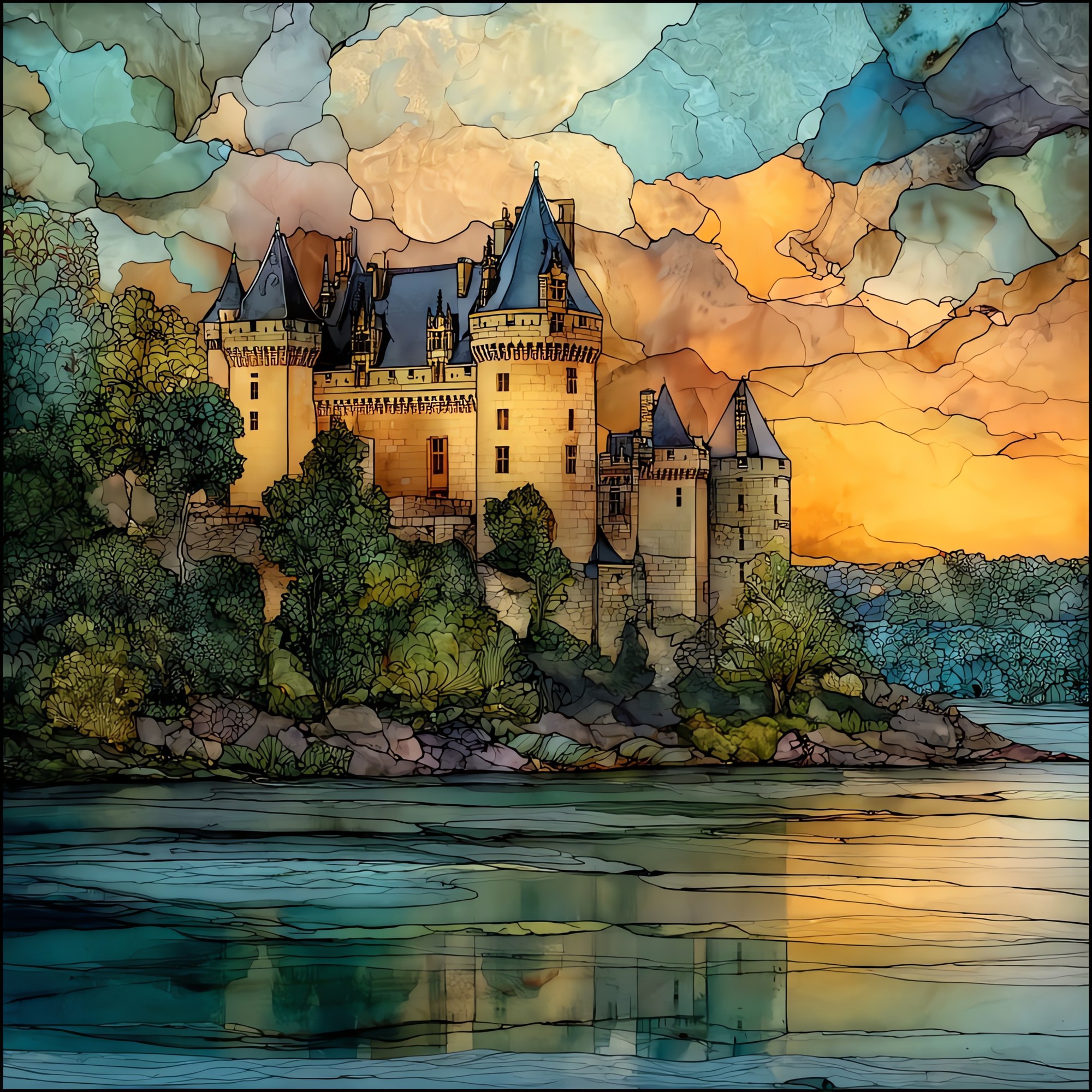
Chateau de Montsoreau
— — white stone set into the river.
Not only on a wall.
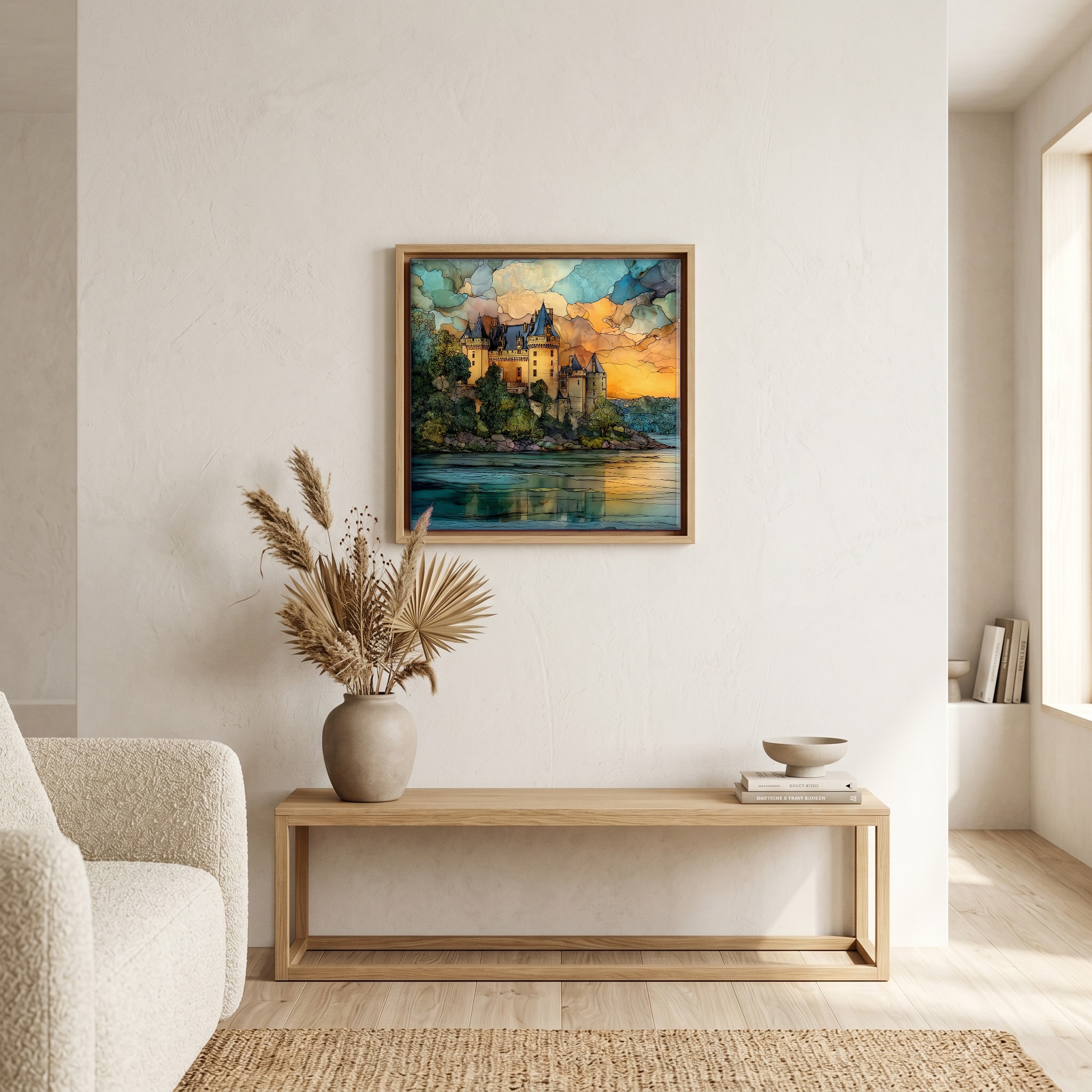
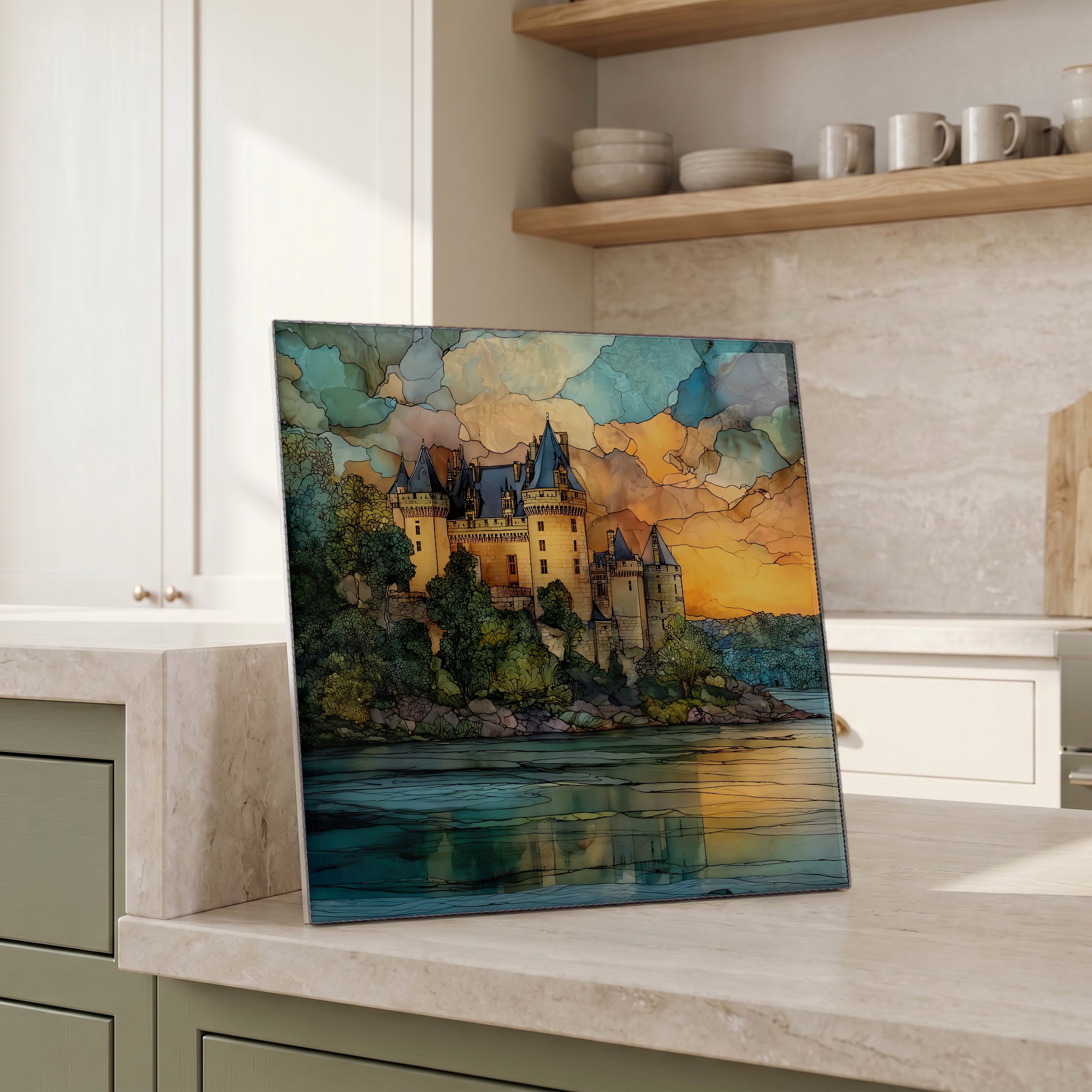
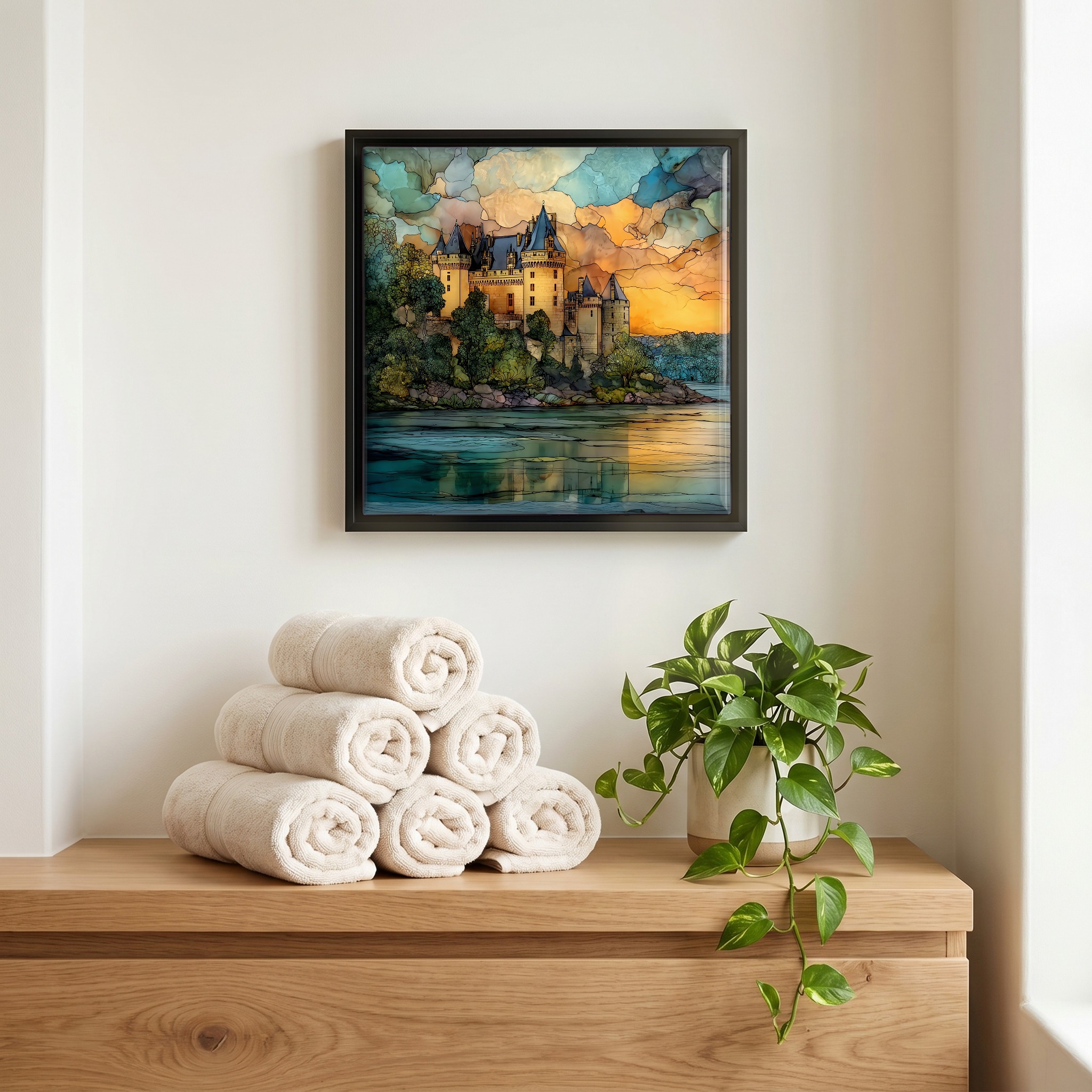
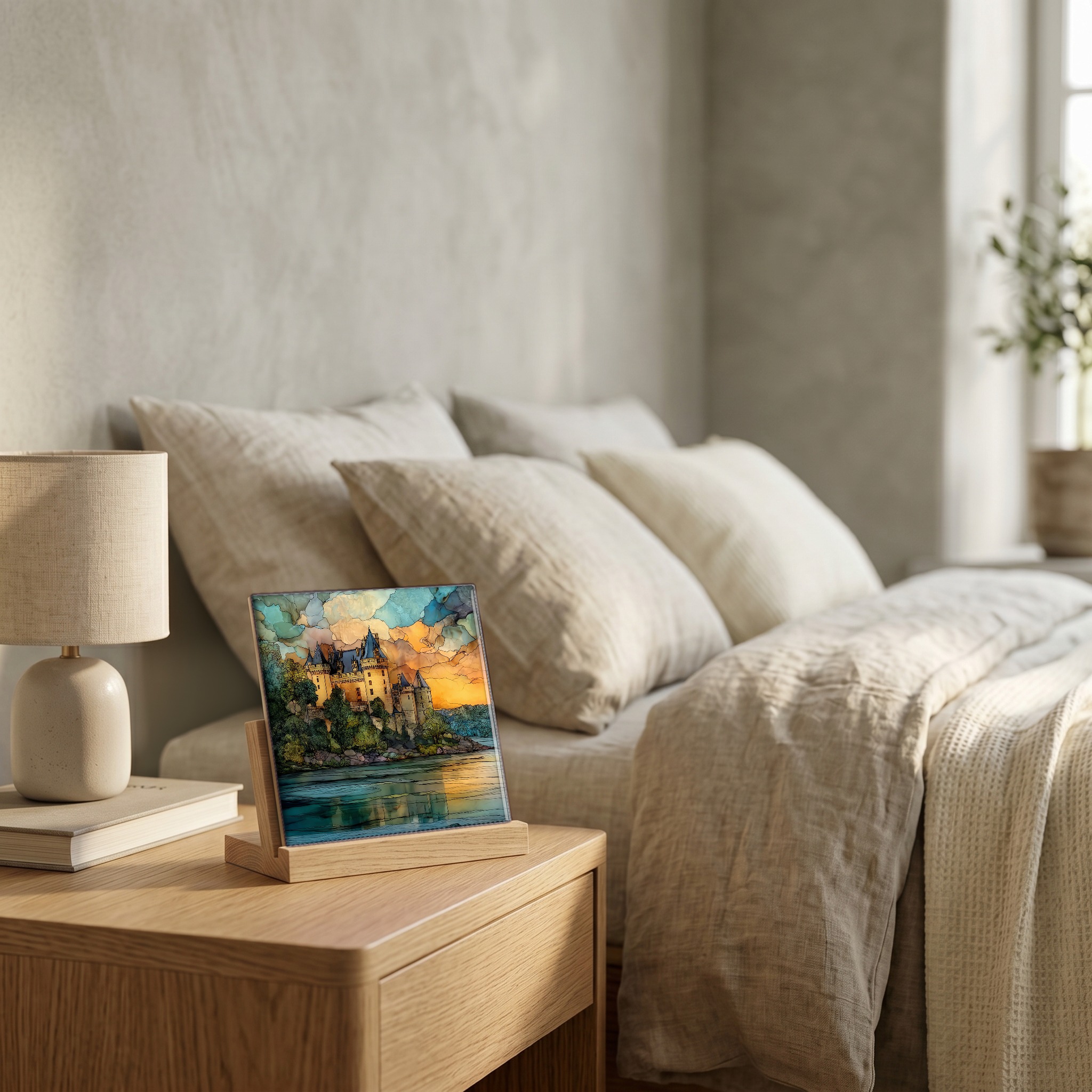
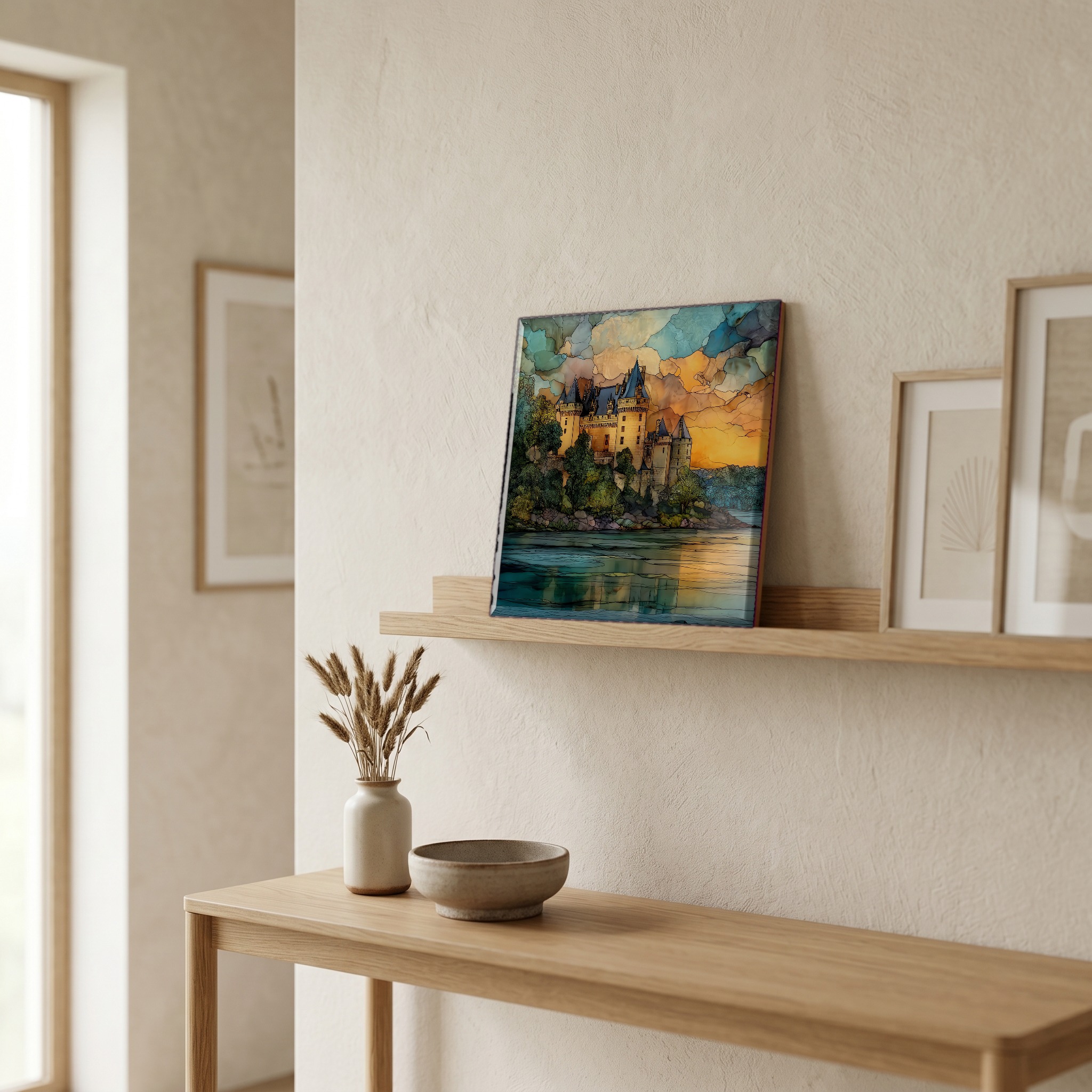
“One of the only Loire châteaux built directly in the river. The white tuffeau stone, the soft limestone the whole valley is dressed in, sits in the current, where the Vienne flows into the Loire below Saumur. The village above the castle is one of the Plus Beaux Villages de France. Inside the walls, a quiet museum of conceptual art now lives in the old rooms, an unexpected second life for a fifteenth-century building. The river does the slow polishing it has always done.
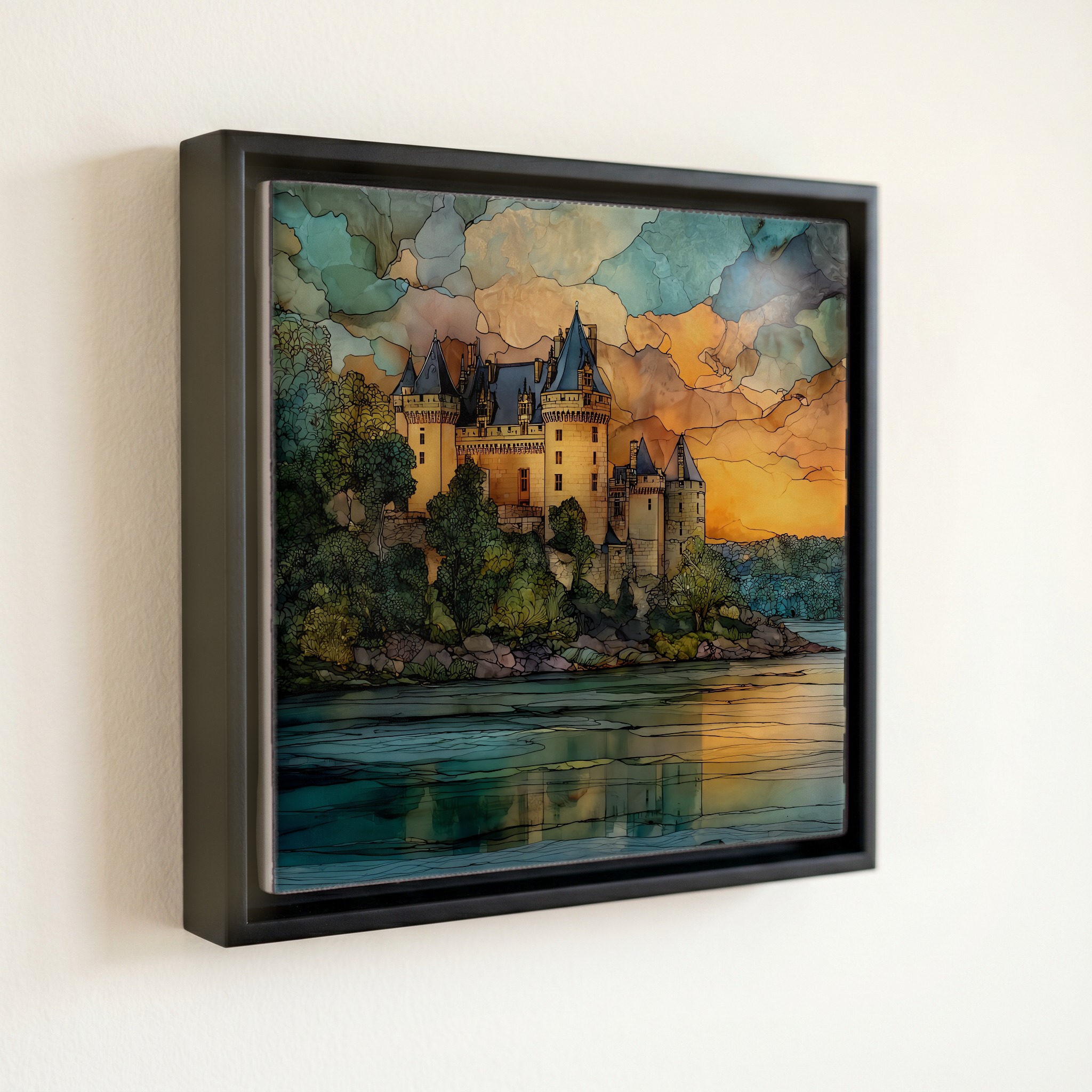
Chateau de Montsoreau, on ceramic.
Each tile is finished by hand in our Knoxville studio. Artwork is slowly infused into the ceramic surface under high heat and pressure, and rests beneath a thin glossy finish. The colour lives in the surface, not on top of it.
Pick any four 4-inch tiles — National Parks you've been to, a Smokies set, the four seasons of one place. $ for a set of , cork-backed, ready to live on the table.
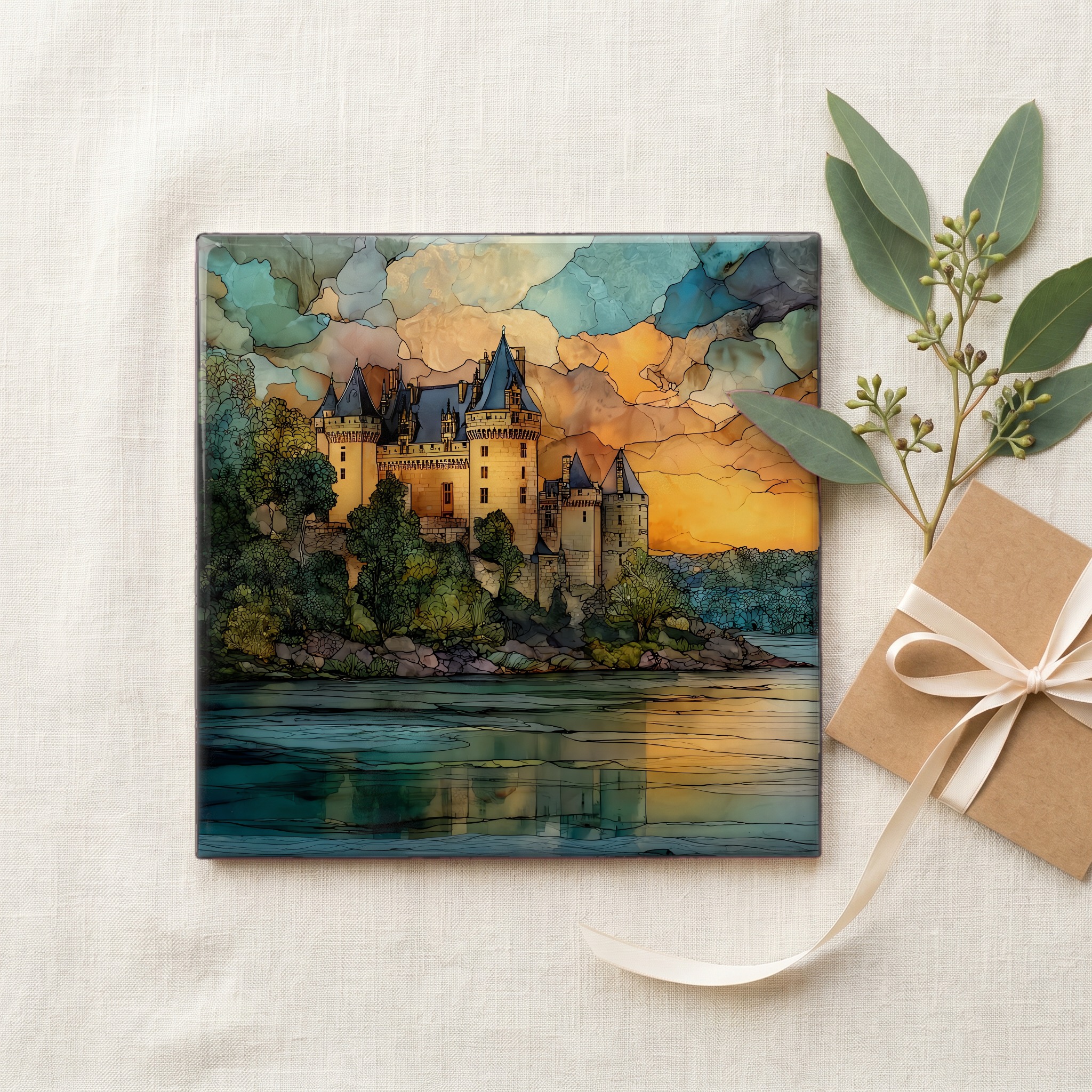
Each tile ships in a kraft box, tied with cream ribbon, with a handwritten note from the studio if you'd like to add one.
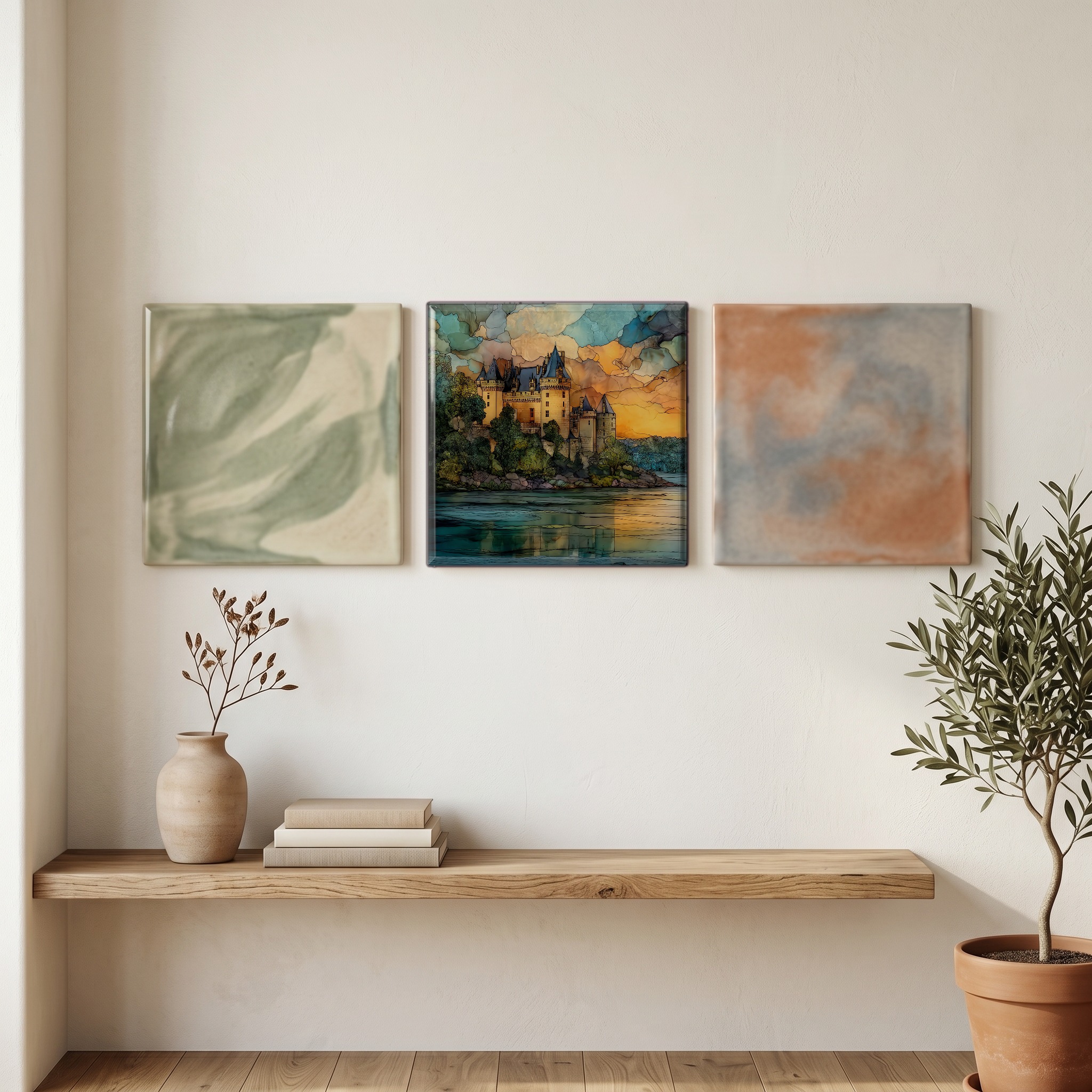
Three or five different vistas, hung together — a chapter of places you've been, or want to go.
The place, in three passes.
Château de Montsoreau sits at the confluence of the Loire and Vienne rivers in the Maine-et-Loire département, about twelve kilometres east of Saumur. It is one of the only Loire Valley royal châteaux built directly into the riverbed itself, with foundations set in the water rather than on the bank. Construction began around 1450 under Jean II de Chambes, counsellor to King Charles VII. The castle and its village fall within the Loire Valley UNESCO World Heritage Site inscribed in 2000, which protects the cultural landscape between Sully-sur-Loire and Chalonnes-sur-Loire. The village of Montsoreau itself is listed among Les Plus Beaux Villages de France.
The pale, fine-grained limestone that makes up the château is tuffeau, a Turonian-age chalk-limestone quarried from the soft hillsides along the Loire. It is the same stone used at Chambord, Azay-le-Rideau, and most of the great Loire châteaux. Tuffeau is soft enough to carve in fine relief when first cut, which is why the Renaissance dormers and string-courses on Loire châteaux are so elaborate, and it slowly hardens on contact with the air. The stone reads chalk-white in midday sun and warms to a buttery yellow by late afternoon. The Loire current and rain weather it gently over centuries, smoothing edges rather than breaking them.
The Loire is the longest river in France at 1,012 kilometres, flowing from the Massif Central to the Atlantic at Saint-Nazaire. At Montsoreau it widens and slows, joined by the Vienne arriving from the south. The Vienne rises in the Massif Central, passes Limoges and Châtellerault, and arrives here as a broad green-brown sheet of moving water. Sandbars shift through the seasons, exposing pale gravel banks in late summer. The river runs directly against the château's western face, an unusual decision for a fifteenth-century build, when most riverside castles were set safely back from the high-water line. Spring meltwater raises the level by a metre or more.