Wender·Vista
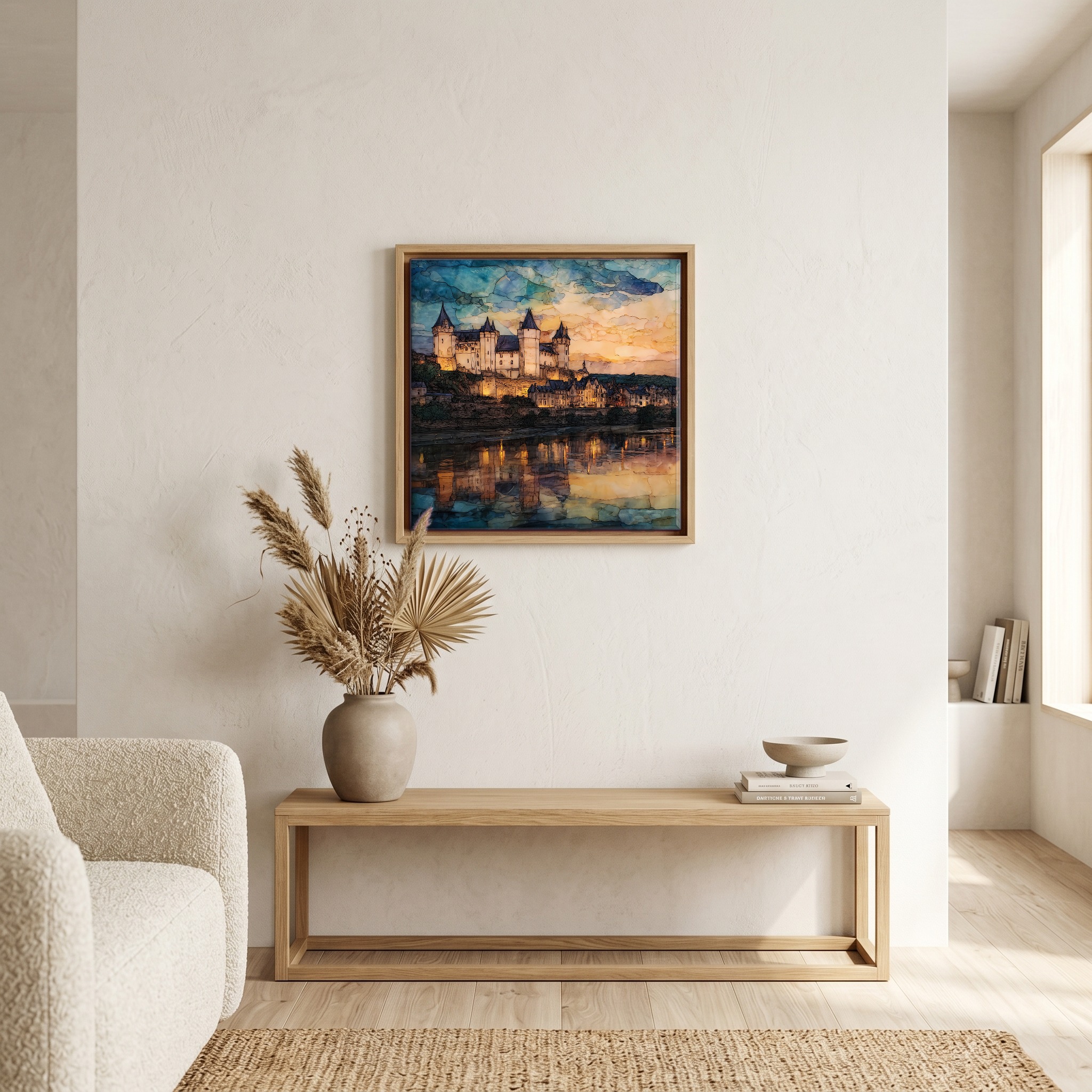
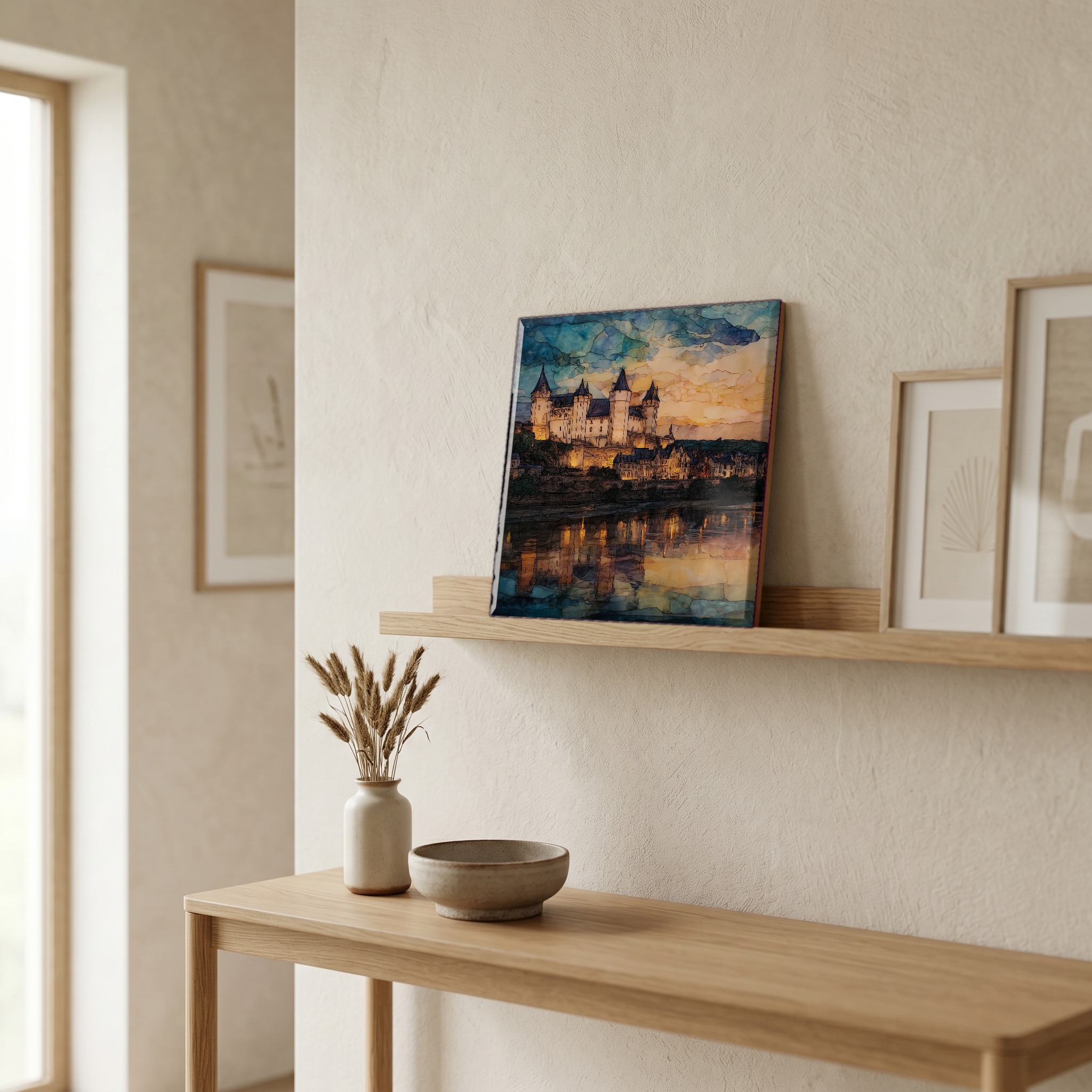
Chateau de Chinon
shown on ceramic, 12-inch tileFrance
in the Loire valley, above the Vienne

Chateau de Chinon

the long white wall above a slow river.

Where it lives

Not only on a wall.

A small tile on the nightstand catching the morning. A larger one above the fire. Yours, wherever you spend the slow hours.
Above the bench, in a warm oak surround.
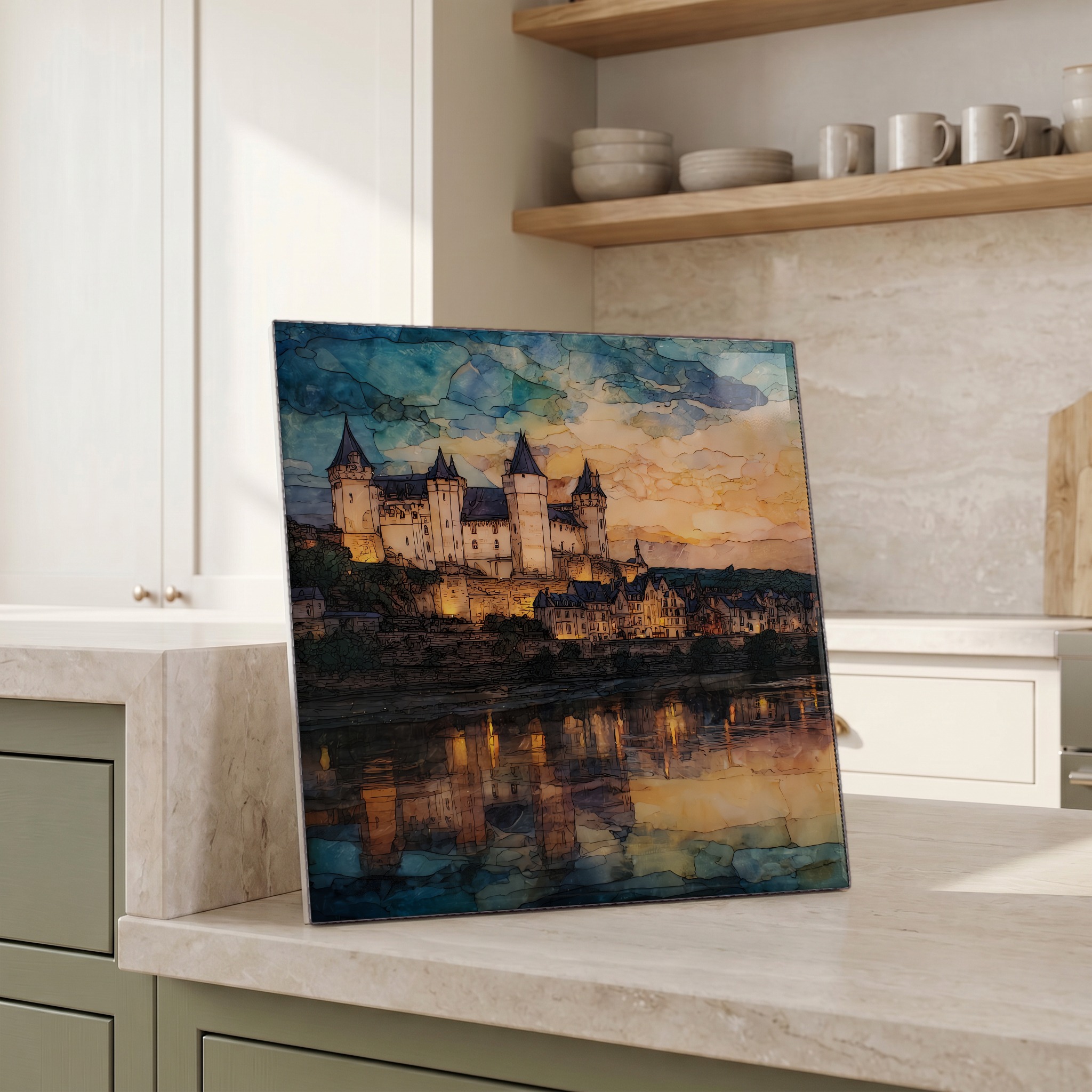
Beside the kettle, propped on the counter.
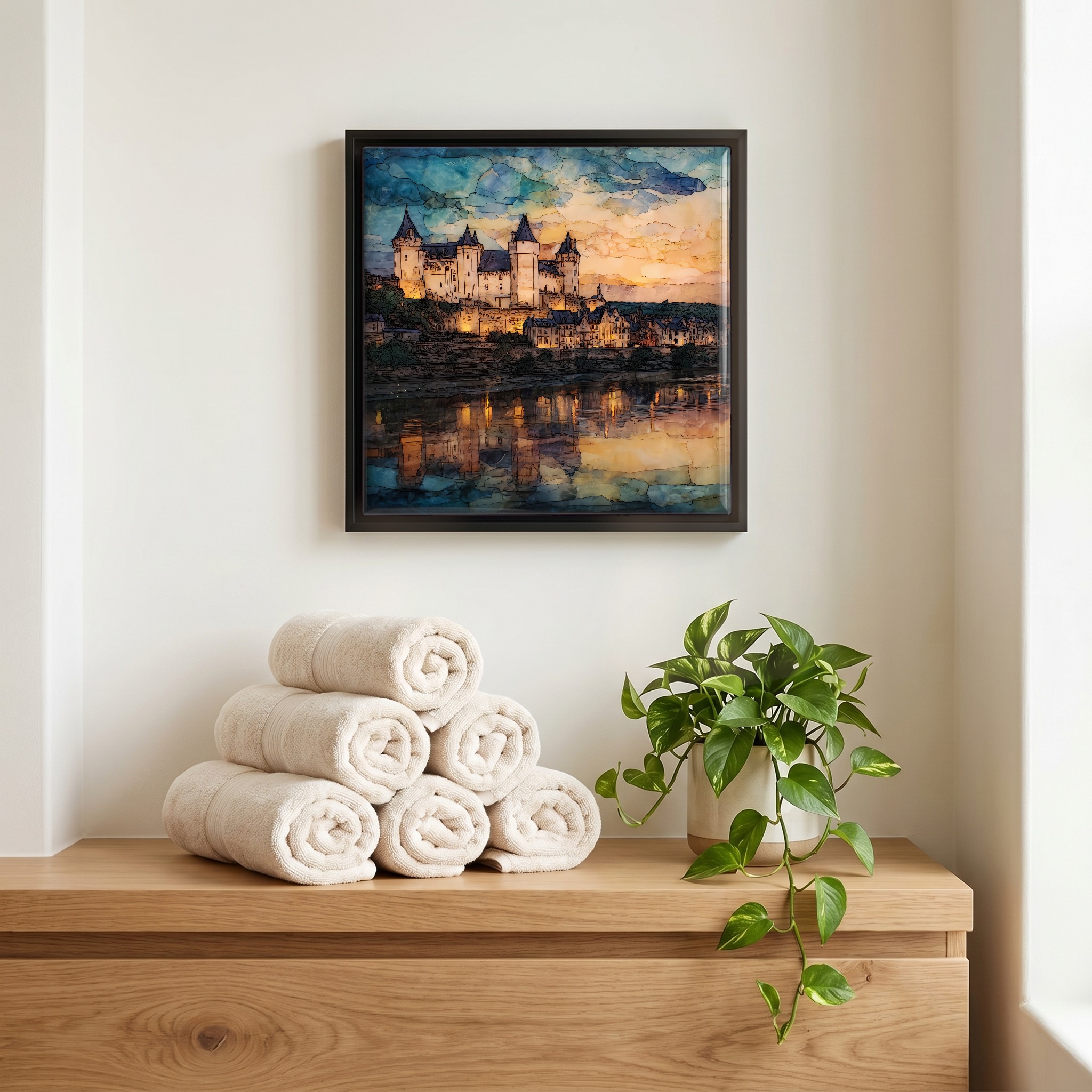
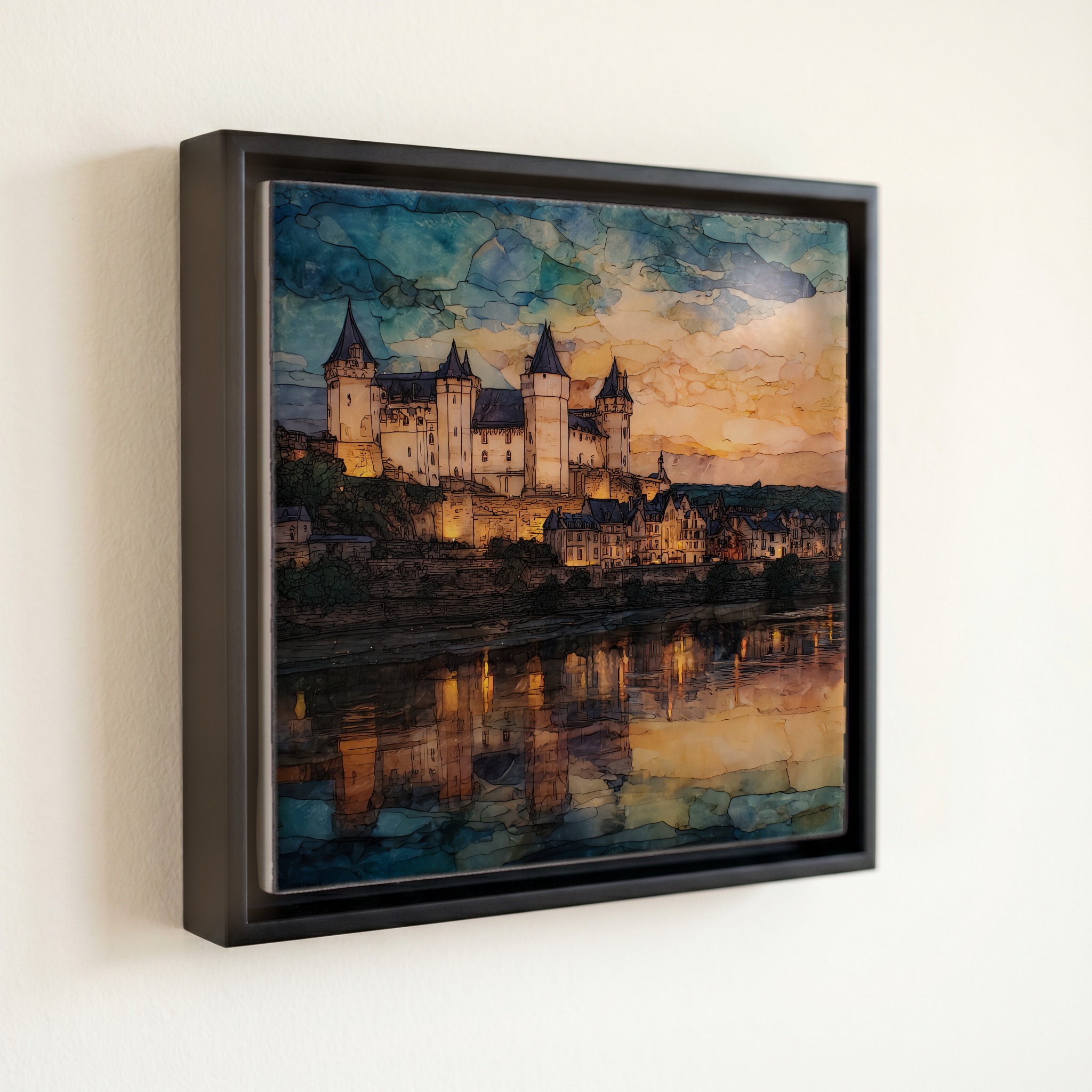
Above the linens, in a slim black surround.
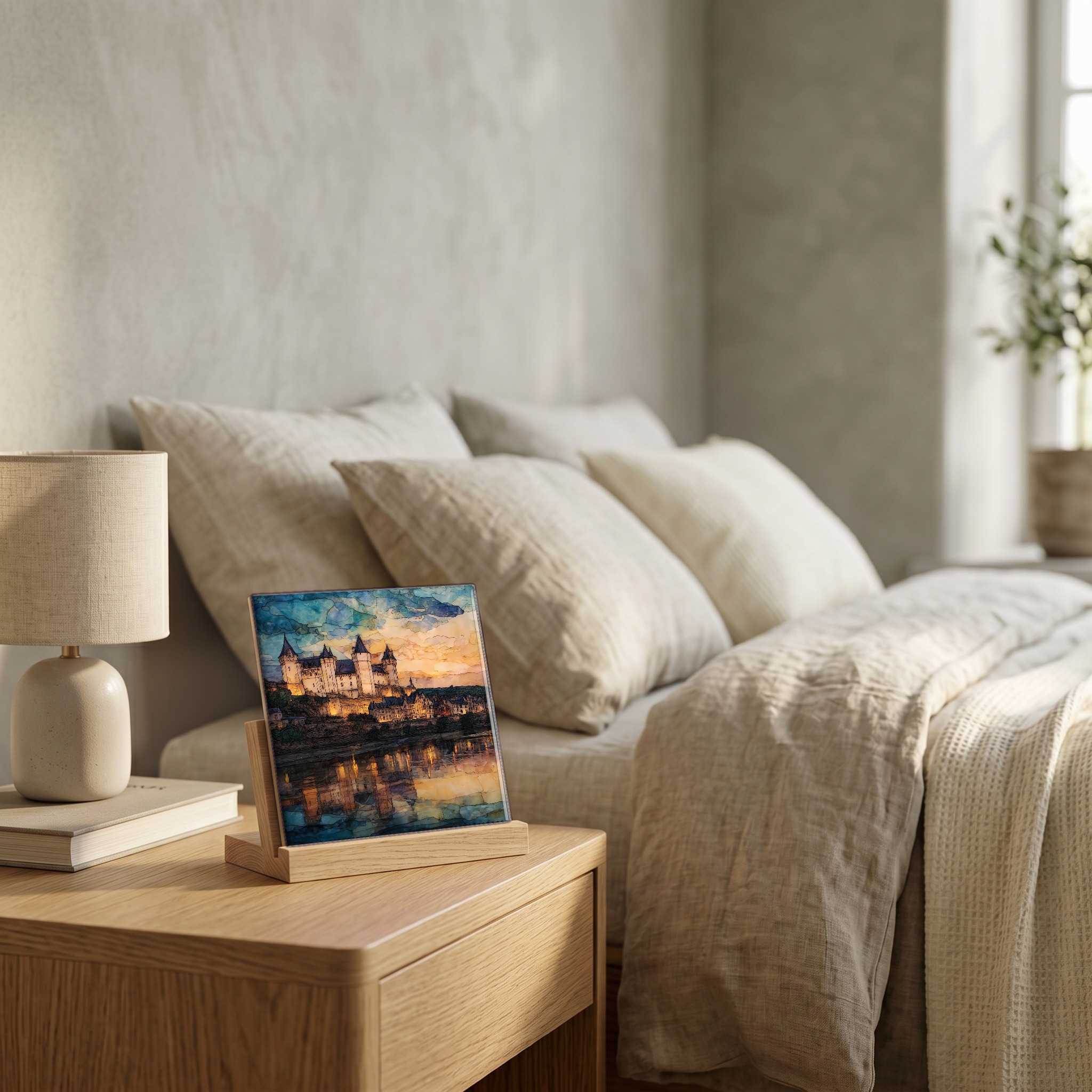
On the nightstand, on a light oak stand.
On a picture ledge, where the light comes in.
a note from the studio

A long white fortress on a ridge above the Vienne, in the western Loire. Tuffeau limestone, soft and pale, easy to carve and slow to weather, gives the walls their cream colour. Henry II of England held court here in the twelfth century. Joan of Arc walked up from the town in March of 1429 and recognised the future Charles VII in a crowd that had been arranged to fool her. The fortress stretches more than four hundred metres along the ridge. Below it, Cabernet Franc vines drop down to the river. Late afternoon, the stone catches the western light and reads almost gold.
from the studio
shown in a slim black floating frame · 6 × 6 in
— bring it home

Chateau de Chinon, on ceramic.

Each tile is finished by hand in our Knoxville studio. Artwork is slowly infused into the ceramic surface under high heat and pressure, and rests beneath a thin glossy finish. The colour lives in the surface, not on top of it.

What kind of piece?
One tile — square or rectangle.
How big?
the popular one — counter, shelf, nightstand
6 × 6 in · 15 cm · 1.6 lb
Surface finish
A clear glossy finish — the artwork reads as if under resin. Ideal for show-pieces and framed wall art.
How it sits
A hidden cleat — sits ¼″ proud of the wall.
$58
Hand-finished and shipped from our studio at the foot of the Smokies. On your wall in about ten days.
size
6 × 6 in
15 cm
weighs
1.6 lb
solid in the hand
surface
ceramic, hand-finished
art rests beneath a thin glossy finish
from
Knoxville, TN
our family studio, at the foot of the Smokies
— start a Coaster Set

Pick any four 4-inch tiles — National Parks you've been to, a Smokies set, the four seasons of one place. $ for a set of , cork-backed, ready to live on the table.
comes gift-ready
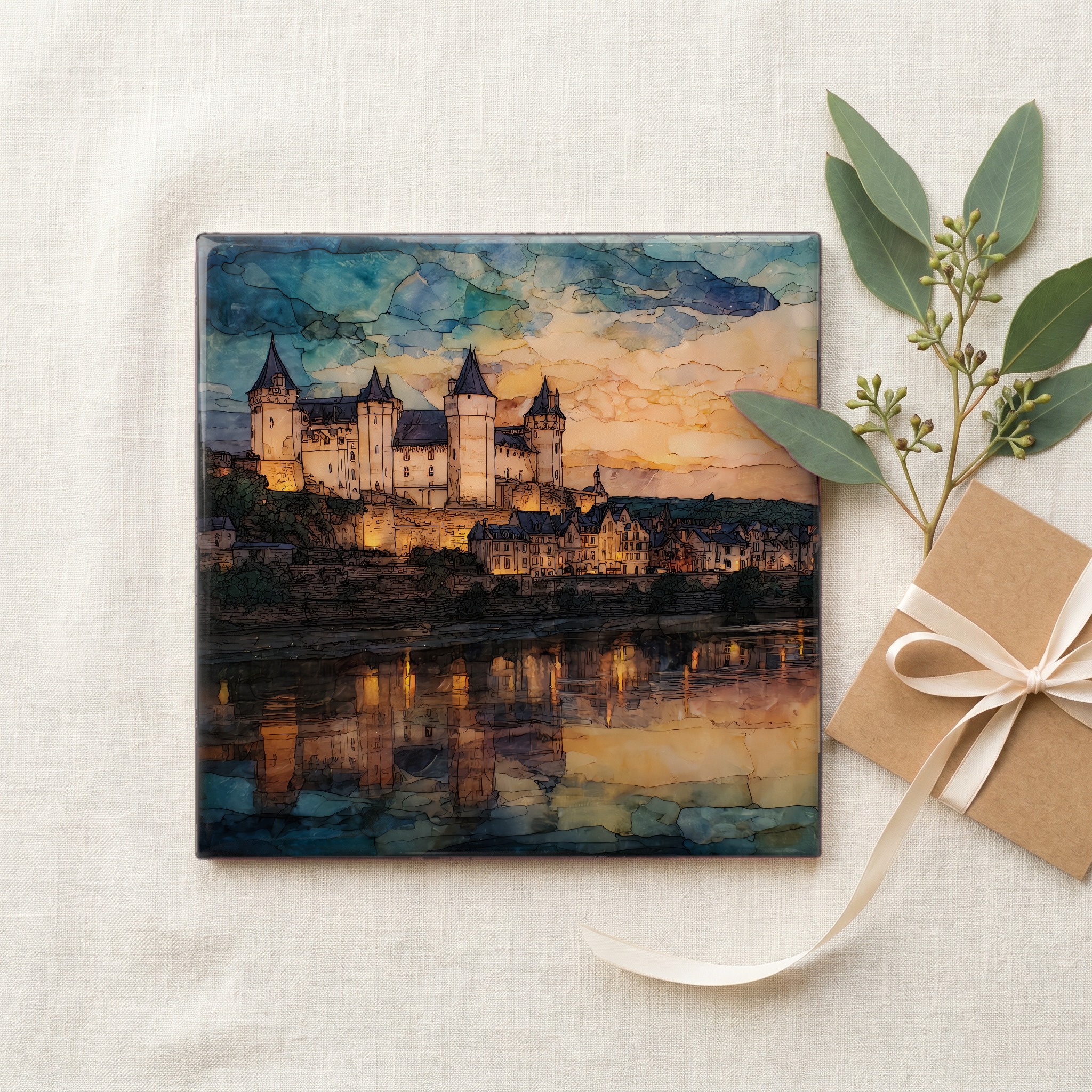
comes gift-ready

Each tile ships in a kraft box, tied with cream ribbon, with a handwritten note from the studio if you'd like to add one.
or build a grouping
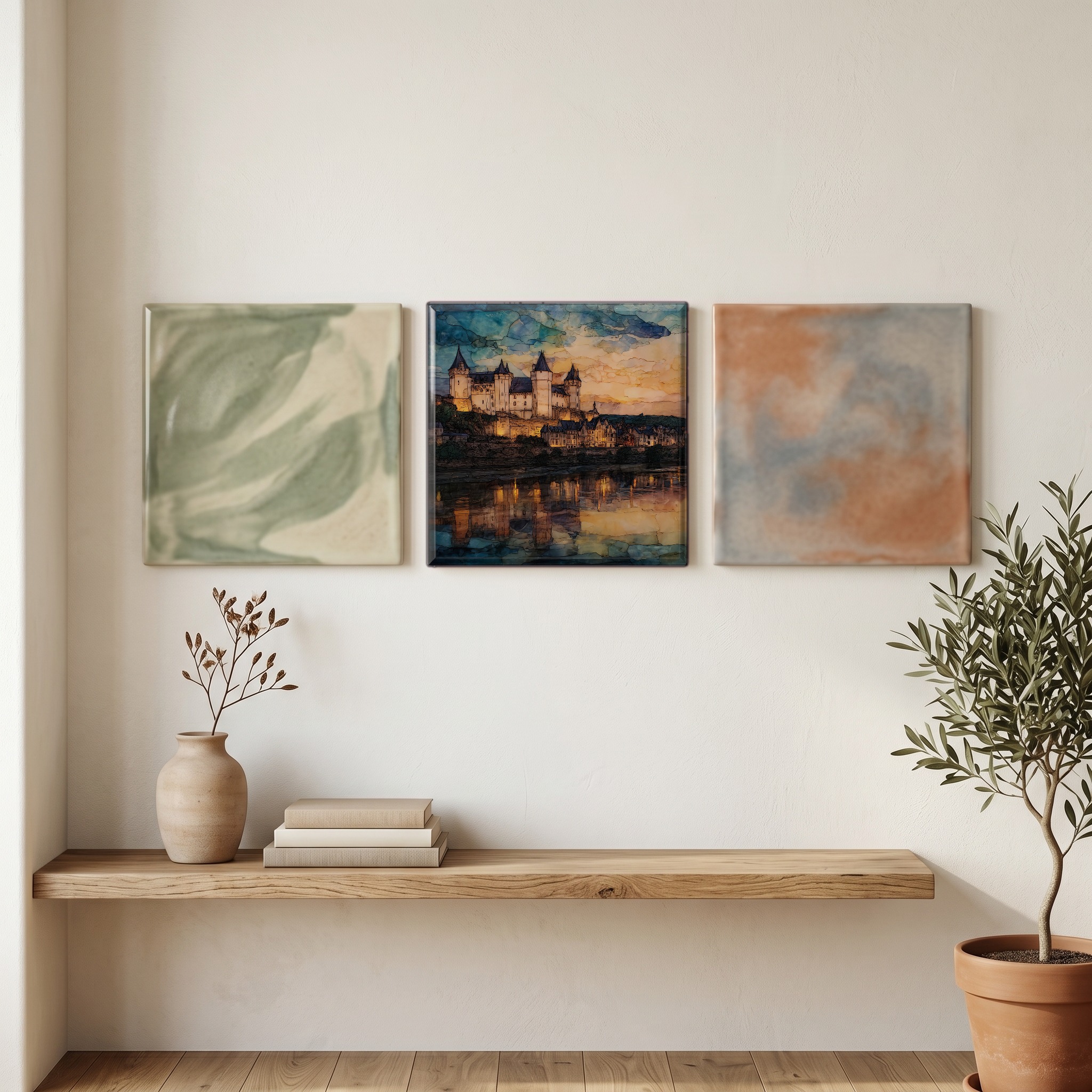
or build a grouping

Three or five different vistas, hung together — a chapter of places you've been, or want to go.

about Chateau de Chinon

The place, in three passes.

A little of what's known, in case you fall down the rabbit hole — or want to go see it yourself.
the place

Château de Chinon stands on a long ridge of tuffeau limestone above the Vienne river, in the commune of Chinon in Indre-et-Loire, about 50 kilometres southwest of Tours. The fortress runs more than 400 metres along the cliff and is divided into three enclosures: the Fort Saint-Georges on the east, the Château du Milieu with the royal apartments in the centre, and the Fort du Coudray on the west, where the Tour du Coudray still carries the graffiti carved by Templar prisoners held there in 1308. The first stone keep was raised around 954 by Theobald I, Count of Blois; Henry II Plantagenet rebuilt the fortress in the twelfth century and died within its walls on 6 July 1189.

the stone

The walls are built of tuffeau, the pale chalky limestone that gives the Loire valley its bright stonework. Quarried from cretaceous deposits along the river since the eleventh century, tuffeau is soft enough to carve fresh from the ground and hardens as it dries, which is why every Renaissance château from Amboise to Azay-le-Rideau wears the same cream colour. The stone reads almost white at midday and turns gold in late afternoon. It weathers visibly: rain pits the surface, lichen takes hold on the cooler faces, and the curtain walls of Chinon have been patched and re-patched for nearly a thousand years.

— informed by Wikipedia: Tuffeau
the visit

The fortress is open daily through the year under the name Forteresse Royale de Chinon, managed by the Conseil départemental d'Indre-et-Loire. Hours run roughly 9:30 to 19:00 in high summer and shorten through autumn into a 9:30 to 17:00 winter window. The site has been heavily restored since 2003, with the royal logis re-roofed, the Tour de l'Horloge reopened as the main visitor entrance from the eastern Fort Saint-Georges, and a scenic lift cut into the cliff face. The town of Chinon below holds about 8,000 residents and is the centre of the Chinon AOC, where Cabernet Franc has been grown on the south-facing slopes of the Vienne since the Middle Ages.

where
France · Chinon, Indre-et-Loire
position
47.1686° N · 0.2381° E
the neighborhood

What's nearby.

A handful of named places within an hour's walk or short drive. Some we've already painted; some we will.
20 km E
Fontevraud Abbey
Plantagenet royal abbey
14 km NE
Château d'Ussé
Loire-valley château
17 km SE
L'Île-Bouchard
Romanesque river village
8 km N
Vienne-Loire confluence
river confluence
N
Chateau de Chinon
Fontevraud Abbey
Château d'Ussé
L'Île-Bouchard
Vienne-Loire confluence
common questions

What people ask.

A few questions we get about Chateau de Chinon — and about bringing the piece home.
about the place

Château de Chinon stands above the town of Chinon, in the Indre-et-Loire department of the Centre-Val de Loire region of France. The fortress sits on a tuffeau limestone ridge above the Vienne river, about 50 kilometres southwest of Tours.

In March 1429, Joan of Arc met the future King Charles VII at Chinon and recognised him in a crowd of decoys arranged to test her. The meeting set in motion the lifting of the siege of Orléans and the king's coronation at Reims that summer.

The walls are built from tuffeau, the pale chalky limestone quarried along the Loire valley since the eleventh century. It is soft enough to carve when freshly cut and hardens as it dries, which is why most Loire châteaux wear the same cream-white colour.

The first stone keep was raised around 954 by Theobald I, Count of Blois. Henry II Plantagenet, King of England, rebuilt the fortress in the twelfth century and made it a favourite residence; he died within its walls on 6 July 1189.

The Tour du Coudray is the western donjon of the fortress, built in the early thirteenth century. Knights Templar imprisoned at Chinon in 1308, before their transfer to Paris, carved graffiti on its walls that survives today and is shown to visitors.

The fortress is open daily through the year as Forteresse Royale de Chinon, managed by the Indre-et-Loire department. Hours run roughly 9:30 to 19:00 in high summer and 9:30 to 17:00 in winter, with reduced schedules around the major holidays.

Chinon AOC is a French wine appellation centred on the same town below the fortress. It is mostly Cabernet Franc grown on the south-facing slopes of the Vienne valley, with vines documented in the area since at least the Middle Ages.

about the piece in your home

The Château de Chinon tile carries one of the defining images of Plantagenet France and the western Loire. For a family with roots in Touraine, or for anyone who has spent time walking the river châteaux, a Small or Medium with a handwritten note from the studio is a piece of the place in white stone and slow light.

The cream of the tuffeau, paired with the deep stained-glass blues and the gold of the late light, sits well in French-country interiors, English-country libraries, and warmer modern rooms that mix oak, leather, and brass. It does not want a cool, minimal wall.

The current Old-World revival in interior design favours antique wood, vellum lampshades, layered textiles, and imagery rooted in European history. Château de Chinon belongs to that lineage and reads at home above a writing desk, beside a fireplace, or on the long wall of a library-leaning room.

Above a standard sofa a Large or a four-tile Mural reads well. Above a console table or in a hallway, a Medium is the right scale. For a dining-room wall or a stair landing, a nine-tile Mural carries the whole architecture of the fortress.

Yes. Choose the Dura Satin or Matte finish for any room with steam, splash, or scrub: kitchen backsplash, powder room, primary bath. The colour is slowly infused into the ceramic surface under high heat and pressure, so it does not lift with moisture.

A soft microfibre cloth with water is enough for normal dust and fingerprints. For a kitchen backsplash, a drop of mild dish soap on the cloth, then a clean-water wipe. Avoid abrasive pads, bleach, and acidic cleaners, especially on the glossy finish.

Yes. Every WenderVista tile is original work by Reid Wender, made in the studio. We do not licence imagery and we do not carry other artists' work. The Château de Chinon piece exists only as a WenderVista tile.

if this one stayed with you

A few you might also love.

Hand-picked by the eye that found Sorapis. Same air, same kind of quiet.