Wender·Vista
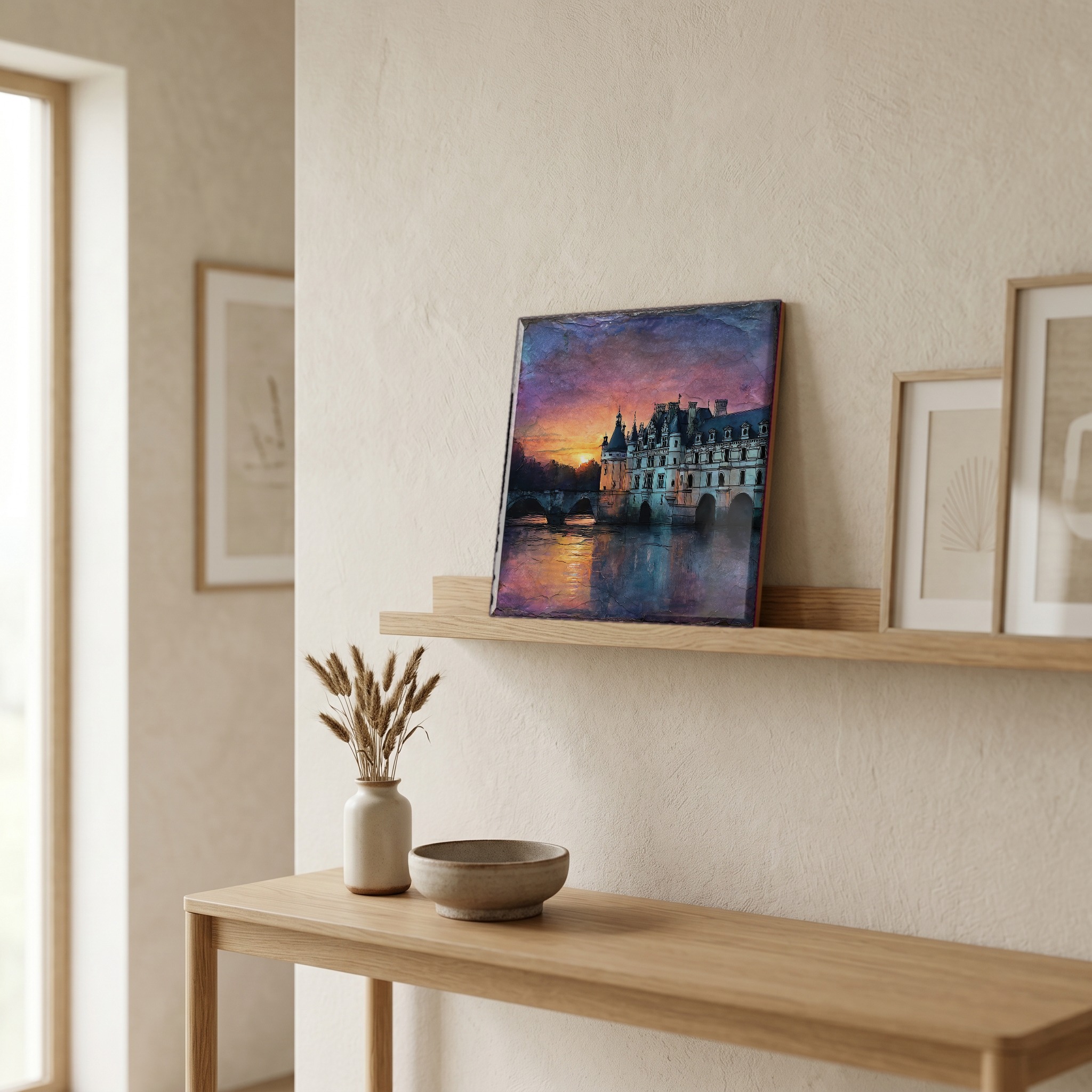
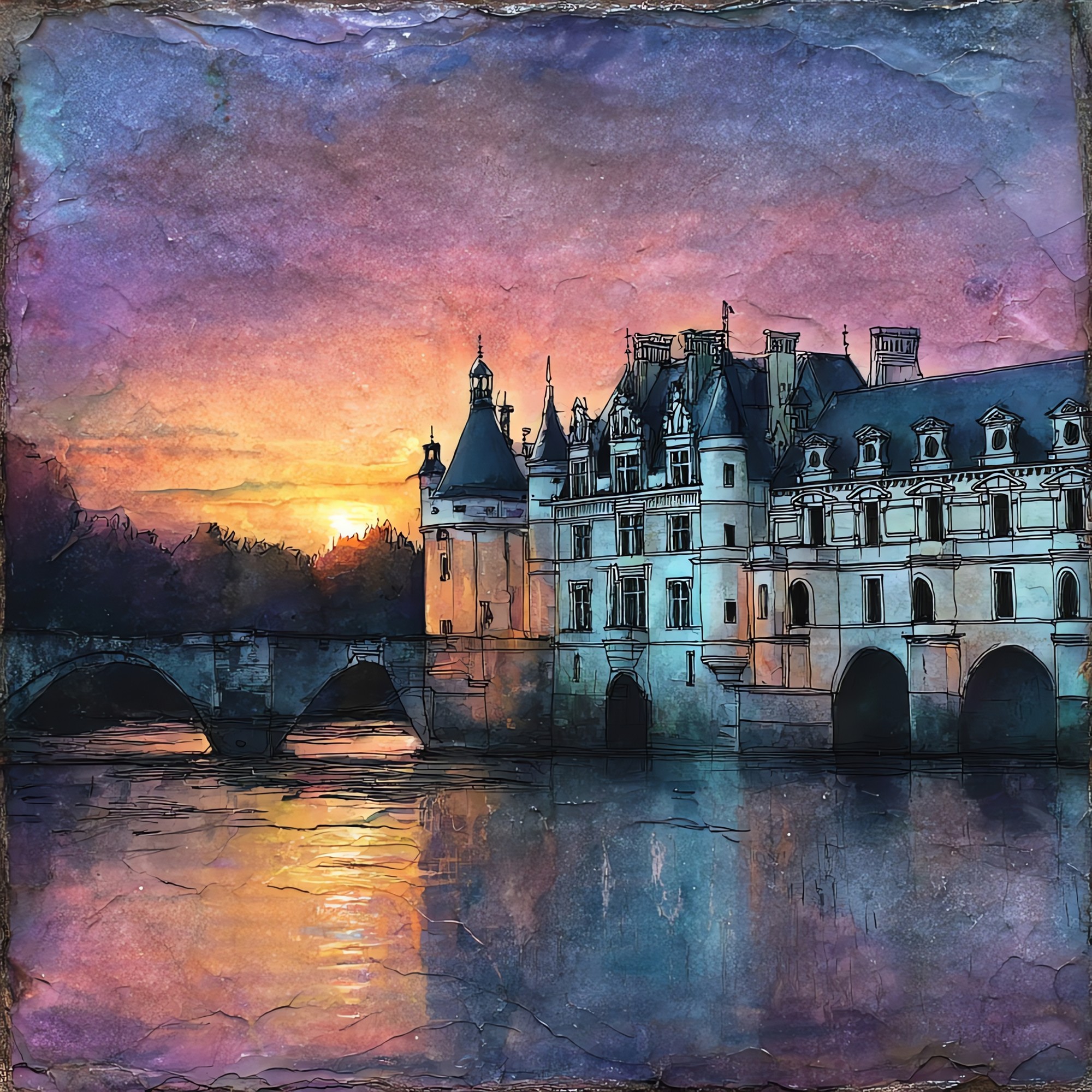
Chateau de Chenonceau
shown on ceramic, 12-inch tileFrance
on the Cher, in the Loire Valley

Chateau de Chenonceau

the gallery the river runs beneath.

Where it lives

Not only on a wall.

A small tile on the nightstand catching the morning. A larger one above the fire. Yours, wherever you spend the slow hours.
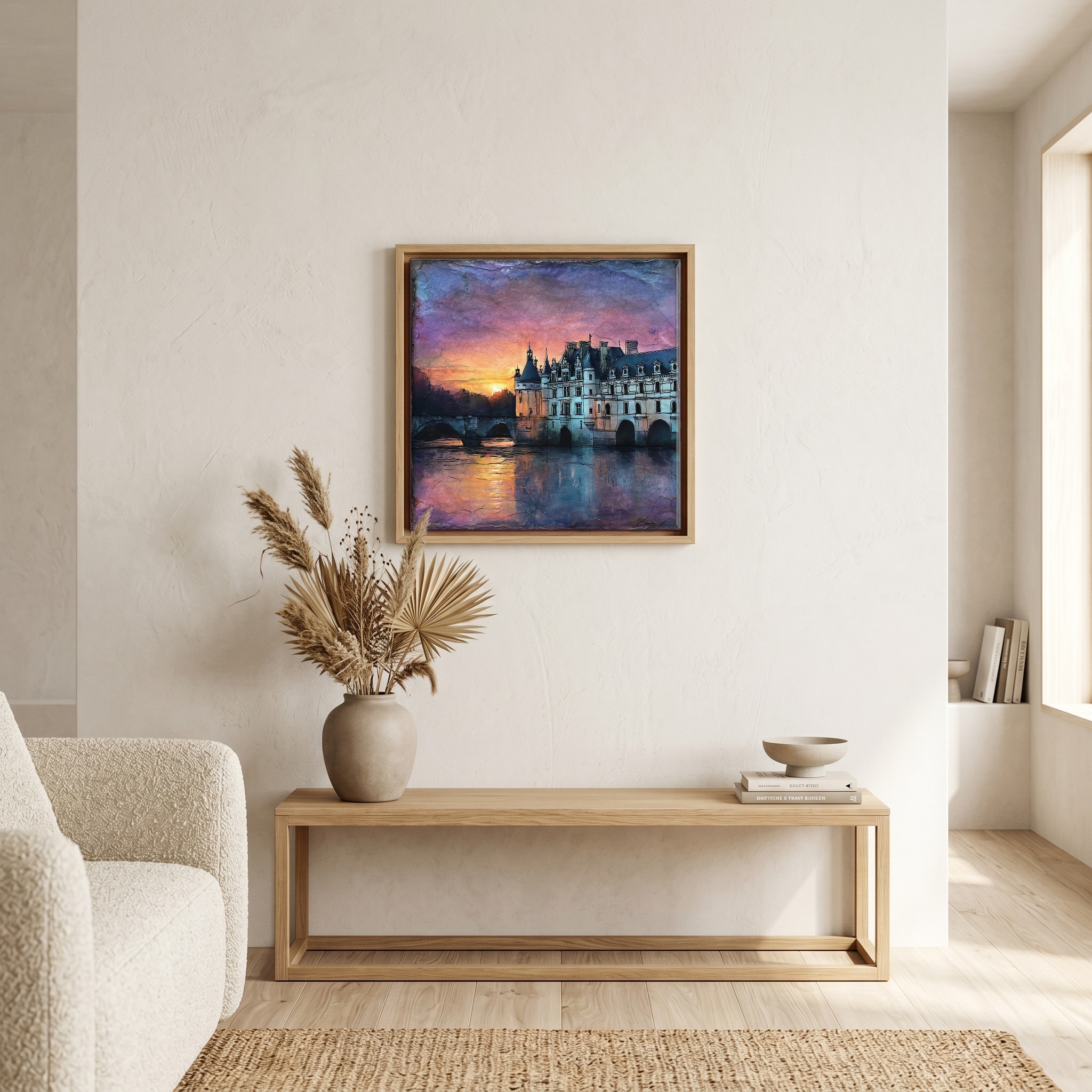
Above the bench, in a warm oak surround.
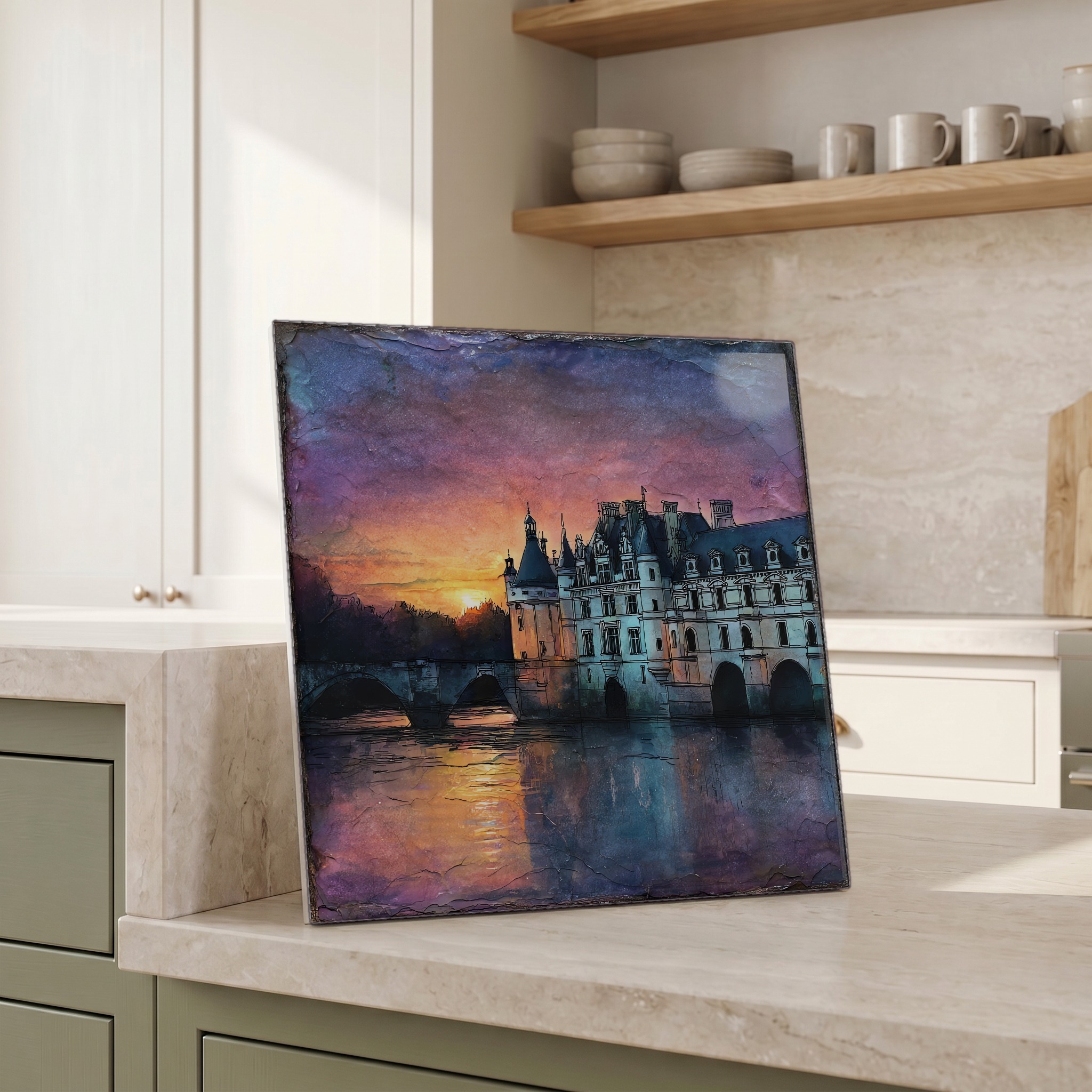
Beside the kettle, propped on the counter.
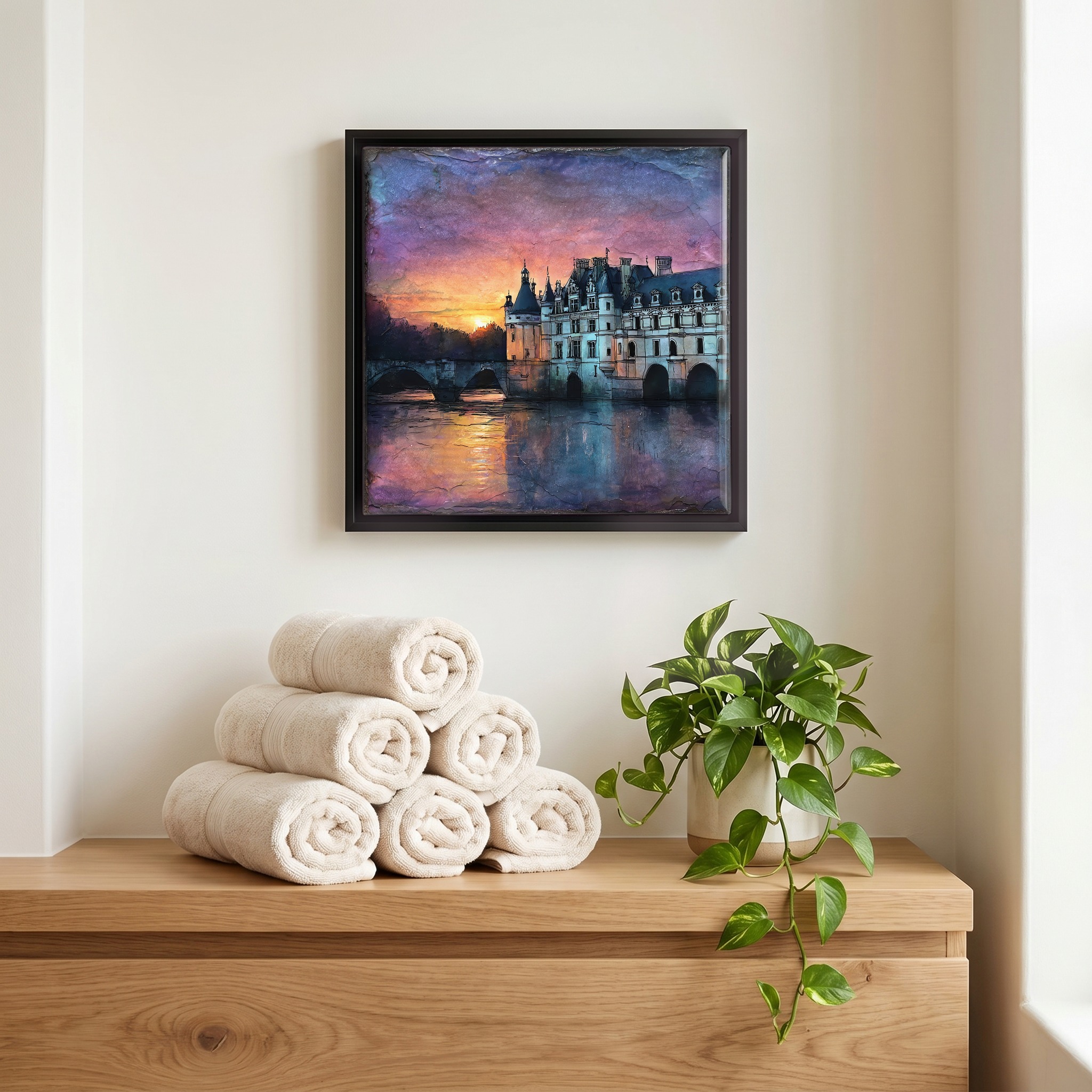
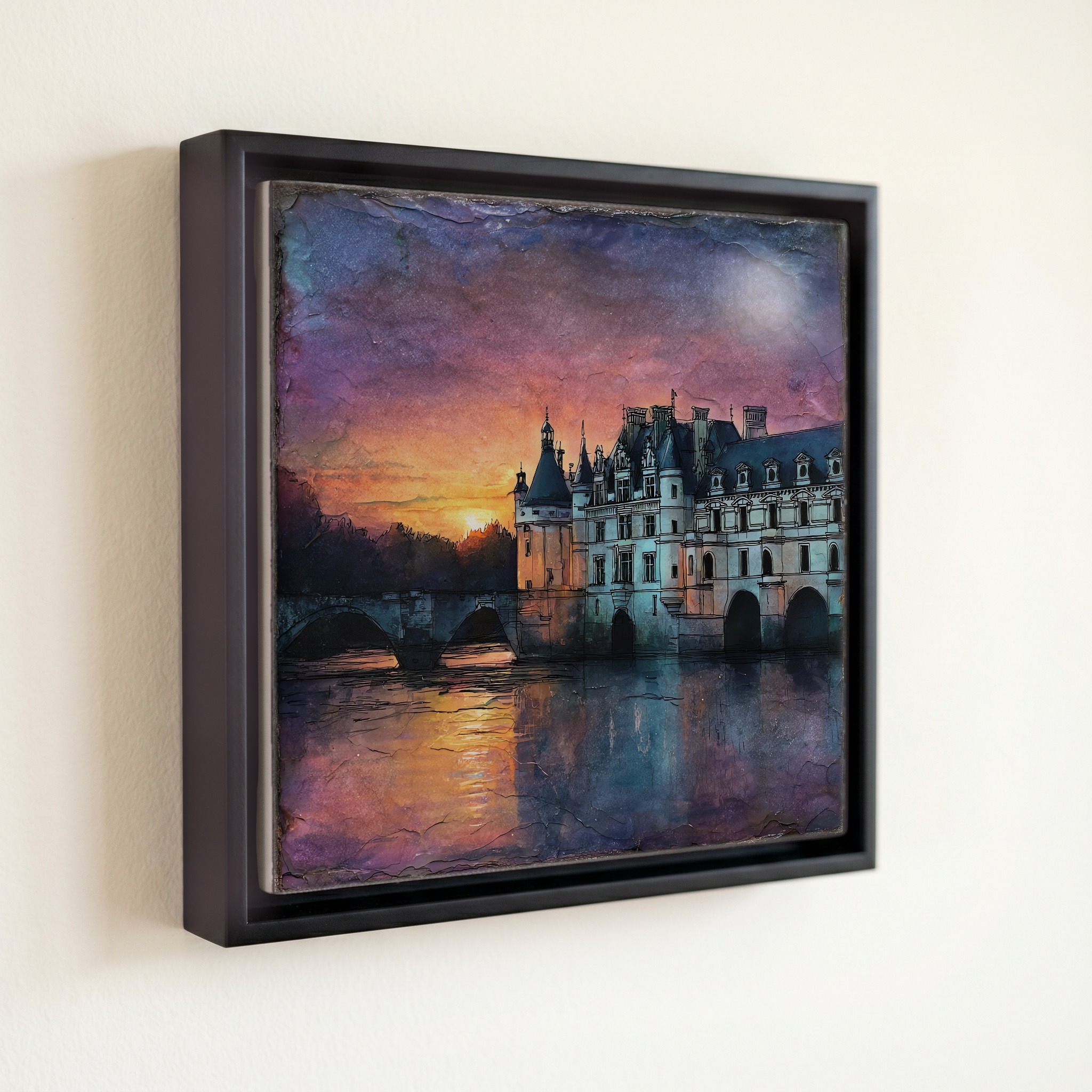
Above the linens, in a slim black surround.
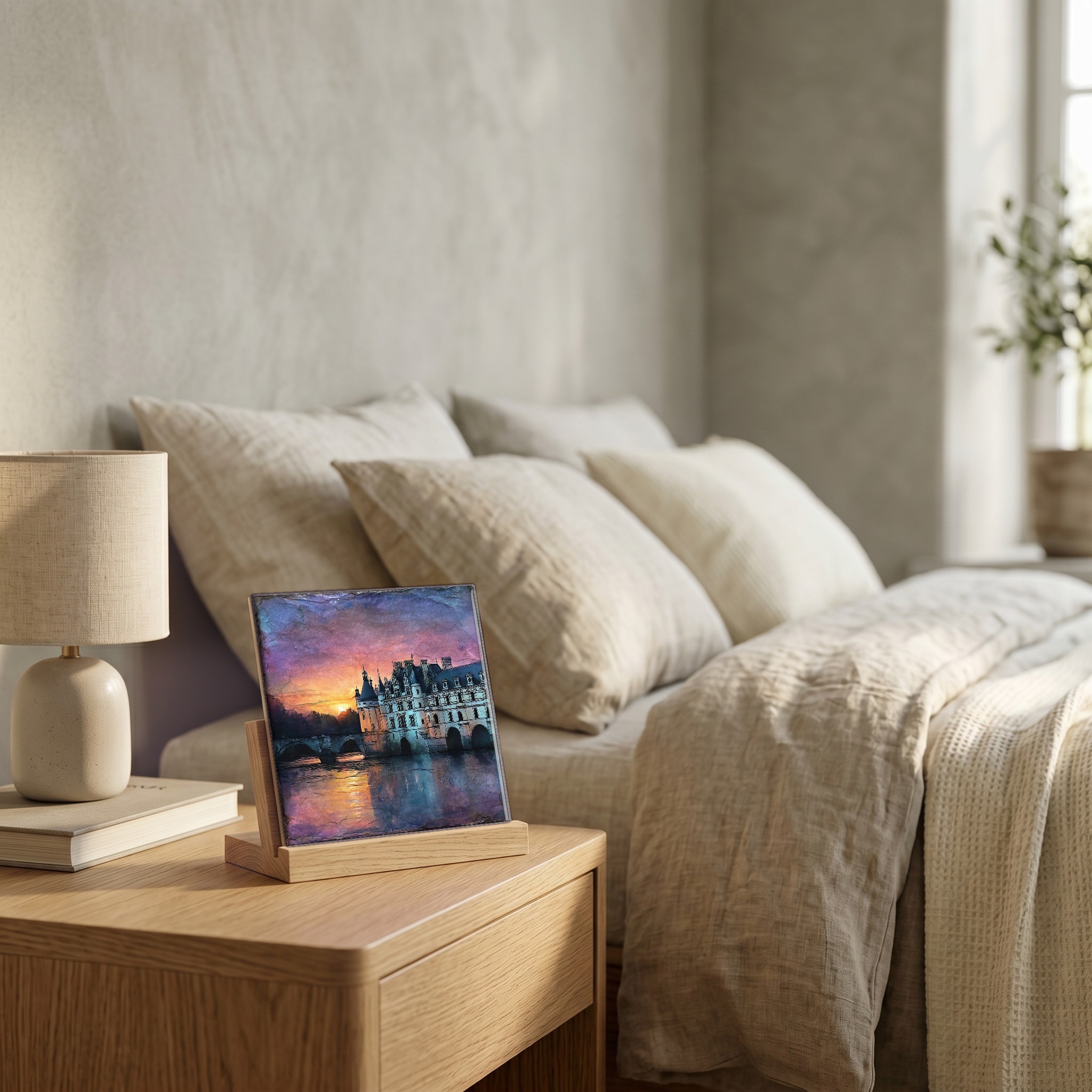
On the nightstand, on a light oak stand.
On a picture ledge, where the light comes in.
a note from the studio

The château sits across the river, not beside it. Five arches step over the Cher and carry a long gallery from one bank to the other. The house was mostly built by women: Katherine Briçonnet, Diane de Poitiers, Catherine de Medici, Louise Dupin. In a later war the same gallery served as a quiet crossing between occupied and free France. The gardens hold the shape they were given in the 1550s. On still mornings the river under the floor shows the windows back to themselves.
from the studio
shown in a slim black floating frame · 6 × 6 in
— bring it home

Chateau de Chenonceau, on ceramic.

Each tile is finished by hand in our Knoxville studio. Artwork is slowly infused into the ceramic surface under high heat and pressure, and rests beneath a thin glossy finish. The colour lives in the surface, not on top of it.

What kind of piece?
One tile — square or rectangle.
How big?
the popular one — counter, shelf, nightstand
6 × 6 in · 15 cm · 1.6 lb
Surface finish
A clear glossy finish — the artwork reads as if under resin. Ideal for show-pieces and framed wall art.
How it sits
A hidden cleat — sits ¼″ proud of the wall.
$58
Hand-finished and shipped from our studio at the foot of the Smokies. On your wall in about ten days.
size
6 × 6 in
15 cm
weighs
1.6 lb
solid in the hand
surface
ceramic, hand-finished
art rests beneath a thin glossy finish
from
Knoxville, TN
our family studio, at the foot of the Smokies
— start a Coaster Set

Pick any four 4-inch tiles — National Parks you've been to, a Smokies set, the four seasons of one place. $ for a set of , cork-backed, ready to live on the table.
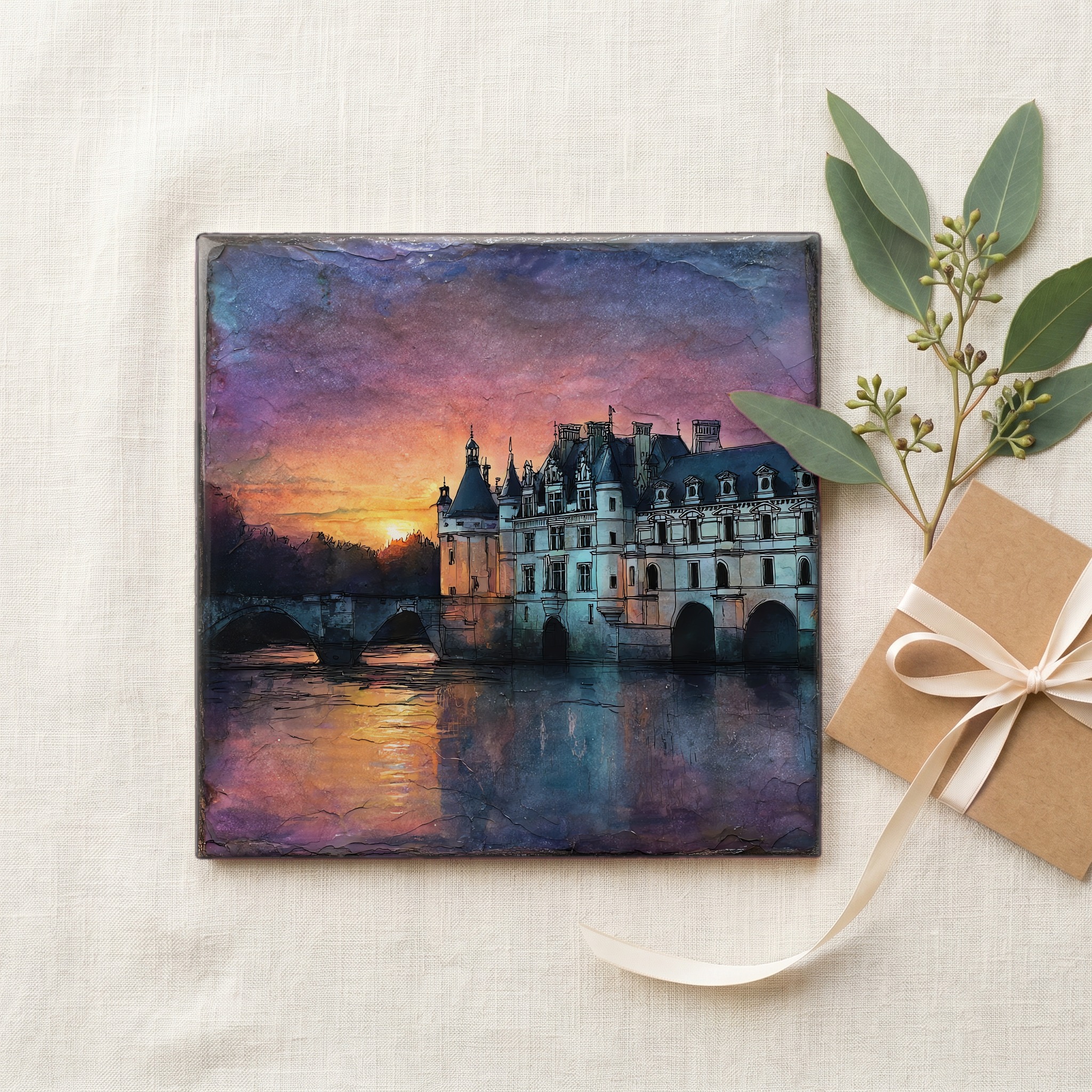
comes gift-ready
comes gift-ready

Each tile ships in a kraft box, tied with cream ribbon, with a handwritten note from the studio if you'd like to add one.
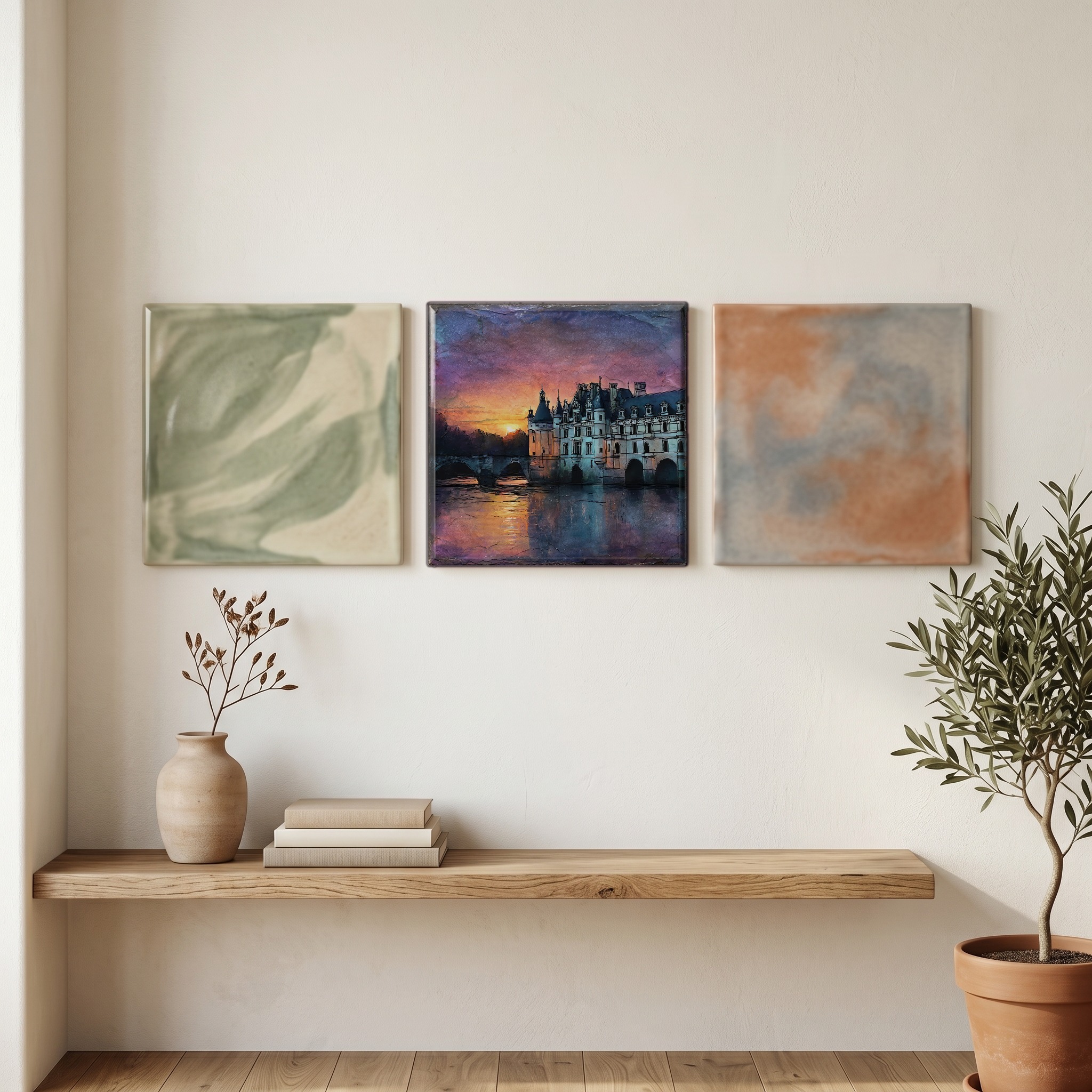
or build a grouping
or build a grouping

Three or five different vistas, hung together — a chapter of places you've been, or want to go.

about Chateau de Chenonceau

The place, in three passes.

A little of what's known, in case you fall down the rabbit hole — or want to go see it yourself.
the place

Château de Chenonceau spans the River Cher in the village of Chenonceaux, about 35 km east of Tours in the Indre-et-Loire département of Centre-Val de Loire. It is the second-most-visited château in France after Versailles, drawing roughly 850,000 visitors a year. The estate is part of the wider Loire Valley between Sully-sur-Loire and Chalonnes, listed by UNESCO as a World Heritage cultural landscape in 2000 for its concentration of Renaissance châteaux. Chenonceau has been in private hands since 1913, when the chocolate-making Menier family bought it. Trains from Paris reach Chenonceaux station on the Tours line in about two hours, and the platform sits a short walk from the front gate.

the stone

Five segmental arches carry the château across the Cher. Katherine Briçonnet oversaw the original square keep and main house between 1514 and 1522, on the piers of an old water mill. Diane de Poitiers, given the property by Henri II, commissioned the bridge from Philibert Delorme between 1556 and 1559. When Catherine de Medici took the estate back after the king's death, she set Jean Bullant the task of raising a 60-metre Grande Galerie on top of the bridge, finished around 1576. Louise Dupin, the Enlightenment salonnière who lived there during the Revolution, persuaded the local committee that the bridge was the only crossing for miles. The argument held. The building survived.

the visit

The château opens every day of the year, with hours that shift by season. The grounds include two formal gardens, one laid out by Diane de Poitiers along the river's north bank and the other by Catherine de Medici on the west, both kept to their sixteenth-century parterres. The maze, the working sixteenth-century kitchen, the donkey paddock, and the floral workshop are included with admission. Audio guides are offered in about a dozen languages. Visitors typically allow two to three hours for the interior and gardens combined. Photography without flash is permitted throughout, and most of the property is reachable by paved paths.

— informed by Official site, visit
where
France · Chenonceaux, Indre-et-Loire
position
47.3247° N · 1.0703° E
the neighborhood

What's nearby.

A handful of named places within an hour's walk or short drive. Some we've already painted; some we will.
12 km NW
Château Royal d'Amboise
royal château
12 km NW
Le Clos Lucé
Leonardo da Vinci's last home
18 km N
Château de Chaumont-sur-Loire
Loire château and garden festival
10 km E
Montrichard
medieval town on the Cher
N
Chateau de Chenonceau
Château Royal d'Amboise
Le Clos Lucé
Château de Chaumont-sur-Loire
Montrichard
common questions

What people ask.

A few questions we get about Chateau de Chenonceau — and about bringing the piece home.
about the place

The château stands in the village of Chenonceaux, about 35 km east of Tours, in the Indre-et-Loire département of France's Centre-Val de Loire region. It spans the River Cher and sits inside the Loire Valley UNESCO World Heritage area listed in 2000.

Five women shaped the property across four centuries: Katherine Briçonnet raised the main house, Diane de Poitiers added the bridge over the Cher, Catherine de Medici put the gallery on top of it, Louise Dupin saved it from the Revolution, and Madame Pelouze led a major nineteenth-century restoration.

The main house sits on the north bank, and a five-arched bridge designed by Philibert Delorme between 1556 and 1559 carries the structure across the Cher to the south bank. Catherine de Medici later added a two-storey gallery, about 60 metres long, on top of the bridge.

The River Cher marked the demarcation line between Nazi-occupied France and the Vichy Free Zone. The Grande Galerie, whose north door opened in occupied territory and south door in the free zone, became a passage for people crossing out of occupation.

The estate has belonged to the Menier family, the French chocolate dynasty, since 1913. They opened it to the public and continue to manage it as a privately held residence and museum, making it the most visited privately owned château in France.

About 850,000 people visit annually, making it the second-most-visited château in France after Versailles. Most arrive between April and October; spring and early autumn are quieter than the high-summer peak in July and August.

SNCF trains run from Paris Austerlitz to Chenonceaux station in roughly two hours, often with one change at Saint-Pierre-des-Corps. The station sits a short walk from the château gate. Driving from Paris takes about two and a half hours via the A10.

about the piece in your home

It tends to land well with travellers who have made the Loire château run, or who hold a soft spot for Renaissance France. The Keepsake and Coaster Set carry the image at a personal scale; a Small with a handwritten note from the studio is the most common gift configuration we ship.

The palette and stained-glass colour vocabulary sit comfortably in French country, classical European, and warm traditional rooms. The piece also reads well in transitional spaces that mix antique woods with quieter modern furniture. The depth of colour in the surface keeps it from feeling like a tourist print.

Yes. The piece carries the historical weight those interiors lean on, without leaning into chintz or pastiche. It pairs well with limewashed walls, oak case goods, and a single warm metal accent. The Medium hangs well centred above a writing desk or a narrow side console.

Above a standard three-seat sofa, a single Large does the job. For more presence, a four-tile Mural anchors a sofa wall with breathing room around it. Above a console, a Medium or a three-tile horizontal arrangement reads in proportion to the furniture.

Yes. The Dura Satin and Matte finishes are scratch-resistant and tolerate humidity, which makes them suited for backsplashes, powder-room walls, and shower surrounds. The Glossy finish is best kept to dry rooms and framed display, where its sheen shows the painting at its richest.

A microfibre cloth with plain water handles ordinary dust and fingerprints. For kitchen or bath installations, a mild dish soap diluted in water is safe. Avoid abrasive pads and household scouring powders, which can mark the surface over time. The colour lives in the surface, not on it.

Yes. Every WenderVista image is curated by Reid Wender and produced in our Knoxville, Tennessee studio. The work is not licensed from another artist or stock library, and the same image is not sold under any other brand.

if this one stayed with you

A few you might also love.

Hand-picked by the eye that found Sorapis. Same air, same kind of quiet.