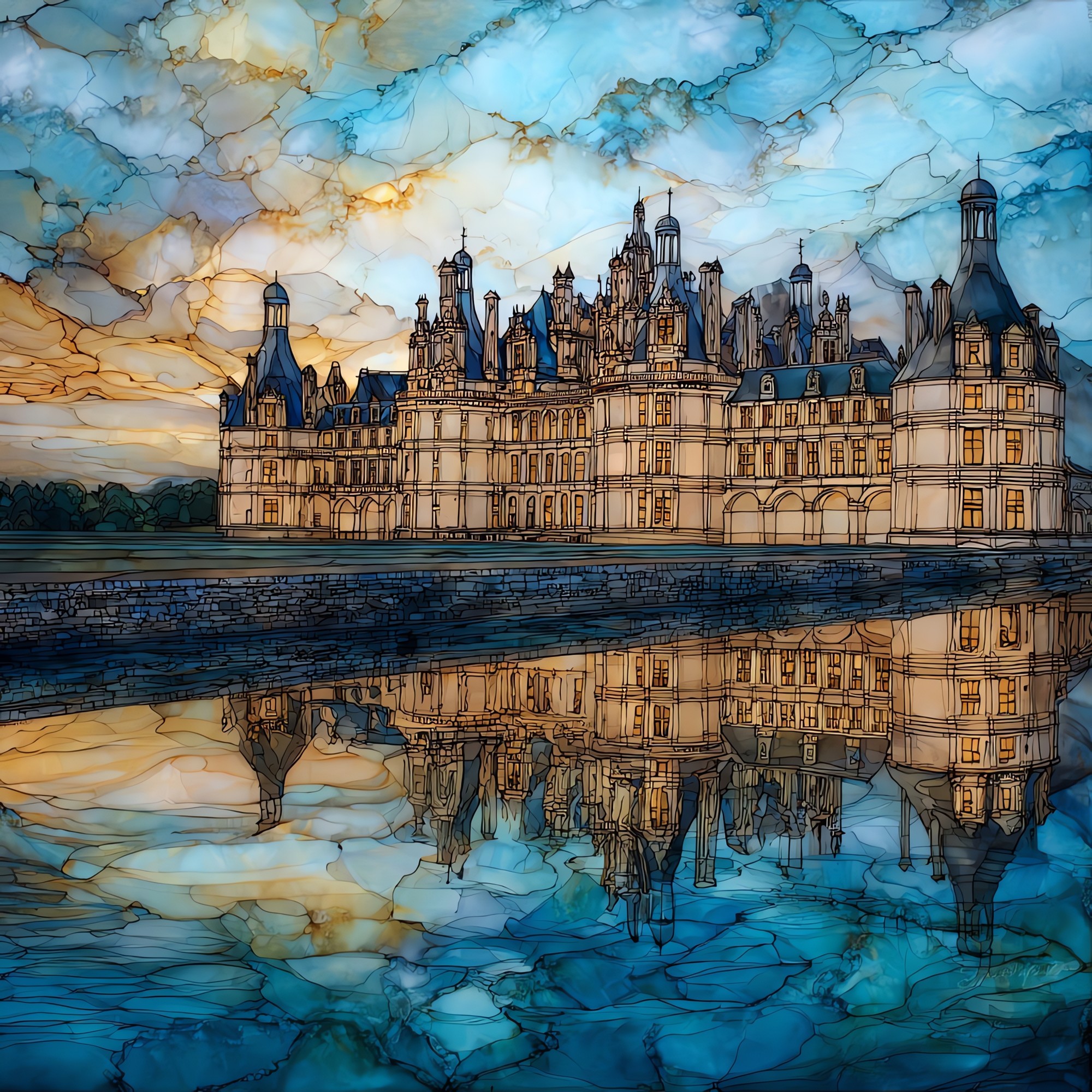
Chateau de Chambord
— a forest with a skyline above it.
Not only on a wall.
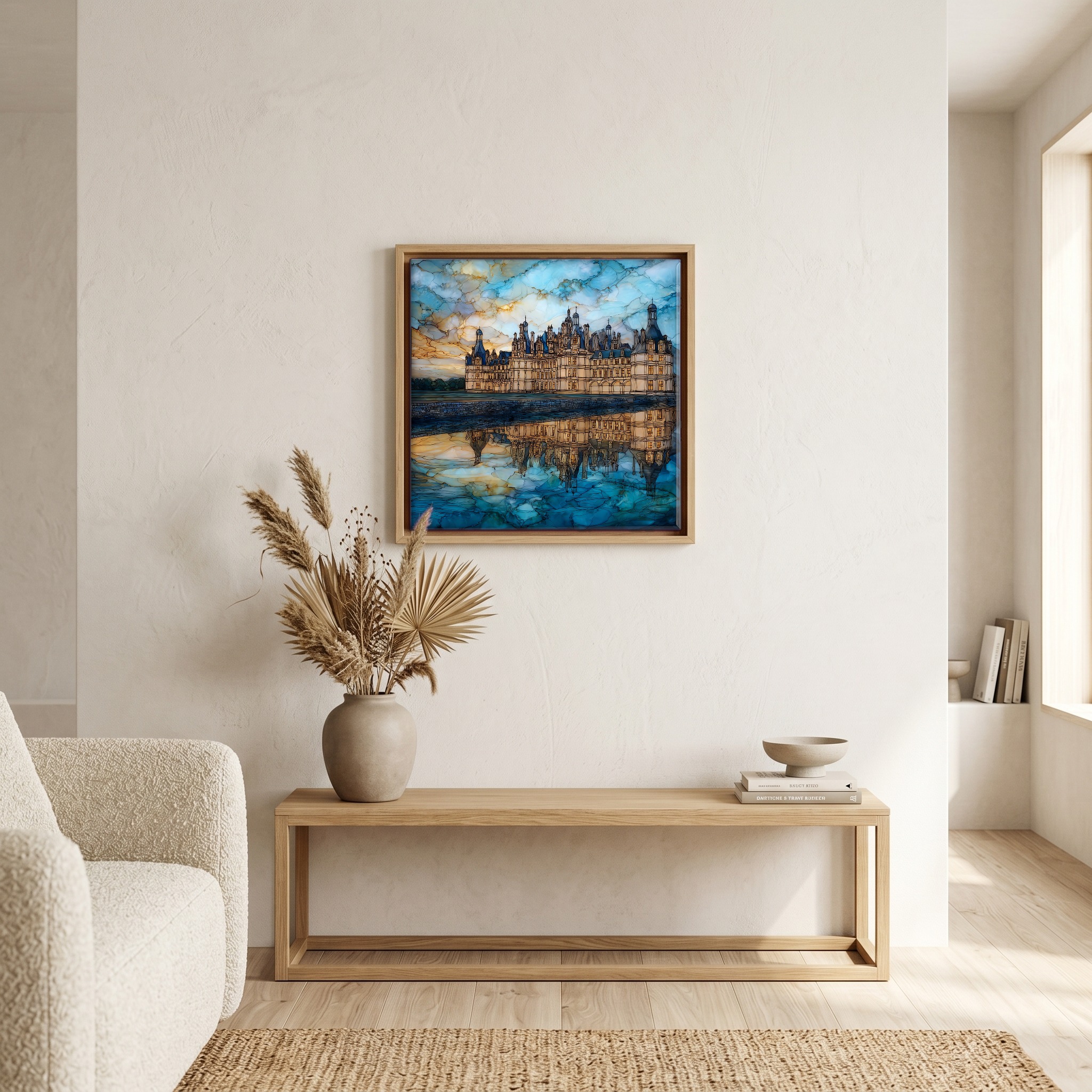
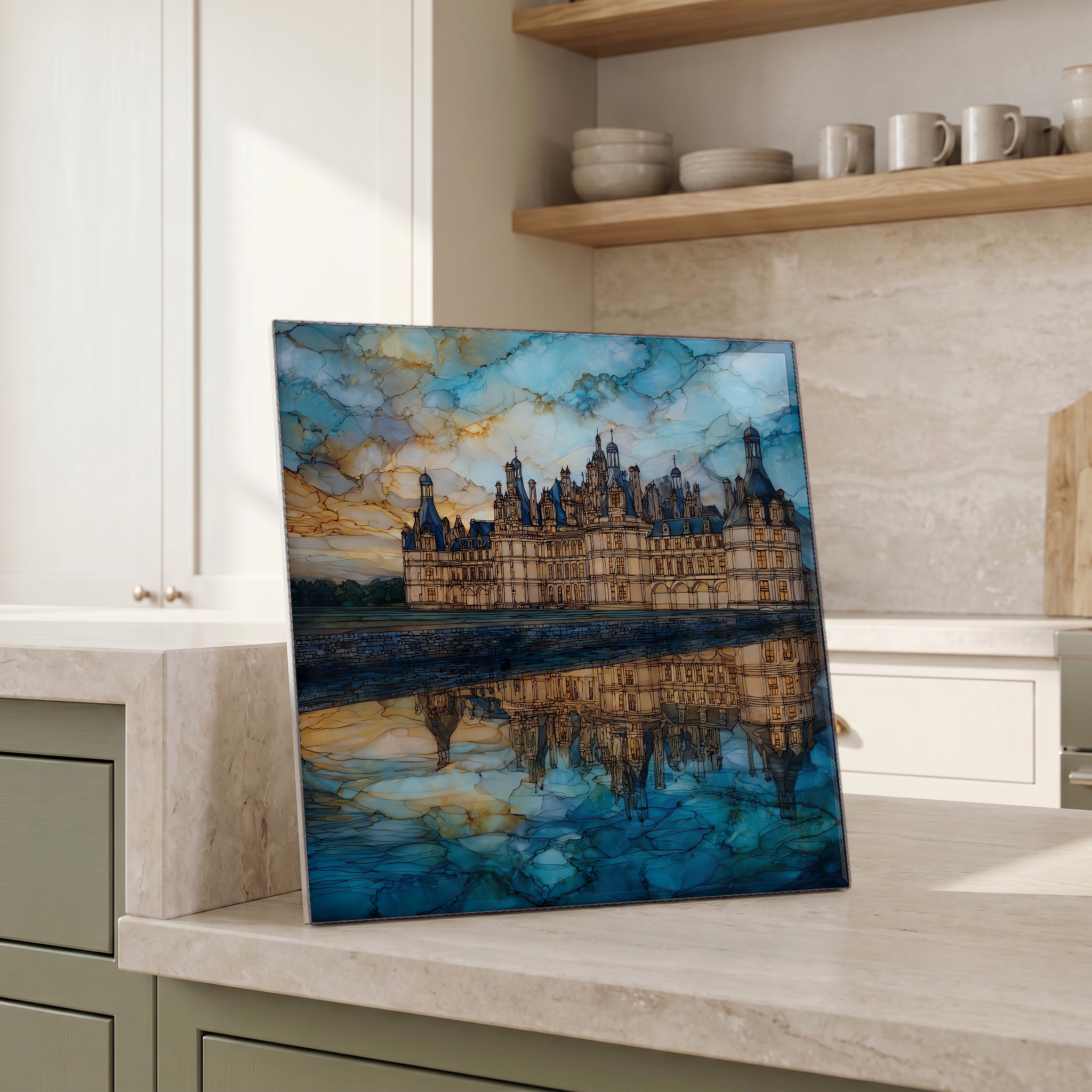
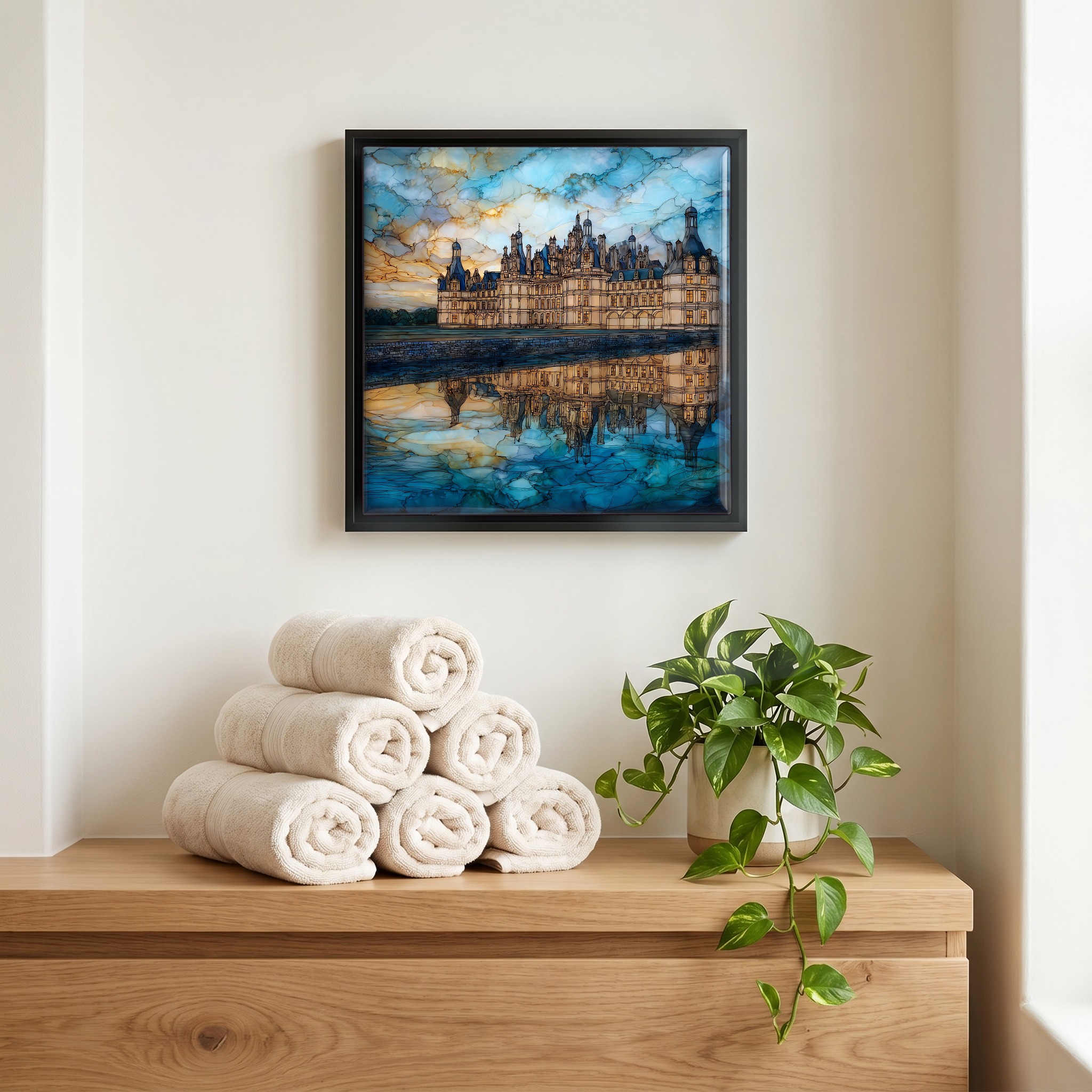
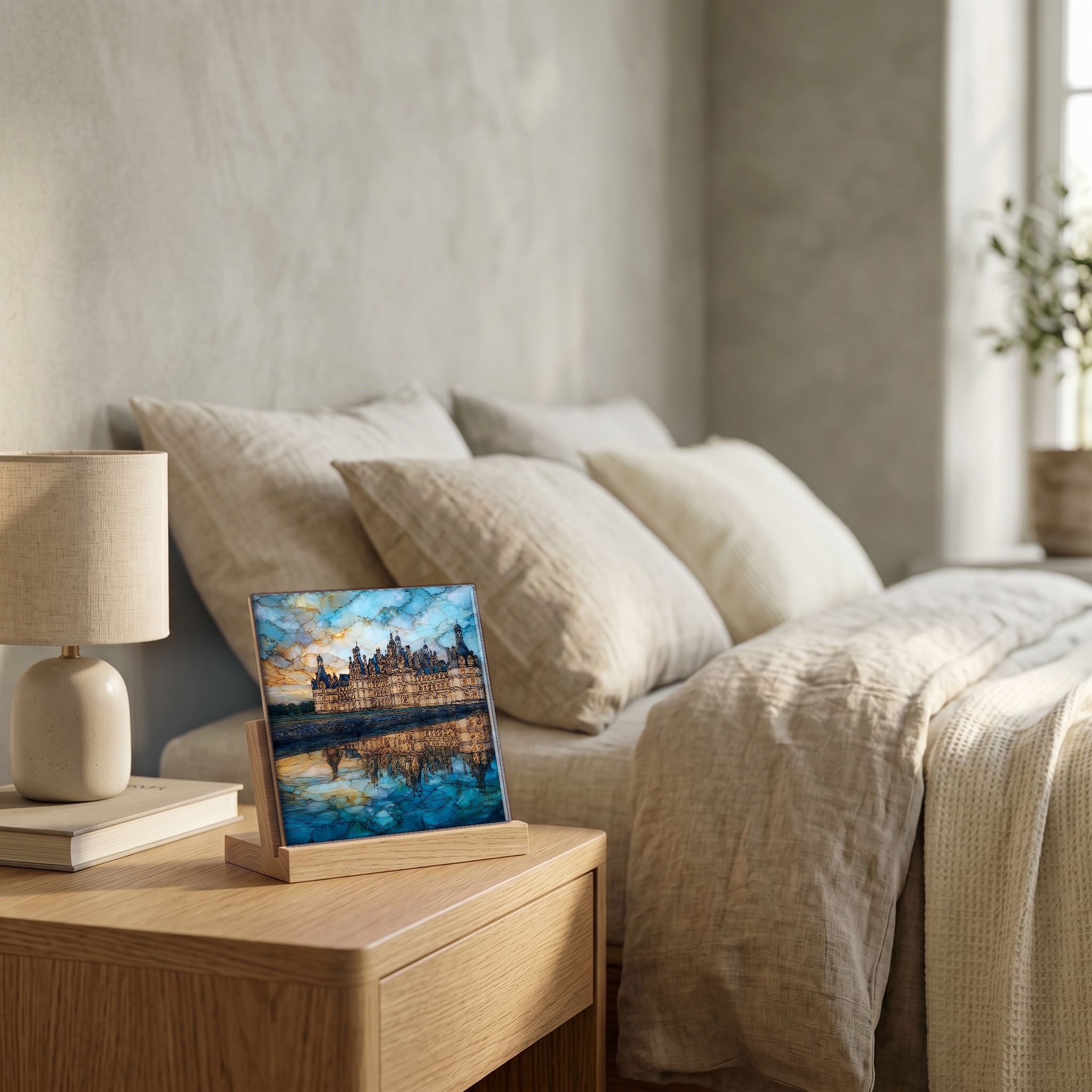
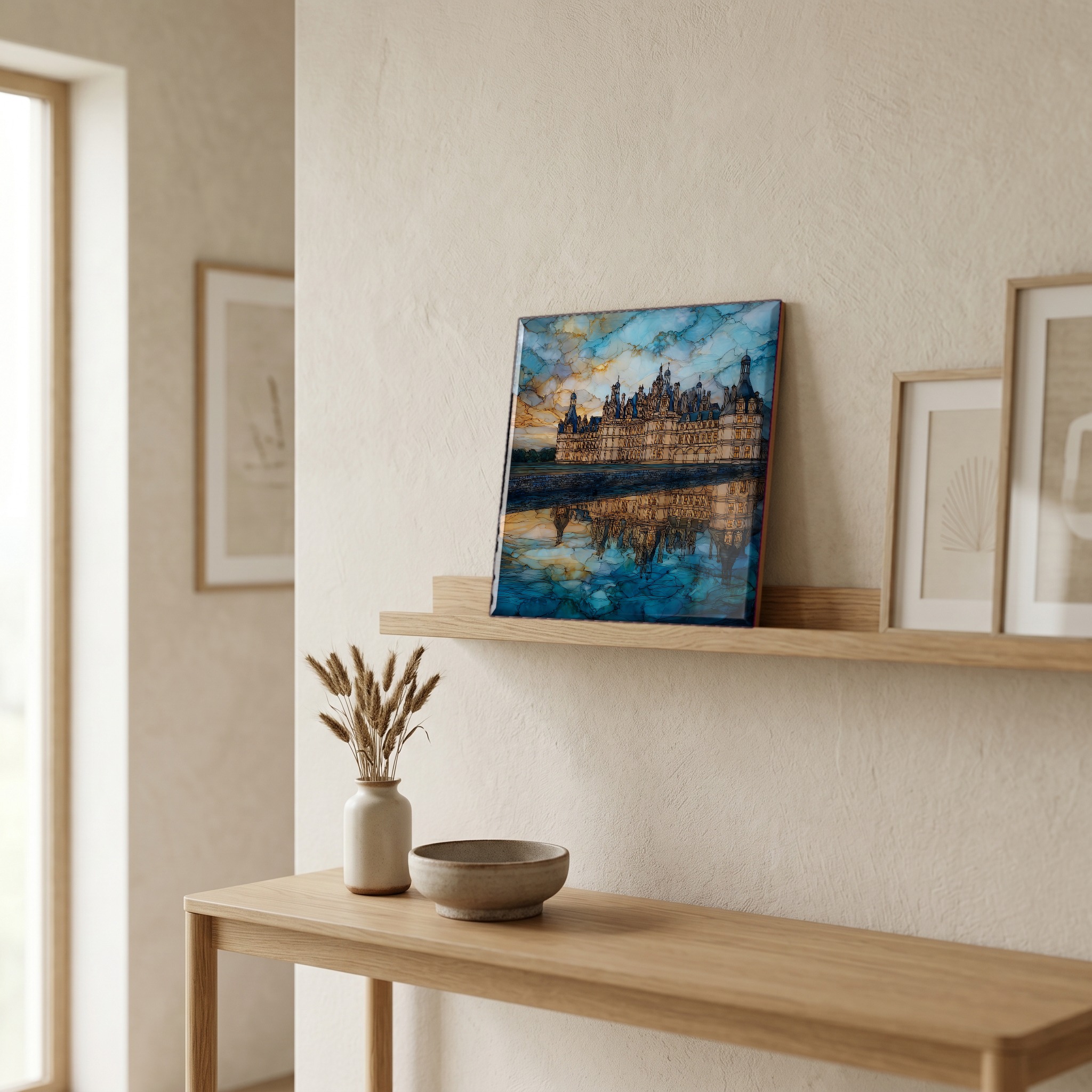
“The forest at Chambord is the largest walled park in Europe. You come out of it and there is suddenly a roofline of turrets and chimneys and a lantern tower above the trees, the silhouette every French schoolchild has drawn at least once. François I began it in 1519 as a hunting lodge. He stayed only a few weeks of his life. The double-helix staircase at the centre still climbs without anyone meeting anyone coming the other way. People stop in the meadow before the bridge and don't move for a while.
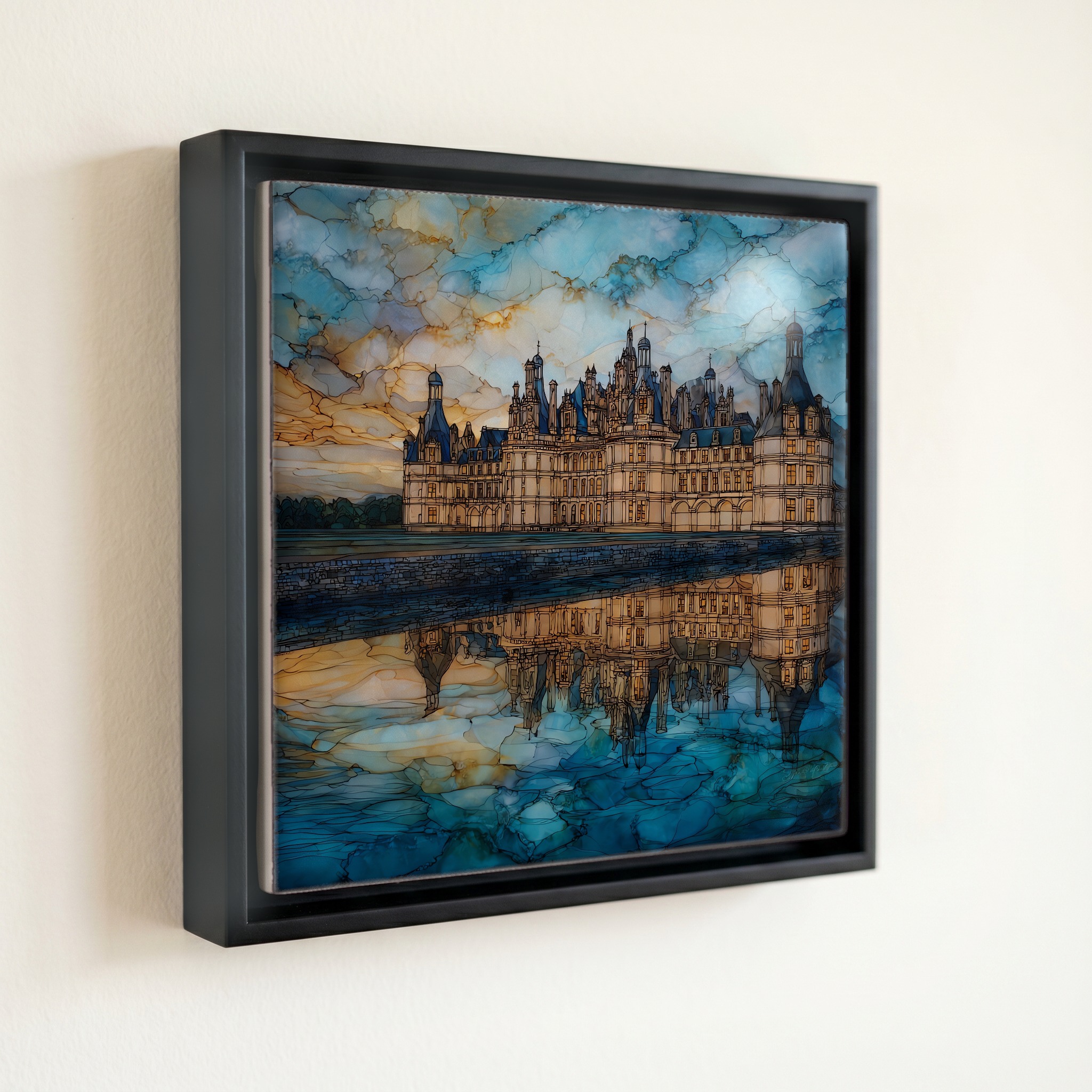
Chateau de Chambord, on ceramic.
Each tile is finished by hand in our Knoxville studio. Artwork is slowly infused into the ceramic surface under high heat and pressure, and rests beneath a thin glossy finish. The colour lives in the surface, not on top of it.
Pick any four 4-inch tiles — National Parks you've been to, a Smokies set, the four seasons of one place. $ for a set of , cork-backed, ready to live on the table.
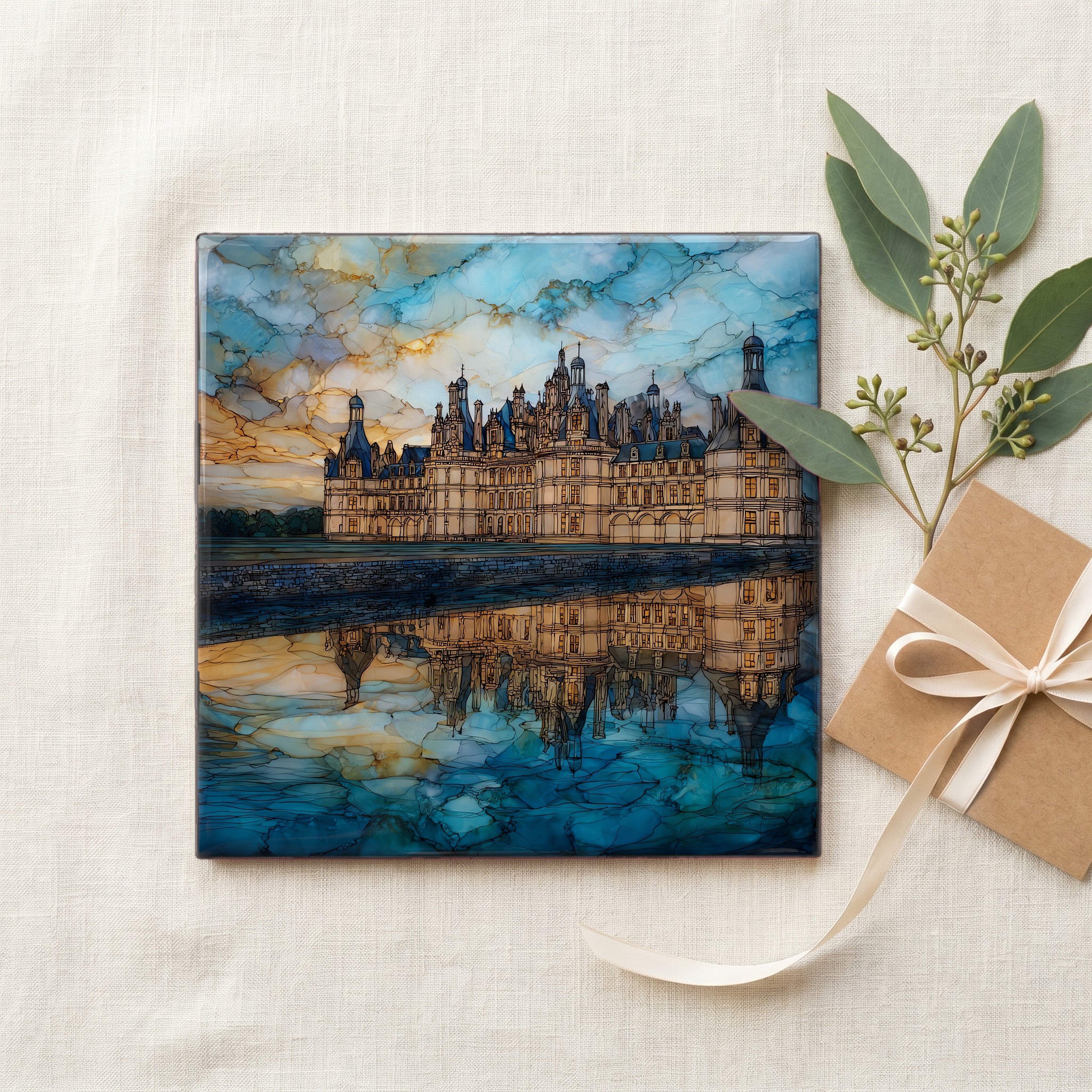
Each tile ships in a kraft box, tied with cream ribbon, with a handwritten note from the studio if you'd like to add one.
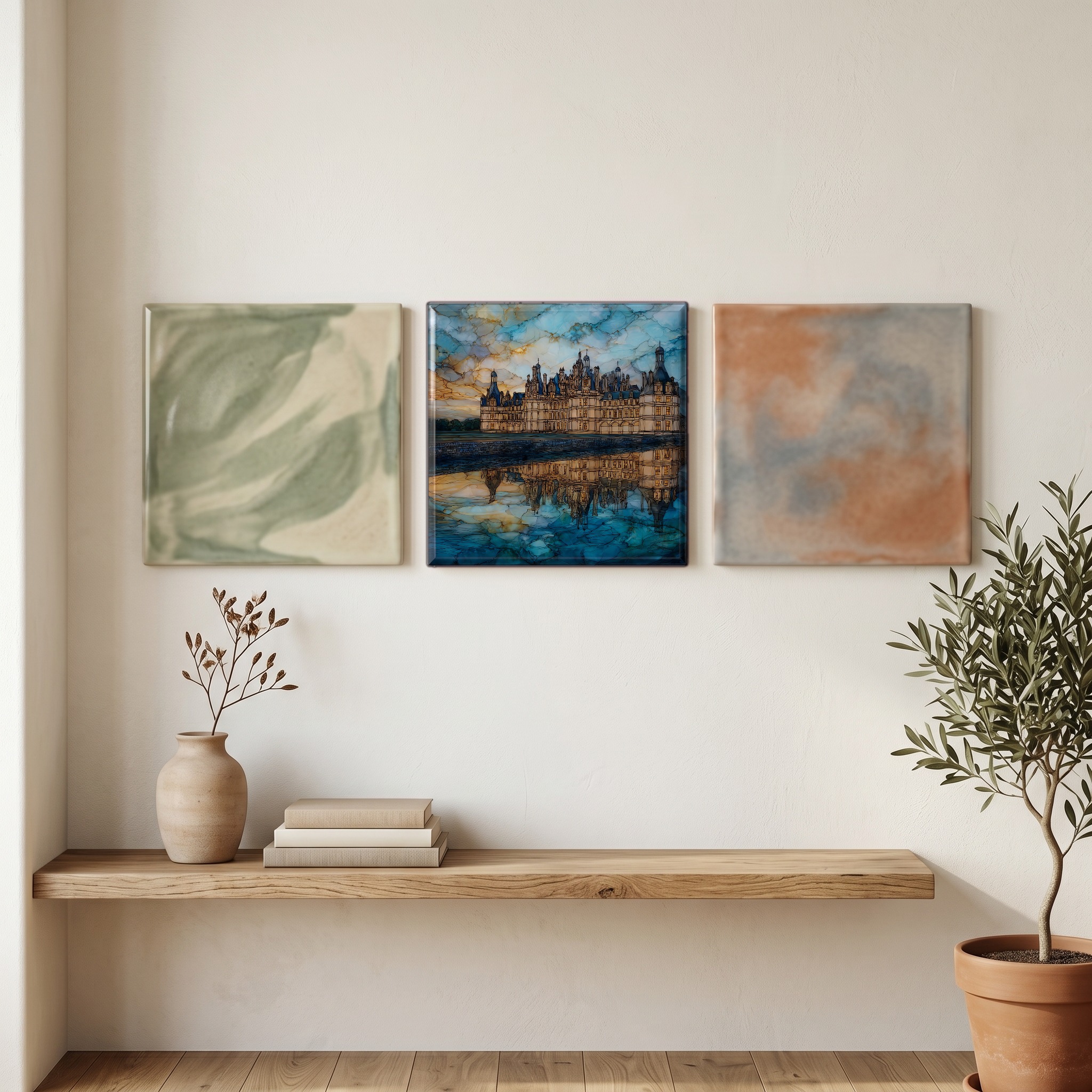
Three or five different vistas, hung together — a chapter of places you've been, or want to go.
The place, in three passes.
Chambord sits in the Sologne, fourteen kilometres east of Blois on the river Cosson, a small tributary of the Loire. The estate covers 5,440 hectares of oak and pine forest, surrounded by a wall thirty-two kilometres around. It is the largest enclosed park in Europe. King François I began construction in 1519, the year Leonardo da Vinci died at nearby Clos Lucé, and worked on it intermittently for the rest of his life. The site has been on the UNESCO World Heritage List since 2000, as part of the Loire Valley designation between Sully-sur-Loire and Chalonnes.
The château has 440 rooms, 282 fireplaces, and 84 staircases. The central donjon follows the Greek-cross plan of a medieval keep, but the surface is French Renaissance throughout, with corner towers, dormers, and a roof terrace of chimneys and lanterns that reads more like a small walled town than a single building. The double-helix staircase at the centre rises four storeys without the two spirals meeting, an idea sometimes attributed to Leonardo. The lantern tower above it is topped with a fleur-de-lis, the highest point of the château. The walls and tracery are cut from local tuffeau, the soft white limestone of the Loire that hardens as it weathers.
The Domaine national de Chambord is open every day of the year except 1 January and 25 December. The château carries an admission fee; the surrounding forest park is free to walk. Visitors can hire bicycles, electric boats on the canal, and rowing boats on the Cosson, and the equestrian show runs in the stables from spring through October. The site is fifteen kilometres east of Blois and reachable from Paris by direct train to Blois-Chambord station in about ninety minutes, then bus or taxi. The walled park, set aside as a hunting reserve by François I, remains a protected habitat for red deer and wild boar.