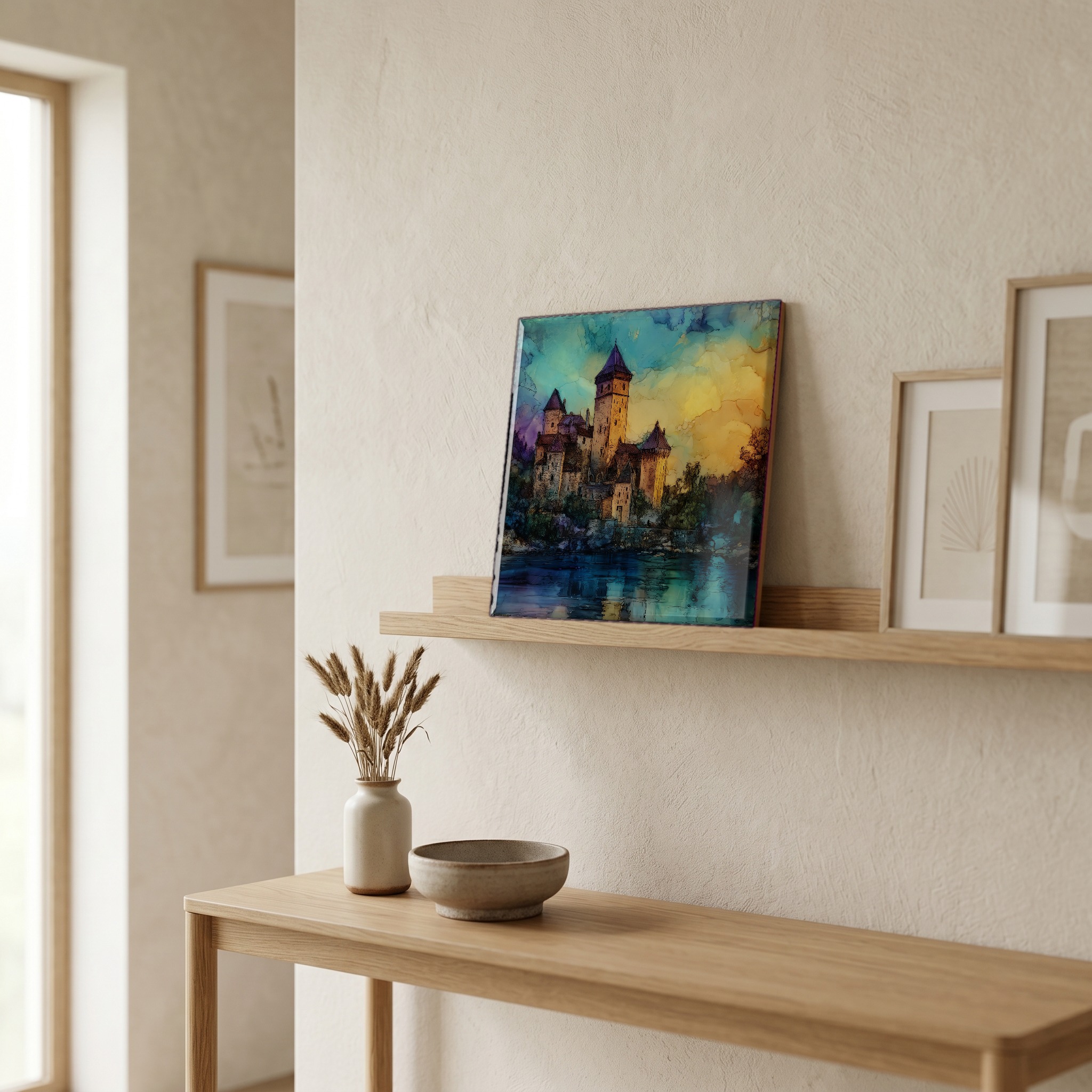
Wender·Vista
Chateau de Castelnaud
shown on ceramic, 12-inch tileFrance
above the Dordogne in the Périgord Noir

Chateau de Castelnaud

the gold the stone keeps after the sun is gone.

Where it lives

Not only on a wall.

A small tile on the nightstand catching the morning. A larger one above the fire. Yours, wherever you spend the slow hours.
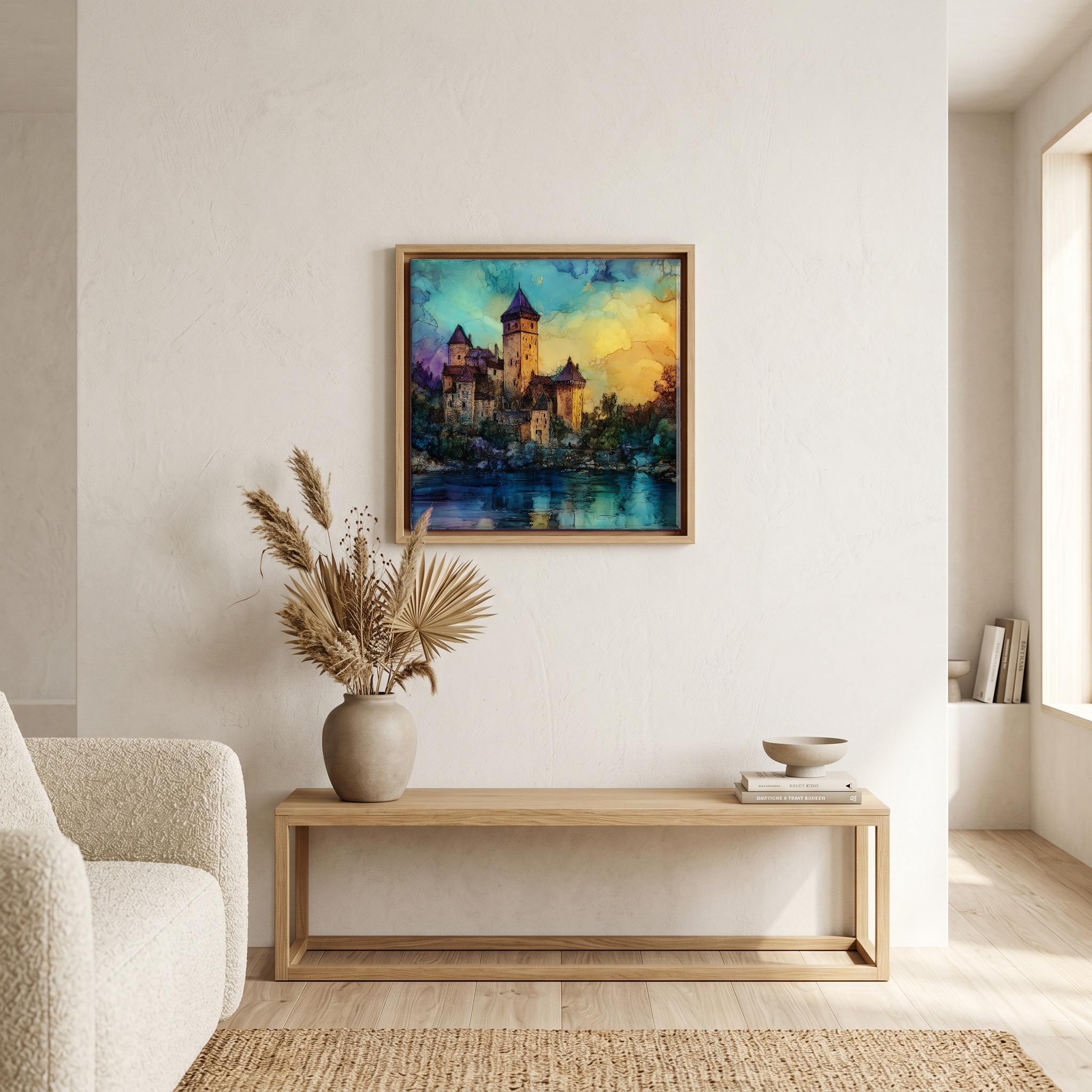
Above the bench, in a warm oak surround.
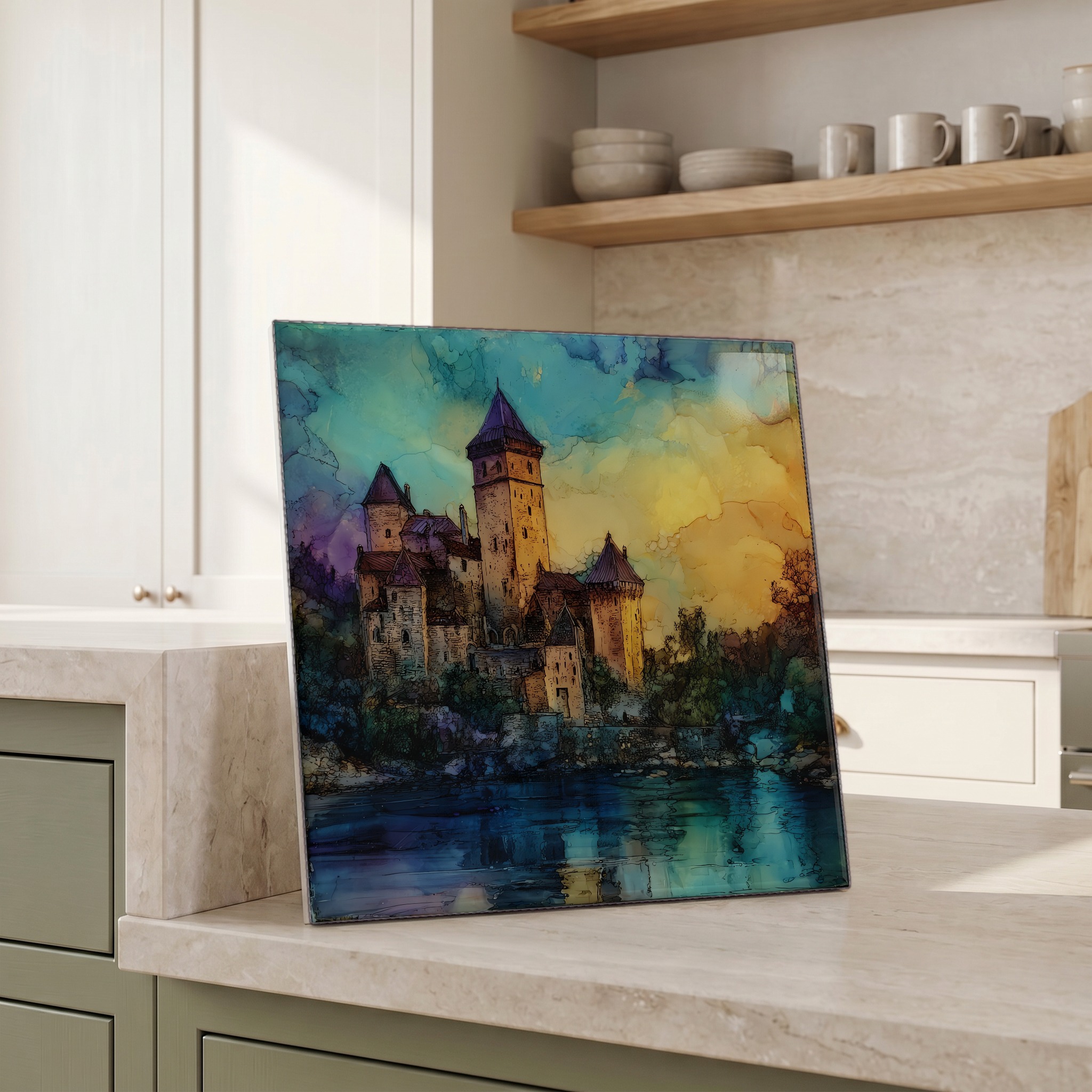
Beside the kettle, propped on the counter.
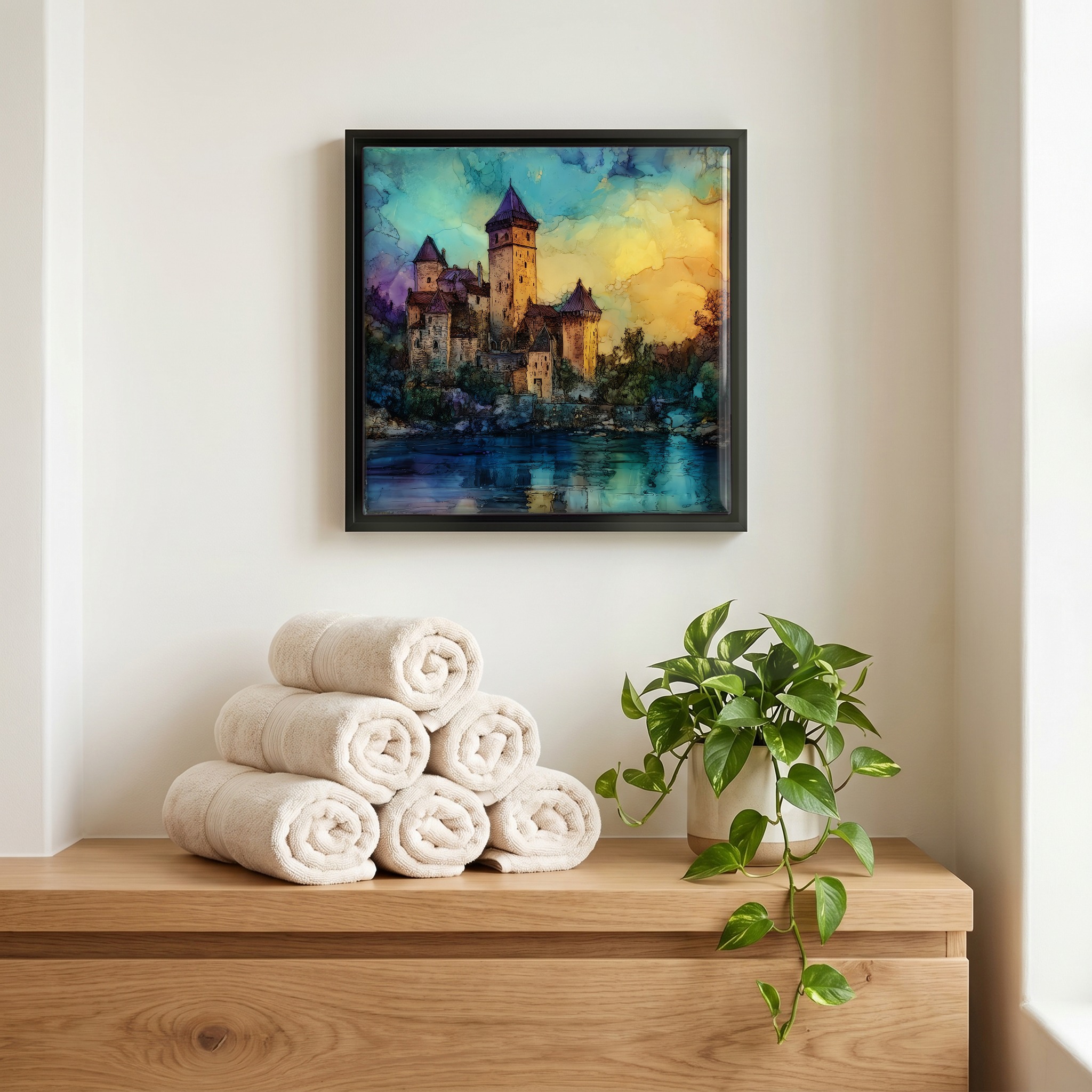
Above the linens, in a slim black surround.
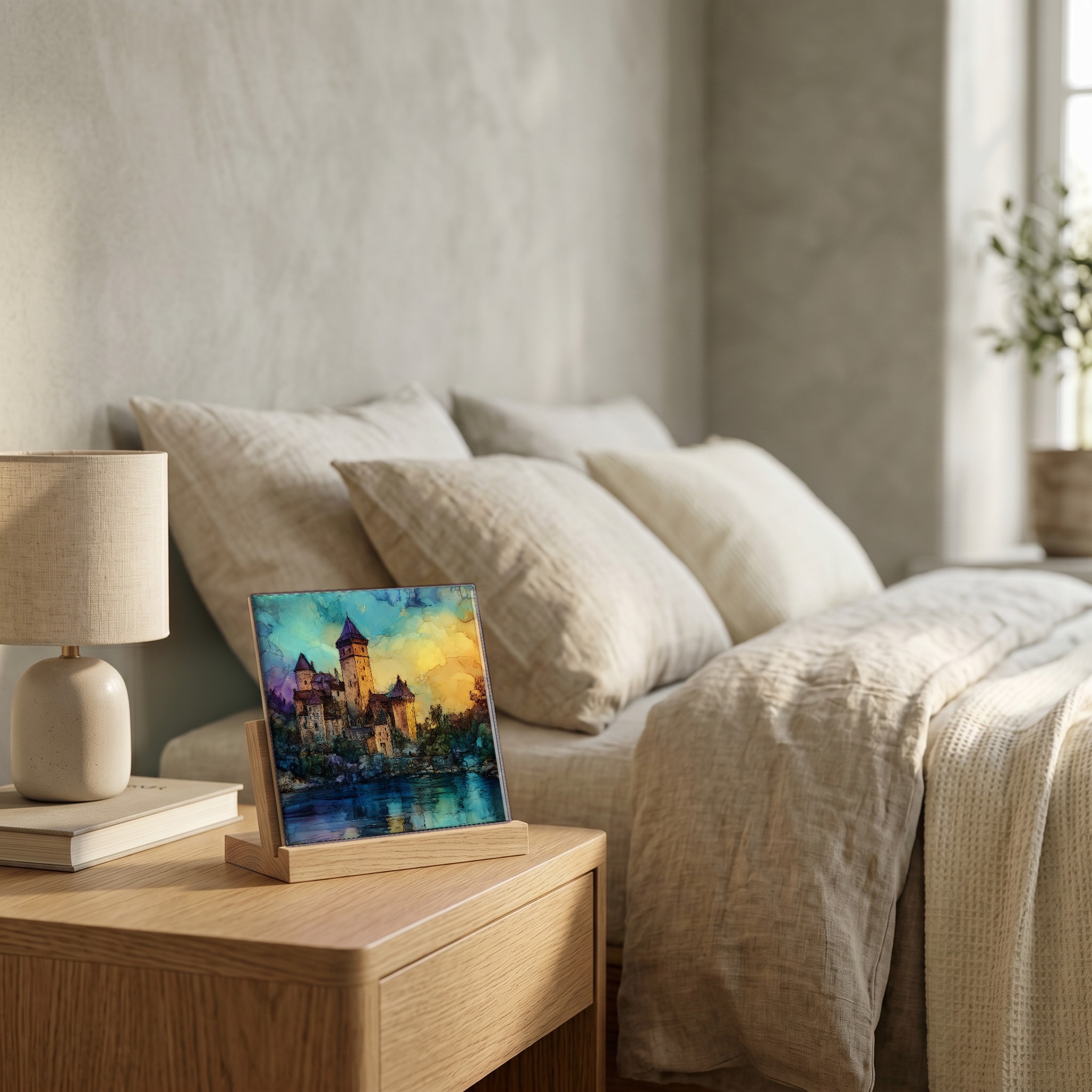
On the nightstand, on a light oak stand.
On a picture ledge, where the light comes in.
a note from the studio

A medieval fortress above the Dordogne valley, in the Périgord Noir. The keep looks across to Château de Beynac on the opposite ridge — the two castles spent the Hundred Years' War watching each other, the river between them changing hands. The stone is honey-coloured at noon and almost amber at the last hour of the day. Trebuchets and mangonels stand in the bailey, full-scale and rope-tensioned, and the museum inside holds two hundred medieval weapons. The Dordogne bends below; the village of La Roque-Gageac sits a few miles upriver.
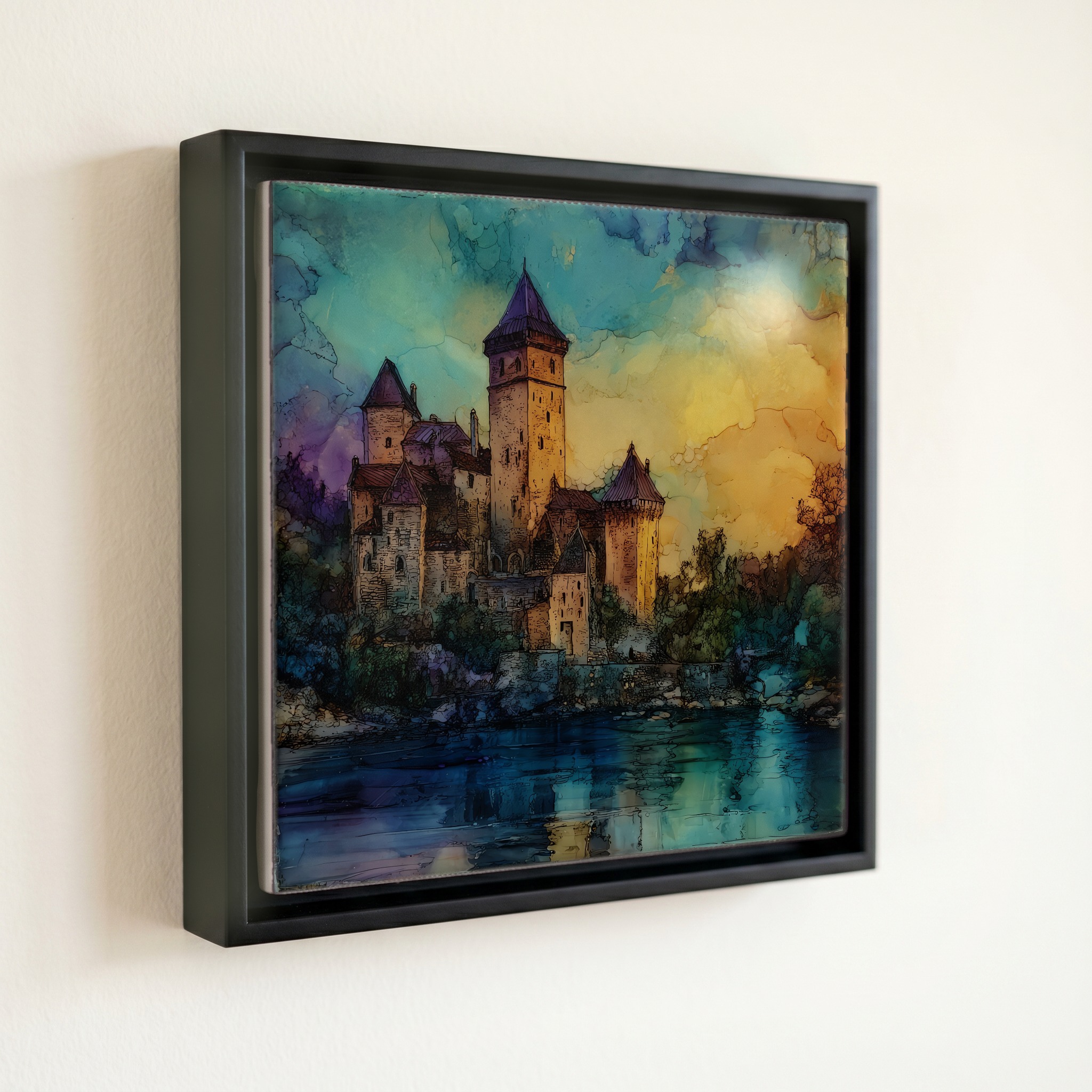
from the studio
shown in a slim black floating frame · 6 × 6 in
— bring it home

Chateau de Castelnaud, on ceramic.

Each tile is finished by hand in our Knoxville studio. Artwork is slowly infused into the ceramic surface under high heat and pressure, and rests beneath a thin glossy finish. The colour lives in the surface, not on top of it.

What kind of piece?
One tile — square or rectangle.
How big?
the popular one — counter, shelf, nightstand
6 × 6 in · 15 cm · 1.6 lb
Surface finish
A clear glossy finish — the artwork reads as if under resin. Ideal for show-pieces and framed wall art.
How it sits
A hidden cleat — sits ¼″ proud of the wall.
$58
Hand-finished and shipped from our studio at the foot of the Smokies. On your wall in about ten days.
size
6 × 6 in
15 cm
weighs
1.6 lb
solid in the hand
surface
ceramic, hand-finished
art rests beneath a thin glossy finish
from
Knoxville, TN
our family studio, at the foot of the Smokies
— start a Coaster Set

Pick any four 4-inch tiles — National Parks you've been to, a Smokies set, the four seasons of one place. $ for a set of , cork-backed, ready to live on the table.

comes gift-ready
comes gift-ready

Each tile ships in a kraft box, tied with cream ribbon, with a handwritten note from the studio if you'd like to add one.
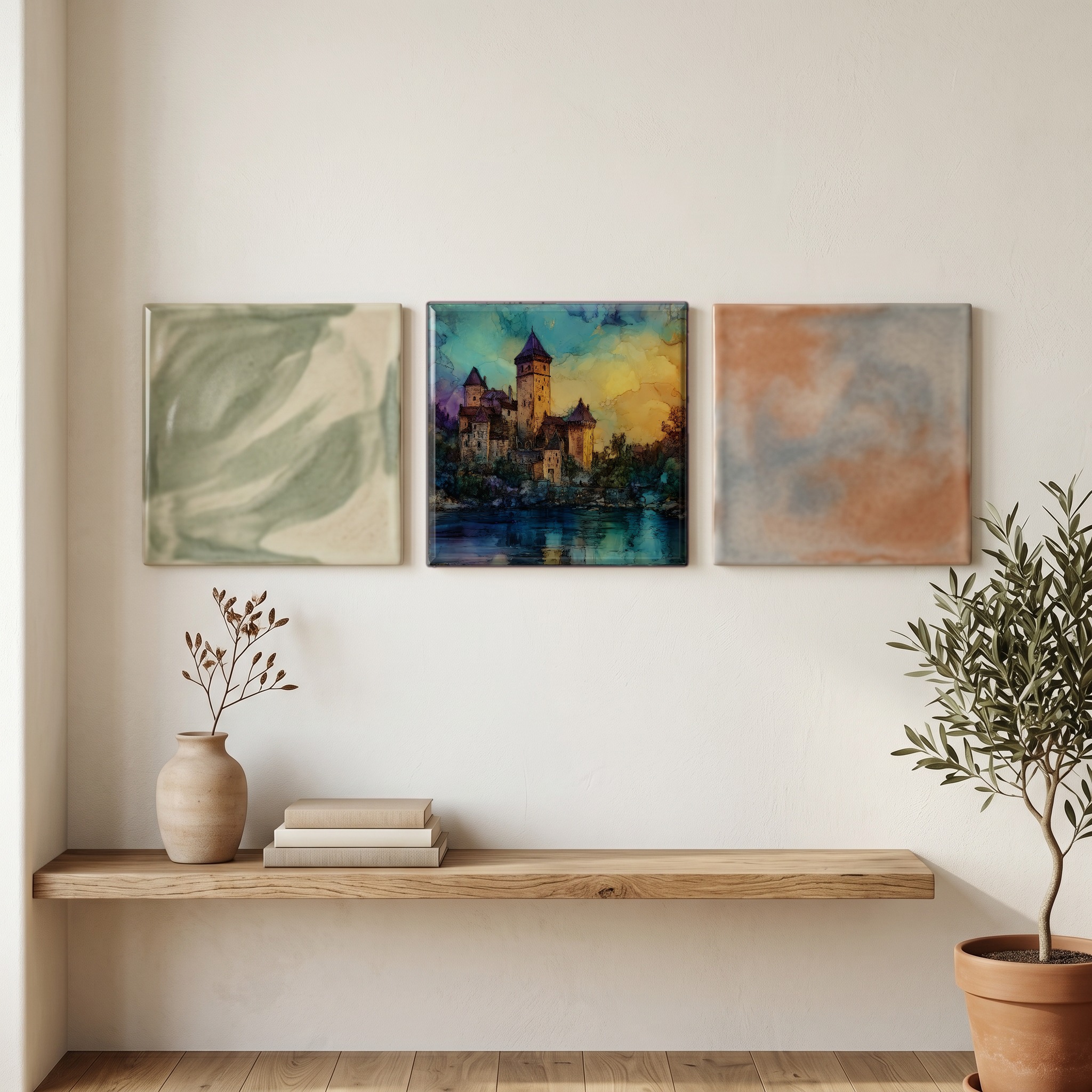
or build a grouping
or build a grouping

Three or five different vistas, hung together — a chapter of places you've been, or want to go.

about Chateau de Castelnaud

The place, in three passes.

A little of what's known, in case you fall down the rabbit hole — or want to go see it yourself.
the place

Château de Castelnaud stands on a limestone outcrop above the confluence of the Dordogne and Céou rivers, in the commune of Castelnaud-la-Chapelle in the Dordogne department of southwest France. The fortress is part of the Périgord Noir, a region of oak woodland and river valleys about ten kilometres southwest of Sarlat-la-Canéda. From its terrace the visitor sees Château de Beynac on the opposite ridge, just over two kilometres across the valley as the crow flies, and the village of La Roque-Gageac upriver. The castle is reached by a short, steep walk up from the river road through the village.

— informed by Wikipedia
the stone

The oldest parts of the castle date to the early thirteenth century, with first documentation in 1214, when Simon de Montfort took the fortress during the Albigensian Crusade. The keep, the curtain walls, and the artillery tower all use the local cream-coloured Périgord limestone, which weathers to a soft honey-gold in afternoon light. The site was held alternately by French and English garrisons through the Hundred Years' War, when Castelnaud sat on the English side of the Dordogne and Beynac on the French. By the seventeenth century it was abandoned. The Rossillon family bought the ruins in 1966 and have restored the site progressively since.

— informed by Wikipedia
the visit

The castle houses the Musée de la Guerre au Moyen Âge, the medieval-warfare museum that opened on site in 1985 and now holds roughly two hundred original weapons and armour pieces alongside life-size reconstructions of trebuchets, mangonels, and a couillard in the lower bailey. The museum is open every day except Christmas, with hours that lengthen through high summer and contract in winter; an adult ticket runs around fourteen euros. The walk up from the village car park is short but steep, on cobbled lanes; sturdy shoes are advisable. The castle is one of the most-visited sites in the Dordogne, drawing more than two hundred thousand visitors a year.

— informed by Official site, Wikipedia
where
France · Castelnaud-la-Chapelle, Dordogne
position
44.8197° N · 1.1494° E
the neighborhood

What's nearby.

A handful of named places within an hour's walk or short drive. Some we've already painted; some we will.
3 km N
Château de Beynac
medieval castle
3 km N
Marqueyssac Gardens
hanging boxwood gardens
4 km NE
La Roque-Gageac
Dordogne riverside village
5 km W
Château des Milandes
Renaissance château
6 km E
Domme
medieval bastide town
10 km NE
Sarlat-la-Canéda
medieval town
N
Chateau de Castelnaud
Château de Beynac
Marqueyssac Gardens
La Roque-Gageac
Château des Milandes
Domme
Sarlat-la-Canéda
common questions

What people ask.

A few questions we get about Chateau de Castelnaud — and about bringing the piece home.
about the place

It stands above the confluence of the Dordogne and Céou rivers in the commune of Castelnaud-la-Chapelle, in the Dordogne department of southwest France. Sarlat-la-Canéda is roughly ten kilometres northeast, and Bordeaux is about a two-hour drive west.

The first historical mention is from 1214, when Simon de Montfort took the fortress during the Albigensian Crusade. The keep and curtain walls grew through the thirteenth and fourteenth centuries, with later additions during the Hundred Years' War, including the artillery tower.

The two castles face each other across the Dordogne for a reason. During the Hundred Years' War, Castelnaud sat on the English side of the river and Beynac on the French, and the valley between them was the contested frontier for more than a century.

The Musée de la Guerre au Moyen Âge, opened on the site in 1985, holds about two hundred original medieval weapons and armour pieces. In the lower bailey stand life-size working reconstructions of trebuchets, mangonels, and a couillard.

The castle and museum are open every day of the year except Christmas Day, with longer hours in summer and shorter in winter. An adult ticket runs around fourteen euros. Check the official site before traveling, as opening times shift seasonally.

From the village car park beside the river, a short cobbled lane climbs about five minutes up to the gate. The nearest mainline rail station is Sarlat-la-Canéda, ten kilometres away; the closest airport is Bergerac. A car is the most practical way to see the surrounding Périgord.

The Périgord Noir is dense with sites within a half-hour drive: Château de Beynac directly across the river, the Marqueyssac gardens on the opposite ridge, the village of La Roque-Gageac upstream, and the medieval bastide town of Domme on the cliff to the east.

about the piece in your home

It's been a meaningful gift for our customers with ties to the Périgord. The fortress is one of the most recognised silhouettes along the Dordogne valley, and our stained-glass and alcohol-ink treatment renders the honey-coloured stone in deep amber and ink. A Small or Medium with a handwritten studio note carries well.

The piece reads warm and architectural, with deep amber, ink, and forest tones. It sits well in three rooms in particular: a Mountain-modern study with leather and oak; a Jewel-tone Maximalist sitting room of dark green and burgundy; a French Country dining room with stone and wide-plank wood.

Yes. The renewed interest in old-world, château, and dark-academia interiors has brought medieval stone and gothic-revival silhouettes back into the conversation. The Castelnaud tile gives that signal directly without leaning into kitsch: the silhouette is real, the place is real, the colour is honest.

A single Large carries a four-foot sofa or a long console. Above a wider eight-foot sofa, a 4-tile Mural reads better. For a feature wall in a study or dining room, a 9-tile Mural holds the room without competing with the architecture.

Yes. For wet or steamy rooms, including backsplashes, shower walls, and the wall beside a bath, order the Dura Satin or Matte finish. Both are scratch-resistant and handle moisture well. The Glossy finish is meant for dry display walls and framed pieces.

A soft microfibre cloth with warm water handles everyday dust. For anything stickier, a drop of dish soap in the water is enough. Don't use abrasive cleaners or scouring pads on the surface; the colour lives in the ceramic and the thin glossy finish protects it.

Yes. Every WenderVista piece is made by Reid Wender, the curator, in our Knoxville studio, in our distinctive stained-glass and alcohol-ink visual language. There is no licensing, no third-party stock, no reseller. The Castelnaud tile exists only here.

if this one stayed with you

A few you might also love.

Hand-picked by the eye that found Sorapis. Same air, same kind of quiet.