Wender·Vista
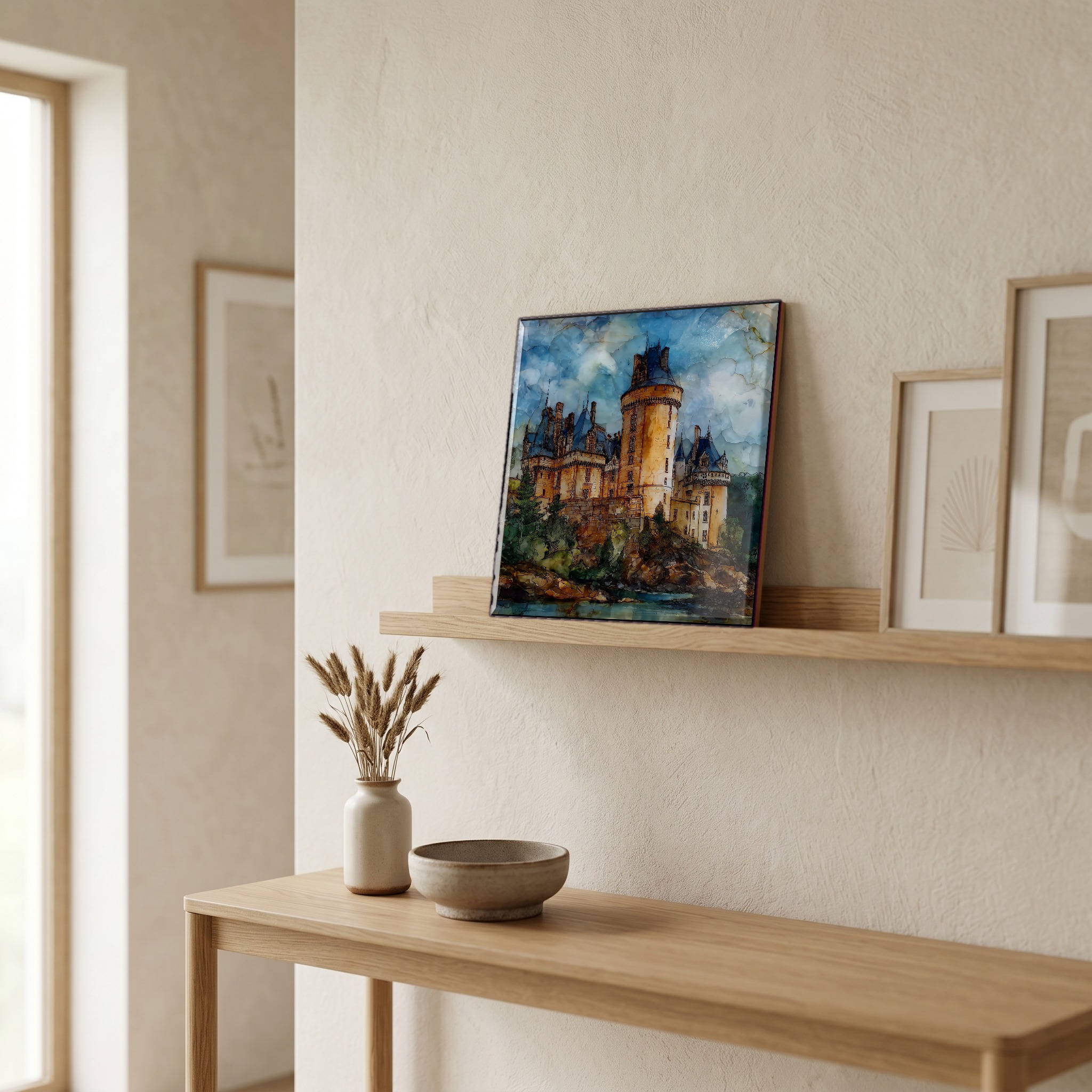
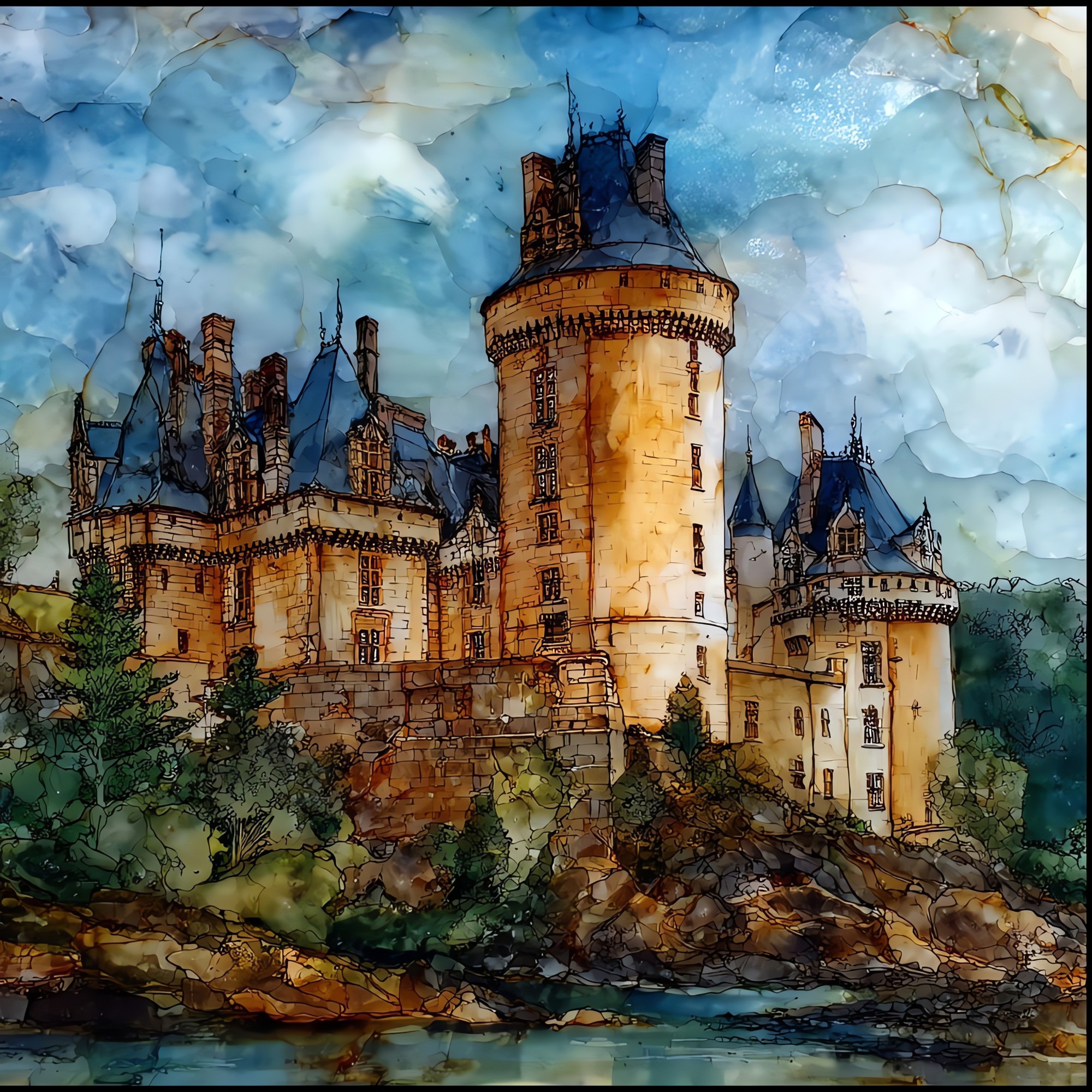
Chateau de Brissac
shown on ceramic, 12-inch tileFrance
in the Loire Valley, south of Angers

Chateau de Brissac

— pale stone, dark slate, above the vines of Anjou.

Where it lives

Not only on a wall.

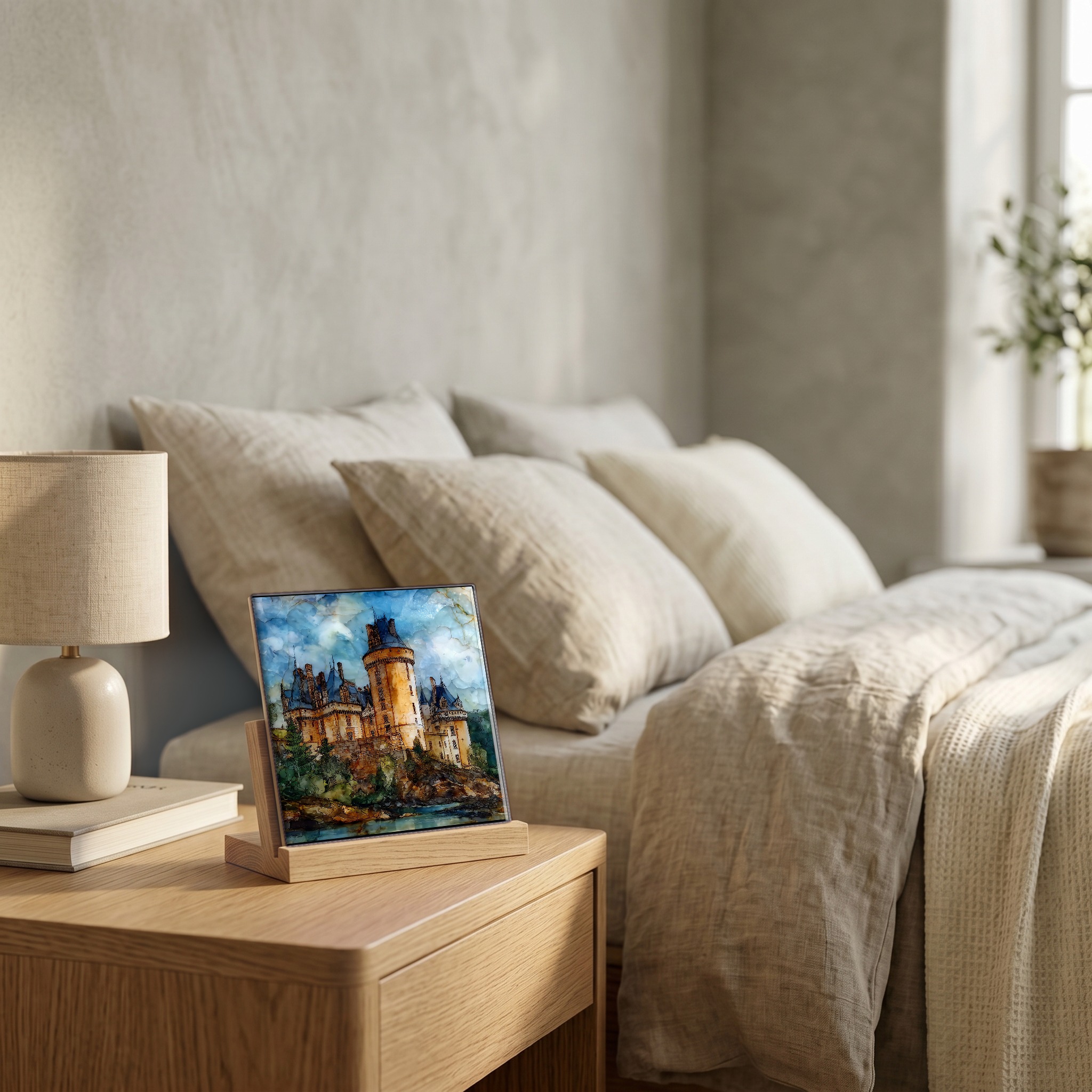
A small tile on the nightstand catching the morning. A larger one above the fire. Yours, wherever you spend the slow hours.
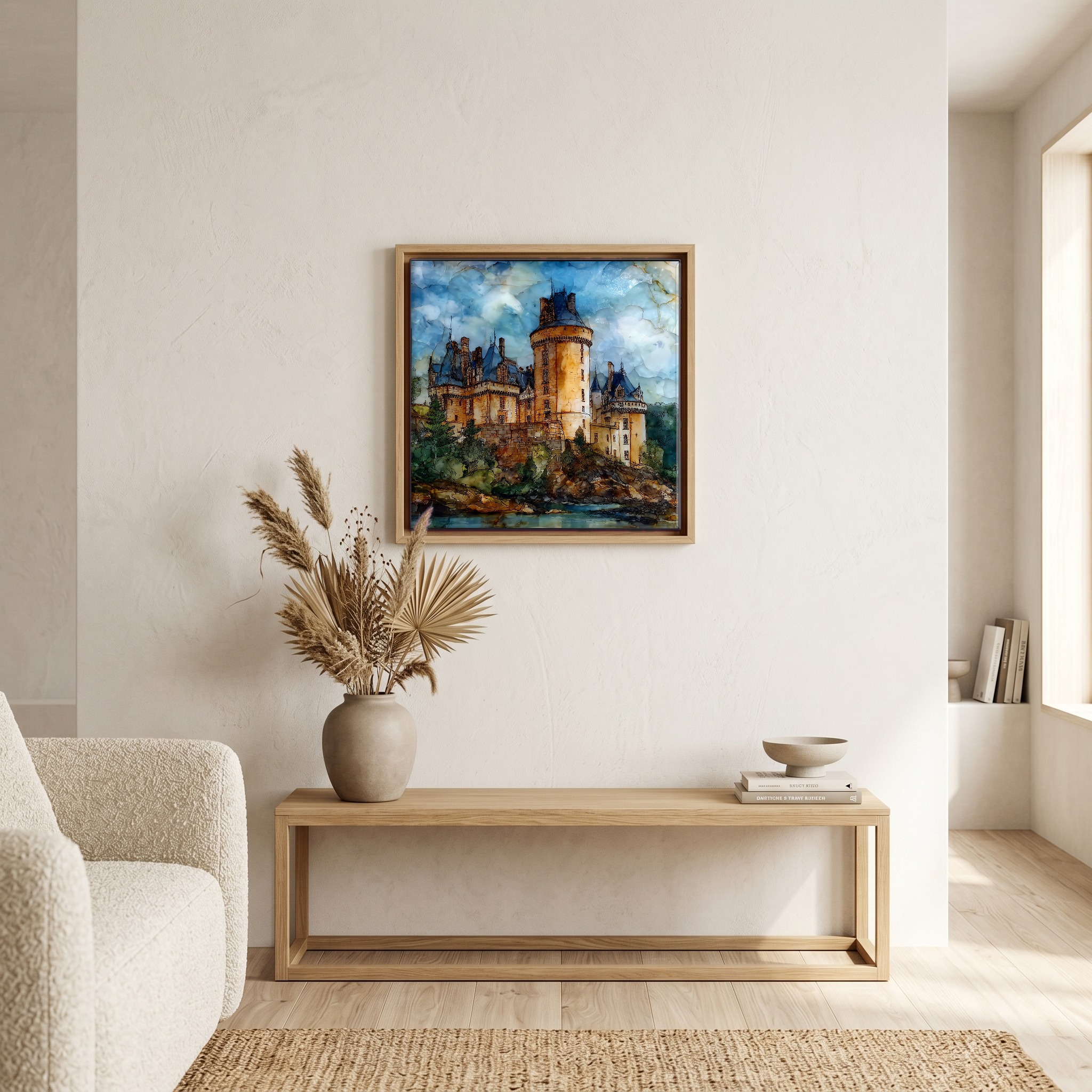
Above the bench, in a warm oak surround.
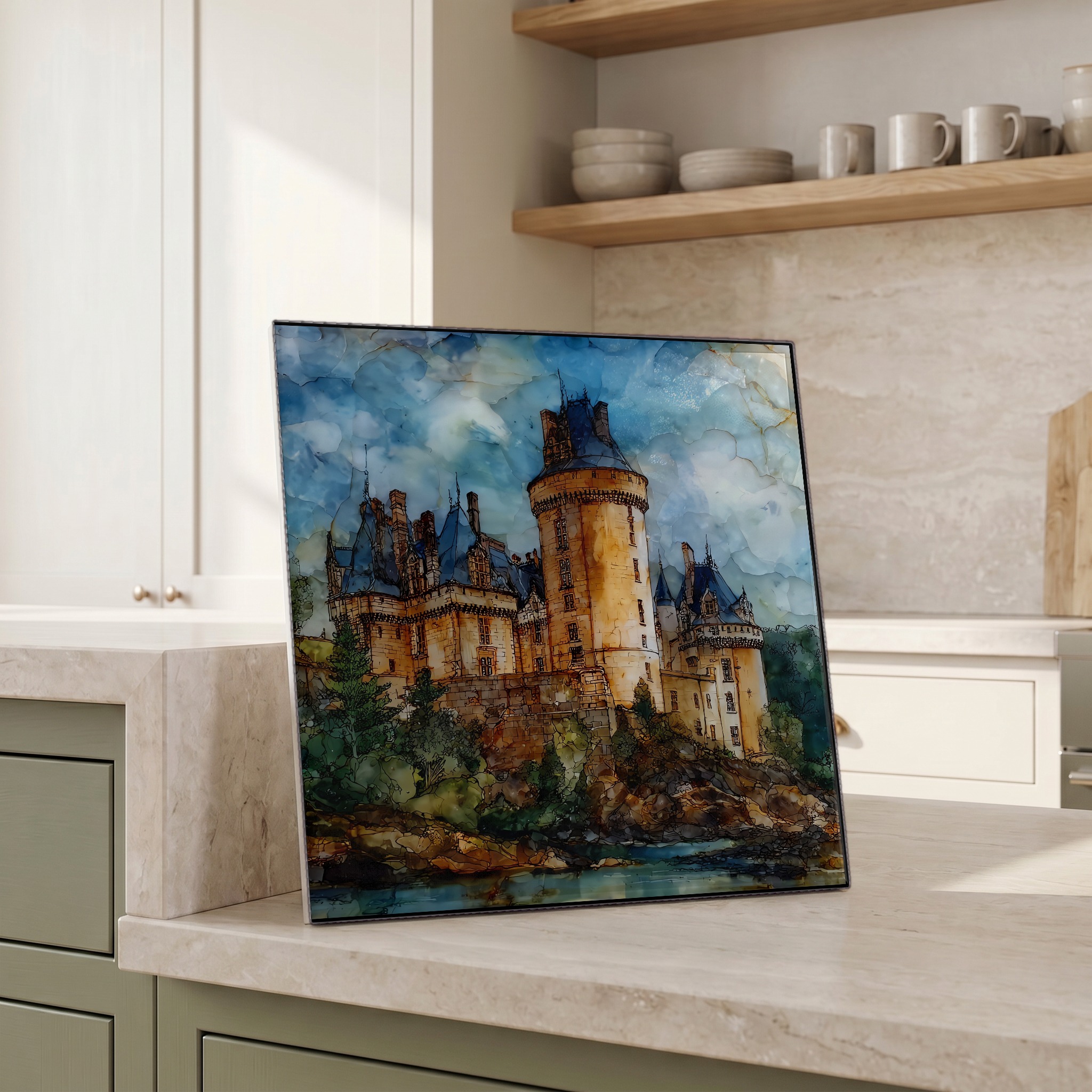
Beside the kettle, propped on the counter.
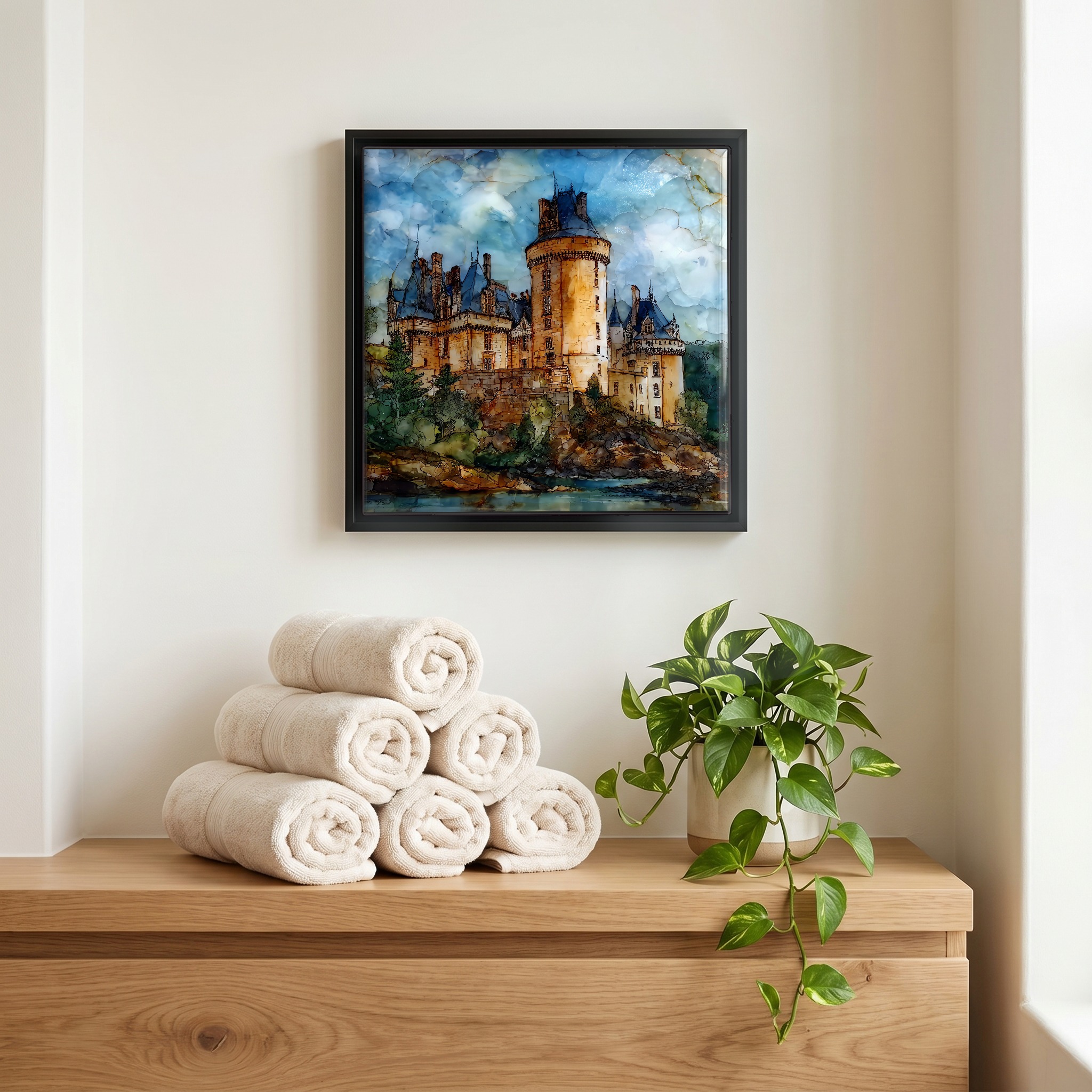
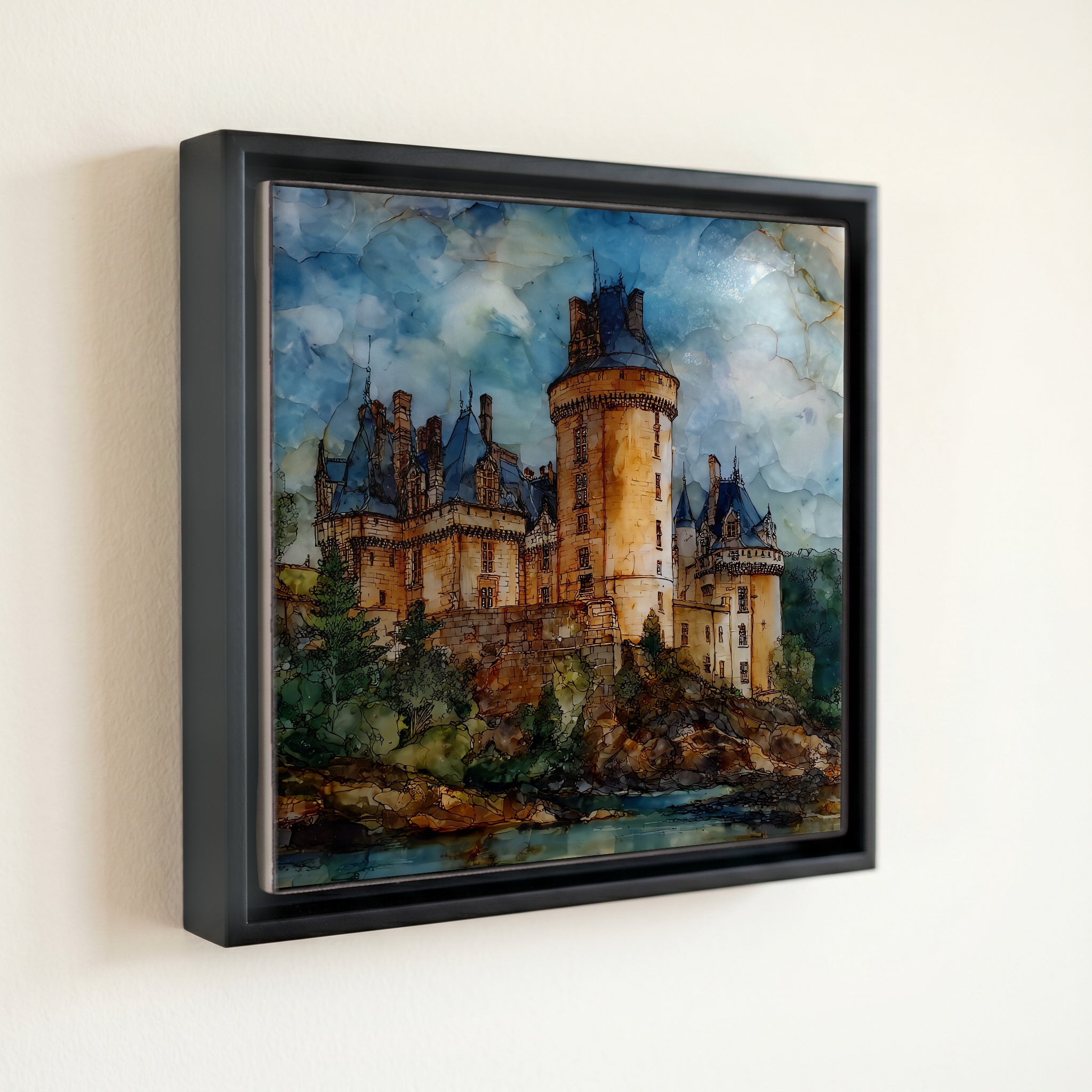
Above the linens, in a slim black surround.
On the nightstand, on a light oak stand.
On a picture ledge, where the light comes in.
a note from the studio

The tallest castle in France, set above the vineyards of the Anjou. Seven stories of pale tuffeau under a dark slate roof, on the right bank of the Aubance about fifteen kilometres south of Angers. The Cossé-Brissac family has held the place for more than five hundred years and still lives on the upper floors. The asymmetric façade — work that stopped in the 1620s when the funds ran out — gives the building a half-finished silhouette that the rest of the Loire does not have. Around it, the vines produce a sweet white wine the estate still bottles.
from the studio
shown in a slim black floating frame · 6 × 6 in
— bring it home

Chateau de Brissac, on ceramic.

Each tile is finished by hand in our Knoxville studio. Artwork is slowly infused into the ceramic surface under high heat and pressure, and rests beneath a thin glossy finish. The colour lives in the surface, not on top of it.

What kind of piece?
One tile — square or rectangle.
How big?
the popular one — counter, shelf, nightstand
6 × 6 in · 15 cm · 1.6 lb
Surface finish
A clear glossy finish — the artwork reads as if under resin. Ideal for show-pieces and framed wall art.
How it sits
A hidden cleat — sits ¼″ proud of the wall.
$58
Hand-finished and shipped from our studio at the foot of the Smokies. On your wall in about ten days.
size
6 × 6 in
15 cm
weighs
1.6 lb
solid in the hand
surface
ceramic, hand-finished
art rests beneath a thin glossy finish
from
Knoxville, TN
our family studio, at the foot of the Smokies
— start a Coaster Set

Pick any four 4-inch tiles — National Parks you've been to, a Smokies set, the four seasons of one place. $ for a set of , cork-backed, ready to live on the table.
comes gift-ready
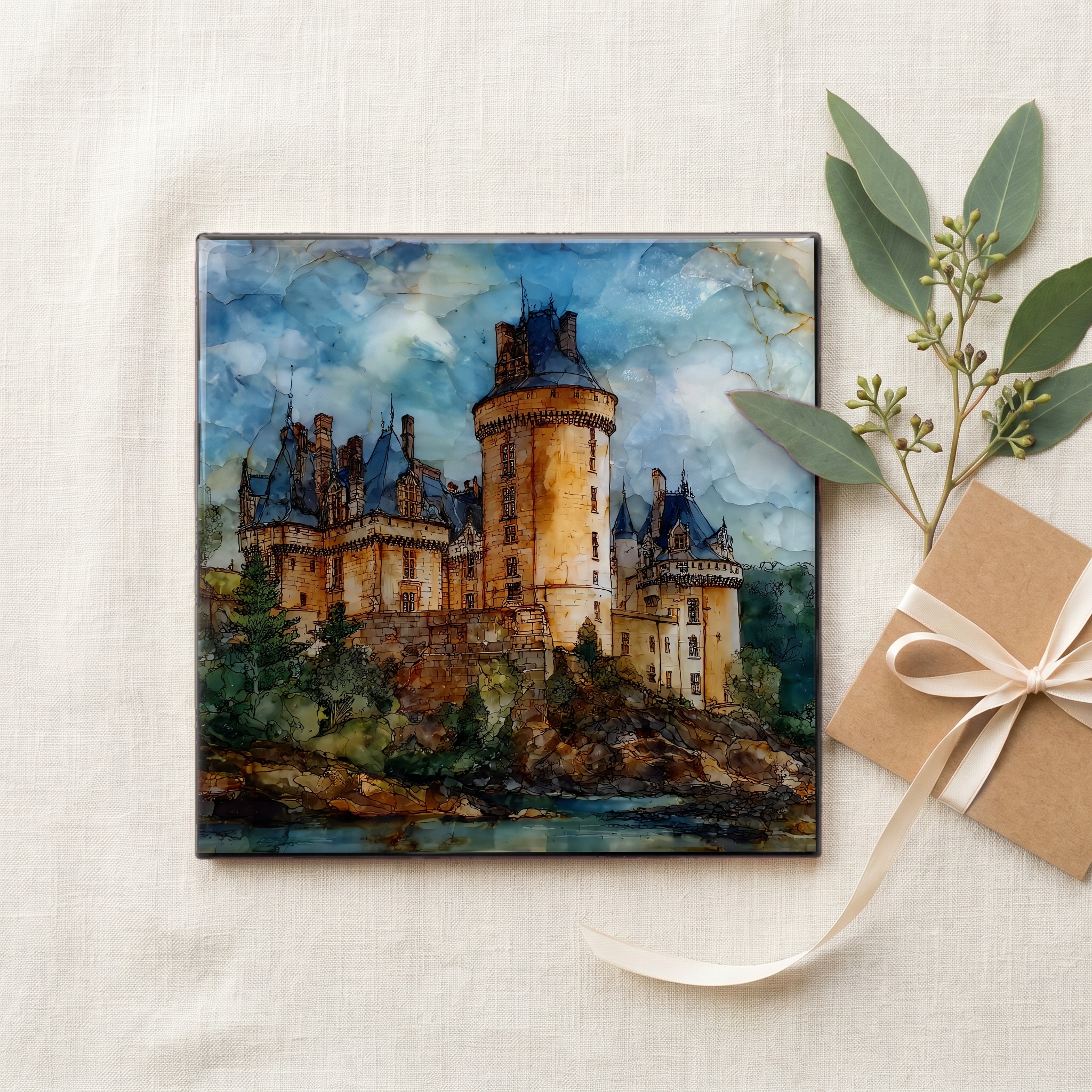
comes gift-ready

Each tile ships in a kraft box, tied with cream ribbon, with a handwritten note from the studio if you'd like to add one.
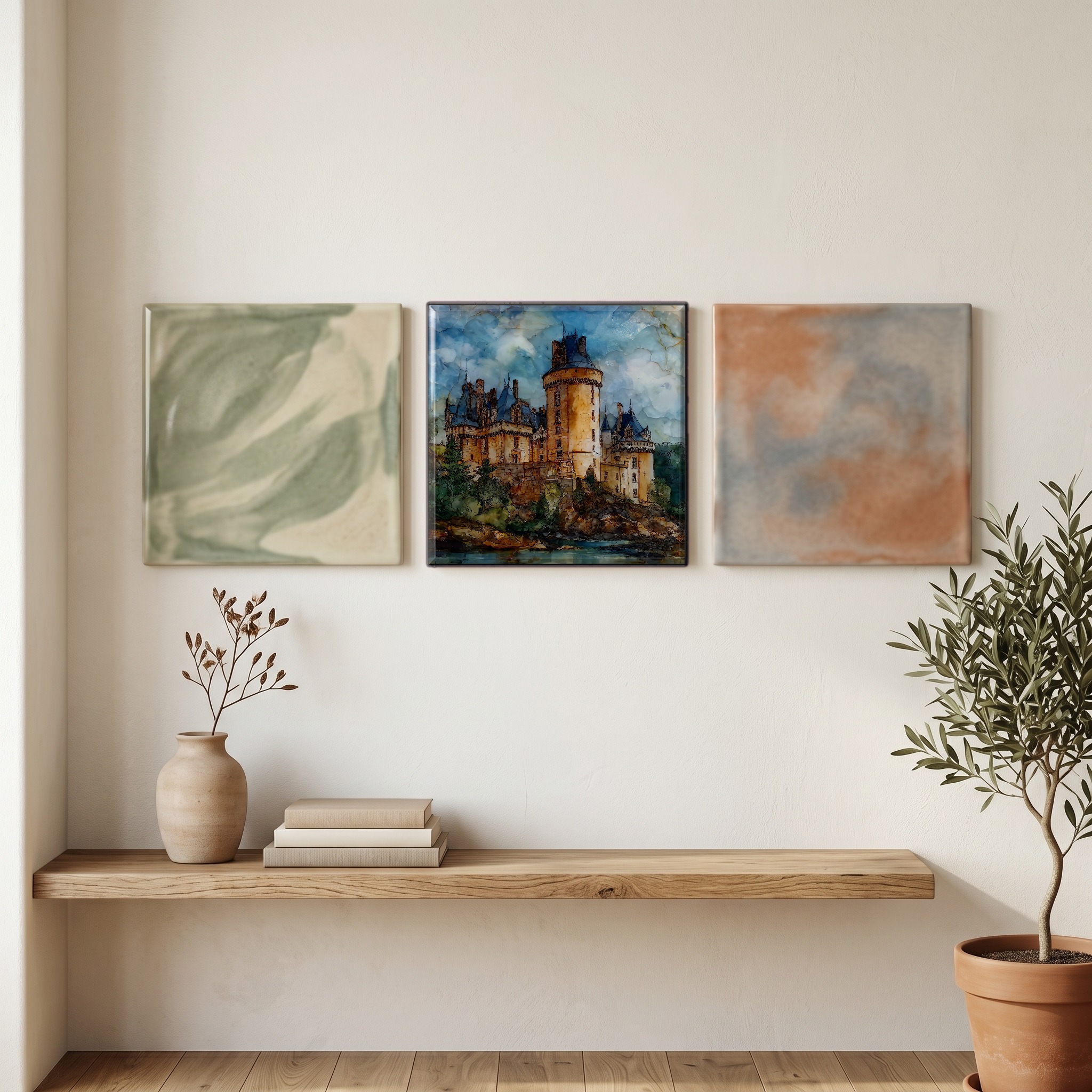
or build a grouping
or build a grouping

Three or five different vistas, hung together — a chapter of places you've been, or want to go.

about Chateau de Brissac

The place, in three passes.

A little of what's known, in case you fall down the rabbit hole — or want to go see it yourself.
the place

Château de Brissac sits on the right bank of the Aubance river in Brissac-Loire-Aubance, a commune in the Maine-et-Loire department of the Pays de la Loire region, about fifteen kilometres south of Angers. The site has held a fortified structure since the eleventh century, when Foulques Nerra, Count of Anjou, built the first stronghold here. The current château was begun in 1502 by René de Cossé and substantially rebuilt in the early seventeenth century by Charles II de Cossé, Duke of Brissac. At roughly forty-eight metres and seven stories, it is the tallest castle in France — locally called the Géant du Val de Loire.

the stone

The pale walls are tuffeau, a soft cream-coloured limestone quarried in the Loire valley and used in nearly every great château of the region — Chambord, Chenonceau, Saumur. The dark roofs are slate from the Anjou quarries near Trélazé, just outside Angers, which produced roofing for cathedrals and palaces across northern France for the better part of nine centuries. The building's asymmetric silhouette is a direct consequence of unfinished work: Charles II de Cossé began rebuilding in 1606 around the surviving twin towers of the older medieval fortress, but funds ran out before the new construction could absorb them. The two periods stand side by side.

the visit

The château is open to the public from spring through autumn, with the family still in residence on the upper floors. The guided visit covers the main reception rooms, the private nineteenth-century theatre, and the chapel. The Cossé-Brissac vineyards bottle a Coteaux de l'Aubance and an Anjou Villages Brissac under the estate label, both tastable in the cellars. Brissac-Loire-Aubance is reached by car or by a short train from Angers Saint-Laud station; admission to the château proper requires an additional ticket.

where
France · Brissac-Loire-Aubance, Maine-et-Loire
position
47.3530° N · 0.4460° W
the neighborhood

What's nearby.

A handful of named places within an hour's walk or short drive. Some we've already painted; some we will.
15 km N
Angers
cathedral city
12 km NW
Rochefort-sur-Loire
Loire wine village
15 km W
Beaulieu-sur-Layon
Layon valley wine village
N
Chateau de Brissac
Angers
Rochefort-sur-Loire
Beaulieu-sur-Layon
common questions

What people ask.

A few questions we get about Chateau de Brissac — and about bringing the piece home.
about the place

Château de Brissac stands in the commune of Brissac-Loire-Aubance, in the Maine-et-Loire department of the Pays de la Loire region, about fifteen kilometres south of Angers in western France. It rises on the right bank of the Aubance river, surrounded by the vineyards of the Anjou.

At seven stories and roughly forty-eight metres, Château de Brissac is the tallest castle in France. Locally it is known as the Géant du Val de Loire, the Giant of the Loire Valley, distinguishing it from the lower, broader châteaux at Chambord, Chenonceau, and Saumur.

The Cossé-Brissac family has owned the château since 1502, when René de Cossé bought the estate. More than five hundred years later the family still lives on the upper floors, with the public rooms shown by guided tour during the open season.

The Green Lady is the château's resident ghost, said to be Charlotte de Brézé, an illegitimate daughter of King Charles VII of France. According to the family tradition, she was killed at the château by her husband Jacques de Brézé in the fifteenth century after he found her with a lover; her cries are still reported in the chapel tower.

The château is open to the public from spring through autumn, with guided tours of the main reception rooms, the chapel, and the private nineteenth-century theatre. The Cossé-Brissac vineyards on the estate produce a Coteaux de l'Aubance and an Anjou Villages Brissac, both tastable in the cellars.

The site has been fortified since the eleventh century, when Foulques Nerra, Count of Anjou, built the first castle here. The current building was begun in 1502 by René de Cossé and substantially rebuilt by Charles II de Cossé from 1606 onward, though the seventeenth-century work was never finished.

The estate vineyards produce two wines under the family label: a sweet white Coteaux de l'Aubance and a red Anjou Villages Brissac. Both appellations are based on the Aubance valley around the château, and the bottles can be tasted in the cellars during the tour season.

about the piece in your home

It is a meaningful gift for anyone with a connection to the Anjou or the Loire châteaux. Brissac is one of the most recognisable silhouettes in the region, with the family wines and the Green Lady legend to talk about. A Coaster or a Small with a handwritten note from the studio carries well.

The dark slate roof and pale stone in the artwork sit well with French Country, Old World European, and warm Traditional interiors. The jewel-toned stained-glass palette of the painting also reads in a Maximalist room, where it works as a single statement piece against a deeper wall colour.

Yes. French Country and Old World European are both in a sustained revival, and a piece of architectural art from the Loire — rather than another generic château print — gives the room a single anchored reference. The Medium or Large reads especially well in a dining room or a panelled study.

Above a standard sofa we recommend the Large as a single piece, or a four-tile or nine-tile Mural for a fuller wall statement. Above a console table the Medium reads at the right scale; for a side table or a shelf, the Small or a Keepsake.

Yes. For a bathroom or kitchen, ask for the Dura Satin finish, which has a soft sheen and is scratch-resistant, or the Matte finish for no sheen at all. Both stand up to humidity and to splashes without the highlight glare that a Glossy finish would give.

A microfibre cloth and water is all the tile needs. The colour is slowly infused into the ceramic surface under high heat and pressure, so it does not lift with cleaning. Avoid abrasive pads and alcohol-based cleaners, which can dull the surface over time.

Yes. The painting is by Reid Wender, the studio's curator, and lives only on Wender Studios pieces. Nothing in the WenderVista atlas is licensed, stocked, or sold elsewhere, and each tile is hand-finished in the Knoxville studio before it ships.

if this one stayed with you

A few you might also love.

Hand-picked by the eye that found Sorapis. Same air, same kind of quiet.