Wender·Vista
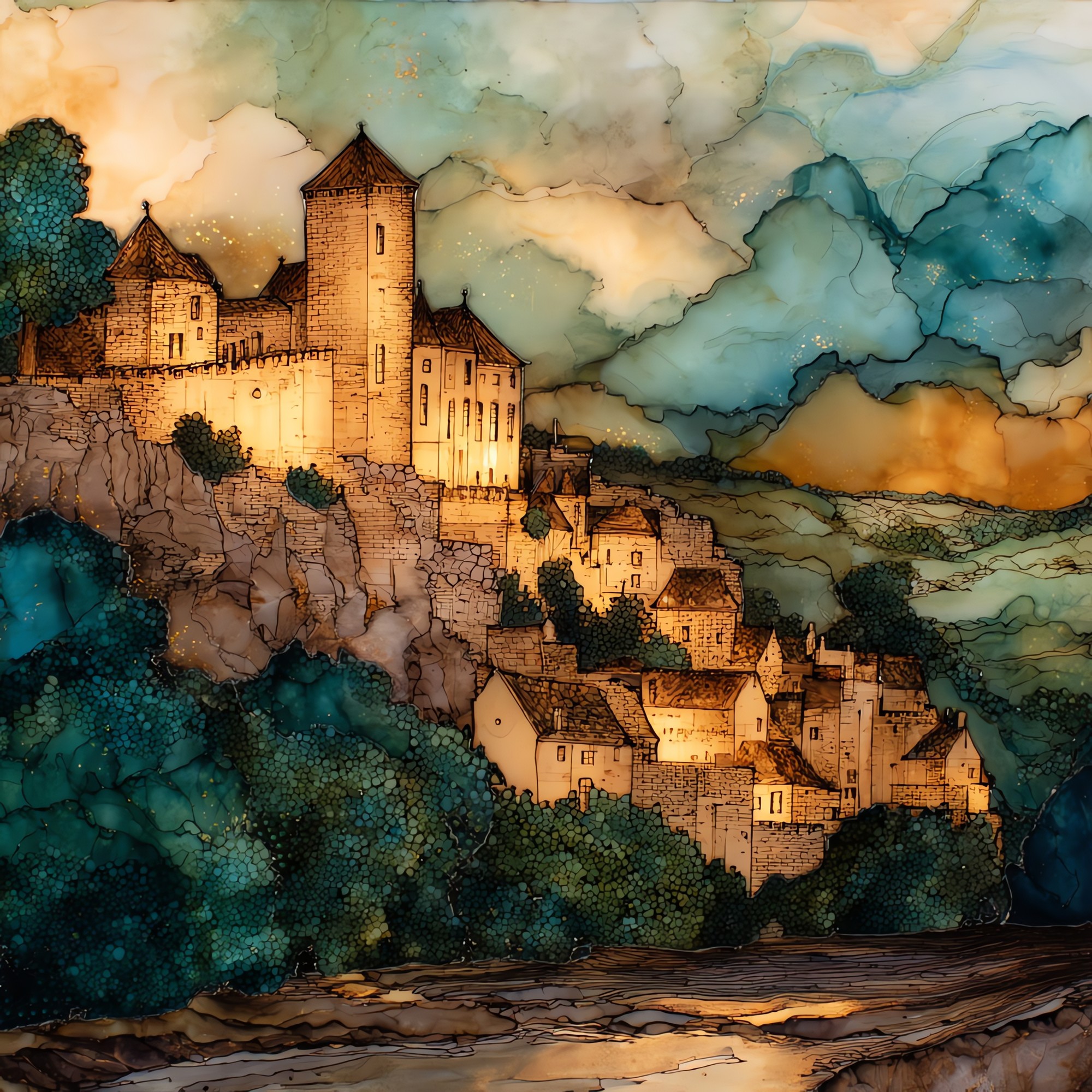
Chateau de Beynac
shown on ceramic, 12-inch tileFrance
above the Dordogne, in the Périgord Noir

Chateau de Beynac

the cliff that decided to be a castle.

Where it lives

Not only on a wall.

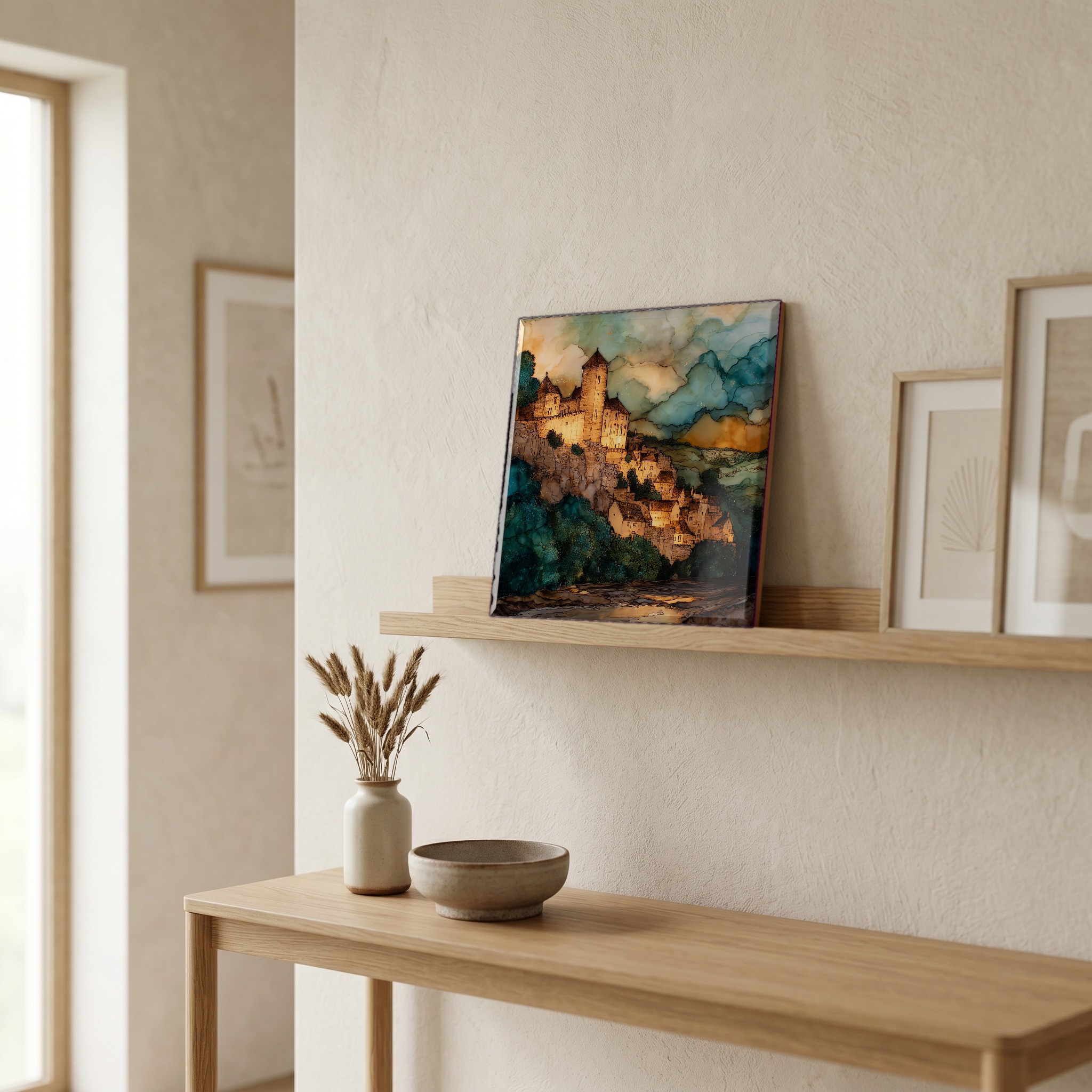
A small tile on the nightstand catching the morning. A larger one above the fire. Yours, wherever you spend the slow hours.
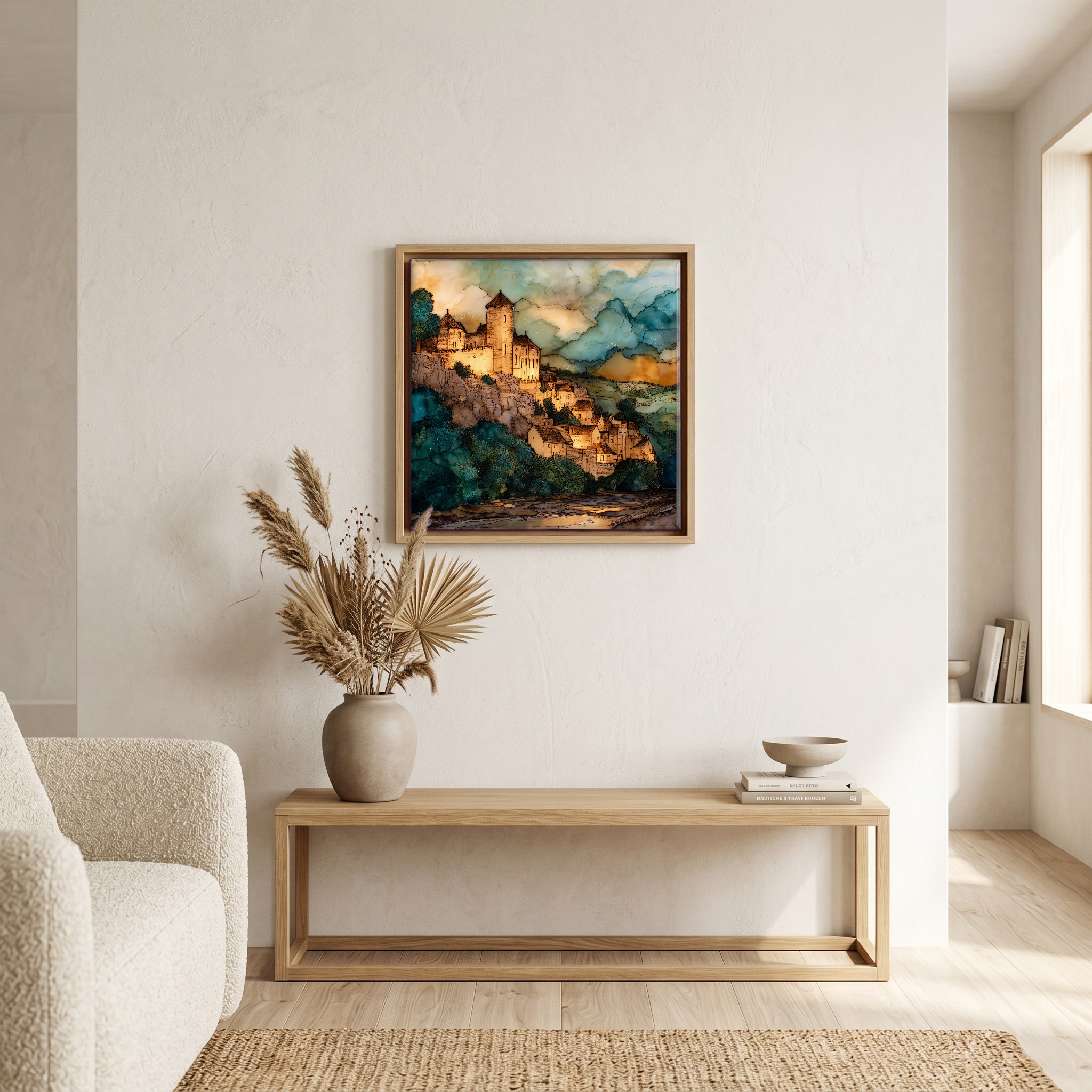
Above the bench, in a warm oak surround.
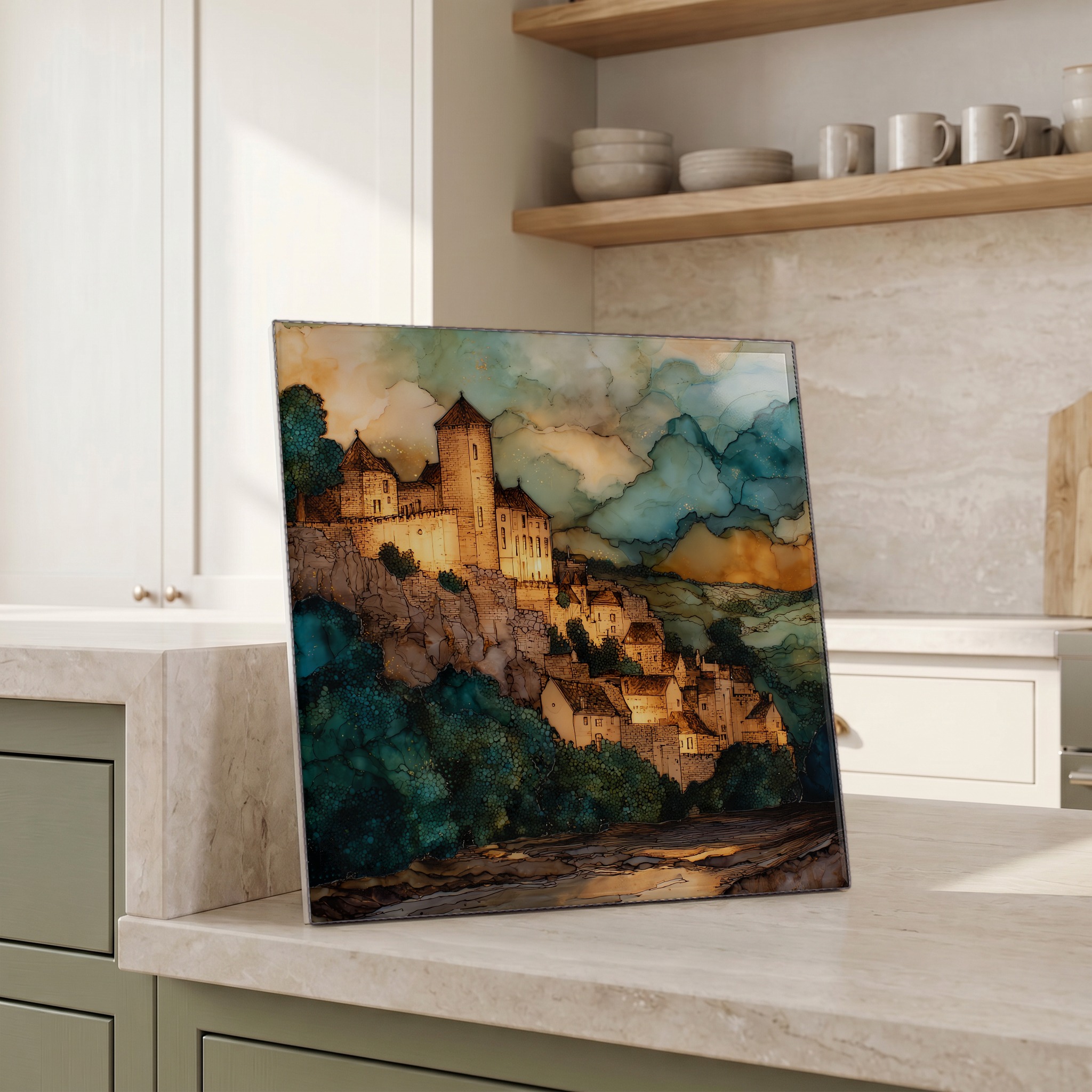
Beside the kettle, propped on the counter.
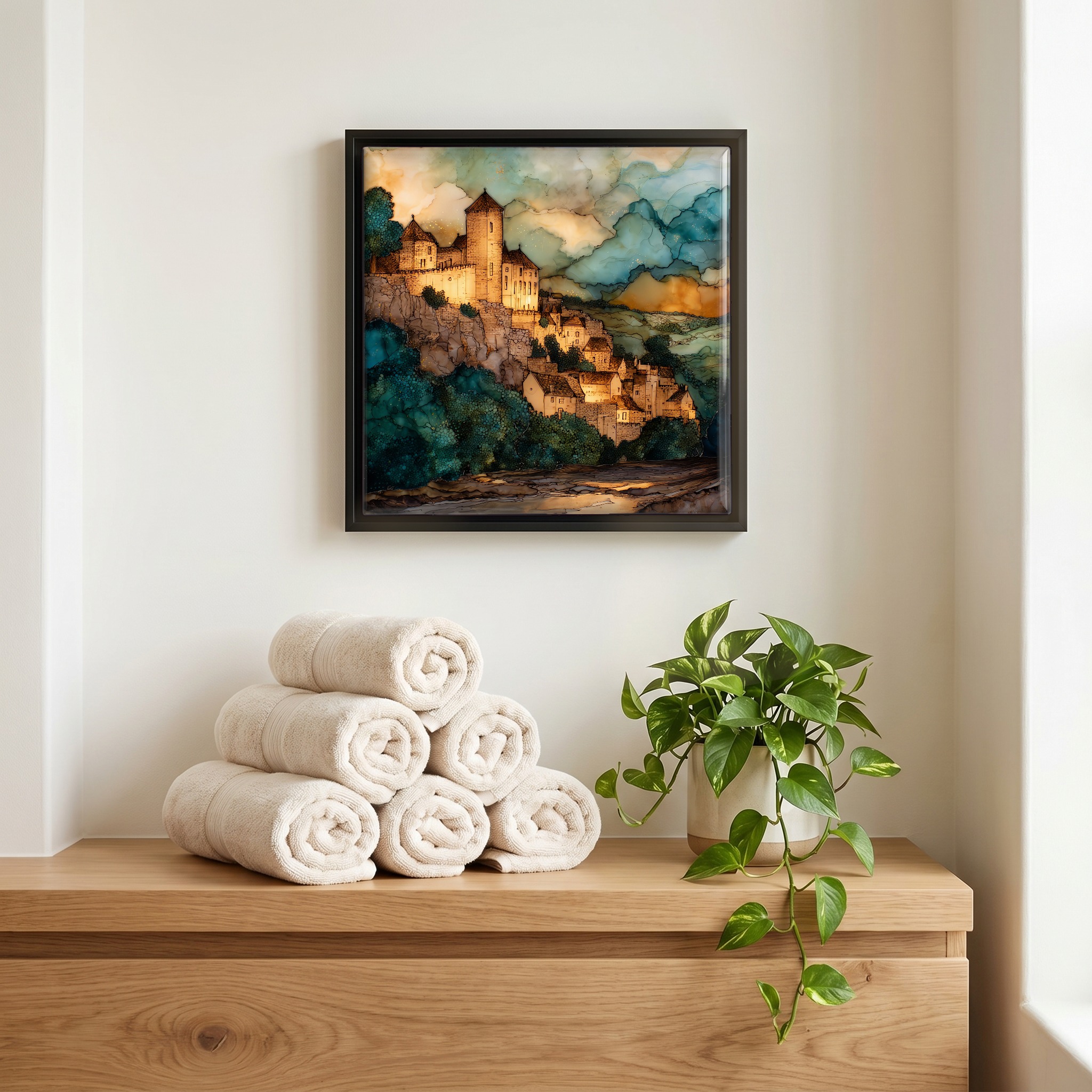
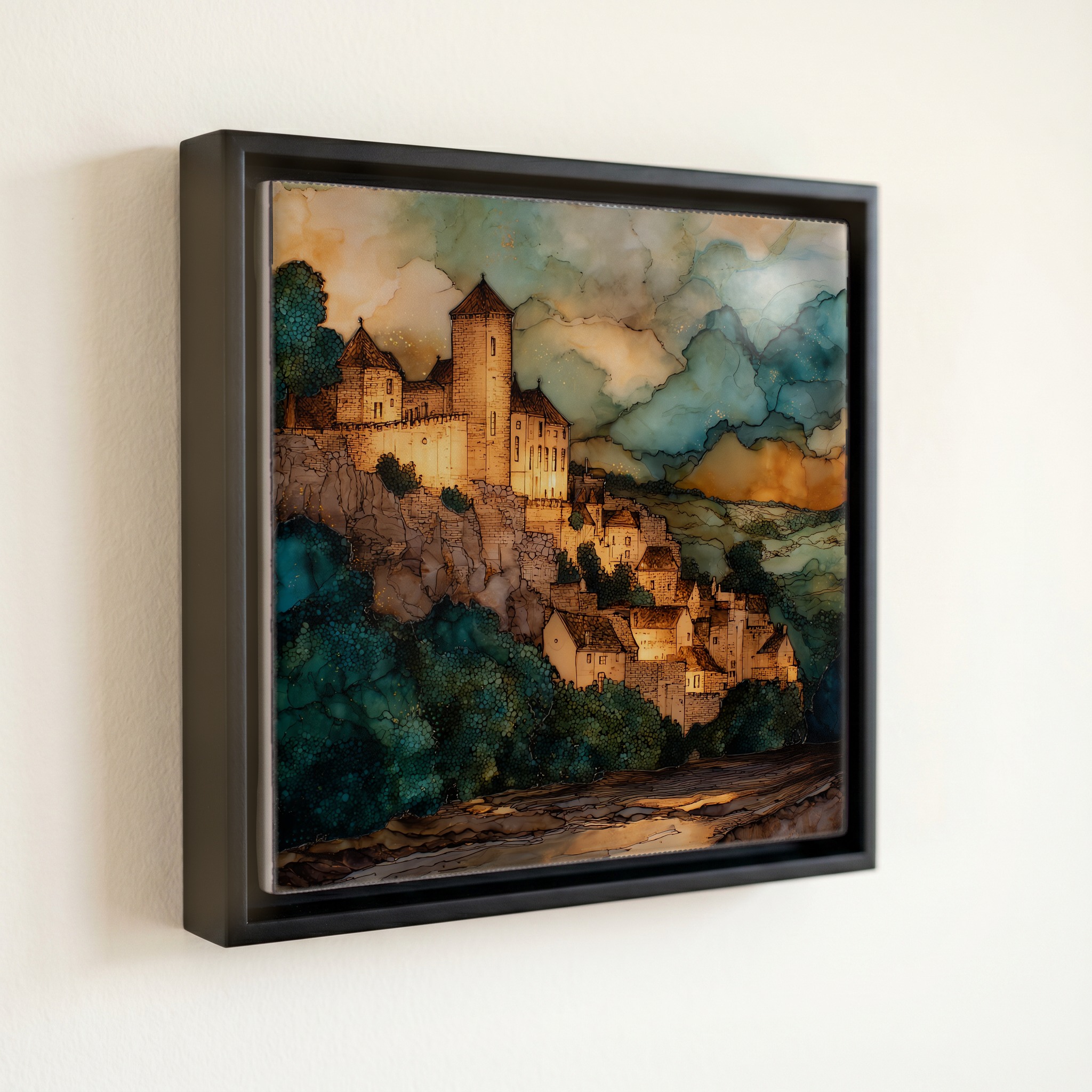
Above the linens, in a slim black surround.
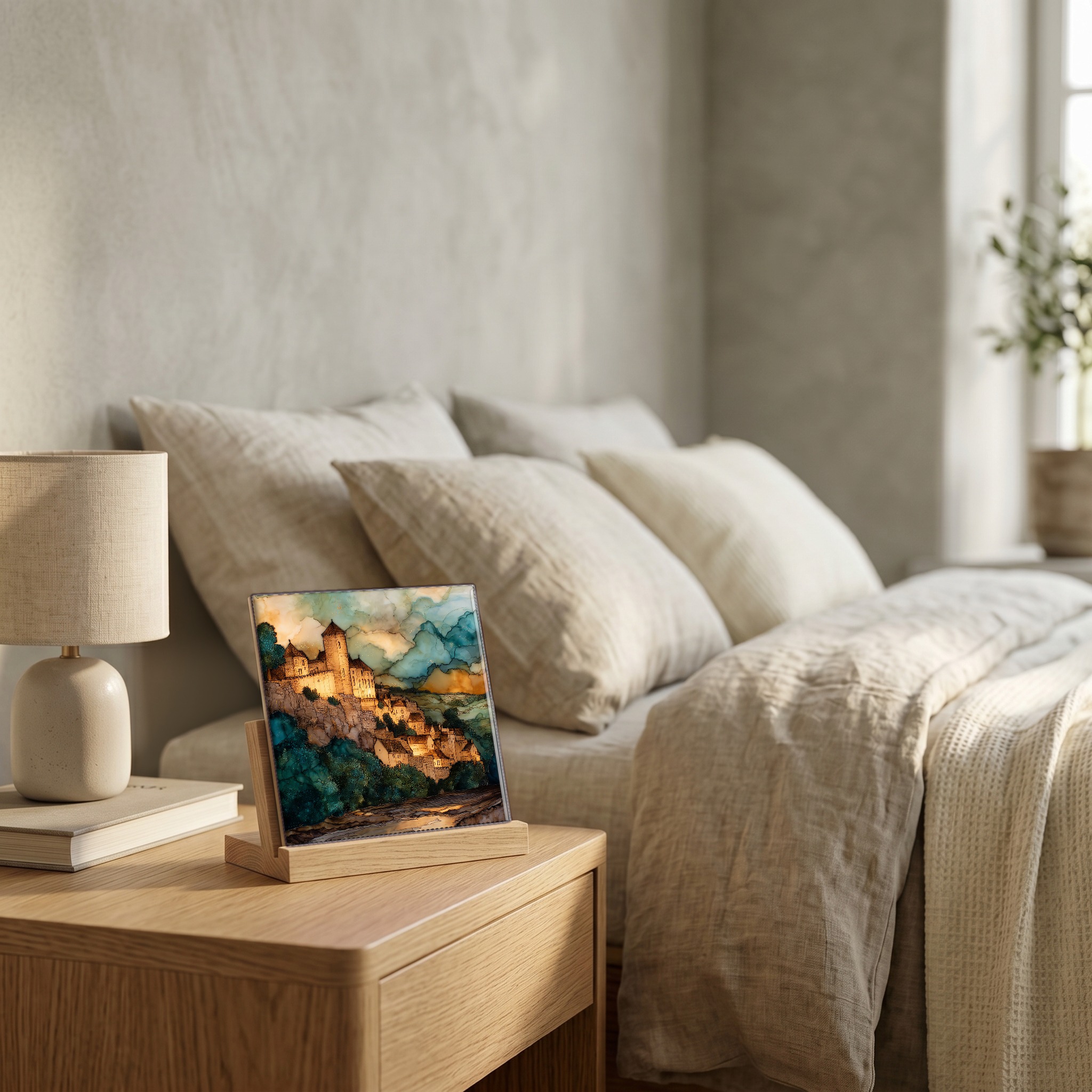
On the nightstand, on a light oak stand.
On a picture ledge, where the light comes in.
a note from the studio

A square Romanesque keep on a limestone cliff a hundred and fifty metres above the Dordogne, in the Périgord Noir. The village below is one of the plus beaux villages de France: honey-coloured houses, narrow walled streets, a small church. From the ramparts the river bends and four other castles come into view across the water: Castelnaud, Fayrac, Marqueyssac, Les Milandes. During the Hundred Years' War the English held the far bank and the French held this one. The light off the stone is best in the hour before the sun drops behind the cliff.
from the studio
shown in a slim black floating frame · 6 × 6 in
— bring it home

Chateau de Beynac, on ceramic.

Each tile is finished by hand in our Knoxville studio. Artwork is slowly infused into the ceramic surface under high heat and pressure, and rests beneath a thin glossy finish. The colour lives in the surface, not on top of it.

What kind of piece?
One tile — square or rectangle.
How big?
the popular one — counter, shelf, nightstand
6 × 6 in · 15 cm · 1.6 lb
Surface finish
A clear glossy finish — the artwork reads as if under resin. Ideal for show-pieces and framed wall art.
How it sits
A hidden cleat — sits ¼″ proud of the wall.
$58
Hand-finished and shipped from our studio at the foot of the Smokies. On your wall in about ten days.
size
6 × 6 in
15 cm
weighs
1.6 lb
solid in the hand
surface
ceramic, hand-finished
art rests beneath a thin glossy finish
from
Knoxville, TN
our family studio, at the foot of the Smokies
— start a Coaster Set

Pick any four 4-inch tiles — National Parks you've been to, a Smokies set, the four seasons of one place. $ for a set of , cork-backed, ready to live on the table.

comes gift-ready
comes gift-ready

Each tile ships in a kraft box, tied with cream ribbon, with a handwritten note from the studio if you'd like to add one.
or build a grouping
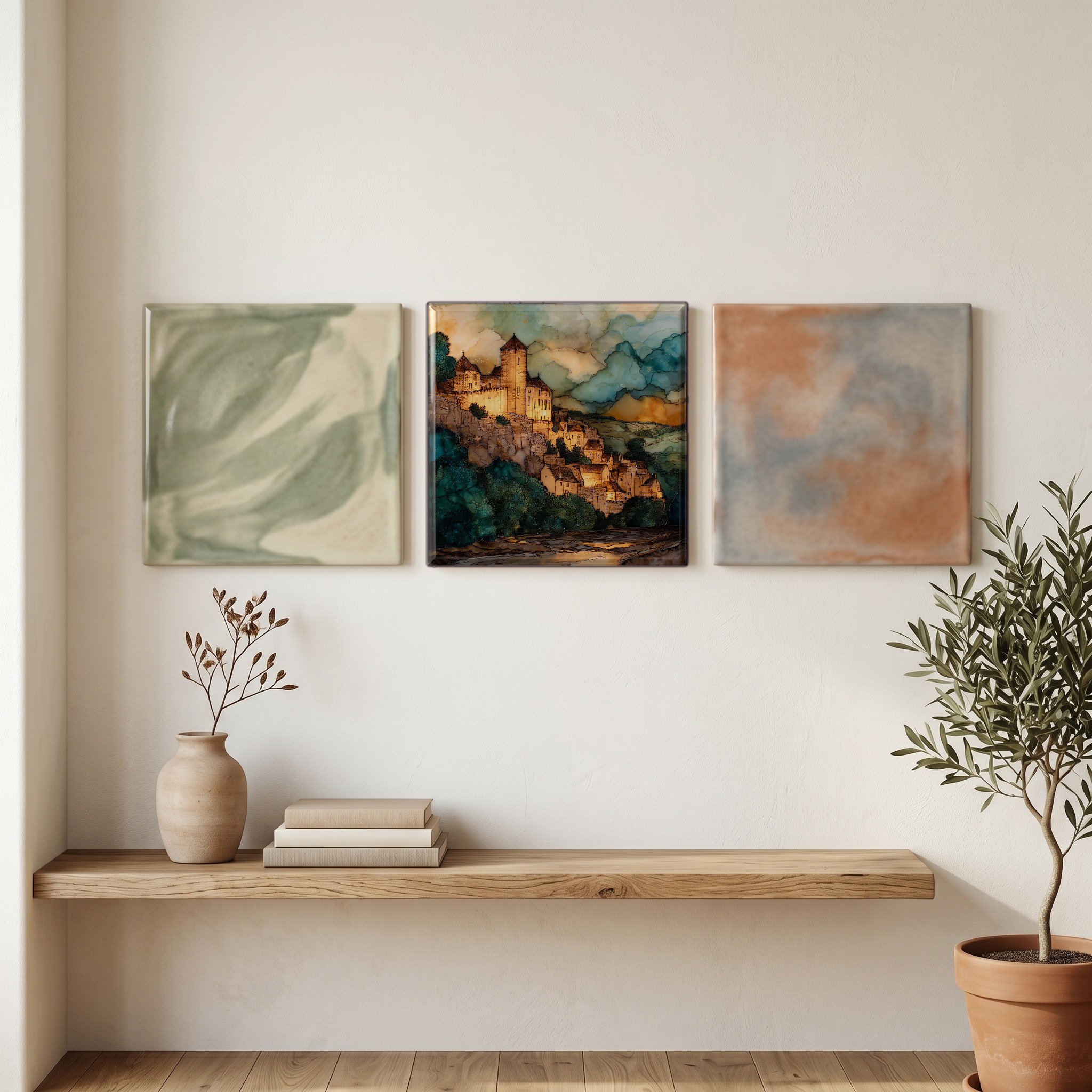
or build a grouping

Three or five different vistas, hung together — a chapter of places you've been, or want to go.

about Chateau de Beynac

The place, in three passes.

A little of what's known, in case you fall down the rabbit hole — or want to go see it yourself.
the place

Château de Beynac stands on a limestone cliff on the right bank of the Dordogne river, in the commune of Beynac-et-Cazenac, in the Dordogne department of Nouvelle-Aquitaine. The cliff rises about one hundred and fifty metres above the river. The village at its foot is one of Les Plus Beaux Villages de France, the official French association of most-beautiful villages founded in 1982. Beynac sits in the Périgord Noir, the limestone heartland that holds Sarlat-la-Canéda about ten kilometres east, the prehistoric caves of the Vézère valley to the north, and the cliff-village of La Roque-Gageac a few river-bends downstream.

the stone

Construction began in the early twelfth century under the Barons of Beynac. The square Romanesque keep is the oldest part; outer curtain walls, the great hall, and the seventeenth-century staircase were added across five hundred years of expansion. Through the Hundred Years' War (1337-1453) Beynac was the French stronghold on the right bank of the Dordogne, facing the English-held Château de Castelnaud directly across the river. Richard I of England briefly held the castle in the late twelfth century. The stone is local limestone, the same warm sand-honey tone as the village below it. The castle was classified as a monument historique in 1944.

the visit

The castle is privately owned and open to the public; admission and seasonal hours are posted by the operator. The approach from the village is steep: a stone-paved climb of about ten minutes from the riverside car park to the gatehouse. From the ramparts five castles are visible along a single bend of the Dordogne: Beynac, Castelnaud (on the opposite bank), Fayrac, Marqueyssac, and Les Milandes. The last, Château des Milandes, was built by François de Caumont in the late fifteenth century and was later home to Josephine Baker. The valley below has been the set for Les Visiteurs, Luc Besson's Joan of Arc (1999), and Lasse Hallström's Chocolat (2000).

where
France · Dordogne, Nouvelle-Aquitaine
position
44.8408° N · 1.1450° E
the neighborhood

What's nearby.

A handful of named places within an hour's walk or short drive. Some we've already painted; some we will.
2 km SW
Château de Castelnaud
medieval castle
3 km E
Marqueyssac Gardens
clipped boxwood gardens
5 km E
La Roque-Gageac
cliff-side village
5 km SW
Château des Milandes
fifteenth-century château
8 km SE
Domme
bastide village
10 km NE
Sarlat-la-Canéda
medieval town
N
Chateau de Beynac
Château de Castelnaud
Marqueyssac Gardens
La Roque-Gageac
Château des Milandes
Domme
Sarlat-la-Canéda
common questions

What people ask.

A few questions we get about Chateau de Beynac — and about bringing the piece home.
about the place

On a limestone cliff above the right bank of the Dordogne river, in the village of Beynac-et-Cazenac in the Dordogne department of Nouvelle-Aquitaine, southwest France. Sarlat-la-Canéda is about ten kilometres east; Bordeaux is roughly two hundred kilometres west.

The keep dates to the early twelfth century, built by the Barons of Beynac. The castle was expanded across the next five centuries, with the great hall, curtain walls, and a seventeenth-century staircase added in successive phases. It was classified as a monument historique in 1944.

From the ramparts of Beynac, five castles are visible along a single bend of the Dordogne: Beynac itself, Castelnaud across the river, Fayrac, Marqueyssac, and Les Milandes. The grouping is one of the most painted views in the Périgord Noir.

Beynac was the French stronghold on the right bank of the Dordogne, directly opposite the English-held Château de Castelnaud. The river itself was the frontier between the two crowns from the late thirteenth century through the war's end in 1453.

Yes. Beynac-et-Cazenac is one of the villages classified by Les Plus Beaux Villages de France, the association founded in 1982. The village is built of honey-coloured limestone, with stepped streets climbing from the river to the castle gate.

The valley around Beynac has been used as a location many times. Notable titles include Luc Besson's Joan of Arc (1999), Lasse Hallström's Chocolat (2000), and Les Visiteurs. The medieval silhouette of the castle reads on screen with very little dressing.

The riverside D703 road runs along the foot of the cliff. From the public car park in the lower village a stone-paved lane climbs about ten minutes to the gatehouse. Sarlat-la-Canéda, ten kilometres east, is the nearest sizeable town for lodging.

about the piece in your home

It's a piece many of our customers have given to friends and family with ties to the region. Beynac is one of the most painted views in the Périgord Noir. A Small or Medium with a handwritten note from the studio carries well. The Keepsake works as a desk companion.

The honey-and-amber limestone tones sit well in warm-traditional, French country, and library-modern rooms. The stained-glass treatment also reads cleanly against jewel-tone maximalist walls: deep green, oxblood, ink blue. It works above a fireplace mantel as readily as in a stair landing.

Yes. French country has held its place in the warm-traditional revival of the past few seasons, and a piece tied to a real Dordogne village reads with more weight than generic toile or mass-market prints. A single Large above a sofa anchors the look.

A single Large suits a standard sofa; a four-tile Mural reads more architecturally above a longer one. Above a console table, a Medium or a horizontal three-tile arrangement carries the room. For a stair wall, a nine-tile Mural becomes the focal point.

Yes. Ask for the Dura Satin or Matte finish for any room with steam or splashes: both are scratch-resistant and water-tolerant. The Glossy finish is intended for dry display walls and framed pieces, not for backsplashes or shower surrounds.

A soft microfibre cloth with plain water. The colour lives in the ceramic surface beneath a thin glossy finish, so it does not lift with cleaning. Avoid abrasive sponges and chemical glass-cleaners; they are not needed and can dull the surface over time.

Yes. Every WenderVista piece is curated and finished by Reid Wender at the studio in Knoxville, Tennessee. The studio does not license third-party art. The painting is hand-finished and slowly infused into the ceramic surface under high heat and pressure.

if this one stayed with you

A few you might also love.

Hand-picked by the eye that found Sorapis. Same air, same kind of quiet.