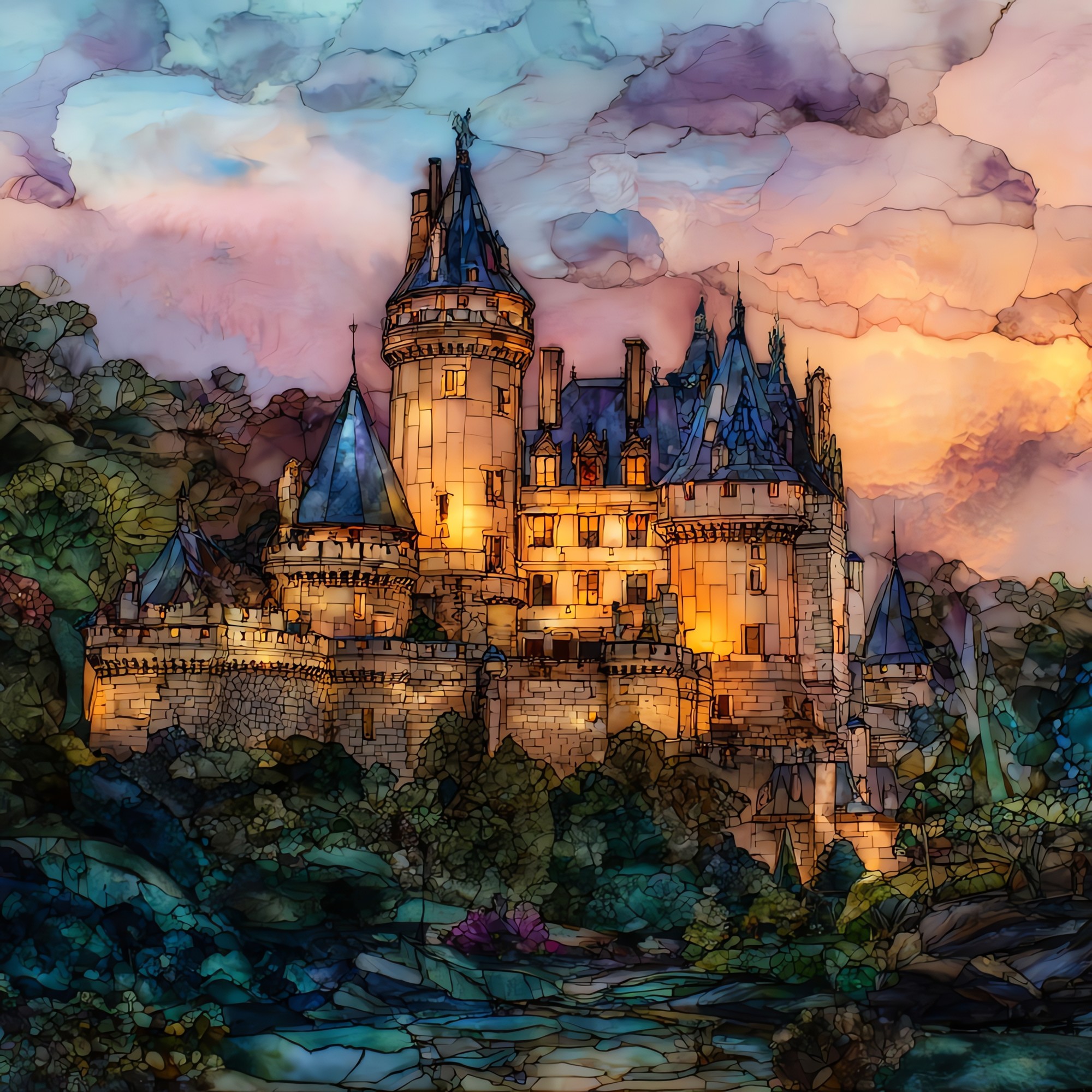
Chateau d'Usse
— — the white castle a fairy tale grew around.
Not only on a wall.
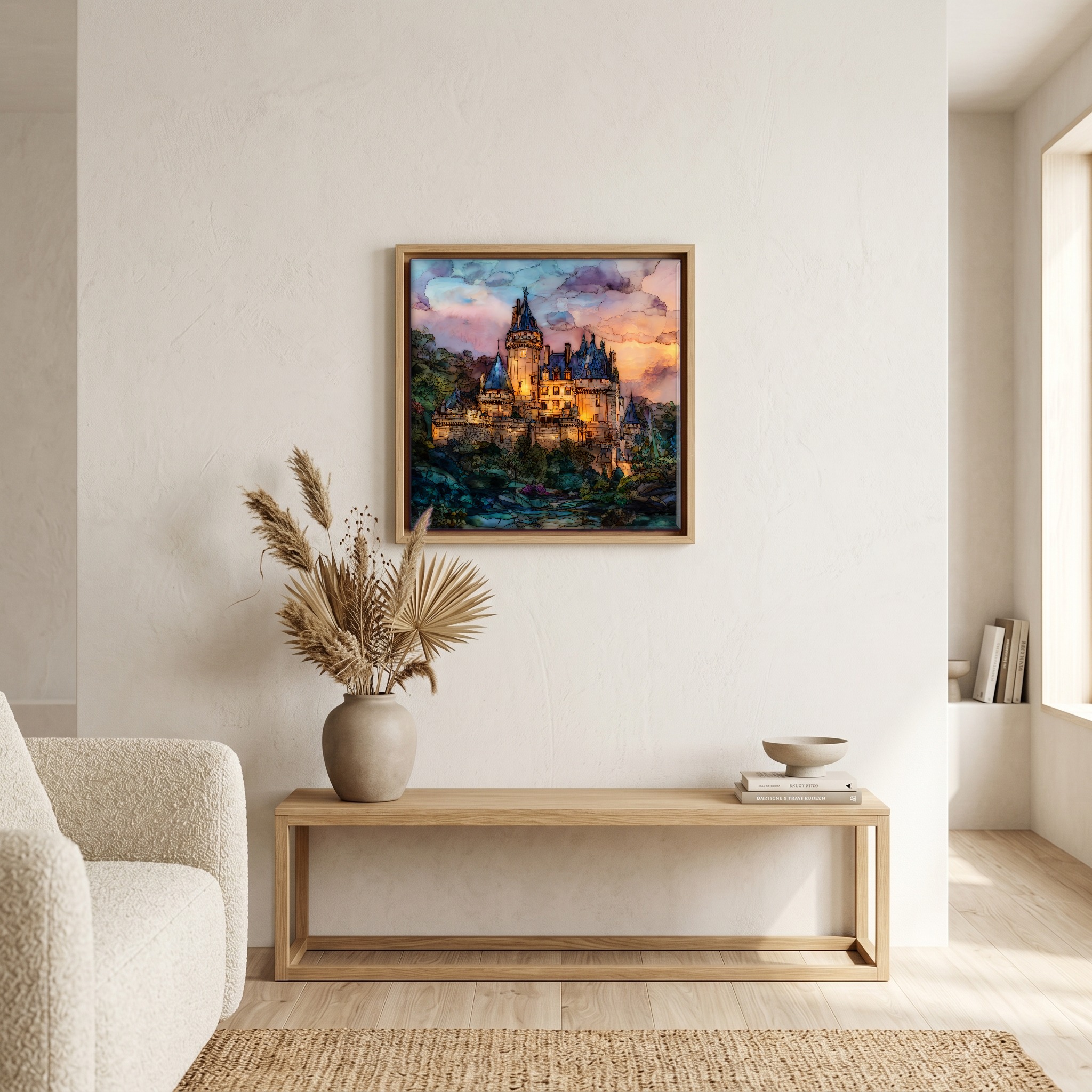
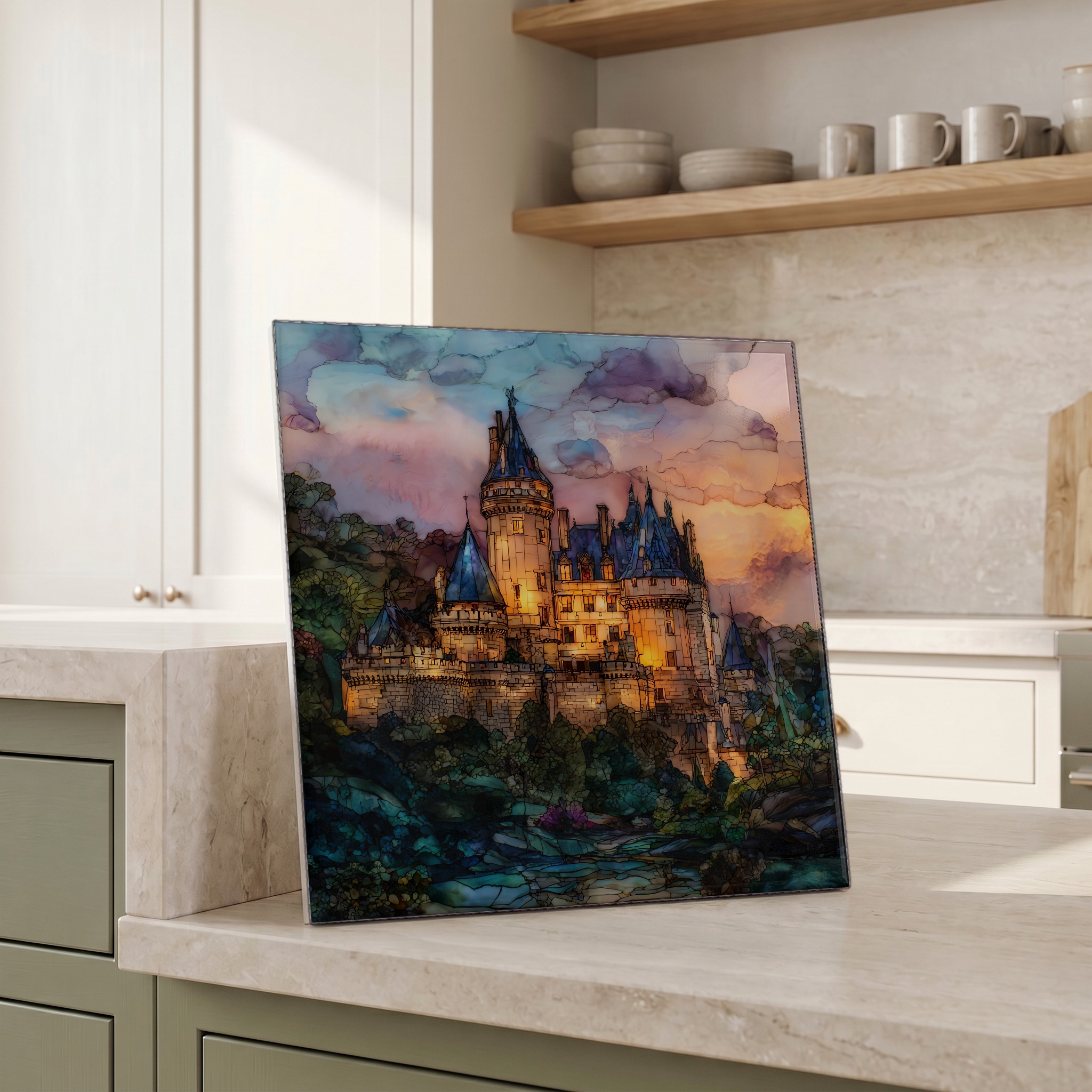
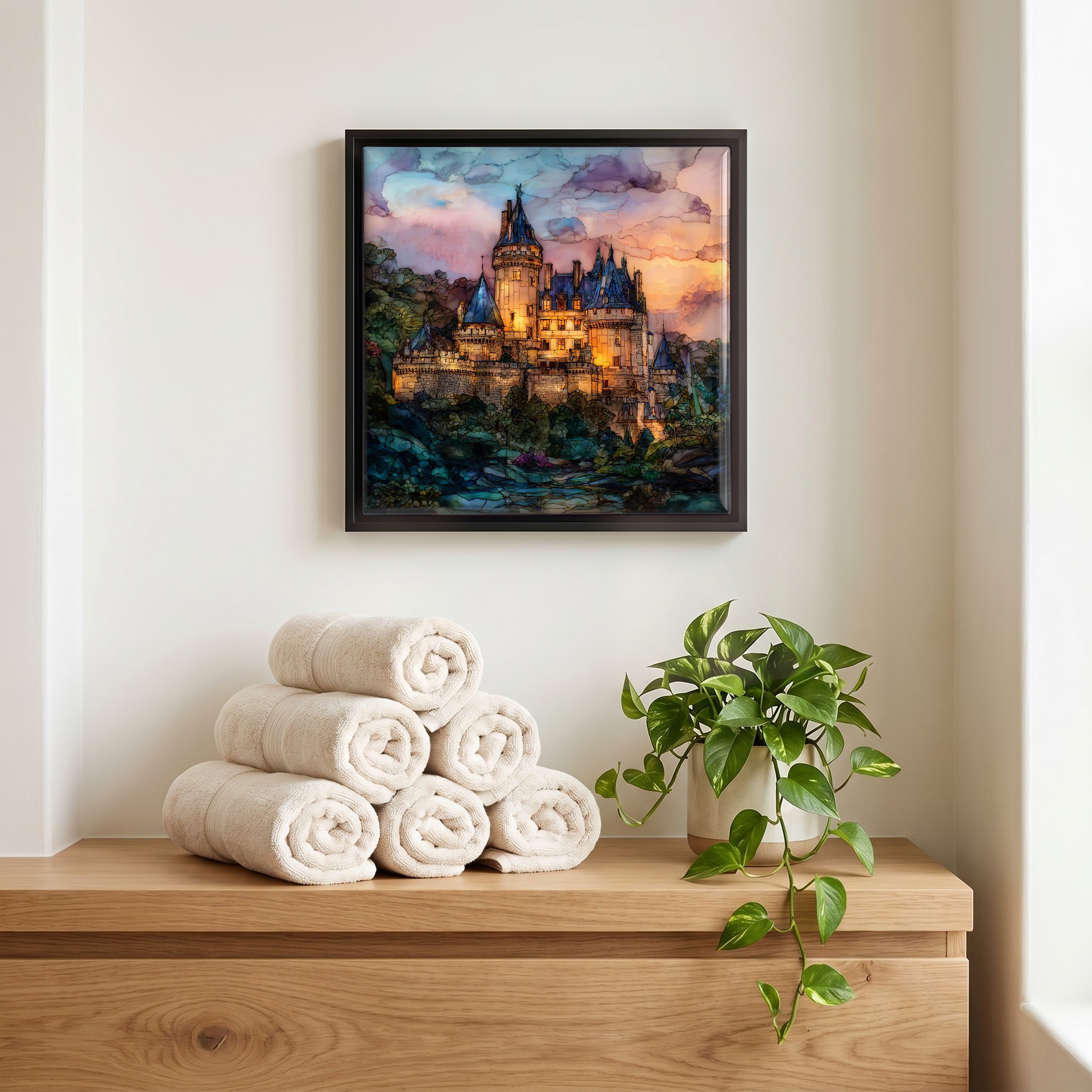
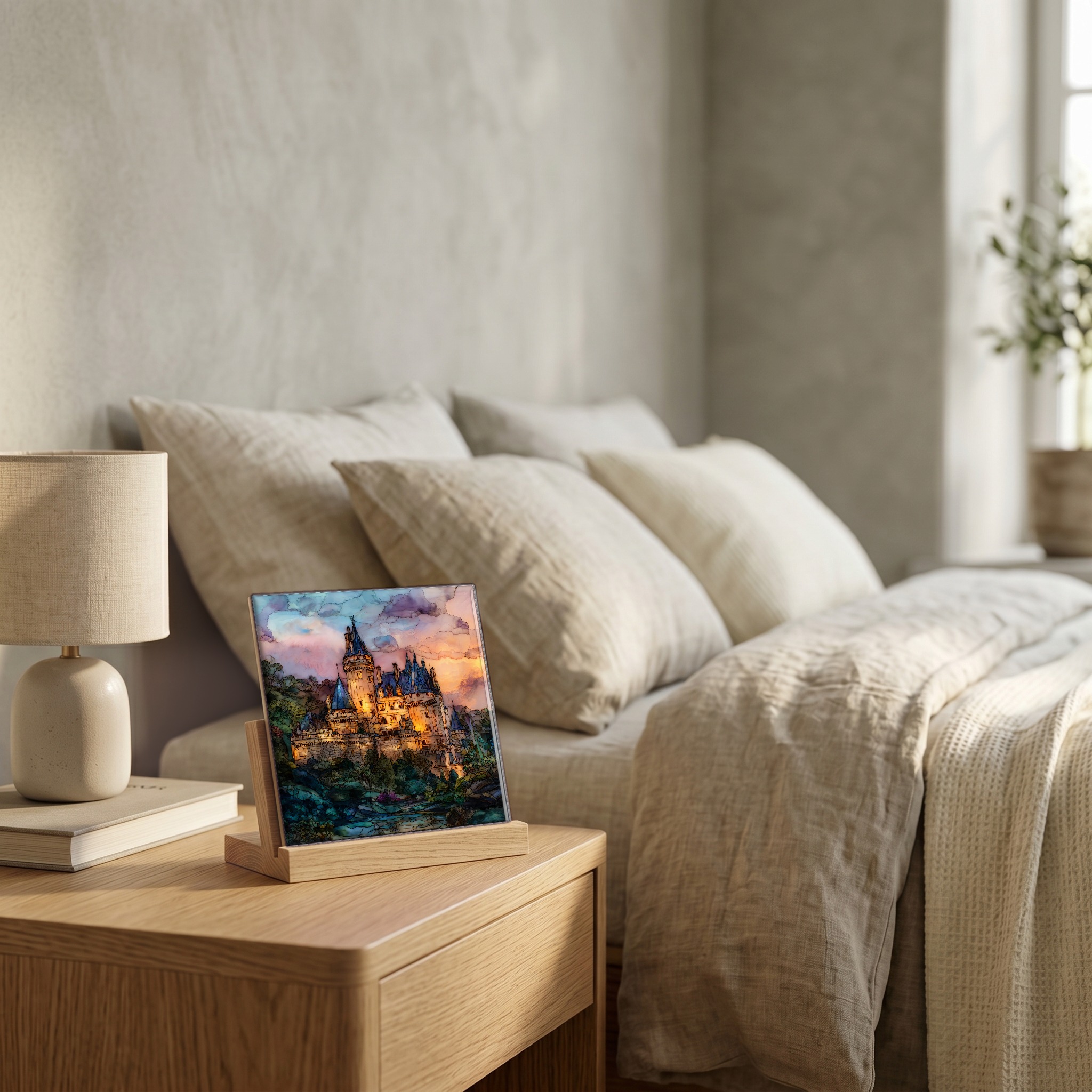
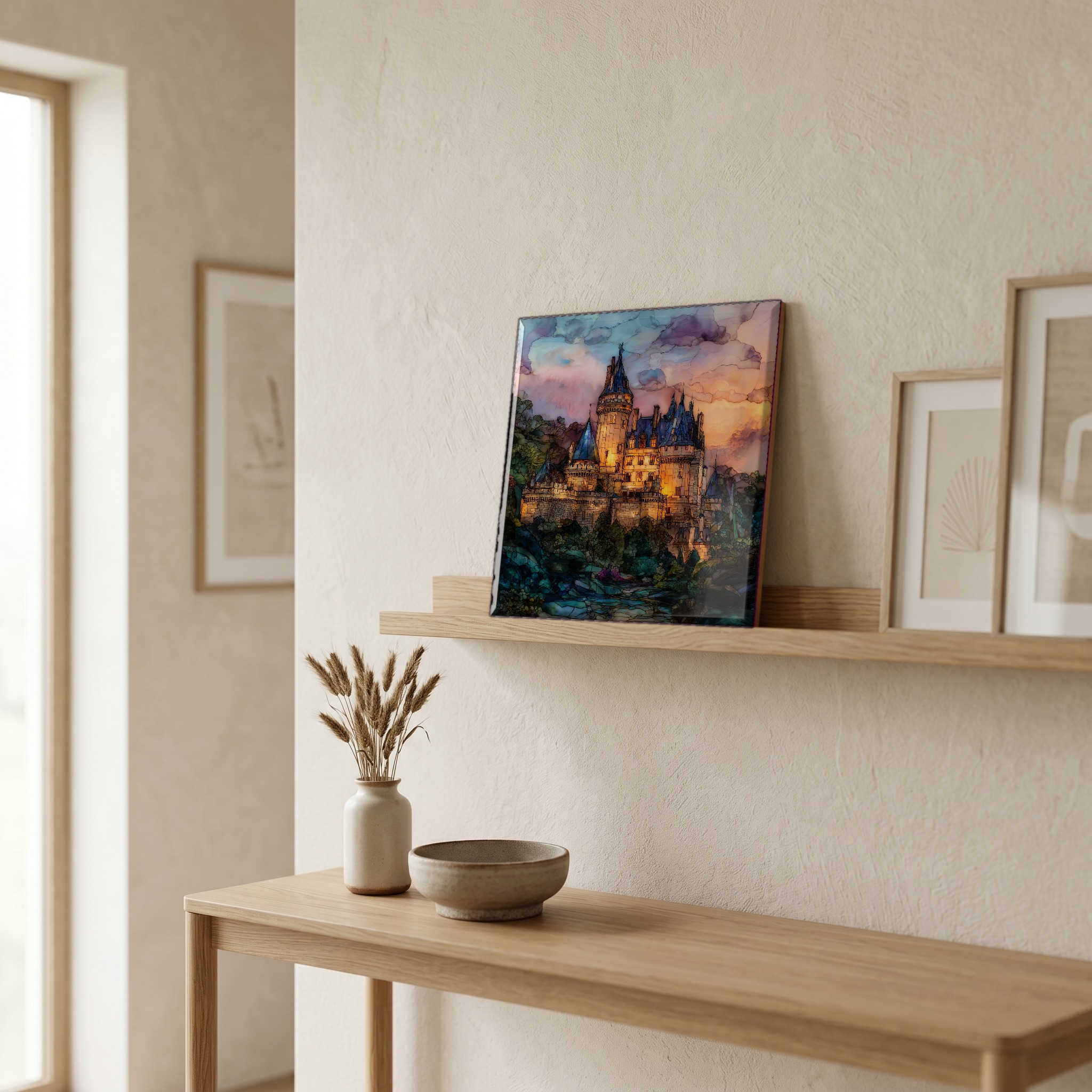
“White tufa above the Indre, at the edge of the Chinon forest. Charles Perrault visited in the 1690s while writing La Belle au Bois Dormant, and the castle's slender towers became the silhouette the fairy tale remembers. The oldest stones, the medieval keep, go back to the eleventh century. André Le Nôtre laid the parterres, the same gardener who would later draw Versailles. Chateaubriand planted cedars on the terrace; they're still there. The Blacas family has lived inside the walls for more than two hundred years, which is rare among the Loire châteaux.
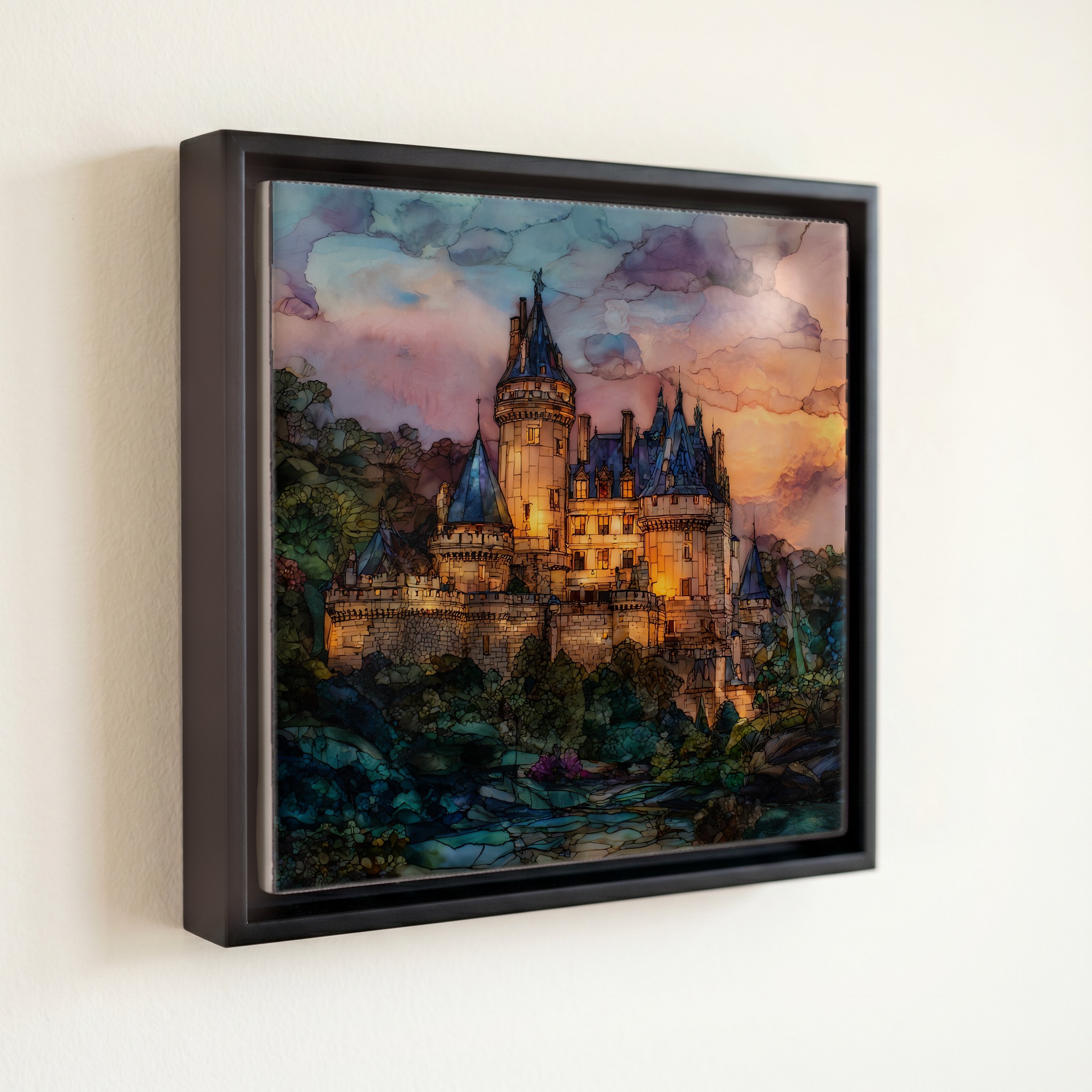
Chateau d'Usse, on ceramic.
Each tile is finished by hand in our Knoxville studio. Artwork is slowly infused into the ceramic surface under high heat and pressure, and rests beneath a thin glossy finish. The colour lives in the surface, not on top of it.
Pick any four 4-inch tiles — National Parks you've been to, a Smokies set, the four seasons of one place. $ for a set of , cork-backed, ready to live on the table.
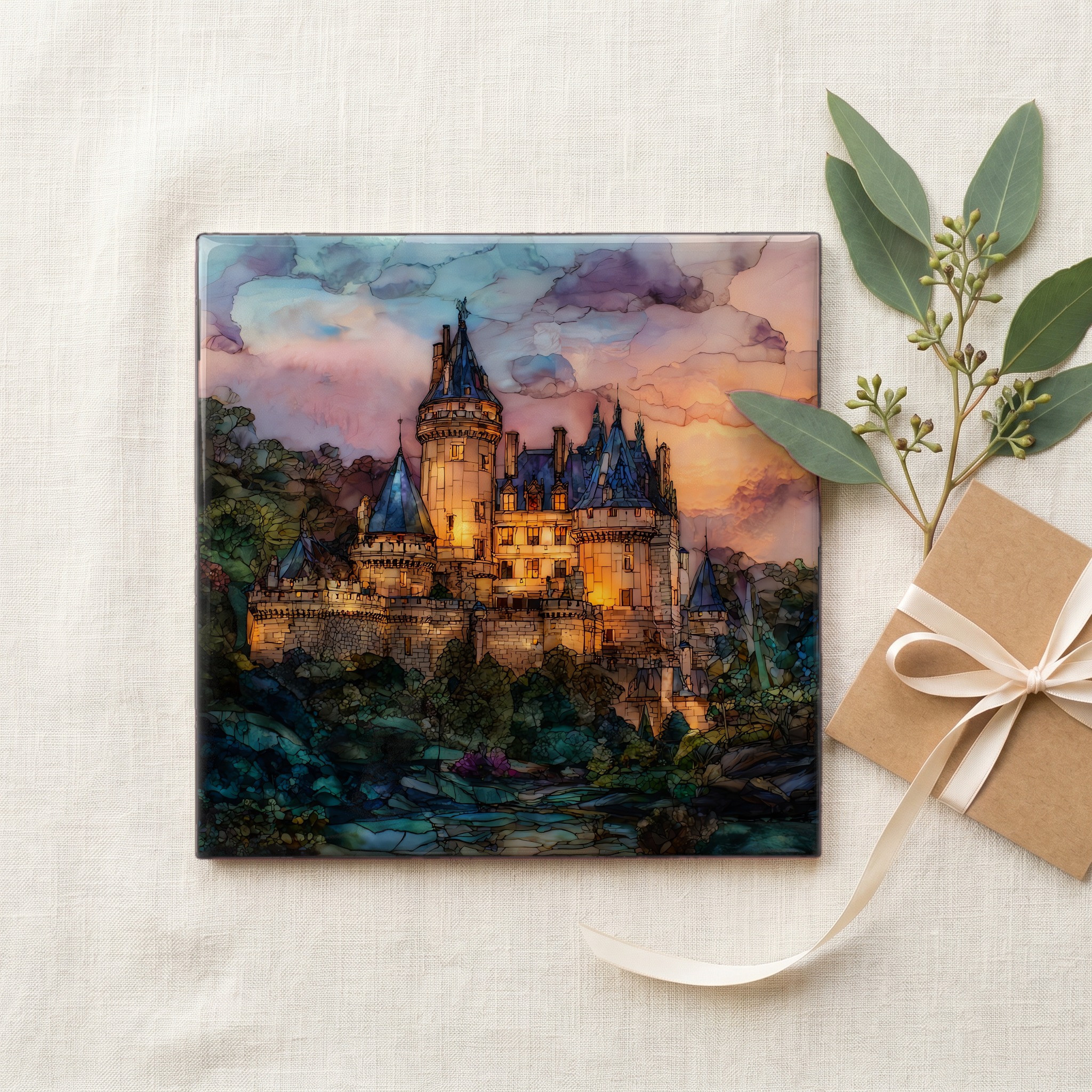
Each tile ships in a kraft box, tied with cream ribbon, with a handwritten note from the studio if you'd like to add one.
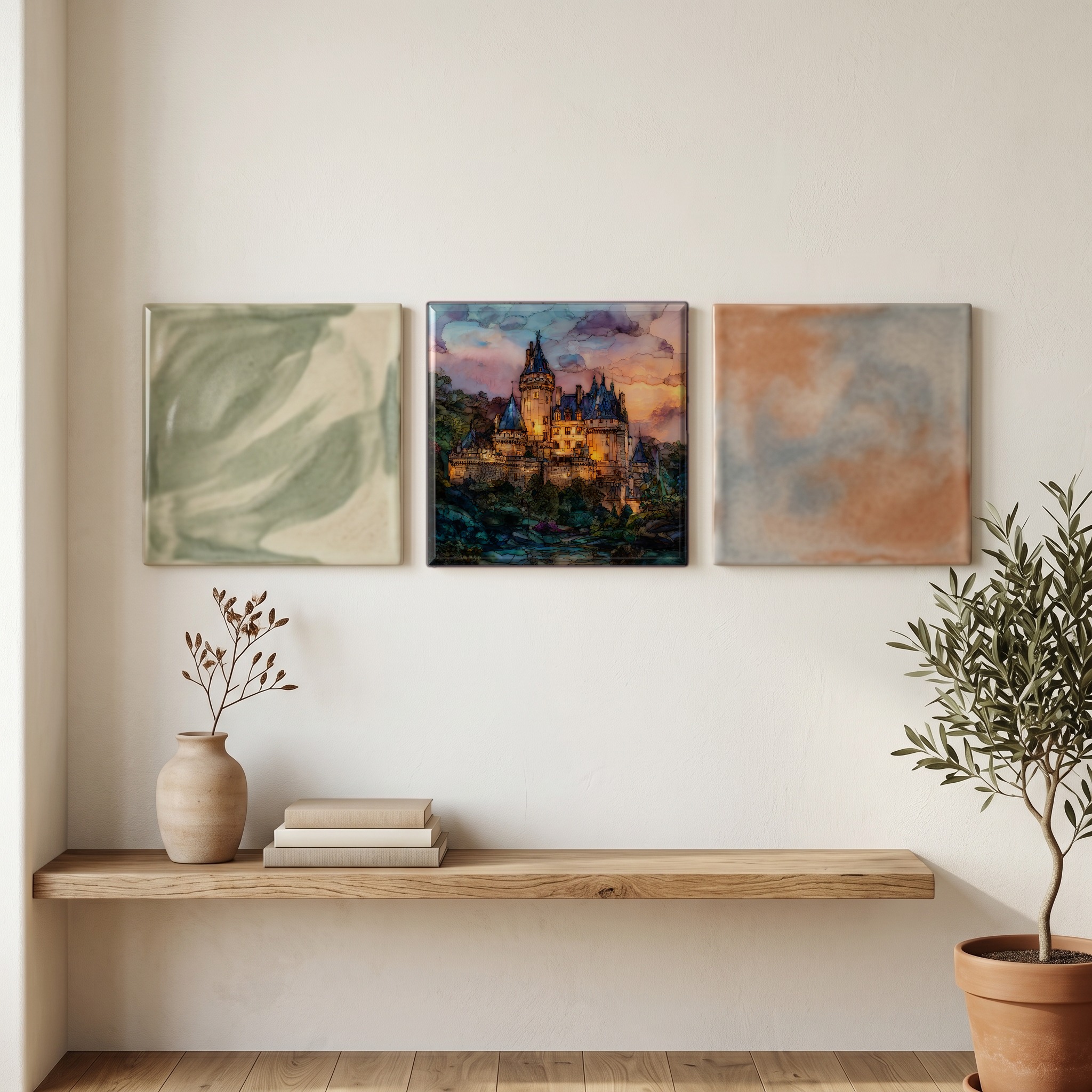
Three or five different vistas, hung together — a chapter of places you've been, or want to go.
The place, in three passes.
Château d'Ussé stands above the Indre River in the commune of Rigny-Ussé, in the Indre-et-Loire department of France's Centre-Val de Loire region, about 14 kilometres east of Chinon and roughly 40 kilometres southwest of Tours. Construction of the present castle began in the 1440s under Jean V de Bueil, a captain who had fought alongside Joan of Arc, on the site of an eleventh-century fortress. Successive owners (the Espinay family in the sixteenth century, the Valentinay marquises in the seventeenth) added the Renaissance galleries, the Mansart staircase, and the chapel completed in 1612. France's Ministry of Culture classified Ussé as a monument historique in 1931.
The walls are tuffeau, the white limestone of the Loire valley, quarried from the riverbanks and soft enough to carve when fresh. Ussé's silhouette is a layered record of three centuries: a medieval keep at the core, fifteenth-century Flamboyant Gothic on the chapel, Renaissance loggias from the Espinay family in the 1500s, and seventeenth-century interventions by Louis I de Valentinay, who demolished the north wing to open the courtyards toward the gardens. The chapel itself was begun by Jacques d'Espinay and finished by his son Charles in 1612, in a mix of Flamboyant Gothic and Renaissance vocabulary that the rest of the building keeps insisting on.
Ussé is open to visitors during the warmer half of the year and is the only one of the great Loire châteaux still lived in by the same family, the Blacas line, owners since the early 1800s. The current keeper is Casimir de Blacas d'Aulps, the seventh Duke of Blacas. Inside the medieval keep, costumed tableaux walk visitors through the scenes of La Belle au Bois Dormant, the fairy tale Charles Perrault drafted in the 1690s while a guest of the Marquis de Valentinay, then the owner. Below the terraces, parterres laid by André Le Nôtre fan out toward the Indre; on the upper walks, the cedars of Lebanon planted by Chateaubriand still stand.