Wender·Vista
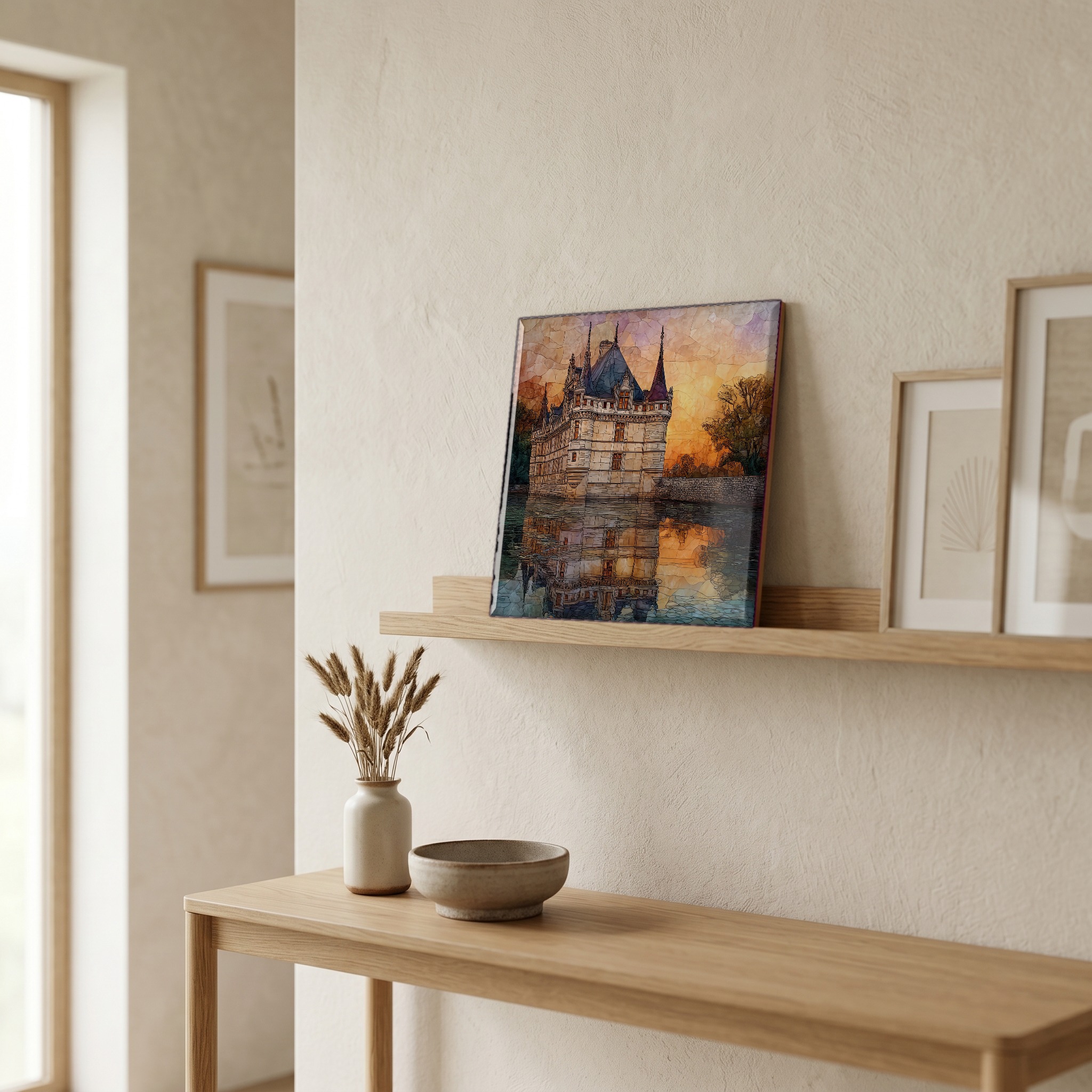
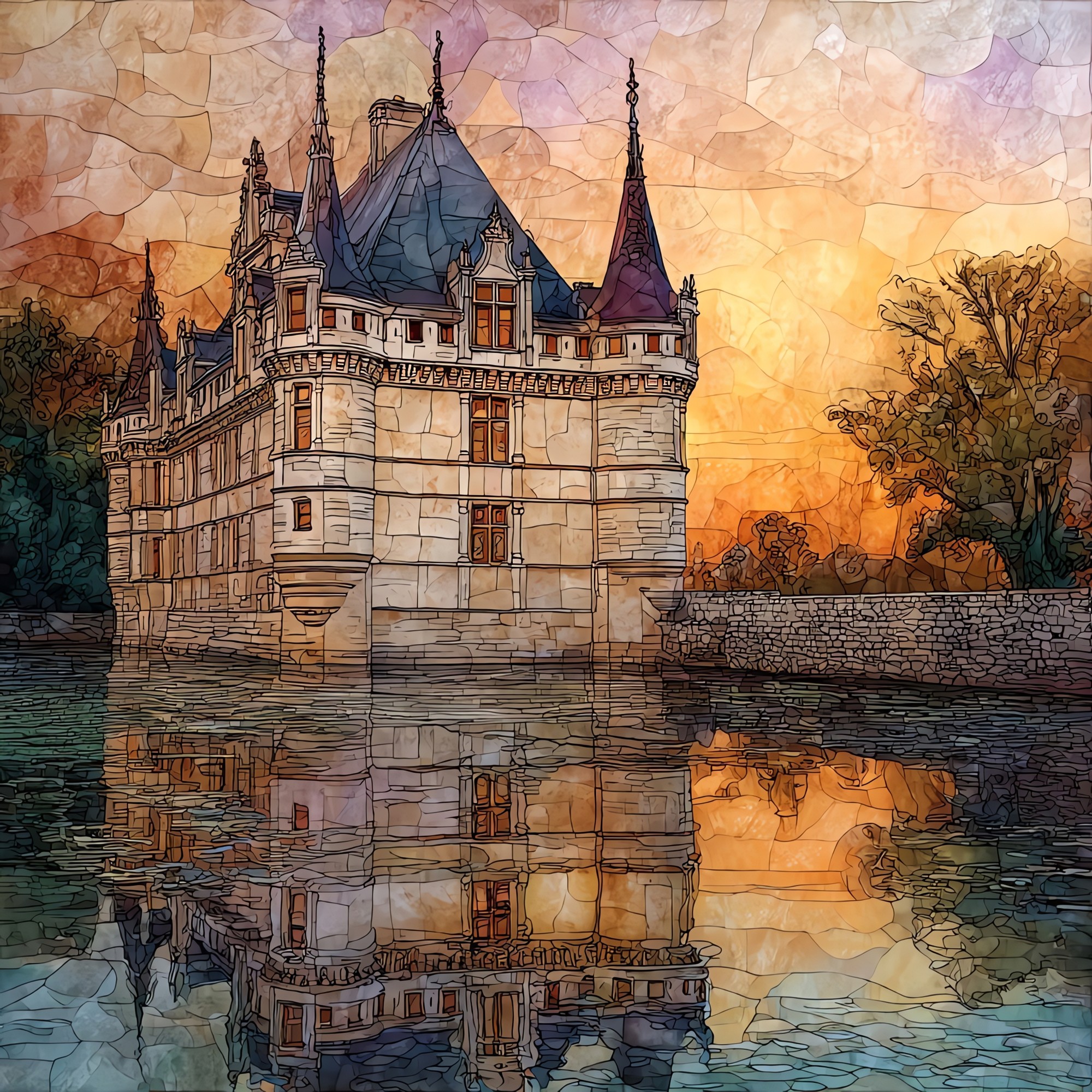
Chateau d'Azay-le-Rideau
shown on ceramic, 12-inch tileFrance
on an island in the Indre, southwest of Tours

Chateau d'Azay-le-Rideau

the house the Indre paints back.

Where it lives

Not only on a wall.

A small tile on the nightstand catching the morning. A larger one above the fire. Yours, wherever you spend the slow hours.
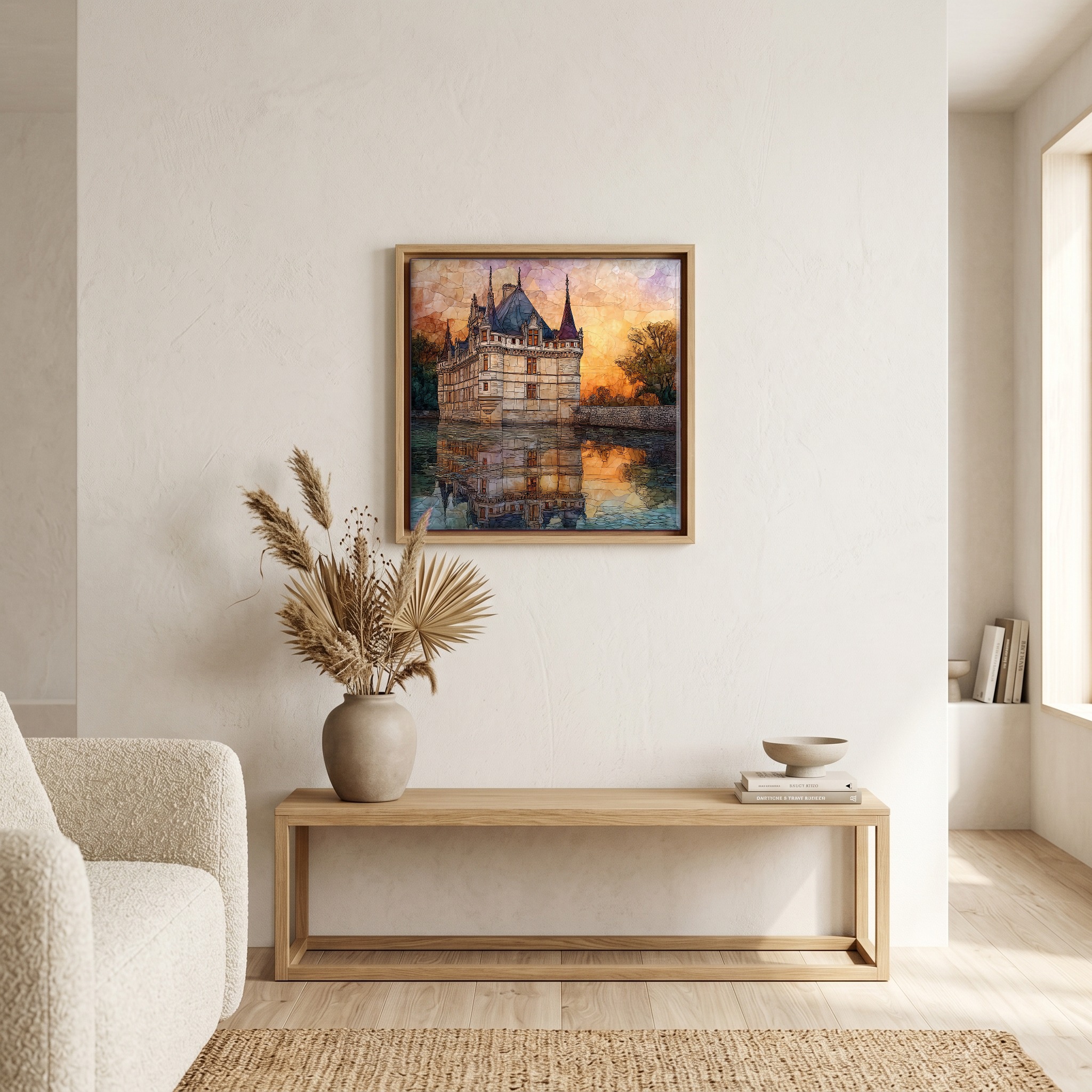
Above the bench, in a warm oak surround.
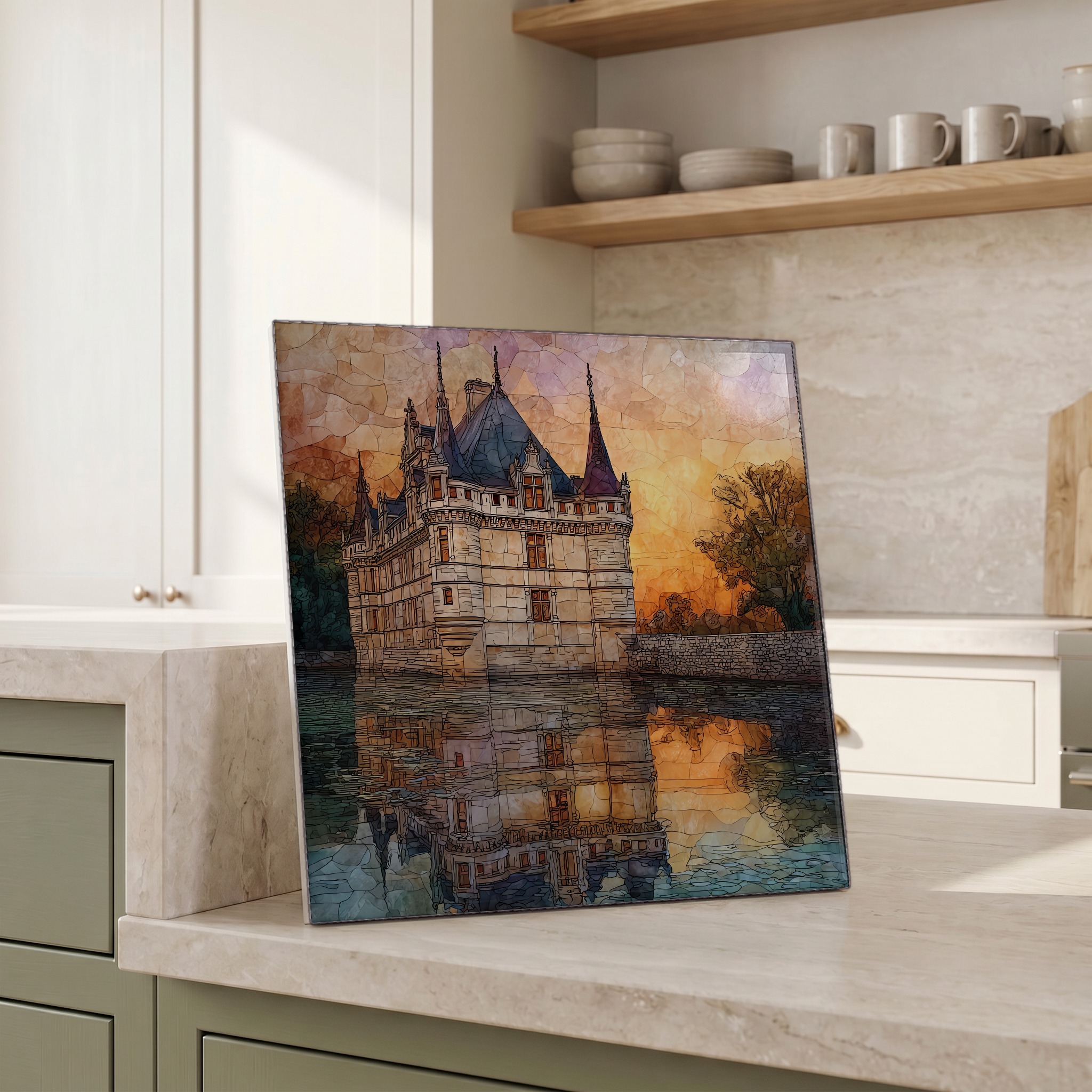
Beside the kettle, propped on the counter.
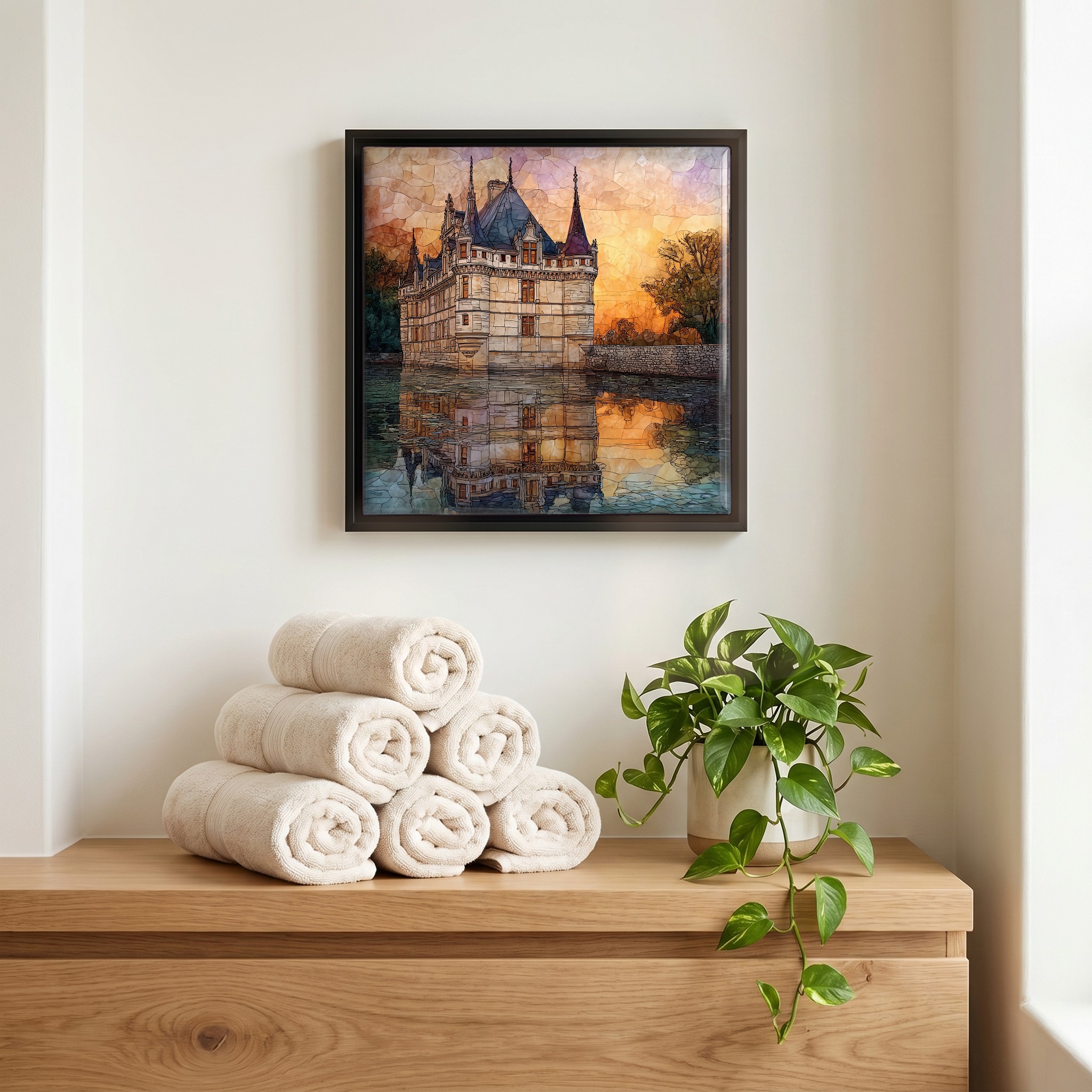
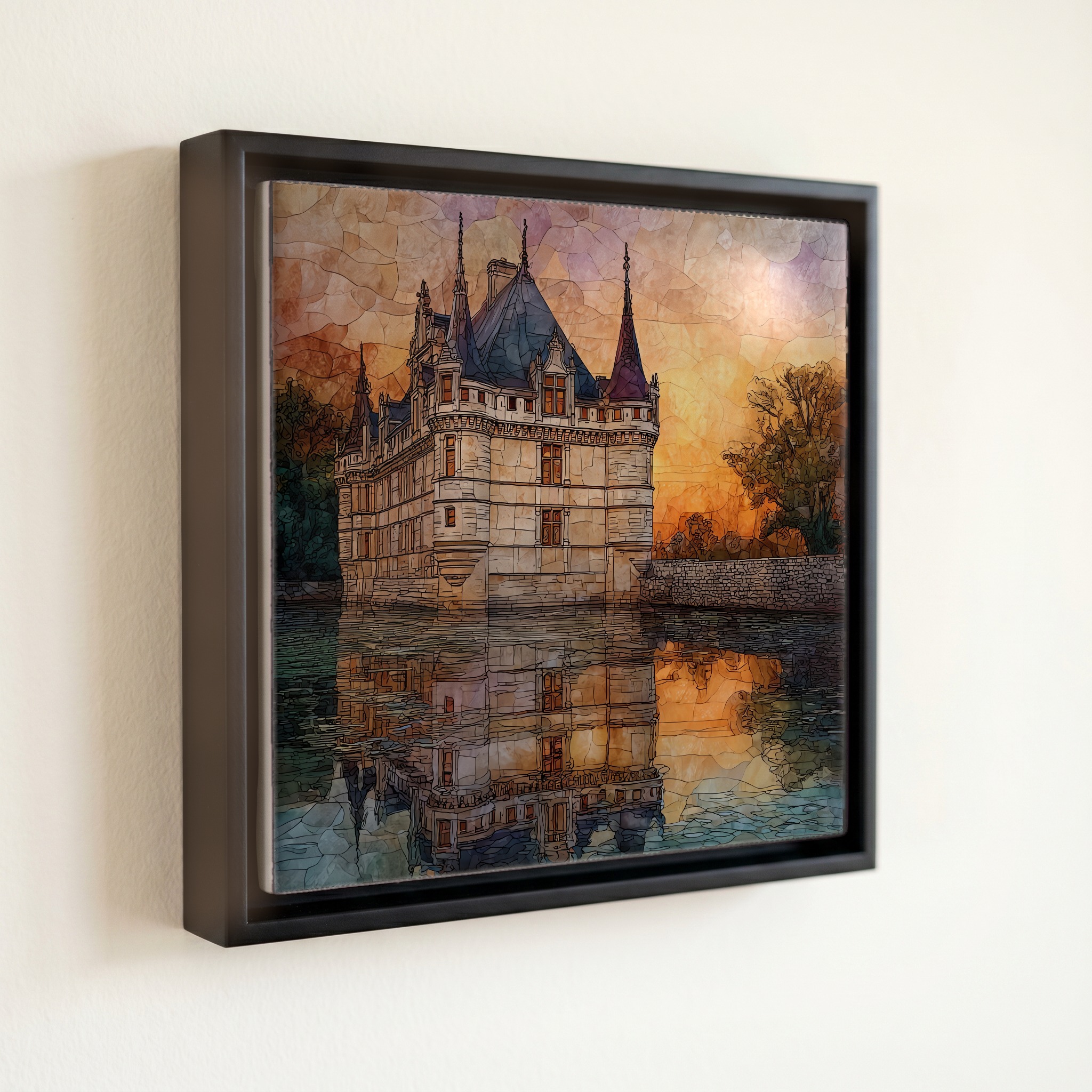
Above the linens, in a slim black surround.
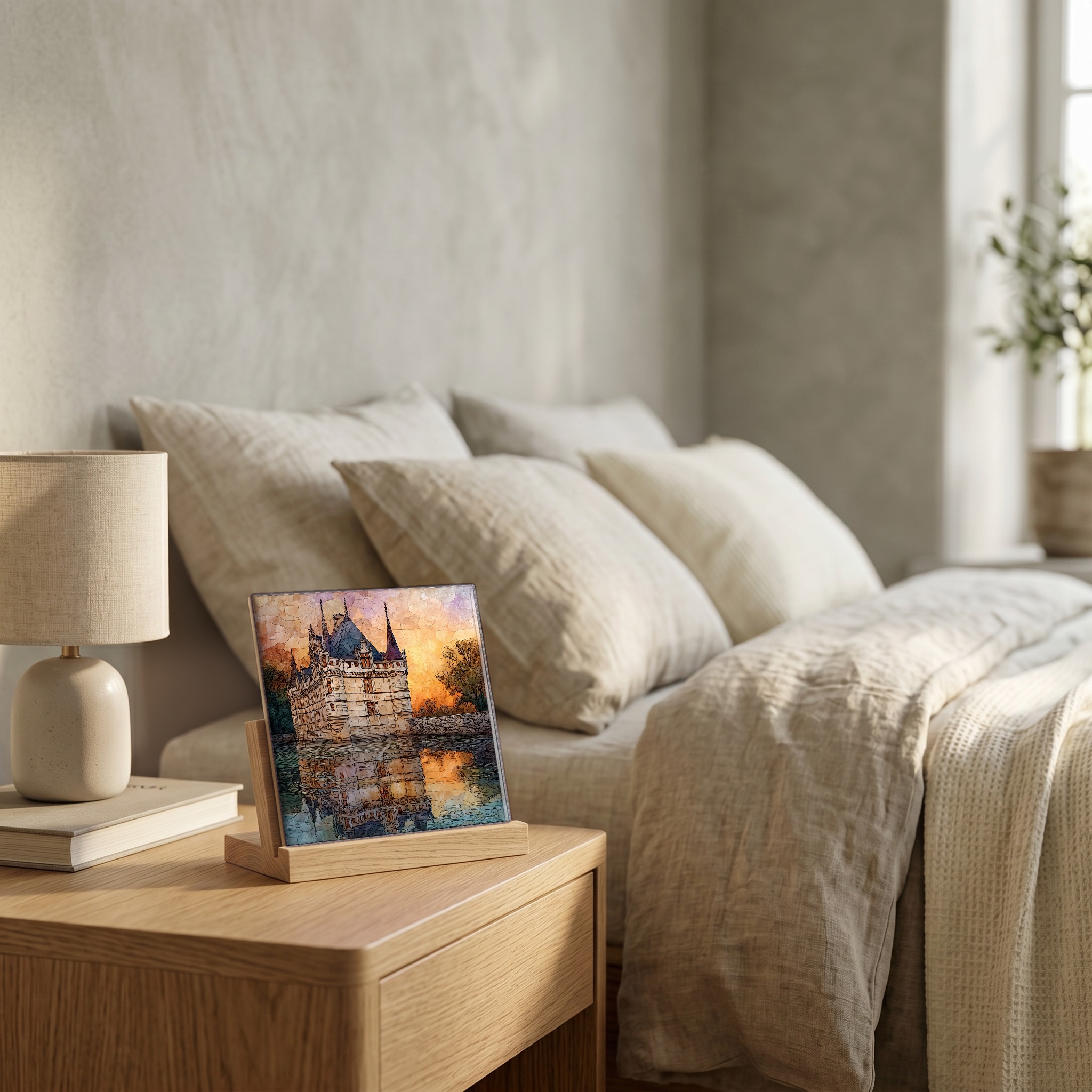
On the nightstand, on a light oak stand.
On a picture ledge, where the light comes in.
a note from the studio

A small Renaissance château set on an island in the Indre, about twenty-five kilometres southwest of Tours. Begun in 1518 by Gilles Berthelot, a financier in Francis I's royal treasury; he fled France in 1528 with the work unfinished, the towers still scaffolded. Balzac called it a faceted diamond set in the Indre. The view people come for is the south wall returning whole in the water, slate roof and pepper-pot turrets doubled below the line. Best on a still morning, before the breeze breaks the second château.
from the studio
shown in a slim black floating frame · 6 × 6 in
— bring it home

Chateau d'Azay-le-Rideau, on ceramic.

Each tile is finished by hand in our Knoxville studio. Artwork is slowly infused into the ceramic surface under high heat and pressure, and rests beneath a thin glossy finish. The colour lives in the surface, not on top of it.

What kind of piece?
One tile — square or rectangle.
How big?
the popular one — counter, shelf, nightstand
6 × 6 in · 15 cm · 1.6 lb
Surface finish
A clear glossy finish — the artwork reads as if under resin. Ideal for show-pieces and framed wall art.
How it sits
A hidden cleat — sits ¼″ proud of the wall.
$58
Hand-finished and shipped from our studio at the foot of the Smokies. On your wall in about ten days.
size
6 × 6 in
15 cm
weighs
1.6 lb
solid in the hand
surface
ceramic, hand-finished
art rests beneath a thin glossy finish
from
Knoxville, TN
our family studio, at the foot of the Smokies
— start a Coaster Set

Pick any four 4-inch tiles — National Parks you've been to, a Smokies set, the four seasons of one place. $ for a set of , cork-backed, ready to live on the table.
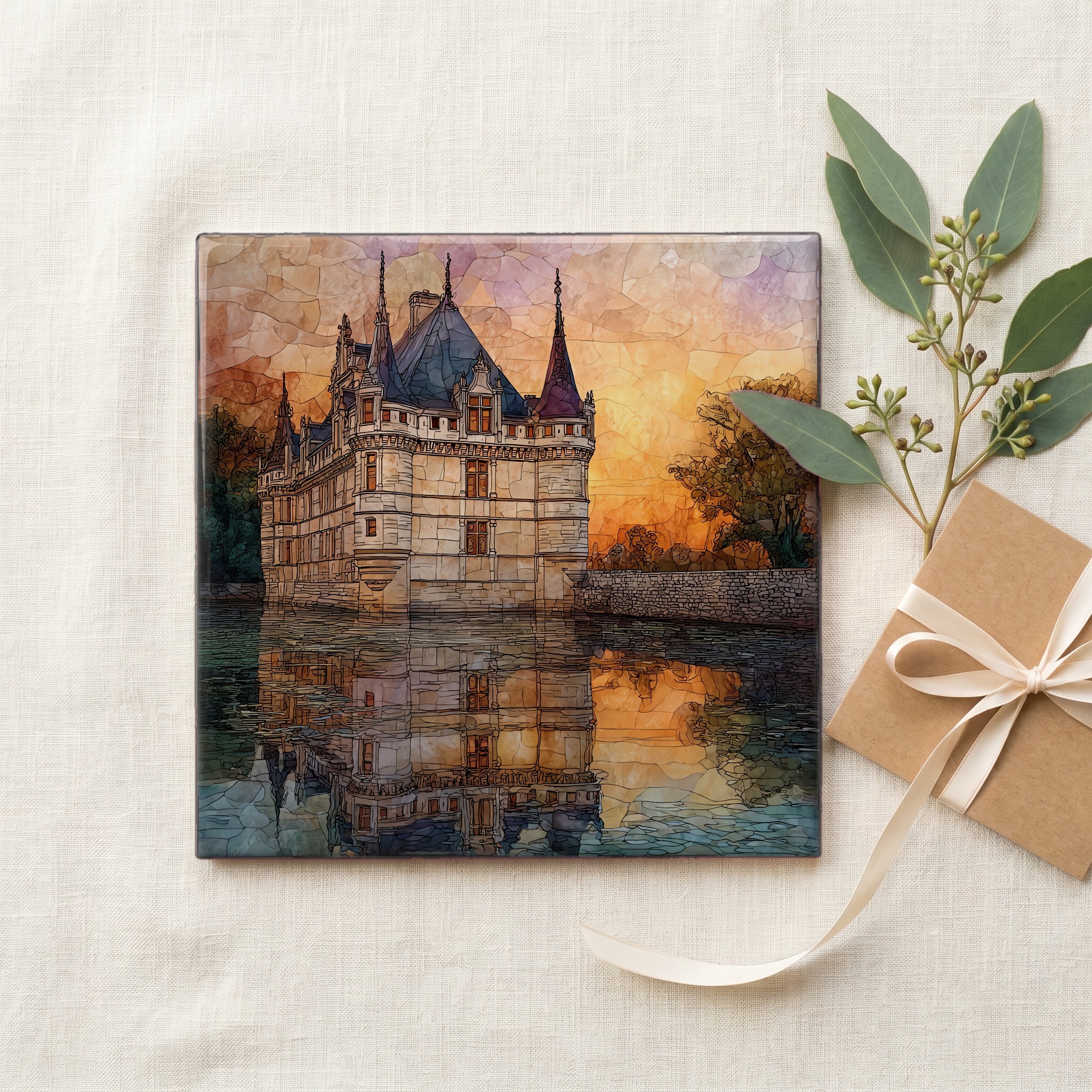
comes gift-ready
comes gift-ready

Each tile ships in a kraft box, tied with cream ribbon, with a handwritten note from the studio if you'd like to add one.
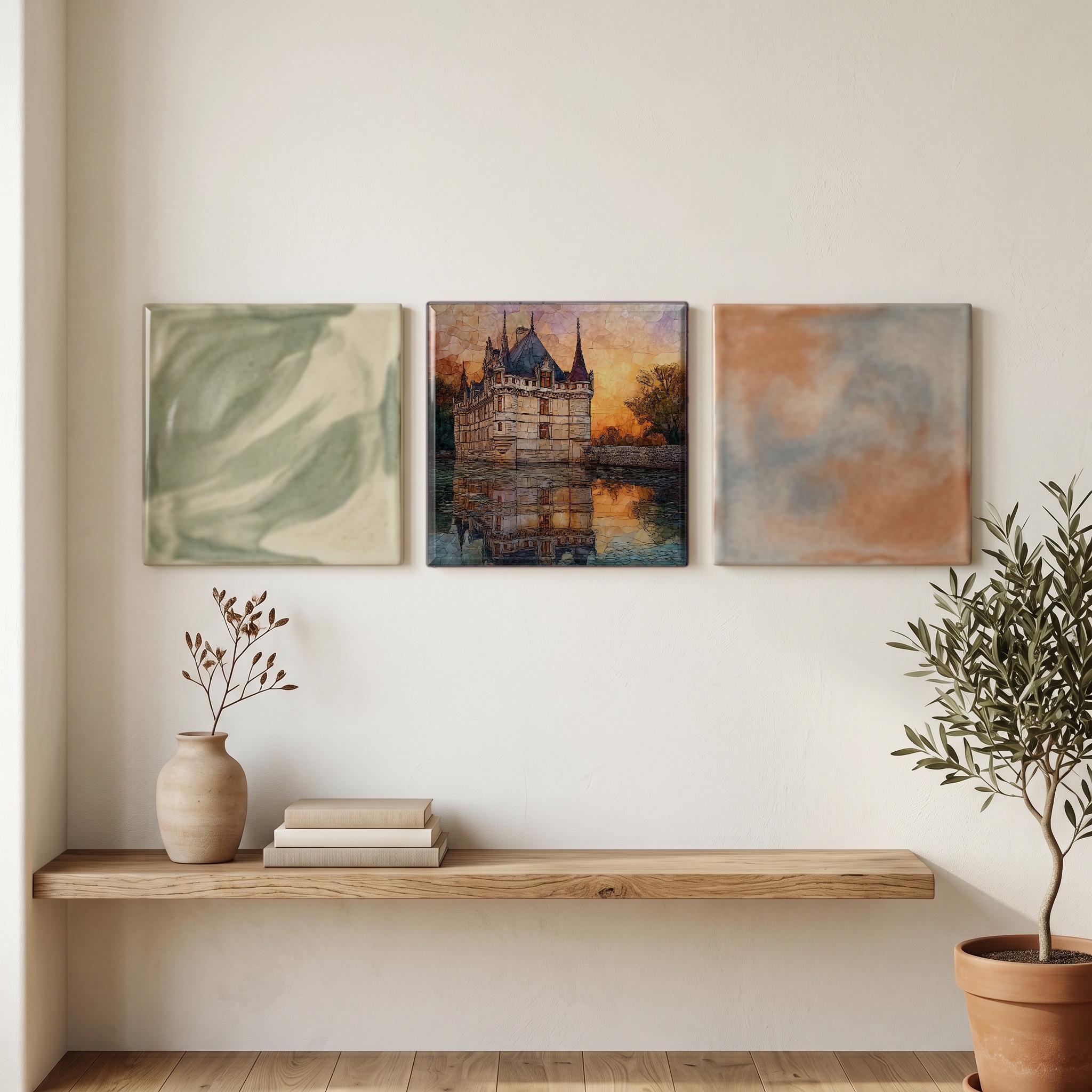
or build a grouping
or build a grouping

Three or five different vistas, hung together — a chapter of places you've been, or want to go.

about Chateau d'Azay-le-Rideau

The place, in three passes.

A little of what's known, in case you fall down the rabbit hole — or want to go see it yourself.
the place

Château d'Azay-le-Rideau sits on a small island in the Indre River, about twenty-five kilometres southwest of Tours in the Centre-Val de Loire region. It is one of the earliest works of the French Renaissance, built between 1518 and 1527 for Gilles Berthelot, a financier in the royal treasury under Francis I. Construction was largely overseen by his wife Philippa Lesbahy. In 1528, after his patron Jacques de Beaune was tried and hanged for embezzlement, Berthelot fled and the unfinished château was confiscated by the crown. The French State purchased the property in 1905. It is now a national monument under the Centre des monuments nationaux and is part of the UNESCO listing for the Loire Valley between Sully-sur-Loire and Chalonnes.

the stone

The building is a pivot piece between French late-Gothic and Italian Renaissance, raised in the brief window when Francis I was bringing Italian masons north and a generation of French financiers was building stone evidence of the new style. The corner pepper-pot turrets and the broad mansard slates read as French; the straight-flight loggia stairwell, the regular pilasters, and the carved dormers read as Italian. Honoré de Balzac, who summered nearby at the Château de Saché in the 1830s while writing 'Le Lys dans la Vallée,' called Azay-le-Rideau a faceted diamond set in the Indre. The tufa limestone used through the Loire Valley cuts soft and weathers pale, which is part of why the building gathers light the way it does and gives the reflection its even tone.

the water

The château is built into a side channel of the Indre, a tributary of the Loire, with the river drawn through a moat that surrounds three sides of the building. The result is the view the place is known for: the south façade, returning whole on the water with turrets, dormers, and slate doubled below the line, most evenly mirrored in the still hour after sunrise or before sunset, when the breeze drops and the surface lays flat. The Indre rises near Saint-Priest-la-Marche in the Cher department and runs about 280 kilometres before it joins the Loire west of Tours. The reflection is the photograph carried home; almost every guidebook of the Loire Valley puts it on the cover.

where
France · Indre-et-Loire, Centre-Val de Loire
position
47.2587° N · 0.4659° E
the neighborhood

What's nearby.

A handful of named places within an hour's walk or short drive. Some we've already painted; some we will.
7 km E
Château de Saché (Musée Balzac)
literary house museum
11 km NE
Château de Villandry
Renaissance château and gardens
14 km W
Château d'Ussé
fairytale château
15 km NW
Château de Langeais
medieval château
26 km NE
Tours
Loire Valley city
N
Chateau d'Azay-le-Rideau
Château de Saché (Musée Balzac)
Château de Villandry
Château d'Ussé
Château de Langeais
Tours
common questions

What people ask.

A few questions we get about Chateau d'Azay-le-Rideau — and about bringing the piece home.
about the place

The château is in the village of Azay-le-Rideau in the Indre-et-Loire department, about 25 kilometres southwest of Tours in the Centre-Val de Loire region of France. It sits on a small island in the Indre River, a tributary of the Loire.

Gilles Berthelot, a financier in Francis I's royal treasury, began the château in 1518. Construction was largely overseen by his wife Philippa Lesbahy. The work stopped in 1528 when Berthelot fled into exile after his patron Jacques de Beaune was hanged for embezzlement, leaving the building unfinished.

Yes. It is part of the Loire Valley listing inscribed by UNESCO in 2000, covering the cultural landscape between Sully-sur-Loire and Chalonnes. The château itself has been a French national monument since the French State purchased it in 1905.

A side channel of the Indre was drawn through a moat around three sides of the building, both to defend the lower courses of stone and to set the new Renaissance façade against a still surface. The full reflection of the south wall is the view the site is known for.

In the 1830s, while staying at the nearby Château de Saché where he wrote 'Le Lys dans la Vallée,' Balzac described Azay-le-Rideau as a faceted diamond set in the Indre. Saché is about seven kilometres east of Azay-le-Rideau and now houses the Musée Balzac.

Early French Renaissance, built between 1518 and 1527. It combines French Gothic conventions (corner turrets, mansard slate roof, ornate dormers) with Italian Renaissance elements introduced under Francis I, including a straight-flight loggia stairwell and regular pilasters on the river façade.

The reflection is fullest when the wind drops and the river surface lays flat, typically the hour after sunrise and the hour before sunset. Spring and early summer give the moat the most water; high summer can leave the channel low.

about the piece in your home

It travels well with that affection. Azay-le-Rideau is one of the most photographed châteaux in the valley, and the reflection on the south façade is the image most people carry home. A Coaster or Small with a handwritten note from the studio carries the place quietly into a daily routine.

The slate, river-green, and warm pale-tufa palette sits naturally in French Country, Maximalist, and traditional European interiors. It also works against a clean modern wall, where the ornate Renaissance silhouette gives a flat room a centre.

Yes. The current Provence-and-Loire revival (soft creams, faded greens, copper, painted faïence in the kitchen) pairs with this piece directly. The Medium hung over a console or above a sideboard reads as a window onto the south façade.

Over a console or sideboard, the Large carries on its own. Above a sofa, a 4-tile Mural reads at the right scale; a longer wall above a sectional takes the 9-tile Mural cleanly, with the south façade running across the full width.

Yes. The Dura Satin finish has a soft sheen and resists scratching; the Matte has no sheen at all. Both are suited to backsplashes, vanity walls, and shower walls. The Glossy is intended for framed display rather than a steam-rich environment.

A soft microfibre cloth with plain water is enough. The colour is slowly infused into the ceramic surface under high heat and pressure, beneath a thin glossy finish, so it does not lift. Avoid abrasive sponges and ammonia-based cleaners.

Yes. The painting is original to the studio. There is no licensing involved, no third-party stock. Every WenderVista piece is a Reid Wender composition in our stained-glass and alcohol-ink visual language, hand-finished in-house in Knoxville, Tennessee.

if this one stayed with you

A few you might also love.

Hand-picked by the eye that found Sorapis. Same air, same kind of quiet.