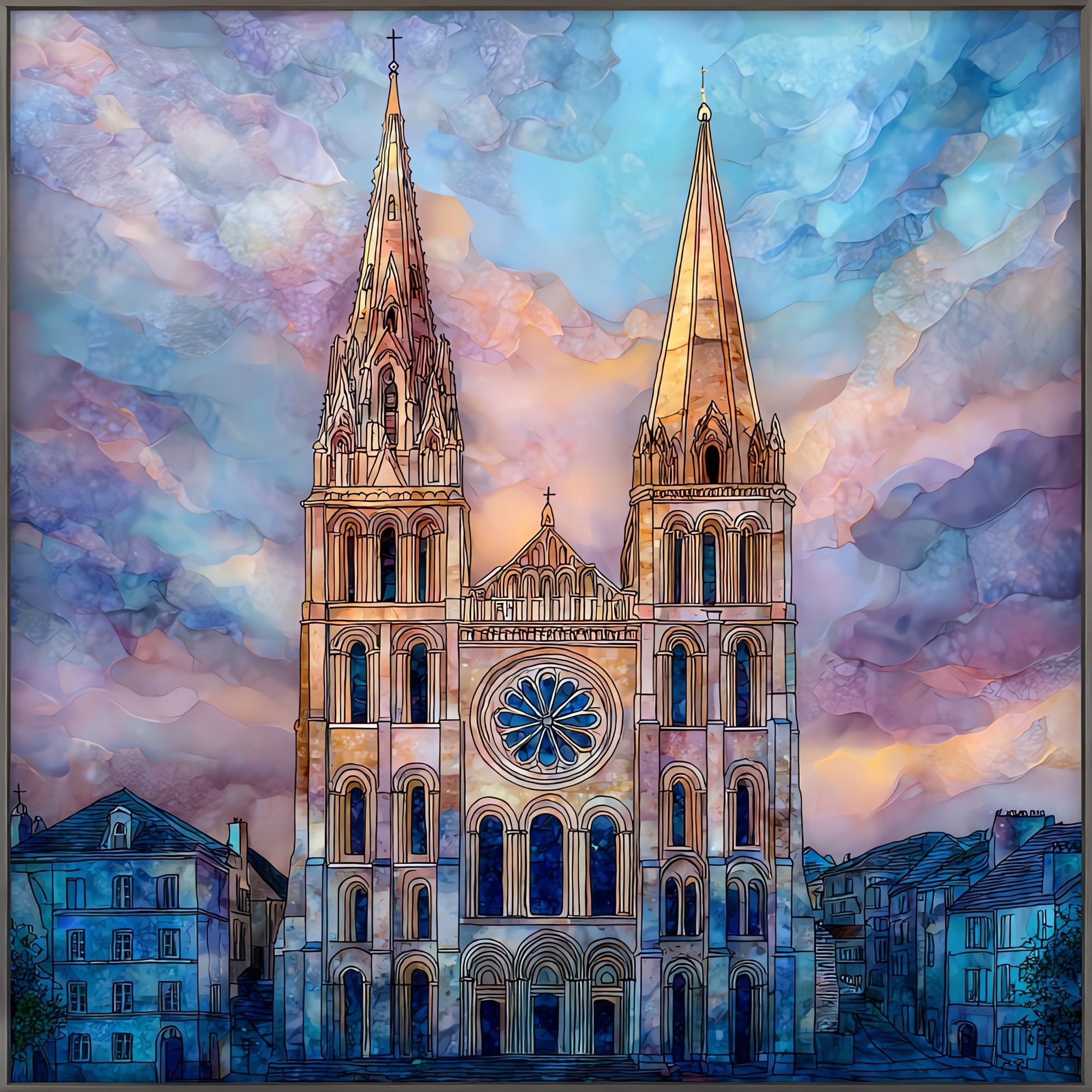
Chartres Cathedral West Facade
— — two towers, three centuries apart.
Not only on a wall.
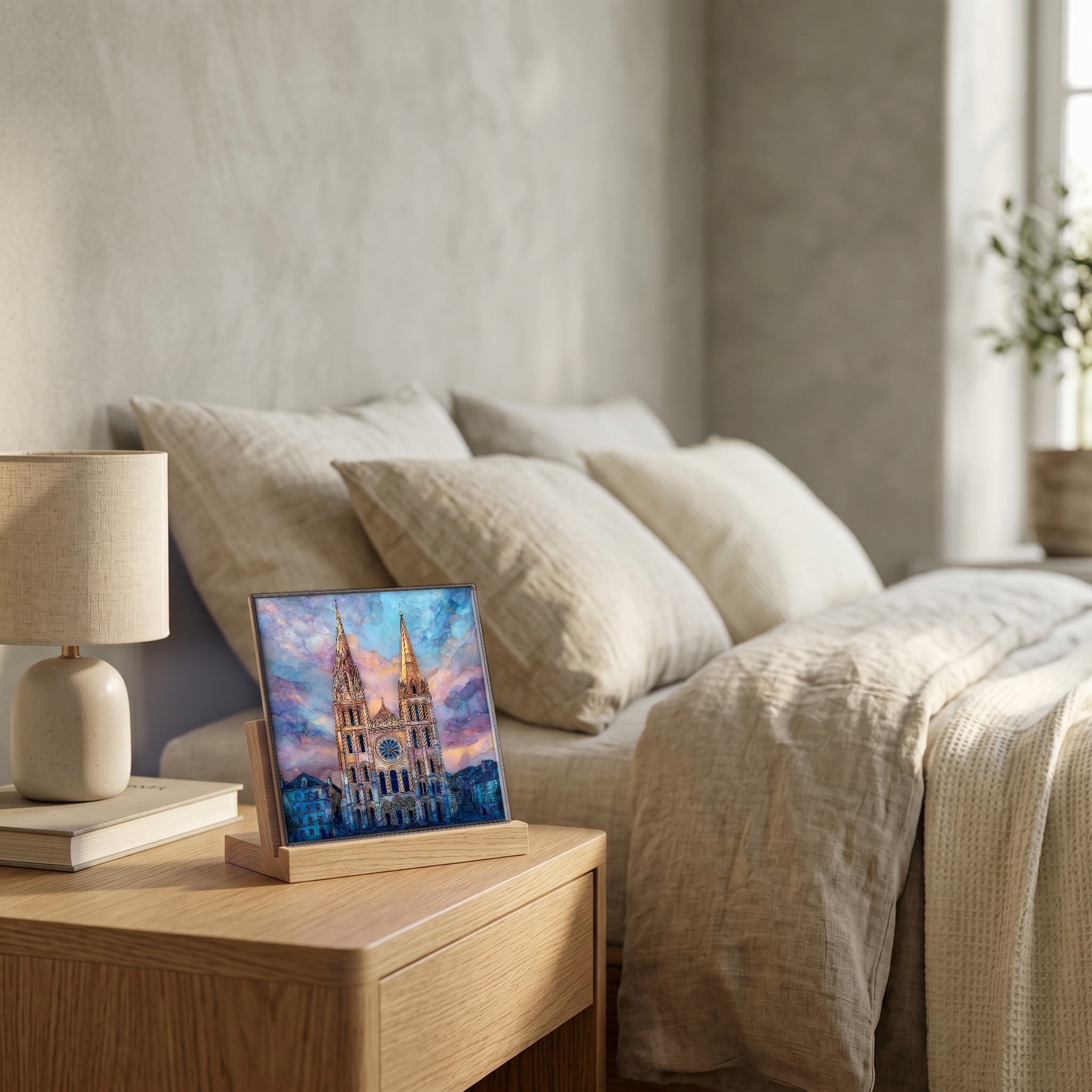
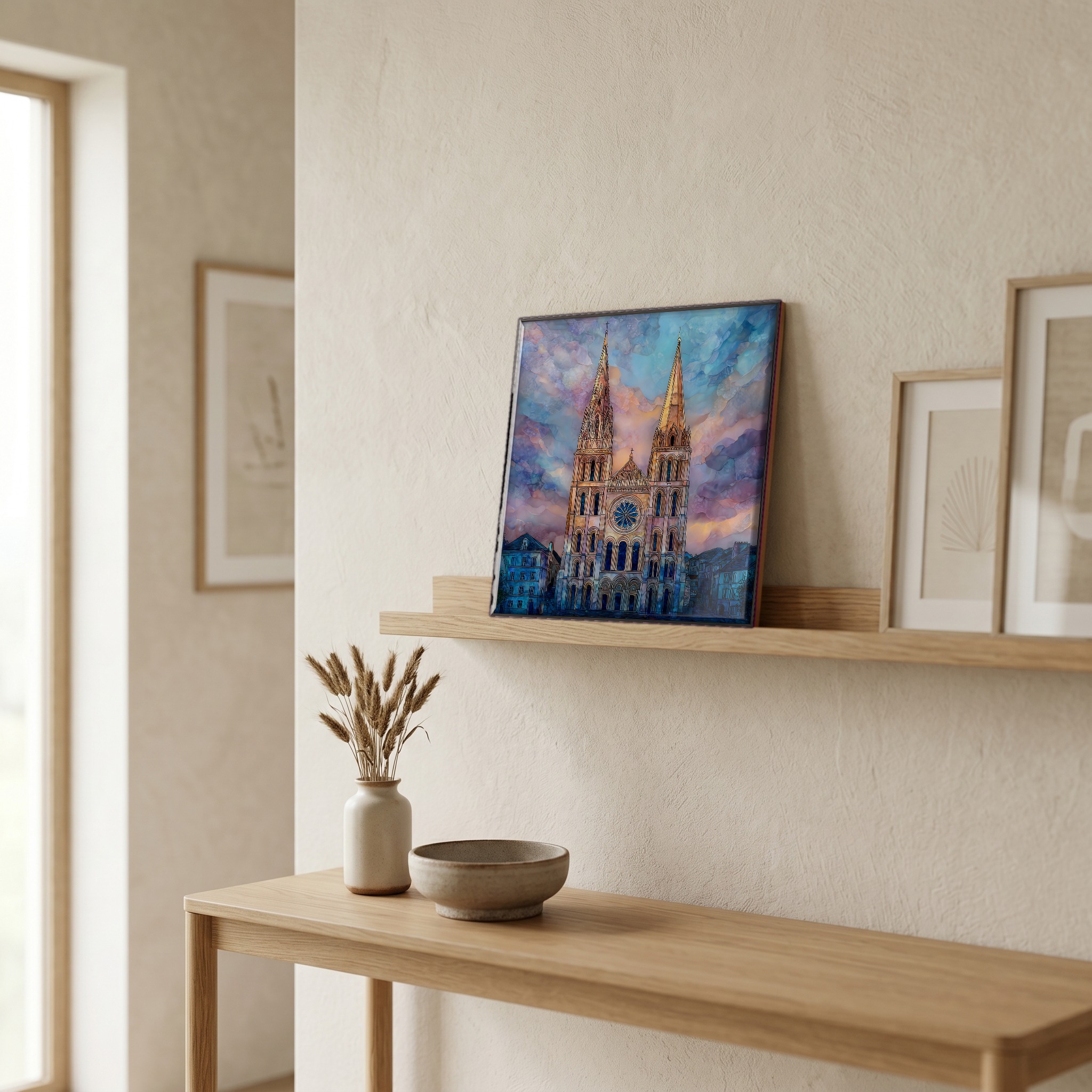
“The west front of Chartres rises above the Beauce, the flat wheatlands an hour southwest of Paris. Two towers stand against the sky in different centuries: a plain Romanesque spire from around 1160, and a Flamboyant Gothic one Jean de Beauce finished in 1513. Between them, the Royal Portal carries the figure sculpture that began French Gothic in the 1140s, and three lancet windows hold the blue the whole tradition is named for. The fire of 1194 took most of the cathedral. This wall is what survived to be rebuilt around.
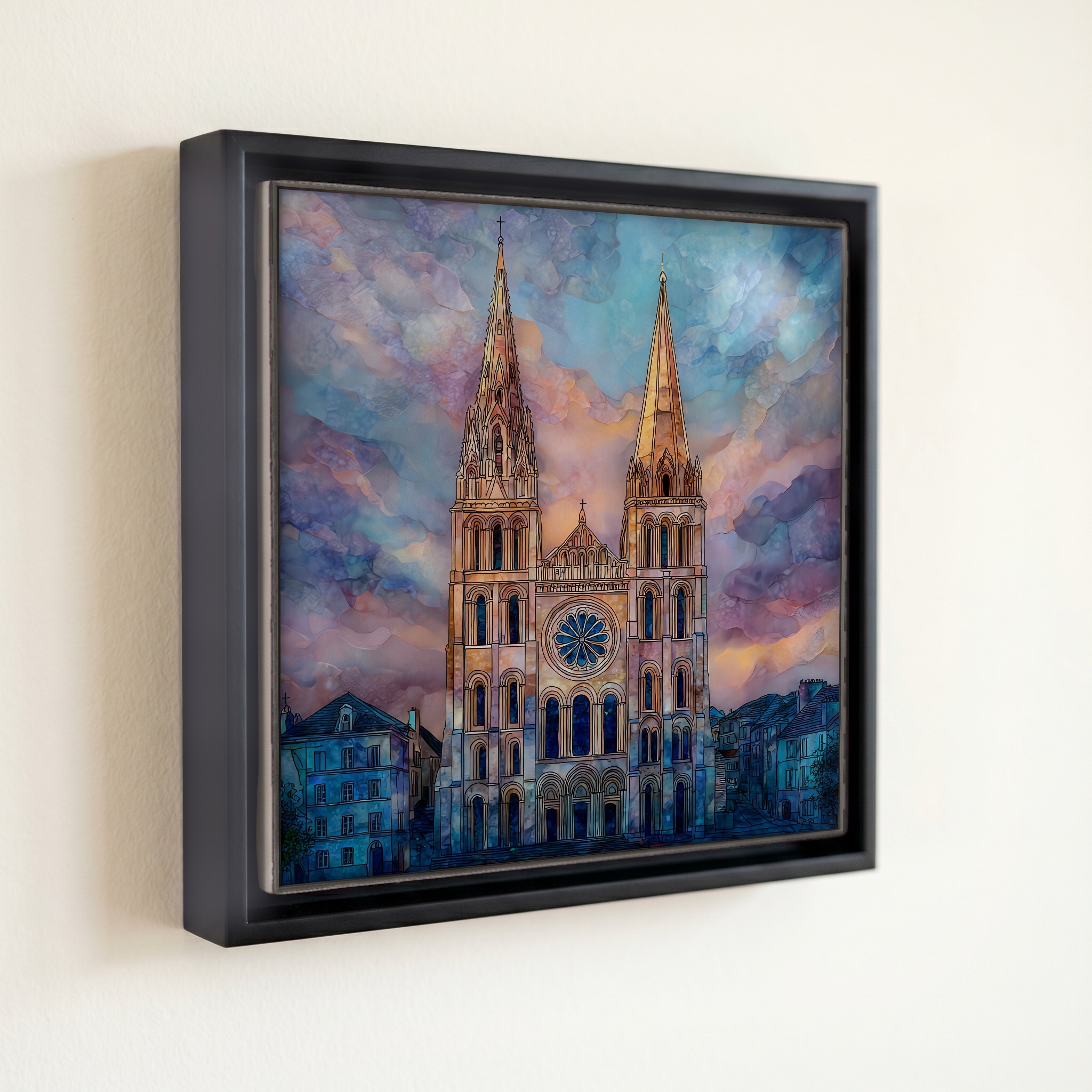
Chartres Cathedral West Facade, on ceramic.
Each tile is finished by hand in our Knoxville studio. Artwork is slowly infused into the ceramic surface under high heat and pressure, and rests beneath a thin glossy finish. The colour lives in the surface, not on top of it.
Pick any four 4-inch tiles — National Parks you've been to, a Smokies set, the four seasons of one place. $ for a set of , cork-backed, ready to live on the table.
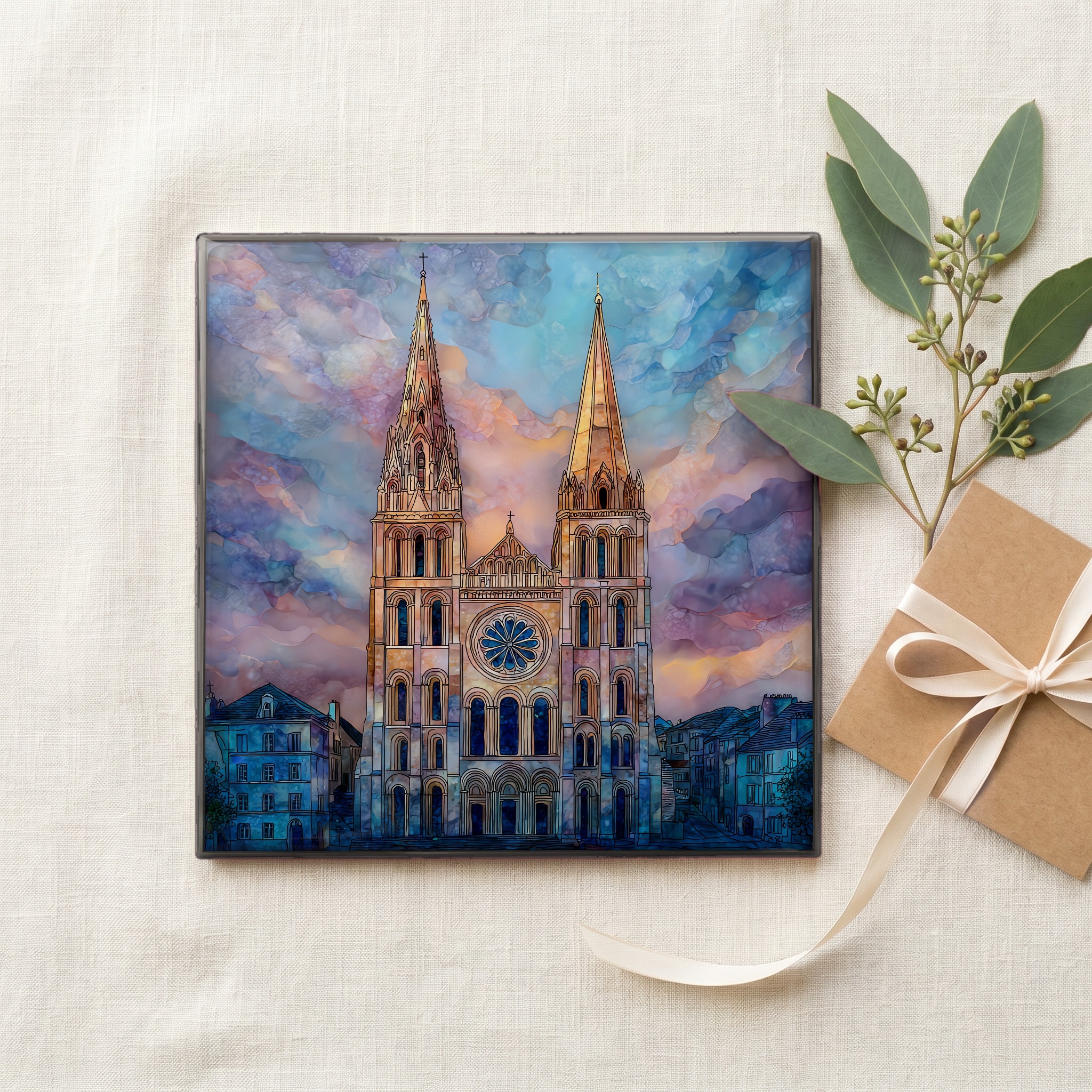
Each tile ships in a kraft box, tied with cream ribbon, with a handwritten note from the studio if you'd like to add one.
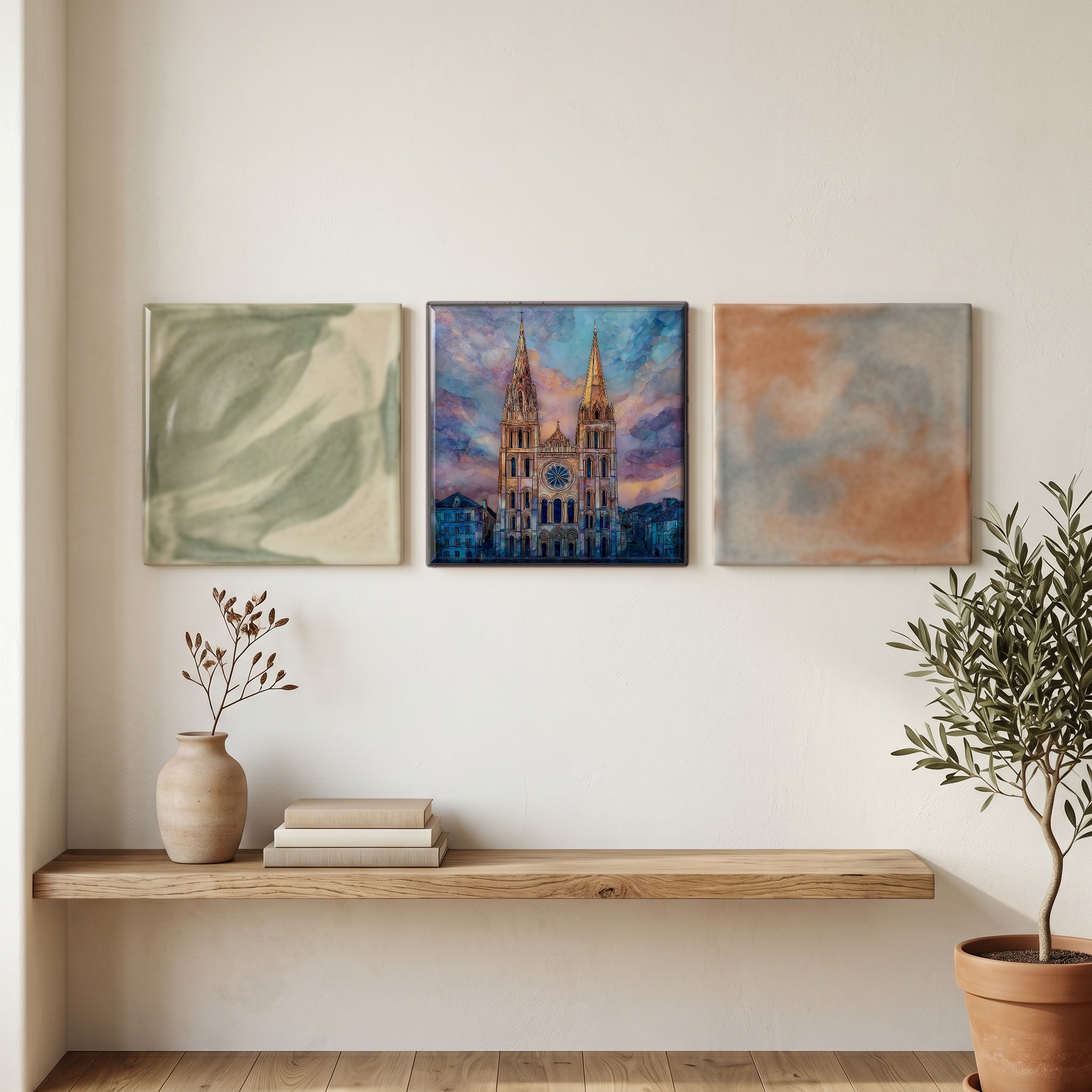
Three or five different vistas, hung together — a chapter of places you've been, or want to go.
The place, in three passes.
Chartres Cathedral stands at the centre of Chartres, the prefecture of the Eure-et-Loir department, about 90 km southwest of Paris in the Centre-Val de Loire region of France. The town sits on the Beauce, the wheat-growing plain long called the granary of France. The cathedral rises on the highest ground above the river Eure; on a clear day, the two towers are visible from across the surrounding fields. The site has held a Christian sanctuary since at least the 4th century. The current building was begun after the fire of 1194, but the west facade is older and survived from the 12th-century church it replaced. UNESCO inscribed the cathedral in 1979 as one of the first World Heritage Sites in France.
The west facade is the oldest part of Chartres, built between roughly 1134 and 1150 from local Berchères limestone. Three openings make up the Royal Portal, with sculpture from around 1145 that art historians consider the first sustained appearance of Gothic figure carving: the elongated column statues of Old Testament kings and queens that gave the portal its name. Above the portal, three lancet windows from the 1150s hold some of the oldest surviving stained glass in France, in the cobalt blue the cathedral became known for. The two towers rise from different ages: the south spire is a plain Romanesque cone from around 1160, while the north spire is the Flamboyant Gothic work the master mason Jean de Beauce completed in 1513.
The west facade catches the evening sun directly. Cathedrals on the medieval pattern set the altar east, so the western front is what holds the day's last light. Above the three lancet windows, the west rose window holds the Last Judgement, about 13 metres across, finished around 1215. From inside the nave at vespers, the rose lights up first as the sun drops; the older lancets follow. The Chartres blue of the 12th-century windows comes from cobalt oxide in a particular soda-glass recipe; modern conservators have studied it for decades and still find it hard to match. The colour is one of the reasons the cathedral has kept its pilgrims.