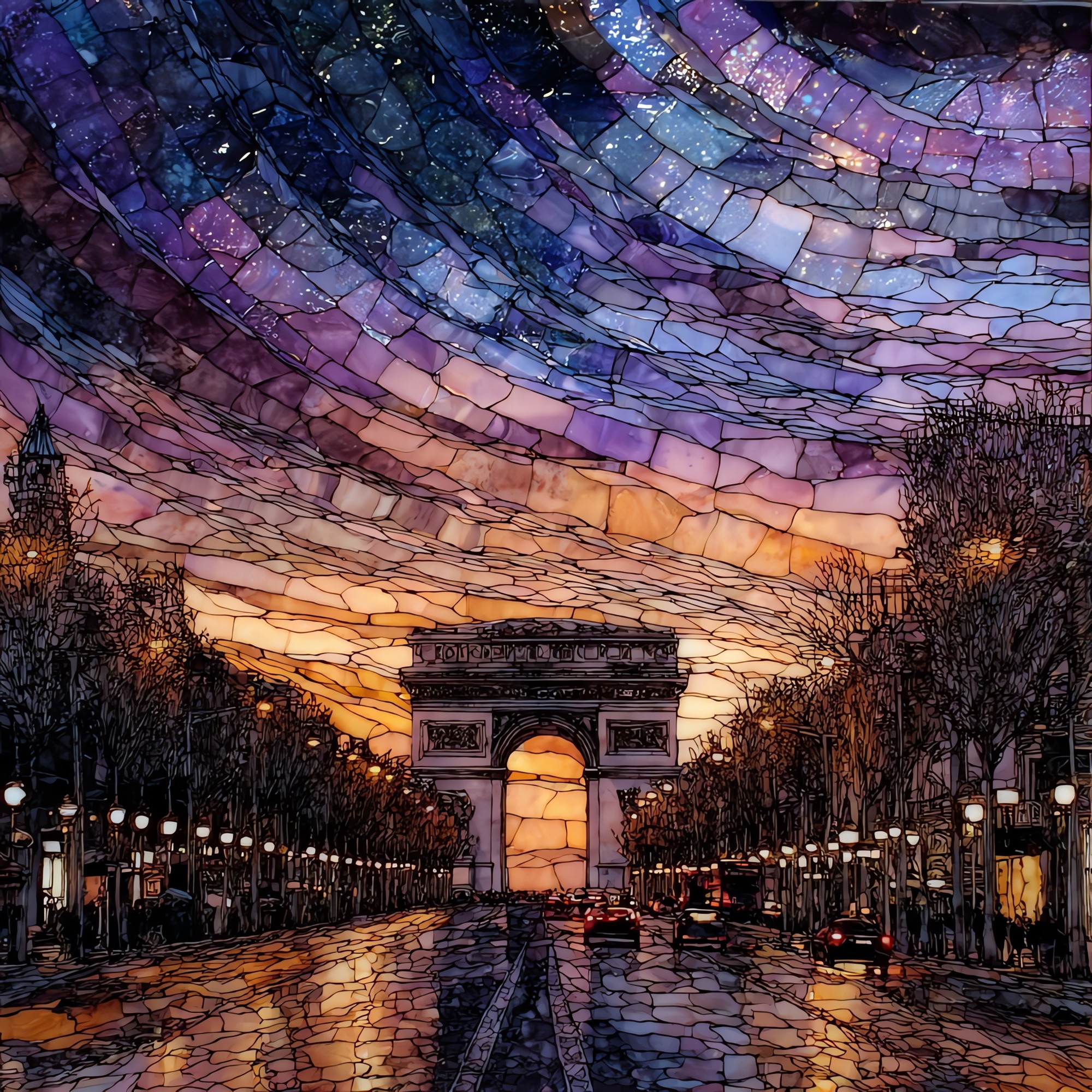
Champs-Elysees
— — the avenue the city walks before dark.
Not only on a wall.
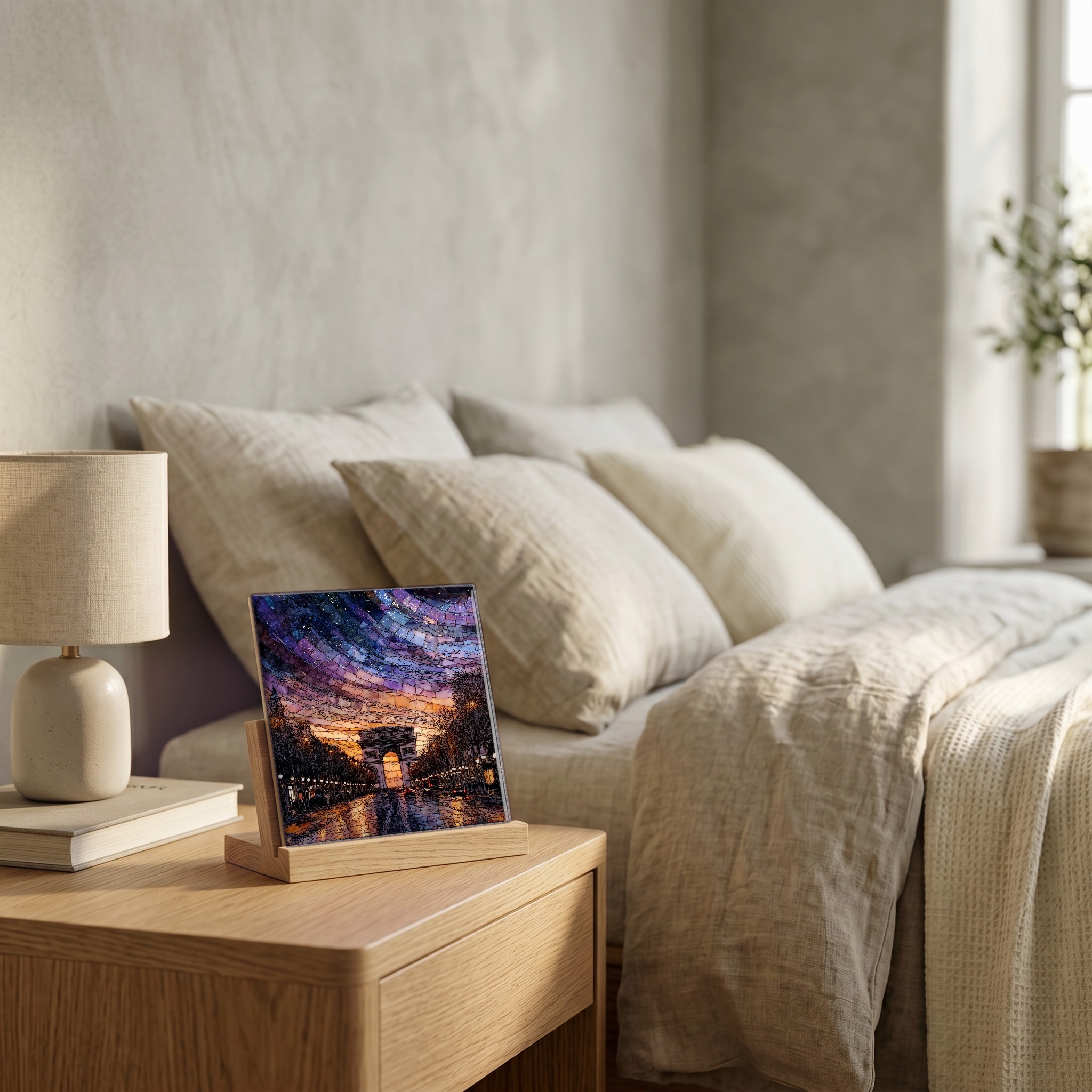
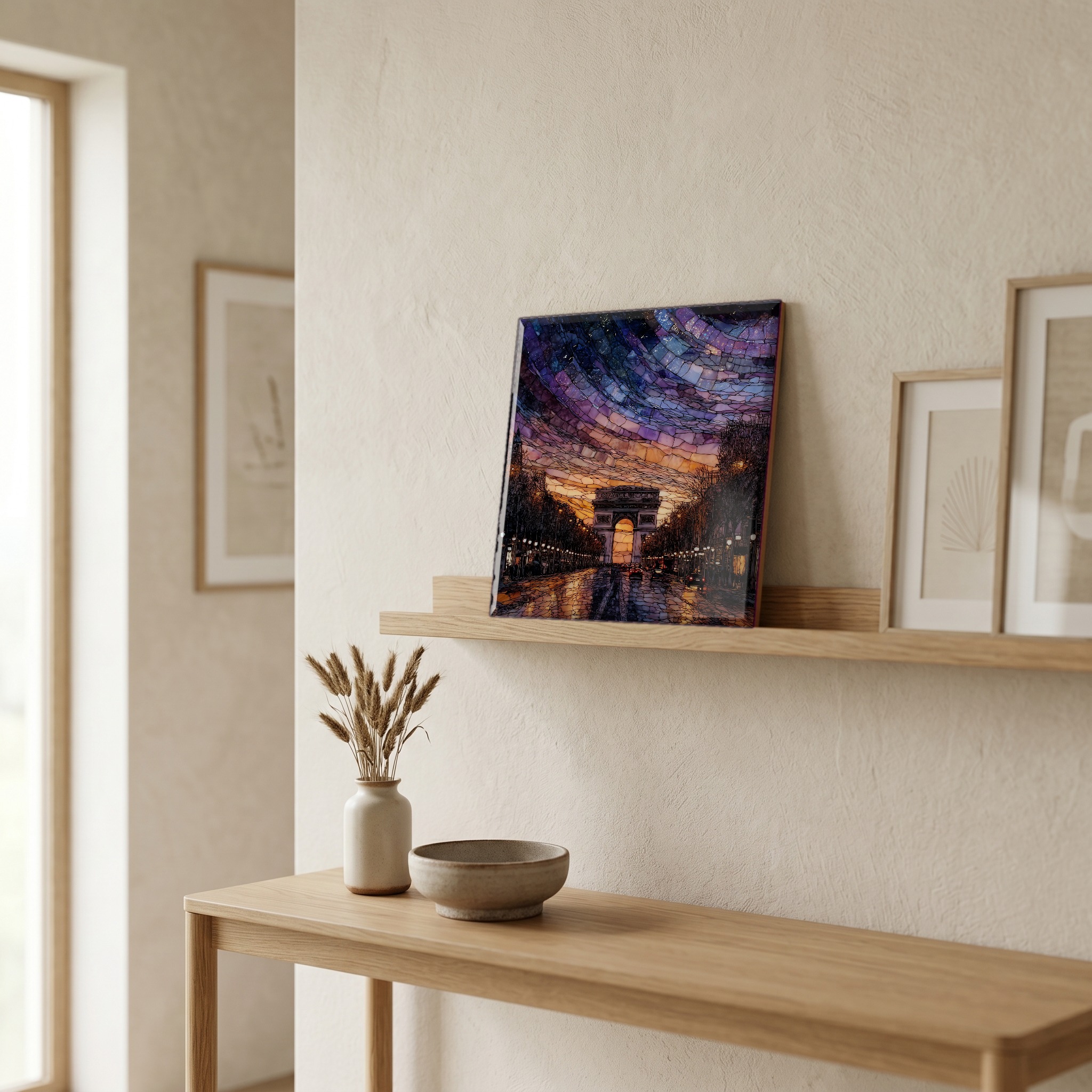
“From the obelisk at Place de la Concorde, the avenue runs west a mile and a quarter to the Arc de Triomphe. The straight axis was laid out by André Le Nôtre in 1667, when the ground was still market gardens. The lower half is a public garden of plane and chestnut. The upper half is the limestone of the Haussmann era, set back behind the trees. People walk it slowly. Tourists in the middle, Parisians on the side streets. Late afternoon, the light comes off the arch and runs the full length of the avenue, gold on the cream stone.
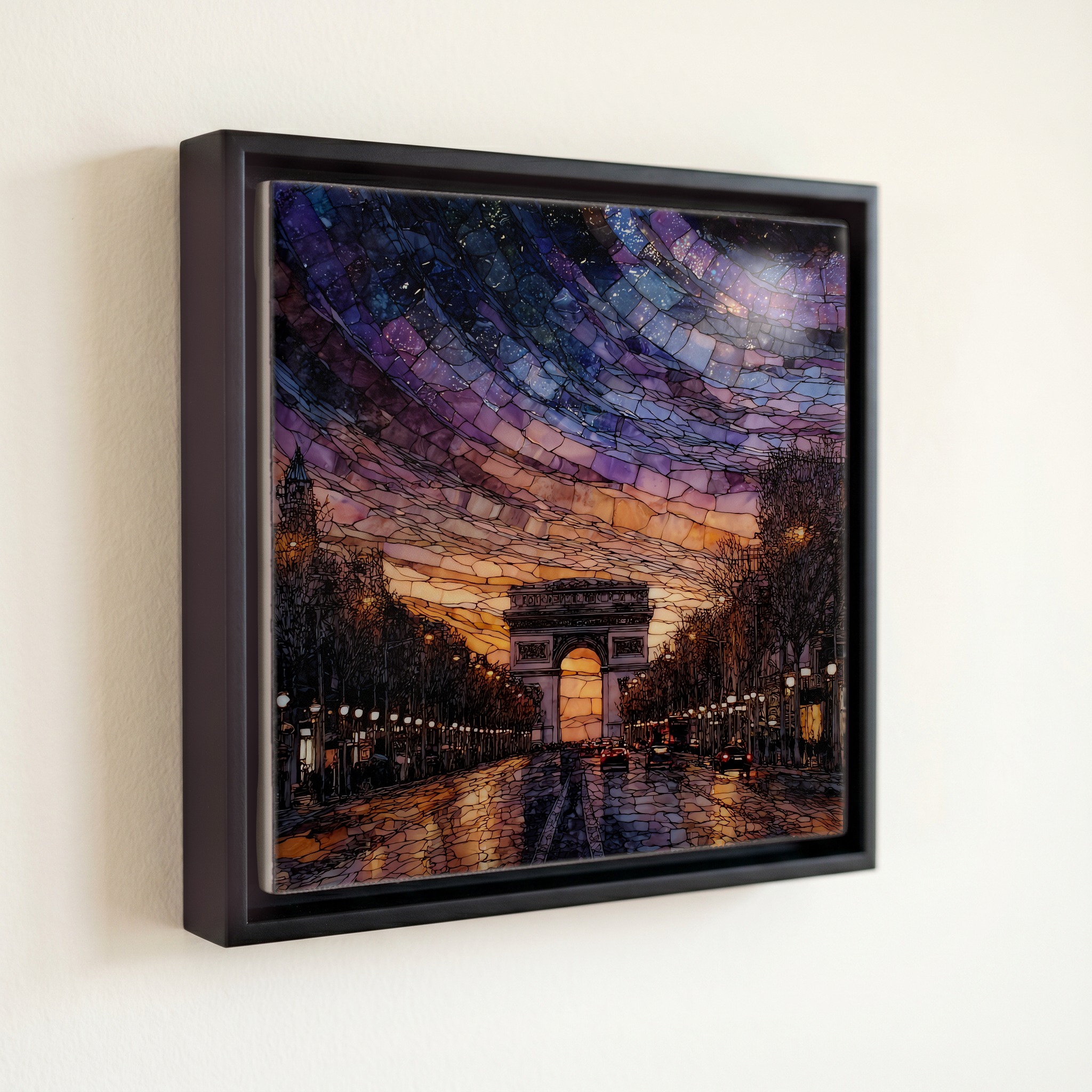
Champs-Elysees, on ceramic.
Each tile is finished by hand in our Knoxville studio. Artwork is slowly infused into the ceramic surface under high heat and pressure, and rests beneath a thin glossy finish. The colour lives in the surface, not on top of it.
Pick any four 4-inch tiles — National Parks you've been to, a Smokies set, the four seasons of one place. $ for a set of , cork-backed, ready to live on the table.
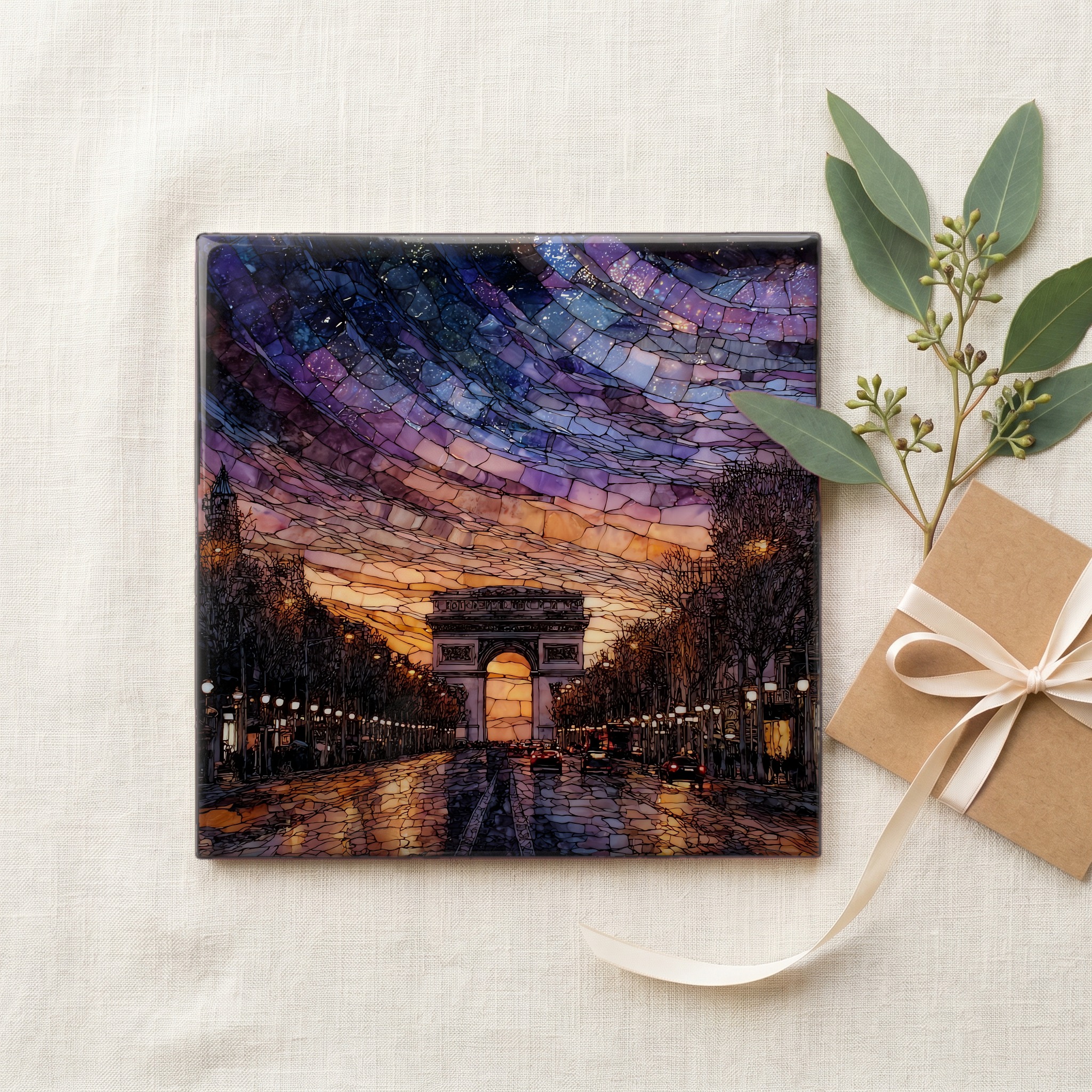
Each tile ships in a kraft box, tied with cream ribbon, with a handwritten note from the studio if you'd like to add one.
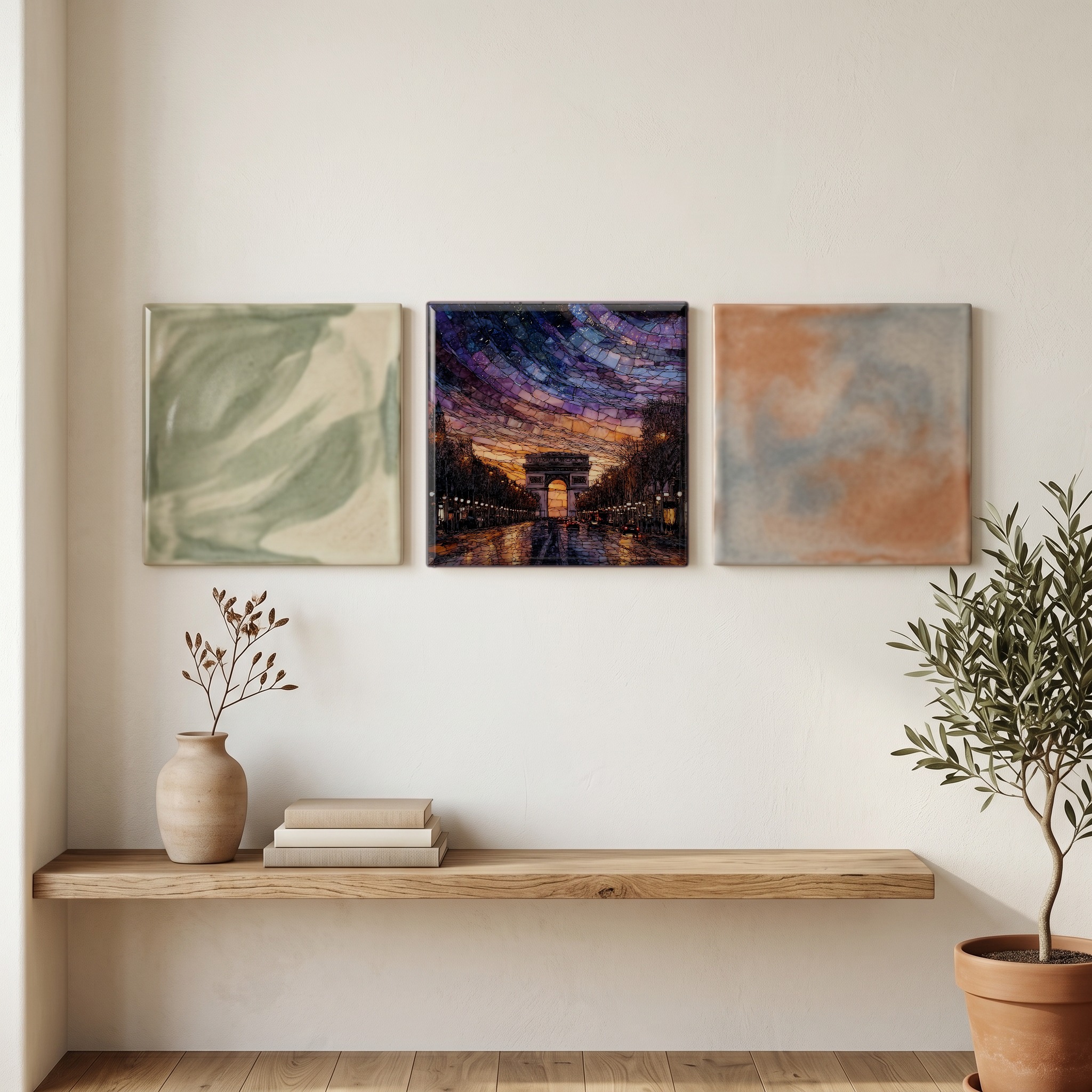
Three or five different vistas, hung together — a chapter of places you've been, or want to go.
The place, in three passes.
The Avenue des Champs-Élysées runs 1.9 kilometres (1.18 miles) through the 8th arrondissement of Paris, from Place de la Concorde at the eastern foot to Place Charles de Gaulle and the Arc de Triomphe at the western crown. The 70-metre-wide axis was laid out by André Le Nôtre in 1667 as an extension of the Tuileries' western perspective and pushed west to the Étoile across the eighteenth century. The lower half is a public garden of plane and horse-chestnut trees; the upper half is the commercial avenue of luxury houses, cafés, and a cinema row. Line 1 of the Métro runs its full length underground.
The avenue's east-west line is bordered above the Rond-Point by the cream limestone facades of the Haussmann era, set back behind double rows of plane and horse-chestnut trees. Baron Georges-Eugène Haussmann's prefecture rebuilt much of central Paris between 1853 and 1870, standardising the seven-storey facade with its mansard roof and wrought-iron balconies at the second and fifth floors. The buildings along the upper Champs-Élysées were largely built or rebuilt in that wave. The dressed stone is Lutetian limestone, quarried from the Paris Basin and the same material as Notre-Dame de Paris and the Louvre. Late afternoon turns the colour gold. The light comes from the west, off the Étoile, and runs the full length of the avenue.
Three set-pieces frame the avenue's calendar. On 14 July, the French president reviews the Bastille Day military parade as it descends from the Arc de Triomphe to Place de la Concorde, one of the oldest regular military parades in Europe and held since 1880. On the last Sunday of July, the final stage of the Tour de France finishes with eight laps of the avenue, a tradition since 1975. From mid-November through early January, the lower garden and the upper avenue are lit by the Illuminations des Champs-Élysées, a strand-lighting display switched on in a public ceremony that draws thousands.