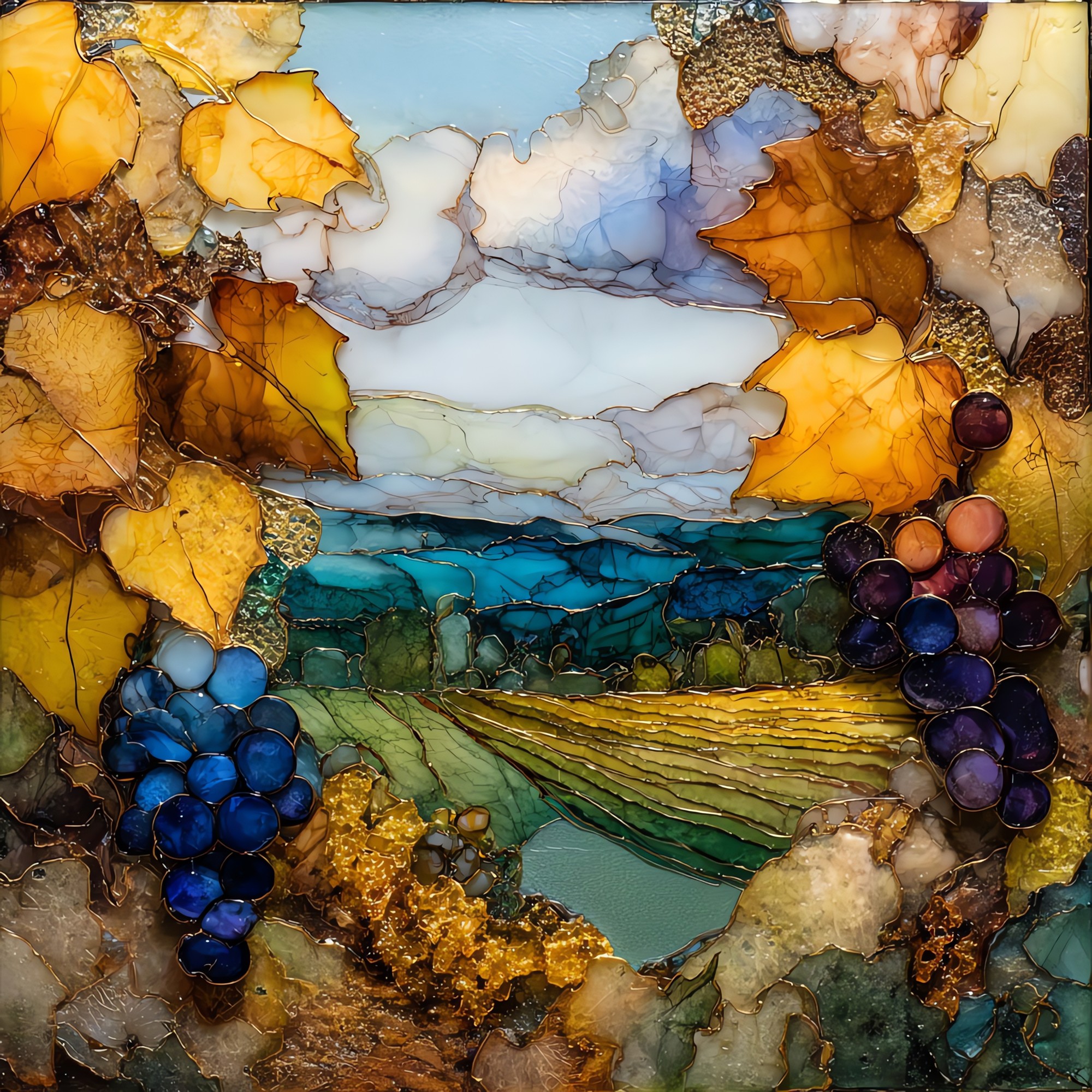
Champagne Vineyard October
— — the gold the harvest leaves behind.
Not only on a wall.
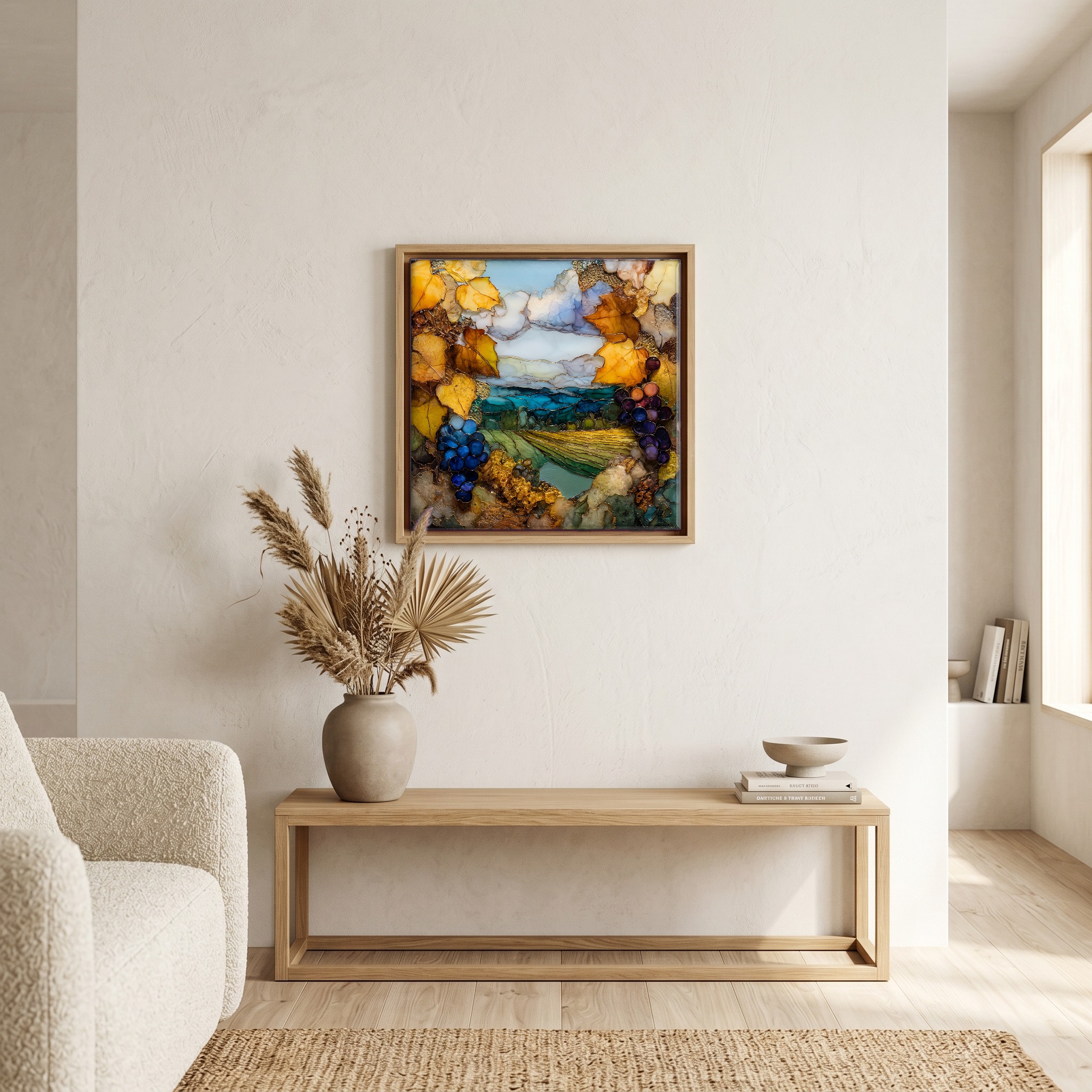
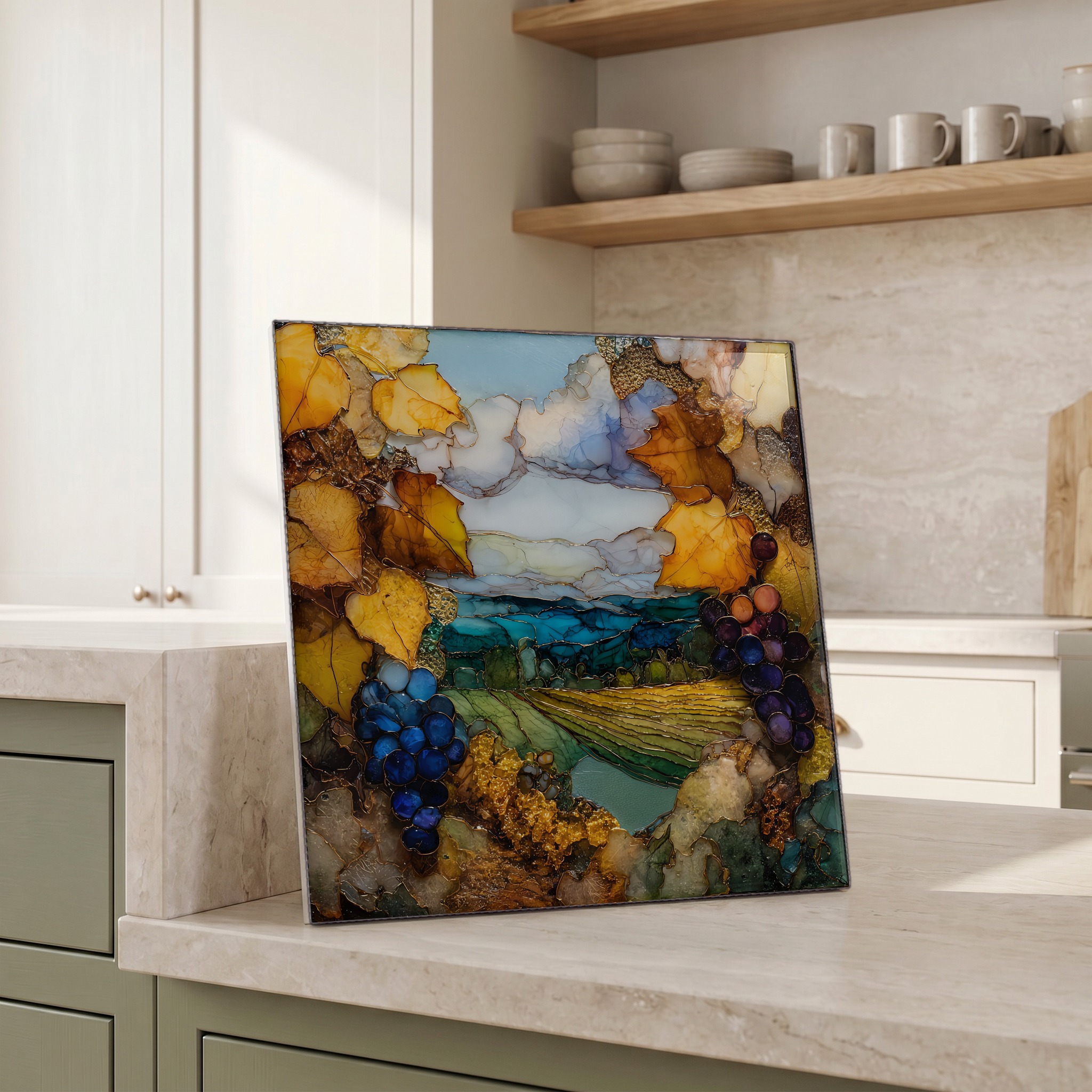
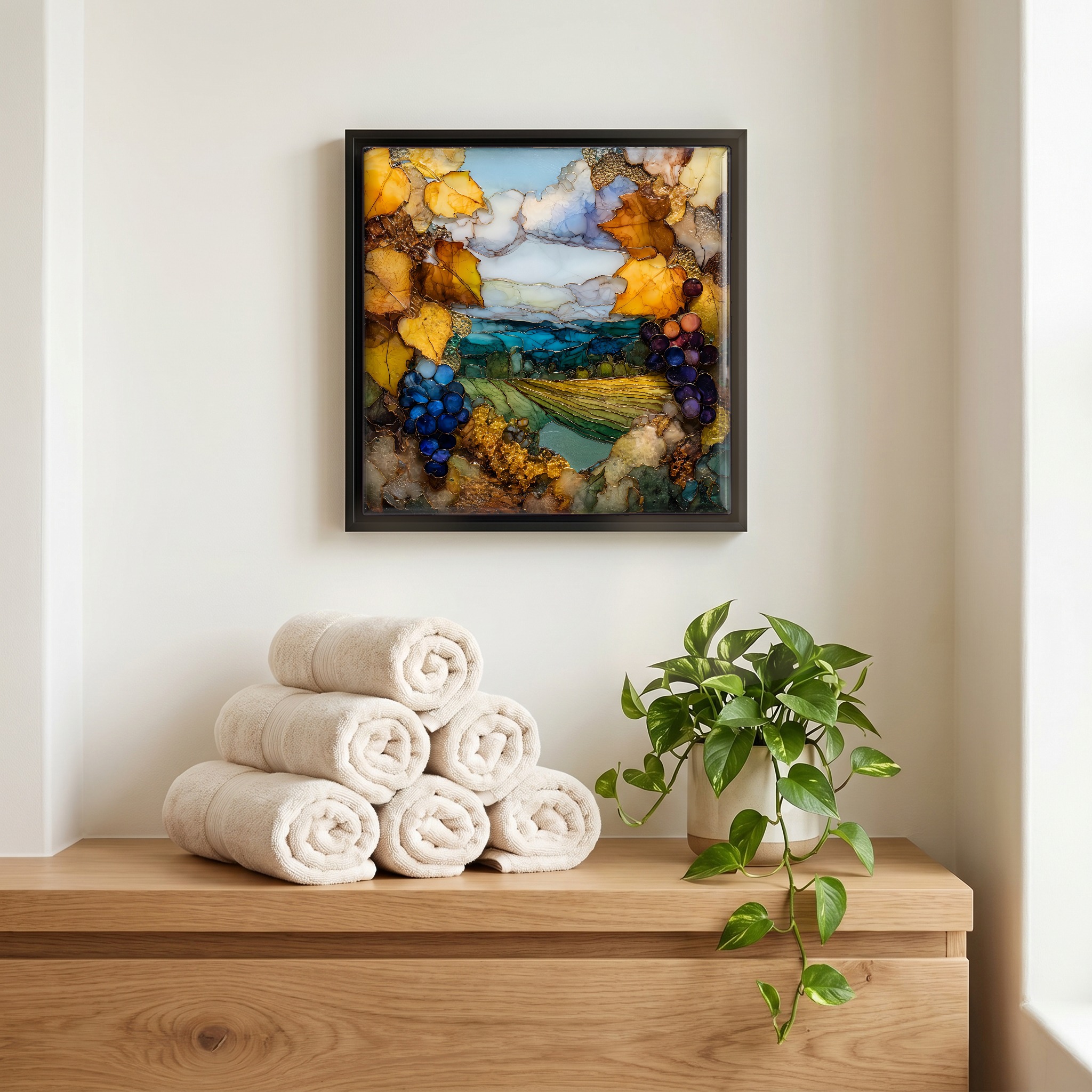
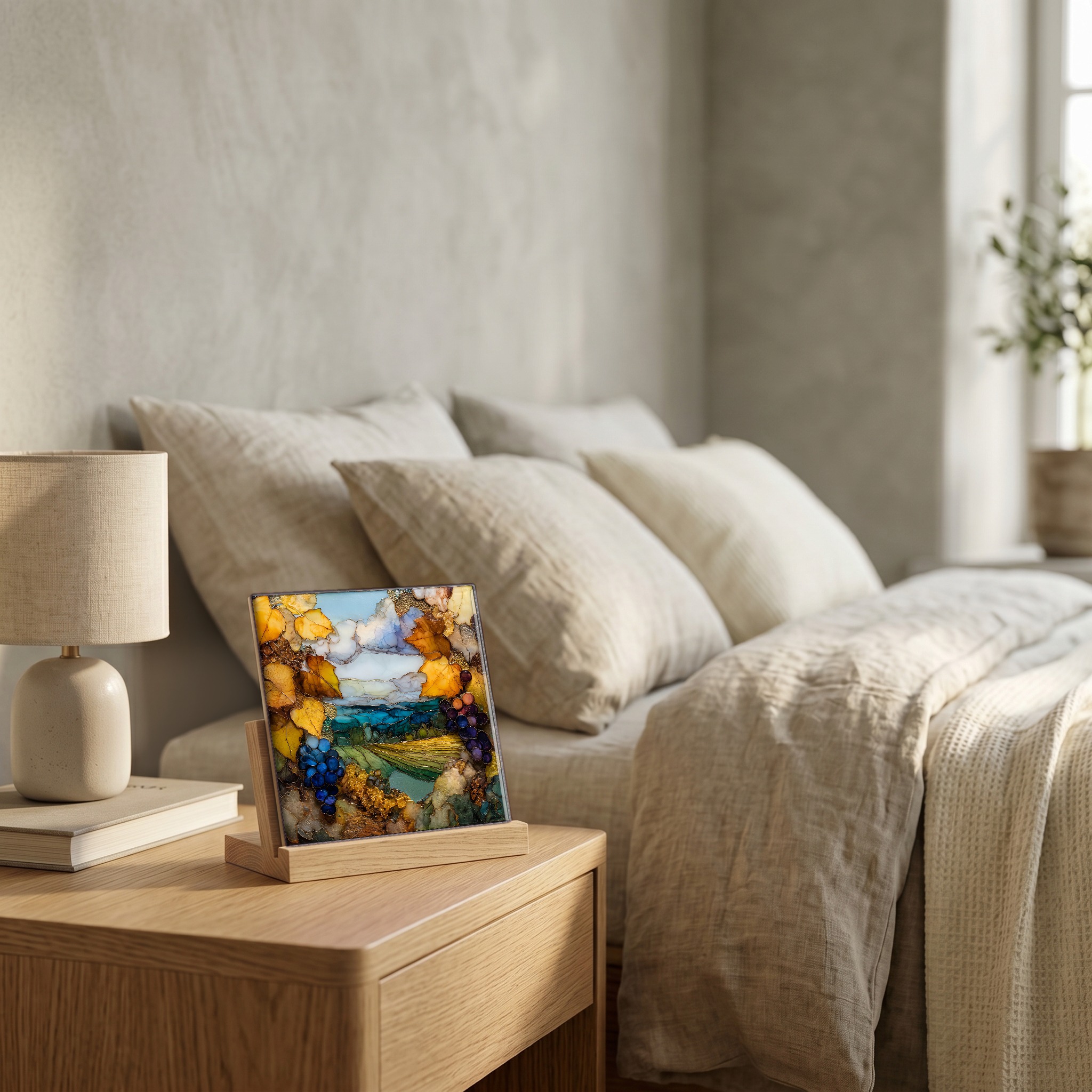
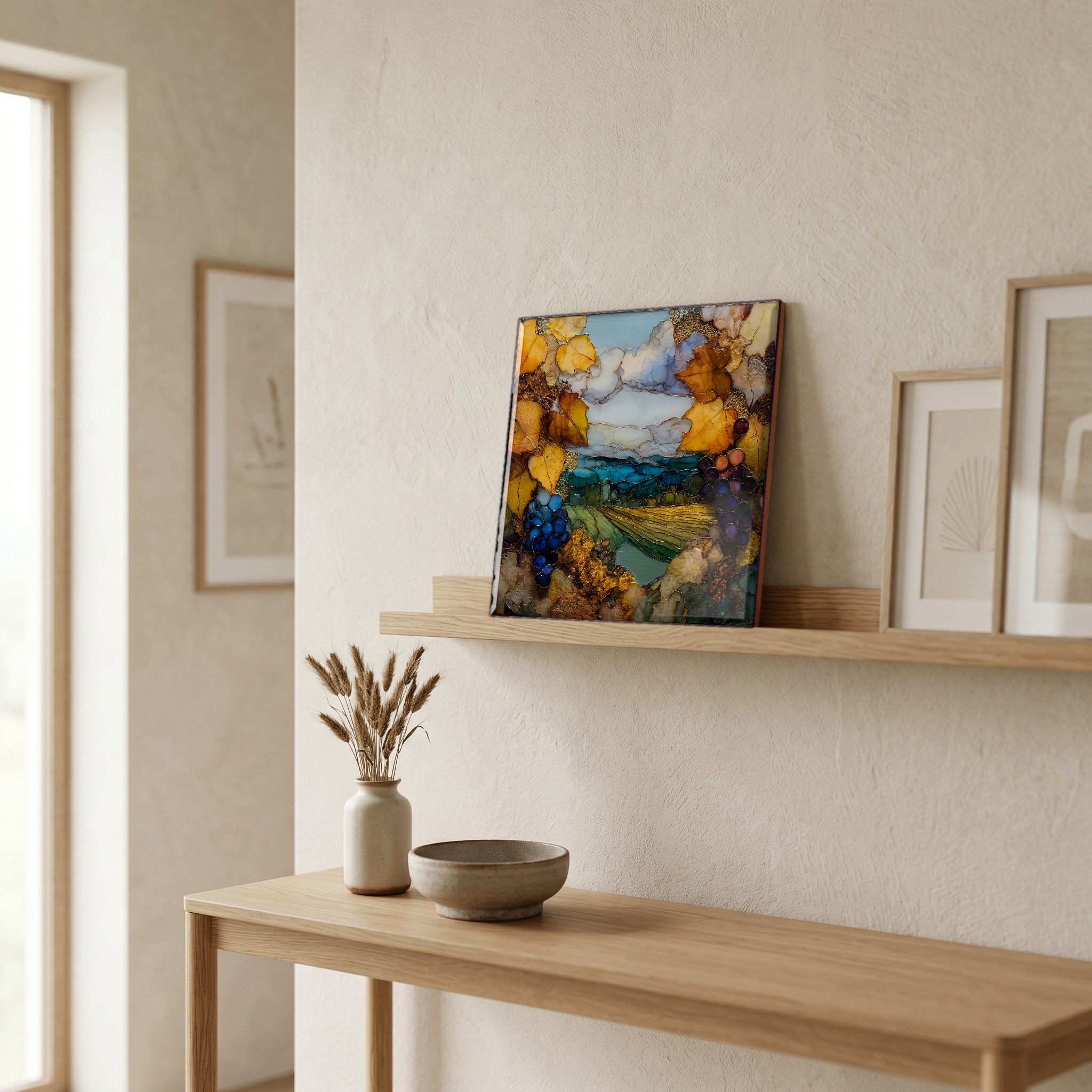
“Northeastern France in the second half of October, somewhere between Reims and Épernay. The grapes have been in for a month. What's left is the slow turn. Pinot Noir leaves yellow first, then Meunier russet, then Chardonnay paler, running in tidy rows down the chalk slopes. The light comes low across the hill by four o'clock. A grower's tractor passes every so often. The villages are quiet again, the harvest crews gone home. The chalk underneath is what makes the wine, and what holds the gold for the week before the frost.
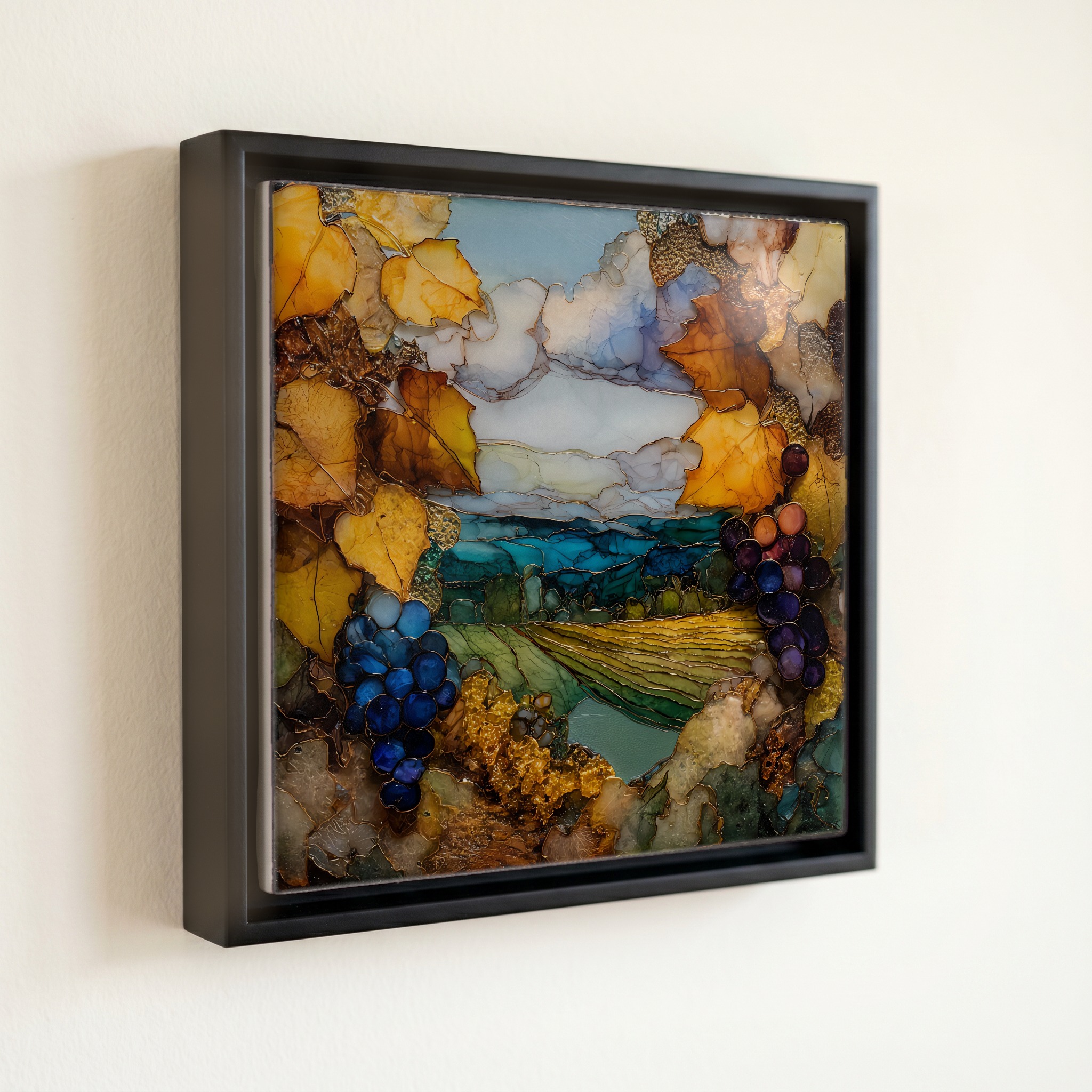
Champagne Vineyard October, on ceramic.
Each tile is finished by hand in our Knoxville studio. Artwork is slowly infused into the ceramic surface under high heat and pressure, and rests beneath a thin glossy finish. The colour lives in the surface, not on top of it.
Pick any four 4-inch tiles — National Parks you've been to, a Smokies set, the four seasons of one place. $ for a set of , cork-backed, ready to live on the table.
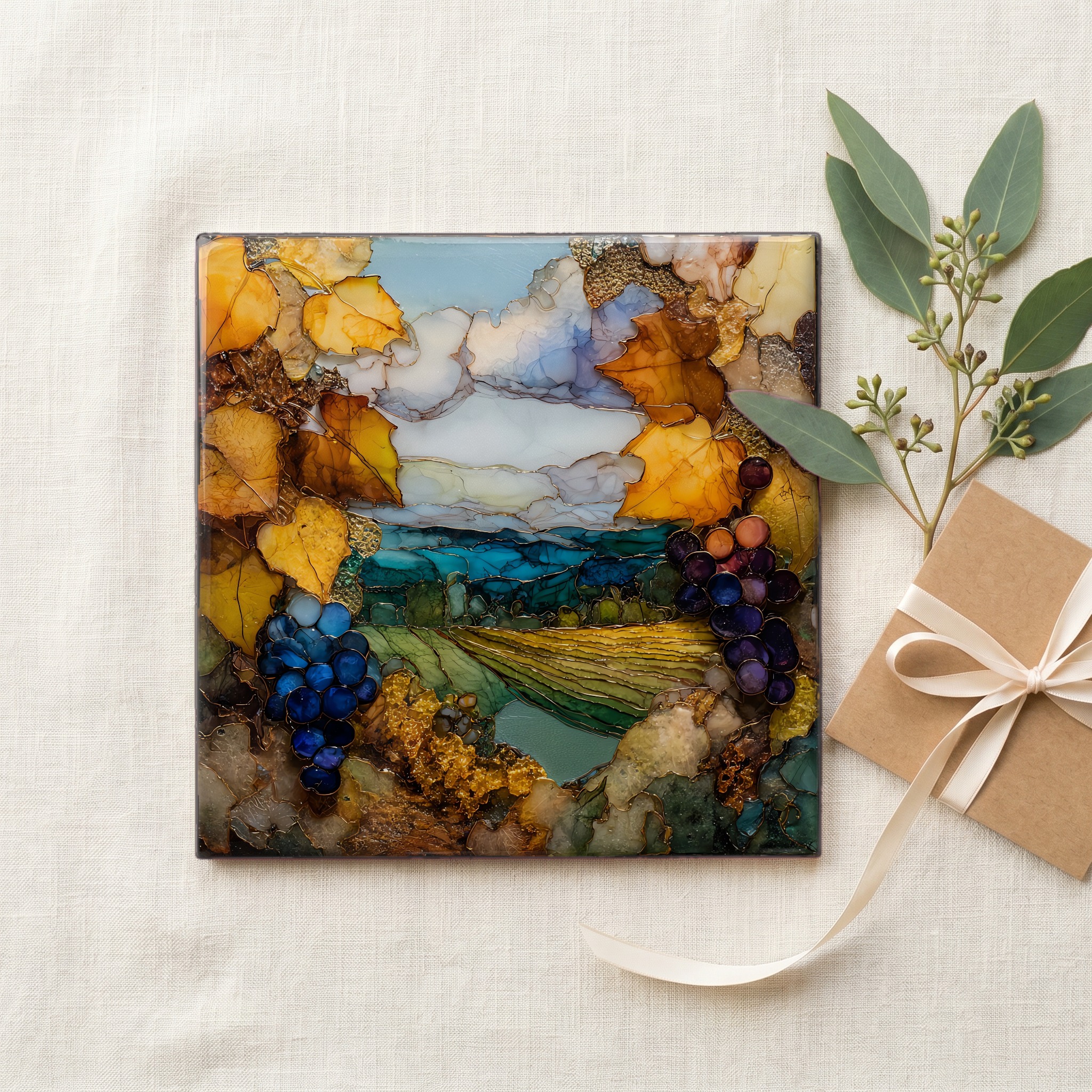
Each tile ships in a kraft box, tied with cream ribbon, with a handwritten note from the studio if you'd like to add one.
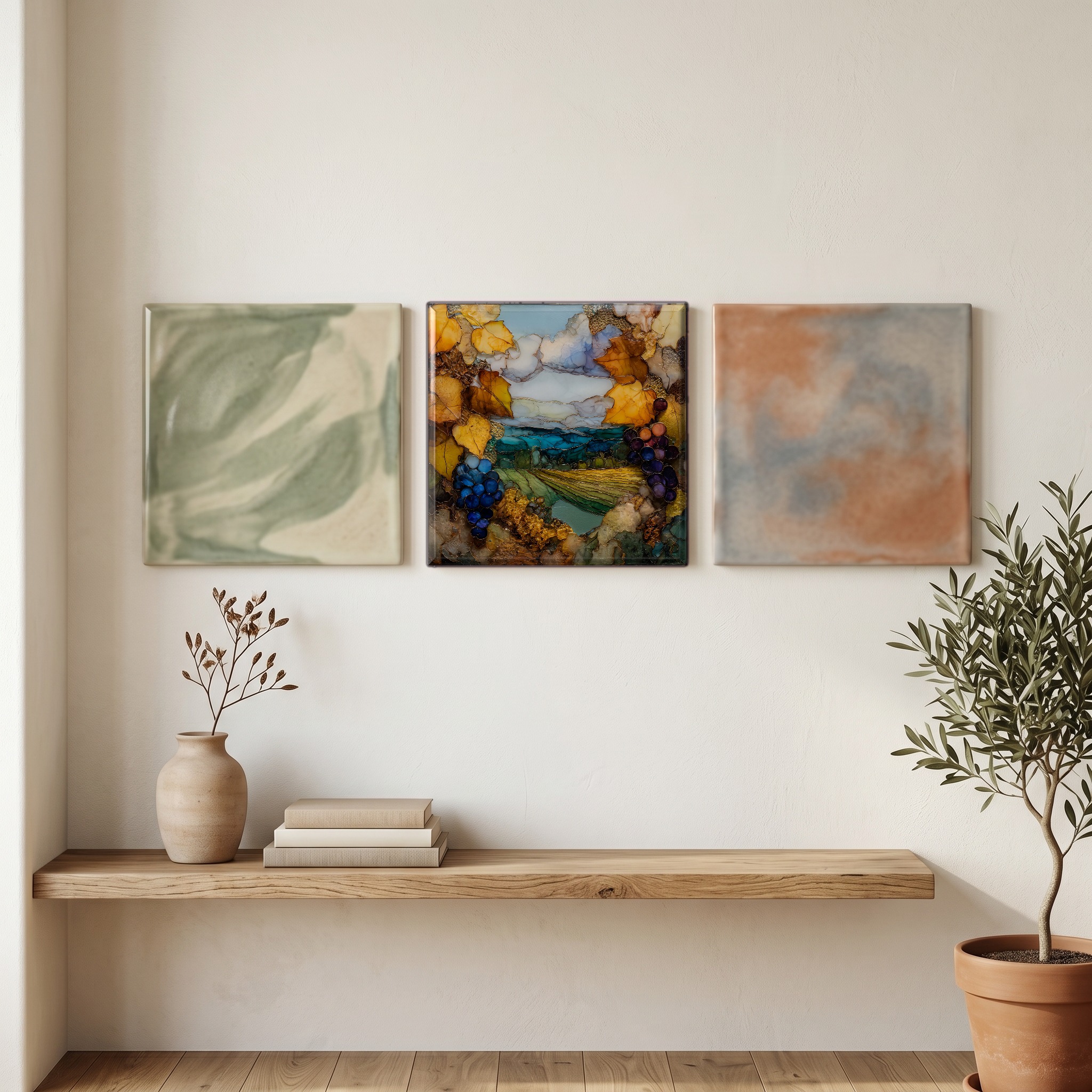
Three or five different vistas, hung together — a chapter of places you've been, or want to go.
The place, in three passes.
The Champagne wine region sits in northeastern France, about 145 kilometres east of Paris, spread across the départements of Marne, Aube, and Aisne. The appellation covers roughly 34,000 hectares planted almost entirely to three varieties: Chardonnay, Pinot Noir, and Meunier. The hillside vineyards above Reims, Épernay, Aÿ, and Hautvillers were inscribed on the UNESCO World Heritage list in 2015 as the Champagne Hillsides, Houses and Cellars. Hautvillers is where the Benedictine monk Dom Pierre Pérignon worked as cellar master from 1668 until his death in 1715. The four classic subregions (Montagne de Reims, Vallée de la Marne, Côte des Blancs, and Côte des Bar) all sit on the same Cretaceous chalk that gives the wine its mineral spine.
The chalk is the thing. Beneath the topsoil of the Champagne hillsides sits a deep bed of Belemnite and Micraster chalk, laid down in the Cretaceous sea between roughly 90 and 70 million years ago. The chalk drains fast, reflects light back into the vine canopy, and stores heat overnight. Those three traits let the grapes ripen this far north, around the 49th parallel. The same chalk runs underground beneath Reims and Épernay as the crayères, the Gallo-Roman chalk pits the maisons converted into wine cellars. Around 250 kilometres of these chalk galleries lie under Reims alone, holding bottles at a steady 10 to 12°C. The chalk is what makes the wine, and what the vines stand on.
The Champagne harvest, the vendange, almost always finishes in September. By October the cellar work has moved indoors and the vineyards turn. Pinot Noir leaves yellow first, then russet; Meunier follows; Chardonnay stays paler. Average October daytime temperatures in Reims sit around 14°C, dropping to about 7°C at night, and the first frosts can arrive late in the month. The light gets low and long across the south-facing slopes, the orientation the appellation rules require for the AOC's hillside parcels. The walking paths between Hautvillers, Aÿ, and Mareuil-sur-Aÿ stay open and quiet. By early November the leaves are gone and the dormant brown twigs hold the geometry of the rows alone.