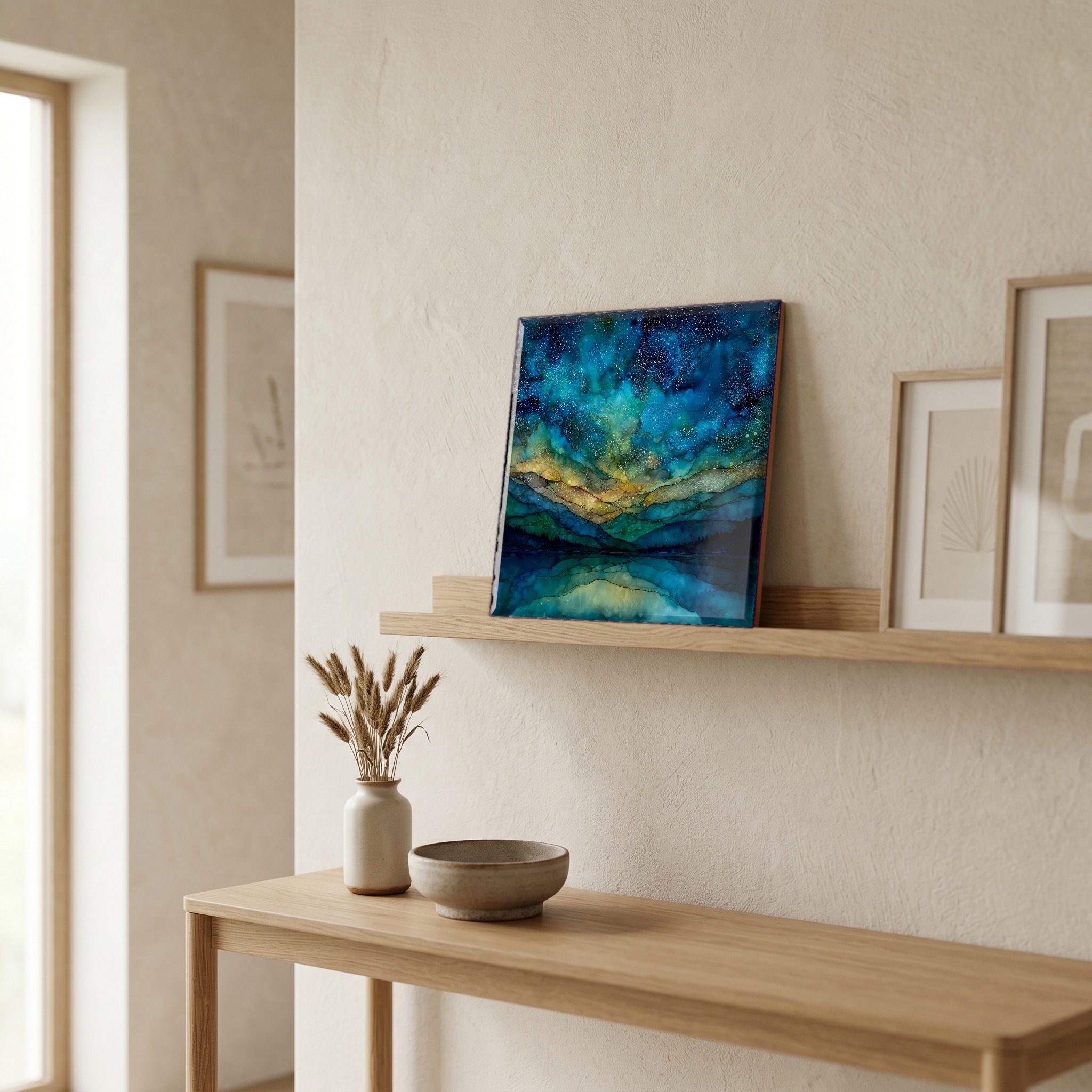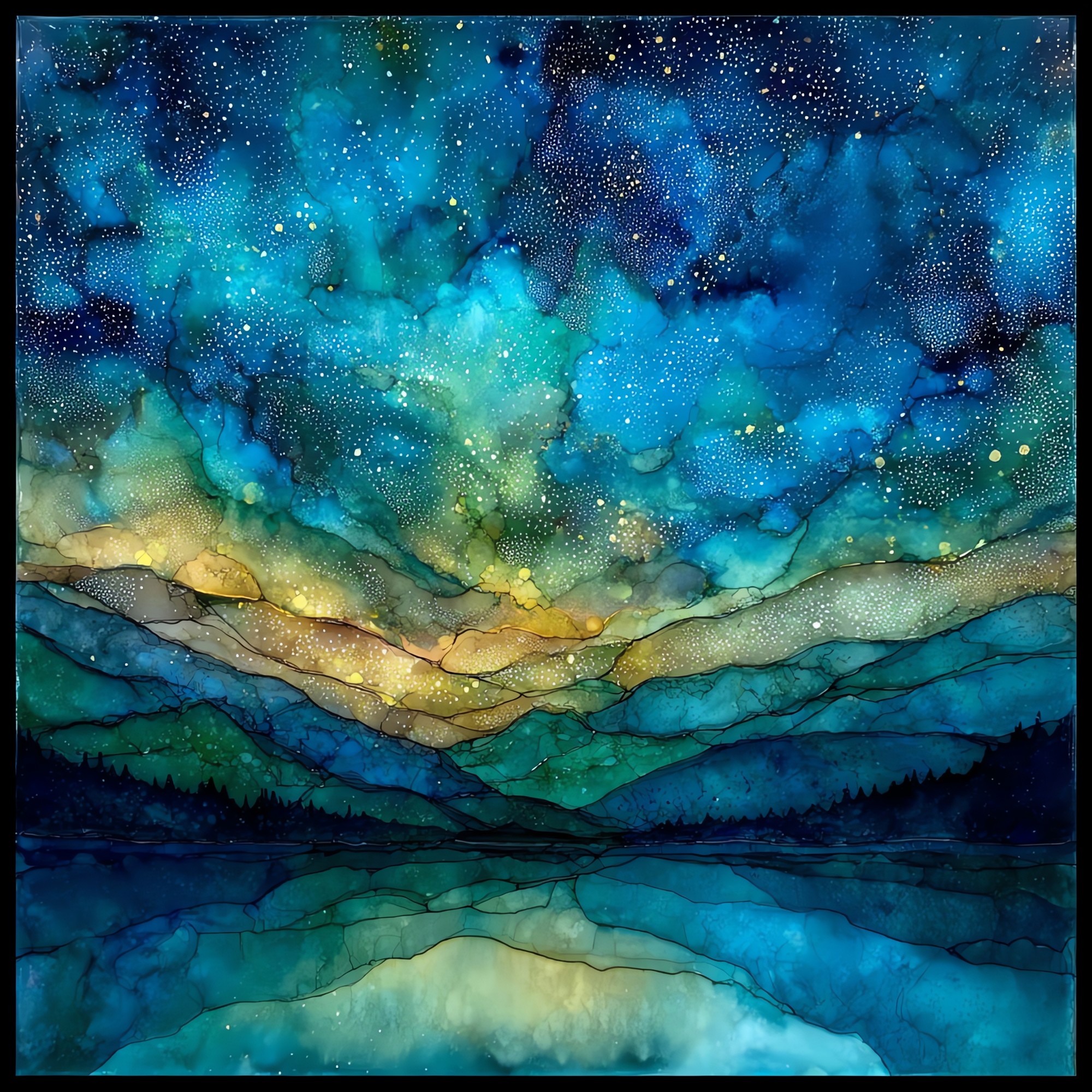
Wender·Vista
Cevennes National Park
shown on ceramic, 12-inch tileFrance
in the southern Massif Central, north of Montpellier

Cevennes National Park

the dark Europe still keeps.

Where it lives

Not only on a wall.

A small tile on the nightstand catching the morning. A larger one above the fire. Yours, wherever you spend the slow hours.
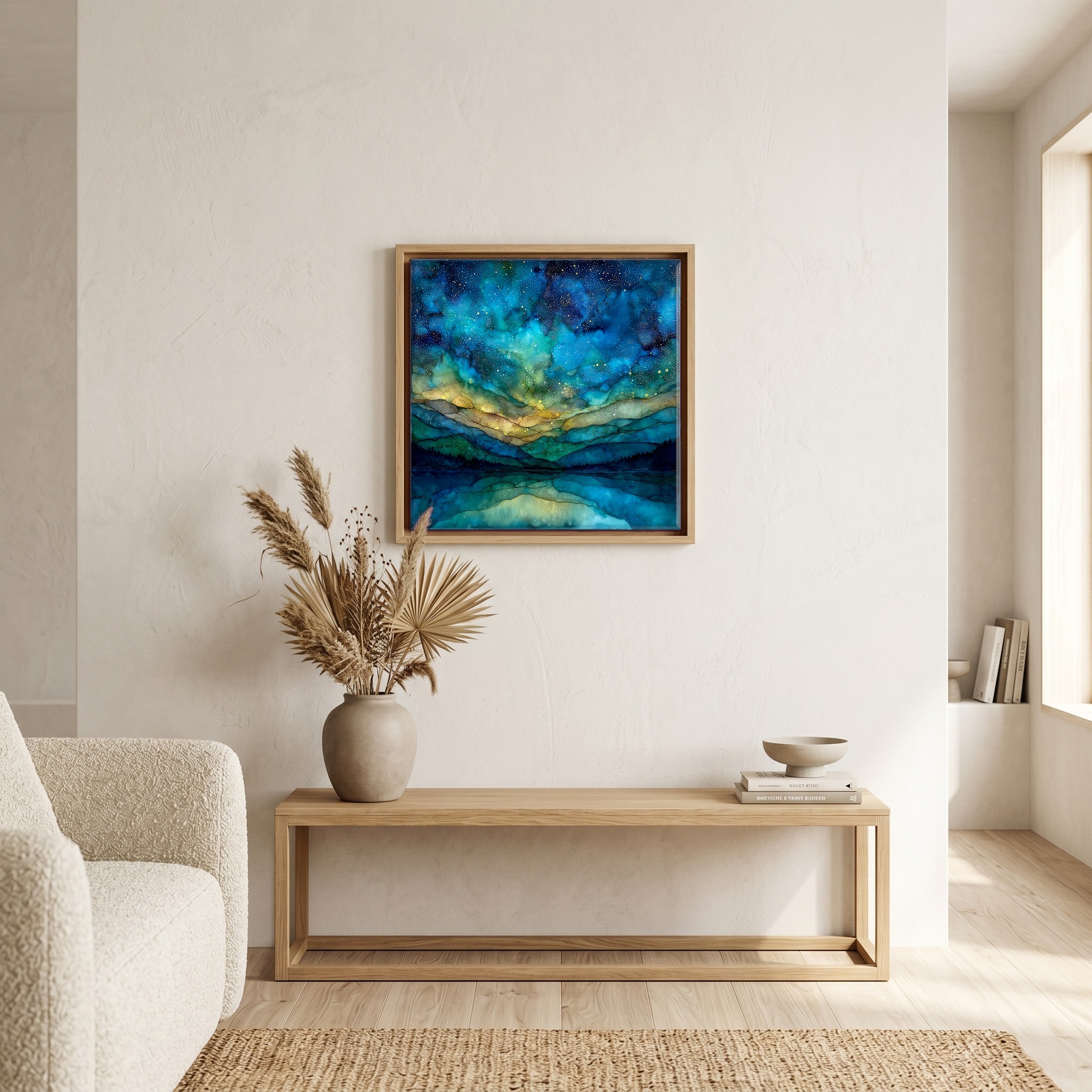
Above the bench, in a warm oak surround.
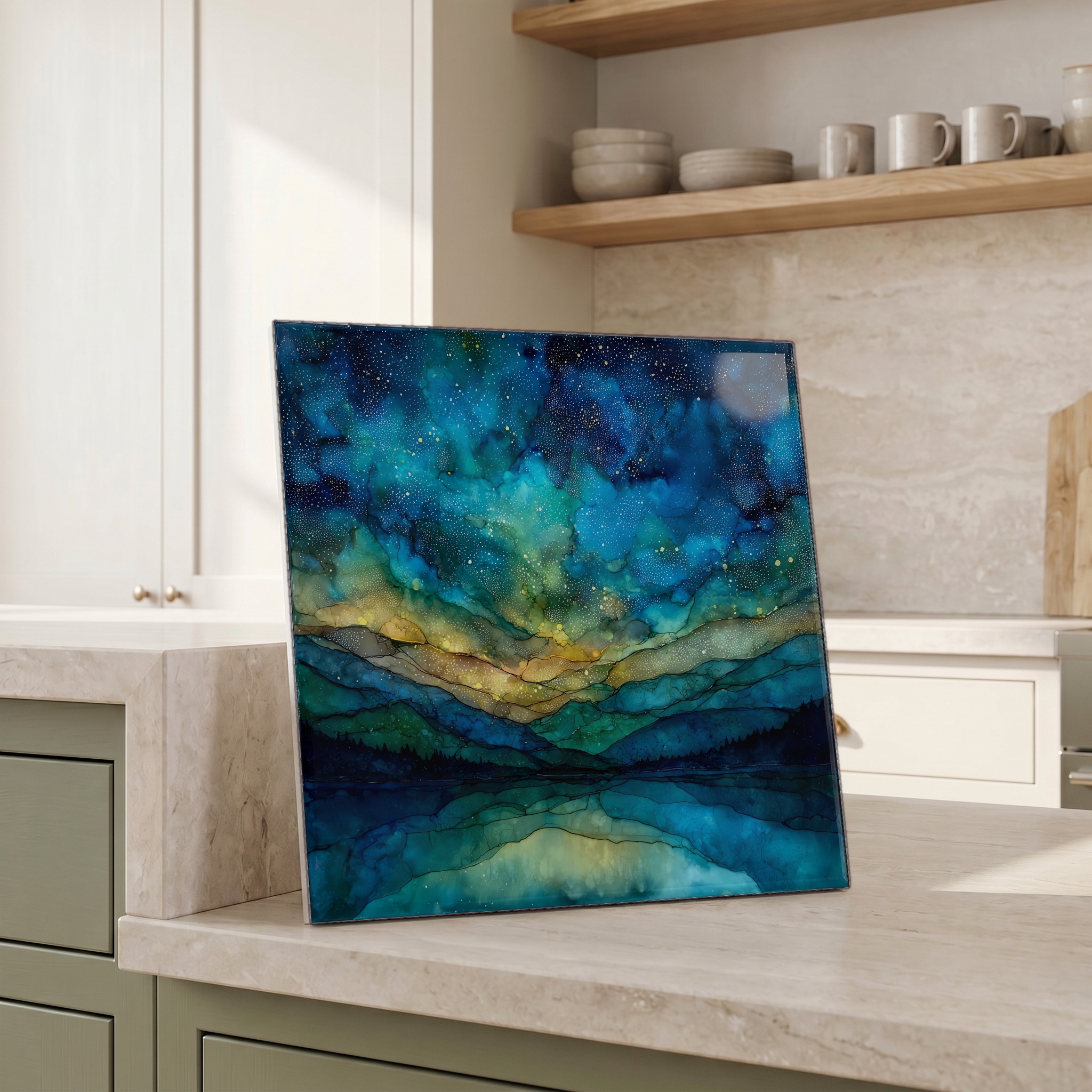
Beside the kettle, propped on the counter.
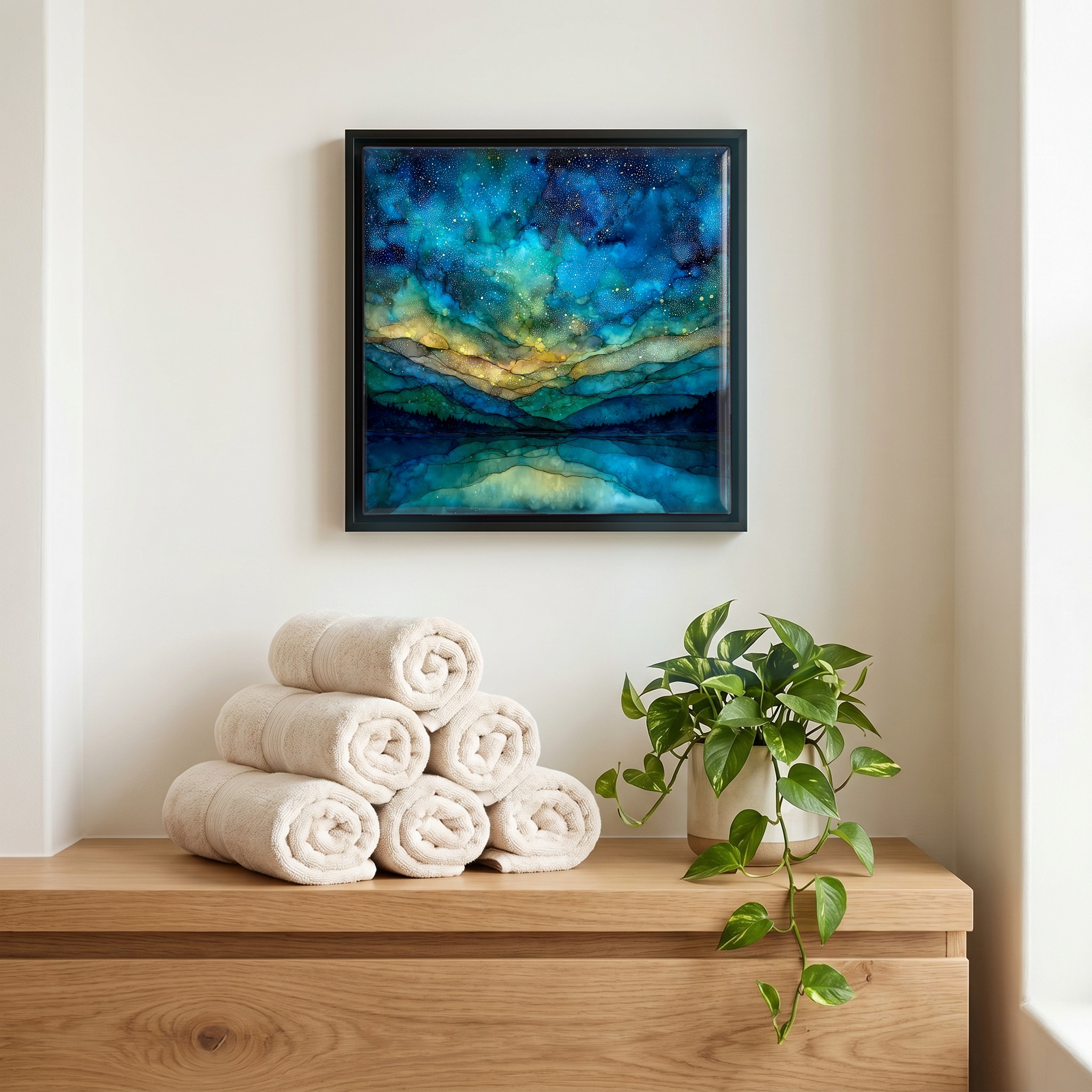
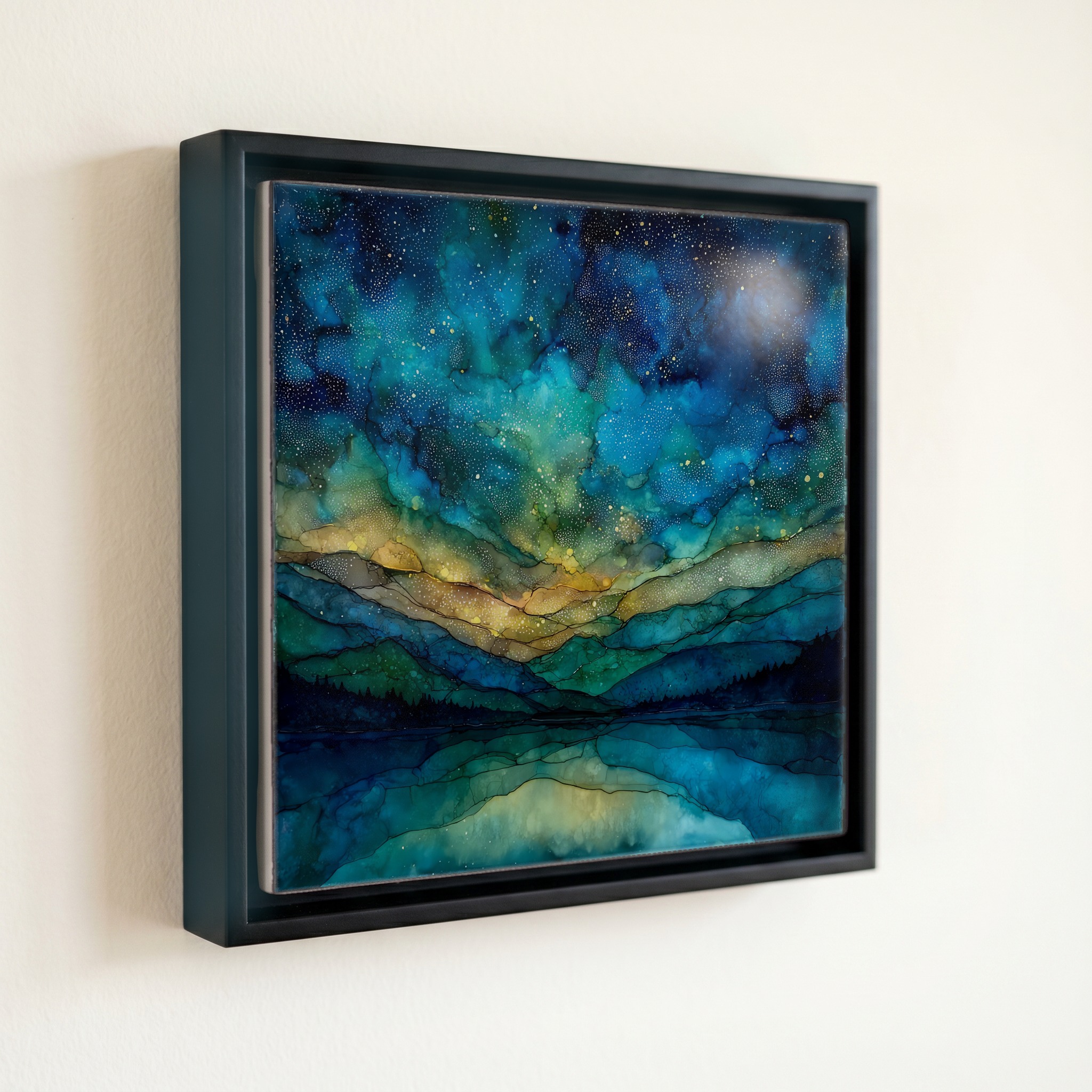
Above the linens, in a slim black surround.
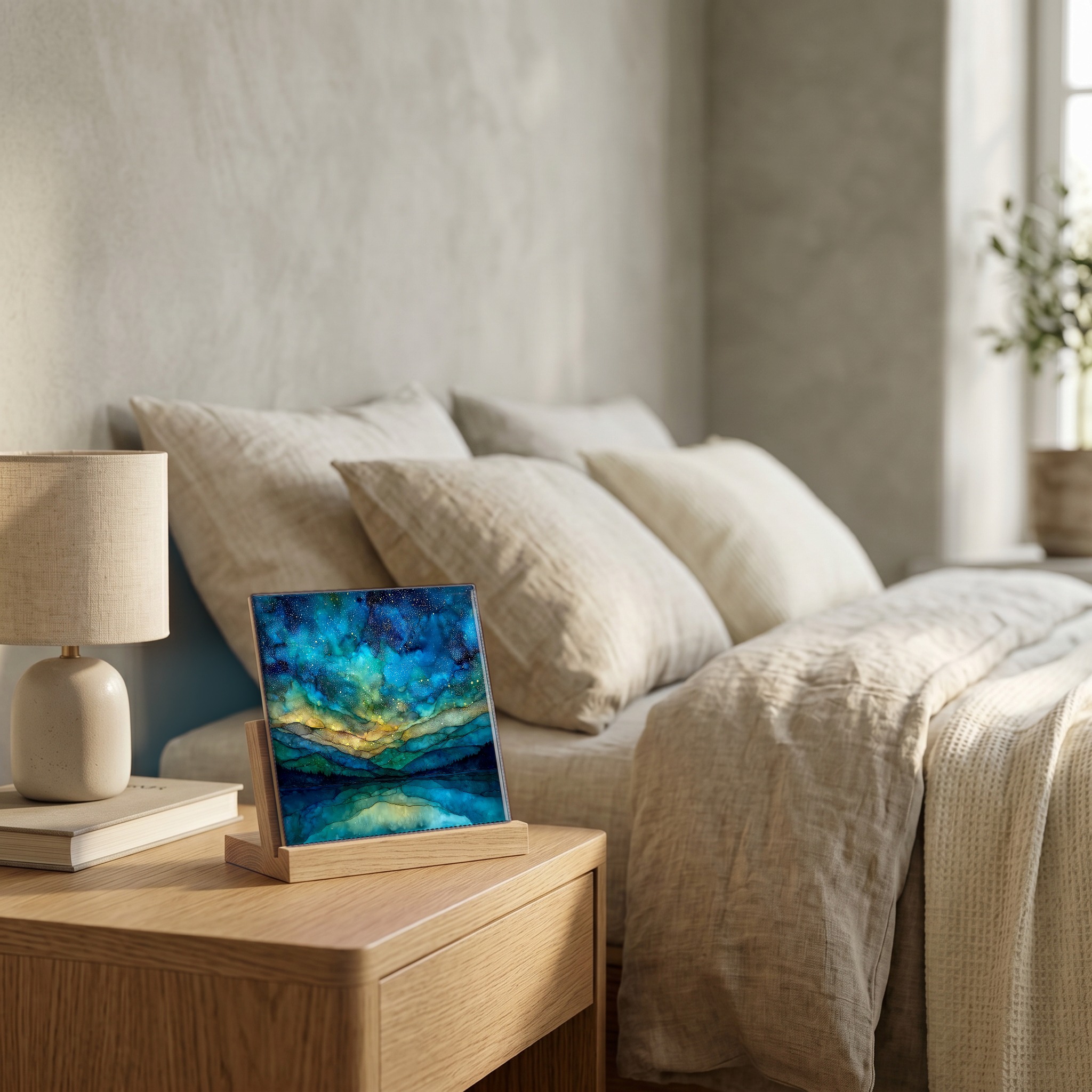
On the nightstand, on a light oak stand.
On a picture ledge, where the light comes in.
a note from the studio

A high plateau and gorge country in southern France, where the granite of Mont Lozère gives way to the limestone causses and the schist valleys of the Cévennes. The park became a UNESCO International Dark Sky Reserve in 2018, one of the largest in Europe at roughly 3,560 square kilometres. On a clear night the Milky Way reads as a band, not a smear, and constellations the lowlands lost decades ago come back. There is a long-distance trail that follows Robert Louis Stevenson's 1878 walk with his donkey. Old chestnut groves on the lower slopes. Wind off the granite. The dark holds.
from the studio
shown in a slim black floating frame · 6 × 6 in
— bring it home

Cevennes National Park, on ceramic.

Each tile is finished by hand in our Knoxville studio. Artwork is slowly infused into the ceramic surface under high heat and pressure, and rests beneath a thin glossy finish. The colour lives in the surface, not on top of it.

What kind of piece?
One tile — square or rectangle.
How big?
the popular one — counter, shelf, nightstand
6 × 6 in · 15 cm · 1.6 lb
Surface finish
A clear glossy finish — the artwork reads as if under resin. Ideal for show-pieces and framed wall art.
How it sits
A hidden cleat — sits ¼″ proud of the wall.
$58
Hand-finished and shipped from our studio at the foot of the Smokies. On your wall in about ten days.
size
6 × 6 in
15 cm
weighs
1.6 lb
solid in the hand
surface
ceramic, hand-finished
art rests beneath a thin glossy finish
from
Knoxville, TN
our family studio, at the foot of the Smokies
— start a Coaster Set

Pick any four 4-inch tiles — National Parks you've been to, a Smokies set, the four seasons of one place. $ for a set of , cork-backed, ready to live on the table.
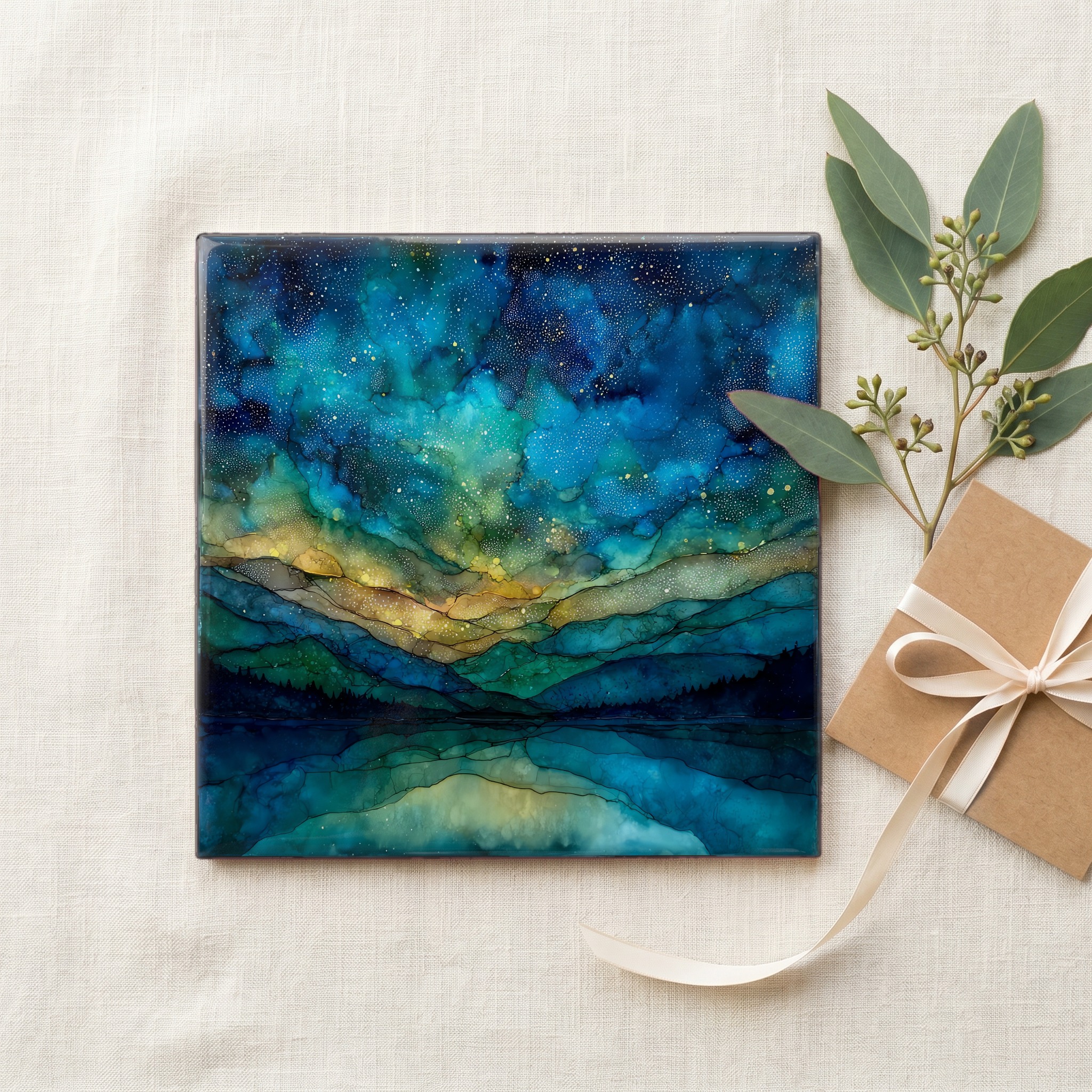
comes gift-ready
comes gift-ready

Each tile ships in a kraft box, tied with cream ribbon, with a handwritten note from the studio if you'd like to add one.
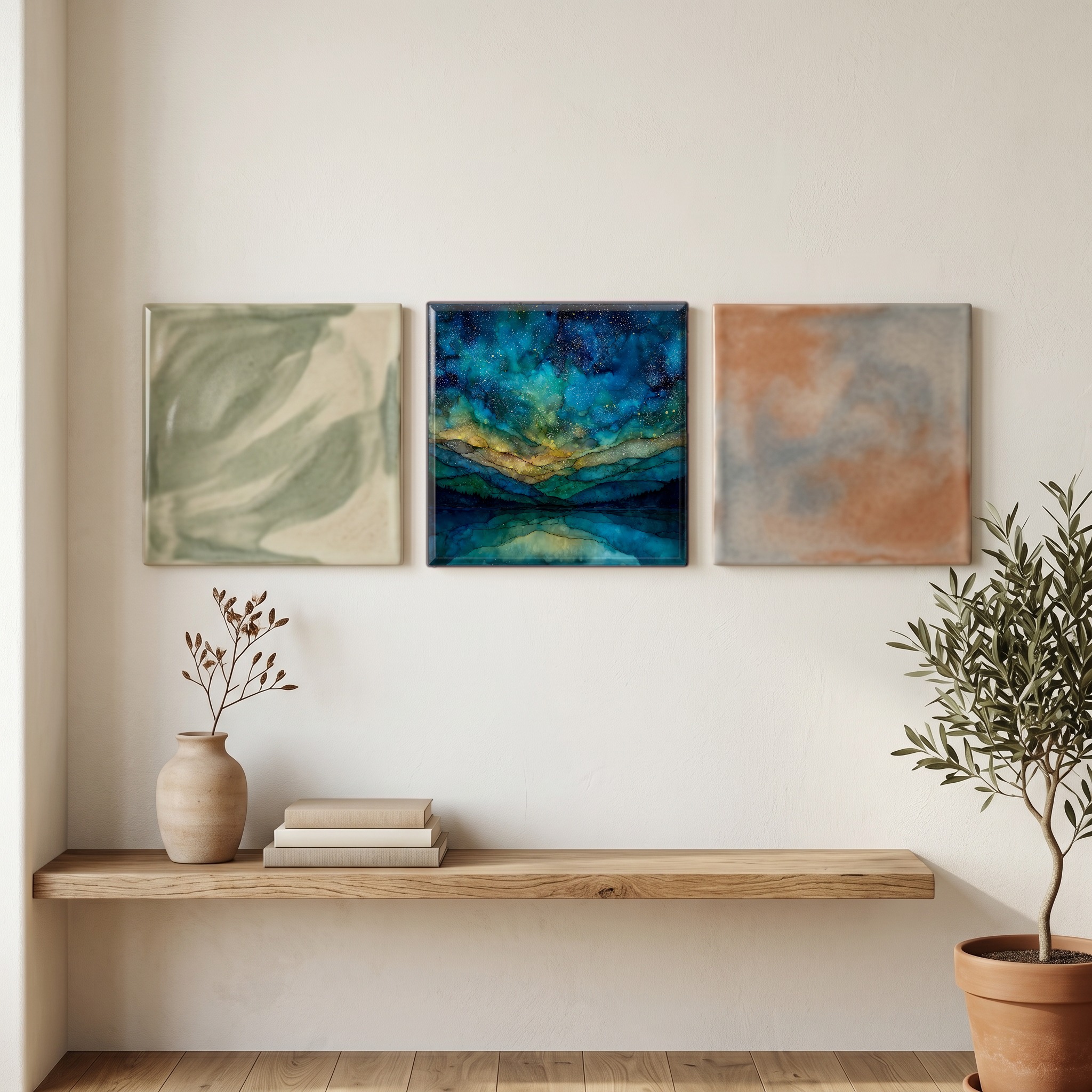
or build a grouping
or build a grouping

Three or five different vistas, hung together — a chapter of places you've been, or want to go.

about Cevennes National Park

The place, in three passes.

A little of what's known, in case you fall down the rabbit hole — or want to go see it yourself.
the place

The Parc national des Cévennes covers roughly 937 square kilometres of core protected area in south-central France, straddling the départements of Lozère, Gard, and Ardèche in the Occitanie region. The park was established in 1970, the only French national park to include permanent residents and traditional agro-pastoral activity within its borders. Three geologies meet here: the granite dome of Mont Lozère at 1,699 metres, the limestone causses to the west, and the schist valleys of the Cévennes proper. Florac, on the Tarnon river, serves as the administrative seat. UNESCO designated the Causses and Cévennes a World Heritage cultural landscape in 2011, recognising the Mediterranean agro-pastoral system that has shaped the terraces, drailles, and shepherd routes for over a thousand years.

the silence

In 2018 the International Dark-Sky Association certified the Parc national des Cévennes as a Dark Sky Reserve covering approximately 3,560 square kilometres, one of the largest in Europe. The designation followed years of regional lighting reform: communes inside and around the park converted public street lighting to warm-amber LEDs with downward-facing fixtures and curfew dimming. From a clear ridge on Mont Aigoual, summer nights resolve the Milky Way as a structured band rather than the soft smear visible from most of lowland Europe. The Aigoual observatory, in continuous meteorological operation since 1894, sits inside the reserve. The dark here is not the absence of light. It is a chosen condition, maintained by ordinance and habit.

— informed by Wikipedia, Mont Aigoual
the visit

The park is reached most directly from Montpellier, about 100 kilometres south, or from Nîmes via the A75 autoroute. Florac, on the Tarnon river, holds the visitor centre and the park headquarters. The GR 70, marked as the Stevenson Trail, traces Robert Louis Stevenson's twelve-day walk from Le Monastier-sur-Gazeille to Saint-Jean-du-Gard in autumn 1878, published the following year as Travels with a Donkey in the Cévennes. Hiking the full 272 kilometres takes most walkers ten to fourteen days. For stargazing, new-moon weeks between May and September draw amateur astronomers to public platforms at the Col de Finiels, the Aigoual ridge, and the village of Saint-André-de-Valborgne. Spring brings broom yellow on the slopes; autumn turns the chestnut woods copper.

where
France · Florac, Lozère
position
44.3200° N · 3.5900° E
the neighborhood

What's nearby.

A handful of named places within an hour's walk or short drive. Some we've already painted; some we will.
18 km NE
Mont Lozère
granite summit
22 km S
Mont Aigoual
mountain observatory
16 km NW
Gorges du Tarn
limestone gorge
20 km SW
Causse Méjean
limestone plateau
18 km NE
Le Pont-de-Montvert
granite village
35 km SE
Saint-Jean-du-Gard
Huguenot village
N
Cevennes National Park
Mont Lozère
Mont Aigoual
Gorges du Tarn
Causse Méjean
Le Pont-de-Montvert
Saint-Jean-du-Gard
common questions

What people ask.

A few questions we get about Cevennes National Park — and about bringing the piece home.
about the place

The Parc national des Cévennes lies in south-central France, in the southern Massif Central across the départements of Lozère, Gard, and Ardèche. The park headquarters and visitor centre sit in Florac, roughly 100 kilometres north of Montpellier.

The International Dark-Sky Association certified the park as a Reserve in 2018, covering roughly 3,560 square kilometres. Communes across the park converted public lighting to warm-amber LEDs with curfew dimming, preserving night skies that resolve the Milky Way as a structured band rather than a soft smear.

The Parc national des Cévennes was created in 1970. It is the only French national park that includes permanent residents and active traditional agro-pastoral activity within its core area, a model recognised by UNESCO as a World Heritage cultural landscape in 2011.

Mont Lozère reaches 1,699 metres at the Sommet de Finiels and is the highest granite point in the southern Massif Central. The summit ridge is treeless and exposed; on clear nights at the Col de Finiels the dark-sky views toward the south are unobstructed.

The GR 70, or Stevenson Trail, marks Robert Louis Stevenson's twelve-day walk with a donkey named Modestine in autumn 1878, published the following year as Travels with a Donkey in the Cévennes. The route runs roughly 272 kilometres from Le Monastier-sur-Gazeille to Saint-Jean-du-Gard.

Late spring through early autumn offers the most reliable weather, with May and September favoured for hiking. For stargazing, the new-moon weeks between May and September are best. Winters on Mont Lozère bring snow and closed mountain roads.

Wolves returned to the Cévennes in the early 2010s, descended from the Italian Alpine population that began recolonising France in 1992. Griffon vultures, reintroduced to the nearby Gorges de la Jonte beginning in 1981, are now resident across the limestone causses.

about the piece in your home

It has been a meaningful gift for our customers with family or summer-house ties to the Cévennes and the wider Massif Central. The night-sky angle resonates with stargazers and amateur astronomers as well. A Small or a Coaster Set with a handwritten note from the studio travels well.

The deep indigos, pewter, and warm-amber palette sits well in Mountain-modern interiors, dark-romantic libraries, and Jewel-tone Maximalist rooms. The piece reads at home above a stone fireplace, a leather-and-walnut console, or against a clay-plaster wall.

Astrotourism and dark-sky travel have grown each year since the International Dark-Sky Association formalised its certification programme in 2001. The visual category sits inside the broader biophilic and slow-travel movements; pieces that hold the night without graphic-poster flatness are increasingly sought after.

Above a standard sofa, the Large carries the wall on its own. For a wider statement, a 4-tile Mural extends the night sky into a horizontal band, and a 9-tile Mural anchors a feature wall. Above a console, the Medium balances the furniture below.

Yes, with the Dura Satin or Matte finish. The colour is slowly infused into the ceramic surface under high heat and pressure, so steam, splashes, and standard cleaning do not affect it. The Glossy finish is reserved for framed wall installations away from constant moisture.

A microfibre cloth with plain water is enough for most marks. For heavier residue, a mild dish soap diluted in water works without harming the surface. Avoid abrasive scrubbers, acidic cleaners, and ammonia-based glass sprays.

Yes. Every WenderVista piece originates inside the studio in Knoxville, Tennessee, under Reid Wender's curatorial eye. We license nothing from third parties. Each tile is hand-finished in-house.

if this one stayed with you

A few you might also love.

Hand-picked by the eye that found Sorapis. Same air, same kind of quiet.