Wender·Vista
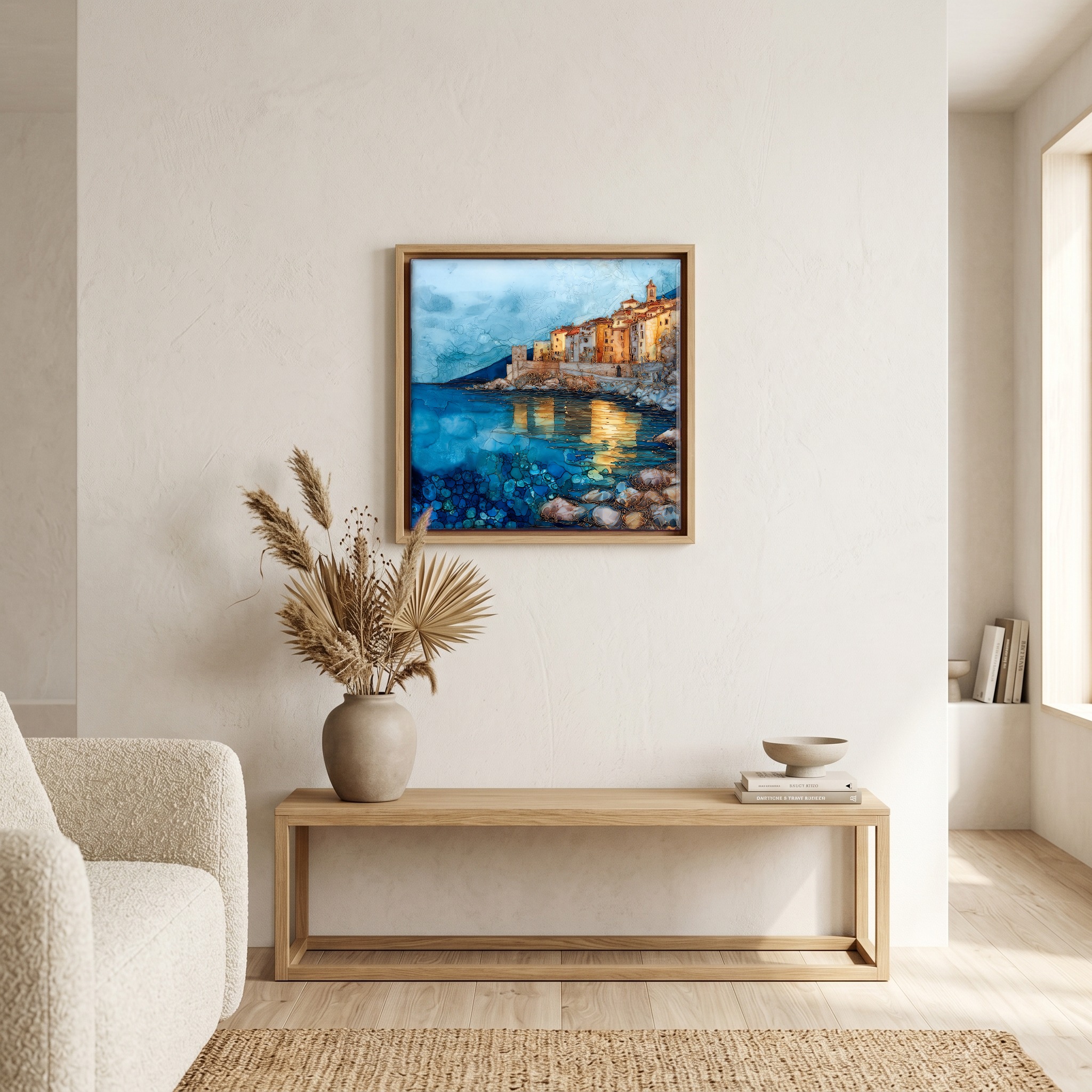
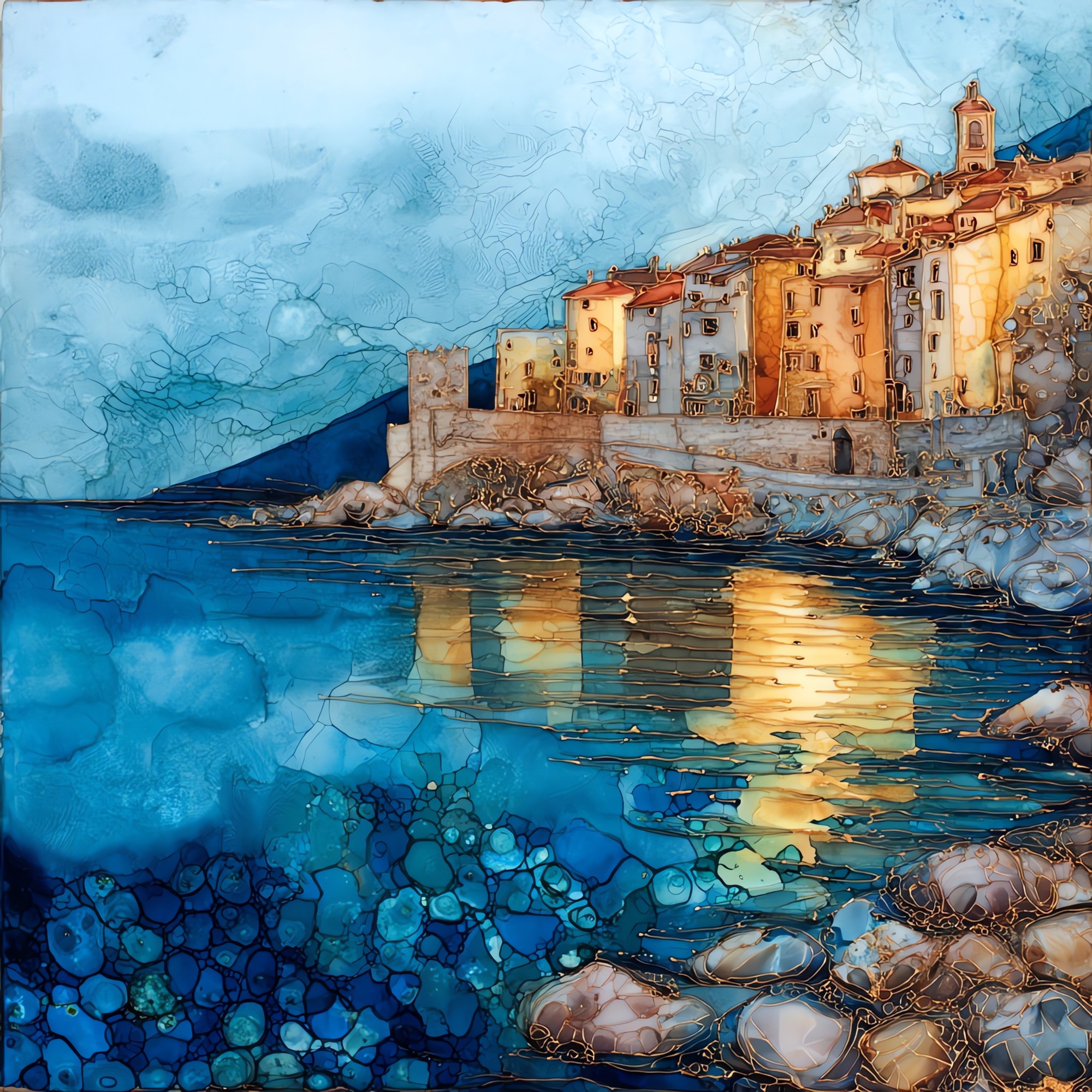
Cassis Port
shown on ceramic, 12-inch tileFrance
east of Marseille, at the foot of Cap Canaille

Cassis Port

the hour the cliff turns the colour of brick.

Where it lives

Not only on a wall.

A small tile on the nightstand catching the morning. A larger one above the fire. Yours, wherever you spend the slow hours.
Above the bench, in a warm oak surround.
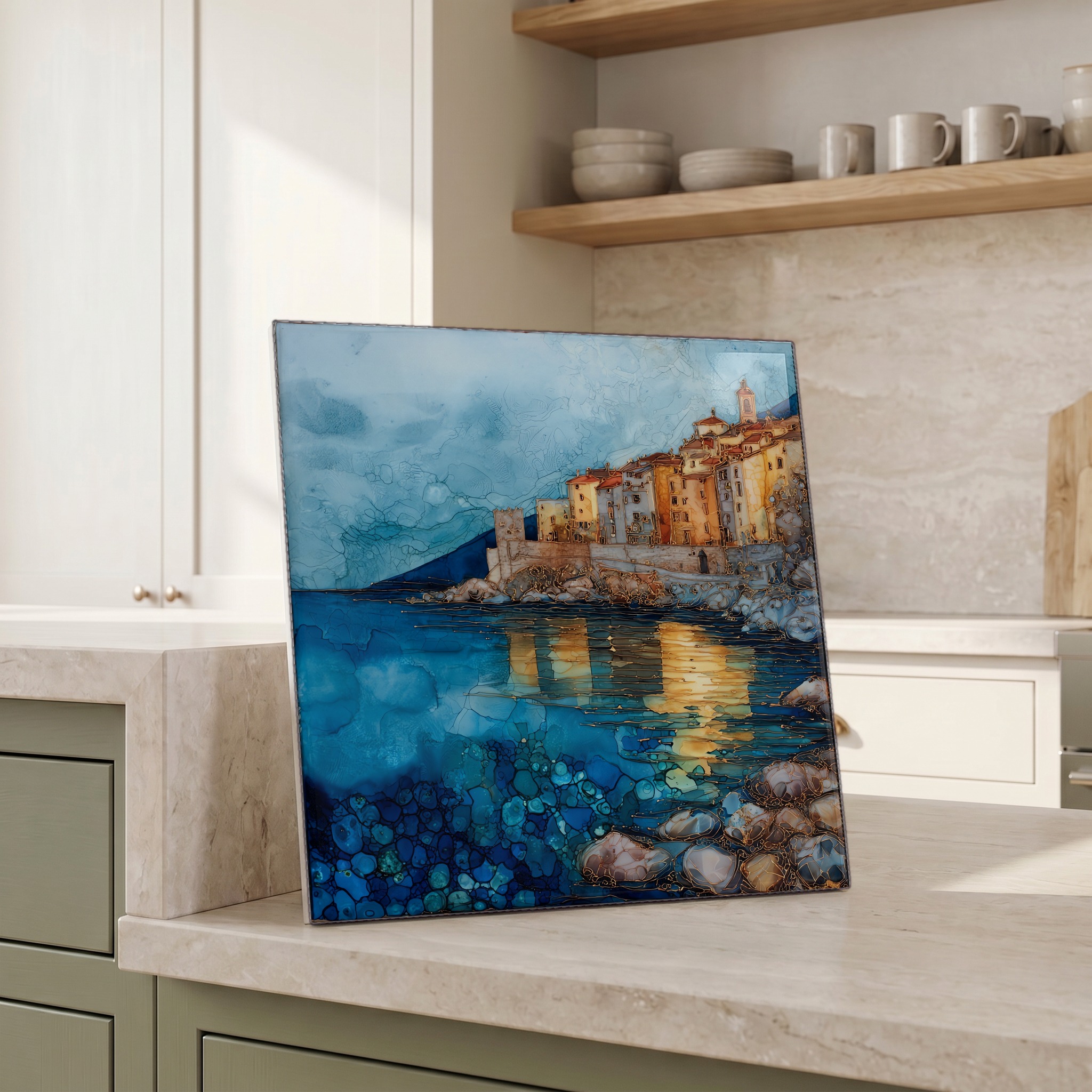
Beside the kettle, propped on the counter.
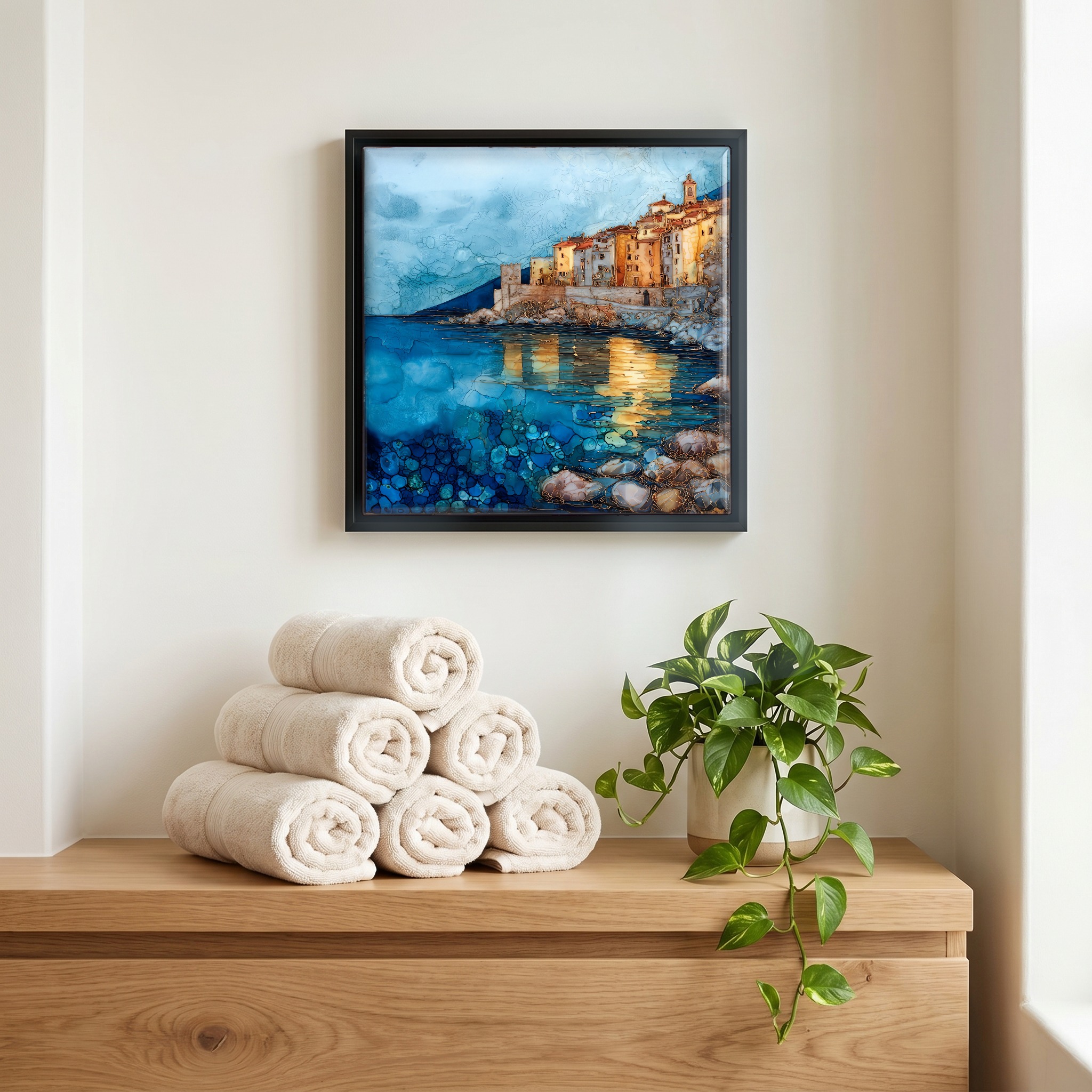
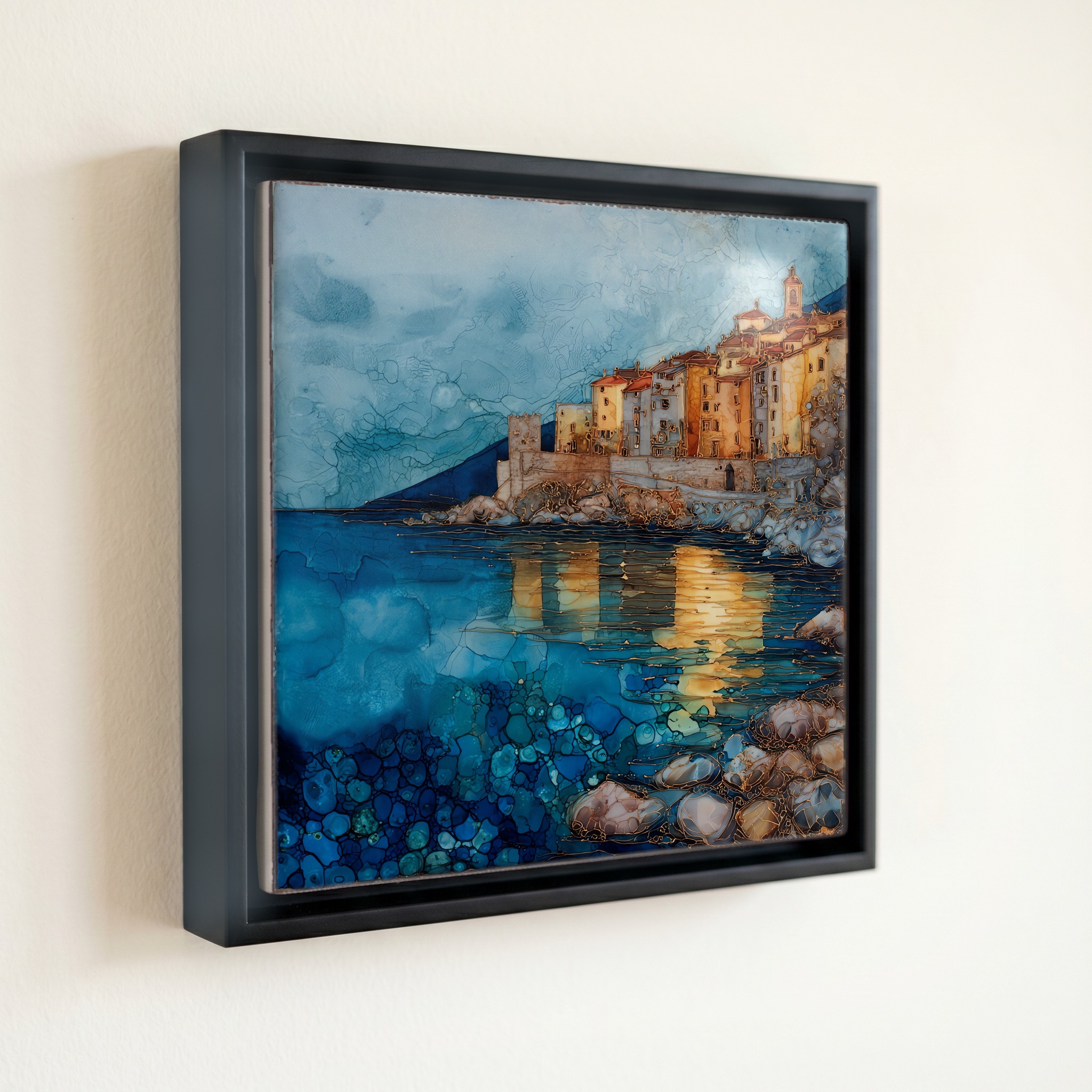
Above the linens, in a slim black surround.
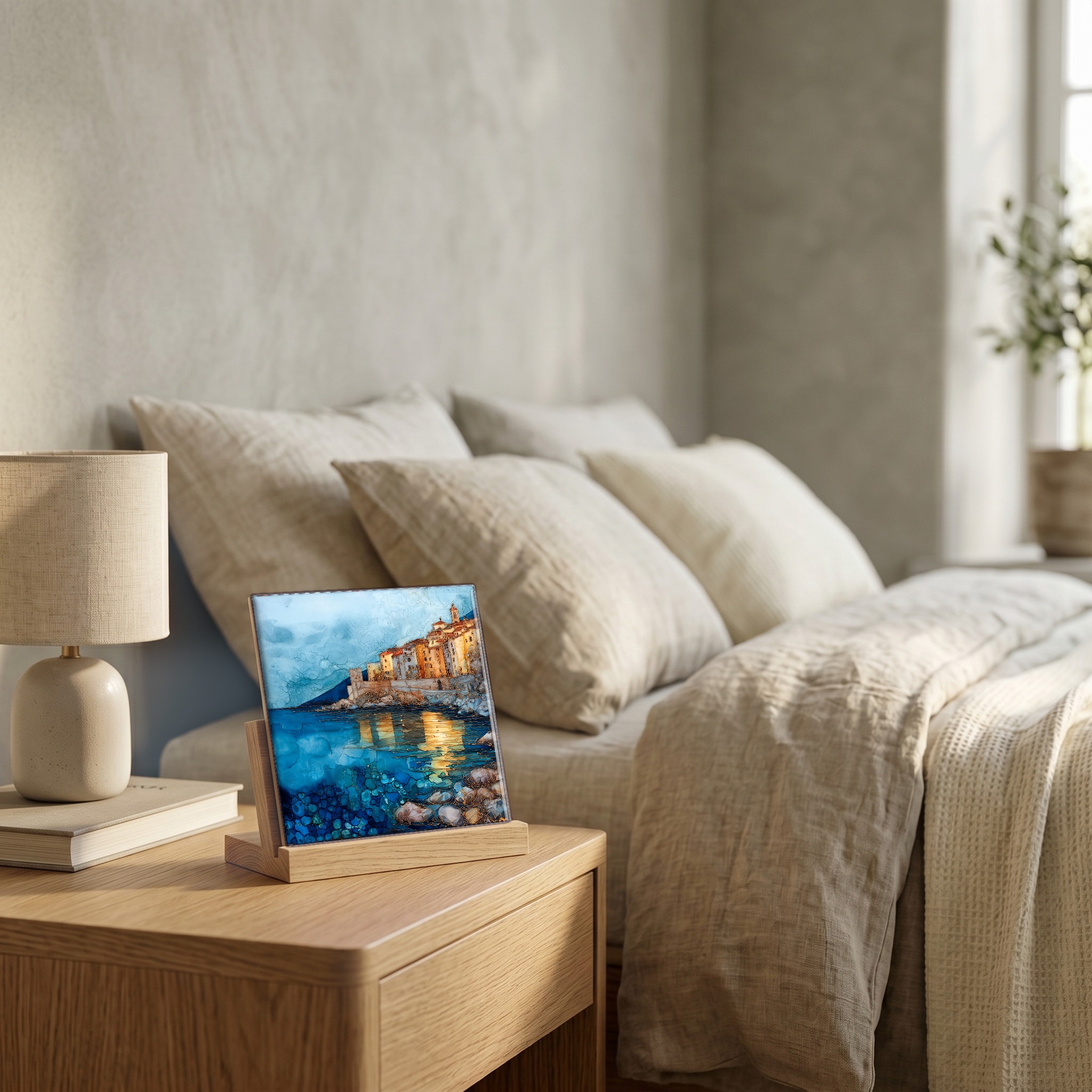
On the nightstand, on a light oak stand.
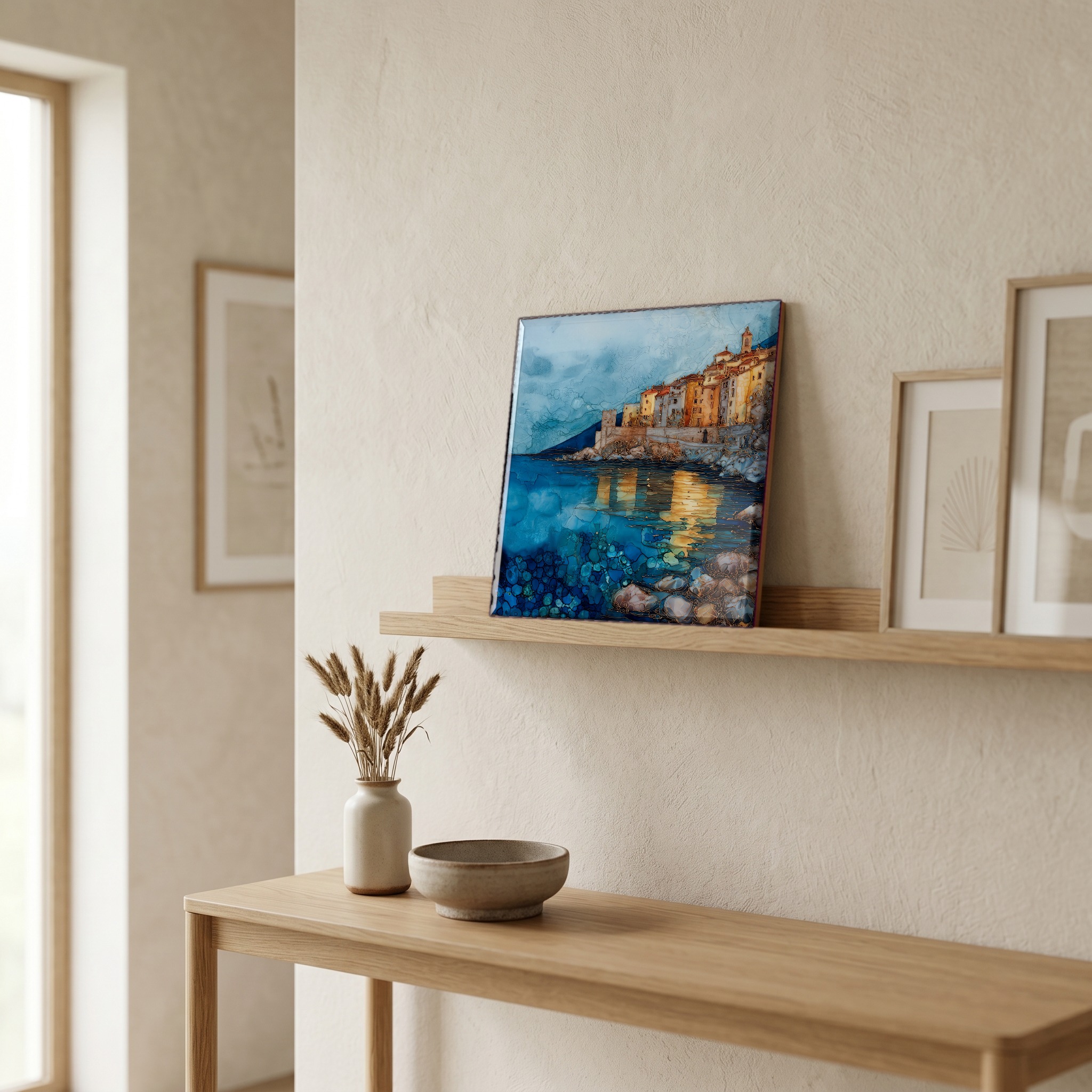
On a picture ledge, where the light comes in.
a note from the studio

A small fishing port east of Marseille, at the foot of Cap Canaille, one of the tallest sea cliffs in France. The harbour bends into a half-moon of pastel houses, with white-wine vineyards on the slopes behind. Fishing boats still come in at dawn. Beyond the breakwater the limestone calanques begin, deep blue-green inlets that draw the boat tours out from the quay all morning. By afternoon the cliff above turns the colour of dried brick. Before the day-trippers come down from Marseille, the only sound is rigging against mast.
from the studio
shown in a slim black floating frame · 6 × 6 in
— bring it home

Cassis Port, on ceramic.

Each tile is finished by hand in our Knoxville studio. Artwork is slowly infused into the ceramic surface under high heat and pressure, and rests beneath a thin glossy finish. The colour lives in the surface, not on top of it.

What kind of piece?
One tile — square or rectangle.
How big?
the popular one — counter, shelf, nightstand
6 × 6 in · 15 cm · 1.6 lb
Surface finish
A clear glossy finish — the artwork reads as if under resin. Ideal for show-pieces and framed wall art.
How it sits
A hidden cleat — sits ¼″ proud of the wall.
$58
Hand-finished and shipped from our studio at the foot of the Smokies. On your wall in about ten days.
size
6 × 6 in
15 cm
weighs
1.6 lb
solid in the hand
surface
ceramic, hand-finished
art rests beneath a thin glossy finish
from
Knoxville, TN
our family studio, at the foot of the Smokies
— start a Coaster Set

Pick any four 4-inch tiles — National Parks you've been to, a Smokies set, the four seasons of one place. $ for a set of , cork-backed, ready to live on the table.
comes gift-ready
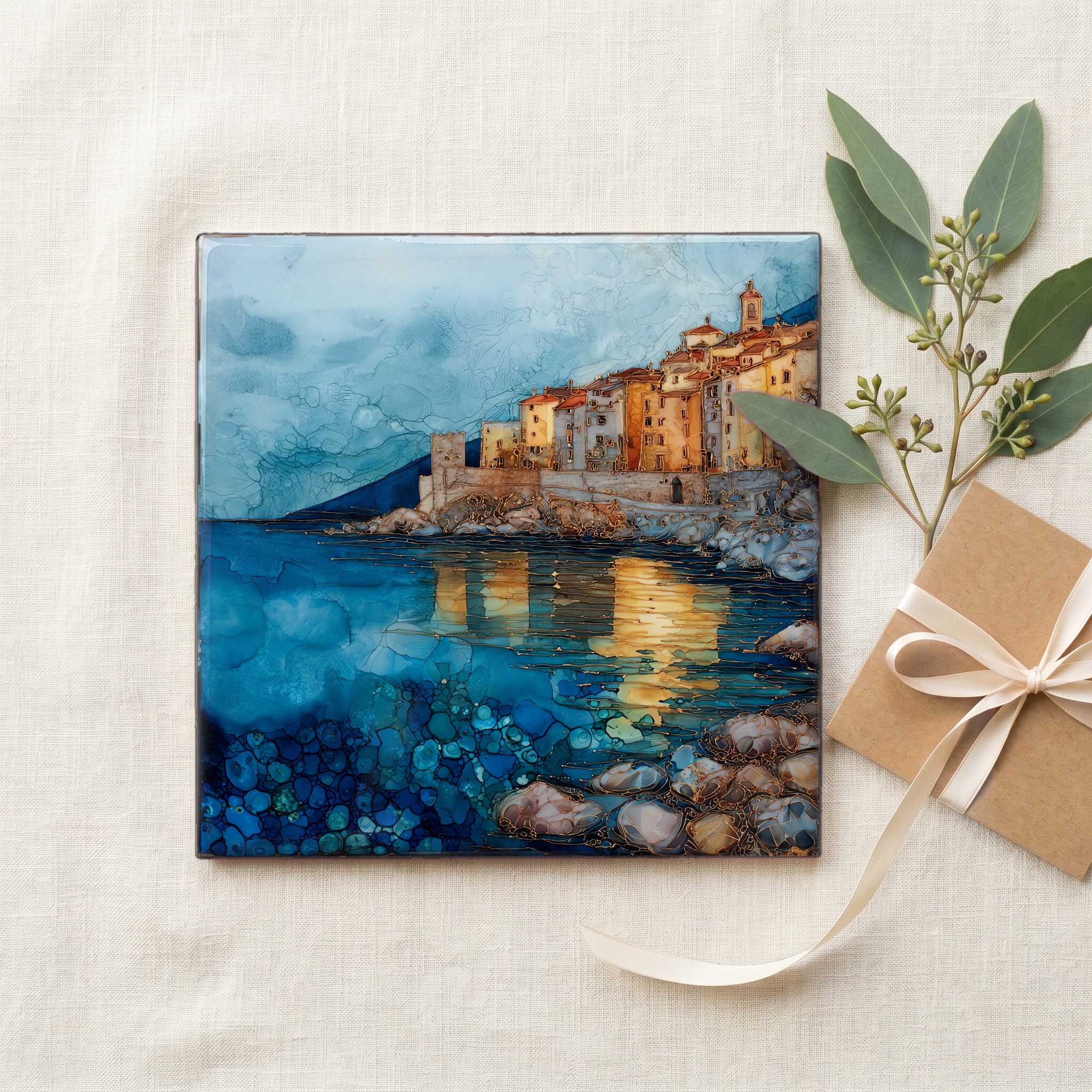
comes gift-ready

Each tile ships in a kraft box, tied with cream ribbon, with a handwritten note from the studio if you'd like to add one.
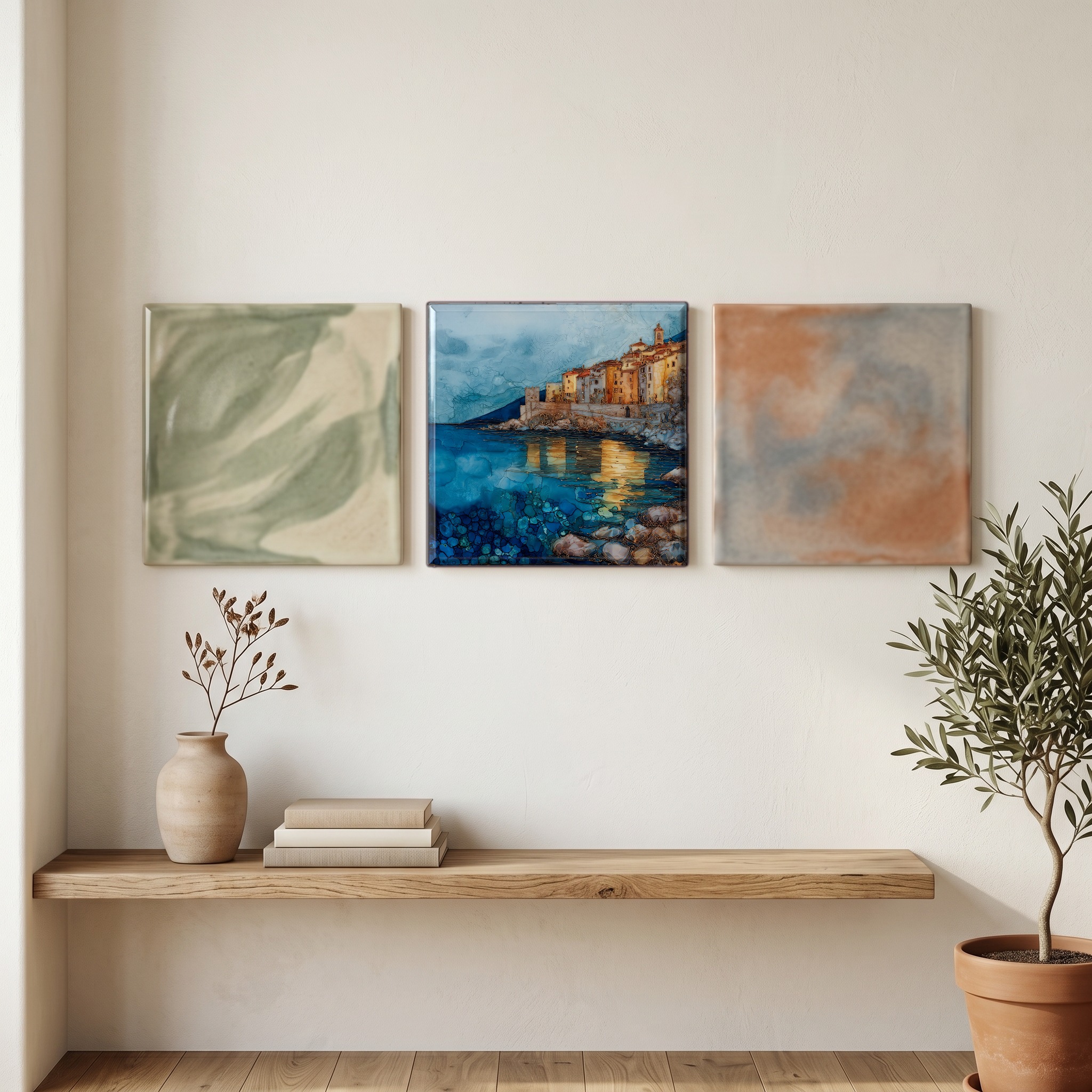
or build a grouping
or build a grouping

Three or five different vistas, hung together — a chapter of places you've been, or want to go.

about Cassis Port

The place, in three passes.

A little of what's known, in case you fall down the rabbit hole — or want to go see it yourself.
the place

Cassis is a Mediterranean commune in the Bouches-du-Rhône department of Provence, about 20 kilometres east of Marseille along the coast. The town wraps around a small fishing harbour at the eastern edge of the Parc National des Calanques, the protected limestone coastline established in 2012. Behind the port rises Cap Canaille, a ridge of red-brown stone often listed among the tallest sea cliffs in France at roughly 394 metres. The commune holds a population near 7,200. The hills above the harbour carry the small AOC Cassis vineyards, planted on terraces that have produced white wine here since at least the 17th century.

the stone

Cap Canaille and the surrounding cliffs are an exposure of Cretaceous-age conglomerate and limestone, with iron oxides giving the rock the deep ochre and brick-red colour that distinguishes it from the white limestone of the Calanques on Cassis's western side. The cliff rises in a single near-vertical wall directly out of the Mediterranean to about 394 metres at its highest point, ranking it among the tallest sea cliffs in France. The Route des Crêtes climbs from Cassis up over the ridge to La Ciotat, with viewpoints that frame the port and the white inlets of En-Vau and Port-Miou below. Photographers favour late afternoon, when the western light turns the stone briefly luminous.

the visit

The harbour is the launch point for the small boats that work the Calanques. Operators run circuits of three, five, eight, or nine inlets, leaving from the quay roughly hourly from spring through autumn. Cassis is reached from Marseille by the TER regional train in about twenty-five minutes, then a shuttle or twenty-minute walk down into the town; by road, the A50 motorway takes about thirty minutes off-peak. The peak summer months bring heavy day-trip traffic; spring and early autumn are gentler. Walkers can reach the Calanque de Port-Miou on foot from the western edge of town in about twenty minutes.

where
France · Cassis, Bouches-du-Rhône, Provence-Alpes-Côte d'Azur
within
Parc National des Calanques
elevation
0 m · 0 ft
position
43.2147° N · 5.5378° E
the neighborhood

What's nearby.

A handful of named places within an hour's walk or short drive. Some we've already painted; some we will.
1 km W
Calanque de Port-Miou
limestone inlet
5 km W
Calanque d'En-Vau
limestone inlet
3 km E
Cap Canaille
sea cliff
10 km E
La Ciotat
port town
14 km W
Calanque de Sormiou
limestone inlet
20 km W
Marseille
city
N
Cassis Port
Calanque de Port-Miou
Calanque d'En-Vau
Cap Canaille
La Ciotat
Calanque de Sormiou
Marseille
common questions

What people ask.

A few questions we get about Cassis Port — and about bringing the piece home.
about the place

Cassis is a small port town on the Mediterranean coast of Provence, in the Bouches-du-Rhône department about 20 kilometres east of Marseille. It sits at the eastern edge of the Parc National des Calanques, directly under the Cap Canaille cliff.

Cap Canaille is formed from Cretaceous-age conglomerate and limestone rich in iron oxides, which give the rock its ochre and brick-red colour. The cliff rises to about 394 metres, one of the tallest sea cliffs in France, and contrasts sharply with the white limestone Calanques to the west.

The TER regional train from Marseille Saint-Charles reaches Cassis in about 25 minutes; the station sits on the hill above town, with a shuttle or 20-minute walk down to the port. By car, the A50 motorway takes around 30 minutes outside peak hours.

The Calanques are steep, narrow limestone inlets cut into the coast between Marseille and Cassis. They are protected within the Parc National des Calanques, established in 2012. The most photographed near Cassis are Port-Miou, Port-Pin, and En-Vau, all reachable by boat from the Cassis quay.

AOC Cassis is one of the oldest controlled appellations in France, recognised in 1936. The vineyards on the terraces above the port produce predominantly dry white wines from Marsanne, Clairette, and Ugni Blanc, paired locally with the seafood landed at the harbour.

May and June, and the back half of September, give the calmest weather and lighter crowds. July and August bring heavy day-trip traffic from Marseille and the Côte d'Azur. Winter is quiet and often clear, though many boat operators run reduced schedules.

Yes. From the western edge of town a flat path reaches the Calanque de Port-Miou in about twenty minutes. Port-Pin is another twenty minutes on; En-Vau is a longer, steeper hour. The Parc National asks walkers to check fire-risk closures from June through September.

about the piece in your home

It has carried well for customers with roots in Marseille, Cassis, or the wider Côte Bleue. The pastel harbour and the ochre cliff are immediately recognisable to anyone who has spent time on that coast. A Small or Medium with a handwritten note from the studio is the gentle gift size.

The piece reads well against Coastal-modern, Provençal traditional, and Jewel-tone Maximalist rooms. The warmth in the cliff face also sits well in Mediterranean-modern interiors that already use terracotta and ochre. It is less at home in cool Scandinavian-minimalist palettes.

Yes. The shift from cool gray-blue coastal palettes toward warmer Mediterranean ones (terracotta, ochre, deep blue-green water) has been steady through the early 2020s. The Cassis tile speaks that newer warmer-coastal vocabulary directly, and pairs naturally with rattan, raw linen, and oak.

Above a standard 84-inch sofa, a single Large reads as a focal piece, while a 4-tile Mural fills the wall properly. Above a console or sideboard, a Medium, or a Small grouping of three at eye level, holds the space without crowding it.

Yes, with the Dura Satin or Matte finish. Both are scratch-resistant and stand up to steam, splashes, and routine cleaning. The Glossy finish is for framed wall art in drier rooms. The colour lives in the ceramic surface, so it does not fade with light or moisture.

A soft microfibre cloth and warm water is all the tile needs. For kitchen or bathroom installations, a mild non-abrasive cleaner is fine. Avoid abrasive pads, bleach, and acidic cleaners, which can dull the surface over time.

Yes. Every WenderVista piece is created and finished in-house at our studio in Knoxville, Tennessee. The work is not licensed from any third party and not reproduced from any existing painting. Reid Wender is the curator and the eye behind the WenderVista atlas.

if this one stayed with you

A few you might also love.

Hand-picked by the eye that found Sorapis. Same air, same kind of quiet.