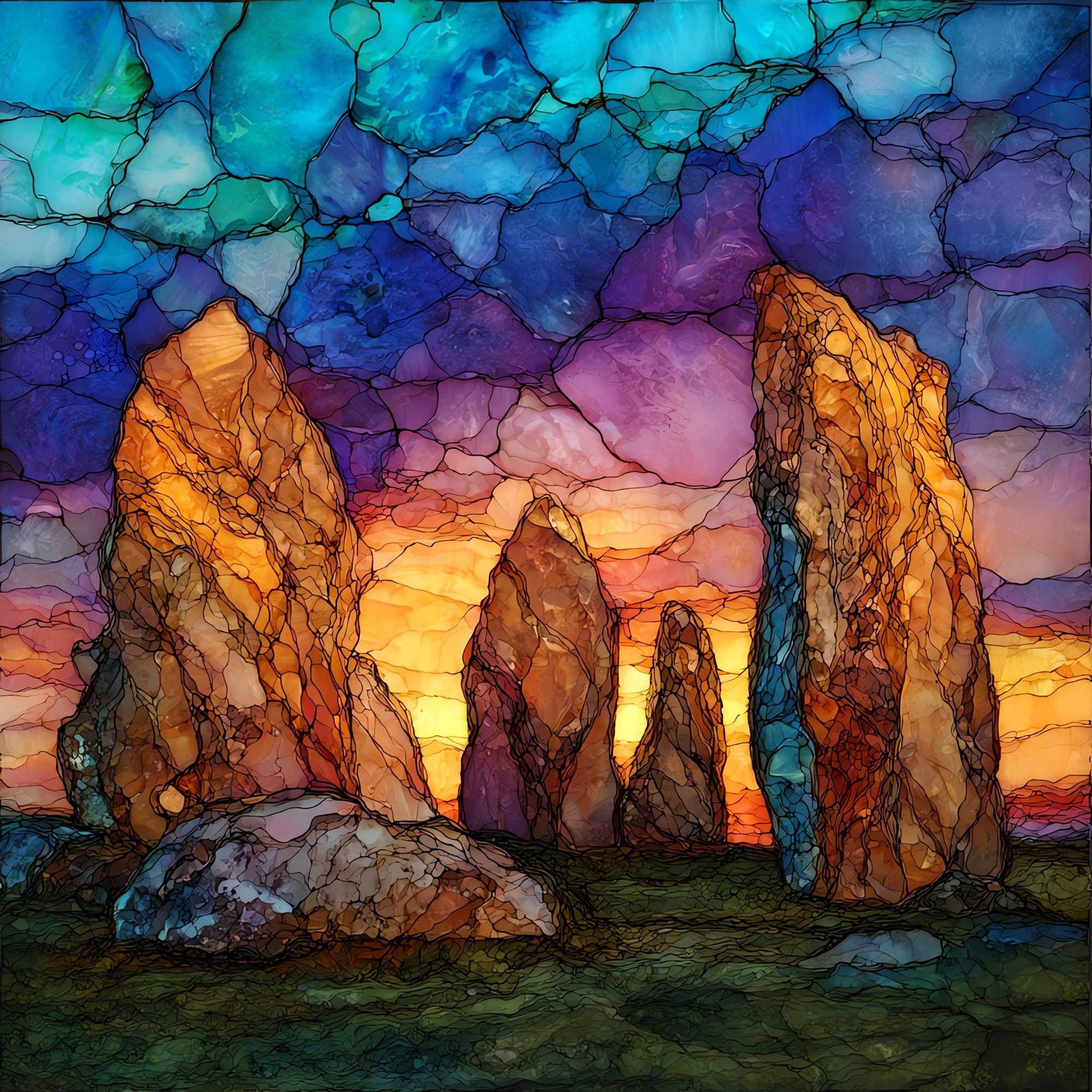
Carnac Stone Alignments
— rows the heath has been holding since before writing.
Not only on a wall.

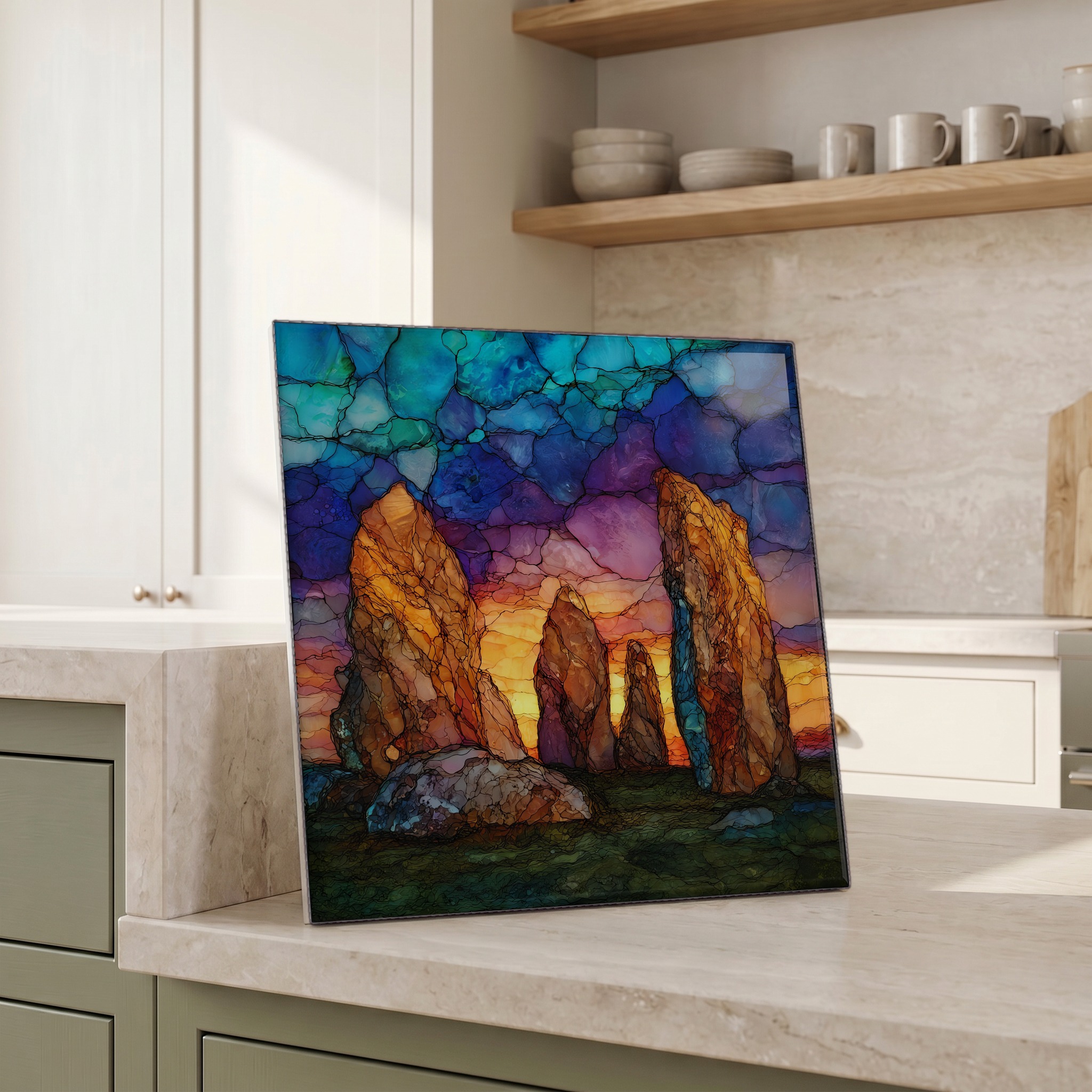


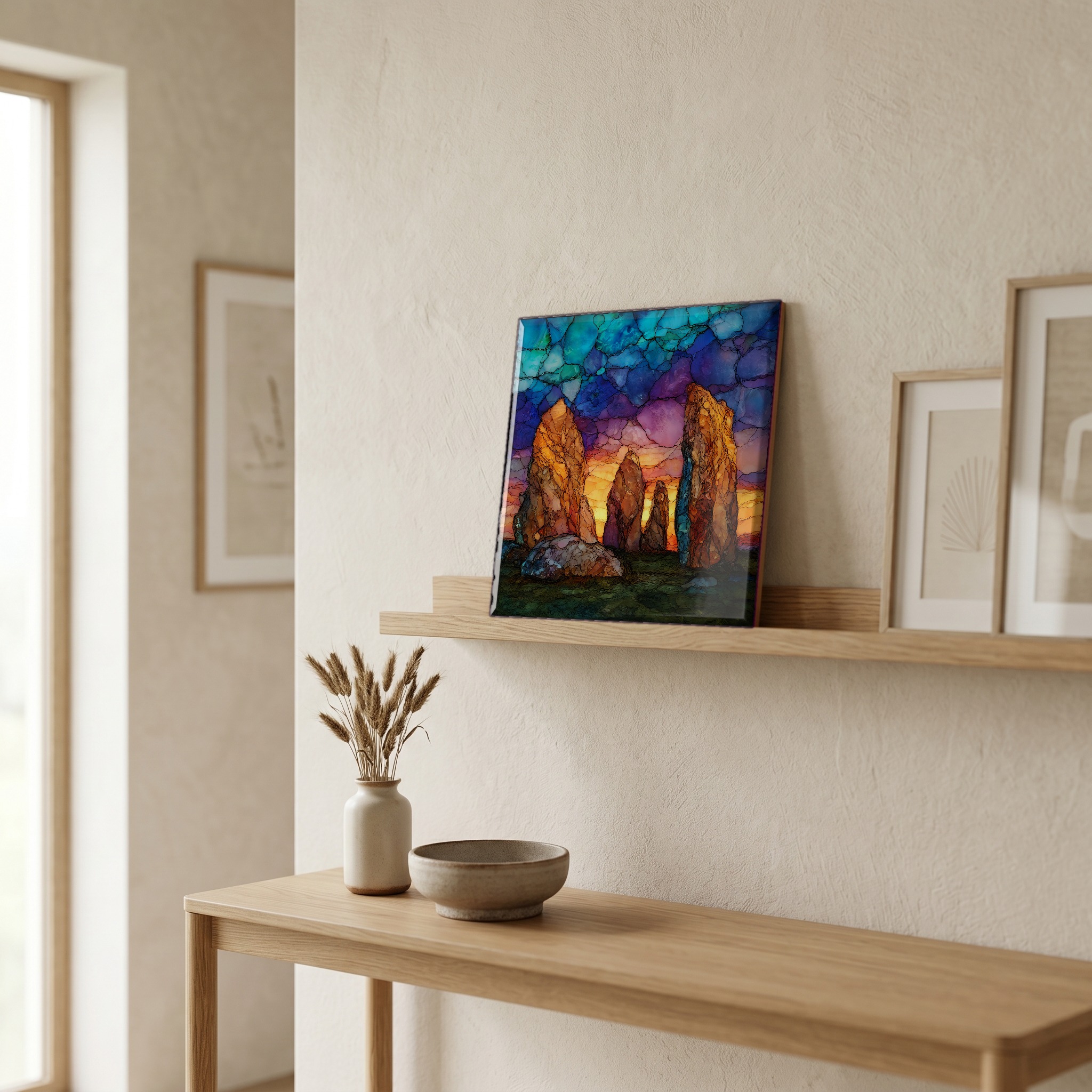
“Three thousand granite stones, set in long rows across the heath above Quiberon Bay. They were raised by pre-Celtic people who left no writing, in rows older than Stonehenge. The tallest stand at the western ends, head-high or taller; they step down through the kilometres until they are no taller than a child. In summer the alignments can only be walked with a guide. In the cold months the field is open and the wind off the Atlantic does most of the talking.
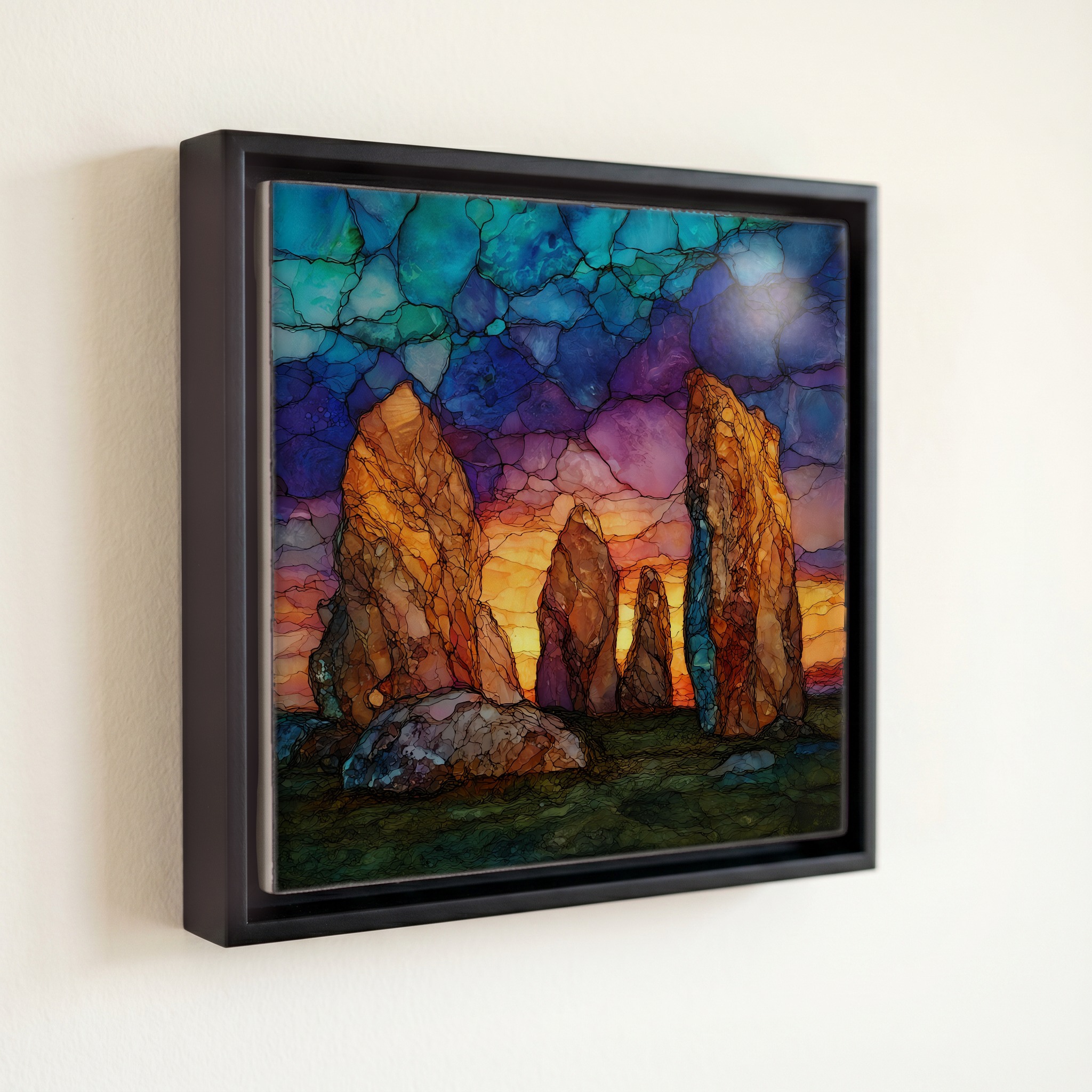
Carnac Stone Alignments, on ceramic.
Each tile is finished by hand in our Knoxville studio. Artwork is slowly infused into the ceramic surface under high heat and pressure, and rests beneath a thin glossy finish. The colour lives in the surface, not on top of it.
Pick any four 4-inch tiles — National Parks you've been to, a Smokies set, the four seasons of one place. $ for a set of , cork-backed, ready to live on the table.

Each tile ships in a kraft box, tied with cream ribbon, with a handwritten note from the studio if you'd like to add one.

Three or five different vistas, hung together — a chapter of places you've been, or want to go.
The place, in three passes.
The Carnac alignments stand on a heath above Quiberon Bay in the Morbihan department, on the south coast of Brittany. The site holds more than 3,000 standing stones in long parallel rows that run roughly four kilometres northeast of Carnac village. The three principal groups are Le Ménec, Kermario, and Kerlescan; Le Ménec alone carries 1,169 stones in twelve rows. The stones were quarried from local granite outcrops and raised by Neolithic communities between about 4500 and 3300 BCE, predating the standing stones at Stonehenge by roughly a thousand years. The site is administered by the Centre des Monuments Nationaux and sits on France's tentative list for UNESCO World Heritage inscription.
The menhirs are local Breton granite, hauled and set into the heath by a settled Neolithic coastal population working with stone tools and human labour alone. At the western ends of the alignments the largest stones rise to about four metres; they step gradually down to roughly sixty centimetres at the eastern ends, a deliberate gradient repeated across all three principal alignments. Erosion, lichen, and centuries of grazing have left the granite mottled grey and yellow. Some of the stones lean; some have fallen and been re-erected during nineteenth- and twentieth-century campaigns. The largest single megalith in the wider Carnac area, the Grand Menhir Brisé at nearby Locmariaquer, once stood roughly twenty metres tall before it broke.
The alignments are managed by the Centre des Monuments Nationaux from the Maison des Mégalithes information centre at Le Ménec, which is open every day except 1 January, 1 May, and 25 December. From April through September the rows can only be entered on a paid guided tour to protect the heath from foot traffic; from October through March the public can walk among the stones on free, unguided access. The Maison des Mégalithes itself is free to enter and screens an orientation film. Carnac village is reached by car from Vannes in about forty minutes, or by SNCF rail to Auray with a short bus or taxi link to the site.