Wender·Vista
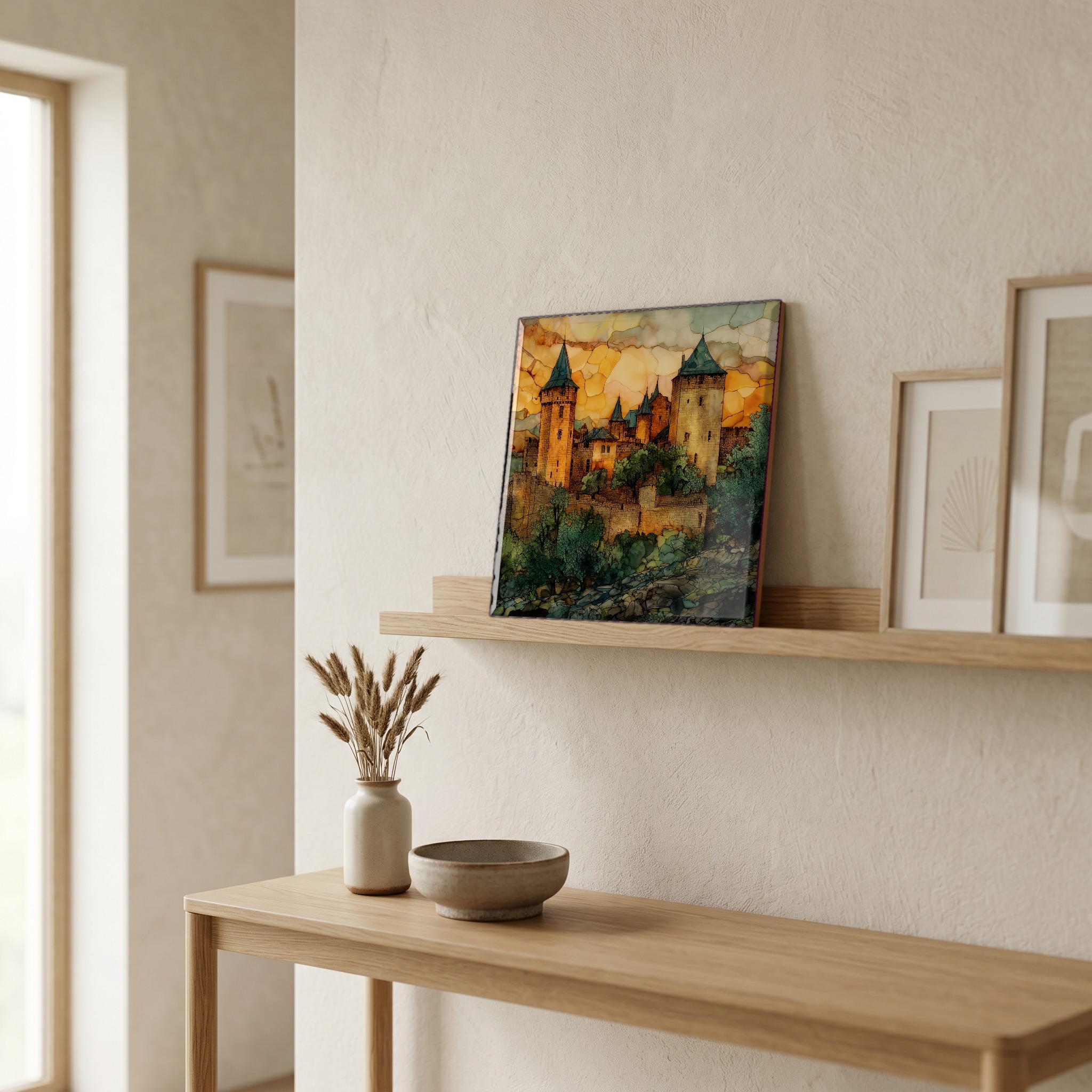
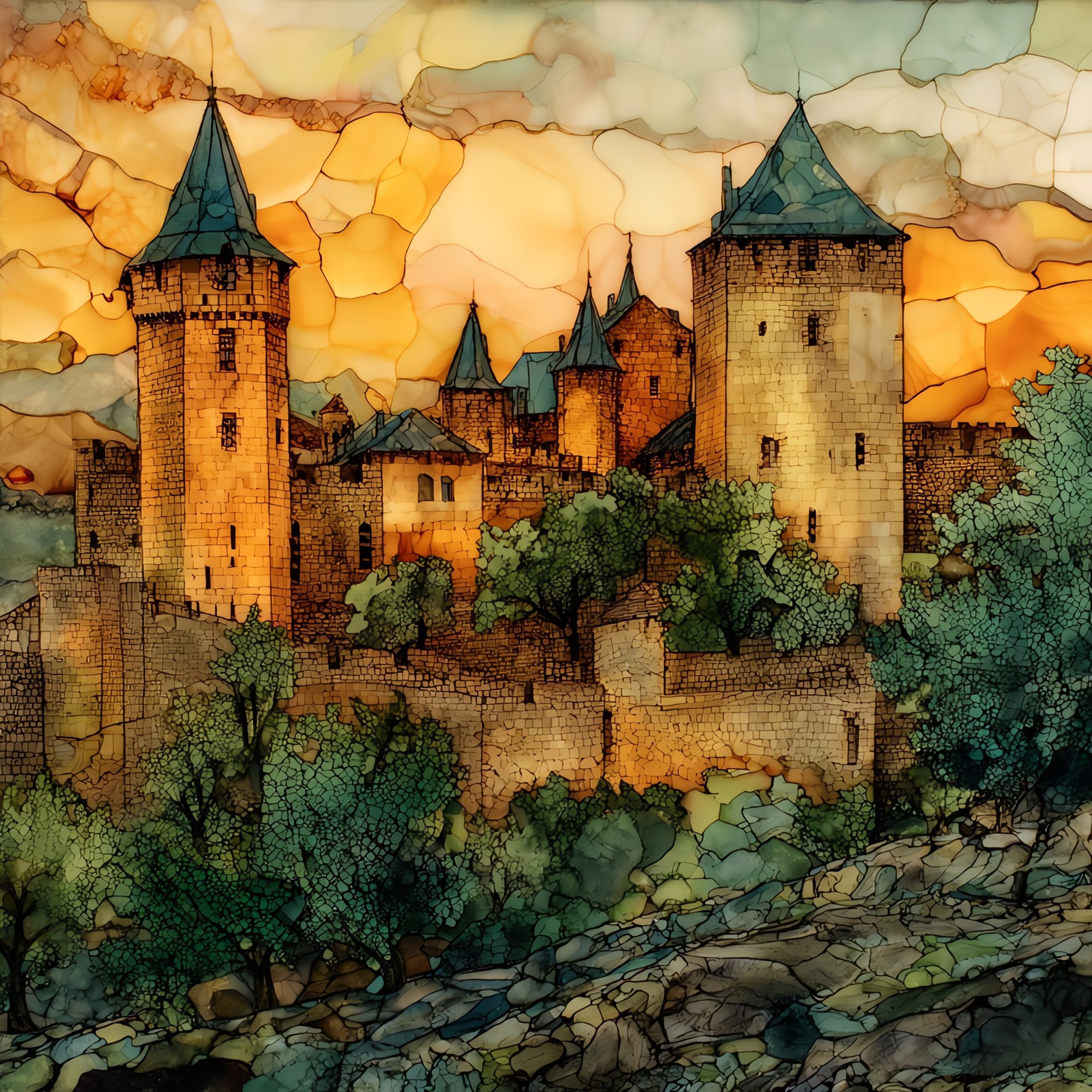
Carcassonne Cite
shown on ceramic, 12-inch tileFrance
in the Languedoc, above the Aude

Carcassonne Cite

ramparts holding the last of the light.

Where it lives

Not only on a wall.

A small tile on the nightstand catching the morning. A larger one above the fire. Yours, wherever you spend the slow hours.
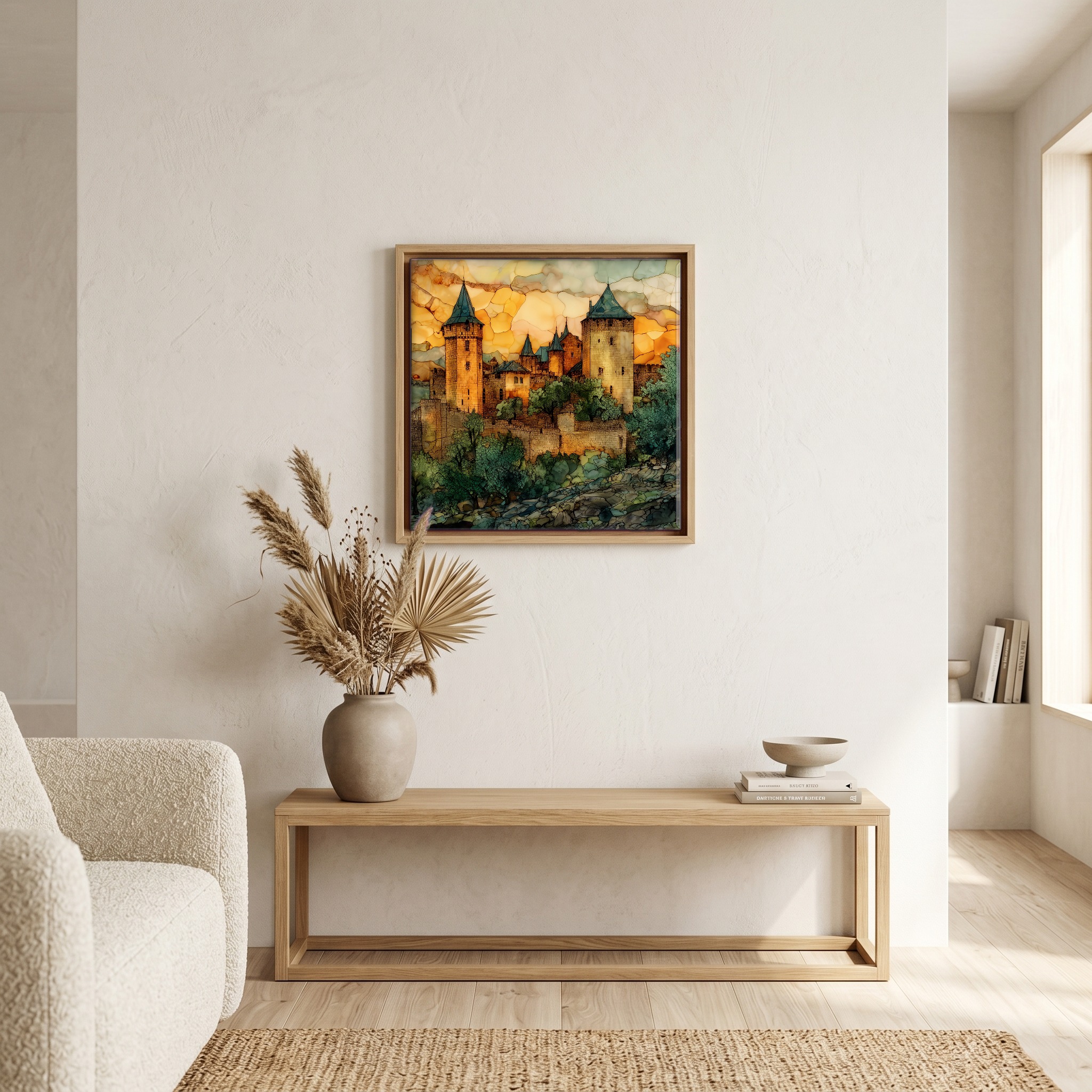
Above the bench, in a warm oak surround.
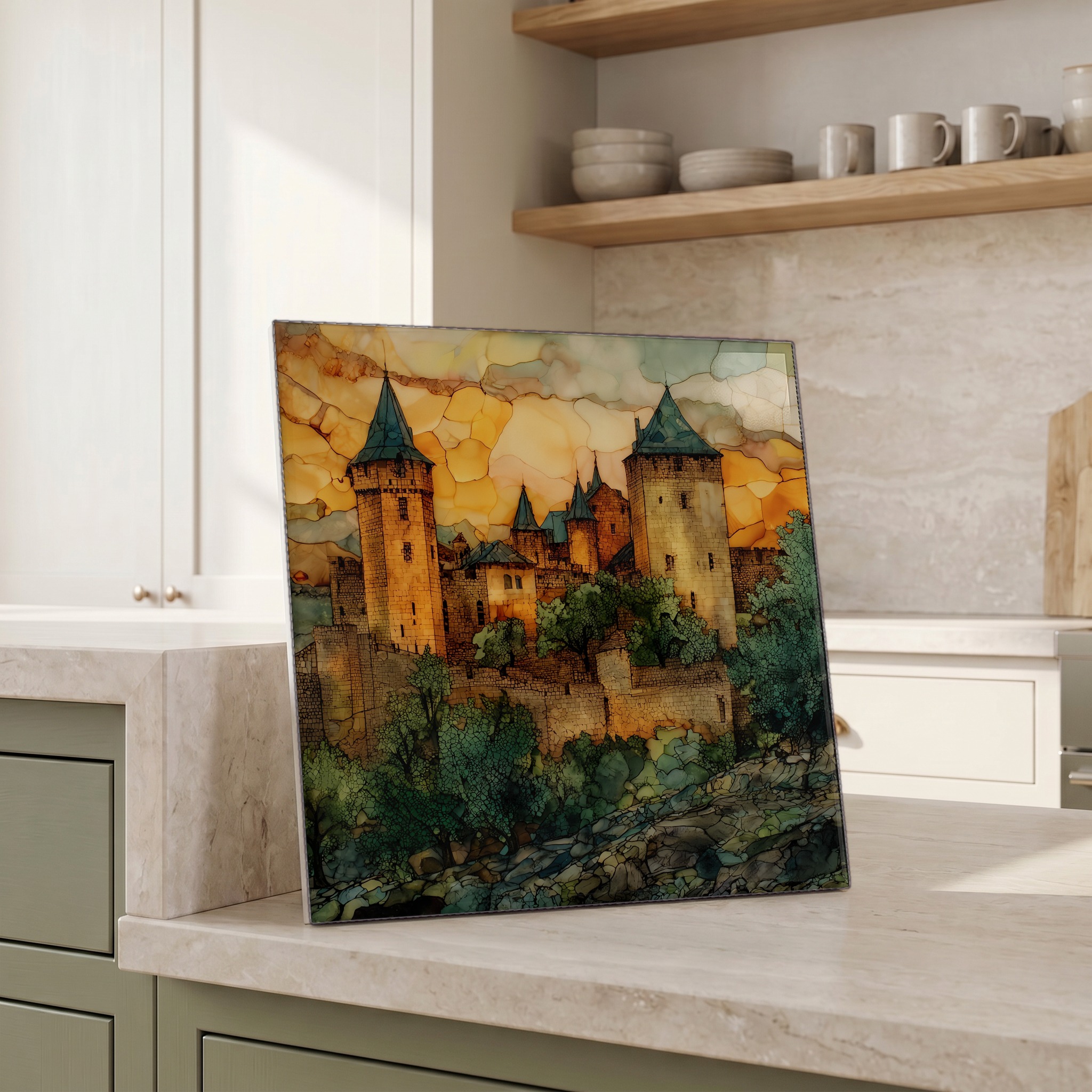
Beside the kettle, propped on the counter.
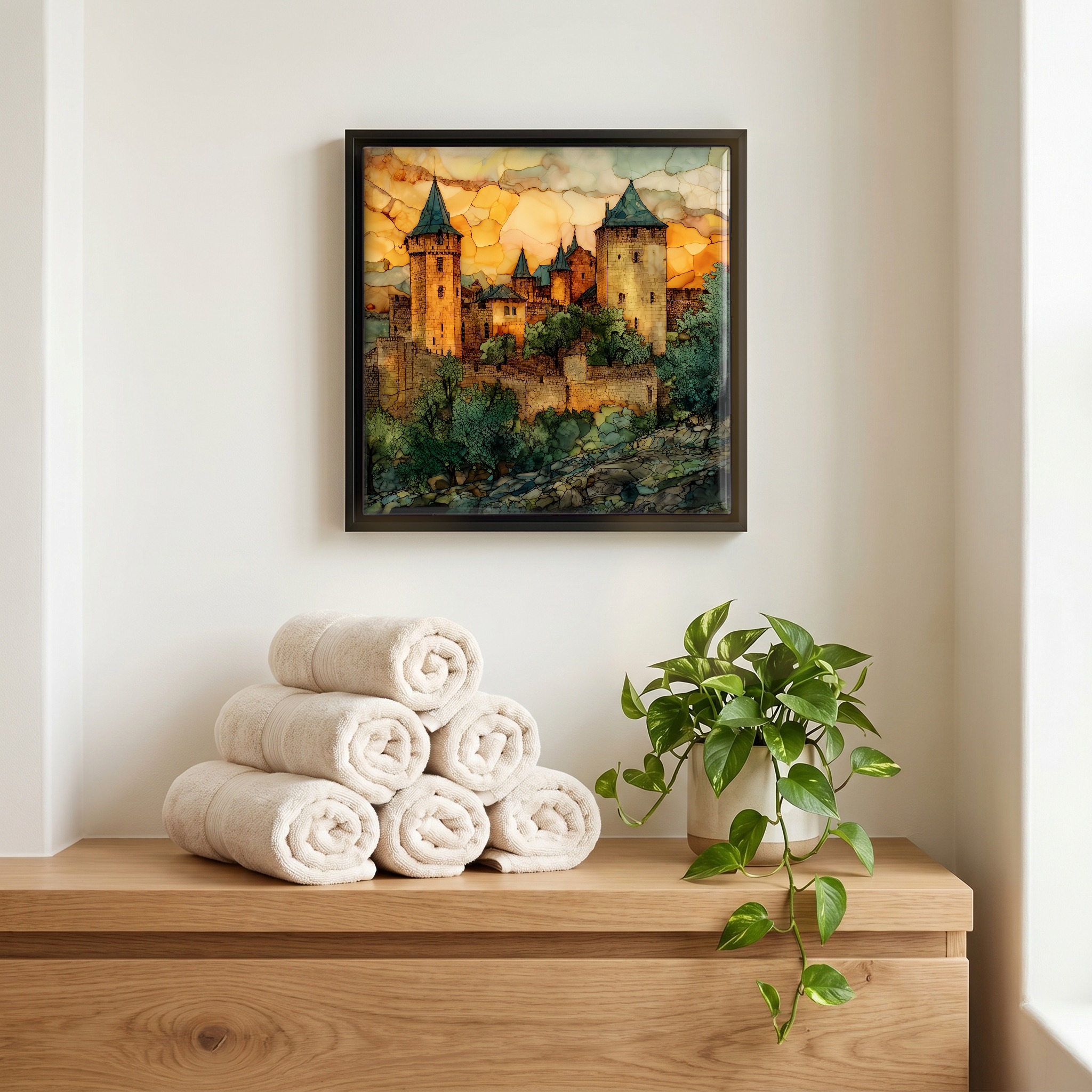
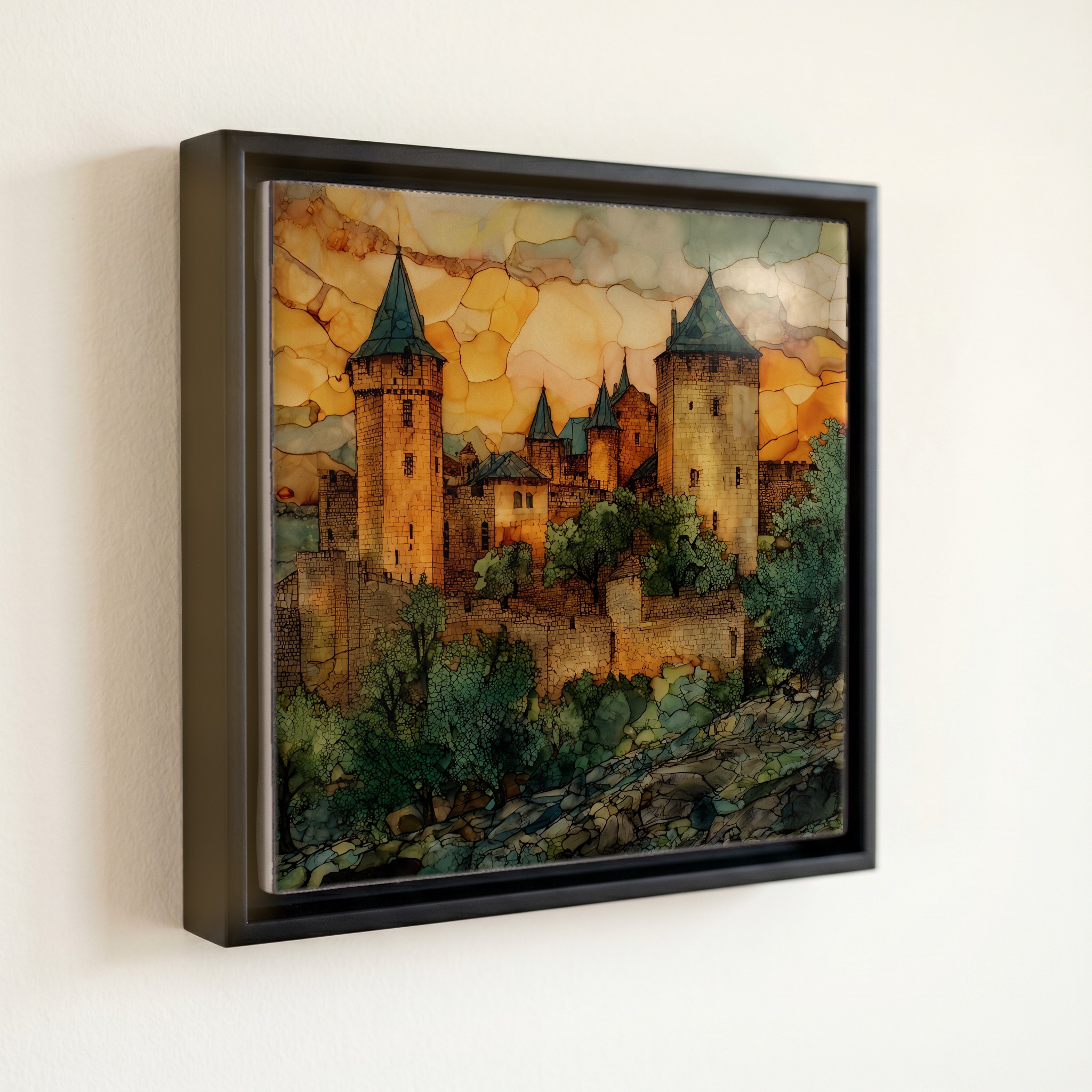
Above the linens, in a slim black surround.
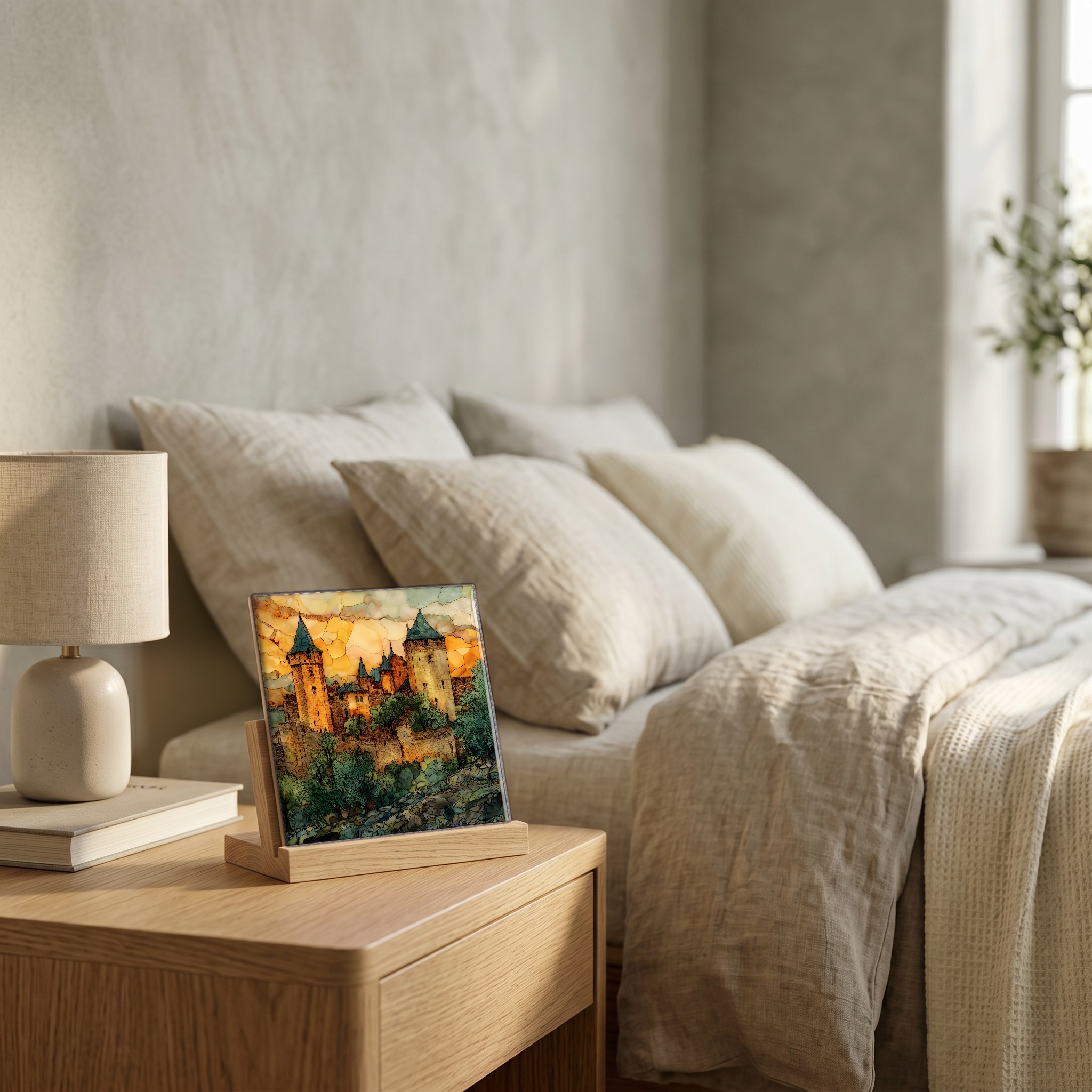
On the nightstand, on a light oak stand.
On a picture ledge, where the light comes in.
a note from the studio

Two concentric stone walls and fifty-two towers, on a hill above the Aude. The Romans walled the site first; the medieval city grew out of the Roman footprint and kept it. Most visitors cross the old bridge from the lower town and climb. Inside the walls a small population still lives, alongside the Basilique Saint-Nazaire and the Château Comtal. The Viollet-le-Duc restoration in the 1850s gave the towers their pointed roofs, which Parisian critics argued about for the better part of a century. In the south of France, in the old Cathar country, the place reads at every angle as a city the wreckers did not get to.
from the studio
shown in a slim black floating frame · 6 × 6 in
— bring it home

Carcassonne Cite, on ceramic.

Each tile is finished by hand in our Knoxville studio. Artwork is slowly infused into the ceramic surface under high heat and pressure, and rests beneath a thin glossy finish. The colour lives in the surface, not on top of it.

What kind of piece?
One tile — square or rectangle.
How big?
the popular one — counter, shelf, nightstand
6 × 6 in · 15 cm · 1.6 lb
Surface finish
A clear glossy finish — the artwork reads as if under resin. Ideal for show-pieces and framed wall art.
How it sits
A hidden cleat — sits ¼″ proud of the wall.
$58
Hand-finished and shipped from our studio at the foot of the Smokies. On your wall in about ten days.
size
6 × 6 in
15 cm
weighs
1.6 lb
solid in the hand
surface
ceramic, hand-finished
art rests beneath a thin glossy finish
from
Knoxville, TN
our family studio, at the foot of the Smokies
— start a Coaster Set

Pick any four 4-inch tiles — National Parks you've been to, a Smokies set, the four seasons of one place. $ for a set of , cork-backed, ready to live on the table.
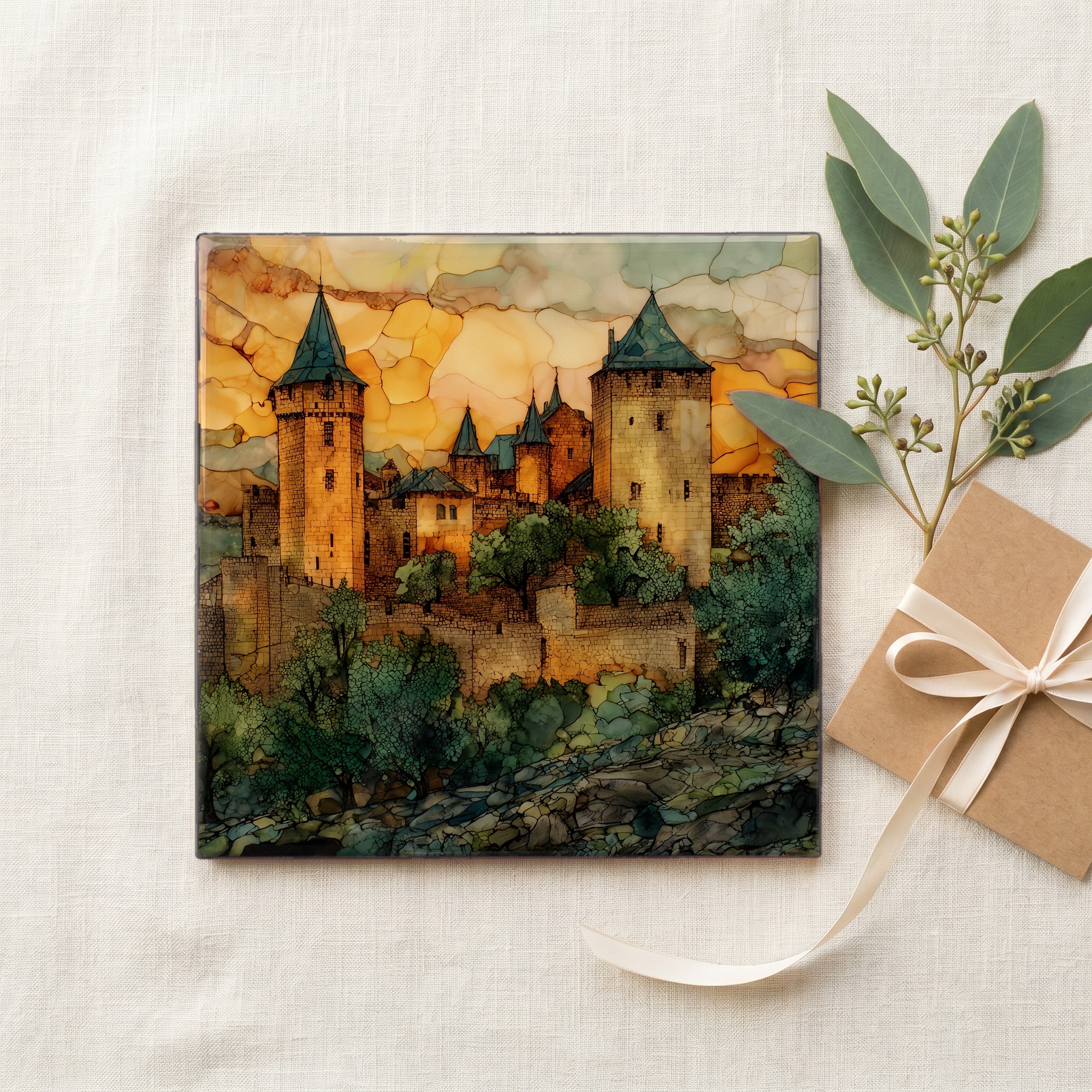
comes gift-ready
comes gift-ready

Each tile ships in a kraft box, tied with cream ribbon, with a handwritten note from the studio if you'd like to add one.
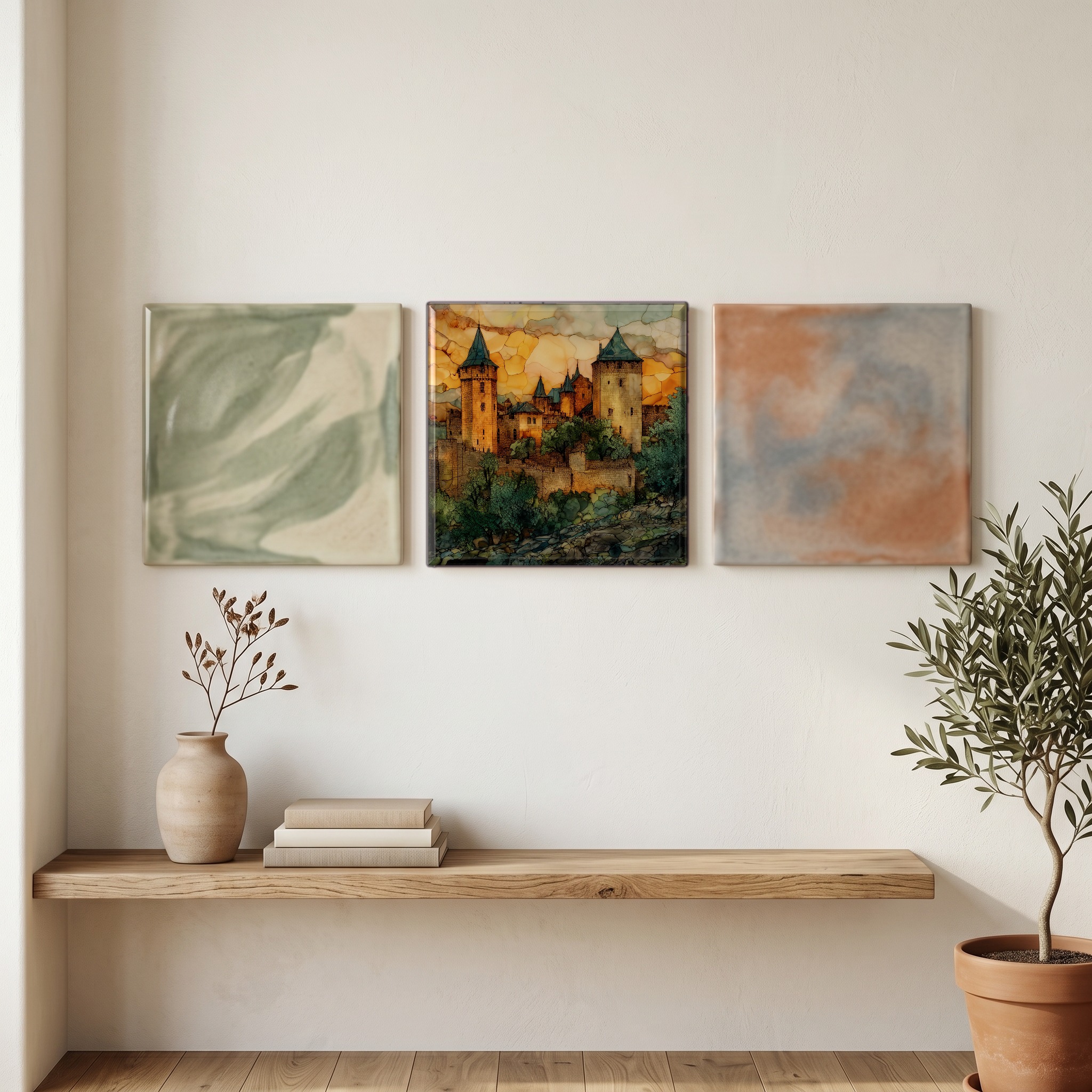
or build a grouping
or build a grouping

Three or five different vistas, hung together — a chapter of places you've been, or want to go.

about Carcassonne Cite

The place, in three passes.

A little of what's known, in case you fall down the rabbit hole — or want to go see it yourself.
the place

The Cité de Carcassonne sits on a hill above the right bank of the Aude, in the Aude department of southern France's Occitanie region. The walled town is the medieval upper city; the modern Bastide Saint-Louis below it was laid out in the thirteenth century after the original lower town was destroyed. Two concentric rings of fortification, about 3 kilometres in total length, ring the Cité, broken by fifty-two towers and entered through the Porte Narbonnaise and the Porte d'Aude. The site has been inscribed on the UNESCO World Heritage List since 1997, recognised as the most complete surviving example of a medieval European fortified town. Most arrivals are from the lower city, on foot across the Pont Vieux.

the stone

The fortifications enclose roughly 11 hectares and rise on Gallo-Roman foundations laid in the third and fourth centuries. The lower walls keep visible Roman courses, including the characteristic red-brick lacing; the higher walls are thirteenth-century work commissioned under Louis IX and Philip III. After the kingdom of France absorbed the Cité in 1247, the inner ring of defences was added behind the older outer ring, producing the double-wall geometry the place is now known for. The pointed slate roofs on the towers are not original. They are the work of Eugène Viollet-le-Duc, who began the restoration in 1853, and were imported from northern French practice; southern preservationists disputed the choice for decades after his death.

the visit

Entry to the Cité itself is free at any hour; only the Château Comtal and the ramparts walk charge admission, managed by the Centre des monuments nationaux and open daily except 1 January, 1 May, and 25 December. The Basilique Saint-Nazaire is free to enter. The site sees several million visitors annually, with peak congestion through July and August. The 14 July fireworks display known as the Embrasement de la Cité is the largest event of the year. Early morning and the hour after the gates fall quiet are the times the upper streets read closest to their medieval scale. Trains arrive at Carcassonne station from Toulouse in under an hour.

where
France · Carcassonne, Aude, Occitanie
position
43.2061° N · 2.3639° E
the neighborhood

What's nearby.

A handful of named places within an hour's walk or short drive. Some we've already painted; some we will.
1 km W
Pont Vieux
medieval bridge
1 km W
Bastide Saint-Louis
lower town
2 km N
Canal du Midi
UNESCO canal
5 km E
Lac de la Cavayère
recreational lake
17 km N
Châteaux de Lastours
Cathar ruins
N
Carcassonne Cite
Pont Vieux
Bastide Saint-Louis
Canal du Midi
Lac de la Cavayère
Châteaux de Lastours
common questions

What people ask.

A few questions we get about Carcassonne Cite — and about bringing the piece home.
about the place

The Cité de Carcassonne is a fortified medieval town on a hill above the right bank of the Aude, in the Aude department of Occitanie in southern France. The lower modern town, Bastide Saint-Louis, sits across the river to the west. Toulouse is about an hour away by train.

The lower fortifications were laid by the Romans in the third and fourth centuries. The higher inner walls and most of the towers were built in the thirteenth century under Louis IX and Philip III, after the city was absorbed into the French crown in 1247. Eugène Viollet-le-Duc began the restoration in 1853.

Yes. The Cité de Carcassonne has been inscribed on the UNESCO World Heritage List since 1997, recognised as the most complete surviving medieval fortified town in Europe. The inscription covers the double wall, the fifty-two towers, the Basilique Saint-Nazaire, and the Château Comtal.

Yes. A small permanent population lives inside the Cité, under a hundred residents on most counts, alongside hotels, restaurants, and shops serving the millions of annual visitors. The Basilique Saint-Nazaire remains an active parish church.

The Château Comtal is the twelfth-century inner citadel built by the Trencavel viscounts, the ruling family before the Albigensian Crusade. After 1247 it served as the royal seneschal's residence. It is now managed by the Centre des monuments nationaux and entered with a ticketed visit.

Late spring and early autumn carry the lightest crowds and the most temperate weather; July and August are crowded and hot. The Bastille Day fireworks on 14 July, known as the Embrasement de la Cité, draw the year's largest gathering. Early morning and late evening read closest to the place's medieval scale.

Direct trains run from Toulouse in under an hour and from Montpellier in roughly two hours. Carcassonne airport handles seasonal European flights. From the train station the Cité is a twenty-minute walk across the Pont Vieux and uphill into the upper town.

about the piece in your home

It has been a meaningful gift for many of our customers tied to southern France or to the wider world of medieval architecture. The Cité is one of the most recognisable medieval profiles on the continent, and a Keepsake or Small with a handwritten note from the studio carries well.

The tile reads at home in Old World Maximalist, Mediterranean-modern, and Provençal-warm palettes. The stained-glass treatment over the stone tones bridges traditional and contemporary rooms, and the silhouette of the ramparts gives the piece architectural weight on a plaster, stone, or limewashed wall.

The European-heritage aesthetic, sometimes called chateau-coded or old-stone-coded, sits within the slow-living and Quiet Luxury vocabularies that have held steady through the past several seasons. The Cité fits the same room that holds a worn leather armchair, a French country table, or an antique mirror.

Above a console or narrow wall, the Large at 16 inches reads at a focal scale. Above a standard sofa, a 4-tile Mural carries the room without crowding. Above a long sectional or a dining sideboard, a 9-tile Mural takes the full architectural moment of the ramparts.

Yes. For a bathroom, a kitchen splashback, or any vertical wet surface, choose the Dura Satin or Matte finish. Both are scratch-resistant and rated for those installations. The Glossy finish is intended for framed wall pieces in dry rooms.

A soft microfibre cloth with plain water handles dust and most marks. For a kitchen splashback, a mild dish-soap solution wiped with microfibre is enough. Avoid abrasive pads and scouring powders. The colour lives in the ceramic surface, so it does not lift.

Yes. Every WenderVista piece is by Reid Wender, the studio's curator. There is no licensing, no third-party art, and no reproduction of an existing photograph or painting. The Carcassonne Cité piece is in the studio's distinct visual language and exists nowhere else.

if this one stayed with you

A few you might also love.

Hand-picked by the eye that found Sorapis. Same air, same kind of quiet.