Wender·Vista
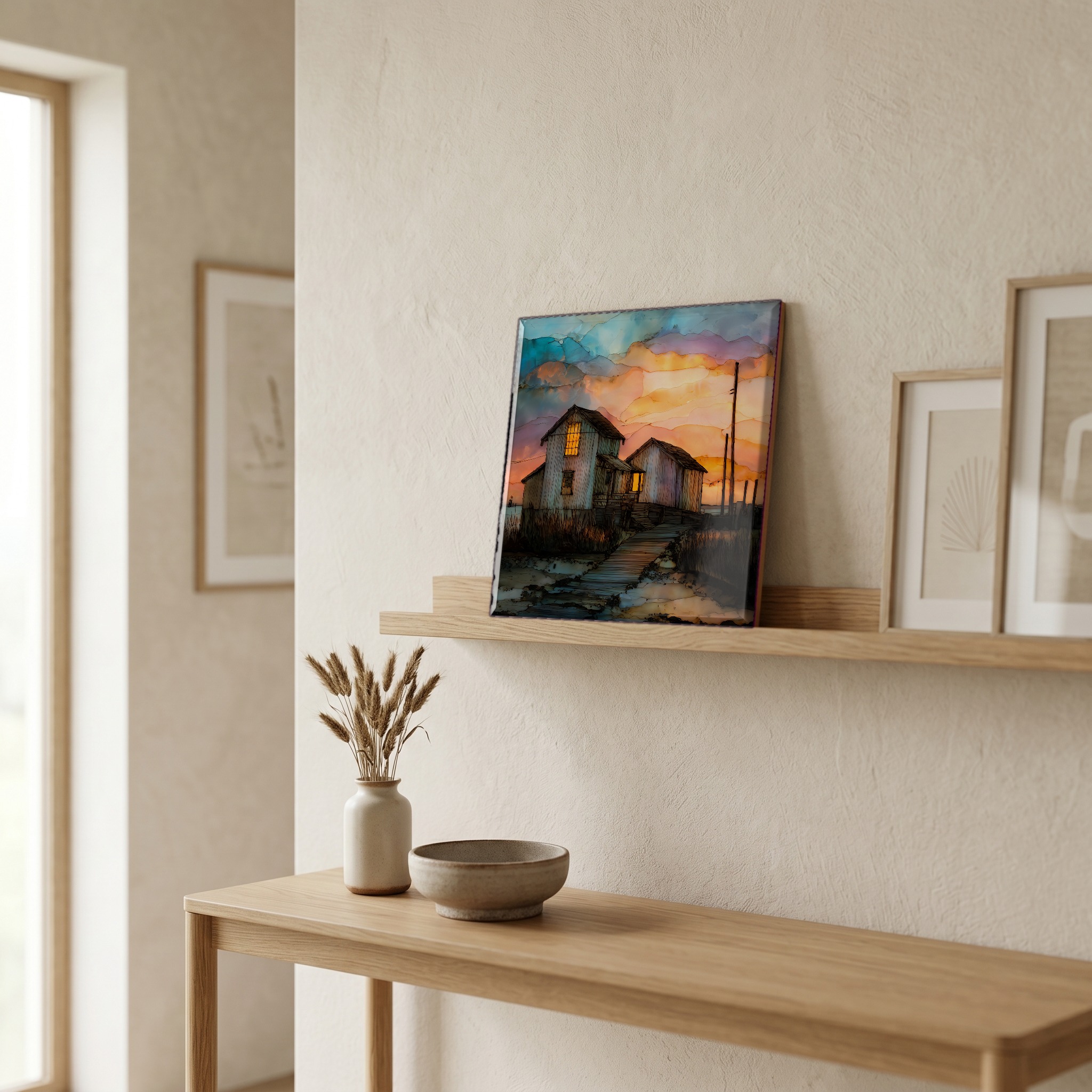
Cap Ferret Oyster Shack
shown on ceramic, 12-inch tileFrance
on the Bassin d'Arcachon, across the water from the Dune du Pilat

Cap Ferret Oyster Shack

a dozen oysters and the tide coming in.

Where it lives

Not only on a wall.

A small tile on the nightstand catching the morning. A larger one above the fire. Yours, wherever you spend the slow hours.
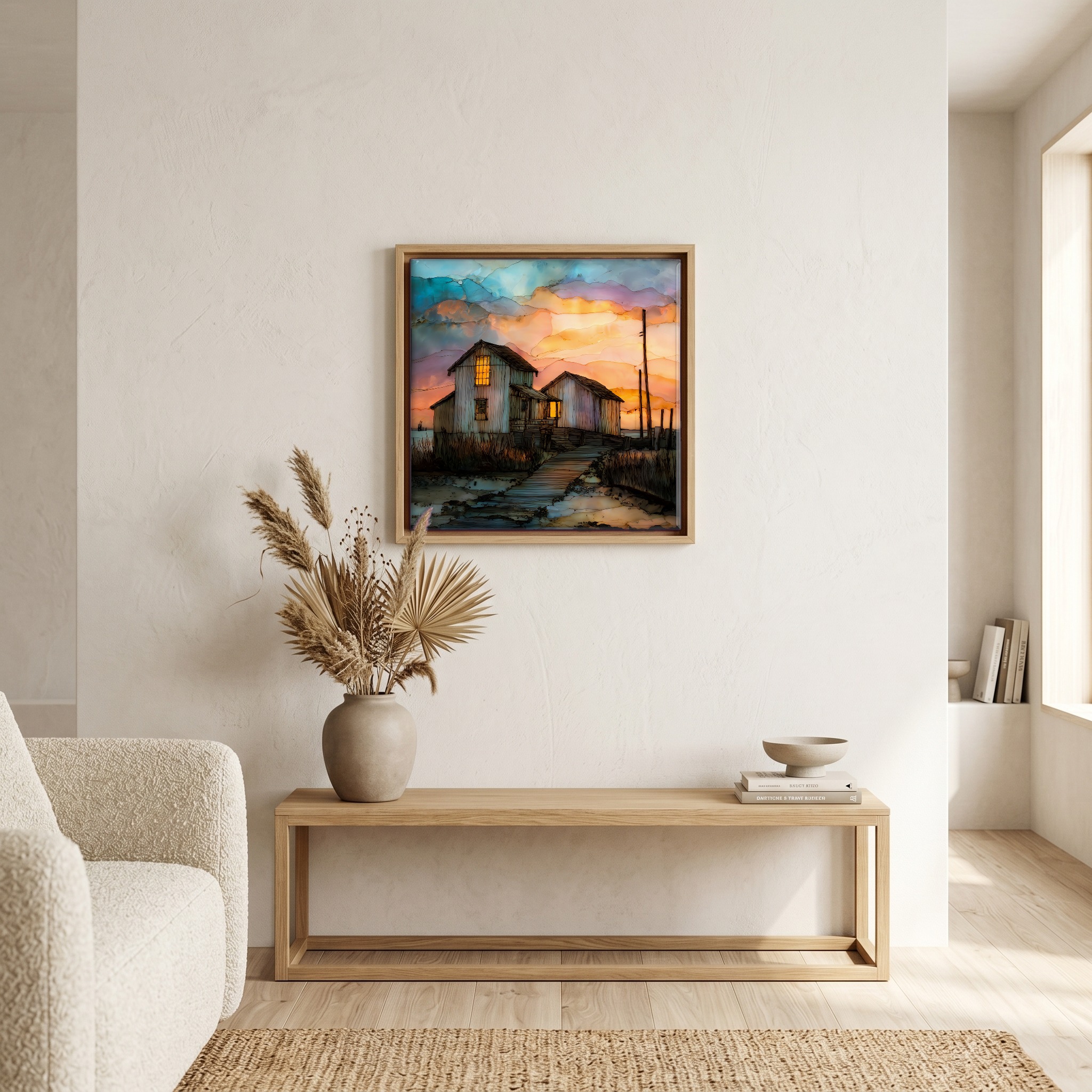
Above the bench, in a warm oak surround.
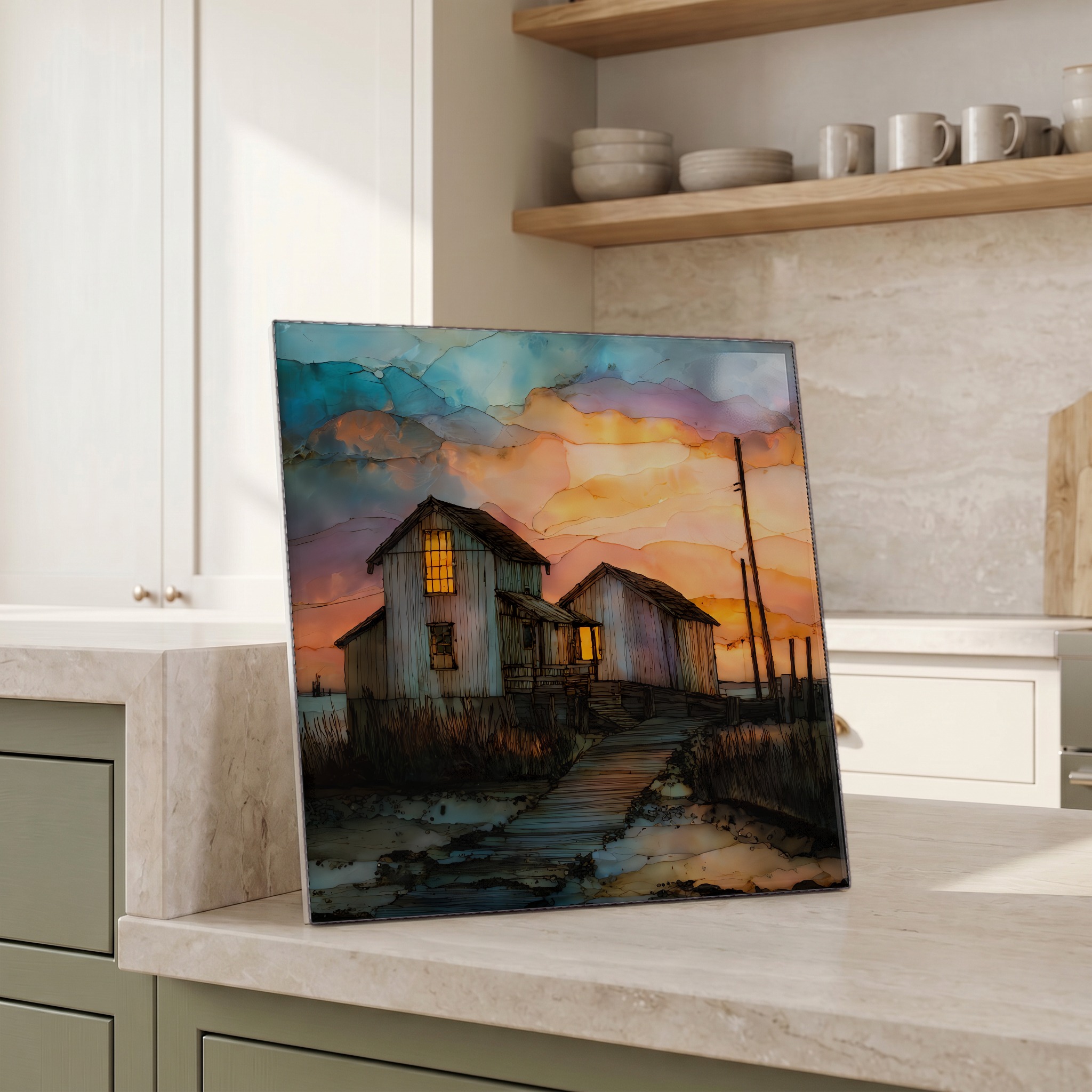
Beside the kettle, propped on the counter.
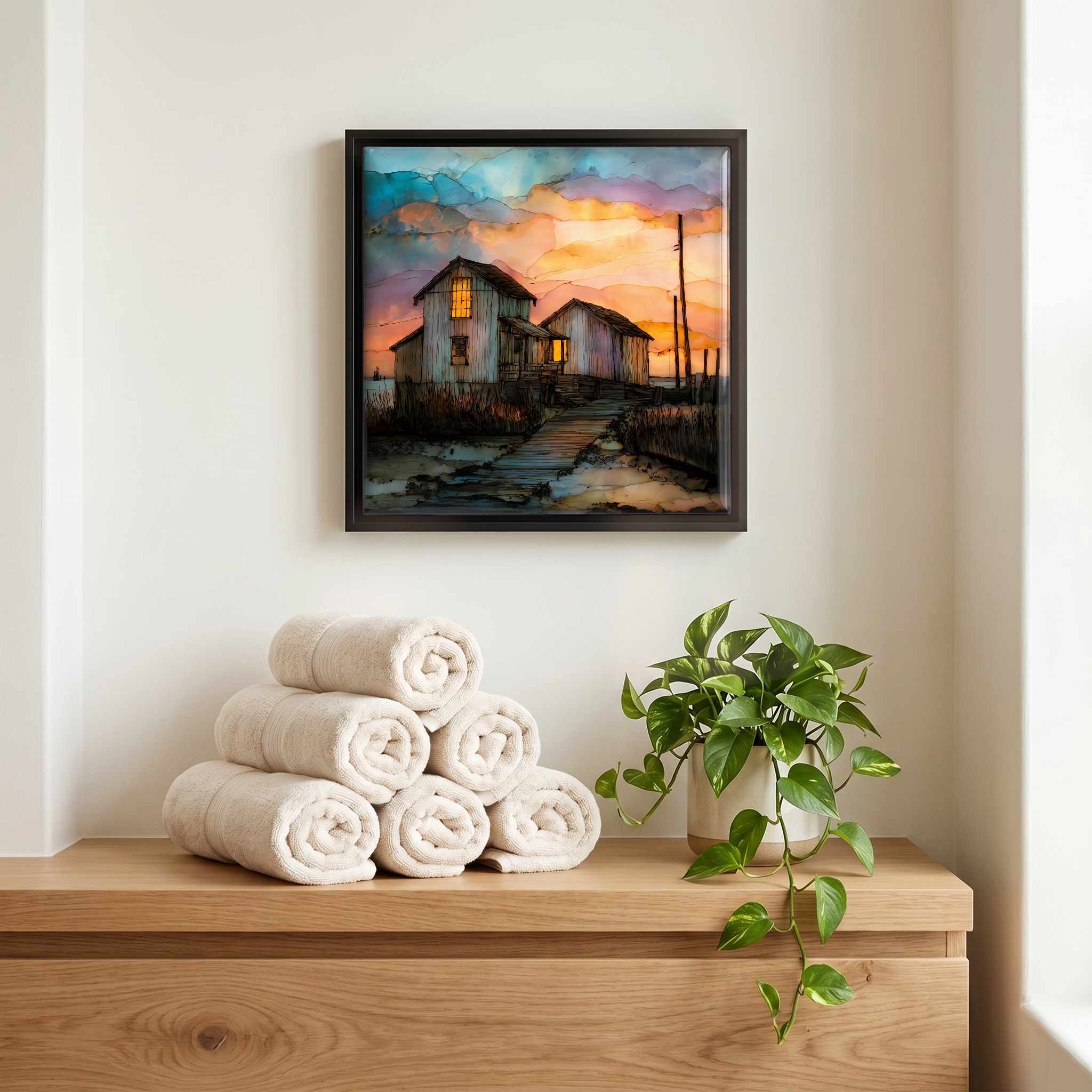
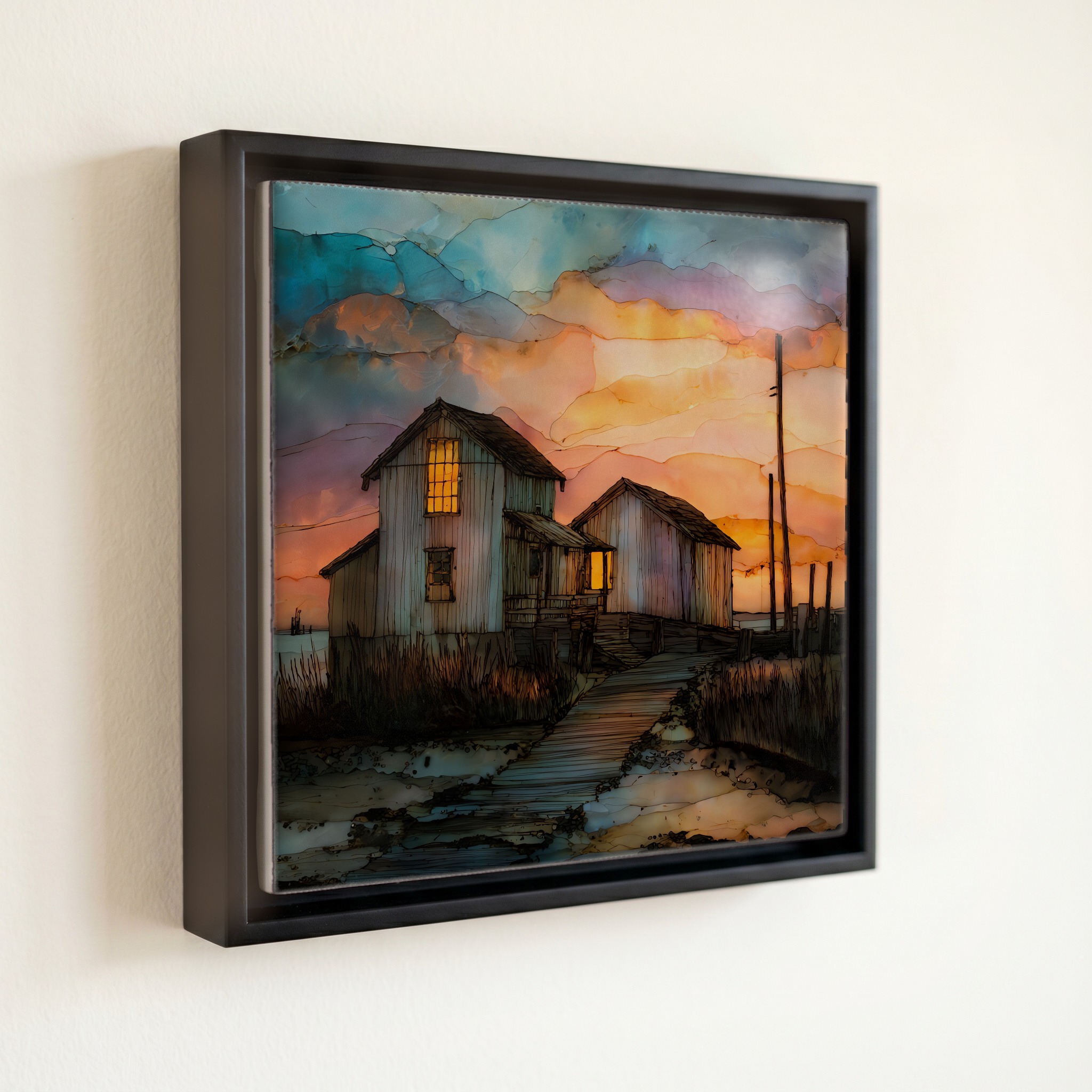
Above the linens, in a slim black surround.
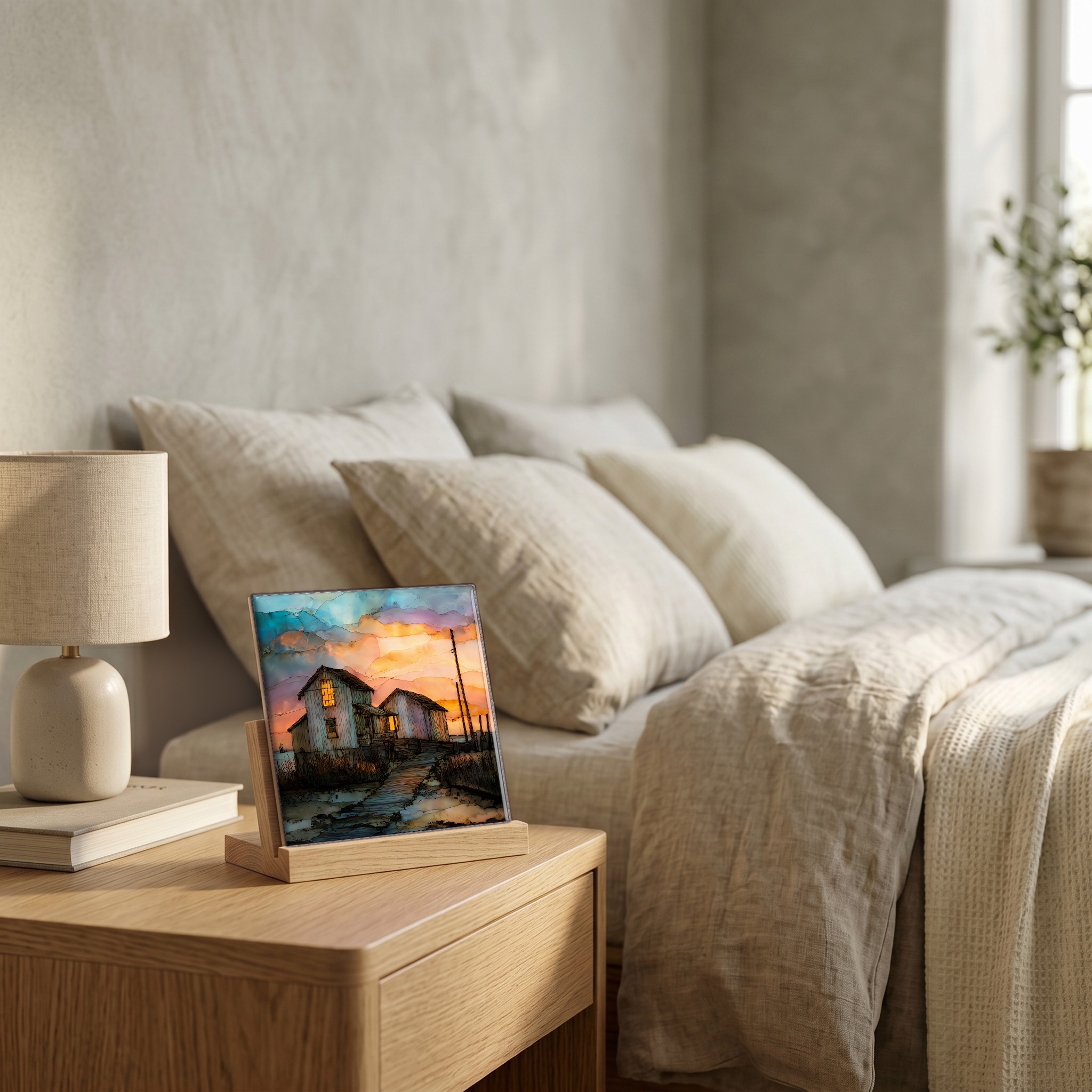
On the nightstand, on a light oak stand.
On a picture ledge, where the light comes in.
a note from the studio

Wooden cabanes line the bay at L'Herbe and Le Canon, painted in faded blues and greens, the shells crunching underfoot. No menus. The plate that comes out has a dozen oysters opened that morning, country bread, a bowl of grey shrimp, a small jug of white wine. The dune sits across the water like a long pale wall. The tide goes out and the boats lean over and the oyster farmers walk out across the mudflats. Most people don't say much.
from the studio
shown in a slim black floating frame · 6 × 6 in
— bring it home

Cap Ferret Oyster Shack, on ceramic.

Each tile is finished by hand in our Knoxville studio. Artwork is slowly infused into the ceramic surface under high heat and pressure, and rests beneath a thin glossy finish. The colour lives in the surface, not on top of it.

What kind of piece?
One tile — square or rectangle.
How big?
the popular one — counter, shelf, nightstand
6 × 6 in · 15 cm · 1.6 lb
Surface finish
A clear glossy finish — the artwork reads as if under resin. Ideal for show-pieces and framed wall art.
How it sits
A hidden cleat — sits ¼″ proud of the wall.
$58
Hand-finished and shipped from our studio at the foot of the Smokies. On your wall in about ten days.
size
6 × 6 in
15 cm
weighs
1.6 lb
solid in the hand
surface
ceramic, hand-finished
art rests beneath a thin glossy finish
from
Knoxville, TN
our family studio, at the foot of the Smokies
— start a Coaster Set

Pick any four 4-inch tiles — National Parks you've been to, a Smokies set, the four seasons of one place. $ for a set of , cork-backed, ready to live on the table.
comes gift-ready
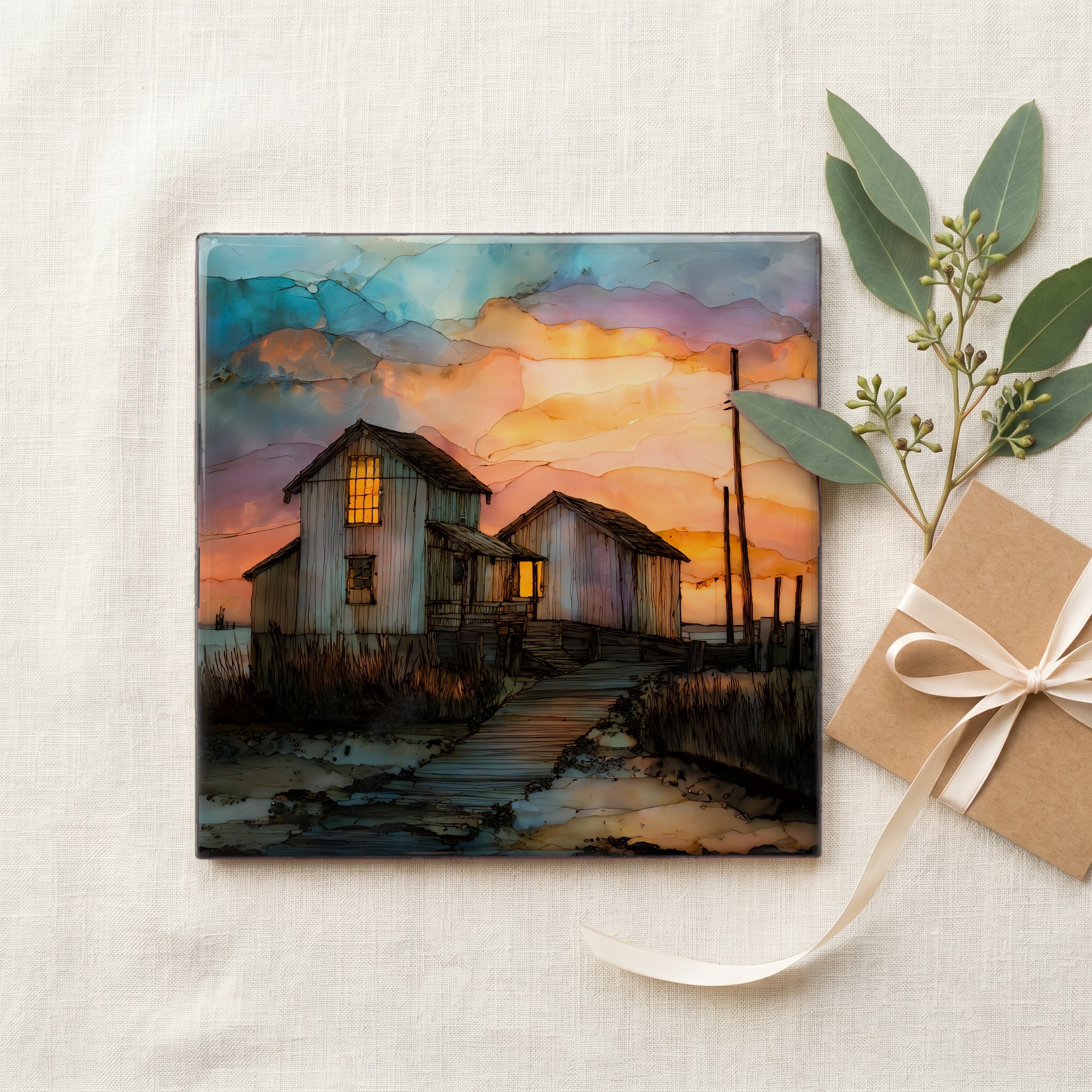
comes gift-ready

Each tile ships in a kraft box, tied with cream ribbon, with a handwritten note from the studio if you'd like to add one.
or build a grouping
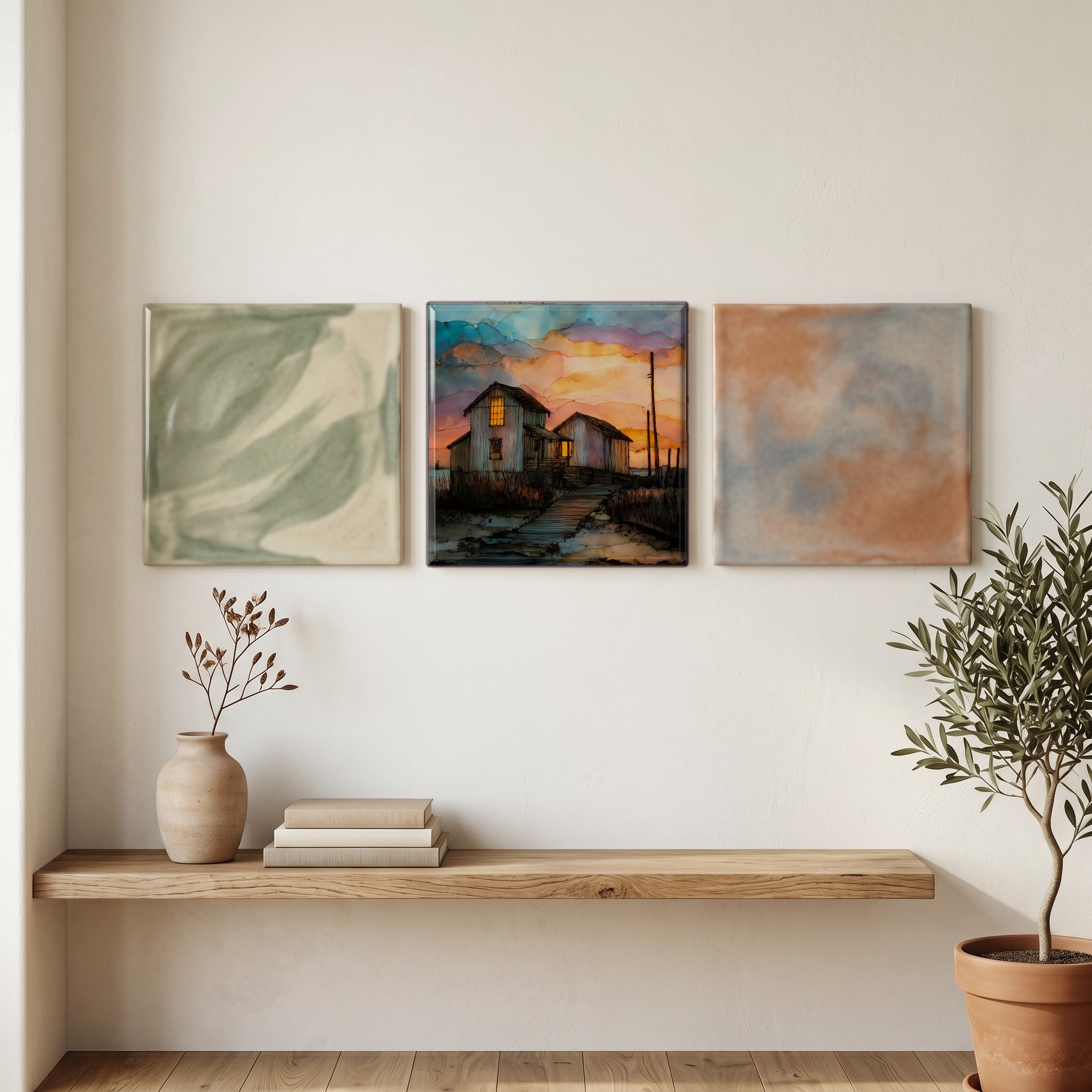
or build a grouping

Three or five different vistas, hung together — a chapter of places you've been, or want to go.

about Cap Ferret Oyster Shack

The place, in three passes.

A little of what's known, in case you fall down the rabbit hole — or want to go see it yourself.
the place

The Cap Ferret peninsula is a long sand spit in the Gironde department of southwestern France, separating the Bassin d'Arcachon from the Atlantic. It runs about 25 kilometres from Lège in the north to the lighthouse at its southern tip, and is part of the commune of Lège-Cap-Ferret. The oyster villages of L'Herbe, Le Canon, Piraillan, Le Four, and La Vigne sit along the bay side, sheltered from the ocean. Each was originally a working hamlet of oyster farmers, and many of the wooden cabanes are protected under local zoning to preserve the village character. The peninsula faces the Dune du Pilat across the bay, the tallest sand dune in Europe.

the water

The Bassin d'Arcachon is a tidal lagoon of roughly 155 square kilometres, opening to the Atlantic through a single narrow pass. The water exchanges nearly entirely on each tide, drawing in the cold ocean and flushing out the lagoon, which is what makes the oysters taste the way they do. The Crassostrea gigas, the Pacific oyster, has been cultivated here since the 1970s, when it replaced the native variety lost to disease. Each oyster takes three to four years to reach plate size, growing in mesh bags on tables set out across the mudflats. At low tide the farmers walk out to tend them; at high tide the same flats are silver water.

the visit

The cabanes open in the late morning and stay open through the afternoon, most without reservations and most without a printed menu. The dégustation plate is the form: a dozen oysters numbered 2 or 3 (the larger sizes are 0 and 1, the smaller 4 and 5), opened to order, with country bread, butter, lemon, often a bowl of grey shrimp or whelks, and a small carafe of Entre-Deux-Mers or another dry white from nearby Bordeaux. The old French rule was to eat oysters only in months with an R, September through April, when the water is cold; modern triploid farming has loosened that rule but the cold-month plate is still the better one.

where
France · Lège-Cap-Ferret, Gironde
position
44.6928° N · 1.2422° W
the neighborhood

What's nearby.

A handful of named places within an hour's walk or short drive. Some we've already painted; some we will.
7 km S
Phare du Cap Ferret
lighthouse
12 km SE
Dune du Pilat
sand dune
6 km E
Île aux Oiseaux
bay island
7 km SE
Arcachon
seaside town
at the lake
Village de L'Herbe
oyster village
N
Cap Ferret Oyster Shack
Phare du Cap Ferret
Dune du Pilat
Île aux Oiseaux
Arcachon
Village de L'Herbe
common questions

What people ask.

A few questions we get about Cap Ferret Oyster Shack — and about bringing the piece home.
about the place

Cap Ferret is a sand peninsula in the Gironde department of southwestern France, separating the Bassin d'Arcachon from the Atlantic. The peninsula is part of the commune of Lège-Cap-Ferret. The most famous oyster villages are L'Herbe, Le Canon, and Piraillan, all on the sheltered bay side.

Almost all are Crassostrea gigas, the Pacific oyster, which replaced the native European flat oyster in the Bassin d'Arcachon in the 1970s after disease wiped out the local stock. Sizes are numbered 0 to 5, with 0 the largest. Most cabanes serve numbers 2 and 3.

The Bassin d'Arcachon is a tidal lagoon with a single narrow opening to the Atlantic. Water flushes nearly fully on each tide, mixing cold ocean with the warmer bay. The mineral, slightly hazelnut finish is specific to that mix and to the pine forests draining into the basin.

Most have no printed menu. You sit down and a plate arrives: oysters opened to order, country bread, butter, lemon, often a bowl of grey shrimp, and a small carafe of white wine, usually Entre-Deux-Mers. Cash and small plates. The bill comes on a slip of paper.

The old French rule was to eat oysters only in months with an R, September through April, when the water is cold and the oysters are at their best. Modern triploid varieties have loosened the rule, but the winter and early-spring plate is still the better one.

From Bordeaux, drive west about an hour to Lège-Cap-Ferret, then follow the D106 down the peninsula. From Arcachon, a small ferry crosses the bay to Cap Ferret, daily in summer and on a reduced schedule in winter. The Tour du Cap Ferret bus links the villages in summer.

The Phare du Cap Ferret stands at the southern tip of the peninsula, a red-and-white tower built in 1947 to replace an earlier lighthouse destroyed in the war. It is about 52 metres tall and open to visitors who climb to the lantern for a view across the basin to the Dune du Pilat.

about the piece in your home

It's been a meaningful gift for many of our customers with ties to the bassin. The cabanes are one of the most loved expressions of Cap Ferret. Anyone who has spent a long afternoon at L'Herbe or Le Canon recognises them at once. A Small or Medium with a handwritten note carries well.

The faded blues and greens of the cabanes sit well with French country, coastal-modern, and Scandinavian-coastal interiors. It also works in a kitchen with natural oak or pale linen. The palette is warm rather than nautical, so it avoids the seaside-cliché register.

Coastal-modern has shifted away from the white-and-navy nautical look toward muted, lived-in coastal palettes: sun-faded wood, salt-bleached blue, soft green. The Cap Ferret cabanes sit squarely in that range. A Large above a kitchen banquette or in a dining nook reads as the current direction of that style.

Above a sofa or a long console, a single Large reads strong on its own. Above a wider wall, a 4-tile Mural carries the bay light and the row of cabanes at scale. For a hallway gallery or a dining wall, a 9-tile Mural is the show-piece.

Yes. For a kitchen backsplash or a bathroom wall, choose the Dura Satin or Matte finish. Both are scratch-resistant and handle moisture without dulling. The Glossy finish is for framed wall art and is best kept away from cooking surfaces.

A soft microfibre cloth and clean water. No abrasive pads, no ammonia, no bleach. For a kitchen tile near cooking, a damp cloth followed by a dry one is enough.

Yes. Every WenderVista painting is original to the studio in Knoxville, Tennessee. The image is not licensed from a stock library and is not used by any other site or brand. The series is curated by Reid Wender and the tiles are hand-finished in-house.

if this one stayed with you

A few you might also love.

Hand-picked by the eye that found Sorapis. Same air, same kind of quiet.