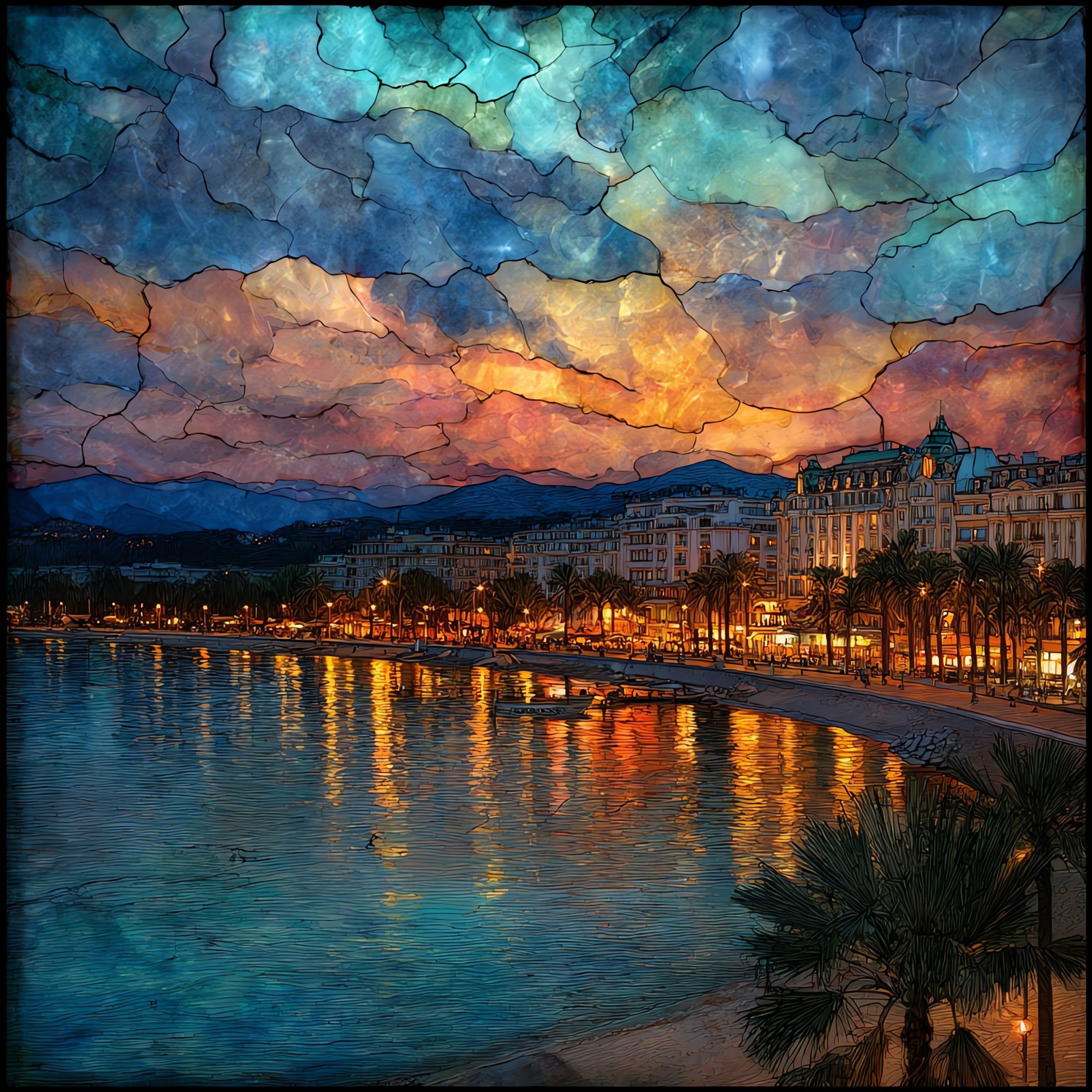
Cannes Croisette
— two weeks of cinema, fifty of palms.
Not only on a wall.
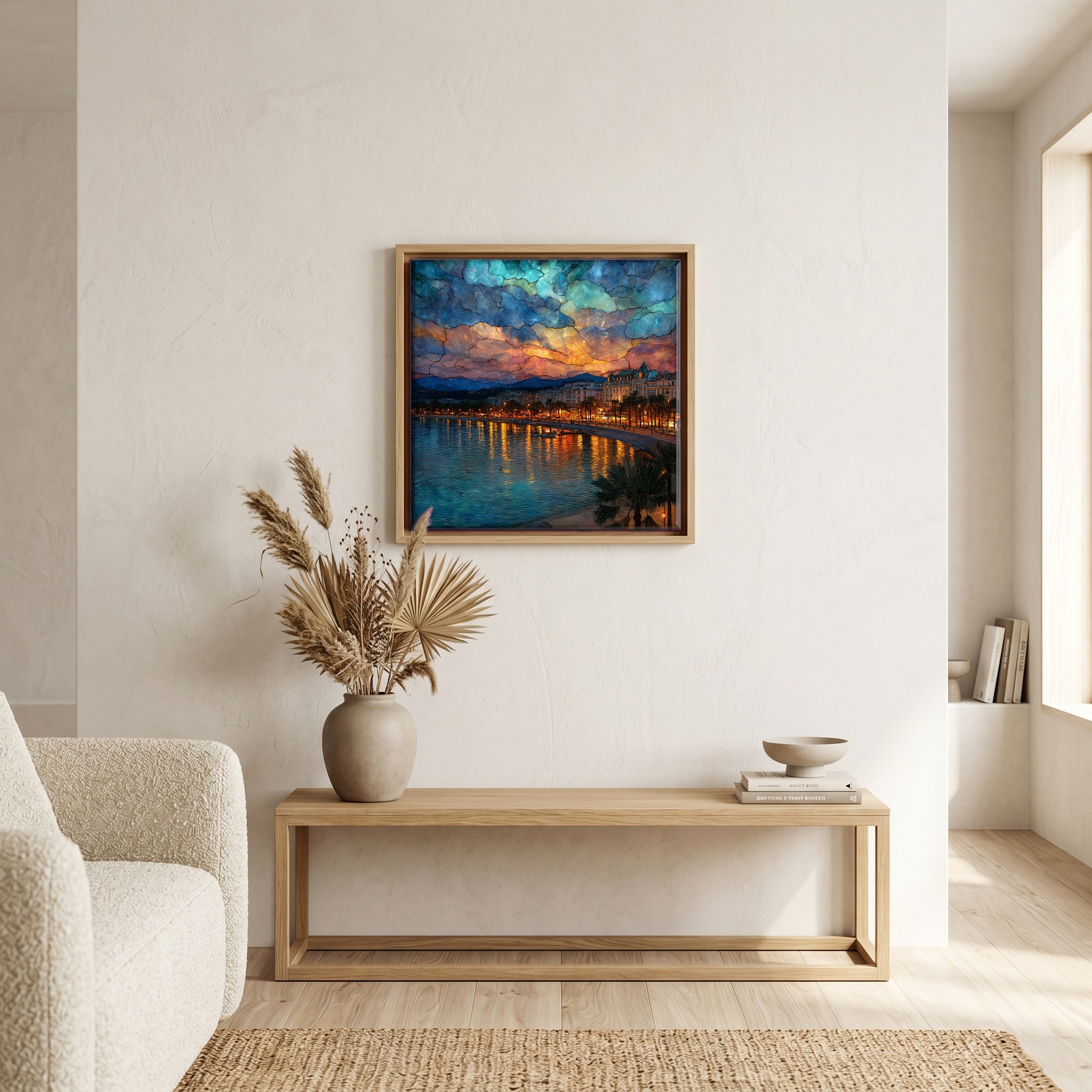
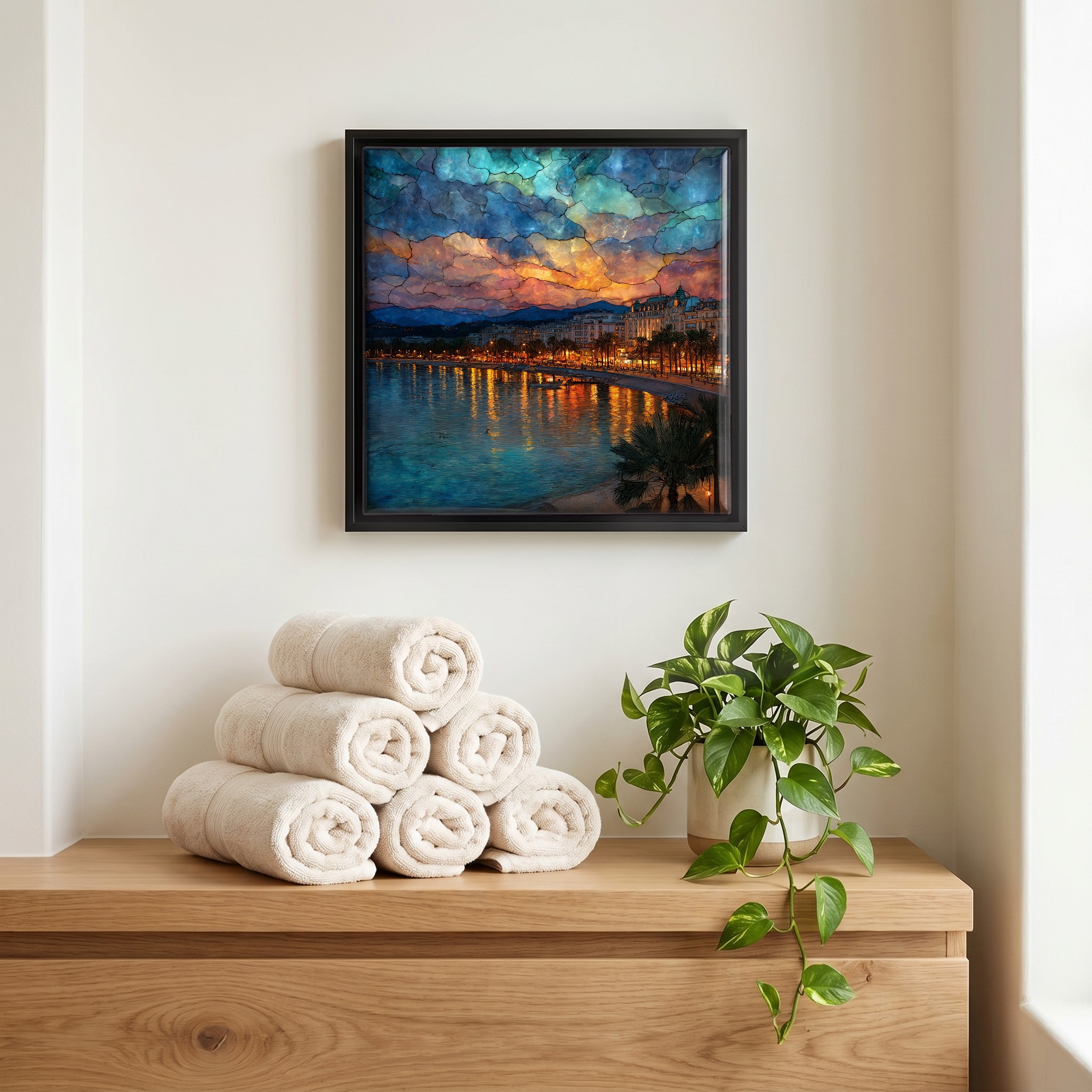
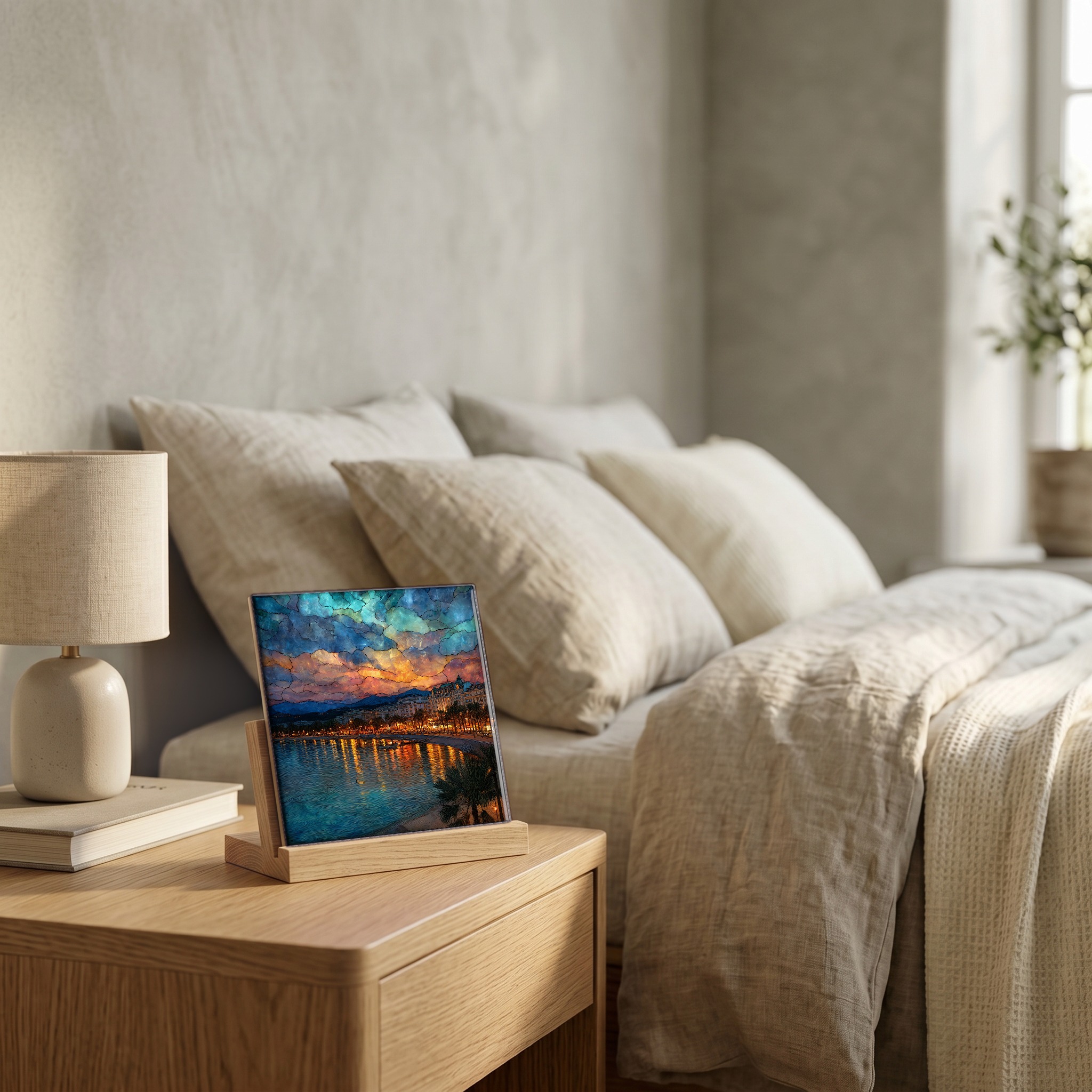
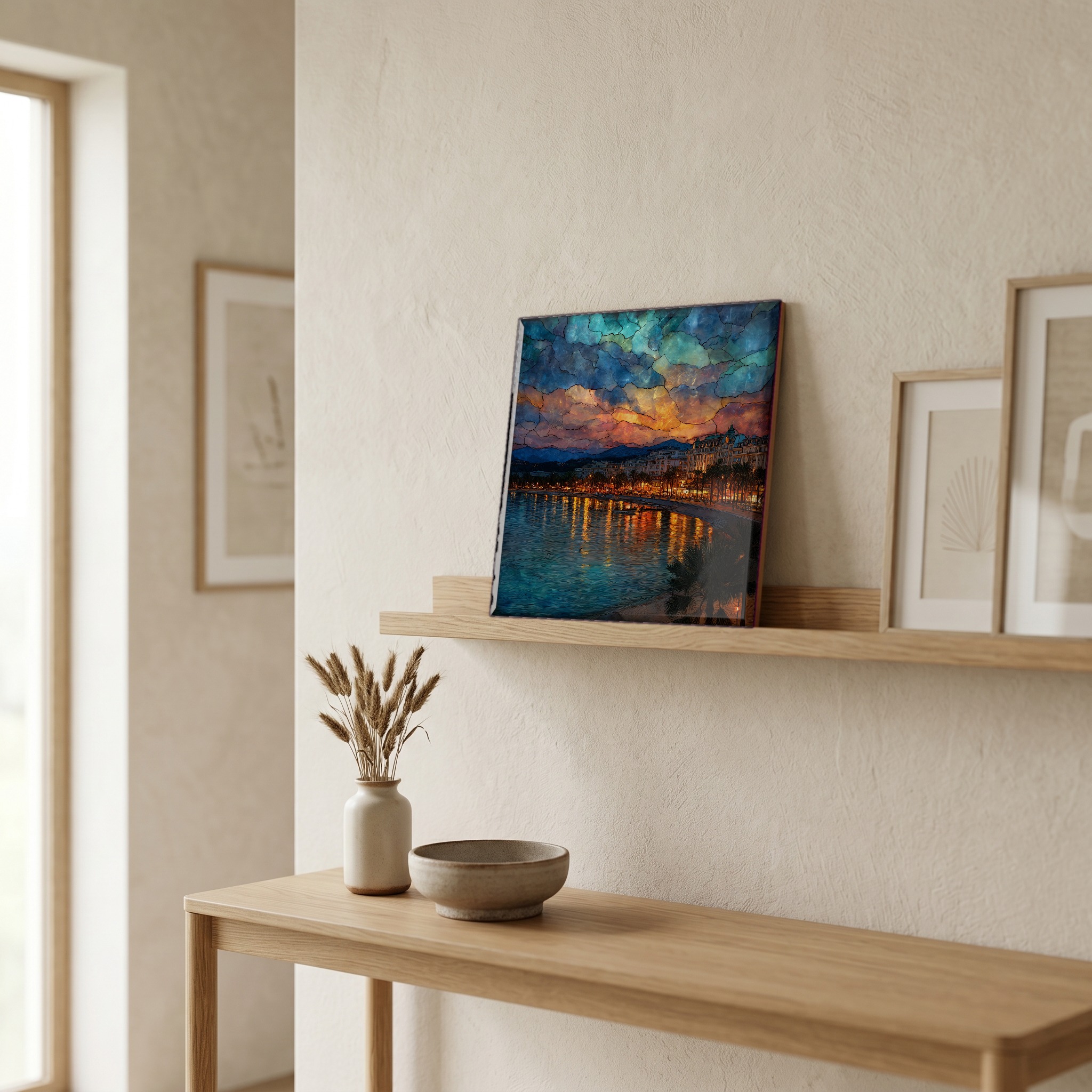
“Two kilometres of seafront in Cannes, between the Palais des Festivals and the Pointe Croisette. The palace hotels face south to the Bay of Cannes: the Carlton from 1911, the Martinez from 1929, the Majestic. Canary Island date palms planted in the late nineteenth century run the length of the boulevard. For twelve days each May the red carpet at the Palais and the world's film industry take it over. After six, the light catches the palms and the bay reads copper. The rest of the year the boulevard belongs to morning runners and the woman who opens the kiosk near the Majestic.
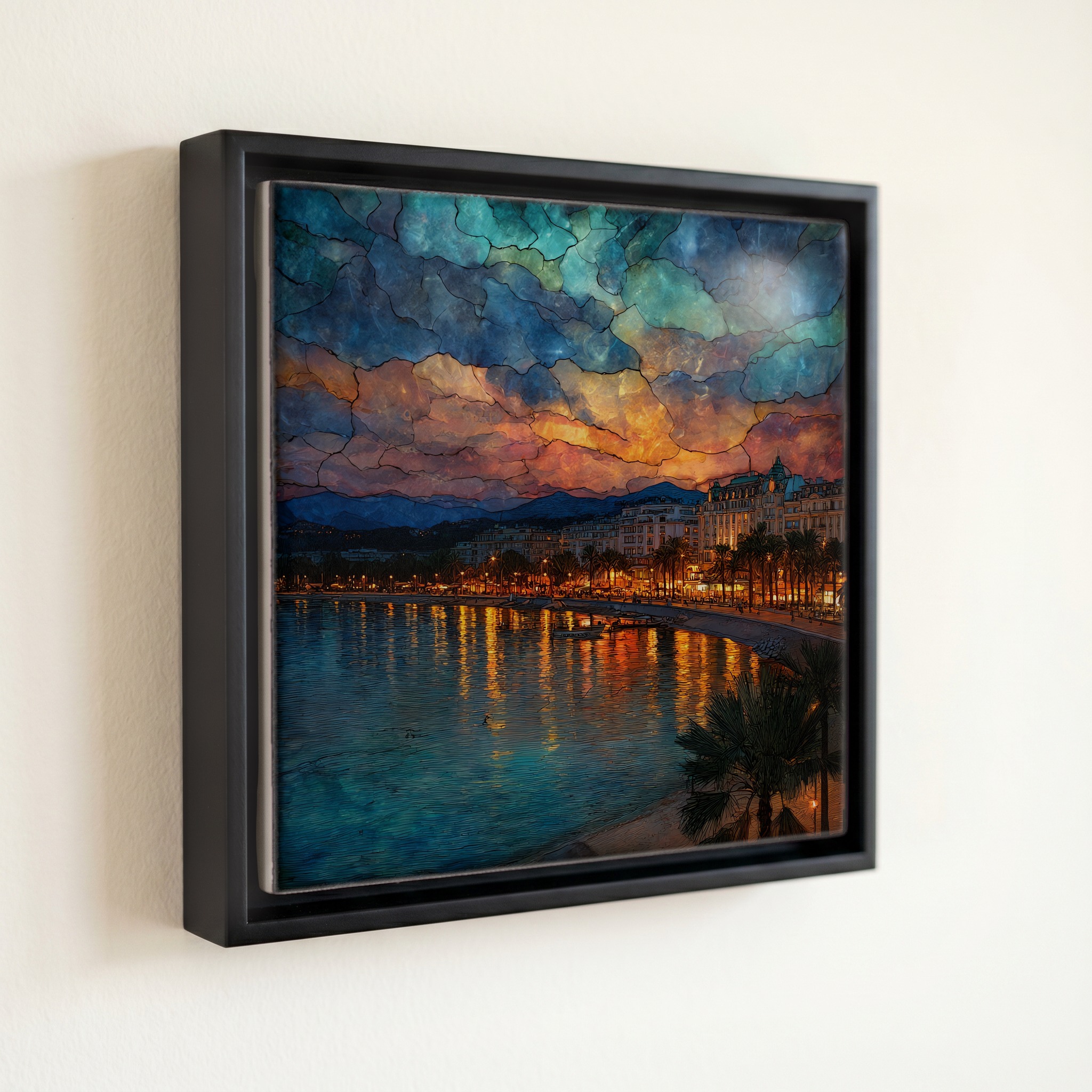
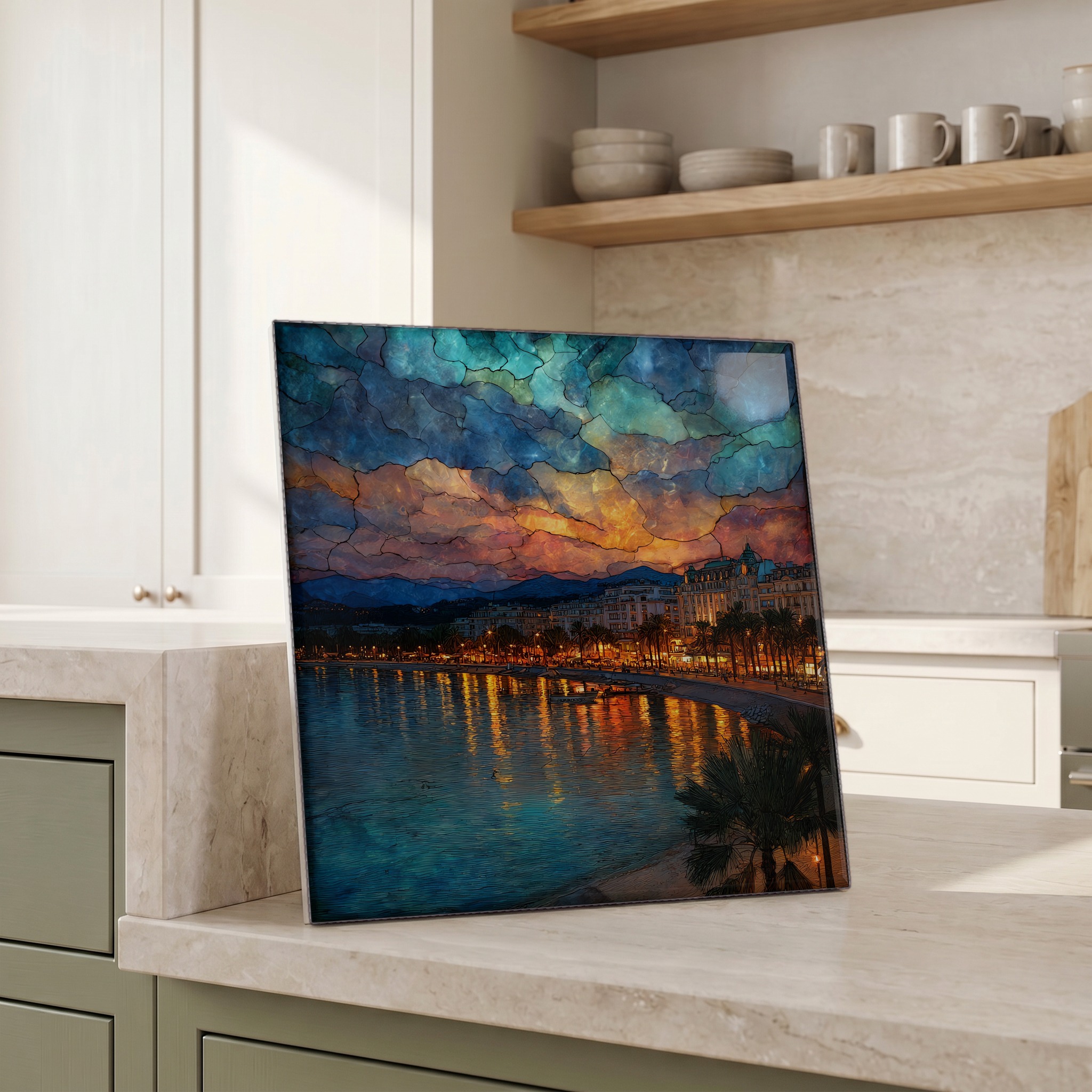
Cannes Croisette, on ceramic.
Each tile is finished by hand in our Knoxville studio. Artwork is slowly infused into the ceramic surface under high heat and pressure, and rests beneath a thin glossy finish. The colour lives in the surface, not on top of it.
Pick any four 4-inch tiles — National Parks you've been to, a Smokies set, the four seasons of one place. $ for a set of , cork-backed, ready to live on the table.
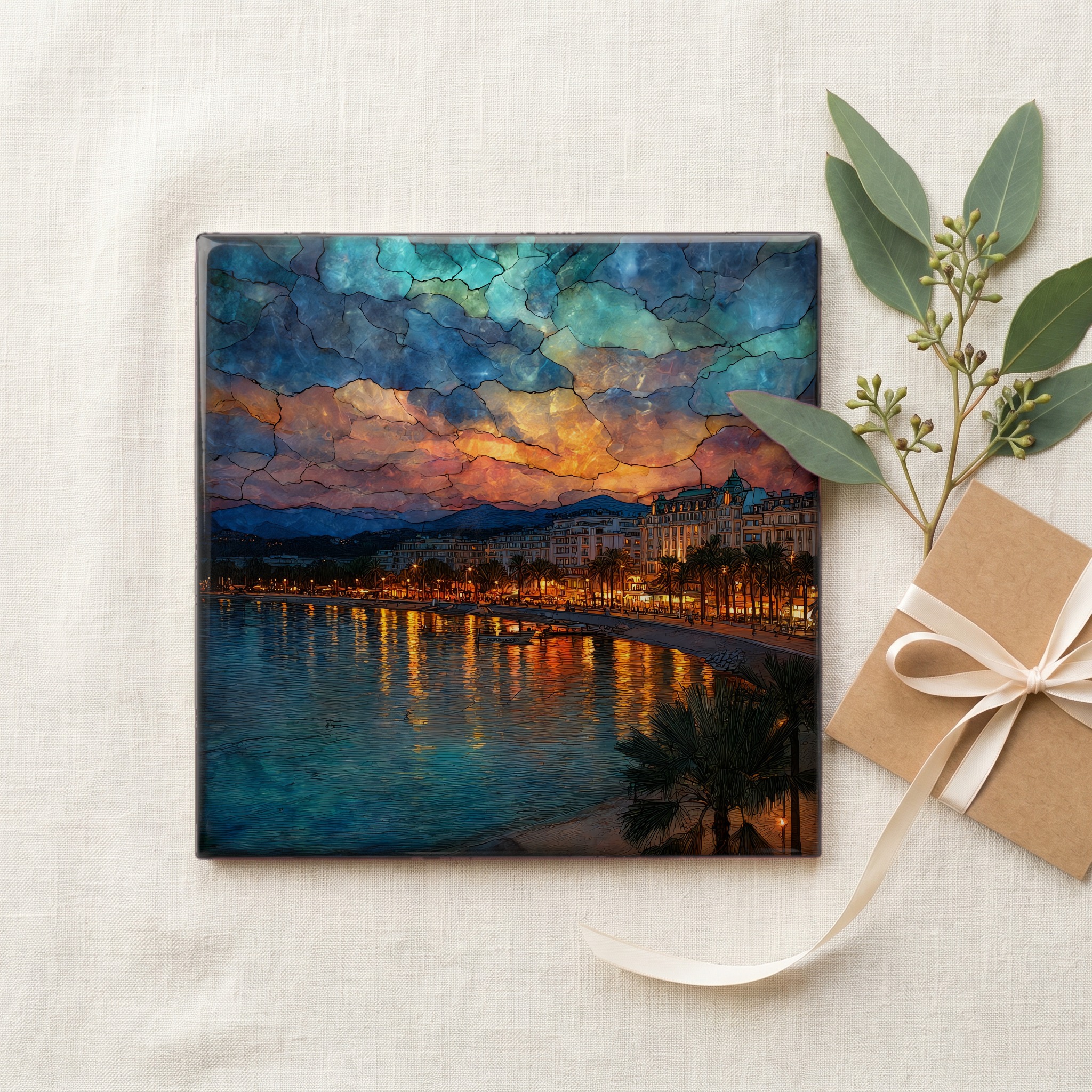
Each tile ships in a kraft box, tied with cream ribbon, with a handwritten note from the studio if you'd like to add one.
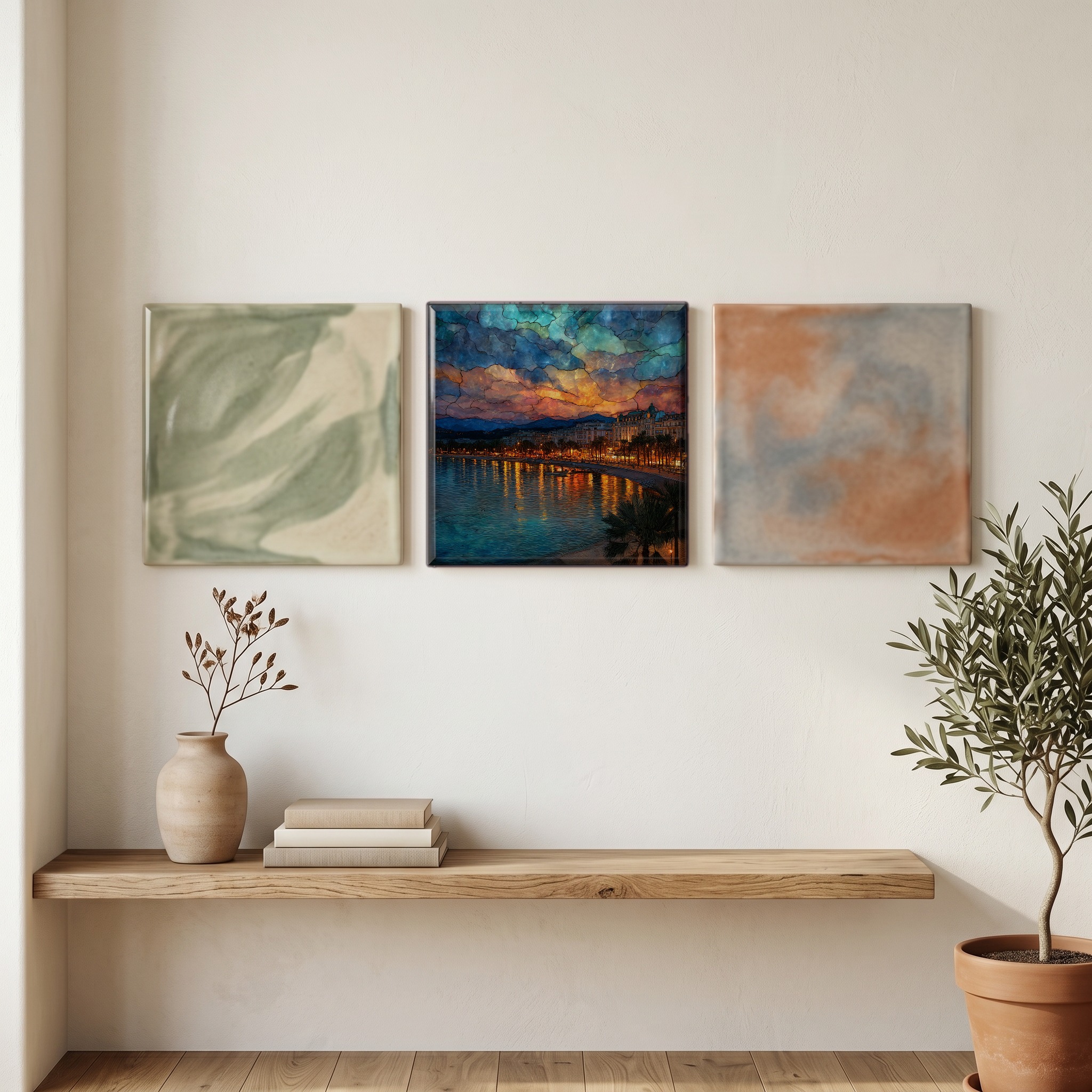
Three or five different vistas, hung together — a chapter of places you've been, or want to go.
The place, in three passes.
La Croisette is a two-kilometre seafront boulevard in Cannes, on the French Riviera, in the Alpes-Maritimes department of Provence-Alpes-Côte d'Azur. It runs along the Bay of Cannes from the Vieux Port and the Palais des Festivals at its western end to the Pointe Croisette and Port Canto in the east. The name comes from a small cross (a croisette, in old French) that once marked the eastern point of the bay. On its land side the boulevard is lined with belle-époque palace hotels: the InterContinental Carlton from 1911, the Hôtel Martinez from 1929, the Majestic Barrière. On its sea side, a public beach and a chain of private beach concessions face south to the Mediterranean. Nice Côte d'Azur Airport is twenty-seven kilometres to the east; the Cannes train station is a five-minute walk inland.
The light along this stretch of coast is what brought the painters and what now brings the film world. The Côte d'Azur owes its clarity to the Maritime Alps to the north and the dry mistral that scrubs the air; Pierre Bonnard at Le Cannet, on the hill above Cannes, and Henri Matisse at Nice both worked within forty kilometres of the Croisette and named the same quality. On the boulevard itself the light has a daily arc: flat white at noon, a long copper at six, a slow blue between eight and nine when the sea and the sky meet at the same value. The Canary Island date palms planted along the promenade in the late nineteenth century catch the last of it.
One stretch of road, one fortnight in May, the entire industry. The Festival de Cannes has run on the Croisette since September 1946 (the planned 1939 opening was cancelled at the outbreak of war) and now occupies the Palais des Festivals at the western end of the boulevard for twelve days each May. The red carpet runs up the Montée des Marches at the Palais; the yacht basin fills past Port Canto. The rest of the year the same two kilometres carries a different rhythm: winter sun, January joggers, the spring opening of the beach restaurants in late March, August at full saturation, and a quiet late October when the boulevard belongs to the city again.