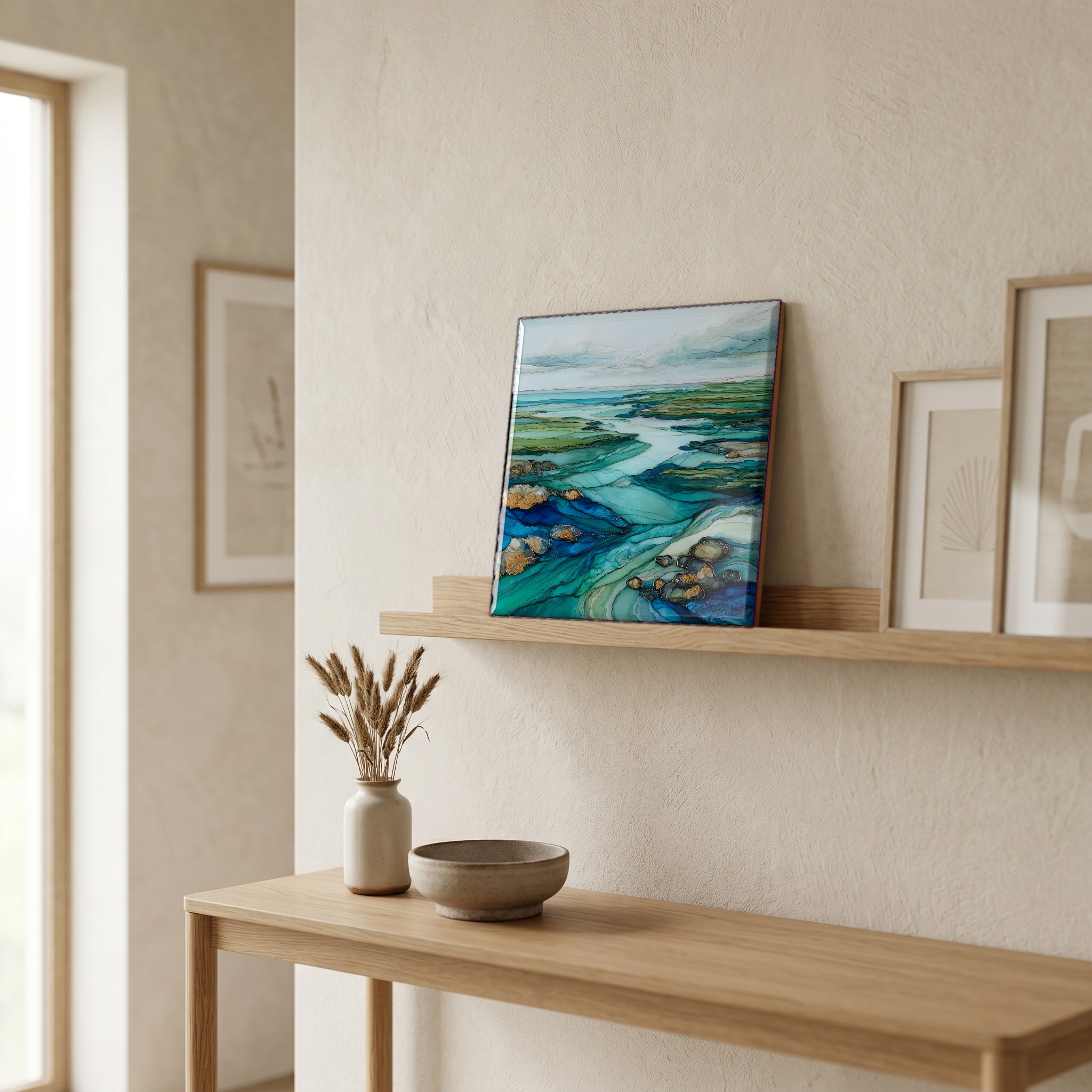
Wender·Vista
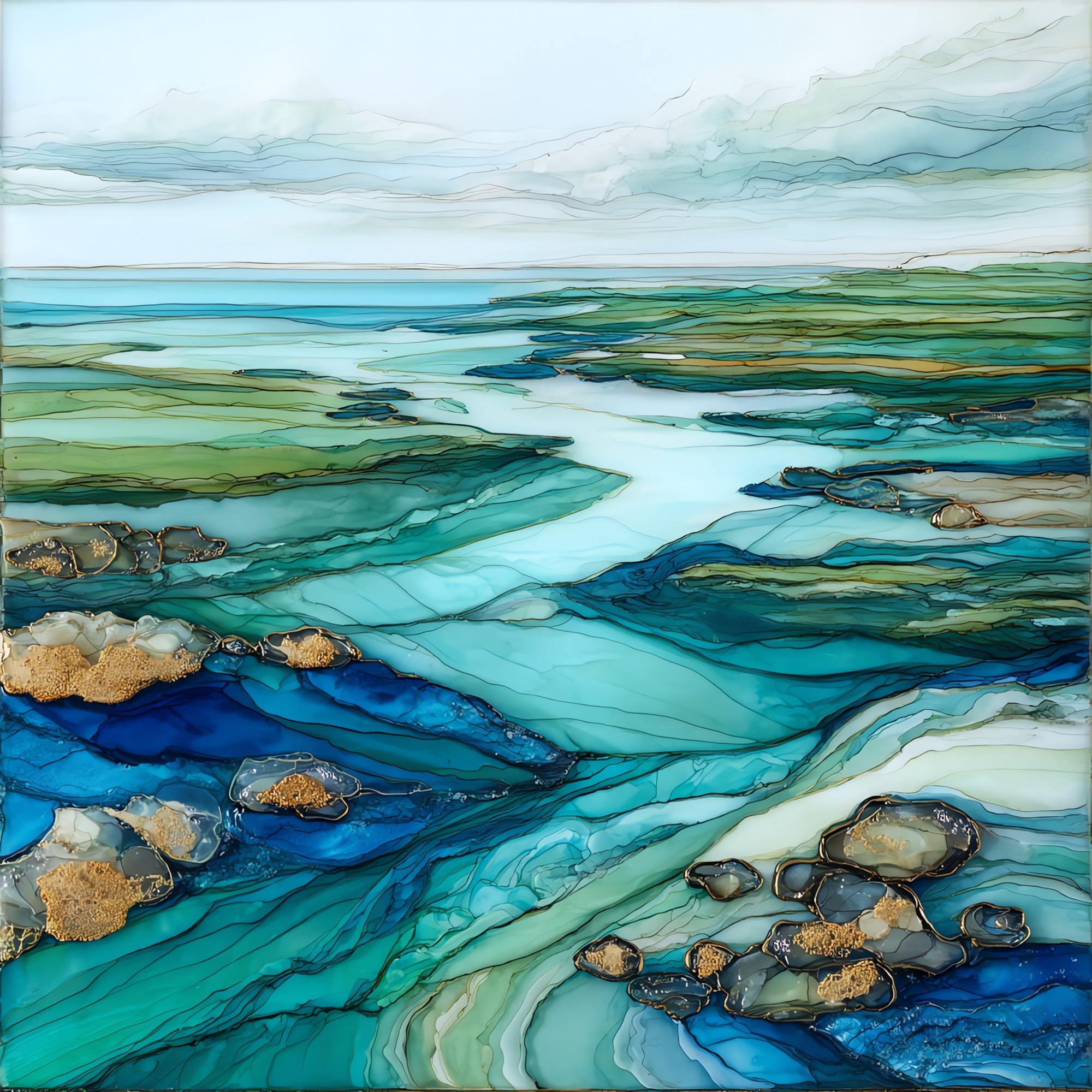
Cancale Oyster Beds
shown on ceramic, 12-inch tileFrance
in Brittany, across the bay from Mont-Saint-Michel

Cancale Oyster Beds

— the field the tide gives back twice a day.

Where it lives

Not only on a wall.

A small tile on the nightstand catching the morning. A larger one above the fire. Yours, wherever you spend the slow hours.
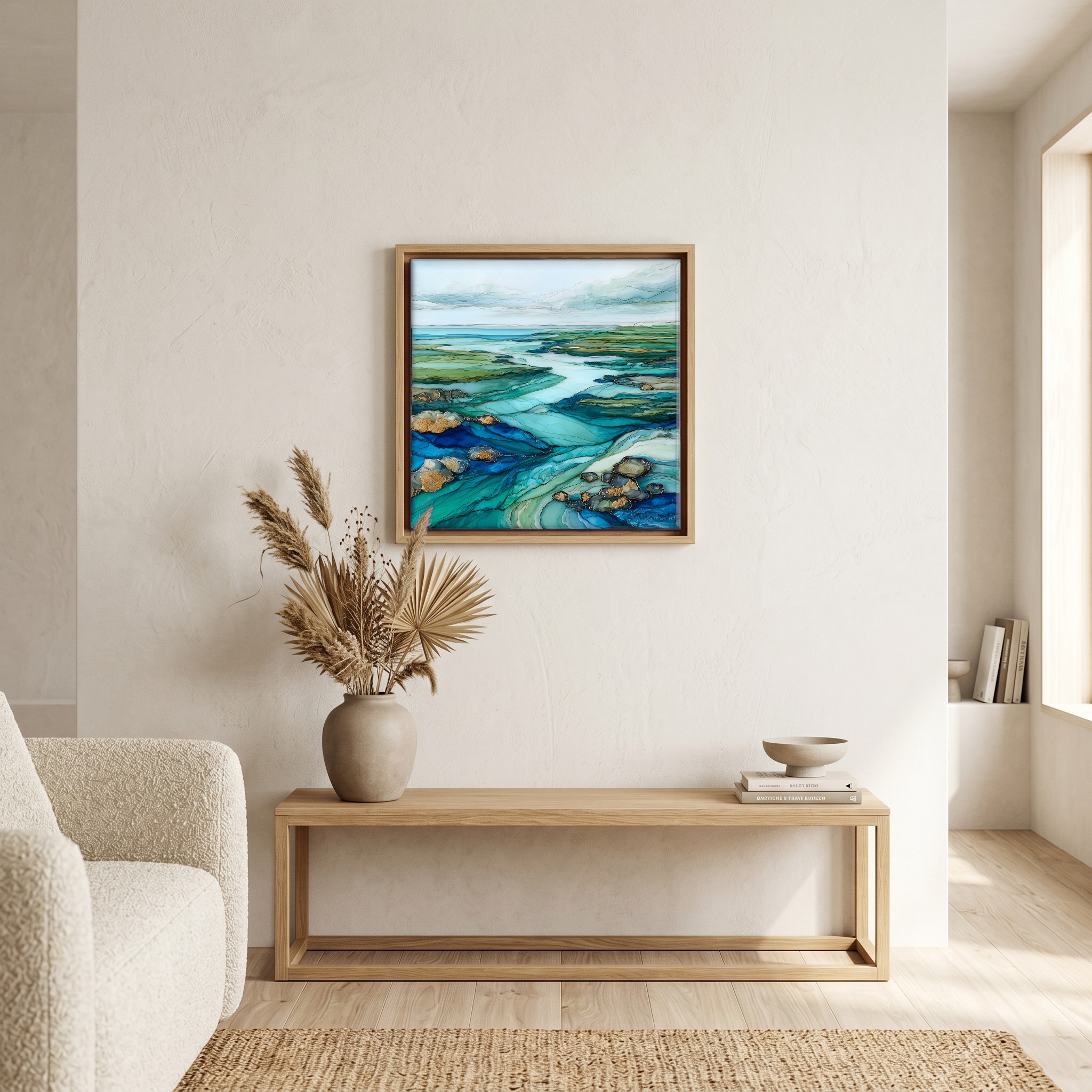
Above the bench, in a warm oak surround.
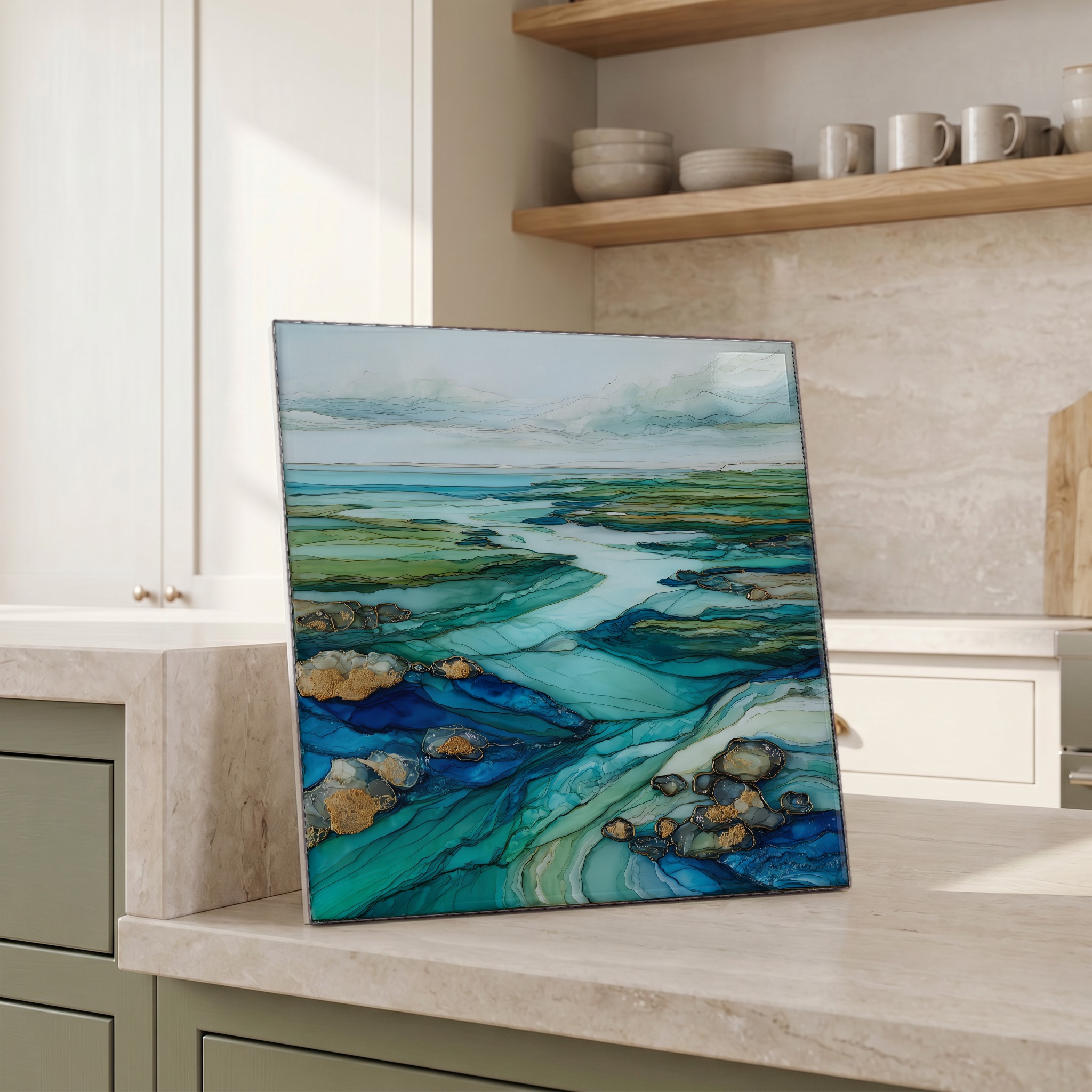
Beside the kettle, propped on the counter.
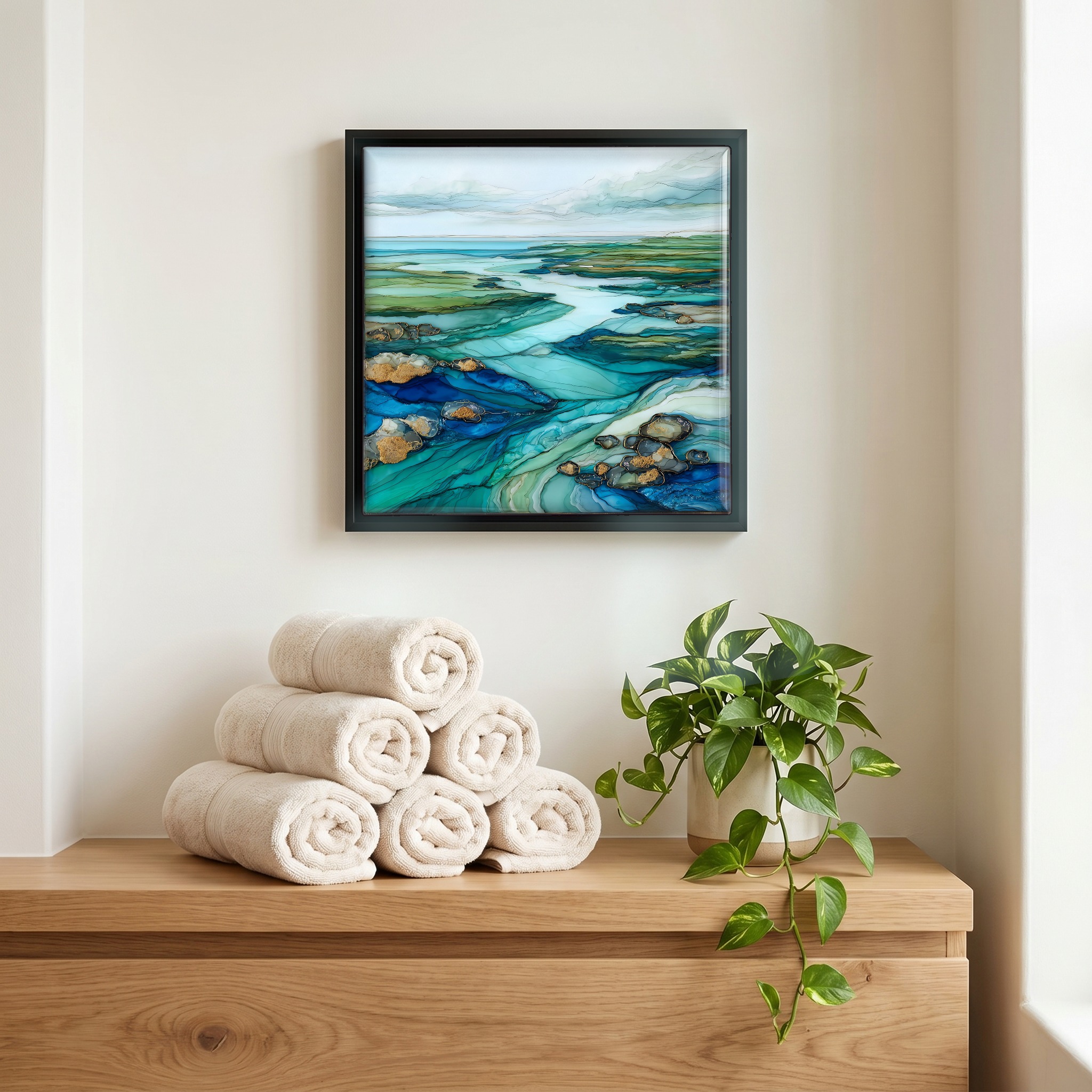
Above the linens, in a slim black surround.
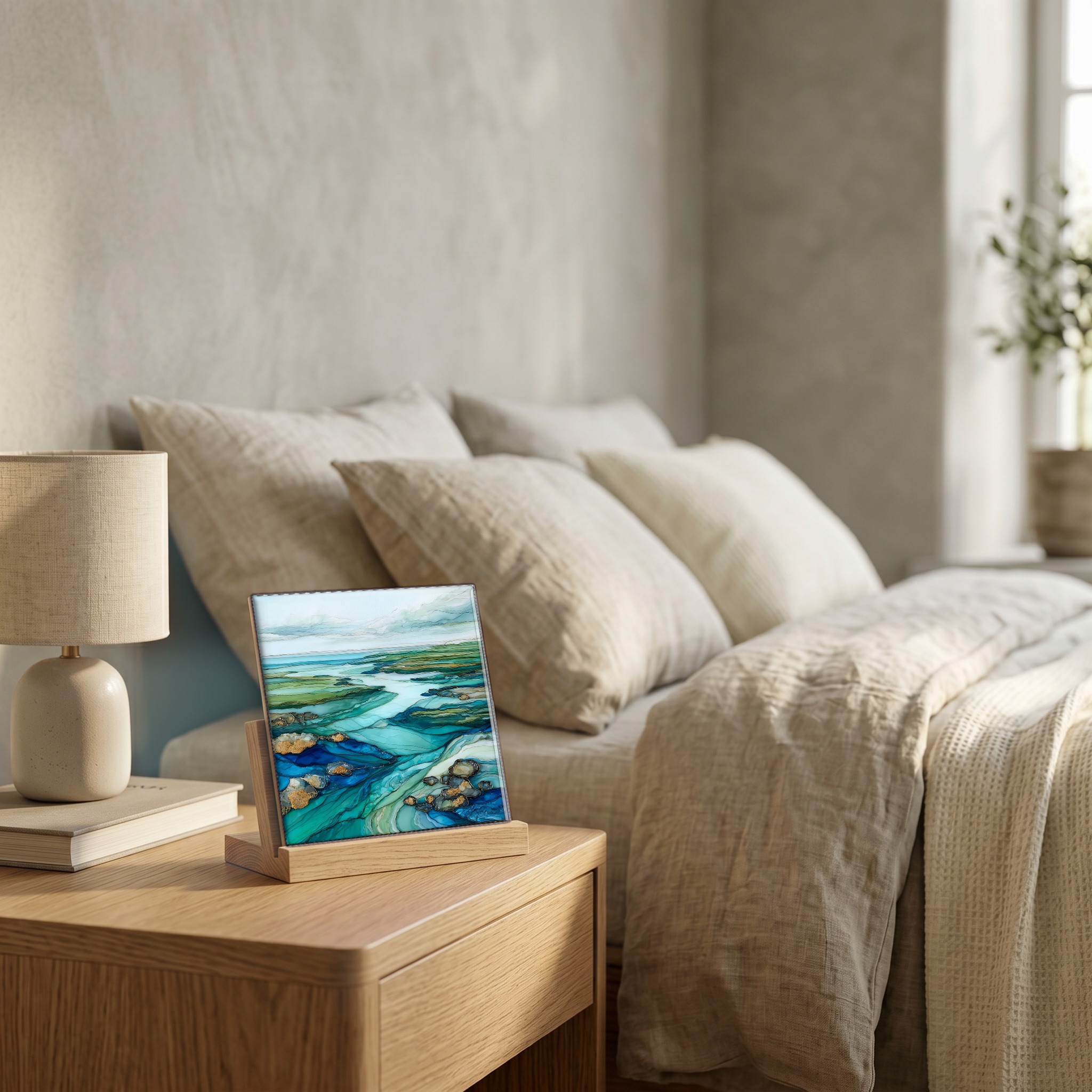
On the nightstand, on a light oak stand.
On a picture ledge, where the light comes in.
a note from the studio

A small fishing port on the Brittany coast, across the bay from Mont-Saint-Michel. The tide here pulls back farther than almost anywhere in Europe, and twice a day the oyster parks appear as a flat grid stitched across the foreshore. Tractors move out at low water, workers in waders walking the beds they leased a generation ago. At the Pointe des Crolles a row of women sell a dozen flat oysters on the spot. Eaten on the seawall, the shells thrown back onto the beach below.
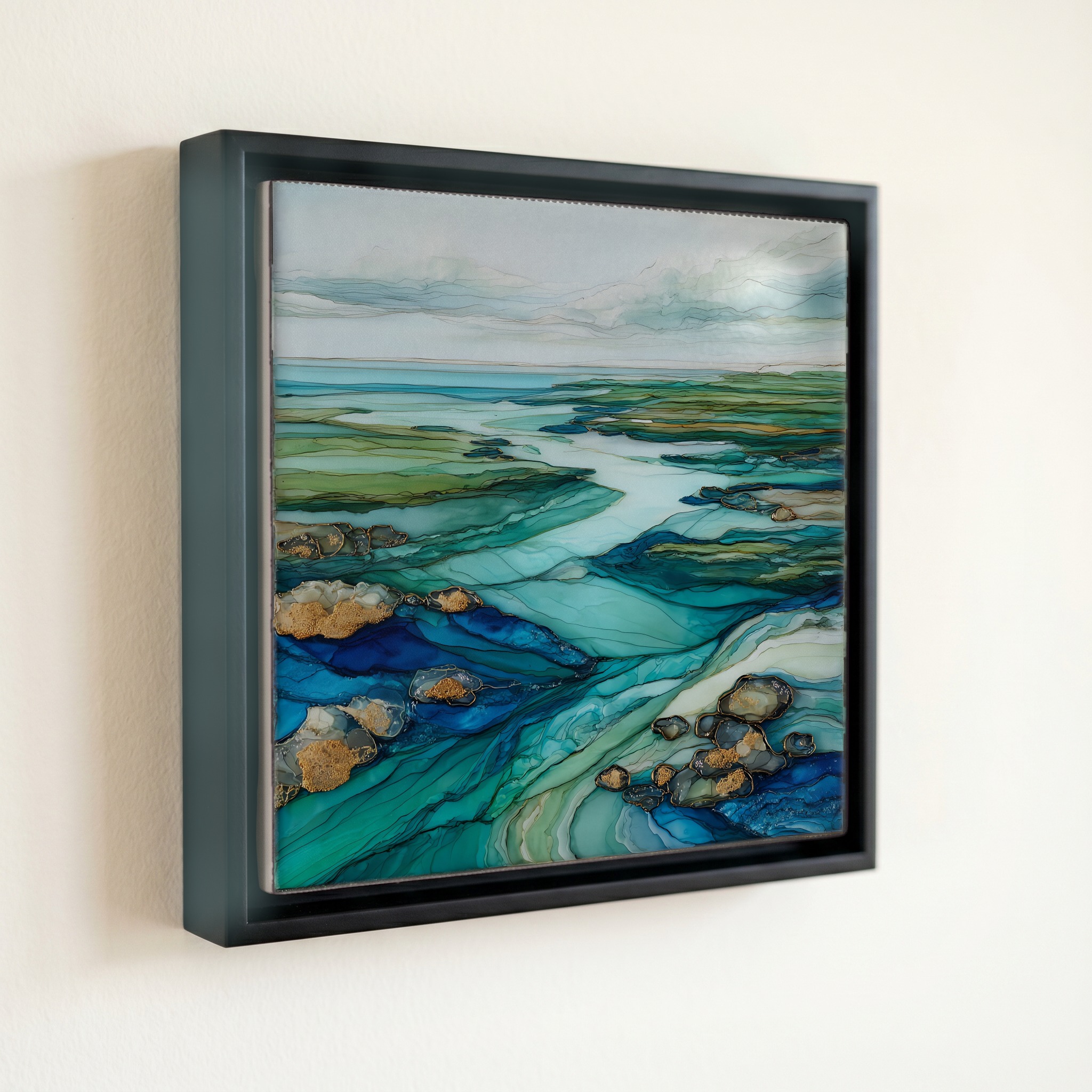
from the studio
shown in a slim black floating frame · 6 × 6 in
— bring it home

Cancale Oyster Beds, on ceramic.

Each tile is finished by hand in our Knoxville studio. Artwork is slowly infused into the ceramic surface under high heat and pressure, and rests beneath a thin glossy finish. The colour lives in the surface, not on top of it.

What kind of piece?
One tile — square or rectangle.
How big?
the popular one — counter, shelf, nightstand
6 × 6 in · 15 cm · 1.6 lb
Surface finish
A clear glossy finish — the artwork reads as if under resin. Ideal for show-pieces and framed wall art.
How it sits
A hidden cleat — sits ¼″ proud of the wall.
$58
Hand-finished and shipped from our studio at the foot of the Smokies. On your wall in about ten days.
size
6 × 6 in
15 cm
weighs
1.6 lb
solid in the hand
surface
ceramic, hand-finished
art rests beneath a thin glossy finish
from
Knoxville, TN
our family studio, at the foot of the Smokies
— start a Coaster Set

Pick any four 4-inch tiles — National Parks you've been to, a Smokies set, the four seasons of one place. $ for a set of , cork-backed, ready to live on the table.
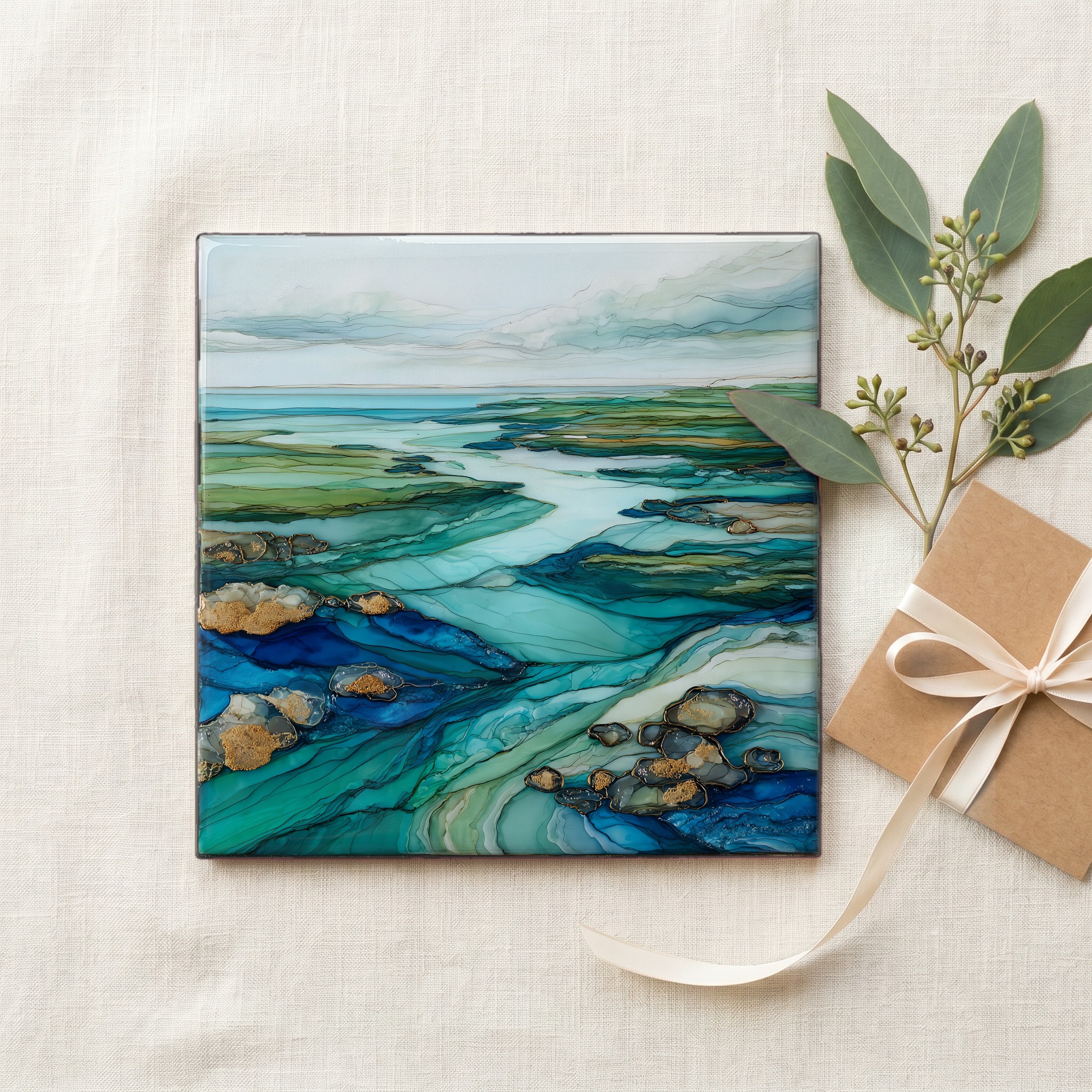
comes gift-ready
comes gift-ready

Each tile ships in a kraft box, tied with cream ribbon, with a handwritten note from the studio if you'd like to add one.
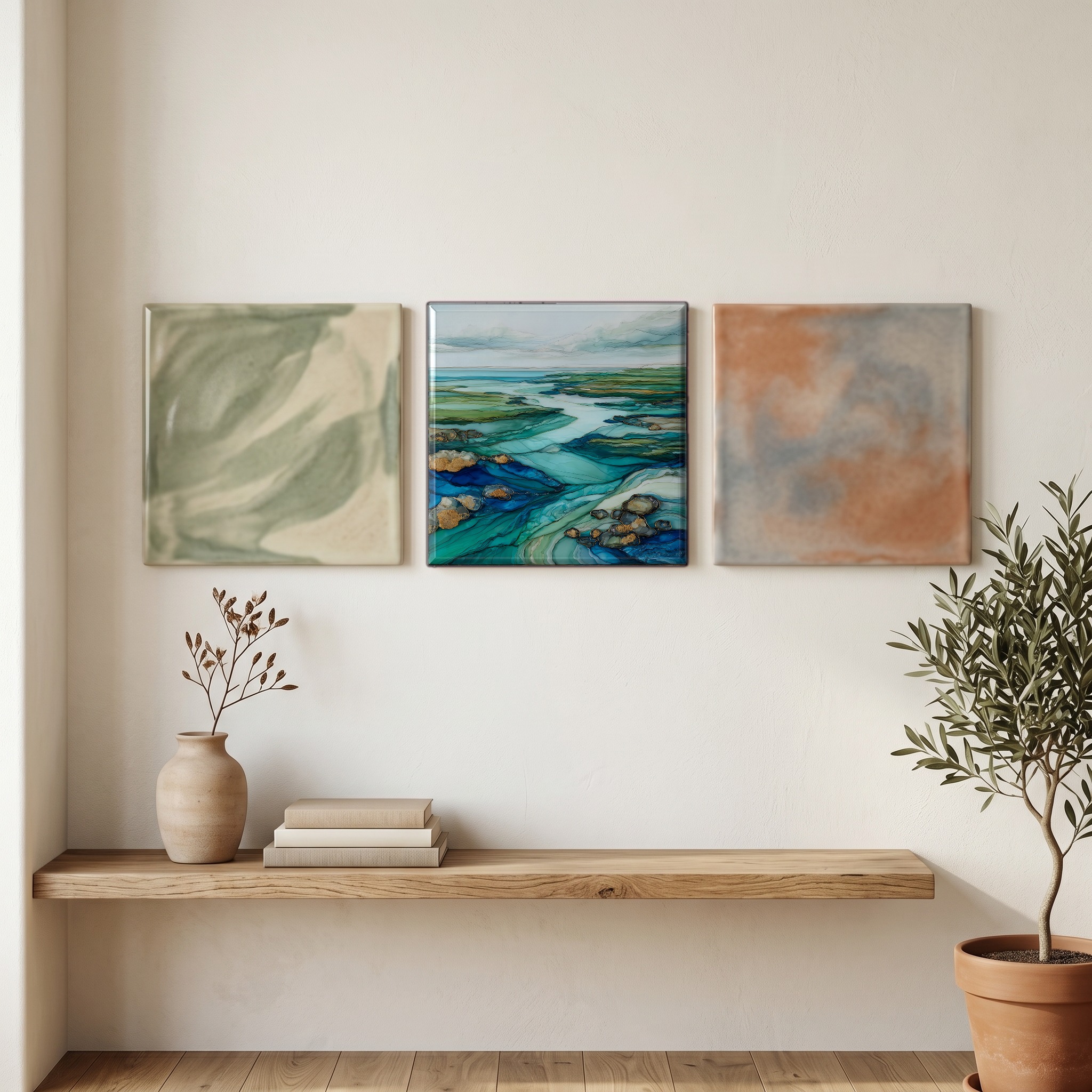
or build a grouping
or build a grouping

Three or five different vistas, hung together — a chapter of places you've been, or want to go.

about Cancale Oyster Beds

The place, in three passes.

A little of what's known, in case you fall down the rabbit hole — or want to go see it yourself.
the place

Cancale sits on the western shore of the Baie du Mont-Saint-Michel, on the northern coast of Brittany in the department of Ille-et-Vilaine. The town's population is around 5,000, and the working harbour, Port de la Houle, lies below the cliff at the foot of the town. The oyster beds spread north along the foreshore toward the Pointe du Grouin, occupying a band of tidal flats granted in concessions to local producers. Saint-Malo is about fourteen kilometres to the west; Mont-Saint-Michel itself sits roughly twenty-five kilometres across the bay to the east. The closest mainline rail station is at Dol-de-Bretagne, about twenty kilometres inland.

— informed by Wikipedia: Cancale
the water

The Baie du Mont-Saint-Michel has one of the largest tidal ranges in Europe, with the spring tides reaching roughly fifteen metres between low and high water. Twice every twenty-four hours the sea pulls back several kilometres across the bay's shallow foreshore and then returns at a speed often quoted as that of a galloping horse. The oyster cultivators take advantage of the wide tidal window to drive tractors out to the parcs, turn the bags of growing oysters by hand, and bring the harvest back before the water returns. Without this rhythm, large-scale cultivation at Cancale would not exist.

the visit

The oyster market at the Pointe des Crolles, on the south side of the harbour, runs every morning. Local growers and their families have traditionally tended the stalls, opening a dozen flat or cupped oysters to order while buyers wait on the seawall. A dozen costs a handful of euros depending on grade and size. The harvesting season for the native flat oyster, the huître plate, runs from September through April, when the water is cold and the meat is firm. Cupped oysters, the huîtres creuses introduced from the Pacific in the 1970s, are sold throughout the year.

where
France · Cancale, Ille-et-Vilaine, Brittany
position
48.6800° N · 1.8500° W
the neighborhood

What's nearby.

A handful of named places within an hour's walk or short drive. Some we've already painted; some we will.
4 km N
Pointe du Grouin
coastal headland
6 km W
Saint-Méloir-des-Ondes
village
14 km W
Saint-Malo
walled port city
18 km W
Dinard
Belle Époque resort
20 km S
Dol-de-Bretagne
cathedral town
25 km E
Mont-Saint-Michel
abbey island
N
Cancale Oyster Beds
Pointe du Grouin
Saint-Méloir-des-Ondes
Saint-Malo
Dinard
Dol-de-Bretagne
Mont-Saint-Michel
common questions

What people ask.

A few questions we get about Cancale Oyster Beds — and about bringing the piece home.
about the place

Cancale is a small fishing port on the northern coast of Brittany, in the department of Ille-et-Vilaine, on the western shore of the Baie du Mont-Saint-Michel. Saint-Malo lies about fourteen kilometres to the west; Mont-Saint-Michel sits roughly twenty-five kilometres east across the bay.

The beds have been worked since Roman times, and Cancale oysters were reportedly carried back to Rome by Caesar's legions and later sent by horse-drawn cart to the table of Louis XIV at Versailles. The cold, mineral-rich water of the bay and the long tidal cycle give the meat a firm, briny character.

The flat oyster, huître plate, is the European native species (Ostrea edulis), round and disc-shaped, and is the historic Cancale oyster. The cupped oyster, huître creuse, is the Pacific species (Crassostrea gigas), introduced to French waters in the 1970s after disease wiped out most of the native stocks. Both are grown at Cancale.

The Baie du Mont-Saint-Michel has one of the largest tidal ranges in Europe. Spring tides reach about fifteen metres between low and high water, exposing several kilometres of foreshore. The cycle runs twice every twenty-four hours and dictates the working day of every oyster grower on the bay.

Native flat oysters are at their best from September through April, when the cold-water season firms the meat. Cupped oysters are eaten throughout the year. The oyster market at the Pointe des Crolles runs every morning. For the most dramatic tides, time a visit to a spring tide, a grande marée.

Cancale lies about a fifteen-minute drive east of Saint-Malo along the D201 coast road. The nearest mainline train station is Dol-de-Bretagne, twenty kilometres inland on the Paris-Saint-Malo line, with bus connections onward. Rennes airport is the closest commercial airport, about eighty kilometres to the south.

The parcs themselves are private leased concessions and are not open to walk on. Visitors can stand on the seawall and the cliff path above the beds at any tide. At low water the grid of bags and tables is fully visible from the Sentier des Douaniers coastal trail, which follows the shore north toward the Pointe du Grouin.

about the piece in your home

For someone who has eaten at the Pointe des Crolles or knows the Cancale flat oyster by name, yes. The Bay of Mont-Saint-Michel is one of the great oyster grounds of Europe; the tile reads as a piece of that place rather than a generic seafood print. A Coaster or Small carries well with a handwritten note.

The palette runs to sea-greens, oyster greys, and the warm browns of wet stone, with the stained-glass treatment laid over the bed grid. It sits well in Coastal-modern, French-country, and quiet Maximalist rooms with mixed wood and rattan. A Medium above a console, or a Coaster Set on an open kitchen shelf, reads strongly.

Coastal-modern in 2026 has moved toward European harbour texture and away from generic beach imagery. A specific working harbour like Cancale, with its tide grid and oyster-grey palette, lands more strongly than a stock shore scene. A Medium or a four-tile Mural above the range or a long console anchors the room.

A single Large holds its own above most consoles and standard six-foot sofas. For a deeper anchor wall, a four-tile Mural in a two-by-two grid reads as a window over the oyster bed view. For a long wall in an open kitchen or dining room, the nine-tile Mural takes the place to scale.

Yes. Order the Dura Satin or Matte finish for any tile in a bath, kitchen, or laundry, or anywhere the wall sees splashes or steam. Both finishes are scratch-resistant and hold up to repeated cleaning. The Glossy finish is for framed wall art and dry rooms only.

A soft microfibre cloth and clean water. For greasy splashes near a stove, a drop of dish soap and the same cloth. The colour is slowly infused into the ceramic surface under high heat and pressure, so it cannot scratch or wash off. No abrasive scrubbers or harsh chemicals.

Yes. Every WenderVista piece comes out of a single studio in Knoxville, Tennessee, under the eye of Reid Wender. There is no licensing; the work cannot be bought from any other source. The painting of the Cancale oyster beds exists only in our atlas of places.

if this one stayed with you

A few you might also love.

Hand-picked by the eye that found Sorapis. Same air, same kind of quiet.