Wender·Vista
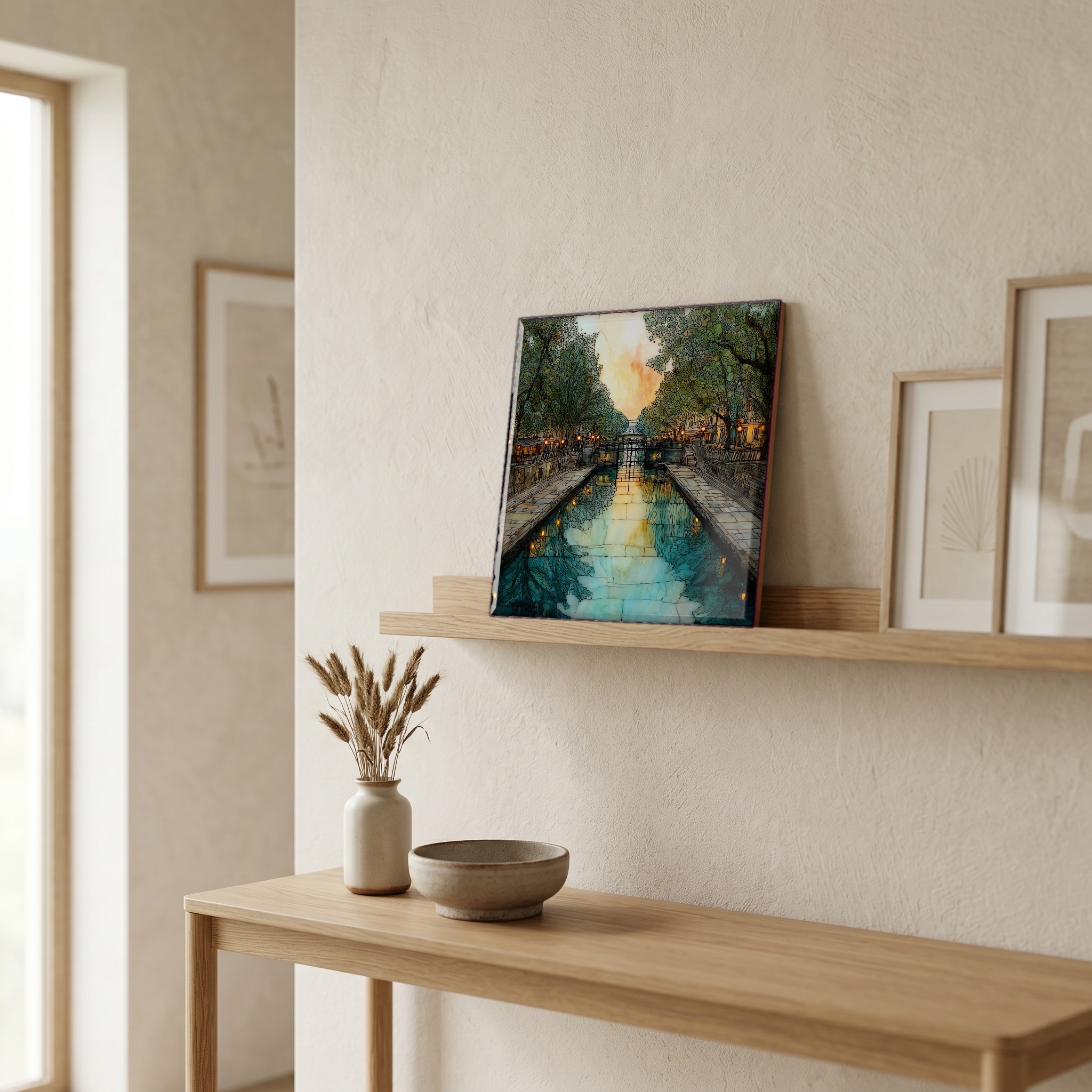
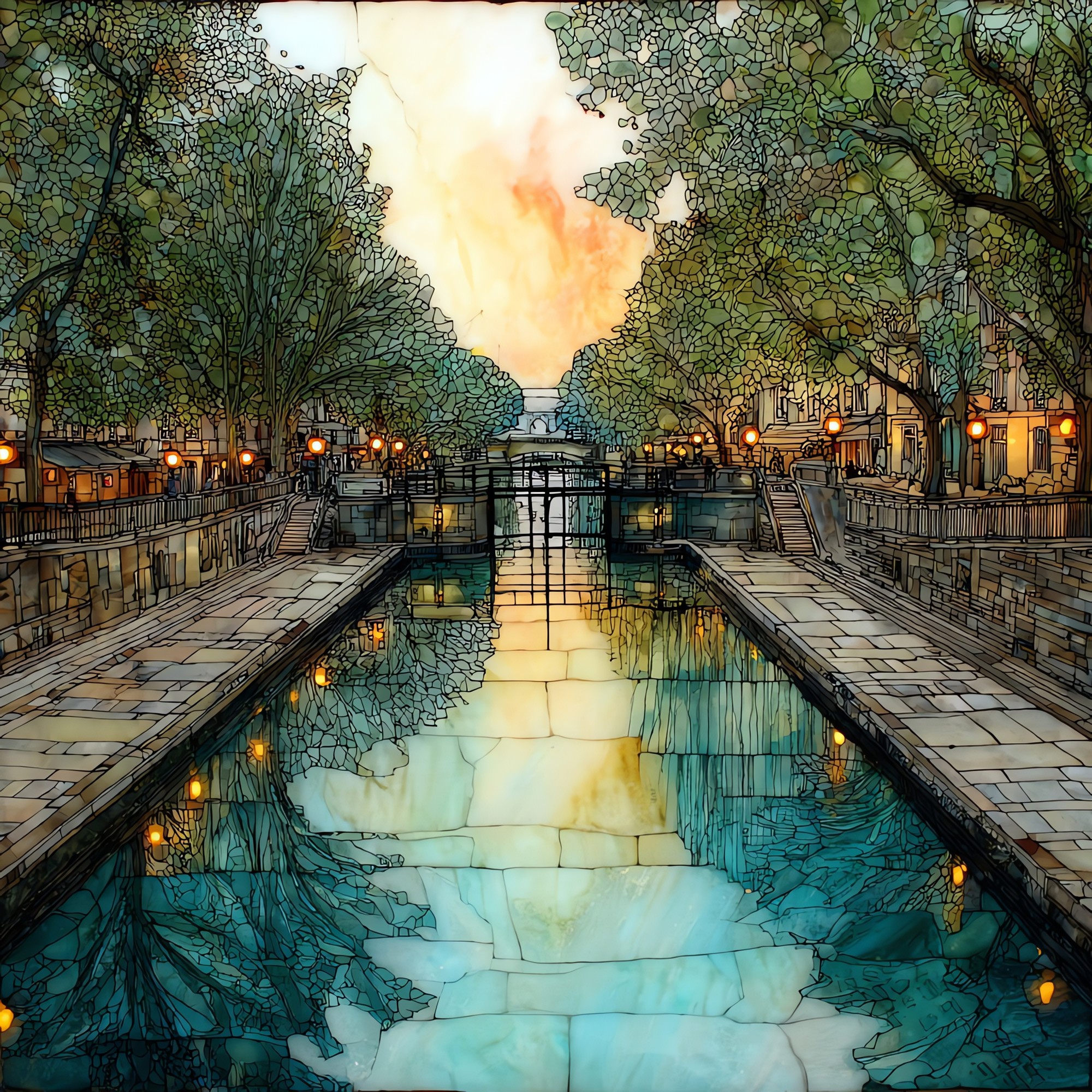
Canal Saint-Martin
shown on ceramic, 12-inch tileFrance
in northeastern Paris, between Bastille and La Villette

Canal Saint-Martin

iron arches over water that takes its time.

Where it lives

Not only on a wall.

A small tile on the nightstand catching the morning. A larger one above the fire. Yours, wherever you spend the slow hours.
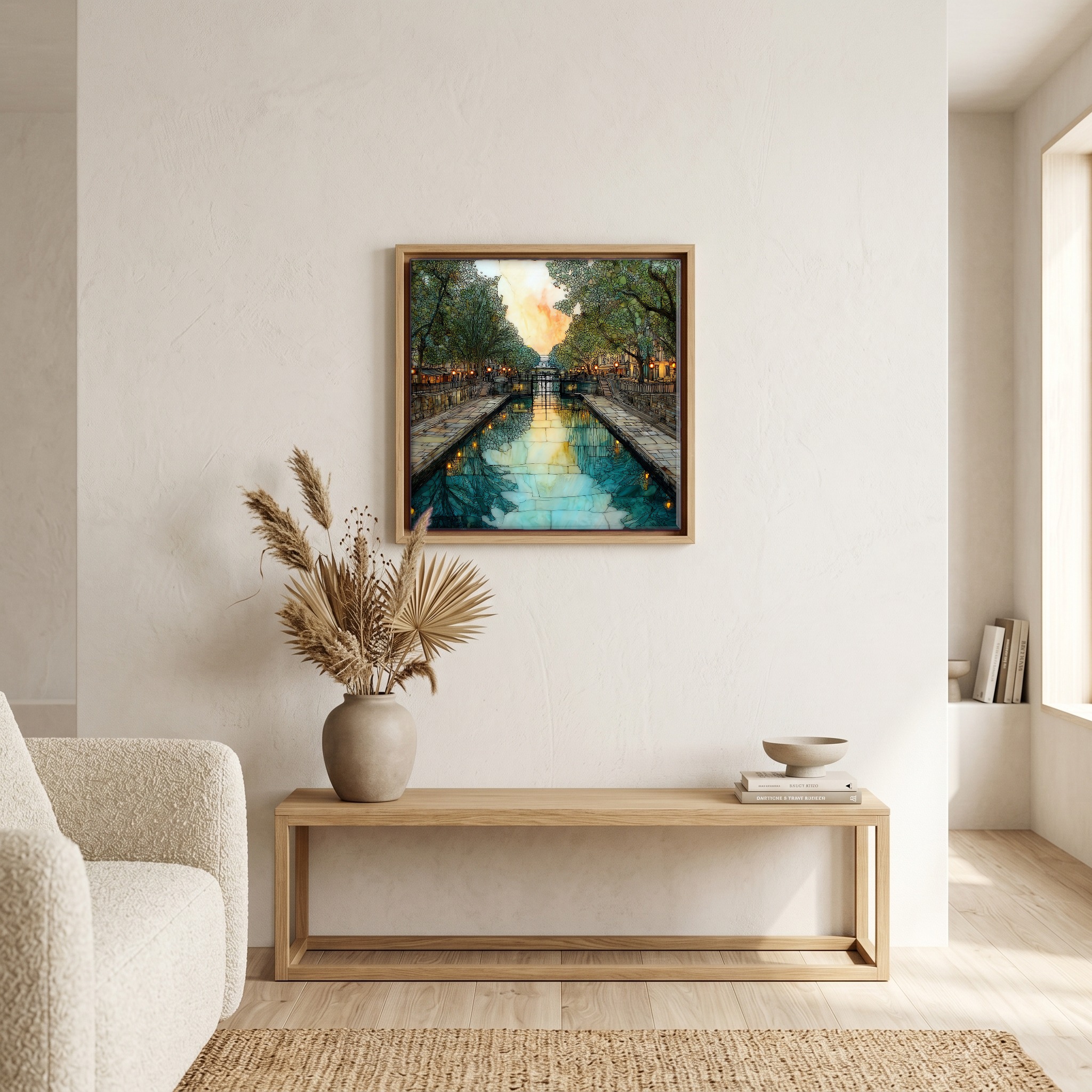
Above the bench, in a warm oak surround.
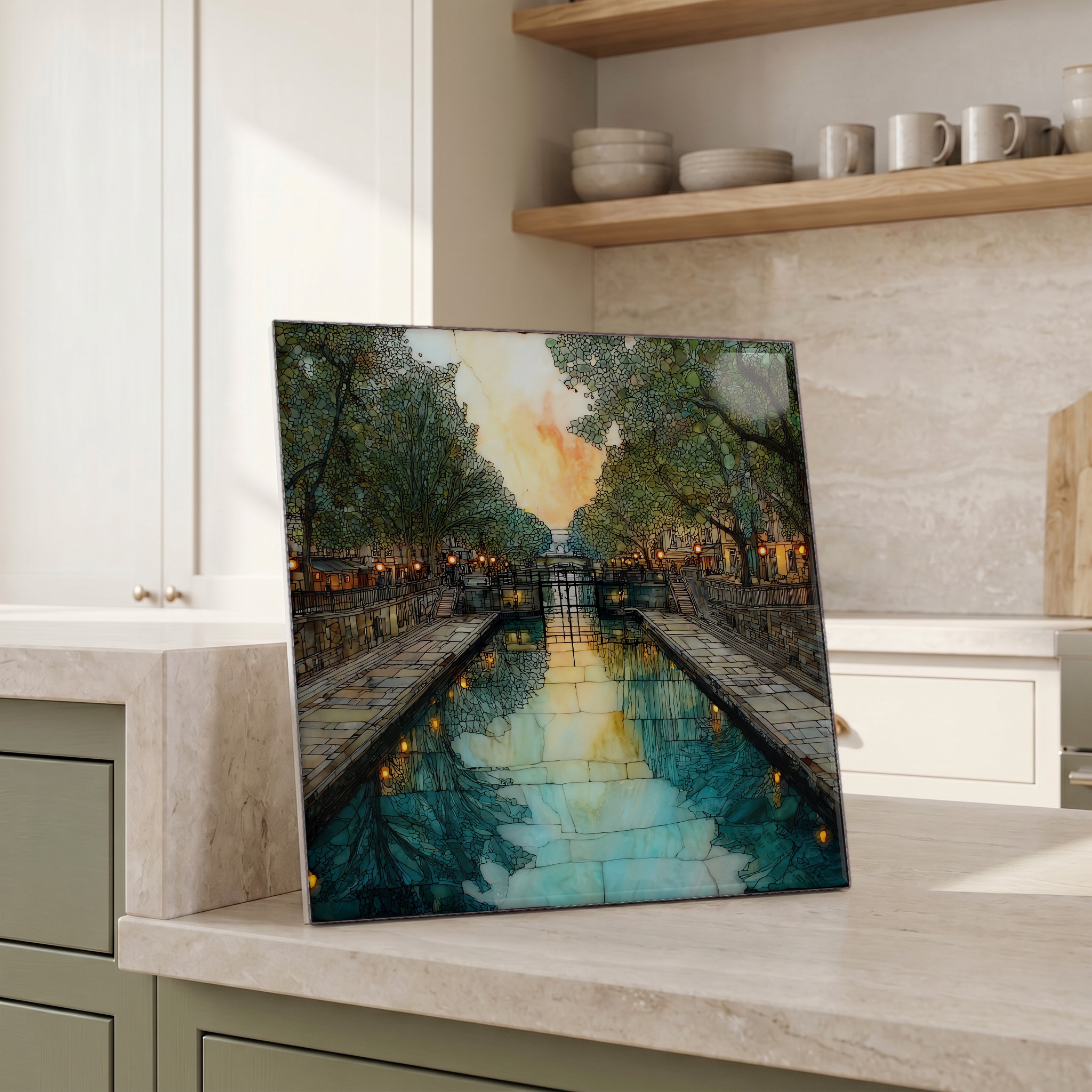
Beside the kettle, propped on the counter.
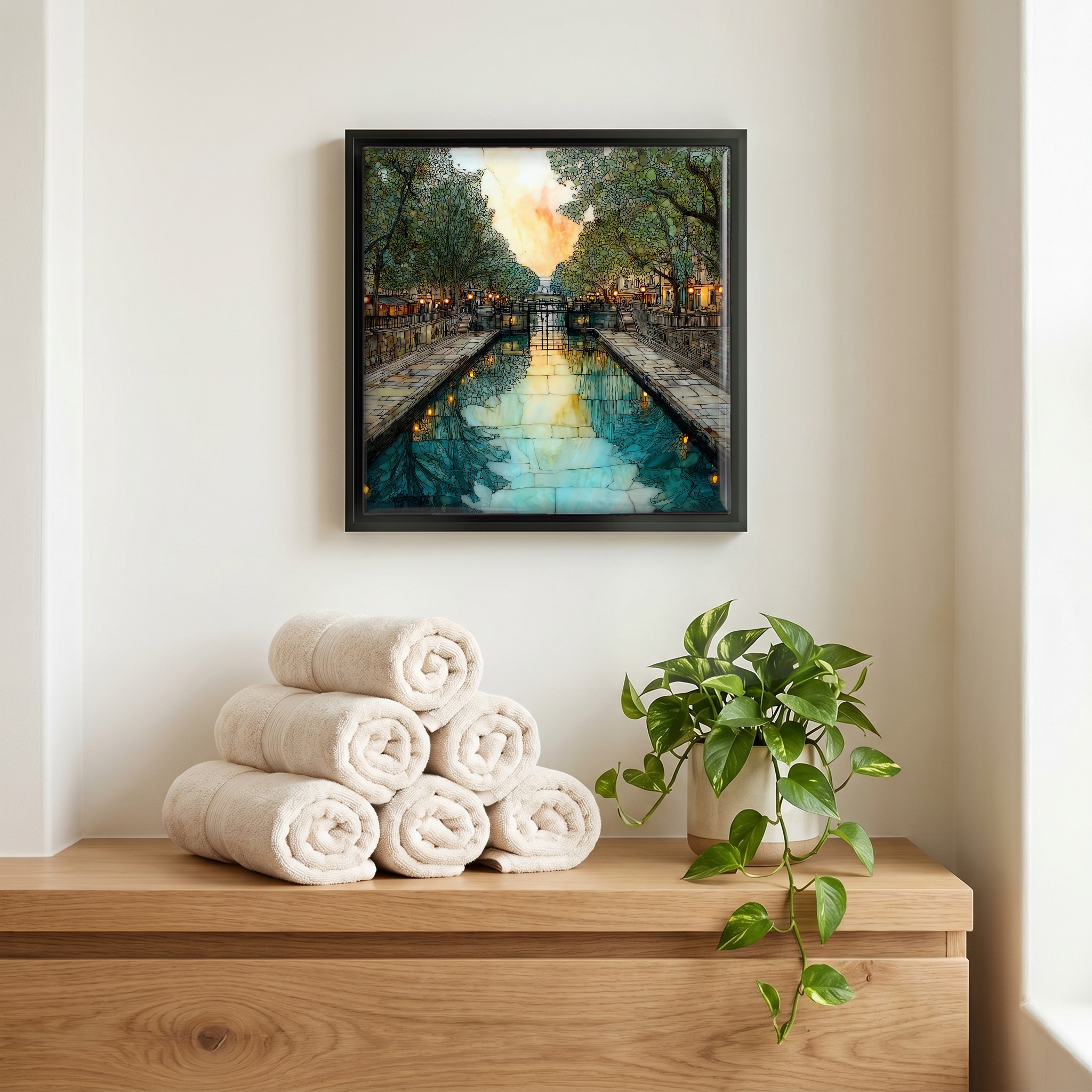
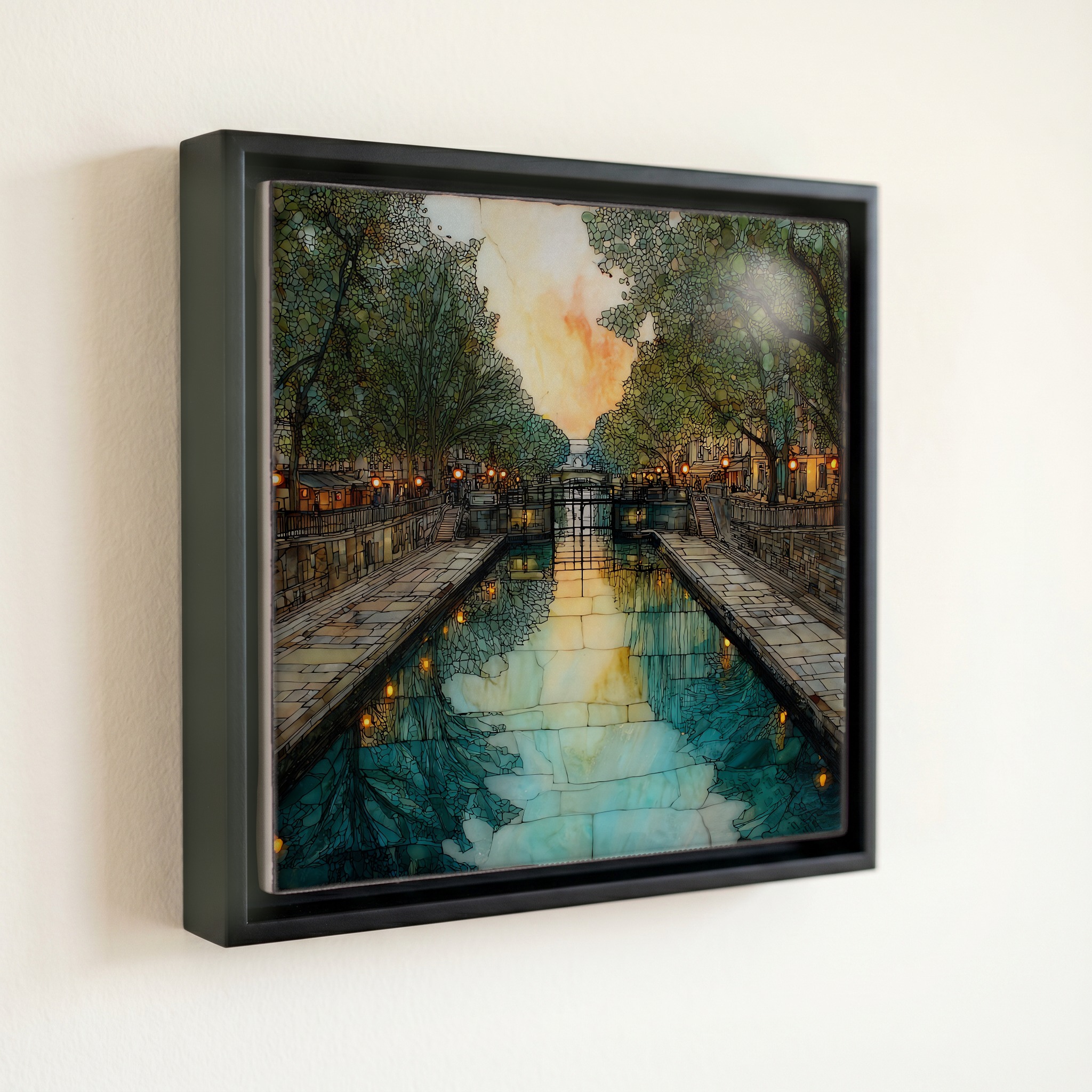
Above the linens, in a slim black surround.
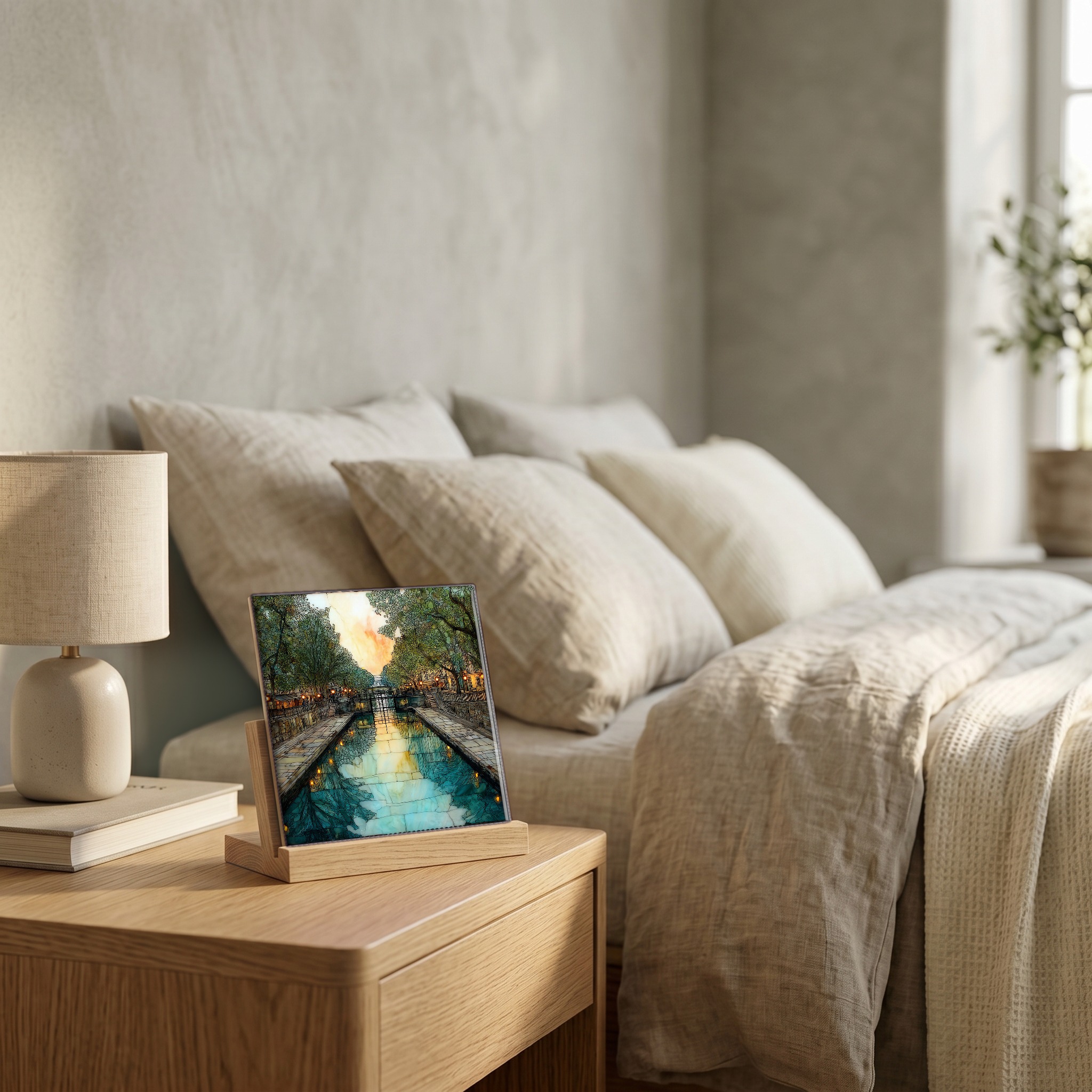
On the nightstand, on a light oak stand.
On a picture ledge, where the light comes in.
a note from the studio

A working canal threaded through the 10th and 11th arrondissements, with nine locks letting the water down twenty-five metres on its way to the Seine. The green iron footbridges arch over the slow water, and people cross them more often than they mean to. Bottles of wine and baguettes rest on the stone quais; the plane trees lean in. At the Hôtel du Nord the awning has been there since the thirties. Each lock takes about ten minutes to climb. Long enough to finish a coffee. Long enough to remember what slowness used to feel like.
from the studio
shown in a slim black floating frame · 6 × 6 in
— bring it home

Canal Saint-Martin, on ceramic.

Each tile is finished by hand in our Knoxville studio. Artwork is slowly infused into the ceramic surface under high heat and pressure, and rests beneath a thin glossy finish. The colour lives in the surface, not on top of it.

What kind of piece?
One tile — square or rectangle.
How big?
the popular one — counter, shelf, nightstand
6 × 6 in · 15 cm · 1.6 lb
Surface finish
A clear glossy finish — the artwork reads as if under resin. Ideal for show-pieces and framed wall art.
How it sits
A hidden cleat — sits ¼″ proud of the wall.
$58
Hand-finished and shipped from our studio at the foot of the Smokies. On your wall in about ten days.
size
6 × 6 in
15 cm
weighs
1.6 lb
solid in the hand
surface
ceramic, hand-finished
art rests beneath a thin glossy finish
from
Knoxville, TN
our family studio, at the foot of the Smokies
— start a Coaster Set

Pick any four 4-inch tiles — National Parks you've been to, a Smokies set, the four seasons of one place. $ for a set of , cork-backed, ready to live on the table.
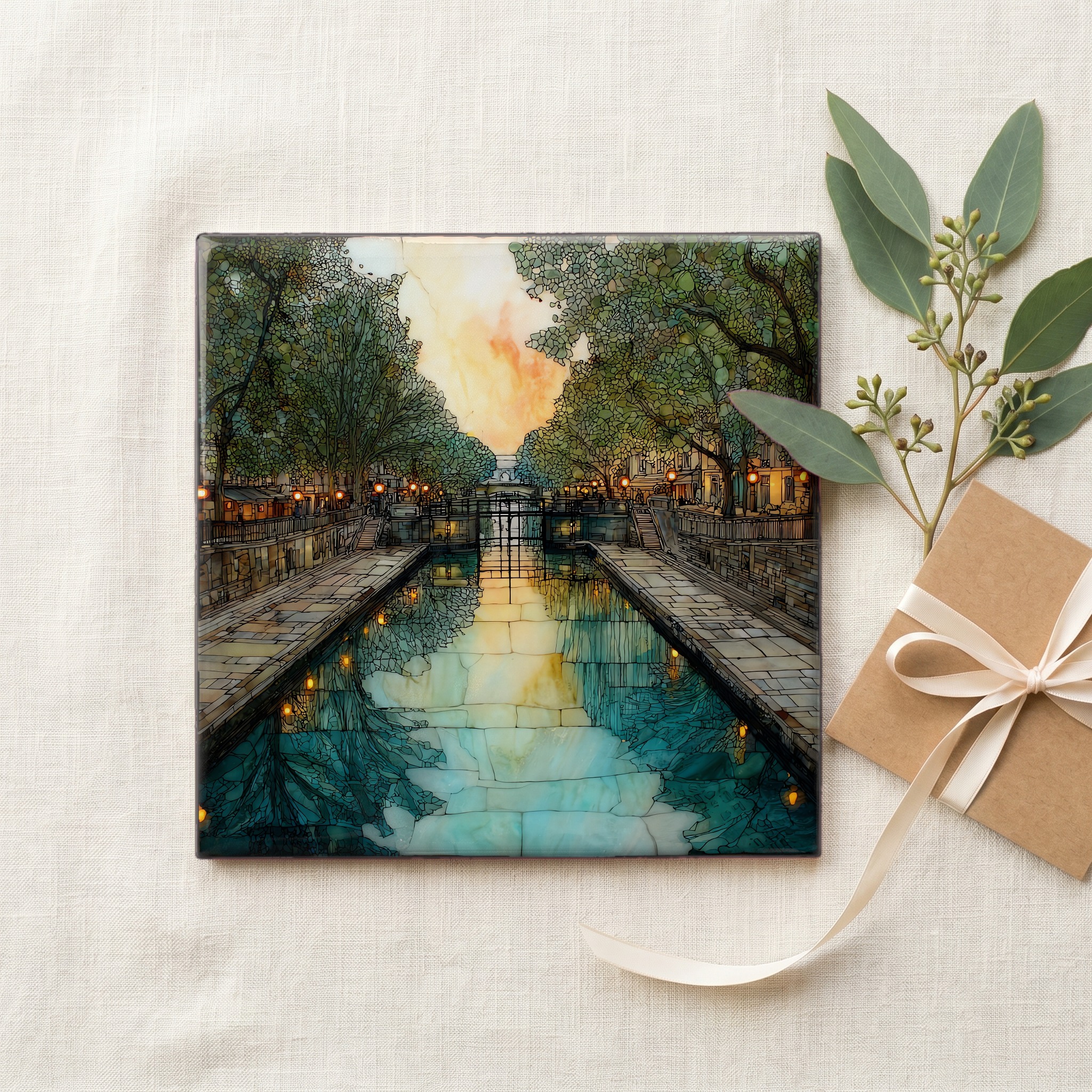
comes gift-ready
comes gift-ready

Each tile ships in a kraft box, tied with cream ribbon, with a handwritten note from the studio if you'd like to add one.
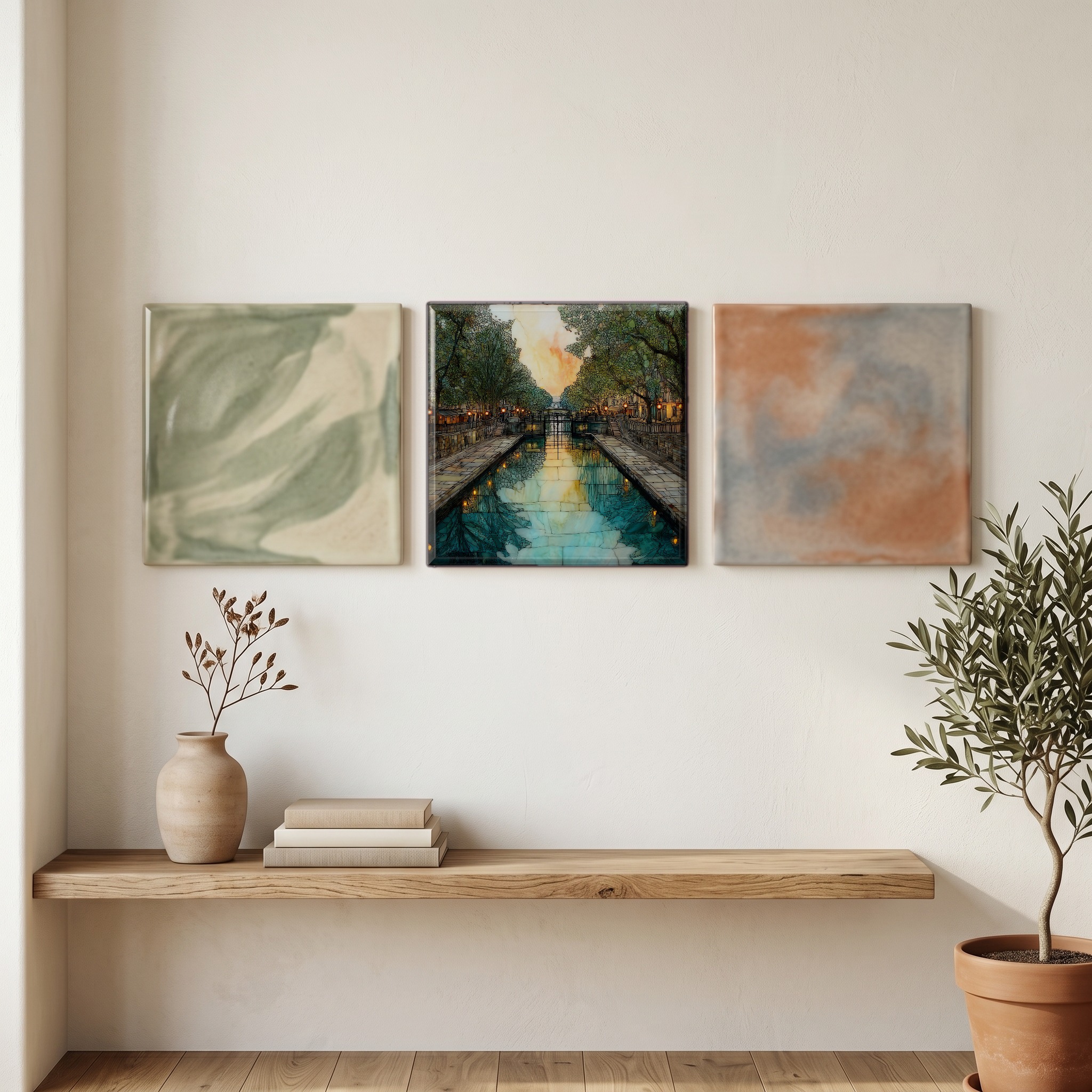
or build a grouping
or build a grouping

Three or five different vistas, hung together — a chapter of places you've been, or want to go.

about Canal Saint-Martin

The place, in three passes.

A little of what's known, in case you fall down the rabbit hole — or want to go see it yourself.
the place

Canal Saint-Martin runs four and a half kilometres through northeastern Paris, connecting the Canal de l'Ourcq at the Bassin de la Villette to the Seine at the Bassin de l'Arsenal. Construction was ordered by Napoleon in 1802 to bring drinking water into a thirsty city, and the canal opened in 1825 under Charles X. Nine locks step the water down twenty-five metres along its course. Roughly two kilometres of the canal run underground, vaulted over between 1860 and 1907 to create Boulevard Richard-Lenoir above. The open sections wind through the 10th and 11th arrondissements, between Gare de l'Est to the west and Place de la République to the south.

the water

The canal carries water from the Ourcq River, about sixty kilometres northeast, through the Bassin de la Villette and down into central Paris. Nine locks regulate the descent, each closing behind a boat and slowly filling or emptying its chamber over roughly ten minutes. The slow rhythm is part of the canal's character: nineteenth-century barge crews used the dwell time for cooking and small repairs, and the boats that still pass through today move at walking pace. The waterway is dredged regularly. Every ten to fifteen years it is drained entirely so the Ville de Paris can clear silt, abandoned bicycles, and the occasional unexploded shell from the Second World War.

the visit

The open sections of the canal are publicly accessible at all hours, with stone quais on both sides of the water and a paved promenade along most of its length. Locks operate between roughly 8 a.m. and 7 p.m., when boat traffic moves. Canauxrama and Paris Canal both run guided cruises that traverse the whole canal, including the two-kilometre underground vault beneath Boulevard Richard-Lenoir; the through-trip takes about two and a half hours. On Sundays and public holidays the Quai de Valmy and Quai de Jemmapes close to cars from late March through November, and the quais fill with picnics, runners, and the people Parisians call les bobos. Spring evenings draw the largest crowds.

where
France · Paris, Île-de-France
position
48.8714° N · 2.3661° E
the neighborhood

What's nearby.

A handful of named places within an hour's walk or short drive. Some we've already painted; some we will.
1 km S
Place de la République
city square
1 km N
Bassin de la Villette
urban basin
2 km S
Place de la Bastille
city square
2 km NE
Parc des Buttes-Chaumont
city park
3 km NW
Sacré-Cœur
basilica
3 km SE
Père Lachaise Cemetery
cemetery
N
Canal Saint-Martin
Place de la République
Bassin de la Villette
Place de la Bastille
Parc des Buttes-Chaumont
Sacré-Cœur
Père Lachaise Cemetery
common questions

What people ask.

A few questions we get about Canal Saint-Martin — and about bringing the piece home.
about the place

Canal Saint-Martin runs through the 10th and 11th arrondissements of northeastern Paris, connecting the Bassin de la Villette at its northern end to the Seine at the Bassin de l'Arsenal near Place de la Bastille. It covers four and a half kilometres, two of them underground.

The canal is 4.55 kilometres long, with about two kilometres running through an underground vault beneath Boulevard Richard-Lenoir. Nine locks step the water down twenty-five metres along its course between the Bassin de la Villette and the Seine.

Napoleon ordered the canal in 1802 to bring fresh drinking water into Paris, which was growing fast and lacked clean supply. The canal also became a freight route, carrying grain, wine, and building stone in flat-bottomed barges from the Ourcq valley directly into the city. It opened in 1825.

The canal is crossed by a series of arched iron and steel footbridges, several of them swivelling or lifting to let boats through. The most photographed are the green pedestrian bridges near Square Frédéric-Lemaître and along Quai de Jemmapes. Most date from the late nineteenth or early twentieth century.

Yes. Canauxrama and Paris Canal both run cruises along the full length of the canal. Trips take about two and a half hours one way and pass through every lock, including the two-kilometre underground vault beneath Boulevard Richard-Lenoir. Most departures leave from the Bassin de la Villette or Port de l'Arsenal.

The canal appears in Marcel Carné's 1938 Hôtel du Nord, set in the actual hotel that still stands on Quai de Jemmapes. Jean-Pierre Jeunet's 2001 Amélie includes the scene where the title character skips stones across the canal's surface. Both films cemented the area in Parisian visual memory.

Late spring and early summer evenings are the busiest, when the quais fill with picnickers from late afternoon until midnight. Sundays and public holidays the Quai de Valmy and Quai de Jemmapes close to traffic from late March through November. Autumn offers the same light with thinner crowds.

about the piece in your home

It has been a meaningful gift for many of our customers with ties to the city. The canal sits a little outside the postcard route, which means it tends to land harder with people who actually lived in Paris than with people who only visited. A Small or Medium with a handwritten note from the studio carries well.

The piece reads quietly, with the deep greens of the iron bridges and the watercolour blues sitting against warm cream tile. It lives well in French-eclectic interiors, Parisian-Modern apartments, and Slow-Modern rooms built around natural wood and linen. It also works as the single warm note in a cooler Minimalist room.

Yes. The current European-eclectic and Slow-Modern direction favours deep saturated colour against natural texture, and the canal's greens and blues hit that note directly. The painted style reads more as drawing than photograph, which is what these rooms tend to want above a console or in a stair landing.

Above a standard sofa, a single Large tile holds the wall on its own. For a longer console or a bigger room, a four-tile Mural fits well and gives the canal room to stretch. A nine-tile Mural is the choice for a stairwell or an entryway that needs presence.

Yes. The tile is hand-finished with a thin glossy surface for framed wall pieces, or with a Dura Satin or Matte finish for installations that take steam, splash, or repeated wiping. Most customers pick Dura Satin for a kitchen backsplash and Matte for a powder room or laundry.

Microfibre cloth and water. The colour is slowly infused into the ceramic surface under high heat and pressure, so the image will not lift, scratch, or fade with normal cleaning. For the Dura Satin and Matte finishes, mild dish soap is fine for installation grime.

Yes. Reid Wender is the eye of the studio. He chooses every place that enters the WenderVista atlas and approves every painting before it goes onto a tile. There is no licensing and no third-party art. The studio is based in Knoxville, Tennessee, and the work is hand-finished in-house.

if this one stayed with you

A few you might also love.

Hand-picked by the eye that found Sorapis. Same air, same kind of quiet.