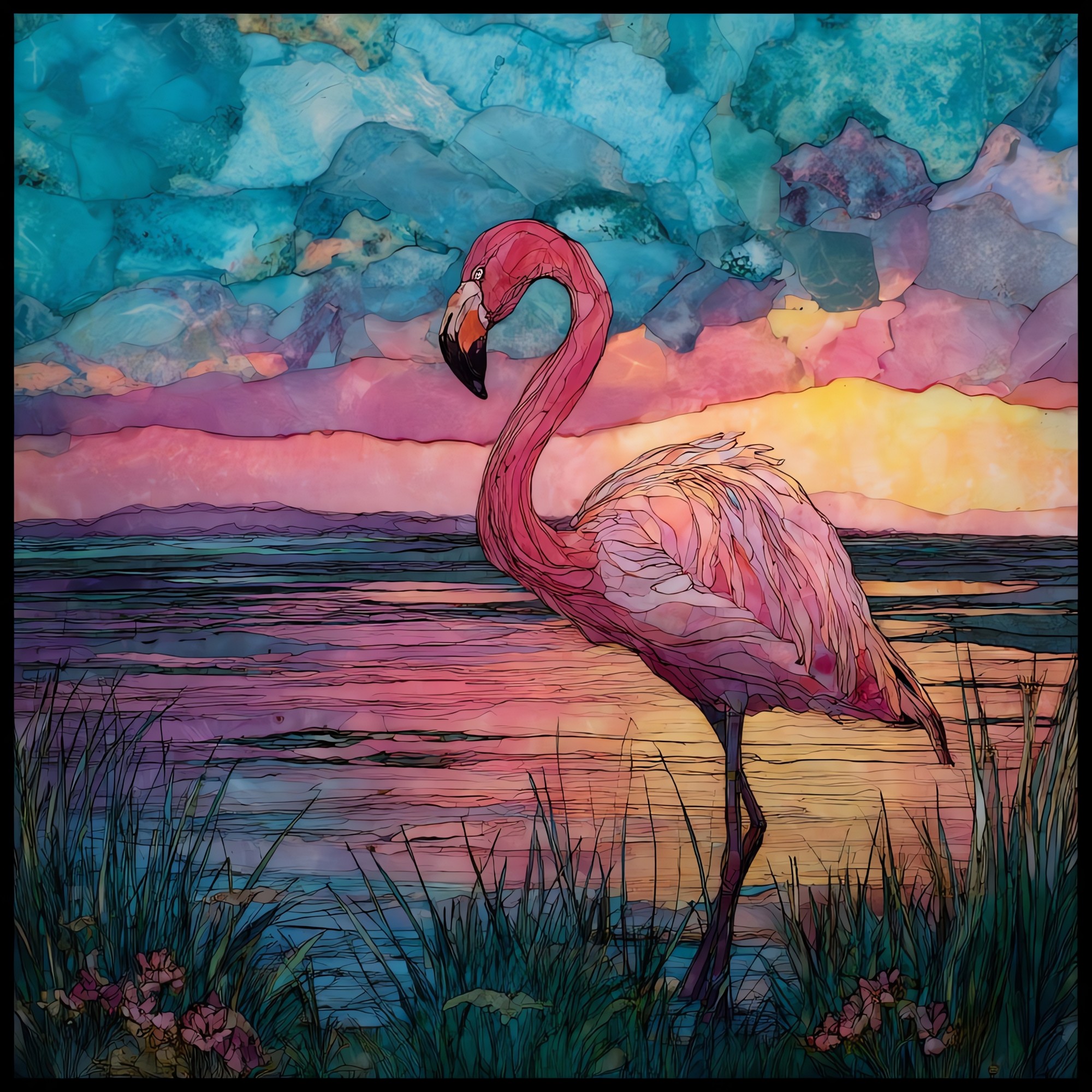
Camargue Salt Marsh
— the rose the salt pans hold in August.
Not only on a wall.

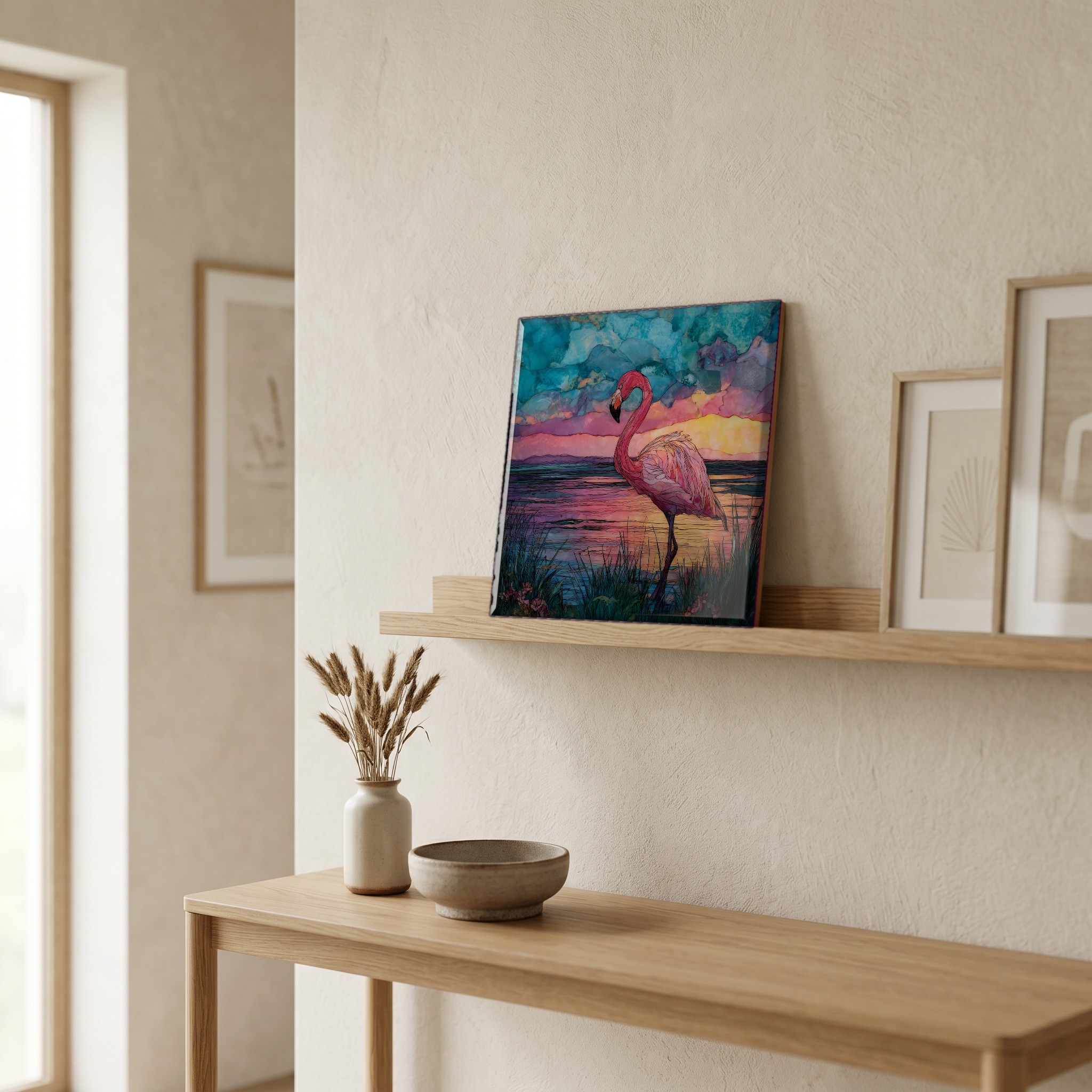
“Western Europe's largest river delta, where the Rhône splits and pours into the Mediterranean. From late spring through summer the shallow étangs turn pink. The colour comes from halophile algae and bacteria thriving in water saltier than the sea. White horses move along the dykes. Flamingos work the shallows in long pink lines you can't quite tell from the water behind them. Salt has been worked here since the Romans. From the right road at the right hour it's hard to say where the salt pans end and the sky begins.
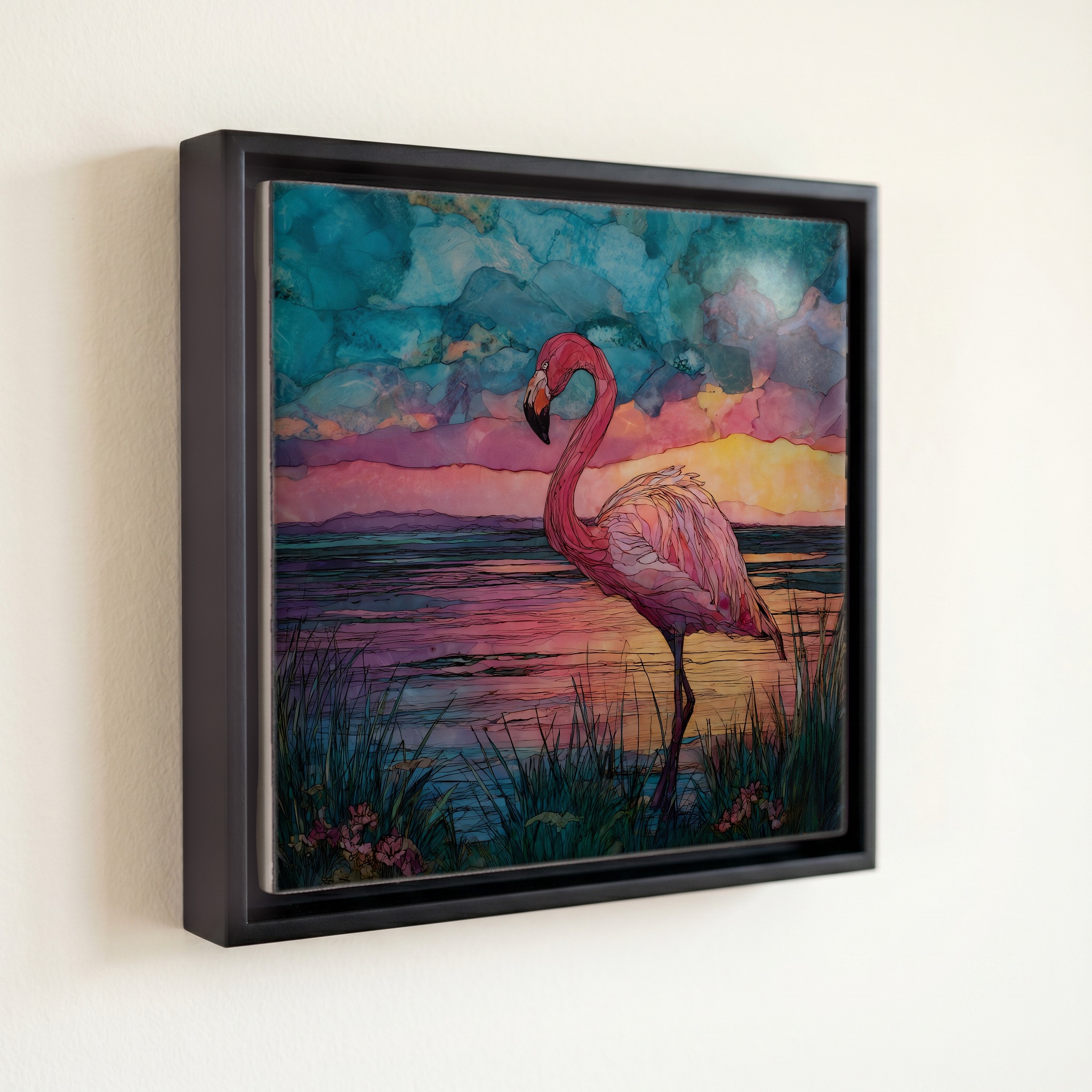
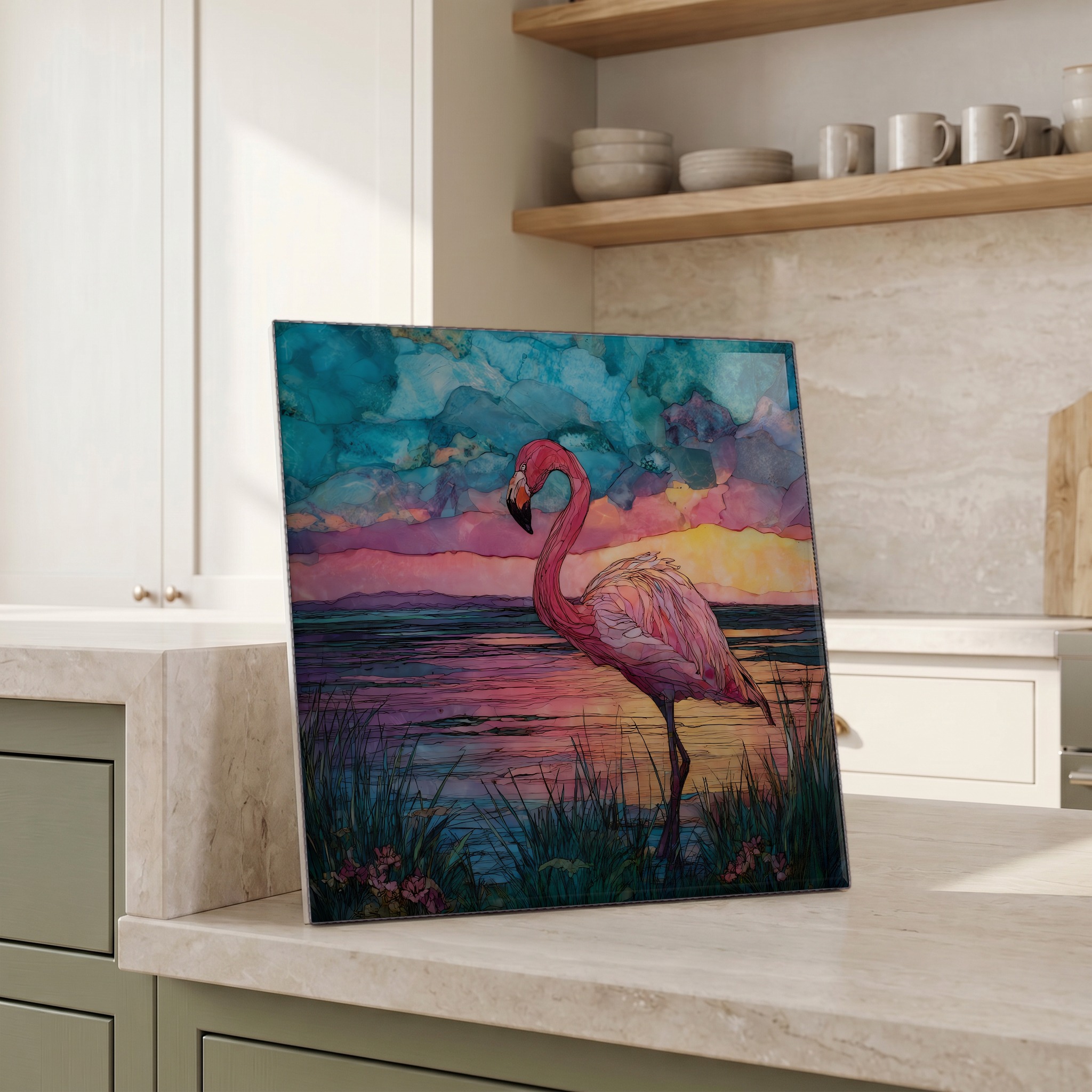
Camargue Salt Marsh, on ceramic.
Each tile is finished by hand in our Knoxville studio. Artwork is slowly infused into the ceramic surface under high heat and pressure, and rests beneath a thin glossy finish. The colour lives in the surface, not on top of it.
Pick any four 4-inch tiles — National Parks you've been to, a Smokies set, the four seasons of one place. $ for a set of , cork-backed, ready to live on the table.
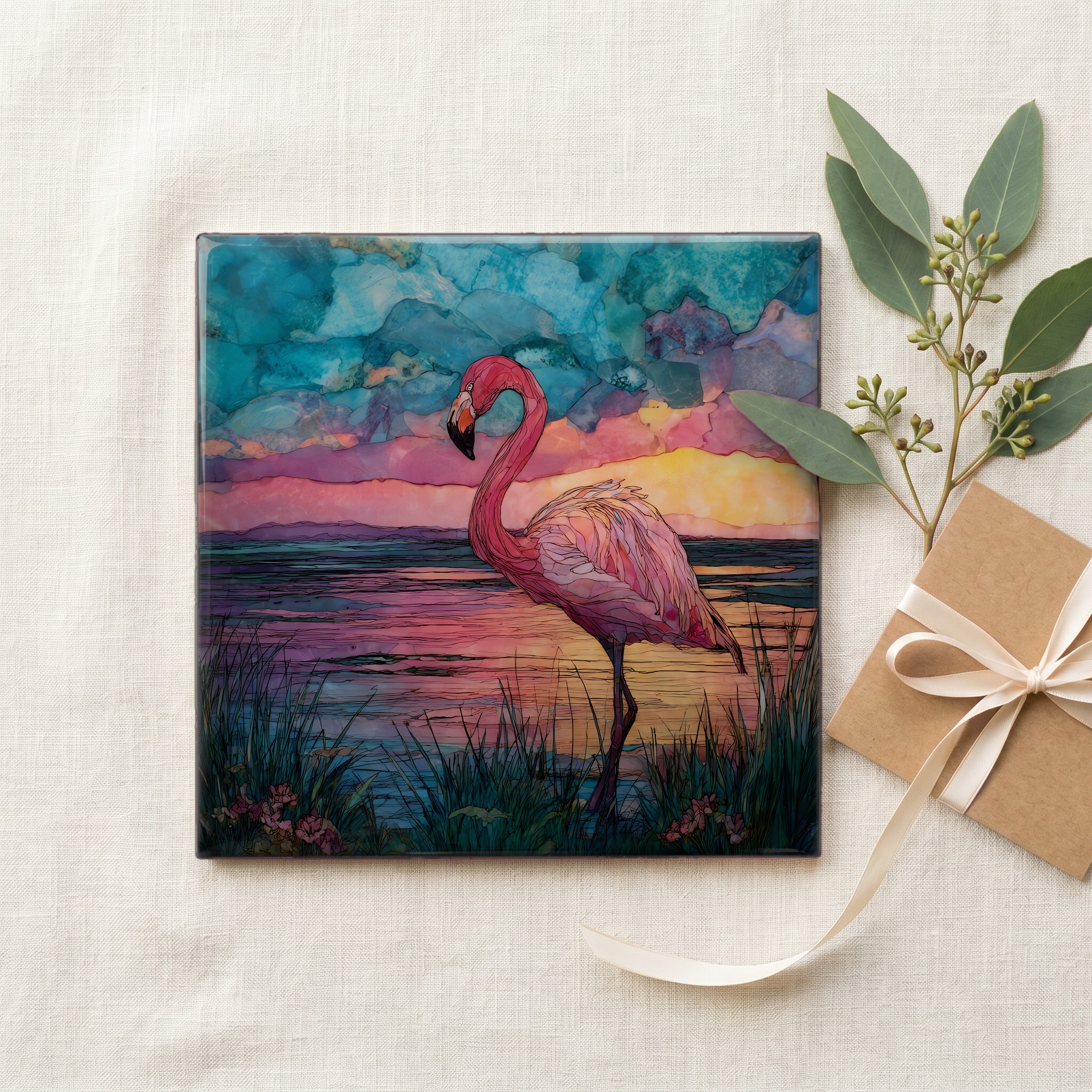
Each tile ships in a kraft box, tied with cream ribbon, with a handwritten note from the studio if you'd like to add one.
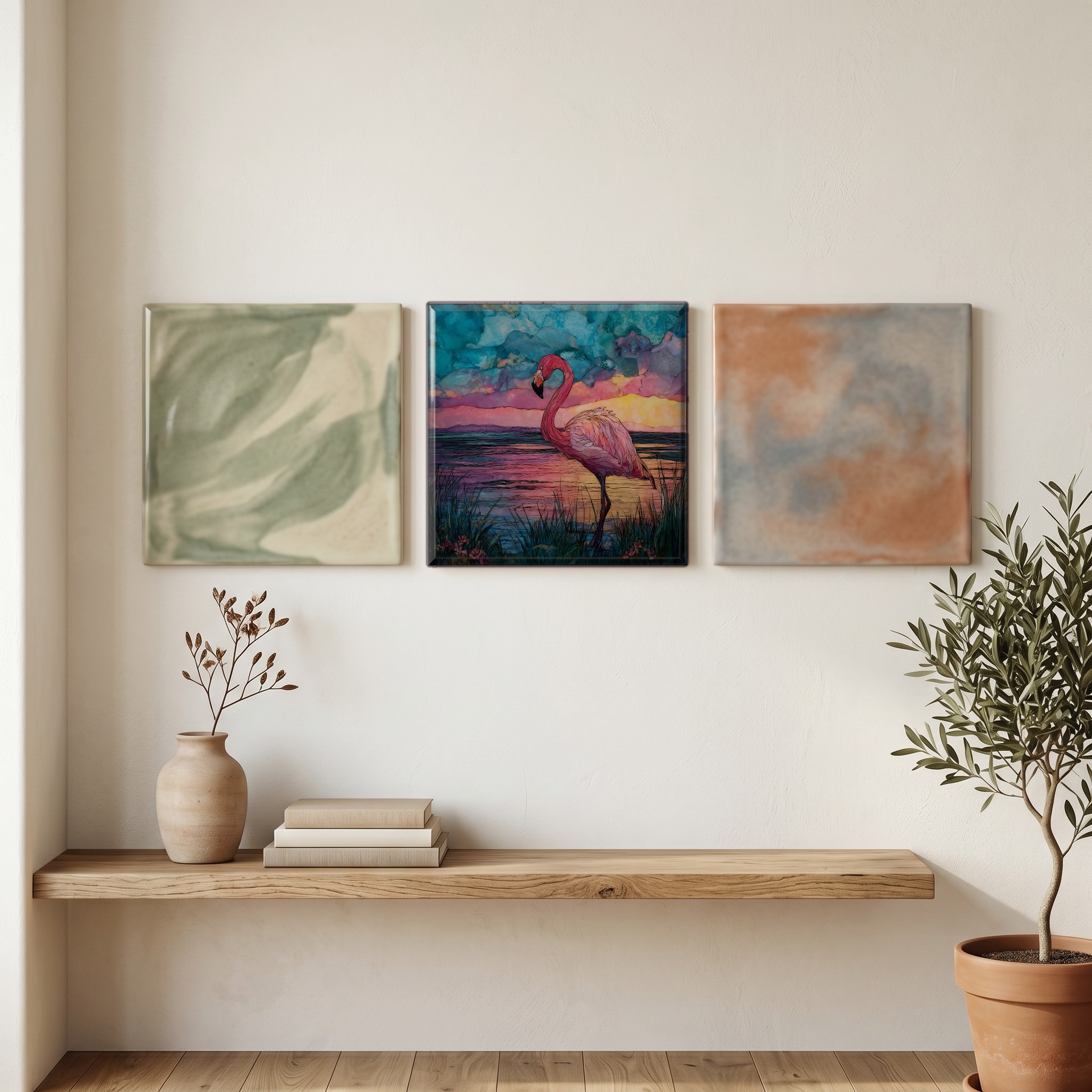
Three or five different vistas, hung together — a chapter of places you've been, or want to go.
The place, in three passes.
The Camargue is the broad delta of the Rhône in southern Provence, where the river splits into two arms and meets the Mediterranean about forty kilometres south of Arles. The full delta covers around 930 square kilometres of marsh, lagoon, and salt pan; western Europe's largest. The Parc naturel régional de Camargue, established in 1970, protects most of it. The Réserve nationale de Camargue, dating to 1927, covers the wildest core around the Étang de Vaccarès. UNESCO has held the whole delta as a Biosphere Reserve since 1977. Saintes-Maries-de-la-Mer is the principal village; the medieval walled town of Aigues-Mortes sits at the western edge, where Louis IX once launched a crusade.
The water in many of the Camargue's lagoons turns rose-pink from late spring through early autumn. The colour is not the salt itself but the organisms that thrive in it. Halophile microalgae such as Dunaliella salina and pigmented haloarchaea bloom in water several times saltier than the sea, producing carotenoid pigments that read red-orange in concentration. The same mechanism colours pink lakes in Senegal, Western Australia, and the Yucatán. The salt-evaporation pans at Salin-de-Giraud, on the eastern edge of the delta, are the most photographed: geometric basins of brine in shifting rose, lavender, and white. From the air the pans show as a grid of coloured cells, geometric against the dark of the marsh.
The pink intensifies through summer, peaking in July and August as evaporation concentrates the brine. The salt harvest at Salin-de-Giraud and at Aigues-Mortes runs from late August into September, when the pans are skimmed by harvesters working from narrow-gauge rails. Greater flamingos (Phoenicopterus roseus) breed on the Étang du Fangassier from April through July, and a strong year sees ten to twenty thousand nesting pairs. Spring brings migratory birds north through the delta; autumn brings them back. Winters are damp and cold, and the mistral funnels down the Rhône valley with enough force to flatten the reeds. Late May through early September is when the place looks most like itself.